Guardio Labs found CVE‑2026‑48294 in Adobe Acrobat Chrome extension, enabling cross‑site data disclosure
Attackers could steal WhatsApp Web chats if victims opened malicious landing pages with extension active
Adobe patched the flaw in version 26.7.2.0; update recommended for 314M extension users
If you have Adobe Acrobat’s extension for Chrome, and you like chatting through WhatsApp Web, there is a potential security vulnerability you might want to address.
Security researchers from Guardio Labs discovered a “universal cross-site scripting (UXSS)-class cross-origin data disclosure vulnerability”, which is another way of saying that a website could use the flaw to read the contents of a different website, loaded in a separate tab.
The vulnerability was found in the Adobe Acrobat Chrome extension and is now tracked as CVE-2026-48294. It was given a severity score of 7.4/10 (high), and affects versions 26.5.2.2 and earlier. Guardio Labs dubbed it “HermeticReader” because of what it exploits.
Latest Videos From
“Insultingly ordinary” setup
The extension comes with different integrations, such as Google Drive or, in this case – WhatsApp Web. The WhatsApp integration component, internally known as “Hermes” is where the bug was found.
Advertisement
In theory, an attacker could create a new landing page and share it with the victim via email, instant messaging, SEO poisoning, or other methods. If the victim 1) has the vulnerable version of the Adobe Acrobat Chrome extension installed; 2) has WhatsApp loaded in a separate tab; and 3) opens the malicious landing page, it could trigger the extension’s vulnerable code path and allow the attackers to access everything the victim has on their WhatsApp.
Some sources argue that threat actors could use this vulnerability to pull one-time passcodes delivered via WhatsApp.
“The setup is almost insultingly ordinary: an attacker-controlled page, dressed to look like the kind of page you land on via search results, marketing emails, etc.,” Guardio Labs wrote in its analysis.
Advertisement
Sign up to the TechRadar Pro newsletter to get all the top news, opinion, features and guidance your business needs to succeed!
“The visitor, who already has the Adobe Acrobat extension installed, opens that page. The page wakes up a dormant engine inside the extension, reaches directly into WhatsApp Web. Seconds later, the rendered WhatsApp Web view – the chat list, contact names, messages, the profile name, the text of whatever conversation is open – the whole WhatsApp in the attacker’s hands.”
Adobe has since publicly acknowledged the issue and thanked Guardio Labs’ researchers for their help. It has also fixed the problem in version 26.7.2.0 that’s currently available for download. The extension has more than 314 million users.
Primate Labs released Geekbench 7 for macOS, iOS, Android, Windows, and Linux, redesigning its cross-platform benchmark to better reflect how current software uses CPUs and GPUs.
The update changes Geekbench’s multi-core methodology and adds workloads for artificial intelligence, media processing, gaming, and content creation. Primate Labs says the revisions account for increasingly demanding computing tasks and the larger data sets handled by modern devices.
Geekbench 7 remains free for personal use.
Geekbench 7 scores aren’t compatible with Geekbench 6
Geekbench scores can look like a universal measurement of processor performance, but the numbers only have meaning within the version of the benchmark that produced them. A score from Geekbench 7 can be compared with another Geekbench 7 result, but not directly with a result from Geekbench 6.
Advertisement
Because Geekbench 7 changes its workloads, data sets, and multi-core methodology, its results shouldn’t be treated as directly comparable with Geekbench 6 scores.
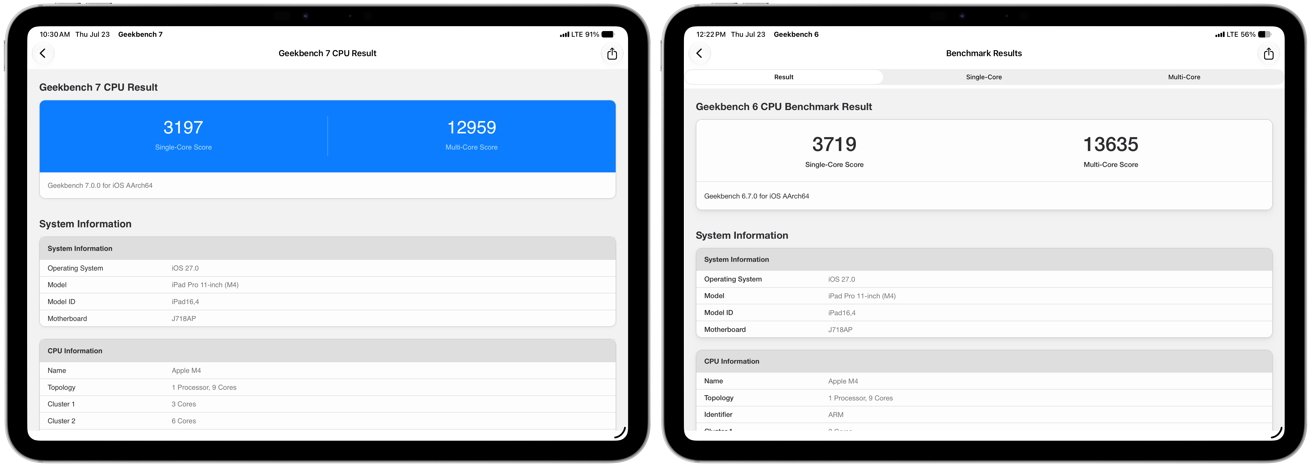
We ran both versions on the same 11-inch M4 iPad Pro using iPadOS 27. Geekbench 6 reported a 3,719 single-core score and a 13,635 multi-core score, while Geekbench 7 returned 3,197 and 12,959, respectively.
Those results make the same iPad appear about 14% slower in single-core performance and 5% slower in multi-core performance. The hardware didn’t lose performance between tests. Geekbench 7 changed what it measures and how it calculates its scores, demonstrating why results from the two versions can’t be placed on the same performance chart.
Comparing results between Geekbench 6 and Geekbench 7
A device’s Geekbench 6 result should therefore remain in charts and comparisons built around Geekbench 6. New Geekbench 7 scores will need their own baseline as results accumulate across different processors and devices.
Geekbench 7 changes how it measures multi-core performance
The difference between Geekbench 6 and Geekbench 7 results reflects more than a recalibrated scoring scale. Geekbench 7 also changes which workloads contribute to its multi-core score.
Advertisement
Geekbench 7 only runs a workload in multithreaded mode when the task it represents is also multithreaded in real software. Primate Labs says treating every workload as multithreaded can inflate benchmark results without accurately showing how a device handles everyday apps.
Not every real-world task benefits from being divided across all available processor cores. The HTML5 Browser test, for example, isn’t included in the multithreaded suite because Primate Labs says browsers are generally single-threaded or lightly threaded.
The revised approach should make Geekbench 7’s multi-core score more representative of how software uses a processor. It also makes the methodology behind the score more important when comparing devices instead of relying on the number alone.
A new video workload encodes screen-sharing footage with AV1, modeling the technology behind screen-sharing features in videoconferencing apps. Another compresses music and spoken audio with the Opus codec, reflecting work performed by voice-recording and podcast apps.
Advertisement
Geekbench 7 also decodes video and audio while generating live captions with the Whisper speech-recognition model. The workload represents video playback with automatic subtitles enabled rather than testing speech recognition by itself.
Recognizable tasks give Geekbench scores a clearer relationship to common software features.
A new Game Physics workload uses the Jolt Physics engine found in popular video games. Primate Labs has also expanded its Photo Editor test and updated the Photo Library workload to import and process JPEG XL and DNG images.
The recognizable tasks give Geekbench scores a clearer relationship to common software features, although no benchmark can reproduce the performance of every app or workflow.
GPU testing adds AI and content-creation workloads
Geekbench 7 shifts its GPU benchmark toward machine learning, video, and content-creation tasks. New GPU workloads track faces and apply live video effects, upscale images with machine learning, and blur backgrounds in videoconferencing streams.
Each workload reflects a feature commonly used in social media, photo-editing, or communication apps. The benchmark also adds RAW image processing, LUT-based video color grading, path tracing, and fluid simulation.
Advertisement
CUDA joins Metal, OpenCL, and Vulkan as a supported GPU API. The addition allows Geekbench 7 to test Nvidia GPUs through CUDA, while Apple devices continue to use Metal.
Larger data sets make Geekbench 7 more demanding
Primate Labs says computing workloads and data sets have grown more demanding since it released Geekbench 6, prompting the company to increase the amount and variety of data processed by Geekbench 7.
The File Compression test now handles a larger and more varied collection of source code, object code, and text documents. Its PDF Viewer workload includes files ranging from park maps to technical documents and academic papers.
Developer and image-processing workloads also use more assets and additional image formats. The changes are intended to better reflect the files and projects handled by current phones, tablets, and computers.
Advertisement
Geekbench 7 pricing and availability
Geekbench 7 is available now for macOS, iOS, Android, Windows, and Linux. The benchmark is free for personal use across supported platforms.
Primate Labs is also offering 20% off Geekbench 7 Pro through August 6. The paid version adds features intended for professional and commercial use, including command-line tools and automated benchmark deployment.
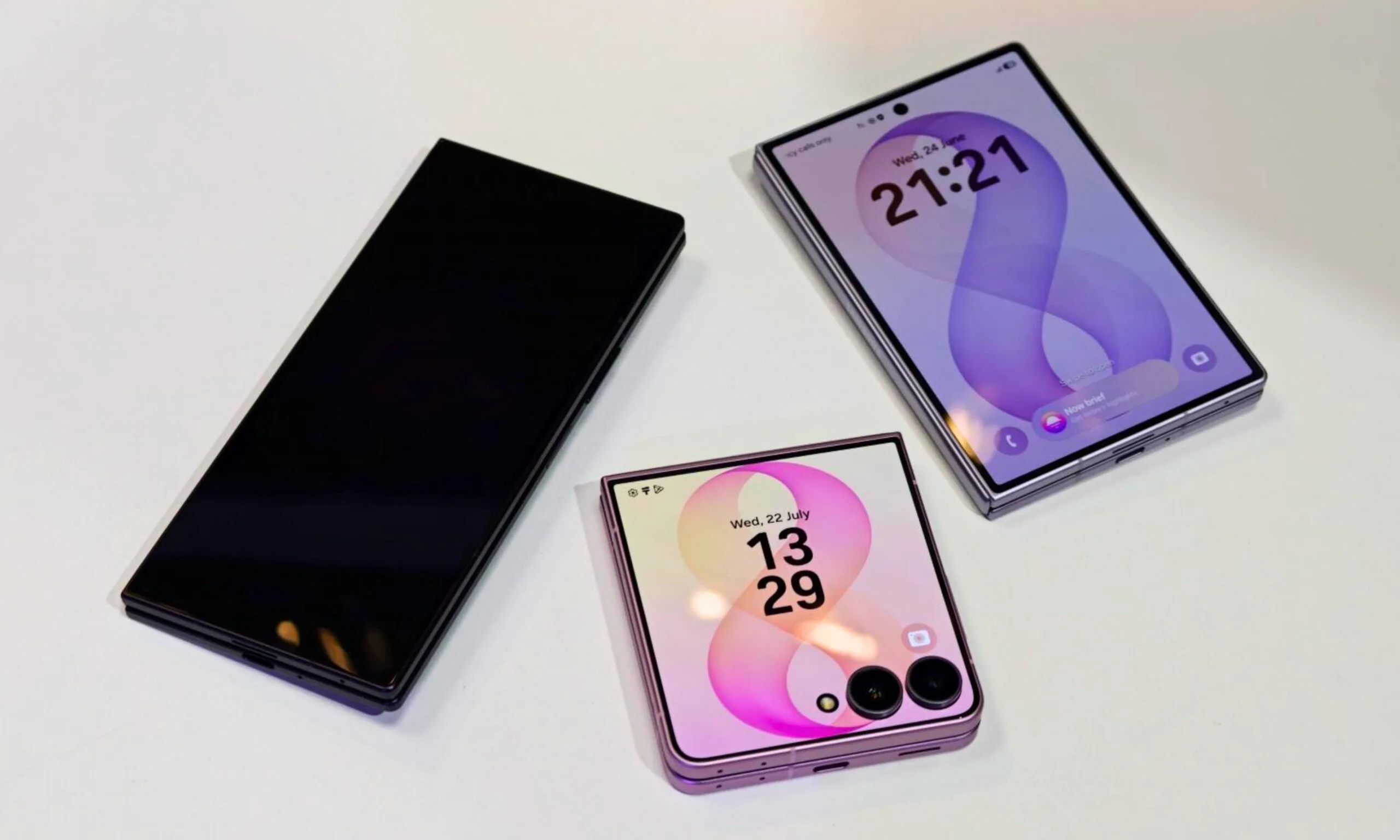
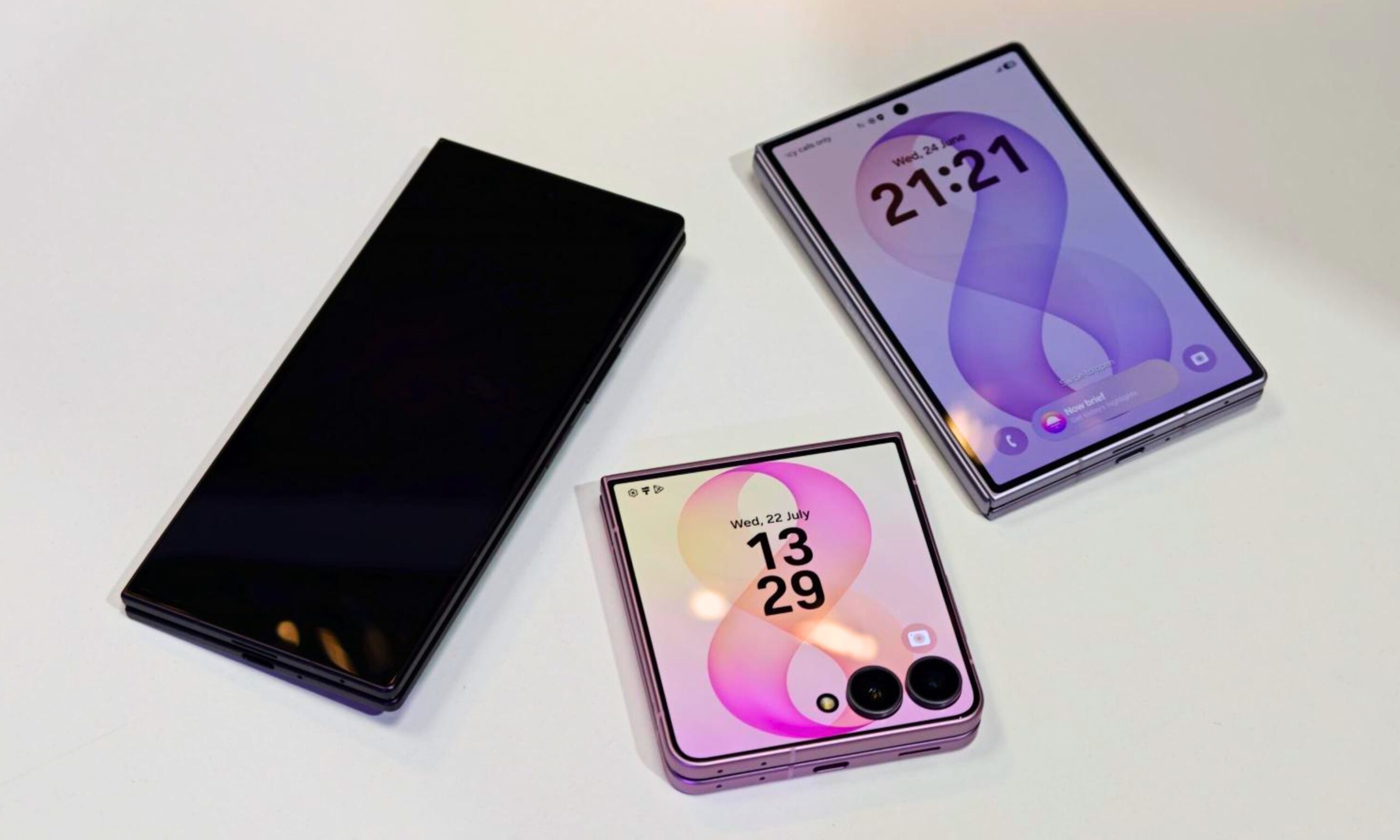
After years of reviewing foldable smartphones, I have learned that choosing one involves much more than what looks pretty or how large you want. Book-style foldables are usually sold as productivity machines, while flip phones cater to people who value portability. Samsung’s latest lineup complicates that choice by introducing two very different book-style models alongside its familiar clamshell.
Most of their shared specifications fade into the background once you start using them. Their shapes and screens have a much greater impact on daily life. So here’s how I’d make a decision when choosing between the new Galaxy Z Fold 8 Ultra, Galaxy Z Fold 8, and Galaxy Z Flip 8.
Nadeem Sarwar / DigitalTrends
Samsung Galaxy Z Fold 8 Ultra vs Galaxy Z Fold 8 vs Galaxy Z Flip 8: Specs
Snapdragon 8 Elite Gen 5 for Galaxy, 12GB or 16GB RAM, 256GB, 512GB, or 1TB storage
Snapdragon 8 Elite Gen 5 for Galaxy, 12GB or 16GB RAM, 256GB, 512GB, or 1TB storage
Snapdragon 8 Elite Gen 5 for Galaxy, 12GB RAM, 256GB or 512GB storage
Cameras
Rear: 200MP main camera, 50MP ultrawide, 10MP telephoto Front: 10MP and 10MP
Rear: 50MP main camera, 50MP ultrawide Front: 10MP and 10MP
Rear: 50MP main camera, 12MP ultrawide Front: 10MP
Battery and Charging
5,000mAh, 45W wired, 20W wireless
4,800mAh, 45W wired, 20W wireless
4,300mAh, 25W wired, 15W wireless
Size and Weight
Unfolded: 158.4 x 143.2 x 4.1mm Folded: 158.4 x 72.8 x 8.9mm 215 grams
Unfolded: 123.9 x 161.4 x 4.5mm Folded: 123.9 x 81.9 x 9.7mm 201 grams
Unfolded: 166.9 x 75.4 x 6.1mm Folded: 85.7 x 75.4 x 13.1mm 180 grams
Price
$2,099
$1,899
$1,199
Galaxy Z Fold 8 Ultra: The power-user choice
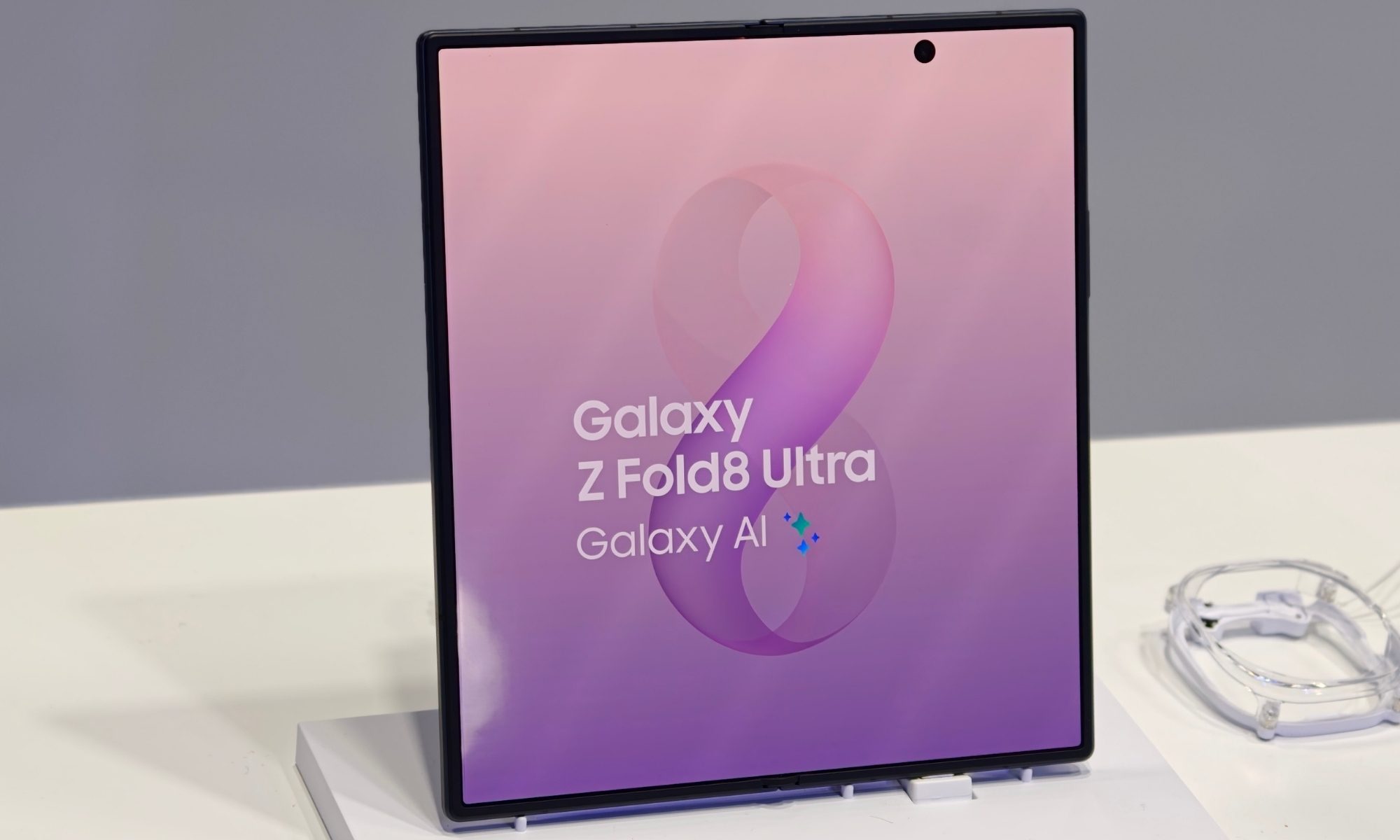
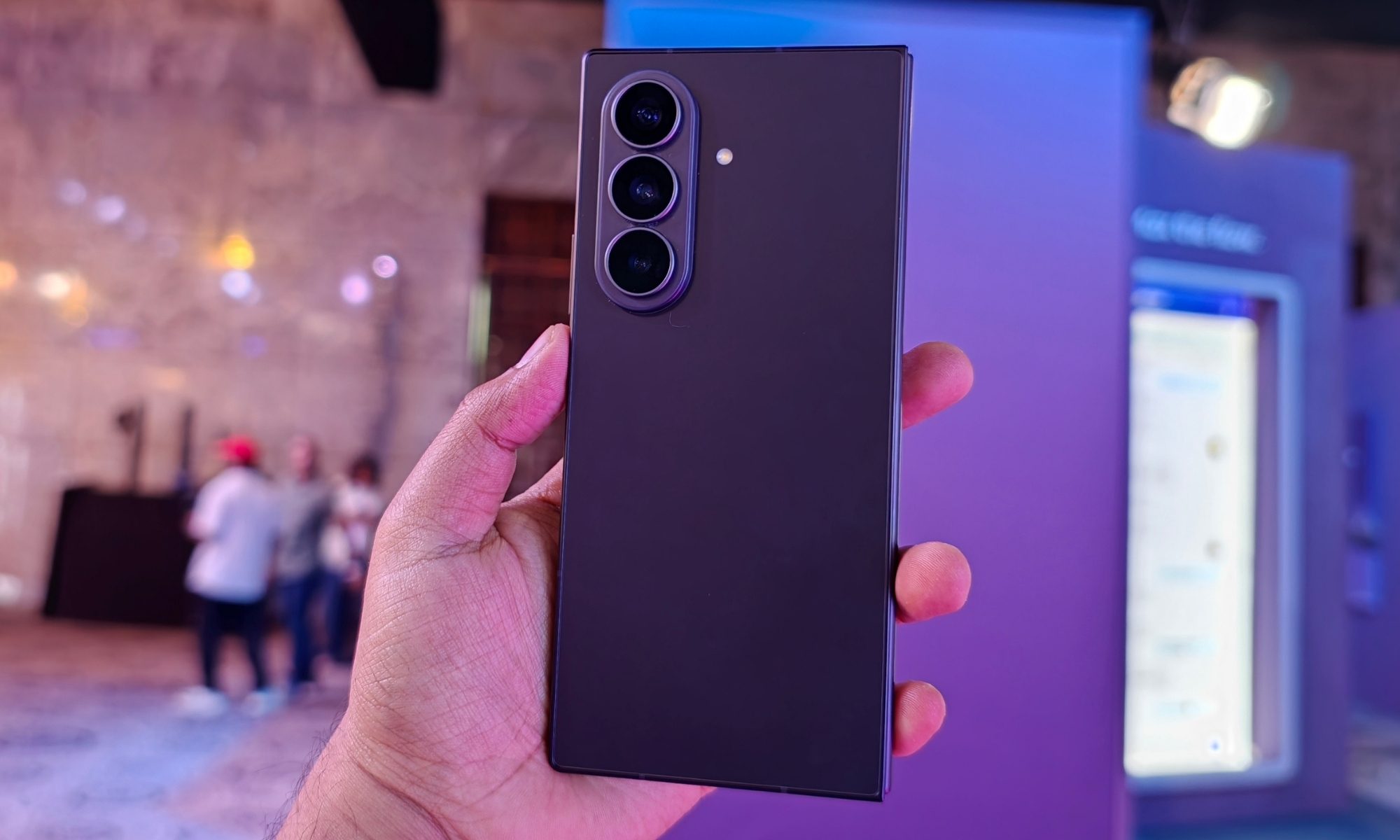
The Galaxy Z Fold 8 Ultra is the easiest model to recommend to someone who wants everything Samsung can put into a foldable. Its overall experience represents another measured step beyond its predecessor. Samsung has refined the design and improved the hinge that also reduced the crease.
The display appears flat, and the crease is hardly visible.Nadeem Sarwar / Digital Trends
None of these changes completely reinvent the device, but they polish an already mature formula–and this familiarity works in its favor. The tall cover display operates much like a conventional smartphone, and opening the device gives you a large canvas for running several apps together.
This is the model I would pick for serious multitasking. You can keep a document beside a browser, respond to messages while watching a video, or move information between apps without constantly switching windows. The 8-inch inner screen provides enough screen real estate to never feel cramped.
Nadeem Sarwar / Digital Trends
It also has the strongest camera system of the three. The 200MP main camera, 50MP ultrawide, and 3x telephoto give it the versatility expected from an expensive flagship. Foldable cameras often trail their slab-phone counterparts, so having strong main and ultrawide cameras makes the Ultra more reliable as your daily driver. The 5,000mAh battery is Samsung’s largest in a foldable, while 45W charging finally reduces some of the frustration around topping one up.
Galaxy Z Fold 8: The new multimedia pick
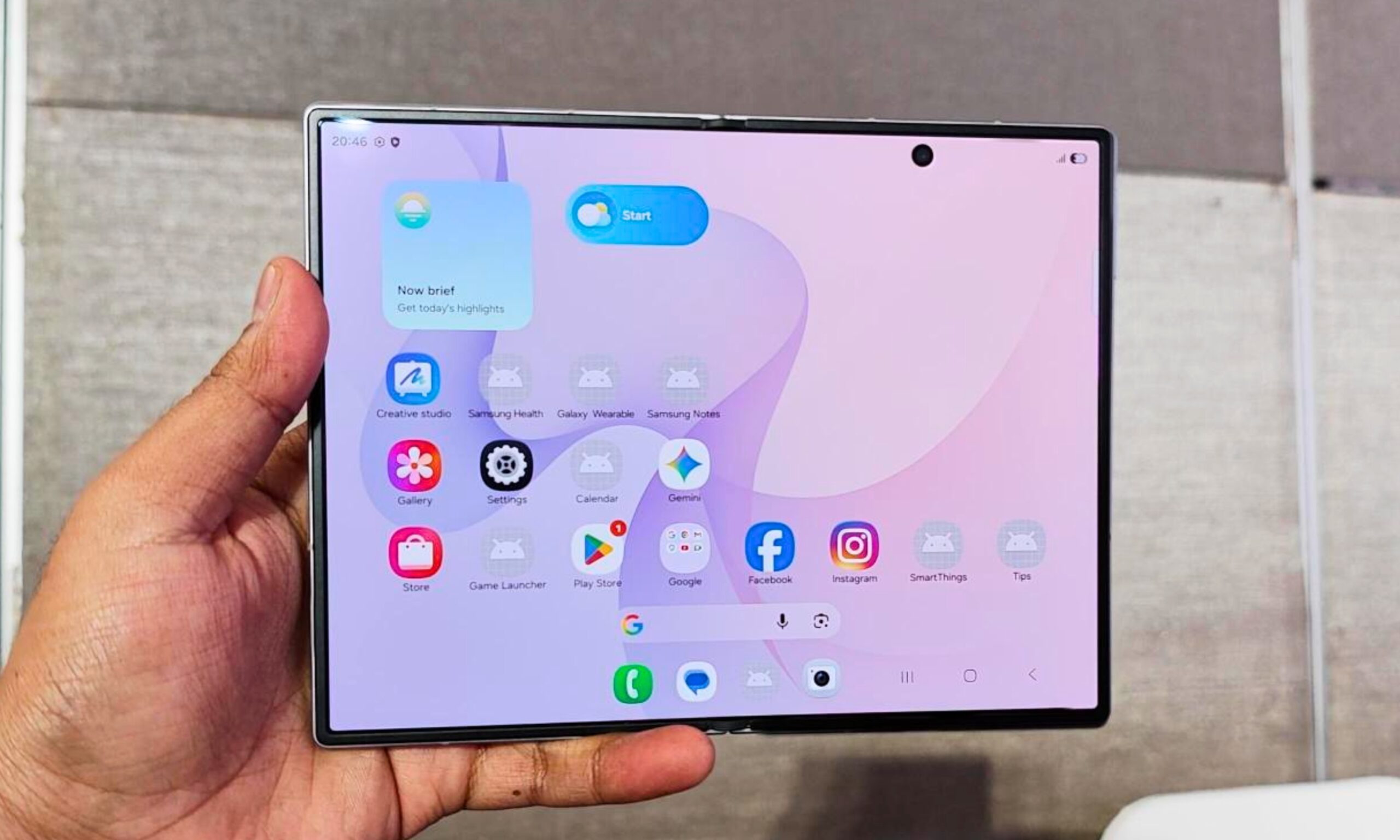
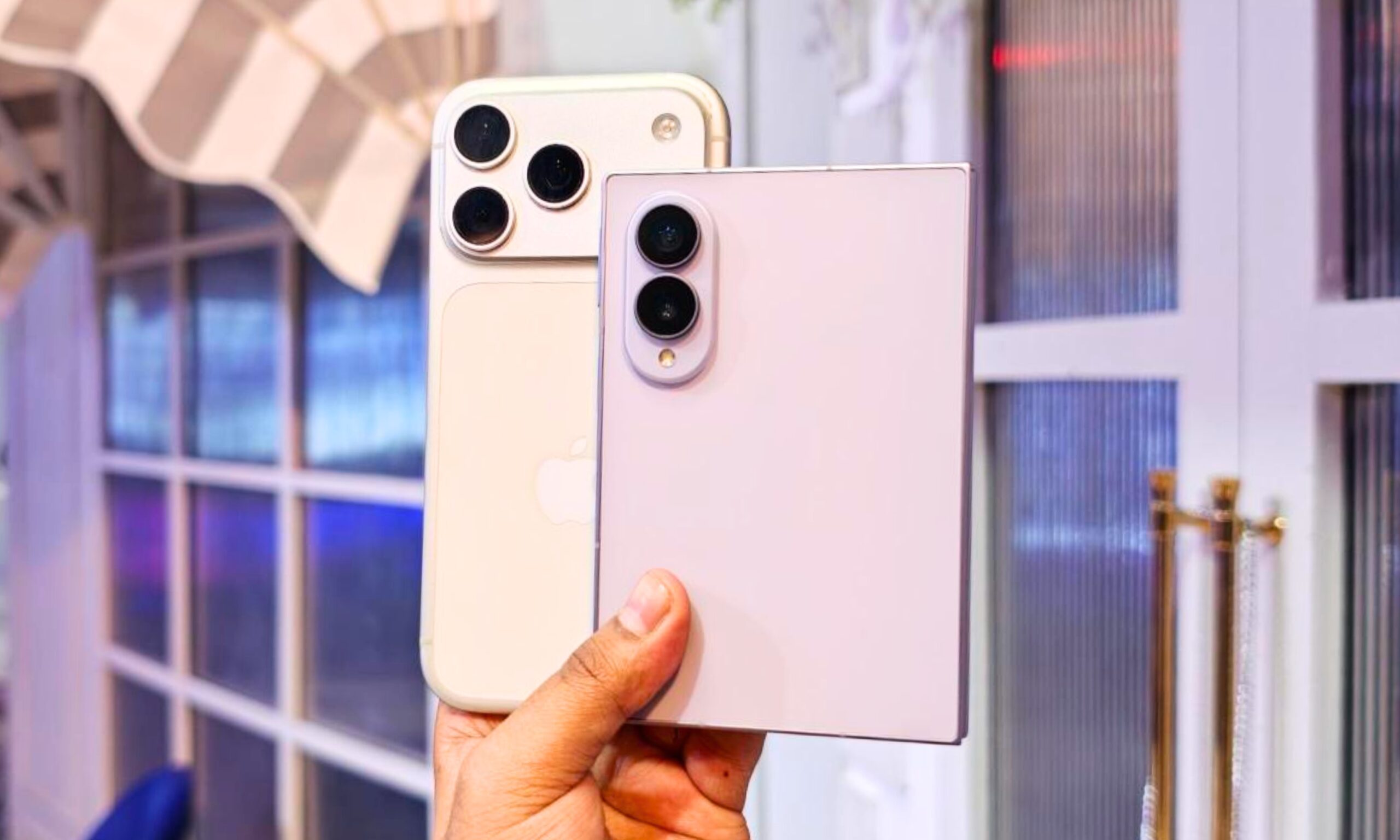
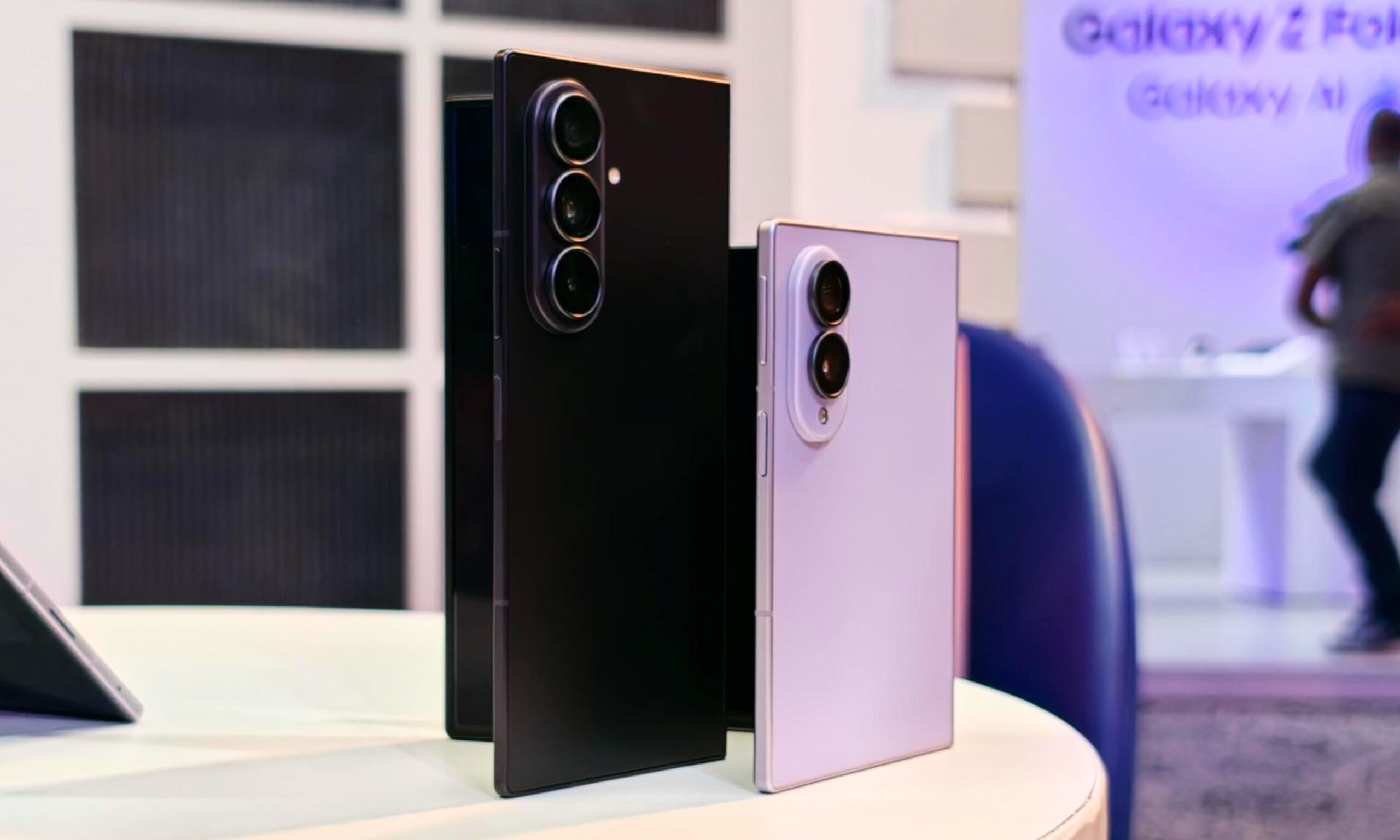
The standard Galaxy Z Fold 8 has the most unusual design of the lineup. Its short, wide body resembles a passport more than a traditional smartphone. The 5.5-inch cover screen comes closer to a compact device. Though its squat proportions require a little adjustment. Opening it reveals the reason Samsung chose this shape.
Advertisement
Nadeem Sarwar / DigitalTrends
The 7.6-inch inner screen has a 4:3 aspect ratio, making it especially well suited to photos, videos, websites, and social content. Pictures fill the display more naturally, while movies and videos gain a wider viewing area than they would on the taller Ultra.
So this is easily my main choice if I just consider the multimedia advantages. Its inner screen provides an excellent space for a number of different tasks. Watching pictures and videos finally feels natural on Samsung’s foldable. I can even picture reading e-books, browsing, or playing games fitting in naturally as well. At 201 grams, it is also considerably easier to carry than many large foldables. For context, the Motorola Razr Fold I’m currently using measures over 40 grams heavier. This even makes it lighter than the iPhone 17 Pro.
Nadeem Sarwar / DigitalTrends
Multitasking remains part of the experience. Two apps can still sit beside each other, and the device has the same flagship processor as the Ultra. Except the different aspect ratio gives each window less vertical room. So complex multi-app layouts may not flow as naturally. Photography is another compromise. The Fold 8 has capable 50MP main and ultrawide cameras, but the telephoto is dropped entirely. Choose this one when the idea of a wider, more portable foldable matters more than maximum productivity or camera versatility.
Galaxy Z Flip 8: The compact-phone alternative
The Galaxy Z Flip 8 is the easiest choice for someone who has little interest in carrying a book-style foldable. I have always preferred compact phones, and a clamshell remains one of the best ways to put a large display into a small pocket. The Flip 8 opens into a conventional 6.9-inch smartphone, then folds into a much smaller square when you are finished.
Nadeem Sarwar / Digital Trends
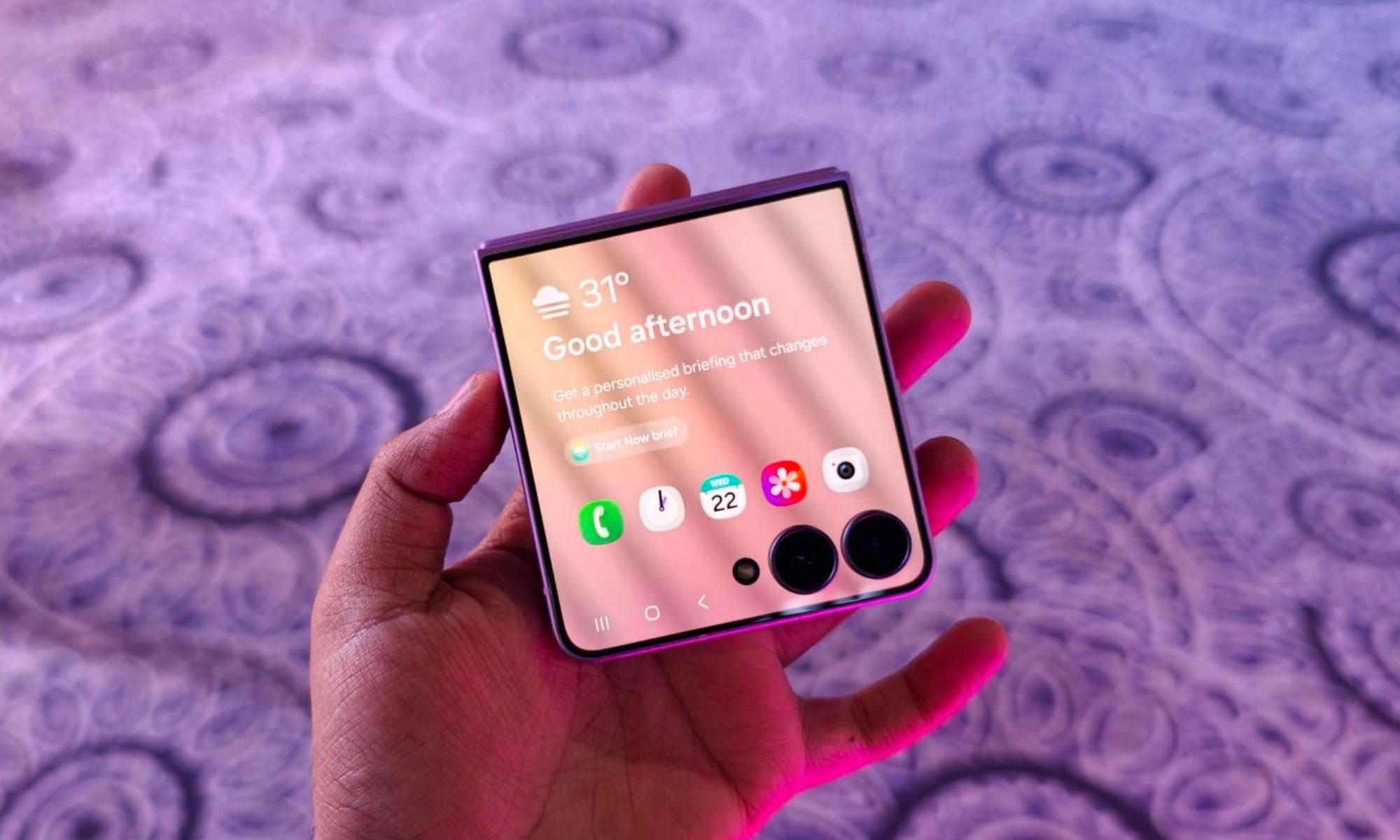
Samsung has also made the 4.1-inch FlexWindow more useful. One UI 9 brings a proper app tray, recent apps, improved widgets, and access to more everyday functions without opening the phone. While there are limitations, Samsung’s most complete attempt at making the cover screen useful beyond notifications and camera previews.
A flip phone should take advantage of its clamshell design, and the Z Flip 8 is finally the complete package now. The Flip 8 also suits people who enjoy taking selfies and group pictures. Flex Mode can prop the phone up without a tripod, while the cover display lets you frame shots with the superior rear camera.
Nadeem Sarwar / DigitalTrends
Its battery, charging speeds, and camera selection sit below the two Fold models. But coming in at hundreds of dollars cheaper, it is a worthwhile trade for someone whose priorities begin with portability.
Three foldables for three very different people
The Galaxy Z Fold 8 Ultra is the easy choice for power users. Its larger displays, stronger camera system, bigger battery, and familiar proportions make it the most complete device of the three.
Advertisement
Samsung’s regular Fold 8 serves a more specific audience. Its wider screen is excellent for media, photos, reading, and anyone drawn to its unusual compact shape.
Nadeem Sarwar / Digital Trends
The Galaxy Z Flip 8 remains my pick for compact-phone fans. It slips into smaller pockets, works like a conventional phone when open, and finally gives the cover screen a more meaningful role.
Samsung has given each foldable a reason to exist. Your choice comes down to the experience you value most: maximum capability, better media viewing, or true pocketability.
AI seemed simpler in 2024 when Anthropic released the first version of the Model Context Protocol (MCP), an open standard for connecting AI applications to external systems.
Back then, developers primarily used the protocol on their personal computers. As those laptop-bound demos were adapted for multi-client enterprise use, MCP servers moved into the cloud, where the original design quickly created scalability problems.
On July 28, MCP’s maintainers plan to finalize the protocol’s 2026-07-28 revision, bringing many changes – including some that aren’t backward compatible – that reflect some “hard lessons” the core MCP team learned over the past two years, said Anthropic technical staff member David Soria Parra in alivestream Tuesday.
The 2026-07-28 revision will come with the “most substantial changes we have made to the specification, probably since adding authorization,” Parra said. “A lot of things that made MCP are gone.”
Advertisement
Parra claims the new MCP will be easier to deploy and use. If users have been updating their SDKs, they shouldn’t have much problem upgrading.
But he also warned that the underlying data transfer mechanism has totally been rebuilt, which “makes things on the wire a bit more complicated than they used to be.” Protocol-level session tracking will no longer be required.
For those who rolled their own MCP engine, some long days of reconfiguration may be ahead. “If you built your own implementation, it’s going to be a lot of uplift to make this correct,” Parra admitted.
Anthropic donated MCP in 2025 to the AAIF, a Linux Foundation fund co-founded by Anthropic, Block, and OpenAI. By that time, the SDK was being downloaded over 97 million times a month and at least 10,000 MCP servers had been set up.
Advertisement
MCP is now stateless like the rest of the internet
The chief change is that the new revision removes protocol-level sessions, allowing each request to be handled independently. This “stateless” approach, common in the cloud-native world, is used to scale web services behind a fleet of load balancers.
Anthropic originally built MCP so that servers could be built to expose resources, tools, and prompts. An LLM-connected application can host clients to communicate with these servers via JSON-RPC 2.0.
However, this approach came with excessive complexity and operational difficulties, especially creating and supervising protocol sessions for every individual action. As Parra acknowledged, the original specification failed to properly define how session details should be preserved, leading to complications. Furthermore, routing grew overly intricate when extra resources were required.
The solution was simple. Under the new revision, information about the protocol version, client identity, and capabilities travels in the _meta parameter with each request, eliminating the need for protocol session tracking.
Advertisement
MCP now operates very much like the Claude Messages API, also stateless, which provides the interface for sending and receiving messages with Anthropic’s models.
“I think that it’s a very smart and nice way to just move… state away from the server onto the wire protocol and hope that bandwidth is for free,” Parra said.
MCP’s routing mechanism was also totally gutted. The original messages were sent over JSON-RPC HTTP POST payloads, with the actual operation buried in the JSON body. The new revision also mirrors routing information in HTTP headers, allowing networking gear to route requests without tracking session status or inspecting the JSON-RPC body.
MCP can now be extended however you desire
A number of features in the original MCP have also been deprecated. One is sampling, which seemed useful at the time but turned out to be used rarely. It allowed an MCP server to ask the client’s model to generate a completion, but the semantics were confusing and hard to implement, Parra said.
Advertisement
Roots was also deprecated. It allows clients to tell servers which file system locations are relevant to a session. It was “a very niche thing,” Parra said. Logging also got its notice for being excessively chatty, and developers were advised to just use stderr, stdio, or OpenTelemetry.
“We are widening the surface to the things we thought were useful, but we are also realistic about narrowing [MCP] down to the good pieces that everybody is actively using,” Parra said.
MCP also has been enhanced with extensibility. “I think the extensions are a model for us to really test out things in the protocol before we bake them into the protocol,” said Den Delimarsky, an Anthropic technical staff member who also joined the conversation.
There are many use cases that are domain specific where an extension would be helpful, but the potential user base is not big enough to warrant rolling that feature out to everyone. And experimental features will be tested through extensions.
Advertisement
Extensions can be bundled with the protocol, but have their own release schedule. One official extension is MCP Apps, which allows the MCP to present the user with an interactive app, built in JavaScript, instead of just text or an image.
MCP’s Tasks feature, used for managing long-running operations, has been moved out of the core protocol and into an extension.
In addition to officially recognized extensions, users can build their own, following the instructions and suggestions in the specification, Parra said.
Features formally marked as deprecated will remain functional for at least 12 months, according to Stacklok’s “Enterprise Readiness Guide for the July 2026 MCP Spec Update.” Stacklok, which offers an MCP platform, warns that this is not a blanket guarantee of interoperability with legacy implementations. Servers using the 2026-07-28 revision may not work with older clients, and vice versa.
Advertisement
“Compatibility requires both sides to share a supported protocol era, or for one side to implement deliberate fallback or translation,” the report noted.
MCP’s move to statelessness was a necessary one, in the view of Stacklok CEO (and co-creator of the very stateless Kubernetes), Craig McLuckie.
“The stateful nature of MCP was really a by-product of its origin as a way to support developers using coding tools (that tend to run locally) to access things. The broader AI community is now embracing MCP as a mechanism to allow enterprises to intermediate access to production systems,” McLuckie told the Register.
“This gives cyber teams a unified control point to apply agent aware policy and is delivered in a form factor that platform teams are comfortable with running.” ®
Matrix Recruitment’s latest Workforce Trends Report found that multiple factors, such as pay transparency and workplace flexibility, are impacting the recruitment landscape.
Hiring platform Matrix Recruitment has published its hiring data for the first half of 2026 and what it found is that so far this year, employers are placing far greater emphasis on sourcing the ‘right kind’ of long-term talent. This involves a more structured recruitment process with more efficient hiring decision-making, the company said.
The Workforce Trends Report also found that recent recruitment activity has been resilient, as the number of job advertisements is consistent with the same period last year, particularly across sectors experiencing ongoing skills shortages, such as manufacturing, engineering and financial services.
In line with the figures showing a change in employer hiring behaviour, there was a decline in the number of roles being filled after a single interview. Matrix’s report said that the proportion of positions filled after just one interview fell from 31pc in the first half of 2025 to 21pc during the same period in 2026.
Advertisement
Despite the more rigorous recruitment processes, however, Matrix also found that the average time to fill a permanent role has fallen from roughly 59 days to around 54, year-on-year.
Commenting on the findings, Breda Dooley, the head of recruitment at Matrix, said, “Employers are taking a more strategic approach to recruitment. They’re looking beyond immediate skills and experience to find candidates who will add long-term value to their organisations.
“As a result, we’re seeing more structured, multi-stage interview processes, particularly for permanent roles.”
She added: “Although interview processes have become more thorough, employers are moving faster once they identify the right candidate. Better workforce planning and greater clarity around hiring needs are helping organisations reduce the hiring process without compromising on the quality of their recruitment decisions.”
Advertisement
So far in 2026, a number of reports and experts have explored the growing demand for contract and temporary employees. Matrix’s research continues that trend, recording a 12pc increase in temporary vacancies during the first six months of 2026, while temporary payroll placements increased by almost 10pc.
“While permanent hiring decisions are becoming more deliberate, many organisations are simultaneously using temporary and contract talent to maintain agility in an uncertain economic environment,” said Dooley.
A tempting offer
Prospective employees, too, are becoming more selective about their work-based decision-making. Workplace flexibility, for example, was found to be a key priority for applicants.
Candidates are now raising salary concerns much sooner in the hiring process, which Matrix found to be reflective of a greater demand for pay transparency and the opportunity to fully assess a role’s potential early on.
Advertisement
Dooley said, “Candidates are evaluating employers just as carefully as employers are evaluating them. This is why clear communication, transparency around job responsibilities, salaries and benefits, and an efficient recruitment process have become critical to securing top talent.”
The demand for hybrid working is also continuing to shape recruitment outcomes. According to Matrix’s data, full-time, office-based roles are receiving up to 40pc fewer applications than comparable positions offering hybrid working arrangements.
“Hybrid working is no longer considered a perk – it has become a core component of a competitive employment offering. Employers that fail to recognise this shift in candidate expectations are likely to face increasing challenges in attracting and retaining skilled professionals,” said Dooley.
Don’t miss out on the knowledge you need to succeed. Sign up for the Daily Brief, Silicon Republic’s digest of need-to-know sci-tech news.
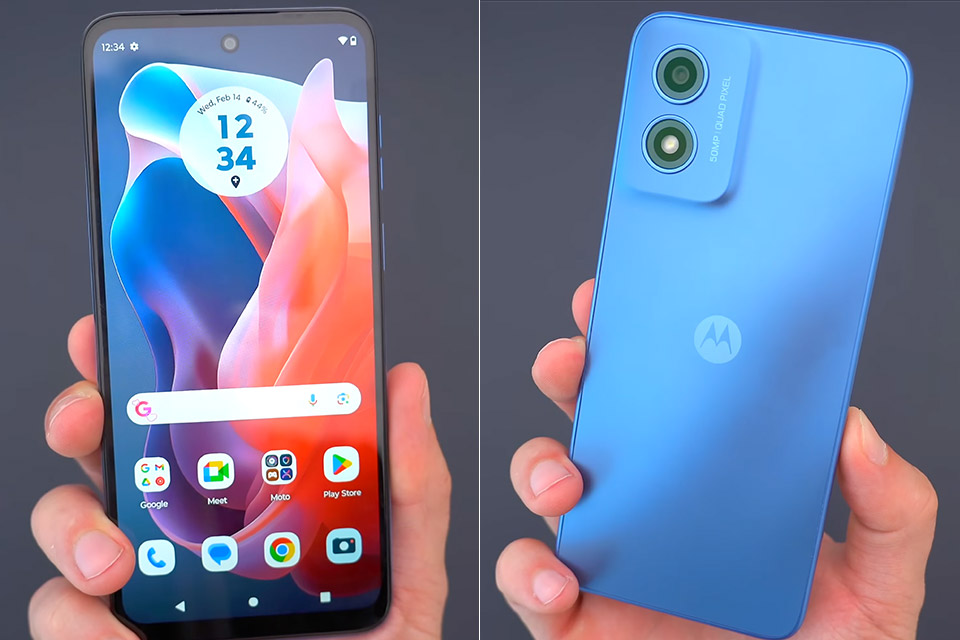
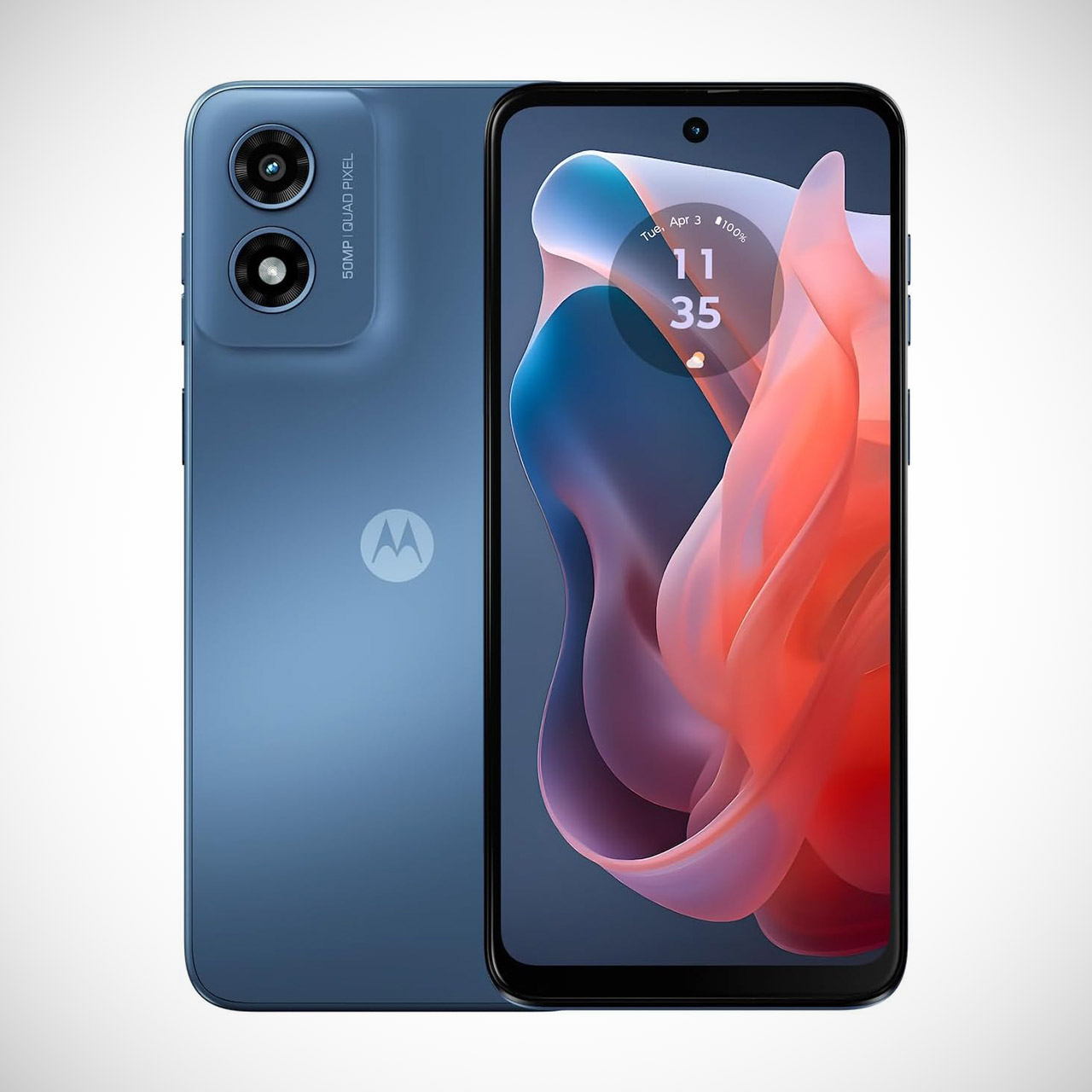
Most people do not need a phone that can render complex games at max settings or shoot cinematic video. They need something that answers calls without lag, holds a charge through a full day of texts and maps, and costs little enough that losing or breaking it does not ruin the month. The Moto G Play 2024, priced at $99.99 (was $150), aims squarely at that reality.
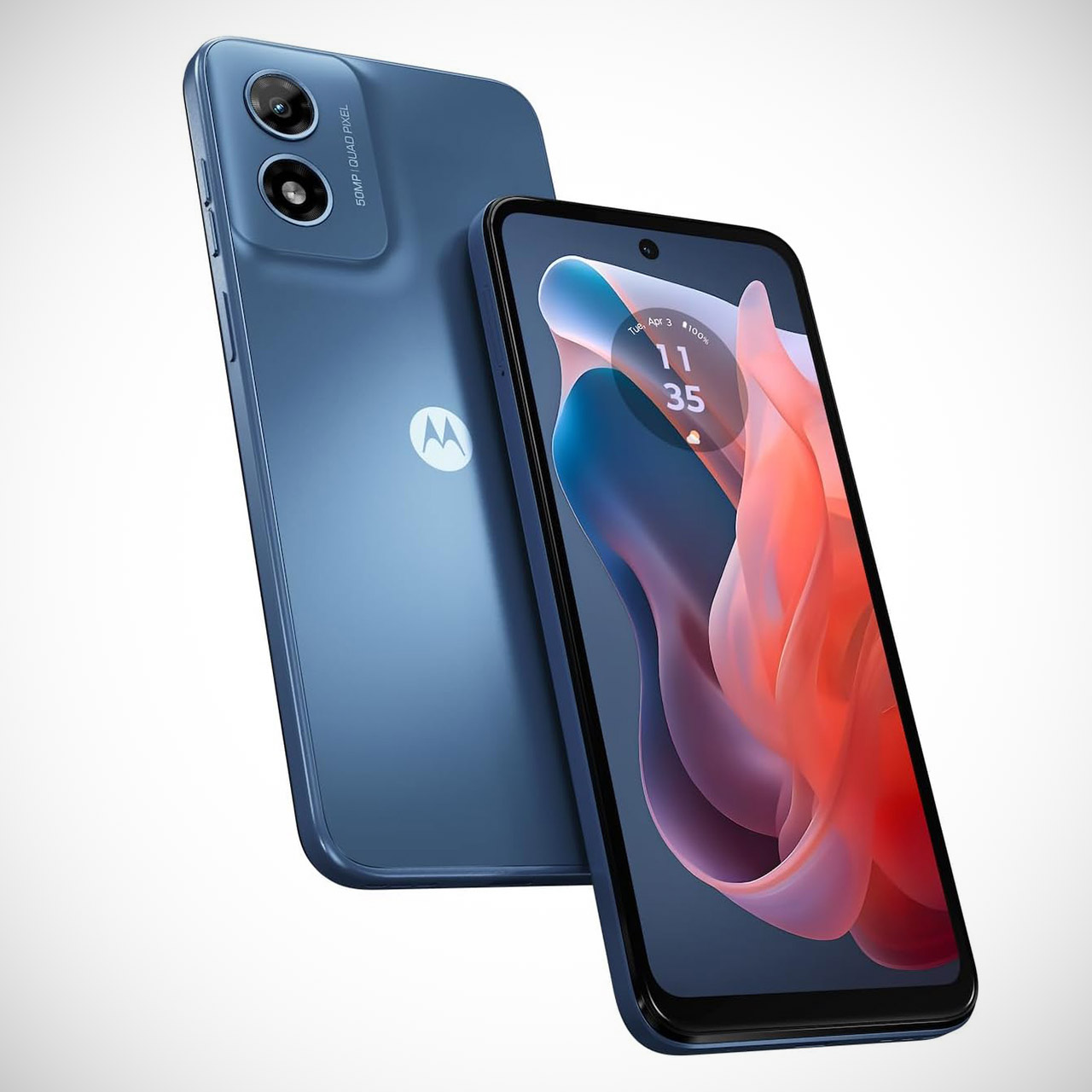
The frame and back are entirely made of plastic, finished in a stunning Sapphire Blue with a smooth matte surface that resists fingerprints far better than a glossy finish. The phone weighs 185 grams and is roughly 8 millimeters thick, so it feels sturdy in the hand but isn’t too heavy to carry in your pocket. The rounded edges and modest curvature to the sides make it fit comfortably even after scrolling for a while. The water-repellent coating provides some protection against light rain or accidental spills, while the Corning Gorilla Glass 3 on the front protects it from scratches.
Blazing-fast Qualcomm performance. Get the speed you need for great entertainment with a Snapdragon 680 processor and 4GB**** of RAM.
Fluid display + immersive stereo sound. Bring your entertainment to life with an ultrawide 6.5″ 90Hz* HD+ display plus stereo speakers, Dolby Atmos…
50MP*** Quad Pixel camera. Capture sharper, more vibrant photos day or night with 4x the light sensitivity.
A 6.5-inch IPS LCD display makes up the most of the front. It has a resolution of 1600 by 720 pixels, which is sufficient to make text readable for messages, online pages, and navigation apps without using up all of the processing power. The 90 Hz refresh rate makes everyday swipes and scrolling feel silky smooth when compared to 60 Hz panels commonly seen at this price tier. It gets nice and bright at around 500 nits in normal settings, making it suitable for most everyday use and even most days while you’re out and about. There are two stereo speakers on the ends, which are Dolby Atmos compatible, giving the music and movie that extra bit of presence that most inexpensive gadgets with a single speaker lack.
Advertisement
The phone is powered by a Qualcomm Snapdragon 680 CPU developed on a 6-nanometer technology. So it has four high-performance cores at 2.4 GHz and four efficiency cores at 1.9 GHz. It comes with 4 GB of RAM, but it also includes a software capability that can extract extra RAM from storage as needed, which is useful if you’re running many apps at the same time. You get 64 GB of internal storage for programs and media, as well as a dedicated microSD slot that can accept a 1 TB card. It easily handles regular operations including as messaging, surfing, and video streaming, as well as light photo editing. Of course, if you start pushing it with heavy multitasking or demanding games, it will exhibit some limitations, but the phone does not struggle with regular use.
The camera is quite minimalist, with a single 50-megapixel rear sensor, an f/1.8 aperture, and phase-detection autofocus. They also employ Quad Pixel technology, which combines data from four pixels into one to improve low-light performance. When there is a lot of natural light, the camera takes good clear photographs with firm detail and natural-looking colours. Nighttime photos are fine for sharing with friends or documenting something, but they lack the clarity of a more expensive camera. The 8-megapixel front camera is adequate for video calls and selfies. Both cameras can record video at 1080p and 30 frames per second.
Battery life has increased dramatically compared to its predecessor, reaching 5000 milliamp hours. Motorola claims you can get up to 46 hours of mixed use out of it, provided you utilize it in ideal settings. In truth, if you’re fairly active during the day, this device will last till the end of the day without requiring a recharge, and then some. If you use it sparingly, you might be able to get away with a second day. You may charge it via USB-C, but keep in mind that it only has a maximum power output of 15 watts, so the recharge period will be lengthier than with some other systems. However, because of the phone’s capacity, you will need to charge it less frequently.
The phone ships with Android 13 pre-installed, with the normal Motorola interface that adds a few good features like gesture controls and family space without cluttering it up. Motorola promises one big OS update to Android 14 and a restricted security patch update after that, but I’m guessing they’ll still keep it patched enough to keep you secure. This phone lacks 5G and NFC because they kept costs down and simplified the hardware, which fits well with what this phone is all about: being a dependable everyday runner or a solid backup phone.
These locally operated networks allow enterprises to take fuller advantage of the 5G spectrum.
UK technology service provider Logicalis is launching a private 5G service for enterprises in Ireland, following an €8m investment from the company to support the roll-out.
New regulatory changes introduced by ComReg have enabled access to private 5G spectrums in Ireland, which, according to Logicalis, represented “one of the most significant advances” in digital infrastructure in recent years.
These locally operated networks can be adapted to specific requirements and allow enterprises to take fuller advantage of the 5G spectrum, with lower latency connectivity across large operational sites.
Advertisement
Access to private 5G is a “transformational development” for Ireland, Logicalis said, adding that the technology supports a new generation connected operations such as robotics, industrial AI, autonomous vehicles, IoT devices and edge computing.
Irish businesses can use the technology to accelerate digital automation, AI and Industry 4.0 initiatives, the company said, while strengthening its competitiveness as a destination for global investment.
Logicalis believes private 5G will become a foundational technology supporting the next generation of connected enterprise operations. The company is offering its private 5G services in partnership with technology vendors, including Cisco, Nokia and Neutral Wireless.
It said that the solution encompasses network design, radio planning, deployment, security and integration, alongside fully managed services. It already offers private 5G spectrum across the UK, Europe and North America.
Advertisement
“Historically, enterprises wishing to deploy private 5G have had to rely on mobile operators as the spectrum was unavailable directly to industry,” said Frank Rubotham, the head of specialists and propositions at Logicalis’ UK and Irish operations.
“This framework created complexity and cost barriers to accessing this technology. Now, with industry access to private 5G spectrum, the technology has moved from pilot phase to production deployment at scale.
“At Logicalis, we have been investing and researching heavily into this technology for over 10 years, while deploying large scale private 5G networks in markets such as the UK, Germany and the US, ensuring we have the expertise to deliver truly transformative technology.”
The company is a division of Datatec and has operations across Europe, North America, Latin America, Asia Pacific and Africa. It last reported annualised revenues of $1.7bn.
Advertisement
“This advancement, in real terms, means that we can build and provide private 5G networks for enterprises in Ireland supporting greater automation, edge computing, industrial AI, robotics and real-time data analytics,” added Rubotham.
“This, in turn, helps to position Ireland as one of the world’s leading markets to deliver advanced interconnected technologies for business.”
Don’t miss out on the knowledge you need to succeed. Sign up for the Daily Brief, Silicon Republic’s digest of need-to-know sci-tech news.
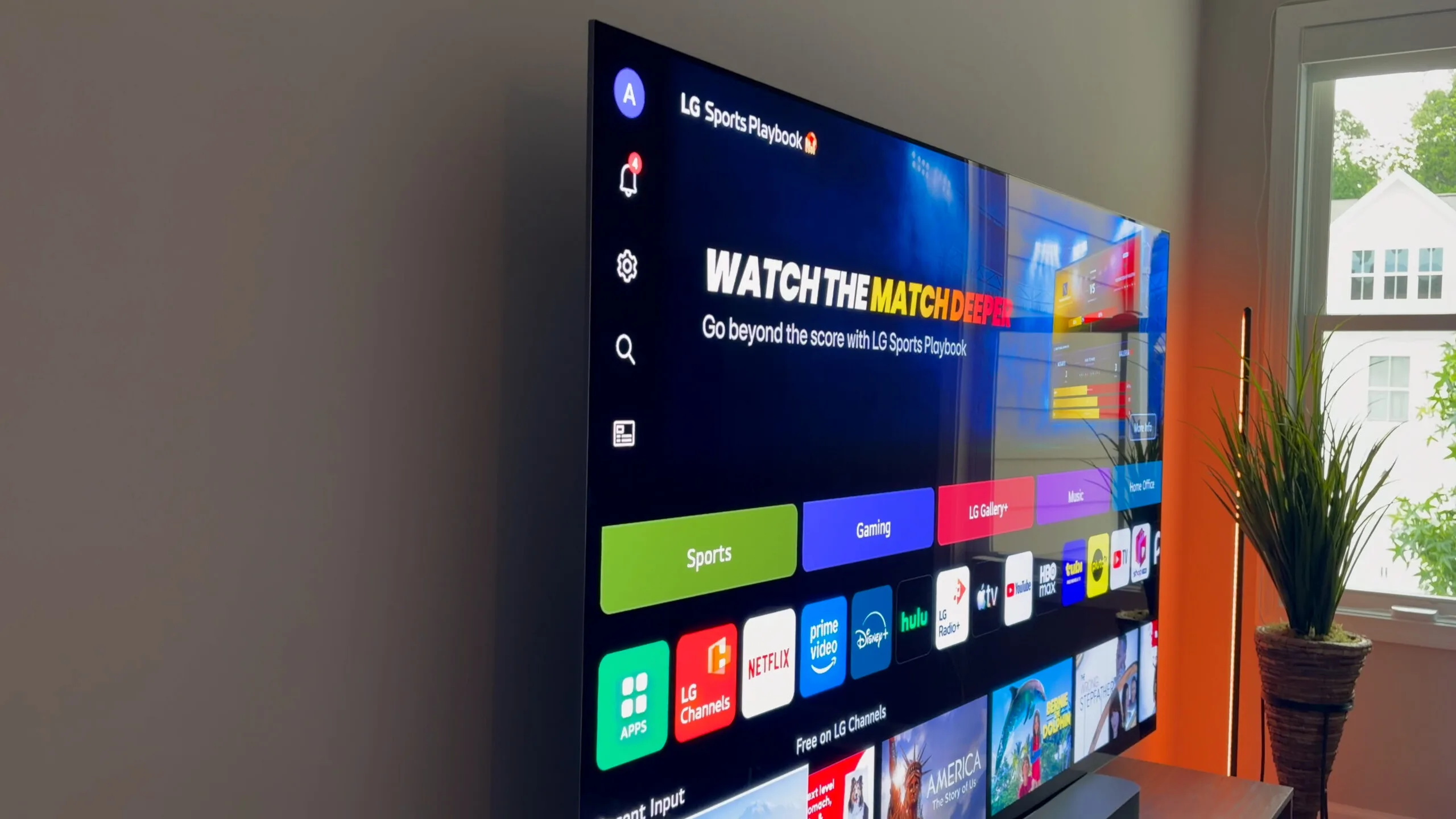
If you own an LG smart TV, there’s a chance one of your harmless-looking apps has been moonlighting as an internet relay for someone else’s traffic. According to a report from KrebsOnSecurity, LG says it’s finally stepping in to stop this menace. This week, the company confirmed it plans to suspend any webOS app that turns a TV into what’s called a residential proxy node.
The move follows a report from security firm Spur, which found that more than 42 percent of apps on LG’s webOS store include SDKs that quietly reroute internet traffic through your TV, indefinitely. Samsung isn’t spared either, with over a quarter of Tizen apps carrying similar code.
What is a residential proxy, and why should you care?
It’s like renting out your TV’s internet connection without fully realizing it. Companies pay app developers to bundle these SDKs into their software, and in return, your TV’s IP address gets used by paying customers elsewhere. Spur found this hidden in everything from simple games to screensavers and file utilities, not just obscure or sketchy apps.
Faiz Aly / Digital Trends
What is LG doing about it?
LG Senior Vice President John Taylor told KrebsOnSecurity that developers who don’t strip out the proxy feature will have their apps pulled entirely. He added that LG’s review of its app catalog is already underway, and the company plans to tighten how it evaluates submissions going forward.
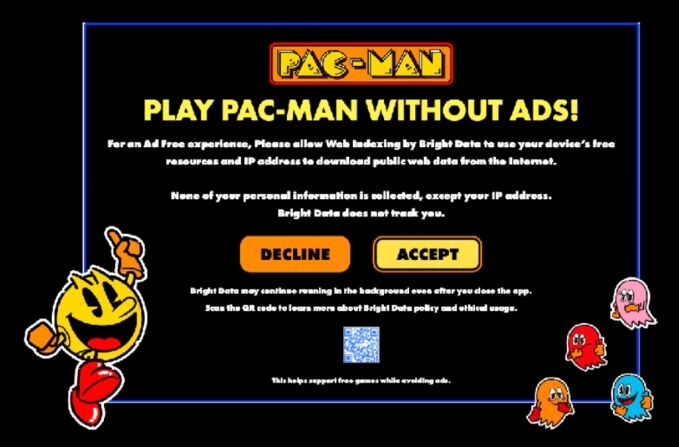
Bright Data, the proxy network behind most of the SDKs in the report, defended its practices, saying users opt in through a dedicated screen and that customers go through a vetting process. Spur isn’t convinced, arguing that a single consent prompt buried inside a TV app isn’t real transparency, especially when anyone in the household, including kids, could be the one tapping agree.
Advertisement
Spur.us
LG cleaning house is a welcome move, though it comes right after the company faced backlash for bundling McAfee promotions into its monitor drivers through Windows Update, with zero warning.
Apple receives a lot of criticism for taking too long to approve apps on its App Store, a problem significantly exacerbated by the deluge of video-coded app submissions. And while some of the criticisms are warranted and Apple has let some shady apps on its App Store, I would rather have a secure App Store than something like what LG’s offering.
After selling out the entire stock in 11 minutes in March, the US Mint’s commemorative Steve Jobs coin was briefly back on sale on Thursday.
It still only vaguely looks like Steve Jobs, but it’s intended to be him and to commemorate American innovation. But stop us if you’ve heard this one before, as the coin was released in May 2026.
The US Mint’s listing at the time said that it was a limited pressing, and the release schedule page still says that. It’s conceivable that part of the initial pressing was held back for some reason, but that would be the first time that was done in the American innovation line.
The original US Mint listing from May 2026, showing the coin as a limited edition – image credit: US Mint
Advertisement
Regardless of how it’s happened, it was briefly possible to buy the Steve Jobs commemorative $1 coin. You had to be quick though.
The coins were initially being offered in 25-coin rolls and 100-coin bags. The rolls sold out in around ten minutes, the bags took about 20.
Those rolls were again priced at $61, while the bags are $154.40, both plus shipping. While stocks lasted, the coins were on sale through the US Mint’s online store.
The coins still feature “a young Steve Jobs sitting in front of a quintessentially northern California landscape of oak-covered rolling hills.”
Advertisement
“Captured in a moment of reflection,” continues the US Mint listing, “his posture and expression reflect how this environment inspired his vision to transform complex technology into something as intuitive and organic as nature itself.”
This $1 coin is inscribed with “United States of America,” “California,” and also both “Steve Jobs” and “Make Something Wonderful.” On the opposite side to Jobs, the coin has a stylized Statue of Liberty.
How limited the offer really is
The US Mint did not publicize the number of coins being pressed when they were first released, it only marked the offering as limited. The CoinNewscollectors’ site, however, said that a total of 1,233,750 were being produced between the Denver and Philadelphia minting facilities.
If correct, then regardless of whether the new offering represents a second pressing or not, more Steve Jobs coins are being produced than for any previous American Innovation releases. According to Coin Mintages, the program’s previous largest pressing was in 2019 when between Denver and Philadelphia, a total of 952,725 coins were made to commemorate the first US patent.
Advertisement
Clearly, then, the US Mint expected the Steve Jobs coin to sell more than previous ones. It remains correct on that matter, based on how quickly they sold out to the walls the first time and now, how the rolls of them have sold out.
But a greater number of coins, coupled with how the limited release now appears to not have been limited, will reduce the appeal to numismatists.
While any stocks remain, though, it is possible to specify that you want coins from the Denver or Philadelphia pressing plants. According to Coin Week, the Denver press is more precise, while the Philadelphia plant produces coins with more errors than Denver does, which may appeal to a certain type of collector.
We reached out to the US Mint to find out if this is a second pressing, or remnants from the first. A representative from the mint got back to us, and while there was some confusion on if the coins were available or not, they did confirm that there was not nor will there be a second stamping.
Advertisement
However, the coin will be included in the Reverse Proof Set that will go on sale later in 2026, which will be the only remaining unreleased product to feature the coin.
Hayete Gallot, now executive vice president of Microsoft Security, speaks at a Microsoft event in France in 2024. (Microsoft Photo)
GeekWire is profiling over the next few weeks some of the people and teams that are shaping the evolution of Microsoft in what we’re calling its “Microsoft 2.5” era.
AI has had an impact on just about every tech-product category, but especially security. Attackers are using AI; customers are looking to defend with AI. The goalposts keep shifting. “Agentic security” is now the holy grail, and Hayete Gallot, the newly minted executive vice president of Microsoft Security, is leading the charge toward it.
Advertisement
Gallot, a 16-plus-year Microsoft veteran who rejoined the company in February after a 1.5-year Google detour, replaced Charlie Bell, who came to Microsoft from AWS in 2021 and continues at the company as an individual contributor focused on engineering quality.
“Customers care about two things: solving for security and being able to afford it,” Gallot said when I asked during our interview this week why she came back to Microsoft.
“I am a problem solver. And an engineer at heart (and by training). Security is the most important problem right now — and Microsoft is the only place with all of the puzzle pieces to help our customers.”
Since her return, Gallot hasn’t been shy about shaking things up. As noted recently by The Information, at least nine corporate vice presidents who previously reported to Bell have left the company this year.
Advertisement
“We’re making changes to ensure we’re in the best formation to go after this opportunity,” she acknowledged.
“I’m motivated by doing the right thing for our customers, my teams, and tech outcomes. I like to move quickly; days and weeks, not months and years, learning through execution, iterating rapidly, and adjusting based on real customer signals.”
The company isn’t starting from scratch. As of 2021, Microsoft claimed security was a $10 billion business for the company. By 2023, security had reached a $20 billion annual revenue rate, officials said.
Those claims haven’t been without controversy. Microsoft has built a huge business in finding and fixing security problems which some customers felt were of the company’s own making.
Advertisement
Microsoft has a wide-ranging and rather unwieldy security portfolio, encompassing identity management (Entra), endpoint protection (Defender), endpoint management (Intune), security information and event management (Sentinel), and compliance (Purview), among others.
In 2023, Microsoft introduced its Security Copilot set of AI analysis services that integrated with some of its existing security offerings. But a portal-based solution like Security Copilot doesn’t offer the kind of end-to-end coverage that an agentic security platform can, Gallot said.
The problem is that attackers are using agents, too. Customers need real-time insight into what’s happening in their environment, and the ability to act just as quickly, Gallot said.
Agentic security is about “taking the signals and turning them into a graph that is useful,” Gallot said. “If you’re trying to reason about 100 trillion signals, it’s not really effective.” The graph, she said, lets agents pick the right model for each threat and close the loop.
Advertisement
In practice, that means the system can quarantine a device or revoke access on its own, for example, rather than waiting for a human.
Microsoft’s core existing security products will continue to play a role as the landscape evolves, both spotting the problems and acting on them. Security Copilot isn’t going away in the process: “You’ll have Copilot and you’ll have agentic security,” she said.
The company’s new Agent 365 “control plane” — a central console for tracking every AI agent a company runs — fits in by letting customers see the “blast radius” of an agent, meaning everything a hijacked agent could reach, Gallot said. It’s similar in concept to Zero Trust, the “never trust, always verify” security model that limited how far an attacker could get with a stolen employee login, but applied now to agents rather than people.
Traditional AI security and agentic AI security are fundamentally different, Microsoft says. Agentic security doesn’t just protect models and training data; it also can protect tools, workflows, memory, connected systems and more. Because agents can take action, the potential positive and negative stakes are higher.
While AI has helped businesses make strides in finding and fixing vulnerabilities, it hasn’t gone much beyond that. Microsoft introduced its multi-model agentic scanning harness (MDASH) as its first step into the agentic security space, Gallot said.
The company used MDASH internally to boost finding and fixing Windows security issues, and it is now making it available to select customers in an expanded preview. MDASH will allow customers to use the best model for the right task to secure all different types of code bases, she said.
Microsoft is rumored to be readying a more comprehensive agentic security offering, of which MDASH is likely just one piece.
Advertisement
Microsoft is far from the only one doing this. AWS, Anthropic, and OpenAI are offering security tools on their platforms, and dedicated security vendors are building their own agentic platforms.
Microsoft has the advantage of scale in the enterprise. The question is whether Gallot and her new leadership team can turn that scale and emerging AI tools into both a bigger business for the company and better protection for its customers.
With temperatures rising across the planet, air conditioners are less of an option and more of a necessity in many cities. Add to that the increasing frequency and intensity of heat waves, and ACs now have to run for hours continuously during extreme weather.
Effective cooling systems won’t set you back too much, but just because it blows cold air doesn’t automatically make it safe. Despite stringent manufacturing protocols, even buying from the most reliable air conditioner brands doesn’t guarantee a lifetime of safe operation. Technical malfunctions in air conditioners can lead to a variety of concerning problems beyond simple cooling issues, like mold growth, fire, and burn hazards.
Units with more serious, widespread issues undergo recalls and are pulled from circulation. However, people, whether intentionally or unintentionally, might sell these products second-hand at flea markets and online resale platforms. In this article, we discuss five air conditioner models that have been recalled so you can steer clear of them. These models span window ACs, PTACs, and portables. All of these are confirmed Consumer Product Safety Commission (CPSC) recalls, so look out for these models, especially when buying used.
Advertisement
Midea U and U+ Window Air Conditioners
ZikG/Shutterstock
Midea’s U and U+ Window AC line spanned over 40 models and was sold under many brand names, including Frigidaire, Danby, Comfort Aire, and Keystone. The unique U-shaped design of the air conditioner allowed it to sit on the windowsill without eating up the entire frame.
For anyone comparing a window AC and mini split, Midea’s U-shaped lineup has become a popular alternative, running quietly and obstructing less of the window view than standard window units. The models were sold between 2020 and 2025 at major retailers like Home Depot, Costco, and Amazon. They were even rated Wirecutter’s top pick, bolstering their credibility.
Advertisement
This AC model didn’t experience a mechanical failure, but its design didn’t facilitate quick drainage of water, creating conditions ripe for mold growth. There were at least 152 complaints to the company, with a few customers experiencing allergies, sore throats, and full-blown respiratory infections. Midea issued the full recall on June 5, 2025, pulling back around 1.7 million units.
The organization gave customers the option for a free repair or a full or partial refund, depending on the date of purchase. For buyers opting for a repair, Midea would send a technician to install a new drain plug or mail a DIY repair kit. If you’re a current owner or are planning to purchase this air conditioner second-hand, make sure to cross-check its model number on the official Midea U and U+ window AC recall site.
Advertisement
Amana Packaged Terminal Air Conditioners/Heat Pumps with DigiAir
Tada Images/Shutterstock
You might not recognize the term PTAC, but you’ve seen air-conditioning units built into or under windows in hotels. Packaged terminal air conditioners are common in hotels and apartments, working independently of a central system to keep your room cool.
Since property owners or managers maintain these units, most guests wouldn’t consider that they’re unsafe. In this case, a huge line of PTACs from Amana had a major engineering flaw that made them an active fire hazard. This line of ACs eventually cost the manufacturer, Daikin Comfort Technologies (DCT), millions. These ACs were sold from May 2015 to January 2023, and they were equipped with DigiAir Modules — systems that bring in outdoor air to dehumidify. However, the compressors in these modules were prone to overheating and posed a fire or burn risk.
Starting in 2017, customers began filing warranty claims, and there were over a dozen fire reports and one injury due to smoke inhalation. Since DCT didn’t report this promptly to the Consumer Product Safety Commission, it was slapped with an $8.5 million civil penalty and required to strengthen its compliance and submit annual compliance reports. Over 62,000 units were recalled in August 2023, and their model numbers start with PMC or PMH. If you’re an owner, visit the Amana PTAC DigiAir recall page to get help disabling the DigiAir compressor and getting a free technician visit.
Advertisement
Royal Sovereign/Royal Centurian Portable Air Conditioners
Scharfsinn/Shutterstock
Easy on the wallet and easier to set up, portable air conditioners are great for targeted cooling. And when temperatures are at their peak, an inexpensive second-hand unit can feel like an oasis in the desert. However, some options shouldn’t be touched even with a 10-foot pole, like the Royal Sovereign (or Royal Centurian) portable air conditioners. Manufactured in China and imported by Royal Sovereign International in New Jersey, the affected lineup had seven models priced around $290. Over 33,000 units were sold from March 2008 to August 2014 at Costco, Amazon.com, Best Buy, and Home Depot.
The issue with these ACs was a defective drain motor that could ignite the unit’s plastic enclosure, posing a major fire and burn hazard. Worse than Daikin’s PTAC case, Royal Sovereign didn’t promptly notify the CPSC and misled it in 2010 by concealing active fire reports and falsely claiming it had discontinued the products. In 2016, a woman died from smoke inhalation and her two children were injured because their portable AC caught fire. The Department of Justice alleges that there were at least 42 fire reports by 2016.
Following a December 2021 recall, Royal Sovereign was fined $8 million in criminal fines and a $16.025 million civil penalty, the maximum authorized by the CPSA. The company, however, shuttered its consumer division and paid only $100,000 of the civil penalty. Current owners must stop using the unit and follow the instructions on the Royal Sovereign portable AC recall page.
Advertisement
Goodman Packaged Terminal Air Conditioners/Heat Pumps (PTACs)
ZikG/Shutterstock
The Goodman PTAC/heat pump recall in March 2018 affected more than 530,000 units in the US and roughly 3,400 in Canada. These units were sold from January 2010 until February 2018 under four brand names — Goodman, Amana, York International, and Energy Knight. Distributed through Goodman Manufacturing’s dealers, these PTACs were commonly installed in hotels, schools, apartments, and commercial spaces, priced from $700 to $1,400.
The firm received nine reports of the units igniting, including one case of smoke inhalation requiring medical attention. The fault stemmed from the unit’s outdoor fan motor overheating, turning into a fire and burn hazard. Although this crisis was triggered by a design flaw, high temperatures can damage systems, making it important to identify warning signs that extreme heat is killing your AC.
Advertisement
To correct the issue, Goodman sent consumers free repair kits, authorized technician support, and reached out directly to commercial owners to arrange free repairs. However, the safety hazard continued despite the 2018 recall because PTAC Crew and PTAC USA refurbished and resold some of these units, which were then recalled in 2021.
This failure wasn’t an isolated incident for the brand. Back in 2016, Goodman had already paid a $5.55 million penalty for failing to properly inform the CPSC about a different PTAC model’s power-cord fire hazard and for understating fire incidents. The official Goodman PTAC and heat pump recall page has more information regarding the 2018 recall models.
Advertisement
Amana Window-Room-Air-Conditioners and Through-the-Wall ACs/Heat Pumps
Kevin Brine/Getty Images
The previous options in this list were spread across the past few years, but the Amana Window-Room-Air-Conditioners (WRAC) and Through-the-Wall (TTW) ACs and heat pumps were recalled just weeks ago on June 25, 2026. It was right at the start of the heatwave that’s impacting hundreds of millions of people, when demand for reliable air conditioning is especially high.
These ACs, ranging from $850 to $1,500, were sold from April to December in 2025 via HVAC dealers and direct sales. The affected units have model numbers starting with AE, AH, and PB, and they’re commonly installed in apartments, hotels, and commercial spaces. The safety concern with these models was that the heating element would remain active even after the device was turned off — nothing like the common problems with air conditioners. If an electrical fault occurred, the device would become a fire and burn hazard.
Over 13,000 units have been recalled, and as of July 2026, the company has reported a single case of plastic melting on the unit, but no injuries. Unfortunately, there’s no scope for repairing these models, and DCT has asked customers to stop using them immediately. Users are eligible for a full refund once they’ve shared an image of the AC with its cord cut and its serial number with DCT. You can find more information regarding these steps on the official Amana TTW & WRAC recall page.


























































You must be logged in to post a comment Login