You can get all kinds of fancy lenses for modern cameras, with all sorts of mechanical and electronic wizardly to make them shoot better images. But what if you paired a vintage lens with a modern camera? It would take some work, as [Mathieu] found out, but you’d also get some interesting results.
The optic in question is a 100-year old lens—a Foth 50 mm f2.5 to be precise, originally used with a folding film camera. It was sourced from a market for just 3 euros. Notably, the lens was not designed for modern cameras, and so lacks an aperture and focusing mechanism. [Mathieu] thus had to fabricate something to fit the lens to a Sony FX3. A first attempt used an aperture adapter from Amazon and an elcoid adapter, but there were vignetting problems due to the lens placement in this case. Ultimately, [Mathieu] went with a special macro adapter that allowed him to control focus and tuck in an ND filter behind the lens, which made up for the lack of an aperture.
The vintage glass isn’t the sharpest lens out there, but that’s kind of what’s fantastic about it. The center of the frame is certainly focused, but it fades out softly towards the edges of the image, giving a cinematic, dreamlike effect. The bokeh in the background are particularly charming, too. As far as 3 euro lenses go, this one was a hit.
Producing hot water off-grid is a surprisingly energy-intensive activity, and although it looks simple on its surface it can get quite complicated especially when used in large scale for something like providing hot water for an entire home. When using combustion to heat the water there needs to be proper venting as well as control of the fuel, and even storage of the hot water needs to be meticulous to avoid certain pathogens. [Greenhill Forge] has built an off-grid solution for heating hot water that doesn’t necessarily rely on any combustion, though, provided he can find something to spin his custom electric machine.
The machine in question is, of course, an induction heater. It works similar to any simple electric motor, generator, or transformer except in this case the eddy currents generated are exploited rather than minimized. Normally these currents, generated when a magnet passes by a metal, are wasted heat in other machines but in this induction heater it’s the goal. The machine’s stator is built from copper tube wound in a spiral which allows water to flow through and absorb heat. The tube is soldered into one electrically solid mass to maximize the eddy currents. The rotor is taken from a previous generator built by [Greenhill Forge] which holds the permanent magnets.
During the initial tests using a power drill to drive the generator, he was able to heat 1.5 liters of water from 7.9C to about 24.4 C in three minutes. The math works out to providing 575 watts of power to the heater, and with something that could spin the generator faster it might have the potential to provide around 14.5 kW. Provided that there’s a source of energy around, such as a wind or water turbine, this could be a fairly sustainable way of generating hot water in off-grid situations. Some of [Greenhill Forge]’s other projects are centered around this idea as well, like one of his builds which uses waste sawdust to heat his workshop with a custom-built stove.
Servers operated by Ubuntu and its parent company Canonical were knocked offline on Thursday morning and have remained down ever since, a situation that’s preventing the OS provider from communicating normally following the botched disclosure of a major vulnerability.
Attempts to connect to most Ubuntu and Canonical webpages and download OS updates from Ubuntu servers have consistently failed over the past 24 hours. Updates from mirror sites, however, have continued to work normally. A Canonical status page said: “Canonical’s web infrastructure is under a sustained, cross-border attack and we are working to address it.” Other than that, Ubuntu and Canonical officials have maintained radio silence since the outage began.
A decades-long scourge
A group sympathetic to the Iranian government has taken credit for the outage. According to posts on Telegram and other social media, the group is responsible for a DDoS attack using Beam, an operation that claims to test the ability of servers to operate under heavy loads but, like other “stressors,” are, in fact, fronts for services miscreants pay for to take down third-party sites. In recent days, the same pro-Iran group has taken credit for DDoSes on eBay.
Last year, Spotify removed more than 75m spam tracks from its platform.
The world’s biggest music streaming platform, Spotify, does not ban AI-generated music, but does admit that it finds it hard to detect it.
In its latest attempt to tackle growing AI spam on the platform, Spotify is introducing a vetted artist verification badge to help users identify human-made music from AI-generated ones.
Fraudulent music distribution is especially an issue for the platform, whose total artist payouts have grown from $1bn in 2014 to $10bn in 2024. However, artist payout per stream has reduced on average since 2021, further incentivising spam music to increase earnings.
Advertisement
Artists who receive this verification badge are understood to show consistent listener activity and engagement, compliance with Spotify’s policies and signal a human artist behind the account. The company said that it would also look for off-platform presence such as concert dates and social media accounts.
It added that at launch, “profiles that appear to primarily represent AI-generated or AI-persona artists are not eligible for verification”.
The new badges will begin rolling out in the coming weeks, Spotify said. These will appear next to artist names in search, represented with a light green checkmark icon.
“In today’s music landscape, the concept of artist authenticity is complex and quickly evolving, and we’ll continue to develop our approach over time,” Spotify said in a blogpost on 30 April.
Advertisement
“At launch, we have ensured that more than 99pc of the artists Spotify listeners actively search for will be verified, representing hundreds of thousands of artists – the majority independent – spanning genres, career stages and geographies.”
The company already has a number of other features, including ‘expanded song credits’, ‘about the song’ sections and AI credits, which help listeners find more information about the artists they listen to.
The new standards for verification, according to the company, would be paired with human reviews to identify “real artists” behaving in good faith, Spotify said. It also has an AI impersonation policy, as well as mechanisms to “better” stop fraudulent music distribution.
Last year, Spotify said that it removed more than 75m spam tracks from its platform. It acknowledged that AI is used by bad actors and content farms to create deepfakes and spam to deceive artists, pushing “slop” into the ecosystem. Spam tactics also include mass uploads, duplicates, SEO hacks and artificially short track abuse.
Advertisement
The verification badge comes after publisher Sony Music requested the removal of 135,000 songs by fraudsters impersonating its artists on streaming services.
Meanwhile, direct-to-fan music platform Bandcamp took a more aggressive approach in January by outright banning songs “generated wholly or in substantial part by AI”.
“Any use of AI tools to impersonate other artists or styles is strictly prohibited,” the company said in a post on Reddit. Spotify, however, allows artist impersonations as long as consent is provided.
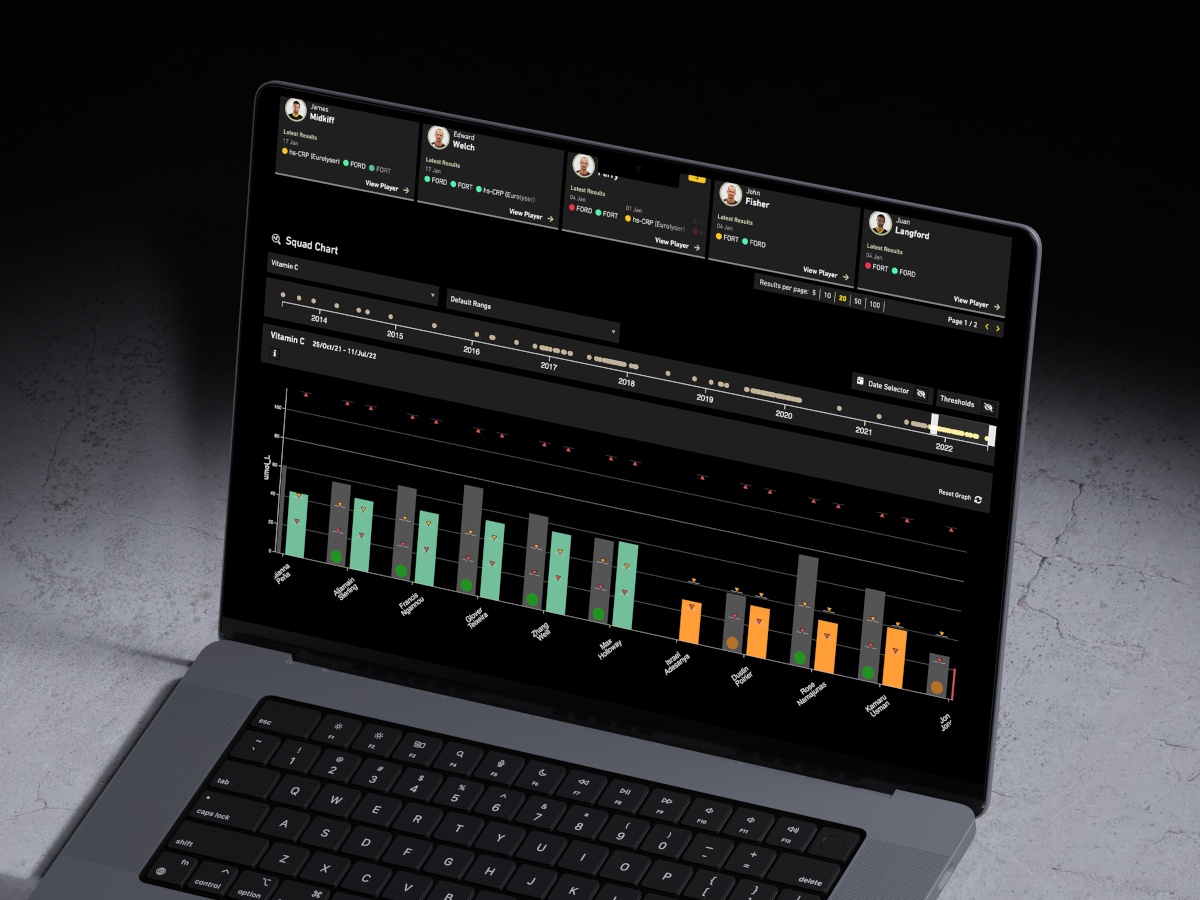
Orreco uses AI, computer vision and biomarker data to optimise athlete performance, predict injury risk and accelerate recovery, according to the company.
Galway-based athletic bio-analytics company Orreco is to participate in the third edition of Major League Soccer (MLS)’s Innovation Lab, the North American professional football league’s initiative striving to advance the next generation of sports technology.
Orreco uses AI, computer vision and biomarker data to optimise athlete performance, predict injury risk and accelerate recovery, and is “trusted by elite teams and athletes across major leagues worldwide”, according to the company.
The programme cites key areas of focus in attempting to evolve technology around football as fan engagement, media technology and on-field development. MLS said it has chosen five AI-focused companies for the lab to “deploy solutions designed to address real challenges across the soccer ecosystem, creating a direct pathway from innovation to implementation”.
Advertisement
“It’s a privilege to be chosen for this year’s MLS Innovation Lab cohort and to play a role in advancing both MLS and the global game,” said Dr Brian Moore, co-founder and CEO of Orreco.
The company said its team includes 20 PhDs and that the team has published more than 400 peer-reviewed scientific papers. It works with elite athletes “to optimise performance, accelerate recovery and extend playing careers” in sports such as football, basketball, ice hockey, American football, golf and motor racing.
The company said it was selected for the initiative – which will allow the participants to test and scale their technologies in real-world MLS game environments – “following a rigorous evaluation process which vetted hundreds of companies from around the world”.
The other participants chosen for the upcoming cohort are Springbok Analytics, which uses AI to transform scan data into detailed 3D muscle analytics; Fit:Match, a player identification and assessment platform that uses mobile devices, AI and computer vision to capture detailed body data; Advanced Image Robotics, which aims to make broadcast-grade sports video production more accessible using AI-powered robotic camera systems; and WMT AI Ticketing, which claims to optimise pricing and distribution in real time by analysing fan behaviour, demand and market dynamics.
Advertisement
Chris Schlosser, MLS senior vice-president of emerging ventures, said: “With each new cohort, MLS Innovation Lab continues to surface technologies that have the potential to meaningfully impact how the game is played, experienced and consumed.
“This group represents a strong mix of real-world AI technologies that can have immediate impact across athlete performance, television production and fan-focused innovation.”
Orreco was founded in 2010 by sports scientist Moore and haematologist Dr Andrew Hodgson. The company utilises applied physiology, biostatistics and cognitive computing to better inform coaches, medical teams and athletes with actionable insights that help improve performance.
In January, the company acquired British Olympian Jessica Ennis-Hill’s ‘Jennis’ women’s health and performance platform. At the end of 2025, Orreco raised $4m in a funding round that included participation from Enterprise Ireland and television personality and billionaire investor Mark Cuban, as well as athletes and existing investors.
Advertisement
Don’t miss out on the knowledge you need to succeed. Sign up for the Daily Brief, Silicon Republic’s digest of need-to-know sci-tech news.
Microsoft is rolling out Xbox mode to all Windows 11 PCs, bringing a full-screen Xbox PC app interface similar to Steam’s Big Picture Mode. “Some players in select markets will be able to download the Xbox mode experience today, with availability expanding to more players in those markets over the next several weeks,” says the Xbox team. The Verge reports: Xbox mode aims to try and bridge the gap between Xbox consoles and Windows, but its original debut felt like a beta on the Xbox Ally devices. “Since first introducing Xbox mode, formerly known as ‘full screen experience,’ on Windows handhelds, we’ve been listening closely to player feedback and continuing to evolve the experience across devices,” says the Xbox team. “Those learnings directly shaped Xbox mode on Windows 11 PCs.”
Microsoft is also rolling out improvements to the Xbox Ally X handheld today, including a preview of its Auto SR upscaling technology. Xbox console owners are also getting a new dashboard update today, with the ability to disable Quick Resume on individual games and a feature to add custom colors to the dashboard.
Just last night, I was scrolling through endless Pinterest boards and online sites to find a dress for my best friend’s engagement party. I was deep into scrolling before deciding to just wear something I already have. So I went to my Photos app on my phone and started scrolling to see what formal outfits I’ve worn in the past for inspiration.
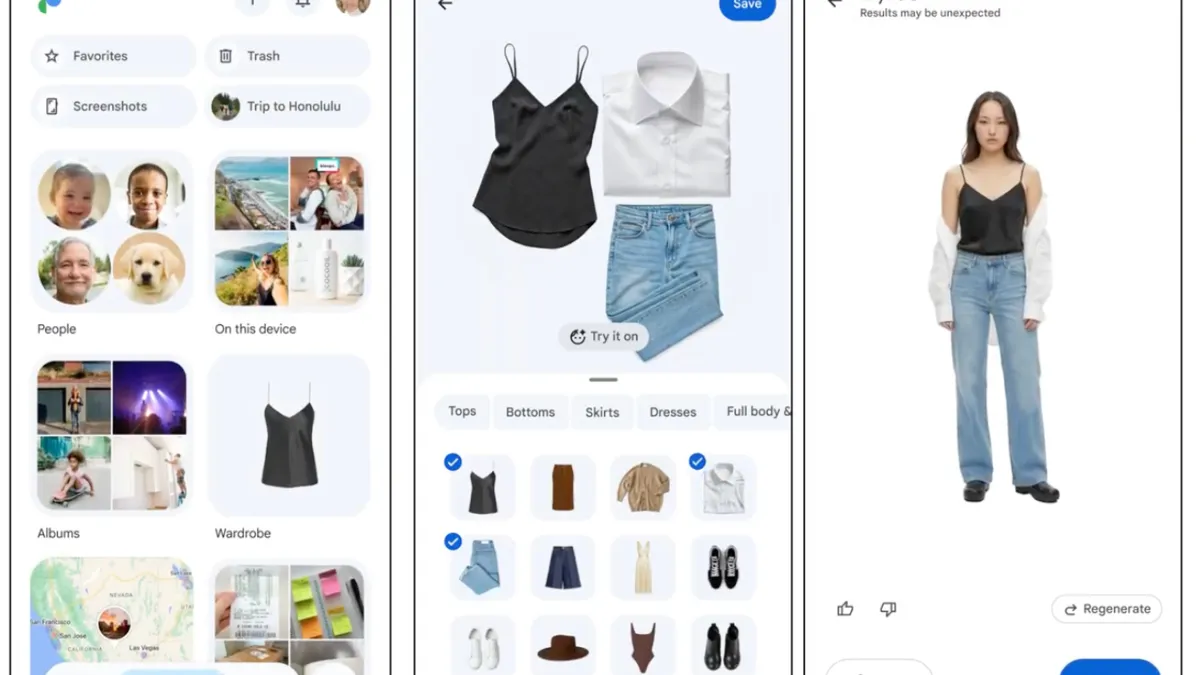
If you find yourself doing this often (I do it at least once a week), a new Google Photos AI feature might help with this by cataloging the clothes you’re wearing in photos saved to the app. From there, it will organize your clothes into a digital collection, so you can style, mix and match and try on clothes virtually.
The Google Photos wardrobe feature is rolling out this summer, first to Android and then iOS.
Advertisement
How Google’s AI-driven wardrobe feature works
The wardrobe feature uses AI to scan the photos in your camera roll to create a digital closet based on pieces you’ve worn in the past. With this saved collection, you can filter by category, such as “jewelry” or “tops” to find that one particular item.
Google also seems to be taking a page from Pinterest with the ability to create digital mood boards. Rather than pulling out your entire closet and trying on 10-plus outfits that you send to your friends to see what they like best, you can use the wardrobe feature to mix and match items into outfit ideas that you can then save to a shareable mood board. You can save these mood boards for different categories or occasions, like “wedding guest” or “work outfits.”
With the wardrobe feature, you’ll also be able to “try on” clothes virtually to save time getting dressed. You can select clothing items saved in your collection, then click “Try it on” for a preview of how it will look on your body. Something to keep in mind is that the AI doesn’t really know what size clothes are or how they’re cut, so it’s at best a rough approximation of how any particular article will fit on a particular person.
CNET’s Abrar Al-Heeti tested the Search try-on feature last year and found it would, in fact, generate bare arms to show off a sleeveless dress. A similar feature on the Samsung Galaxy S26 and Google’s Pixel phones, called “Find the Look,” adds this function to Circle to Search. That means you can take a screenshot or a photo and get an idea of what you might look like wearing it.
Amjad Masad has been building Replit for a decade, but the last 18 months have been something else entirely. The AI coding assistant company went from $2.8 million in revenue in all of 2024 to tracking toward what Masad describes as a billion-dollar annual run rate.
At TechCrunch’s sold-out StrictlyVC event in San Francisco on Thursday night, we covered a lot of ground in a short time, beginning with the question everyone in the industry is asking right now: in a world where rival Cursor is reportedly in talks to be acquired by SpaceX for $60 billion, is Replit also bound to sell? We also got into Replit’s net revenue retention — a measure of how much existing customers expand their spending — which Masad says is reaching as high as 300%, his willingness to take Apple to court over what he called outright lies in its App Store battle with Replit, and the possibility of the company beginning to invest in its own customers.
On the question of independence, Masad was unambiguous. Unlike Cursor, which he said has been operating at negative 23% gross margins, he argued Replit has the economics to make that path viable — even if he stopped short of ruling out a sale entirely.
The following has been edited for length and clarity:
Advertisement
TC: Cursor’s reported SpaceX deal was the talk of the industry last week. What did you make of it?
AM: It’s kind of hard being an independent, smaller AI company that’s building on foundation models, especially if you’re burning a ton of cash. Part of the reporting suggested Cursor has negative 23% margins, and if you’re also wanting to invest in training models, that makes it incredibly hard to stay independent.
For us at Replit, partly because we target a different customer set, we’ve been able to run the business more rationally. We’ve been gross margin positive for over a year. We’re slightly more expensive, but we provide a lot more. Our audience tends to be mostly non-technical users who previously haven’t been able to create any software. We provide an end-to-end platform — from the prompt all the way to a deployed application that can scale. We handle security, databases, database migration. And we’ve been doing this long enough that we’ve built a lot of those primitives into the platform.
Techcrunch event
Advertisement
San Francisco, CA | October 13-15, 2026
Is Replit for sale? I would assume you are talking with potential acquirers all the time; it’s your fiduciary responsibility.
Advertisement
Yeah. We have amazing partners, and they sometimes bring up these topics. But we’re going to try to stay independent. I would love for us to remain an independent company. We’ve been around for 10 years, before it was even accepted that you could make apps just from ideas. We were talking about creating a billion software creators back in 2018 at YC, and people sometimes actually laughed at that dream. Now that dream is possible, and we kicked off this revolution with our agentic coding experience in September 2024. It just feels like we can take it much further.
You work closely with Anthropic, Google, and OpenAI. If you had to rank them — who’s doing it best?
Anthropic is still undefeated on the core agentic loop. They have the best tool calling; the agent can stay coherent much longer. GPT-5 is catching up quickly. Google’s Flash family of models is just amazing on price-performance. If you want something fast and cheap, they’re actually beating open source right now. We use all three, and honestly I wouldn’t discount the newer labs either. Reflection AI is coming out with open-source models we’re hearing great things about. And the Chinese models are impressive — Kimi is as good as an Anthropic-generation model from January, so it’s only about three months behind.
When you’re in a bake-off for an enterprise deal, what wins it for you?
Advertisement
Most of our sales are inbound or organic — very product-led. We’ve acquired customers like Zillow and Meta purely through people adopting the product and then raising their hand to buy an enterprise plan. When it does go top-down and there’s a formal bake-off, we usually win on product. But even in cases where we might be missing a feature, once it hits the C-suite and the IT group, Replit wins on security. A lot of vibe-coding tools will generate a website and connect it to an external database — great products, but it makes security much harder, because the database is open to the public and you need to configure row-level security, which is especially difficult for non-technical builders. Replit being full stack, with the database built into the project and not open to the public — that makes the app inherently more secure.
We also spent 10 years battling crypto scammers and hackers, so our cybersecurity function is as good as a dedicated cybersecurity startup. Every time you deploy an app on Replit, we create an entirely new isolated project on Google Cloud. We inherit Google’s security model.
Can we talk about churn? How long do you hold onto customers if the best prototypes eventually get rebuilt into a company’s existing stack?
Churn is very, very low, and net retention is incredibly high — 300% in some cases. What we actually hear from customers is that when engineers get nervous and try to rebuild an app into their own stack, they often make it worse. Once enterprises get comfortable with the full Replit stack — especially when we set up a single-tenant environment for them — they keep the apps on Replit. Bain & Company, for example, replaced Tableau and Power BI with Replit and Databricks.
Advertisement
There’s a growing concern about AI bloat — non-technical users generate far more code and burn through far more tokens. That’s good for you [given your usage-based fees]. What about your customers?
We don’t have a lot of regrettable spend. Enterprises are very ROI conscious, and they tell us about the returns they’re getting. For the most part they feel the investment is totally worth it — often one, two, three orders of magnitude. If they spend $100,000 a month with Replit, they’re usually generating $2 million, $3 million, $10 million in some kind of return.
Let’s talk about Apple. Another rival, Lovable, just got an app-building app approved by the App Store this week. Replit has been in App Store purgatory, with Apple blocking your updates for months. How much does that hurt you?
It’s not life or death — we could lose the app and it wouldn’t do anything meaningful to our business. But it’s an app people genuinely love. We’ve been on the App Store for four years. Kids in underprivileged communities learn to code on Replit on their Android devices. Executives use it in meetings.
Advertisement
The reason Replit got blocked when others weren’t, we believe, is that Replit makes iOS apps. When we launched that capability in December, there were charts going around showing how many apps were getting into the App Store through us. We think Apple feels threatened by that.
Apple’s stated reason is that you’re downloading new code to the device [after the approval process], which violates their guidelines.
That’s a lie. And we can prove it in court if we have to.
Is that going to happen?
Advertisement
I hope not. I’m a fan of Apple, and I’d love to collaborate and build something great together. We’re happy to send customers to Xcode [Apple’s own development environment]. But you can’t run a marketplace that a billion people have access to and make decisions that are discriminatory or based on whims.
Just wondering if, like Nvidia, OpenAI and others, you’re thinking about investing in your own customers in exchange for equity.
We’ve thought a lot about it, and it is a consideration. I’ve personally invested in a few startups that started on Replit before they made any money. Some of them, like Magic School — a teacher decided to take his time during COVID to learn a little bit of vibe coding and built an AI app for other teachers. He found this problem that in America, we burn out a lot of teachers. He wanted to use AI to reduce the workload. He did that, and he made $20 million in the first year. Other companies that started on Replit, I think, are valued at half a billion dollars. The entrepreneurship happening on Replit right now is genuinely exciting. We integrated with Stripe a few months ago, and the transactions flowing through Replit are growing triple digits month over month. Pretty soon, our customers will be making more revenue than we are.
You can watch our full conversation with Masad below:
Advertisement
When you purchase through links in our articles, we may earn a small commission. This doesn’t affect our editorial independence.
Microsoft Word is getting an AI legal agent, which sounds helpful until you remember how badly this has gone before. The new Legal Agent can review contracts, suggest edits, compare versions, and flag risky clauses inside Word. On paper, these features sound quite useful and convenient, however, cases of generative AI tools hallucinating and inventing entire cases, citations and quotes from thin air have dragged some real people in real court trouble before.
What can Microsoft’s Legal Agent do?
Microsoft says Legal Agent is available through Copilot in Word for users in its Frontier program in the U.S. It currently works on Word for Windows desktop. There is no separate app or installation required, though some users may need to restart Word before the agent appears.
Legal Agent is meant for contract and document review. Microsoft says it can check a contract clause by clause against a legal playbook, review a full agreement, compare different versions, flag risks and obligations, and suggest edits with tracked changes. It is also keeps the original formatting, tables, lists, and negotiation history intact.
Advertisement
The company is also trying to avoid the obvious nightmare scenario for its users and itself. The feature has built-in safeguards like providing citations linked to source language, so reviewers can check suggestions before using them, along with clear disclaimers that it does not provide legal advice, may produce inaccurate content, and still requires review by a qualified legal professional before anything is relied on.
Microsoft
Why should lawyers still be nervous?
There is already precedent for AI going rogue in legal settings as two New York lawyers were sanctioned in 2023 and ordered to pay a $5,000 fine after submitting a court filing that included fake cases generated by ChatGPT. Michael Cohen, Donald Trump’s former lawyer, also admitted that he unknowingly gave his attorney fake case citations generated by Google Bard. While Cohen was not sanctioned, the judge still called the episode embarrassing and stressed the need for skepticism when using AI in legal work.
The bigger problem is that hallucinations remain unresolved. AI chatbots can still produce answers that sound confident while being partly or completely wrong. In legal work, that is especially dangerous, because a made-up citation or invented case can end up in a filing and create serious consequences.
Microsoft has put many safeguards on Legal Agent to prevent these issues, however, the lesson is already written in court records. AI can speed up legal work, but the responsibility of fact checking still falls on the lawyer.
The ACSI has a trio of heavy-hitters on top for 2026: Home Depot, Lowe’s, and Menards. Each company earned a score of 81 out of 100. Both Home Depot and Lowe’s scored higher than the year before, while Menards was slightly lower. The ACSI 2026 rankings place these companies ahead of other well-known home improvement retailers, including Tractor Supply – which has been in business since 1938 – and Ace Hardware, which took a notable hit in this year’s index after being the highest-ranked last year.
The ACSI uses customer interviews to inform its rankings rather than relying on a single rating. Those interviews are fed into a model that measures customer satisfaction through a specific set of drivers. Those drivers include customer expectations, perceived quality, and perceived value. The results are then connected with customer complaints and customer loyalty to determine the final satisfaction score. This makes it possible for companies within the same industry to be compared using the same measurement system.
Advertisement
Understanding the differences in customer satisfaction scores
PJ McDonnell/Shutterstock
The American Customer Satisfaction Index for 2025 looked much different for home improvement retailers than it did just one year later. Menards ranked higher and was actually tied for the top spot with Ace Hardware. Home Depot was in second place, and Lowe’s, where some people hate to shop, came in dead last. Tractor Supply Company, which ranked in 2026, was not part of the ACSI in 2025.
The ACSI doesn’t reveal exactly what caused customers to rate their personal experiences differently from one year to the next. However, scores are definitely impacted by even the slightest change in customer responses. This means that small differences can lead to big shifts, especially when those changes show up consistently across multiple survey responses rather than in just one area. This was reflected in the rankings from 2025 to 2026. Additionally, the ACSI represents one set of survey results that perhaps do not accurately tell the whole story across the board.
Advertisement
For example, the J.D. Power 2025 U.S. Home Improvement Retailer Satisfaction Study ranked Lowe’s highest in customer satisfaction. Ace Hardware came in a close second, while Home Depot and Menards followed behind. In this case, J.D. Power measured satisfaction across eight areas, including store experience, product availability, digital tools, and value for price paid, among others. Responses from more than 2,000 customers who had recently made home improvement purchases were used to determine the results.
Apple has quietly pushed the Mac mini entry price higher, as the once-standard $599 base model is no longer available on its U.S. online store.
As of May 1, the $599 Mac mini configuration isn’t available to order through Apple’s primary online store. The 256GB model doesn’t appear as a selectable option there.
Higher-priced configurations now define the main lineup, with listed pricing starting at $799, though availability across configurations continues to fluctuate.
The 256GB configuration is also absent from Apple’s education and military storefronts, with no way to order or backorder it.
Advertisement
Refurbished listings still include lower-priced Mac mini configurations when inventory is available, but those units are limited and inconsistent.
When the M4 Mac mini launched on October 29, 2024, Apple positioned it as the company’s most affordable Mac, with a $599 starting price, 16GB of memory, and 256GB of storage.
Other configurations also show extended shipping delays or limited availability, indicating the constraint affects more than a single model.
The base model was out of stock for roughly two weeks before disappearing from the online store. This change aligns with supply constraints affecting the Mac mini lineup.
Advertisement
Going to be months before supply equals demand
During Apple’s fiscal second-quarter earnings call on April 30, 2026, CEO Tim Cook said demand for Mac mini and Mac Studio has outpaced supply and will take months to stabilize. Rising interest in running AI workloads locally has increased demand for compact Macs and added pressure to already constrained supply.
For buyers, the Mac mini no longer offers a reliable $599 entry point into macOS, with that role now shifting to the MacBook Neo. Mac mini configurations now start closer to $799 in most purchasing scenarios.
From Apple’s side, the move reflects a combination of supply constraints and product positioning. Removing the lowest-cost configuration pushes buyers toward higher-priced models and supports higher average selling prices.
Whether the change, as spotted by MacRumors, is temporary or a longer-term adjustment remains unclear. Earlier reporting points to a Mac mini update later in 2026, but exact timing is uncertain and current availability issues may still affect Apple’s supply chain.



























































You must be logged in to post a comment Login