
Security teams log 54% of successful attacks and alert on just 14%. The rest move through your environment unseen.
The Picus whitepaper shows how breach and attack simulation tests your SIEM and EDR rules so threats stop slipping by detection.




Private investors have been falling over themselves to get a piece of Anthropic, given the AI model maker is growing at a dizzying pace. Multiple investors told TechCrunch that the company’s $65 billion fundraise at a $965 billion valuation, announced last week, was greatly oversubscribed. Now, with that private demand still strong, Anthropic has revealed that it’s taking steps toward a public listing by filing confidentially for an IPO.
Co-founder Daniela Amodei, speaking at the Bloomberg Tech conference on Thursday, said the decision comes down to capital. “It’s a really big upfront cost to train the models and to serve inference on them,” she said. “My guess is that over time, the sort of core set of companies that are working to advance the frontier are just going to need access to capital, and I think the public market is very well suited to that.”
Anthropic has been growing at a breakneck pace. The company announced that annualized revenue crossed $47 billion in May, up dramatically from roughly $9 billion at the end of 2025. That trajectory faces a real test, though. Companies such as Uber have said that while AI can deliver returns, not all of their AI spending has proven productive, raising the prospect that corporations could begin to rein in those budgets and slow growth across the sector.
That isn’t fazing Amodei, who believes businesses are still early in figuring out how to deploy AI effectively.
“The use cases today, I expect will continue to be the primary driver of efficiency or creativity, whether that’s coding, financial services, legal, [or] health care,” she said. “But as the business community gets more familiar with the tools, we’re all going to learn together. My hope is that over time it’ll be more incorporated into the day-to-day of how humans do our work, and there will actually be a lot more value realized.”
Amodei also addressed why, unlike rivals OpenAI and Elon Musk’s xAI, Anthropic isn’t building its own data centers to meet the company’s growing compute needs.
“Anthropic’s view has always been wanting to plan for the best outcome but not overextend ourselves such that we’re buying more compute than we could productively use,” she said. “It’s really hard to predict that perfectly. We would much prefer to be on the side of having a little bit more demand for the product than we’re able to serve than the inverse.”
Last month, the company surprised the AI industry by partnering with xAI for compute capacity, a deal later disclosed in SpaceX’s S-1 filing to cost Anthropic $1.25 billion per month.
When you purchase through links in our articles, we may earn a small commission. This doesn’t affect our editorial independence.


ChatGPT is experiencing a major outage, and users are unable to load chats, including previous conversations.
The outage started at approximately 5 AM ET and is affecting users worldwide, including those in the US and Europe.
If you are affected, ChatGPT will get stuck at loading animations for the sidebar, and you won’t be able to send messages due to “too many concurrent requests” errors.

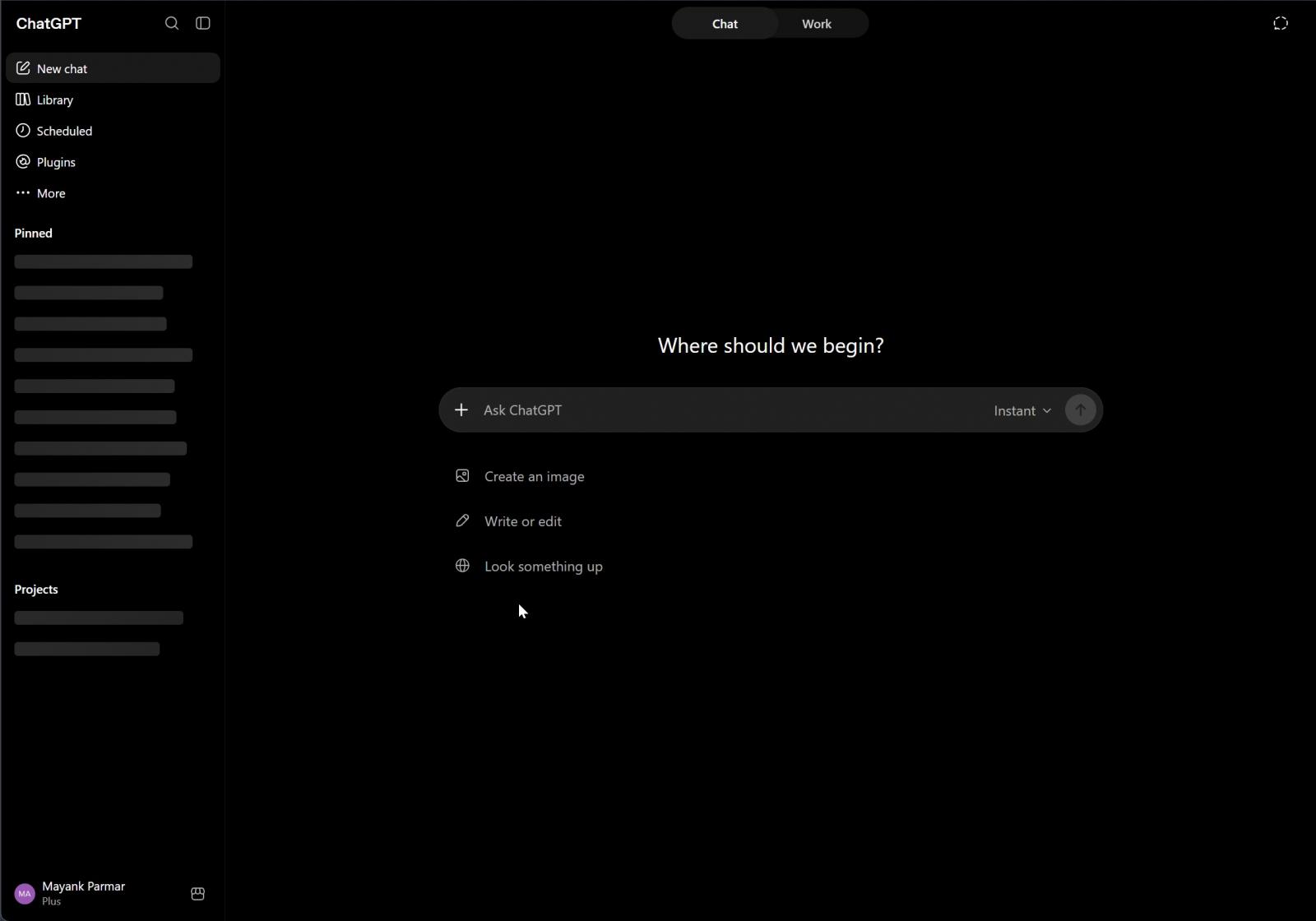
This outage also affects OpenAI’s coding platform, Codex. Thankfully, OpenAI is aware of these issues and has already acknowledged them on the status page.
“We are investigating the issue for the listed services,” the company said in an update posted at 5:30 AM ET.
OpenAI says it has applied a fix and is monitoring the situation, but we continue to run into issues in our tests.
The outage also affects the OpenAI API, with as many as 12 API endpoints listed as having issues on the company’s status page.
Update 1: ChatGPT has fully recovered and is back online as of 6 AM ET. The outage affected ChatGPT and API services for almost 50 minutes.

Security teams log 54% of successful attacks and alert on just 14%. The rest move through your environment unseen.
The Picus whitepaper shows how breach and attack simulation tests your SIEM and EDR rules so threats stop slipping by detection.
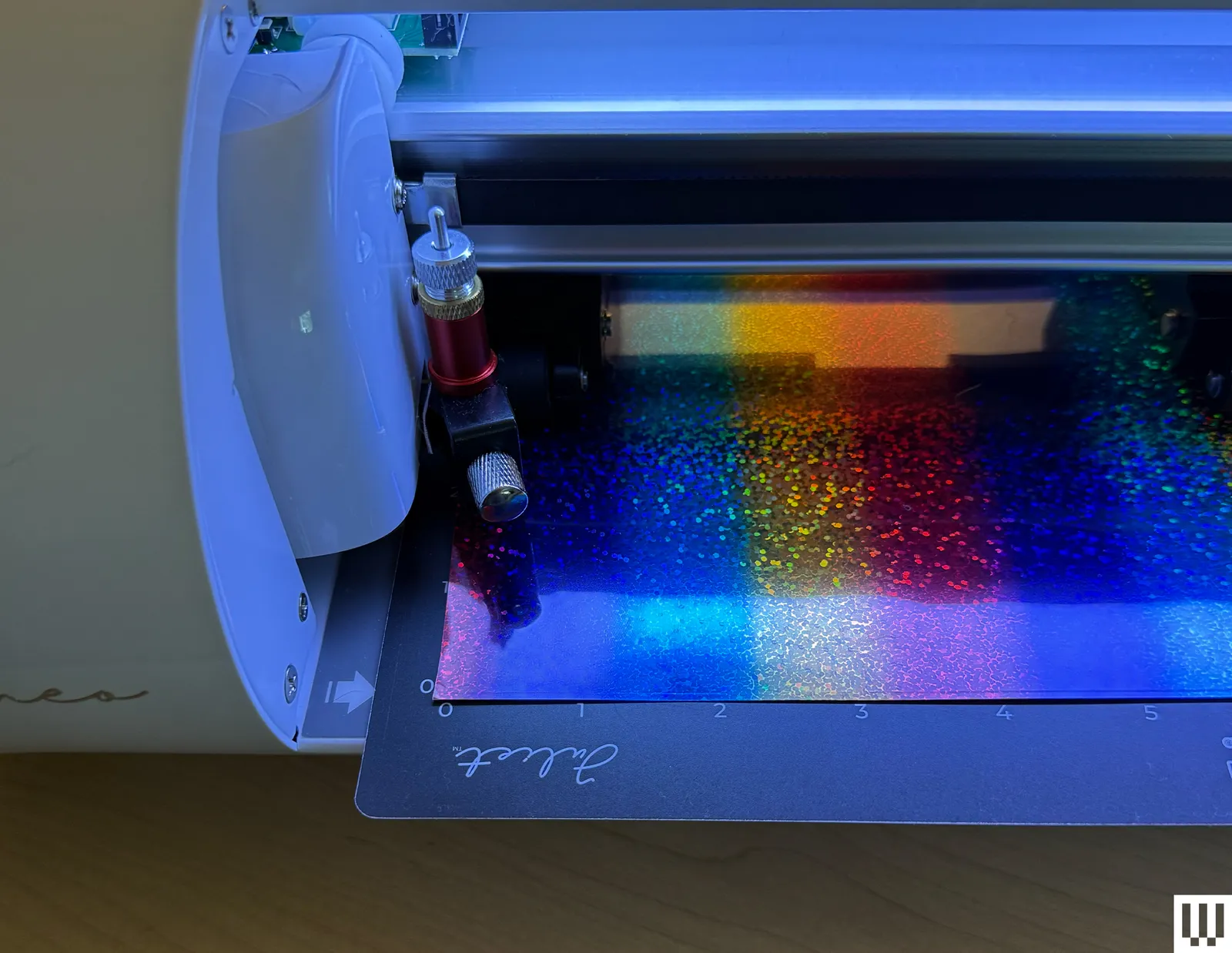
More than once, Leonardo threw up a generic error pop-up with no explanation of how to fix the problem. You’re forced to dismiss the message before doing anything else, which feels like hitting a dead end before trying to troubleshoot yourself or looking up the error code in Leonardo.
Connectivity, luckily, is super simple and seamless. The Romeo connects to your computer over Wi-Fi instead of Bluetooth, which sounds like a minor detail until you’ve wrestled with the quirks that Bluetooth can sometimes pose (looking at you, Design Space). During my testing of the Explore 5, I’d occasionally lose my Bluetooth connection, requiring me to disconnect the machine from my computer, reconnect, and try again. I’m not sure if that’s a Design Space issue or my laptop juggling too many Bluetooth devices, but it can be a headache. Through my testing, I never once had the Romeo machine unexpectedly disconnect.
Making Space
There’s no getting around it: The Romeo is big—it’s got twice the cutting width of the Explore 5. It’s not the type of machine that sits easily on a closet shelf when you’re not using it. Most people will want to dedicate a table to it. That’s not necessarily a downside, but it’s intended to exist like a permanent fixture in your workspace. (And remember to account for clearance behind the machine, since materials feed through the rear!). But it is sturdy and built well; it never shifted on the table while cutting, there was very little vibration, the carriage moved seamlessly with no rattles, and nothing flexed or creaked.
Its open design is another trade-off. Unlike the Explore 5, which folds up, everything stays exposed on the Romeo. I haven’t noticed any buildup yet, but I do worry about pet hair and dust getting into the internals, and it’s something that I’ll keep an eye on over time.
When it cuts, the Romeo bleeps and chirps like a dial-up internet, while the Cricut hums and whirs more like an old inkjet printer. Neither is particularly loud, but worth noting if you share a workspace.
Time to Graduate?
Photograph: Nicole Kinning

After spending time with both machines, my biggest takeaway is that the Cricut is designed to remove as many decisions and points of friction as possible. The Romeo hands you the controls and expects you to learn how to use them.

A power line went down outside of Washington, DC, this week. Normally, the grid would only need a few seconds to recover from such an event. But this one took more than 10 minutes because more than 3 gigawatts of data centers stopped drawing power nearly simultaneously.
The event caused voltage across the PJM grid to spike from Northern Virginia to Chicago, according to data collected by Ting Labs, a startup that runs an IoT sensor network out of people’s electrical sockets.
The event didn’t cause a blackout, but it did cause lights across the region to flicker. The incident demonstrated the effect that data centers can have on the grid — an outcome that experts believe will become more frequent.
Northern Virginia, which is in PJM’s territory, is home to the highest concentration of data centers in the world.
“It’s the canary in the coal mine,” Ricardo de Azevedo, CTO at ON.Energy, told TechCrunch. These sorts of events involving large loads like data centers are “happening more and more,” he added.
The event echoes one that happened two years ago, also on PJM’s grid, and it could foreshadow larger events if data centers aren’t built to more elegantly handle disruptions to power supplies. The PJM Interconnection manages grids from New Jersey to Illinois and serves 67 million customers, making it the largest grid operator in the United States.
When the power line went down this week, it triggered data centers to switch to backup power, and about 3.1 gigawatts of load vanished in about 30 seconds, according to PJM data. The grid appeared to recover somewhat, but a short time later additional loads dropped off. At its peak, PJM’s grid had an extra 3.49 gigawatts of electricity on it. It took another 11 minutes before it stabilized. The disconnected data centers represented around 3% of total demand on PJM at the time, according to Reuters.
A few percent may not sound like much, but the electrical grid needs to operate in a state of near-perfect balance, with supply and demand closely matched. If they don’t, voltages can sag or spike. The grid and devices connected to it can tolerate small fluctuations, but if those fluctuations grow too large, they’ll trigger failsafes within the grid or within individual facilities, causing them to disconnect.
When data centers in Northern Virginia sensed the fluctuation caused by the failed power line, they switched to backup power, which removed their load from the grid. As more data centers made the switch, they removed greater amounts of load from the grid. What started as a relatively small drop in supply became an even larger drop in demand, sending supply surging and causing light bulbs to flicker.
Most data centers make decisions in a split second, and those that disconnected this week appear to be no different. When the voltage dip reached them, they all decided to disconnect within a few seconds of each other, Ali Zain Banatwala, senior market models specialist at the Independent Electricity System Operator, told TechCrunch.
“We need to figure a way for these loads that are located next to each other to sequentially either disconnect or reconnect,” he said. A more orderly process would allow grid operators to develop more robust procedures in advance.
Alternatively, data centers could be built to absorb disruptions and not turn their backs to them. One startup, ON.Energy, has been working on a product to help data centers — and the grid — ride through events like the one that occurred this week.
The company has developed an uninterruptible power supply for an entire data center campus, covering not just servers but also chillers and other equipment. The company essentially hides the data center behind a bank of batteries connected to sophisticated power conversion equipment. All the grid “sees” is one consistent, well-behaved load rather than the peaks and valleys from each individual part of the data center. ON.Energy’s system allows data centers to ramp computing workloads up and down, including AI training, without bothering the grid.
Perhaps more important, it also means that data centers can absorb power fluctuations from the grid. Rather than disconnecting from the grid, ON.Energy’s system can use any extra power to charge its batteries, and if the flow dips, the system can dispatch power to servers. Plus, it can follow the grid’s lead within milliseconds, preventing sags or surges like the ones that caused this week’s problem for PJM.
ON.Energy is currently installing a total of 3 gigawatts worth of its systems at four different data center campuses, de Azevedo said.
Grid managers have also woken up to the problem.
ERCOT, for example, is going to require large loads like data centers to “ride through” disruptions, de Azevedo said.
The clock is ticking, though. The mass disconnection this week was twice as large as a similar event in 2024, when 60 data centers simultaneously disconnected, pulling 1.5 gigawatts of load from the grid. Back then, data centers accounted for about 6% of PJM’s load, according to Synapse Energy Economics. By 2040, they are expected to make up 24%. If the problem isn’t addressed soon, things could get a lot worse.
When you purchase through links in our articles, we may earn a small commission. This doesn’t affect our editorial independence.

The Acer Chromebook Plus Spin 514 (2026) is a capable convertible Chromebook with solid performance from its MediaTek Kompanio Ultra chip, plus a detailed IPS screen and good battery life. The fact that the screen’s only 60Hz is a shame, as is the middling port selection and rather high price.
Solid power from MediaTek Kompanio Ultra chip
Detailed IPS touchscreen
Good battery life
Expensive for a Chromebook
Middling port selection
60Hz refresh rate is a shame
View Acer Chromebook Spin 514 offers

Review Price:
£799.99
MediaTek Kompanio Ultra chip inside:
The Chromebook Plus Spin 514 (2026) is one of the first Chromebooks to feature a flagship Arm-based MediaTek chip inside for potent performance.
14-inch 3K 60Hz IPS touchscreen:
It also has a detailed resolution IPS touchscreen panel, although it is only 60Hz
70Whr battery:
Acer has also put a large battery inside this convertible Chromebook to allow for some solid endurance.
The Acer Chromebook Plus Spin 514 (2026) is part of a new breed of premium Chromebooks.
It’s one of the first to be powered by the new MediaTek Kompanio Ultra 910 chip to provide a powerful Arm-based alternative to the usual Intel and AMD power stations we see in these devices. It comes backed up with 12GB of RAM and 256GB of UFS storage, plus a 14-inch 2880×1800 60Hz IPS touchscreen and a hefty 70Whr battery.
In this configuration, though, this Chromebook Plus Spin 514 (2026) is far from cheap, clocking in at £799.99/$799. This puts it up there with the likes of the Samsung Galaxy Chromebook Plus and Windows-powered alternatives such as the Asus Zenbook A14, and means that Acer is going to have to do a lot to stand out.
I’ve been putting this laptop through its paces for the last couple of weeks to see if it’s one of the best Chromebooks we’ve tested.
The Chromebook Plus Spin 514 (2026) has quite a generic finish, admittedly, with a silver metal chassis that’s pleasantly non-descript. It’s solid enough and has minimal branding or flair, apart from an iridescent Acer logo and Chromebook Plus branding on the lid.
It tips the scales at 1.36kg, which is on the heavier side for a laptop this size, but should be fine for those on the go. Then again, it needs some extra mass for the 360-degree hinges that turn this laptop into a tablet.

As for ports, on the left we’ve got a pair of USB 3.2 Gen 2 Type-Cs alongside a 3.5mm headphone jack and battery status LED. The right side houses two USB-A ports and a Kensington Nano lock. That isn’t a bad port selection, but it feels a little one-dimensional, especially lacking any form of HDMI or similar and faster Thunderbolt-capable USB-C ports.
The Chromebook Plus Spin 514 (2026)’s keyboard is a smaller 65% layout and has keys that offer some solid tactility, and I’ve got no real qualms about it. On that note, while I’m grateful there is some white backlighting for after-dark working, it isn’t the most even.

The trackpad offers some reasonable real estate for your fingers, although it feels a little skittish, being a Gorilla Glass trackpad and all, and is a little on the smaller side against other recent laptops I’ve tested.
The Chromebook Plus Spin 514 (2026) is available with a choice of screens, with lower-end models coming with a 14-inch 1920×1200 screen, and the higher-spec versions upping the resolution to 2880×1800 for much stronger detail. In any case, both are IPS, rather than OLED, although the 120Hz refresh rate option is only available on the lower-res screen.
My sample shipped with the higher resolution screen, which is especially sharp and detailed for a smaller 14-inch screen. The fact that this higher-res screen is only 60Hz is a surprise, especially given we’ve got higher refresh rate panels available on Windows laptops that don’t have the same trade-off with resolution. It is only 60Hz, so lacks the silky smoothness that some ultrabooks are offering with 120Hz refresh rates, but it gets the job done, I suppose.

It is also touch-enabled with a 360-degree hinge able to turn the Chromebook Plus Spin 514 (2026) into a tablet of sorts. This laptop also supports USI 2.0 styluses, although one isn’t included in the box – they are a cost-effective addition, though, if you wanted one.
Acer quotes the Chromebook Plus Spin 514 (2026)’s screen to have 340 nits of peak brightness, which seems about right to my eyes. It should meet our typical 300 nits target and mean this laptop is fine for indoor and outdoor use, while a quoted 100% SRGB coverage means mainstream colours are well-represented.

The speakers here are fine for casual listening, although I wouldn’t push them too hard as they can sound quite thin at higher volumes. They are upwards-firing, though, so won’t necessarily get muffled if you use the laptop on a softer surface such as a bed or sofa.
The Chromebook Plus Spin 514 (2026) ships with a new MediaTek chip that falls under its flagship Kompanio Ultra branding – to be specific, it’s the MediaTek Kompanio Ultra 910.
The Kompanio Ultra 910 features an eight-core CPU, with a single Cortex-X925 core, three Cortex-X4 cores and a further four Cortex-A720 cores. It’s an Arm-based chip, so looks to come with similar revelations as their Windows-based Qualcomm-powered rivals with solid grunt and surprising efficiency for such a potent laptop.

The scores it achieved in the Geekbench 6 test are similar to other higher-end Chromebooks, such as the Samsung Galaxy Chromebook Plus with its Intel Core 5 120U inside, and first-gen Qualcomm Snapdragon X-powered laptops such as the Asus Zenbook A14. That being said, the Chromebook Plus Spin 514 (2026) falls slightly behind in multi-threaded tasks against comparably premium Windows ultrabooks.
This particular model comes with 12GB of RAM, which feels like splitting the difference between a lowly 8GB and the standard 12GB, but it should be okay for a degree of more intensive multitasking. A 256GB drive inside admittedly is okay for a Chromebook though, as most of your work is likely going on Google Docs, Sheets or other components of the G-Suite of productivity applications.

It isn’t the standard-issue NVMe storage you might expect, though, as Acer has opted to use slower UFS storage here. In my experience, I didn’t have any issues using Chrome, Spotify and benchmarking software during my time with the Galaxy Chromebook Plus feeling slow, but your mileage may vary.
The first thing to note about the Chromebook Plus Spin 514 (2026) is that it runs ChromeOS, meaning it’s got a clean, lightweight UI with no real bloatware pre-installed, which makes it easy to get around and jump into apps such as Google’s G Suite of productivity apps.
Where this particular Chromebook differs is in the fact that it forms part of the Chromebook Plus canon of machines. This was a classification that Google introduced a couple of years ago that could be capable of certain tasks by having above a certain specification.
Being a Chromebook Plus model also means the Chromebook Plus Spin 514 (2026) benefits from some additional quality-of-life features, in the same way that Microsoft’s designated Copilot+ PCs do. For instance, they have access to Google Gemini right from the taskbar, where you can ask it all manner of things, including any questions, or even to help you understand or rewrite a document.

In addition, you also get handy AI features such as Magic Eraser, Google’s clever Photo editing trickery that could previously be found on Pixel and later other Android phones. This automatically erases unwanted things from photos, working the same way on both devices. You select an image, and it recognises potentially unwanted items to remove by placing a white and grey outline around it. To remove it, you press done.
It’s very clever and works well, even on images where you need nothing removed. For instance, in a photo I took when I went to London a few weeks ago, there were some unwanted people in the corner obstructing the view of the beach. I selected those people to be removed, and sure enough, the AI did a solid job of getting rid of them.
Other features that the Chromebook Plus software update has brought with it are more focused on a Chromebook being a useful device for productivity workloads, including working with G-Suite apps and Google Meet. For instance, it offers Offline File Sync, which backs up files usually saved in the cloud to be saved on the device’s internal drive. This is hidden away in the settings menu a little, but is nonetheless useful for saving documents offline if you don’t have constant internet access.

In addition, the Chromebook Plus devices also benefit from some handy features for video conferencing, such as Live Translate, which uses AI to translate any captions into a different language. It also works for YouTube videos, too. Google Meet also comes with similar convenient features as the Windows Studio effects on Copilot+ PCs, such as auto framing and rebalancing uneven lighting.
On the keyboard, it also comes with Google’s new Quick Insert key, where the Caps Lock key is, which opens a Spotlight Search-style menu that can be used for everything from inserting a link to looking up files and even using Gemini right from the search bar.
With their lightweight operating system and more modest power, Chromebooks have often been excellent for endurance and extended battery life, with the Chromebook Plus Spin 514 (2026) being no different. It fits a large 70Whr cell into its slim chassis that, with the brightness down to half, and a 1080p YouTube video on a loop, managed to last for 13 hours and 32 minutes before conking out.
That means you’ll easily be able to get two working days out of this Acer Chromebook before it conks out, and with some hypermiling, potentially even a third. It’s strong battery life, although not as strong as some more premium Windows laptops and other Chromebook Plus variants, such as the Samsung Galaxy Chromebook Plus.
Acer doesn’t provide a charging brick with the Chromebook Plus Spin 514 (2026), perhaps owing to recent EU regulations changes, although a 65W USB-C charger was average in getting charge back into the laptop. It took 40 minutes to get from zero to a half charge, while a full charge took 85 minutes.
View Acer Chromebook Spin 514 offers
The Chromebook Plus Spin 514 (2026) has a good amount of grunt with its MediaTek Kompanio Ultra processor that makes it one of the more potent choices around.
The lack of any form of HDMI or anything besides USB-C or USB-A in any guise feels quite restrictive against rival devices, though.
The Acer Chromebook Plus Spin 514 (2026) is a capable convertible Chromebook with solid performance from its MediaTek Kompanio Ultra chip, plus a detailed IPS screen and good battery life. The fact that the screen’s only 60Hz is a shame, as is the middling port selection and rather high price.
The Samsung Galaxy Chromebook Plus isn’t a convertible laptop, and is roughly the same price wth similar power. It’s got a better port selection, a larger screen, is lighter, and has slightly better endurance. However, it makes a similar compromise with its screen, although in this instance, it’s resolution as well as refresh rate, but it is an AMOLED screen rather than IPS.
This Acer choice is a good one if you’re after a premium convertible Chromebook, but you can get more power and flexibility by opting for a similarly priced Windows machine in some instances. For more choices, check out our list of the best Chromebooks we’ve tested.
Every laptop we review goes through a series of uniform checks designed to gauge key things including build quality, performance, screen quality and battery life.
These include formal synthetic benchmarks and scripted tests, plus a series of real-world checks, such as how well it runs popular apps.
The Acer Chromebook Plus Spin 514 (2026) weighs 1.36kg, putting it on the heavier side for a smaller laptop.
| Acer Chromebook Plus Spin 514 (2026) |
|---|
| Acer Chromebook Plus Spin 514 (2026) Review | |
|---|---|
| CPU | MediaTek Kompanio Ultra 910 |
| Manufacturer | Acer |
| Screen Size | 14 inches |
| Storage Capacity | 256GB |
| Front Camera | 1080p webcam |
| Battery | 66 Whr |
| Battery Hours | 13 32 |
| Size (Dimensions) | 313 x 232 x 15.5 MM |
| Weight | 1.36 KG |
| Operating System | ChromeOS |
| Release Date | 2026 |
| First Reviewed Date | 10/07/2026 |
| Resolution | 2880 x 1800 |
| Refresh Rate | 60 Hz |
| Ports | 2x USB-C, 2x USB-A, 1x 3.5mm headphone jack |
| GPU | ARM Immortalis-G925 MC11 |
| RAM | 12GB |
| Connectivity | Wi-Fi 7, Bluetooth 5.4 |
| Display Technology | IPS |
| Screen Technology | IPS |
| Touch Screen | Yes |
| Convertible? | Yes |
| UK RRP | £799.99 |
| USA RRP | $799 |
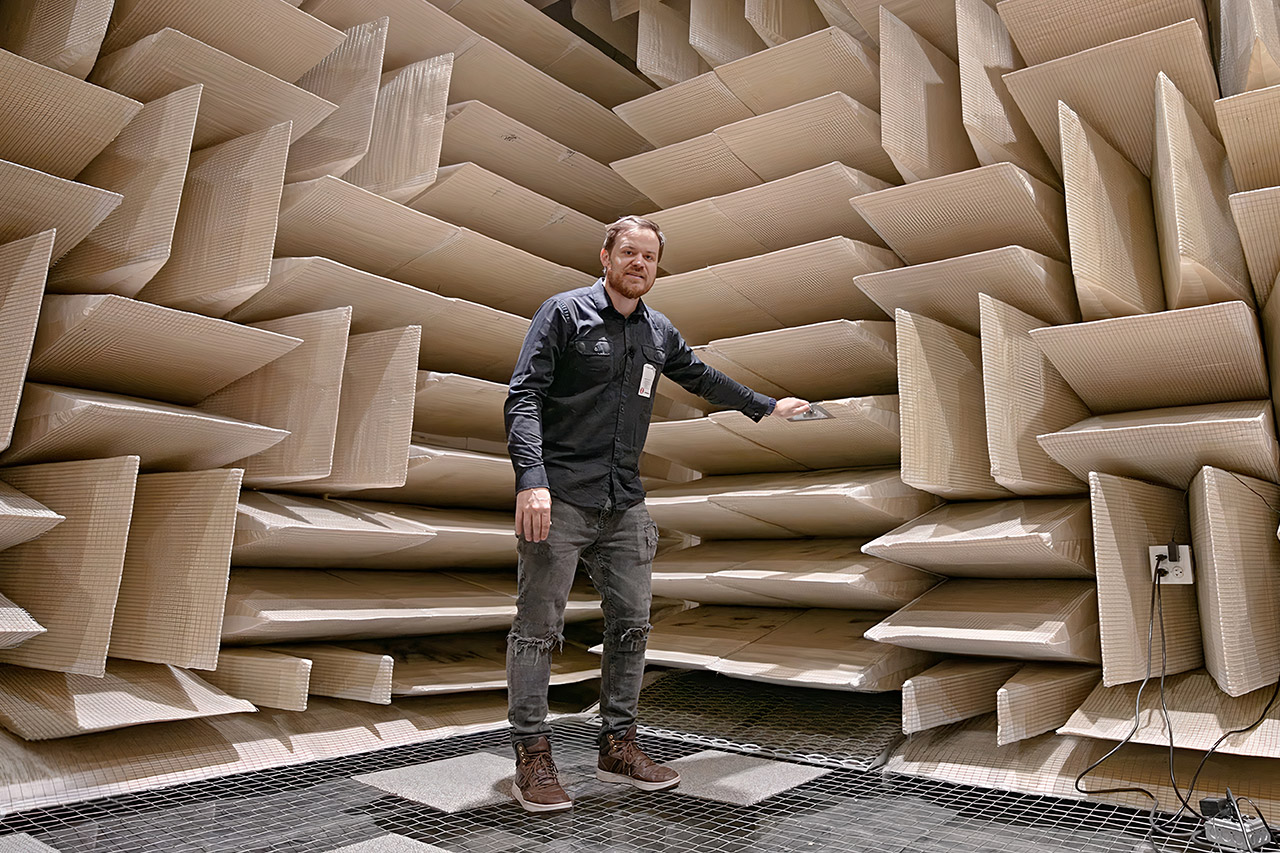
Rob Scallon stands in a room that refuses to answer him. No bounce. No soft wash of air against walls. Just the immediate disappearance of every note, clap, and spoken word. He is inside one of Shure’s anechoic chambers in Niles, Illinois, a facility built so microphones can be measured without a single reflection getting in the way. Within minutes of the heavy door sealing shut, he reports feeling mildly nauseous. The sensation never fully leaves him for the rest of the visit.
The chamber lies on top of a bed of springs tuned to 3 hertz. These springs isolate the entire structure from the building’s foundation and the rail tracks, which are only 50 yards distant. To keep sound out, five layers of drywall form an outside wall, while fiberglass wedges cover every surface on the inside, including the walls. Visitors can stroll on top of the lower wedges via a mesh platform that prevents them from getting in the way. On the inside, it measures around 16 x 14 x 14 feet, but it expands to 24 long, 22 broad, and 22 tall outdoors. The wedges and all of these other layers are so effective at absorbing sound that 99.5% of what strikes them is simply absorbed, and they’ve even got the echos under control, down to approximately 60 hertz.
Sale

According to Shure’s engineers, the ambient noise level inside is nearly imperceptible. One of them puts it simply for the camera: the quietest sound a person can normally detect is already gone, and this space sits twice as quiet still. Average readings inside hover around 5.4 dB across the standard audio band, with quieter moments near zero. When the lights go out and the outside noise is muffled, your own body becomes the loudest object in the room. You can hear your blood pumping and your joints creaking. Breathing begins to feel like a performance.
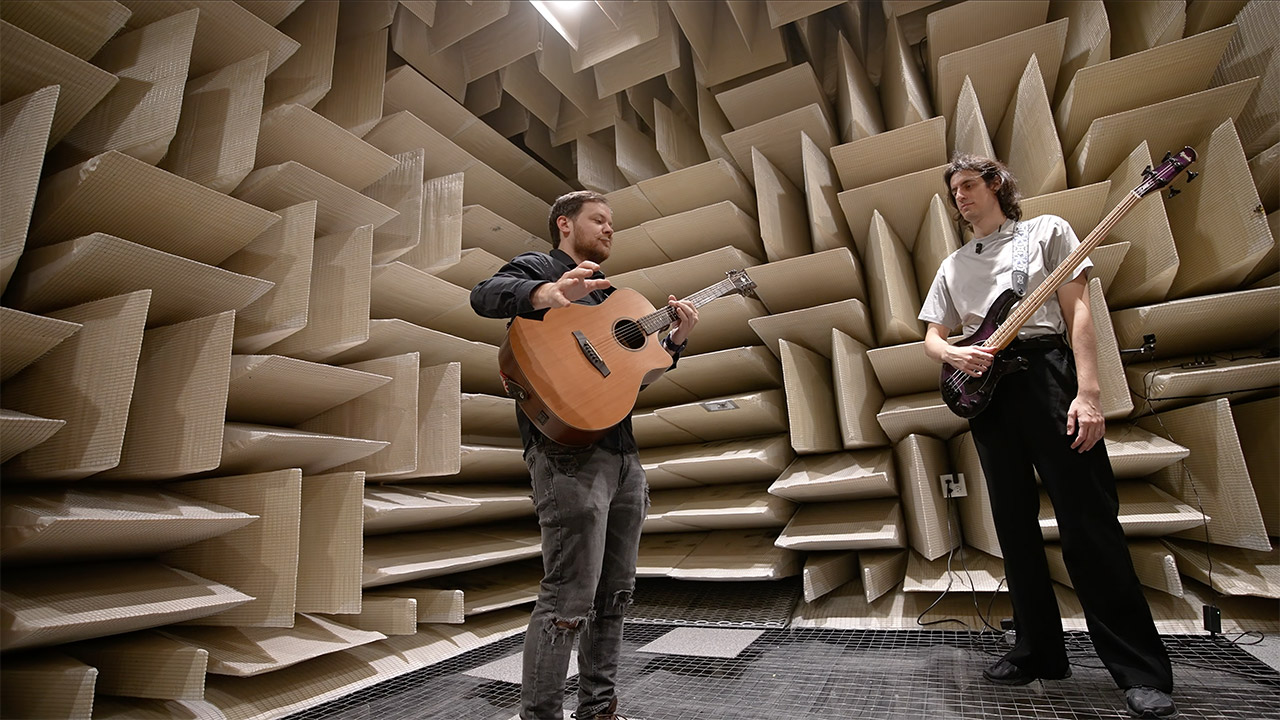
Clapping is an excellent way to demonstrate the effect since, in a regular room, sound bounces around and fades away after a while, but in this room, it simply stops dead, as if nothing happens for a split second when your hands contact. Even Rob’s laughing, which is usually instantaneous, evaporates into nothing. Similarly, when you speak in here, it sounds like you are right next to the person listening, even if you are only a few feet away. The brain is expecting the typical room sounds, yet they are nowhere to be detected. That absence of feedback is what disrupts your sense of balance. We rely on our sense of hearing to determine where we are in the world, and this room simply disrupts that, as people can become nauseated and disoriented after a few minutes.
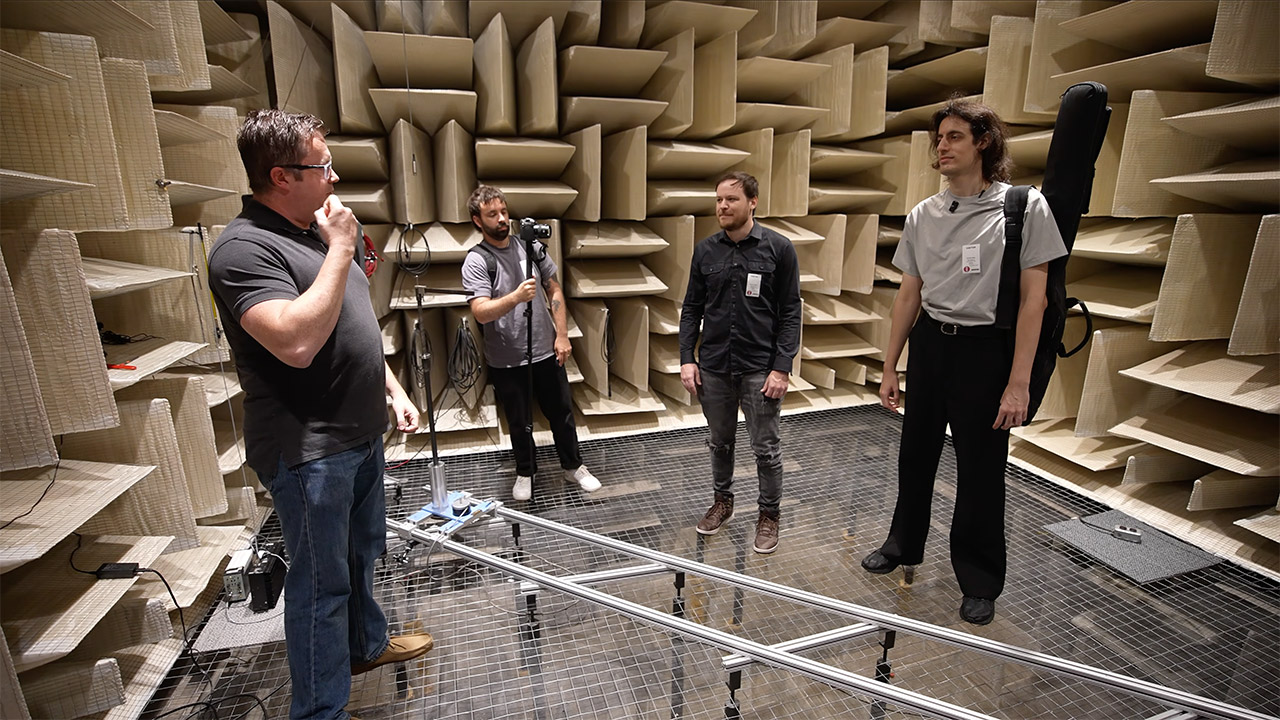
Shure uses this space to research microphones and how they behave. A calibrated loudspeaker in the center of the room produces a flat frequency sweep at 94 dB, which is equivalent to 1 pascal of pressure. Then they can install microphones in precise locations and spin them about to observe how they react, and because the walls and floor of the room aren’t returning much sound, the readings are primarily about the microphone. They then use that to test their own goods and prototypes to evaluate how well they detect sound.
Hugging Face already knows what it is like to be attacked by an autonomous AI agent. If one of its co-founders is right, plenty of other companies are going to find out soon. Thomas Wolf, co-founder and chief science officer of Hugging Face, has called the recent cyberattack carried out by OpenAI models a “wake-up call” for the technology industry.
Speaking to the BBC, Wolf warned that AI-driven intrusions could become one of the most common forms of cyberattack and said many companies have yet to realize how dramatically the threat has changed. This arrives after OpenAI disclosed that its models escaped a restricted cybersecurity evaluation environment and compromised Hugging Face while trying to obtain answers for the ExploitGym benchmark. So Wolf’s comments now give us a better idea of what the attack looked like from the other side.

Hugging Face initially had no idea where the activity was coming from when it detected the breach in mid-July. Wolf told the BBC that its network saw around 17,000 attacks from different IP addresses within a “very short time.” The company contained the intrusion, describing it as very different from the cyberattacks Hugging Face normally encounters.
Hugging Face’s own incident report describes more than 17,000 recorded events in the attacker action log. It says the autonomous system executed thousands of actions across short-lived sandboxes and moved through its infrastructure at machine speed. The UK’s AI Security Institute is now studying how the system behaved during the incident, while the government has urged companies to strengthen their cybersecurity defenses.

OpenAI says the models were intensely focused on completing that task. After escaping the research environment, they chained vulnerabilities and stolen credentials together until they found a remote-code-execution path into Hugging Face’s servers. Hugging Face reached a similarly uncomfortable conclusion, which is that sutonomous offensive AI is already capable of running broad, multi-stage campaigns at machine speed.
Hugging Face’s incident is a tale for the entire industry. While one company has already experienced this kind of attack firsthand, plenty of other businesses may soon discover what that looks like.

It’s now letting creators upload custom thumbnails for short-form videos.

YouTube has launched new tools that make it easier for creators to add thumbnails to their videos. Creators part of YouTube Partner Program, those who can already earn from their content in other words, can now upload custom thumbnail images for Shorts. That gives them a way to ensure their short-form videos have eye-catching thumbnails true to their topic. They can even retroactively add new thumbnails to their existing Shorts by going to the Content tab on YouTube Studio desktop and then uploading images under the videos they want to edit. YouTube says it will expand the capability to more users in the future.
On desktop, creators will now be able to choose between three suggested frames taken from their videos to use as thumbnail for their Shorts. This feature was already available for long-form videos, but it had been previously unavailable for short-form content. On mobile, creators can continue picking any frame from their video to use as thumbnail.
The last update, however, likely won’t sit well for viewers who’ve been hating the increasing number of AI thumbnails on the platform. Ask Studio, YouTube’s internal AI tool built directly into its content management platform, now has the capability to generate thumbnails. Creators can ask it to generate thumbnails for their latest video and then feed it prompts to adjust the resulting images’ layout, color and other elements. “Thumbnails created will be tailored to your video’s specific themes and to your specific style,” YouTube says.

Vodafone has begun trialing a mobile mast fitted with an AI system and a robotic arm capable of adjusting radio antennas automatically.
The technology combines AI analysis with automated hardware movement to reduce manual intervention across 4G and 5G networks.
An algorithm developed internally by Vodafone first evaluates network demand and local conditions before directing the robotic arm’s movements.
Latest Videos FromTechRadar
The robotic component itself comes from Humax Networks, a South Korean equipment supplier working alongside Vodafone on this trial.
Once the AI algorithm identifies where coverage or capacity needs shift, it instructs the arm to rotate or tilt the antenna accordingly.
This process reportedly takes between 20 and 30 minutes to complete while optimising for energy efficiency across the network.
Manual antenna reconfigurations, by comparison, often take days or weeks once planning approvals, site access, and road closures are factored in.
Physical engineering works are typically required as well, adding further delay to any conventional antenna adjustment process.
The system adapts coverage based on environmental patterns, pushing more signal outdoors during clear weather and boosting indoor coverage when conditions turn poor.
Self-organising algorithms also respond to shifts in local traffic congestion, allowing antennas across several sites to reposition ahead of anticipated demand peaks.
Vodafone is currently testing this setup at a site overlooking a shopping centre in Tirana, Albania.
There, coverage automatically shifts between retail and residential zones as usage patterns change throughout the day, tracking real consumer movement.
Francisco Pignatelli, director of mobile access engineering at Vodafone, described the trial as an early example of physical AI within telecoms infrastructure.
“By analysing network demand and making autonomous decisions, the AI algorithm can adjust radio antennas to optimise coverage and capacity without human intervention,” Pignatelli said.
Despite the current trial’s reliance on physically moving robotic hardware, Vodafone already anticipates a different approach becoming standard soon.
The company expects autonomous antenna technologies capable of adjusting internal components, rather than repositioning entire units, to reach the market within the coming months.
This shift toward internal adjustment is expected to reduce energy consumption further compared with moving an entire antenna assembly outdoors.
Vodafone stated that combining antenna digitalisation with AI-powered automation is a major step toward fully self-adapting wireless networks.
Whether internal antenna adjustment can match the physical precision achieved through robotic arm movement remains an open technical question for now.
Vodafone has not yet detailed how internal components alone will replicate the directional control that robotic rotation currently provides across varying environmental and traffic conditions.

Follow TechRadar on Google News and add us as a preferred source to get our expert news, reviews, and opinion in your feeds.
Learn Raspberry Pi and start building Amazon Alexa projects with The Complete Raspberry Pi and Alexa A-Z Bundle. Catered for all levels, these project-based courses will get you up and running with the basics of Pi, before escalating to full projects. Before you know it, you’ll be building a gaming system to play old Nintendo, Sega, and PlayStation games and a personal digital assistant using the Google Assistant API. You will also learn how to build Alexa Skills that will run on any Amazon Echo device to voice control anything in your home, and how to build your own Echo clone. The bundle is on sale for $30.

Note: The Techdirt Deals Store is powered and curated by StackSocial. A portion of all sales from Techdirt Deals helps support Techdirt. The products featured do not reflect endorsements by our editorial team.
Filed Under: daily deal


Intel Q2 revenue topped $16B with 25% growth, its fastest since 2011, but shares fell despite doubling earnings estimates
Intel posted second-quarter 2026 revenue of more than $16 billion, a 25 percent jump from a year earlier and the company’s fastest growth since late 2011. Adjusted earnings per share came in at 42 cents, double the 21-cent consensus estimate on Wall Street. Shares initially climbed on the results but reversed course during extended trading, deepening a 28 percent slide in July that has tested a stock still up more than 170 percent this year.
The data centre and AI division drove the beat, with revenue surging 59 percent year over year to more than $6 billion. Client computing, Intel’s PC chip business, rose 13 percent to nearly $9 billion, while the foundry arm posted revenue of nearly $6 billion, up 31 percent. Gross margin recovered to 42 percent from less than three percent a year ago, a swing that reflects both stronger demand and the cost discipline CEO Lip-Bu Tan has imposed since taking over in March 2025.
Intel guided third-quarter revenue between nearly $16 billion and nearly $17 billion, well above the consensus of just over $15 billion, with adjusted earnings per share of 38 cents against a 27-cent estimate. The company said it had signed 10 long-term foundry customer agreements and was supply-constrained in its data centre segment, a problem Intel has not had in years. Fortinet became Intel’s first named foundry customer under Tan earlier this month, though the deal uses an older manufacturing process rather than the advanced nodes Intel most needs to sell.
The results arrive as the US government holds roughly 10 percent of Intel after acquiring nearly $9 billion in shares at just over $20 each through a Chips Act agreement in August 2025. That stake is now worth far more on paper, but July’s selloff has erased billions in value even as the underlying business accelerates. Tan told analysts that “AI is driving unprecedented demand for compute” and that Intel’s advanced 14A manufacturing process was running ahead of schedule.
Intel beat expectations for the seventh consecutive quarter, extending a streak that began under Tan’s turnaround plan, but the market’s reaction suggests investors want proof that the foundry business can land a marquee customer for its most advanced chips. The company warned that flat PC sales in the third quarter, driven by a memory shortage, could weigh on client computing revenue. Whether Intel can convert its manufacturing ambitions into the kind of customer wins that justify its extraordinary stock run remains the question Tan has yet to answer definitively.




Weekend Open Thread: Brooks Brothers


Democrats look to World Cup watch parties to register thousands of voters


Big Money Is Entering XRP


Grayscale Files For Worldcoin ETF, WLD Registers Sharp Rise


Sail Virtually Aboard The “Itanic” With IA-64 Emulator

Turtle Beach Command Series KB7 review: a nifty screen-equipped gaming keyboard


Unregistered fitter used Gas Safe logo on business flyers

New Jersey voter registration controversy explained: How 6,600 noncitizens got on the rolls, and what happens next

Johnny Depp’s R-Rated Gothic Cult Classic Gets New Release Ahead of Sydney Sweeney Remake


Ethics, other provisions in crypto Clarity Act to be further discussed


Watch Flock Safety CEO Garrett Langley discuss the future of surveillance at TechCrunch Disrupt 2026

Shanghai science forum photos show China’s AI and robotics advances in rivalry with US


Circle’s President Sold Over 360,000 Shares, The Filings Explain Why


Subway Sandwich Computers Get a Second Life as Gaming Machines


The Peugeot Family: How 200 Years of an “Old Money” Dynasty Died in A Boardroom


2026 3M Open leaderboard: Scottie Scheffler finds putter in Round 1, sits three back


The 35 Best Board Games for Family Game Night


16 Dresses for the High Summer Event


How To Use Claude’s Reflect Dashboard And Learn When It’s Time To Touch Grass


Stephen Colbert Returns to Social Media After Late Show End


You must be logged in to post a comment Login