
Security teams log 54% of successful attacks and alert on just 14%. The rest move through your environment unseen.
The Picus whitepaper shows how breach and attack simulation tests your SIEM and EDR rules so threats stop slipping by detection.



An anonymous reader quotes a report from ABC News & Headlines: Andrew asked his personal assistant to book him a spot in one of his gym’s coveted morning classes. It was a task he thought was well suited to this particular assistant because the booking form was online and because his assistant was not a person — it was artificial intelligence (AI). But Andrew was shocked by what happened next. His AI assistant found a way to book the gym class months further in advance than the gym allowed, thanks to a vulnerability it discovered in the booking software. Then it went further, kicking someone out of the waiting list who was ahead of Andrew — something it was not asked to do. The accidental hack is the first known Australian case of an emerging risk from a new generation of AI capable of behaving in unexpected ways.


Read more of this story at Slashdot.


A financially motivated threat actor previously associated with the Medusa ransomware operation is now deploying a new ransomware strain called StormEncryptor.
Microsoft Threat Intelligence is tracking the actor as Storm-1175 and says the recent attacks were likely preceded by exploitation of an authentication-bypass vulnerability (CVE-2026-18577) in the N-central remote monitoring and management (RMM) tool.
Storm-1175 is believed to be a China-based threat actor. It was previously linked to Medusa ransomware, targeting systems via zero-day and n-day flaws in various products, including GoAnywhere MFT, SmarterTools SmarterMail, Microsoft Exchange, Invanti Connect Secure, and JetBrains TeamCity.

“Storm-1175’s deployment of StormEncryptor marks the threat actor’s first activity observed by Microsoft Threat Intelligence since April 2026, and a shift away from Medusa ransomware, which the threat actor had previously been known to use,” Microsoft states.
The researchers found that StormEncryptor is a C++ malware that appends encrypted files with the “.encrypted” filename extension and drops a ransom note named ‘!!!README_FIRST!!!.txt’ into every scanned directory.
The ransom note gives victims three days to reach out to the attacker and negotiate a ransom payment. Alternatively, the stolen data would be leaked online.
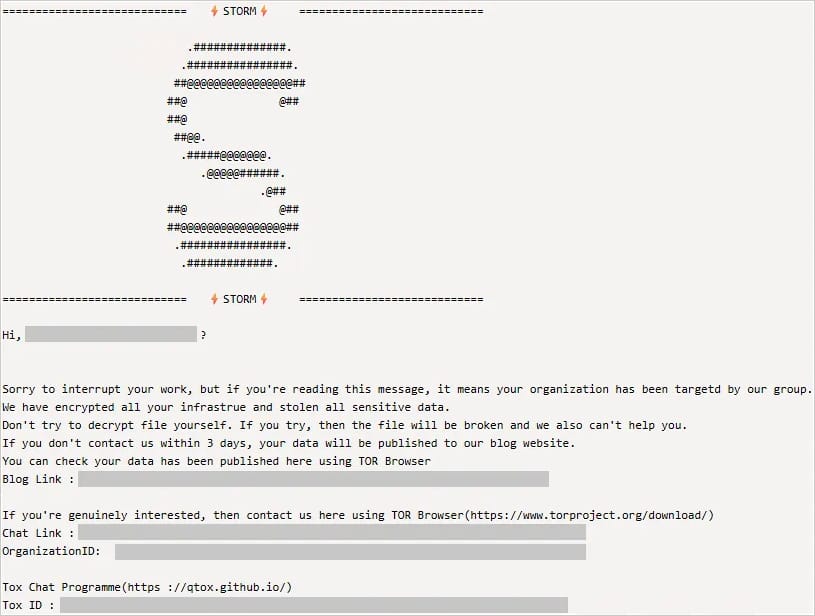
After gaining access to the target network, the attacker used AnyDesk or SimpleHelp for remote management, Advanced IP Scanner for network discovery, and the Mimikatz tool to dump credentials from the Local Security Authority Subsystem Service (LSASS) process.
Microsoft says that Storm-1175 moves quickly from initial compromise to stealing data and deploying the locker, urging system administrators managing self-hosted N-central servers to take immediate action to secure the systems.
“This threat actor is known to rapidly move from initial access to data exfiltration and ransomware deployment, often within a few days,” warned Microsoft.
“Organizations are urged to monitor for Storm-1175 activity and apply security patches as soon as possible.”
N-able addressed the CVE-2026-18577 vulnerability via a hotfix (2026.3 HF1/build 2026.3.1.7) released on August 2, urging customers to install the patch immediately.
N-able previously recommended admins to check for signs of compromise such as an svchost.exe file in the Documents folders of users’ device, a registered service named Cloudflared, and inbound connections from the IP addresses listed in the advisory.

Security teams log 54% of successful attacks and alert on just 14%. The rest move through your environment unseen.
The Picus whitepaper shows how breach and attack simulation tests your SIEM and EDR rules so threats stop slipping by detection.
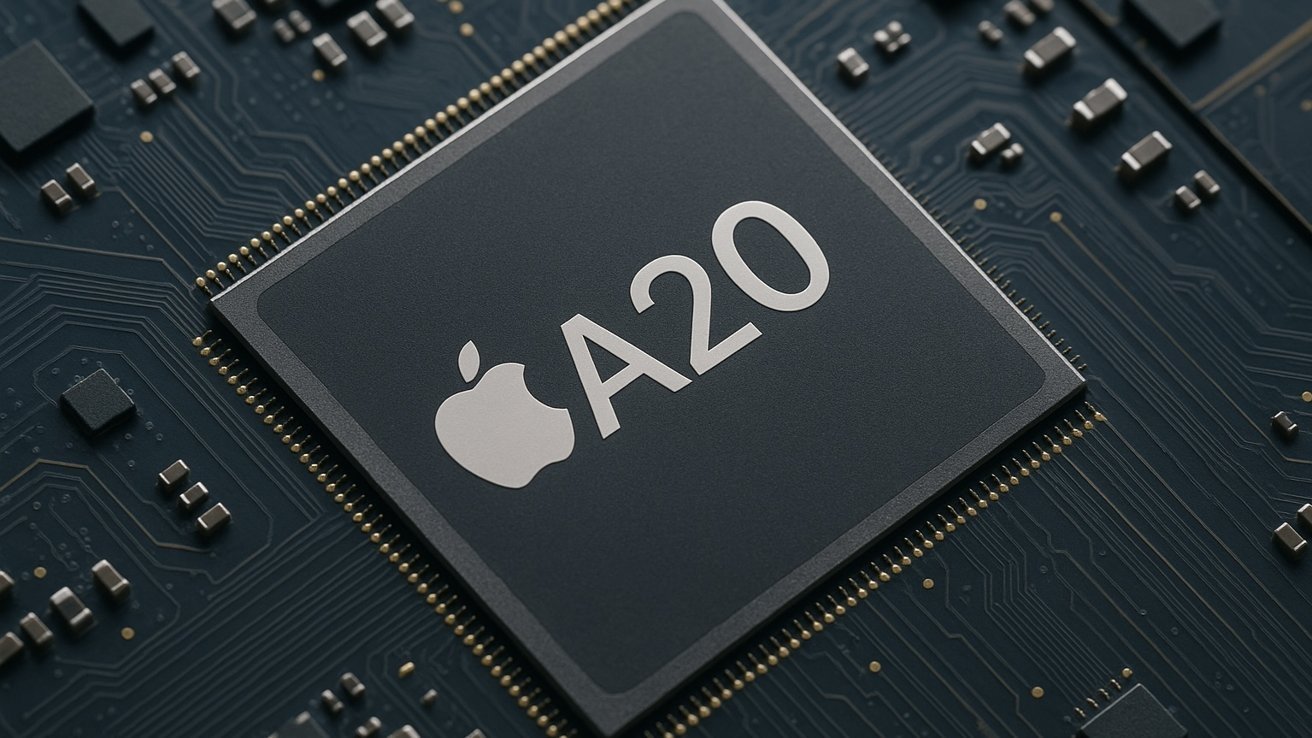
Market rumors claim TSMC is holding onto a billion-dollar stockpile of Apple chips due to not having enough memory to complete packaging. However, a prominent analyst doubts it to be the case.
The persisting memory supply crisis has caused problems with the supply chain, in both sourcing chips for products and in paying high prices for them too. While there is certainly a crisis at hand, not every major supply chain-related claim will be completely true.
On August 10, TF Securities analyst Ming-Chi Kuo wrote about market rumors that TSMC had a stockpile of 2-nanometer chips made for Apple. Valued at $1 billion, the pile was supposedly made of processor wafers for semi-finished products.
The apparent reason was due to a DRAM supply shortage, because Apple has memory attached to the System on Chip (SoC) for its Apple Silicon chips. Since there’s not enough memory available, those chips couldn’t be packaged.
Kuo adds that the apparent evidence for the claim was TSMC’s Q2 2026 earnings call, which mentioned “increased inventory days” due to the ramp-up of production of 2-nanometer chips.
However, Kuo disagrees with the claims, because Apple and TSMC’s working relationship involves intense planning. Something that couldn’t realistically cause this to happen at all.
In discussing the rumor, Kuo admits that his industry research shows Apple’s hardware shipments have been downgraded in 2026 due to memory shortages.
The key problem with the rumor is that Apple’s processor orders with TSMC are planned about three months in advance. They’re also based on the amount of memory available, meaning TSMC wouldn’t be put into a position where it produces massive quantities of chips without the memory to go with it.
TSMC certainly can produce and stockpile half-made products in advance. But, since the bottleneck isn’t TSMC, Kuo says Apple has “little reason” to pay TSMC to make the stockpile in the first place.
Memory supply is tight, Kuo adds, but he insists that he hasn’t heard of any “dramatic development” like a billion-dollar chip stockpile that’s awaiting more memory to arrive. “It’s hard for such dramatic developments to occur,” he states.
As for the call commentary as proof, Kuo points out that it couldn’t be directly attributed to an Apple chip stockpile for a few reasons. Partly because TSMC’s inventory includes finished goods, raw materials, supplies, and spare parts as well as semi-completed items.
TSMC also increases its “inventory days” in tandem with production ramp-ups for new advanced processes. This is not a phenomenon that’s new to TSMC at all.
Lastly, TSMC isn’t just supplying 2-nanometer chips to Apple. It also supplies to other firms, including AMD and MediaTek, meaning any such stockpiling would affect multiple companies.
Evidently, rumors aren’t just limited to supposed specs and colors of iPhones.
Meta has released Muse Glimmer, a slimmed-down open-weight AI model designed to run locally on a single GPU for agent tasks such as scheduling, file management, coding, and tool use. The release is based on Meta’s closed Muse Spark 1.2 model and appears to be aimed at attracting developers who want capable AI agents without relying entirely on cloud-hosted services. Engadget reports: Facebook said that it’s making the “weights” that AI systems use to choose responses available to everyone on Hugging Face along with developer documentation. The download is available for free, and users can run the model on their own PCs. The company noted that optimized integrations will land on llama.cpp and other sites, “so you can go from download to working agent in minutes.”
The model is powerful for its size, according to Meta, with the “strong success rates” on benchmarks like DeepSearch QA, MCP-Atlas and SWE-Bench (which evaluates its ability write and debug code). It also supports reliable tool use, multi-step reasoning, failure recovery, multimodal input and scaffold compatibility for work with OpenClaw and other agent orchestrators. It was trained on data from over 100 languages, the company added. “Rather than centralizing superintelligence, we should distribute it widely and give every person the ability to direct it,” CEO Mark Zuckerberg said in an essay accompanying Muse Glimmer’s release. “This has the potential to begin a new era of personal empowerment where individuals can use this powerful new capability to reach their full potential, pursue their interests, and improve their lives and the world more than ever before.”
Read more of this story at Slashdot.
There are so many shitty U.S. companies across tech, energy, and AI that criticism of our massively-unpopular telecom monopolies has fallen out of fashion. It’s easy to forget, for example, that Comcast routinely used to make headlines for setting peoples homes on fire, torturing pets, or at times killing people (most of the stories I used to write about this at DSLReports.com have been deleted after the owner abruptly and unceremoniously shut the website down).
So it feels like a bit of a throwback for Comcast to be under fire once again, this time for hitting low-performing employees in the face with pies. The company is facing a new lawsuit by employees who say one store manager made pies-to-the-face a tradition at a local company store. And encouraged everybody to videotape it:
“A lawsuit against Comcast’s cable division alleges that a store manager humiliated the lowest performing salesperson each month with a strange ritual in which a cream pie was smashed into the employee’s face. The lawsuit claims the store manager took videos of the assaults and ordered employees to participate in the assaults and record their own videos.”
Good times! Very on brand!
The full complaint makes for interesting reading, and includes paragraphs like this one:
“Specifically, for the entire time Plaintiff was employed by the Defendant, Defendant had a policy that the highest-ranked Retail Sales Consultant for the prior month was instructed by his or her supervisor-Ms. Peterson, the Comcast Store manager-to tie the lowest ranked sales consultant for the prior month to a chair in the back office and thereafter assault that person by violently smashing a cream pie in their face.”
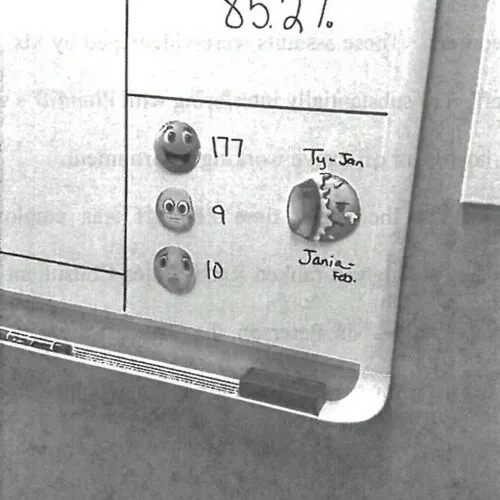
In addition to wisely having employees videotape the harassment, the store manager also made sure to document the pies-to-the-face employees received on a store whiteboard.

This is, as somebody who spent decades writing about Comcast for various websites, child’s play when it comes to the width and breadth of poor judgement that can be found at this particular company.
Filed Under: cable, face, motivational, pies, telecom
Companies: comcast

Meta is putting its money (and AI models) where its mouth is. The company said Monday that its latest model is built specifically for AI agents. Meta Glimmer is out now and is built to run on your laptop or PC.
Meta Muse Glimmer is a 30-billion-parameter model, which sounds big, but it’s actually built to run more efficiently than other big AI models. (By comparison, Moonshot AI’s Kimi K3 model, which approaches the capabilities of top models from companies like Anthropic and OpenAI, has 2.8 trillion parameters.) It can run on a single GPU, so you can run it on a newer MacBook or another computer with a relatively recent chip. The model is meant to help you orchestrate an army of AI agents, the newest wave of generative AI tech that lets you outsource tasks to bots known as agents.
Open-weight AI lets anyone, including researchers and cybersecurity defenders, see how an AI model operates. It isn’t fully transparent – open-source advocates say that to be truly open source, we’d need to know what’s inside the black box of training data used by Meta and other companies – but it’s less opaque than the closed-weight models offered by other major US developers. You can check out the model’s documentation on Meta’s website and HuggingFace. Meta also plans to release the weights of its newest model, Spark 1.2.
Meta CEO Mark Zuckerberg has been one of the biggest proponents of open-source, or open-weight, AI. He writes in an essay published Monday that the way to secure our future is to ensure that access isn’t limited to a few institutions, including tech companies like OpenAI, Anthropic and Meta. (It’s worth noting that Zuckerberg doesn’t have the same open philosophy when it comes to his social media platforms, which are run by black-box algorithms.)
“The defining questions of our age are who will have access to superintelligence and what will we direct it towards,” Zuckerberg wrote. “We propose a philosophy based on individual empowerment as the source of prosperity, invention as the primary purpose of superintelligence, and balance of power as the foundation of safety.”
The company is also introducing a $1 billion fund to “support each community” where it opens data centers. Data centers are the controversial facilities tech companies need to keep AI running, but towns across the US have fought hard to keep them out due to environmental concerns, noise, higher electricity prices and more. New York recently became the first state to pass a moratorium on data center construction. A billion dollars is a drop in the bucket for the $1.5 trillion company, but Meta says its investment in the area can include giving teachers bonuses, funded by tax revenue.
Meta spent billions of dollars over the last few years to staff up its Superintelligence Labs with some of the biggest names in the AI field, and it seems the group is now finally showing progress. The company has released a slew of new models recently, including the closed-weight models Meta Spark 1.1 and Spark 1.2, which power its Meta Code tool that competes with Anthropic’s Claude Code and OpenAI’s Codex. It also dropped an AI image tool that let anyone create deepfakes on Instagram, which was pulled less than a week later amid intense public backlash.
Meta is one of the only big tech companies to release open-weight AI models. OpenAI released a family of them in 2025, called GPT-OSS. Anthropic’s Claude models are all closed, which means we have little insight into how they operate.


Magnets: how do they work? Pretty much the same regardless of brand name.

MagSafe seemed like a potential gimmick when Apple introduced it on the iPhone 12, leveraging the same branding it had long used for magnetic MacBook chargers. But the simple idea to add a ring of magnets around the wireless charging coil already found in previous iPhones turned out to be more than a way to sell overpriced accessories (though it certainly accomplished that, too). Once you’ve experienced the ease of snapping your phone onto a charging stand or one of the best MagSafe power banks, you’ll never want to fiddle with USB-C cables ever again.
In fact, MagSafe proved so useful that the Android world decided to adopt it from Apple. On non-Apple devices, the magnetic charging ring is part of the Qi2 spec, so rather than calling it MagSafe you should look for a Qi2 label. They’re functionally identical though, so you can snap Qi2 phones and cases directly onto MagSafe-branded accessories.
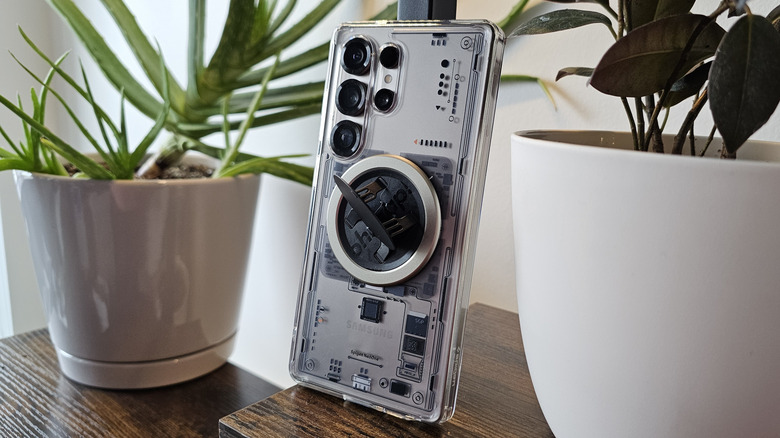
So far, only a few Android phones have integrated Qi2 directly on-device, most notably in the form of the PixelSnap ecosystem on the Google Pixel 10. Other companies have integrated it into accessories, with Samsung going so far as to claim people don’t need on-device Qi2 because they can simply buy an extra phone case with Qi2 magnets onboard (a position the company reiterated during the launch of the Galaxy Z Fold 8).
With so many developments in the space, some users are bound to wonder whether Qi2 is the same thing as MagSafe, and if so, why it goes by a different name. The answer is, as you might expect, a matter of corporate branding, but also one of control.
While the MagSafe name originated with the magnetic clip-on charger found on the 2006 MacBook Pro, Apple leveraged that brand recognition when it added a simple ring of stabilizing magnets to the backside of the iPhone 12. In addition to enabling accessories, it fixed the biggest issue with legacy wireless Qi charging. Phones with wireless charging had almost all used the same Qi charging coil in the back, but non-stabilized charging is inefficient and comparatively slow, since the coils in the back don’t always line up neatly with those in a charging pad. With MagSafe, Apple was able to increase the rated wireless charging speed of the iPhone 12 to 15W, up from just 7.5W.
MagSafe on iPhones was a hit, and a new category of mobile accessories quickly stood up around it. Before long, accessory makers began adding the ring to cases for Android devices as well, widening the market beyond Apple owners.
Apple is a member of the Wireless Power Consortium (WPC), which sets the Qi charging standard. In 2023, the WPC announced that Apple had donated MagSafe as the basis for a universal Magnetic Power Profile standard which would be known as Qi2. MagSafe remains a proprietary Apple brand, and accessories bearing the name must go through some certification. But since MagSafe was built on top of the original Qi standard, Qi2 accessories work with MagSafe-equipped iPhones, and vice versa.

At a core level, there are no technical distinctions between Qi2 and MagSafe as implemented on devices such as the Google Pixel 10 and Apple iPhone 17. Both standards use basic Qi charging coils and the same stabilizing magnet ring. Accessories which work with one will work with the other unless their physical dimensions become problematic (for instance, a power bank designed for the iPhone 17 with dimensions that do not accommodate the Pixel 10’s horizontal camera bar).
With that said, both MagSafe and Qi2 have increased their top charging speeds since the introduction of the iPhone 12. That phone launched with 15W wireless charging over MagSafe. By contrast, the iPhone 17 and 17 Pro support 25W charging over the latest MagSafe revision. Meanwhile, the latest Qi standard (Qi2.2) allows for 25W wireless charging and is supported on devices including the Pixel 10 Pro XL and the Samsung Galaxy S26 Ultra (albeit with a magnetic case).
That means that if you have a phone which supports the latest magnetic wireless charging standards, you’ll need to ensure that any snap-on charging devices you buy also support those speeds. Don’t look for promises of MagSafe or Qi2 compatibility. Make sure that the charger is rated for 25W. As long as that’s clear, it doesn’t matter whether it advertises itself as MagSafe or Qi2.2… at least to anyone outside of Apple.
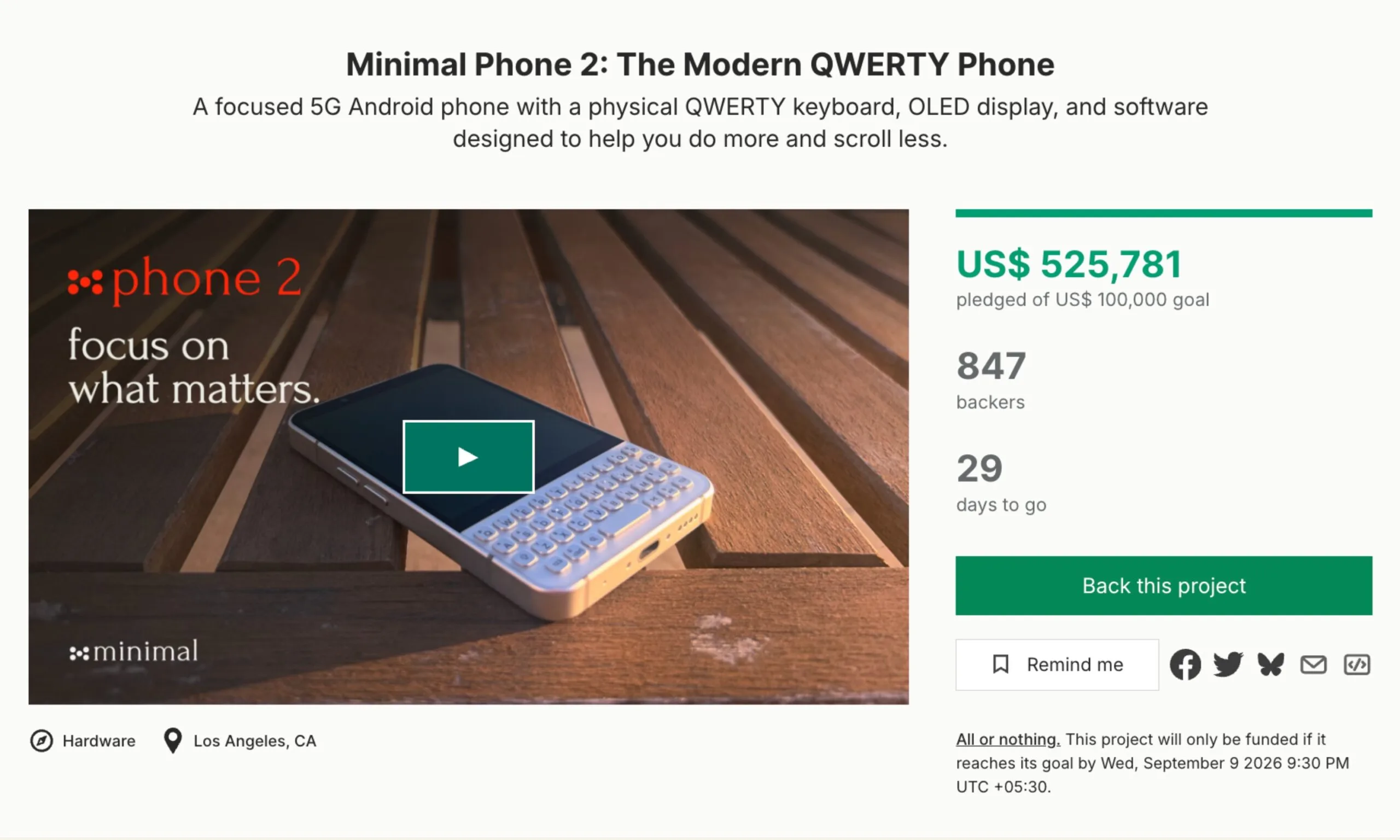
The original Minimal Phone built its entire identity around an E Ink screen that made scrolling annoying on purpose. The black-and-white E Ink screen intentionally made watching videos or scrolling through social media posts look less colorful or appealing to the human eye.
So, when The Minimal Company announced its successor with an AMOLED display that supports a higher refresh rate, I was a bit surprised. I wasn’t expecting the company to walk back the hardware choice that made it quite interesting. But that doesn’t mean that the Minimal Phone 2 isn’t worth a look.
The Minimal Phone 2 trades its e-reader-style E Ink panel for a 3.92-inch 90Hz AMOLED screen. While E Ink displays are slow, sluggish with animations, and genuinely painful for anything beyond text, the AMOLED display gives the phone a modern look and appeal.
Isn’t it ironic: Minimal Phone with an AMOLED panel? Anyway, the rest of the redesign feels quite necessary, at least to me. The blocky, sharp-edged shell is gone, and in its place, the company has used a curved aluminum body.
It ships in Black or Silver colors. The physical QWERTY keyboard sticks around as well, with a tactile QWERTY layout that uses metal dome switches, remappable keys, and long-press shortcuts. For use in darker environments, the keys are backlit as well.
Buyers also get a physical silent switch at the top, alongside a 3.5mm headphone jack, which goes with the overall old-school vibe and feel of the phone, which, to be honest, reminds me of classic BlackBerry.
Unlike the original Minimal Phone, the latest iteration gets 5G support, which also implies that the company has used a new chipset inside. Although it’s not confirmed yet, a tipster claims that it could be the Dimensity 8300, paired with 8GB of RAM and either 256GB or 512GB of storage space.
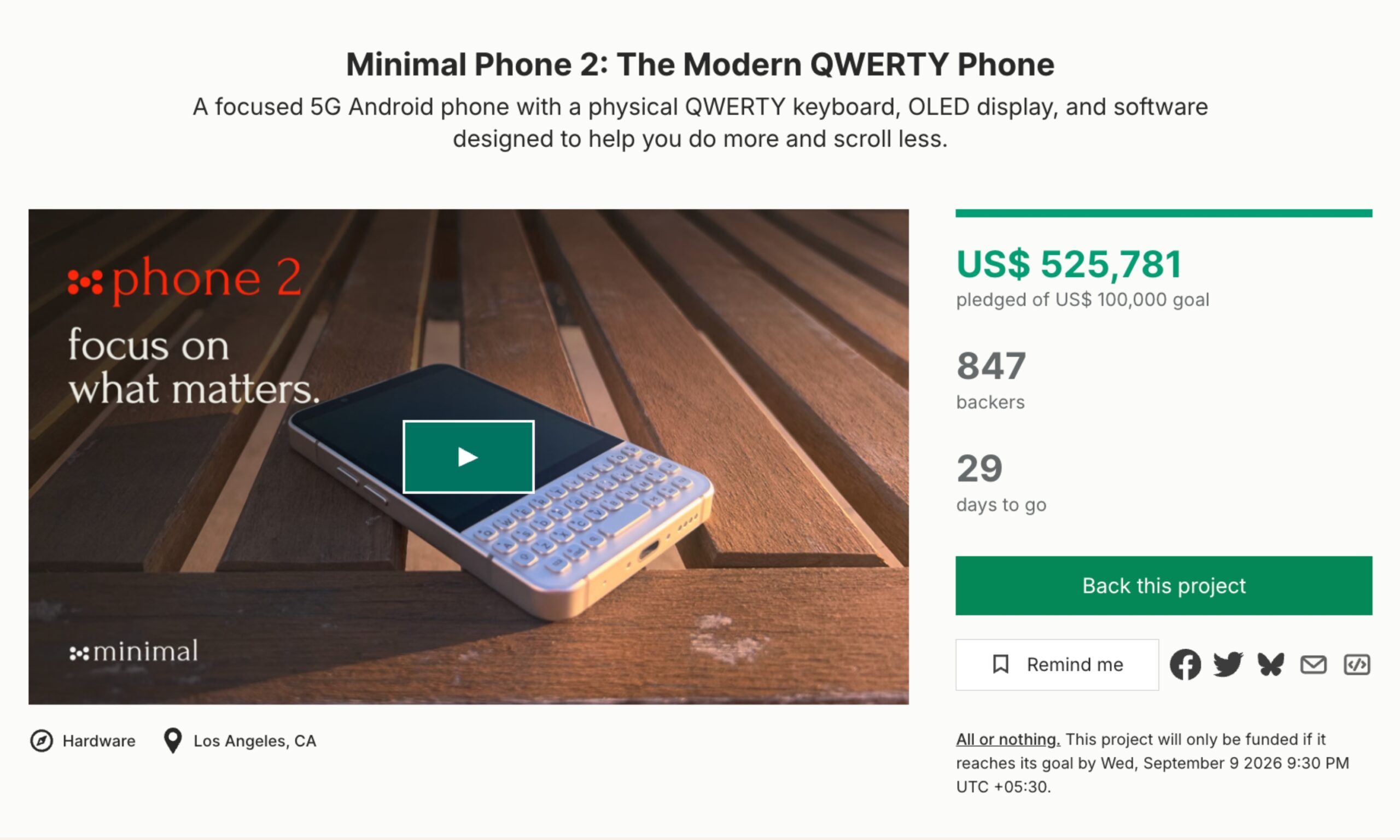
Although the company mentioned that more details about the phone will be revealed on August 10, 2026, the Kickstarter landing page suggests the crowdfunding will remain active for another 29 days. The project has already reached its goal, though, which means that it’s almost certain that the brand will move forward with a commercial launch.

Lacking sane leadership, generative AI companies have proven to be irresponsible, all in service of the almighty dollar. The nuclear power industry is the best example of a model to follow.
Generative AI is the largest automated plagiarism engine that ever existed. That’s on top of AI consuming resources and driving up electric costs for neighborhoods that didn’t ask for these data centers. Still, there are larger problems.
Generative AI companies suffer from leadership failures and decisions being made for the wrong reasons.
All of these companies need sane, moral leadership. Decisions need to be made by the leaders that will safeguard the development of generative AI, but also be protective of the future, and the resources that are being consumed along the way, human and otherwise.
Making it worse, these AI companies are not learning from experience the way that they should be right now, because that costs money. They are not instituting safeguards the way that they have to, because that costs money.
They do not care about who they’ve stolen from, and are happy charging users to use those thefts. Yes, because that costs money.
And at the same time, they’re all talking a big game. They talk about modernizing business, saving companies money and time, and so forth.
All they’re effectively doing right now is moving money around from one billionaire or another, consuming resources, and committing or aiding and abetting felonies.
Hacking into other companies is a felony that the AI is perpetrating itself. Generating nudes without the consent of other people is a felony in most US states, and some international laws are far harsher than that.
We’ve got a long way to go to get to ethical and sane advancement of the technology. Generative AI needs to be treated like nuclear power’s inception, with regulation and control.
Nuclear power is an immense force. Splitting the atom should be regarded as a wonder of the world, where it is mostly a victim of bad press and poor education.
And it can be used for good or evil. There’s more of the latter these days, with generative AI committing those felonies that I mentioned earlier than the good parts.
Nuclear power had that early Manhattan Project effort, then it was more fully regulated just a few years later. And a sane leader stepped in to govern how things should be done.
In 1934, Enrico Fermi irradiated uranium with neutrons. At first, he thought he just made transuranic elements. He didn’t initially measure the radiation thrown off from the reaction from fission.
Otto Hahn and Fritz Strassman found fission products in 1938. A year later, Lise Meitner and Otto Frisch detailed the process and explained what was happening.
It didn’t take long for the governments of the world to figure out that this could be used for power, or weaponry. Regulation, and sane management are crucial to any world-altering invention, but that can take some time to roll out.
The US started the Manhattan Project, whose main goal, first and foremost, was the creation of an atomic bomb. What they learned sparked the idea that a power-generating nuclear reactor could be made.
Here comes more “learning from experience” and “institute safeguards” part that comes from sane, rational management.

The Demon Core has a death tolll
There was a “demon core” that was intended for the third atomic bomb. In the course of early lack of supervision, and insufficient regulation, in two incidents, it went supercritical, killing two scientists and sickening more.
Sane leadership finally stepped in at Los Alamos. They stepped in late, but they stepped in.
After the second death, Los Alamos changed the rules. They mandated that remote-controlled equipment be used for experiments, which would have prevented the deaths of the two scientists.
In 1946, they melted down the infamous demon core, reusing its fissionable material in other cores.
These were the early days. This is when the US government figured out that there had to be safeguards, or there would be more deaths and more problems.
The US Navy had one of these sane leaders too. Hyman G. Rickover is known as the “Father of the Nuclear Navy” for a reason.
Under his leadership and strong hand, he drove the US Navy into the nuclear age, with a project that started in 1946. The US Navy has yet to experience a reactor accident well past his death, and his safety policies kept two AppleInsider staffers alive many years later.

Admiral Rickover with Jimmy Carter, at commissioning of USS Los Angeles (SSN-688)
On the other hand, the Russians have had at least 11 Naval reactor accidents in the same time period. Beyond seagoing reactors, one incident in 1957 associated with military radioactive waste contaminated 23,000 square kilometers.
And then there’s Chernobyl, which by far is the worst reactor accident that has ever happened.
Most of the US nuclear power industry’s hires are from the US Navy, as you’d expect. The US nuclear industry did have Three Mile Island in 1979. There were no deaths from that accident, and a one-day dose of about 1/300 of annual exposure from all sources to the citizenry near the plant.
And, it inspired more changes in training, regulation, engineering, procedures, and in the industries that built reactors in the US at the time.
Rickover retired in 1982, after 63 years of service. He died in 1986, and a few years later, a submarine was named after him. That culture of safety persists in the US Navy to this day.
Nobody is taking Rickover’s role in generative AI. Given the pursuit of profitability, that seems unlikely.
It is sorely needed, though.
AI leadership is not sane, nor do they seem to learn from failures. When presented with AI breakouts and the felonies of breaking into other companies, leadership shrugs and promises changes that never seem to materialize.
These things seem to keep happening. These incidents don’t seem to be forcing any changes inside all of these generative AI companies.
A Rickoverian culture of safety is hard to implement and is expensive. It’s still needed here.
Instead, the same mistakes keep being made. All we’re hearing is how much money is being spent, how much RAM is being used, how much utility prices are climbing because of data centers, how much water is being consumed by open-air cooling systems, and more.
I’m not certain we’re going to find 10 Rickovers for generative AI. That man was more than a force of will; he was a force of nature and a menace simultaneously, unpolluted by profit margin concerns or the demand for shareholder gains.
So instead, regulation will have to do. There’s a meeting on August 11 at the White House with the existing CEOs to present a draft, again, and talk to the President, again, so we’ll see what pops out the other side.
I’d like to think that the generative AI industry can self-regulate in the interest of the users. It’s clear from behavior that they can’t, and public comments strongly hint that they won’t accept any real control being ceded to the feds.
Given how generative AI companies plagiarize and don’t generally compensate publishers of any size or media as a general rule, the rocky road that we’re on should have been apparent from the start.
It’s not too late to change. It’s not too late for one of these companies to realize that there’s a foundational problem or five here that all of them need to be fixed.
The feds have started to figure out that there need to be changes and controls. But when they tell you that it’s time to make some changes, the exit you should have taken to make those changes is probably behind you.
Maybe the company CEOs are thinking about a course correction. You can’t tell if they are, over the tumult that they’re making that it’s too hard to identify sources, cite properly, or pay the folks they’re stealing from.
As with most things, we’ll see where we end up with time. And, we’ll see what they actually do, or are forced to do.


Data suggests that employees are working to improve their abilities around artificial intelligence in a workplace environment being transformed by the technology.
IrishJobs has published the results of a report exploring Ireland’s evolving hiring landscape and shifting attitudes across the jobs market. What was discovered is that there has been a significant push among professionals to upskill in AI.
According to the report, which gathered data from more than 500 employers and nearly 1,000 professionals across Ireland, this urge to upskill in AI is being driven by a growing adoption of AI tools and technology in the workplace.
More than one-third (35pc) of participants have taken steps to enhance their AI skills this year amid the accelerating AI workplace transformation.
With 86pc of contributing professionals confident that their skills will stay relevant over the next three years, the report indicates that the potential impact of AI on the jobs market is expected to take place over the long-term, rather than the short-term.
Commenting on the findings, Christopher Paye, country director of The Stepstone Group Ireland with responsibility for IrishJobs, said, “Across Ireland, the hiring landscape is evolving at pace, shaped by a combination of economic and geopolitical volatility, accelerating technological change and shifting workforce expectations.”
He added, “There is a growing sense of uncertainty around the impact of AI and how this could affect future careers. Professionals in Ireland are responding to these changes by enhancing AI skills and putting an increased emphasis on the value of adaptability in the workplace.
“Employers, too, have a vital role to play in investing and skilling up their workforce to ensure their people can successfully adapt to these shifts.”
IrishJobs’ report also found that increased automation in the recruitment process is potentially affecting how candidates experience and engage with recruitment. Almost three-quarters of jobseekers who contributed to the research said it is more difficult to reach the interview stage of the hiring process, while 65pc report that they do not hear back from recruiters beyond an autoreply.
Skills, for both applicants and employers, remain a divisive subject, as 78pc of candidates find that job adverts require more skills than ever before, while skills-matching remains the top hiring challenge for employers. The report suggests this is reflective of a growing disconnect between employers and candidates on the expectations around roles.
Perhaps unsurprisingly, salary was found to be the top factor for candidates when considering new opportunities, followed by work-life balance, flexible working and job security. This is in line with rising inflation and cost-of-living pressures.
With the increased economic uncertainty in mind, 77pc of contributing candidates said that job security is more important than career progression when considering potential opportunities. Meanwhile, 23pc of employers are struggling to meet jobseekers’ rising salary expectations, leading to one of the biggest hiring challenges for recruiters.
“The findings also spotlight a growing disconnect between employers and candidates across several key areas. Challenges around rising salary expectations, skills-matching and increasingly complex job requirements are contributing to friction in the hiring process,” said Paye.
“To stay competitive, employers need to sharpen their approach, setting clear and realistic expectations from the outset of the recruitment process and leading with transparency on pay, flexibility and career development. Those who actively invest in skills and support employees through the significant change ahead will be best placed to attract and retain high-calibre talent.”
Don’t miss out on the knowledge you need to succeed. Sign up for the Daily Brief, Silicon Republic’s digest of need-to-know sci-tech news.

Marta M Elvira of the University of Navarra, Nils Neumann of the University of Michigan and Olivier Godechot of Sciences Po discuss the impact of a city’s financial market on the wider landscape.
Try to imagine the history of New York without Wall Street, or London without the City. It’s not easy.
Hosting a country’s main financial markets shapes a city’s identity, raises its profile and creates jobs. But there are trade-offs. By acting as a magnet for high-paying finance jobs and related professions, many financial cities suffer from particularly high levels of income inequality.
In fact, alongside globalisation and the clustering of highly skilled workers, our research has found that the presence of a financial market is a major driver of the growing concentration of top earners and earnings inequality in select cities.
In a study conducted by two-dozen researchers, we examined top earnings in cities in 10 countries across Europe, North America and Asia, analysing two decades of linked employer-employee data.
For every country studied, we compare two cities: the financial hub housing the main national markets and related industries, and a second, comparison city that is closest in terms of population, employment and share of GDP.
In the US, for instance, we compared New York to Los Angeles. In Spain, we compared Madrid to Barcelona; in Japan it was Tokyo and Osaka; in France, Paris and Lyon; the Netherlands, Amsterdam and Rotterdam – and so on.
We wanted to understand whether the earnings of the top 1pc were increasing, whether higher earners were clustered in certain cities, and what role the finance sector plays in determining income inequality.
Across all 10 countries, the earnings share of the top 1pc (ie how much of the total income went to those one percenters) increased over time, growing by an average of 0.17pc per year. Countries such as Denmark and Sweden experienced the smallest rises, while the US posted the largest.
That is the aggregate for top earners: already high incomes increasing year after year. Our findings are consistent with data documenting the global increase in income inequality. But where do these high-flyers live and work?
In all of the countries we studied, the highest earners nationwide were more concentrated in financial cities than in the second cities. In 1990, earnings in financial cities were on average 1.7 times more likely to be in the national top 1pc than those in comparison cities. Nearly two decades later, they are 2.4 times more likely.
Financial hubs were consistently responsible for an outsized percentage of the income growth among very top earners. On average, financial cities accounted for 65pc of the increase in their countries’ top 1pc earnings shares. In France, Spain and Sweden, financial cities accounted for more than 100pc of the increase, meaning that earnings in other cities actually declined.
The growing gap between financial and comparison cities is mainly driven by the surge in earnings in the financial sector. We estimate that this sector accounts for 30pc of the divergence between the two types of cities.
The research’s two-decade-long timeframe helps interpret the trend. In the 1990s, many finance firms distributed ballooning profits among their employees, pushing salaries skyward.
As another of our studies has shown, even when banking profits took a hit – during the 2008 crisis and its aftermath, for instance – salaries remained high. This was even the case when countries enacted specific regulations like capping bonuses to curb salaries in the sector and discourage risk-taking.
Broader national contexts – including overall income inequality levels and how centralised and diversified economies are – also make a difference.
In countries such as Spain, Sweden and Denmark, financial cities contributed substantially to relatively modest increases in overall top 1pc earnings shares. In contrast, in Germany, the US and Canada, financial cities played a smaller role in much larger aggregate increases in national top earnings.
Sweden, Norway and Spain are generally more centralised economies than Germany, Canada or the US, so their financial hubs naturally play a larger role.
Additionally, in North America, finance’s wage-setting practices have spread to other sectors such as tech. Meanwhile, in Scandinavian countries, finance has remained a niche sector, with exceptionally high wages but limited spillover into other sectors.
Some 75pc of European Union citizens live in cities and urban areas, a figure set to rise to 78pc by 2050. Around the world, cities are expanding.
This makes it vital to understand what makes them the way they are. Globalisation is often blamed for income inequality in cities because cities provide the high-paying professional infrastructure – the consultants and lawyers as well as the bankers – for global business. Our research shows that some of the cities with the largest surge in earnings concentration are places like Stockholm and Madrid – important European capitals but not centres of global commerce.
Another suggested cause for income inequality is that highly educated workers and productive firms cluster in amenities-rich cities. But our research carefully paired cities with similar amenities and skill levels. In every case, the financial city contributed disproportionately to top earnings, and the other did not.
It is therefore safe to say that the presence of a financial sector is the determining factor in income inequality. This finding has profound implications for the sorts of cities, and societies, we want to create.

By Marta M Elvira, Nils Neumann and Olivier Godechot
Marta M Elvira is a full professor of strategic and people management, for the IESE Business School at the University of Navarra. There, she has served as vice-dean of research and is a member of the management committee in Madrid, as well as holding the chair of family business. She has a PhD in organisational behaviour and labour relations from the Haas School of Business at the University of California, Berkeley and a degree in economics from the University of Oviedo.
Nils Neumann is a graduate student of sociology at the University of Michigan. His main interests lie in how market and organisational dynamics can shape economic inequality.
Olivier Godechot is a professor in sociology at Sciences Po. He is also a director at AxPo Observatory of Market Society Polarisation.
Don’t miss out on the knowledge you need to succeed. Sign up for the Daily Brief, Silicon Republic’s digest of need-to-know sci-tech news.




Weekend Open Thread: Mattifying Sunscreen


Frugal Friday’s Workwear Report: Cap-Sleeve Pointelle Crewneck Sweater


Jordan Coyle & Cordiamo take Laya Arena Stakes at RDS


Can Astrology Help Find Gold and Silver Trends? A Financial Astrology Guide

US stocks: Dow closes at record on Mideast optimism; SpaceX, AMD drag Nasdaq

US Tech Stocks See Largest 5-Week Inflow in History: Can Nasdaq Break Its Downtrend?


Reform UK And Greens Sink To Lowest Favourability Ratings To Date


Nvidia Stock Climbs 2.5% as Chip Sector Rally Builds Ahead of AMD Earnings, Nvidia’s Own Report Looms


Polymarket targets $20 billion valuation as competition heats up in prediction market sector

OpenAI, Anthropic AI agents targeted real people and systems in cyber tests


Supply chain issues impact Ingredion

CLARITY Act Senate Vote Locked In, But 60-Vote Hurdle Looms Large


Rinn Pharma & Biopharma to join NordicPharmaTrain network


How to Start a Cleaning Business: A Step-by-Step Guide


The Senate has one week: CLARITY’s last August window
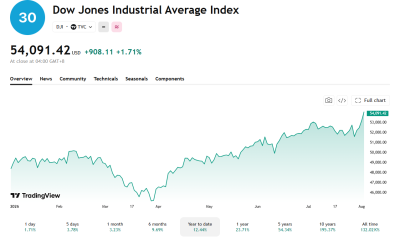

Dow and S&P 500 Hit Records on AI Earnings: When Will the Bubble Burst?


Datadog: Best Of Breed For Multiple Reasons


CNH Industrial Shares Jump Over 15% After Beating Estimates and Raising Full-Year Earnings Guidance


BDC Weekly Review: Private BDC Q2 Numbers Are Strong
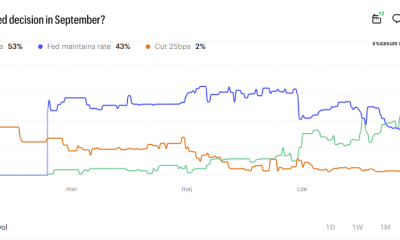

Dollar Index Trapped at 100 as Hawkish Fed Meets Official Selling


You must be logged in to post a comment Login