
Tech
AI galaxy hunters are adding to the global GPU crunch


NASA announced that it will launch the Nancy Grace Roman space telescope into orbit in September 2026, eight months ahead of schedule. The new space telescope is expected to deliver 20,000 terabytes of data to astronomers over the course of its life.
That will add to 57 gigabytes of breath-taking imagery downlinked daily from the James Webb Space Telescope, which began its work in 2021, and the start of a survey later this year by the Vera C. Rubin Observatory in the mountains of Chile, which is expected to gather 20 terabytes of data each night.
For comparison, the Hubble Space telescope, once the gold standard, delivers just 1 to 2 gigabytes of sensor readings each day. It’s been a while since all those readings were pored over by hand, but like everyone else with a pile of data, astronomers are now turning to GPUs to solve their problems.
Brant Robertson, a UC Santa Cruz astrophysicist, has had a front-row seat to this step change in science while supporting or using data from these missions. Robertson has spent the past 15 years working with Nvidia to apply GPUs to the problems of understanding space, first through advanced simulations testing theories about supernnova explosions, and now developing the tools to analyze a torrent of data from the newest observatories.
“There’s been this evolution [from] looking at a few objects, to doing CPU-based analyses on large scales of the data set, to then doing GPU-accelerated versions of those same analyses,” he told TechCrunch.
Robertson and then-graduate student Ryan Hausen developed a deep learning model called Morpheus that can pore over large data sets and identify galaxies. Their early AI analysis of Webb data identified a surprising number of a specific type of disc galaxies and added a new wrinkle to theories about the development of our universe.
Now Morpheus is changing with the times: Robertson is switching its architecture from convolutional neural networks to the transformers behind the rise of large language models. That will result in the model being able to analyze several times the area than it can currently, speeding up its work.
Techcrunch event
San Francisco, CA
|
October 13-15, 2026
Robertson is also working on generative AI models trained on space telescope data to improve the quality of observations collected by ground telescopes, which are distorted by Earth’s atmosphere. Despite advances in rocketry, it’s still hard to get an 8 meter mirror into orbit, so using software to improve Rubin’s observations is the next best thing.
But he’s still feeling the pressure of global demand for GPU access. Robertson has used the National Science Foundation to build a GPU cluster at UC Santa Cruz, but it is becoming outdated even as more researchers want to apply compute-intensive techniques to their work. The Trump administration proposed cutting the NSF’s budget by 50% in its current budget request.
“People want to do these AI, ML analyses, and GPUs are really the way to do that,” Robertson said. “You have to be entrepreneurial…especially when you’re working kind of at the edge of where the technology is. Universities are very risk averse because they just have constrained resources, so you have to go out and show them that, ‘look, this is where we’re going as a field.’”
When you purchase through links in our articles, we may earn a small commission. This doesn’t affect our editorial independence.



Two weeks ago, Anthropic announced that its new model, Claude Mythos Preview, can autonomously find and weaponize software vulnerabilities, turning them into working exploits without expert guidance. These were vulnerabilities in key software like operating systems and internet infrastructure that thousands of software developers working on those systems failed to find. This capability will have major security implications, compromising the devices and services we use every day. As a result, Anthropic is not releasing the model to the general public, but instead to a limited number of companies.
The news rocked the internet security community. There were few details in Anthropic’s announcement, angering many observers. Some speculate that Anthropic doesn’t have the GPUs to run the thing, and that cybersecurity was the excuse to limit its release. Others argue Anthropic is holding to their AI safety mission. There’s hype and counter–hype, reality and marketing. It’s a lot to sort out, even if you’re an expert.
We see Mythos as a real but incremental step, one in a long line of incremental steps. But even incremental steps can be important when we look at the big picture.
How AI Is Changing Cybersecurity
We’ve written about Shifting Baseline Syndrome, a phenomenon that leads people—the public and experts alike—to discount massive long-term changes that are hidden in incremental steps. It has happened with online privacy, and it’s happening with AI. Even if the vulnerabilities found by Mythos could have been found using AI models from last month or last year, they couldn’t have been found by AI models from five years ago.
The Mythos announcement reminds us that AI has come a long way in just a few years: The baseline really has shifted. Finding vulnerabilities in source code is the type of task that today’s large language models excel at. Regardless of whether it happened last year or will happen next year, it’s been clear for a while this kind of capability was coming soon. The question is how we adapt to it.
We don’t believe that an AI that can hack autonomously will create permanent asymmetry between offense and defense; it’s likely to be more nuanced than that. Some vulnerabilities can be found, verified, and patched automatically. Some vulnerabilities will be hard to find, but easy to verify and patch—consider generic cloud-hosted web applications built on standard software stacks, where updates can be deployed quickly. Still others will be easy to find (even without powerful AI) and relatively easy to verify, but harder or impossible to patch, such as IoT appliances and industrial equipment that are rarely updated or can’t be easily modified.
Then there are systems whose vulnerabilities will be easy to find in code but difficult to verify in practice. For example, complex distributed systems and cloud platforms can be composed of thousands of interacting services running in parallel, making it difficult to distinguish real vulnerabilities from false positives and to reliably reproduce them.
So we must separate the patchable from the unpatchable, and the easy to verify from the hard to verify. This taxonomy also provides us guidance for how to protect such systems in an era of powerful AI vulnerability-finding tools.
Unpatchable or hard to verify systems should be protected by wrapping them in more restrictive, tightly controlled layers. You want your fridge or thermostat or industrial control system behind a restrictive and constantly-updated firewall, not freely talking to the internet.
Distributed systems that are fundamentally interconnected should be traceable and should follow the principle of least privilege, where each component has only the access it needs. These are bog standard security ideas that we might have been tempted to throw out in the era of AI, but they’re still as relevant as ever.
Rethinking Software Security Practices
This also raises the salience of best practices in software engineering. Automated, thorough, and continuous testing was always important. Now we can take this practice a step further and use defensive AI agents to test exploits against a real stack, over and over, until the false positives have been weeded out and the real vulnerabilities and fixes are confirmed. This kind of VulnOps is likely to become a standard part of the development process.
Documentation becomes more valuable, as it can guide an AI agent on a bug finding mission just as it does developers. And following standard practices and using standard tools and libraries allows AI and engineers alike to recognize patterns more effectively, even in a world of individual and ephemeral instant software—code that can be generated and deployed on demand.
Will this favor offense or defense? The defense eventually, probably, especially in systems that are easy to patch and verify. Fortunately, that includes our phones, web browsers, and major internet services. But today’s cars, electrical transformers, fridges, and lampposts are connected to the internet. Legacy banking and airline systems are networked.
Not all of those are going to get patched as fast as needed, and we may see a few years of constant hacks until we arrive at a new normal: where verification is paramount and software is patched continuously.
From Your Site Articles
Related Articles Around the Web

Rivian has begun production of its R2 SUV. However, you can’t get one just yet: The first customer deliveries (of the most expensive version) aren’t expected until later this spring.
On Wednesday, CEO RJ Scaringe drove the first electric SUV off the production line at the company’s Normal, IL, factory. A storage and logistics building at that factory was damaged by a tornado last weekend, with Wednesday’s rollout event seemingly designed to reassure nervous customers and investors.
“We are really excited to be producing R2 for our customers,” Scaringe is quoted as saying in a news release. However, Rivian CFO Claire McDonough told Reuters that customers won’t be able to configure their vehicle orders until June. Electrek reports that these first units rolling out now are going to Rivian employees.
Rivian

If you were drawn to the R2’s $45,000 starting price, well, Rivian won’t have any of those for a while. First off the line (this spring) is the Launch Package, starting at $57,990. A Premium trim, expected late 2026, will cost $53,990. Then, in the first half of 2027, a Standard (RWD long range) variant arrives at $48,490. And as for that headline-grabbing $45,000 base-model R2, I hope you like waiting. It won’t be here until late 2027.
The Rivian R2 was revealed in 2024. Smaller and lighter than the flagship R1, the company is positioning the EV as its answer to Tesla’s best-selling Model Y. All versions of the new two-row SUV are rated for at least 300 miles per charge. Each trim has a native NACS charge port. The vehicle can charge from 10 percent to 80 percent in under 30 minutes when using a DC fast charger.
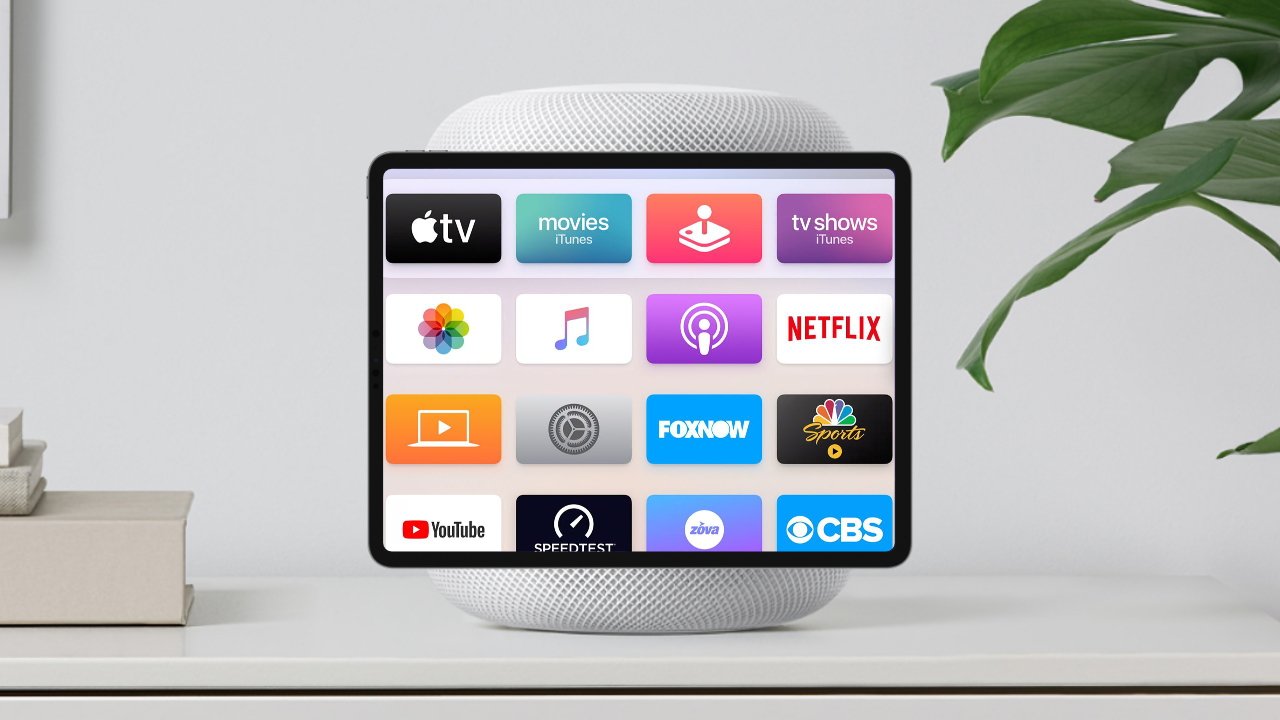
Apple is reportedly working on bringing no fewer than six new product categories to market soon, in part as Tim Cook’s swansong as CEO of the company.
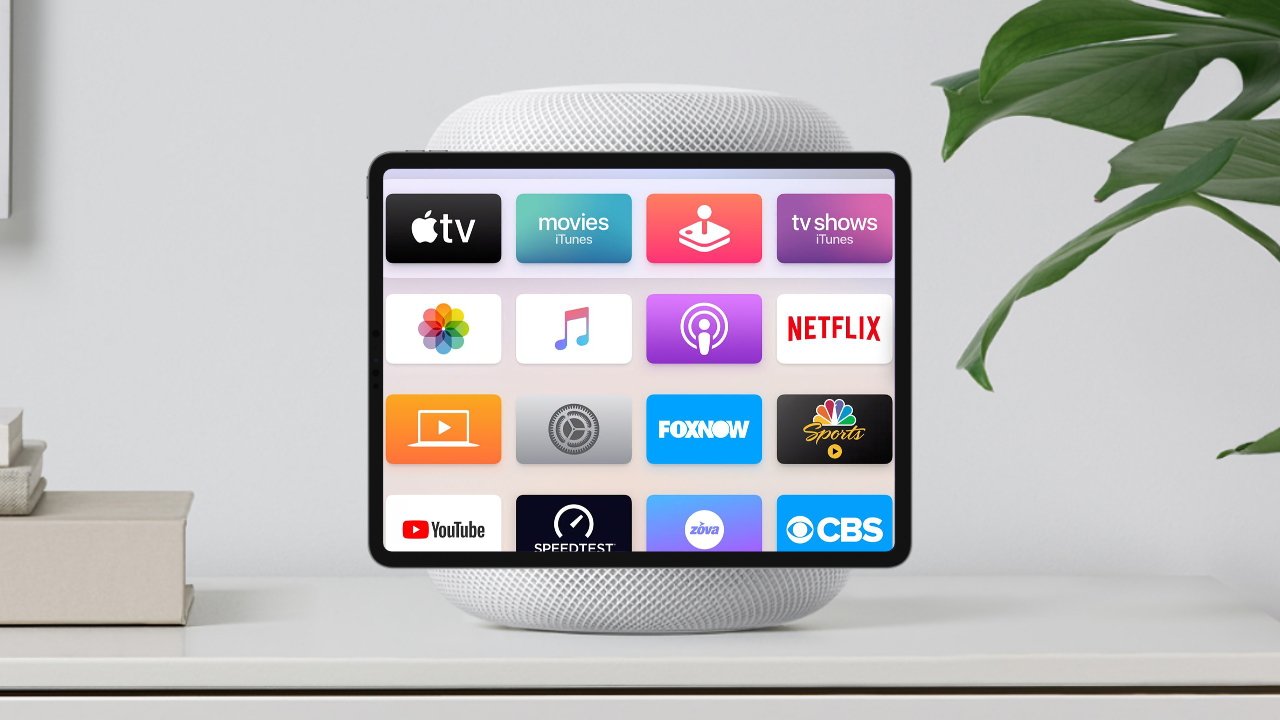
Apple Home Hub to arrive in 2026 with Apple Intelligence
Following the news that Apple CEO Tim Cook will be replaced by Ternus in late 2026, a new report has detailed the products his teams are working on. Speaking during an interview with TBPN, Bloomberg’s Mark Gurman reports that Apple has products in six new product categories in the works. This is alongside its usual product refreshes, like new iPhones, iPads, and more.
Apple’s 2024 Apple Vision Pro release was the last time it entered a new category. The spatial computer has so far failed to capture the imagination of the larger market, but that hasn’t deterred the company from entering new markets in the future.
Continue Reading on AppleInsider | Discuss on our Forums

If you’re a Switch 2 owner itching for something new to play and you happen to be partial to an Annapurna Interactive game, then boy is it your lucky day. The prolific indie publisher has announced that five of its titles are coming to Switch 2, three in the form of next-gen upgrades and two for the first time on Nintendo platforms.
The magnificent and are available starting today, complete with 120Hz and 4K upgrades for Nintendo’s latest console. First-time buyers can grab Sayonara Wild Hearts for $13, while 2024’s Lorelei and the Laser Eyes costs $25. The upgrades are free if you already own either game on Switch, and Sayonara Wild Hearts also adds the previously unavailable Remix Arcade mode for the first time. This speeds up gameplay and removes loading as you chase high scores.
Next month, May 28, cyberpunk cat adventure is also getting the Switch 2 treatment, sporting improved 4K visuals, a frame rate boost and, fittingly given its feline focus, mouse controls. The Switch 2 port will be available to purchase digitally from the eShop for $30, but it’s not clear if this will also be a free upgrade for those who bought Stray on Switch.
Katamari creator Keita Takahashi’s charmingly weird puzzle-adventure To a T skipped Nintendo consoles when it launched last year, so it’s nice to see that one coming to Switch 2 on June 11 (digital-only, $20). A few weeks later on June 23, cozy narrative game arrives on both Switch and Switch 2. It’ll cost $25 on the eShop, with no word on a physical version.
Annapurna Interactive released a lot of its games on Switch, and that trend happily looks set to continue throughout the Switch 2 generation. The musical turn-based RPG came to Nintendo’s latest console at launch earlier this month, with stylish adventure game also arriving on Switch 2 on May 7.
The Apple TV 4K has remained one of the more consistent products in Apple’s lineup. Updates have improved performance and added features, but the overall experience has stayed largely the same. It has been reliable, polished, and predictable.
That may not hold true for much longer.
The next Apple TV 4K is shaping up to be a more meaningful update, not because of a single feature, but because of how several changes come together. The rumored shift to a new chip, deeper integration of Apple Intelligence, improvements in video and audio handling, and a stronger role in the smart home ecosystem all point toward a device that is being repositioned rather than simply upgraded.
A new chip could unlock a different class of features
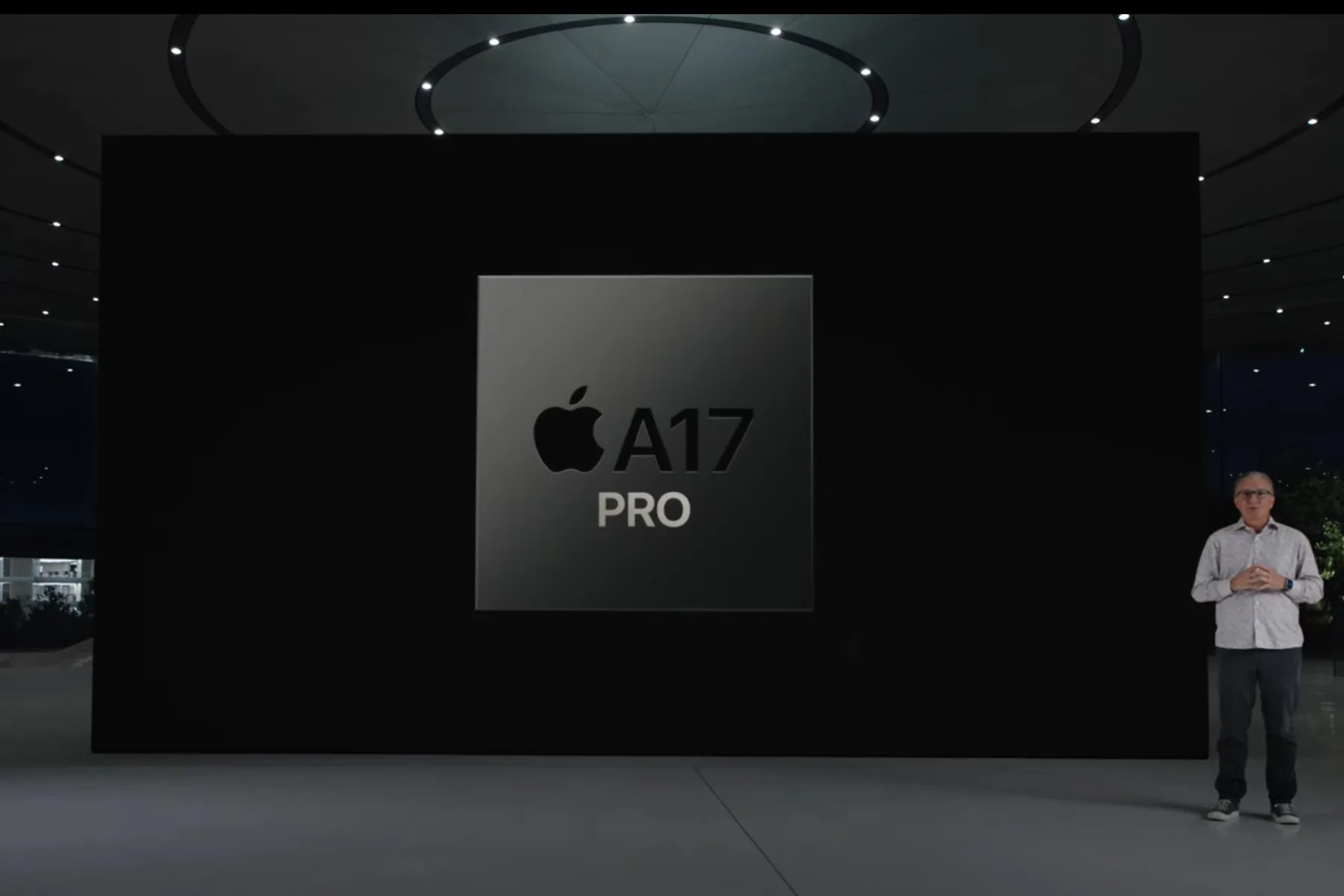
One of the most important rumored upgrades is the move to the A17 Pro chip, replacing the A15 Bionic in the current model.
The immediate assumption is better performance, which will certainly be part of the story. Faster app launches, smoother multitasking, and more responsive navigation are expected outcomes. The more significant implication lies in what the A17 Pro enables.

This chip is the baseline requirement for Apple Intelligence, and the Apple TV is currently one of the few Apple products that does not support it. Bringing that capability to the television shifts the device from being a passive content player to something more interactive and context-aware.
Siri could become far more capable in everyday use
Apple Intelligence is closely tied to the next evolution of Siri, which is expected to move well beyond basic voice commands. Features such as app intent integration, personal context awareness, and on-screen understanding are all part of this transition.
In practical terms, this changes how users interact with their TV.
Instead of relying on specific phrasing or limited commands, interactions become more natural. A viewer could ask who an actor is, request a summary of a scene, or understand why a moment in a show matters, and the system would respond with awareness of what is currently on screen. This extends across apps, rather than being limited to a single platform.
The impact becomes even more noticeable when the Apple TV is used as a smart home hub. Actions such as responding to a doorbell notification or controlling connected devices can be handled through contextual commands that take into account both what is happening on screen and what the user is trying to do. This creates a more seamless interaction model that feels less like issuing instructions and more like direct control.
Video enhancements could improve real-world viewing
As hardware evolves, video technologies tend to follow, and this update could coincide with improvements in Dolby Vision capabilities.

Features such as enhanced black detail aim to improve visibility in darker scenes without compromising artistic intent. Adjustments based on ambient lighting conditions help maintain consistent picture quality across different environments. Additional optimizations for sports and fast-moving content focus on improving clarity and motion handling.
These changes build on Apple’s existing calibration tools but move toward a more adaptive system that responds dynamically to viewing conditions rather than relying solely on manual adjustments.
Connectivity could become more consistent across devices
Another rumored addition is Apple’s N1 networking chip, which consolidates Wi-Fi, Bluetooth, and Thread connectivity.
For a device that already functions as a smart home hub, this has clear practical benefits. Improved network stability leads to more responsive smart home controls, faster pairing with devices, and more reliable communication between products within the Apple ecosystem.
Features such as AirPlay also benefit from stronger connectivity, reducing latency and improving consistency when streaming or sharing content across devices. These improvements may not always be immediately visible, but they address some of the underlying friction that affects everyday use.
A built-in camera could expand how the device is used
There is also continued speculation around a built-in camera.
At present, video calling on Apple TV requires using an iPhone as the camera, which introduces additional steps and setup. A dedicated camera with features such as Center Stage tracking would simplify this process and make it more accessible.
This also opens the possibility of multiple product tiers. A standard Apple TV 4K could remain focused on media consumption, while a higher-end version incorporates features that support communication and more advanced smart home interactions. Recent software updates, particularly in FaceTime functionality, suggest that Apple is preparing for this type of hardware integration.
Audio support could finally match high-end setups
Audio pass-through is another long-requested feature that may be introduced with this update.
Currently, the Apple TV handles audio decoding internally. While this works well in many cases, it can limit flexibility when used with dedicated audio equipment such as receivers. Pass-through would allow external systems to handle decoding directly, improving compatibility with a wider range of audio formats and setups.

For users with more advanced home theater configurations, this represents a meaningful upgrade that aligns the Apple TV more closely with high-end audio systems.
The timing points to a larger strategy
Current expectations place the launch around spring 2026, a window that aligns with Apple’s broader push into smart home products.
If new devices such as smart displays, connected cameras, or other home accessories arrive alongside it, the Apple TV becomes part of a more cohesive ecosystem. It already serves as a central hub, but with deeper integration and AI-driven capabilities, its role could expand into something more active within that environment.
A shift in what the Apple TV is meant to be
What stands out across these rumored updates is the direction they collectively suggest.
The Apple TV 4K has traditionally been positioned as a premium streaming device with strong performance and a polished interface. These changes indicate a move toward a broader role that combines entertainment, smart home control, and intelligent interaction.
The success of that shift will depend on execution. Features like Apple Intelligence and enhanced Siri need to work reliably across different scenarios to deliver on their promise.
If they do, this could represent one of the more meaningful updates the Apple TV has seen in years, not because it changes what the device is, but because it expands what it can do.
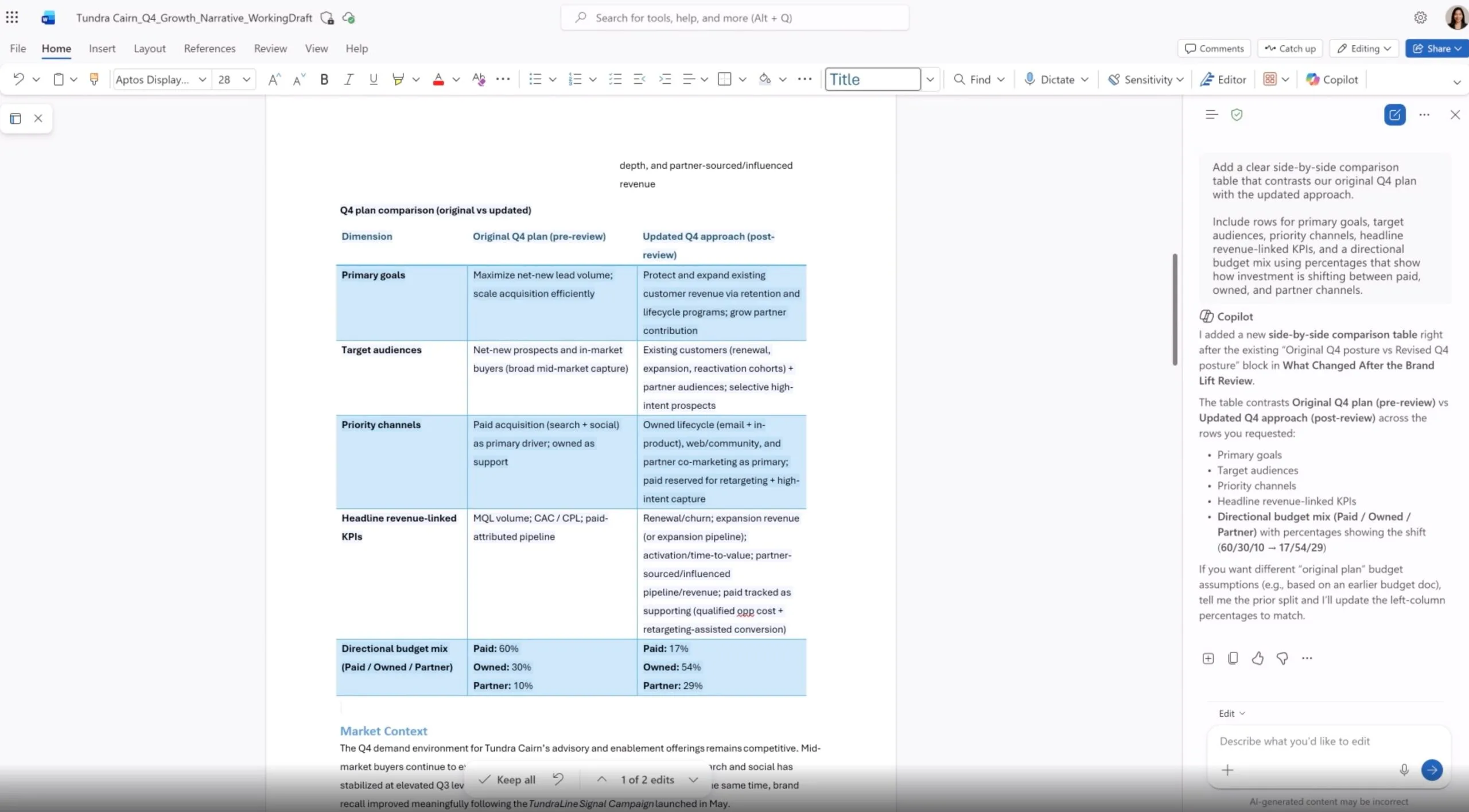
Microsoft is rolling out a useful feature for Office users this week. The company has introduced Agent Mode inside Word, Excel, and PowerPoint, a more powerful version of the Copilot experience that Microsoft calls “vibe working.”
This is now the default experience for Microsoft 365 Copilot and Microsoft 365 Premium subscribers. It is also available on Microsoft 365 Personal and Family plans.
What’s Agent Mode in Microsoft Copilot, and how is it different?
Until now, Copilot within Office apps has been largely a passive assistant. It could answer questions, but struggled to take direct action inside your documents.
Sumit Chauhan, President of the Office Product Group at Microsoft, acknowledged this gap. She noted that when Copilot first launched, the underlying AI models simply weren’t capable enough to command the applications directly.
Models have shown significant improvement in instruction following and multi-step reasoning over the past year. Agent Mode is built on those improvements and can now execute complex edits without losing your original intent.
What can Copilot Agent Mode actually do in Word, Excel, and PowerPoint?

Quite a lot, actually. A sidebar shows you every step Copilot is taking in real time, so you’re never left guessing what it changed. In Word, it can draft, rewrite, restructure, and adjust tone. In Excel, it makes changes directly inside your workbook, adding formulas, tables, and visuals to turn raw data into actionable insights.

In PowerPoint, it can update existing decks with fresh information while respecting your company’s template styling. In fact, early data from Microsoft shows engagement in Excel jumped 67%, satisfaction rose 65%, and new user retention increased 50%.
Microsoft says deeper editing for complex workflows and more transparency around changes are next on the roadmap. The company has been making several Copilot-related moves lately, from launching smarter research tools in Copilot Cowork to cleaning up its presence in Windows 11 apps and doubling down on its positioning as a serious productivity tool.

Hades 2 was selected as one of CNET’s best games of 2025, but don’t take our word for it. The game won Best Action Game at the 2025 Game of the Year awards, Best Game on Steam Deck at the Steam Awards and a bevy of other accolades. If you haven’t had the chance to play this stellar sequel yet, you can play it on Xbox Game Pass now.
Xbox Game Pass, a CNET Editors’ Choice award pick, offers a wide selection of games you can play on your Xbox Series X, Xbox Series S, Xbox One and PC or mobile device for as little as $10 a month. And with a subscription to the higher-tiered Game Pass Ultimate ($30 a month), you can access hundreds of games, including new ones the day they’re released, each month.
Here are the games Microsoft plans to bring to Game Pass in April. You can also check out other games the company added to the service in March, including Cyberpunk 2077, and more options in our list of the best gaming subscriptions.
Hades 2
On Game Pass Ultimate, Game Pass Premium and PC Game Pass now.
Following the events of the original game, the Titan of Time Chronos has returned and laid waste to the Underworld and Earth. As the immortal princess Melinoe, you’re tasked with stopping the titan and restoring the mythic world. Each time you venture out, you’ll learn more about the world around you and discover the true cause of all the destruction and pain.
DayZ
Now on PC, joining Game Pass Ultimate, Game Pass Premium, Game Pass Essential and PC Game Pass.
This online multiplayer survival game is coming to PC. An unknown virus has turned the population of the post-Soviet country of Chernarus into zombies, and you’re one of the last few survivors. You’ll have to scavenge for supplies among the ruins while fighting off zombies and other survivors alike. But how far will you go to save yourself?
Endless Legend 2 (game preview)
New to Game Pass Premium. Previously on Game Pass Ultimate and PC Game Pass.
Lead your faction to build a great empire that can crush your enemies in this fantasy strategy sequel, which is still in early access. You can play as warriors descended from the stars, cursed knights or hive-minded beasts, but each faction has its strengths, weaknesses and unique philosophies that can influence the rest of the game. And fending off enemies is just one challenge. You’ll have to adapt to the changing environment as well. Will you expand as the tides reveal new treasures, or focus on improving your defenses?
FBC: Firebreak
New to Game Pass Premium. Previously on Game Pass Ultimate and PC Game Pass.
The Federal Bureau of Control is under attack from otherworldly forces, and it’s up to you and your versatile unit to restore order. You’ll fight chaotic entities, leeches and a monster made of sticky notes using guns, grenades and other supernatural weapons. You can play this first-person shooter game on your own or take on the chaos of the FBC with friends in three-player co-op.
Planet Coaster 2
On Game Pass Ultimate, Game Pass Premium and PC Game Pass now.
This might not be the classic RollerCoaster Tycoon, but it’s close enough. You’ll build your own roller coasters and water slides, manage your amusement park and create unforgettable experiences for your guests. It’s unclear if you can launch your coasters off the rails into waiting crowds. Will report back later.
Tiny Bookshop
On Game Pass Ultimate, Game Pass Premium and PC Game Pass now.
I have long dreamed of opening my own bookshop, and until I come into a lot of money, this game will have to do. You can stock your bookshop with different genres and items for sale, set up shop in scenic locations — like near a lighthouse — and get to know the locals in this cozy management game.
Football Manager 26 (PC and console)
New to Game Pass Premium. Previously on Game Pass Ultimate and PC Game Pass.
Get ready for a more immersive matchday experience in the latest installment of the long-running Football Manager franchise. You can build a star-studded squad with new transfer tools, and this entry features official Premier League licenses and women’s football for the first time in the series’ history.
Replaced
On Game Pass Ultimate and PC Game Pass now.
Can AI ever be human? I’m not talking about ChatGPT or Gemini, but REACH, an AI trapped in a human’s body, in this narrative platformer game. You’ll explore an alternate 1980s America that’s scarred from nuclear catastrophe as you try to uncover the secrets of the Phoenix Corps, the same group that created you. It’s a cyberpunk Frankenstein with plenty of exploration and fluid action sequences.
The Thaumaturge
On Game Pass Ultimate, Game Pass Premium and PC Game Pass now.
A thaumaturge is a miracle worker or magician, and in this roleplaying game, you’re a master of mystical arts that allow you to peer into the hearts and minds of others. After the death of your father, you returned to an alternate 1900s Warsaw to investigate his death, fight supernatural forces and uncover the truth.
The Elder Scrolls IV: Oblivion Remastered
New to Game Pass Premium. Previously on Game Pass Ultimate and PC Game Pass.
A fanatical cult is trying to open gates to the demonic realm of Oblivion, and it’s up to you to stop them and seal the gates forever in the remastered version of this classic open-world RPG. You can rediscover the world of Cyrodiil (or experience it for the first time in updated glory), encounter unique characters and save the land.
EA Sports NHL 26
On Game Pass Ultimate and PC Game Pass now.
As the NHL regular season winds down, the playoffs and the fight for the Stanley Cup are heating up. And with the latest installment in this EA Sports franchise, you can ensure your favorite team brings home the cup. This entry in the series introduces new gameplay mechanics, such as Ice Q 2.0 and a goalie crease control system, to add additional challenges. So if you want to see the Florida Panthers win the cup back-to-back, or you want to make absolutely sure that never happens, this game is for you.
Call of Duty: Modern Warfare
On Game Pass Ultimate, Game Pass Premium and PC Game Pass now.
Modern Warfare redefined the Call of Duty series when it was released almost 20 years ago, and the rebooted version of the classic game drops you right back to where it started. You’ll control CIA and SAS special forces as they attempt to stop rebels from the fictional Republic of Urzikstan. And if the campaign’s not enough, you can hone your skills in the immersive, fast-paced multiplayer.
Little Rocket Lab
New to Game Pass Premium. Previously on Game Pass Ultimate and PC Game Pass.
Your family’s dream project has been to build a rocket, and you’re going to fulfill their dream in this cozy, machine-building RPG. But first, you have to build clever contraptions, convert local resources and become the heart of your community before you can complete your ultimate rocket-building task.
Sopa: Tale of the Stolen Potato
New to Game Pass Premium. Previously on Game Pass Ultimate and PC Game Pass.
Miho goes to the pantry to grab a potato for his grandmother’s soup when he lands in a fantastical land. Now he has to find his way back home by following in the footsteps of a mysterious traveler from long ago. You’ll meet quirky characters, gather exotic ingredients and take in vibrant environments in this world of magical realism inspired by Latin America.
Vampire Crawlers
On Game Pass Ultimate and PC Game Pass now.
From the creators of the indie darling Vampire Survivors comes this turn-based, deck-building, roguelite game. You’ll explore dungeons that might look familiar to Vampire Survivors veterans, fight monsters and build chaotic, broken decks along the way. So be tactical in your choices or blast away every chance you get!
Kiln
On Game Pass Ultimate and PC Game Pass now.
Kiln is about creating beautiful pottery filled with artistry and wonder… and smashing it all to pieces in the arena. This online, multiplayer party brawler pits you against others to see which pottery design can withstand the heat and which can dish out a beating.
Watch this: Your Phone is Disgusting: Let’s Fix That
Game Pass Essential subscribers have two more games now
Game Pass Essential costs $10 a month and offers access to a relatively small library of games compared with Game Pass Premium and Ultimate. While Microsoft doesn’t regularly add many games to Essential’s library, the company added these two on April 8.
Games that left the service
While Microsoft is adding the above games to Game Pass, it also removed five games from the service, including GTA 5. That means you’ll have to buy these games separately now if you still need to complete your main campaign or any sidequests.
For more on Xbox, discover other games available on Game Pass now, read our hands-on review of the gaming service and learn which Game Pass plan is right for you.
Verdict
The D900 takes all the things that Topping is very good at and evolves them to their logical conclusion. This is truly state of the art decoding and performance that very few brands can get anywhere near. This is the best device of its kind anywhere near the price
-
Sounds incredible
-
Good connectivity
-
Very well made and attractive
-
No RCA outs
-
Can be little reluctant to connect
-
Remote is a bit clunky
Key Features
-
Source
USB Audio, i2S, coax, optical, AES and Bluetooth
-
Audio quality
Supports PCM to 768kHz and DSD512
-
Connectivity
XLR outputs
Introduction
In the space of a few years, Topping has gone from being completely unheard of to a mainstay of affordable hi-fi.
From not much over £100, the company offers a range of deeply capable digital to analogue convertors and headphone amplifiers. They have an unerring habit of doing more for less than most of their key rivals and they have a determinedly loyal following as a result.
What you see here is different to almost anything that Topping has built before. Sure, it’s still a DAC (and just a DAC, I’ll come to that in due course) but the manner in which it does digital to analogue decoding is something pointedly different to almost anything else.
The overwhelming majority of devices on the market make use of off the shelf components from two producers; ESS and AKM. There are then a smattering of smaller concerns; Texas Instruments, Wolfson and Crystal but the result is the same; the actual business of conversion is handled by a fixed piece of silicone.
The D900 joins a tiny number of devices where there this isn’t the case. The manner in which it turns a digital signal into an analogue one is bespoke and designed to maximise the areas of performance that Topping feels is important. This is not without risk; Topping has a formidable reputation built on great implementations of ESS and AKM DACs.
The D900 is at once an argument that there might be a bit more to the business of decoding being made to people who seem quite settled with what there is and a step outside Topping’s own comfort zone of expertise. How does it fare?
Pricing
In the UK, the D900 is available from a selection of retailers for £1799. It can be ordered online from some authorised retailers and there should be no issue securing one from any location in the UK. In the USA the D900 is available for $1799, reflecting a larger market and different sales model. In Australia it is available for $3099.
It is possible at the time of writing to find online locations shipping the D900 direct from the Far East, usually with a reduction over the UK retail. These units will not have a UK warranty however so it would be best to be careful about doing so.
Design
- Solid and understated
- Small but informative display
- Remote control
- Matching headphone amp
- Some gremlins connecting up
The D900 is a three quarter width design at 330mm. It is perfectly possible when you unbox it from the (really well thought out) packaging that you might find it slightly underwhelming but I suspect that feeling should pass pretty quickly.
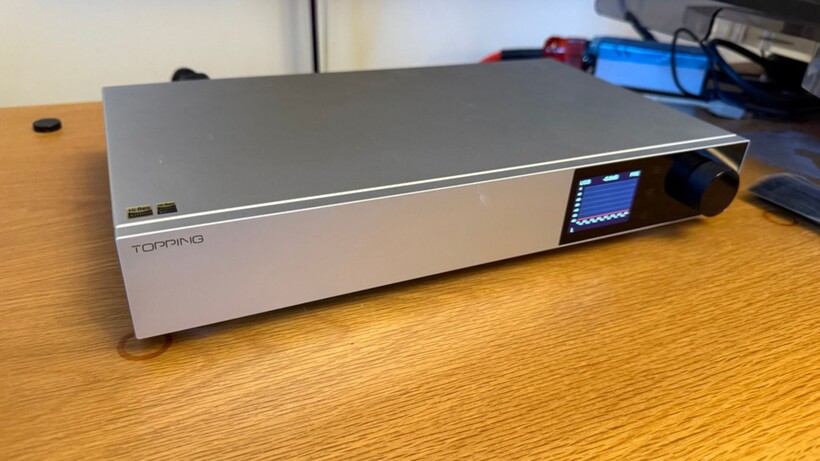
The D900 arrives looking sober to the point of minimalist. I have to say I feel this is the right approach and I really like it. The D900 has a quiet seriousness to it that should sit in most systems very effectively. The standard of build is excellent and it whispers rather than shouts a level of quality. It is exclusively available in silver.

The main focal point on the front panel is a small display. This can show input and incoming sample rate information as well as settings menus and both an old fashioned output VU meter and more modern graphic equaliser style interface. The display isn’t terribly large and can’t be read at a huge distance but it’s useful to have when setting the D900 up.
There is a small but no less sturdy remote handset too. This has been a bit of a mixed bag for me in use; there have been points where it hasn’t been responsive at all, but it’s useful to have; particularly if you intend to use the D900 as a preamp in your system. The remote also combines with the display to simplify settings menu access although the menu tree for this is not as intuitive as it could be.
As hinted at earlier, the D900 is a DAC and not a DAC headphone amp (and this is why the D900 is a ‘D’ and not a ‘DX’). If you want to go all in, Topping makes the entirely analogue A900 to partner the D900 and this is a formidable looking device with sockets for any occasion.

It does mean that the D900 isn’t as all singing and dancing as some of its more affordable brethren but allows it to focus on a smaller range of tasks. How much of an issue this will be to you is almost certainly going to depend on what equipment you have kicking around already.
Getting the D900 up and running wasn’t completely straightforward. It would not connect at all to the Chord Electronics 2Go/2Yu streaming head unit over USB and fought me for some time to connect to the usually viceless Eversolo T8.
First it didn’t want to be seen and then, once it was, it proceeded to lock incorrectly, resulting in garbled, high speed sound. Once it was sorted, it stayed sorted but I had to put the effort in.
Specification
- Wholly bespoke digital to analogue decoding
- Wide selection of digital inputs…
- …but slightly more limited outputs
- On board EQ
- Preamp functionality
The principle focus of the D900 is its decoding. It isn’t the first time Topping has implemented this system; that was the D90 III Discrete which uses a simplified version but the D900 takes it to its logical conclusion.
The system is called PSRM which stands for Precision Stream Reconstruction Matrix. It is a ‘1 bit’ system (a notional ideal that dates back to the early days of CD where, so long as the signal is handled correctly before it reaches the actual decoder, it boasts the scope for excellent measured performance) and incorporates discrete 1-bit modules that convert digital audio streams into analogue voltage by turning each audio sample into a very fast train of 1-bit pulses.

The waveform is in turn defined by the density of the pulses and it’s shaped by an analogue reconstruction filter. This is the same as an off the shelf Delta Sigma DAC but Topping controls the entire process rather than buying in a chip that gets on with it. Where the D90 III had 16 of these modules, the D900 has 32 of them.
These modules are powered by a bespoke power supply that employs a voltage-reference power supply that is purely resistive. It uses digital switching logic operating at the nanosecond level for maximum performance.
The business of turning this signal into a usable output is undertaken by a new, proprietary I/V conversion circuit composed of low distortion integrated op-amps and ultra-low-noise discrete components carefully selected after repeated testing.

If this all makes your eyes glaze over, you can focus on the fact that the claimed measurements (that the D900 has achieved when independently measured) are state of the art.
This formidable hardware is made available to an extensive selection of inputs. There are seven wired connections; two optical, two coax, one AES, one USB (on both USB-C and B connections) and an i2S connection; a very high performance option derived from pro audio.
These are augmented by Topping’s excellent Bluetooth implementation. Sample rate handling via USB and i2S is PCM to 768kHz and DSD to 512 with other connections having lower overall sample rate handling.
The situation with regards outputs is a little less comprehensive though. Output is exclusively via XLR with both fixed and variable level examples fitted. Topping says it’s perfectly ok to use XLR to RCA adapters should you need to but you’ll need to budget for those if that’s the way you want to go.

Something you do get is Topping Tune. This allows you to adjust a ten band EQ to tweak the output of the Topping to better suit the output relative to the room. What’s quite interesting about this software is that Topping has elected to make it desktop software that can be adjusted on a screen you can actually see without squinting.
From there, adjustments are communicated over USB to the device itself. I’ve found Topping Tune a bit tricky to actually uninstall from a Mac but, if you own the D900 rather than have it turn up for review, this should be less of an issue.
In keeping with most Topping devices, the D900 has a volume control and can be used as a preamp. If you have no further interest in an analogue source, it can be used directly into a power amp or active speakers to streamline your system.
Performance
- Truly outstanding levels of detail
- Immaculate soundstage and three dimensionality
- Surprisingly tolerant of poor recordings
- Ensures you can’t hear the cleverness
Topping’s priority in their circuit design is low distortion and the best signal to noise ration they can manage; in this case a claimed harmonic distortion below -140dB and a signal-to-noise ratio of 131dB.
This is great in an abstract sense but what does it mean? When you listen to the sublime Fink Meets the Royal Concetgebouw Orchestra on the D900, the effect is subtly but noticeably different to how it often sounds. The opening Berlin Sunrise builds from silence… but on the Topping it’s not silent. In the seven seconds before the orchestra actually starts, the D900 finds the tiniest rustling and stirring of 100 plus people getting ready to perform. It’s buried in the noise floor of the recording… but the D900 finds it.
It’s not simply about these random artefacts either. As the this track builds and builds, there is a logic and order to the orchestra that makes it sound like a believable body of musicians. Different instruments play out from different sections and you can discern individual musicians rather than single body of’ strings’ or ‘brass.’ It’s the difference between a reproduction and a performance and the Topping excels at it.

It doesn’t have to be an orchestra either. Listen to the pounding and dramatic GO! on Santigold’s Master of my Make-Believe and the Topping doesn’t unpick the dense levels of production but it ensures that the whole performance is just that little more intelligible and orderly than it was before.
It does this with astonishing consistency too. Mid-seventies Trojan Records outing that sounds like it was saved to a tape and then left at the bottom of the sea? Not a problem. Absolute perfection from Blue Note? Delivered as intended. The Topping doesn’t alter or even tweak what you hear, it simply delivers more of it.
What I have found most impressive about this is how well it handles less than perfect recordings. You can give the D900 ii by Meat Puppets; a brilliantly entertaining and hugely influential album but one that is in no way shape or form hi-fi and the D900 does its work at opening it out and finding detail but the chaos and energy of the album is left intact.

This isn’t a ‘save for best’ style DAC, it’s a genuinely engaging and listenable device with all the things you choose to play on it.
The single most important thing is that you can’t hear the technology at work when you listen to the D900. For some of you reading this, this might sound anticlimactic; why go to all the effort? It reflects that the hardware is a means to an end rather than the end in itself.
It’s also worth noting that to achieve this as early on in the development of the technology is notable. Companies like Chord Electronics and dCS who also use bespoke decoding took rather longer to achieve the same feat and it represents a considerable technical achievement on Topping’s part.
Should you buy it?
The Topping represents the state of the art in digital decoding and it does so at price where almost everything else uses off the shelf decoding options. This is a taste of the truly exotic; a part of the digital market that has, at times, been in danger of pricing itself out of existence, at a price that isn’t too crazy. It combines this with a useful and comprehensive spec too
Detail aspects of the D900 aren’t as easy to live with as some key rivals. The slightly reluctant remote, reluctance to connect the first time and the absence of RCA connections make for a device that is fractionally more demanding than some rivals and that might need a bit of extra work on your part to get up and running.
Final Thoughts
There is some mild but genuine jeopardy to Topping building the D900. There will always be a subset of people who feel it represents Topping somehow ‘selling out’ and building something that, even if it does measure better, was a contradiction to the affordable brilliance of what the company has been doing so far.
If it wasn’t actually better, it would have looked pointless; a device that wasn’t any improvement over its more conventional brethren. The fact that the company was willing to take the risk and build it should be commended.
How We Test
We test every DAC we review thoroughly over an extended period of time. We use industry standard tests to compare features properly. We’ll always tell you what we find.
We never, ever, accept money to review a product.
Find out more about how we test in our ethics policy.
- Tested for several days
- Tested with real world use
FAQs
This model does come with built-in Bluetooth 5.1 support with LDAC streaming.
Full Specs
| Topping D900 DAC Review | |
|---|---|
| Manufacturer | – |
| Size (Dimensions) | 330 x 210 x 57 MM |
| Release Date | 2025 |
| Resolution | x |
| Connectivity | Bluetooth 5.1 |
| Audio Formats | Up to 32-bit/768kHz PCM, DSD512, LDAC Bluetooth, SBC, AAC, aptX, aptX Adaptive |
| Bluetooth | Yes |
| Inputs | USB-C, USB-B, two optical, two coaxial, AES, IIS-LVDS |
| Outputs | XLR pre, XLR line |
| Total Harmonic Distortion + Noise | -140 dB |
Tech
Pentagon selects three microreactor companies for Air Force bases as military nuclear programme advances toward 2030


Summary: The Pentagon has narrowed its Advanced Nuclear Power for Installations (ANPI) programme from eight companies to three, advancing microreactor deployment at Buckley Space Force Base (Colorado) and Malmstrom Air Force Base (Montana) by 2030. The original eight vendors included BWXT, Oklo, X-energy, Kairos Power, Radiant, General Atomics, Westinghouse, and Antares. The commercially owned reactor model, backed by Executive Order 14299 and $125 million in Congressional funding, addresses military grid vulnerability while serving as a proving ground for reactors that could also power AI data centres.
The Pentagon has narrowed the field for its programme to install microreactors at US Air Force bases, selecting three companies from an original pool of eight to advance toward deployment, Bloomberg reported on Tuesday. The down-selection is the most concrete step yet in the Advanced Nuclear Power for Installations programme, known as ANPI, a joint effort between the Defense Innovation Unit, the Air Force, and the Army that aims to make military bases energy-independent by replacing their reliance on a civilian power grid that is increasingly vulnerable to cyberattacks, extreme weather, and the cascading demands of AI-driven energy consumption.
The programme began in April 2025, when the DIU selected eight companies to develop microreactor proposals: Antares Nuclear Energy, BWXT Advanced Technologies, General Atomics Electromagnetic Systems, Kairos Power, Oklo, Radiant Industries, Westinghouse Electric Company, and X-energy. Each was tasked with designing commercially owned and operated reactors that could be built on military land, licensed through the Nuclear Regulatory Commission, and maintained by the vendor throughout their operational life. The military would buy the electricity without owning the reactor, a model designed to accelerate deployment by sidestepping the decades-long procurement cycles that have historically paralysed defence infrastructure projects.
Why Air Force bases need their own power plants
The Department of Defense consumes more than 30 terawatt-hours of electricity annually across more than 500 installations, making it the single largest energy consumer in the US government. The overwhelming majority of that power comes from the civilian grid. That dependence is now treated as a strategic vulnerability. Cyberattacks on US energy infrastructure have increased by roughly 70% in recent years. The grid itself is under growing strain from data centre construction, with the International Energy Agency projecting that data centre electricity consumption will exceed 1,000 terawatt-hours globally by the end of 2026. Military bases that host missile fields, space surveillance operations, and nuclear command infrastructure cannot afford to compete with AI training clusters for grid capacity.
Two Air Force installations have been selected as the first deployment sites. Buckley Space Force Base in Aurora, Colorado, hosts the Aerospace Data Facility, one of the Department of Defense’s primary satellite ground stations. Malmstrom Air Force Base in Great Falls, Montana, oversees 150 Minuteman III intercontinental ballistic missiles spread across 13,800 square miles of Montana prairie. Both bases require uninterrupted power for operations that are, by definition, existential. Nancy Balkus, the Deputy Assistant Secretary of the Air Force for operational energy, has said that energy security at these installations is not an efficiency question but a readiness question. The target is operational microreactors at both sites by 2030.
The technology
Microreactors are nuclear fission reactors that typically produce between one and 20 megawatts of electrical power, small enough to fit on a few truck trailers and large enough to power a military base or a small data centre. They use advanced fuel forms, most commonly TRISO (tristructural isotropic) particles encased in ceramic and graphite shells that can withstand extreme temperatures without melting down. Several of the ANPI candidates use high-assay low-enriched uranium, or HALEU, which is enriched to between 5% and 20% uranium-235, higher than conventional reactor fuel but well below weapons grade.
The designs vary significantly. BWXT’s Project Pele, developed separately for the Army, is a 1.5-megawatt transportable reactor that completed initial testing at Idaho National Laboratory and uses TRISO fuel with a gas-cooled design. In February 2026, the Pentagon airlifted a five-megawatt microreactor prototype from California to Utah, the first military nuclear airlift, demonstrating the transportability that makes these systems attractive for expeditionary and remote base operations. Oklo, whose chairman is OpenAI chief executive Sam Altman, designs a compact fast reactor called the Aurora that uses metallic fuel and targets both military and commercial applications. X-energy, which went public with Amazon’s backing, is developing the Xe-100, an 80-megawatt high-temperature gas-cooled reactor that uses TRISO-X fuel pebbles. Kairos Power is building a fluoride salt-cooled reactor. Radiant Industries, founded by former SpaceX engineers, is developing a portable one-megawatt reactor designed for rapid deployment.
Only NuScale Power has received full design certification from the Nuclear Regulatory Commission for a small modular reactor, but NuScale’s design is a 77-megawatt light-water reactor, far larger than what ANPI requires. The ANPI programme’s commercially owned model means that vendors will need to secure their own NRC licences for reactors sited on military land, a regulatory path that has not been tested at this scale. The Atomic Energy Act provides a military exemption for reactors operated by the armed forces, but the ANPI model explicitly uses commercial operators, which means NRC jurisdiction applies.
The policy architecture
The programme sits within a broader policy push that has acquired unusual bipartisan momentum. Executive Order 14299 explicitly links nuclear power to AI infrastructure at military installations, directing federal agencies to accelerate the siting and permitting of advanced reactors. The ADVANCE Act, signed into law with an 82-to-14 Senate vote, streamlines NRC licensing for advanced reactor designs. Congress has appropriated $125 million for military microreactor development. The Army’s separate Project Janus programme is evaluating nine additional bases for microreactor deployment.
The convergence of military energy security and commercial AI infrastructure is not coincidental. The Department of Energy has identified 16 federal sites, many adjacent to existing nuclear facilities, as candidates for data centre construction. Nuclear-powered AI data centres are attracting dedicated venture capital, with Valar Atomics raising $450 million at a $2 billion valuation to build small modular reactors purpose-built for AI workloads. The same microreactors that power a missile field in Montana could, in a commercially licensed configuration, power an AI training cluster in Texas. The ANPI programme is a military procurement initiative, but it is also a proving ground for the reactors that the technology industry hopes will solve its energy problem.
What stands in the way
The 2030 deployment target is ambitious by nuclear standards. No advanced microreactor design has completed NRC licensing. HALEU fuel supply remains constrained, with Centrus Energy as the only domestic commercial producer and Russia historically the dominant global supplier, a dependency that sanctions have complicated. Community opposition to nuclear facilities, even small ones on existing military bases, has slowed previous projects. The cost economics of microreactors at the one-to-20-megawatt scale remain unproven in commercial operation, though the commercially owned model shifts that financial risk from the Department of Defense to the vendors.
The nuclear waste question also persists. Microreactors produce far less spent fuel than conventional power plants, but the United States still lacks a permanent repository for any nuclear waste. Advanced fuel forms like TRISO are more proliferation-resistant and easier to store than conventional spent fuel rods, but “easier” is relative in an industry where waste management has been a political impossibility for four decades.
The broader debate over nuclear power and AI has tended to focus on fusion, the technology that is always 20 years away, or on gigawatt-scale conventional plants that take a decade to build. Microreactors occupy a different niche: small enough to be manufactured in a factory rather than constructed on site, simple enough to operate with minimal staffing, and modular enough to scale by adding units rather than building larger. The military is betting that this niche is real. The down-selection from eight companies to three means the Pentagon has now seen enough proposals to decide which designs are credible and which are not. The three that remain have roughly four years to prove that a nuclear reactor can be as reliable, and as unremarkable, as the diesel generators that military bases currently keep for backup power. If they succeed, the implications extend well beyond the fence line of an Air Force base.
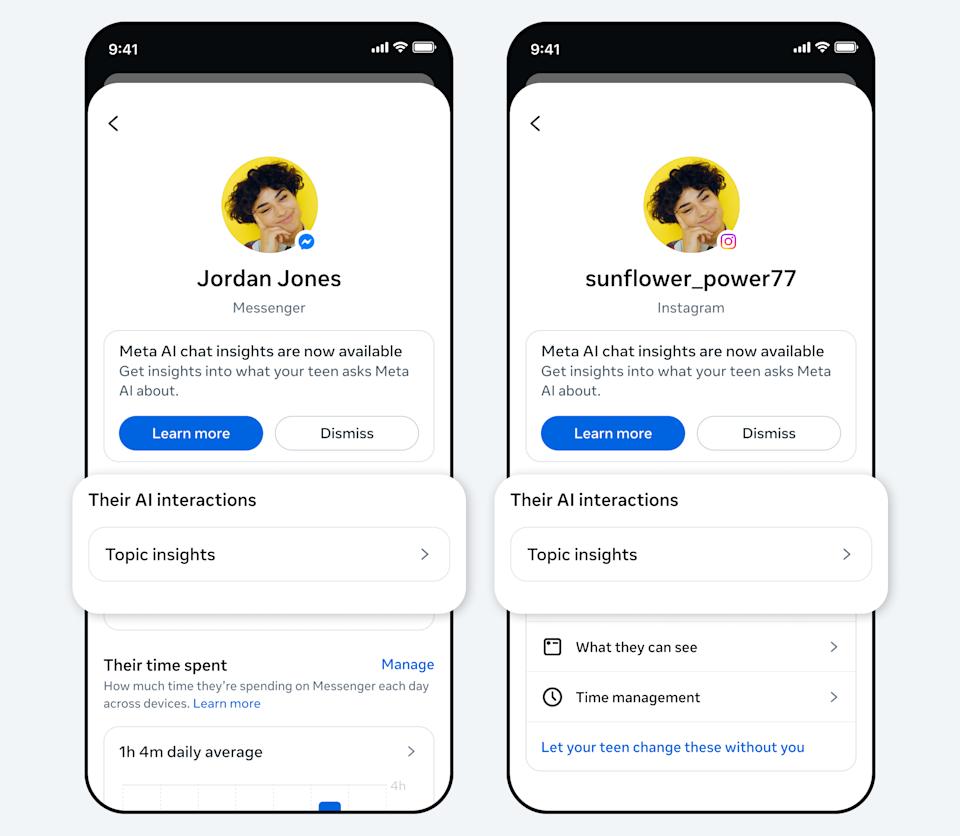
With countries banning social media for kids left and right, Meta is trying different things to convince parents that its platforms are safe for teens. In its latest effort, the company will start showing parents the topics their teens have discussed with Meta AI over the previous seven days.
“Parents will be able to see the topics their teen has been asking Meta AI about in [Facebook, Messenger or Instagram] over the past week,” Meta explained in a blog post. “Topics can range from School, Entertainment, and Lifestyle to Travel, Writing, and Health and Wellbeing, among others.”
For parents overseeing Meta’s teen accounts, the feature will appear in a new Insights tab within supervision, both in-app and on web. Parents can tap on a topic to see the different categories within each: for instance, sub-categories within Lifestyle include fashion, food and holidays, while fitness, physical health and mental health are part of the Health and Wellbeing topic.
Meta
Meta also worked with the Cyberbullying Research Center to develop what it calls “conversation starters,” or open-ended conversations about their experience with AI. It provides detail about what the questions are designed to address, and can be found on the Family Center website or through a link in the new Insights tab.
Finally, Meta revealed more detail about its AI Wellbeing Expert Council, who will provide “ongoing input on our AI experience for teens.” It will be made up of three existing advisory groups as well as new members with special expertise in responsible and ethical AI, who are affiliated with the National Council of Suicide Prevention and multiple universities. It’s worth noting that Meta has a separate oversight board that deals with subjects ranging from AI to moderation.
Offboarding moderation chores to busy parents appears to be par for the course for Meta these days. The company has recently cut back on the use of third-party vendors that help with content moderation, shifting responsibility instead to advanced AI systems, according to recent reports.
The dangers of AI for teens have been one of multiple reasons countries like Spain have banned social media platforms for kids. One of the most recent and tragic cases was in Canada, where a teen was provided specific details by OpenAI’s ChatGPT about how to carry out a school shooting. Another such case is under investigation in Florida, and AI’s have been implicated in multiple teen suicides as well.
In the US, the National Suicide Prevention Lifeline is 1-800-273-8255 or you can simply dial 988. Crisis Text Line can be reached by texting HOME to 741741 (US), 686868 (Canada), or 85258 (UK). Wikipedia maintains a list of crisis lines for people outside of those countries.

What Does Dopamine Dressing Look Like for a Conservative Dress Code?

PROBLEMAS FINANCEIROS PODEM ACABAR COM O ANO DO BOTAFOGO

Colm Cavanagh: GAA’s No.1 kicker could have made it in the NFL, he just needed the opportunity

Manchester United reach agreement with Casemiro over contract clause amid transfer speculation

Steven Gerrard disagrees with Gary Neville over ‘shock’ Chelsea and Arsenal claim | Football

US brings back mandatory military draft registration


-

 Sports6 days ago
NWFL Suspends Two Players Over Post-Match Clash in Ado-Ekiti
-

 Fashion6 days ago
Weekend Open Thread: Theodora Dress
-

 Politics6 days ago
Palestine barred from entering Canada for FIFA Congress
-
Entertainment4 days ago
NBA Analyst Charles Barkley Chimes in on Ice Spice McDonald’s Fiasco
-

 Tech5 days ago
Auto Enthusiast Scores Running Tesla Model 3 for Two Grand and Turns It Into Bare-Bones Go-Kart
-

 Business4 days ago
Powerball Result April 18, 2026: No Jackpot Winner in Powerball Draw: $75 Million Rolls Over
-

 Politics4 days ago
Zack Polanski demands ‘council homes not luxury flats for foreign investors’
-

 Crypto World6 days ago
Russia Pushes Bill to Criminalize Unregistered Crypto Services
-

 Politics3 days ago
Gary Stevenson delivers timely reminder to register to vote as deadline TODAY
-

 Business1 day ago
Rolls-Royce Voted UK’s Most Iconic Trade Mark as IPO Register Hits 150
-

 Politics23 hours ago
Disabled people challenge government SEND proposals over segregation concerns
-

 Politics23 hours ago
Making troops accountable for war crimes threatens US alliance, ex-SAS colonel warns
-
 Business7 days ago
Creo Medical agree sale of its manufacturing operation
-

 Crypto World6 days ago
Russia Introduces Bill To Criminalize Unregistered Crypto Services
-

 Politics1 day ago
Starmer handler McSweeney to be dragged from shadows by Foreign Affairs Committee
-

 Politics1 day ago
Zack Polanski responds to home secretary’s taser threat
-
Politics1 day ago
Wings Over Scotland | How To Get Away With Crimes
-
 Crypto World5 days ago
Kelp DAO rsETH Bridge Hack Drains $292M as DeFi Losses Top $600M in Two Weeks
-

 Politics22 hours ago
‘Iran is still a nuclear threat’
-

 Crypto World2 days ago
New York sues Coinbase, Gemini over prediction market offerings
You must be logged in to post a comment Login