








Connect with us
DAPA Banner

Tech

Meta will show parents the topics of their teens’ AI conversations

Published

on

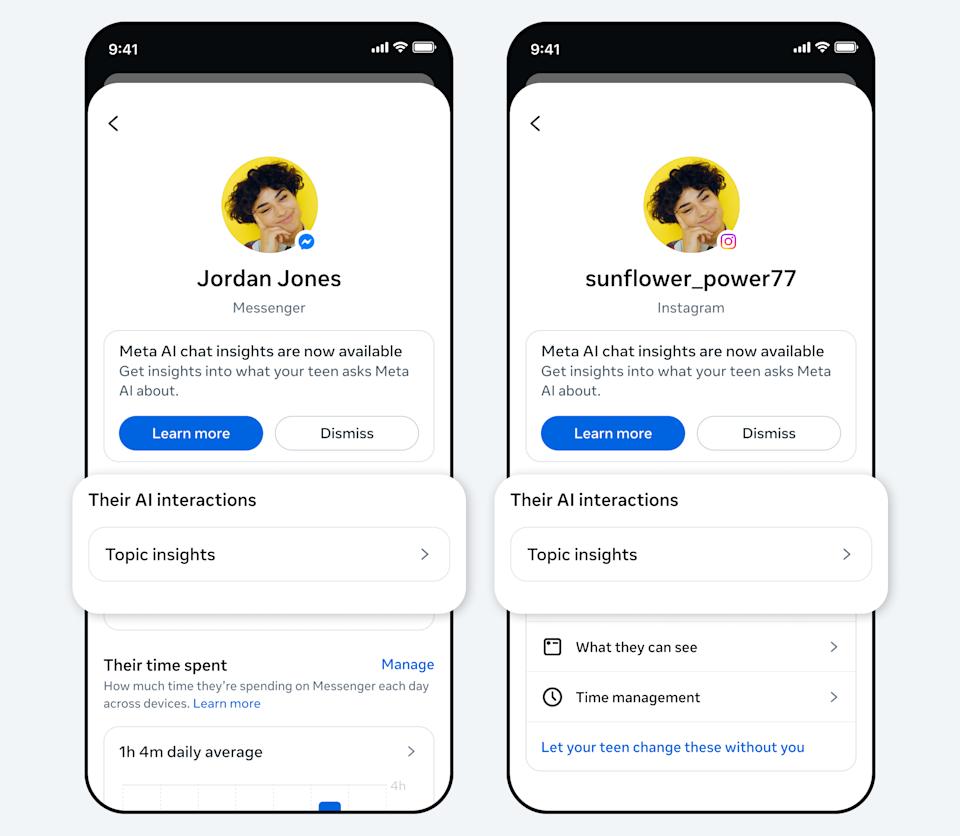
With countries banning social media for kids left and right, Meta is trying different things to convince parents that its platforms are safe for teens. In its latest effort, the company will start showing parents the topics their teens have discussed with Meta AI over the previous seven days.

“Parents will be able to see the topics their teen has been asking Meta AI about in [Facebook, Messenger or Instagram] over the past week,” Meta explained in a blog post. “Topics can range from School, Entertainment, and Lifestyle to Travel, Writing, and Health and Wellbeing, among others.”

For parents overseeing Meta’s teen accounts, the feature will appear in a new Insights tab within supervision, both in-app and on web. Parents can tap on a topic to see the different categories within each: for instance, sub-categories within Lifestyle include fashion, food and holidays, while fitness, physical health and mental health are part of the Health and Wellbeing topic.

Meta will allow parents to look at the conversation topics kids use when talking to an AI

Meta

Meta also worked with the Cyberbullying Research Center to develop what it calls “conversation starters,” or open-ended conversations about their experience with AI. It provides detail about what the questions are designed to address, and can be found on the Family Center website or through a link in the new Insights tab.

Advertisement

Finally, Meta revealed more detail about its AI Wellbeing Expert Council, who will provide “ongoing input on our AI experience for teens.” It will be made up of three existing advisory groups as well as new members with special expertise in responsible and ethical AI, who are affiliated with the National Council of Suicide Prevention and multiple universities. It’s worth noting that Meta has a separate oversight board that deals with subjects ranging from AI to moderation.

Offboarding moderation chores to busy parents appears to be par for the course for Meta these days. The company has recently cut back on the use of third-party vendors that help with content moderation, shifting responsibility instead to advanced AI systems, according to recent reports.

The dangers of AI for teens have been one of multiple reasons countries like Spain have banned social media platforms for kids. One of the most recent and tragic cases was in Canada, where a teen was provided specific details by OpenAI’s ChatGPT about how to carry out a school shooting. Another such case is under investigation in Florida, and AI’s have been implicated in multiple teen suicides as well.

In the US, the National Suicide Prevention Lifeline is 1-800-273-8255 or you can simply dial 988. Crisis Text Line can be reached by texting HOME to 741741 (US), 686868 (Canada), or 85258 (UK). Wikipedia maintains a list of crisis lines for people outside of those countries.

Advertisement

Source link

Continue Reading
Click to comment

You must be logged in to post a comment Login

Leave a Reply

Tech

Five Annapurna Interactive games get Switch 2 releases

Published

on

If you’re a Switch 2 owner itching for something new to play and you happen to be partial to an Annapurna Interactive game, then boy is it your lucky day. The prolific indie publisher has announced that five of its titles are coming to Switch 2, three in the form of next-gen upgrades and two for the first time on Nintendo platforms.

The magnificent  and  are available starting today, complete with 120Hz and 4K upgrades for Nintendo’s latest console. First-time buyers can grab Sayonara Wild Hearts for $13, while 2024’s Lorelei and the Laser Eyes costs $25. The upgrades are free if you already own either game on Switch, and Sayonara Wild Hearts also adds the previously unavailable Remix Arcade mode for the first time. This speeds up gameplay and removes loading as you chase high scores.

Next month, May 28, cyberpunk cat adventure  is also getting the Switch 2 treatment, sporting improved 4K visuals, a frame rate boost and, fittingly given its feline focus, mouse controls. The Switch 2 port will be available to purchase digitally from the eShop for $30, but it’s not clear if this will also be a free upgrade for those who bought Stray on Switch.

Katamari creator Keita Takahashi’s charmingly weird puzzle-adventure To a T skipped Nintendo consoles when it launched last year, so it’s nice to see that one coming to Switch 2 on June 11 (digital-only, $20). A few weeks later on June 23, cozy narrative game  arrives on both Switch and Switch 2. It’ll cost $25 on the eShop, with no word on a physical version.

Advertisement

Annapurna Interactive released a lot of its games on Switch, and that trend happily looks set to continue throughout the Switch 2 generation. The musical turn-based RPG  came to Nintendo’s latest console at launch earlier this month, with stylish adventure game  also arriving on Switch 2 on May 7.

Source link

Continue Reading

Tech

Apple TV 4K may finally evolve beyond a streaming box

Published

on

The Apple TV 4K has remained one of the more consistent products in Apple’s lineup. Updates have improved performance and added features, but the overall experience has stayed largely the same. It has been reliable, polished, and predictable.

That may not hold true for much longer.

The next Apple TV 4K is shaping up to be a more meaningful update, not because of a single feature, but because of how several changes come together. The rumored shift to a new chip, deeper integration of Apple Intelligence, improvements in video and audio handling, and a stronger role in the smart home ecosystem all point toward a device that is being repositioned rather than simply upgraded.

A new chip could unlock a different class of features

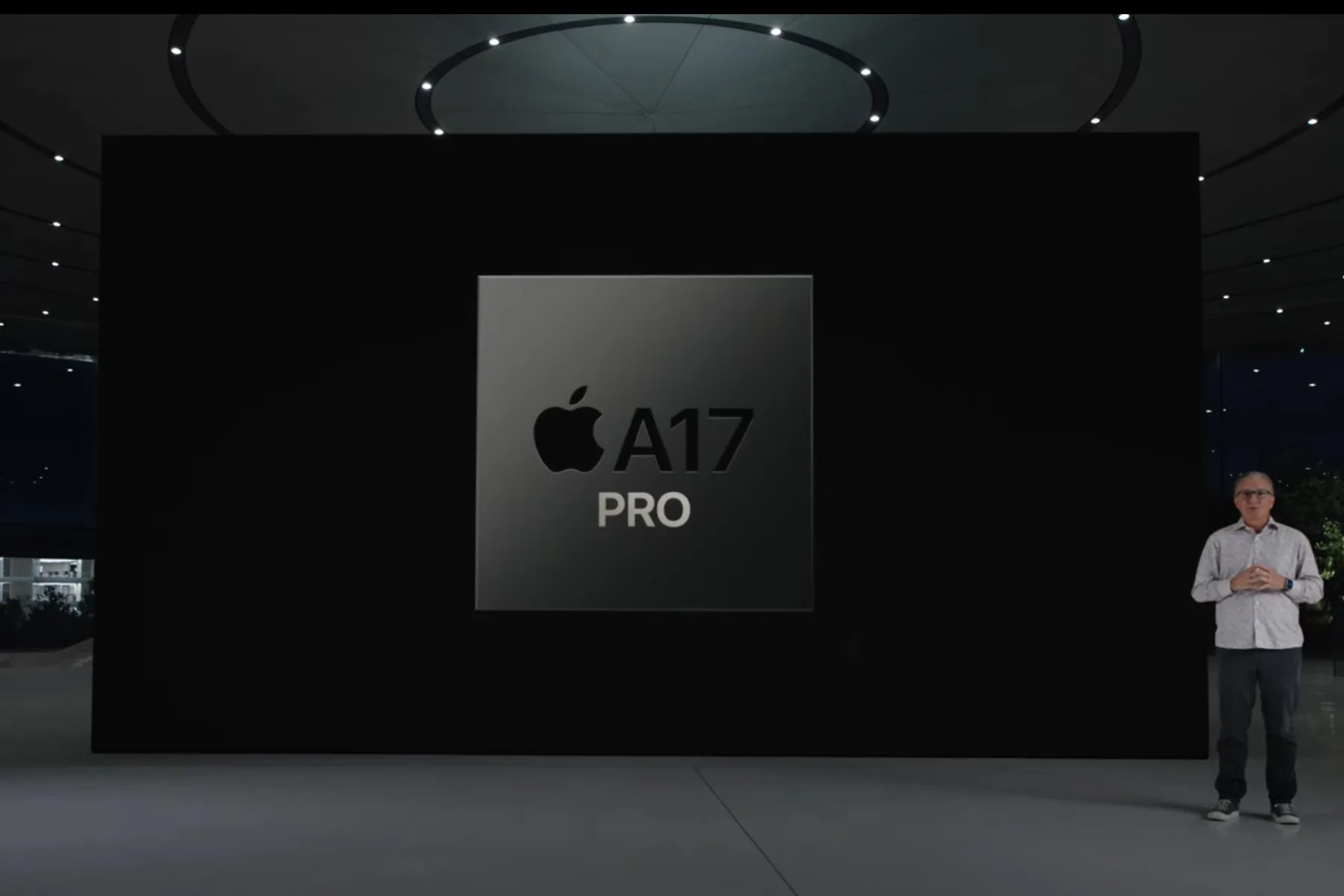
One of the most important rumored upgrades is the move to the A17 Pro chip, replacing the A15 Bionic in the current model.

Advertisement

The immediate assumption is better performance, which will certainly be part of the story. Faster app launches, smoother multitasking, and more responsive navigation are expected outcomes. The more significant implication lies in what the A17 Pro enables.

This chip is the baseline requirement for Apple Intelligence, and the Apple TV is currently one of the few Apple products that does not support it. Bringing that capability to the television shifts the device from being a passive content player to something more interactive and context-aware.

Siri could become far more capable in everyday use

Apple Intelligence is closely tied to the next evolution of Siri, which is expected to move well beyond basic voice commands. Features such as app intent integration, personal context awareness, and on-screen understanding are all part of this transition.

In practical terms, this changes how users interact with their TV.

Instead of relying on specific phrasing or limited commands, interactions become more natural. A viewer could ask who an actor is, request a summary of a scene, or understand why a moment in a show matters, and the system would respond with awareness of what is currently on screen. This extends across apps, rather than being limited to a single platform.

Advertisement

The impact becomes even more noticeable when the Apple TV is used as a smart home hub. Actions such as responding to a doorbell notification or controlling connected devices can be handled through contextual commands that take into account both what is happening on screen and what the user is trying to do. This creates a more seamless interaction model that feels less like issuing instructions and more like direct control.

Video enhancements could improve real-world viewing

As hardware evolves, video technologies tend to follow, and this update could coincide with improvements in Dolby Vision capabilities.

Features such as enhanced black detail aim to improve visibility in darker scenes without compromising artistic intent. Adjustments based on ambient lighting conditions help maintain consistent picture quality across different environments. Additional optimizations for sports and fast-moving content focus on improving clarity and motion handling.

These changes build on Apple’s existing calibration tools but move toward a more adaptive system that responds dynamically to viewing conditions rather than relying solely on manual adjustments.

Connectivity could become more consistent across devices

Another rumored addition is Apple’s N1 networking chip, which consolidates Wi-Fi, Bluetooth, and Thread connectivity.

Advertisement

For a device that already functions as a smart home hub, this has clear practical benefits. Improved network stability leads to more responsive smart home controls, faster pairing with devices, and more reliable communication between products within the Apple ecosystem.

Features such as AirPlay also benefit from stronger connectivity, reducing latency and improving consistency when streaming or sharing content across devices. These improvements may not always be immediately visible, but they address some of the underlying friction that affects everyday use.

A built-in camera could expand how the device is used

There is also continued speculation around a built-in camera.

At present, video calling on Apple TV requires using an iPhone as the camera, which introduces additional steps and setup. A dedicated camera with features such as Center Stage tracking would simplify this process and make it more accessible.

Advertisement

This also opens the possibility of multiple product tiers. A standard Apple TV 4K could remain focused on media consumption, while a higher-end version incorporates features that support communication and more advanced smart home interactions. Recent software updates, particularly in FaceTime functionality, suggest that Apple is preparing for this type of hardware integration.

Audio support could finally match high-end setups

Audio pass-through is another long-requested feature that may be introduced with this update.

Currently, the Apple TV handles audio decoding internally. While this works well in many cases, it can limit flexibility when used with dedicated audio equipment such as receivers. Pass-through would allow external systems to handle decoding directly, improving compatibility with a wider range of audio formats and setups.

For users with more advanced home theater configurations, this represents a meaningful upgrade that aligns the Apple TV more closely with high-end audio systems.

The timing points to a larger strategy

Current expectations place the launch around spring 2026, a window that aligns with Apple’s broader push into smart home products.

Advertisement

If new devices such as smart displays, connected cameras, or other home accessories arrive alongside it, the Apple TV becomes part of a more cohesive ecosystem. It already serves as a central hub, but with deeper integration and AI-driven capabilities, its role could expand into something more active within that environment.

A shift in what the Apple TV is meant to be

What stands out across these rumored updates is the direction they collectively suggest.

The Apple TV 4K has traditionally been positioned as a premium streaming device with strong performance and a polished interface. These changes indicate a move toward a broader role that combines entertainment, smart home control, and intelligent interaction.

The success of that shift will depend on execution. Features like Apple Intelligence and enhanced Siri need to work reliably across different scenarios to deliver on their promise.

Advertisement

If they do, this could represent one of the more meaningful updates the Apple TV has seen in years, not because it changes what the device is, but because it expands what it can do.

Source link

Advertisement
Continue Reading

Tech

Microsoft Copilot can now do actual work inside your Word, Excel, and PowerPoint files

Published

on

Microsoft is rolling out a useful feature for Office users this week. The company has introduced Agent Mode inside Word, Excel, and PowerPoint, a more powerful version of the Copilot experience that Microsoft calls “vibe working.”

This is now the default experience for Microsoft 365 Copilot and Microsoft 365 Premium subscribers. It is also available on Microsoft 365 Personal and Family plans.

What’s Agent Mode in Microsoft Copilot, and how is it different?

Until now, Copilot within Office apps has been largely a passive assistant. It could answer questions, but struggled to take direct action inside your documents.

Sumit Chauhan, President of the Office Product Group at Microsoft, acknowledged this gap. She noted that when Copilot first launched, the underlying AI models simply weren’t capable enough to command the applications directly.

Advertisement

Models have shown significant improvement in instruction following and multi-step reasoning over the past year. Agent Mode is built on those improvements and can now execute complex edits without losing your original intent.

What can Copilot Agent Mode actually do in Word, Excel, and PowerPoint?

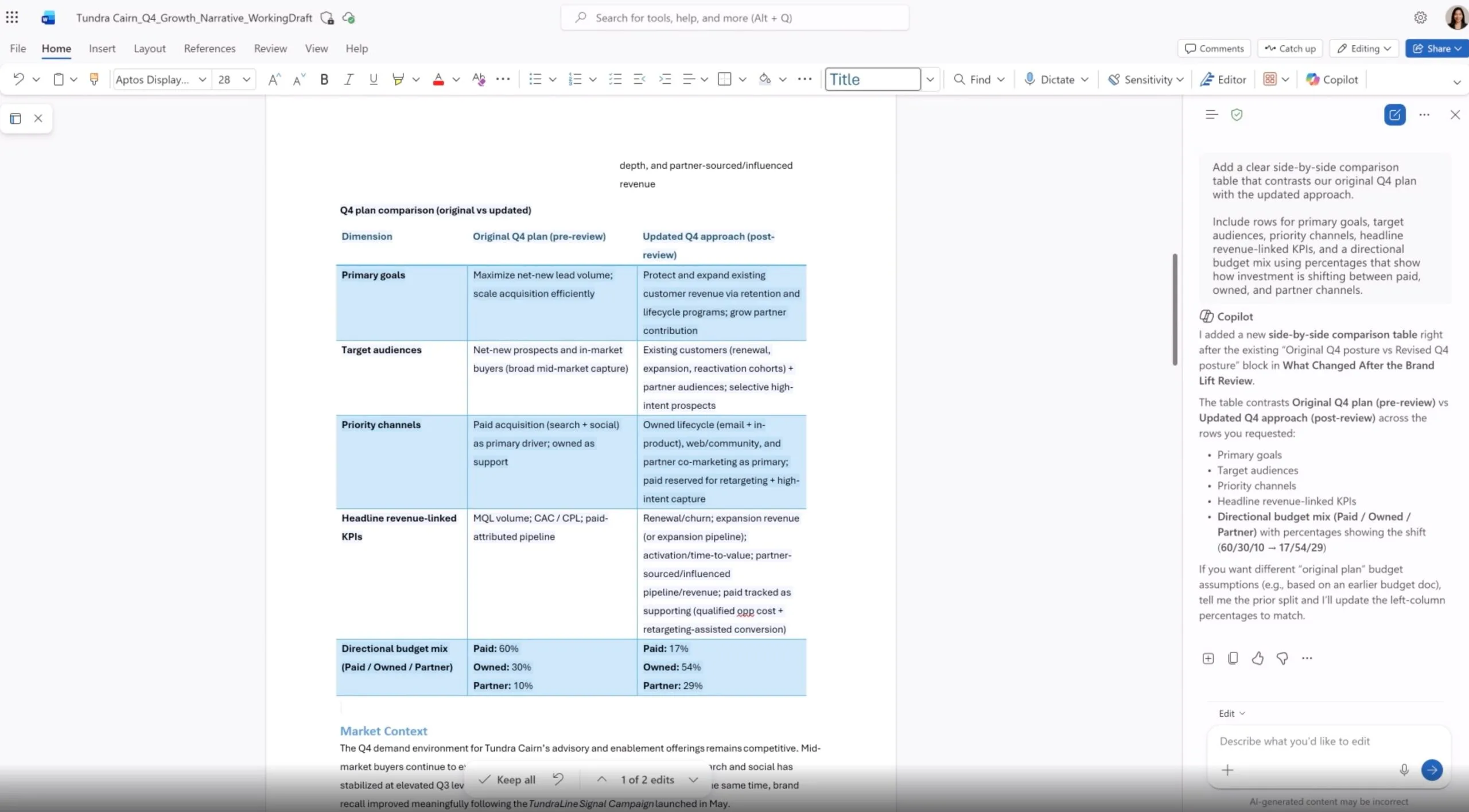
Quite a lot, actually. A sidebar shows you every step Copilot is taking in real time, so you’re never left guessing what it changed. In Word, it can draft, rewrite, restructure, and adjust tone. In Excel, it makes changes directly inside your workbook, adding formulas, tables, and visuals to turn raw data into actionable insights.

In PowerPoint, it can update existing decks with fresh information while respecting your company’s template styling. In fact, early data from Microsoft shows engagement in Excel jumped 67%, satisfaction rose 65%, and new user retention increased 50%.

Microsoft says deeper editing for complex workflows and more transparency around changes are next on the roadmap. The company has been making several Copilot-related moves lately, from launching smarter research tools in Copilot Cowork to cleaning up its presence in Windows 11 apps and doubling down on its positioning as a serious productivity tool.

Source link

Advertisement
Continue Reading

Tech

Play One of the Best Games of 2025 Right Now on Xbox Game Pass

Published

on

Hades 2 was selected as one of CNET’s best games of 2025, but don’t take our word for it. The game won Best Action Game at the 2025 Game of the Year awards, Best Game on Steam Deck at the Steam Awards and a bevy of other accolades. If you haven’t had the chance to play this stellar sequel yet, you can play it on Xbox Game Pass now.

Xbox Game Pass, a CNET Editors’ Choice award pick, offers a wide selection of games you can play on your Xbox Series X, Xbox Series S, Xbox One and PC or mobile device for as little as $10 a month. And with a subscription to the higher-tiered Game Pass Ultimate ($30 a month), you can access hundreds of games, including new ones the day they’re released, each month. 

Here are the games Microsoft plans to bring to Game Pass in April. You can also check out other games the company added to the service in March, including Cyberpunk 2077, and more options in our list of the best gaming subscriptions.

Advertisement

Hades 2

On Game Pass Ultimate, Game Pass Premium and PC Game Pass now.

Following the events of the original game, the Titan of Time Chronos has returned and laid waste to the Underworld and Earth. As the immortal princess Melinoe, you’re tasked with stopping the titan and restoring the mythic world. Each time you venture out, you’ll learn more about the world around you and discover the true cause of all the destruction and pain.


DayZ

Now on PC, joining Game Pass Ultimate, Game Pass Premium, Game Pass Essential and PC Game Pass.

This online multiplayer survival game is coming to PC. An unknown virus has turned the population of the post-Soviet country of Chernarus into zombies, and you’re one of the last few survivors. You’ll have to scavenge for supplies among the ruins while fighting off zombies and other survivors alike. But how far will you go to save yourself?

Advertisement

Endless Legend 2 (game preview)

New to Game Pass Premium. Previously on Game Pass Ultimate and PC Game Pass.

Lead your faction to build a great empire that can crush your enemies in this fantasy strategy sequel, which is still in early access. You can play as warriors descended from the stars, cursed knights or hive-minded beasts, but each faction has its strengths, weaknesses and unique philosophies that can influence the rest of the game. And fending off enemies is just one challenge. You’ll have to adapt to the changing environment as well. Will you expand as the tides reveal new treasures, or focus on improving your defenses?


FBC: Firebreak

New to Game Pass Premium. Previously on Game Pass Ultimate and PC Game Pass.

The Federal Bureau of Control is under attack from otherworldly forces, and it’s up to you and your versatile unit to restore order. You’ll fight chaotic entities, leeches and a monster made of sticky notes using guns, grenades and other supernatural weapons. You can play this first-person shooter game on your own or take on the chaos of the FBC with friends in three-player co-op. 

Advertisement

Planet Coaster 2

On Game Pass Ultimate, Game Pass Premium and PC Game Pass now.

This might not be the classic RollerCoaster Tycoon, but it’s close enough. You’ll build your own roller coasters and water slides, manage your amusement park and create unforgettable experiences for your guests. It’s unclear if you can launch your coasters off the rails into waiting crowds. Will report back later.


Tiny Bookshop

On Game Pass Ultimate, Game Pass Premium and PC Game Pass now.

I have long dreamed of opening my own bookshop, and until I come into a lot of money, this game will have to do. You can stock your bookshop with different genres and items for sale, set up shop in scenic locations — like near a lighthouse — and get to know the locals in this cozy management game.

Advertisement

Football Manager 26 (PC and console)

New to Game Pass Premium. Previously on Game Pass Ultimate and PC Game Pass.

Get ready for a more immersive matchday experience in the latest installment of the long-running Football Manager franchise. You can build a star-studded squad with new transfer tools, and this entry features official Premier League licenses and women’s football for the first time in the series’ history.


Replaced

On Game Pass Ultimate and PC Game Pass now.

Can AI ever be human? I’m not talking about ChatGPT or Gemini, but REACH, an AI trapped in a human’s body, in this narrative platformer game. You’ll explore an alternate 1980s America that’s scarred from nuclear catastrophe as you try to uncover the secrets of the Phoenix Corps, the same group that created you. It’s a cyberpunk Frankenstein with plenty of exploration and fluid action sequences.

Advertisement

The Thaumaturge

On Game Pass Ultimate, Game Pass Premium and PC Game Pass now.

A thaumaturge is a miracle worker or magician, and in this roleplaying game, you’re a master of mystical arts that allow you to peer into the hearts and minds of others. After the death of your father, you returned to an alternate 1900s Warsaw to investigate his death, fight supernatural forces and uncover the truth. 


The Elder Scrolls IV: Oblivion Remastered

New to Game Pass Premium. Previously on Game Pass Ultimate and PC Game Pass.

Advertisement
Key art of a man in armor standing in front of a flaming glyph and burning castle with the words "The Elder Scrolls IV: Oblivion Remastered" behind him.

Bethesda

A fanatical cult is trying to open gates to the demonic realm of Oblivion, and it’s up to you to stop them and seal the gates forever in the remastered version of this classic open-world RPG. You can rediscover the world of Cyrodiil (or experience it for the first time in updated glory), encounter unique characters and save the land. 


EA Sports NHL 26

On Game Pass Ultimate and PC Game Pass now.

As the NHL regular season winds down, the playoffs and the fight for the Stanley Cup are heating up. And with the latest installment in this EA Sports franchise, you can ensure your favorite team brings home the cup. This entry in the series introduces new gameplay mechanics, such as Ice Q 2.0 and a goalie crease control system, to add additional challenges. So if you want to see the Florida Panthers win the cup back-to-back, or you want to make absolutely sure that never happens, this game is for you.


Call of Duty: Modern Warfare

On Game Pass Ultimate, Game Pass Premium and PC Game Pass now.

Modern Warfare redefined the Call of Duty series when it was released almost 20 years ago, and the rebooted version of the classic game drops you right back to where it started. You’ll control CIA and SAS special forces as they attempt to stop rebels from the fictional Republic of Urzikstan. And if the campaign’s not enough, you can hone your skills in the immersive, fast-paced multiplayer.

Advertisement

Little Rocket Lab

New to Game Pass Premium. Previously on Game Pass Ultimate and PC Game Pass.

Your family’s dream project has been to build a rocket, and you’re going to fulfill their dream in this cozy, machine-building RPG. But first, you have to build clever contraptions, convert local resources and become the heart of your community before you can complete your ultimate rocket-building task.


Sopa: Tale of the Stolen Potato

New to Game Pass Premium. Previously on Game Pass Ultimate and PC Game Pass.

Miho goes to the pantry to grab a potato for his grandmother’s soup when he lands in a fantastical land. Now he has to find his way back home by following in the footsteps of a mysterious traveler from long ago. You’ll meet quirky characters, gather exotic ingredients and take in vibrant environments in this world of magical realism inspired by Latin America.

Advertisement

Vampire Crawlers

On Game Pass Ultimate and PC Game Pass now.

From the creators of the indie darling Vampire Survivors comes this turn-based, deck-building, roguelite game. You’ll explore dungeons that might look familiar to Vampire Survivors veterans, fight monsters and build chaotic, broken decks along the way. So be tactical in your choices or blast away every chance you get!


Kiln

On Game Pass Ultimate and PC Game Pass now.

Kiln is about creating beautiful pottery filled with artistry and wonder… and smashing it all to pieces in the arena. This online, multiplayer party brawler pits you against others to see which pottery design can withstand the heat and which can dish out a beating.

Advertisement

Watch this: Your Phone is Disgusting: Let’s Fix That


Game Pass Essential subscribers have two more games now

Game Pass Essential costs $10 a month and offers access to a relatively small library of games compared with Game Pass Premium and Ultimate. While Microsoft doesn’t regularly add many games to Essential’s library, the company added these two on April 8.

Games that left the service

While Microsoft is adding the above games to Game Pass, it also removed five games from the service, including GTA 5. That means you’ll have to buy these games separately now if you still need to complete your main campaign or any sidequests.

For more on Xbox, discover other games available on Game Pass now, read our hands-on review of the gaming service and learn which Game Pass plan is right for you.

Advertisement

Source link

Continue Reading

Tech

Topping D900 DAC Review – Trusted Reviews

Published

on

Verdict

The D900 takes all the things that Topping is very good at and evolves them to their logical conclusion. This is truly state of the art decoding and performance that very few brands can get anywhere near. This is the best device of its kind anywhere near the price

  • Sounds incredible

  • Good connectivity

  • Very well made and attractive

  • No RCA outs

  • Can be little reluctant to connect

  • Remote is a bit clunky

Key Features

  • Advertisement

    Source

    USB Audio, i2S, coax, optical, AES and Bluetooth

  • Advertisement

    Audio quality

    Supports PCM to 768kHz and DSD512

  • Advertisement

    Connectivity

    XLR outputs

Introduction

In the space of a few years, Topping has gone from being completely unheard of to a mainstay of affordable hi-fi.

Advertisement

From not much over £100, the company offers a range of deeply capable digital to analogue convertors and headphone amplifiers. They have an unerring habit of doing more for less than most of their key rivals and they have a determinedly loyal following as a result.

What you see here is different to almost anything that Topping has built before. Sure, it’s still a DAC (and just a DAC, I’ll come to that in due course) but the manner in which it does digital to analogue decoding is something pointedly different to almost anything else.

Advertisement

The overwhelming majority of devices on the market make use of off the shelf components from two producers; ESS and AKM. There are then a smattering of smaller concerns; Texas Instruments, Wolfson and Crystal but the result is the same; the actual business of conversion is handled by a fixed piece of silicone.

Advertisement

The D900 joins a tiny number of devices where there this isn’t the case. The manner in which it turns a digital signal into an analogue one is bespoke and designed to maximise the areas of performance that Topping feels is important. This is not without risk; Topping has a formidable reputation built on great implementations of ESS and AKM DACs.

The D900 is at once an argument that there might be a bit more to the business of decoding being made to people who seem quite settled with what there is and a step outside Topping’s own comfort zone of expertise. How does it fare?

Pricing

In the UK, the D900 is available from a selection of retailers for £1799. It can be ordered online from some authorised retailers and there should be no issue securing one from any location in the UK. In the USA the D900 is available for $1799, reflecting a larger market and different sales model. In Australia it is available for $3099.

It is possible at the time of writing to find online locations shipping the D900 direct from the Far East, usually with a reduction over the UK retail. These units will not have a UK warranty however so it would be best to be careful about doing so.

Advertisement

Advertisement

Design

  • Solid and understated
  • Small but informative display
  • Remote control
  • Matching headphone amp
  • Some gremlins connecting up

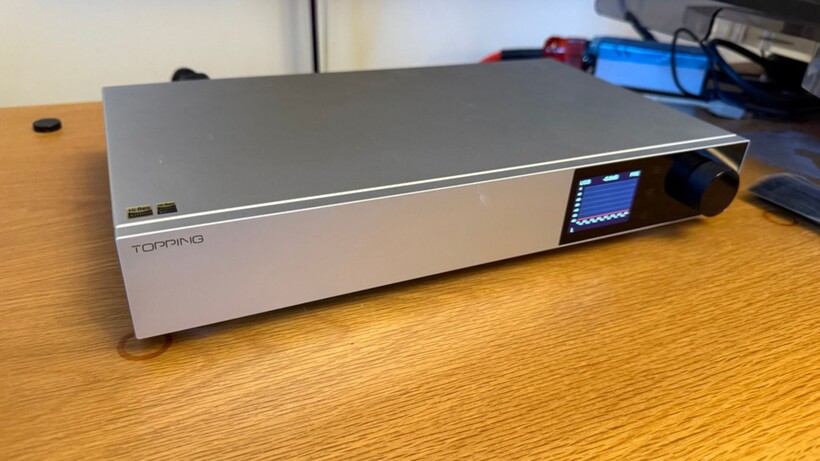
The D900 is a three quarter width design at 330mm. It is perfectly possible when you unbox it from the (really well thought out) packaging that you might find it slightly underwhelming but I suspect that feeling should pass pretty quickly.

The D900 arrives looking sober to the point of minimalist. I have to say I feel this is the right approach and I really like it. The D900 has a quiet seriousness to it that should sit in most systems very effectively. The standard of build is excellent and it whispers rather than shouts a level of quality. It is exclusively available in silver.

Topping D900 designTopping D900 design
Image Credit (Trusted Reviews)

The main focal point on the front panel is a small display. This can show input and incoming sample rate information as well as settings menus and both an old fashioned output VU meter and more modern graphic equaliser style interface. The display isn’t terribly large and can’t be read at a huge distance but it’s useful to have when setting the D900 up.

There is a small but no less sturdy remote handset too. This has been a bit of a mixed bag for me in use; there have been points where it hasn’t been responsive at all, but it’s useful to have; particularly if you intend to use the D900 as a preamp in your system. The remote also combines with the display to simplify settings menu access although the menu tree for this is not as intuitive as it could be.

Advertisement

Advertisement

As hinted at earlier, the D900 is a DAC and not a DAC headphone amp (and this is why the D900 is a ‘D’ and not a ‘DX’). If you want to go all in, Topping makes the entirely analogue A900 to partner the D900 and this is a formidable looking device with sockets for any occasion.

Topping D900 build qualityTopping D900 build quality
Image Credit (Trusted Reviews)

It does mean that the D900 isn’t as all singing and dancing as some of its more affordable brethren but allows it to focus on a smaller range of tasks. How much of an issue this will be to you is almost certainly going to depend on what equipment you have kicking around already.

Getting the D900 up and running wasn’t completely straightforward.  It would not connect at all to the Chord Electronics 2Go/2Yu streaming head unit over USB and fought me for some time to connect to the usually viceless Eversolo T8.

First it didn’t want to be seen and then, once it was, it proceeded to lock incorrectly, resulting in garbled, high speed sound. Once it was sorted, it stayed sorted but I had to put the effort in.

Specification

  • Wholly bespoke digital to analogue decoding
  • Wide selection of digital inputs…
  • …but slightly more limited outputs
  • On board EQ
  • Preamp functionality

Advertisement

The principle focus of the D900 is its decoding. It isn’t the first time Topping has implemented this system; that was the D90 III Discrete which uses a simplified version but the D900 takes it to its logical conclusion.

Advertisement

The system is called PSRM which stands for Precision Stream Reconstruction Matrix. It is a ‘1 bit’ system (a notional ideal that dates back to the early days of CD where, so long as the signal is handled correctly before it reaches the actual decoder, it boasts the scope for excellent measured performance) and incorporates discrete 1-bit modules that convert digital audio streams into analogue voltage by turning each audio sample into a very fast train of 1-bit pulses.

Topping D900 connectionsTopping D900 connections
Image Credit (Trusted Reviews)

The waveform is in turn defined by the density of the pulses and it’s shaped by an analogue reconstruction filter. This is the same as an off the shelf  Delta Sigma DAC but Topping controls the entire process rather than buying in a chip that gets on with it. Where the D90 III had 16 of these modules, the D900 has 32 of them.

These modules are powered by a bespoke power supply that employs a voltage-reference power supply that is purely resistive. It uses digital switching logic operating at the nanosecond level for maximum performance.

The business of turning this signal into a usable output is undertaken by a new, proprietary I/V conversion circuit composed of low distortion integrated op-amps and ultra-low-noise discrete components carefully selected after repeated testing.

Advertisement

Advertisement
Topping D900 remote controlTopping D900 remote control
Image Credit (Trusted Reviews)

If this all makes your eyes glaze over, you can focus on the fact that the claimed measurements (that the D900 has achieved when independently measured) are state of the art.

This formidable hardware is made available to an extensive selection of inputs. There are seven wired connections; two optical, two coax, one AES, one USB (on both USB-C and B connections) and an i2S connection; a very high performance option derived from pro audio.

These are augmented by Topping’s excellent Bluetooth implementation. Sample rate handling via USB and i2S is PCM to 768kHz and DSD to 512 with other connections having lower overall sample rate handling.

The situation with regards outputs is a little less comprehensive though. Output is exclusively via XLR with both fixed and variable level examples fitted. Topping says it’s perfectly ok to use XLR to RCA adapters should you need to but you’ll need to budget for those if that’s the way you want to go.

Topping D900 chassisTopping D900 chassis
Image Credit (Trusted Reviews)

Advertisement

Something you do get is Topping Tune. This allows you to adjust a ten band EQ to tweak the output of the Topping to better suit the output relative to the room. What’s quite interesting about this software is that Topping has elected to make it desktop software that can be adjusted on a screen you can actually see without squinting.

Advertisement

From there, adjustments are communicated over USB to the device itself.  I’ve found Topping Tune a bit tricky to actually uninstall from a Mac but, if you own the D900 rather than have it turn up for review, this should be less of an issue.

In keeping with most Topping devices, the D900 has a volume control and can be used as a preamp. If you have no further interest in an analogue source, it can be used directly into a power amp or active speakers to streamline your system.

Performance

  • Truly outstanding levels of detail
  • Immaculate soundstage and three dimensionality
  • Surprisingly tolerant of poor recordings
  • Ensures you can’t hear the cleverness

Topping’s priority in their circuit design is low distortion and the best signal to noise ration they can manage; in this case a claimed harmonic distortion below -140dB and a signal-to-noise ratio of 131dB.

This is great in an abstract sense but what does it mean? When you listen to the sublime Fink Meets the Royal Concetgebouw Orchestra on the D900, the effect is subtly but noticeably different to how it often sounds. The opening Berlin Sunrise builds from silence… but on the Topping it’s not silent. In the seven seconds before the orchestra actually starts, the D900 finds the tiniest rustling and stirring of 100 plus people getting ready to perform. It’s buried in the noise floor of the recording… but the D900 finds it.

Advertisement

Advertisement

It’s not simply about these random artefacts either. As the this track builds and builds, there is a logic and order to the orchestra that makes it sound like a believable body of musicians. Different instruments play out from different sections and you can discern individual musicians rather than single body of’ strings’ or ‘brass.’  It’s the difference between a reproduction and a performance and the Topping excels at it.

Topping D900 hi-fi rackTopping D900 hi-fi rack
Image Credit (Trusted Reviews)

It doesn’t have to be an orchestra either. Listen to the pounding and dramatic GO! on Santigold’s Master of my Make-Believe and the Topping doesn’t unpick the dense levels of production but it ensures that the whole performance is just that little more intelligible and orderly than it was before.

It does this with astonishing consistency too. Mid-seventies Trojan Records outing that sounds like it was saved to a tape and then left at the bottom of the sea? Not a problem. Absolute perfection from Blue Note? Delivered as intended. The Topping doesn’t alter or even tweak what you hear, it simply delivers more of it.

What I have found most impressive about this is how well it handles less than perfect recordings. You can give the D900 ii by Meat Puppets; a brilliantly entertaining and hugely influential album but one that is in no way shape or form hi-fi and the D900 does its work at opening it out and finding detail but the chaos and energy of the album is left intact.

Topping D900 angled viewTopping D900 angled view
Image Credit (Trusted Reviews)

Advertisement

This isn’t a ‘save for best’ style DAC, it’s a genuinely engaging and listenable device with all the things you choose to play on it.

Advertisement

The single most important thing is that you can’t hear the technology at work when you listen to the D900. For some of you reading this, this might sound anticlimactic; why go to all the effort? It reflects that the hardware is a means to an end rather than the end in itself.

It’s also worth noting that to achieve this as early on in the development of the technology is notable. Companies like Chord Electronics and dCS who also use bespoke decoding took rather longer to achieve the same feat and it represents a considerable technical achievement on Topping’s part.

Should you buy it?

The Topping represents the state of the art in digital decoding and it does so at price where almost everything else uses off the shelf decoding options. This is a taste of the truly exotic; a part of the digital market that has, at times, been in danger of pricing itself out of existence, at a price that isn’t too crazy. It combines this with a useful and comprehensive spec too

Advertisement

Detail aspects of the D900 aren’t as easy to live with as some key rivals. The slightly reluctant remote, reluctance to connect the first time and the absence of RCA connections make for a device that is fractionally more demanding than some rivals and that might need a bit of extra work on your part to get up and running.

Advertisement

Final Thoughts

There is some mild but genuine jeopardy to Topping building the D900. There will always be a subset of people who feel it represents Topping somehow ‘selling out’ and building something that, even if it does measure better, was a contradiction to the affordable brilliance of what the company has been doing so far.
 
If it wasn’t actually better, it would have looked pointless; a device that wasn’t any improvement over its more conventional brethren. The fact that the company was willing to take the risk and build it should be commended.

Advertisement

How We Test

We test every DAC we review thoroughly over an extended period of time. We use industry standard tests to compare features properly. We’ll always tell you what we find.

We never, ever, accept money to review a product.

Advertisement

Find out more about how we test in our ethics policy.

  • Tested for several days
  • Tested with real world use

FAQs

Does the Topping D900 DAC support Bluetooth?

This model does come with built-in Bluetooth 5.1 support with LDAC streaming.

Advertisement

Full Specs

  Topping D900 DAC Review
Manufacturer
Size (Dimensions) 330 x 210 x 57 MM
Release Date 2025
Resolution x
Connectivity Bluetooth 5.1
Audio Formats Up to 32-bit/768kHz PCM, DSD512, LDAC Bluetooth, SBC, AAC, aptX, aptX Adaptive
Bluetooth Yes
Inputs USB-C, USB-B, two optical, two coaxial, AES, IIS-LVDS
Outputs XLR pre, XLR line
Total Harmonic Distortion + Noise -140 dB

Source link

Continue Reading

Tech

Pentagon selects three microreactor companies for Air Force bases as military nuclear programme advances toward 2030

Published

on

Summary: The Pentagon has narrowed its Advanced Nuclear Power for Installations (ANPI) programme from eight companies to three, advancing microreactor deployment at Buckley Space Force Base (Colorado) and Malmstrom Air Force Base (Montana) by 2030. The original eight vendors included BWXT, Oklo, X-energy, Kairos Power, Radiant, General Atomics, Westinghouse, and Antares. The commercially owned reactor model, backed by Executive Order 14299 and $125 million in Congressional funding, addresses military grid vulnerability while serving as a proving ground for reactors that could also power AI data centres.

The Pentagon has narrowed the field for its programme to install microreactors at US Air Force bases, selecting three companies from an original pool of eight to advance toward deployment, Bloomberg reported on Tuesday. The down-selection is the most concrete step yet in the Advanced Nuclear Power for Installations programme, known as ANPI, a joint effort between the Defense Innovation Unit, the Air Force, and the Army that aims to make military bases energy-independent by replacing their reliance on a civilian power grid that is increasingly vulnerable to cyberattacks, extreme weather, and the cascading demands of AI-driven energy consumption.

The programme began in April 2025, when the DIU selected eight companies to develop microreactor proposals: Antares Nuclear Energy, BWXT Advanced Technologies, General Atomics Electromagnetic Systems, Kairos Power, Oklo, Radiant Industries, Westinghouse Electric Company, and X-energy. Each was tasked with designing commercially owned and operated reactors that could be built on military land, licensed through the Nuclear Regulatory Commission, and maintained by the vendor throughout their operational life. The military would buy the electricity without owning the reactor, a model designed to accelerate deployment by sidestepping the decades-long procurement cycles that have historically paralysed defence infrastructure projects.

Why Air Force bases need their own power plants

The Department of Defense consumes more than 30 terawatt-hours of electricity annually across more than 500 installations, making it the single largest energy consumer in the US government. The overwhelming majority of that power comes from the civilian grid. That dependence is now treated as a strategic vulnerability. Cyberattacks on US energy infrastructure have increased by roughly 70% in recent years. The grid itself is under growing strain from data centre construction, with the International Energy Agency projecting that data centre electricity consumption will exceed 1,000 terawatt-hours globally by the end of 2026. Military bases that host missile fields, space surveillance operations, and nuclear command infrastructure cannot afford to compete with AI training clusters for grid capacity.

Advertisement

Two Air Force installations have been selected as the first deployment sites. Buckley Space Force Base in Aurora, Colorado, hosts the Aerospace Data Facility, one of the Department of Defense’s primary satellite ground stations. Malmstrom Air Force Base in Great Falls, Montana, oversees 150 Minuteman III intercontinental ballistic missiles spread across 13,800 square miles of Montana prairie. Both bases require uninterrupted power for operations that are, by definition, existential. Nancy Balkus, the Deputy Assistant Secretary of the Air Force for operational energy, has said that energy security at these installations is not an efficiency question but a readiness question. The target is operational microreactors at both sites by 2030.

The technology

Microreactors are nuclear fission reactors that typically produce between one and 20 megawatts of electrical power, small enough to fit on a few truck trailers and large enough to power a military base or a small data centre. They use advanced fuel forms, most commonly TRISO (tristructural isotropic) particles encased in ceramic and graphite shells that can withstand extreme temperatures without melting down. Several of the ANPI candidates use high-assay low-enriched uranium, or HALEU, which is enriched to between 5% and 20% uranium-235, higher than conventional reactor fuel but well below weapons grade.

The designs vary significantly. BWXT’s Project Pele, developed separately for the Army, is a 1.5-megawatt transportable reactor that completed initial testing at Idaho National Laboratory and uses TRISO fuel with a gas-cooled design. In February 2026, the Pentagon airlifted a five-megawatt microreactor prototype from California to Utah, the first military nuclear airlift, demonstrating the transportability that makes these systems attractive for expeditionary and remote base operations. Oklo, whose chairman is OpenAI chief executive Sam Altman, designs a compact fast reactor called the Aurora that uses metallic fuel and targets both military and commercial applications. X-energy, which went public with Amazon’s backing, is developing the Xe-100, an 80-megawatt high-temperature gas-cooled reactor that uses TRISO-X fuel pebbles. Kairos Power is building a fluoride salt-cooled reactor. Radiant Industries, founded by former SpaceX engineers, is developing a portable one-megawatt reactor designed for rapid deployment.

Only NuScale Power has received full design certification from the Nuclear Regulatory Commission for a small modular reactor, but NuScale’s design is a 77-megawatt light-water reactor, far larger than what ANPI requires. The ANPI programme’s commercially owned model means that vendors will need to secure their own NRC licences for reactors sited on military land, a regulatory path that has not been tested at this scale. The Atomic Energy Act provides a military exemption for reactors operated by the armed forces, but the ANPI model explicitly uses commercial operators, which means NRC jurisdiction applies.

The policy architecture

The programme sits within a broader policy push that has acquired unusual bipartisan momentum. Executive Order 14299 explicitly links nuclear power to AI infrastructure at military installations, directing federal agencies to accelerate the siting and permitting of advanced reactors. The ADVANCE Act, signed into law with an 82-to-14 Senate vote, streamlines NRC licensing for advanced reactor designs. Congress has appropriated $125 million for military microreactor development. The Army’s separate Project Janus programme is evaluating nine additional bases for microreactor deployment.

Advertisement

The convergence of military energy security and commercial AI infrastructure is not coincidental. The Department of Energy has identified 16 federal sites, many adjacent to existing nuclear facilities, as candidates for data centre construction. Nuclear-powered AI data centres are attracting dedicated venture capital, with Valar Atomics raising $450 million at a $2 billion valuation to build small modular reactors purpose-built for AI workloads. The same microreactors that power a missile field in Montana could, in a commercially licensed configuration, power an AI training cluster in Texas. The ANPI programme is a military procurement initiative, but it is also a proving ground for the reactors that the technology industry hopes will solve its energy problem.

What stands in the way

The 2030 deployment target is ambitious by nuclear standards. No advanced microreactor design has completed NRC licensing. HALEU fuel supply remains constrained, with Centrus Energy as the only domestic commercial producer and Russia historically the dominant global supplier, a dependency that sanctions have complicated. Community opposition to nuclear facilities, even small ones on existing military bases, has slowed previous projects. The cost economics of microreactors at the one-to-20-megawatt scale remain unproven in commercial operation, though the commercially owned model shifts that financial risk from the Department of Defense to the vendors.

The nuclear waste question also persists. Microreactors produce far less spent fuel than conventional power plants, but the United States still lacks a permanent repository for any nuclear waste. Advanced fuel forms like TRISO are more proliferation-resistant and easier to store than conventional spent fuel rods, but “easier” is relative in an industry where waste management has been a political impossibility for four decades.

The broader debate over nuclear power and AI has tended to focus on fusion, the technology that is always 20 years away, or on gigawatt-scale conventional plants that take a decade to build. Microreactors occupy a different niche: small enough to be manufactured in a factory rather than constructed on site, simple enough to operate with minimal staffing, and modular enough to scale by adding units rather than building larger. The military is betting that this niche is real. The down-selection from eight companies to three means the Pentagon has now seen enough proposals to decide which designs are credible and which are not. The three that remain have roughly four years to prove that a nuclear reactor can be as reliable, and as unremarkable, as the diesel generators that military bases currently keep for backup power. If they succeed, the implications extend well beyond the fence line of an Air Force base.

Advertisement

Source link

Continue Reading

Tech

OpenAI’s new image model reasons before it draws

Published

on

The new model reasons about composition, searches the web for context, generates up to eight coherent images from one prompt, and renders text in non-Latin scripts with near-flawless accuracy. It also took the number one spot on the Image Arena leaderboard within 12 hours of launch, by the largest margin ever recorded.


Two years ago, asking ChatGPT to generate a visual was like commissioning a poster from a sleep-deprived intern with a glue stick and a head injury. You’d ask for a clean design and get “leftovers creativity” splashed across the image, plus three new words that looked like they’d been invented during a minor software malfunction.

The images looked AI-generated in the way that has become a cultural shorthand for uncanny: almost right, conspicuously wrong, and instantly recognisable as synthetic.

The leap matters. Text rendering has been the persistent, embarrassing weakness of AI image generators since DALL-E first turned heads in January 2021, a model we covered at the time as a fascinating curiosity.

Advertisement

Images 2.0 claims approximately 99% accuracy in text rendering across any language and script, including Japanese, Korean, Chinese, Hindi, and Bengali. If that figure holds in independent testing, it closes the gap between “impressive AI demo” and “tool a graphic designer would actually use for production work.”

The architectural change that makes the model different, though not just better, is what OpenAI calls “thinking capabilities.” Images 2.0 is the company’s first image model to integrate its O-series reasoning architecture.

Before generating a pixel, the model researches the prompt, plans the composition, reasons about spatial relationships between elements, and can search the web for real-time context.

It is, in OpenAI’s framing, not a rendering tool but a “visual thought partner.”

Advertisement

ChatGPT Image 2

This is my cat transformed into a comic strip with ChatGPT.

In practice, this manifests in two access modes. Instant mode ships to all ChatGPT users, including free-tier accounts, and delivers the core quality improvements: better text, sharper editing, richer layouts.

Thinking mode, which enables web search, multi-image batching, and output verification, is restricted to Plus ($20/month), Pro ($200/month), Business, and Enterprise subscribers.

The distinction is commercially significant. The reasoning capabilities, where most of the quality premium lives, sit behind the paywall. Free users get better images; paying users get images the model has thought about.

Advertisement

The multi-image capability is the feature most likely to change professional workflows. A single prompt can now produce up to eight images that maintain character and object continuity across the set.

That means a designer can generate a family of social media assets, a children’s book sequence, or a series of storyboard frames from one instruction, with consistent visual identity throughout.

Previously, each image had to be prompted individually and stitched together manually. For marketing teams and content creators, that is a meaningful reduction in production friction.

The integration into Codex, OpenAI’s coding environment, is the strategically loaded move. Developers and designers can now generate UI mockups, prototypes, and visual assets inside the same agentic workspace they use for code, slides, and browser automation, using a single ChatGPT subscription.

Advertisement

The image model is no longer a standalone product; it is a capability embedded in OpenAI’s broader platform, competing not just with Midjourney and Google’s Nano Banana 2 on quality but with Canva and Figma on workflow integration.

The benchmark performance is striking. Within 12 hours of launch, Images 2.0 took the number one spot on the Image Arena leaderboard across every category, with a score of 1,512, a +242-point lead over the second-place model, Google’s Nano Banana 2. That is the largest lead ever recorded on the leaderboard.

For most of 2026, OpenAI and Google had been trading the top position within a tight margin; Images 2.0 broke away decisively. 

DALL-E 2 and DALL-E 3 are being deprecated and retired on 12 May 2026. GPT-Image-1.5, released in December 2025 as an intermediate upgrade, remains accessible via the API for legacy integrations but is no longer the default model.

Advertisement

OpenAI did not disclose the architecture of Images 2.0, describing it only as a “generalist model” or “GPT for images” and declining to specify whether it uses a diffusion, autoregressive, or hybrid approach. The API model identifier is gpt-image-2; the API is expected to open to developers in early May 2026.

Token-based pricing is $8 per million tokens for image input, $2 for cached input, and $30 for image output, with per-image costs typically ranging from $0.04 to $0.35 depending on prompt complexity and resolution. Output resolution reaches up to 2K.

The knowledge cutoff is December 2025, which introduces a practical boundary: the model cannot accurately render events, people, or products that emerged after that date without supplementing its internal knowledge with live web search.

The model’s safety architecture includes content filtering, C2PA metadata for provenance, and what OpenAI described in the press briefing as ongoing monitoring, a point the company was notably emphatic about, given the growing regulatory scrutiny of synthetic media and the use of AI image generators in deepfakes, scams, and non-consensual imagery.

Advertisement

The most consequential question Images 2.0 raises is not about quality. The technical gap between AI-generated and human-created imagery has been narrowing for years; this model narrows it further.

The question is about what happens when the tool is no longer a novelty but infrastructure, when image generation is a default capability of every coding environment, every chat interface, and every enterprise productivity suite, and when the distinction between “designed by a person” and “generated by a prompt” becomes something only metadata can verify.

OpenAI, for its part, appears to be betting that the answer is scale: more images, faster, better, cheaper, everywhere. When we covered first covered DALL-E five years ago, the model’s outputs were fascinating oddities. Now they are production assets.

The era in which AI-generated images were obviously AI-generated is over. What comes next depends on whether the guardrails can keep pace with the capability.

Advertisement

Source link

Continue Reading

Tech

These New Smart Glasses From Ex-OnePlus Engineers Have a Hidden Cost

Published

on

Lots of smart glasses have AI bots inside them now. The one in L’Atitude 52°N’s glasses is called Goya, named after Francisco Goya, the famous Spanish artist who painted renowned masterpieces of romanticism.

CEO and founder Gary Chen, who has worked on wearable devices for companies like Oppo, OnePlus, and HTC, says his company’s glasses are focused on travelers, with AI features that act like a tour guide and talk about all the paintings in famous museums.

“Basically, you can say, ‘Hey, Goya, what is the story about Mona Lisa?’” Chen says. “You can ask anything and, with your permission, they will take a photo to analyze what’s in front of you.”

I ask if you could quiz it about perhaps the most famous Goya painting, the terrifying, Gothic horror-esque image of Saturn devouring his own son.

Advertisement

“Yes, yes,” Chen says, “It can also give you some recommendations about restaurants.”

Image may contain Accessories Sunglasses and Glasses

Berlin-based L’Atitude 52°N is a new player in the smart glasses space, selling its first pairs on Kickstarter in September 2025, where the campaign surpassed its funding goal and raised more than $400,000. There have been some bumps since then, as shipments were delayed from an originally announced release date in February 2026, and one model in development was scrapped outright. Now, L’Atitude 52°N has announced an official release date for its smart glasses.

Preorders for one model, called Berlin, start on May 19. The glasses actually go on sale on May 26. This might be a disappointment for Kickstarter backers, as the most recent official update from the campaign came in March and said shipping would begin on April 15 for Berlin units and June 7 for the second model, called Milan. L’Atitude 52°N still hasn’t set an official launch date for the Milan, except to say that it will be “arriving in the second quarter of 2026.”

The Berlin glasses cost $399. Add another $50 for the photochromatic lenses. There is one very big catch: The AI features enabled on the device will only work for 12 months, which L’Atitude 52°N calls an “AI feature trial.” After that, customers have to pay for a subscription service, or will be limited to the base features, like playing music and capturing media.

How much will that subscription service cost? Chen says he doesn’t know.

Advertisement

Source link

Continue Reading

Tech

Leica Chairman says ‘a true Leica sensor’ is coming, and image quality may never be the same

Published

on


  • Leica announced a strategic partnership with Chinese sensor maker Gpixel
  • Recent Leica cameras use Sony-made sensor tech
  • We can expect a new bespoke sensor for future models, possibly the rumored M12

There has been plenty going on behind the scenes at Leica recently, not least of which potentially selling a controlling stake of the business for approximately $1.2 billion to Chinese and Swedish investors. Now, it looks set to change the bedrock of the tech inside its digital cameras.

In January, Leica’s Chairman of the Supervisory Board, Dr Andreas Kaufman, revealed that “we’re also developing our own sensor again” when referring to future development of the Leica M-system. He made the comment in the German-language ‘Leica Enthusiast Podcast’, according to a report by Peta Pixel.

Source link

Continue Reading

Tech

Turkey wants to ban social media for kids under 15

Published

on

The Turkish parliament has voted through a bill that would ban all children under the age of 15 from using social media. As part of the legislation, social media platforms would be required to enforce age-verification measures on their apps, provide parental control tools, and react more quickly to harmful content being posted.

As reported by , lawmakers have passed the bill in the wake of two deadly school shootings in Turkey, after which police 162 people accused of sharing footage of the tragedies online.

Turkey’s President Recep Tayyip Erdogan now has 15 days to accept the bill in order for it to become law, after reportedly saying social media platforms had become “cesspools” in a televised address to the nation.

As well as the major social media platforms, AP reports that online gaming companies would also have to implement their own restrictions on minors, with potential punishments including bandwidth reductions and financial penalties.

Advertisement

This isn’t the first time Turkey has locked horns with social media and online gaming platforms. Instagram has been in the country before, back in 2024, relating to a dispute over the posting of Hamas-related content. Access was restored around a week later, but in the same time period Turkey also Roblox over reports of inappropriate sexual content accused of being explorative to children. At the time, a Turkish official also named the “promotion of homosexuality” as one reason for the ban.

Turkey has also temporarily banned (now called X) on several occasions, most after 2023’s devastating earthquakes, though it was not clear at the time why the government may have moved to block the social media platform.

The country’s lawmakers moving to ban under-15s from accessing social media is part of an emerging trend in Europe and across the globe. The likes of and have recently introduced similar legislation of their own, following becoming the first country in the world to ban children under 16 from social media last year. The UK has since bringing in tighter restrictions too.

Source link

Advertisement
Continue Reading

Trending

Copyright © 2025