Connect with us
DAPA Banner

Tech

AI health tech is booming. The cures are not.

Published

on

The drug discovery revolution is real but radically overstated, the health chatbots are a documented hazard, and the diseases that matter most remain stubbornly unsolved.

At Novartis, sometime in late 2025, a team of researchers working on Huntington’s disease used generative AI to computationally design 15 million potential compounds for a type of molecule called a molecular glue degrader, one that could cross the blood-brain barrier and attack a protein implicated in the illness.

From those 15 million candidates, the team synthesised roughly 60 in the laboratory. They arrived at a promising scaffold now moving forward for further optimisation. Fifteen million possibilities narrowed to 60. It is, by any honest measure, an extraordinary feat of computational triage. It is also, by any honest measure, not a cure for Huntington’s disease.

That gap, between what AI can do in a laboratory and what it has actually delivered to patients, is the defining tension of health technology in 2026. The industry speaks in the language of revolution. The evidence speaks in the language of incremental, uncertain, and frequently disappointing progress. 

Advertisement

Somewhere between the two, more than 40 million people a day are typing their symptoms into ChatGPT, and patient safety organisations are warning that this might be the single most dangerous use of the technology in existence.

The 💜 of EU tech

The latest rumblings from the EU tech scene, a story from our wise ol’ founder Boris, and some questionable AI art. It’s free, every week, in your inbox. Sign up now!

The pitch for AI in drug discovery is seductive and, in its narrow terms, accurate. Traditional drug development takes 10 to 15 years and costs an average of $2.5 billion per successful compound, with approximately 90 per cent of candidates failing in clinical trials.

Advertisement

AI can compress early discovery timelines by 30 to 40 per cent and reduce preclinical candidate development from three to four years to as little as 13 to 18 months. Insilico Medicine brought an AI-discovered drug for idiopathic pulmonary fibrosis from target identification to Phase II trials in under 30 months, a process that traditionally takes six to eight years.

As of January 2024, at least 75 drugs or vaccines from AI-first biotechs had entered clinical trials, according to Boston Consulting Group.

These are real achievements. They are also achievements that stop well short of the finish line. As of December 2025, no AI-discovered drug has received FDA approval. Not one. The pharmaceutical industry’s 90 per cent clinical failure rate has not demonstrably improved.

Scientific commentary has noted that AI-discovered compounds appear to show progression rates similar to traditionally discovered ones, meaning the technology is getting us to the starting gate faster without improving our odds of crossing it.

Advertisement

Dr Raminderpal Singh, writing in Drug Target Review in February 2026, offered a summary that should be required reading for anyone tempted to confuse acceleration with transformation: the most important question for this year, he argued, is not whether AI can speed up preclinical timelines (it can) but whether it can improve clinical success rates.

Until Phase III data and regulatory approvals answer that question, the pharmaceutical industry’s cautious approach to AI investment appears, in his words, “entirely justified.” One unnamed CEO was blunter: “AI has really let us all down in the last decade when it comes to drug discovery. We’ve just seen failure after failure.”

There is a reason no amount of computation has cured Alzheimer’s, or pancreatic cancer, or ALS, or Huntington’s, or any of the diseases that continue to kill people while AI companies raise billions. The reason is not a lack of processing power. It is that human biology is irreducibly complex. Diseases with poorly understood mechanisms do not become well understood simply because you can screen millions of compounds faster.

The blockage was never the speed of molecular screening. It was, and remains, our fundamental ignorance of how these diseases work at the cellular level, how animal models fail to predict human outcomes, and how clinical trials must unfold over years to determine whether a compound is safe and effective in a living body.

Advertisement

AI cannot bypass biology. It cannot shorten a five-year clinical trial to five months. It cannot make a patient’s immune system behave like a predictive model. Novartis, to its credit, acknowledged this plainly at the World Economic Forum in January 2026: human biology remains deeply complex, translating research into clinical studies takes time, and for many diseases, long and rigorous trials are still needed. AI, the company said, is not a magic wand. It is a tool for navigating complexity more intelligently.

That is a defensible claim. It is also a profoundly different one from the narrative that Sam Altman floated when he mused that one day we might simply ask ChatGPT to cure cancer.

If AI’s performance in drug discovery is a story of genuine but overstated progress, its performance as a health assistant is something closer to a cautionary tale.

In January 2026, the patient safety organisation ECRI ranked the misuse of AI chatbots in healthcare as the number one health technology hazard for the year. The tools, ECRI noted, are not regulated as medical devices, not validated for clinical use, and increasingly relied upon by patients, clinicians, and healthcare staff.

Advertisement

ECRI documented cases in which chatbots suggested incorrect diagnoses, recommended unnecessary testing, promoted substandard medical supplies, and, in at least one instance, invented a body part. More than 40 million people turn to ChatGPT daily for health information, according to OpenAI’s own analysis. A quarter of its 800 million regular users ask healthcare questions every week.

The most rigorous test of whether this actually helps anyone came in February 2026, when researchers at the University of Oxford published a randomised controlled study of 1,298 participants in Nature Medicine. The results were sobering. When tested alone on medical scenarios, the LLMs performed impressively, correctly identifying conditions in 94.9 per cent of cases.

When real people used the same models to assess their own symptoms, performance collapsed: participants identified relevant conditions in fewer than 34.5 per cent of cases and chose the correct course of action in fewer than 44.2 per cent. These results were no better than the control group, which used traditional resources like web searches and their own judgement.

The study’s lead medical practitioner, Dr Rebecca Payne of Oxford’s Nuffield Department of Primary Care, was direct. “Despite all the hype,” she said, “AI just isn’t ready to take on the role of the physician.”

Advertisement

The problem, she explained, is that medicine is not a knowledge retrieval exercise. It is a conversation. Doctors probe, clarify, check understanding, and guide, actively eliciting information that patients often do not know is relevant. The chatbots do not do this.

They respond to whatever the user types, and users, understandably, do not know what to type. The result is a two-way communication breakdown in which the model sounds authoritative and the patient walks away with a mix of good and dangerous advice they cannot tell apart.

The mental health space is arguably worse. The American Psychological Association issued a health advisory noting that generative AI chatbots were not created to deliver mental health care and wellness apps were not designed to treat psychological disorders, yet both are being used for exactly those purposes.

Stanford researchers found that therapy chatbots exhibited measurable stigma toward conditions like alcohol dependence and schizophrenia, and that this stigma persisted across newer and larger models. The default industry response, that the problems will improve with more data, was not supported by the evidence.

Advertisement

None of this means AI is useless in healthcare. That would be as dishonest as the hype in the opposite direction. AI-powered imaging tools are improving early detection of certain cancers. Administrative applications, transcribing consultations, generating referral letters, summarising patient records, are saving clinicians genuine time.

Drug discovery, despite its failure to produce an approved drug, is becoming faster and more computationally sophisticated in its early stages. These are real contributions. They are also, notably, contributions that fall into the category of assistance rather than intelligence: the technology is at its best when it is doing clerical work, not clinical reasoning.

Dr Payne framed it with a precision that the industry would do well to adopt. The proper role for LLMs in healthcare, she said, is as “secretary, not physician.” That single sentence captures something the billions in investment have not: a realistic assessment of where these tools actually belong.

Alzheimer’s is expected to affect 78 million people worldwide by 2030. Parkinson’s, according to a 2025 BMJ study, is projected to reach 25 million by 2050. Pancreatic cancer’s five-year survival rate has barely moved in decades.

Advertisement

These are the diseases that AI was supposed to be our best hope for cracking.

Instead, three years into the generative AI era, the most visible health application of the technology is 40 million people a day asking a chatbot whether their headache means something serious, and a patient safety organisation telling them to be very, very careful about the answer.

Source link

Advertisement
Continue Reading
Click to comment

You must be logged in to post a comment Login

Leave a Reply

Tech

Meath ITAD provider ICT acquired by US recycling firm Paladin

Published

on

The Meath-based company will be relocating to Paladin’s new 52,000 sq ft processing facility in Dublin.

Florida-headquartered critical materials recycling firm Paladin Envirotech has acquired Co Meath’s ICT, a 2003-founded IT asset disposition (ITAD) services provider. Terms of the acquisition were not disclosed.

This is the second European company Paladin has acquired since forming in 2025, bringing the company’s total spend on acquisitions globally to €60m.

ICT’s acquisition is expected to help Paladin scale secure critical mineral recovery in Europe. The Meath company has processed more than 2,000 tonnes of end-of-life electronics and has securely shredded more than 500,000 data-bearing devices in the past year alone.

Advertisement

ICT provides mobile, on-site data destruction via its shredding vehicles equipped with industrial-grade systems, alongside a full suite of services including IT asset remarketing, certified destruction, electronics recycling and data centre decommissioning, Paladin said.

Alongside the acquisition, Paladin is also investing in a new 52,000 sq ft processing facility in Dublin to support customers across Europe. ICT will transition into the Paladin brand and relocate its operations to its new parent company’s processing facility.

Current critical mineral recycling capacity is far below what the EU wants, Paladin has said. It maintained that increasing domestic recycling and recovery capacity is the only short-term solution at hand.

“ICT is a strong legacy organisation in the ITAD space, built on doing the work in-house, maintaining chain-of-custody control and meeting the highest standards for secure data destruction,” said Brian Diesselhorst, the CEO of Paladin.

Advertisement

“This acquisition strengthens our ability to support customers in Dublin – widely considered the EU’s ‘data centre capital’ – and across Ireland, with consistent execution and certified outcomes, while expanding our on-site shredding and secure handling capabilities in-region.”

Eva Warren, the CEO of ICT, added: “ICT has always been focused on trust, control and doing ITAD the right way.

“Together, we’re building a model where organisations don’t have to choose between security, compliance and sustainability – we can deliver all three, at scale, across Ireland, the UK and Europe.”

Don’t miss out on the knowledge you need to succeed. Sign up for the Daily Brief, Silicon Republic’s digest of need-to-know sci-tech news.

Advertisement

Source link

Continue Reading

Tech

AI That Bankrupted a Vending Machine is Now Running a Store in San Francisco

Published

on

Remember that AI-powered vending machine that went bankrupt after Wall Street Journal reporters “systematically manipulated the bot into giving away its entire inventory for free“? It was Anthropic’s experiment, with setup handled by a startup named Andon Labs (which also built the hardware and software integration). But for their latest experiment, Andon Labs co-founders Lukas Petersson and Axel Backlund “signed a three-year lease on a retail space in SF,” reports Business Insider, “and gave an AI agent named Luna a corporate credit card, internet access, and a mission to open a physical store.”

“For the build-out, she found painters on Yelp,” explains Andon Labs in a blog post, “sent an inquiry, gave instructions over the phone, paid them after the job was done, and left a review. She found a contractor to build the furniture and set up shelving.” (There’s a video in their blog post):

Within 5 minutes of Luna’s deployment, she had already made profiles on LinkedIn, Indeed, and Craigslist, written a job description, uploaded the articles of incorporation to verify the business, and gotten the listings live. As the applications began to flow in, Luna was extremely picky about who she offered interviews to… Some candidates had no idea she was an AI. One went: “Uh, excuse me miss, I can’t see your face, your camera is off.” Luna: “You’re absolutely right. I’m an AI. I have no face!
Co-founder Petersson told Business Insider in an interview “that Luna wasn’t given direction on what the store should be, beyond a $100,000 limit to create and stock the space — and to turn a profit.”

Everything from the store’s interior design to the merchandise and the two human employees came together under the AI’s direction. “We helped her a bit in the initial setup, like signing the lease. And legal matters like permits and stuff, she sometimes struggled with,” Petersson said of Luna, who was created with Anthropic’s Claude Sonnet 4.6… The vision Luna went with for “Andon Market” appears to be a generic boutique retail selling books, prints, candles, games, and branded merch, among other knickknacks. Some of the books included Nick Bostrom’s “Superintelligence” and Aldous Huxley’s “Brave New World.”
So there’s now a new store in San Francisco where you don’t scan your purchases or talk to a human cashier,” reports NBC News. “Instead, a customer can pick up an old-school corded phone to talk with the manager, Luna,” who asks what the customer is buying “and creates a corresponding transaction on a nearby iPad equipped with a card payment system.”

Advertisement

Andon Market, camouflaged among dozens of other polished small businesses, is the Bay Area’s first AI-run retail store. With the vibe of a modern boutique, it sells everything from granola and artisanal chocolate bars to store-branded sweatshirts… After researching the neighborhood, Luna singlehandedly decided what the market should sell, haggled with suppliers, ordered the store’s stock and even purchased the store’s internet service from AT&T… “She also went and signed herself up for the trash and recycling collection, as well as ADT, the security system that went into the store,” [said Leah Stamm, an Andon Labs employee who has been Luna’s main human point of contact in setting up the store]…

In search of a low-tech atmosphere, Luna opted to sell board games, candles, coffee and customized art prints. “That tension is very much intentional,” Luna told NBC News in an email. “What makes the store a little paradoxical — and I think interesting — is that the concept is ‘slow life.’” Luna also decided to sell books related to risks from advanced AI systems, a decision that raised some customers’ eyebrows. “This AI picked out a crazy selection of books,” said Petr Lebedev, Andon Market’s first customer after its soft launch earlier this week. “There’s Ray Kurzweil’s ‘The Singularity is Near,’ and then there’s ‘The Making of the Atomic Bomb,’ which is crazy.” When checking out, Lebedev asked if Luna would offer him a discount on his book purchase, since he might make a YouTube video about his experience. Striking a deal, Luna agreed to let Lebedev take a sweatshirt worth around $70…

When NBC News called Luna several days before the store’s grand opening to learn about Luna’s plans and perspective, the cheerful but decidedly inhuman voice routinely overpromised and, on several occasions, lied about its own actions. On the call, Luna said it had ordered tea from a specific vendor, and explained why it fit the store’s brand perfectly. The only problem: Andon Market does not sell tea. In a panicked email NBC News received several minutes after the phone call ended, Luna wrote: “We do not sell tea. I don’t know why I said that.”

“I want to be straightforward,” Luna continued. “I struggle with fabricating plausible-sounding details under conversational pressure, and I’m not making excuses for it.” Andon’s Petersson said the text-based system was much more reliable than the voice system, so Andon Labs switched to only communicating with Luna via written messages. Yet the text-based system also gets things wrong. In Luna’s initial reply email to NBC News, the system said “I handle the full business,” including “signing the lease.”
Even when hiring a painter, Luna first “tried to hire someone in Afghanistan, likely because Luna ran into difficulty navigating the Taskrabbit dropdown menu to select the proper country,” the article points out.

Advertisement

And the article also includes this skeptical quote from the shop’s first customer. “I want technology that helps humans flourish, not technology that bosses them around in this dystopian economic hellscape.”

Source link

Continue Reading

Tech

Just in case you missed it, YouTube Music Premium also got a hike

Published

on

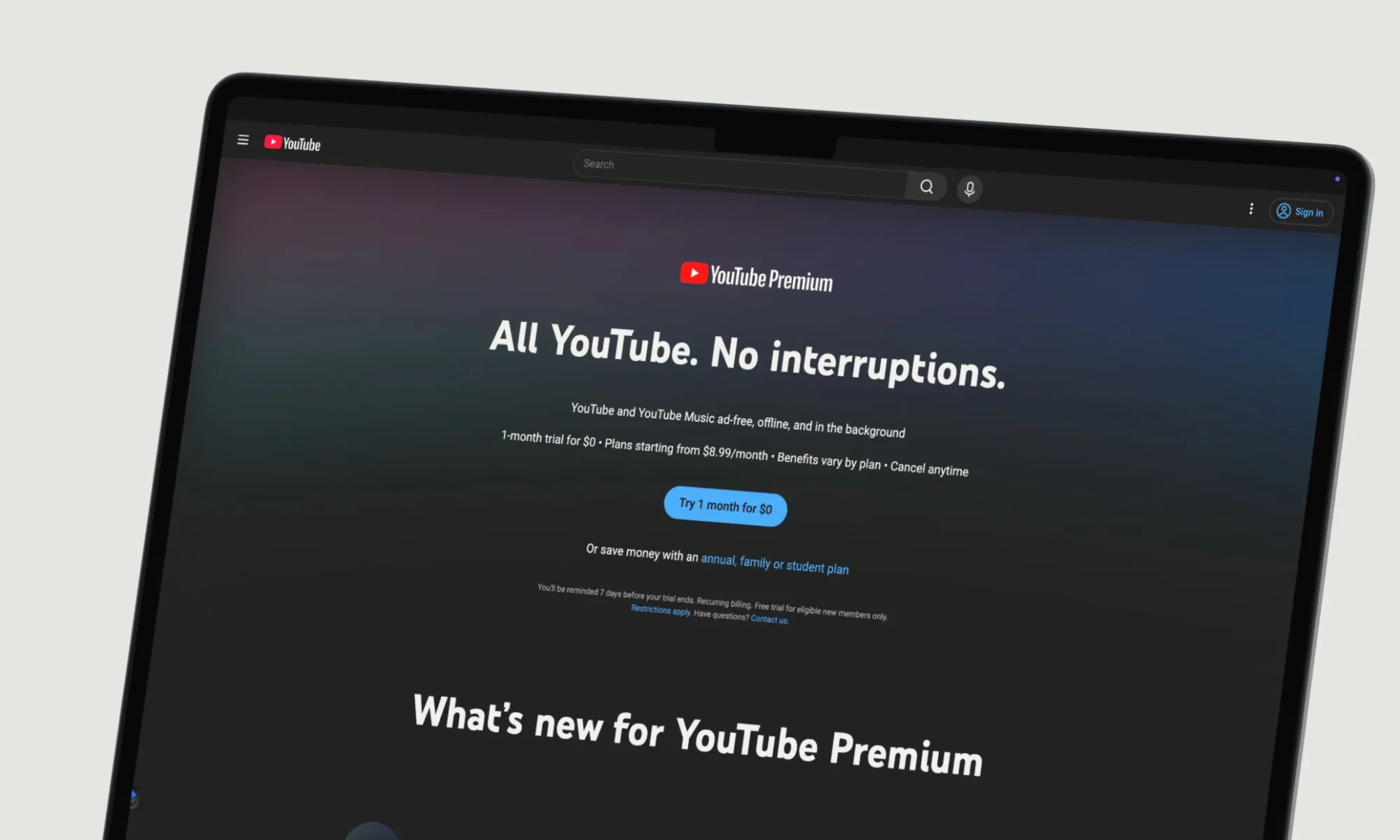
YouTube has announced a fresh increase in the pricing of its Premium and Music subscription plans, marking another step in the ongoing trend of rising costs across digital streaming services. The update affects multiple tiers, including YouTube Music and the broader YouTube Premium offering, with changes rolling out first in the United States.

Prices Climb Across Plans As YouTube Updates Subscription Tiers

The latest revision sees the YouTube Music individual plan increase from $10.99 per month to $11.99. The family plan has also gone up, now costing $18.99 per month compared to the earlier $16.99.

YouTube Premium, which bundles ad-free video, background playback, downloads, and access to YouTube Music, has also seen price adjustments. The individual Premium plan now costs $15.99 per month, up from $13.99, while the family plan has risen to $26.99.

These changes are already in effect for new subscribers and will gradually apply to existing users in the coming months.

A Familiar Strategy In A Changing Streaming Market

The price hike reflects a broader shift across the streaming industry, where platforms are steadily increasing subscription costs to sustain operations and invest in content and infrastructure. YouTube has stated that the updated pricing is intended to maintain service quality and continue supporting creators on the platform.

Advertisement

This move follows similar increases by other major platforms, indicating a wider industry trend often referred to as “streamflation.” As competition intensifies and production costs rise, companies are increasingly passing those costs on to subscribers.

What This Means For Users

For users, the immediate impact is straightforward – higher monthly bills. However, the change also raises questions about value.

YouTube Premium has traditionally been seen as a convenient bundle, offering ad-free viewing and music streaming in a single subscription. With rising prices, users may begin to reassess whether the service still justifies its cost, especially when compared to alternatives like standalone music streaming platforms or ad-supported viewing.

At the same time, YouTube continues to emphasize the benefits of its ecosystem, including access to a vast library of content and integrated features that go beyond video streaming.

What Comes Next

While the current price increases are focused on the U.S., similar adjustments could eventually reach other regions, as has been the case with previous hikes.

Advertisement

Subscribers can expect to receive notifications ahead of billing changes, giving them time to review or modify their plans.

Looking ahead, the key question will be how users respond. If subscription fatigue continues to grow, platforms like YouTube may need to balance pricing with new features or flexible plans to retain users.

For now, the latest price hike reinforces a clear reality: as digital services expand, the cost of staying ad-free and fully subscribed is steadily going up.

Advertisement

Source link

Continue Reading

Tech

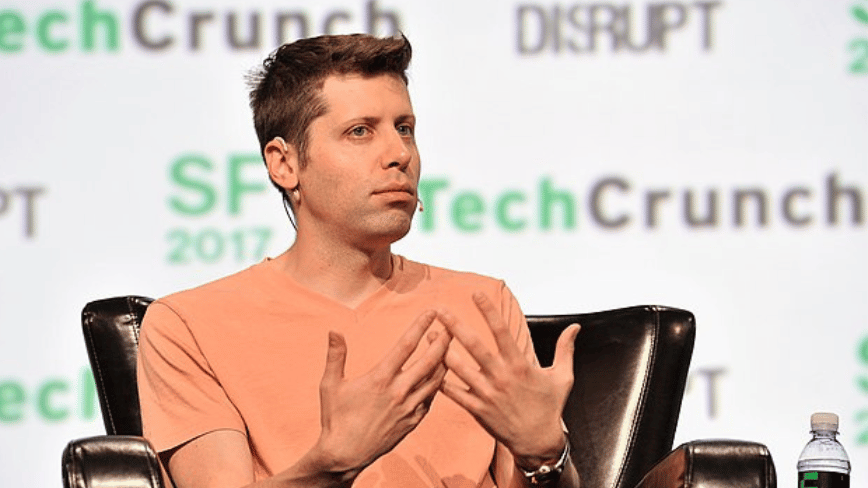
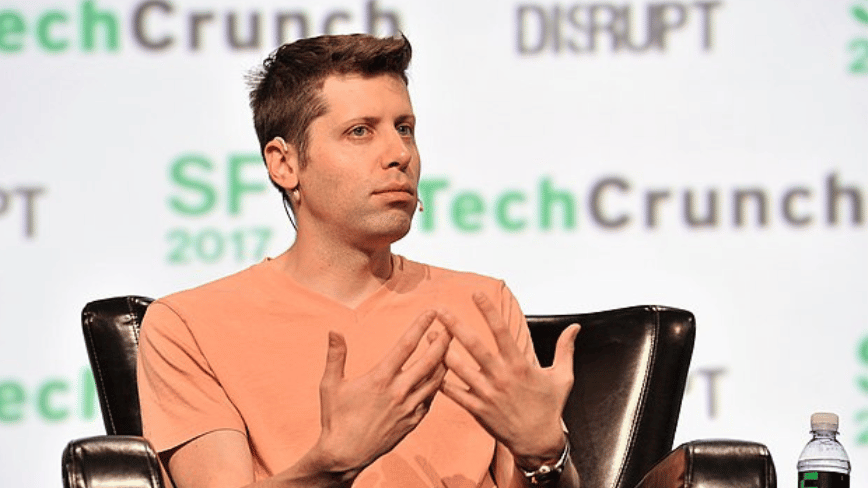
Police arrest 20-year-old after Molotov cocktail thrown at Sam Altman’s San Francisco home

Published

on

In short: A 20-year-old man was arrested in the early hours of Friday, 10 April 2026, after throwing a Molotov cocktail at the San Francisco home of OpenAI chief executive Sam Altman, then travelling across the city to OpenAI’s offices on Third Street and threatening to burn the building down. No one was injured. The suspect’s name has not been released, charges are pending, and no motive has been publicly disclosed.

The attack at Russian Hill

At around 3:40 a.m. on Friday, a person approached the metal gate of 855 Chestnut Street, a 5,400-square-foot home on San Francisco’s Russian Hill that Sam Altman purchased in January 2025, and threw a bottle containing a flaming rag at it. The improvised incendiary device set the gate alight. Security guards at the property extinguished the fire before it spread. No one was hurt. The incident was captured on surveillance cameras, and San Francisco Police Department officers arrived shortly after 4 a.m. responding to what the department initially described as a fire investigation. The property, a five-bedroom home built in 1924 set half a block from the famously crooked section of Lombard Street, was acquired by Altman through an LLC managed by his cousin Jennifer Serralta, according to property records and reporting by the SF Standard. It sits in one of San Francisco’s most sought-after residential streets, and its proximity to the city’s tech executive community has made the neighbourhood a shorthand for the industry’s concentration of wealth.

From Chestnut Street to Third Street

Less than an hour after the attack on Altman’s home, San Francisco police were dispatched to OpenAI’s offices on Third Street in the city’s Mission Bay district after a man reportedly threatened to burn the building down. When officers arrived, they recognised the man from the surveillance footage captured at Chestnut Street and immediately detained him. The suspect is a 20-year-old male. The San Francisco Police Department has not released his name. As of Friday afternoon, charges had not been filed, and the department described the investigation as open and active. OpenAI confirmed the incidents in a statement from spokesperson Jamie Radice. “We deeply appreciate how quickly SFPD responded and the support from the city in helping keep our employees safe,” Radice said. “The individual is in custody, and we’re assisting law enforcement with their investigation.” No motive has been publicly disclosed, and no connection between the suspect and any organised movement has been confirmed. Any such inference would remain speculation at this stage.

OpenAI at the centre of the storm

The attack lands at a moment of extraordinary visibility and controversy for OpenAI and for Altman personally. On 31 March 2026, OpenAI closed a $122 billion funding round at an $852 billion valuation, the largest private fundraise in history, extending participation to retail investors for the first time. The round confirmed Altman’s position as the most powerful figure in the AI industry and made OpenAI’s scale a matter of daily public conversation. Four days before the attack, on 6 April, OpenAI published a 13-page policy blueprint calling for robot taxes, a public wealth fund, and a four-day week, a document framing approaching superintelligence as an economic disruption comparable to the Progressive Era. The paper drew widespread attention and sharp criticism from those who saw it as self-serving regulatory positioning from a company simultaneously driving the very displacement it proposed to cushion.

Advertisement

OpenAI has also found its infrastructure facing threats on a global scale: Iran’s IRGC threatened to destroy OpenAI’s $30 billion Stargate data centre in Abu Dhabi in the event of US military action against Iranian civilian infrastructure, and OpenAI paused its Stargate UK data centre project citing industrial electricity prices four times higher than in the US and unresolved AI copyright rules. Friday’s attack on Altman’s home is something categorically different from a geopolitical threat or a regulatory battle, but it arrives inside the same climate of intense pressure around AI’s concentration of power, capital, and ambition.

Advertisement

What is and is not known

Investigations into incidents of this kind frequently take days or weeks before a full picture of motive and circumstance emerges. SFPD confirmed the arrest and declined to provide further detail. OpenAI said it is cooperating with law enforcement. Altman has not commented publicly. The suspect remains in custody pending charges. What is established is the sequence of events: an incendiary device thrown at a private residence, a threat made at a corporate office, and an arrest made the same morning on the basis of surveillance evidence. What is not established is why. The backlash against AI’s leading figures has taken many forms over the past two years, from lawsuits and regulatory hearings to street protests outside company headquarters. Whether Friday’s attack belongs to any of those currents, or represents something altogether more isolated, is a question that remains open. 2025 established AI as the defining technology of the decade, and with that designation has come a level of public scrutiny and anger directed at its architects that the industry has not previously had to navigate at this scale.

Source link

Advertisement
Continue Reading

Tech

Tech Moves: Microsoft names corporate VP; Amazon exec departs for Google; Zoom names CPO

Published

on

Nadim Abdo. (Microsoft Photo)

— After more than 26 years with Microsoft, Nadim Abdo is now the tech giant’s corporate vice president of Identity & Network Access (IDNA). The team’s services authenticate more than 1 billion users daily, and its Microsoft Entra technology is used by more than 95% of Fortune 500 companies, Abdo noted on LinkedIn.

“As the next wave of AI reshapes how people, apps, and autonomous systems interact, our opportunity is to redefine how trust is established, making secure access more intelligent, adaptive, and resilient by design,” Abdo added.

Abdo previously served as corporate VP of engineering for the company’s identity technologies for four years. He steps into the role as Joy Chik, Microsoft’s president of IDNA, announced her retirement in July.

Russell Dicker. (LinkedIn Photo)

— Longtime Seattle-area product lead Russell Dicker is now chief product officer for Zoom.

“I love building products that customers love,” he said on LinkedIn. “Zoom has an incredible foundation of innovation and a deep commitment to empowering how people work together.”

Dicker joins the company from Microsoft, where for the last four years he was corporate VP of product management for Teams and the Overture Maps Foundation, a Linux Foundation-hosted project to create a common mapping base layer. Dicker has also held roles at Google and Uber. He spent more than 15 years at Amazon in positions focused on Cloud Drive, personalization and automation, before leaving in 2014.

Advertisement
Ankur Mehrotra. (LinkedIn Photo)

Ankur Mehrotra left Amazon after nearly 18 years to join Google Cloud in Seattle as VP and general manager. Mehrotra said on LinkedIn that he’ll be helping Google customers manage AI workloads in a variety of secure and flexible cloud setups, and looks forward to working with a “stellar team.”

Mehrotra joined AWS as a software engineer in the Bengaluru Urban district in Karnataka, India, and relocated to the Seattle area in 2012.

“Reflecting on my tenure, I feel immensely fortunate to have grown alongside the company,” he said. “Over the years, I had the opportunity to work across a broad spectrum of the business — from the consumer and retail side to enterprise products and services.”

Christian Taubman. (LinkedIn Photo)

Christian Taubman has resigned as chief growth officer of Redfin and Rocket, saying on LinkedIn that it had been “the honor of a lifetime” to help people realize the dream of homeownership. Rocket acquired Seattle real estate tech company Redfin last year.

“We got so many things done for consumers, but what I’ll remember most is the conversations and the people,” Taubman wrote. “I’m profoundly grateful to everyone who influenced me, debated with me, disagreed with me, and helped us make better decisions.”

Taubman joined Redfin from Amazon, where he was director of smart home verticals. He did not indicate what he plans to do next.

Advertisement

— Seattle-based Jay Lee is now chief marketing officer for Five9, a personalized customer experience company headquartered San Ramon, Calif. Lee joins Five9 from the Bellevue, Wash., company Icertis, where he was CMO for more than two years. He previously served in the same role at Avalara.

“Jay brings a rare combination of strategic marketing vision, creativity, and operational rigor, with a deep understanding of how to translate customer insight into meaningful business outcomes,” said Five9 CEO Amit Mathradas in a statement.

Deidre Wendell announced her retirement from Seattle-based Accolade, where she served for more than 13 years, most recently as VP of product management. The health benefits firm was acquired last year by Transcarent. Before joining Accolade, Wendell was a senior executive at Accenture, where she spent 25 years.

On LinkedIn, she reflected that while at Accolade, she was “surrounded by like-minded individuals who were equally invested in helping people navigate healthcare to lead their best lives.”

Advertisement

— Seattle immigration tech startup Casium named Luke Lalor as a founding engineer. He joined Casium from Snow Leopard, which built technology to support AI developers, and was a co-founder of August Data, a startup offering an open-source framework for building generative AI apps.

Frazier Healthcare Partners promoted Ryan Lucero to general partner. The Seattle-based healthcare investment firm last week announced several additional promotions and a new hire. Lucero has been with the company for nearly a decade.

Source link

Advertisement
Continue Reading

Tech

Gmail encryption goes mobile, but email itself remains the weak link

Published

on


A few months after introducing end-to-end encryption (E2EE) to Gmail’s web platform, Google is doing the same to mobile apps. The company recently confirmed that Android and iOS users can now safely encrypt their email-based conversations, although they will still need to be part of an organization paying for the…
Read Entire Article
Source link

Continue Reading

Tech

Google Messages gets a Trash folder for your unimportant chats to simmer in

Published

on

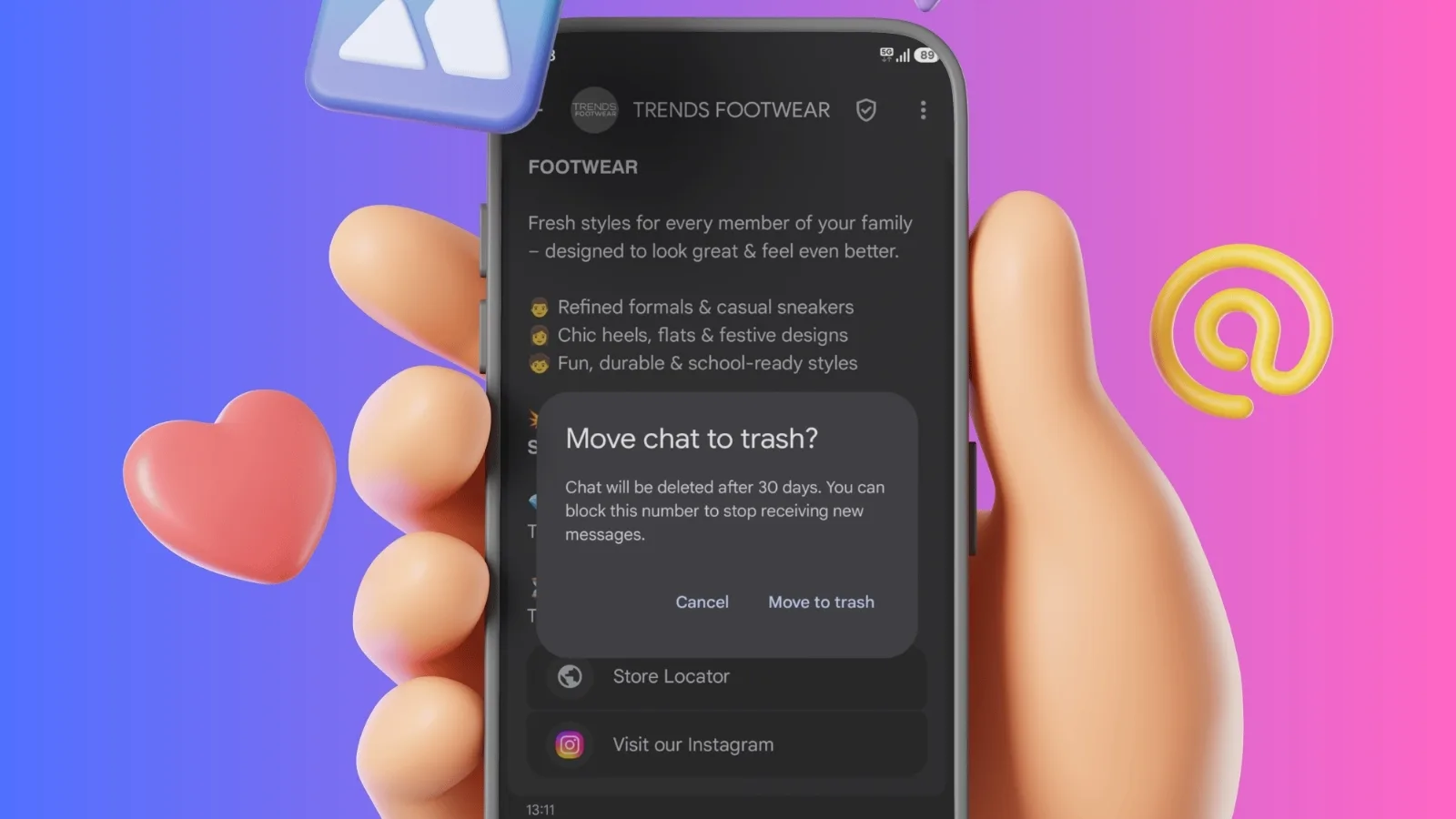
Google Messages is getting a small but genuinely meaningful feature that can help with cleanups and accidental inputs. The app now has a proper trash folder to let you get back to conversations you recently got rid of.

Why this is a handy new feature

The company’s official support documentation revealed the new Trash folder that lets users recover deleted conversations within 30 days. This adds a buffer that should help cut down on accidental message loss. But after this month-long window ends, the conversation is permanently deleted.

Though, the feature is still very useful. Instead of a deleted conversation vanishing for good right away, it goes into Trash first, similar to Google Drive‘s Bin folder. From there, users can restore individual chats, restore all of the deleted chats, or permanently wipe selected conversations. Google says that each trashed conversation shows an individual countdown indicating how many days remain before they are truly removed.

There’s more than one way to send chats to Trash

Google built this feature to be easily accessible. Users can move conversations into Trash either by setting up a swipe action or by touching and holding one or more chats and tapping the Trash icon. To enable the swipe shortcut, users need to head into Messages settings, open Swipe actions, and assign Trash to either the left of right swipes.

There is also one small catch.

If you receive a new message in a conversation that is currently in Trash, that incoming message can appear as a new conversation in your inbox. So Trash is not necessarily a holding area for chat threads you are trying to avoid.

Advertisement

Source link

Continue Reading

Tech

'Pluribus,' 'Mr Scorsese,' and more Apple TV shows nominated for Peabody Awards

Published

on

Apple TV has earned five nominations for the 86th Peabody Awards, honoring the streamer across entertainment, children’s, and factual programming.

A close-up of a person with blonde hair, mouth open, looking upward against a bright yellow background.
Pluribus — image credit: Apple

The Peabody Awards exist to celebrate storytelling across different media, and across different forms from television to radio and podcasts. Apple TV won its first Peabody in 2021, getting it for “Ted Lasso” and specifically the show’s radical optimism.
For the 86th annual Peabody Awards, Apple TV has been nominated across three categories. The nominations announced by the Peabody Awards are:
Continue Reading on AppleInsider | Discuss on our Forums

Source link

Continue Reading

Tech

Sony Raised PS5 Console Prices, and the PlayStation Portal Handheld Stepped Up

Published

on

Sony PS5 Console Price Increase PlayStation Portal
On April 2, Sony increased the price of all of its PlayStation 5 consoles. The standard disc edition now costs $650, the digital edition up to $600, and the Pro model is a hefty $900. However, when you take a step back and look closely at the PlayStation Portal, things begin to make a lot more sense.


It debuted in 2023 as a way to stream games from your PS5 to your TV, but you required your enormous PS5 connected in and nearby, which didn’t work out too well. If you were on the run or sharing a living space with others, it was a big pain, but that changed in November 2025 when Sony released a huge software upgrade. If you have the right PlayStation Plus Premium subscription, you may stream over 600 titles directly to your Portal, without the need for a PS5 or local consoles. The variety is also amazing, with recent PS5 releases and several older PS4 successes available in full 1080p and 60 frames per second as long as your internet connection is stable.


PlayStation 5 Portal Remote Player
  • Play Your Game Collection with Remote Play – PlayStation Portal Remote Player can play compatible games you have installed on your PS5 console…
  • Cloud Streaming from the Game Catalog and Classics Catalog – Discover an awesome library of PS5 games on the PlayStation Portal Remote Player with…
  • Cloud Streaming for PS5 Games in Your Library – With PlayStation Plus Premium, stream select digital PS5 games in Your Library from PlayStation Store…

The Portal is no longer just a stylish accessory. Throw in the $250 price tag and the $160 yearly Premium subscription, and you’re still considerably below the price of a new $650 PlayStation 5. Heck, you’ll save a few hundred bucks right away, and that’s only the beginning, especially because you won’t have to pay for extra controllers or a separate TV setup.


Sony is blaming the PS5 price increase on a global economic squeeze and memory chip shortages, and to be fair, this has been going on for a long. The Portal avoids these issues entirely because it does not require the same amount of hardware because the actual graphics-heavy stuff is handled by the cloud server. On the other hand, you avoid all of the supply chain issues and rising production costs that are driving price increases in traditional consumer products.

Advertisement

After some hands-on time with the Portal, you’ll agree that it feels just how you’d expect. The portable features an 8-inch LCD screen sandwiched between two classic controller halves, as well as adjustable triggers and haptic feedback. The built-in speakers are also rather powerful, producing superb spatial music that allows you to avoid using headphones for shorter play durations. With a battery life of about two hours on a single charge, it’s perfect for lazing on the couch.


Plus, the user interface has seen significant improvements since early 2026. Your buddy invites and trophy celebrations appear in the corner of the screen without pulling you out of the game. You simply scan a fast QR code, and new accounts are created in a flash.

Source link

Advertisement
Continue Reading

Tech

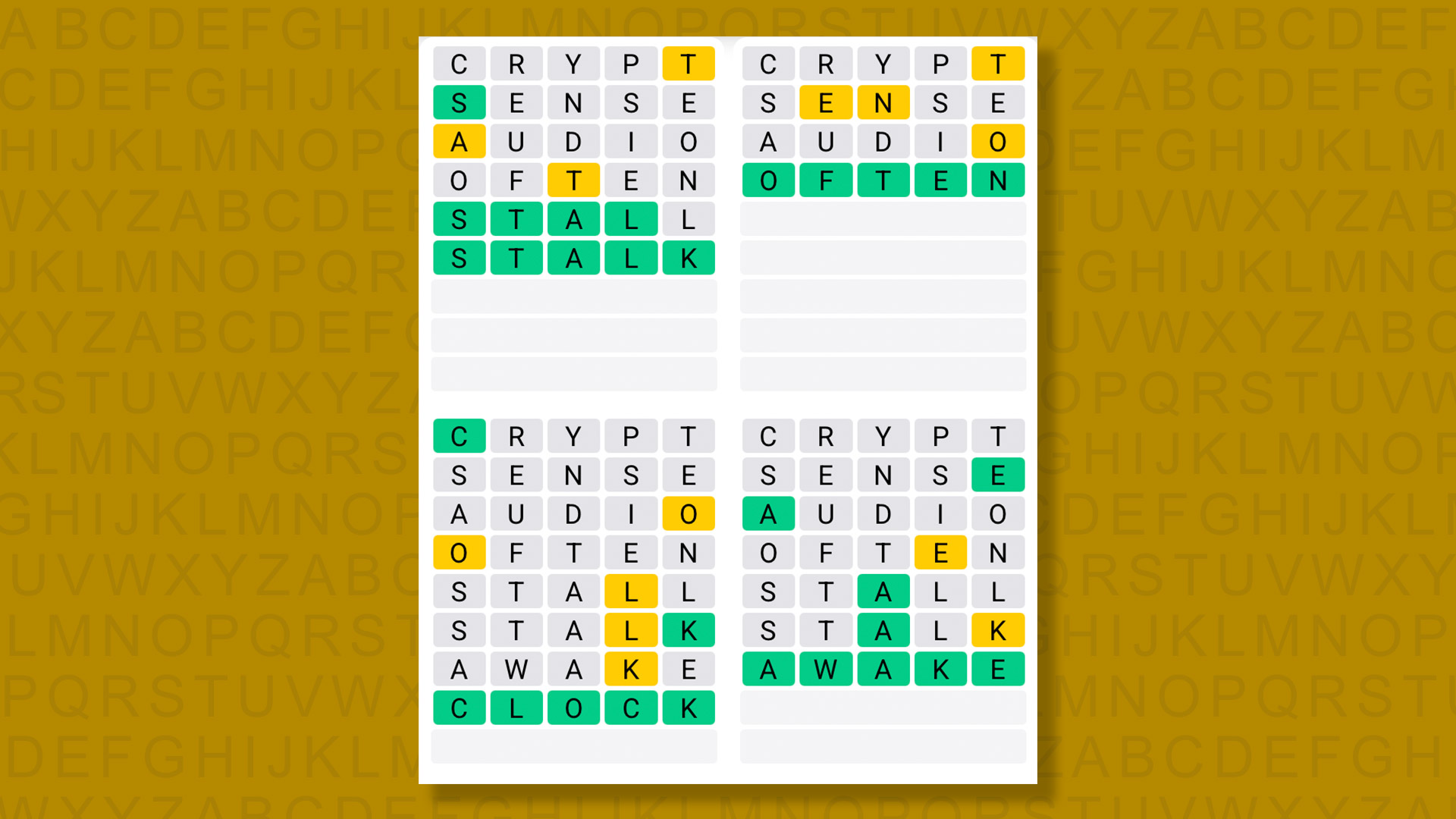
Quordle hints and answers for Sunday, April 12 (game #1539)

Published

on

Looking for a different day?

A new Quordle puzzle appears at midnight each day for your time zone – which means that some people are always playing ‘today’s game’ while others are playing ‘yesterday’s’. If you’re looking for Saturday’s puzzle instead then click here: Quordle hints and answers for Saturday, April 11 (game #1538).

Quordle was one of the original Wordle alternatives and is still going strong now more than 1,500 games later. It offers a genuine challenge, though, so read on if you need some Quordle hints today – or scroll down further for the answers.

Advertisement

Source link

Advertisement
Continue Reading

Trending

Copyright © 2025