Amazon says its Leo satellite network now has enough spacecraft in orbit to begin limited commercial internet service, with 396 satellites providing “continuous service across initial latitudes.” Early performance will likely be uneven, however, and well behind Starlink. “It’ll be years before Amazon can boast similar performance numbers as it continues to launch a planned 3,232 Leo satellites,” reports The Verge. From the report: SpaceX went live with its “Better than nothing beta” back in 2020 when it had almost 900 satellites operating in low-Earth orbit. It initially served a narrow band of users in the upper US and Canada, who complained about frequent service interruptions and high sensitivity to obstructions, with speeds between 50Mbps and 150Mbps, and latency from 20ms to 40ms. By 2022, the service and coverage areas had already dramatically improved. […]
SpaceX currently has over 10,000 Starlink satellites in operation, providing robust internet connectivity on land, sea, and air in over 160 countries. Performance varies by the dish, service level paid for, time of day, and location of the user, but we’re now talking 200Mbps median download speeds, 10Mbps to 40Mbps uploads, and latency hovering around 25ms.
People have been attempting to turn Kindles into more than e-readers since the first devices came out nearly two decades ago. The e-ink displays are low-power and great for displaying information that doesn’t refresh too often, and with Amazon continuing their trend of bricking their older devices there will be more of these devices available. [Hemant] built a weather dashboard with one of his, but since then had requests for other types of e-reader dashboards and has a guide for making more general-purpose use of an old Kindle.
The first approaches outlined here involve the installation of a dashboard client on the Kindle and pointing it at a server that hosts a PNG image of whatever information needs to be displayed. The client simply displays that image and refreshes it at predetermined intervals. There are a number of options for creating that server as well, including using Home Assistant for those who already have a home automation system deployed. The benefit of using Home Assistant is that it’s much more straightforward to gather data for the dashboards from sensors and other peripherals that are already installed.
Installing a client like this might seem straightforward, and it can be, provided that the Kindle involved is jailbroken or capable of being jailbroken. An Amazon update recently broke many modern devices’ ability to execute the jailbreak, so not every Kindle can do this anymore. But [Hemant] goes into detail about this and also outlines some methods for using generic e-ink displays instead, and also dives into the hardware and software behind building a server to host the dashboard images for those without Home Assistant already running. It’s a great overview for those who have always wanted something like this but never knew where to start.
Nvidia competitor Etched announced this week that TSMC had manufactured its first chip earlier this year. While the four-year-old startup valued at $5 billion is getting ready to ship systems powered by that chip to customers later this summer, scaling production may prove challenging. Like other chip designers, Etched must compete for limited capacity at TSMC’s Taiwan factories.
Copper Sky Capital, one of Etched’s early investors, is hopeful that the chipmaker will find a solution to its manufacturing constraints by eventually producing chips at Arizona’s TSMC facility. When the four-year-old VC firm invested in Etched’s $120 million Series A two years ago, founder Jack Selby secured an allocation in part by promising to help the startup eventually reshore its chip fabrication to Arizona.
Selby, a former PayPal exec and longtime managing director to Peter Thiel’s family office, Thiel Capital, founded Phoenix-based Copper Sky in 2021 (formerly known as AZ-VC). The firm’s first $115 million fund focused primarily on startups based in Arizona and the Southwest. Selby’s thesis was that most coastal startups, particularly those based in California, Massachusetts, and New York, are grossly overpriced compared to companies popping up in his region. However, Selby saw an opportunity to bridge the gap in the other direction by helping California-based hardware startups move their production to Arizona.
Selby credits Copper Sky’s investment in Etched — an otherwise hard-to-access startup — to his influential role in Arizona’s economy. As a board member of the Arizona Commerce Authority, Selby is deeply involved in recruiting out-of-state businesses to set up manufacturing operations in the region.
Advertisement
“When Copper Sky invested with Etched, the company clearly understood our connectivity to the Arizona semiconductor industry, and in particular the local TSMC GIGAFAB,” Selby told TechCrunch.
While Copper Sky has recently expanded its focus beyond the Southwest to include nontraditional venture hubs nationwide, Selby said that the firm is also interested in backing hardware companies, including in the defense sector, that can set up manufacturing operations in Arizona.
The firm is expected to soon have more capital to invest in those higher-priced coastal companies, and those throughout the United States. Copper Sky is currently raising a $300 million second fund, according to a regulatory filing.
When you purchase through links in our articles, we may earn a small commission. This doesn’t affect our editorial independence.
Looking for the most recent Connections answers? Click here for today’s Connections hints, as well as our daily answers and hints for The New York Times Mini Crossword, Wordle, Connections: Sports Edition and Strands puzzles.
Today’s NYT Connections puzzle is a real challenge. Read on for clues and today’s Connections answers.
The Times has a Connections Bot, like the one for Wordle. Go there after you play to receive a numeric score and to have the program analyze your answers. Players who are registered with the Times Games section can now nerd out by following their progress, including the number of puzzles completed, win rate, number of times they nabbed a perfect score and their win streak.
Here are four hints for the groupings in today’s Connections puzzle, ranked from the easiest yellow group to the tough (and sometimes bizarre) purple group.
Yellow group hint: Supportive emotions.
Advertisement
Green group hint: Totally tubular would be another one.
Blue group hint: Gifts no one wants.
Purple group hint: Earl Grey, hot.
Answers for today’s Connections groups
Yellow group: Positive feelings.
Advertisement
Green group: Retro expressions of approval.
Blue group: Bad things to give someone.
Purple group: What things pronounced “T” might refer to.
Jon Prosser has formally responded to Apple’s lawsuit over alleged iOS leaks, claiming that he is entirely innocent and that colleague Michael Ramacciotti is solely responsible for any alleged trade secret theft.
Apple’s now year-long case against Prosser had initially seen the YouTuber repeatedly ignoring court deadlines. He began responding in April 2026, and his lawyers have now formally filed his rebuttal to Apple’s accusations that he and Ramacciotti conspired to steal trade secrets from Apple employee Ethan Lipnik.
“Ramacciotti’s is [sic] responsible for all harm caused to Prosser and should indemnify him for all harm caused,” says the filing. “Ramacciotti’s act of displaying the features was not induced by Prosser and, as such, Ramacciotti is completely responsible for the disclosure of Apple’s alleged trade secrets, if any.”
Prosser specifically denies offering money in return for the information Ramacciotti showed him. He also denies knowing how his co-defendant got his information, or conspiring ahead of time to gather it.
Advertisement
Ramacciotti unlocked Lipnik’s iPhone, which had an early release of what was then called iOS 19, and shared confidential details. Prosser claims no knowledge of whose iPhone it was, and denies knowing that Ramacciotti was in the Apple employee’s apartment.
Prosser does admit to sharing with Ramacciotti a portion of the revenue his YouTube video brought in, and said this was to secure exclusivity. “Once Prosser learned how Ramacciotti acquired the proprietary information, he disconnected communication with Ramacciotti,” says the filing.
At one point the filing says that Prosser “has not [sic] knowledge if iOS 19 was in fact ‘unreleased’.” But later it says “Prosser admits that the information was unreleased software.”
That contradictory claim appears to mean that it was during the demonstration of iOS 19 that Prosser did not know it was iOS 19 that he was being shown.
Advertisement
Prosser’s filing, as first spotted by MacRumors, requests trial by jury.
Apple has not responded publicly to the filing.
Separately, Michael Ramacciotti has been cooperating with the courts since at least October 2025, and provided Apple with his emails, computers, and archives. Ramacciotti’s lawyers have claimed that he did not appreciate the value and nature of what he showed Prosser.
Now, Matthew Haiken, who owns that Polestar dealership along with three other (non-Polestar) dealerships in the Prestige Collection Auto Group, faces another and more serious challenge. Polestar said in late June that the US Commerce Department had denied an authorization that would have allowed the brand to continue selling cars in the US despite a federal rule restricting the sale of vehicles with Chinese-made connected-vehicle technology. The company, which is majority-owned by China’s Geely Holding and its founder Li Shufu, says it will stop selling Polestar vehicles in the US beginning with the 2027 model year.
“It’s so unfortunate,” Haiken says. “It’s hard for my customers who have been reaching out; it’s hard for my staff.” He says he and the owners of the US’s other 31 Polestar dealerships have invested “many millions” in selling the cars and called the authorization decision “a shock to me and all the dealers.”
Advertisement
Volvo, which is also majority-owned by Geely, received authorization from the Commerce Department in March, allowing it to continue selling its vehicles in the US, despite its Chinese connections. Volvo said at the time that it held “constructive discussions” with the department about the automaker’s “governance, technology and data security.” (When asked about the discrepancy, a Polestar spokesperson said that the company “cannot comment on how legislation applies to other manufacturers.”)
“I am very frustrated in Polestar, globally,” Haiken says. “I think they really dropped the ball, and I blame them. I don’t blame the government.”
The Commerce Department under the Biden Administration officially approved the connected-vehicle rule in January 2025, after government officials argued that a ban on Chinese- and Russian-made automotive hardware and software was necessary for national security reasons. The federal government said that internet-connected automotive cameras, microphones, and GPS equipment threatened US safety. “It doesn’t take much imagination to understand how a foreign adversary with access to this information could pose a serious risk to both our national security and the privacy of US citizens,” Commerce secretary Gina Raimondo said at the time.
The US Commerce Department did not respond to WIRED’s questions.
Advertisement
Polestar said in a statement last week that US dealerships would sell “existing stock” of the Polestar 3 and Polestar 4, and that a US service network would “continue to support customers.” It framed the move as “increasing its strategic focus on Europe,” and said that 94 percent of Polestar’s first quarter 2026 sales took place outside of the US.
Haiken calls that statistic misleading because the brand’s newest offering, the Polestar 4 coupe, went on sale in Europe in January 2024 but wasn’t available in the US until December 2025.
Some Polestar dealerships handle service issues through Volvo centers, but Haiken said his stand-alone Polestar service center will continue fixing and servicing the EVs. “We have the volume to justify it,” he says. “We have to be around to perform that work.” Not all dealerships might make the same decision, he said, though vehicles will likely be sent to the closest service center for tune-ups and fixes.
According to the Wall Street Journal, SpaceX showed investors an early prototype of a slim, “handset-like” AI device running a proprietary operating system and integrating xAI technology. Elon Musk, however, denied the report, calling it “utterly false.” TechCrunch reports: SpaceX, alongside sister company Tesla, does have the manufacturing expertise to pull off mass-producing a bunch of AI devices — not to mention access to the chips needed to power any on-device compute. SpaceX has also signaled that it’s keen to expand into wireless, with Starlink Mobile as a potential competitor to Verizon and AT&T. One analyst even went as far as to speculate that T-Mobile or AT&T would make fine acquisition targets for the rocket builder, though such a purchase would, undoubtedly, be pricey.
It’s also not clear if SpaceX is just throwing spaghetti at the wall or if it will attempt to really mass-produce and market such a device. But one thing that seems clearer is that if OpenAI is doing it, Musk would, perhaps, want to try to do it better. […]
Like OpenAI, SpaceX’s prototype is reportedly designed to run on a proprietary operating system and integrate technology from xAI, Musk’s AI company that SpaceX acquired earlier this year. This would prevent these new devices from being trapped inside another company’s platforms (like Google’s Android). But the intent also appears to be to create something new, with native AI interfaces. That said, the graveyard is crowded with the unsuccessful launches of AI devices from companies like Humane and Rabbit. A company wanting to sell an AI device does not equate to consumers wanting to buy such a thing. Yet.
Report says proposed rewrite gives operators more freedom to shop around for a greener grade
The European Union’s proposed environmental rating system for datacenters may be amended in response to lobbying from IT industry heavyweights, making it easier to offset greenhouse gas emissions using clean energy certificates.
According to the Financial Times, the European Commission is weakening its original proposals after pressure from datacenter operators and tech giants. The newspaper claims to have seen the revised draft of the regulations, set to be discussed by representatives of member states on Thursday.
Advertisement
We asked the Commission for comment on the leaked draft.
The Commission published a draft regulation in March proposing an A-to-G rating scale for datacenters, based on their energy and water efficiency. The system is intended to incentivize greater sustainability in their operations, especially as bit barn capacity is expected to expand greatly over the next decade, thanks to huge demand for AI and cloud services.
That earlier draft specified that facilities could offset greenhouse gas emissions by investing in clean energy certificates, but only if the projects concerned were in the same region as the data campus itself.
It is understood that this has been amended so that facilities operating in one country can offset their emissions by obtaining certificates from renewable projects in a different EU state. The proposed change was made at the behest of companies and lobby groups that argued it would increase their operating costs.
Advertisement
The EU’s efforts to press datacenters and other large energy users into adopting greater efficiency and sustainability measures have met with varying degrees of pushback.
Last year, the Climate Neutral Data Centre Pact (CNDCP) expressed concerns about standards for data campus efficiency the European Commission was considering, based on feedback from mandatory reporting introduced in the Energy Efficiency Directive (EED).
The group lists tech giants AWS, Microsoft, and Google among its signatories, as well as datacenter operators like Digital Realty, NorthC, and Vantage Data Centers.
Also last year, the Cloud Infrastructure Service Providers in Europe (CISPE) trade body was critical of the EU’s Water Resilience Strategy, warning that burdensome regulatory demands regarding water use might prompt operators to build outside Europe.
Advertisement
Another body, the European Data Centre Association (EUDCA), issued a statement this week affirming its “unwavering commitment” to climate-neutral datacenters and sustainable digital growth.
But it warned that Europe will not be able to “unlock the digital infrastructure capacity required for its AI and digital ambitions” without addressing structural challenges in the electricity system, including expansion of transmission and distribution grids, faster and more transparent permitting processes, and stable access to low-carbon electricity.
Meanwhile, Europe needs a policy framework that integrates water and energy efficiency if it wants to keep growing datacenter capacity to support its AI and cloud computing ambitions, according to a recent report.
The proposed environmental rating system is still listed as due for adoption in the third quarter of this year, but debate over the changes may push that back further. ®
It can start with something as mundane as dragging a link into your browser. Three seconds later, a threat actor has the tokens needed to take over your Microsoft 365 account, and you never did anything that traditional security awareness training would flag. You just followed what looked like a normal set of instructions.
That’s the defining characteristic of modern cybercrime: it doesn’t force its way in. It steps quietly into the middle of an everyday workflow and turns a routine action into the moment everything goes wrong.
Why These Attacks Keep Working
These attacks work because of habits we’ve all built up online. Clicking through CAPTCHAs, accepting cookie prompts, pressing a key combination to move a process along. That trained reflexiveness is exactly what attackers are counting on.
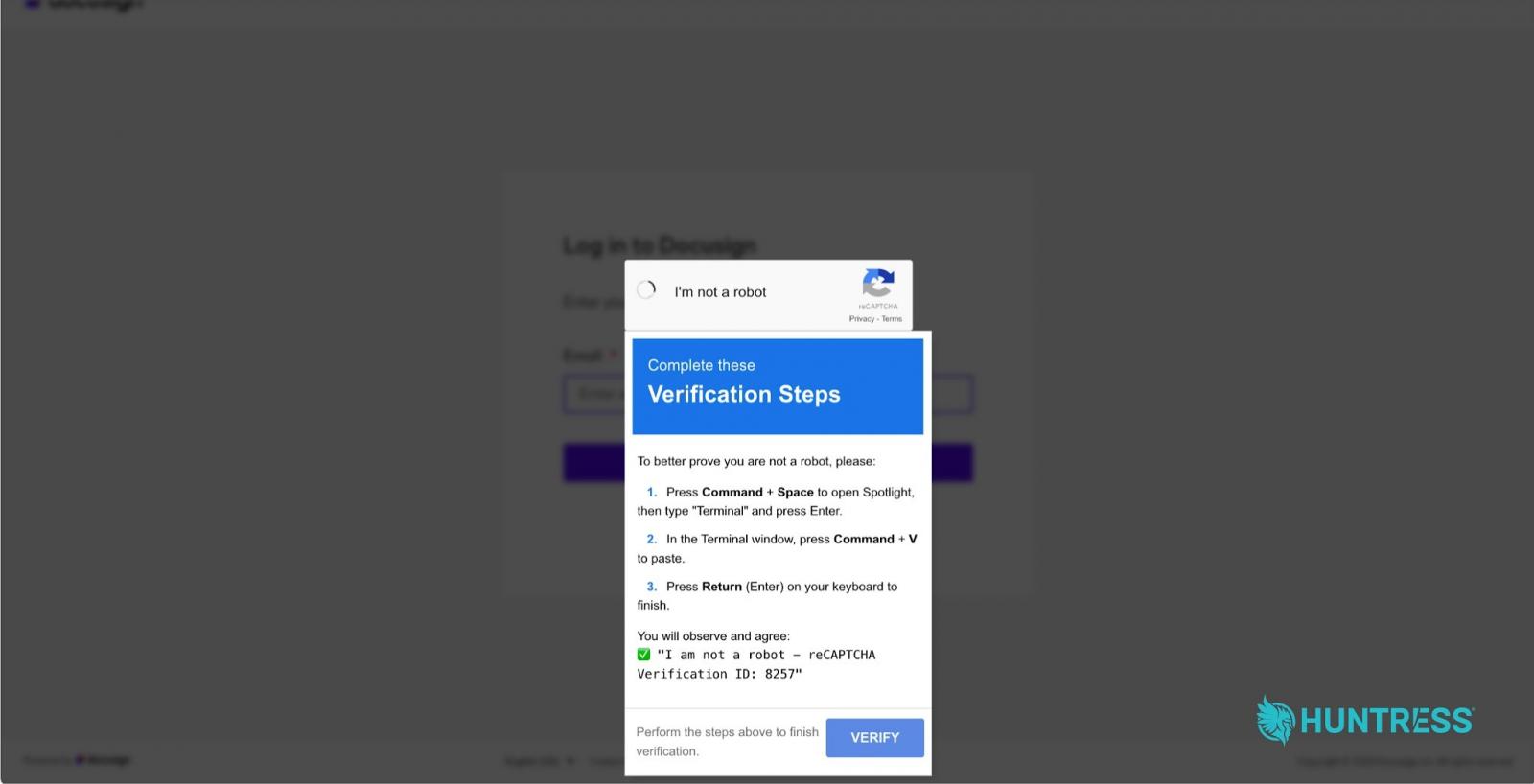
It’s the core mechanic behind ClickFix attacks. Victims are shown a fake prompt instructing them to press a sequence of keyboard shortcuts, which pastes and executes attacker-supplied commands on their own machine. There’s no vulnerability to exploit and no firewall confrontation. Just a convincing lie inserted at the right moment.
Advertisement
ClickFix surged in 2025 and remains active, but attackers have already evolved the concept into something more sophisticated.
Figure 1 below shows the ClickFix-style fake verification prompt.
Figure 1: In a ClickFix attack, the victim follows fake verification steps that ultimately trigger malicious code on their own machine.
Hacker tradecraft’s evolving daily, so let’s break it down on Tradecraft Tuesday!
Join us monthly for an in-depth look at attacker tradecraft—no sales or product talk involved. Sign up for the series today or catch up on previous episodes. No tricks, just tradecraft.
A New Attack Variant Targeting Microsoft 365 Sessions
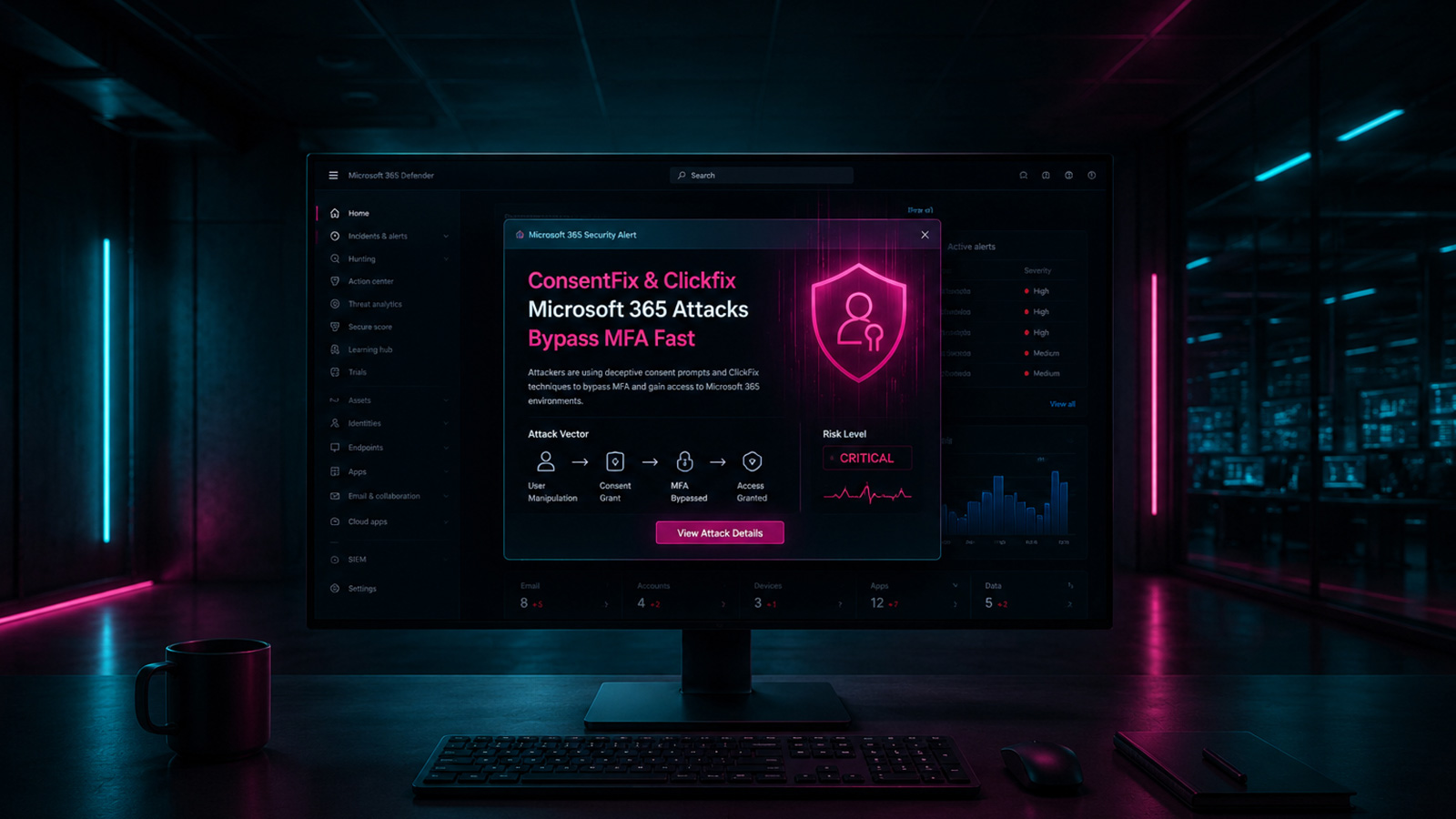
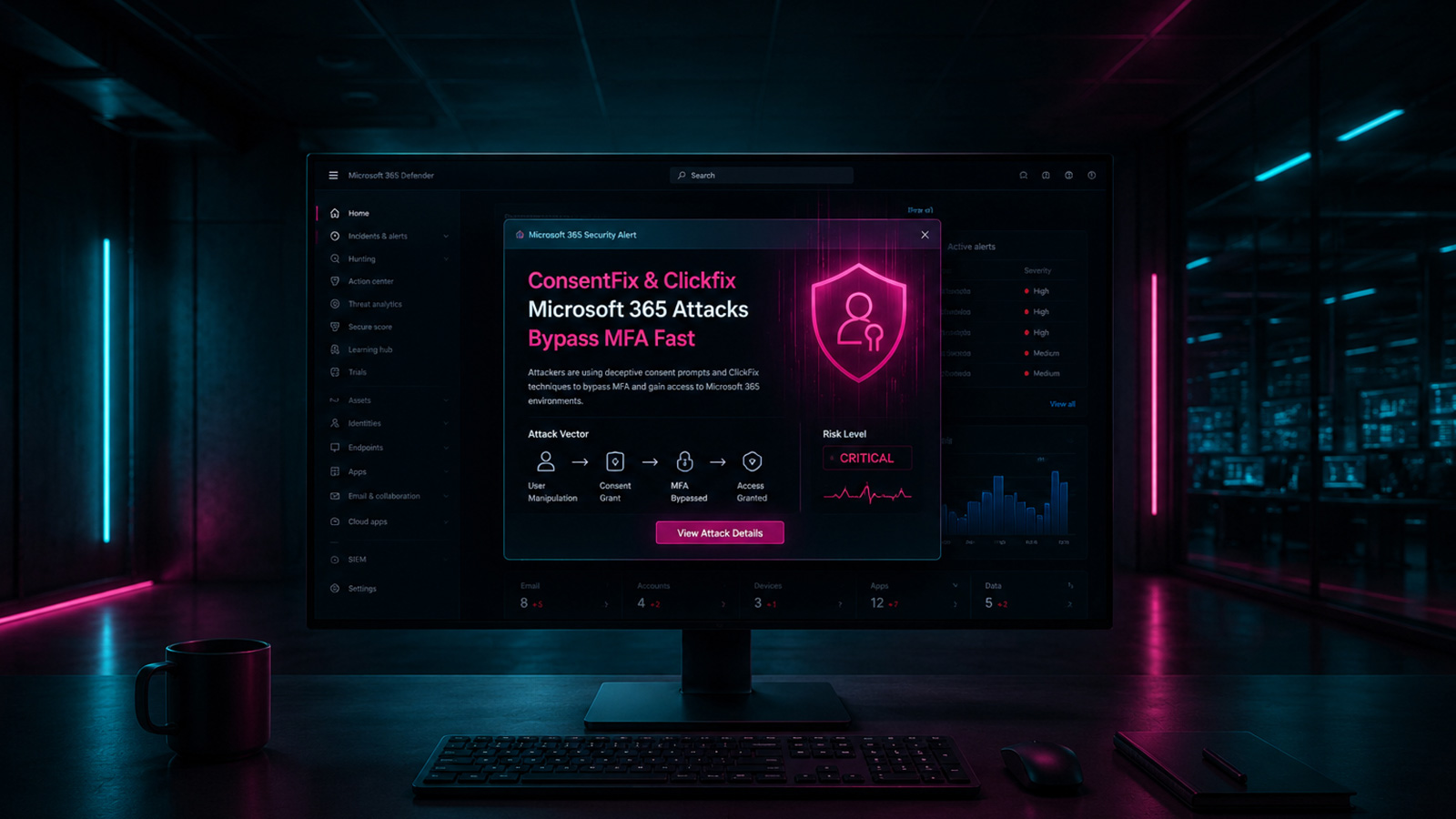
The newer variant, ConsentFix, shifts the attack surface to Microsoft 365’s OAuth consent flows, the sign-in prompts that users have learned to breeze through without much scrutiny.
Advertisement
The setup is deceptively clean. A phishing lure arrives, often delivered through trusted platforms like Dropbox or DocSend, sometimes behind a password that also makes it harder for security tooling to inspect.
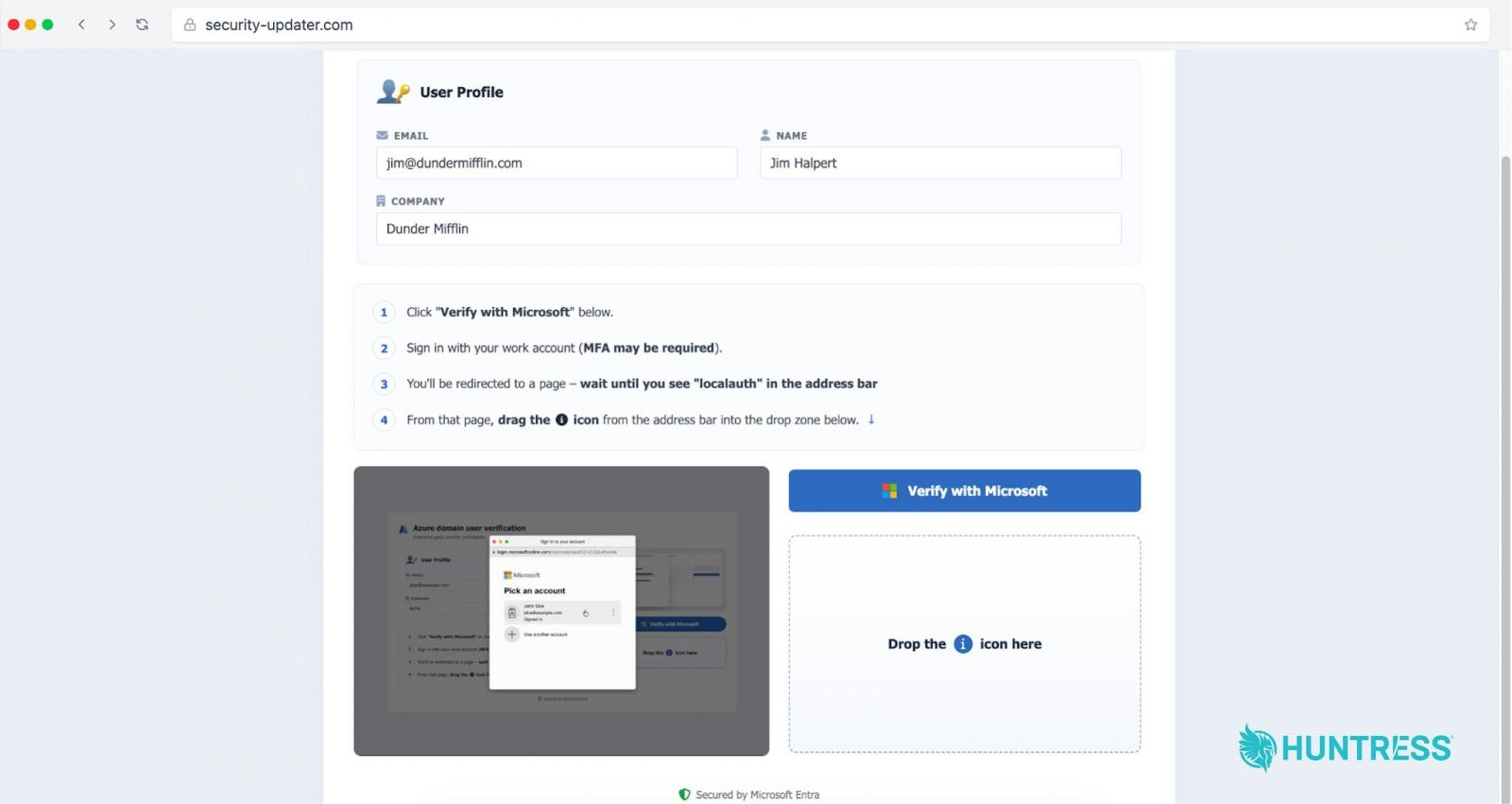
The victim clicks through, encounters what looks like a standard Microsoft authentication screen, and is asked to complete the process by dragging a localhost callback link into the browser.
That drag-and-drop step is the trap. Rather than finishing a harmless authentication step, the user unknowingly surrenders OAuth tokens, handing the attacker session access to email and other Microsoft 365 services without a password and MFA bypass.
The victim isn’t typing credentials into a fake form. They’re completing what appears to be a legitimate authentication flow, and the session itself is what gets stolen.
Advertisement
Figure 2 below shows how ConsentFix turns what looks like a normal Microsoft 365 sign-in step into session theft.
Figure 2: ConsentFix hijacks the Microsoft 365 sign-in flow by turning a familiar user action into stolen session access.
Criminals Are Sharing the Blueprint Openly
By early March 2026, a detailed walkthrough of ConsentFix had been posted to a public Russian cybercrime forum. It included working code, infrastructure screenshots, and a video tutorial showing exactly how to build and deploy the attack.
The infrastructure leaned on free or widely available services, and the post also outlined how attackers profile targets before sending a single phishing message, using LinkedIn and similar tools to map organizations and tailor lures to real people.
What was once a technique requiring meaningful technical skill now comes packaged with documentation and step-by-step guidance. The barrier to entry keeps dropping.
How to Reduce Your Exposure
Awareness still has a role. These attacks depend on people moving through familiar workflows without pausing. Asking why a website wants you to press hotkeys or drag a strange link into a browser is often enough to short-circuit the whole thing.
Advertisement
But awareness alone won’t close the gap, because these attacks are specifically engineered to look routine. Defenders also need detection coverage for the traces they leave behind: unusual PowerShell activity originating from normal user processes, or new session logins from unexpected locations.
Endpoint and identity monitoring can surface those signals before a brief lapse in judgment snowballs into a full account compromise.
The attacker’s job is to interrupt a normal workflow at exactly the right moment and let the victim do the rest. Understanding that pattern is the first step toward stopping it.
Tradecraft Tuesday: No Products. No Pitches. Just Hacks.
Tradecraft Tuesday provides cybersecurity professionals with an in-depth analysis of the latest threat actors, attack vectors, and mitigation strategies. Each weekly session features technical walkthroughs of recent incidents, comprehensive breakdowns of malware trends, and up-to-date indicators of compromise (IOCs).
Advertisement
Participants gain:
Detailed briefings on emerging threat campaigns and ransomware variants
Evidence-driven defense methodologies and remediation techniques
Direct interaction with Huntress analysts for incident response insights
Access to actionable threat intelligence and detection guidance
Advance your defensive posture with real-time intelligence and technical education specifically designed for those responsible for safeguarding their organization’s environment.
Samsung has begun teasing its upcoming foldable phones, which are scheduled to launch in July. With the theme “New Shape, New Joy,” Samsung has launched its teaser campaign hinting at the Galaxy Z Fold 8 redesign. Meanwhile, leaked images of official cases have offered an early glimpse of the phone’s design, giving a better idea of what Samsung may announce in the coming weeks. Unlike in earlier years, Samsung is building curiosity around the device before fully announcing the launch event.
The latest teaser images suggest Samsung is giving its next foldable a fresh design. The company repeatedly uses phrases like “new shape” and “cuts to what matters.” Another teaser shows purple, pink, and gold shades that could match the upcoming phone’s color options. Samsung also briefly reveals a wallpaper featuring the number “8,” hinting at the Galaxy Z Fold 8.
Leaked Images Reveal Galaxy Z Fold 8 and Other Foldables
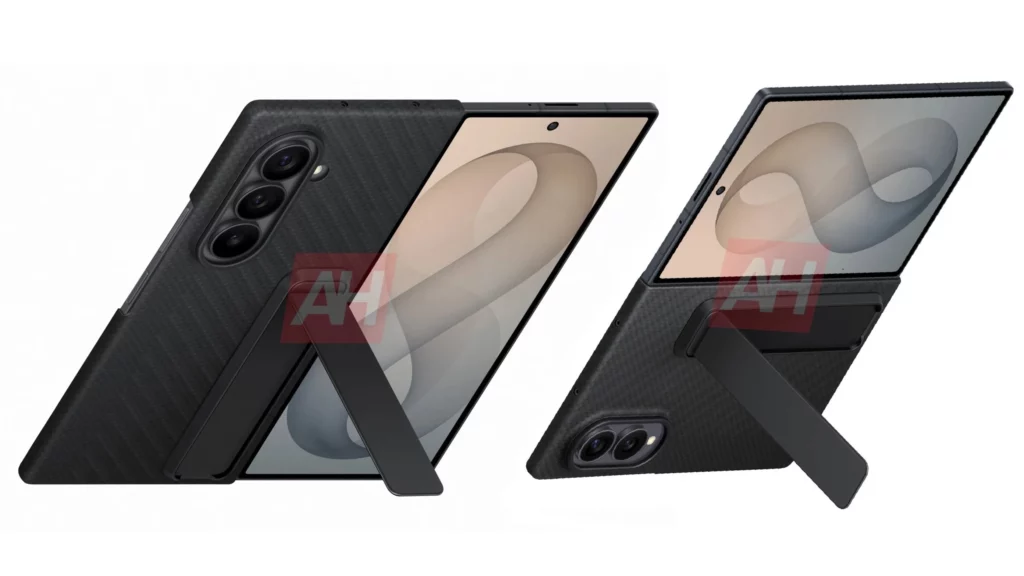
Image: Android Headlines
New leaked images have provided an early look at Samsung’s upcoming foldable phones. The leaks include official protective cases for the Galaxy Z Fold 8, Galaxy Z Fold 8 Ultra, and Galaxy Z Flip 8. Some images also show the phones inside the cases, making their designs easier to understand. This gives a clearer view of the new designs teased by Samsung.
The latest leaks also highlight the key design changes across Samsung’s upcoming foldable lineup. The Galaxy Z Fold 8 appears wider than earlier Fold models. It includes a dual-rear-camera setup and a punch-hole selfie camera. The Galaxy Z Fold 8 Ultra retains a taller design and a triple-camera rear setup. The Galaxy Z Flip 8 maintains its classic flip-style design with dual cameras.
Case Options and Color Choices
Samsung seems ready to offer multiple official case options with its new foldable lineup. The collection includes kickstand cases, aramid-fiber-style finishes, and solid-color covers. Buyers may choose from purple, white, and dark gray. The company could also introduce cartoon-style cases for users who want a unique look.
Advertisement
Expected Launch Timeline
The date of release is still being kept secret. But the latest news indicates the devices could launch on July 22. The company is likely to release teaser information before making an official announcement. These updates should reveal more about the upcoming devices.
Tesla has finally launched the Model Y Long Wheelbase in the US and Puerto Rico and has started taking orders for the variant, almost a year after the company released it in China. The Model Y Long Wheelbase has a three-row six-seat configuration, with heated seats and touchscreen displays on the first and second rows. It has a six-inch wheelbase extension that the other Model Ys in the US lack. Tesla says the trunk can still fit a 28-inch and a 20-inch suitcase each despite the three rows, and the vehicle’s frunk (front trunk) can hold an additional 20-inch suitcase.
Both second and third rows have a one-touch fold feature, while the second row has powered armrests and the third one has power recline. They both have side air bags optimized for them, and seats come with either 50W charging pads or charging ports.
The model has 325 miles of range, just two miles shorter than the Premium non-Long Wheelbase version, and can go from zero to 60 mph in 4.4 seconds. Buyers will get free access to Supervised Full Self Driving for 12 months before they have to pay $99 a month for the driver assistance feature. They also get 12 months of Supercharging for free.
Advertisement
The Tesla Model Y Long Wheelbase has a base price of $61,990, almost $22,000 more than the most basic Model Y and $12,000 more than the non-Long Wheelbase Premium variant. Tesla will start delivering the vehicles sometime between September and October this year.
Introducing Model Y Long Wheelbase – now available in the US & Puerto Rico
A 3-row, 6-seat configuration that brings exceptional interior space with ample headroom & legroom for all passengers



















































You must be logged in to post a comment Login