In short:Amazon’s satellite internet service, rebranded from Project Kuiper to Amazon Leo in November 2025, entered enterprise beta on April 8, 2026, with commercial availability targeted for mid-2026 per Andy Jassy’s annual shareholder letter. The service offers three terminal tiers delivering up to 1 Gbps for enterprise users, with Verizon, AT&T, Vodafone, JetBlue, and NASA among the beta partners. Amazon has approximately 210 to 241 satellites in orbit against a Federal Communications Commission requirement of 1,618 by July 30, 2026, has applied for a two-year deadline extension, and has contracted 22 additional launches to close the gap.
From Project Kuiper to Amazon Leo, the rebrand and the beta
Amazon received Federal Communications Commission approval for a 3,236-satellite low-earth-orbit constellation in 2020, then spent five years building the hardware, regulatory infrastructure, and carrier partnerships needed to turn that approval into a commercially viable service. The first production satellites launched in April 2025 aboard an Atlas V rocket operated by United Launch Alliance, and by November 2025 Amazon had enough operational hardware in orbit to retire the Project Kuiper name in favour of Amazon Leo, a rebrand that signals a deliberate shift from development programme to commercial product. A business preview programme opened to select enterprise partners shortly after the rebrand. The full enterprise beta launched on April 8, 2026. The following day,Jassy’s annual letter to shareholdersconfirmed mid-2026 as the commercial launch window, placing Leo alongside Amazon’s $50 billion Trainium chip investment as one of the defining bets in the company’s current capital allocation cycle. Beta customers span Verizon and AT&T in North America, Vodafone and Vodacom across Europe and Africa, JetBlue for in-flight connectivity, NBN Co in Australia, Vrio in Latin America, and NASA, along with enterprise logistics clients Hunt Energy and Crane Worldwide Logistics.
Three terminals, three speed tiers
Amazon has engineered three terminal models to address distinct market segments without forcing a single hardware compromise across all of them. The Leo Nano is the consumer and light-enterprise unit: seven inches square, 2.2 pounds, and rated to 100 Mbps download. The Leo Pro is aimed at small businesses, rural operators, and mobile backhaul deployments: eleven inches square, 5.3 pounds, priced at under $400, and rated to 400 Mbps. The Leo Ultra is the enterprise flagship, a 20-by-30-inch installation weighing 43 pounds and capable of 1 Gbps download with 400 Mbps upload, designed for maritime vessels, commercial aircraft, and large-campus enterprise deployments. Jassy claimed in his shareholder letter that Leo terminals deliver six to eight times better uplink performance and twice the downlink performance compared with the satellite internet alternatives currently available to enterprise customers, a claim that will be scrutinised closely once commercial service begins and independent benchmarks are possible.
The FCC deadline and the launch shortfall
Amazon’s FCC licence for its Generation 1 constellation requires exactly half the planned 3,236 satellites, or 1,618, to be in orbit and operational by July 30, 2026. As of early April 2026, Amazon has between 210 and 241 satellites in orbit, a figure that makes the original deadline effectively unreachable. The company filed a formal request with the FCC in January 2026 for a two-year extension, citing a shortage of available launch vehicles. Alongside the extension filing, Amazon disclosed ten additional Falcon 9 launch contracts with SpaceX and twelve additional New Glenn contracts with Blue Origin.Bezos is betting heavily on orbital infrastructurebeyond Leo itself: Blue Origin separately filed with the FCC for a 51,600-satellite Project Sunrise constellation and a 5,408-satellite TeraWave optical backhaul network, making the New Glenn launch pipeline central to multiple overlapping ambitions simultaneously. The FCC separately approved Amazon’s Generation 2 constellation in February 2026, clearing the path to a potential 7,727-satellite network once the current launch bottleneck is resolved. The contracted vehicle fleet now spans Atlas V and Vulcan Centaur (United Launch Alliance), Falcon 9 (SpaceX), Ariane 6 (Arianespace), and New Glenn (Blue Origin).
Advertisement
Taking on Starlink, and the Globalstar play
The 💜 of EU tech
The latest rumblings from the EU tech scene, a story from our wise ol’ founder Boris, and some questionable AI art. It’s free, every week, in your inbox. Sign up now!
Starlink is not a vulnerable incumbent. SpaceX’s satellite internet service generated $10.6 billion in revenue in 2025 at a 54 per cent EBITDA margin and serves more than 10 million paying subscribers across more than 100 countries, operating a constellation of 7,600 to 8,000-plus satellites.SpaceX has filed for the largest IPO in history, seeking to raise $75 billion at a valuation of up to $1.75 trillion, potentially as early as June 2026, which would cement Starlink’s position as a capital-markets-validated infrastructure business before Amazon Leo has completed its initial rollout. Amazon’s response involves two distinct moves. The first is distribution: Leo is being sold primarily through carrier partners and enterprise integrators in its launch phase, using Verizon’s, AT&T’s, and Delta’s existing customer relationships rather than competing for consumers directly. Delta has contracted Leo for in-flight Wi-Fi across 500 aircraft starting in 2028, with free access available to SkyMiles members. The second move is spectrum acquisition.Amazon is reportedly in talks to acquire Globalstarfor approximately $9 billion, a deal that would give Leo access to L-band spectrum currently anchoring Globalstar’s existing satellite network and Apple’s emergency satellite connectivity service. Apple holds a 20 per cent stake in Globalstar through a $1.5 billion investment, adding complexity to any acquisition. If the deal closes, Amazon would arrive at commercial launch with not just a new constellation but a second frequency band and an established spectrum position.The year 2025 established satellite internetas a serious enterprise infrastructure market rather than a connectivity experiment, and Amazon Leo’s mid-2026 commercial launch arrives precisely as that market enters its most contested phase.
Sick! The Federal Aviation Administration is targeting gamers in its most recent job advertisement for air traffic controllers. The administration’s annual hiring window opens at 12AM ET on April 17, and considering the ongoing shortage of air traffic controllers, it’s calling this a period of “supercharged hiring.” Rad! The FAA’s YouTube video draws parallels between gaming and directing air traffic, and notes that the average salary for the role after three years is $155,000. Hella!
The FAA is clearly seeking players who are at least old enough to remember the Xbox One and Bjergsen in the LCS, which puts would-be candidates around their early 20s at least. It’s either that, or the ad editors really just picked videos at random from the pile of stock footage marked gamerz. But I won’t lie, it made me smile to see that Xbox One logo appear out of nowhere. Nostalgia is a hell of a thing.
“To reach the next generation of air traffic controllers, we need to adapt,” US Transportation Secretary Sean P. Duffy said. “This campaign’s innovative communication style and focus on gaming taps into a growing demographic of young adults who have many of the hard skills it takes to be a successful controller.”
The FAA has been losing more air traffic controllers than it can hire and retain since the 2010s, and this trend only worsened during the pandemic in the 2020s, according to a report released in December by the US Government Accountability Office. The administration increased hiring every year since 2021, but at the end of 2025 it employed 13,164 air traffic controllers, 6 percent fewer than in 2015, the report said. At the same time, the number of flights in the air traffic control system increased by about 10 percent, to 30.8 million.
Advertisement
Or, as the FAA put it on the ATC hiring page: “Join the BEST AND BRIGHTEST, the elite squad of 14,000 controllers protecting 2.9 million daily passengers.” Applicants must be a US citizen, under 31 (maybe those video editors do know what they’re doing), and be able to speak fluent English. An aptitude test, medical screening and academy training follows, among other steps.
Attackers briefly hijacked part of CPUID’s backend and swapped legitimate download links on its site with malware-laced ones. “The issue hit tools like HWMonitor and CPU-Z, with users on Reddit and elsewhere starting to notice something wasn’t right when installers tripped antivirus alerts or showed up under odd names,” reports The Register. From the report: CPUID has since confirmed the breach, pinning it on a compromised backend component rather than tampering with its software builds. “Investigations are still ongoing, but it appears that a secondary feature (basically a side API) was compromised for approximately six hours between April 9 and April 10, causing the main website to randomly display malicious links (our signed original files were not compromised),” one of the site’s owners said in a post on X. “The breach was found and has since been fixed.”
The files themselves appear to have been left alone and remain properly signed, so it doesn’t seem like anyone got into the build process. Instead, the problem sat in front of that, in how downloads were being served. For anyone who hit the site during that stretch, though, that distinction offers little comfort. If the link you clicked had been swapped out, you were pulling whatever it pointed to, whether you realized it or not.
Hackers gained access to an API for the CPUID project and changed the download links on the official website to serve malicious executables for the popular CPU-Z and HWMonitor tools.
The two utilities have millions of users who rely on them for tracking the physical health of internal computer hardware and for comprehensive specifications of a system.
Users who downloaded either tool reported on Reddit recently that the official download portal points to the Cloudflare R2 storage service and fetches a trojanized version of HWiNFO, another diagnostic and monitoring tool from a different developer.
The name of the malicious file is HWiNFO_Monitor_Setup, and running it launches a Russian installer with an Inno Setup wrapper, which is atypical and highly suspicious.
Users reported that downloading the clean hwmonitor_1.63.exe from the direct URL was still possible, indicating that the original binaries were intact, but the distribution links appear to have been poisoned.
Advertisement
The externalized download chain was also confirmed by Igor’s Labs and @vxunderground, who reported that a fairly advanced loader using known techniques, tactics, and procedures (TTPs) is involved.
“As I began poking this with a stick, I discovered this is not your typical run-of-the-mill malware,” stated vxunderground.
“This malware is deeply trojanized, distributes from a compromised domain (cpuid-dot-com), performs file masquerading, is multi-staged, operates (almost) entirely in-memory, and uses some interesting methods to evade EDRs and/or AVs such as proxying NTDLL functionality from a .NET assembly.”
The researcher claims that the same threat group targeted users of the FileZilla FTP solution last month, suggesting that the attacker is focusing on widely used utilities.
Advertisement
The downloaded ZIP is flagged by 20 antivirus engines on VirusTotal, although not clearly identified. Some classify it as Tedy Trojan, and others as Artemis Trojan.
Some researchers on Virustotal say that the fake HWiNFO variant is an infostealer malware.
BleepingComputer has contacted CPUID to learn more about what happened, the date of the compromise, the affected versions, and what impacted users should do. A spokesperson has provided the following statement.
“Investigations are still ongoing, but it appears that a secondary feature (basically a side API) was compromised for approximately six hours between April 9 and April 10, causing the main website to randomly display malicious links (our signed original files were not compromised). The breach was found and has since been fixed.” – CPUID
Advertisement
The same person told us that the hackers hit them at a time when the main developer was away on holiday.
Currently, it appears that CPUID has fixed the problem and now serves clean versions for both CPU-Z and HWMonitor.
Automated pentesting proves the path exists. BAS proves whether your controls stop it. Most teams run one without the other.
This whitepaper maps six validation surfaces, shows where coverage ends, and provides practitioners with three diagnostic questions for any tool evaluation.
The Orion capsule carrying the Artemis II astronauts has successfully splashed down off the coast of San Diego at 8:07PM Eastern time on April 10. It signals the conclusion of Artemis II’s 10-day journey around the moon, which is meant to be a test flight for a future mission that would bring humanity back to the lunar surface. The Orion crew module carrying the mission’s astronauts separated from the service module at 7:33 PM. While the service module was designed to burn up in the Earth’s atmosphere, the crew capsule was built to bring the astronauts back home safely.
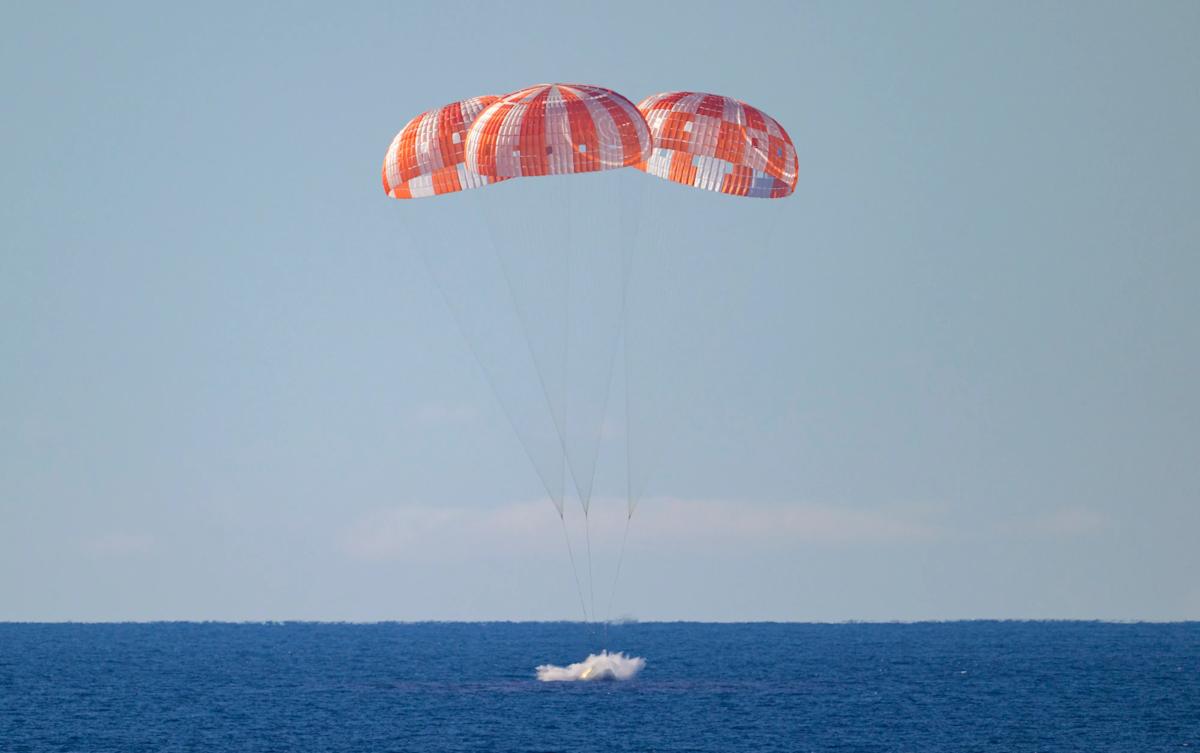
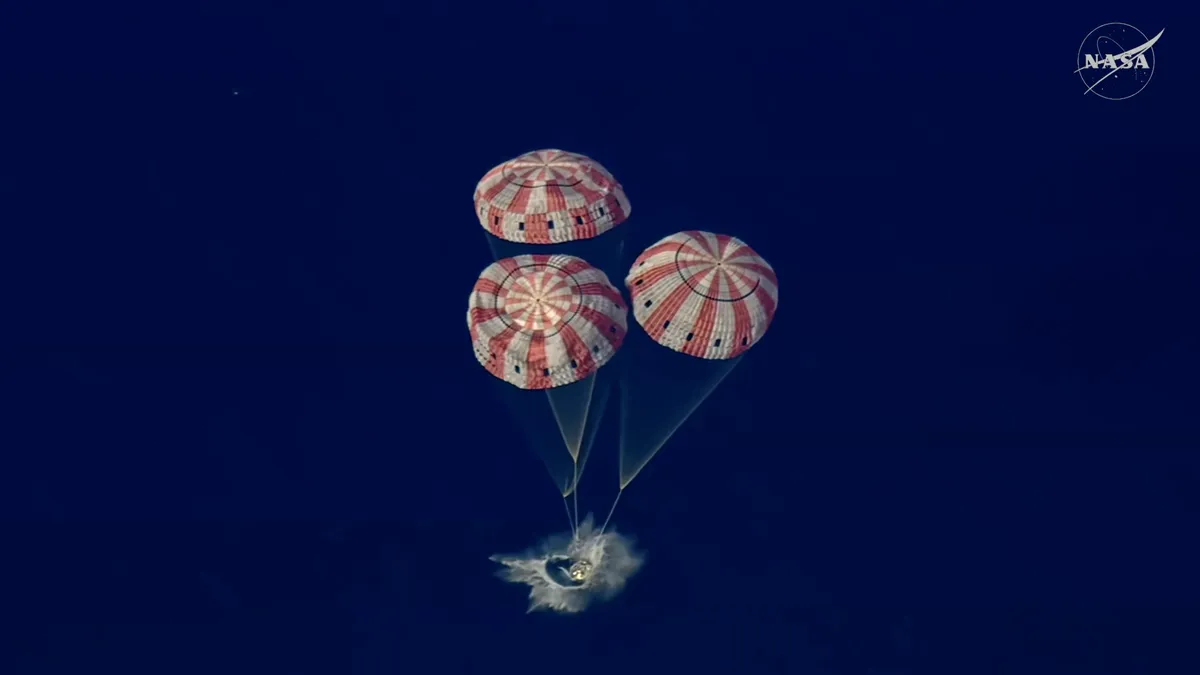
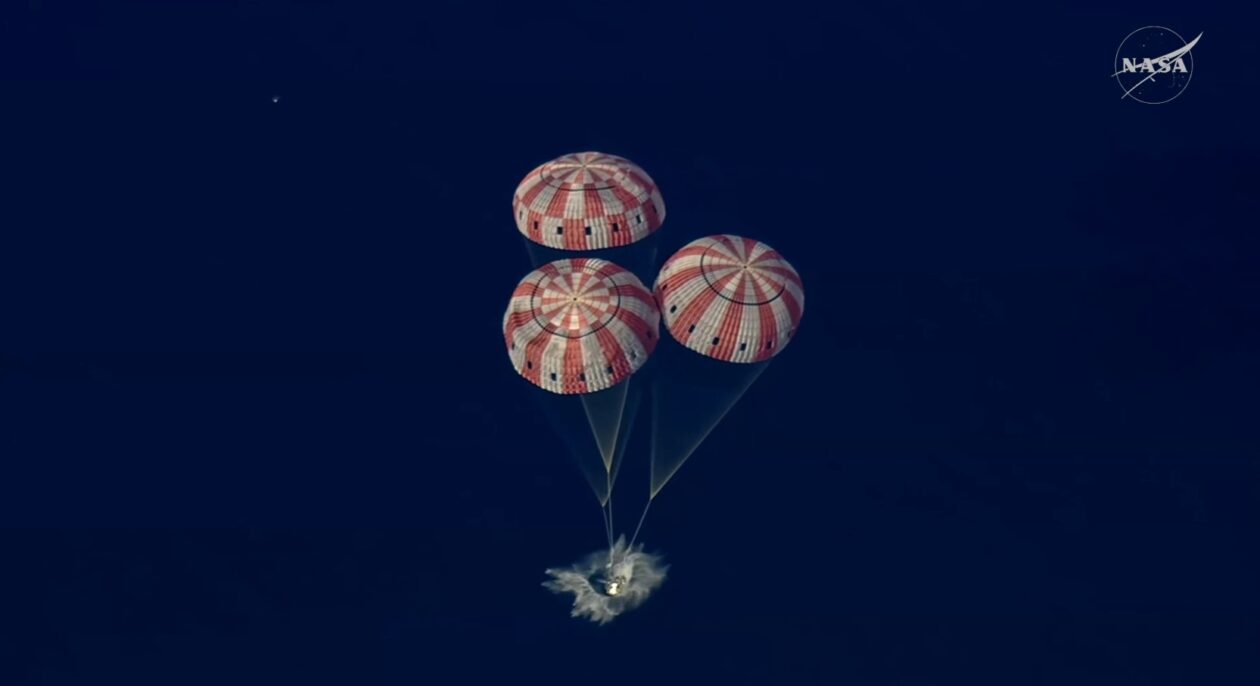
By 7:53 PM, Orion reached our planet’s upper atmosphere, where a six-minute communication blackout occurred due to the capsule heating up as it started its guided descent. The capsule has 11 parachutes, with its drogue parachutes being deployed at 23,400 feet to stabilize and slow it down. When Orion reached 5,400 feet above the ground, the drogue parachutes were cut off so that the three main parachutes could be deployed. That decreased the capsule’s velocity to 200 feet per second, enabling a safe splashdown.
NASA’s engineers conducted several tests while the capsule was in the water before the recovery team headed to the capsule on inflatable boats to extract the crew from Orion. By 9:34 PM, all four crew members were out of the capsule. They were then hoisted into helicopters and flown to the USS John P. Murtha dock ship, where doctors will assess their health.
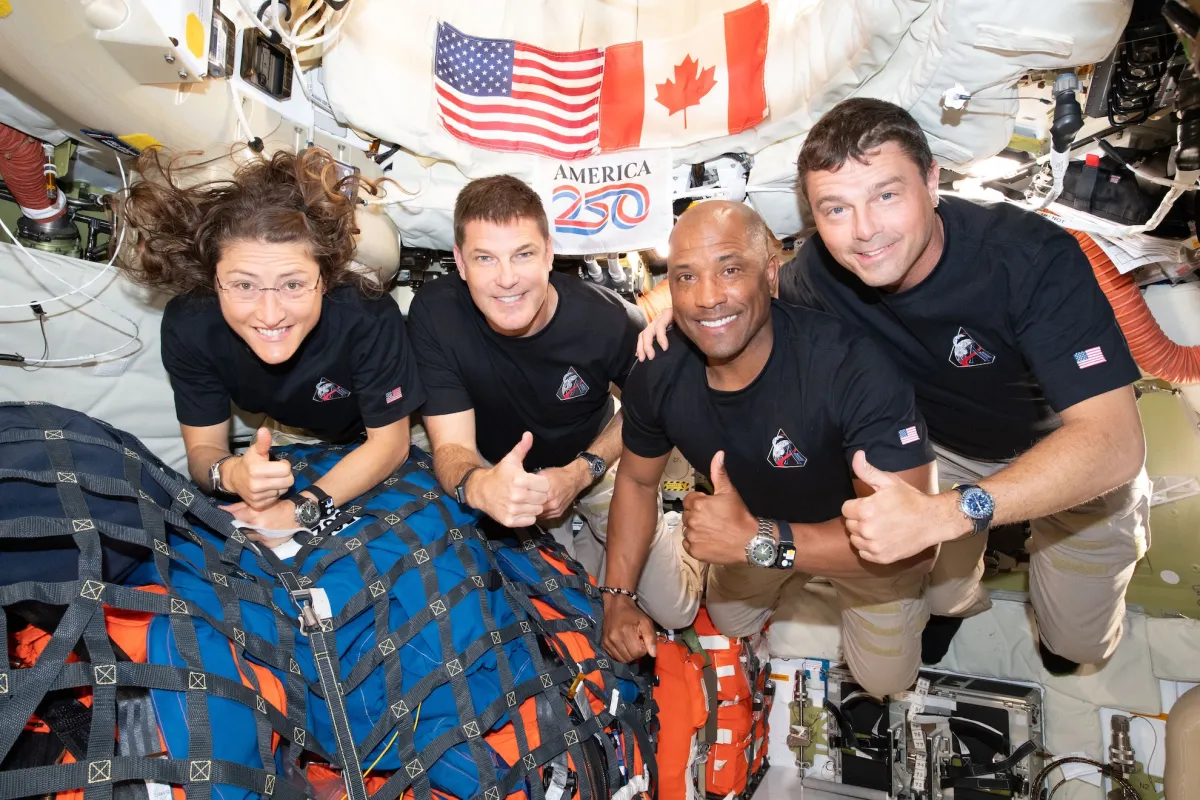
Artemis II launched on April 1 with four astronauts on board: NASA’s Reid Wiseman, Victor Glover and Christina Koch, as well as Canadian Space Agency’s Jeremy Hansen. They traveled around the moon for almost 10 days, reaching distances no other crewed mission has before it. The astronauts took photos of the far side of the moon, the side we don’t see from our planet, including amazing closeups of the lunar surface using their smartphones. That makes them the first humans to directly and personally view the lunar far side.
Advertisement
During NASA’s post-splashdown news conference, the agency said it will announce the Artemis III crew soon. Artemis III will rendezvous with one or both commercial landers being developed by SpaceX and Blue Origin in low Earth orbit, which will take humans to the lunar surface. It will test the lander’s ability to dock with Orion before NASA lands humans on the moon again.
Astronaut eats: they’re not just Tang and Space Food Sticks these days. NASA shared a look at the menu for the Artemis II astronauts, and it doesn’t sound half bad.
The Artemis II crew will enjoy more than 10 types of beverages, including coffee, mango-peach smoothies, green tea, apple cider, lemonade, a pineapple drink, cocoa and breakfast drinks flavored in their choice of chocolate, vanilla or strawberry.
Advertisement
The most common food items they’ll eat include tortillas, wheat flat bread, vegetable quiche, barbecued beef brisket, mango salad, granola with blueberries, macaroni and cheese, tropical fruit salad, couscous with nuts, broccoli au gratin, spicy green beans, almonds, cashews, and butternut squash cauliflower.
NASA also reports that the astronauts can choose to spice up their meals — there are five different hot sauces available to the crew. And culinary flavorings available include maple syrup, chocolate spread, peanut butter, spicy mustard, strawberry jam, honey, cinnamon and almond butter. Sweet treats include cookies, chocolate, pudding, cake, candy-coated almonds and cobbler.
And, no, they’re not popping a flavor pill or sucking a sandwich out of a tube, like old sci-fi shows told us.
“Food aboard Orion is ready-to-eat, rehydratable, thermostabilized or irradiated,” NASA says. “The crew uses Orion’s potable water dispenser to rehydrate foods and beverages and a compact, briefcase-style food warmer to heat meals as needed.”
Looking for the most recent Mini Crossword answer? Click here for today’s Mini Crossword hints, as well as our daily answers and hints for The New York Times Wordle, Strands, Connections and Connections: Sports Edition puzzles.
Need some help with today’s Mini Crossword? It’s the longest of the week, the Saturday edition. Read on for all the answers. And if you could use some hints and guidance for daily solving, check out our Mini Crossword tips.
If you’re looking for today’s Wordle, Connections, Connections: Sports Edition and Strands answers, you can visit CNET’s NYT puzzle hints page.
There is a huge amount to say about the latest iPhone Fold rumors, and a lesson for Apple in how the MacBook Neo could even be too successful, on the AppleInsider Podcast.
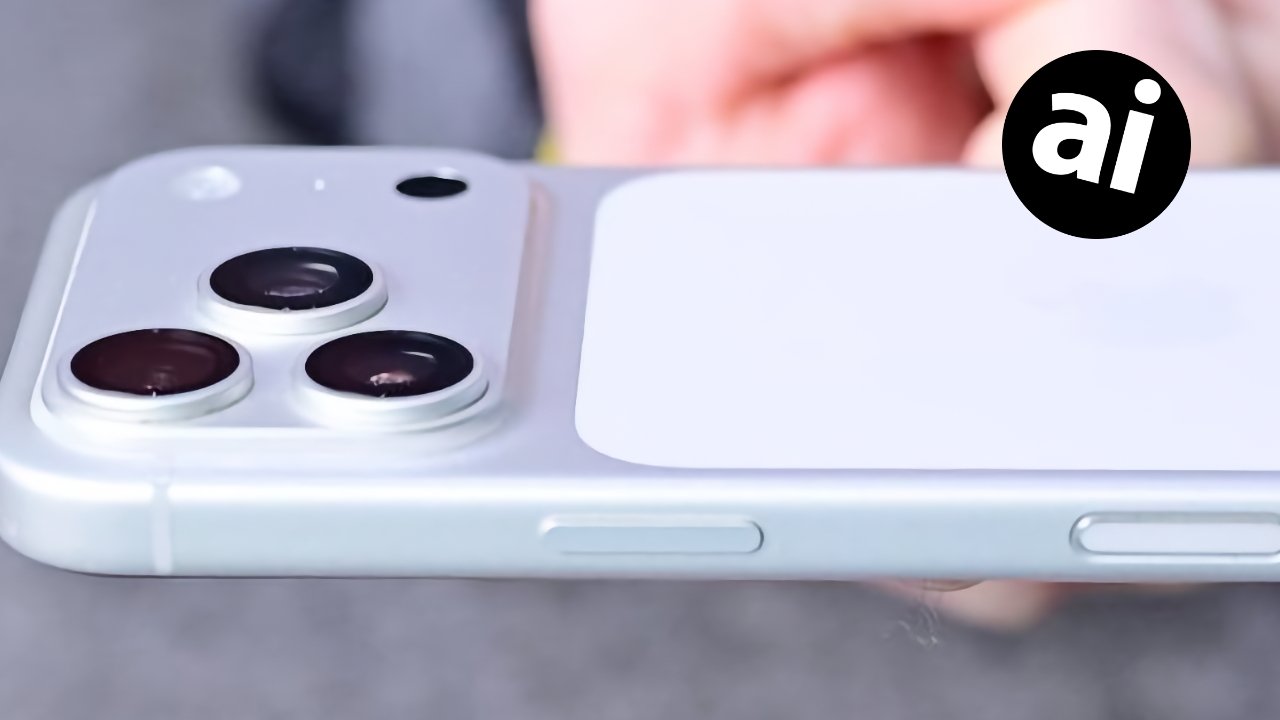
Even on Earth, iPhones are so light they feel as if they could float
After months or even really years of rumors and expectations over the iPhone Fold, it really does look as if one is coming. There’s still the issue of when, as conflicting reports are arguing over a range of dates, but they all agree it’s coming. Not all of them can agree on why, though. If only to save you unnecessarily buying the single most expensive iPhone ever conceived, we’ve got reasons why you should and shouldn’t buy it. And we’ve got reasons why it will probably be worth waiting. Continue Reading on AppleInsider | Discuss on our Forums
A new NYT Connections puzzle appears at midnight each day for your time zone – which means that some people are always playing ‘today’s game’ while others are playing ‘yesterday’s’. If you’re looking for Friday’s puzzle instead then click here: NYT Connections hints and answers for Friday, April 10 (game #1034).
Good morning! Let’s play Connections, the NYT’s clever word game that challenges you to group answers in various categories. It can be tough, so read on if you need Connections hints.
What should you do once you’ve finished? Why, play some more word games of course. I’ve also got daily Strands hints and answers and Quordle hints and answers articles if you need help for those too, while Marc’s Wordle today page covers the original viral word game.
Advertisement
SPOILER WARNING: Information about NYT Connections today is below, so don’t read on if you don’t want to know the answers.
Article continues below
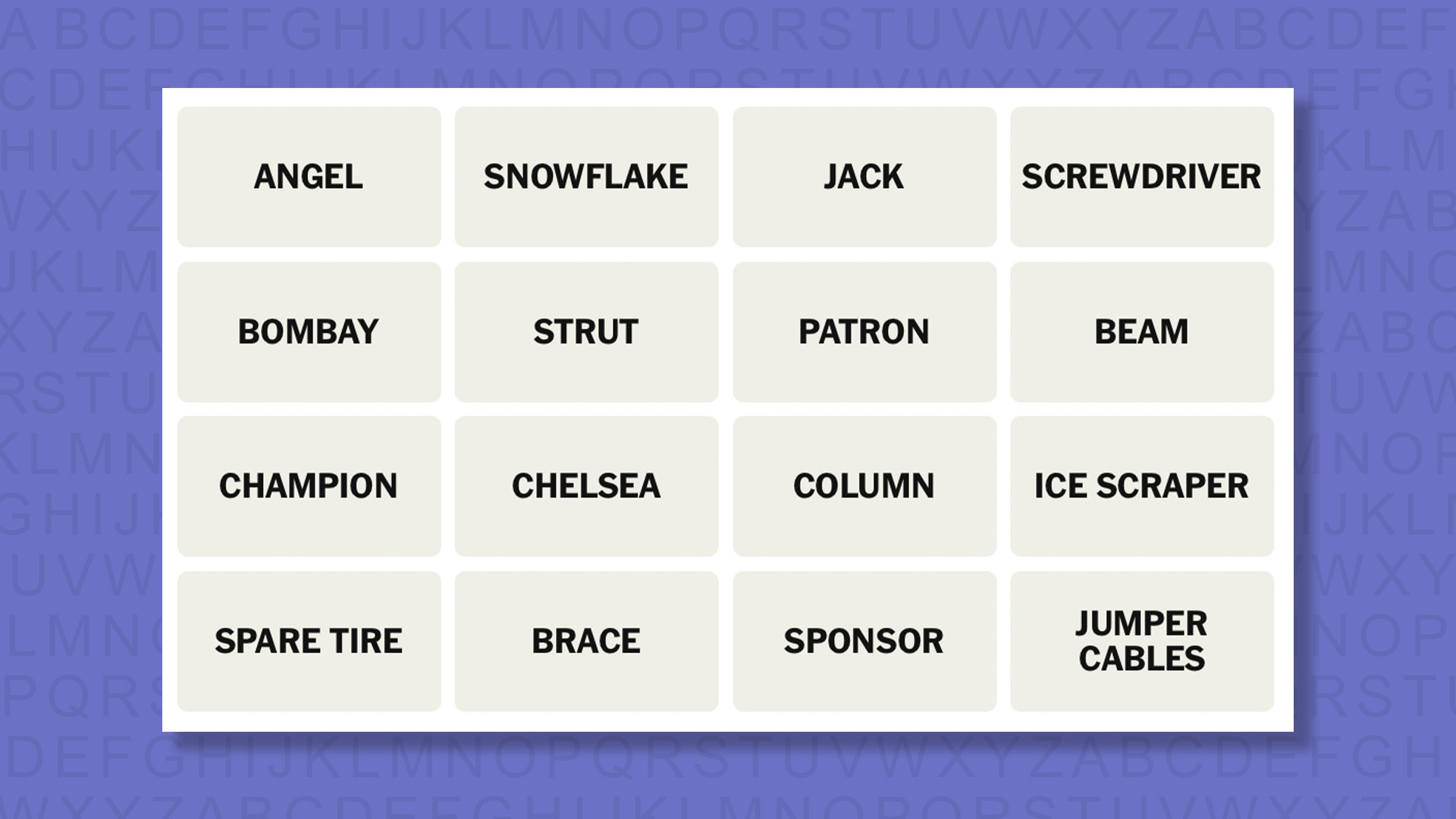
NYT Connections today (game #1035) – today’s words
(Image credit: New York Times)
Today’s NYT Connections words are…
ANGEL
SNOWFLAKE
JACK
SCREWDRIVER
BOMBAY
STRUT
PATRON
BEAM
CHAMPION
CHELSEA
COLUMN
ICE SCRAPER
SPARE TIRE
BRACE
SPONSOR
JUMPER CABLES
NYT Connections today (game #1035) – hint #1 – group hints
What are some clues for today’s NYT Connections groups?
BLUE: They hold buildings up
YELLOW: Always carried in a vehicle
GREEN: One who funds a project
PURPLE: Look for the H2O
Need more clues?
We’re firmly in spoiler territory now, but read on if you want to know what the four theme answers are for today’s NYT Connections puzzles…
Advertisement
Sign up for breaking news, reviews, opinion, top tech deals, and more.
NYT Connections today (game #1035) – hint #2 – group answers
What are the answers for today’s NYT Connections groups?
BLUE: STRUCTURAL SUPPORTS
YELLOW: FOUND IN THE TRUNK OF A CAR
GREEN: BENEFACTOR
PURPLE: ENDING IN BODIES OF WATER
Right, the answers are below, so DO NOT SCROLL ANY FURTHER IF YOU DON’T WANT TO SEE THEM.
Advertisement
NYT Connections today (game #1035) – the answers
(Image credit: New York Times)
The answers to today’s Connections, game #1035, are…
PURPLE: ENDING IN BODIES OF WATER BOMBAY, CHELSEA, SCREWDRIVER, SNOWFLAKE
My rating: Easy
My score: 1 mistake
I came close to connecting JACK, BEAM, and BOMBAY as they are all part of alcohol brand names, while PATRON also has an alcohol connection as it’s a tequila brand. Fortunately, I resisted the temptation and noted that BEAM could instead go with the other STRUCTURAL SUPPORTS.
Instead, my mistake came because I put SCREWDRIVER instead of JACK in the group of four things FOUND IN THE TRUNK OF A CAR. I’d say you should have a screwdriver too, but I also should have taken more time to see the more obvious piece of car equipment.
Advertisement
After getting the green group, BENEFACTOR, I still failed to see what connected the final four tiles — my obsession with alcohol was such that even to the end I thought the SCREWDRIVER in question must be a cocktail.
Yesterday’s NYT Connections answers (Friday, April 10, game #1034)
YELLOW: PEPPERS BELL PEPPER, CAROLINA REAPER, CHIPOTLE, PEPPERONCINO
GREEN: THINGS THAT POP UP EJECTOR SEAT, JACK-IN-THE-BOX, POP-UP BOOK, TOASTER
BLUE: DESCRIPTORS FOR SWISS CHEESE FIRM, HOLEY, NUTTY, SWISS
PURPLE: BLUE CHARACTERS BLUE, GENIE, GONZO, SONIC
What is NYT Connections?
NYT Connections is one of several increasingly popular word games made by the New York Times. It challenges you to find groups of four items that share something in common, and each group has a different difficulty level: green is easy, yellow a little harder, blue often quite tough and purple usually very difficult.
On the plus side, you don’t technically need to solve the final one, as you’ll be able to answer that one by a process of elimination. What’s more, you can make up to four mistakes, which gives you a little bit of breathing room.
Advertisement
It’s a little more involved than something like Wordle, however, and there are plenty of opportunities for the game to trip you up with tricks. For instance, watch out for homophones and other word games that could disguise the answers.
It’s playable for free via the NYT Games site on desktop or mobile.
After 10 days, the four astronauts aboard the Orion spacecraft have returned to Earth, their mission around the Moon a success.
Integrity, the name of the crew’s spacecraft as part of NASA’s Artemis II mission, splashed down in the Pacific Ocean off the coast of San Diego, California, at 5:07 p.m. Pacific Time, according to NASA. The four crew members aboard — three Americans and one Canadian — were all in “green” (or safe and healthy) condition after the Orion craft’s “perfect” landing.
The crew was composed of Commander Reid Wiseman, pilot Victor Glover, and mission specialists Christina Koch and Jeremy Hansen. From liftoff to splashdown, the quartet was in space for just over nine days (with NASA rounding up and calling it a 10-day mission).
Advertisement
Artemis II was NASA’s first mission to the Moon’s orbit in more than 50 years. The crew traveled farther from Earth than humans ever have before — reaching an estimated 252,760 miles from our planet. During their journey, the crew orbited the Moon, taking photos from their flyby of never-before-seen parts of the surface, and even witnessing a total solar eclipse. They identified new craters, naming one after Wiseman’s wife Carroll, who died of cancer in 2020.
“These were the ambassadors to the stars that we sent out there,” Jared Isaacman, NASA’s administrator, said after the landing. “I can’t imagine a better crew. It was a perfect mission.”
Isaacman, a commercial astronaut who has been on two private orbital missions, also took to X to celebrate the mission and signaled there would be more to come, noting that America is back in the business.
“America is back in the business of sending astronauts to the Moon and bringing them home safely,” he wrote on X, later giving credit to the entire NASA workforce. “This was a test mission, the first crewed flight of SLS and Orion, pushing farther into the unforgiving environment of space than ever before, and it carried real risk. They accepted that risk for all we stood to learn and for the exciting missions that follow, as we return to the lunar surface, build a Moon base, and prepare for what comes next.”
NASA’s Orion spacecraft splashes into the Pacific Ocean, as seen in an overhead view. (NASA via YouTube)
Four astronauts and their Orion space capsule splashed down in the Pacific Ocean today, bringing the first crewed trip around the moon and back since 1972 to a successful end.
“What a journey!” mission commander Reid Wiseman said moments after splashdown.
During their 10-day odyssey, the crew of NASA’s Artemis 2 mission — Wiseman, pilot Victor Glover, mission specialist Christina Koch and Canadian astronaut Jeremy Hansen — became the most distant human travelers in history, swinging more than 4,000 miles past the moon’s far side. Koch is the first woman to venture beyond Earth orbit, Glover is the first Black astronaut to do so, and Hansen is the first non-U.S. astronaut to make such a trip.
The flight tested the Artemis program’s hardware and procedures to prepare the way for sending astronauts all the way to the lunar surface by as early as 2028, and for building a permanent lunar base in the 2030s.
“It’s the most important human spaceflight mission I think we’ve done in many decades, in terms of what it meant historically, but also what it means for the future of the agency,” NASA Associate Administrator Amit Kshatriya said at a post-splashdown news conference.
The final hour of the mission unfolded as NASA planned. After jettisoning its European-built service module, the Orion crew module — christened Integrity by the astronauts — hit the atmosphere at a speed of more than 24,000 mph. The shock of re-entry created a plasma field around the spacecraft that blacked out radio communications for six minutes.
The crew endured G-forces that ranged up to 3.9 times the force of Earth’s gravity — about what they felt during launch — and Orion’s heat shield endured temperatures of 4,000 to 5,000 degrees Fahrenheit. The trajectory for Orion’s descent was designed to reduce the stress on the heat shield, after NASA discovered that the heat shield for an earlier uncrewed round-the-moon mission, Artemis 1, underwent more serious charring than expected.
Advertisement
“This is the true test of our trajectory,” NASA commentator Rob Navias said.
Orion passed the test: “Houston, Integrity: We have you loud and clear,” Wiseman told Mission Control when the blackout ended, sparking a cheer from ground controllers.
The spacecraft’s parachutes deployed on cue, and Orion’s descent slowed to a speed of 19 mph by the time it hit the water in the Pacific southwest of San Diego.
Moments after splashdown, Wiseman reported that all four of the astronauts were in good health. Orion’s airbags were inflated with helium to help stabilize the floating craft.
Advertisement
“It was a textbook mission,” Navias said.
Recovery teams converged on the touchdown site, hampered somewhat by a glitch that arose with the crew’s satellite phone connection. Mission Control was able to stay in two-way contact with the crew via radio, however, and assisted with troubleshooting.
The astronauts were brought out from the spacecraft and hoisted up to helicopters for transfer to the USS John P. Murtha, an amphibious transport dock ship that served as the lead ship in the recovery effort. After undergoing medical checks, they were to be brought to shore in San Diego — and on Saturday, they’ll be flown to Johnson Space Center in Houston. Meanwhile, the Orion capsule will be towed back onto the USS John P. Murtha’s well deck for transport.
Back at Mission Control, members of the Artemis 2 team hugged each other as they watched the video from the Pacific. “The mission is over, but the melody lingers on,” Navias said.
Advertisement
Recovery team members bring Artemis 2’s astronauts out of the Orion spacecraft and onto a raft known as the “Front Porch” in preparation for transport to the USS John P. Murtha in the Pacific Ocean. (NASA via YouTube)
On the ship, NASA Administrator Jared Isaacman said he “couldn’t be more proud of the entire workforce” at the space agency.
“The childhood Jared can’t believe what I just saw,” said Isaacman, who was born 10 years after the final Apollo moon mission in 1972. “I’ve almost been waiting my whole life to see this.”
He pledged that Artemis 2’s round-the-moon trip wouldn’t be a once-in-a-lifetime experience. “This is just the beginning,” he said. “We are going to get back into doing this with frequency, sending missions to the moon until we land on it in 2028 and start building our base.”
President Donald Trump passed along his congratulations. “The entire trip was spectacular, the landing was perfect and, as President of the United States, I could not be more proud!” Trump wrote in a post on Truth Social. “I look forward to seeing you all at the White House soon. We’ll be doing it again and then, next step, Mars!”
Looking back, looking ahead
Even though Artemis 2 was primarily an engineering test mission, the trip also brought scientific benefits. The astronauts conducted a wide-angle survey of the lunar far side, and described areas that the Apollo program’s astronauts couldn’t see with their own eyes due to lighting conditions and a closer-in orbital perspective.
Advertisement
At the beginning and end of their swing around the moon, the Artemis 2 crew captured stunning images of Earthset and Earthrise, stirring the same feelings of awe that were sparked by Apollo 8’s original Earthrise image in 1968. The astronauts also witnessed an unearthly kind of solar eclipse that created an eerie glow around the darkened moon.
The upper image shows Earthrise during Apollo 8’s trip around the moon in 1968. The lower image shows Earthset during Artemis 2’s trip around the moon this week. (NASA Photos)A darkened moon is backlit by scattered sunlight during an eerie solar eclipse observed by the Artemis 2 crew. (NASA Photo)
The astronauts were 252,756 miles from Earth at the farthest point of their trip, which exceeded the previous record set by Apollo 13 in 1970 by 4,101 miles.
Even though it was a textbook mission, not everything went perfectly. The first toilet to be installed in a spacecraft that was sent beyond Earth orbit acted up during the outbound leg of the journey, apparently due to ice that blocked a wastewater vent line. “Nailing this capability is one that we need to certainly work on,” Isaacman said at the time.
NASA also detected a slight helium leak in the pressurization system for the oxidizer tank on Orion’s service module. The leak didn’t pose a problem for Artemis 2, but Kshatriya said the system might have to be redesigned for the lunar landing mission in 2028.
Meanwhile, SpaceX and Blue Origin are still working on the landing systems that will be needed to get future astronauts to the lunar surface. NASA is planning to test-drive SpaceX’s Starship lander and/or Blue Origin’s Blue Moon lander in low Earth orbit next year during Artemis 3.
Advertisement
If all goes according to plan, one of those landers would facilitate the first lunar landing since 1972 during the Artemis 4 mission in early 2028, and the crew of Artemis 5 would begin work on a base near the moon’s south pole in late 2028.
As a warmup, Jeff Bezos’ Blue Origin space venture is gearing up to send an uncrewed version of the Blue Moon lander, known as Endurance, to the moon’s south polar region later this year. That region is a prime target for lunar exploration and settlement because its craters are thought to harbor reserves of ice that could be converted to drinkable water and breathable oxygen, plus hydrogen that could be used as rocket fuel.
Today Blue Origin CEO Dave Limp added his congratulations on a successful Artemis 2 mission, calling it “this generation’s Apollo moment.”


























































You must be logged in to post a comment Login