Tech
Amazon Music Opens Alexa+ AI Playlists and Conversational Search to Every U.S. User

Amazon Music has never lacked catalog depth or audio quality; the harder problem has been giving listeners a reason to choose it over Spotify, Apple Music or YouTube Music once the trial period ends and the monthly charge starts feeling less hypothetical.
Alexa+ is Amazon’s latest attempt to close that gap. The company has expanded the feature inside the Amazon Music mobile app to all U.S. customers, including listeners on free and paid tiers, with support on both iOS and Android at no additional charge.
Users can type or speak conversational requests, identify songs from partial clues, ask questions about artists and recordings, create playlists, refine them through follow-up instructions and save the results directly to their libraries. Amazon is not merely improving search; it is trying to replace it with a music assistant that can understand what listeners mean when they remember everything about a song except the title, artist and half the lyrics.

Alexa+ Is More Than an AI Playlist Generator
Creating a playlist from a text prompt is no longer particularly novel. Spotify, Apple Music, YouTube Music, and Deezer already offer some variation of that feature.
Amazon is trying to make Alexa+ broader.
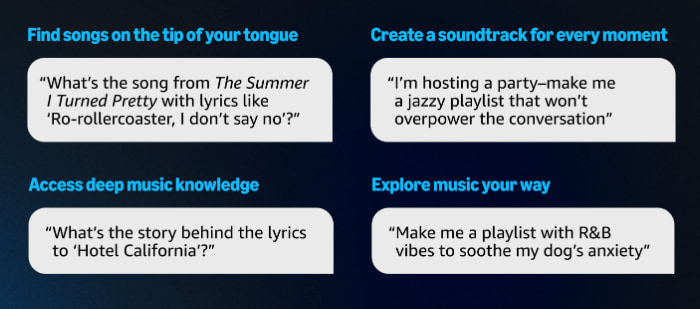
Listeners can ask it to identify a song from remembered lyrics, an artist, a film or television appearance, or some other incomplete clue. Amazon’s examples include finding the track used during the opening credits of The Sopranos or identifying a song from a partial lyric.
Alexa+ can also answer follow-up questions about:
- Genres and regional music scenes
- Artist influences and discographies
- Song meanings
- Samples and their origins
- Album and release history
- Chart performance
- Band membership changes
- Festival lineups
- Relationships between artists and musical styles
A listener could begin by requesting contemporary electronic music, ask for more information about one of the recommended artists, remove slower tracks, increase the tempo, and then save the finished selection.
That moves the feature closer to a conversational music guide than a conventional recommendation engine. Whether it is a knowledgeable guide or the person at the record store who confidently invents an answer rather than admitting they do not know will depend on accuracy.
Amazon has not published an accuracy rate for Alexa+ music responses, so claims about samples, credits, chart history, release dates, and song meanings should still be treated as useful starting points rather than digital liner notes carved into stone.
Alexa+ Can Build and Edit Playlists
Alexa+ can create playlists from specific combinations of mood, era, genre, geography, tempo, language, and activity.
Amazon suggests prompts such as:
- Music for driving along the Pacific Coast Highway at sunset
- French-language songs that sound appropriate for a Parisian café
- Ambient electronic music combined with light classical piano and no lyrics
- Contemporary jazz that will not overpower a dinner party
- 1990s pop featuring Madonna but excluding boy bands
The resulting playlists can be renamed, saved to an Amazon Music library, shared, and edited later by asking Alexa+ to add or remove specific tracks.
That last part is useful. Many generative playlist tools produce a list and then leave the listener to repair it manually when the algorithm decides that “quiet Sunday morning” requires Imagine Dragons.
Alexa+ allows the user to continue the conversation and adjust the result rather than starting again.
Available Across Every Amazon Music Tier
The most important competitive distinction is availability.
Amazon says Alexa+ is available to all U.S.-based Amazon Music customers across every subscription tier, at no additional cost, through the iOS and Android apps.
That does not mean Alexa+ erases the differences between Amazon Music plans.
The underlying subscription still determines which songs can be played on demand, whether advertising is included, how skipping works, and which audio-quality formats are available. Amazon Music’s paid Unlimited and Standard plans provide access to HD, Ultra HD, Dolby Atmos, and Sony 360 Reality Audio where available; adding Alexa+ to a free account does not quietly turn it into a lossless subscription.
Amazon has also not announced when the Amazon Music integration will expand beyond the United States or reach desktop and web versions of the music service.
How Amazon Music Alexa+ Compares
| Music Service | AI Music Feature | Current Availability | What It Does | Main Limitation |
|---|---|---|---|---|
| Amazon Music | Alexa+ | All U.S. Amazon Music tiers on iOS and Android | Conversational search, song identification, music questions, playlist creation, follow-up editing, playback and library actions | U.S. mobile rollout only; plan restrictions still apply |
| Spotify | Talk to Spotify | Gradual beta for eligible Premium users aged 18 and older in the U.S., Ireland, and Sweden | Typed or spoken conversation, playback control, music context, listening-history questions, podcast and audiobook discovery | Premium only and limited beta availability |
| Apple Music | Playlist Playground | Beta for U.S. Apple Music subscribers aged 13 and older, in English | Creates and refines playlists from moods, genres, activities, and eras | Primarily a playlist tool rather than a broad music assistant |
| YouTube Music | Ask Music | YouTube Music Premium and YouTube Premium subscribers in select countries | Generates personalized radio stations and playlists; now includes podcast recommendations | Paid subscribers only and limited regional availability |
| Deezer | Playlist with AI and Flow Tuner | Playlist with AI began as a beta for 5% of paying subscribers; Flow Tuner is more broadly available | Text-generated playlists and direct control over genres used by the recommendation system | The conversational playlist beta has not been confirmed as a universal rollout |
| TIDAL | My Mix | Available to subscribers after sufficient listening history | Produces up to six algorithmic mixes based on recent listening and saved music | No comparable prompt-based conversational music assistant is publicly documented |
| Qobuz | Discover and personalized mixes | Available through Qobuz apps | Combines DailyQ, WeeklyQ, personalized radio, recommendations, and extensive human editorial curation | No conversational playlist assistant; Qobuz deliberately emphasizes human curation |
Spotify Offers the Closest Direct Rival
Spotify’s new Talk to Spotify feature is the closest comparison to Alexa+.

Eligible Premium users can type or speak to Spotify from the Home and Now Playing screens, request unfamiliar artists, adjust the mood or tempo, add music to the queue, save tracks, follow artists, and ask questions about songs, albums, genres, podcasts, and audiobooks. Spotify can also answer questions about the user’s listening history, including when they first heard a song or which genres they have explored recently.
It is a deeper listener-history tool than Amazon has described so far, particularly because Spotify can examine years of personal playback behavior.
The limitation is availability. Talk to Spotify is rolling out gradually in English to selected Premium users aged 18 and older in the United States, Ireland, and Sweden. Amazon is offering its music assistant to every U.S. customer, including people who are not paying for Amazon Music.
Spotify also warns that the beta remains a work in progress and that responses will not always be correct. That is unusually honest language from a technology company introducing AI and should probably be printed on the front of every device containing a microphone.
Apple Music Keeps Its AI Focus Narrower
Apple Music’s Playlist Playground creates playlists from text requests involving moods, genres, activities, and musical eras. Users can refine the results, rearrange songs, accept suggested additions, rename the playlist, and save it to their libraries.

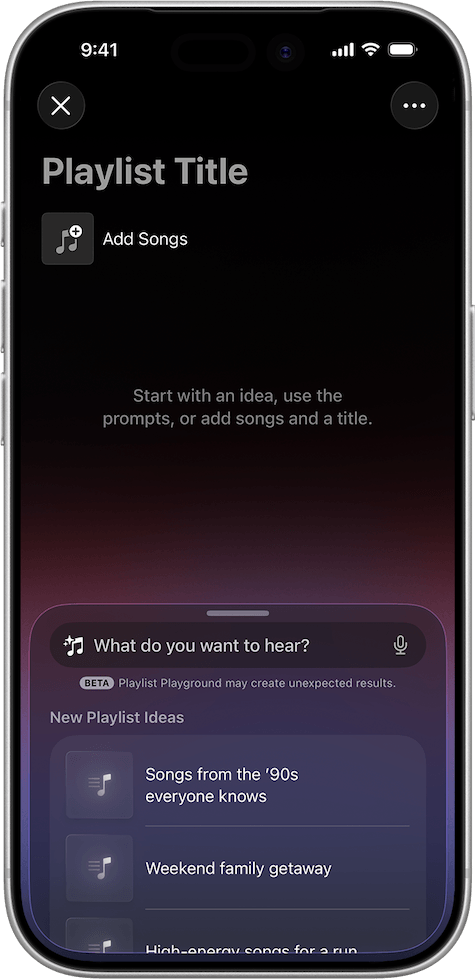
It is available in beta to Apple Music subscribers aged 13 and older in the United States and currently works only in English.
Playlist Playground competes directly with Alexa+ for playlist generation, but Apple does not currently describe it as a broader conversational music expert. It is designed to build playlists rather than explain musical relationships, identify tracks through extended dialogue, or answer detailed questions about what is playing.
Apple’s approach is cleaner and more focused. Amazon’s is more ambitious.
Ambition is useful, provided Alexa+ does not explain that John Coltrane joined Black Sabbath in 1973.
YouTube Music Uses AI for Radio and Podcast Discovery
YouTube Music’s Ask Music allows paid YouTube Music Premium and YouTube Premium subscribers in selected countries to describe what they want to hear and generate a personalized radio station or playlist.

Google has expanded the feature to include podcast recommendations based on mood, genre, or programs the listener already enjoys.
YouTube Music has an enormous advantage when a request involves live performances, remixes, covers, rare recordings, and material that may not exist in a conventional streaming catalog.
Alexa+ appears to provide a more extensive conversational layer and more direct playlist editing, while Ask Music remains primarily focused on generating something to play.
Deezer Gives Listeners More Control Over the Algorithm
Deezer began testing Playlist with AI globally in 2024, allowing selected paying subscribers to create playlists through text prompts involving activities, decades, genres, and moods. The initial test was limited to 5% of Deezer’s paying audience.
More recently, Deezer introduced Flow Tuner, which allows users to activate, deactivate, or add genres and subgenres that influence the service’s recommendation algorithm. Deezer also excludes identified AI-generated recordings from Flow recommendations.

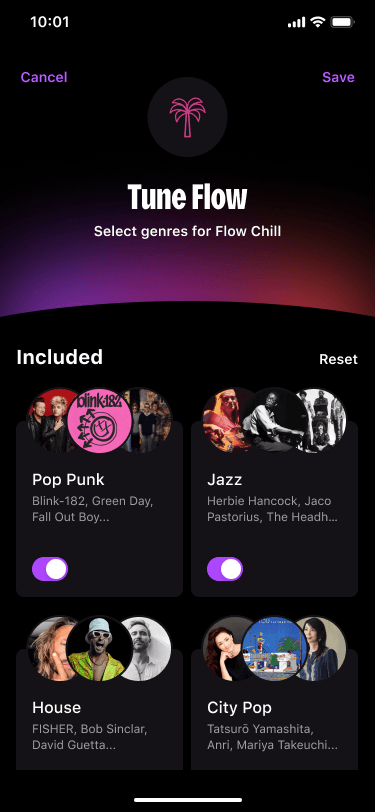
Flow Tuner may be less theatrical than asking a chatbot to build “music for driving through New Jersey while wondering why the Garden State Parkway is not moving,” but direct control over the recommendation engine is arguably more useful over time.
TIDAL and Qobuz Are Taking Different Paths
TIDAL continues to rely on My Mix, which creates as many as six personalized mixes from recent listening behavior and saved music. Those mixes change gradually as the service learns more about the listener.
TIDAL does not currently document a consumer-facing conversational playlist assistant comparable to Alexa+, Spotify’s new chat feature, or Apple’s Playlist Playground.
Qobuz has moved even further in the opposite direction. Its redesigned Discover section combines personalized mixes, radio stations, listening history, and recommendations with extensive human editorial content, including reviews, interviews, Essential Discography selections, and curated playlists.
Qobuz uses technology to personalize discovery but continues to make human curation part of its identity. In a market racing to replace the record-store employee with a language model, Qobuz is betting that some listeners still want advice from people who have actually heard the album.
What Makes Amazon Music Alexa+ Different?
Alexa+ combines four capabilities that competitors usually separate:
- Natural-language music search
- Contextual questions about artists and recordings
- Dynamic playlist generation and editing
- Direct playback and library control
The feature is also available across all U.S. subscription tiers rather than being reserved for paying customers or a small test group.
Amazon reports that Alexa+ users explore music three times as often as users of the original Alexa, while customers who request recommendations listen to almost 70% more music. Those are Amazon’s internal engagement figures, and the company has not disclosed the sample size, time period, or methodology behind them.
The numbers still explain why every major streaming company is investing heavily in conversational discovery. More questions lead to more recommendations, which lead to more listening, more data, and a lower chance that a subscriber remembers they are paying for four music services.
Who Is It For?
Alexa+ will be most useful for listeners who know what they want emotionally or stylistically but cannot express it through artist names and conventional search terms.
It should also appeal to people who frequently use Amazon Music through Echo products and already think of Alexa as the front door to their music library. The mobile integration allows those users to continue the same kind of interaction without standing within shouting distance of a smart speaker.
It is less compelling for listeners who prefer choosing complete albums, already maintain carefully organized libraries, or view algorithmic playlists as the musical equivalent of allowing a supermarket to plan dinner.
Audiophiles should also understand that Alexa+ is a discovery and control feature, not an audio upgrade. It does not improve the mastering, increase the bit depth, repair a poor recording, or stop the Amazon Music app from occasionally making basic navigation feel like filing a tax return.

The Bottom Line
Amazon Music Alexa+ is one of the more complete AI music assistants currently available because it goes beyond generating playlists. It can search conversationally, identify partially remembered songs, explain artists and recordings, refine selections through follow-up requests, and make direct changes to playback and the user’s library.
Making it available to every U.S. Amazon Music customer gives Amazon a wider launch audience than Spotify, Apple, YouTube Music, or Deezer currently offer for their closest comparable tools.
That does not automatically make Alexa+ the best music-discovery system. Spotify knows more about the listening history of many users, YouTube Music has access to a wider universe of rare and unofficial material, Apple’s implementation is more focused, and Qobuz still understands that human editorial judgment has value.
The larger shift is impossible to miss. Music streaming services no longer want listeners to browse catalogs or build playlists by hand. They want us to describe a mood, surrender the queue, and keep listening while the assistant learns enough about our habits to become increasingly difficult to leave.
Convenient? Absolutely.
A little unsettling? Alexa already knows what is in the shopping cart. It may as well know which album we play while regretting the purchase.
You must be logged in to post a comment Login