Connect with us
DAPA Banner
DAPA Coin
DAPA
COIN PAYMENT ASSET
PRIVACY · BLOCKDAG · HOMOMORPHIC ENCRYPTION · RUST
ElGamal Encrypted MINE DAPA
🚫 GENESIS SOLD OUT
DAPAPAY COMING

Tech

AMD Expands 3D V-Cache Technology to Commercial Desktop Market

Published

on

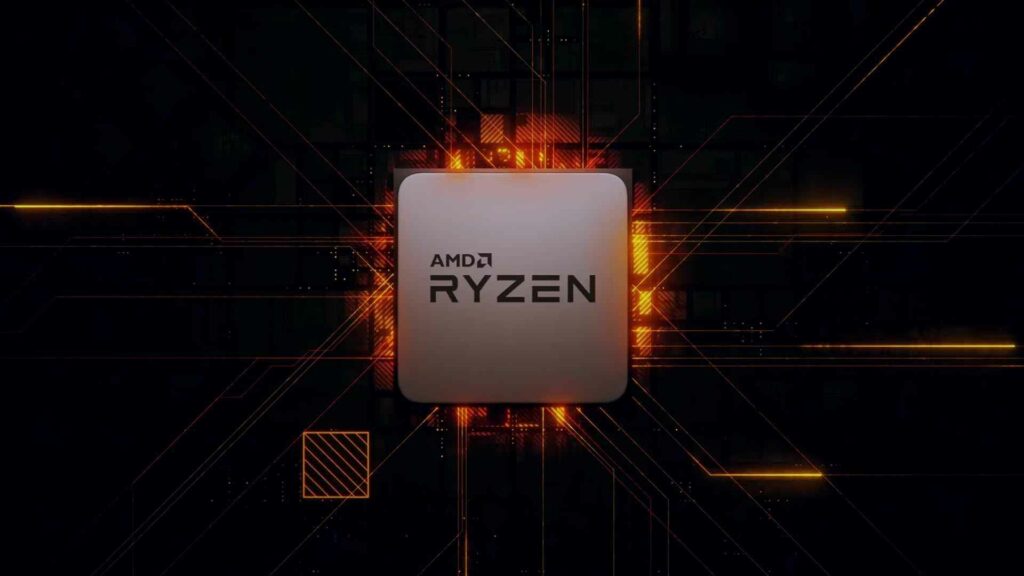
AMD has launched the Ryzen PRO 9000 Series processors for commercial desktops and workstations. With these processors, the company offers enterprise-level 3D V-Cache capabilities to enhance performance for demanding workloads. AMD designed these processors for professionals working in content creation, architecture, engineering, and design.

These processors are the latest in AMD’s lineup, designed for commercial desktops and professional workstations. Along with performance upgrades for heavy workloads, the lineup also includes enterprise security and long-term platform support features.

3D V-Cache for Professional Workloads

AMD ryzen processor

3D V-Cache will be introduced in enterprise workstation processors with the upcoming Ryzen PRO 9000 Series. With increased cache memory, the company aims to improve processor performance when handling intensive tasks or applications. The increased cache memory will enhance the performance of applications working on large files by making it easier for them to access them. The company states that the technology aims to increase processor efficiency in professional environments.

The Ryzen PRO 9000 Series is designed for professionals such as creators, architects, engineers, and designers who rely on heavy-duty professional software. According to AMD, the chips will provide improved performance during the editing and encoding of videos in 4K and 8K resolutions, along with compositing performance in media workflows. The processors are also intended for architects and construction professionals, including BIM and 3D modeling. Manufacturing professionals working with CAD models and simulations will benefit from the performance of this series of chips.

Performance and Security

AMD logo
Image Credit: Unsplash

The AMD Ryzen PRO 9000 Series comes in various configurations designed for desktop computers and business workstations. These CPUs are offered in six-core, eight-core, 12-core, and 16-core varieties with several thermal design power (TDP) choices. AMD has created high-performance CPUs for individuals who require reliable performance on challenging projects.

Along with performance upgrades, the Ryzen PRO 9000 Series also focuses on enterprise reliability and security. As part of the AMD PRO platform, the processors include advanced security protections and manageability tools for IT departments. AMD says the platform supports long-term business deployments with stable and consistent performance.

Advertisement

Availability Details

According to AMD, the Ryzen PRO 9000 Series processors will arrive in the second half of 2026. Lenovo has already confirmed that it will feature the new processors in its ThinkStation P4 workstation at NXTBLD. AMD may also announce additional OEM partners and systems closer to launch.

AMD Ryzen PRO 9000 Series Specifications

Processor Cores / Threads Boost / Base Clock Total Cache TDP
AMD Ryzen 9 PRO 9965X3D 16C / 32T Up to 5.5 / 4.3 GHz 144MB 170W
AMD Ryzen 7 PRO 9755X3D 8C / 16T Up to 5.2 / 4.7 GHz 104MB 120W
AMD Ryzen 9 PRO 9965 16C / 32T Up to 5.5 / 4.3 GHz 80MB 170W
AMD Ryzen 9 PRO 9955 12C / 24T Up to 5.4 / 3.4 GHz 76MB 120W
AMD Ryzen 9 PRO 9945 12C / 24T Up to 5.4 / 3.4 GHz 76MB 65W
AMD Ryzen 7 PRO 9755 8C / 16T Up to 5.4 / 3.8 GHz 40MB 120W
AMD Ryzen 7 PRO 9745 8C / 16T Up to 5.4 / 3.8 GHz 40MB 65W
AMD Ryzen 5 PRO 9655 6C / 12T Up to 5.4 / 3.9 GHz 38MB 120W
AMD Ryzen 5 PRO 9645 6C / 12T Up to 5.4 / 3.9 GHz 38MB 65W

Source link

Continue Reading
Click to comment

You must be logged in to post a comment Login

Leave a Reply

Tech

What is the release date for Dutton Ranch episode 3 on Paramount+?

Published

on

I couldn’t be more pleased that the first two episodes Beth (Kelly Reilly) and Rip (Cole Hauser) Yellowstone spinoff Dutton Ranch has gone down well with critics and fans alike.

The pair has moved from their native Montana to a new ranch in Texas, immediately running into trouble with rival ranch 10 Petal. What’s more, no-nonsense owner Beulah (Annette Bening) is trying to cover up a huge secret thanks to her out of control son Rob-Will (Jai Courtney).

Source link

Continue Reading

Tech

Iran Now Threatens Fees for Subsea Internet Cables in the Strait of Hormuz

Published

on

Iran’s government “wants to charge the world’s largest tech companies for using the subsea internet cables laid under the Strait of Hormuz,” reports CNN. Their article also notes that Iran’s state-linked media outlets “have vaguely threatened that traffic could be disrupted if firms don’t pay.”

Lawmakers in Tehran discussed a plan last week which could target submarine cables linking Arab countries to Europe and Asia. “We will impose fees on internet cables,” Iranian military spokesperson Ebrahim Zolfaghari declared on X last week. Iran’s Revolutionary Guards-linked media said Tehran’s plan to extract revenue from the strait would require companies like Google, Microsoft, Meta, and Amazon to comply with Iranian law while submarine cable companies would be required to pay licensing fees for cable passage, with repair and maintenance rights given exclusively to Iranian firms. Some of these companies have invested in the cables running through the Strait of Hormuz and the Persian Gulf, but it’s unclear if those cables traverse Iranian waters.

It’s also unclear how the regime could force tech giants to comply, as they are barred from making payments to Iran due to strict US sanctions; as a result, the companies themselves may view Iran’s statements as posturing rather than serious policy. Still, state-affiliated media outlets have issued veiled threats warning of damage to cables that could impact some of the trillions of dollars in global data transmission and affect worldwide internet connectivity… Iran’s threats are part of a strategy to demonstrate its leverage over the Strait of Hormuz and ensure the survival of the regime, a core objective for the Islamic Republic in this war, said Dina Esfandiary, Middle East lead at Bloomberg Economics. “It aims to impose such a hefty cost on the global economy that no-one will dare attack Iran again,” she said.
The article notes that subsea cables “carry vast internet and financial traffic between Europe, Asia and the Persian Gulf,” and that targetting them “would affect far more than internet speeds, threatening everything from banking systems, military communications and AI cloud infrastructure to remote work, online gaming and streaming services.”

CNN spoke to Mostafa Ahmed, “a senior researcher at the United Arab Emirates-based Habtoor Research Center, who published a paper on the effects of a large-scale attack on submarine communications infrastructure in the Gulf.”

Advertisement

Armed with combat divers, small submarines, and underwater drones, the Islamic Revolutionary Guard Corps (IRGC) poses a risk to underwater cables, Ahmed said, adding that any attack could trigger a cascading “digital catastrophe” across several continents. Iran’s neighbors across the Persian Gulf could face severe disruptions to internet connection, potentially impacting critical oil and gas exports as well as banking.

Beyond the region, India could see a large proportion of its internet traffic affected, threatening its huge outsourcing industry with losses amounting to billions, according to Ahmed… Any disruption could also slow financial trading and cross-border transactions between Europe and Asia, while parts of East Africa could face internet blackouts. And if Iran’s proxies decide to employ similar tactics in the Red Sea, the damage could be far worse.

Source link

Advertisement
Continue Reading

Tech

Two crypto billionaires sit behind both the Trump family token and Iran’s sanctions-evasion engine

Published

on

Reuters traced $2.3bn in Iranian exchange Nobitex’s flows since 2023 to Tron and BNB Chain, the blockchains established by World Liberty Financial’s two most prominent early backers. No party at WLF has been accused of knowing about it.

A Reuters investigation published on Monday documents that Nobitex, Iran’s largest crypto exchange, has processed at least $2.3bn since 2023 on the Tron and BNB Chain blockchains. Tron was founded by Justin Sun.

BNB Chain was developed by Binance, the exchange owned by Changpeng Zhao. Both Sun and Zhao are the two most prominent early backers of World Liberty Financial, the crypto firm co-founded by Donald Trump and his family. There is no suggestion that the Trump family knew about Nobitex’s use of either network.

Reuters’ breakdown of public blockchain data, sourced from Arkham, puts about $2bn of the Nobitex flow on Tron and $317m on BNB Chain since 1 January 2023, with $22.6m on BNB Chain and $550,000 via Tron since the Iran war began in February.

Advertisement

Four crypto analysts called the calculation sound; independent investigator Rich Sanders said the true figure was probably higher, since public flows are visible only for known Nobitex addresses and the exchange has admitted to switching addresses to avoid tracing.

Advertisement

The principals’ positions on the news are all on the record. The White House response, from spokeswoman Anna Kelly, described the article as ‘bizarre attempts to link President Trump to Iran’s banking system’ that were ‘totally laughable’.

A spokeswoman for World Liberty said the company ‘has no relationship with Nobitex and follows U.S. law’, adding that ‘World Liberty does not own, operate, or control Tron in any way, and has no authority over transactions conducted on it’. Nobitex said any illicit funds passed through the exchange ‘without management approval or awareness’.

A Tron spokeswoman said the network ‘is a technology provider’ that cannot ‘monitor and investigate every user and every transaction’. Binance said it was ‘an initial contributor and incubator’ of BNB Chain rather than its operator.

Binance’s corporate-structure caveat sits inside a longer record. Abu Dhabi filings reviewed by Reuters show Zhao as the sole listed shareholder of BNB Chain Technology Holding Limited, the entity to which BNB Chain’s operations were transferred in 2023.

Advertisement

Reuters’ 2022 reporting found about $7.8bn in crypto flowed between Nobitex and Binance from 2018 to 2022, roughly three-quarters in Tron’s native asset, with Nobitex actively encouraging clients to use Tron to trade ‘without endangering assets due to sanctions’.

The Trump family’s commercial position in WLF is the structural fact underneath the reporting. Sun’s portfolio of 4 billion WLFI tokens is worth roughly $266m, according to Reuters’ calculations; Binance now holds $3.8bn of the Trump-family token.

Abu Dhabi’s MGX bought a $2bn stake in Binance in early 2025 and announced the transaction would be settled in WLF’s USD1 stablecoin. Trump’s October 2025 pardon of Zhao, wiping his federal conviction for failing to maintain an effective anti-money-laundering programme, sits alongside that commercial timeline.

Binance and Zhao’s lawyers have said there was no connection between the USD1 deal and the pardon.

Advertisement

The narrower money-laundering arc is now well-documented. Tether froze multiple Nobitex wallet addresses at the request of Israel’s National Bureau for Counter Terror Financing.

Elliptic and the same two Iran specialists reported in January that the Central Bank of Iran, sanctioned by the US in 2019 over alleged IRGC and Hezbollah financing, bought more than $500m of tether via Tron between November 2024 and June 2025, of which roughly $347m was routed to Nobitex in the first half of 2025.

The central bank also converted holdings into other coins and moved them across BNB Chain to obscure the trail.

What the United States has not done is sanction Nobitex itself. Reuters notes plainly that it could not determine the reason. Watchdog group Public Citizen, in a parallel report, has called the WLF/Binance/Iran chain a ‘conflict coin’ and pressed for Treasury and DOJ investigations.

Advertisement

Senators Elizabeth Warren and Jack Reed have separately sought formal probes into WLF’s sanctions controls, which the company has said are ‘the highest standard in the industry’.

The named principals had already fallen out before the Reuters investigation. Sun sued World Liberty in April over allegedly frozen assets; WLF countersued in early May, alleging defamation.

The blockchain data does not, on the investigation’s own framing, prove coordinated conduct. It documents that two of the people most exposed to the financial upside of the Trump family’s crypto company are also the architects of the two networks that Iran’s largest sanctioned-flow conduit runs on.

Advertisement

Source link

Continue Reading

Tech

Dublin’s Ubotica partners with Novi for real-time orbital data analysis

Published

on

Ubotica will deploy and operate AI models directly in orbit using Novi’s smart-satellite constellation.

Dublin-based NASA and the European Space Agency collaborator, Ubotica, is partnering with Texas’ Novi Space to deliver real-time intelligence from the Earth’s orbit.

Novi provides computing technology for spacecrafts, alongside a constellation of multi-sensor edge-processing satellites linked to an intelligence management platform.

The open-access platform allows companies to build AI-powered applications in space, including improving Earth observation, geospatial intelligence and autonomy.

Advertisement

The collaboration integrates Ubotica’s AI platform with Novi’s ‘Genie’ smart-satellite constellation and platform to enable Earth observation data to be processed directly onboard satellites, unlike traditional systems that transfer data to Earth before analysis.

Through the partnership, Ubotica will deploy and operate AI models directly in orbit through the Genie multi-sensor satellite platform.

The Dublin start-up’s ‘Space:AI’ platform generates analysis within 90 seconds from when it begins processing, it said, resulting in lower latency and bandwidth costs translating to savings.

According to the company, in a single observation of a Singapore port, the platform processed hundreds of vessels and detected those operating dark in under two minutes. The company has deployed its AI capabilities on numerous missions, including its own CogniSAT-6 satellite.

Advertisement

“Our collaboration with Novi brings more AI-enabled Earth observation capacity into orbit. By combining Space:AI with Genie’s onboard compute, we’re shifting satellites from data collectors to intelligent agents, delivering insights in minutes rather than days,” said Ubotica co-founder and chief technology officer Dr Aubrey Dunne.

“That capability underpins our live maritime intelligence service and unlocks new operational models for time-critical surveillance.” The start-up won the SpaceNews Icon Award for Space AI Partnership last December, alongside NASA JPL and Open Cosmos.

Michael Bartholomeusz, the CEO of Novi Space added: “Partnering with Ubotica allows us to demonstrate the full potential of Genie – delivering real-time intelligence from orbit, not just data. This is a fundamental shift in how space-based systems create value.”

Ubotica and NASA announced a partnership last month to onboard the start-up’s AI platforms in a test mission to demonstrate autonomous intelligent satellite networks. In February, the company was among the first chosen for involvement in Ireland’s European Space Agency Phi-Lab at Irish Manufacturing Research.

Advertisement

Don’t miss out on the knowledge you need to succeed. Sign up for the Daily Brief, Silicon Republic’s digest of need-to-know sci-tech news.

Source link

Advertisement
Continue Reading

Tech

Google tells database devs to lean hard on AI for PostgreSQL work

Published

on

Databases

Cloud giant says humans remain accountable, even when code gets an assist from the machines

Google is encouraging its database developers to lean “heavily” on AI coding tools as it ramps up contributions to open source projects such as PostgreSQL.

Earlier this year, Google announced a raft of new contributions to PostgreSQL, the open source database that has become a popular RDBMS for developers building new applications in the cloud.

Advertisement

Sailesh Krishnamurthy, VP of Databases, Google Cloud, told The Register that the company was using AI coding tools to accelerate its contributions to open source database systems, although each developer remains responsible for their individual contributions.

“We do encourage folks to use AI heavily ,” he said. “We are seeing huge amounts of productivity improvements internally. In the end, we have individual engineers take accountability for our contributions. Whether you have a piece of code that is completely drafted by AI, or not even part of what you’re pasting into your development environment, you have a whole spectrum where AI is used in different places. Either way, the accountability remains on behalf of the person who’s done it.”

AI coding tools can be especially suited to developing contributions to open source projects because the codebase is publicly available and has been used to train the generative models, he said.

“That’s how models have a better sense of the code, as opposed to many proprietary pieces of code, which are inside the firewall.”

Advertisement

PostgreSQL was designed to be extensible. As such, it can be a system well suited to vibe coding to get new ideas off the ground quickly, Krishnamurthy said.

“The sweet spot is where you have maybe an interesting academic idea that is well understood, and you have a codebase that’s well understood, and you’re trying to say, well, I want to take this idea and I want to take this piece of code and build an extension for it. That’s a great example where you have something isolated – the blast radius is small – and you can go and use AI to interpret the code. Our own engineers are using AI quite heavily, but also judiciously.”

PostgreSQL became the most popular database among developers in 2023, according to the Stack Overflow survey. The trend owes a great deal to the plethora of PostgreSQL database services out there, not least from the big three cloud providers, which have ramped up investment in the open source system.

Last year, Microsoft contributed pg_documentdb_core, a custom PostgreSQL extension that enables support for Binary JavaScript Object Notation (BSON, a binary-encoded serialization of JSON documents), and pg_documentdb_api, a data layer providing MongoDB-compatible commands for create, read, update and delete (CRUD) operations, queries, and index management. The extensions are set to run on the Azure Cosmos DB PostgreSQL database service and offer a document-store-style database to rival MongoDB.

Advertisement

Microsoft has also announced a distributed PostgreSQL database service called HorizonDB.

Krishnamurthy said: “The industry at large is investing heavily in PostgreSQL. We see this across the board, whether it’s customers, whether it’s digital native services, and certainly we see the migrations coming from commercial databases. It is also a broad industry trend of PostgreSQL as a layer, no matter where data is being stored.”

As such, Google has contributed new code to the project, with the engineering effort focused on advancing logical replication. Contributions included Automatic Conflict Detection, designed to allow the replication worker to automatically detect when an incoming change (Insert, Update, or Delete) conflicts with the local state; and logical replication of sequences.

Demand for PostgreSQL services is coming from migrations as well as new applications, Krishnamurthy said. Customers are ditching Oracle, Microsoft SQL Server, and IBM Db2, as well as other legacy systems, including Sybase and Informix.

Advertisement

Research from Gartner earlier this year shows that of the leading database vendors 15 years ago – Oracle, IBM, Microsoft, and SAP – only Microsoft has grown its market share since. As well as its own database systems, Microsoft offers PostgreSQL and MySQL services, as does AWS, the leading database vendor. Oracle remains third, ahead of Google, and that position seems unlikely to change soon. Nonetheless, with all the major cloud vendors contributing to open source database projects such as PostgreSQL, momentum is slowly shifting. ®

Source link

Continue Reading

Tech

Why This Mitsubishi Manual Transmission Used Two Gear Shifters Instead Of One

Published

on


The 1970s were a period of great change in the US car market, thanks to the oil crisis of the decade, which led to lower horsepower in cars. Many companies simply had to rethink how engines, gearboxes, and cars should be packaged. They began to prioritize efficiency in ways they hadn’t before, and one of the ways they did that was by shrinking car sizes and moving to front-wheel drive.

Mitsubishi saw the opportunity and took it. It launched a little hatchback in 1978 called the Mirage, and this car came with an odd engineering quirk. As highlighted by The Autopian, most rivals at the time were building transverse front-drive layouts, in which the engine is mounted sideways, with the gearbox bolted to the side. Mitsubishi decided to take a different route, though, and stacked the gearbox underneath the engine instead. This made the whole package narrower from side to side, making it easier to fit into the Mirage’s tight engine bay, and, as a result, freeing up more space for the wheels and cabin. But rather than simplifying things, the choice actually set off a cascade of quirks. At the end of that cascade sits the Twin-Stick transmission, as it was branded in some markets.

Advertisement

How the two sticks came to be

When the Mirage was being designed, its Orion inline-four engine sat with its carburetor facing the front of the car. Further testing revealed icing problems up there, and that’s what kicked off the cascade, as mentioned. The fix itself was simple: just flip the engine around so the carb faced the other way. Trouble is, turning the motor also reversed the direction the crankshaft spun, and that meant the wheels would now turn in reverse.

Advertisement

Normally, you’d solve that by slipping in a small idler gear between the engine and the gearbox to flip the rotation back the right way. But the engineering team saw an opportunity. If they were already adding a gear set to sort out the rotation, why not build a second ratio into it while they were at it? The result was two sticks paired together, a four-speed manual lever, and a second one sitting beside it. It was something no one else was offering at the time.

That second stick was a two-position lever, and when paired with the four-speed manual, it essentially gave drivers eight forward gears to choose from. The lever moved between Power and Economy modes, with a little indicator on the dashboard letting you know which one was active. The economy mode basically turned the car into a normal four-speed. Flick it over to Power, though, and the gear ratios immediately shorten, giving you punchier ratios for acceleration.

Advertisement

Did they actually improve the driving experience?

Power wasn’t just a crawler-style low range. Unlike the off-road high/low gearing on a 4×4, the gears under this mode still stayed tall enough to use all the way up to highway speeds. In fact, there were just a few hundred rpm separating the Power and Economy versions of each gear. The transfer case also worked in reverse, so you technically had two reverse gears at your disposal.

Because the rpm differences weren’t major, the performance boost wasn’t significant either. MotorWeek actually ran the turbocharged Colt GTS Turbo, a rebadged Mirage sold in North America, back in the day. They recorded a 0 to 60 mph sprint of 9.4 seconds in Power mode and 9.7 seconds in Economy, which, again, isn’t that big of a difference unless you’re really looking for it. Mirage owners figured this out for themselves soon enough. Rather than shuffling between all eight gears in sequence, which would have taken some extreme levels of coordination, most settled on one mode depending on the situation.

But the Mirage, at least the initial Japanese model, wasn’t the only car to get Mitsubishi’s Super Shift. The setup also made its way into the Cordia, Tredia, and Chariot, as well as the Dodge and Plymouth Colt, which were rebadged Mirages sold in North America. The implementation remained in production until 1990, when it was quietly phased out. The Mirage itself was produced until 2003 before being revived in 2012.

Advertisement


Source link

Advertisement
Continue Reading

Tech

Your Pixel phone might soon tell you when a caller is lying about who they are

Published

on

Google has always been ahead of the curve when it comes to protecting Pixel users from spam calls, and it looks like the company isn’t done yet. According to a recent teardown of the Google Phone app by Android Authority, Google is working on a new phone number spoofing detection feature.

What is phone number spoofing?

Phone number spoofing, also known as caller ID spoofing, is when a scammer tricks your phone into displaying a familiar or saved contact’s number, even though the call is actually coming from a completely different number. 

As users are more likely to pick up a call if it looks like it’s coming from family members, friends, or authorized personnel, like a doctor or a bank representative, phone number spoofing is on the rise in the scam chart. It has become a surprisingly common tactic and one that has caught a lot of people off guard.

So what is Google doing about it?

Android Authority cracked open version 222.0.913376317 of the Google Phone app and found strings of code that point to an upcoming spoofing detection system. One of the strings reads, “Someone may be pretending to call from your contact’s number,” and another suggests that users will have the option to hang up the call immediately.

It’s not entirely clear how Google plans to detect spoofed numbers, but the timing is interesting. Only a few days back, Google announced a slew of security features, including verified financial calls, OTP protection, real-time malware detection, APK scanning in Chrome, and more.

Advertisement

With the new call spoof detection feature and existing spam call protections, including Call Screening and spam detection, the Pixel phones have become the best anti-scam smartphones. There’s no word yet on when this feature will roll out, but it’s good to know Google is working on it.

Source link

Continue Reading

Tech

Exadel buys London consultancy Tangent to bolt experience design onto its AI engineering line

Published

on

The Tampa-based, Sun Capital-owned software services firm is folding the SAP- and IWG-trusted UK digital agency into its Digital Experiences practice. Deal terms were not disclosed.


Exadel, the Tampa-based software-development and consulting firm, has acquired Tangent, the London-based digital experience consultancy, the company said on Monday. Terms were not disclosed.

Tangent will continue to operate under its existing brand inside Exadel’s Digital Experiences practice, with chief executive Leigh Gammons moving into a managing director and senior vice president role to lead the business.

On Exadel’s own framing, the deal is about pairing two halves of an enterprise transformation engagement that have traditionally lived in different vendor categories.

Advertisement

The 💜 of EU tech

The latest rumblings from the EU tech scene, a story from our wise ol’ founder Boris, and some questionable AI art. It’s free, every week, in your inbox. Sign up now!

Exadel sells what it calls AI-native engineering: data infrastructure, applications, and the back-end work of running an enterprise’s technology stack, on a 2,000-plus headcount across the US, Europe and LATAM.

Tangent sells the front-end discipline, including UX, product, web experience and MarTech engineering, on a smaller boutique footprint built up around what its website describes as enterprise digital-product work. The acquisition pulls strategy, design and engineering inside one contract.

Advertisement

‘Brands increasingly win or lose based on the AI-driven digital experiences they provide to customers,’ said James Dalziel, Exadel’s chief operating officer, in the statement.

‘By bringing Tangent into the organisation, we are fortifying our ability to help global clients not only design exceptional experiences, but also continuously optimise and scale them through AI.’

Gammons described the value of the combination from the other direction: ‘Companies are demanding more than great digital experiences. They need to provide experiences that can constantly evolve and drive measurable outcomes.’

Tangent has been operating since 2001 and counts SAP, IWG, and UK Power Networks among its enterprise clients, according to its own published materials, with the Exadel release also naming New Balance and Vodafone.

Advertisement

Its team is London-headquartered with a Newcastle office and a delivery footprint across Spain, South Africa, Poland, Egypt, and Pakistan. Gammons joined the agency as chief executive after leaving a senior role at WPP.

Exadel’s M&A appetite has a recognisable shape. The company is owned by an affiliate of Sun Capital Partners after a take-private transaction, and has spent the past few years adding capability through bolt-ons.

Its prior acquisitions include Motion Software, CPQi and Coppei. Tangent is the latest in that arc, and the first explicitly aimed at the design-and-strategy front of the enterprise stack rather than the engineering or sector-specific back.

The two companies have also announced a joint AI accelerator programme for enterprise clients, framed as a way to take engagements from ‘AI ambition to real-world delivery’.

Advertisement

The structural detail, pricing, and pilot customers have not been published. The framing positions Exadel as an AI-native alternative to the Big Four and the global systems integrators on engagements where Tangent’s experience-design front-end has historically been outsourced to a different vendor.

The acquisition lands inside a broader recalibration of the enterprise-services category that has been visible for several quarters. AI-agent products from the foundation labs have started to reach directly into the workflows that consultancies have traditionally billed for.

Anthropic shipped ten financial-services agent templates earlier this month, pulled Moody’s data inside the workspace, and built distribution through Microsoft 365 and Snowflake.

SAP unveiled an Autonomous Enterprise framework with more than 200 AI agents at Sapphire on a co-development with Anthropic. The competitive question for a services firm with Exadel’s profile is no longer whether the AI side of the stack will be the most valuable; it is whether the integrator that can plug the model layer into the customer experience layer end-to-end retains pricing power against the model layer itself.

Advertisement

Whether the Exadel-Tangent combination has the scale to be that integrator is the question the next 18 months of customer wins will settle.

The ‘Exadel Colleague’ AI delivery product, which Exadel launched last month, is the company’s bet that its engineering side will not be commoditised by the models.

Tangent’s customer roster is what determines whether the design side, attached to that engineering side, gives the combined business a contract-by-contract structural advantage in front-end-heavy enterprise work.

Advertisement

Source link

Continue Reading

Tech

Google I/O is almost here, and Wear OS 7 needs these 5 upgrades to stay competitive against Garmin and Apple Watches

Published

on

Google‘s annual Google I/O developer conference is almost upon us, and as well as getting new features for Android phones and a better look at those new Googlebooks, as a wearables enthusiast I’m curious to see what happens with Wear OS 7.

Because Google I/O is primarily for developers, we should get a better look at the latest slate of operating systems and AI powers that devs can use to design new apps and features for the likes of the Google Pixel Watch 4, Samsung Galaxy Watch8, and more upcoming, unannounced devices.

Source link

Continue Reading

Tech

If you’re giving a commencement speech in 2026, maybe don’t mention AI

Published

on

Commencement season has come around again — and this year, a couple speakers have discovered that it’s tough to get graduating students excited about a future shaped by artificial intelligence.

Last week, Gloria Caulfield, an executive at real estate firm Tavistock Development Company, gave a speech at the University of Central Florida acknowledging that we’re living in a time of “profound change,” which can be both “exciting” and “daunting.”

“The rise of artificial intelligence is the next industrial revolution,” Caulfield declared — prompting the students in the audience to begin booing, getting louder and louder until Caulfield chuckled, turned to the other speakers, and asked, “What happened?”

“Okay, I struck a chord,” she said. Caulfield then tried to resume her speech, saying, “Only a few years ago, AI was not a factor in our lives” — only to be interrupted again by the audience, this time by their loud cheers and applause.

Advertisement

Former Google CEO Eric Schmidt faced a similar response when he brought up AI at a University of Arizona speech on Friday.

In Schmidt’s case, the criticism actually began before the speech itself, with some student groups calling for him to be removed as commencement speaker due to a lawsuit in which a former girlfriend and business partner accused Schmidt of sexual assault. (He has denied the allegations.) According to a local news report, the booing began even before Schmidt took the stage.

But Schmidt also got loud boos when he told students, “You will help shape artificial intelligence.” The booing was persistent enough that Schmidt tried to speak over it, insisting, “You can now assemble a team of AI agents to help you with the parts that you could never accomplish on your own. When someone offers you a seat on the rocket ship, you do not ask which seat, you just get on.”

Advertisement

To be fair, AI isn’t becoming a third rail at every graduation ceremony. Nvidia CEO Jensen Huang recently spoke at Carnegie Mellon’s commencement, and he didn’t seem to get any audible pushback when he said that AI has “reinvented computing.”

Still, it’s not exactly surprising to find some students in a booing mood. In a recent Gallup poll, only 43% of Americans aged 15 to 34 said it’s a good time to find a job locally, a steep drop from 75% in 2022. 

That pessimism isn’t solely a response to the rise of AI (a shift that even some software engineers are worried about), but journalist and tech industry critic Brian Merchant suggested that for many students, AI has become “the cruel new face of hyper-scaling capitalism.”

“I too would loudly boo at the prospect of this next industrial revolution if I was in my early twenties, unemployed, and had aspirations for my future greater than entering prompts into an LLM,” Merchant wrote.

Advertisement

Even when graduation speeches didn’t mention AI explicitly, “resilience” was a recurring theme this year. Schmidt himself acknowledged that there is “a fear in your generation that the future has already been written, that the machines are coming, that the jobs are evaporating, that the climate is breaking, that politics are fractured, and that you are inheriting a mess that you did not create.”

Caulfield, meanwhile, might also have misread her audience of arts and humanities graduates. One student said that before mentioning AI, Caulfield already started to lose them with her “generic” praise of corporate executives like Jeff Bezos.

Another graduate, Alexander Rose Tyson, told The New York Times, “It wasn’t one person that really started the booing. It was just sort of like a collective, ‘This sucks.’”

When you purchase through links in our articles, we may earn a small commission. This doesn’t affect our editorial independence.

Advertisement

Source link

Continue Reading

Trending

Copyright © 2025