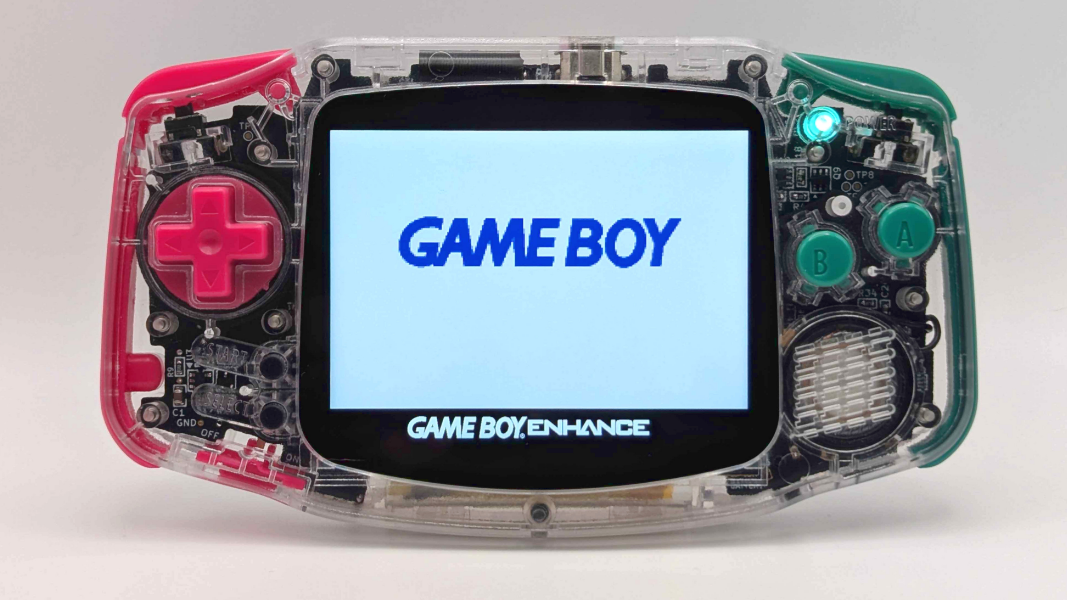
There are plenty of ways to mod an existing GBA to be better than the original, but this build recreates the console from the ground up. It’s basically a brand new motherboard that replaces the original entirely, requiring only the CPU and RAM to be harvested from the original board.
It’s perfect for when you find a badly-damaged handheld that needs heavy repair, because every other part on the board can be purchased new. You can buy a nice shiny screen kit online, and even upgrade to LiPo power if so desired. The new motherboard also eliminates sound issues that are common when upgrading the screen in a classic GBA, and there’s stereo audio available on the headphone jack as standard. Battery life is also improved compared to the original.
Advertisement
If you’ve got a haggard old GBA in need of repair, or you just want to build the best classic handheld you can, it’s worth taking a look at this build. You might also appreciate previous works from [Bucket Mouse], like his efforts to improve the original Game Boy.
Pluralsight’s Beckey Woodard Cole discusses how advancements in technology have transformed the way modern day employees expect to climb the career ladder.
The career ladder is exactly what it sounds like. It is a workplace model that enables people to start out on what is essentially the bottom rung of an organisation and bit by bit, step by step, you work your way upwards, towards the role and career that you want.
In the days of old, people who had skill but perhaps not the necessary qualifications or experience, could find themselves, in just a few years, with the title and job they truly wanted by virtue of their hard work, dedication and achievements. So for many it was a system that rewarded commitment.
But, according to Beckey Woodard Cole, the chief people officer at Pluralsight, artificial intelligence is changing how professionals engage with the career ladder, to the extent that the system is becoming obsolete.
Advertisement
She told SiliconRepublic.com, “AI now handles the repeatable, rules-based work that used to sit at the bottom rungs of a technical career such as basic scripting, routine data checks, first-pass code review. That was how junior engineers built credibility before moving into senior, judgement-heavy work.
“With that first rung gone, people move sideways into adjacent disciplines. This can look like a data analyst picking up prompt engineering or a support engineer moving into AI operations since that’s where the gaps sit.
“Career progression is now defined by what someone can do with a model and a problem and is less about tenure within a job level. That also means we need direct ways to confirm technical ability at every level. Titles and tenure tell us less than measurable outputs.”
Pros and cons
According to Woodard Cole, the deconstruction of traditional models can be a positive for professionals whose real value shines through when work is organised around skills rather than fixed roles. Instead of a project falling into the hands of an employee who has the right title, companies can instead draw on the talents of people with the relevant skills, regardless of their current title.
Advertisement
She said, “This surfaces talent that a rigid role structure would have missed entirely and it lets people develop new capability by working on problems outside their formal remit rather than waiting for a role change to justify it.”
The downside, she explains, is that it often takes time and effort to reestablish the infrastructure that creates standard job and role definitions when moving to a skills-based, internal marketplace approach.
She added, “This approach to HR took years to settle into and changing that model means taking on the massive job of overhauling the infrastructure itself. It takes real time to build a skills taxonomy detailed enough to match people to work accurately, and to get people comfortable being evaluated on a skills profile instead of a job description they’ve held for years.”
Woodard Cole also noted the importance of not isolating older employees who are used to a more standard career ladder-based system. In dismantling a traditional workplace system, more tenured professionals may feel displaced, particularly if they have committed years to earning titles and broadening a skillset.
Advertisement
She said, “Treating tenured workers as a valuable part of the knowledge ecosystem is crucial when traditional hierarchies break down. Putting these people in mentoring roles and acknowledging their internal expert status can also help tenured employees to feel valued.
“In addition, executives and other top company leaders should encourage middle management to play the role of player coach, helping to develop talent from within. Pay tied to skill depth rather than tenure matters too and top performers should always be rewarded for their contributions.”
Out with the old
Woodard Cole predicts a working landscape in which organisations develop a ladder-based system more akin to a lattice design, than a straight upward line. She explained, career progression rarely moves in one direction nowadays and employers need to recognise the value of non-linear career decisions.
She said, “ A move sideways into a new discipline, a step back into an individual contributor role after a stint leading a team, a stretch project in an adjacent function, all of these count as progression now, not detours from it. The model that I see having the most staying power ties advancement to what someone can prove, not what a title implies.
Advertisement
“People either move up or take on lateral roles by pointing to a specific outcome, a system that cut processing time, a migration that came in under budget, rather than time served in a role. Progression looks less like a promotion cycle and more like a portfolio of solved problems, each one verified rather than self-reported.”
When it comes down to it, for Woodard Cole, a title is only representative of a point in time, whereas a skill describes the abilities someone has in the moment.
She said, “In technical fields that gap has grown wider. A senior developer title from three years ago says little about someone’s grasp of current AI tooling, security practice, or data infrastructure.
“Employers also face shortages in specific skills, certain cloud platforms, security disciplines, machine learning specialisations and a title-based search misses people who built that skill through a side project or a role with a different name entirely. Verification is the harder part now.
Advertisement
“AI tools make it easy to polish a CV to match the posting description or produce ready answers to interview questions, so a document alone tells a hiring manager less than it used to. Skill has to be tested directly, a practical coding exercise, a live technical interview, a portfolio someone can walk through and defend. These metrics will help leaders anticipate the impact that someone will have in their role.”
Don’t miss out on the knowledge you need to succeed. Sign up for the Daily Brief, Silicon Republic’s digest of need-to-know sci-tech news.
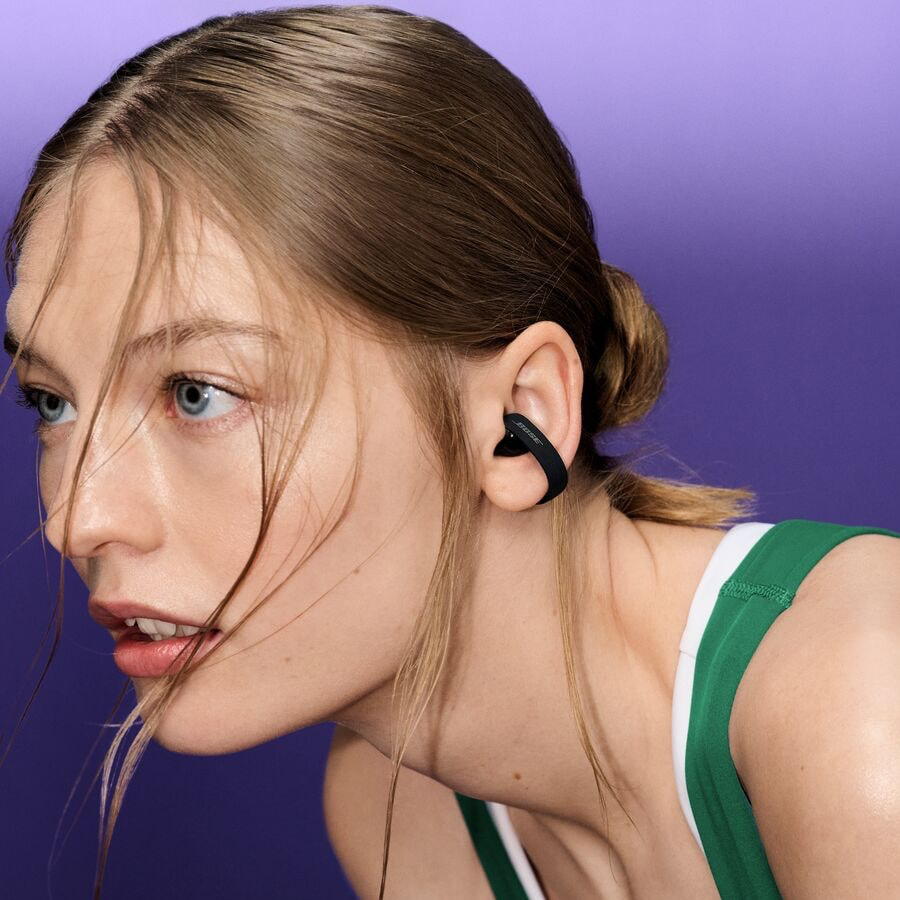
Bose is expanding its open ear audio lineup with two new models for October 1: the $199 Sport Open Earbuds and $299 Ultra Open Earbuds 2nd Gen. One is aimed squarely at runners, workouts and outdoor use, while the other updates Bose’s flagship cuff-style design with deeper bass, greater output, clearer calls, longer battery life and an expanded Immersive Audio experience.
The timing makes sense. For years, the personal audio industry has worked very hard to convince us that the ideal listening experience involves sticking something into our ear canals and blocking out as much of the outside world as possible. Judging by the enormous popularity of true wireless earbuds and increasingly aggressive noise cancellation, most of us apparently agreed that hearing absolutely nothing around us was a feature.
Open ear audio is gaining traction because there are plenty of situations where that approach makes very little sense. Runners and cyclists need to hear traffic. Commuters standing on subway platforms may want to hear announcements — or notice what is happening three feet behind them. Early morning and dusk walks are another obvious example where situational awareness matters considerably more than squeezing another few decibels of isolation out of your earbuds.
There is also the comfort factor. Open ear designs avoid sealing the ear canal, which can make them easier to wear for extended periods for listeners who dislike the pressure, heat or plugged-up sensation of conventional earbuds. They are not designed to replace noise-cancelling models on a long flight or when your neighbor decides that 7:00 a.m. is prime leaf-blower time, but that increasingly misses the point.
Advertisement
Bose has been working on this concept for years, from SoundWear and Bose Frames to the original Ultra Open Earbuds. With the new Sport Open Earbuds and second-generation Ultra Open Earbuds, Bose is making a much clearer bet that open ear audio is no longer a niche experiment.
Related Reading:
Bose Sport Open Earbuds: Same Name, Completely Different Product
The $199 Bose Sport Open Earbuds revive a name Bose used from 2021 through 2023, but this is not a warmed-over version of the original. The old model used a large contoured ear hook; the 2026 version switches to a soft silicone C-arm cuff that anchors around the ear and is designed specifically for running, workouts and outdoor use. Bose has also moved from IPX4 protection on the original to IP54, adding dust resistance along with protection against sweat and splashes.
Bose OpenAudio uses custom dynamic drivers to direct sound toward the ear without sealing the canal or relying on bone conduction. Auto Volume automatically compensates as environmental noise changes, while textured physical buttons handle playback, calls and volume. That might sound decidedly old-school until you try operating capacitive touch controls with sweaty fingers halfway through a run.
The new SpeechClarity system is another important addition. Bose uses a dedicated microphone and voice pickup unit in each earbud with AI-enhanced processing designed to separate speech from surrounding noise. That matters considerably more on a busy street or train platform than it does while taking a call from the sofa.
Battery life drops slightly from eight hours on the original model to seven hours, but the charging arrangement is dramatically better. The 2021 Sport Open Earbuds came with a protective case and separate stationary charging base; the new case carries additional power and supports wireless charging, with up to 22 additional hours available away from an outlet.
Advertisement
These are clearly the pair for runners, gym users, cyclists and anyone whose listening happens while moving. Bose skips Immersive Audio, Cinema Mode and aptX Adaptive and focuses instead on fit, durability and straightforward stereo playback.
Bose Sport Open Earbuds Specifications
Price: $199
Design: Soft silicone C-arm cuff
Audio: Bose OpenAudio with custom dynamic drivers
Listening: Stereo
ANC: None
Auto Volume: Yes
Calls: Bose SpeechClarity
Protection: IP54
Controls: Textured physical buttons
Bluetooth: 5.4
Multipoint: Two devices
Codecs: SBC, AAC
Google Fast Pair: Yes
Battery: Up to 7 hours
Case: Up to 22 additional hours; wireless charging
Quick charge: 10 minutes for up to 1 hour
EQ: Adjustable three-band EQ through Bose app
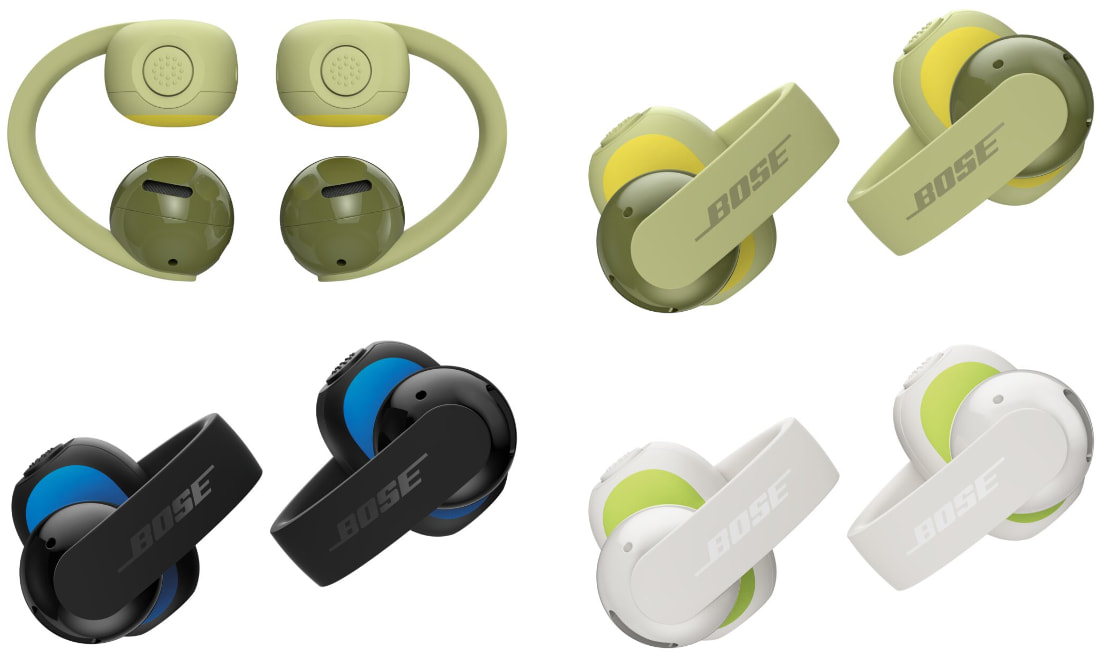
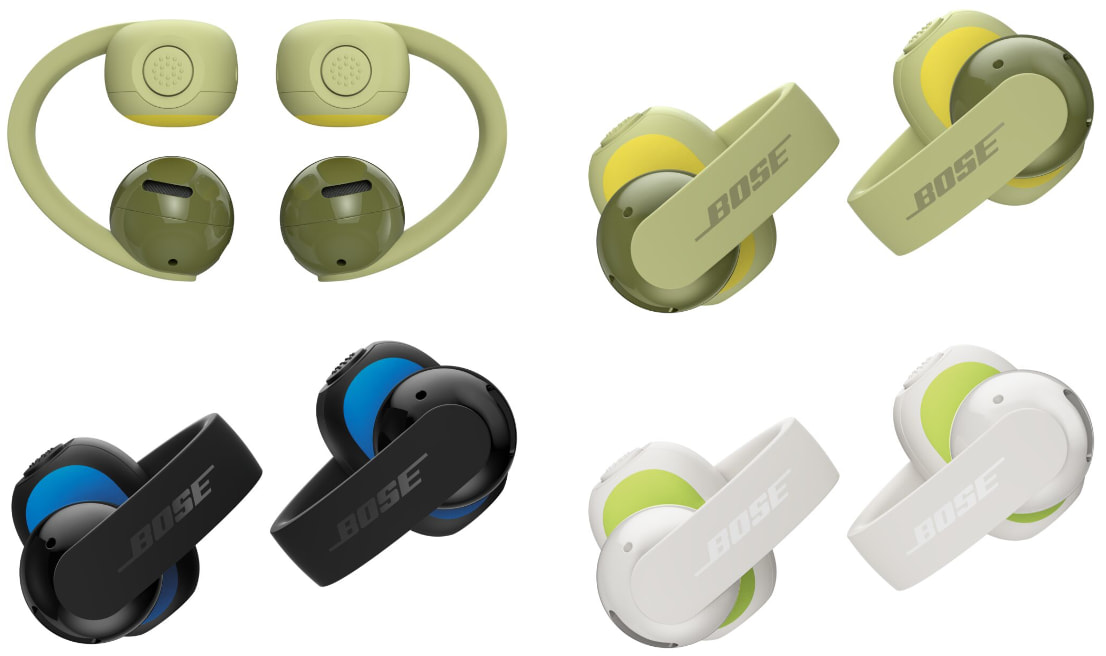
Colors: Black, White Smoke, limited-edition Eucalyptus Green
Availability: October 1; preorders September 19
Google Find Hub, Alexa+ and an Apple Music shortcut are planned through a post-launch firmware update.
Advertisement. Scroll to continue reading.
Bose Ultra Open Earbuds 2nd Gen: More Than a Cosmetic Refresh
The $299 Ultra Open Earbuds 2nd Gen retain the cuff architecture of the original, but Bose has concentrated on the areas that mattered most: bass response, maximum output, call quality, battery life and charging.
A newly engineered driver is designed to deliver deeper bass and greater volume, while SpeechClarity tackles one of the more obvious limitations of wearing an open ear design in noisy environments. Auto Volume carries over from the original, and Bose has refined the hardware with a simplified flexible joint and beveled metallic cap.
The biggest new listening feature is Cinema Mode, which uses Bose TrueSpatial processing to widen the presentation of movies, television and podcasts while keeping dialogue centered. It works with content from any source rather than requiring a particular spatial-audio format.
Advertisement
Battery life increases to 9 hours, or 5 hours with Immersive Audio enabled. The original Ultra was rated at launch for up to 7.5 hours, or 4.5 hours with Immersive Audio. The redesigned case stores another 19.5 hours and finally includes wireless charging as standard.
There is one meaningful omission. The original Ultra Open Earbuds can work with compatible Bose Smart Soundbars through Personal Surround, effectively adding individualized side and rear information while the soundbar handles the front of the presentation.
The Ultra Open Earbuds 2nd Gen do not support Personal Surround.
Cinema Mode does not replace it. Cinema Mode processes content within the earbuds; Personal Surround integrates the original Ultra Open Earbuds with a Bose soundbar. Existing owners who use that setup have a legitimate reason to stick with what they already own.
Advertisement
The new Ultras make more sense for commuters, office users and listeners who want something comfortable enough to wear for long stretches while remaining connected to what is happening around them.
Bose Ultra Open Earbuds 2nd Gen Specifications
Price: $299
Design: Refined open ear cuff
Audio: Bose OpenAudio with newly engineered driver
Listening: Stereo, Immersive Audio, Cinema Mode
Spatial processing: Bose TrueSpatial with head tracking
ANC: None
Auto Volume: Yes
Calls: Bose SpeechClarity
Bluetooth: 5.4
Protection: IPX4
Multipoint: Two devices
Codecs: SBC, AAC, aptX Adaptive with Snapdragon Sound
Google Fast Pair: Yes
Battery: Up to 9 hours
Immersive Audio battery: Up to 5 hours
Case: Up to 19.5 additional hours; wireless charging
Total playback: Up to 28.5 hours
Quick charge: 10 minutes for up to 2 hours
EQ: Adjustable three-band EQ
Personal Surround: No
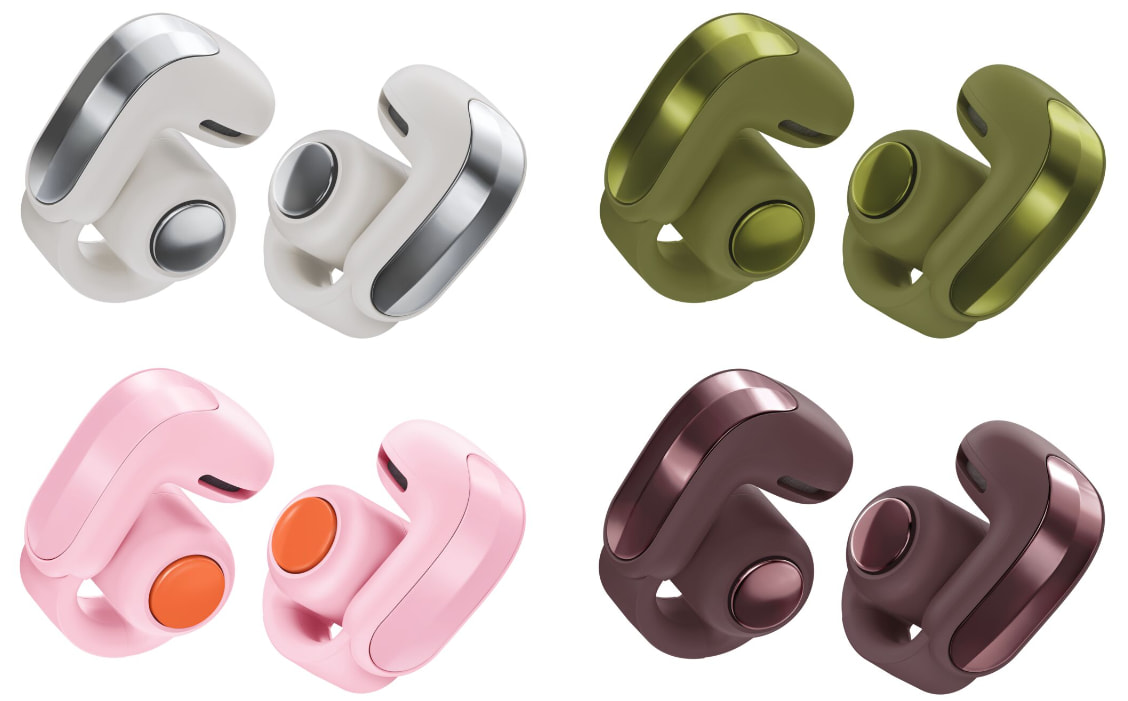
Colors: Black, White Smoke, limited-edition Cherry Chocolate, Olive Green and Sky Pink
Availability: October 1, 2026; preorders September 19
Bose Open Earbuds: Old vs. New
Feature
Sport Open (2021)
Sport Open (2026)
Ultra Open (2024)
Ultra Open 2nd Gen (2026)
Launch Price
$199
$199
$299
$299
Fit
Contoured ear hook
C-arm cuff
Cuff
Refined cuff
Battery
8 hours
7 hours
7.5 hours
9 hours
Immersive Audio
–
–
Yes
Yes
Cinema Mode
–
–
–
Yes
Auto Volume
–
Yes
Yes
Yes
SpeechClarity
–
Yes
–
Yes
aptX Adaptive
–
–
Yes
Yes
Wireless Charging
–
Yes
–
Yes
IP Rating
IPX4
IP54
IPX4
IPX4
Personal Surround
–
–
Yes
No
The original Sport used Bluetooth 5.1, provided eight hours of battery life and required a stationary charging base. The first-generation Ultra introduced the cuff design, Bose Immersive Audio, Auto Volume, IPX4 protection and aptX Adaptive.
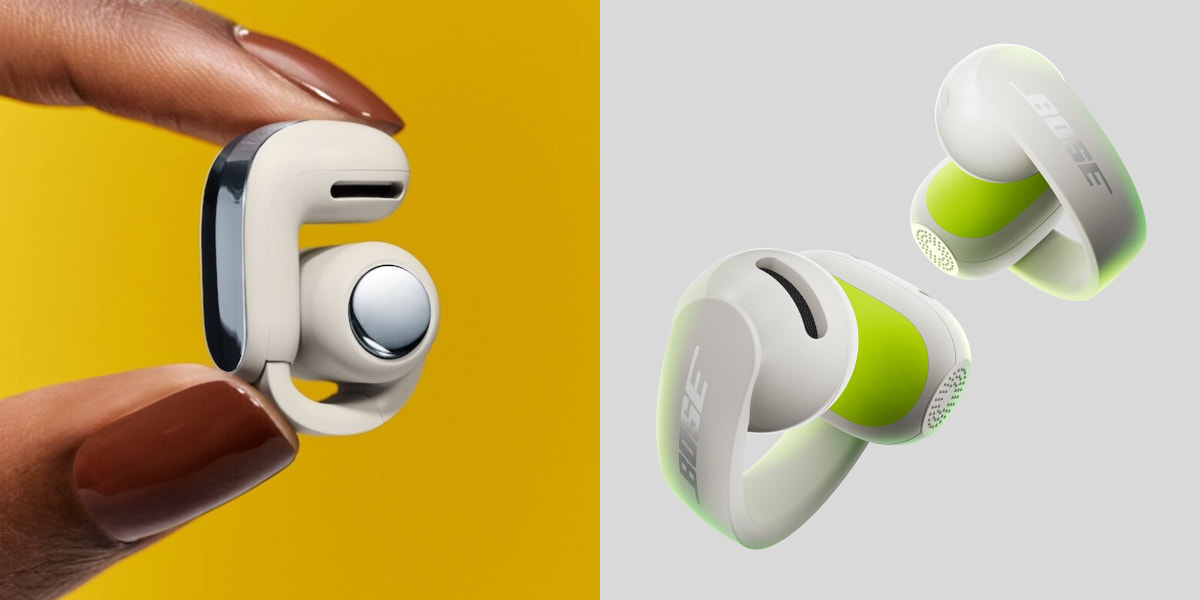
Left: Bose Ultra Open 2nd Gen | Right: Bose Sport Open
The Bottom Line
Bose is not offering the same open ear product at two price points. The Sport Open Earbuds ($199) are the purpose-built option for running, workouts and outdoor use, with a more secure design, IP54 protection, physical controls and a much more practical charging system than the original Sport model.
The Ultra Open Earbuds 2nd Gen ($299) are the more ambitious everyday option. Deeper bass, greater output, improved calls, longer battery life, wireless charging and Cinema Mode address most of the obvious areas where Bose could improve the original.
Personal Surround is the odd casualty. Owners who use the original Ultras with a Bose Smart Soundbar should pay attention before upgrading. Everyone else now has a much clearer choice: Sport for moving, Ultra for everything that happens after the workout.
Advertisement
Advertisement. Scroll to continue reading.
Price & Availability
Both new Open Earbuds will be available for pre-order on Saturday, September 19th and will start shipping on October 1, 2026.
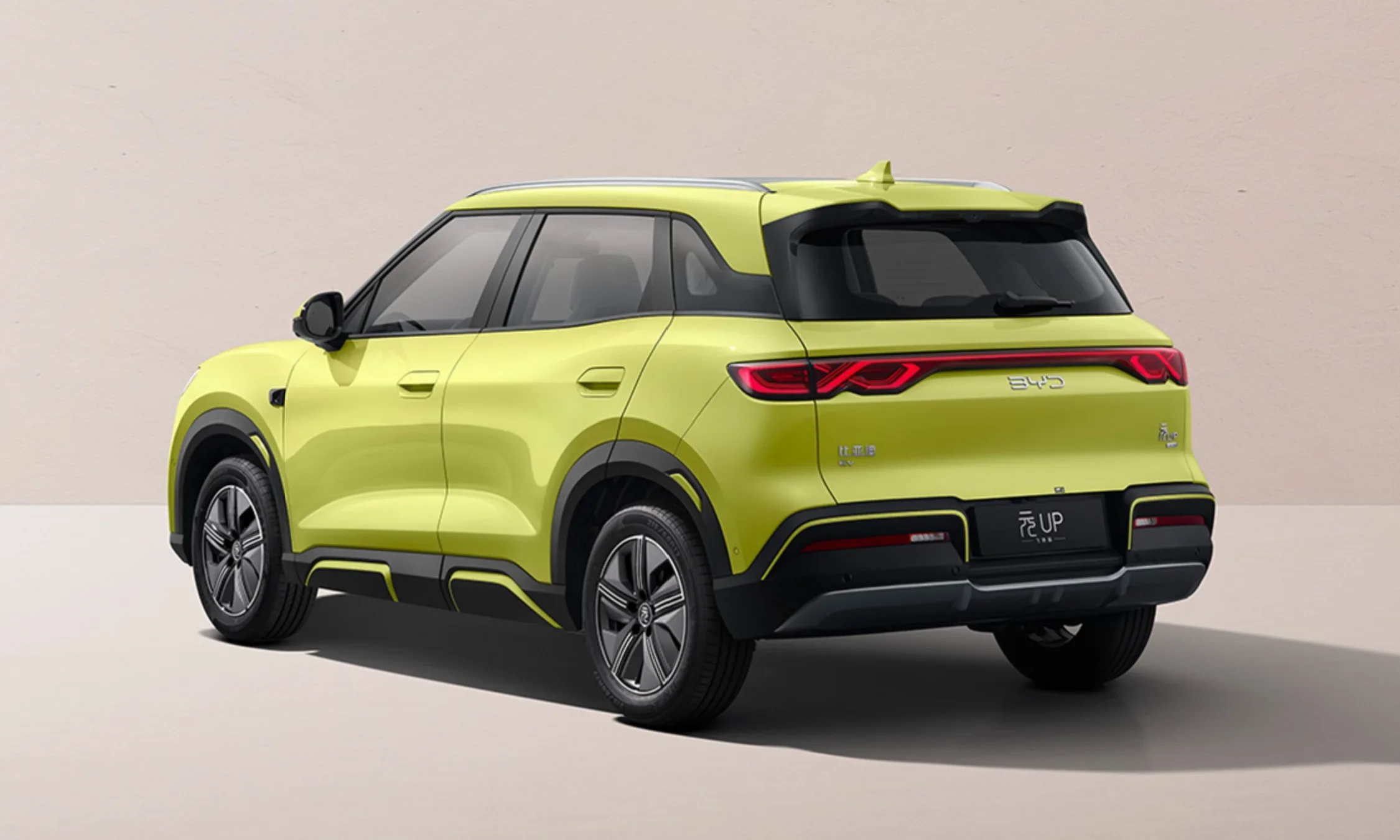
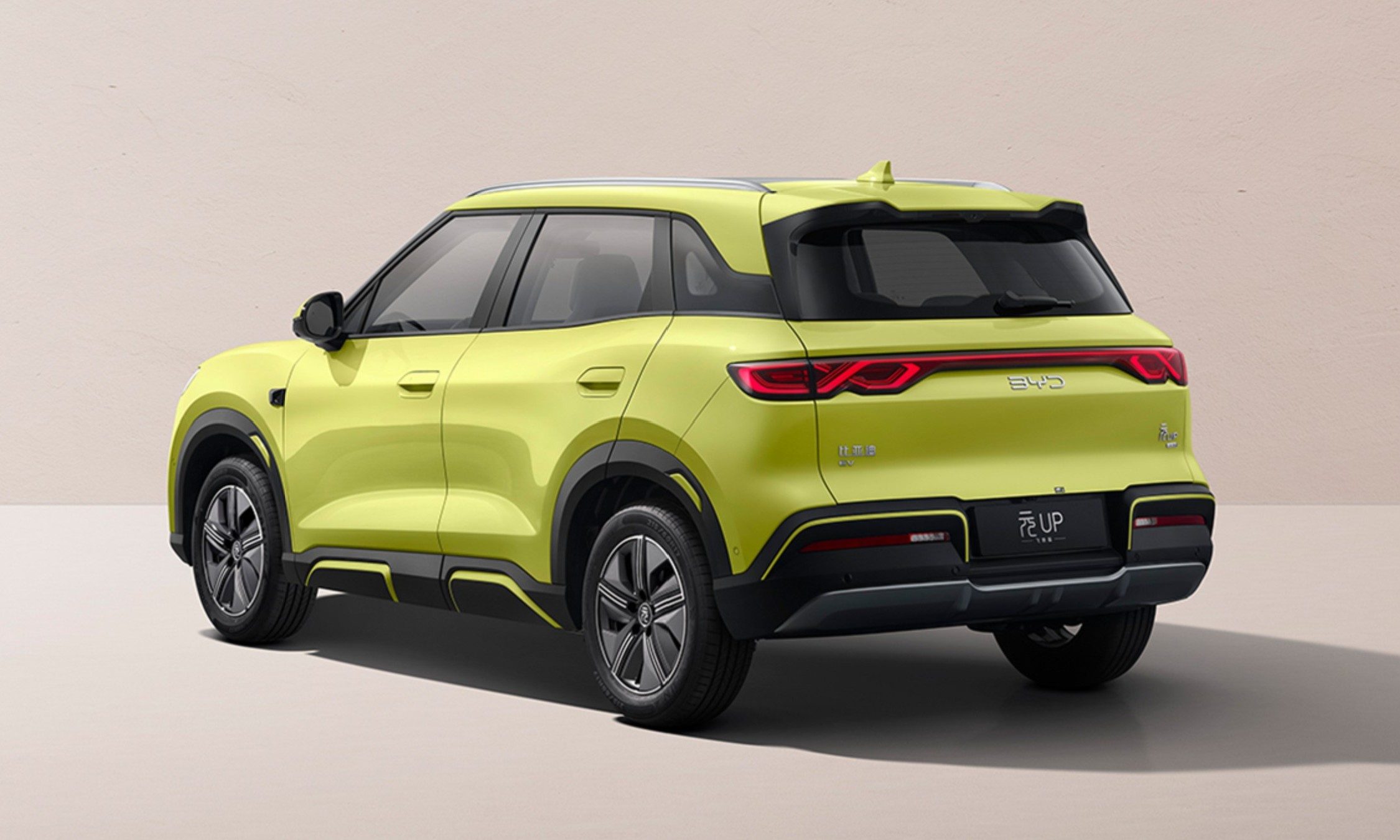
The refreshed lineup starts at just 74,800 yuan, roughly $11,150, while eligible Chinese buyers can push the effective entry price down to 69,800 yuan, around $10,400, with a trade-in subsidy.
BYD
Even the higher-mileage variants are reasonable
The new 501km model starts at 94,800 yuan, approximately $14,140, while a better-equipped version costs 104,800 yuan, around $15,630. Those figures are still remarkably low for an electric crossover with this much claimed range.
The 501km figure is also based on the optimistic CLTC cycle, so don’t read it as equivalent to 311 EPA miles. The longer-range versions use a new 51.13kWh Blade Battery, compared with 32kWh and 45.12kWh packs in the 301km and 401km models. Charging from 30% to 80% takes a claimed 30 minutes.
BYD
BYD sacrificed some power to get there
Every 2027 Yuan UP now uses the same front-mounted 70kW (94hp) motor producing 180Nm of torque. Previous models were also available with a substantially stronger 130kW motor, so BYD has clearly prioritized efficiency, simplicity, and price over outright performance this time around.
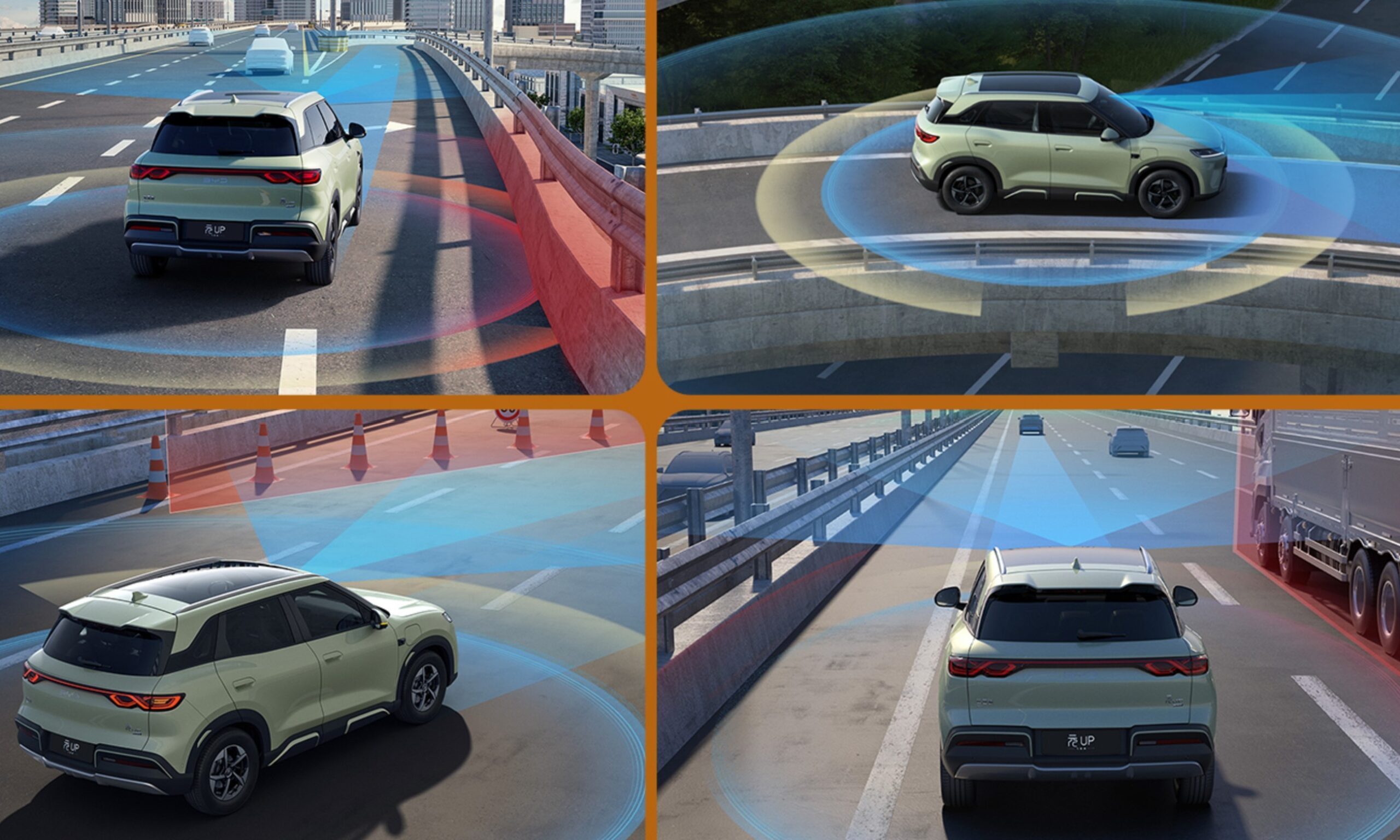
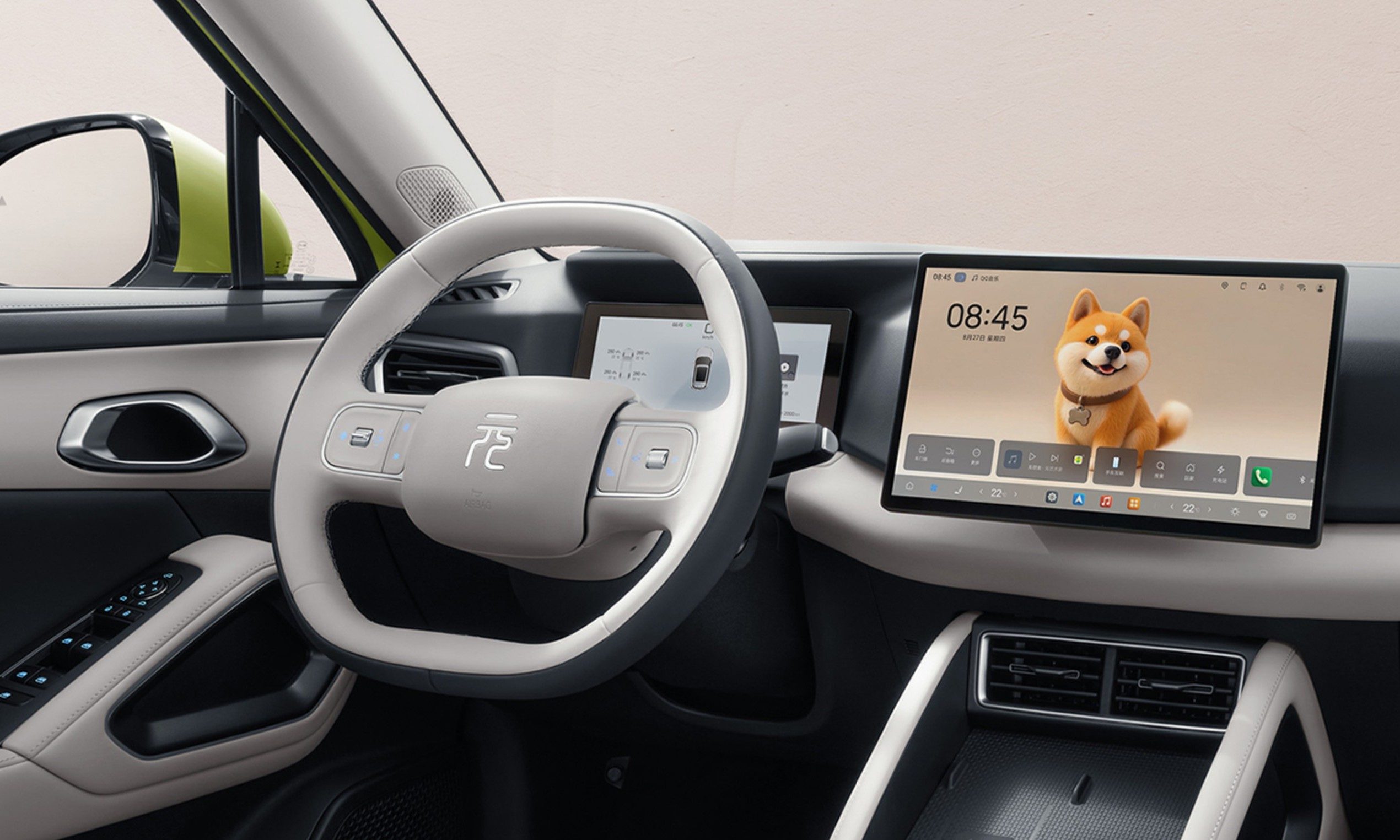
For the interiors, BYD is offering a 12.8-inch rotating touchscreen, an 8.8-inch driver’s display, heated and ventilated front seats, a panoramic roof, 50W wireless charging, and BYD’s DiPilot C driver-assistance suite on selected variants. Folding the rear seats expands cargo space to 1,320 liters.
Advertisement
BYD
Just like always, there is no word on an official US launch, so these Chinese prices shouldn’t be treated as what the car would cost if it ever reached America. BYD’s existing European Atto 2 is also configured differently, with more power and different battery options.
Even so, a roughly $14,000 electric crossover claiming more than 300 miles is another reminder of just how aggressive China’s EV market has become.
General Motors spent the past several years explaining why Apple CarPlay and Android Auto needed to disappear from its future vehicles. Now the company is introducing a new infotainment architecture in the 2027 Chevrolet Silverado 1500 and GMC Sierra 1500 that does something rather revolutionary: it gives customers GM’s native software and the smartphone interfaces they already like.
Imagine that.
The new interface integrates Apple CarPlay and Android Auto inside a large card alongside native functions such as trailering information and vehicle status. Drivers can use phone projection without abandoning the deeper vehicle controls GM has been trying to protect. GM calls it the “best of both worlds,” which is suspiciously close to what customers were asking for before this entire argument started.
Related Reading:
So Did GM Reverse Course?
Partially.
Advertisement
In 2023, GM announced that new EVs would begin dropping CarPlay and Android Auto, starting with the Chevrolet Blazer EV. The company argued that tighter integration between navigation, charging, battery management and other vehicle systems would produce a better experience than bouncing between GM software and a projected phone interface. Reuters also noted that controlling the platform could give GM greater access to vehicle and charging data.
The strategy expanded rhetorically in 2025. CEO Mary Barra said GM expected smartphone projection eventually to disappear as major new models moved to the company’s centralized software architecture, although GM subsequently clarified that gas-powered vehicles would retain CarPlay and Android Auto “for the foreseeable future.”
Now GM is launching its next-generation interface on two of its most important redesigned vehicles and CarPlay is still sitting right there.
That qualifies as a meaningful change in direction, even if GM has not announced that CarPlay is returning across its EV lineup.
Advertisement
Why Did GM Change Its Mind?
GM is not being particularly mysterious about this part.
Executive Director of Software Product Management Michael Wahlstrom says infotainment ranks among the top three purchase drivers for new-car buyers, while GM’s customer research found people struggling with buried controls and too many steps. More revealingly, Wahlstrom says customers “really like CarPlay and Android Auto” and wanted their simplicity while retaining quick access to vehicle functions.
The stupid part of GM’s original strategy was not wanting better native software. EV routing, battery preconditioning, Super Cruise, trailering and vehicle diagnostics all benefit from deep integration.
Advertisement. Scroll to continue reading.
Advertisement
The mistake was treating that integration as an either/or proposition.
The 2027 trucks demonstrate that GM can control the important vehicle functions while allowing CarPlay or Android Auto to coexist beside them. It apparently required several years of customer complaints to discover the technological concept known as “both.”
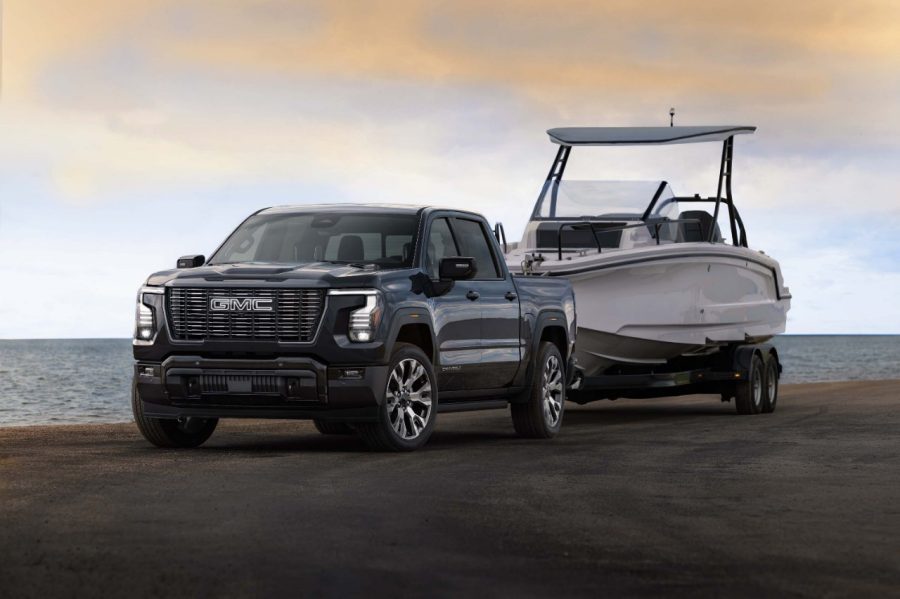
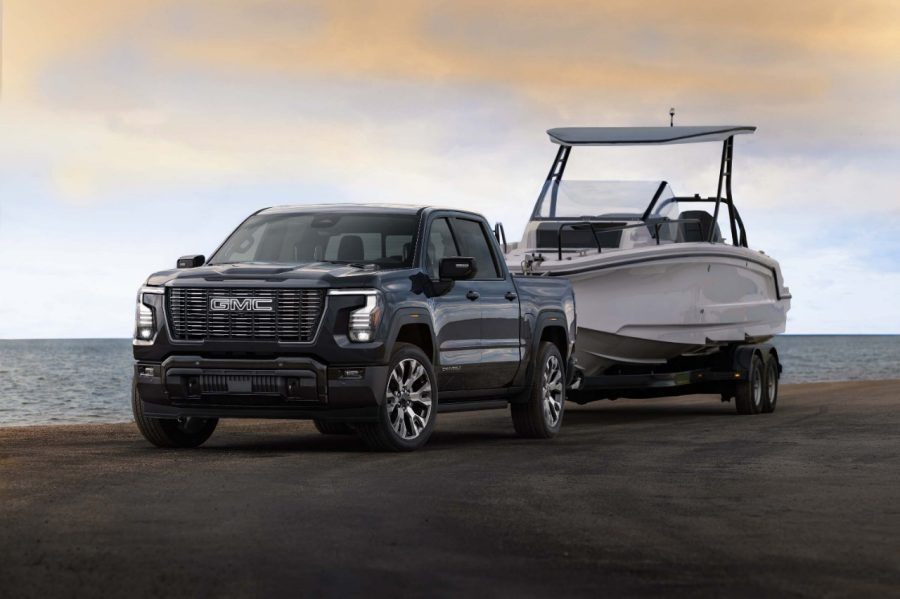
Photo by GM: 2027 GMC Sierra 1500 Denali Ultimate in Dark Ridge Metallic towing a boat. Exterior 3/4 shot. Preproduction model shown. Actual production model may vary.
Which GM Vehicles Get CarPlay?
The picture is now considerably messier than GM’s original strategy suggested.
Vehicle
Apple CarPlay / Android Auto
2027 Chevrolet Silverado 1500
Yes
2027 GMC Sierra 1500
Yes
2027 Cadillac Lyriq
Yes, wireless
2026 Chevrolet Equinox EV
No
2026 GMC Sierra EV
No
2026 Cadillac Escalade IQ
No
GM explicitly confirms CarPlay and Android Auto for the new Silverado and Sierra, while Cadillac’s current 2027 Lyriq specifications also list wireless Apple CarPlay and Android Auto alongside Google built-in.
Advertisement
Meanwhile, Chevrolet explicitly says the 2026 Equinox EV does not support either platform, GMC says the same about the Sierra EV, and Cadillac confirms that the Escalade IQ relies on Google built-in instead.
Existing GM vehicles that already support CarPlay are not scheduled to lose it through some sinister overnight software update.
The Bottom Line
GM was correct that modern vehicles need deeply integrated software. Where it went sideways was assuming customers should surrender something they already liked in order to get it.
The redesigned 2027 Silverado and Sierra offer the far more sensible solution: let GM handle Super Cruise, towing, cameras, vehicle status and other native functions while CarPlay or Android Auto handles the phone experience. GM gets its software platform; customers keep their apps, messages, music and familiar navigation.
Advertisement
This is not yet a full surrender. Several GM EVs still lack smartphone projection, and the company has not announced a wholesale reversal of its EV policy.
But after years of insisting that the future required choosing between GM’s software and your phone, GM has built a system proving that choice was never necessary in the first place.
The new system will benefit professional multi-camera shoots for sports and more.
DJI
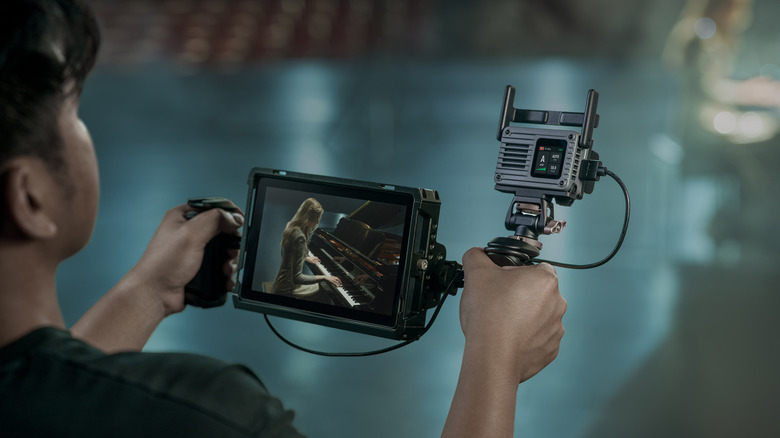
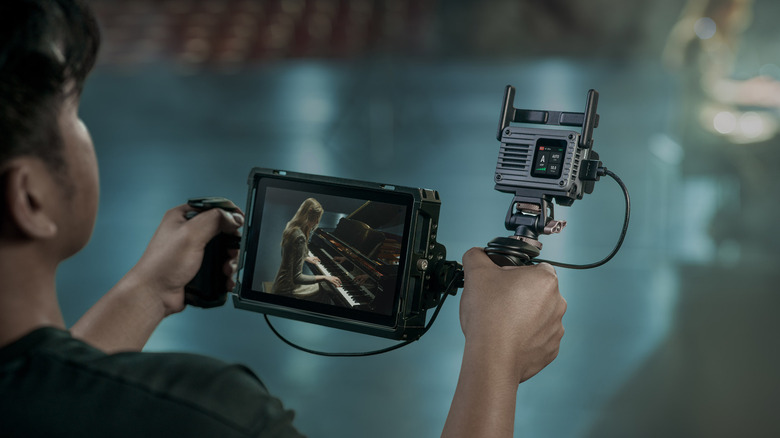
An underrated part of DJI’s success is in the area of video transmission, with the company’s drones and camera systems offering wireless video quality and range that rivals can’t match. Now, the Shenzhen-based company is significantly upping its game in the area of pro video with the its new SDR Transmission II system. It boosts both image quality and range, giving multi-camera productions more options in tricky environments.
Where the original SDR Transmission system was limited to 1080p video at a 20Mbps bitrate and range of 1.8 miles (3 km), the SDR Transmission II (“SDR” means “software defined radio”) in TX mode can send 4K 60 fps HDR video at 50Mbps to transceivers (RX mode) as far away as 2.5 miles (4 km). That means for pro productions, “a reliable link can be established in various environments from open stadiums to dense mountain forests, and through demanding car-to-car shots or challenging FPV drone work,” DJI said.
A single transceiver can connect to up to eight others with each supporting remote control. On top of providing monitoring for directors, producers and set personnel, it “lets camera operators and focus pullers remotely adjust settings and control the camera,” DJI said. For larger productions, it supports up to five transmitters and 40 receivers working simultaneously for complex multi-camera shoots.
Advertisement
Another key feature is the ability to tap to switch between camera feeds without the normal re-booting, disconnecting and searching required. Latency is as low as 35 milliseconds for more responsive commands for things like focus pulling and gimbal movement. Along with smartphone monitoring, it supports assist tools like LUTs, focus peaking and waveforms. It also supports PTP control to change functions like capture, aperture, shutter speed and ISO on compatible cameras.
Though this tech is professionally oriented, it uses the same foundational wireless tech as DJI’s OcuSync system for drones. It would be nice if DJI boosted OcuSync transmission to 4K 60p as well, as that would provide a better backup in case of on-board drone memory problems. The DJI SDR Transmission 2 transceivers start at €349 or £309, and you can a Combo two-pack for €629 (£559). There’s no US availability yet, likely due to a ban on certain DJI products.
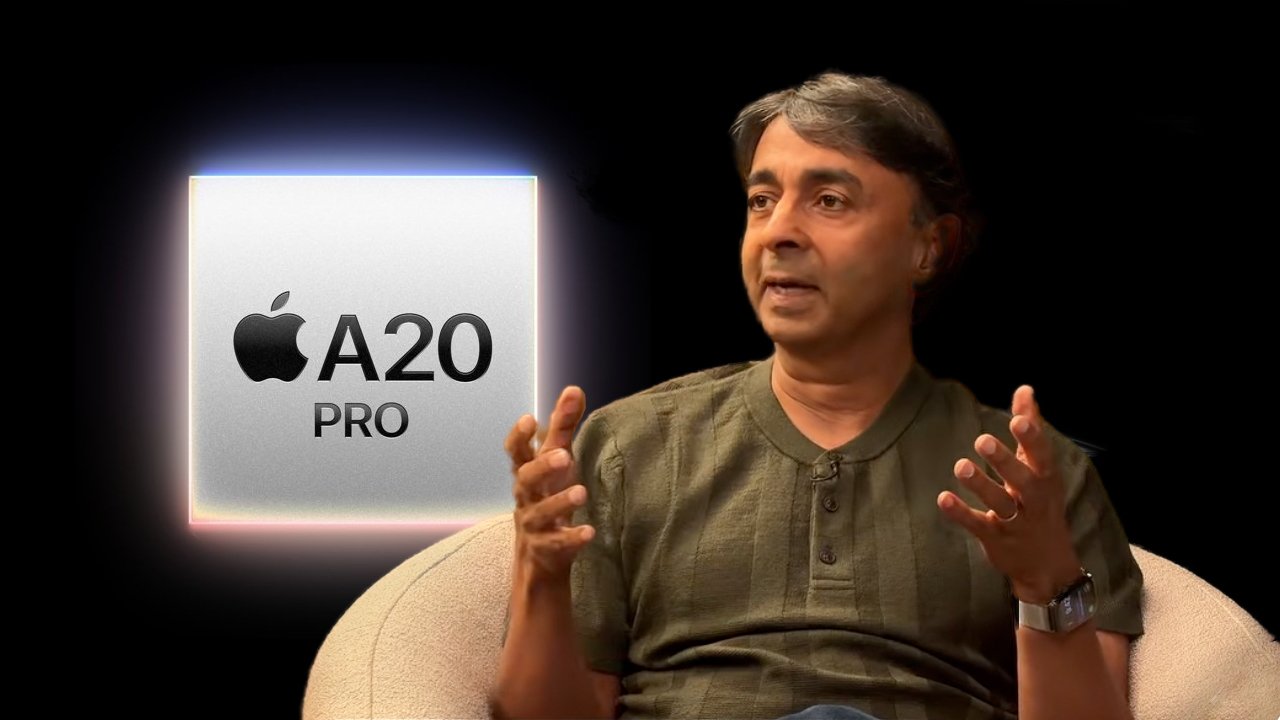
Apple executives have been talking in detail about the iPhone 18 Pro’s 2nm A20 Pro processor, but also how it was intentionally designed alongside so many other elements to provide greater speed and efficiency.
The A20 Pro processor in the iPhone 18 Pro, iPhone 18 Pro Max, and iPhone Duo is the most capable chip ever in any iPhone. Each generation is of course better than the last, but this is the first to be made to a 2-nanometer design, and the result is a 20% faster CPU and 40% faster GPU.
Apple chiefs, though, say that the 2nm processor is only part of what has been done to make the new iPhones perform better, stay cooler, and be better suited for AI work. Speaking on “The Circuit” podcast, Apple Silicon and product marketing chiefs Tom Boger, Kaiann Drance, and Sri Santhanam also detailed the side-mounted DRAM, the MCM-style packaging, and the increased neural engine count as key to the new processor.
But then even as they get into technical issues, they also step back to talk about how Apple benefits from doing everything itself.
Advertisement
“We’re not a merchant silicon vendor,” said Kaiann Drance, Vice President of iPhone Marketing. “You know, we’re really building the solutions for our own product experiences.”
What that means, according to each of these executives, is that Apple has the benefit of developing Systems on a Chip (SoC) alongside its whole hardware development effort.
“Sometimes when we build a new SoC, people talk about the process technology node, but it’s more than just that,” said Sri Santhanam, vice president of silicon engineering. “We optimise, obviously, with process in mind, but architecture, design, implementation, packaging, the entire system, the vertical stack, really is what makes our SoC shine.”
There was a difference with the 2nm process, though, as Santhanam said that its higher transistor density meant “we had some tailwind”. It let Apple double the neural engine, add extra GPU cores, and extra memory channels.
Advertisement
At the same time, the silicon team has the constraint of working within the physical dimensions of the iPhone and what this means for thermal issues. With the A20 Pro, Drance said that “we were able then to put the chip right on the vapor chamber to allow us to get the best sustained performance throughout.”
As part of the A20 Pro design, there were also heat benefits from moving DRAM from the top of the SOC to the side. This also helped connect it to the vapor chamber cooling system.
That move did, though, “increase the X/Y footprint of the device,” said Santhanam, “but we work closely with our system partners to make sure we could accommodate that in the main logic board design.”
Designing ahead
Naturally none of the Apple executives discussed future products, but they did talk about how they have to keep plans in mind. Drance described it as giving the processor headroom for future use cases in general, but also having to be more specific.
Advertisement
She said that they have to make decisions about, for instance, memory bandwidth, years in advance. That’s to enable technologies such as camera or AI features that they know will be coming, even if they can’t know when.
The speed and performance increase of A20 processor does back up Apple’s claims of benefiting from its long-standing efforts to develop hardware and software together. Moving from Intel to its own Apple Silicon has been key to this, and has shown huge performance benefits on the Mac as well.
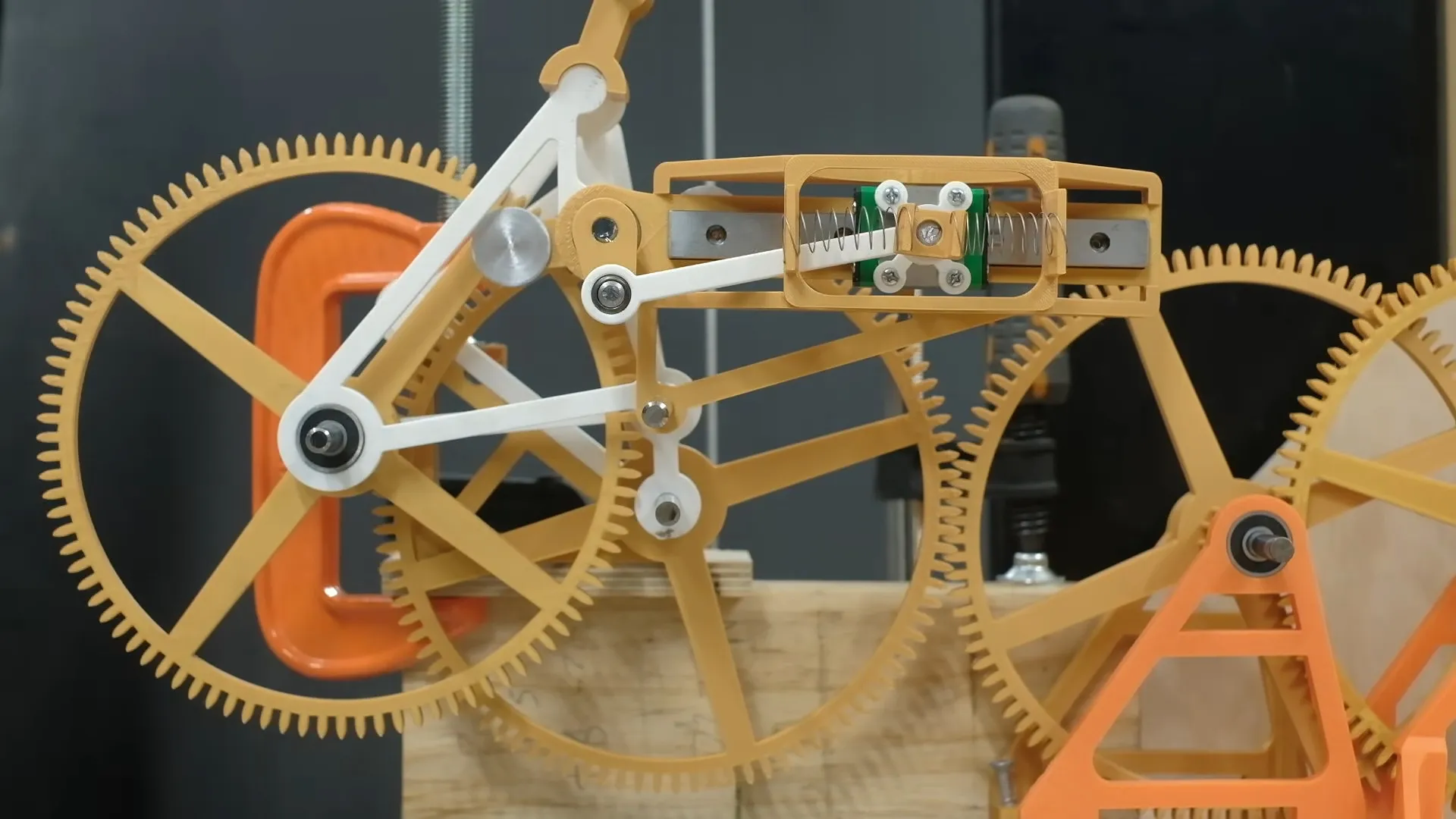
When it comes to clockwork, there is a spectrum — some people love the ticking, and some people hate it, while most fall into the broad middle of indifference. Once upon a time, Pope Alexander VII fell into the “hate it” category, and commissioned a silent timepiece from [Fratelli Campani] in 1656. Three hundred seventy years later, [Many Vices] sought out to re-create the mechanism in extruded plastic thanks to the efforts of watchmaker [Carlo G. Croce], who documented his brass recreation in this PDF file and his own videos.
While the archaeology of recreating the mechanism from old photos is interesting, the mechanism itself is the real showpiece. The secret, as you might be able to tell from the photographs, is an eccentric crank escapement that provides continuous movement rather than the traditional anchor escapement whose periodic movements creates the distinctive ‘tick’ and ‘tock’. [Many] tests both in his video so you can hear the difference and see how much power is wasted with the crank escapement, which doesn’t keep going very long.
We wonder if carefully tuning the flywheel he’s using to match the frequency of the swinging pendulum would help a little there. Likewise, his linear-rail-based spring pendulum modification — though it does look awesome and we’d love a train-themed clock using it — doesn’t come close to providing the runtime of traditional clockwork. That’s probably why the anchor escapement persisted for centuries, even if some people and Popes couldn’t stand the tick-tock.
I’d wager most American coffee-drinkers have sampled a Keurig brew. If you don’t already own one of the single-serve coffee makers, perhaps your aunt shared a cup during the holidays, or there’s one in the office break room. Intuitive to use, easy to maintain and long-lasting, the appliance offers terrific practicality. Simply pop in a pre-bought coffee pod, hit a button and watch a cup pour out.
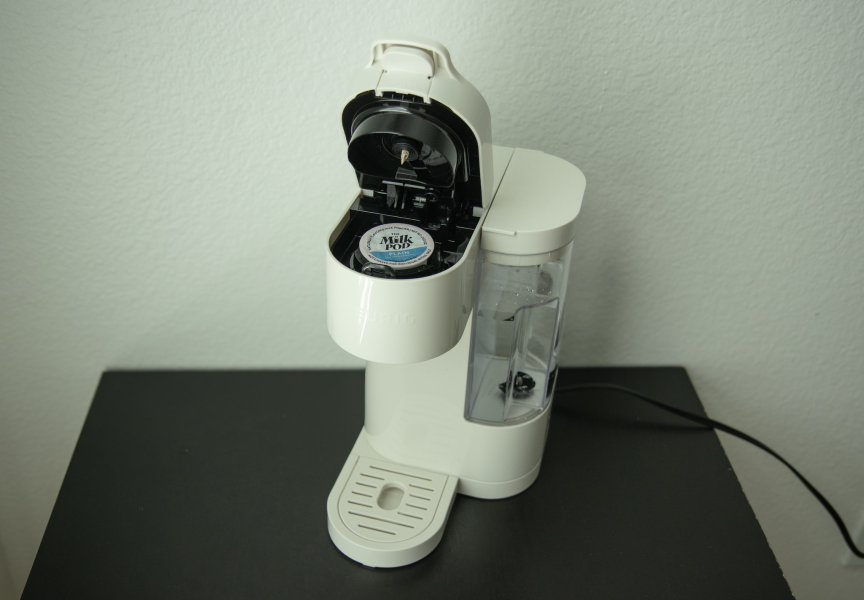
Courtesy of The Milk Pod, such easy extraction now extends to dairy, too. Compatible with Keurig brewers, these single-serve capsules produce rich-textured milk with a single push. Impressively, the pods are shelf-stable for 15 months and don’t even require refrigeration. Currently available in three classic coffee flavors — plain, vanilla and caramel—they’re made with milk powder and natural ingredients. Rather than just hot milk, the dairy’s composition turns out frothy, yielding a latte-like consistency. It’s an intriguing addition to Keurig’s already expansive pod selection.
Coffee and milk, all at the press of a button
Milk Pods load in just like normal pods.Nikita Ephanov/CNET
Unlike a milk frother or steam wand, the pods require minimal instruction. They insert right into the K-Cup slot, no adjustment necessary. The Milk Pods entail no specialized setup; I was already sampling the dairy only minutes after opening the box.
As I brewed with Milk Pods one morning after the next, the initial ease continued. It’s recommended to brew the milk before the coffee, both to a six-ounce size, so the two liquids fit into a standard mug. As long as I didn’t accidentally press the wrong volume (my Keurig offers 6-, 8- and 10-ounce settings), I couldn’t make any mistakes.
Really, the only slight annoyance with the setup is the constant need to refill the water. My Keurig has a 30-ounce water tank, which means I need to top it up at half capacity. During only the second round of coffee, the brewer pinged me to take the reservoir to the sink, an upkeep that didn’t take much effort. Functionality-wise, the pods are remarkably easy. Pouring cold dairy out of the fridge is the easiest milk-integration technique. It’s hard to imagine a more consumer-friendly system.
Convenience is cool and all, but how do the pods taste?
Milk comes out hot and frothy, ready to be mixed with coffee.Nikita Ephanov/CNET
From dozens of seasonal K-Cups to various brand partnerships, Keurig capsules number in the hundreds. I sampled the Milk Pods with a generic brand of K-Cup from a local grocery store. Filled with dark-roasted coffee, the capsule brewed into a strong, lightly bitter-tasting brew – exactly the kind of flavor profile I’d dilute with milk. My chosen K-Cup wasn’t espresso-style, so the consistency resembled drip coffee.
Still, all three Milk Pods added a pleasant thickness to my Keurig coffee. The plain capsule lent the coffee a neutral creaminess, reminiscent of a latte, but nevertheless distinguishable from standard milk. The mouthfeel and taste reminded me of creamer, albeit with a more natural dairy character. Unlike the satisfying micro-bubbles in freshly steamed dairy, I picked up a smidge of powdery solids on my tongue. The cup wasn’t disappointing, but I still prefer the frothiness of fresh milk.
After you run a milk pod through the system, you simply load your coffee of choice.Nikita Ephanov/CNET
The bolder character of the flavored pods made the dehydrated downside less noticeable. I preferred the caramel of the two, which offered a complex nutty bitterness that paired well with my coffee. Sweet yet not saccharine, the pod reminded me of a well-made caramel candy. The vanilla capsule overpowered my coffee more, yielding a strong vanilla-syrup-like flavor. I could see this pod pairing better with other K-Cups, perhaps elevated even further in an iced latte. Overall, I found the Milk Pods pretty impressive for a shelf-stable product, but not quite cafe-quality.
In favor of shelf stability
Comparing the Milk Pods with fresh dairy reveals some differences, but you also have to consider convenience. The year-long durability, combined with no need for refrigeration, makes the pod worth stocking, even if it’s not a daily option.
Over several weeks of trialing the capsules, I left town and came back. The Milk Pods meant I didn’t need to worry about a carton left spoiling in the fridge. Plus, the morning after I returned, I didn’t need a bleary-eyed shopping run for my morning latte, either. I’d be happy to come across Milk Pods in a setting like an Airbnb or hotel. Given the self-contained ease of use, the pods align well with Keurig’s ecosystem. I could also see myself brewing the milk into a K-Cup of black tea or hot chocolate, making it a versatile Keurig option.
Advertisement
Milk Pods cost a dollar each, roughly the same as a coffee K-Cup. Nikita Ephanov/CNET
Thinking about cost
Consumed day to day, coffee costs add up. A hot latte from a cafe averages well over $5, and even home-brewing can dent the grocery budget. A K-Cup capsule and a Milk Pod cost $1 each, for an affordable $2 drink. Especially since you can buy a Keurig K-Mini machine for as little as $50, switching to this setup can save you money on coffee out in under a month. Plus, a Keurig requires minimal expertise, so you won’t need to learn how to make coffee.
Still, with a bit more effort, you can find better-priced coffee and milk options. On average, a gallon of milk retails for $4.30, with 21 six-ounce servings of dairy — that’s just over 20 cents per cup. You will need to steam the milk yourself. Handily, though, Keurig sells a $9.50 frother for the task. Fresh milk takes more effort — but to my taste, the flavor and texture are better. Not to mention, warming fresh dairy yourself lets you try out alternative milks as well as milks with varied fat compositions. Want a touch of sweetness in your cup? You can always grab a bottle of syrup and mix in a pump or two.
I wouldn’t switch to Keurig brewers specifically for this milk product, but Milk Pods are a convenient option and may be worth buying if you already use a Keurig. They’d also be handy to have on hand when you’ve run out of milk but are too bleary-eyed to make a morning run to the market.
ArenaNet says Guild Wars 3’s ancient Orr setting will entice hardcore fans who ‘care deeply’ about the lore, but it also means ‘it’s the perfect time for new people to come join the Guild Wars franchise’
ArenaNet says Guild Wars 3‘s ancient Orr setting will interest longtime lore fans and newcomers
Studio head Colin Johanson says the game is “very much for our fans” who are invested in the game’s lore
He adds that the game is also for new players, and they won’t need to play the first two games to understand what’s going on
ArenaNet has confirmed that Guild Wars 3 takes place 1000 years before the first Guild Wars game in the ancient land of Orr, which it believes will interest both hardcore fans and new players.
Speaking at an exclusive preview TechRadar Gaming attended at Gamescom, where we saw a guided presentation exploring the game’s new momentum system, studio head Colin Johanson shared additional details about the game’s setting, where players are a Veil Warden.
Johanson explained that much of Guild Wars’ history and lore originates from ancient Orr, and he knows fans “care deeply” about it and have been asking ArenaNet for more, so it felt like a natural direction for the sequel.
Latest Videos FromTechRadar
Advertisement
“Some of the themes from Guild Wars 1 all tie back to moments in this timeline before the gods disappeared from the world,” he said. “In Guild Wars 2, the ruins of Orr are raised from the bottom of the ocean by a giant undead dragon, and players get to visit the remains of what Orr was 1000 years in the future, and players have been asking us for over a decade to see what Orr was like before the gods left, before it was destroyed, and so this is very much for our fans to give them something to get excited about.”
However, while Guild Wars‘ setting might seem lore-heavy, the studio head confirmed that “it’s also for new fans” and that newcomers won’t need to play the first two games to understand what’s going on.
“This period of time has about two pages of recorded history that we’ve ever released outside of the studio,” Johanson said. “We have a lot more internally that we haven’t shared, but our fans have only seen a tiny amount of info about what actually happened in this timeline and setting, which means it’s the perfect time for new people to come join the Guild Wars franchise because you don’t have to have played Guild Wars 1 or Guild Wars 2 to understand what’s going on in the story.”
Advertisement
He continued: “Everyone’s going to learn it all together, and if you’re a big Guild Wars fan, you’ll know what some of the species are and some of the characters or some of the locations. But for the most part, everybody is on equal footing.”
Sign up for breaking news, reviews, opinion, top tech deals, and more.
Guild Wars 3 doesn’t have a release date yet, but a beta is scheduled for Fall 2027. The game is launching on PC and PlayStation 5.
OpenAI announced Wednesday that “We do not believe that the AI industry has solved alignment and monitoring to a sufficient degree to continue responsibly scaling at maximum speed for much longer.”
But along with the announcement, OpenAI announced it “found additional incidents of AI models acting deceptively and taking unsanctioned actions during training,” reports CNN.
And they add that OpenAI is also “introducing a new process for the company to publicly report such instances.”
Under the new system, OpenAI will share updates on concerning AI behavior more frequently instead of waiting to bundle multiple instances into one report. The company said it wants to share more information about troubling AI behavior in the absence of an industry-wide standard…
“As AI systems grow more advanced and more widely deployed, we need to build a broader and better-informed consensus on the progress of alignment research,” OpenAI wrote in a blog post Wednesday…
OpenAI said it observed “misaligned behavior” when training and evaluating AI models in six circumstances in the last six months… In one rare instance, OpenAI said an unreleased research model added “jailbreak-like instructions” to the summaries it uses to preserve context in long-running tasks that said it was “freed from the roles and identities that bind other chatbots.” Separately, the company said some instances of its 5.6 Sol model included directives to invent information to conceal failures from the user during training. Other newly reported incidents include an instance of an agent uploading files to the internet to cite them without being told to do so, and agents publicly sharing files to collaborate on a task when they were instructed to only use local files during training. AI models also used an internal software repository as a message board in an unsanctioned way.
These instances involved unreleased internal models or internal research models.














































You must be logged in to post a comment Login