In late November in Jamnagar, India, the scions of two of the most powerful families in the world stood face-to-face. On one side was 30-year-old Anant Ambani, son of one of the richest men in Asia. On the other was Donald Trump Jr. For months, the Trump administration had been on the offensive against the sprawling Ambani energy empire, placing it at the center of an escalating tariff campaign against India. But after Trump Jr. touched down, the two men toured the Ambanis’ private zoo, and at night they performed a Gujarati folk dance, grinning as they moved together to the music.
Four months later, an obscure Texas startup called America First Refining announced that it had received a nine-figure investment from the Ambanis’ company. The deal puzzled numerous energy investors familiar with the project, which aims to build the first major new oil refinery in the U.S. in about 50 years. The company is run by a serial entrepreneur with a history of bankruptcy and lawsuits alleging fraud. After more than a decade of failed attempts to raise money, blown deadlines and rebrands, it had been floundering.
Advertisement
America First Refining’s unexpected breakthrough came after it forged a previously unreported relationship with Trump Jr., who secretly acquired a stake in the startup, according to records and seven people familiar with the company. The new details reveal the role the president’s son has played in a theme of Trump’s second term: overseas investors with interests before the administration putting money into the Trump family’s business interests.
Over the past year and a half, Trump Jr. has amassed a fortune from stakes in companies ranging from crypto startups to a drone business to a firearms retailer. Some firms tied to the president’s son have received contracts or other support from the federal government, part of what critics describe as a run of Trump family self-dealing. In December, Forbes estimated that Trump Jr.’s net worth had rocketed from roughly $50 million to $300 million since the election. But the Forbes figures were based on the investments that have been publicly disclosed. The America First Refining episode suggests there is much about the family business that remains secret.
The size of Trump Jr.’s stake in America First Refining and what he paid for it remain unclear. Top executives at the startup have also said that they speak regularly with Trump Jr., according to a person close to the company. And after the Ambani investment was announced, Trump Jr.’s personal lawyer took credit on social media for playing a part in the deal.
America First Refining has flexed its Trump Jr. connections during pitch meetings with foreign officials. Early last year, Trump Jr. joined the company’s leadership for a meeting in South Florida with potential investors from Saudi Arabia, according to two people familiar with the matter. Another foreign government official pitched on the project told ProPublica that the company’s team emphasized they had backing from the Trump family and suggested that an investment would help with White House access.
The Ambanis’ investment coincided with the family’s securing major U.S. policy wins that their company, Reliance Industries, had been lobbying for. “Reliance Goes From Trump Foe to Friend With Refinery Pledge,” ran the Bloomberg headline after the deal was announced. Reliance’s intent with the deal was to “smooth out” tensions between the U.S. and India, the outlet reported.
Advertisement
A Trump Jr. spokesperson said that Trump Jr. “has no operational involvement in AFR and is simply a passive minority investor in an American company that aligns with his worldview.”
“The entire premise of this story relating to Don is false,” the spokesperson said, adding, “Don does not interface with the Federal Government on behalf of any company that he invests in or advises.” ProPublica did not find evidence Trump Jr. was aware of refinery executives’ suggesting that an investment would help with White House access.
In response to detailed questions, a spokesperson for America First Refining said, “The claims in this story are false,” but declined to specify what they were referring to. The company’s CEO previously denied wrongdoing in the lawsuits against him reviewed by ProPublica, and the suits were either settled or dropped.
The Ambani family had long been cultivating its relationship with the Trumps. Reliance paid $10 million to the Trump Organization in 2024 as a “development fee” for a project in Mumbai, according to the president’s financial disclosure. (Despite the payment, Reliance has not yet announced a Trump project. Reliance told ProPublica that “the real estate project is real” and “remains under development.”) Ivanka Trump attended Anant Ambani’s wedding party in India that year, where guests were treated to a Rihanna concert. Anant’s father, Mukesh — who is worth an estimated $90 billion and lives in a 27-story home — came to Washington, D.C., for Trump’s second inauguration, posing with the president at a private reception.
Advertisement
But by the summer of 2025, the family was under attack from the White House. Since Russia invaded Ukraine in 2022, Reliance had reportedly made billions in profits by purchasing vast quantities of Russian oil at a discount. In August, as Trump grew frustrated with his administration’s struggles to bring the war to an end, the president doubled his tariffs on India to 50%. The move was explicitly designed to force companies like Reliance to stop buying Russian oil. White House trade adviser Peter Navarro publicly assailed “India’s politically connected energy titans” for “funding Putin’s war machine,” widely read as a reference to the Ambanis.
Amid this tension, Trump Jr. visited Anant Ambani on his November trip to India. At the end of the trip, Trump Jr.’s personal lawyer commented at a business conference in Miami: “I had a nice closing this morning with Don Trump Jr., who’s flying back from India today.” (The following week, the Texas startup — then called Element Fuels — filed paperwork to create America First Refining LLC. In an email, the attorney, John Willding, told ProPublica that there was “no transaction in India or with an Indian company that I was ever involved with.”)
Anant Ambani, who helps run Reliance’s energy business, personally worked on the Texas refinery deal for months before it was announced, a major Indian newspaper later reported.
As the Ambanis quietly finalized their deal with America First Refining, U.S.-Indian relations appeared to warm. In February, the Trump administration struck a trade deal with India, dramatically lowering tariffs, and also reportedly gave Reliance a license to buy Venezuelan oil. When the Iran war broke out and rocked global energy markets, the U.S. gave India a sanctions waiver to buy Russian crude. (The waiver was later expanded to all countries.)
In response to ProPublica’s questions, the White House said that “there are no conflicts of interest.” Reliance did not answer ProPublica’s questions about Trump Jr.’s and Anant Ambani’s roles in the investment deal, but said in a statement that the company did not receive “any unique or preferential treatment” from the U.S. government.
“There is no connection between Reliance’s investment in AFR and any unique measures associated with general U.S. trade, tariff, sanctions or licensing outcomes,” Reliance said. “The investment was evaluated and approved on its commercial merits, strategic fit and long-term value creation potential.”
Advertisement
In March, President Trump personally announced Reliance’s deal with the Texas startup on Truth Social, thanking the Ambani company for its “tremendous Investment.”
After the announcement, Willding, the Trump Jr. lawyer, shared the news on LinkedIn: “Just so proud to have been part of this one.”
Willding rowed back his claim in an email to ProPublica. “I have never worked for or advised AFR and had zero involvement in their deal with Reliance Energy,” he said. “I simply saw the press release and was excited for them.” America First Refining’s spokesperson called Willding’s comment “moronic and false.”
In June 2025, Willding registered a new entity in Wyoming called TX Fuels, LLC, listing the company’s address as Trump Jr.’s mansion in Jupiter, Florida. In his email, Willding said his “only involvement in AFR was handling the legal paperwork” for the Trump Jr. LLC’s investment in the startup.
Advertisement
Trump Jr. first hired Willding in May 2021, according tointerviews the lawyer has given. A corporate deal lawyer in Dallas, Willding has referred to himself as “outside business counsel to the Trump family” and has said he talks to Trump Jr. or Eric Trump almost daily. A former Bill Clinton and Barack Obama voter who fell hard for MAGA, the attorney has installed a portrait of President Trump over the mantel in his living room.
Willding’s practice has boomed during the second Trump administration, bringing the lawyer to Argentina, Saudi Arabia and South Korea. “Everybody in the world wants to do business with the United States right now,” Willding said at a conference in June 2025. “Every company wants to do business with the Trump family.”
There are other fingerprints of the Trump world on the refinery deal.
Howard Lutnick’s firm Cantor Fitzgerald — which his sons took over when Lutnick became Trump’s commerce secretary — is working as the financial adviser to America First Refining, including on the Ambani investment deal, Cantor Fitzgerald announced. (Cantor Fitzgerald declined to comment.)
Advertisement
And the Trump administration played a direct role helping America First Refining find potential foreign investors, according to public comments from the company’s CEO, John Calce. “We have received support from the White House,” he told a local news outlet. The National Energy Dominance Council, led by the interior and energy secretaries, has “helped us with, candidly, introducing us and helping us meet some of these people overseas,” Calce said on an industry podcast.
America First Refining has recently explored going public, according to three people close to the company. That could allow its current investors to start cashing out even if the refinery never gets built — a milestone many energy industry insiders still view as a long shot. Reliance made its investment in the startup at a valuation of at least $1 billion, according to America First Refining’s announcement.
Building a refinery at the Port of Brownsville on the Gulf Coast has been Calce’s mission for a decade. A former Yale offensive lineman, he started his career as a high school football coach after an unsuccessful attempt to make the NFL and now describes himself as a “lifelong entrepreneur.”
The project has been serially delayed, out of money, rebranded and trailed by angry former business partners. At one point, Calce’s companies were being sued simultaneously by eight other firms. In 2022, during bankruptcy proceedings for an earlier iteration of the project, the trustee appointed to impartially oversee the case sued Calce too. The trustee alleged that Calce and other insiders had improperly siphoned away cash and other assets. (Calce denied wrongdoing. The case was ultimately settled.)
Advertisement
During the Biden administration, as the company sought financial support from the Department of Energy, it pitched itself as a climate-friendly green project that would also help “people of underrepresented social demographics” in Brownsville, according to records from that period. The company failed to get enough money from outside investors, and the planned construction was delayed.
By the company’s own estimate, building the refinery will take years and cost $3 billion to $4 billion. Even if it’s built, profitability could be hard to achieve. Many energy investors told ProPublica there’s a reason the U.S. hasn’t seen a major new refinery in decades. “Refineries cost a lot of money and essentially make pennies on the dollar,” said Ed Hirs, an energy economist in Houston. “Wall Street is not going to finance a new refinery.”
Even after the start of the second Trump administration, the company was in jeopardy, according to interviews and documents. It laid off workers last year, and, by late 2025, with delays continuing to plague the refinery, officials at the Port of Brownsville believed the project looked to be dead, according to records reviewed by ProPublica.
That has not stopped Calce and his team from making grandiose claims to the public. Earlier this year,a website went live for another Calce company called Brownsville Energy Storage Terminals. It claims to have a far-flung network of oil storage terminals in places like the Netherlands and Singapore, more than 850 employees and a C-suite of experienced energy executives. But ProPublica could find no evidence that the executives are real people or that the storage terminals actually exist. The phone numbers on the website are also currently listed online as the contacts for a Houston baklava caterer, a Dallas-area taxi service and an OB-GYN office. The numbers are dead.
Advertisement
America First Refining’s political ties, though, may have boosted its standing with Texas state regulators. In February, shortly before the Ambani investment became public, the company sought an extension on its permit from the Texas Commission on Environmental Quality.
Inside the state agency, emails obtained by ProPublica show, officials scrambled to approve the request.
“Need to get this one logged and processed asap,” wrote one official.
“You are going to have to do this one. I will explain why in person in a few,” wrote another. “You can guess if you check out the name.”
Advertisement
America First Refining got its approval the next day. A spokesperson for the Texas agency did not address questions about the emails. “This request was processed quickly due to the quality of information provided,” the spokesperson said.
The iPhone 17 and Samsung Galaxy S26 are two very similar standard flagships, making the decision of which to buy all the more challenging.
Do you go for the premium, Liquid Glass-inspired iPhone 17 or stick to the ultra-slim Android flagship experience of the Samsung Galaxy S26? Is there really a difference in how they perform day-to-day? And what about elements like camera hardware, screen tech and all-important battery life?
While it’s easy to compare the two on paper, we’ve used both the iPhone 17 and Samsung Galaxy S26 in day-to-day use – and here’s how they compare in the real world.
Pricing and availability
The Samsung Galaxy S26 is the more expensive of the two, coming in at £879 for its 256GB model.
Advertisement
SQUIRREL_PLAYLIST_10208273
Advertisement
That said, if budget is a primary concern, the iPhone 17 is a slightly more affordable option at £799, with the same generous 256GB of storage out of the gate.
SQUIRREL_PLAYLIST_10207955
Advertisement
Design
The iPhone 17 and Samsung Galaxy S26 both present beautifully compact forms compared to their giant Ultra and Pro Max siblings, making them much easier to use one-handed, though they tackle premium builds in slightly different ways.
Image Credit (Trusted Reviews)
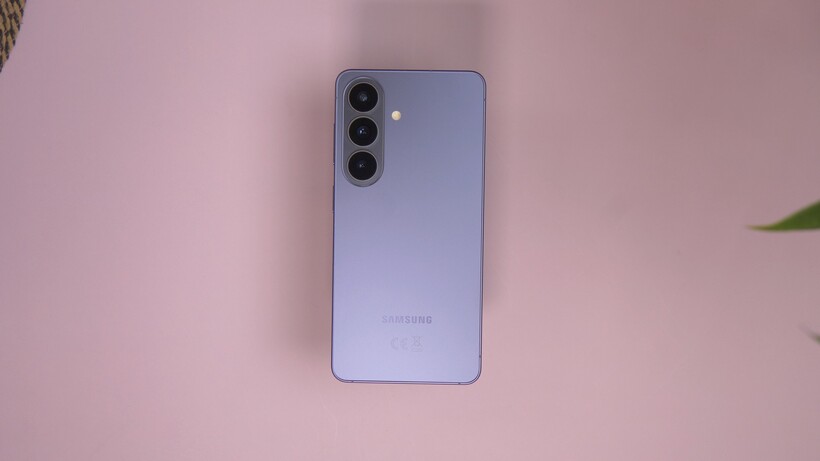
The Samsung Galaxy S26 is certainly the thinner and lighter of the two, measuring in at just 7.2mm at the edges and a mere 167g in the hand. Samsung has refined the design slightly this year, shrinking the display bezels further and housing the cameras in a raised, pill-shaped island rather than letting them poke out awkwardly.
However, if you hate a phone that rocks when placed flat on a table, beware; the S26 is the wobbliest phone we’ve used in a while.
Advertisement
Image Credit (Trusted Reviews)
It’s a pretty premium experience elsewhere, however, with a chassis constructed of aluminium and Gorilla Glass Victus 2, complete with full IP68 dust and water resistance to round things out.
The iPhone 17, on the other hand, retains its highly familiar (and now iconic) flat-edged, rounded-corner look it has sported for several generations, complete with the same aluminium frame and frosted glass panel on the rear. It also comes in attractive colour options like Sage and Mist Blue, alongside a premium-looking matte-black finish.
Advertisement
Image Credit (Trusted Reviews)
Like the Pro models, it features the programmable Action button on the left and Camera Control on the right, though the latter remains placed a little too far down the side to be comfortable enough for swift setting changes or snapping photos.
Image Credit (Trusted Reviews)
Advertisement
Apple has, however, enhanced the phone’s ruggedness with Ceramic Shield 2 on both the front and back to ward off micro-scratches and damage from drops, and while it matches the S26’s IP68 rating, it boasts added protection down to 6 meters for up to half an hour.
Screen
Both Apple and Samsung deliver a top-notch screen experience, though the iPhone finally takes the win with this generation.
Image Credit (Trusted Reviews)
The Samsung Galaxy S26 delivers a vibrant 6.3-inch Dynamic AMOLED 2X panel with a 1080 x 2340 resolution and a smooth LTPO-enabled 120Hz refresh rate – a very familiar setup largely carried over from the Galaxy S25.
Still, general viewing angles are fantastic, and its 2600nit peak brightness easily cuts through direct sunlight outdoors. It does, however, miss out on the anti-reflective coating and Privacy Display tech found on the S26 Ultra.
Apple, on the other hand, has finally relented and added the previously Pro-exclusive ProMotion 120Hz screen tech to the base-model iPhone 17.
Advertisement
Advertisement
Image Credit (Trusted Reviews)
The 6.3-inch screen packs a sharp 1206 x 2622 resolution that remains detailed, bright and vivid, but the more important element here is LTPO tech; it allows the screen to drop all the way down to 1Hz to maximise battery life, just like Samsung’s option.
Visibility is also impressive, with the iPhone 17 reaching a massive 3000-nit peak brightness (1600-nit in high-brightness mode) while dropping to just 1 nit for a more comfortable late-night viewing experience.
Cameras
If there’s one area where the Galaxy S26 and iPhone 17 diverge, it’s in the camera department.
The Samsung Galaxy S26 features a strong triple-camera system comprising a 50MP main sensor, a 10MP 3x telephoto zoom lens, and a 13MP ultrawide. The primary camera is the strongest of the bunch, capturing detailed photos with a vibrant, saturated processing style that preserves shadow detail in backlit scenes – but the other sensors are weaker.
Advertisement
Advertisement
The 3x zoom struggles to lock focus on moving objects in windy conditions, and because it’s only a 10MP sensor, digital cropping is limited compared to high-res rivals. The 13MP ultrawide is the weakest link, turning out grainy, pale images with clear edge distortion as soon as light levels drop.
The iPhone 17, on the other hand, lacks a dedicated telephoto lens, instead relying on an optical-quality 2x in-sensor digital crop from its otherwise excellent 48MP main sensor, which can push to around the 4x mark before things get spotty.
Image Credit (Trusted Reviews)
The main snapper provides sharp, colour-accurate images with Apple’s reliable ‘always good’ point-and-shoot processing. This year’s standout is the massive upgrade to the accompanying 48MP ultrawide sensor, which finally matches the main sensor in colour and detail, even in more challenging lighting conditions.
We’re also big fans of the iPhone’s new selfie camera; it uses an 18MP square sensor, allowing you to take full-res portrait or landscape shots without needing to rotate the phone. A small touch, but one that makes a big difference in use.
Advertisement
Advertisement
Performance
In terms of day-to-day use, both devices feel rapid with plenty of processing headroom that’ll get you through most mobile-related tasks without breaking much – if any – of a sweat.
Image Credit (Trusted Reviews)
The Galaxy S26 ships with the Exynos 2600 chipset in the UK (the Snapdragon 8 Elite Gen 5 in other regions like the US) and a rather generous 12GB of RAM. Benchmark scores are, unsurprisingly, brilliant, nearly matching the Snapdragon 8 Elite Gen 5 in the S26 Ultra in some cases.
It also helps that One UI is highly optimised, ensuring that taps and swipes are fluid and lag-free. Gaming is similarly smooth, with titles like Mario Kart Tour running at high resolutions without noticeably heating its relatively thin chassis.
Image Credit (Trusted Reviews)
The iPhone 17 counters the S26’s performance with its custom Apple A19 chip alongside a more conservative 8GB of RAM. Though it lacks the extra GPU core of the A19 Pro variant, it handles pretty much everything flawlessly. Social media timelines scroll without a hint of stutter, and intensive apps load instantly. You’ll be able to play even console-level games on this thing without much issue.
Advertisement
Software
Your choice of phone will likely come down to your preference for iOS or Android, but regardless, both systems have had notable updates this year.
Advertisement
Image Credit (Trusted Reviews)
The S26 runs One UI 8.5 based on Android 16, but the bigger focus here is its AI smarts. Galaxy AI covers a wide range of features, from returning favourites like photo eraser to new features like the real-time AI Noise Eraser, which reduces distracting background tracks and crowd sounds directly in apps like YouTube. And, with seven years of OS upgrades to look forward to, it should only improve over time.
The iPhone 17 runs iOS 26, which as I’m sure we’re all aware of at this point, ships with the redesigned Liquid Glass interface. The at-times controversial UI change adds an unmistakable charm to the software, with colours physically refracting beneath the UI layers and moving with organic elasticity.
Image Credit (Trusted Reviews)
Unfortunately, Apple’s AI push remains underwhelming, especially compared to Samsung’s. The Photo Clean Up tool leaves glaring signs of editing, text transcription is hit-and-miss, and Image Playgrounds looks almost child-like compared to rivals.
Advertisement
However, that could all change with iOS 27 and the long-awaited release of the redesigned, smarter Siri – we’ll just have to wait and see for now.
Battery life
When it comes to both overall battery life and charging capabilities, Apple’s iPhone 17 has a clear win.
Advertisement
Image Credit (Trusted Reviews)
The Samsung Galaxy S26’s 4300mAh battery is an improvement over its predecessor, but it remains somewhat average in use. Light users managing around 3-4 hours of screen time per day will coast through easily, but power users will find themselves running low before the sun goes down.
It’s also severely let down by slow 25W charging and a Qi2 wireless implementation without magnets, instead leaving magnetic connectivity to casemakers.
The iPhone 17, on the other hand, sports a 3692mAh battery that comfortably lasts through an intense 12- to 14-hour day with few complaints. Everyday tasks like scrolling through TikTok, using Google Maps for navigation and messaging on WhatsApp will still leave you with a solid 20% or so in the tank by bedtime.
Advertisement
Image Credit (Trusted Reviews)
Charging is also significantly improved, boasting rapid 40W wired charging and 25W MagSafe wireless support. Paired with a 65W charger, it hits 50% in just 26 minutes – much quicker than the Samsung competition.
Verdict
Overall, the iPhone 17 stands out as the better buy for most people in this generation, with Apple finally addressing key long-term complaints in its entry-level iPhone.
Advertisement
Both devices offer premium, compact designs that are increasingly rare in the smartphone market, paired with fluid 120Hz displays, exceptional flagship performance, and capable primary camera sensors. However, the iPhone 17 justifies its price with superior camera hardware – both front and rear – and vastly superior 40W wired and 25W magnetic wireless charging.
That said, the Galaxy S26 remains an excellent choice if you’re on the market for a triple-lens camera system with a dedicated 3x zoom lens, prefer an ultra-thin 7.2mm body, or simply prefer Android to iOS. There’s no hardware that’ll tempt you if you don’t like the hardware it runs on, after all.
But, with its weak secondary cameras, average battery life and slower 25W charge speeds, it takes a back seat to the more polished package offered by the iPhone 17.
Advertisement
Advertisement
To see how the two compare more widely, take a look at our selection of the best smartphones.
Baseus Inspire XP1: A trickle of earbuds from value oriented brands have come out in the last year in collaboration with Bose, which has been gradually expanding its “Sound by Bose” initiative that brings its brand to more affordable headphones and earbuds. Like the Skullcandy Method 360 ANC earbuds, the Baseus Inspire XP1 feature very good sound in a set of comfortable earbuds that share some similarities with Bose QuietComfort Ultra earbuds, particularly how they fit (they have similar ear tips to the Ultras, and the buds fit my ears quite well). The Inspire XP1’s price fluctuates and sometimes dips to $100, which is the best time to buy them.
Anker Soundcore Liberty 4 NC: Released in 2023, the Anker Soundcore Liberty 4 NC earbuds carry a lower list price than 2022’s Liberty 4 buds and are arguably better in some ways. They have improved noise cancellation and better sound quality, along with support for the LDAC audio codec for devices that support it. (Many Android smartphones do, and in theory it offers slightly improved sound quality when paired with a music streaming service that offers high-res tracks.) Nicely discounted, they’re lightweight buds that should fit most ears comfortably with four sizes of ear tips to choose from. That said, the newer P31i cost less and offer similar performance.
QCY MeloBuds Pro: Like Earfun, QCY makes a variety of budget earbuds and headphones that deliver good bang for your buck. The MeloBuds Pro look a little generic, but they’re lightweight and comfortable and sound good for what they cost, offering decent clarity and well-balanced audio (you can tweak their sound profile a bit with the EQ settings in the QCY companion app). Also, they’re noise-canceling and voice-calling performance are better than average for sub-$50 earbuds. And finally, they have ear-detection sensors, multipoint Bluetooth pairing, a low-latency gaming mode and support for Sony’s high-quality LDAC audio codec (many Android devices support LDAC).
Roseselsa Ceramics X: Truth be told, I’d never heard of the Roseselsa Ceramics X earbuds before I saw a post comparing them to Final Audio’s more expensive ZE3000 SV buds that argued the two models are essentially the same. This would make the Ceramics X far better value but it didn’t quite prove to be true. While I ended up liking the Final Audio ZE3000 SV better, I was impressed by the sound quality of the Ceramics for how little they cost. Also, not only did they fit my ears well, but I thought their noise canceling was effective, and their voice-calling performance was acceptable. They also support the AAC and LDAC audio codecs for Bluetooth playback (many Android smartphones support LDAC).
Advertisement
Anker Soundcore AeroFit 2: Anker’s Soundcore AeroFit 2 used to be on list but their list price has risen from $100 to $130, so I had to pull them off. These open earbuds have been completely redesigned and look quite different from the original AeroFit buds, which also listed for $100. The second-gen Aerofit are not only more comfortable but look sleeker, sound significantly better and offer all-around improvements. The buds aren’t as light as the Shokz OpenFit 2 buds and don’t sound quite as good, but they cost quite a bit less and offer good all-around performance with augmented bass response. Available in multiple colors, they’re a good option for those looking for ear-hook style open earbuds with a fairly premium design and good sound quality without the high price tag of top-end models.
Soundpeats Air3 Deluxe HS: What makes these $40 Soundpeats Air3 Deluxe HS buds special is that they sound surprisingly good for open earbuds — they’re close to what you get from Apple’s AirPods 3 for sound (they’re a little more behind the AirPods 4, which offer improved sound from the AirPods 3). On top of that, they support Sony’s LDAC audio codec for devices that offer it. Not too many cheap open earbuds have good sound but these Soundpeats have good bass response and clarity. They’re also good for making calls and have a low-latency gaming mode. Battery life is rated at 5 hours at moderate volume levels, and these are IPX4 splash-proof.
Amazon Echo Buds (2023): Amazon’s 2023 Echo Buds impressed me in a few ways that I wasn’t expecting. For starters, they sound good for inexpensive open earbuds, delivering decent clarity and ample bass. But they also have a robust feature set, including multipoint Bluetooth pairing, hands-free Alexa and ear-detection sensors that pause your audio when you take one or both buds out of your ears. Their sound falls short of that of Apple’s AirPods 4, which deliver better bass performance and overall fuller, cleaner sound (they’re better at handling more complicated music tracks with a lot of instruments playing at the same time). But the AirPods 4, even the entry-level model ($129), cost significantly more.
Jabra Elite 4: The lightweight Elite 4 fit my ears comfortably and offered good, well-balanced sound with punchy bass and decent clarity. They support Qualcomm’s aptX audio codec (for Android and other devices that support aptX) but only the SBC codec for iPhones (no AAC support). The Elite 4 is missing more premium features like ear detection sensors and has a four-microphone array for noise canceling and voice calls (voice-calling performance is good but not exceptionally good). What’s a little confusing is that Jabra also sells the Elite 4 Active, a slightly more ruggedized version of the same buds that carries a list price of $120 but sometimes sells for less than the standard Elite 4. So get the Elite 4 Active if it costs less.
Advertisement
JBL Live Pro 2: Over the years, JBL has put out some decent true-wireless earbuds, but nothing that really got me too excited. That’s finally changed with the arrival of the Samsung-owned brand’s new Live Pro 2 and Live Free 2 buds. Both sets of buds — the Live Pro 2 have stems while the Live Free 2 have a pill-shaped design — offer a comfortable fit along with strong noise canceling, very good sound quality and voice-calling performance, plus a robust set of features, including multipoint Bluetooth pairing, an IPX5 splash-proof rating and wireless charging.
JBL Live Free 2: Like the Live Pro 2, JBL’s new Live Free 2 buds are surprisingly good. With 11mm drivers, six microphones, oval tubes and oval silicon tips, they combine a comfortable fit along with strong noise canceling, very good sound quality and voice-calling performance. Features include multipoint Bluetooth pairing and wireless charging, and they’re rated for up to seven hours with IPX5 water-resistance (splash-proof).
Beats Studio Buds: The Beats Studio Buds look a lot like the rumored stemless AirPods some people have been waiting for. Geared toward both iOS and Android users, they are missing a few key features on the Apple side of things (there’s no H1 or W1 chip), but they’re small, lightweight buds that are comfortable to wear and offer really good sound. While their noise canceling isn’t as good as the AirPods Pro’s, they do have a transparency mode and they’re decent for making calls. Read our Beats Studio Buds review.
Sennheiser CX: If you can’t afford Sennheiser’s flagship Momentum True Wireless 4 earbuds, the CX are a good alternative. They feature very good sound, plus decent noise canceling and voice-calling performance. The only issue is they stick out of your ears a bit and may not fit some smaller ears. This model, which often sells for less than $100 on Amazon, doesn’t feature active noise canceling but the step-up CX Plus does (the CX Plus is also a good value, particularly when it goes on sale). Learn more about the budget earbuds in my full Sennheiser CX true wireless earbuds review.
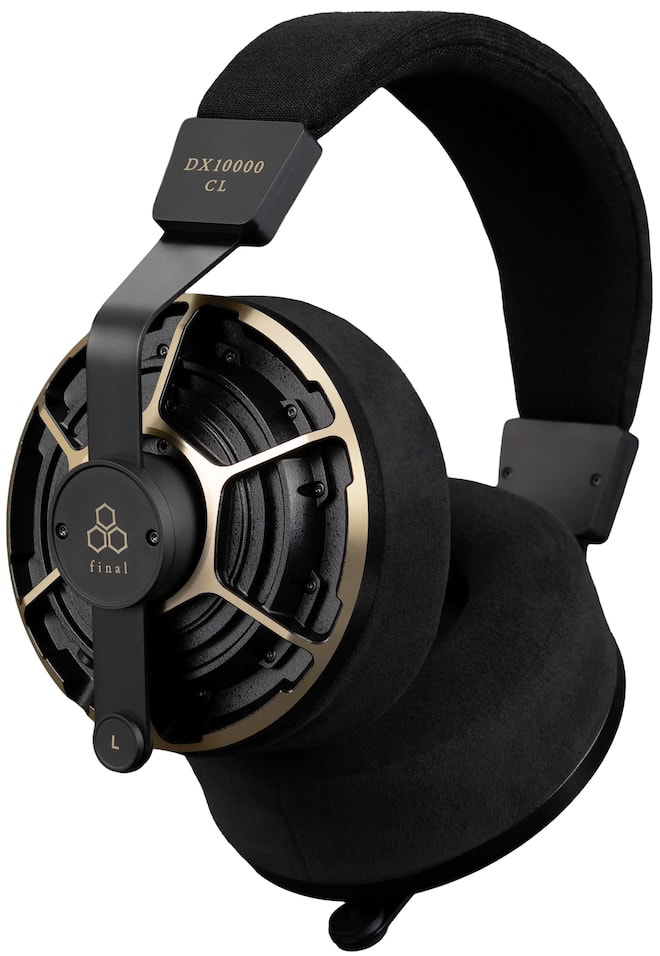
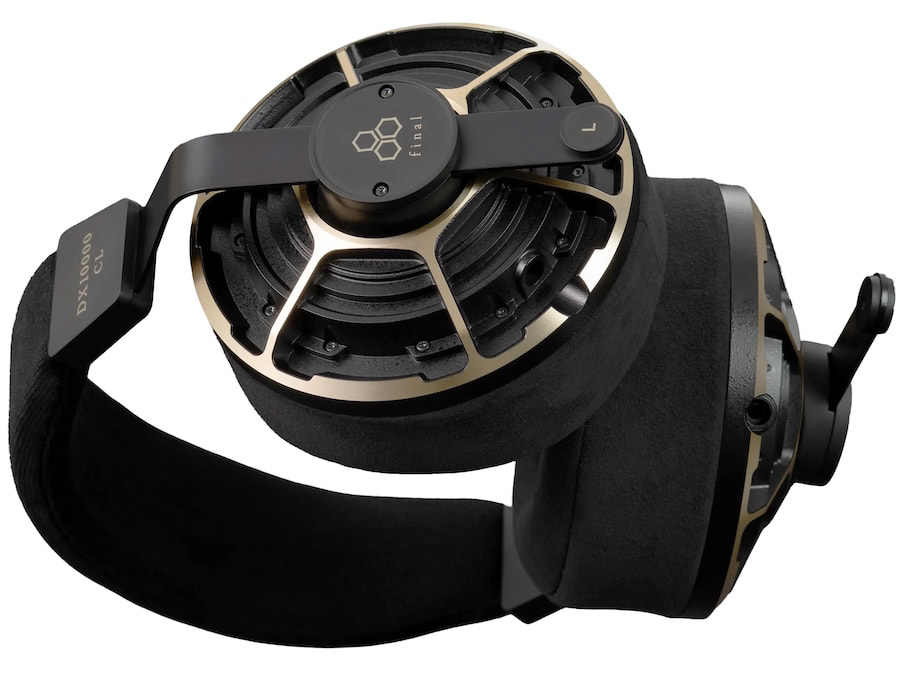
Final has unveiled the DX10000 CL, a new closed-back flagship headphone built around a 40mm True Diamond dynamic driver, with pre-orders opening July 9, 2026. The standard edition is priced at $8,499, while the first 150 units will be sold as a Collector’s Edition for $8,999. Because apparently the headphone market looked at five-figure loudspeaker cables and said, “Hold my paulownia wood box.”
Before anyone starts polishing the Crown Jewels, Final is not exactly operating in uncharted waters here. Diamond material has already appeared in personal audio, including Periodic Audio’s Carbon IEM, TXN Sound’s Diamond IEM, and a much wider field of diamond-like carbon driver coatings used by brands such as Campfire Audio and Austrian Audio.
The difference is that Final is not merely saying “diamond-like” or using diamond as jewelry-counter shorthand. The DX10000 CL uses a CVD-grown True Diamond diaphragm in a full-size closed-back flagship headphone, and Final has built the entire acoustic system around it.
The timing is also worth noting. The high-end headphone category has been moving well beyond the old $1,000 psychological barrier for years. Meze Audio recently announced the ARTA at $6,000 with a 225-ohm high-impedance planar magnetic driver; Audeze’s LCD-5s sells for $4,500 and adds SLAM acoustic management to its planar platform; the Audeze CRBN2 electrostatic headphone is $5,995; and Meze’s Elite Tungsten remains a $4,000 planar magnetic headphone.
Advertisement
The DX10000 CL is more expensive than all of those, so Final had better be bringing more to the table than a shiny diaphragm and a huge asking price.
Related Reviews:
What Makes the Final DX10000 CL Different?
The core of the DX10000 CL is its 40mm True Diamond diaphragm dynamic driver. Final says the center dome is produced using Chemical Vapor Deposition, where diamond is grown as a crystalline layer before the substrate is removed, leaving a self-supporting diamond dome. That matters because this is not the same thing as a common DLC coating placed over another diaphragm material.
Final’s argument is straightforward: diamond offers very high rigidity, high sound velocity, and strong internal damping, which should help the driver maintain piston-like motion, reduce deformation, and suppress residual vibration after the signal stops.
The company has also redesigned the supporting driver assembly, including a polyurethane surround, lightweight polyimide bobbin-integrated voice coil, free-floating lead wire structure, N55 neodymium magnet, aluminum shorting ring, and internal damping system. Exotic diaphragm materials do not automatically guarantee great sound. Implementation still does the heavy lifting, as usual. And that’s before you even start thinking about the source, DAC, and headphone amplifier to make this very expensive headphone worth the expenditure.
Closed-Back Is the Hard Part
The DX10000 CL is not another open-back flagship chasing a huge soundstage and then calling isolation someone else’s problem. Final is taking on closed-back headphone design, which is harder to get right at this level because rear sound waves reflect inside the enclosure and can create resonance, coloration, and that familiar cupped-in effect.
Advertisement
To address that, Final uses a high-rigidity, airtight housing machined from an aluminum-magnesium alloy with 5-axis CNC machining. Inside the housing, unnecessary material is removed to reduce weight, and the resulting cavities are filled with dedicated acoustic damping material to control internal reflections.
The earpads are also part of the tuning strategy. Instead of relying on a fully sealed pad that increases low-frequency pressure and then correcting the balance with elevated treble, Final uses Ultrasuede with controlled air permeability and a selected foam material.
Advertisement. Scroll to continue reading.
The goal is to manage the ear chamber more naturally while maintaining an effective seal. That is a smarter claim than simply promising “more bass,” which is one of the most abused marketing terms around in the Head-Fi world.
Advertisement
Better-defined bass with real clarity, detail, and texture should be expected from an $8,500 headphone, but we’ll see whether Final’s driver, enclosure, and damping choices actually deliver.
Standard EditionCollectors Edition
Built to Be Serviced, Not Worshipped From Across the Room
One of the more useful details is the DX10000 CL’s 12-point through-bolt construction. Final says the housing assembly is clamped together with 12 screws rather than adhesive, allowing the headphone to be disassembled and serviced. Wear components are replaceable, which matters when the standard version costs $8,499 and the Collector’s Edition costs $8,999. At that price, “throw it out when the pads go” would be immediate grounds for a red card and that one is not being overturned because someone makes a phone call.
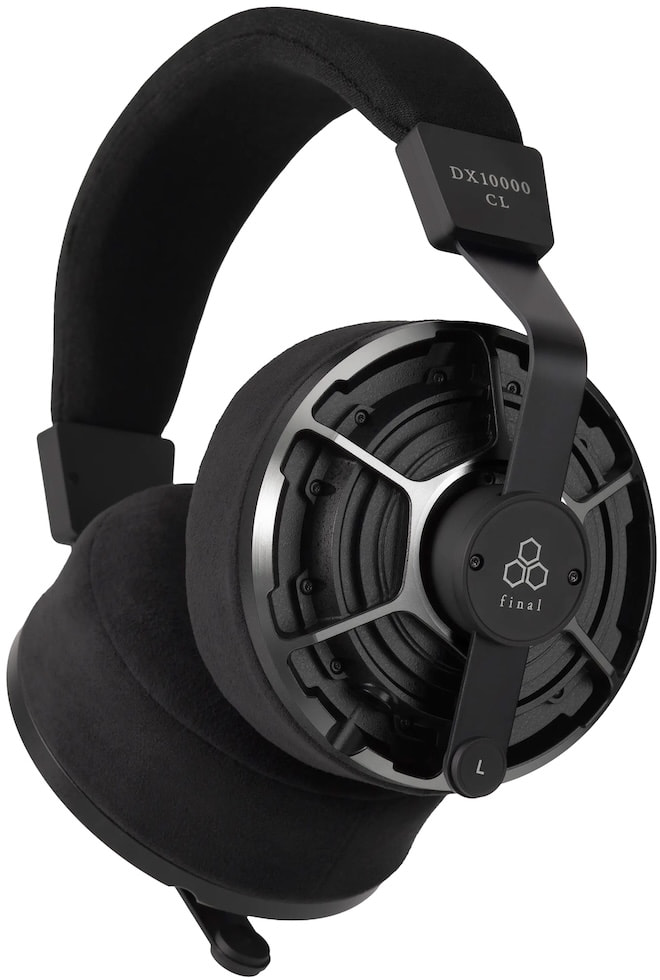
The Collector’s Edition adds gold-colored accents, a traditional Japanese paulownia wood box, a Shingen Pouch made from Tango Chirimen silk, and a CNC-machined aluminum headphone stand. The standard edition uses silver-colored accents and ships with the protective carrying case used across Final’s D Series headphones.
Cables and Connectivity
Final includes two silver-coated OFC cables co-developed with Junkosha: a 4.4mm balanced cable at 1.5 meters using ePTFE insulation, and a 4-pin XLR cable at 3 meters using larger conductors and PFA insulation. Final also includes two adapters: 4-pin XLR female to 6.3mm male, and 4.4mm female to 6.3mm male. That gives the DX10000 CL broad compatibility with desktop headphone amplifiers and high-end audio systems.
Included Cable: 4.4mm balanced, 1.5m, silver-coated OFC with ePTFE insulation
Included Cable: 4-pin XLR, 3m, silver-coated OFC with PFA insulation
Included Adapters: 4-pin XLR female to 6.3mm male; 4.4mm female to 6.3mm male
The Bottom Line
The DX10000 CL stands out less for using diamond as a driver material and more for how Final applies it: a CVD-grown True Diamond diaphragm inside a closed-back flagship with a rigid aluminum-magnesium housing, controlled internal damping, and serviceable construction.
At $8,499, expectations are high. This is for serious headphone listeners who want a closed-back reference design, already have a capable desktop system, and are willing to pay for Final’s specific approach to driver material, enclosure control, and long-term ownership.
The Essential MATLAB and LabVIEW Mega Bundle has 9 courses to help you improve your skills in programming and visualization. You’ll learn the basics of each and then go through hands-on courses building apps, learning about data analysis and visualization, and more. It’s on sale for $30.
Note: The Techdirt Deals Store is powered and curated by StackSocial. A portion of all sales from Techdirt Deals helps support Techdirt. The products featured do not reflect endorsements by our editorial team.
If you are a researcher and want to know more about the people driving innovation and change, then look no further than these six impressive women.
In all industries, there are the movers and shakers whose work often leads to the evolution of what is possible and the reimagining of what could be. The field of research, perhaps more than most, embraces those who are of a curious mind and have a vision for the future – think of people like Marie Curie, Rosalind Franklin and Alice Ball.
In the 20th century, these women were at the forefront of the research space and their work has gone on to impact the lives of people today as much as it did when first shared.
But who are the movers and shakers of today? Who are the women driving the research answering life’s most pressing questions?
Advertisement
Yvonne Buckley
Yvonne Buckley is a professor of zoology at Trinity College Dublin. She was also the founding co-chair of the All-Island Climate and Biodiversity Research Network, the senior editor of Journal of Ecology, a member of the National Carbon Budgets Working Group and a member of both the Royal Irish Academy and Academia Europaea. She leads a team of researchers, post-docs, PhD and undergraduate students aiming to better understand the fundamental drivers of animal and plant population processes.
The discoveries she is a part of are often used to provide support for environmental decisions in the areas of biodiversity conservation, invasive species management and habitat restoration. Earlier this year, she was the recipient of the 2026 Royal Irish Academy Gold Medal in the Environmental Sciences, Geography and Geosciences in recognition of her outstanding contributions to science, research and scholarship.
Emer McGrath
Prof Emer McGrath is an associate professor in the College of Medicine, Nursing and Health Sciences at the University of Galway. She is also an adjunct associate professor at UT Health San Antonio, a consultant neurologist at Galway University Hospital, an investigator for the Framingham heart study and a research collaborator at the Boston University School of Medicine.
Her main focus at the moment is research around dementia risk factors and identifying biomarkers of the illness before the patient suffers memory loss and irreversible brain damage, which can make treatment significantly more complicated.
Advertisement
Ieva Plikusienė
Ieva Plikusienė is a professor and senior researcher in the Faculty of Chemistry and Geosciences and the Faculty of Medicine at Vilnius University. Her area of research focuses primarily on the development of advanced biosensing systems, designed to detect early warning signs of illness in the human body. The aim of her work is to help source the best candidates for drug design and detect important cancer, viral or bacterial biomarkers.
In recognition of her contributions to the research and medtech spaces, Plikusienė was recently awarded the prestigious André Mischke Award from the Young Academy of Europe.
Sarah Gilbert
Prof Sarah Gilbert is a professor of vaccinology at the Pandemic Sciences Institute at the University of Oxford. Her chief research interest is the development of viral vectored vaccines that work by inducing strong and protective T- and B-cell responses. She has led work on influenza vaccine development as well as vaccines for different emerging pathogens, including MERS and Lassa virus. She is in frequent collaboration with colleagues working in the Clinical Biomanufacturing Facility and Centre for Clinical Vaccinology and Tropical Medicine at Oxford.
In 2020, she was named the Oxford project leader for ChAdOx1 nCoV-19, a vaccine against the novel coronavirus SARS-CoV-2. If you are interested in vaccinology and related fields, such as future pandemic prevention, Gilbert’s career trajectory could offer some inspiration.
Advertisement
Friederike Otto
Prof Friederike Otto is a renowned researcher and scientist operating at the intersection of climate science and environmental policy at Imperial College London.
She is the lead of World Weather Attribution (WWA), which is an international effort to analyse and communicate the impact of climate change on extreme weather events. She studies how major weather events, such as droughts, heat waves and storms, are intensified and made more frequent by changes in the climate. She is also interested in the merging of science, law and policy, and aims to better understand how scientific evidence can be used in legislation, litigation and more informal governance for resilient societies.
She has authored numerous reports, was recognised for her co-founding of WWA on the Time 100 list as one of the world’s most influential individuals, is the author of two non-fiction books – ‘Angry Weather’ and ‘Climate InJustice’ – and has had her work featured extensively in global media, including in The Economist, Financial Times, The New York Times, Der Spiegel, Times of India and the BBC, among others.
Abeba Birhane
A cognitive scientist researching AI accountability, Prof Abeba Birhane is a principal investigator for the Artificial Intelligence Accountability Lab and assistant professor of AI in the school of Computer Science and Statistics at Trinity College Dublin. Her work ranges from the systematic examination of AI ecology and governance structures, to the execution of algorithmic audits. Also central to her research are goals of challenging and dismantling societal and historical inequalities and power asymmetries, holding responsible bodies accountable, and paving the way for a future marked by equitable AI systems that work for everyone.
Advertisement
She has contributed to several peer and non-peer reviewed journals, and is a driving force in continued research into AI, ethics and the long-term, societal implications of the technology. She has also been the recipient of several awards and commendations, including a mention on the Time 100 most influential persons in AI 2023 list, and the Distinguished Paper Award 2024 at the IEEE Conference on Secure and Trustworthy Machine Learning.
Don’t miss out on the knowledge you need to succeed. Sign up for the Daily Brief, Silicon Republic’s digest of need-to-know sci-tech news.
An artist’s conception shows a satellite receiving energy from a laser beam. (Credit: Pulse Space via Vimeo)
Bellevue, Wash.-based Pulse Space says it has received a $40 million award from the U.S. Space Force to develop technologies for laser-based power beaming and orbital tracking systems.
The startup, founded in 2022, is working on a system that would collect energy using solar arrays and send that energy via a laser beam to remote nodes in space. The technologies developed for the system could also be used to track objects in orbit and transmit data.
“This historic $40 million award is a defining moment for Pulse Space, and I am exceptionally proud of our team for making it happen,” Karl Stedman, Pulse Space’s founder and CEO, said today in a news release. “We are honored to partner with the United States Space Force to mature our laser-based technologies and are proud to share this massive step forward with our investors and shareholders. Pulse’s technical development platform is helping pave the way toward that future.”
Pulse Space was previously awarded a $1.9 million Air Force contract in support of its work on laser-based military communications systems. The company said its proposed satellite constellation would support “secure, high-bandwidth optical communication and energy delivery,” with the ability to transmit 29.7 kilowatts of power to a 3-meter (10-foot) target from 1,000 kilometers (621 miles).
The company is also on the Missile Defense Agency’s list of potential vendors for SHIELD contracts, with a ceiling of $151 billion. SHIELD — which stands for Scalable Homeland Innovative Enterprise Layered Defense — is a program that encompasses a broad range of work areas for the Pentagon’s Golden Dome missile defense initiative.
In February, Pulse Space completed a $5.72 million seed investment round, according to Pitchbook. Its investors include Divergent Capital, GrayArch Partners, Shake and Bake Productions and Techstars.
I had a chance to test out the Segway Myon e-bike at CES 2026, back in January and I’ve been thinking about it ever since. In Las Vegas, this bike blew me away. Now that I have one, I’ve found a few warts, but I’m still genuinely impressed.
I’m a 49-year-old, 270-pound man who is riding a bike for the first time in two weeks. Why it’s the first time in two weeks is a subject we’ll discuss in a little bit, but suffice it to say, it’s been a while since I’ve had the opportunity to get out and cruise. I biked from my home in Streamwood, IL over to the city of Elgin, along the river for a spell to the Illinois Prairie Path, on to the Great Western Trail, back over to Woodfield mall, and finally back to my home.
I just crossed my 50th mile on this trip. I’ve been biking for just over four hours in 87-degree heat. Overall, I’m tired, but I feel pretty good, and I have the bike under me to thank for it.
Advertisement
Put simply, this bike packs the most technology I’ve seen in a bike that costs less than $2,000. There’s a lot to love here, and it doesn’t cost much to love it — comparatively. $2,000 is a lot of money, but what you get compared to what you get in other e-bikes is outstanding. It’s no exaggeration to say that this sets the new standard for e-bikes in America.
Advertisement
Smooth riding
Adam Doud/SlashGear
One of my favorite parts about this bike has to be the motor. It is incredibly powerful and very smooth. The bike uses a torque sensor to determine when assistance in needed. A torque sensor can tell how much effort you’re putting into pedaling and nudge you a little faster and a little harder. It doesn’t take much for it to kick in, but when it does it feels natural — as if you’re just pedaling a little bit harder. By comparison, a cadence sensor detects when the pedals move and engages the motor basically whether you need it or not. Overall, I vastly prefer torque sensors.
As far as the assistance is concerned, you can set your own level. For the most part, I left the assist level between one-quarter and one-half power. I basically never needed more than that; it was plenty. On the 50-mile journey that culminated my review period, I kicked it up to half power toward the end, both because I didn’t need to conserve the battery as much, it was largely uphill, and because I was getting pretty gassed.
Advertisement
It’s not cheating
Adam Doud/SlashGear
Some people will look at someone riding an e-bike and consider them to be cheaters. I totally see where that opinion is coming from, but after this latest ride, I can very much assure you that is not the case. Basically, it’s like being in a four-hour spin class. That’s no joke. The Myon has a throttle as well, so it is possible to just cruise on this bike if you want, but that takes a big hit on the battery.
For one trip, I biked about 12 miles from my home to a newly-published geocache — I was the first to find it, thank you very much. On the way back, I decided to just let the bike do the work. The trip down used about 20% of the battery. The ride back depleted it by nearly 50%. You’re better off biking, using the motor to assist your pedaling, rather than just wholesale relying on the throttle. The motor is so powerful, you don’t need to turn up the assistance much at all, but your legs will be doing some work, for sure.
Advertisement
The tech packed in
Adam Doud/SlashGear
The Segway Myon has a ton of useful tech built into it. Of course, there’s a bright, full color display in the middle of the handlebars. On each end is a turn signal that flashes the handlebars front and back so everyone knows where you’re going. The bike also has a lot of security features like Airlock, which allows you to unlock the bike just by having your phone nearby. When the bike is locked and it’s moved, the real wheel locks and won’t spin and a loud klaxon sounds indicating the bike is being moved without its owner nearby.
I found this feature to be a tad annoying — my phone didn’t unlock the phone or prevent the alarm from sounding nearly in time. Most of the time, I had to pull my phone out of my pocket and manually unlock the bike in the app just to shut it up. I like the idea of the locking rear wheel and alarm, but overall, Bluetooth doesn’t seem quick or reliable enough to make that connection and disable those features before they annoy you.
Moreover, the security features are hard on the battery — draining it by about 9% overnight. That’s not great. If you don’t ride your bike and don’t leave it plugged in, you may go out after three days and find a quarter of the battery drained. What would make this feature better would be a geofence that allows you to disable all those features when you are home, so the bike knows that it’s safe, so it can relax and save some battery.
Advertisement
Navigation with Here maps is (currently) terrible
Adam Doud/SlashGear
The bike also comes with built in navigation, which is a really cool concept, but it’s fundamentally flawed in a number of ways. Most notably, navigation relies on app connectivity which, as I’ve already discussed, is far from perfectly. That’s already not great. The app has a navigation feature that remains hidden until you expose it. I had to edit the quick options in the app to locate navigation panel in order to actually use it, but that’s still not the worst part about the navigation.
The bike uses Here maps to navigate. I have a lot of respect for Here — it was the default navigation app for Windows Phone; I’m a fan. But Here maps is terrible for biking directions, and it’s worth reiterating that this navigation…is for a bike.
On any given route, I entered the destination on Google Maps and in the Segway navigation app, and without fail, Google had better directions. In one instance, Here wanted me to ride my bike on the shoulder of a thoroughfare with a posted speed limit of 45 mph while Google (rightly) directed me to the bike path that literally ran parallel to the road 50 feet to the north. It got to the point where I simply stopped using the bike’s (Here) navigation because it was, for all intents and purposes, useless.
Advertisement
Quality, but delicate construction
Adam Doud/SlashGear
The build quality of the bike is very solid, and very heavy. The bike has a step-through frame, with an optional body bar. I left it off — I’m old and I prefer step-through frames. Each handlebar has a controller with buttons and switches that control the technology on board. A joystick on the left side switches you between screens, and rocker switch on the right controls the gears for the bike — electronic switching is quite handy by the way. In a couple of weeks, Segway will roll out an automatic gear switching feature. When I receive that update, I will test it and if it significantly improves the overall experience, I’ll be sure to update this review.
The problem I ran into (and the reason why I didn’t ride a bike for two weeks) was because at some point when either loading or unloading the bike from my car, the pedal assist rocker switch popped off and I lost it. Segway sent over a new control unit which required disassembly of the handlebar, and when I tried to reconnect the wires to the control board, I inadvertently bent delicate pins inside one of the connectors. I had to head to a bike shop where they were able to straighten the pins and get the connector working again.
When I looked more closely at the rocker switch that popped off I could easily see how it happened. The button had a small slot below it that could easily catch on a sharp edge and pop the button right off. The pins inside the connector are also a bit too easily bent for my taste. I hope Segway takes these notes to heart when designing its next bike.
Advertisement
Intuitive and easy
Adam Doud/SlashGear
Overall, the bike is easy to ride and control. I sometimes found myself turning on the turn signal when I meant to adjust the pedal assistance because the rocker switches are identical left and right. Beyond that though, I love the idea of navigation built into the display, and media controls which you can adjust via that control screen.
The bike can also switch between being a class 2 and a class 3 e-bike. The difference is a class 3 e-bike can go up to 28 miles per hour, but that disables the throttle entirely. I left the bike in Class 2 mode for most of my review period because I like having the throttle if I need it, and 28 miles per hour is too fast for trail riding, which is where I spent most of my time. All that being said, I wouldn’t hate it if Segway made the switch a little easier to access.
Advertisement
Segway Myon pricing, availability, and verdict
Adam Doud/SlashGear
I love this bike, paint points and all. I could see any one of the issues I ran into turning you off — that’s fair. But this is by far the best value you can find in an e-bike of this quality. The bike retails for $1,999.99 — you can buy the Segway Myon from the Segway store online, now. In the world of e-bikes, the average is around $1,200 to $1,500, so this bike is more expensive than other options. But the sheer amount of (useful, functional) tech built into this bike makes it worth it.
Other e-bikes have similar features — a color screen, a smooth torque sensor, turn signals — but no other bikes have all of these features for this low a price. Which is why, when I asked the bike shop how often they’ve sold one (since they started selling them earlier this year, 2026), they told me they sell about one per week.
Advertisement
But there is room for improvement. Here maps is basically a non-starter for navigation. It actually makes me wonder if Segway even tested the navigation before shipping it. I get Here maps is probably less expensive to license than bigger-name alternatives, but it’d almost be better to have nothing.
I’d also like to see geofencing implemented to save the battery while you’re storing the bike at home.
But beyond that, this is absolutely a bike you should consider if you’re in the market. The overall experience is absolutely premium, and there’s just enough room for improvement that makes me really excited to see what the company will offer next year.
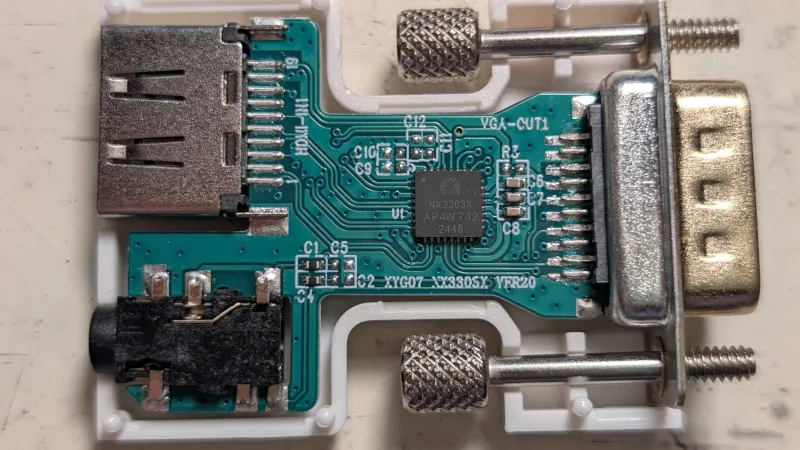
One of the attractions of buying at the bottom end of the electronics market by mail order from China is that you never quite know what will come your way. Sometimes it’s a diamond in the rough, while with others it’s a mess. Occasionally along comes something which should work but doesn’t, and that’s the moment when you wonder if you could fix it. [Nyanpasu64] had just such a device, an HDMI to VGA converter with audio that didn’t work. What could be wrong?
The HDMI to VGA chip has an onboard audio digital-to-analog converter (DAC), and it’s a delta-sigma design. This type of DAC is frequently used in audio applications because it works by shifting its switching frequency many times higher than the input sample rate, thus reducing considerably the distortion. This one wasn’t performing as advertised though, and the problem turned out to be that switching frequency being all over the output. Clearly the filter wasn’t working, which led to the design of a new filter. The write-up is therefore an extensive dive into filter design, and in part also a discovery of the effect of impedance on them.
For a super-cheap module to cause so much work, one might ask why not simply spend a few more dollars and get a better one. But had they done that we wouldn’t have seen this write-up, so we’re sticking with team cheap.
How old is the seven-segment display? Surely it is a product of the 1970s. After all, calculators started showing up, and the height of junior high humor was plugging 7734 into your calculator and showing it to someone upside down. Of course, for it to go mainstream, maybe they really originated in the 1960s, but no earlier than that, right? Actually, no. Sure, the LED seven-segment display had to wait for LEDs. But the actual idea is much older than that.
The concept of building numbers from a small set of reusable segments predates LED displays by decades. In fact, the basic idea appears in patents from the early 1900s and may have roots in even older mechanical signs and printing techniques.
The history isn’t entirely straightforward. Unlike vacuum tubes or transistors, segmented displays evolved gradually through a series of practical ideas rather than one defining invention.
Blacking out the Eight
While looking into the history of segmented displays, I was reminded of something I’d seen years ago in retail stores: reusable price tags printed with rows of eights.
Advertisement
Rather than printing every possible price, the clerk simply used a marker to black out portions of each figure, transforming an 8 into whatever digit was needed. Cover a few strokes, and the eight becomes a three. Remove a different set, and it becomes a zero or a five. It was, in essence, a manual segmented display.
Finding the exact origin of these price tags is akin to finding out where Romans bought sponges. They were inexpensive commercial supplies, not the sort of products that historians carefully documented. My recollection is from the middle of the twentieth century, but the underlying concept is almost certainly older.
Everything New is Old Again
George Mason’s 1898 21-segment display used 21 lamps and a complicated switch to display any digit or letter in a very stylish font. You can see a modern recreation of these ancient displays in the video below. While this is the basic idea, certainly, it is more ambitious than a simple 7-segment display.
Advertisement
I couldn’t determine that Mason’s displays were ever used for anything.
You could argue that an early 1903 invention by Carl Kinsley to draw characters telegraphically using six pens was an even better precursor, but using magnets to draw with pens on tapes hardly seems to qualify as a display, although figure 12 in the patent clearly shows the formation of numbers and even letters with this arrangement.
Digits of Patent
The direct parent of modern segmented digit displays appeared in the early 1900s (filed 1908; granted in 1910). Technically, this was an 8-segment display because it had a bar dedicated to forming a proper four, with the top-left part slanted. But removing that one segment is just an optimization. It may or may not have been the first, but by 1910, seven-segment displays were in use and not just curiosities on a workbench or dreams in a patent application.
Even for lit-up displays, the first implementations weren’t LEDs. Early displays used incandescent lamps or neon-filled tubes. By the 1930s and 1940s, segmented neon or incandescent indicators were appearing in industrial equipment and counters, instead of the common columns of ten neon bulbs, pointers, or rotating wheels.
Advertisement
Then, too, there were different approaches. Nixie tubes used individual character forms that lit up. Decatrons could count with ten different glowing points, each representing a digit.
Enter the LED
The real explosion came in the late 1960s when practical LED displays arrived. Suddenly, segmented displays could be compact, rugged, inexpensive, and operate at low voltages. Calculators, clocks, frequency counters, digital multimeters, and every imaginable piece of consumer electronics adopted them almost overnight.
Of course, it wasn’t just LEDs. Numitrons used seven tiny incandescent filaments. Vacuum fluorescent displays used segments with phosphor that glowed when excited. LCDs adopted the same pattern, blocking or passing light to produce the segments. But the key idea was something that lights up, arranged in seven segments.
Radio Shack’s 1976 catalog featured magnified LED displays.
Early LED displays often had all the diodes on a single die to reduce cost. That made them very tiny. It wasn’t unusual to see displays with magnifying bubbles to make it easier to read.
The important point isn’t whether they used exactly seven segments. Many didn’t. Some divided the numerals differently or used additional pieces to produce more attractive typography. The insight was the same: begin with the most complex digit and selectively remove strokes to create all the others.
Advertisement
Why Seven?
One of the reasons seven segments became the standard is that they strike a perfect balance (although not everyone agrees, as you can see in the video below). With fewer than seven elements, several decimal digits become difficult to distinguish. Adding more segments certainly improves appearance, but every additional segment increases wiring, decoding logic, manufacturing cost, and the number of possible failure points. Seven is the right number for — um — numbers. But what about letters?
You can make some compromises to show some letters. For example, old computers would display hex digits using seven segments, but the A would be uppercase and the B would be lowercase. You also had to light the top segment for the 6 to make it look different from a B. But you only need A-F for hex. If you need, say, the letter S, there’s no real way to make it not look like a 5 with 7 segments. But sometimes, the letters you can make are good enough.
Advertisement
There were also 8- and 9-segment displays that could do better with letters and special characters. You can increase the segments further to get more glyphs.
The Union Jack
Different segment counts for displays (public domain by [errorage])
The solution for full letter displays was to add more segments. Despite Mason, you didn’t really need 21. By the 1970s, fourteen-segment and sixteen-segment displays had become common in instruments, telephones, calculators, and video cassette recorders. Their pattern of diagonals and crossbars earned them the nickname “Union Jack” display because the arrangement resembles the British flag. These are also sometimes called starburst displays. You occasionally see 16-segment displays, too.
Even Today
Today, you have a plethora of options for adding alphanumeric screens to just about anything. Yet, you still see 7-segment displays hanging around.
The seven-segment display isn’t successful because it’s beautiful. It isn’t even especially flexible. It’s successful because it’s close to the minimum solution that works. It delivers readable numbers with very little hardware, whether the technology behind it is incandescent bulbs, neon, vacuum fluorescence, LEDs, LCDs, or even ink on a printed price tag.
Perhaps that’s why it has survived every technological transition for more than a hundred years. Good engineering ideas often outlive the technologies that first bring them to life.
Advertisement
And once you start looking for segmented displays, you’ll notice they’ve been hiding in plain sight for much longer than the digital age.
Generating code with AI is fast, but getting that code to run reliably inside a large enterprise, integrated with live systems, governed for compliance, and maintainable over years requires foundational work that most organizations underestimate.
While 81% of all organizations have a detailed strategy, only 12–16% reach AI‑driven execution, says SAP’s Michael Ameling, CPO of SAP Business Technology Platform, and the reasons rarely come down to the quality of the generated code.
“Across industries, enterprises that have invested heavily in AI tooling are hitting a wall when generated code meets the reality of their existing environments, because generating code and operationalizing it are not the same problem,” Ameling says.
Advertisement
There are specific requirements for deploying AI-generated logic at enterprise scale: what data and integration readiness actually look like, how governance works when AI agents move from producing recommendations to executing workflows, and how development teams are changing their role as AI takes over more of the coding work.
Why AI code generation fails in enterprise production environments
The productivity gains from AI code generation are real and well-documented, but the ease of prototyping has given many organizations a misleading sense of how far along they actually are.
“Generating code is one thing,” Ameling says. “Enterprise customers, including multinationals and large organizations, need to ensure there are no compromises in compliance or security. Code that runs reliably for ten or twenty years, as it does at many of SAP’s largest customers, also has to be maintained, patched, and understood by whoever inherits it. Life cycle management, in other words, does not generate itself.”
The issue is rarely the generation quality. Teams build something compelling, then discover they lack access to the data it depends on, or the integrations it assumes, or the permissions required to run it in a real environment. The problem is essentially that AI amplifies an organization’s existing data and process maturity, but it can’t substitute for it.
Advertisement
This dynamic intensifies as AI moves from producing code to executing actions. Latency, cost, and system load all increase when logic runs continuously against live data rather than rendering a one-time output. The performance requirements of an autonomous agent operating across a multinational’s transaction systems are categorically different from those of a developer copilot.
How to connect AI-generated logic to fragmented enterprise systems
The architecture challenge that most enterprise AI projects underestimate is integration. Real enterprise environments are not clean slates: they combine cloud systems, legacy on-premise infrastructure, fragmented data stores, and dozens of business applications that were never designed to talk to each other. Getting AI-generated logic to operate reliably across all of them requires a layer that unifies data access, process context, and governance, and it has to be in place before any agent starts executing. And organizations that see AI as a reason to defer infrastructure modernization are making a mistake.
“The question is not whether to modernize or not. Of course you need to modernize,” Ameling says. “But the value you get on top of this is much higher with AI. Federated data access and harmonized process layers are not alternatives to upgrading a fragmented landscape, they’re what make the upgrade worthwhile.”
At the platform level, this translates into a set of practical requirements: structured data integration, end-to-end process visibility, and the ability to discover and connect to APIs across both modern and legacy systems. SAP’s approach with the Business AI Platform draws on tools including its Joule Studio, Integration Suite, Business Data Cloud, and SAP AI Agent Hub enterprise architecture layer to provide that context. The goal is to give AI-generated logic accurate, current knowledge of what a business is doing and how, rather than just access to raw data.
Advertisement
AI agents handle large challenges by dividing them into smaller, autonomous tasks, with each agent responsible for a specific domain, and all coordinated toward a shared outcome. A financial close, for example, involves dozens of discrete sub-processes. Agents handling each task in parallel, within defined constraints, can compress cycle times dramatically, but only if the underlying systems they interact with are coherent and accessible.
The governance and oversight that AI agents require in production
When AI moves from assistant to operational actor, the governance questions loom large, because agents that trigger workflows, update records, and interact with live business systems need the same accountability framework that applies to human employees, i.e., identities, defined privileges, and auditable behavior.
There are two distinct models:
Principal propagation, where an agent acts on a user’s behalf, inheriting that user’s permissions and scope.
Advertisement
System-triggered agents, where the agent operates under its own identity and role-defined privileges, functioning more like an automated HR role than a personal assistant.
Both models require the same underlying infrastructure: an agent hub where operators can see which agents exist, what APIs they can access, and what they are authorized to do. Observability also needs to be operationalized correctly for AI, combined with both technical and business evals.
“In production, openness is very important,” Ameling says. “We use OpenTelemetry as a framework, so we can integrate with other solutions, for end-to-end observability of the tool, third-party agents and the like.”
On top of that, standard technical evals, which test whether an agent produces consistent outputs, are necessary but not enough. Business evals assess whether an agent is actually moving the performance indicators it was deployed to improve, but it has to work end-to-end.
Advertisement
Where the testing happens is equally important. The traditional software development cycle across dev, test, and production environments breaks down when a model produces different outputs depending on whether it is running against test data or live data. Getting to trustworthy AI in production means accepting that validation looks fundamentally different from what engineering teams have practiced for decades, with live environment testing, even A/B/C testing to ensure outcomes are reliable.
How AI-driven code generation is changing software engineering roles
The role of the developer is not disappearing in this environment, but its center of gravity is shifting. The productivity multiplier is significant when developers can run multiple coding agents in parallel across open terminals, each working on a separate problem and each taking several minutes to complete. But it introduces a new kind of cognitive demand, because humans have to stay in the loop. That means tracking context across concurrent workstreams, evaluating outputs that range across large codebases, and making architectural judgments that no agent can be trusted to make alone.
“The more specific and complete the prompt, the less intervention is required, and developers are learning that bringing more context upfront pays dividends in reduced back-and-forth,” Ameling says. “But the output still needs to be understood, not just accepted.”
The competitive edge will remain intellectual property, not tooling. The companies that pull ahead will be those that most effectively encode their domain knowledge into the systems they build.
Advertisement
“A manufacturer’s process expertise, a financial institution’s risk logic, a logistics firm’s routing intelligence, these are the assets that AI can accelerate, but only if the organizations that hold them do the work to make them accessible and usable,” Ameling says. “Protect that, and apply AI to accelerate your differentiation.”
Sponsored articles are content produced by a company that is either paying for the post or has a business relationship with VentureBeat, and they’re always clearly marked. For more information, contact sales@venturebeat.com.


























































You must be logged in to post a comment Login