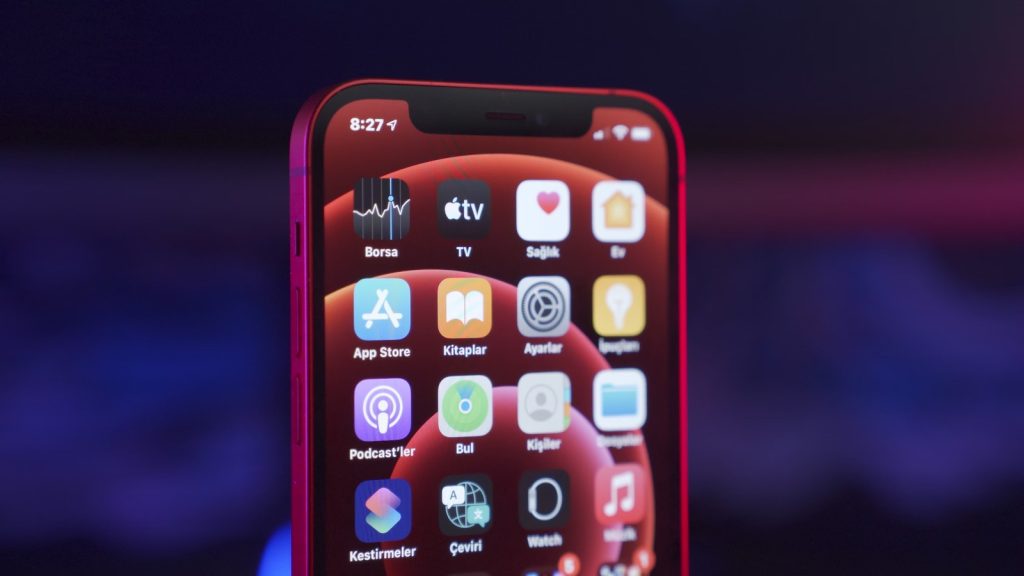






Google Pixel phones and watches start receiving Android 17 today through the regular system update process. The release focuses on several practical additions that address everyday friction rather than delivering a complete visual overhaul. Owners of Pixel 6 series devices and newer can install it now through the settings menu, while phones from other manufacturers will follow over the coming months.
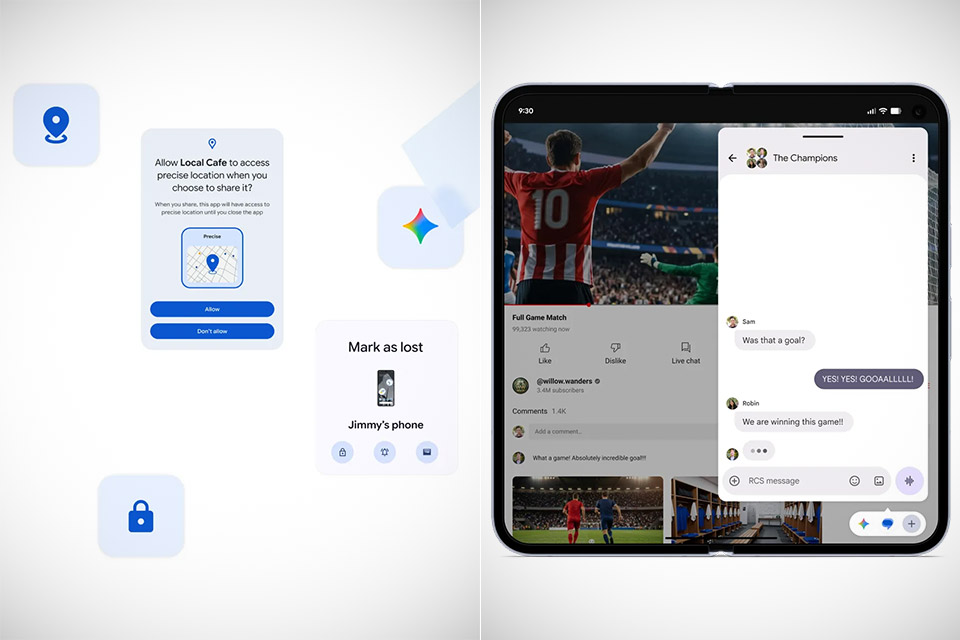
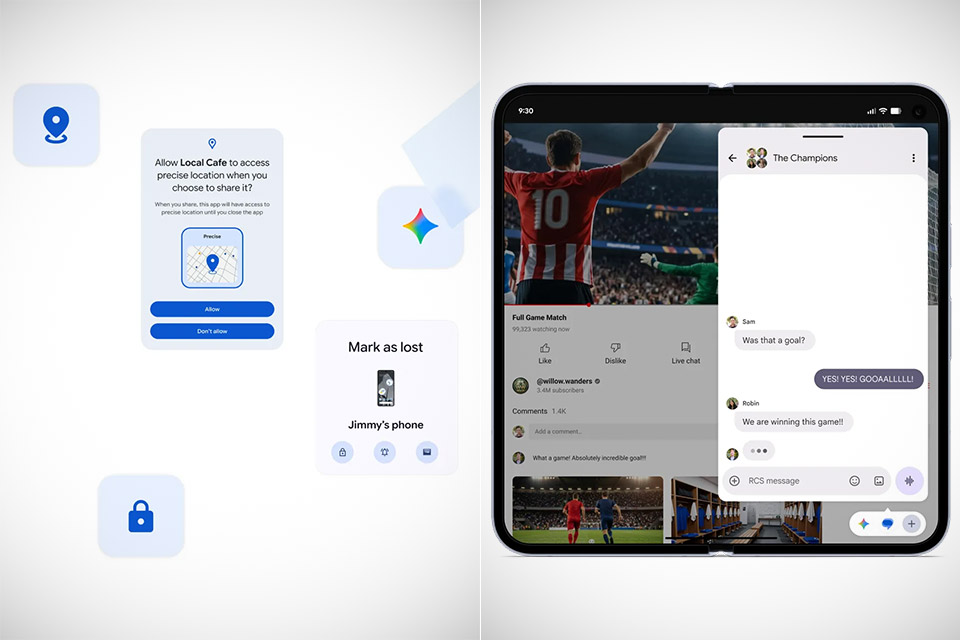
Long-pressing any app icon on the home screen now displays an option in the upper corner to turn the app into a floating bubble. Once everything is open, the bubble may be dragged about or enlarged while remaining on top of everything else. You can close it by simply sliding it to the bottom edge. Larger screens, such as the Pixel Fold or tablets, get a tiny bubble bar down the bottom that allows you to keep an eye on multiple floating windows at the same time. This makes it quite useful to keep your notes or a web browser open right next to whatever you’re viewing, allowing you to check a live score or a message thread without leaving the primary screen.
Unfold extraordinary with Google Pixel 10 Pro Fold; with Pixel’s largest screen and Gemini, Google’s most advanced AI, it’s made for…
Unlocked Android phone gives you the flexibility to change carriers and choose your own data plan[2]; it works with Google Fi, Verizon, T-Mobile…
The gearless, high-strength hinge makes it durable enough to handle about 10 years of folding[3]; plus, Pixel 10 Pro Fold is built with Corning…
Screen recording now uses a revised flow that begins in the quick settings panel and allows you to control the recording with a little floating pill. Once you’ve started recording, you may flick a switch to record your own short video at the same time, and when it’s finished, you’ll be taken to a preview screen where you can clip, delete, review, or share it without using any additional editing software. Background apps cannot consume excessive memory under the new rules, and any app that becomes overly greedy will be automatically terminated by the system. This improves the performance of your phone while also reducing battery consumption.
Advertisement
If you register your smartphone as missing on Find My Device, you must now use your biometric data to authenticate it, in addition to providing your password. This makes it far more difficult for anyone who has your passcode to disable tracking or gain access. App requests for location permission now provide explicit alternatives for granting permission to use your location exactly or approximately, as well as a one-time precise option for apps that want it for a fast job. Also, when you share your contacts, the app just receives the ones you select, not your whole address book.
Pixel phones also gain expanded Quick Share support on more models in the current lineup. Voice translation during phone calls is now available on even more devices. Photo editing in Google Photos allows you to discuss which modifications to make, and this feature is now available in a number of new countries. Generative capabilities in the Gemini app, such as converting text into a short film or creating music from a prompt, are now available on Pixels running Android 17. A few more AIy features, which were previously mentioned, will be available to qualified devices later this summer.
Aerodynamics are complicated, even at the level of pickup trucks. At first glance, it seems pretty straightforward — the less “stuff” is fighting the wind, the more slippery the vehicle becomes and, thus, the more efficient it is at highway speeds. Automakers have taken this into consideration since the early days of motoring, with today’s cars being so aero-conscious that many don’t even have traditional door handles anymore. It’s a little trickier with pickup trucks, though, because of that cargo-carrying bed. So how do you, as the owner, squeeze out some extra MPG?
One might assume that fitting something over the bed, whether it be a tonneau cover or bed cap, would improve fuel efficiency, and in a lot of cases that’s true. The key phrase here being “a lot of cases.” Covering the bed changes the aerodynamic profile of a pickup truck; that much is obvious. Unlike driving with the tailgate down, which is commonly accepted as being a negative, a tonneau cover or bed cap allows the air somewhere to “touch down” and flow off the back. Aerodynamics dictate that stagnant air in the back of a pickup bed creates drag and tries to suck the vehicle backwards. Tonneau covers keep the air from entering the bed, thus eliminating that void.
Except, that’s not how it works. It actually depends on what kind of bed cover you use, versus whether you have one or not. Believe it or not, in some cases, it’s actually better to run without a bed cover.
Advertisement
The aerodynamics of tonneau covers
Beekeepx/Getty Images
Most trucks offer a wide variety of covers, even for trucks with bed rails, so we’re not spoiled for choice here. But which cover you select makes a difference; there are three main types of tonneau cover that we’ll look at. There are lightweight, flexible coverings like those made of vinyl, rigid structures made of fiberglass or aluminum, and fastback-style covers. The latter group are those slanted covers that look like the back of a Humvee or a Cybertruck, a relatively recent innovation that’s been patented by Ram but is also available as an aftermarket add-on.
The actual percentages of fuel savings one could expect from a tonneau cover vary from study to study, with one verified by Motor Trend claiming a 4 to 10 percent boost in economy with a hard cover on a third-gen Dodge Ram. Moreover, their test truck was faster with the cover on than off. A finding by Consumer Reports contradicts this, however, with a similarly shaped fourth-gen Ram actually getting worse MPG with a soft cover fitted, dropping from 22.3 to 21.4.
Advertisement
The point is to prevent the air from stagnating and pulling the truck back like a parachute, so providing a surface for it to run along is ideal. That’s why the more aerodynamic slanted cover provides the greatest drag reduction while flexible covers offer the least, as you can see in a recent study at Research Gate. This is further substantiated by a 2007 study analyzing 13 different cover types on yet another Dodge Ram, to keep the data consistent.
Advertisement
How this affects your real-world MPG
alexgo.photography/Shutterstock
Obviously, we’re not all driving around at the same speed or with the same trucks, so comparing one result to another in the real world is more case-by-case. In other words (no pun intended) your mileage may vary. Online discussion forums and long-term reviews often praise the tonneau cover and/or bed cap for its ability to provide substantial benefits to your MPG (along with weatherproofing your cargo), but there are a few factors to consider.
First and foremost, these benefits will only apply at highway speeds. Drag increases with velocity-squared, so the faster you’re going, the more effective it’ll be. At low speeds, especially with bed caps or larger rigid covers over full-size beds, you’ll be weighing down your truck; in this case, something like a flexible cover would work best. Just make sure to properly adjust the tension; you want the vinyl to be as tight as possible to prevent the cover from flapping like a sail and ruining the aerodynamic benefits.
Next, if you want the most improvements, you want a nice, gentle curve from the roof to the tailgate; that’s why big rigs have those devices on the back of trailers, to reduce the wake they leave and, thus, improve efficiency. That’s why a slanted bed cover is so effective, but again, this comes at the penalty of weight. While no studies exist (yet) concerning these weight penalties versus highway gains, the bottom line is this: if you do more highway driving, invest in even a basic tonneau cover. If you do city driving, get something lightweight to avoid dragging around unnecessary mass.
Want to shift your databases from one server to another? But don’t know how? Don’t worry! In this blog, you will learn what is server migration, its benefits, and its importance. Along with this, I’ll show you the steps used for server migration and the tools that will help you smooth this process. Let’s start!
Server Migration Meaning
You can understand the meaning of server migration by simply separating the words. Here, server means browser, and migration means shifting; they together become shifting from one server to another.
In simple words, the process of moving files, applications, emails, and databases from one server to another is called server migration. It is like changing an older mobile phone with a newer one. It is the same as if you transfer all your photos, videos, and documents to the new mobile. However, for server migration, it is not just about copying and pasting the files, but it is used for transferring complete database, which includes user accounts, configuration files, and security settings. Server Migration aims to switch to a new server with minimal or no interruption for a smooth transfer process.
Benefits of Server Migration
It is like shifting from an older house to a newer one with updated facilities. Server migration helps in adapting to new technologies and ensures the smooth running of the functions. Let me tell you some of the key benefits of server migration.
Performance enhancement: As the older server slows over time, upgrading to a newer version will help increase performance. This results in faster app loading and more memory.
Cost reduction: The old server needs regular maintenance and repair, which increases the investment cost. New cloud servers like Google Cloud and AWS provide you with the facility of paying only for what you use. It cuts infrastructure costs by up to 40%.
Increased security: The updated server provides better security than the older ones. It helps with data encryption, virus scanning, and firewalls. It reduced the risk of hacking and data loss.
Updated technology: The new version of the servers provides automatic backups and quick recovery of the data, as older versions crash more often than the latest versions.
Smarter maintenance: Many new providers come with automated systems that don’t need frequent updates. This means less time wasted on updating and fixing the old hardware problems.
Improve Business value: These new servers are made based on the newer government rules and regulations. It helps in meeting the government rules and policies.
Challenges in Migrating the Server
Migrating the server looks easy, but it is a challenging process. These are some of the biggest and most frequent challenges faced by the users.
Website’s Downtime: When all the database and security configurations are being moved from one server to another, it slows down the website. This results in a website or app crash. For e-commerce businesses, a short downtime can cause customer and financial loss.
Data Loss: While moving a large set of data, records, and documents, some of the data and information can get damaged or lost. It is very risky for customers or finance-based companies.
Compatibility Issue: One software, website, or application that was working perfectly on the older server may not be compatible with the newer version.
Expenses: You may need to pay more than expected based on the data transfer fees, expert help, time required, and tools.
Complexity: Shifting everything without damaging any connection is very risky, as the server is made using many connected parts like databases, user logins, security, and emails.
Security: While migrating, hackers can steal your data if you are not using proper protection and security encryption.
Insufficient Planning: Many people waste huge amounts of money because of mistakes and delays. A person needs to understand the time, money, and other expertise required to execute a proper implementation.
Testing: Once everything is completed, the final step required is testing. This is needed to find and fix the issues for the smoother functioning of the server.
What is the Server Migration Process? Step-by-Step
Let’s understand the step-by-step process of server migration.
Step 1: Planning and assessing
Cross-check everything present on your older server, like websites, databases, emails, files, and apps.
Choose what features you are looking for.
The best time to migrate is usually in the evening or on weekends.
Make a list of the estimated time and possible risks that you can face.
Step 2: Backup
Complete your backup on your old server. This is an important step so that you can restore everything without leaving anything behind.
Step 3: Prepare your new server
Purchase and create a new server on the cloud.
Install the plugin software that will help in configuring your server.
Customize the settings according to the operating system, software, and security settings.
Take an overview of the rules, storage, and networking.
Step 4: Transfer the data
Copy all the database, files, applications, and security settings from the old server.
Use tools like Robocopy and rsync for migrating the data. This process can take time depending on your file size.
Step 5: Migration and configuration
Shift your certificates, user accounts, websites, and apps to the new server.
Update the database based on your new location.
Step 6: Testing
Test your new server by running your app or website.
Check if everything is done as you wanted. Run a speed test, login, emails, payments, and other additional features.
Fix any problems that have occurred before starting to operate the server.
Step 7: Go live
Switch the traffic from the old server to the new one.
Use a DNS setting or a load balancer for this. Focus on minimizing the server downtime.
Using these steps effectively and efficiently will help you to onboard to the new server, that too without any problem and data loss.
Server Migration Checklist
Here, in this section, I have mentioned the checklist for every stage of server migration. Check before proceeding.
Phase 1: Planning (Before Migration)
Make a list of all the data, websites, files, emails, applications, and more from the old server.
Decide on the new server. It can be Google Cloud, AWS, Azure, and more.
Check the functionality and compatibility, such as the operating system, version, and hardware requirements.
Take a full backup of the server and test the backup for any flaws.
Set up the new server
Phase 2: Migration and Configuration (During Migration)
Transfer the files, databases, and security settings.
Sync after the last changes.
Phase 3: Testing
Test apps and websites on the new server.
Check the login process, payment, emails, and file loading speed.
Test the speed and performance of the new server.
Most important thing! Check the security system of the server.
Phase 4: Live
Update your old DNS to point to your new server for the customers.
Send a notification to the team and the customer about the shift.
Phase 5: Post Migration
Monitor your website for the first 24 hours.
Check for any issues or missing data.
Test the speed and resources.
Update details like passwords, security, and documents.
Teach your team and customers to use the new server.
Turn off the old server after 5-7 days of moving to another server.
Server Migration Tools
There are many server migration tools available in the market. I have mentioned some of the best ones for your website or application.
AWS Application Migration Service (AWS MGN)
It is an Amazon tool for automatically transferring the migration of the server and application to AWS. It is easier for beginners. AWS works by regularly replicating the servers. It also helps in running the server efficiently on an AWS server.
Advertisement
Features of AWS
Built-in testing skills
Support on both Windows and Linux
Replication of the server data
Lesser cutover
Pricing
It provides both free and paid plans. You can enjoy 30 days free trial before getting charged $30 per month.
Pros
Cons
It is useful for medium to large-scale migration.
Expensive for the smaller teams.
Helps in transferring data from one server to another with ease.
Need technical experts to configure.
Users appreciated its database for complicated applications and websites.
A large volume of data transfer can increase the cost
Azure Migrate
It is Microsoft’s platform, which is used for assessing, discovering, and migrating the server. It works best for firms using Microsoft or Windows technologies. Some of its key features include:
Enable depending mapping
Provides .NET support
Makes assessment reports
Has strong Windows support
Pricing
Azure provides various plans. Its basic plan is free forever. You need to request a quote to know the exact price. You can select a customized plan, for which you can pay according to your usage.
Pros
Cons
It offers free server migration.
Less effective for Linux and PHP-based apps.
Best for Windows and Microsoft users.
Its interface is technical for a smaller business and requires developer guidance.
Pricing based on your usage is the best feature that reduces the cost if not used.
Sometimes lags behind its competitors because of its slow replication.
Google Cloud Migrate to Virtual Machines
It is a simple and easy-to-use tool that offers free server migration. It is a lift-and-shift tool that enables you to shift to another server with minimal changes to your application. These are some of the key features of Google Cloud Migrate:
It provides agentless migration.
Comes with built-in testing, so you can test before going live.
Provides pre-migration and post-migration features.
Pricing
Google Cloud Migrate provides 300 credits for 90 days; after this, you will be charged. Its migration service is completely free, but you need to pay the fees for the additional resources you avail.
Pros
Cons
It is cost-effective as no money is required for migration if no additional resources are used.
Limited automation features are available.
Comes with a simple and easy-to-use interface.
Best for standard VM workload. Need to hire more for extra manual tasks.
90-day free offers with $300 free credit are useful for startups and small businesses.
Conclusion
In this blog, I have given a detailed overview of your question: What is server migration? Here, we also learn about some of the best affordable and free tools for server migration with their unique features, pros, and cons. Want more information about the tools? Comment below.
Server migration costs range from $1,000 to up to $10,000 for a website. However, there are several free tools that you can try to get an affordable price range.
What is server migration?
It is a simple process in which a business or organization transfers its data, emails, documents, and security settings to another server to give a smoother experience to its customers.
What ties the roster together more than any title or office is a shared preoccupation with artificial intelligence, longevity, and the near future. Asked on a sign-up form to predict the future, registrants returned again and again to the same theme: that AI will reorder work, war, education, and belief within a few years. Several foresee mass labor displacement and a swing back toward unions and government programs; others predict an “AI winter,” domestic terrorism targeting data centers, criminal defendants choosing AI lawyers over public defenders, or religious revival provoked by the disruption.
“Societal degeneration,” predicted one person, “will continue to accelerate.”
Members also list talents like “funhouse construction,” accent imitation, backcountry skiing, urban exploration, and “meditative and psychedelic inquiry into the nature of reality”; one offers “compassion and existential dread,” another “dinner parties, keeping secrets, remembering birthdays.” Their book recommendations skew toward the canonical and optimization-minded, Marcus Aurelius and Milan Kundera alongside Annie Duke’s Thinking in Bets, Peter Attia’s Outlive, and, from at least one attendee, Thiel’s own Zero to One.
Dialog also plays matchmaker. Its participant form asks registrants whether they are “looking for love” and offers to include “Single Man,” “Single Woman,” or “Other” respondents in “future matchmaking.” A separate site, dating.dialog.org, hosts an app pitched as “meaningful connections for exceptional people.”
Advertisement
The form also gathers sensitive answers, including each registrant’s “political leaning,” which Dialog promises “WILL NOT be shared in the app or with other participants, ever.” That data, and the matchmaking responses, were exposed in the leak.
The records sit in Airtable, a commercial database. For each participant, Dialog logs a membership status, every retreat the person has attended, a biography, a home city, and a private access token. WIRED is not publishing the tokens, which function as login credentials, or the personalized account links that contain them.
The leaked registration list also names senior figures absent from the public directory of 113: Randy Kroszner, a former governor of the Federal Reserve who now serves on the Bank of England’s Financial Policy Committee; Hallie Hoffman, a former general counsel and acting chief of staff of the Drug Enforcement Administration; Jonathan Greenblatt, the chief executive of the Anti-Defamation League; Peter Goettler, the president of the Cato Institute; Ryan Stowers, the executive director of the Charles Koch Foundation; and Roger Myerson, a Nobel laureate economist at the University of Chicago.
It also lists a cluster of Google and Google DeepMind executives, among them Tom Lue, who leads global affairs for the company’s frontier AI division, and one working journalist, Souad Mekhennet, a national security correspondent for The Washington Post. (She is listed as running an event called “Ulysses Book Club.”)
Advertisement
The rest of the membership spans hedge fund and private equity billionaires, current and former foreign officials, network television actors, best-selling authors, and religious leaders.
One of several internal documents Dialog left exposed on the same online database that held its registration records is a guide for event moderators, urging them to remind participants that everything is “off the record” and that comments should be concise and “nonobvious.” It also coaches them to model brief introductions to “avoid status signaling” in a room full of senators, dignitaries, and tycoons.
UK Prime Minister Keir Starmer is not having a particularly good time of being the UK’s leader. Basically everyone thinks he’s doing a terrible job and it seems unlikely that he’ll be in the role much longer. Apparently desperate to turn the tide on being historically disliked, he’s decided to grab the most reliable life preserver in modern politics: the techlash. Over the last few weeks, everything he’s done can be summarized in a single sentence: “let’s blame the internet for everything bad.”
It started a week ago with an announcement that if internet social media companies didn’t wave a magic wand and make all sexting disappear… he would start putting tech execs in prison.
“Today I’m calling on tech companies operating in this country to introduce device controls that prevent children from sending and receiving sexually explicit images,” Starmer said in a speech at London Tech Week. “This is not an impossible challenge.”
Under the new plans, firms like Apple and Google would have to build or activate technical solutions on smartphones and tablets to detect and block nude images for children. Adults would still be able to take, share or view nude content through an age verification process.
If companies did not act within three months, the government said it would bring forward legislation to force them to do so or risk facing fines or, as a last resort, the threat of criminal liability for bosses.
This is very much the magical “nerd harder” thinking by a technologically clueless bureaucrat who thinks that societal problems can be solved by making tech companies do the impossible: stopping humans from doing stupid things.
The U.K. plans to follow the same model for a social media ban as Australia, which last year became the first country to bar under-16s from holding social media accounts. Platforms that fail to take reasonable steps to exclude children younger than 16 could be punished with multimillion-dollar fines.
The U.K. said its ban will apply to platforms including Snapchat, TikTok, YouTube, Instagram, Facebook and X, but not YouTube Kids or messaging services like WhatsApp and Signal. Starmer stressed that enforcement action will target tech companies, not children.
The prime minister also said he will go further than Australia’s measures.
He said the government will act to prevent strangers from contacting children on gaming and livestreaming platforms. Authorities are also considering additional measures including overnight curfews and breaks in infinite scrolling for those under 18. More details are expected next month.
This is more nerd harder nonsense. Again, Australia’s ban has been a total joke, with the vast majority of kids figuring out how to get around the ban, and the ones most hurt by the ban being teens who have lost access to the communities that were most important to them. Again, every detailed study on the subject has found that the number of teenagers who have negative experiences on social media is tiny.
But the media and politicians absolutely love to blame the internet for any sort of societal problem, and it makes a wonderful scapegoat for their own policy failures.
Even Ian Russell — a prominent UK child safety activist who has spent years blaming social media for anything bad that happens to children — finds this whole thing particularly pointless. Russell, who became an activist after his daughter died by suicide (which he blames on her social media experience), has pointed out that these kinds of teen bans are the kinds of headline grabbing measures politicians love, but do nothing to actually help kids.
Starmer also promised me personally that he would implement effective measures to strengthen regulation and finally address the harm caused by social media. He has failed to keep either promise.
He also promised bereaved parents after the recent consultation on children’s social media use that he would follow the evidence and take the time to consider his response then act decisively. Instead, he has rushed out a ban.
Indeed, the evidence has long suggested that these kinds of bans actually can make things worse by isolating kids who are at most at risk and who need support. At a time when fear mongering and moral panics have cut off basically everywhere that kids can be kids with each other and without adults hovering over them at every moment, social media became that kind of digital third space. Social media didn’t become the default digital third space because it’s uniquely ‘addictive’ — it became the default because adults have spent decades overreacting and shutting down every other place kids could gather and communicate without supervision.
And that’s not even getting into the fact that pretty much all experts agree that age verification technology itself makes kids way less safe online.
Advertisement
But, even more to the point, the UK spent years supposedly crafting what they insisted was a very balanced policy in the Online Safety Act. We always found those claims to be ridiculous as the bill seemed bad from the very start, but if they spent all these years crafting this policy, which only just went into effect, it seems pretty ridiculous to then immediately jump to a way more extreme and less carefully thought out plan.
However, that’s what we should expect for every single nonsense bit of internet regulation that is being pushed for by a political class “for the children.” Because the bills misrepresent the real problems they do nothing to solve them. Rather than admit that their policies were misguided and a kneejerk reaction to a moral panic, politicians will always blame others: in this case the tech companies, and immediately come up with more draconian regulations that serve no purpose other than to get flailing politicians headlines for “doing something.”

Perhaps the perfect encapsulation of how stupid all this is was the question of how Bluesky would be handled (disclaimer: I am on the board of Bluesky). When the ban was first announced, the government had said it would apply to sites that meet the following description:

This would capture user-to-user platforms, whose purpose is to enable social interaction and which allow users to post material, alongside algorithms. The ban will therefore include platforms like Snapchat, TikTok, YouTube, Instagram, Facebook and X. We do not intend for messaging services like WhatsApp and Signal to be included in the social media ban.
Some right wing nonsense peddler sites absolutely lost their shit at the lack of Bluesky being mentioned, claiming that the extremely centrist Starmer was somehow creating an exemption for the supposedly “left-leaning” Bluesky. However, when asked about it, the UK government apparently said that Bluesky was covered and would be required to ban teens like those other platforms.
Advertisement
But does that even make sense? If the supposed problem with all these sites is that they allow for the sharing of content “alongside algorithms,” Bluesky doesn’t actually do that. There are recommendation algorithms, but they are totally in the control of users themselves. They don’t need to use them. Or they can use one of the over 100k feeds that others have created. Or they can easily create their own feeds. It’s wholly different than all the other platforms named, which focus on telling you what they think you’ll want to see (or what maximizes their own profits).
Either way, this shows how random this policy is. Bluesky either does or doesn’t meet the requirements (depending on how you read “alongside algorithms” which is already painfully vague), but as soon as there was a right wing freakout about it, the UK government said “oh, yeah, sure, them too.”
This is not thoughtful policy. This is not considered policy. This is not protecting children. This is a desperate politician with no clue how any of this works announcing nonsense to grab headlines.
2026 hasn’t been the year we all hoped it would be. Thanks to our beloved AI companions, smartphone prices are just insane, meaning value-for-money phones have almost disappeared. To help fix this mess, somewhat, Redmi has just launched the Turbo 5 in India to much fanfare. That’s because it runs on the latest MediaTek Dimensity 8500 Ultra processor and is paired with a massive 7,540mAh battery. All this for ₹35,999 (including all discounts) could make the Turbo 5 a serious contender for performance enthusiasts in the country. Here’s what you need to know about it.
Power Packed Performance
With the Dimensity 8500 Ultra, the Turbo 5 includes LPDDR5X RAM and UFS 4.1 storage, promising faster app launches, smoother multitasking, and quicker loading times. The company is also pushing gaming as a major selling point. According to Xiaomi, the phone can support 120 fps gameplay on over 20 popular titles. To keep temperatures under control, the device uses a 3D IceLoop cooling system alongside Game Turbo Wild Boost optimizations.
Battery life has become one of the biggest battlegrounds in the smartphone market, and Xiaomi is going all-in here. The REDMI Turbo 5 features a 7,540mAh silicon-carbon battery, which is significantly larger than the 5,000mAh batteries commonly found in this segment. Xiaomi claims the phone can comfortably handle multiple days of usage depending on your workload. When it’s time to recharge, the included 100W HyperCharge adapter can reportedly take the battery to 51% in just 30 minutes. Interestingly, the phone also supports 27W reverse wired charging, allowing it to act as a power bank for accessories and even other smartphones.
What About the Rest?
On the camera front, Xiaomi has equipped the REDMI Turbo 5 with a 50MP Sony IMX882 primary sensor featuring both OIS and EIS stabilization. The camera supports 4K 60 fps video recording and includes Xiaomi’s Turbo Snap mode, which captures up to 100 consecutive photos in 4.4 seconds. Xiaomi is also bundling several AI-powered editing tools designed to simplify post-processing. While the camera setup isn’t trying to compete with dedicated camera phones, it appears capable enough for everyday photography and content creation.
The REDMI Turbo 5 features a 6.59-inch 1.5K AMOLED display with a 120Hz adaptive refresh rate and a claimed peak brightness of 3,500 nits. The panel also supports Dolby Vision, 12-bit color, and 3,840Hz PWM dimming. Xiaomi says it’s the brightest display ever used on a REDMI smartphone. As for durability, the phone comes with Gorilla Glass 7i protection, a metal frame, and premium glass on both sides. Xiaomi is also including IP66, IP68, IP69, and IP69K ratings, making this one of the most durable phones in its class on paper.
The phone will go on sale in India starting June 19 via Amazon, Mi.com, and Xiaomi retail stores.
Advertisement
12GB + 256GB: ₹40,999 (₹38,999 with launch offers)
In a nutshell: Noctua has introduced its first ever all-in-one, closed-loop liquid CPU cooling solution. The NL-LC1 is based on Asetek’s Emma V2 platform and features a custom-engineered pump noise absorber to keep sound to a minimum without sacrificing performance.
Noctua has built a three-layer acoustic soundproofing structure into its pump, which it claims reduces both air-borne noise and structure-borne vibrations. There’s also a switch to toggle between three different pump speed profiles. The unit ships with the pump in quiet mode; balance mode is said to provide additional performance headroom, and manual mode gives enthusiasts complete control over the pump’s full RPM range for maximum cooling performance.
An optional auxiliary cooling fan can be attached to the pump should you need extra airflow around near-socket components like VRMs, memory modules, or M.2 SSDs. Otherwise, a magnetic faceplate attaches to the pump.
The AIO kit is offered in three radiator sizes: 240mm, 360mm, and 420mm. The 240mm unit (model NL-LC1-24) includes a pair of NF-A12x25 G2 cooling while the 360mm variant (model NL-LC1-36) comes with three. The bigger 420mm version (model NL-LC1-42) trades in the 120mm fans for a trio of NF-A14x25 G2 fans.
Advertisement
The kit utilizes Noctua’s SecuFirm2+ mounting system for easy installation and broad socket support. Aesthetics stay true to Noctua’s signature love-it-or-hate-it brown color scheme.
Noctua CEO Roland Mossig said the performance headroom of liquid cooling has always been tempting, but they had to first ensure that acoustics and reliability met the strict standards that customers have come to expect from them. With this kit, they’ve achieved those goals, Mossig said.
Noctua’s AIO cooler is available from today over on Amazon and as you might have guessed, it doesn’t come cheap. Pricing starts at $219.90 for the 240mm kit, scaling up to $249.90 for the 360mm variant and $279.90 for the 420mm model. The optional NL-ACF1 auxiliary fan for the pump will set you back an additional $19.90. All kits come backed by a six-year warranty and include Noctua’s NT-H2 thermal paste.
TL;DR: Microsoft is working on a new “location check-in” feature for its AI-powered collaboration platform. Organizations will be able to gain clearer visibility into what their employees are doing, while tenants can better organize team collaboration. The privacy concerns? Largely overblown.
Microsoft first introduced its location detection feature in December 2025. Now, the company has detailed how the capability will actually work and how users can control it. Employees concerned about a new “surveillance” layer in the corporate world can take a step back: in most cases, organizations already know a great deal about what their workers are doing during office hours and beyond.
The location detection feature is officially known as workplace check-in via Wi-Fi. Microsoft says the option will become part of the Teams collaboration platform, further enhancing AI-powered capabilities in Microsoft Places. Workplace check-in is designed to improve employee coordination, Microsoft said, by providing a more accurate way to keep a worker’s location “current” when they are in the office.
Location check-in uses several presence signals from Microsoft 365, including calendar availability and Teams status. The feature can automatically update an employee’s location based on their wireless connection, but only when the device is connected to a properly configured, company-managed network.
Advertisement
Microsoft highlights how location check-in eliminates the need to manually change status in Teams. The new “experience” essentially expands existing workplace check-in options – from physical peripherals or desk terminals to wireless connectivity. Workers can get a clearer picture of where their colleagues are and what they are doing, helping them organize meetings and streamline collaboration.
The company also notes that the new location feature is built on the principle that employees remain in control. While it must be properly configured by an organization’s IT team, location check-in must also be enabled on the end user’s device. The feature does not retain location information over time, cannot store historical data, and does not function outside the corporate network infrastructure.
“Sharing workplace presence and using workplace check-in are separate decisions, so employees can choose whether their workplace presence is visible to others when working from the office,” Microsoft explained.
When it was first introduced, location check-in raised concerns among some users about its potential privacy implications. Now, many more users are arguing that privacy is largely a non-issue here. Enterprise organizations already have access to a wide range of tools and methods to monitor employee activity during office hours. The location check-in feature simply integrates this type of existing functionality into Teams and Places and is expected to arrive later this year.
Slow-scan CRTs were never exactly common compared to their faster cousins, but given the popularity of Slow Scan TV (SSTV) amongst hams and NASA broadcasts, many of you are probably familiar with them. The slow scan rate of SSTV meant it required much less bandwidth, but in the early days you needed a CRT with a long-persistence phosphor to hold onto the image. [AJRussell]’s Glow Engine works much the same, with one key difference — instead of cathode rays, he’s using a frikkin laser beam.
In this case, the phosphor is Strontium Aluminate, the same stuff that gives most glow-in-the-dark toys and filament its kick. Energized by a 405 nm laser of questionable wattage, the phosphor will glow for several seconds, allowing the creation of an image. So while this is a laser projector, it works more like a CRT than most galvo projectors, which rely on Persistence of Vision to create an image. Here it’s persistence of fluorescence.
Because the phosphor is so slow, you don’t need the rapid scan rate you would with a laser projector, so [AJRussel] can skip the mirror drum and just mount the mirror on a gimbal motor. Field Oriented Control makes the precise sweeping of the gimbal possible, via a hall-effect sensor and the SimpleFOC library that we featured last year. The other axis just moves the laser and gimbal assembly on a big stepper. The whole thing is driven via an ESP32. The biggest downside is that the short focus range of the repurposed engraving laser means it’s smack dab in front of the screen.
This is a work in progress and still changing, so it’s not clear which — if any — of the various SSTV modes the Glow Engine can handle. Given the number of scanlines in the photos it looks like a good use case, and without trying it the timing might work, too: [AJ] reports scanning left-to-right to generate a frame takes about eight seconds, depending on the resolution, and depending on the PWM power setting on the laser the image can last up to a minute.
Qualcomm CEO Cristiano Amon said Tuesday that the company is working on over 40 different AI wearable devices — including jewelry, earbuds with cameras, pins, and watches — a sign of how aggressively the chipmaker is betting that the next major computing platform won’t be a phone.
To power that vision, Qualcomm is announcing two new offerings: a platform called Snapdragon Reality Elite for mixed-reality glasses, designed to run more powerful on-device AI, and the Scalable Turnkey AI-Ready Toolkit (START), a combination of hardware modules and a software stack for AI devices, starting with smart glasses.
Compared to its previous XR platform, the new Snapdragon Reality Elite delivers improvements of up to 60% in GPU performance, up to 30% in CPU performance, and up to 160% in NPU performance, according to the company. Percentage gains in chip specs can be hard to contextualize, but Qualcomm offers one concrete data point, saying the platform can run a 3-billion-parameter language model at 45 tokens per second — fast enough for quick, responsive AI interactions. Qualcomm says the chip will also enable better head and hand tracking, along with improved see-through capabilities.
The Snapdragon Reality Elite supports 4.4K per-eye resolution at 90 fps, a modest bump from the XR2+ Gen 2’s 4.3K per-eye resolution. (The higher the per-eye resolution and frame rate, the sharper and smoother the visual experience, which matters most for reducing the motion sickness and eye strain that’ve historically made extended headset use uncomfortable.)
Advertisement
Qualcomm says the platform is designed to power two types of devices: stand-alone video-see-through (VST) headsets, which layer digital content over a camera feed of the real world, and lightweight, tethered optical-see-through (OST) glasses, which blend digital imagery directly into your field of view. Among the first devices to use it: XREAL Project Aura, shown at Google I/O earlier this year, and an upcoming device from Play for Dream.
START, meanwhile, consists of an AR chip, a software platform, companion apps, and a white-label program aimed at helping hardware makers get to market faster. Through the white label program, the company is offering three reference designs: an audio + camera setup similar to Meta’s Ray-Ban smart glasses, a monocular display, and a binocular display.
Eyewear manufacturers Inspecs and O’Neill — owned by TitanFlex — will be among the first partners in the white label program. Qualcomm said START will expand beyond smart glasses to support other form factors in the future.
Amon’s comments, made to CNBC, flesh out the strategic logic behind both announcements. He argued that as companies seek to gather more real-world data from users to power their AI agents, a new wave of hardware startups building novel form factors will emerge, with major implications for established smartphone players like Apple and Samsung.
Advertisement
“I think there’s going to be a lot of experimentation with different form factors,” Amon said. “Right now, we have over 40 designs of those devices, and I’m telling you, the types of form factors are very, very broad.” He added, “The principle is something that you wear, something [that] is with you all the time, something that can see the world around you, so you have context and have the ability for you to access an agent and talk to the agent.”
To that end, Qualcomm is explicitly positioning itself as the foundational silicon layer for whatever comes after the smartphone. START’s white-label program, in particular, is designed to lower the barrier for new entrants.
When you purchase through links in our articles, we may earn a small commission. This doesn’t affect our editorial independence.
The T8 isn’t going to be something that absolutely everyone needs but what it does is turn any digital input into a peerless streamer with just enough EQ adjustment to help things on their way. For many people, that will be enough
Excellent and utterly stable performance
Excellent, user friendly control app
Beautifully made and finished
No digital inputs
No Google Cast
Not cheap
Key Features
Advertisement
Outputs
Optical, coaxial, AES, USB and i2S
Advertisement
Storage
Up to 16TB via internal bay
Advertisement
Audio formats
Up to 32-bit/768kHz and DSD512
Introduction
Some products have descriptions that need little in the way of further explanation. If you see an integrated amp here, it won’t take too much deductive reasoning to find out what it does. Some other products are a little more challenging in this regard though.
Advertisement
The Eversolo T8 is a network streaming transport. Effectively, it is the front half of a network streamer but, where you would expect to find analogue outputs for connection to an amplifier, the T8 is exclusively equipped with digital outputs.
This might seem a bit odd at first glance. Why would you only want the front end of a network streamer when you can spend (a lot) less and get one that has decoding built in? The answer is twofold and comes down to practicality and performance.
Advertisement
In practical terms, a great many devices we look at here have digital inputs and decoding built in. Buying a streamer means doubling up on digital boards whereas something like the T8 simply makes use of the decoding you have. Alternatively, you might already own a DAC that has superb performance and the T8 is going to be the means of unlocking that. Then, there’s a more intangible benefit.
Advertisement
Eversolo says that the engineering that has gone into the T8 offers higher performance than would be achieved by simply using a streamer or a PC you happen to have lying around. Certainly, some of the engineering on offer suggests the Eversolo should be able to do some impressive things so we should crack on and see if it does or not
Price
In the UK, the Eversolo T8 costs £1,290. It is available from a usefully broad dealer network and can be purchased online if you don’t feel you are in a position to visit a physical store. In the USA, the T8 is available for $1,380 while in Australia, it costs $2,399 AUD.
It’s worth noting that the more conventional Eversolo streamers are not exactly shabby at being used as transports either. They have a selection of digital outputs that allow them to perform the same role so, if you already own one of those and unless you need the specific outputs that the T8 offers, you might at least want to start there.
Design
Slightly less than full width design
Superb control interface
Looks and feels worth the asking price
Advertisement
Eversolo has elected to use casework that is 365mm wide for the T8 which means it’s about 10 centimetres shorter than the accepted full width size. Oddly, it’s also not a perfect match for the Z10 DAC already reviewed here so if you’re the sort of person who wants a neat stack of things the same size as each other, this might not be the product for you. The T8’s styling is usefully neutral though so it won’t look at odds with most other components.
Advertisement
Something that is carried over wholesale from other Eversolo devices is the control interface and this is emphatically A Good Thing. The main app is an absolute pleasure to use. The screen mirror function that Eversolo includes as part of it is still one of the cleverest and most underrated ideas doing the rounds in streamers (it makes adjusting the many setup menus a huge amount easier).
Image Credit (Trusted Reviews)
It looks and feels like software designed by people who have been using it day in, day out for years and who know exactly what matters. Eversolo also understands that you don’t want to have to whip your phone out every single time you want to do something which is why there are both front panel controls and a smart remote handset.
One key feature of how you perceive it is that the app assembles and caches a library on the device itself which means that moving around a large volume of stored content feels effortlessly slick (and means that browsing a library on a local drive feels exactly the same as using a NAS). If you have a large collection of your own music as opposed to mainly using streaming services, the Eversolo is pretty much as good as it gets.
Image Credit (Trusted Reviews)
Advertisement
Of course, if you do use streaming services, the Eversolo holds up pretty well there too. Streaming service provision is excellent and features like the Listen at Will feature that can shuffle from your library and subscribed streaming service as a single stream are really well implemented.
Connect functionality is present on the services that support it and it’s fully up to speed with Spotify Lossless as well. You also get AirPlay but no Google Cast or Bluetooth. This is also one of a tiny number of devices that can access Apple Music natively which puts it in pretty select company.
Advertisement
This is complemented by a standard of build and finish that justifies the term ‘immaculate.’ This isn’t a cheap bit of kit but the build and finish is pretty much flawless.
We place different values on this aspect of product design but having access to a large and easy to read display and a chassis that feels as confidence inspiring as this one does has some worth for me at least. If you are looking at a T8 as a front end for an expensive integrated amp with a DAC board or similar, it’s going to hold its own sat on the rack nearby.
Image Credit (Trusted Reviews)
Features
Selection of digital outputs…
…but no inputs
Unique networking hardware
Carefully designed internal circuitry
Internal storage option
Customisable EQ
Advertisement
The focus of the T8 is to provide a digital signal to an external DAC and to ensure that you have the most options available to do this, Eversolo has fitted it with a useful spread of connections.
As well as optical, coaxial and USB outputs (all of which are fitted to the one box streamers too), the T8 also has an AES balanced output and an i2S output which uses an HDMI socket. The USB and i2S connections support up to 768kHz PCM and DSD512 while the other three connections are 24/192kHz capable and can send DSD64 as DoP over these outputs if the connected device supports it.
Advertisement
Image Credit (Trusted Reviews)
I2S is an interesting connection and something that is becoming more common in the market. A high proportion of the top spec models from a number of Far East manufacturers include it (notably the Topping D900 reviewed here recently) because it offers a very high bandwidth clocked signal.
The catch is that ‘i2S’ covers off a wide selection of possible wiring patterns. It’s not a given your i2S equipped source will play nice with your i2S DAC. The T8 can be adjusted through no less than 8 different wiring profiles, with the different pin wirings being noted in the on screen menus. Under test, I have had the T8 work happily with i2S devices from completely different manufacturers which suggests that Eversolo’s diligence has paid off.
What you don’t get though are any digital inputs. There is a reasonable argument for removing them because some signals (HDMI being one of them) simply won’t be passed to a USB output rather negating their worth and it is reasonably likely that the device the T8 is outputting to will also have additional inputs.
Advertisement
Image Credit (Trusted Reviews)
Another feature that is unique to the T8 is an SFP fibre optic network connection which sits alongside the standard gigabit LAN port. Some of the claims being made for this connection (not really by Eversolo I hasten to add) are… probably optimistic… but it might be better to see its inclusion as a potentially handy bit of future proofing.
If there is a move to SFP equipped network hardware in the future, the T8 will converse with it without needing any form of conversion. The good news is that if this all sounds a bit much you can ignore it and there is an excellent Wi-Fi 6 implementation too.
Advertisement
Internally, the T8 differs from its one box streaming relatives. It has been designed from the outset with a view to keeping electrical and mechanical noise to an absolute minimum. A custom 4N oxygen-free copper toroidal transformer is partnered with internal wiring shielded with Teflon insulation.
Eversolo claims noise levels as low as 30μV with suppression of high-frequency interference and ground noise through precision voltage regulation and high-grade filtering components. The T8 proceeds to add an ultra-high precision femtosecond clock to the circuit for good measure; so when you do use a connection like i2S, this should ensure performance is as good as it can be.
Image Credit (Trusted Reviews)
Advertisement
Something else you’ll find in the casework is a hard drive bay on the underside. This can handle up to 16 terabytes of storage which should be enough for most needs. This means you have the scope to operate the T8 with little to no additional network hardware and no unsightly drives hanging off the back off of it.
The last feature the T8 offers is an interesting one. Eversolo has updated their EQ system to include a feature they call Evotune. This can use your phone’s microphone to take readings that can be fed back into a 10 band EQ which supports frequency, gain, and Q values to adjust output to compensate for the room.
Advertisement
It also supports FIR filter import, loudness control, and dynamic compression. This is an interesting place to implement EQ because it shouldn’t technically affect the ‘character’ of your decoding and amplification. There are more sophisticated rival systems but this is a useful extra function to have.
Performance
Will be governed by the performance of the decoding it is connected to
…but superb performance is possible with upsampling and the i2S connection
Operationally bulletproof
Compared to the marathon length sections I’ve had up to this point, this one will be briefer because, even allowing for the care and attention that Eversolo has lavished on the T8, the performance of the digital input it is connected to is going to have more of an effect on your overall sound quality.
Modern DAC chips are better at rejecting errors in the incoming signal than was the case previously so the benefits of scrupulously removing them are less than they might once have been.
Advertisement
Image Credit (Trusted Reviews)
This isn’t to say that the T8 can’t prove its worth. If you have a DAC with an i2S input, the performance I’ve obtained using this connection on both DACs I’ve tested with it has been superior to any other option available. It’s not a night and day difference but Agnes Obel’s lovely Philharmonics has been slightly better defined and tonally believable played back in this way. The nature of this connection being ‘clocked’ between the two devices does seem to help with the overall performance.
If you choose a different path to using the T8, it has other virtues too. When you switch to Roon as a control point (for which the Eversolo is fully certified), the upsampling facilities become available and this works to the. Using the T8 connected to a Cambridge Audio Edge A via USB with DSD conversion enabled (so that all signals are converted before they reach the Eversolo) is something that benefits the ESS based digital board of the Cambridge Audio considerably and gives a richness and immediacy to Air’s Love 2 that is hugely engaging to listen to.
Advertisement
Image Credit (Trusted Reviews)
There is one other aspect of performance too and it’s arguably more important than detailed aspects of sound quality. The T8 is operationally bulletproof. This sample has been here a while now and at no stage during intensive and heavy handed use has the T8 so much as hinted at needing attention.
I’ve hotplugged it, moved between the dedicated app, Connect functions, Spotify and Roon at will and across multiple control points and generally behaved in a wholly unsympathetic way and it hasn’t missed a beat. Google Cast aside, it will receive content pretty much any way you choose to send it and it ensures that it never feels highly strung or demanding to use.
Advertisement
Ultimately, streamers have to give you a user experience that makes you want to keep using them and the T8 delivers on this superbly well.
Should you buy it?
Advertisement
Superb streaming interface
If you have a high quality digital input going spare, the T8 allows you to bolt on a superbly implemented streaming interface that is an absolute joy to use. If you have the option to use i2S, it’s pretty much a no brainer.
Advertisement
The engineering in the T8 is peerless but the amount of sonic difference it can make over less ornate solutions will always be relatively limited. It’s a pleasure to use… but so is Eversolo’s DMP A6 Gen2 at over £400 less.
Final Thoughts
You will need to take streaming pretty seriously to consider the Eversolo but the flexibility and reliability that it brings to its performance is every bit as important as its sonic attributes and this sheer user friendliness is likely to win it many friends.
Advertisement
How We Test
We test every streaming transport we review thoroughly over an extended period of time. We use industry standard tests to compare features properly. We’ll always tell you what we find.
We never, ever, accept money to review a product.
Find out more about how we test in our ethics policy.
Tested for several days
Tested with real world use
Full Specs
Eversolo T8 Review
UK RRP
£1290
USA RRP
$1399
AUD RRP
AU$2399
Manufacturer
–
Size (Dimensions)
230 x 315 x 88 MM
Weight
4.5 KG
Release Date
2026
Resolution
x
Connectivity
Wi-Fi 6
Colours
Black
Audio Formats
DSD (DSF,DFF,SACD ISO Support DST up to DSD512), MP3, APE, WAV, FLAC, AIF, AIFF, AAC, NRG, CUE
You must be logged in to post a comment Login