Modern smartphone launches are frequently less about hardware and more about what the new phones can do with AI – the problem is that most of them are, well, gimmicky.
When was the last time you used Apple’s Image Playground? Or added a doodle to your photo using Samsung’s Galaxy AI? Have you ever actually used the Pixel’s Camera Coach feature when snapping a photo? What about Honor’s Magic Portal? Nope, I didn’t think so.
Don’t misunderstand me; these are all fantastic showcases of what AI can do. The problem is that they’re not really solving any problems. They’re something you can show off to your mates once or twice, but will you actually use them in day-to-day life? For the vast majority of the ‘killer’ AI features, I’d argue not.
But, the new Gemini Intelligence features headed to phones in Android 17? Well, that could be a different matter entirely.
Advertisement
Fine, they’re not all bad
Okay, yes, I am being a bit harsh there because there are a few AI-based features that I tend to gravitate towards on my phone.
Advertisement
The main one is, of course, Gemini itself; the virtual assistant is pretty handy for quick random thought queries, but more so for me, it’s great at extracting information like briefings and launch dates from emails and adding them to my Google Calendar – a task that used to take quite a while during busy periods.
Image Credit (Trusted Reviews)
And I’ll throw Circle to Search into the mix there because, well, it works perfectly most of the time. Circle something on screen, and you’ll be able to find that thing on Google. It’s great for finding niche products, whether that’s an obscure bit of tech or an outfit you like, without all the usual legwork of Google searches.
But those features are cloud-based and can be used on pretty much any phone at any price point. What I’m talking about are the AI features that are often locked to the latest flagship hardware.
Advertisement
And when it comes to those manufacturer-specific features, that list shrinks considerably. I’ve used pretty much every brand’s suite of AI tools, including those from Apple, Google, Samsung, Oppo, Honor and Xiaomi, and very few actually made their way into my daily life.
Image Credit (Trusted Reviews)
Advertisement
I must say that the Samsung Galaxy S26 Ultra’s image editing capabilities are so far ahead of the competition, not only in terms of removing objects without making the picture look ‘odd’, but also in how you can remix the entire look of a photo in One UI 8.5. It makes taking clean shots, especially at busy events, a little easier – but even then, it’s a feature I’ve only used a small handful of times.
It’s safe to say that I’ve yet to be wowed by mobile AI so far, but the upgraded Gemini Intelligence coming in Android 17 may finally change my mind.
Android 17’s Gemini Intelligence is a big deal
Revealed at Google’s mobile-focused Android Show: I/O Edition earlier this week, Gemini Intelligence is essentially the big feature of Android 17 coming later this year. And while most smartphone manufacturers want you to believe that their latest AI features will totally change the way you use your phone, where Google is concerned, I’m inclined to actually believe it.
Advertisement
Stay with me here because, while I haven’t been drinking Google’s KoolAid, there’s a lot to like about Gemini Intelligence – on paper, at least.
Advertisement
That starts with a major upgrade to how Gemini itself operates, enabling the virtual assistant to handle multi-app autonomous tasks. According to Google, it’ll allow you to, say, take a photo of a concert flyer, and get Gemini to find local hotels on Expedia on that date. It’ll then extract all the relevant information from the photo, including location and date, go to Expedia, find the best room for the price, and add all your information – all you need to do is tap confirm.
Now this is most certainly a very polished example that shows off all the new smarts, but it could also mean much simpler (yet still handy) tasks like getting Gemini to search for cheap flights for a trip on Skyscanner, scouring TikTok for the latest trends or just about anything else you can think of.
In theory, anyway. It’s not yet clear whether apps will need to add support or whether Gemini is indeed smart enough to be able to understand what’s on screen, regardless of what it’s looking at – but if it’s as it sounds, it could be a huge upgrade.
Advertisement
Tied to that is Gemini’s ability to autonomously browse the web in Chrome. Accessible from within the app itself, a new Gemini tab will allow you to ask the assistant to, say, search the web for information related to a specific niche, or to find that rare Pokémon card you’ve been on the hunt for.
I’m also curious to see how the new voice-to-text feature, Rambler, works. The idea is solid; it uses Gemini to analyse what you’re saying, cut out all the ums and ahs, and it’ll even rewrite everything to sound a little more polished. You can even change your mind mid-sentence and Rambler will correct everything, rather than spitting out a rambling monologue like the current voice-to-text on Android does.
Advertisement
I love the idea of using TTS more often, especially for replying to emails on the go, but the amount of editing I’m left with usually means it’s faster to just type it out. The hope is that Rambler could actually change that for me.
The most out-there addition is Create Your Widget, and it does what it says on the tin: it uses Gemini to create entirely custom widgets tailored to your needs. It could be basic custom timers to hyper-specific widgets like one that grabs information about events in your area happening soon from the web.
Image Credit (Trusted Reviews)
There are going to be limitations, of course – will it be able to pull in data from third-party apps on your phone? I doubt it. But it could save you from diving into apps or Chrome to find something you need to know often, and that alone is more helpful than most of the AI tools we currently see on phones.
Of course, this all depends on real-world performance – something nobody outside of Google has yet to test in person – so I’m keeping my expectations in check for now. But I certainly can’t wait to give the tools a go once they are released.
Advertisement
Advertisement
But what about availability?
The big question right now is, which devices will get the full Gemini Intelligence suite? And the answer is about as clear as mud.
Google claims that Gemini Intelligence will start rolling out to Pixel and Samsung Galaxy phones this summer, likely in time for the Android 17 upgrade, but which phones will it actually include? Will it be limited to the Pixel 11 collection and Samsung’s upcoming foldables? Both are rumoured for launch this summer, after all.
Image Credit (Trusted Reviews)
Or will older Pixels and Samsung phones get the upgrade once they get the Android 17 update?
It’s also possible that it won’t be directly tied to the Android 17 rollout; Google has already confirmed that the auto-browse tech is coming to Chrome in June, well ahead of Android 17’s release.
Advertisement
This suggests that it’d instead be tied to a Chrome app update rather than something OS-level. Could the same be true of features like Rambler? Could that appear in a Gboard app update instead? And if so, will that mean the millions of Android devices with the Chrome and Gboard apps automatically get the features, even if they’re not Pixel- or Samsung-branded?
Advertisement
There are a lot of questions right now and not many answers, but my hope is that the upgraded suite of tools will become as ubiquitous as Gemini is on Android phones. Because, honestly, it could be the biggest mobile AI-focused upgrade yet.
Miles Davis’ 1956 Prestige sessions are 70 years old, which feels mildly absurd considering how alive this music still sounds. Craft Recordings is marking the anniversary with Miles ’56: The Prestige Recordings, a new 4-LP box set that gathers the material behind Cookin’, Relaxin’, Workin’, and Steamin’, along with an earlier session from the same year featuring Sonny Rollins and Tommy Flanagan.
This is not unexplored territory. These recordings have been reissued on vinyl, CD, SACD, and digital more times than most jazz catalogs can claim. Nobody needs to be convinced that the music matters. The question for collectors is more practical: does this version bring something meaningful to a shelf already crowded with Miles Davis reissues?
Craft is certainly treating it like a major archival release. The audio was transferred from the original analog tapes, restored by Plangent Processes, remastered by Paul Blakemore, and cut for vinyl by Kevin Gray at Cohearent Audio. The 180-gram 4-LP edition is joined by 3-CD and hi-res digital versions, while both physical formats include a new essay by Ashley Kahn and track notes by the late Dan Morgenstern.
Craft’s previous Miles ’55 box set created a high bar for both presentation and sound. Miles ’56 has a tougher assignment. These are arguably the most familiar recordings in the Davis catalog outside of Kind of Blue, and there are already excellent versions of much of this material in circulation.
Advertisement
Related Reviews:
The Sessions That Made the First Great Quintet Permanent
1956 was not the year Miles Davis suddenly became Miles Davis. That work had already been done. What changed was the level of execution.
By then, the working quintet of John Coltrane, Red Garland, Paul Chambers, and Philly Joe Jones had become a real band rather than a promising collection of young musicians. They had recorded Miles: The New Miles Davis Quintet in late 1955, spent months on the road, and built a repertoire around standards, blues, bebop burners, and Davis originals.
The material was not especially exotic. “My Funny Valentine,” “Surrey With the Fringe on Top,” “Salt Peanuts,” “Well, You Needn’t,” “Oleo,” “Four,” and “Half Nelson” were all part of the book. What made the group different was how naturally everyone fit together. Garland’s elegant, blues-informed piano gave the band space. Chambers kept the floor moving. Philly Joe Jones pushed from underneath without ever turning the rhythm section into a demolition project. Coltrane was still developing, but his intensity and restless lines gave Davis a productive counterweight.
Advertisement
Davis had signed with Columbia while still contractually tied to Prestige. With Bob Weinstock’s blessing, he returned to Rudy Van Gelder’s Hackensack studio on May 11 and October 26, 1956, to fulfill his obligations to the label. The plan was bluntly efficient: record the music the band already knew, move quickly, and let Prestige spread the results across multiple albums.
That is exactly what happened.
The two marathon dates were closer to live sets than traditional studio productions. Most of the performances were first takes, with the band relying on familiarity, instinct, and the kind of communication that comes from actually playing night after night. There was no elaborate production concept and very little polishing. They walked in, played the tunes, and got out of the way.
Advertisement. Scroll to continue reading.
Advertisement
Nobody appears to have documented whether the band stopped at Hiram’s in Fort Lee after those long Hackensack sessions, but it would have been geographically sensible. Anyone who did not appreciate the local hot dog situation could have continued on to Rutt’s Hutt in Clifton. New Jersey has always taken its priorities seriously.
The resulting music was eventually divided among Cookin’, Relaxin’, Workin’, and Steamin’. The albums were released separately over several years, but they were never conceived as isolated studio statements. They are chapters from the same extended performance, captured while one of jazz’s most important groups was operating at full strength.
The Earlier Session Matters More Than You Might Expect
Miles ’56 also includes a March 16 session that sits slightly outside the core First Great Quintet narrative. Sonny Rollins joins Davis on tenor saxophone, with Tommy Flanagan on piano, Paul Chambers on bass, and Art Taylor on drums.
It was Davis’ final studio date with Rollins and his only recorded session with Flanagan, which gives the material real historical value beyond its inclusion as bonus content. “Vierd Blues,” “No Line,” and the earlier version of Dave Brubeck’s “In Your Own Sweet Way” provide a different view of Davis in 1956: less settled, perhaps, but no less compelling.
Advertisement
That session also helps make Miles ’56 feel like a true document of the year rather than a repackaging of four albums everyone already owns in some form. The May and October recordings remain the main event, but the March material broadens the story.
And that story is the reason this box deserves attention.
These recordings are not buried treasure. They have been revisited endlessly because they are foundational: the sound of Miles Davis building a path toward Columbia, John Coltrane beginning to separate himself from the pack, and a rhythm section establishing a vocabulary that still defines small-group jazz.
For newcomers, Miles ’56 offers a remarkably complete entry point into the Prestige era. For collectors with several versions already on the shelf, the question is tougher. This is not a purchase driven by rarity. It comes down to the mastering, the pressing quality, the presentation, and whether Craft has found more life in music that has already been given the audiophile treatment repeatedly.
Advertisement
That is where this box set will earn its keep, or become another handsome reminder that Miles Davis collectors are an easily tempted bunch.
Worth the Money?
I own the original OJC versions of all four albums, which remain very good and considerably more attainable than clean Prestige originals. But they predate the Plangent Process used for Miles ’56, so they were never subject to the same tape-speed correction and restoration work. I cannot compare this box to the 1996 Analogue Productions set, but against my OJCs, Miles ’56 sounds cleaner, fuller, and more relaxed up top. There is better instrumental decay, more tonal weight through piano, bass, and trumpet, and a deeper, more convincing soundstage.
The presentation is not bright or aggressively detailed; it is simply very clean, with more space around the players and a greater sense of the room. The 180-gram pressings are flat, perfectly centered, and impressively quiet after a cleaning.
For the money, Craft has delivered a handsome and serious physical package. The four LPs come in black paper, plastic-lined audiophile inner sleeves, while the sturdy outer shell uses a modern silver design that looks far more stylish than another stack of generic reproductions. The box set was manufactured in Germany, likely at Optimal, though Craft does not appear to name the plant directly.
Advertisement
Advertisement. Scroll to continue reading.
This is not the box for collectors who insist on the original jackets or want to hear the albums in their original running order. But for listeners who want these landmark 1956 sessions presented as one cohesive archival project, with excellent pressing quality and meaningful sonic improvements over more affordable older editions, Miles ’56 is a very worthwhile package.
Looking for the most recent Connections answers? Click here for today’s Connections hints, as well as our daily answers and hints for The New York Times Mini Crossword, Wordle, Connections: Sports Edition and Strands puzzles.
Today’s NYT Connections puzzle includes some difficult categories. Read on for clues and today’s Connections answers.
The Times has a Connections Bot, like the one for Wordle. Go there after you play to receive a numeric score and to have the program analyze your answers. Players who are registered with the Times Games section can now nerd out by following their progress, including the number of puzzles completed, win rate, number of times they nabbed a perfect score and their win streak.
Here are four hints for the groupings in today’s Connections puzzle, ranked from the easiest yellow group to the tough (and sometimes bizarre) purple group.
Many IEEE members who collect historical engineering artifacts often offer them to the IEEE History and Heritage group, which includes the IEEE History Center, to display. To bring these artifacts to the public, the group created the IEEE Global Museum, which curates traveling exhibits for display at conferences and in libraries, universities, and other venues.
The program educates people about how technological progress has unfolded over generations, and how engineers and researchers build on past achievements to benefit humanity.
Curating the exhibits has been rewarding, says Daniel Jon Mitchell, director of the group’s heritage programs.
“People tell me that they are genuinely moved by having history and artifacts explained to them in an accessible, intelligible way,” Mitchell says. “When people are moved and emotionally affected by what you’re doing, they’re going to remember that. And I think that’s part of the power of what we’re doing.”
Advertisement
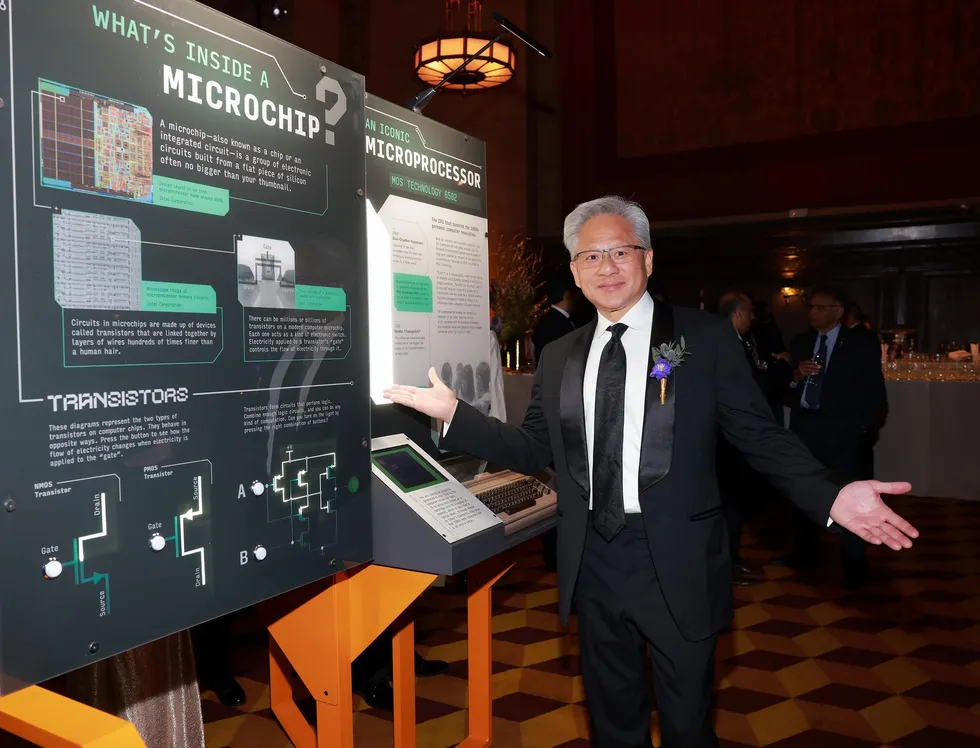
The most recent traveling exhibit was on display in April in New York City during the IEEE Honors Ceremony, which celebrates engineering pioneers who have developed technologies that changed how people connect with the world. Attendees explored the Microchips That Shook the World exhibit, which drew inspiration from IEEE Spectrum’s Chip Hall of Fame. The exhibit conveys the roles integrated circuits play in fields such as signal processing, audio engineering, and telecommunications. The Commodore 64, one of the artifacts on display, stirred up treasured childhood memories for guests who had used the home computer.
Other exhibits have focused on early radio inventions and power and communications technologies.
The Global Museum works with IEEE societies to mark their anniversaries by interpreting and displaying pertinent items.
A tribute to radio pioneer Edwin Howard Armstrong
The idea of a traveling museum came to fruition in 2024 after Alexander Magoun, IEEE’s outreach historian, connected with Mike Molnar. The IEEE associate member owns one of six superheterodyne radio prototypes developed by Edwin Howard Armstrong, who probably is best known for inventing the FM radio system. Armstrong received the first IEEE Medal of Honor in 1917.
Advertisement
The radio converts incoming frequencies into a fixed, lower intermediate one using a local oscillator and a frequency mixer. The technology paved the way for modern electronic communications devices. The prototype became the focal point of the Global Museum’s flagship Unseen Signals: E. Howard Armstrong’s Radio Revolution exhibit, which celebrates the inventor’s life and his impact on the broadcasting industry and wireless communications.
“The radio prototype is one of the most incredible pieces that we could put on display,” Mitchell says. He and Magoun sourced other artifacts including an Audion used in Armstrong’s experiments on wireless signal amplification; a selection of consumer products that attempted to cash in on radio’s popularity, including a flour sifter and laxatives; and a Motorola Walkie-Talkie from the Korean War. They were from museums or private collectors along the East Coast of the United States.
“Aside from [Guglielmo] Marconi, Armstrong is the most significant contributor to the history of radio,” Mitchell says. “The exhibit is not only a biography but also a story of the cultural and political implications his work had.”
Visitors can play 15 short clips of past radio broadcasts covering politics, religion, sports, or another topic.
The 93-square-meter exhibit is still traveling around the United States. It is on display until 15 August at the Pavek Museum, in St. Louis Park, Minn.
From 21 November until 9 May 2027, it is scheduled to be at the Museum of Innovation and Science in Schenectady, N.Y. Entry to the museum is free for IEEE members with a digital membership card.
Collaborating with IEEE societies
The IEEE History and Heritage group collaborates with IEEE societies to create exhibits for special events. In 2024 Mitchell curated an exhibit to celebrate the 75th anniversary of the IEEE Vehicular Technology Society and its 100th Vehicular Technology Conference. The Our Mobile World exhibit was launched at the conference, held in October in Washington, D.C.
Advertisement
“The society’s leadership helped me focus attention on key developments that meant a lot to its members,” Mitchell says.
“The IEEE Global Museum wants to present exhibits that connect with its audiences, whether these are IEEE members or the public,” he says. “Just knowing what was important historically doesn’t mean that this will resonate, so I really appreciated the insight.”
The exhibit’s artifacts included a Motorola DynaTac “brick” cellphone, a CB radio from the 1980s, and one of the earliest handheld GPS receivers. Visitors played an interactive game to test their knowledge spanning a century of wireless technology, motor vehicles, and mobile communication inventions.
Mitchell worked this year with the IEEE Dielectrics and Electrical Insulation Society to launch a virtual exhibit, Powering Up, which is available on the Global Museum website. It provides an overview of high-voltage power engineering, and it highlights the roles that manufacturers General Electric and Westinghouse played in making long-distance, high-voltage transmission of electrical power possible. Videos and photos of impulse generators and tests are featured in the exhibit.
One photo shows lightning arcing between high-voltage generators. Others show the impulse generators used at the 1939 World’s Fair in New York City, demonstrations of artificial lightning, and U.S. President Ronald Reagan visiting GE’s high-voltage laboratory in Pittsfield, Mass.
The history of microchips
The Unseen Signals exhibit was created for large venues, but the Microchips That Shook the World exhibit was designed to be displayed in different spaces, Mitchell says. Artifacts are premounted to ensure easy setup, and they’re encased in glass because many are rare.
Microchips are crucial for signal processing, audio engineering, and telecommunications, making them a point of interest despite their small size, Mitchell says. One rare artifact on display is the Kodak KAF-1300image sensor. Invented in 1986, it was used in one of the earliest digital cameras made for photojournalists.
The KAF-1300’s image sensor chip “is credited with bringing digital cameras out of the laboratory,” Mitchell says. “Only around 500 were produced.”
Advertisement
Visitors can understand how transistors work, he says, by pressing buttons to turn them on and off.
“There are billions of transistors in modern microchips,” he notes, “and you can combine them in a way that performs logical functions.”
Unseen Signals, one of two identical exhibits, was curated by Mitchell and Stephen Cass, IEEE Spectrum’s special projects editor, with help from several Spectrum colleagues. Together, they served as on-site docents for guests at the IEEE Honors Ceremony.
The display also featured a preview of IEEE’s immersive “Inside the Microchip” video project, which delves beneath the silicon surface of Nvidia’s NV20 chip, using forensic photography and computer-generated renderings. The video, to be released this year, aims to teach middle school students about the microchips that are inside their gaming devices.
Other residential proxy brands may rely on the same network
Tech companies working with US law enforcement “significantly degraded” the NetNut residential proxy network as part of an ongoing effort to disrupt the tools cybercriminals use to conceal their activity, say researchers.
The work was carried out by Google, Lumen, Shadowserver, the FBI, and others, and marks a continuation of the IPIDEA proxy network disruption from January.
Advertisement
According to Google Cloud, those working on the operation believe NetNut was among the most popular residential proxy network providers and had at least 2 million devices enrolled in its botnet, comprising mainly small TV-streaming hardware. Crims often use residential proxy networks to make it look like their traffic is actually coming from legit homes and businesses.
In the same way that other residential proxy networks expand their pool of enrolled devices, NetNut distributed its own SDK via these devices.
Proxy providers often approach users under the guise of monetizing their spare bandwidth, paying them a fee in exchange for letting their SDK run on their devices.
The official advice is, of course, to refuse any offers of this kind. Not only does it help feed the cybercrime ecosystem, but it can also lead to vulnerabilities elsewhere in home networks.
Advertisement
NetNut offered its own standalone proxy networks, as well as mobile and datacenter proxies, and a slew of scrapers and datasets.
However, it also offered a reseller program, and experts believe many other residential proxy networks are powered by NetNut’s own, which means the disruption may have further downstream effects.
“While we expect this disruption to have a larger ripple effect across the residential proxy ecosystem, observations after the disruption of IPIDEA proved that individual networks can appear resilient,” Google’s Threat Intelligence Group (GTIG) said.
“What we have observed is that when faced with the degradation of their own botnet, proxy operators begin buying capacity from their competitors, effectively becoming a reseller.
Advertisement
“We recognize that creating a lasting disruption in this fluid ecosystem means we must scale our efforts to target the infrastructure of several interconnected providers. We will continue to observe the composition of the NetNut network and map out how its peers adapt to this action.”
Residential proxy networks are not illegal, although they are often abused for cybercrime.
These networks are ostensibly pitched as a means to shore up online privacy, and promote ideals such as freedom of expression without risk of being traced.
However, the same privacy-preserving features of these networks are used by cybercriminals to mask their malicious activity.
Advertisement
They enroll ordinary devices, which are connected to innocent residential networks, at scale and offer them to customers as exit nodes.
Cybercriminals can make use of these networks to channel their traffic through these nodes, making the traffic appear to originate from an IP address they do not control.
“In a single week during June 2026, GTIG observed 316 distinct threat clusters using suspected NetNut exit nodes, including cybercriminal and espionage groups,” said Google.
“These bad actors can use NetNut to mask their origin IP address when accessing victim environments, accessing their own infrastructure, and conducting password spray attacks.”
Advertisement
Reports also suggest that NetNut has a role to play in other botnet families. GTIG said it found plugin components for large-scale botnets such as Badbox 2.0, while other public reports have noted signs of NetNut being used to infect devices with Mirai variants.
The Register asked GTIG why NetNut’s second domain (netnut.io) remains online, while netnut.com returns a “This website has been seized” splash page, but it did not immediately reply.
Google’s announcement hinted at similar takedowns to take place in the future, as the residential proxy network market continues to grow.
However, it said these ad hoc disruptions are only effective for so long, and that a long-term approach would require support from ISPs, mobile platforms, and other technology companies. ®
Apple is asking a federal court to dismiss the YouTuber AI training lawsuit, on the grounds that publicly available YouTube videos are lawfully accessible under both the DMCA and YouTube’s Terms of Service.
In April 2026, a collection of YouTube channels sued Apple, claiming the company had scraped videos from YouTube to train internal AI models.
The class-action lawsuit was headed up by Ted Entertainment, owners of the h3h3Productions channels and podcast. Two golf channels, MrShortGameGolf and Golfholics, were also involved.
Apple has responded three months later to the suit. According to the court document spotted byMacRumors, Apple argued that the plaintiffs made the videos publicly available on YouTube, and that both the DMCA and YouTube’s Terms of Service permitted the company to access them.
Advertisement
“Plaintiffs allege that they posted audiovisual works to YouTube, and that any member of the public can see them there,” reads Apple’s response. “No password. No payment. No lock. No key. Allegedly, YouTube employs technological measures to prevent unauthorized downloading. But because YouTube provides public access to the videos, the alleged technological measures do not control access to the works, as section 1201(a) requires.”
Apple is requesting the court throw out the lawsuit as the plaintiffs have failed to state a claim.
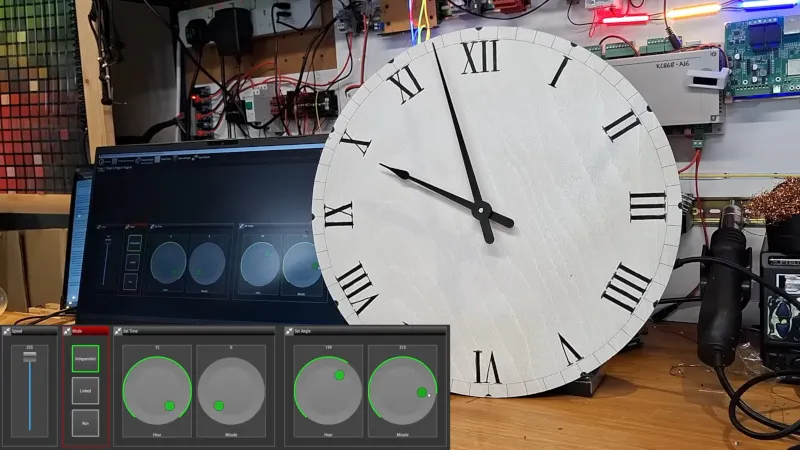
A clock is by its very nature a device for measuring time, and thus it moves forward at a constant rate. But how about in a theatrical setting, where time runs at the whim of the director? For the stage, a clock with more flexibility is required. To this endeavor [Playful Technology] has you covered, with a larger than life stage clock whose hands are independently controllable by DMX.
Behind the clock is a very unusual part, not the modified clock mechanism one might expect, but a dual stepper motor with a concentric shaft. This is driven by an Arduino with a stepper driver shield more familiar from the world of 3D printers, and an RS485 interface for DMX interfacing. The hands are built in OpenSCAD, and 3D printed to be an interference fit on the shafts. The DMX controller software has a handy rotating knob style interface, allowing easy hand manipulation.
You can see the results in the video below, complete with an exhaustive dissection of the Arduino code. Meanwhile DMX is itself a fascinating subject, and in the past we’ve taken a deep dive into RS485.
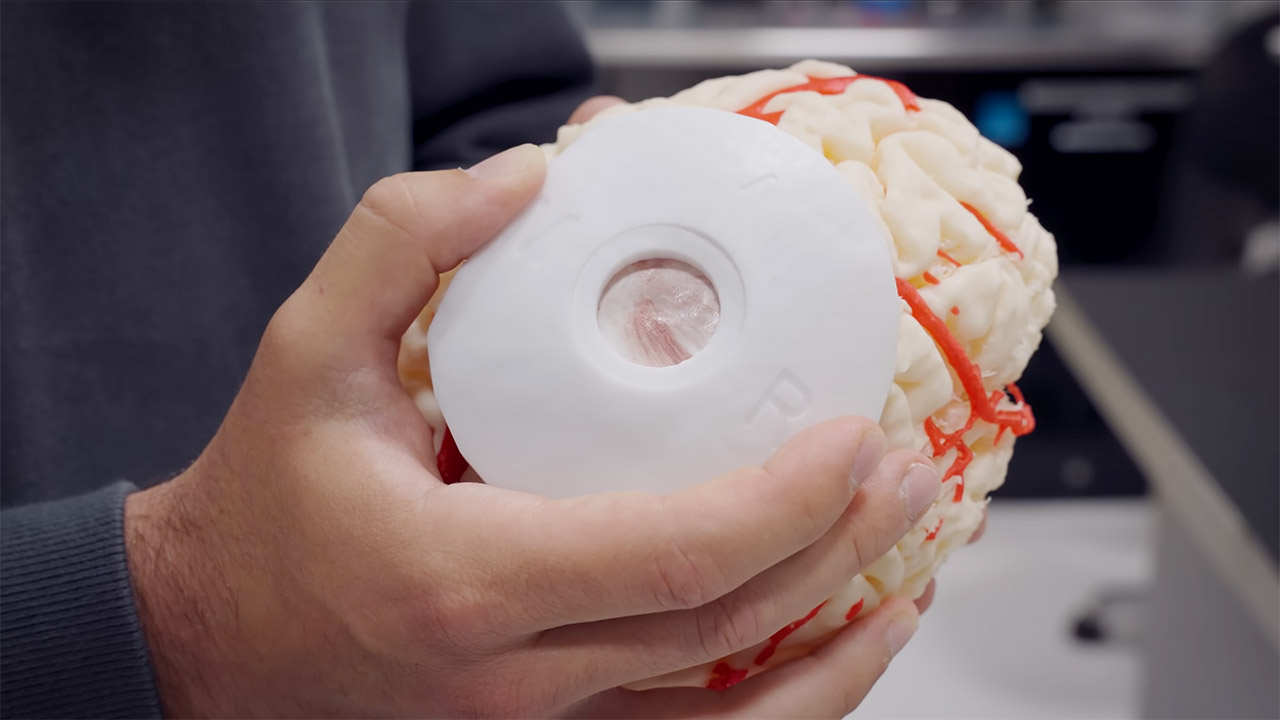
Neuralink has taken a clear step toward simpler brain implant surgery. In May a team at University Health Network’s Toronto Western Hospital carried out the company’s first transdural procedure on a clinical trial participant. Within an hour of the operation the person began moving a computer cursor using only thoughts. Recovery followed the expected path with no surprises.
The dura mater is a thick, protective membrane that wraps around the brain like a shield. It is thicker than a good piece of leather and serves to protect the delicate tissue inside from regular knocks and bumps. In the early days of Neuralink surgeries, as with most traditional brain operations, surgeons had to clip or peel aside a section of this membrane to reach the cortex. The extra procedure, a durectomy, adds a lot of time to the operation and required extremely cautious hands because the membrane is quite thick, the brain is sloshing around inside, and the blood arteries are hidden from view.
This time, the team was able to leave the dura intact, which was quite a change, since the surgical robot just drove its hair-thin electrical threads directly through the membrane and into the cortex underneath without ever touching it with a knife or pulling it back. This minor adjustment removes one of the most sensitive aspects of manual dexterity from the operating room. Getting to this stage was no easy task, as the team had to undertake a lot of new engineering on the initial needle to make it powerful enough to pierce the dura consistently. They ended up enlarging it somewhat and then spending hundreds of hours testing synthetic membranes that matched the genuine thing in terms of thickness and puncture resistance. They also developed new imaging capabilities that enabled the robot to work while the membrane was still in place.
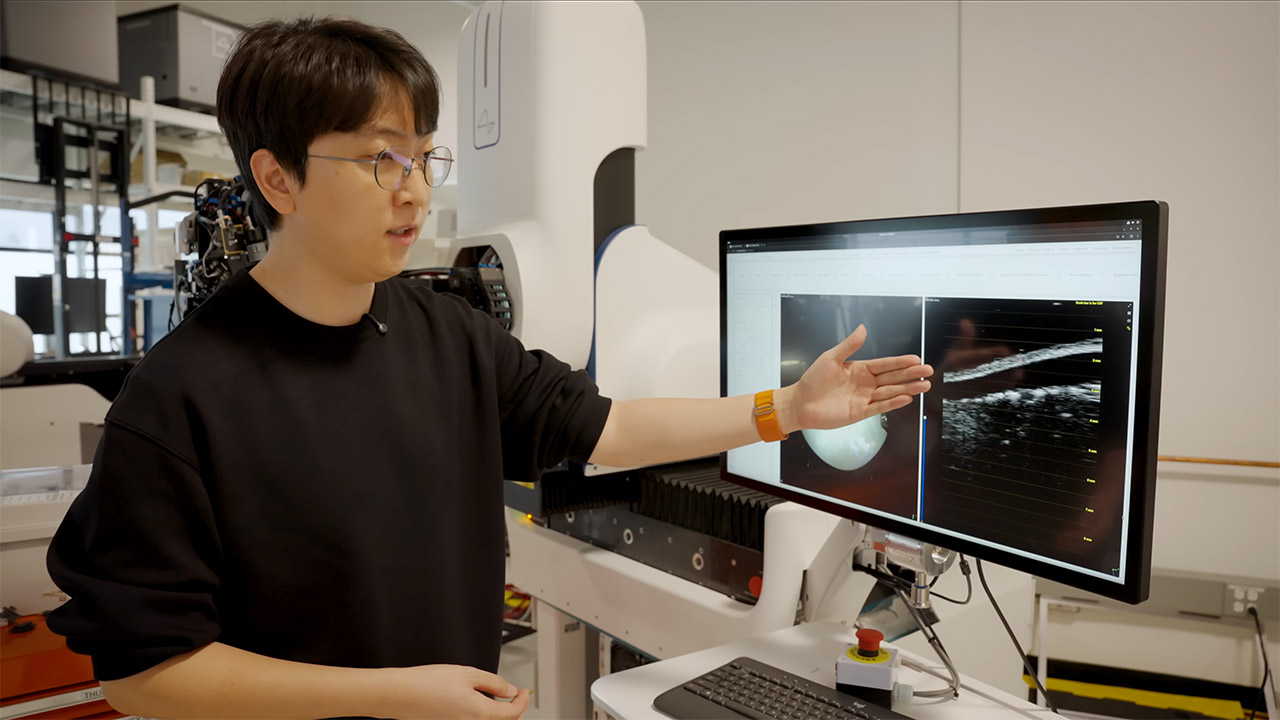
One tool uses a dye injected into the bloodstream and then infrared light illuminates all of the blood vessels through the dura, allowing the robot to delicately thread its way around them. Another approach employs a laser to bounce back a measurement of the distance from the top of the dura to the surface of the moving cortex, all while allowing for the brain’s natural squishing. The robot uses these live maps to place the threads precisely without damaging any blood vessels. The opening in the skull remains small, roughly the size of a quarter. Once all of the threads are in place, the implant is secured and the skin closes. The entire process feels more tighter and more simplified than previous versions, where the dura was trimmed.
This person took part in Neuralink’s current clinical trials, which are aimed at patients suffering from paralysis caused by spinal cord injuries or ALS. The speedy restoration to cursor control indicated that the threads were sending signals immediately, and doctors watched recovery and found nothing strange, since the new strategy appeared to operate perfectly. Neuralink put it quite simply: the best step is no step at all. Removing the dura cut makes the entire process much safer and more repeatable, pointing toward surgeries that stay safer and repeat more easily when more patients come forward. [Source]
Hong Kong handled more than half of China’s $239bn chip imports in the first five months of 2026, a record share, as AI demand reshapes Asian trade. The city’s free-port status and air cargo network have made it the region’s crucial semiconductor middleman, though the role leaves it exposed to US-China tensions.
Hong Kong has become the main artery for high-tech goods flowing in and out of China, and its chip trade has hit record levels. The city accounted for more than half of China’s $239bn in semiconductor imports in the first five months of 2026, according to a Bloomberg review of official data.
Advertisement
That share stood at just a third a decade ago. Between January and May, Hong Kong re-exported $124bn worth of chips to the mainland, some 52% of China’s total purchases.
Official figures published in late June showed the city’s trade with China grew nearly 50% in May from a year earlier. Bloomberg reports that is the fastest rate since 1992, outside the pandemic years.
The 💜 of EU tech
The latest rumblings from the EU tech scene, a story from our wise ol’ founder Boris, and some questionable AI art. It’s free, every week, in your inbox. Sign up now!
Advertisement
“Hong Kong’s strong air cargo network and free-port status have made it a perfect trading hub for semiconductors, which are high-value, low-weight and time-sensitive,” Natixis senior economist Gary Ng told Bloomberg. “Chipmakers can ship via Hong Kong on a frequent, stable schedule or store for future sales with flexibility.”
A $2tn trade network
The former British colony operates as a free port with no import tariffs and no capital controls, a contrast with the mainland’s financial restrictions and red tape. That has made it a critical cog in the AI-driven commercial system taking shape across Asia, where governments such as South Korea are pouring hundreds of billions into chips and data centres.
Economists at HSBC estimate AI trade within Asia has doubled from pre-pandemic levels to almost $2tn in 2025. Hong Kong alone exported nearly $159bn of AI-related goods last year, according to consultancy Oxford Economics, the fifth-largest total in Asia and more than Japan.
“Hong Kong’s strength lies in facilitating the movement of AI-related goods rather than producing them,” Oxford Economics economist Yongshi Mai told Bloomberg.
The council this week more than doubled its 2026 export growth forecast for the city to over 20%, citing an AI-driven “technology upcycle”. The boom helped Hong Kong’s economy expand 5.9% in the first quarter, its fastest pace in almost five years.
Caught between Washington and Beijing
The middleman role cuts both ways. Hong Kong lacks the chip fabs of Taiwan and South Korea or the heft of the mainland market, leaving it exposed to the whims of the US-China chip war.
During Donald Trump’s first presidency, Washington stripped the city of its special customs privileges, treating it as part of China. Since Trump returned to the White House and tightened curbs on China’s access to advanced US chips, Hong Kong has ramped up purchases of American-made semiconductors, sourcing many from third countries.
Advertisement
Bloomberg suggests those are likely chips that fall outside the restrictions, though the data does not specify which models are moving. Asian transshipment routes have drawn growing scrutiny regardless, with US and Taiwanese authorities already probing alleged smuggling of Nvidia chips through the region.
Mainland firms may also prefer Hong Kong intermediaries because payments and currency conversion are easier than dealing directly with foreign suppliers. “As a middleman, Hong Kong has figured out a way to handle the payments,” Stanford University research scholar and former Hong Kong lawmaker Charles Mok told Bloomberg.
The geopolitical exposure is pushing the city to hunt for new markets, with Chief Executive John Lee personally leading trade missions to the Middle East, Central Asia, and Southeast Asia. His June trip to Kazakhstan and Uzbekistan yielded 96 agreements worth over $1.65bn.
For now, AI is where the growth is
Some 40% of the chips Hong Kong handles are supplied by China itself, with a fifth coming from Taiwan, followed by Singapore and South Korea. The city has overtaken the mainland as Taiwan’s top chip export market, according to Bloomberg’s calculations, a shift not yet visible in Taiwan’s own headline trade figures.
Advertisement
China’s own semiconductor exports soared 111% in May to $36bn, the fastest growth since 2013, even as the mainland remains a net importer of advanced chips and races to build domestic alternatives. In May alone, Hong Kong absorbed over $40bn of Chinese exports, the biggest monthly haul since 2015.
Semiconductors drove more than a third of that export value, according to Chinese customs data. For much of ocean freight, meanwhile, Hong Kong’s middleman role has been fading for years as mainland ports in Shanghai, Ningbo, and Shenzhen ship goods directly to global markets.
In the highest-value trade, though, the city has held on. Its common-law courts remain more trusted by international investors than the mainland’s legal system, even as Beijing tightens its political grip.
“When it comes to products that have very high intellectual property content, Hong Kong still has a role in assuring quality, verifying standards and protecting IP,” University of Hong Kong economics professor Heiwai Tang told Bloomberg. “Hong Kong still has all the institutional advantages.”
Advertisement
The city’s aviation hub status is another edge, because the mainland enforces stricter controls on electronics carried by air. “This is something that other transshipment hubs like Singapore simply cannot do,” Nam Pak Hong Association vice chairman Michael Li Chi Fung told Bloomberg.
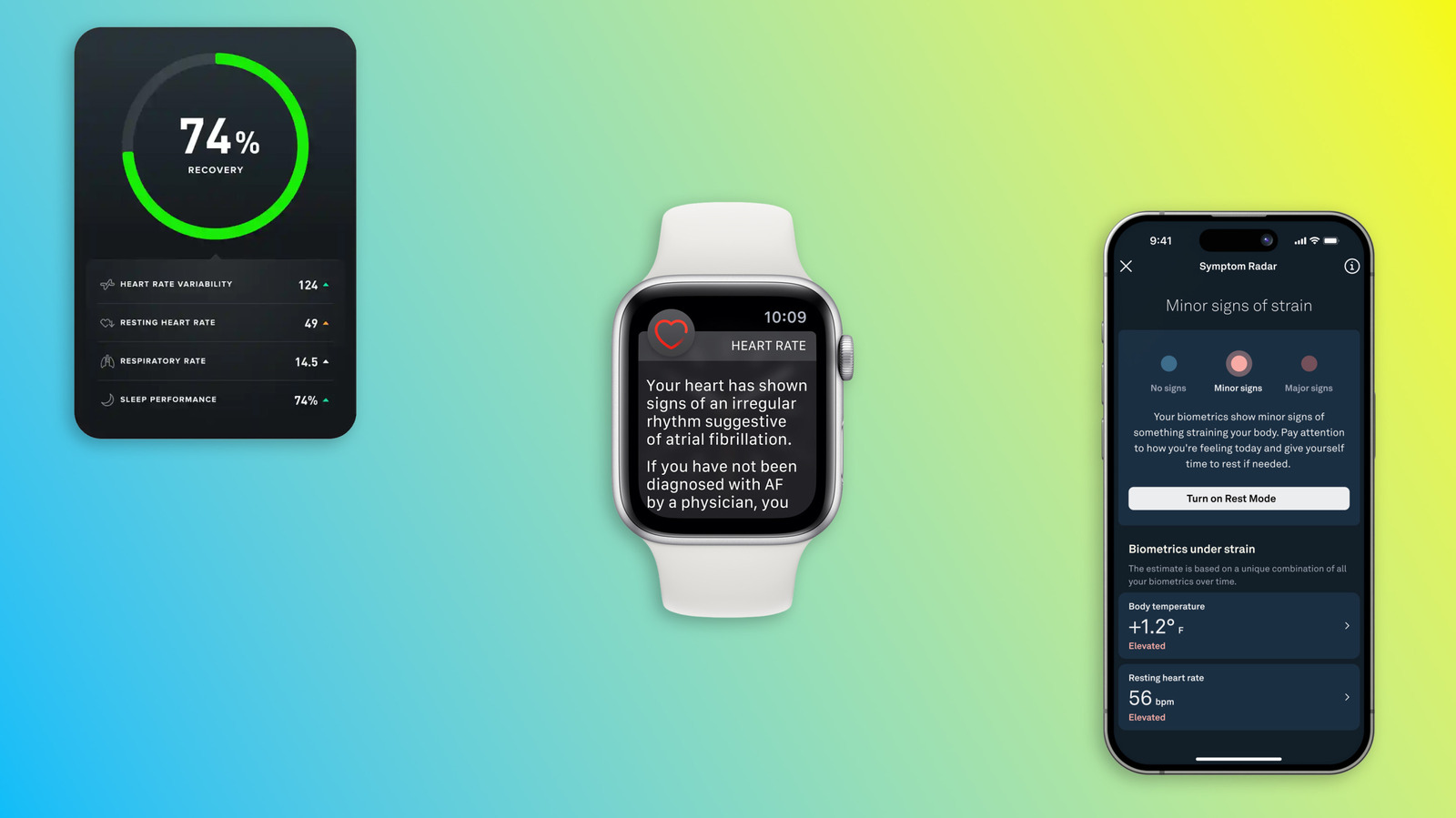
Long before you notice the symptoms of, say, the flu or COVID-19, your body starts changing in subtle ways. Taken individually, changes to your skin temperature, resting heart rate or respiratory patterns may not mean much. But when combined and compared to your baseline, they may hint that you’re coming down with something.
Research has shown that wearables can detect physiological changes from respiratory infections before symptoms appear. (It’s worth noting that they’re detecting the body’s response to an infection, not the virus or bacteria itself.) A recent study from Texas A&M and Stanford found that smartwatches may detect early signs of COVID-19 and influenza within hours of infection. The researchers estimated that encouraging people to isolate, get tested and seek treatment earlier could reduce pandemic transmission by up to 50 percent.
Of course, wearables, pandemics and the seasonal flu have been around for many years, but recent developments in AI and sensor technology could push things forward. Companies like Google, Oura and Whoop have all introduced some version of an AI coach or advisor in their apps, helping users make sense of their data.
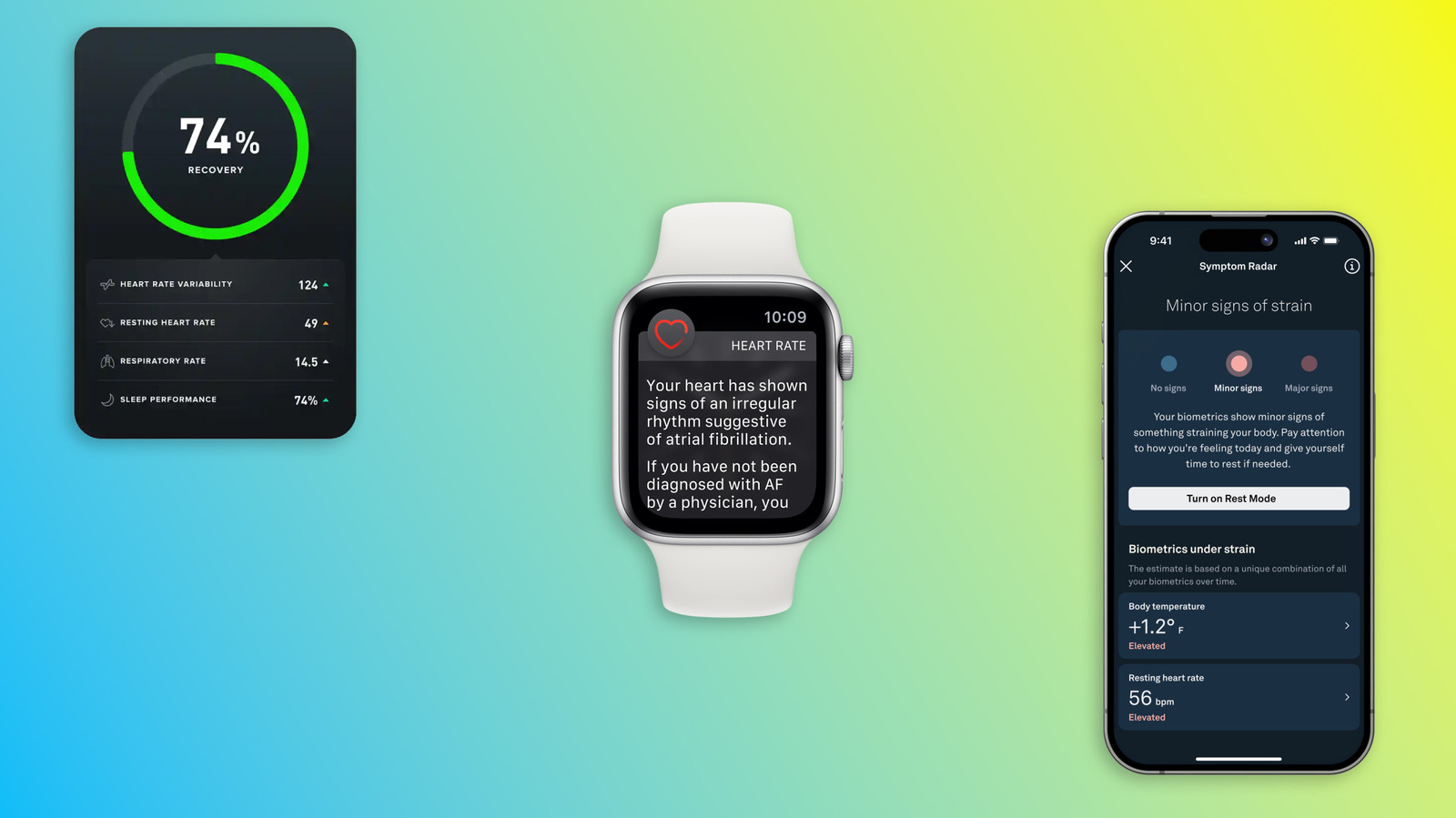
There are also features that aren’t labeled “AI,” like Oura’s Symptom Radar and Apple’s Vitals that piece together information from multiple sensors and compare it with your baseline. And the processing ability of the latest AI language models, like Google’s Gemini in the company’s Health Coach, will likely play an increasingly important role in tying it all together and suggesting actionable steps. But like proprietary recovery scores, much of that AI analysis will happen behind the scenes, offering little that doctors can reliably act on.
Advertisement
At best, AI health analyses will nudge people to seek treatment earlier. At worst, they might encourage people to substitute computer-generated advice for consultations with medical professionals.
While today’s AI systems come with warnings to check with real-world doctors, there is still the risk of people taking wearable data or app insights as the be-all and end-all verdict on their health. Whether it’s information from a miniaturized sensor on your wrist or advice given by a chatbot on your phone, nothing can replace regular physical health checkups with doctors and medical professionals.
The future of wearable health probably won’t be a smartwatch that diagnoses disease from your wrist — the fabled wrist Tricorder. Instead, it’s more likely to be a device that quietly watches for patterns, nudges you when something looks off and gives you another piece of useful information to discuss with your doctor.
Paraguay are the latest team attempting to stop free-flowing France as the sides meet in Philadelphia at the FIFA World Cup 2026 — and you can live stream the last-16 clash around the world for free.
La Albirroja’s tournament has been a story of resilience. Bouncing back from a 4-1 opening-game defeat by co-hosts USA to qualify as one of the best third-place teams was impressive. Yet absorbing wave after wave of pressure against Germany in the last 32 to snatch a 1-1 draw, before beating the four-time winners on penalties, was another thing entirely. Now, manager Gustavo Alfaro faces his greatest challenge of the tournament to date, as he seeks to stop a France side who have scored 13 goals in four games. Midfielder Diego Gomez should return after missing the Germany match through suspension.
France cruised to a 3-0 win over Sweden in the last 32 as they carried their ominous group-stage form into the knockouts. Kylian Mbappe was the star yet again for Les Bleus, scoring his third double of the tournament to become the all-time leading marksman in World Cup knockout matches (10 goals). With the France skipper in this form, and Michael Olise and Ousmane Dembele also in the groove, Didier Deschamps’ men are looking increasingly likely to reach a third successive final.
Advertisement
Can grizzled Paraguayan pair Jose Canale and Gustavo Gomez blunt the tournament’s most fearsome attack?
So, read on as we show you exactly how to watch Paraguay vs France for free from anywhere in the FIFA World Cup 2026.
How to watch Paraguay vs France for free
Paraguay vs France is available to watch for free in multiple countries, including the UK, Australia, Brazil, Belgium, Ireland, Netherlands, Switzerland and Turkey.
Advertisement
Abroad? Can’t access your free stream? Unblock your free World Cup stream with Norton VPN — more on that below.
Use a VPN to watch Paraguay vs France live streams
It’s the World Cup, and if you’re traveling, you might discover your usual Paraguay vs France stream is suddenly unavailable due to geo-restrictions.
Don’t worry, that’s exactly where a VPN can help. A virtual private network lets you connect to servers around the world so you can securely access your usual World Cup coverage as if you were back home.
Forwards: Miguel Almiron (Atlanta United), Gabriel Avalos (Independiente), Alex Arce (Independiente Rivadavia), Julio Enciso (Strasbourg), Isidro Pitta (Bragantino), Antonio Sanabria (Cremonese), Ramon Sosa (Palmeiras).
France
Goalkeepers: Mike Maignan (AC Milan), Robin Risser (Lens), Brice Samba (Rennes).
Advertisement
Defenders: Lucas Digne (Aston Villa), Malo Gusto (Chelsea), Lucas Hernandez (Paris St-Germain), Theo Hernandez (Al Hilal), Ibrahima Konate (Liverpool), Maxence Lacroix (Crystal Palace), Jules Kounde (Barcelona), William Saliba (Arsenal), Dayot Upamenaco (Bayern Munich).
Midfielders: N’Golo Kante (Fenerbache), Manu Kone (Roma), Adrien Rabiot (AC Milan), Aurelien Tchouameni (Real Madrid), Warren Zaire-Emery (Paris St-Germain).
Of course, most broadcasters have streaming services that you can access through mobile apps or via your phone’s browser.
You can also stay up-to-date with all of the key World Cup moments on the official social media channels on X/Twitter (@FIFAWorldCup), Instagram (@FIFAWorldCup), TikTok (@FIFAWorldCup) and YouTube (@FIFA).
We test and review VPN services in the context of legal recreational uses. For example: 1. Accessing a service from another country (subject to the terms and conditions of that service). 2. Protecting your online security and strengthening your online privacy when abroad. We do not support or condone the illegal or malicious use of VPN services. Consuming pirated content that is paid-for is neither endorsed nor approved by Future Publishing.





























































You must be logged in to post a comment Login