Claude is experiencing a major outage, with users reporting login problems and degraded performance across several Anthropic services.
The incident began on August 16, 2026, at around 21:58 UTC, and is affecting Claude.ai, Claude Code, and Claude Cowork.
According to Anthropic’s status page, the company first said it was investigating an issue preventing some users from authenticating to Claude.ai, Claude Code, and Claude Cowork.
A few minutes later, Anthropic reported a broader service disruption involving degraded performance on Claude.ai and platform.claude.com.
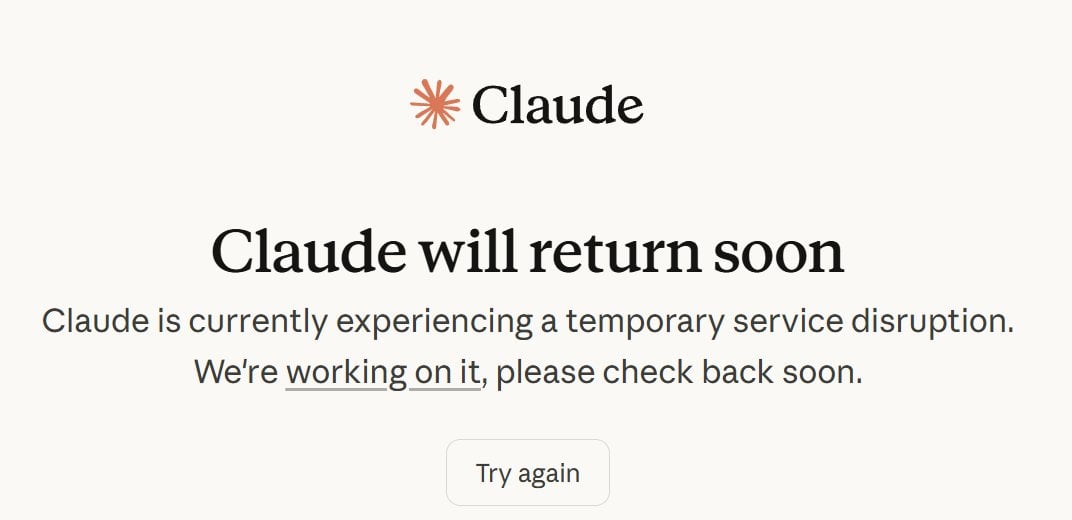
Claude down error when opening Claude.ai
For users, the outage can result in problems signing in, Claude failing to load, requests not completing, or other errors when using the affected services.
Anthropic’s status page currently classifies Claude.ai, Claude Code, and Claude Cowork as experiencing a major outage.
Advertisement
Claude Console and the Claude API are currently listed as operational.
Anthropic has not disclosed what is causing the outage, and both incidents remain under investigation at the time of writing.
Update 1: Anthropic said at 21:58 UTC on August 16 that it was investigating authentication issues affecting Claude.ai, Claude Code, and Claude Cowork.
Update 2: At 22:07 UTC, Anthropic reported degraded performance affecting Claude.ai and platform.claude.com. The company says it is continuing to investigate the disruption.
Advertisement
Update 3: By 22:40 UTC, Anthropic confirmed all services were restored.
Overall prevention scores can hide what happens after initial access. Once attackers are using valid credentials, prevention drops sharply.
The Blue Report 2026 measures defenses technique by technique across 338 million simulations run in customer production environments.
Virgin Galactic has delayed its return to commercial spaceflight until February 2027, and plans to raise ticket prices later this year.
The delay was disclosed alongside the company’s financial results, which showed a net loss of $56 million for the second quarter of 2026, down from $67 million a year earlier. Revenue for the quarter was $0.1 million, compared to $0.4 million in 2025.
Advertisement
According to CEO Michael Colglazier, demand exceeded the number of seats offered in the first $750,000 batch, prompting the company to prepare another at a higher price. Those customers will, however, have to wait a little longer. Colglazier said: “Our first ship is now expected to enter commercial service in February 2027 rather than the fourth quarter of 2026.”
He blamed the delay on the extra time needed to “complete avionics and systems installations.”
During an earnings call, Colglazier said: “No single issue is driving the schedule push. Rather, we have experienced modest time duration extensions across hundreds of relatively small but important installation tasks involved in the first build of our new spaceship.”
In response to an analyst question, Colglazier elaborated: “The number of those kind of ‘Oh, we did not expect this to not fit just perfectly,’ coming in is higher than we had allotted for. That just has started to accumulate on us. It really picked up at the tail end of July. For a bit, we thought we could manage that end, but the team just needed more time to do it the correct way.”
Advertisement
Integrated vehicle ground testing is expected to begin later in August, followed by flight testing in October. A second spaceship is due to join the fleet in March 2027, and the company expects to stop burning cash and “deliver positive quarterly cash flow within 2027.”
When Virgin Galactic reopened suborbital ticket sales in April, it charged $750,000 for a seat, up from the $600,000 price it cited in 2023. That was a substantial jump from the $100,000 envisaged more than two decades ago, when Sir Richard Branson announced plans for a scaled-up version of Burt Rutan’s SpaceShipOne. At the time, the company said commercial flights would resume by the end of 2026.
Virgin Galactic’s last commercial flight took place in 2024, after which the company paused operations to focus on its next generation of spacecraft. Virgin Galactic is not alone in pausing its space-tourism service. Earlier this year, rival Blue Origin announced that New Shepard flights would pause for “no less than two years” while it worked on its crewed lunar program. ®
Updated 8/18 at 10:19 GMT: A previous version of this story said that the program was “grounded,” but the more appropriate term is “paused.”
The first Ferrari Luce off the production line has sold for big money, with the Jony Ive-connected vehicle fetching a staggering $40 million at auction.
The car company’s first production electric vehicle, the Ferrari Luce, is an attempt to take on a challenging and growing market. While it has had a troubled existence since launch, the very first one off the production line has been sold for a considerable sum.
The Ferrari Luce “Tailor Made” went under the hammer at RM Auction in Monterey, California, late on Sunday. The car, bearing the chassis number 0, was a highlight sale for the event, reportsThe Autopian
Normally sold starting from $600,000, the opening bid for the special lot was $1 million, before it immediately shot up to $5 million and beyond. It eventually capped out at $40 million.
Advertisement
The price is one of the highest ever spent on a Ferrari, let alone a brand-new model. In 2025, a 1964 Ferrari 250 LM sold for $40.3 million, and that car had a history to help push up the price.
This particular edition is not just about the chassis number, as it has an exclusive Madreperla Semi-Gloss finish specifically made for the car. It also uses Le Mans metallic leather in Perla, and interior elements are finished in Grigio Corvara instead of black.
Part of the reason for the high price is that it’s a charity lot. 100% of the money raised from the sale is going to Save the Children.
It’s likely that the buyer will benefit from tax write-offs with the purchase.
Advertisement
Good news for a put-down car
The Ferrari Luce has been an unusual vehicle for the automaker to design and produce. Not least because of its Apple connection.
Former Apple design chief Jony Ive and his LoveFrom design studio helped design the outside and the inside of the Luce. That included the steering wheel and physical controls at the hands of the driver.
However, the car hasn’t had the best reception since its introduction. Rather than the classic Ferrari styling, the car instead looks a lot more like a typical road-going vehicle.
It’s not even Ferrari Red, with the company instead going for a more pastel color approach.
Advertisement
It does have Ferrari speed, though, with a combined 1,035 horsepower from four motors and a 0-60mph of 2.5 seconds.
Bottom line: A study of Backblaze’s hard-drive fleet found that HGST and Western Digital drives had lower failure rates than Seagate and Toshiba drives after accounting for factors such as age, capacity, operating temperature, and form factor. The results show how raw fleetwide failure figures can obscure meaningful reliability differences when manufacturers’ drives are at different stages of their service lives.
The peer-reviewed IEEE study was written by Christoph Siemroth of the University of Essex and Yeomyung Park of Sungkyunkwan University. It reviewed data on 443,156 drives used in Backblaze data centers from 2013 through the second quarter of 2025. The sample covered more than 1.66 million drive-years.
The researchers found that HGST drives failed at about 41% of Seagate’s rate when compared under similar conditions. WD drives failed at about 52% of Seagate’s rate. Toshiba drives had a rate equal to 107% of Seagate’s rate.
HGST ranked first in the analysis, although the brand is no longer sold as a separate new-drive option. Western Digital acquired HGST in 2012 and later phased out the brand.
Advertisement
The study takes a different approach from Backblaze’s regular quarterly reliability reports, which compare the drives active in the company’s storage fleet at a given time. The authors said that can produce uneven comparisons because the fleets are not the same age.
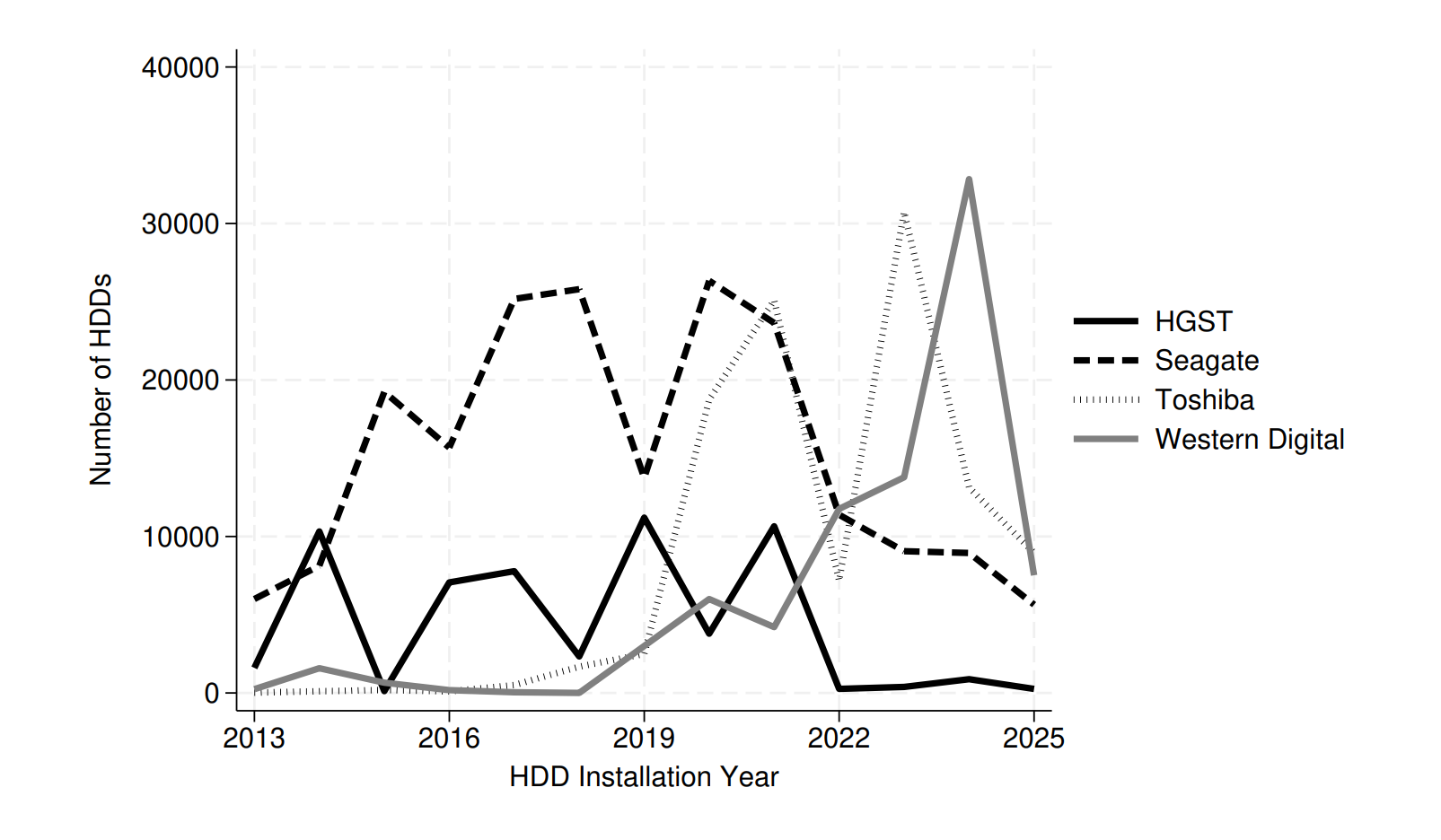
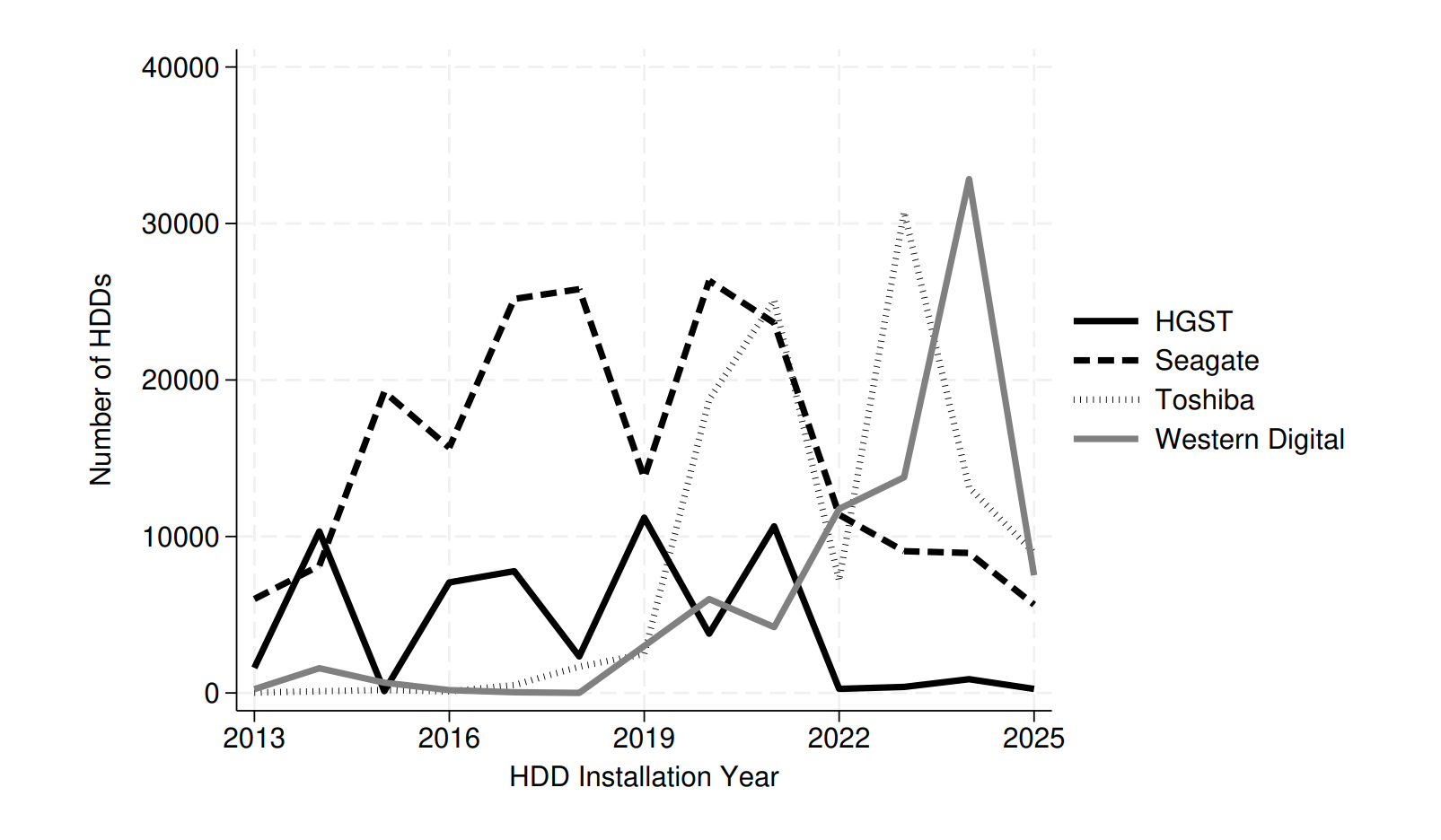
Number of HDDs installed by manufacturer and year. Backblaze’s drive mix shifted sharply over time, a factor the study accounted for when comparing manufacturer failure rates.
HGST accounted for many new Backblaze installations in 2014. Seagate was the main supplier from 2015 through 2020. Toshiba had the most new installations in 2023, and WD led in 2024. As a result, reported failure rates can compare old Seagate and HGST drives with newer Toshiba and WD models.
The researchers adjusted their analysis to account for those differences. They also excluded some of the bias created when drives leave service before they fail. About 146,943 drives, or 31% of the sample, were removed from Backblaze’s dataset without a recorded failure. Most were likely replaced as the company moved to higher-capacity hardware.
Advertisement
Toshiba showed the clearest change in failure behavior as drives aged. Its monthly failure rate rose more than fourfold after 60 months in service. From 50 to 100 months, Toshiba drives failed at a rate of five to six per 1,000 drives each month. The other three brands generally remained at or below 2.5 failures per 1,000 drives per month over that period.
Seagate had the highest failure rate among newer drives in the study. But its rate did not increase as sharply with age as Toshiba’s did. Backblaze has previously reported that many drive failures occur before a drive has been in operation for three years.
Operating temperature also mattered. The study found that each 1-degree Celsius increase in average drive temperature raised the failure rate by 2.1%. A 10-degree Celsius increase would raise the rate by about 23% when compounded.
Higher-capacity drives performed better in the model. Each additional terabyte of capacity was linked to a 3.4% decline in failure rates. The researchers said that may be partly tied to newer drive designs, including helium-filled enclosures and advances in head manufacturing.
Advertisement
The results do not necessarily apply to hard drives used in consumer PCs or home storage systems. Backblaze operates enterprise drives in data-center conditions, and the dataset does not include comparable workload data for each manufacturer.
The analysis is also weighted toward shorter service periods. Only 0.52% of drives in the study stayed in operation for more than 10 years. That makes the results more useful for evaluating reliability during a drive’s early and middle years than for estimating its full lifespan.
WD and HGST finished close together in the adjusted ranking. The authors said that could reflect technology sharing after WD acquired HGST. Backblaze’s most recent annual report put the company’s overall annualized drive failure rate at 1.36% in 2025.
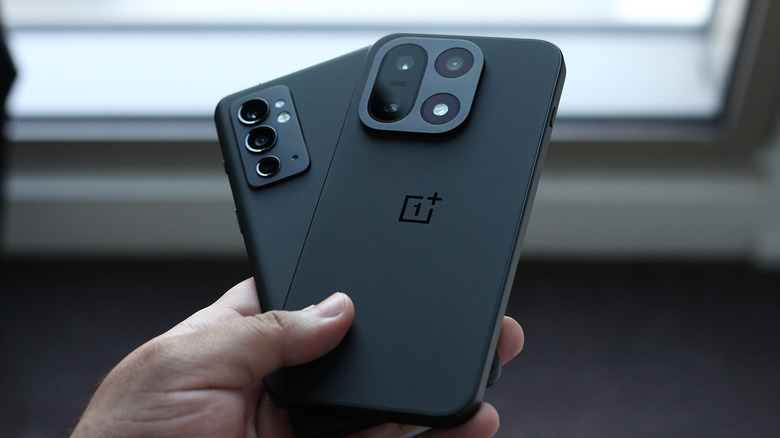
If you’ve been eyeing a OnePlus phone, you likely have your priorities set on performance, value and software. Though the company had a couple of rocky launches, the previous few generations of OnePlus smartphones have reclaimed the “flagship killer” title that helped put the brand on the map in the first place. In our review of the OnePlus 15, we had very little to complain about aside from the cameras. At $900, you’d be hard-pressed to find an alternative that delivers the kind of performance the OnePlus 15 does while offering exceptional battery life and an unparalleled software experience.
Alas, after months of rumors, OnePlus confirmed its exit out of North America and Europe in July. Most of OnePlus’ catalog is currently out of stock on its website, but you can still shop for its phones and audio accessories through other retailers like Amazon. The question, however, is should you buy a new OnePlus device now that the company has ceased operations in the US? For most buyers, the answer is probably a no.
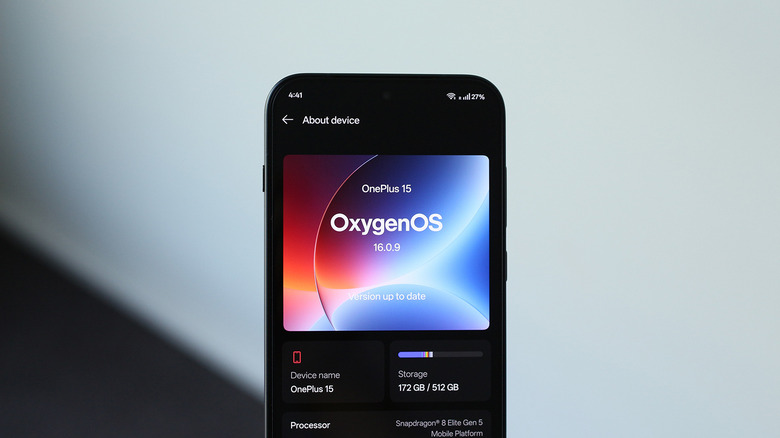
Although OnePlus has promised that software and after-sales support for existing OnePlus devices will continue, the company is making a big change to how future software updates will be handled. Longtime OnePlus users will know just how essential OxygenOS has been to the brand’s identity, and if they’re not getting the software experience they signed up for, it becomes harder to justify buying into an ecosystem that has no future.
Advertisement
Bid farewell to OxygenOS
Adnan Ahmed for Engadget
Easily OnePlus’ greatest strength (besides its lineup of overkill smartphones) was the software experience its users got to enjoy. The OnePlus One debuted with CyanogenMod, which was a very community-driven version of Android. The company then made the jump to its own flavor of the operating system, OxygenOS. It was known to offer a clean experience while packing in a ton of customizability. In every review you’ll come across of a OnePlus smartphone, you are almost guaranteed to see the reviewer sing praises of how snappy and feature-rich OxygenOS is.
Well, that’s changing. Although OnePlus isn’t dropping support for the phones it has sold in the US, users who wish to experience newer versions of Android are expected to make the switch to ColorOS — the same software interface that Oppo smartphones use. Users have, understandably, expressed frustration with this decision. However, if you’ve picked up an Oppo smartphone recently and put it next to your OnePlus device, you’ll realize that OxygenOS and ColorOS are darn near identical at this point.
They’ve been sharing the same codebase since 2021, so there really isn’t anything you’ll be missing out on by making the switch. Oppo’s ColorOS does pack in a bit of bloatware compared to OxygenOS, and it would be sad to see if OnePlus drops the few Easter eggs that helped set its version of Android apart.
Advertisement
High-risk, high-reward
Adnan Ahmed for Engadget
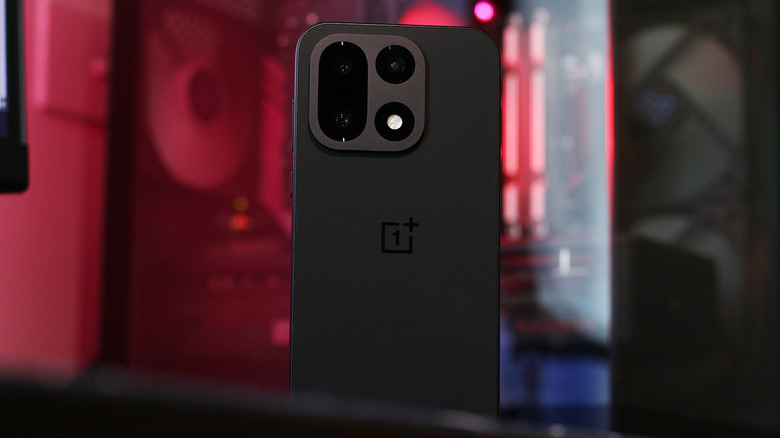
At the beginning of 2026, I had an itch to upgrade to the OnePlus 15, despite all the rumors pointing to the company’s potential exit from a few global markets. The phone was simply too good to ignore, so I decided to roll the dice and pick one up. It cost substantially less than competing flagships from Samsung and Apple, and I am okay with not having the best camera system in my smartphone. In return, I get to enjoy a bright OLED display, the insane horsepower that the Snapdragon 8 Elite Gen 5 delivers, the obnoxiously fast 120W charging speeds and a software experience that feels snappier than any other Android skin I’ve used.
It also helps that OnePlus doesn’t lock you in its ecosystem like Apple does. Even if you decide to pick up a pair of OnePlus Buds or a OnePlus Watch, you can pair them with other Android smartphones without giving up key features.
The bottom line is, if you really want to pick up your final OnePlus smartphone, you can make it work, assuming you’re okay with switching to ColorOS. Both the OnePlus 15 and OnePlus 15R are set to receive four major Android OS updates and six years of security patches. After-sales service can be accessed by heading to the OnePlus Support website, and the company claims it will honor existing warranty commitments.
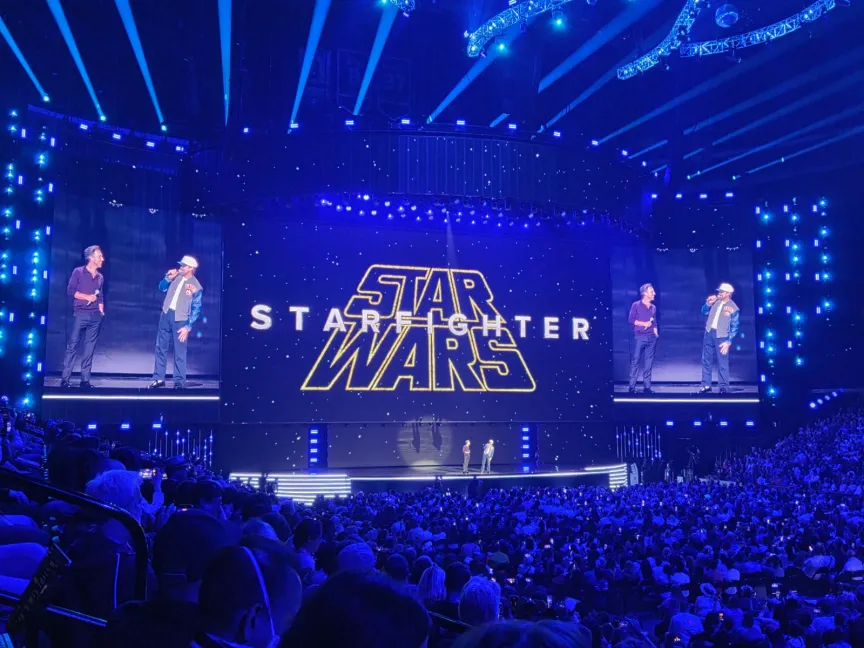
Live at the Honda Center in Anaheim on Friday night as part of Disney’s D23 fan convention, Lucasfilm President Dave Filoni announced some of what’s coming next in the Star Wars universe.
And perhaps the biggest reveal was a trailer for the upcoming film, Starfighter.
Starfighter
Corinne Reichert/CNET
Disney’s D23 event gave fans a peek at the new chapter in the Star Wars franchise during its entertainment presentation on Friday, revealing a trailer for Lucasfilm’s Star Wars: Starfighter film. The movie was announced in early 2025 and is due to hit theaters on May 28, 2027. The film features Ryan Gosling and Flynn Gray portraying the lead characters.
Gosling, in a jacket with a skull and crossbones, was on hand to reveal fresh details about his upcoming Star Wars film. The emblem is the signature of his character, whose name was revealed to be Kade Auberon — not one franchise fans should recognize, but certainly one that sounds like it came from a galaxy far, far away.
Gosling called it a life-changing role before introducing the trailer.
Advertisement
Set five years after the events of 2019’s The Rise of Skywalker, the space-faring tale teases Gosling riding “the fastest starfighter ever built.”
Gosling plays a talented pilot, while Gray is the young boy he’s charged to protect. The packed cast also includes Aaron Pierre, Mia Goth, Amy Adams, Daniel Ings, Jamael Westman, Simon Bird and House of the Dragon’s Matt Smith.
Shawn Levy is directing the adventure flick. At the Star Wars Celebration in Japan last year, he explained how this story is in a lane of its own. “This is a stand-alone,” he said. “It’s not a prequel, not a sequel. It’s a new adventure. It’s set in a period of time that we haven’t seen explored yet.”
It’ll hit theaters on May 28, 2027.
Advertisement
Ahsoka season 2: Hayden Christensen is back as Anakin
Corinne Reichert/CNET
Joining Filoni on stage were Ahsoka live-action actress Rosario Dawson; Eman Esfandi, who plays Ezra Bridger; and, surprisingly, Hayden Christensen, who played Anakin Skywalker in Star Wars Episodes II and III.
Anakin was a big part of the original Ahsoka Tano story in the animated Clone Wars series, and Christensen’s return to the character in a pivotal episode during the first season of Ahsoka was arguably its best. It makes sense for him to return in season two, seemingly in flashbacks of Ahsoka’s past and as a guiding Force ghost in her present.
The teaser trailer showed Christensen leading Ahsoka to, perhaps, become a Jedi once again.
Ahsoka season 2 will stream on Disney Plus on Jan 20, 2027.
Advertisement
Star Wars IV coming back to theaters
To celebrate the 50th anniversary of Star Wars, which was released in 1977, the original movie will be rereleased in its original form in theaters next year.
Kourtnee Jackson
Senior Editor
Kourtnee covers streaming services and entertainment. She previously worked as an entertainment reporter at Endgame 360, where she wrote about film, television, music, celebrities and streaming platforms.
See full bio
Corinne Reichert
Senior Editor
Advertisement
Corinne Reichert (she/her) grew up in Sydney, Australia and moved to California in 2019. She holds degrees in law and communications, and currently writes news, analysis and features for CNET across the topics of electric vehicles, broadband networks, mobile devices, big tech, artificial intelligence, home technology and entertainment. In her spare time, she watches soccer games and F1 races, and goes to Disneyland as often as possible.
See full bio
America’s aging nuclear missiles depend on data scattered across dozens of systems
Minuteman III could remain operational decades beyond its original retirement schedule
The US Air Force wants one AI interface to organize fragmented missile data
The US Air Force is searching for an artificial intelligence agent capable of centralizing the fractured data behind its aging nuclear missile fleet.
An active industry notice indicates that the Minuteman III program relies on roughly 60 disparate, disconnected systems.
Those systems range from local hard drives to shared networks, and no single tool currently governs them all.
Latest Videos FromTechRadar
Advertisement
Centralizing decades of missile data
Sustaining the decades-old missile fleet counts as a national security imperative under a mission commonly called “no fail”, since failure could bring catastrophic results.
The US Air Force must continuously keep 400 missiles ready to launch at a moment’s notice, a responsibility that leaves little room for error.
According to the notice, the requested AI agent should construct a single unified interface that pulls information from design drawings, maintenance records, and other scattered sources.
Previous attempts to build a centralized digital ecosystem for the missile’s lifecycle have failed for a range of unspecified reasons.
Sign up to the TechRadar Pro newsletter to get all the top news, opinion, features and guidance your business needs to succeed!
Officials expect the new system to collate information in near real time and reduce manual compilation by an amount still to be negotiated with a winning contractor.
Advertisement
The notice adds that the initial phase will cover only data marked as controlled unclassified information, though that scope could later expand to include secret-level material.
The Minuteman III missile first entered service in 1970, and its originally planned retirement year of 2036 would have made it exactly 66 years old.
That 2036 timeline has since slipped, however, as delays to the Sentinel replacement program have pushed the schedule further out.
Advertisement
A Government Accountability Office review found that extending Minuteman III operations to 2050 remains feasible, though it carries significant sustainment risks.
Under that revised outlook, the fleet’s oldest missiles could approach 80 years of service.
Officials stress that AI will play no role in launching the missiles
The notice does not describe any AI role in launching or operating the nuclear missile fleet, and officials insist that such decisions are not for AI tools, but remain in human hands.
Advertisement
This search for a data tool follows years of delay facing the Sentinel program, which is meant to eventually replace the Minuteman III fleet entirely.
Because Sentinel remains years away from deployment, the aging missiles must keep functioning far longer than military planners originally anticipated.
The effort also arrives as the Defense Department pushes AI adoption across its ranks and seeks hundreds of additional software engineers.
Other Air Force programs have tested similar autonomous capabilities recently, including a modified F-16 that used AI to analyze sensor data during a live intercept exercise.
Advertisement
Before the latest notice, the Pentagon had separately awarded a $31 million contract to Air, a firm formerly known as Govini, to support ICBM fleet sustainment.
That company said its work would help build a clearer view of the missile program’s industrial base and supply chain risks.
It remains unclear how that platform might eventually connect with whatever AI agent the Air Force ultimately selects for its centralized data project.
Given the scope of the request, the Air Force appears more focused on modernizing data management than on introducing autonomy into weapons decisions.
Advertisement
Whether contractors can deliver a workable system for such a sprawling, decades-old infrastructure remains an open question.
Cryptocurrency hardware wallet provider SafePal is warning of a data breach affecting about 39,798 customers after a flaw was exploited to steal customer order information, and a threat actor is now claiming to be selling the stolen data.
SafePal says the breach impacts customers who placed orders between March 2, 2025, and April 11, 2026, exposing their names, email addresses, shipping addresses, phone numbers, and purchase information.
The company says the breach did not expose customers’ wallet seed phrases, private keys, passwords, bank account information, payment card numbers, government-issued identification numbers, or other credentials.
“No evidence has been found that the incident itself compromised access to SafePal wallets or funds,” SafePal said in a security advisory published Sunday.
The company says it notified all impacted customers via email on August 16 with the subject “[Important] Your SafePal Order Information Has Been Affected.”
Advertisement
SafePal has also launched an online verification tool that lets customers enter their order number and shipping country to determine whether the details of that order were stolen.
The company warns that the stolen information could be used to conduct targeted phishing and other social engineering attacks, with customers reporting SafePal phishing emails and phone calls as early as May.
Order-tracking flaw exposed customer data
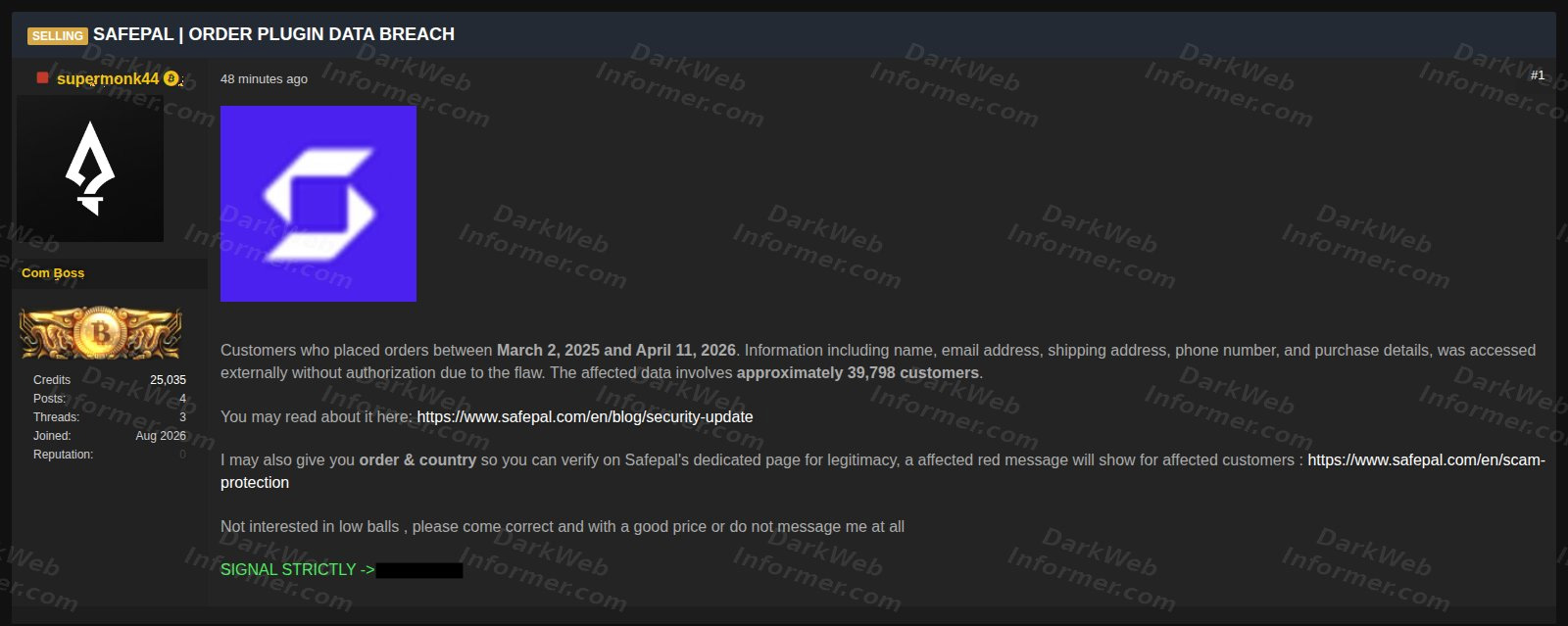
A threat actor now claims to be selling the stolen SafePal customer data on a cybercrime forum.
As spotted by DarkWebInformer, the seller referenced the same affected order period and approximately 39,798 customers disclosed by SafePal.
Advertisement
For potential buyers, the threat actor is also willing to share order ID and shipping country information from stolen orders, which can be confirmed on SafePal’s online verification tool as proof that the sale is legitimate.
“Not interested in low balls , please come correct and with a good price or do not message me at all,” reads the forum post.
Stolen SafePal data being sold on a cybercrime forum Source: DarkWebInformer
BleepingComputer has not independently verified that the threat actor possesses the stolen data.
SafePal says it first received a report consistent with the incident in early May 2026, which it initially treated as an isolated case.
While it is unclear whether this report is related, a customer posted on X that they received a SafePal phishing email and a phone call from someone claiming to be a company employee in May. The phishing email claimed that a security vulnerability had been discovered in the SafePal X1 hardware wallet and that a firmware update was required to fix the flaw.
Advertisement
“We first received a report consistent with this issue in early May, and treated it as an isolated case at the time, but escalated it into a formal security investigation and introduced additional protections,” reads the advisory.
“As our e-commerce system involves multiple interconnected components and external integrations, as well as third-party logistics partners, we could not immediately rule out several possible explanations.”
In July, SafePal began what it described as a “full review and rebuild” of its order-processing system and discovered an authorization flaw in the order-tracking function of a plug-in that allowed unauthorized access to another customer’s order information.
SafePal says it fixed the vulnerability and implemented additional security measures. The company is also working with a third-party security firm to validate the fix and conduct a broader review of its order-processing systems.
Advertisement
However, as part of this investigation, SafePal determined that a threat actor exploited the flaw to steal order information belonging to approximately 39,798 customers.
During the investigation, SafePal also discovered a separate configuration error that caused a data-cleanup process to stop functioning correctly between September 2025 and April 2026, resulting in order data being retained as far back as March 2025.
For affected orders, SafePal says it has purged personal data from active e-commerce servers, although it is retaining an encrypted offline copy for potential law-enforcement investigations.
SafePal also warns customers to watch for targeted phishing emails and phone calls about firmware upgrades, product returns, refunds, or legal investigations.
Advertisement
The company says it has already taken down more than 30 fraudulent websites and phishing links tied to this incident.
Customers whose order information was exposed do not need to replace their hardware wallets or move cryptocurrency because of the breach, according to SafePal.
However, if a customer already shared their seed phrases or private key in response to a phishing email or text, they should treat their wallet as compromised and transfer any assets to a new wallet on a trusted SafePal device or official application.
Overall prevention scores can hide what happens after initial access. Once attackers are using valid credentials, prevention drops sharply.
The Blue Report 2026 measures defenses technique by technique across 338 million simulations run in customer production environments.
Most teams building retrieval augmented generation (RAG) systems for high stakes classification make the same architectural bet: Route every ambiguous case straight to the language model and trust the retrieved context to sort it out. This works fine in a demo. It falls apart the moment the system has to survive an audit, a regulator, or a compliance officer asking why a specific decision was made six months ago.
I have spent the last year building RAG based classification systems in regulated enterprise settings, where the cost of a wrong answer is not a bad chatbot reply. A decision has to hold up to scrutiny long after the model produced it. This environment forces a different design philosophy than most AI engineering content assumes.
Here is what changes when you cannot afford to be probabilistic about everything, and how a cascade architecture solves it.
The invisible cost of an all LLM pipeline
The appeal of routing everything through a large language model (LLM) is obvious: Fewer moving parts, faster iteration, the model handles unanticipated edge cases. The problem shows up later, in three places.
Advertisement
First, auditability. “The model decided based on retrieved context” is not an acceptable answer. You need a decision path a human can reconstruct without rerunning inference and hoping for the same output.
Second, cost at scale. If your system processes tens of thousands of cases a day and every one hits an LLM call with several retrieved documents in context, your inference bill and latency both scale with volume in a way that rule based logic does not.
Third, and least discussed, model drift on the easy cases. LLMs are excellent at nuanced judgment calls. They are inconsistent, in ways that are hard to detect, on cases that should have a deterministic answer. A clear structured match against known criteria should never depend on a language model’s mood.
The cascade approach
The fix: Stop treating the LLM as the front line and start treating it as the escalation path. In practice this means a three stage pipeline.
Advertisement
Stage one is deterministic. Exact matches, structured field comparisons, and anything with a clear rule get resolved here with no model call at all. This stage should clear the majority of volume, often more than half depending on your data quality, and every decision is fully explainable because it is a lookup, not an inference.
Stage two is where retrieval earns its keep. For cases that survive stage one — and I mean survive as in they were not clearly resolved — you build a retrieval layer that pulls the specific evidence relevant to the ambiguity: Prior reviewer decisions on similar cases, contextual documents that explain an apparent conflict, or historical precedent that clarifies an edge case. The retrieval step matters more than the generation step here. If you retrieve the wrong context, even the best language model in the world will produce a confident, well reasoned, wrong answer.
Stage three is the LLM call, and it should only see the residue that stages one and two could not resolve. This is the part people skip when they design their first version, and it is the single biggest lever for both cost and quality. In one system I worked on, routing only the genuinely ambiguous 10 to 15% of cases to the LLM cut inference cost by roughly 6X compared to an all LLM baseline, while improving consistency on the deterministic majority to effectively perfect.
Designing the prompt for asymmetric risk
Once a case reaches the LLM stage, most teams default to a neutral prompt: “Assess whether this case should be approved or flagged.” That framing is wrong for high stakes classification because the cost of the two error types is not symmetric. Missing something that genuinely needed attention can mean real harm downstream. Incorrectly flagging something that was fine costs a reviewer’s time and a delay. Those two outcomes are rarely equally bad, yet a neutral prompt asks the model to treat them as if they were.
Advertisement
An asymmetric risk prompt makes that tradeoff explicit to the model rather than letting it guess at your risk tolerance. Concretely, this means instructing the model to treat uncertainty as a reason to escalate rather than clear, providing calibrated examples of both error types with their consequences spelled out, and asking for a confidence score alongside the classification rather than a binary answer. The confidence score becomes your second cascade point: Anything below a certain threshold goes to a human reviewer instead of being auto resolved, no matter what the model’s classification says.
This sounds like a small prompt engineering detail. In practice it is the difference between a system that reduces reviewer workload and one that quietly increases risk while looking like it is working.
Evaluating a system like this properly
Standard RAG evaluation metrics were not built with this use case in mind, and using them without adaptation will give you a false sense of confidence. A few adjustments that matter.
Retrieval quality needs to be measured separately from final classification accuracy. A system can have excellent retrieval ranking scores and still make bad final decisions if the generation step misweights the evidence. Track them independently.
Advertisement
Your evaluation set needs deliberate oversampling of the cases that reach stage three, since that is where your system’s judgment actually gets tested. If your eval set mirrors your production distribution, it will be dominated by the deterministic cases your cascade already handles well, and you will be blind to exactly the failures that matter most.
LLM as judge evaluation works for this domain but only if the judge prompt encodes the same asymmetric risk framing as your production prompt. A judge that treats both error types equally will systematically favor the wrong tradeoff when you are tuning your system.
Finally, build a feedback loop from confirmed outcomes back into your retrieval corpus. When a human reviewer overturns a model decision, that case and its correct resolution should become retrievable context for future similar cases. Without this, your system’s handling of ambiguous cases never improves, it just keeps making the same category of mistake at the same rate.
The broader lesson
The instinct to reach for the most capable model for every decision is understandable, but in domains where wrong answers have real consequences, the more valuable engineering work is deciding what should never touch the model at all. Cascade architecture is not a workaround for LLM limitations. It is what a mature RAG system looks like once you have actually had to defend its decisions to someone whose job is to find the flaw in your logic.
Advertisement
If you are building AI systems for any regulated or high stakes domain, the question worth asking before you write a single prompt is not “How do I get the model to handle this well.” It is “Which parts of this decision should never have been the model’s job in the first place.”
Vineet Vijay is a Lead AI and machine learning engineer.
Welcome to the VentureBeat community!
Our guest posting program is where technical experts share insights and provide neutral, non-vested deep dives on AI, data infrastructure, cybersecurity and other cutting-edge technologies shaping the future of enterprise.
Advertisement
Read more from our guest post program — and check out our guidelines if you’re interested in contributing an article of your own!
Private drone companies can now request access to US Army testing ranges
Companies no longer need existing government partnerships before requesting range access
Five military facilities across America and Morocco are joining the programme
Private drone companies without existing government contracts can now request access to the US Army test ranges nationwide.
The arrangement removes a requirement for companies to have existing government partnerships before requesting access to military ranges.
Army Secretary Dan Driscoll framed the change as an effort to cut through bureaucratic obstacles facing smaller defense contractors.
Latest Videos FromTechRadar
Advertisement
What companies can access and where
Five ranges now fall under this new access system, spanning four US states and one overseas location.
Dugway Proving Ground in Utah specializes in long-range fires testing for companies developing precision strike capabilities, whilst West Cibola Range in Arizona currently focuses exclusively on drone and counter-drone system evaluations.
Camp Shelby in Mississippi and Camp Grayling in Michigan round out the domestic testing locations available.
The fifth site, the Africa Multidomain Training and Experimentation Center, sits in Morocco.
Sign up to the TechRadar Pro newsletter to get all the top news, opinion, features and guidance your business needs to succeed!
Beginning in September 2026, Camp Grayling will host a recurring test simulating degraded electromagnetic conditions found in Ukraine.
Advertisement
This quarterly event will let companies trial drone and counter-drone systems against jamming and disrupted signals.
To get access to any of these sites, companies will have to apply through testrange.army.mil, though the Army cannot guarantee a specific site or timeline.
“A company with a good idea shouldn’t need a team of lawyers and a program of record just to prove their equipment works,” said Dan Driscoll, Army Secretary.
Advertisement
“So we fixed that. One front door — testrange.army.mil — a real person to walk you in, and on the other side, everything the modern battlefield demands: contested airspace, degraded signals and the space to test at real scale.”
The pressure driving this shift
The expanded access reflects urgency inside the Pentagon around accelerating drone and counter-drone development timelines.
The Defense Department recently formed Joint Interagency Task Force 401, a unit built to streamline counter-drone procurement.
Advertisement
That task force has already stood up an online marketplace connecting military buyers directly with technology suppliers.
Behind this push sits a separate concern, with reports suggesting depleted Patriot missile interceptor stockpiles nationwide.
The United States reportedly used roughly two-thirds of its Patriot interceptor inventory during its recent conflict with Iran, as Washington appears to have underestimated how quickly a prolonged confrontation with Iran could consume its most valuable air-defense interceptors.
However, Defense Secretary Pete Hegseth disputed a CNN report claiming military commanders had flagged critically low interceptor stockpiles.
Advertisement
Regardless of that disagreement, the Pentagon continues pressing defense contractors toward faster production of essential weapons systems, and the range initiative sits within a broader goal of hastening development for drones, counter-drone tools, and interceptors.
Leading this effort is the US Army Test and Evaluation Command, working alongside several partner organizations nationwide.
Those partners include the Mississippi and Michigan National Guard units, along with U.S. Africa Command’s regional support.
For companies previously locked out by lengthy contracting requirements, this shift represents a meaningfully lower barrier to entry.
Do you believe in the power of positive journaling, but for some reason, you can’t take out the time or the effort to put pen to paper? If the answer is yes, and the above question describes your predicament, Adiaro may have a neat solution for you. The company makes jewelry in a whole bunch of styles and colors, but the center of it all is the charm gemstone that comes equipped with an NFC tag.
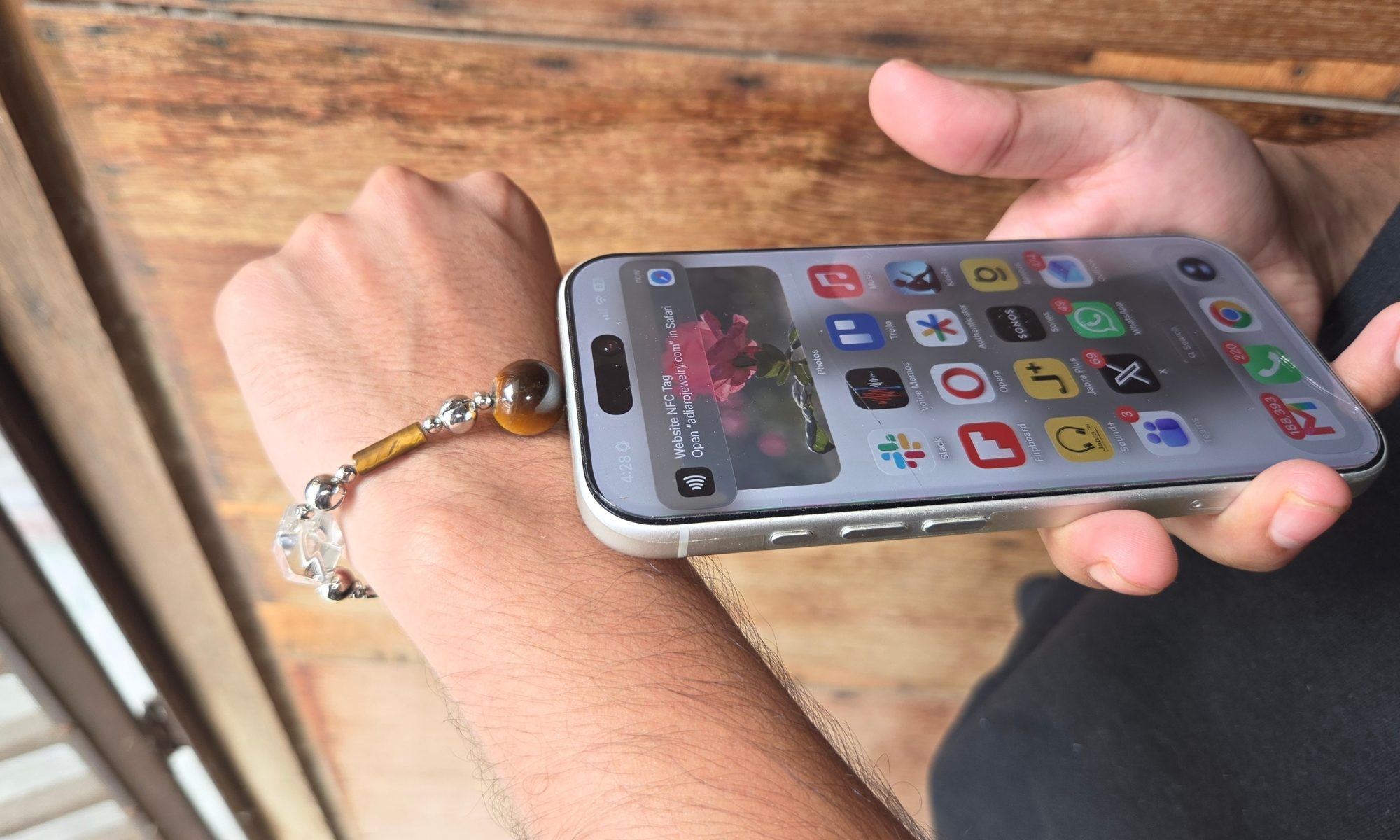
All you need to do is tap your phone against the gem, and it opens a digital journal for you that is also linked to your Google or Apple account. Does it work? Yeah, if you mind the end result, and not the medium. It comes in a variety of gem choices, too. So, if you are someone who believes in the healing power of certain gems, consider this bracelet as the perfect hybrid solution that asks about your mood, lets you vent, use it as a diary, and build an emotional calendar.
What is this?
Nadeem Sarwar / Digital Trends
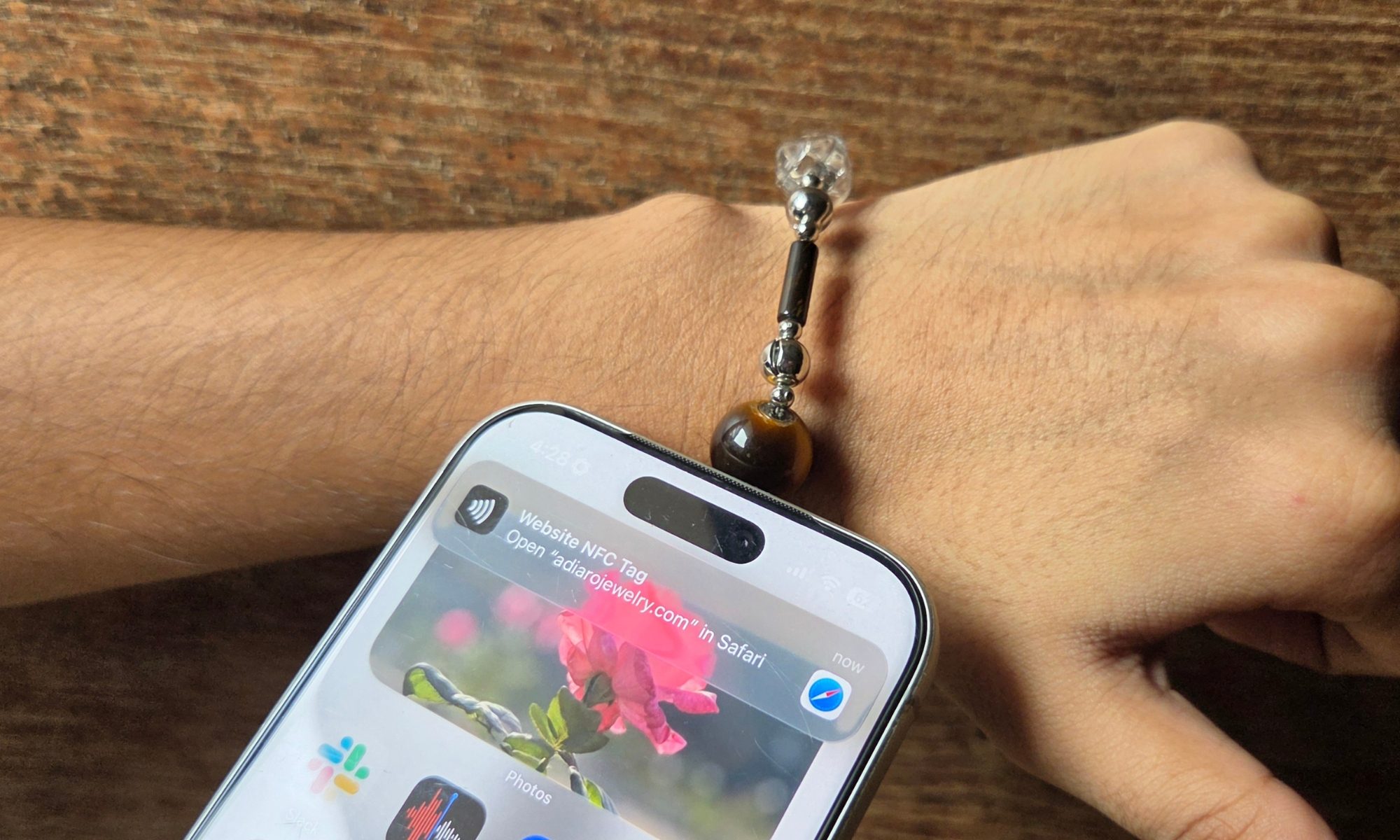
It’s a bracelet that wants to blend the spiritual side of gem-based healing with the scientifically proven benefits of journaling. How? Well. at the heart of the gemstone is an NFC tag, and when you tap your phone on it, you get access to a web-based journal app. It works pretty reliably, though, on a few occasions, I’ve found myself inadvertently triggering the notification by simply placing the phone near the Adiaro bracelet in my pocket, or on the table.
Nadeem Sarwar / Digital Trends
I tried the Adiaro Tiger Eye Balanced Chain bracelet, but you can also pick between amethyst, obsidian, white and golden jade, rose quartz, and turquoise options. You can also try an entirely different style with the bead-heavy grounded bracelet, and separately purchase the gem charms in different shapes and colors at $19 apiece.
Nadeem Sarwar / Digital Trends
Attaching them is pretty easy, thanks to a magnetic clasp system that looks like a chrome bead and separates into two halves. As far as the build quality goes, the Balance chain feels pretty high-end. The metal finish is pretty sharp, and there are no loose ends or poor craftsmanship visible on this one.
How does it work?
Nadeem Sarwar / Digital Trends
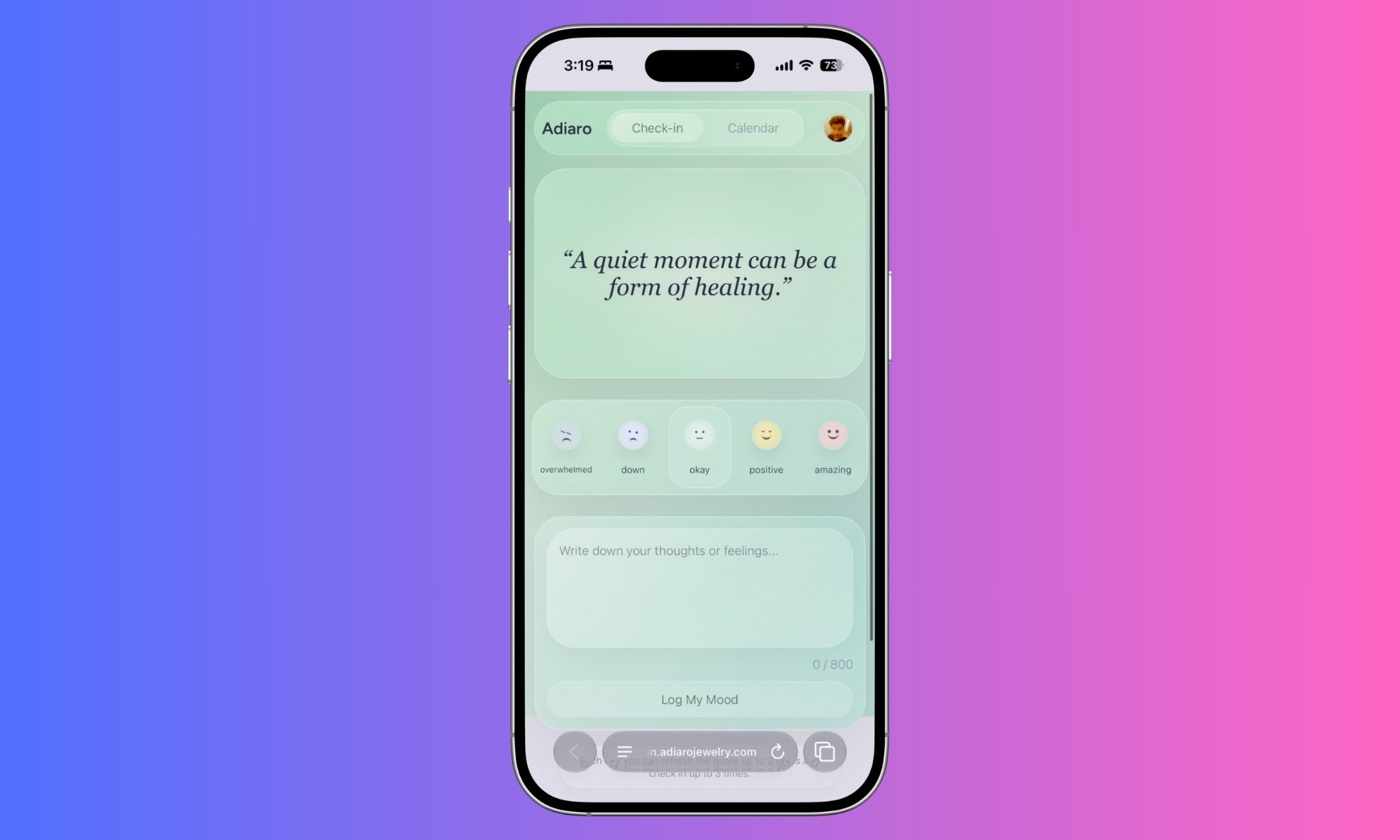
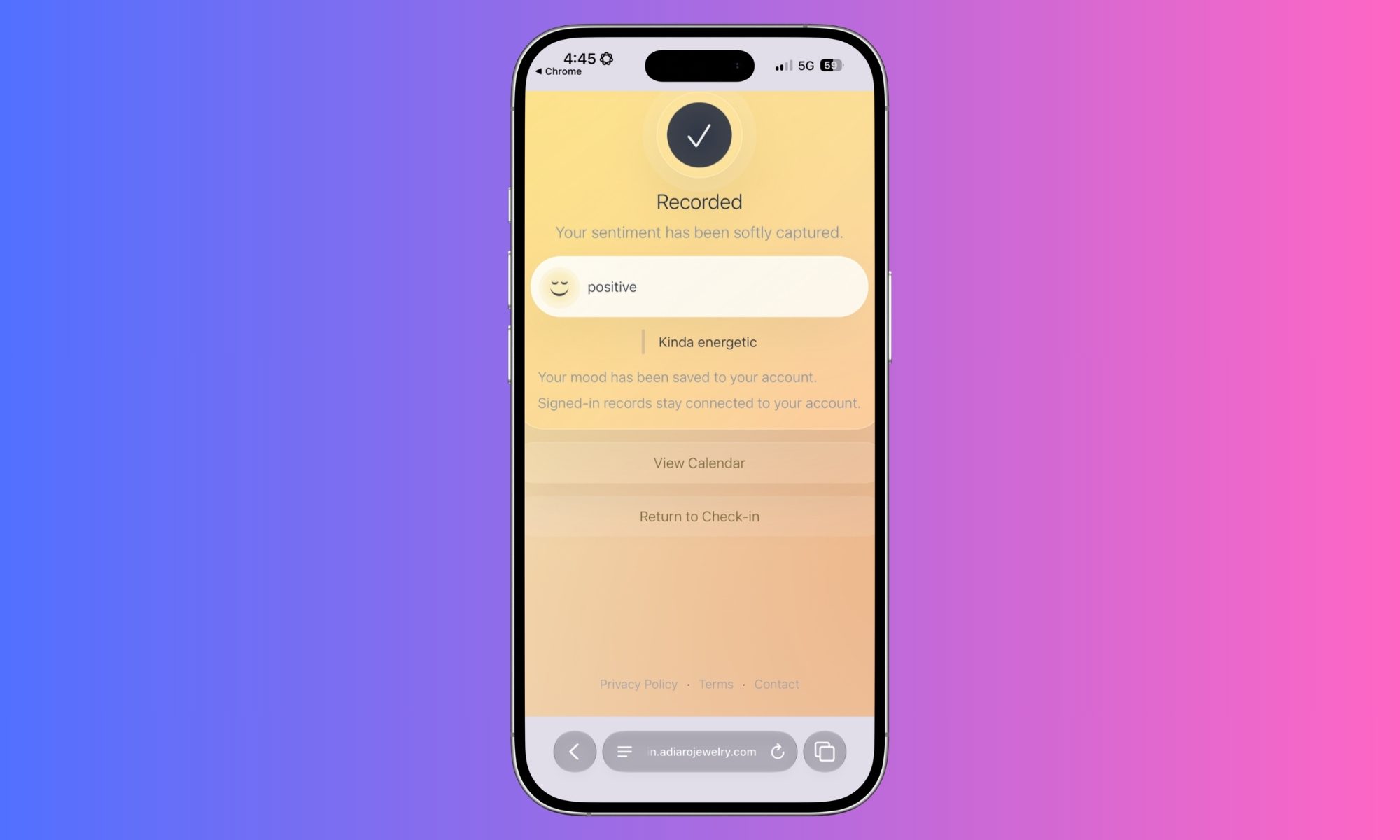
Well, think of this bracelet as more of a hidden digital diary than a piece of jewelry. As soon as you tap your phone against the gem charm, it triggers a notification that subsequently opens a web-based digital journal app. At the top, you see a thoughtful quote that varies on a day-to-day basis.
Underneath, you can pick between five different moods to reflect your emotional state in that moment. The spectrum starts at “overwhelmed” and slowly progresses to “amazing.” And finally, there’s a dedicated text field where you can describe your mood in 800 characters.
It’s a tad limiting, especially considering the fact that voice-typing on a phone is a lot quicker and far more convenient than writing in a diary using a pen. Once you are done with your digital journaling, it is saved as a log that is synced with your Google Drive or iCloud Drive.
Advertisement
Nadeem Sarwar / Digital Trends
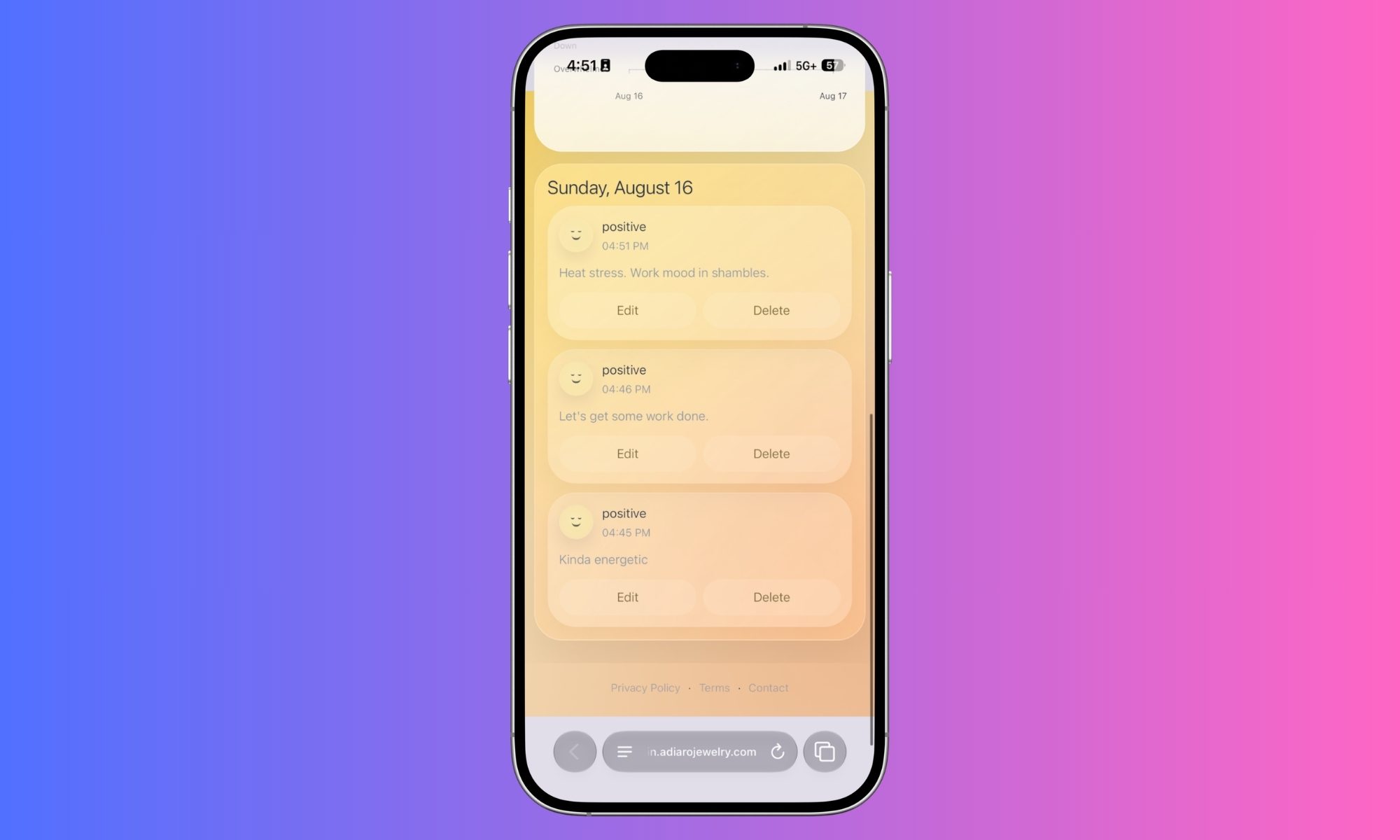
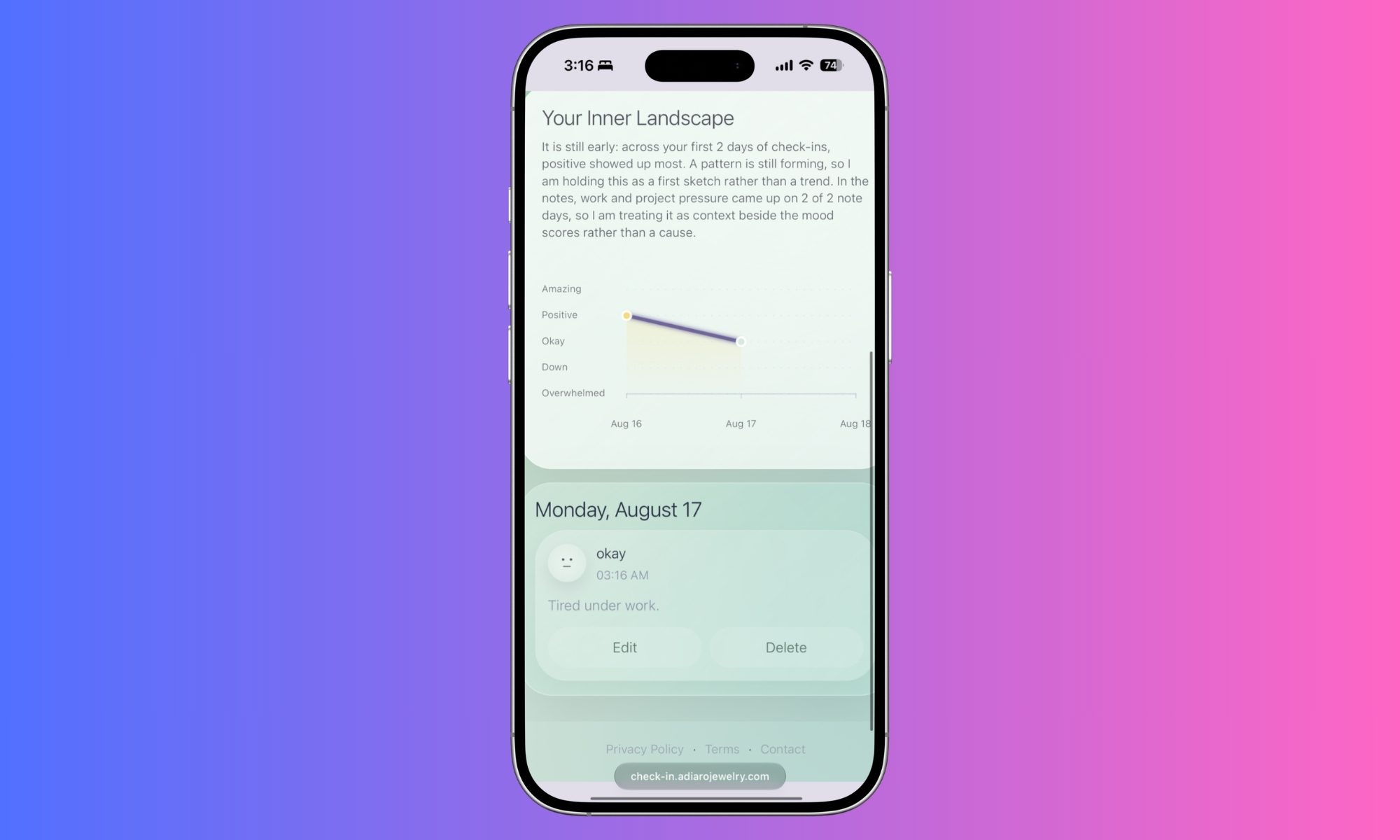
All your mood entries and ruminations are recorded. The Adiaro app creates a progressive map that shows how your mood has changed over the past few days and what kind of thoughts occupied your mind. I like the approach. It’s almost like taking a look into the past few days and assessing how your mental state and energy levels have been at a certain time of the day, or midway through a certain activity.
The broad idea is that, aside from just journaling through a day, you can also check the mood calendar and try to find patterns, depending on the details you have shared in your notes and how your mental state has been. It may not work for everyone. But for some, it can prove to be beneficial.
For example, over a span of three weeks, I noticed that my mood affirmations were usually amazing at noon, and I was high on energy and willing to take on challenging assignments. As the evening passed, I was generally tired, even though my energy levels were consistent, but I felt a certain sense of stress.
Nadeem Sarwar / Digital Trends
Acting on the data at hand, I tried to adjust my work hours and shifted low-priority tasks to the evening slot. It was not a magical cure, but it did help me accomplish a few pending tasks that I kept postponing and felt stressed about. Your mileage might vary depending on how you journal and what kind of actionable insights you can get from the mood calendar.
What about the science?
I have never maintained a diary for journaling, nor have I poured my heart out on an obscure blog. But I know a lot of people who do it, and I see them feel good about it. One of my friends says it’s an escape route from the events that give them anxiety and offers a safe space to vent it all out. Broadly, they see it as a channel of relief.
Nadeem Sarwar / Digital Trends
Adiaro is building on that relief pathway. It might sound like a placebo, or make-believe kind of solution, but there is scientific backing behind the approach. A research paper published in the peer-reviewed JMIR Mental Health journal, positive affect journaling (PAJ) can tone down mental distress and trigger and enhance well-being, serving as an effective intervention.
As part of a randomized trial, patients living with different medical conditions and elevated anxiety symptoms were asked to perform a 15-minute web-based journaling task. The task was performed thrice a week, and the whole experiment lasted 12 weeks. At the end of the trial, the team found that web-based positive affect journaling was linked to lowered mental distress among the participants, lower anxiety, and perceived stress.
Advertisement
Nadeem Sarwar / Digital Trends
It also said to have triggered greater perceived personal resilience and encouraged social integration. “Overall, the findings from this study suggest that PAJ has potential utility as an intervention for managing mental distress, particularly elevated anxiety symptoms, and other aspects of well-being among general medical patients. This is consistent with, and extends, prior research on positive writing interventions as a way to improve aspects of health and well-being,” says the research paper that was published in 2018.
Another paper published in the Family Medicine and Community Health journal arrived at a similar conclusion after an analysis of multiple clinical trials and peer-reviewed papers that explored the link between journaling and mental health. Broadly, it sees journaling as a low-cost, low-risk method to manage mental health symptoms, but not as a replacement for proper medical care.
Nadeem Sarwar / Digital Trends
“This meta-analysis provides further affirmation that journaling as an intervention has merit and can be an efficacious adjunct when prescribed and implemented properly. The findings of this study can be applied in primary care practice by using journaling as a low-risk, low-resource intensive adjunct to standard therapy for patients with mental health concerns,” notes the research paper.
Does that mean Adiaro’s smart jewelry is one of those helpful solutions described in scientific research on the benefits of journaling? Not explicitly, but it gets pretty close to the fundamental. At the end of the day, it’s a journaling solution that also comes with the added benefit of a mood calendar. Only this time, instead of opening a diary, you tap a phone against the bracelet’s jewel and tap on a screen.
Should you buy?
Nadeem Sarwar / Digital Trends
If you are someone who is not averse to the idea of wearing a bracelet on a daily basis and want to give journaling a try, Adiaro’s bracelet is worth a try. It looks gorgeous, doesn’t ask you to pay for a subscription, and doesn’t even require an app download. All your journals are neatly synced to your Google account, and the mood calendar comes in handy without slapping you with a learning curve.
If you believe in the power of positive journaling, you should get one. The only caveat is that it costs nearly as much as a fitness band, and some of them actually come with guided meditation exercises. They don’t quite let you do the journaling part, but they offer a lot more value, especially if you’re someone who also wants to keep an eye on your body vitals and track your exercises. Alternatively, you can just try Apple’s Journal app on the iPhone, a mood tracker app, or have an AI chatbot like Gemini build your own mood dashboard in a few minutes.
How we tested
I tested the Adiaro bracelet as a smart journal for a period of three weeks. In that span, I wore it on a daily basis and used it to log my mood and jot down my thoughts. I did not bind myself to a fixed routine for journaling, and I only did it when I felt the need to note down my positive thoughts and tired ruminations. I used an iPhone 17 Pro and used my Google account to sync and save my journal notes.
Advertisement
FAQ (Frequently Asked Questions)
Is it customizable?
Yes, you can get it in a variety of styles, colors, and gemstone choices.
What sizes does it come in?
It offers free size adjustment. The metallic band can be adjusted to fit wrist sizes from 15 to 22 centimeters (5.9 to 8.7 inches).
Can you change the charm gemstone?
Yes, the bracelet comes with a magnetic stainless steel charm system that lets you easily swap the gemstone.



















































You must be logged in to post a comment Login