It’s on track to post $10.9 billion in revenue, according to The Wall Street Journal.
Chesnot/Getty Images
Anthropic is on track to post a revenue of $10.9 billion for the quarter ending in June, double the revenue it made for the first quarter, according to The Wall Street Journal. Out of that total, the company expects to post $559 million in operating profit, making it the company’s first profitable quarter since it was founded in 2021 if it hits that target. The company reportedly revealed those figures to a group of investors for its current funding round, which could boost its valuation past OpenAI’s.
Even though chances are high that it will reach profitability for the quarter, Anthropic doesn’t expect to be profitable in the quarters that follow. The company is planning to spend more money on computing and other expenses as it grows its operations further. Anthropic used to lag behind its peers and wasn’t quite as well-known as rivals like OpenAI, even though it sells its products to large enterprise customers. It has been steadily gaining popularity over the past months, however, with its chatbot Claude climbing to the top of the Apple App Store following the company’s clash with the Defense Department.
The company made headlines earlier this year when its CEO, Dario Amodei (pictured above), said that Anthropic can’t “in good conscience” comply with a Pentagon order to remove guardrails on its AI. Specifically, the company didn’t want to remove its AI’s safeguards around mass surveillance and autonomous weapons. As a result, the Defense Department labeled it a “supply chain risk,” a designation typically reserved for companies from countries like China and Russia. President Trump also ordered federal agencies to stop using Claude. Anthropic is trying to find a way to be re-accepted by the US government, however, and some federal agencies are still using its products. The NSA, in particular, is reportedly using Claude Mythos Preview, the company’s unreleased AI model for cyber defense.
Advertisement
It’s worth noting that, OpenAI, which is perhaps the most well-known name in generative AI technology, has yet to reach profitability. The company doesn’t expect to get there until 2029 or 2030. OpenAI is preparing to file for an initial public offering (IPO) and may go public as soon as September, The New York Times has just reported. Bloomberg previously reported that Anthropic is also considering an IPO and could go public in October.
The Steam Machine 2026: a full gaming PC in a six-inch black cube. (Valve Software press image)
Valve Software abruptly opened reservations for its latest Steam Machine on Monday, but due to the ongoing PC component shortage, did so at a significantly higher price than expected.
The company, headquartered in Bellevue, Wash., first announced the new version of the Steam Machine late last year. It’s a small-scale, high-powered gaming PC that’s designed for your living room, which runs the same Linux-based SteamOS as Valve’s Steam Deck.
The 2026 Steam Machine starts at a whopping $1,049 through Valve’s digital storefront Steam, which gets you the base model with an internal 512GB SSD. A higher-end model with a 2TB drive costs $1,349, and both also come in bundles with one of Valve’s new Steam Controllers.
It is, on paper, an impressive overall device, particularly as a sort of gateway product for anyone who’d like to break into gaming on PCs and/or Linux. However, its price tag is a significant barrier. A comparatively powerful PC would still cost as much or more, but Valve’s old strategy with the Steam Deck, by comparison, was to practically give it away.
As it turns out, Valve isn’t particularly happy about the price either, preemptively addressing concerns via a post on the official Steam blog. The short version is that the planned launch of the Machine has been complicated by the ongoing component crisis that surrounds SSDs and RAM.
Advertisement
The prices “reflect the state of the world for manufacturing; or, more accurately, it reflects the price of the components as we’ve secured them over the past 6 months,” the company said in the post.
The two Steam Machine models’ internal storage capacity is the only difference between them. Both are gaming PCs that pack “semi-custom” AMD CPUs and GPUs, 16 GB RAM, Bluetooth capability, an ethernet port, and a MicroSD card slot into a 6” black cube, complete with a removable faceplate.
The Steam Machine 2026 comes with an LED panel on the front, which can be customized, used to track downloads, or turned off entirely. (Valve Software press image)
The high cost of entry for the Steam Machine is another knock-on effect from the ongoing global RAM and SSD shortages, which were initially created by high demand from the burgeoning AI industry. The same problems have resulted in multiple price hikes for current-generation gaming consoles and spiked the costs for new-built gaming PCs. It’s been a bad time for the hobby overall, especially for newcomers and players on a budget.
The Machine isn’t likely to fail, but its costs may mean that for the time being, it turns into little more than an expensive toy for gadgetheads. One of Valve’s quiet ambitions for years has been to bring more people into PC gaming, and especially PC gaming on Linux, but for a thousand bucks a throw, the Machine isn’t likely to draw in any new customers.
That suggests that if a company like Valve, which controls roughly half the PC gaming on Earth via Steam, is having problems like this, then it’s wise to expect further disruption for the foreseeable future. Xbox in particular was talking about launching a new console at the end of 2027, but with RAM and SSD costs on the rise, it looks like the next generation of hardware will either be prohibitively expensive or best pushed off for a few years.
Advertisement
As with the Deck, you get games onto the Machine via direct download from Valve’s digital storefront Steam. Also as with the Deck, the Machine is designed so it can also be used as a desktop computer, with no particular guardrails to keep out tinkerers and modders.
Even with their high cost, and with a lower number of available units at launch than Valve had planned, the 2026 Steam Machine was already listed as “out of stock” within 10 minutes of the store page opening, which was before Valve itself had officially announced it had done so.
However, Valve has implemented a lottery system in order to stymie resellers and attempt to make the process as fair as possible. Any interested buyers can sign up for a Steam Machine reservation at any time before this coming Thursday, at which point Valve will randomize the queue. Anyone who doesn’t get in on Thursday will be added to a waiting list.
The UK government announced that it will be implementing a social media ban for all those aged under 16 years old next year.
While there are still many unanswered questions, the government has listed the social media platforms that will be included in the ban. Alongside the perhaps expected platforms such as Instagram, X, Snapchat and Facebook however is YouTube. Many are surprised to see YouTube included in the ban, as the platform is self-described as a video-sharing platform rather than social media.
So, why has the government chosen to ban YouTube for under-16s? When will the ban come into full effect?
We answer everything you need to know about why YouTube is included in the UK social media ban, plus provide more information about the ban as a whole. For a broader look at the ban, visit our dedicated UK social media ban explainer, while our Home Editor Dave Ludlow explains why he thinks the ban is a good idea.
Advertisement
The government has stated that YouTube will be included in the UK social media ban for under 16s. In addition, live-streaming will also be restricted for those under 16 too.
Advertisement
What about YouTube Kids – is that also banned?
Although the government hasn’t officially stated whether or not YouTube Kids is included in the ban, it is widely thought that it will not be banned. As reported by a so-called Whitehall Insider to the The Sun, “YouTube Kids won’t be covered.”
YouTube Kids
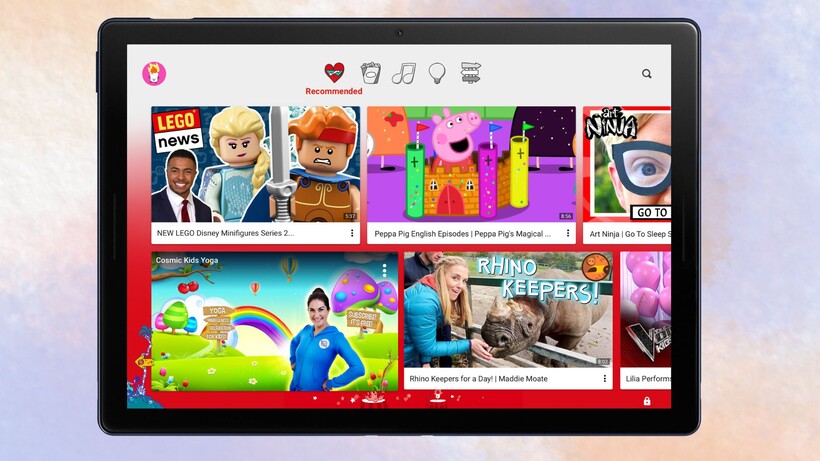
YouTube Kids is essentially a filtered iteration of the standard YouTube platform, and promises to only include age-appropriate videos so children should be able to explore it freely without risk of coming across harmful content. Plus, YouTube Kids includes parental controls that allows parents to set time limits, check what kids have been watching and more.
Why is standard YouTube included but YouTube Kids excluded?
We should note that the government hasn’t explicitly stated that YouTube Kids has been excluded from the ban. However, we would assume that the decision to exclude YouTube Kids is due to the fact it only allows age-appropriate videos on the platform, and is equipped with plenty of parental controls to ensure parents and guardians can keep an eye on their children’s screen time and general use of the app.
Advertisement
However, many have criticised the government’s decision to include YouTube in the ban as many children use the tool purely for educational content. While YouTube Kids does promise to include “educational how-tos” and arts and crafts videos, there are many videos that although technically are family friendly and don’t contain any harmful content, won’t be included within YouTube Kids.
Having said that, it’s worth noting that the parent account that controls YouTube Kids can share videos directly from YouTube into the YouTube Kids app.
Advertisement
YouTube TV app. Image Credit (Trusted Reviews)
When does the YouTube ban take effect for under-16s?
The UK government has stated that the social media ban for under 16s, which will include YouTube, should be implemented in Spring 2027. This will follow the first set of regulations which should be laid out by the end of the year.
What other platforms are included in the ban?
At the time of writing, the government has said that alongside YouTube, the social media ban will include Instagram, X, Facebook, TikTok and Snapchat. Messaging apps like Whatsapp and Signal are not expected to be included.
Advertisement
Although YouTube is described as a video-sharing platform, it is commonly considered as being a social networking service. This is mainly due to the fact that users can easily interact with others, whether that’s through replying to comments and polls or responding to channels’ posts. So, while it’s not quite as clearcut as the likes of Facebook or X, it’s still undeniably a way to communicate with others.
Most importantly, the government sees YouTube as a form of social media which is why the platform has decided to include it in the upcoming ban.
Prime Day is officially only a few hours away. But while the Amazon sale promises to be packed with cheap tech and gadgets, a refined workspace deserves stylish gear and pure craftsmanship. With that in mind, I’ve curated a round-up of 12 premium desk accessories that exude luxury and timeless style.
In this guide, I’m not chasing the deepest discounts, but prioritizing high-performance essentials. The focus here is on exquisite builds, clever engineering, and uncompromising utility when crafting a workspace that’s as powerfully practical as it is visually flawless.
Alongside some of my favorite deals on luxury office desk accessories, I’ve included high-end professional gear that’s perfectly designed – even if there’s no savings to be had.
Advertisement
For more savings on workspace upgrades, see my real-time coverage of the best Prime Day home office deals you can buy.
For another, all have been quoted as EFF experts in articles published in the past two months on a site called News-USA Today, which describes itself as “an independent news publisher focused on clear, accurate, and useful journalism.”
Uh…
Advertisement
(Please don’t confuse this site with USA Today, in which real EFF experts are accurately quoted on a regular basis.)
News-USA Today is hardly the only slagheap that’s hallucinating or fabricating EFF personnel and quotes; as we wrote last September, media companies large and small are using AI to generate news content because it’s cheaper than paying for journalists’ salaries, but that savings can come at the cost of the outlets’ reputations— assuming they care about reputation at all.
But this many fake EFF sources in two months? That’s making a play for the championship title of bogus news content.
News-USA Today’s site proclaims, “Our goal is simple: give readers the facts and the context they need to make informed decisions.” It then defines its mission:
Advertisement
“Deliver timely, factual reporting grounded in verifiable sources and public documents.”
“Make complex topics understandable without losing nuance or accuracy.”
“Serve the public interest by surfacing stories that affect lives, institutions, and communities.”
“Maintain a clear separation between news, analysis, opinion, and sponsored content.”
Attempts to reach contacts listed on the site went unanswered. In fact, after we reached out to them, they published a story on June 9 with quotes from Electronic Frontier Foundation Executive Director Jared Cohen — who also doesn’t exist.
However, we don’t want disreputable sites making up words (or false identities!) for us, whether or not they’re using AI. False quotations that misstate our positions damage the trust that the public and reputable media outlets have in us.
The best thing a news consumer can do is invest a little time and energy to learn how to discern the real from the fake. It’s unfortunate that it’s the public’s burden to put in this much effort, but while we’re adjusting to new tools and a new normal, a little effort now can go a long way.
Over the weekend, AMD said it planned to do just that in a firmware update scheduled for release next month. More often than not, the chipmaker refers to TSME as Memory Guard.
“Regarding certain non-PRO Ryzen 9000-series desktop processors, a BIOS option to enable Memory Guard was previously available but was removed in a recent update,” AMD said in an email. “Based on valuable community feedback, we will reinstate this option in an upcoming BIOS release in July.”
The company has yet to explain why it removed the protection. Critics speculate that AMD dropped it in an attempt to steer customers toward more costly CPUs.
It’s possible, though, that there were less nefarious reasons, such as the difficulty of continued support as chip designs changed. Another possibility is that AMD made the move for performance reasons. Encrypting and decrypting data in memory creates latency. Slowdowns are the enemy of gamers, one of the more popular customer segments using the 9000-line of Ryzen processors. Since many gamers already voluntarily disabled TSME and had little need for it in the first place, AMD may not have considered the change of much consequence.
Advertisement
The incident, and AMD’s refusal to discuss it, is emblematic of the public relations landscape that has emerged over the past two decades. Once, Big Tech and corporations in general were willing to acknowledge service and product changes to ensure customers had a predictable experience. They also showed a willingness to admit mistakes and to say how they planned to do better. Now, there’s only silence. As the companies’ power and dominance have mushroomed, their sense of accountability has diminished proportionately.
The Antichrist is back in American political discourse. After President Donald Trump posted an AI photo of himself depicted as Jesus on Truth Social, many of his Christian followers were up in arms. Trump later claimed that he was supposed to be a doctor in the photo, but the damage was already done. Prominent far-right advocates like Marjorie Taylor Greene, Tucker Carlson, and Nick Fuentes began wondering if Trump was the Antichrist.
This is not the first time the Antichrist has popped up in American politics. Armageddon and the Second Coming have affected US political thought since at least the 1880s. Matthew Sutton is a history professor at the University of Washington and the author of the book Chosen Land: How Christianity Made America and Americans Remade Christianity. Sutton says that Armageddon has been the guiding principle for American evangelicals for hundreds of years.
Sutton spoke with Today, Explained co-host Noel King about the history of the Antichrist in America and how that theology has shaped the country.
Below is an excerpt of their conversation, edited for length and clarity. There’s much more in the full podcast, so listen to Today, Explained wherever you get your podcasts, including Apple Podcasts, Pandora, and Spotify.
Advertisement
Where would you start the story of the Antichrist in American politics?
I think the way we think of the Antichrist today really begins in the 1880s and the 1890s, and it has to do with the rise of the modern nation state, with global militarization, and the kind of creation of the modern world order.
Americans had been pretty optimistic, forward-thinking. They believed that they were building the kingdom of God on Earth, that they were kind of creating this utopia. Then they hit the Civil War. They were dealing with this problem, which was the growing divide over the issue of slavery. And once Christians start killing other Christians, it became really, really difficult to justify an optimistic, hopeful politics.
So these apocalyptic ideas began to seep into everyday church life. And then they hit the Industrial Revolution, and they saw all these immigrants come over — many of whom were Catholics and Jews. And so for Protestants who were used to calling the shots, a small group of them began to rethink their theology and began to think, You know what? Maybe we’re not building the kingdom of God. Maybe we’re in fact preparing for Armageddon. We’re preparing for the Antichrist. And then they began to scour the news and to study events and to align them with the Bible to try to make sense of what they saw happening all around them.
Advertisement
As the small group of Protestants begins to reconceptualize what they thought of as the end times, at the core of their story was this concept of the Antichrist, this global leader who was going to take power, who was going to oppress Christians, who was going to transform the world. So what they did is they began holding conferences and writing books and debating these kinds of issues and arguing about who might be the Antichrist, where might he appear, and how we [may] know how close we are to the end times. They ended up launching a movement.
Then, by about World War I, they gave the movement a name, and that was fundamentalism. And then they rebrand themselves in World War II, as evangelicals. And so the fundamentalists and evangelicals are the folks who really are mobilizing around this idea that the Antichrist is out there somewhere, and we better be ready for him
When Americans were thinking about the Antichrist, what were the signs that they were looking for?
There were a handful of signs. Some of them are really hard to demonstrate, so they talked about falling away from true Christianity. But, of course, you could make that argument in every generation. The classic is immorality — that the kids today just aren’t following the rules like their parents.
Advertisement
But the much more interesting one was the return of Jews to Palestine and the reconstruction of Israel as a nation-state. The fundamentalists began predicting this in the 1880s, 1890s. So, as the Zionist movement takes off, and then Israel is formed in the late 1940s, it becomes absolutely clear to them that everything they’ve been predicting is correct.
The other thing that they’re expecting is the rise in wars and rumors of wars. That was something that Jesus had told his disciples to expect in the last days. And so World War I becomes a moment basically to crow about how they got it right. And then certainly World War II is another one. Then the creation of the League of Nations and then the United Nations — these kinds of global international organizations that would create the mechanism by which the Antichrist could take power, could seize power — [reinforced the idea].
All of these things become huge blinking red lights telling fundamentalists and evangelicals that they’ve got it right, that their reading of the Bible is lining up with world events.
Who were people saying, “Oh, this person might be the Antichrist,” or “this might be the evidence that we’re approaching Revelation”?
Advertisement
There were two ways they conceptualized it. One was to identify the actual Antichrist, but the problem with doing that was that the Antichrist was going to be a deceiver. That’s what the Bible says. And so they knew it was going to be hard to figure out exactly who it was, but they would still speculate. And often from generation to generation, there are specific figures.
In the 1930s, Mussolini absolutely seemed to fit. He’s trying to resurrect the Roman Empire. That seemed to be one of the key characteristics of the Antichrist. We jump forward to the 1990s, and perhaps it’s Saddam Hussein because he’s trying to rebuild Babel, the ancient biblical city. But there’s also then this idea: What about American leaders? What role are they playing?
Many of them believe that the Antichrist probably would not be an American, because biblical authors had no concept of the United States. Of course, they thought that American leaders might be complicit, that they might help facilitate the rise of the Antichrist. And often it was liberals, it was internationalists [who were suspected]. So Franklin Roosevelt, Barack Obama — those kinds of folks got a lot of traction among fundamentalists and evangelicals as potential allies of the Antichrist. [The thought was that this was done] usually unwittingly, not intentionally working with the Antichrist, but helping set the stage for Americans to lose their sovereignty to this diabolical, global, new world leader.
It does make me wonder, though, whether this interest in the Antichrist has actually shaped American politics. Did we hit a point in the country’s history where that happened? It was like, oh, FDR is the Antichrist, and thus we must X, Y, and Z?
Advertisement
Working hand in hand with the rise of the religious right was the ascendancy of Ronald Reagan.
And Ronald Reagan was actually a natural partner for many of these folks because he seemed to be obsessed with ideas of the Antichrist and with the end times. While it certainly was not shaping his policy, it was an obsession for him. And it was something that his critics often pointed to to criticize him and to say that he was working too closely with these evangelical freaks and was too obsessed with these kinds of issues.
In my scholarship, I argue that, in fact, it’s extraordinarily important for politics, that certainly in the 1930s, when we have the rise of the modern New Deal liberal state, it’s no coincidence that we [also] have the rise of the fundamentalist anti-liberal, and that is grounded in this kind of apocalyptic theology.
But we see it again more recently with the rise of the religious right. And the reason it’s so important is because it becomes a tool for mobilizing people for action. If you believe the rise of the Antichrist is imminent, what comes right after the Antichrist is the return of Jesus, the Second Coming. And so you’ve got to be ready for that, and you’ve got to be ready for the judgment that’s going to come. You want Jesus to find you being an active and good and faithful servant, somebody who’s using your gifts to do everything you can to prepare the rest of the world for the end times.
Advertisement
That means that folks who are true believers in this apocalyptic Antichrist theology, rather than just wait with indifference because it’s going to happen, instead, they have to get their asses out there and get to work. because they know that Jesus is coming at any moment and he’s going to expect them to be doing everything they can to prepare the way for his Second Coming. And that means fighting the Antichrist.
So what’s happening right now in evangelical communities? How would you situate this in the long history of what Americans have been thinking about the Antichrist?
The Antichrist, for me, is the gift that keeps on giving. He really works for every generation. And so it’s always about Christian folks reading their Bibles and aligning them with world events and trying to make the two compatible.
And so with each generation, it’s going to be a different idea about what the Antichrist is. It’s going to be a different idea about where history is going, where the trajectory of the nation falls on that. But I don’t know that it’s necessarily different. It’s just the latest version of many, many, many versions of this same story, that there’s political mobilization, there’s expectations about change, and then there’s second-guessing. Because things don’t always work out exactly as you expect them to.
Advertisement
And so what does that mean for our politics?
Unfortunately, it’s pretty dangerous, because what it does is it fuels and increases polarization, because rather than having policy debates where you can just agree to disagree or talk about what is going to be the best policy for the greatest number of people. Instead, once you add this kind of spiritualized language, whether or not supporting the United Nations becomes a question of whether or not you’re supporting the Antichrist, then that completely changes the stakes. So it makes it much more difficult to have conversation, to have dialogue, to find a middle ground, and to work with your adversaries. It’s much more fulfilling to fight absolute evil than to just have a discussion about tax policy.
This won’t make the already-controversial AI training endeavor any more popular.
PJ McDonnell/Shutterstock
Meta has paused use of an AI training program that tracks its own employees’ keystrokes and mouse movements. The company has suspended the Model Capability Initiative, not because of workers’ understandable displeasure around being (almost) perpetually monitored or for potentially breaking privacy laws, but because it caused an internal data leak. Business Insider reported that sensitive data collected through MCI, including employees’ private conversations, performance data and transcriptions, was made inadvertently available to the entire Meta staff.
“We have carefully designed this program with privacy safeguards, and while we have no indication at this time that any data was improperly accessed by Meta employees, we’re pausing it while we investigate,” a spokesperson told BI.
Despite this official line and previous statements that employees’ collected data would be “tightly controlled,” it appears Meta wasn’t quite as on top of security as it claimed. This marks the latest in a series of AI-related cybersecurity incidents for the company. Meta reps issued a similar response in March after an agentic AI took unprompted action that also dominoed into a security breach. And earlier this month, the company had to react after hackers exploited its AI customer service chatbot to hijack Instagram accounts.
The air turns brown when bit barns come to town … deep in the heart of Texas
Never mind the fact that datacenter environmental concerns have come under growing scrutiny across the United States. Microsoft has just inked a deal with fossil fuel giant Chevron to supply one of the largest single-capacity additions to its datacenter fleet with 2.67 gigawatts of natural gas power for a full two decades.
Chevron said today that it signed a two-decade power purchase agreement with Microsoft through its subsidiary Energy Forge One to supply 2.67 GW of power for a new datacenter project in West Texas dubbed Project Kilby. The natural gas turbines to be constructed on the datacenter’s site will sit behind-the-meter (Microsoft gets access to the power without it flowing through the grid first) and will be “among the largest co-located natural gas power and data center developments in the U.S.,” according to Chevron.
Advertisement
Microsoft’s own press release on the matter, which doesn’t mention Chevron or Energy Forge One by name but does admit the new facility “will operate with a co-located natural gas power facility,” identified Pecos as the West Texas location where the bit barn will be built. The self-proclaimed birthplace of the rodeo is also a West Texas hub for agriculture and ranching, among other Texas-sized industries.
Microsoft confirmed to The Register that, despite it not mentioning Chevron in the announcement, the power purchase agreement does concern the Pecos facility.
The facility will be “one of the largest single-capacity additions” to Microsoft’s datacenter fleet “in our history,” according to Redmond’s release, and the company is trying hard to lean into its desire to be a good neighbor to the people of Pecos as it spends the next few years building the massive facility.
Shouldn’t good neighbors care about air and water quality?
“We know that being a good neighbor isn’t something you say,” Microsoft wrote in an open letter to the people of Pecos alongside its announcement of the new datacenter. “It’s something you prove over time.”
Advertisement
That letter and the announcement take pains to point out all the good things Microsoft has done for the communities where it plunked down massive datacenters, and it wants the locals to know that the Pecos facility will be no different. Why, the very fact it’s building multiple gigawatts of natural gas power for itself proves just that!
Building its own energy infrastructure, says Microsoft, will prevent locals from having to pay more for power. Additionally, the company anticipates eventually connecting its turbines to the grid and serving as a broader energy source, too.
According to Chevron, the turbines being deployed for the Pecos datacenter include noise and light impact mitigations as well as “selective catalytic reduction” systems that reduce nitrogen oxide emissions. Not eliminate, mind you – just reduce.
To get an idea of the scale of what Microsoft is planning to deploy with Chevron in Pecos, let’s consider the gas turbine generators that xAI’s Colossus AI datacenter installed in Memphis, Tennessee. That facility saw the installation of just 150 megawatts of gas turbines – roughly one eighteenth the size of Microsoft’s planned Pecos gas plant.
Advertisement
Even at that small a scale, the xAI datacenter has still become the subject of a lawsuit [PDF] alleging that the facility is belching way too much smog into local communities for the air to be healthy and calling for it to be shut down. Emissions mitigations or not, one can’t imagine the prairie sky around the Pecos datacenter will be as clear and high as it once was after the facility is completed.
It’s worth pointing out that some of the turbines being deployed to Pecos will be manufactured by the deceptively named Solar Turbines, which actually builds gas power systems. According to reports and photographs out of the xAI Memphis facility, Solar Turbines also supplied gas turbines for Colossus.
Then there’s the water concerns: Microsoft and Chevron both called attention to their plans to minimize water usage in Pecos, which lies in a part of Texas prone to drought and with limited access to fresh, potable water.
“We are also designing our operations to minimize reliance on freshwater sources by utilizing nonpotable water where possible,” Microsoft noted. The company will rely on closed-loop cooling systems that will “significantly reduce water requirements.”
Advertisement
As for the gas plant planned for the site, Chevron said that its facility will use “non-potable, brackish groundwater sources for power plant operations” instead of freshwater, but that doesn’t tell the whole story.
Brackish groundwater, located in massive, salty, underground aquifers, is a major source of water for dry, dusty West Texas, and has been for some time. Desalination of brackish groundwater has been suggested [PDF] as a source of drinking water for the town and the surrounding region, raising questions about whether datacenters and gas power plants sucking it up to cool their jets are sustainable.
Microsoft didn’t want to answer any of the questions we put to it aside from confirming Chevron’s press release related to the Pecos datacenter; Chevron didn’t respond. ®
A new NYT Connections puzzle appears at midnight each day for your time zone – which means that some people are always playing ‘today’s game’ while others are playing ‘yesterday’s’. If you’re looking for Monday’s puzzle instead then click here: NYT Connections hints and answers for Monday, June 22 (game #1107).
Good morning! Let’s play Connections, the NYT’s clever word game that challenges you to group answers in various categories. It can be tough, so read on if you need Connections hints.
What should you do once you’ve finished? Why, play some more word games of course. I’ve also got daily Strands hints and answers and Quordle hints and answers articles if you need help for those too, while Marc’s Wordle today page covers the original viral word game.
Advertisement
SPOILER WARNING: Information about NYT Connections today is below, so don’t read on if you don’t want to know the answers.
Latest Videos From
NYT Connections today (game #1108) – today’s words
(Image credit: New York Times)
Today’s NYT Connections words are…
MONEY
YANKEES
HOTEL
FOXTROT
MODERN
FIREPLACE
POPULAR
DEED
EMPEROR
FEATURED
TOKEN
TAP
RECENT
SWING
EARTH
TRENDING
NYT Connections today (game #1108) – hint #1 – group hints
What are some clues for today’s NYT Connections groups?
Advertisement
YELLOW: Moving to music
GREEN:Parts of a popular board game
BLUE: Organizing website material
PURPLE: A manly thing that almost rhymes with “ankles”
Need more clues?
We’re firmly in spoiler territory now, but read on if you want to know what the four theme answers are for today’s NYT Connections puzzles…
Sign up for breaking news, reviews, opinion, top tech deals, and more.
Advertisement
NYT Connections today (game #1108) – hint #2 – group answers
What are the answers for today’s NYT Connections groups?
YELLOW: DANCE STYLES
GREEN: IN A MONOPOLY BOX
BLUE: CONTENT SORTING OPTIONS ONLINE
PURPLE: THINGS WITH MANTLES/ MANTELS
Right, the answers are below, so DO NOT SCROLL ANY FURTHER IF YOU DON’T WANT TO SEE THEM.
Advertisement
NYT Connections today (game #1108) – the answers
(Image credit: New York Times)
The answers to today’s Connections, game #1108, are…
YELLOW: DANCE STYLES FOXTROT, MODERN, SWING, TAP
GREEN: IN A MONOPOLY BOX DEED, HOTEL, MONEY, TOKEN
PURPLE: THINGS WITH MANTLES/ MANTELS EARTH, EMPEROR, FIREPLACE, YANKEES
My rating: Hard
My score: Perfect
The phonetic alphabet featuring HOTEL, FOXTROT and crucially Yankee — not YANKEES — was today’s trap/joke and were it not for the easy to spot DANCE STYLES I may well have fallen for it.
Yankee Hotel Foxtrot is also the name of a great album by Wilco, but I digress…
I got the blue group next, thinking that all four words described seemed like labels you’d put on a report rather than CONTENT SORTING OPTIONS ONLINE, which considering I do quite a lot of Content Sorting I really should have seen.
Advertisement
The final group I found was IN A MONOPOLY BOX, although I can’t say I have ever thought of the street name cards as being a DEED.
Yesterday’s NYT Connections answers (Monday, June 22, game #1107)
PURPLE: STARTING WITH EXPLOSIVE ONOMATOPOEIA BANGKOK, BOOMER, POPSICLE, POWDER
What is NYT Connections?
NYT Connections is one of several increasingly popular word games made by the New York Times. It challenges you to find groups of four items that share something in common, and each group has a different difficulty level: green is easy, yellow a little harder, blue often quite tough and purple usually very difficult.
On the plus side, you don’t technically need to solve the final one, as you’ll be able to answer that one by a process of elimination. What’s more, you can make up to four mistakes, which gives you a little bit of breathing room.
Advertisement
It’s a little more involved than something like Wordle, however, and there are plenty of opportunities for the game to trip you up with tricks. For instance, watch out for homophones and other word games that could disguise the answers.
It’s playable for free via the NYT Games site on desktop or mobile.
Amazon’s annual Prime Day shopping event offers the biggest discounts of the summer, which runs from June 23rd to 26th. However, you will need a Prime membership to access the real savings.
Prime Day pricing on consumer electronics and A/V gear is usually the lowest you’ll see all year, so don’t count on finding a better deal until possibly Black Friday, if then. So when you see a legit bargain, grab it. Hot items tend to sell out fast, and once they do, you could be stuck waiting weeks thanks to backorders and shipping delays.
Have a look at these amazing list of curated deals and gift ideas on some of the most highly rated audio and video gear on Amazon right now.
A two times eCoustics Best in Show CES winner, the AWOL Valerion Max, previously known as Valerion VisionMaster Max, is not the kind of Prime Day purchase you hide in the closet until the holidays, especially now that it’s timed perfectly for soccer season viewing and serious home theater upgrades. Valerion’s flagship 4K RGB triple-laser projector delivers up to a 300-inch image with 3,500 ISO lumens, Dolby Vision, HDR10+, IMAX Enhanced support, Google TV, and flexible installation via optical zoom and lens shift, making it a true cinematic centerpiece for movies, sports, and gaming alike.
For Prime Day, it’s now 32% off, marking the biggest discount ever, and turning an already premium projector into one of the most compelling big-screen deals of the season.
The Audioengine Made for you Collection in matching red is the lowest price ever this Prime Day at 30% off! Don’t miss out on clear, full-range sound, added bass extension down to 33Hz, and directional audio angling with the A2+ Next Gen Home Music System, S6 Powered Subwoofer, and DS1M Desktop Stands!
Built for partial sun areas, the Sylvox Frameless delivers 3x the brightness of indoor TVs, all in a sleek frameless design. It features IP56 waterproofing, an IP66-rated remote, Dolby sound, built-in Google TV, and operation from -22°F to 122°F. Available in 43″, 55″, 65″, and 75″ for outdoor enthusiasts.
Denon’s mid-sized Home 250 wireless smart speaker offers spacious sound with strong bass along with multi-room music streaming powered by HEOS. It’s also got Alexa built-in, AirPlay 2, and Wi-Fi, making it a smart addition to just about any setup. Available in black or white.
Previously awarded eCoustics Editors’ Choice, enjoy one of the best luxury wireless noise-cancelling headphones on the market from the iconic British brand, Bowers & Wilkins. Available in tan (as shown), black, dark green or burgundy.
AirPods Pro 3rd Generation are Apple’s most advanced wireless earbuds with the most advanced noise cancellation. Now they’re even less expensive on Amazon than from Apple’s website. Enjoy convenient pairing with iPhone and up to 8 hours of listening on a single charge.
Note: Some offers may only be available to Amazon Prime Members from June 23-26, 2026. Find more Prime Day deals at Amazon.
Need more gift giving ideas?
Disclosure: The products listed above are approved by our Editors, but may be requested by our sponsors. When links to buy are provided, we’ll direct you to the lowest price at time of publication. In doing so, eCoustics may earn a small commission from the associated retailer if purchased.







































































You must be logged in to post a comment Login