
Join Mikko Hyppönen and security leaders from the NFL, CHANEL, and Atlassian for a two-hour digital summit on what AI-speed attacks change, what defenders should stop doing, and how to validate, decide, fix, and re-validate at machine speed.
Tech
Anthropic wants Claude to analyze your bank account and financial data

Anthropic is testing a new personal finance feature called “Claude Money” that will allow you to connect your bank accounts directly to Claude and “understand your money.”
AI companies coming after your finances is not a new thing, as OpenAI has a similar feature, and Anthropic appears to be catching up.
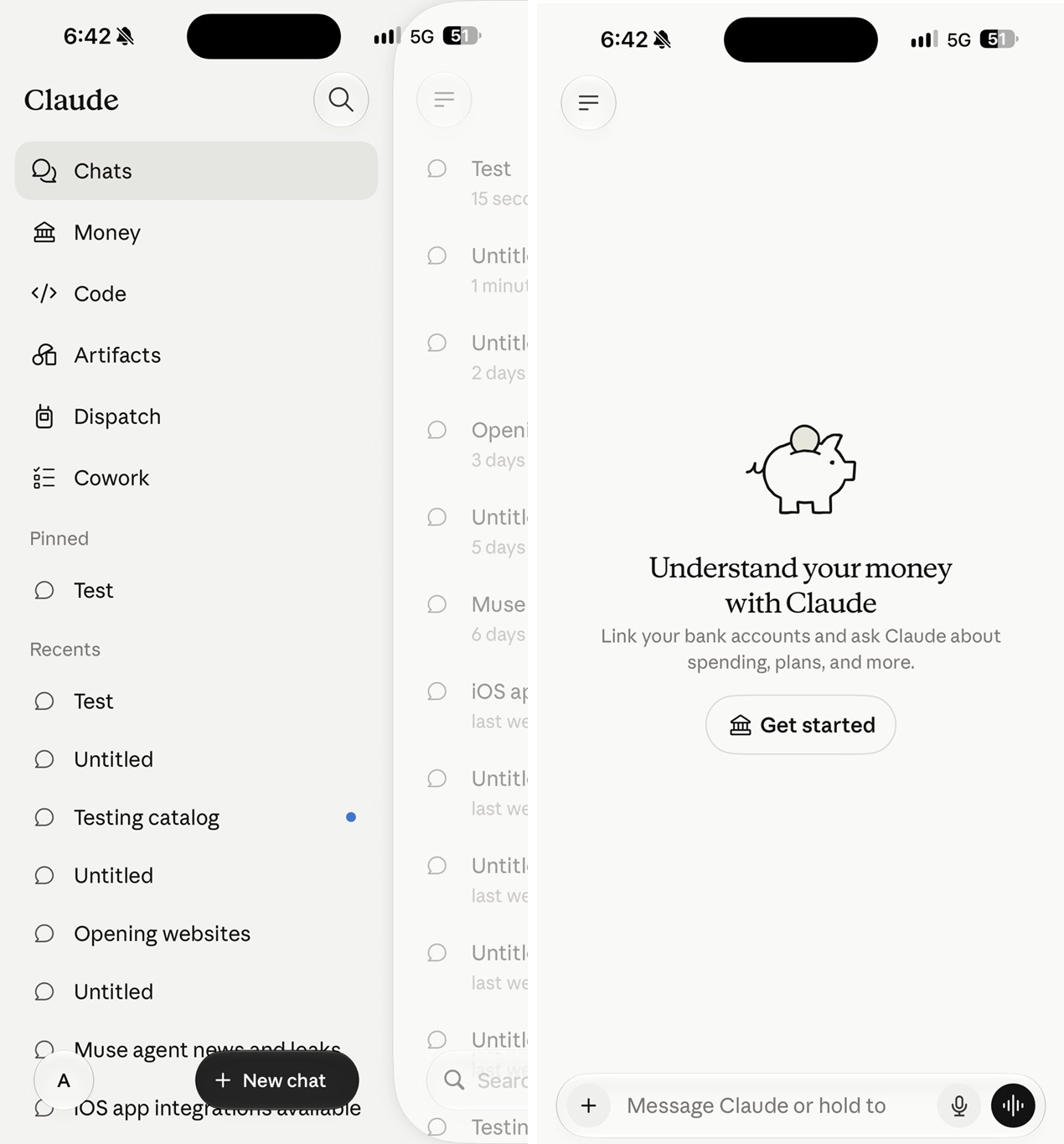
As spotted by TestingCatalog on X, Anthropic is testing the feature for the Claude app on iOS, where a new Money section has appeared alongside Chats, Code, Artifacts, Dispatch, and Cowork.
“Understand your money with Claude,” the page reads. “Link your bank accounts and ask Claude about spending, plans, and more.”
There’s also a “Get started” button for connecting an account, although the feature does not appear to be rolling out to most users.
It’s worth noting that Claude Money references showed up in the app ahead of the expected announcement, which is why details around it are quite limited.
We don’t yet know which banks it will support, how accounts will be connected, or if the feature will be locked to the United States (or certain states in the country).
Claude Money looks a lot like ChatGPT Finances
As I mentioned, OpenAI already offers a similar feature called Finances in ChatGPT, which lets you connect bank accounts, credit cards, brokerages, and other financial accounts through Plaid.
When you connect your finances to ChatGPT, it can use your data to answer questions about spending, bills, subscriptions, savings, net worth, and investments.
OpenAI insists it does not train AI models on your personal data, and that it currently supports more than 12,000 financial institutions in the U.S.
Anthropic could follow a similarly limited rollout for Claude Money, and I wouldn’t be surprised if the feature never rolls out in Europe due to local privacy laws.


Continue Reading

Providence will receive $1.1 billion — one of the largest gifts ever pledged to a U.S. healthcare institution — from Nike co-founder Phil Knight and his wife, Penny. The donation will allow the nonprofit health network to build Oregon’s first hospital focused on women’s health, increase support for cardiovascular services and improve patient care.
“Penny and I have always believed that real breakthroughs come from people willing to take on the toughest challenges,” Phil Knight said in a statement. “Providence has shown that kind of ambition in cardiovascular care, and we see the same opportunity to do something truly distinctive for women’s health.”
The funds are being directed to Portland’s Providence St. Vincent Medical Center and to Providence Heart Institute.
The new women’s hospital will be located on the campus of the medical center and provide care in specialties including gynecology, pregnancy, labor and delivery, menopause and cardiovascular care. Providence leaders note that many pregnant patients are also managing hypertension, diabetes, behavioral health and substance abuse, requiring more specialized services.

The Knights have previously donated $200 million over the course of 10 years to Providence Heart Institute, which sees nearly 63,000 patients each year across the Pacific Northwest, up from 40,000 a decade ago. Cardiovascular disease is the leading cause of death and hospitalization in the U.S.
The added support for the institute will help pay for diagnostic cardiac imaging, additional clinical trials, and the recruitment of leading doctors.
Knight, 88, co-founded Nike with Bill Bowerman in Eugene, Ore., in 1964. The business was originally called Blue Ribbon Sports before rebranding seven years later. Knight is currently worth an estimated $25.4 billion, according to Forbes.
“The Knights’ extraordinary gift is a generational investment, leading to bold and innovative ideas that will shape healthcare in Oregon for decades to come,” said Jennifer Burrows, chief executive of Providence Oregon.


Government agencies are warning that Iranian state-linked hackers are using a Windows malware strain named CHOSEN BRICK to target dissidents, activists, and journalists worldwide.
The malware features data theft and espionage capabilities that collect email, Telegram, and WhatsApp communications, take screenshots, and record audio.
The threat actor primarily targeted individuals in the U.S., U.K., and the Netherlands, whose cybersecurity agencies published a joint advisory with the FBI.
A typical attack begins with social engineering messages impersonating trusted contacts or technical support agents, sent to targets via WhatsApp or Telegram.
The threat actor tricks victims into opening malicious files disguised as legitimate applications (e.g., Pictory, RunwayML, Norton Antivirus, Telegram, Adobe Flash Player, KeePass), often suggesting they launch them on personal devices to bypass corporate security blocks.
Depending on the pretext used, the hackers sometimes used even medical-related lures, the agencies found.
Source: NCSC
The apps display a convincing interface that matches the lure, while silently installing CHOSEN BRICK in the background and securing persistence through Windows Registry Run keys.
The malware adds Microsoft Defender exclusions to evade detection and connects to a unique Telegram bot that matches the victim’s ID and provides command-and-control (C2).
Once launched, CHOSEN BRICK can perform the following actions:
- Collect system information
- Enumerate running processes
- Capture screenshots
- Record audio through the microphone
- Steal email content
- Steal Telegram or WhatsApp browser data
- Download additional payloads to “C:\Windows \SysWOW64”
- Delete files
- Wipe the entire host system
The stolen data is exfiltrated through Telegram or cloud services like VultrObjects and StorjShare, while newer CHOSEN BRICK variants route traffic through SOCKS5 proxies to conceal the activity.
The advisory notes that the stolen data sometimes ends up on pro-Iranian leak sites, serving as a form of harassment and increasing the physical risk for dissidents abroad.
“Iran almost certainly uses cyber activity to support the repression of individuals who are seen as a threat to the regime, such as dissidents, activists and journalists,” the government agencies say.
“In some cases, the Iranian intelligence services have plotted to kidnap or conduct lethal operations against individuals internationally, who they perceive as enemies of the regime.”
Potential victims and organizations should inspect Registry Run entries for suspicious entries, search logs for indicators of compromise (IoCs) shared in the advisory.
Unexpected connections to Telegram’s API, Backblaze B2, VultrObjects, StorjShare, IPRoyal, and LightningProxies should be investigated as suspicious.
Join Mikko Hyppönen and security leaders from the NFL, CHANEL, and Atlassian for a two-hour digital summit on what AI-speed attacks change, what defenders should stop doing, and how to validate, decide, fix, and re-validate at machine speed.
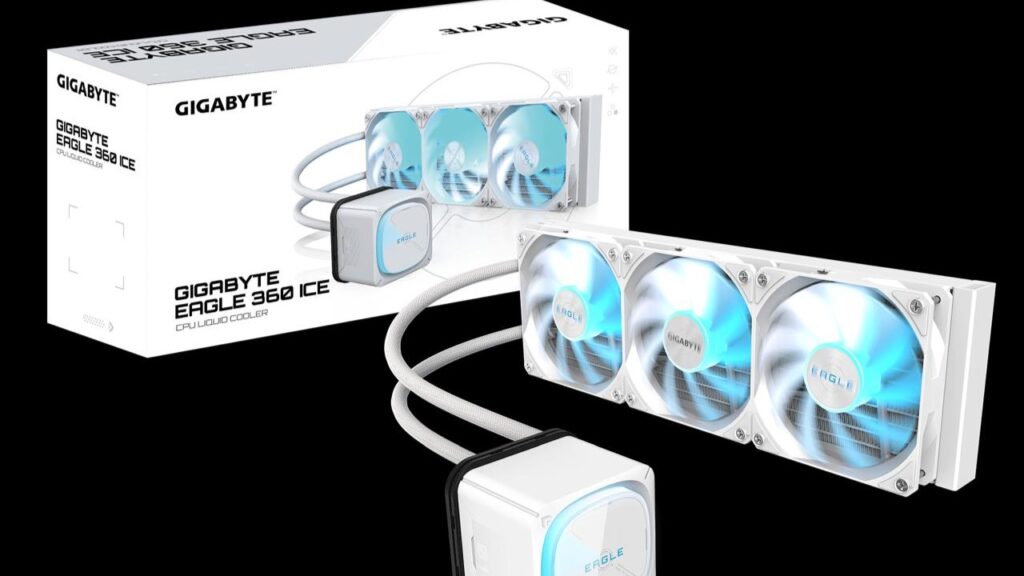
GIGABYTE has added two new models, the EAGLE 360 and the EAGLE 360 ICE AIO Liquid Coolers, to its family of PC coolers. These models feature a 360mm radiator and are designed for gaming and intensive creation work. They were designed to work with GIGABYTE EAGLE motherboards and GPUs. The EAGLE 360 is black, while the EAGLE 360 ICE is white. Both models also focus on easy installation and a clean-looking PC build.
Cooling Performance and Key Features
The GIGABYTE EAGLE 360 series uses a 3,200 RPM pump to handle CPU heat during heavy workloads. The pump is paired with three air-intensive PWM fans and a 360mm radiator, helping keep modern Intel and AMD CPUs consistently cool. In addition, the cooling solution simplifies PC assembly for the manufacturer. GIGABYTE pre-installs the fans on the radiator. Simplified cabling helps keep the inside of the PC cleaner.
The coolers also use simplified cabling to reduce clutter inside the PC. A single mounting bracket supports both Intel and AMD platforms. This means builders do not need separate mounting hardware for different supported sockets.
Design, RGB, and Availability

The EAGLE 360 series also focuses on design and customization. The pump features a magnetic EAGLE Accent Cover that users can easily remove and rotate. This lets users align the EAGLE logo with their PC build’s orientation. The pump and fans also feature subtle RGB lighting for added customization.
Users can adjust the lighting to their preference and sync it with other compatible devices. The black EAGLE 360 suits any standard PC build, while the EAGLE 360 ICE offers a white variant and is best for a white-themed PC build. Both models will be available through GIGABYTE’s authorized retailers. GIGABYTE has not yet announced pricing details for the new coolers.


Microsoft is investigating reports that the Windows 11 KB5124008 security update is breaking domain trust relationships on some enterprise systems, preventing users from logging in with valid domain credentials.
Administrators report on Reddit and Microsoft’s Q&A forums that affected computers lose their secure channel with Active Directory after the Windows 11 update is installed and devices reboot.
Last week, Microsoft confirmed to BleepingComputer that it is aware of the reports and is investigating.
“Microsoft is aware of these reports and is investigating. We will share guidance as it becomes available,” Microsoft told BleepingComputer.
While Microsoft has not confirmed the root cause, reports indicate that the failures are linked to the Windows Machine Identity Isolation security feature, especially when it is enabled in audit or enforcement mode.
Domain trust breaks after installing KB5124008
In Windows Active Directory, domain-joined computers use machine account credentials to maintain a secure channel with domain controllers.
If those locally stored credentials no longer match what Active Directory expects, the secure channel can fail. This can cause users to receive domain trust errors or be told their username or password is incorrect even though their credentials are valid.
Alex Turner, a Windows administrator who reported the issue on Microsoft’s Q&A forums, said Windows 11 25H2 workstations worked normally before KB5124008 was installed. However, after installing the update, the devices started having domain login failures after a reboot.
Cached credentials continued to work while the systems were offline, indicating the problem was tied to domain authentication rather than the users’ passwords.
The administrator said testing showed the computer’s secure channel with Active Directory had broken and that the issue could be reproduced consistently. Uninstalling KB5124008 and repairing the domain relationship restored access, while reinstalling the update caused the failure to return.
Another administrator on Reddit reported that 11 Windows 11 25H2 Enterprise devices out of approximately 256 devices lost domain trust after being updated.
The administrator also found numerous Kerberos authentication failures followed by NTLM and Netlogon fallbacks on affected systems.
Another administrator said every Windows 11 25H2 workstation on their network began rejecting valid domain credentials after installing the updates.
Turner later linked the failures to a Windows security setting called “Machine Identity Isolation,” which he said was set to ‘2’, or enforcement mode, after KB5124008 was installed.
Another administrator investigating the issue reported seeing the same behavior, saying ‘MachineIdentityIsolation’ was set to ‘2’ after the update and that disabling the feature stopped Windows from discarding the machine account LSA secret without requiring KB5124008 to be removed.
The feature is part of Windows’ Virtualization-Based Security and Credential Guard configuration and isolates machine account credentials used by domain-joined computers to authenticate with Active Directory.
In enforcement mode, Windows moves the machine account secret into Credential Guard and removes the copy stored in LSA.
The setting can be controlled through the following registry value:
[HKEY_LOCAL_MACHINE\SYSTEM\CurrentControlSet\Control\Lsa]
"MachineIdentityIsolation"
Some administrators have restored affected systems by setting ‘MachineIdentityIsolation’ to ‘0’, rebooting, and then repairing the machine’s secure channel using PowerShell.
One administrator said the following PowerShell command, run as administrator, restored the secure channel after disabling the feature:
Test-ComputerSecureChannel -Repair -Credential(Get-Credential)
“After a reboot, I had to restore the secure channel by ‘Test-ComputerSecureChannel -Repair -Credential(Get-Credential)’. Since then, the computer is running without loosing the secure channel anymore,” explained Marcel Zehnder.
However, administrators should be careful about disabling Machine Identity Isolation as it could also cause similar problems.
Another administrator warned that changing the setting from audit or enforcement mode to disabled caused domain trust failures across their environment, including on systems that had never installed KB5124008.
Microsoft’s documentation also warns that if Machine Identity Isolation was previously enabled in enforcement mode, disabling it will break domain authentication and require the device to be unjoined and rejoined to the domain.
Microsoft has not yet confirmed that Machine Identity Isolation is the root cause of the KB5124008 failures and has not published an official workaround.
BleepingComputer will update the story when Microsoft provides additional information about its investigation.
Join Mikko Hyppönen and security leaders from the NFL, CHANEL, and Atlassian for a two-hour digital summit on what AI-speed attacks change, what defenders should stop doing, and how to validate, decide, fix, and re-validate at machine speed.
You may recall that back in July we had the ridiculous story of how ICE decided to go all gestapo on its critics, including tracking down and threatening David Streever, who had emailed then-acting ICE director Todd Lyons back in January, after federal agents killed some peaceful protestors in Minnesota. Streever’s email was pretty straightforward:
“You are a monstrous human being and will go down in history as America’s Reinhard Heydrich, the butcher.
“The way you are protecting the obvious execution in Minnesota, even as we see the videos, will lead to your downfall. Even Trump will turn on you before the end, and you will be a sad, despised man who eats himself alive with shame at your own pathetic weakness.
“You will never know peace. You will seek to lose yourself, to escape the burden of knowing the truth about yourself. But wherever you go, you will find yourself. You will torment yourself until your last day on Earth.”
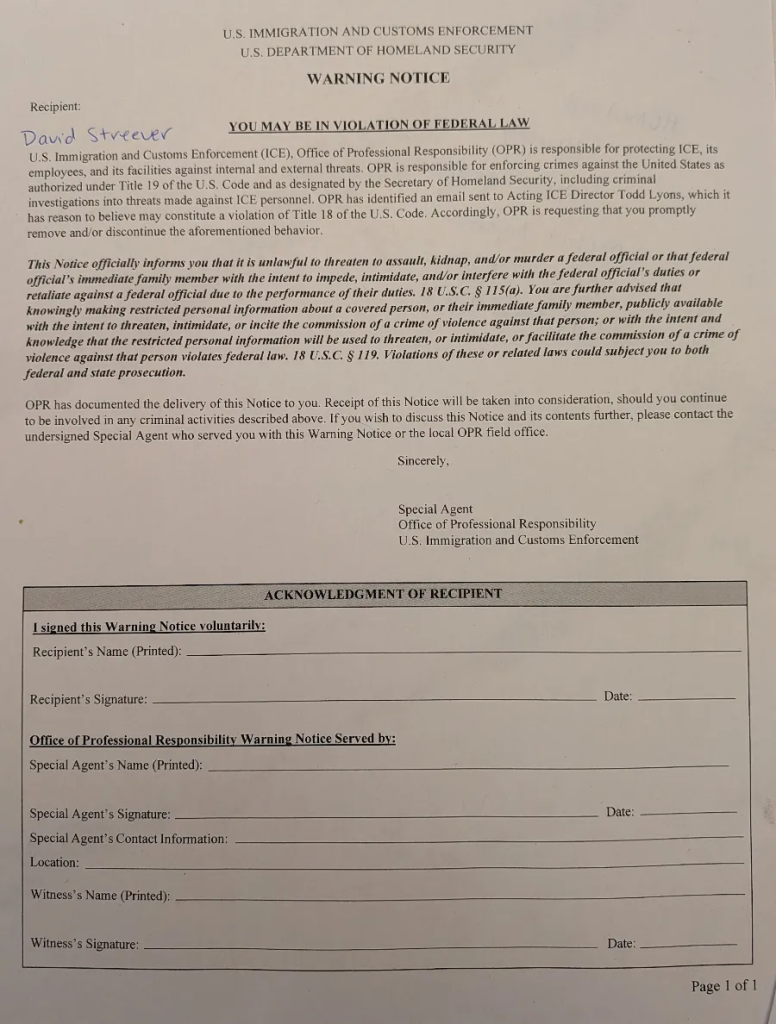
Honestly, pretty mild, given what monsters nominal immigration officials have become. But, alas, DHS couldn’t handle someone being mean on main to their boss. They sent federal law enforcement officials to try to find him at his home to leave him a “warning” about his email. When they found out that Streever was out of the country (taking his daughter to an amusement park in Finland), they tracked his flight home and showed up at the hotel near JFK where he was staying overnight, hoping — unsuccessfully — to meet with him. Agents also left a ridiculous “warning notice” with Streever’s wife:

As our initial article made clear, everything about this was bizarre, intimidating, and stupid. ICE’s “Office of Professional Responsibility” is supposed to be making sure that ICE agents are acting professionally and responsibly — not engaging in unprofessional and irresponsible investigations of people who are criticizing ICE leaders.
Streever, along with lawyers from FIRE, sued Homeland Security, and just received a big initial win. Judge Rudolph Contreras is not at all impressed with DHS’s arguments, and points out that criticizing public officials is kind of a big deal here, what with our First Amendment and all:
Americans have long voiced their displeasure with their government. The Declaration of Independence itself is a list of grievances between Americans and the British government. And Americans have not always indulged in the elevated prose of the Declaration. Government officials have long endured “vehement, caustic, and sometimes unpleasantly sharp attacks.” N.Y. Times Co. v. Sullivan, 376 U.S. 254, 270 (1964).
Today is no different. Plaintiff David Streever expressed his displeasure with the United States Immigration and Customs Enforcement (“ICE”) by sending a three-paragraph email to the agency’s Acting Director, Defendant Todd Lyons. Mr. Streever compared Acting Director Lyons to an infamous Nazi and predicted that he would become “a sad, despised man who eats himself alive with shame at [his] own pathetic weakness.”
What is different is how the government responded in this case. ICE dispatched agents to Mr. Streever’s home and delivered to him a “WARNING NOTICE.” The notice threatened him with prosecution if he did not “discontinue” his criticism of ICE. Because that notice likely violates Mr. Streever’s First Amendment right to free speech, the Court will grant, in part, Mr. Streever’s motion for preliminary injunction, enjoining Defendants from relying on the Warning Notice, issuing similar threats, or making good on the threats in the Warning Notice.
Note — as the court does — that nothing in Streever’s email to Lyons came anywhere close to being a “true threat” that would take it out of the protective cloak of the First Amendment. Hell, it’s not even remotely near what could be read as a threat:
More importantly, the email does not contain a physical threat. The email registered displeasure with Acting Director Lyons’s official conduct, forecasted that the Acting Director will lose favor with the President, and warned that the moral weight of the Acting Director’s actions will haunt him in the future…. Although Mr. Streever’s email was not kind, and may not have been particularly productive, it was a far cry from a “[t]rue threat[ ] of violence” sufficient for the email to shed its First Amendment protections.
The court notes that ICE had apparently “closed” the investigation after delivering that bizarre notice to Streever’s wife, but never informed Streever that the investigation was closed. However, when Streever sued, DHS decided to respond publicly to a post by FIRE about the lawsuit:

If you can’t see that, it’s DHS angrily posting:
Any allegation DHS and its components are attempting to ‘squash’ free speech is categorically FALSE.
ICE investigates all credible threats towards its employees and officers, including threats to the ICE Director. As a matter of policy, we do not comment on any ongoing investigations.
Our law enforcement officers are on the frontlines arresting terrorists, gang members, murderers, child sex abusers, and rapists. They are experiencing coordinated campaigns of violence against them and facing a 1,300% increase in assaults against them, a 3,300% increase in vehicular attacks, and an 8,000% increase in death threats.
ANYONE who assaults or threatens our law enforcement officers will face the consequences.
Thing is, a federal judge now says that’s bullshit, and that this was obviously an attempt to squash free speech. Indeed, this very tweet comes back to hurt DHS, as the judge sees that it is clearly designed to further intimidate Streever and others.
Still, the judge rejects part of Streever’s request for an injunction against being investigated, noting that ICE claims they closed the investigation into him. Streever points out that the tweet suggests otherwise, but the judge accepts that ICE’s investigation is over.
But he is greatly troubled by that bullshit “warning notice” left at his home, and notes that even if the investigation is closed, the “warning notice” and its speech suppressing statements are still in effect:
The Warning Notice is a different matter. Defendants have not disavowed the Warning Notice, nor do they deny that it remains in effect. The Warning Notice therefore provides a continuing injury over which Mr. Streever has standing to sue.
The Supreme Court has recognized that when the government directly threatens a party with future enforcement actions targeting their First Amendment activity, it creates an on-going injury at least where there is a “distinct possibility of” enforcement.
And since the notice orders Streever to self-censor to avoid future trouble, the court sees it as a real First Amendment problem for DHS:
Mr. Streever likewise faces a distinct possibility of prosecution for future speech. The Warning Notice requests that Mr. Streever “discontinue” his political speech and threatens prosecution, if he does not.
And here’s where that raging tweet harms DHS’s case even further:
Even if the Warning Notice were not explicit enough, a DHS spokesperson later posted on social media, in response to a post about Mr. Streever’s lawsuit, specifically referencing a purported “credible threat towards . . . the ICE Director” and warned that “ANYONE who assaults or threatens our law enforcement officers will face the consequences.” Homeland Security (@DHSgov), X (July 6, 2026, at 3:06 p.m.). This public statement and the reference to “consequences” further underscores that Mr. Streever faces a credible threat of government reprisal.
Judge Contreras does not buy DHS’s retort that they’re simply warning Streever not to violate federal law, pointing out that there’s no way you can read the Warning Notice that isn’t an attempt to suppress Streever’s speech:
Defendants dismiss the Warning Notice as merely a reminder to Mr. Streever “not to violate federal law” and argue it represents at most a past injury. Defs.’ Opp’n at 19. The Warning Notice, however, is not quite so innocuous. In the opening paragraph, it identifies Mr. Streever’s January email and states that OPR “has reason to believe [it] may constitute a violation of Title 18 of the U.S. Code.” Compl., Ex. 2. It then requests that Mr. Streever “promptly remove and/or discontinue the aforementioned behavior.” Id. (emphasis added). Defendants seem to understand “aforementioned behavior” to refer to criminal threats generally. But because of the immediately preceding reference to Mr. Streever’s email to Acting Director Lyons, this request is fairly read as a demand that Mr. Streever refrain from criticizing Acting Director Lyons.
The notice also warns Mr. Streever of the potential for prosecution. After describing Mr. Streever’s email as a potential “violation of Title 18,” the notice goes on to describe various crimes under that title and remind Mr. Streever that “[v]iolations of these or related laws could subject you to both federal and state prosecution.” Id. (emphasis removed). If that were not enough, the letter closes by telling Mr. Streever that “[r]eceipt of this Notice will be taken into consideration, should you continue to be involved in any criminal activities described above.” Id. The use of “continue” implies that Mr. Streever’s email already exposed him to criminal liability and, critically, that any similar speech by Mr. Streever in the future will be viewed the same way.
All told, the Warning Notice demands that Mr. Streever “discontinue” his political speech criticizing Acting Director Lyons. It does so while reminding Mr. Streever of the risk of prosecution and warning him that if he “continue[s]” to criticize Acting Director Lyons and ICE, the fact that he has been warned for his past speech “will be taken into consideration,” implying future prosecutions. Political speech is not a crime, so that is hardly a reminder to follow the law. And because the Warning Notice speaks of “discontinu[ing]” Mr. Streever’s political speech and threatens consequences if he “continue[s]” to speak out, it represents a continuing, rather than a past, injury.
The court also rejects the argument from DHS that Streever is trying to block a “speculative” future harm of being arrested and or prosecuted. But as the judge points out, that’s not the issue here. The existing chilling effect on speech is already a harm:
Mr. Streever is not merely alleging that he will be injured at some point in the future because he will face an investigation or prosecution down the line. That would be closer to the risk of being subjected to a chokehold in the future in Lyons because it would rely on predicting the future actions of Mr. Streever and law enforcement. …
Mr. Streever’s injury is the loss of his freedom to engage in political speech now because the threat of such an investigation or prosecution looms over him like the sword of Damocles, and he is forced to self-censor under that threat…. That loss of speech is both imminent and certain because it does not rely on Defendants actually opening a new investigation. The Warning Notice works because Mr. Streever is too intimidated by the threat of future government action that he will not test whether the government will follow through on its threat. As the Supreme Court recently explained, “[t]he value of a sword of Damocles is that it hangs—not that it drops.” First Choice, 608 U.S. at 192 (quoting Arnett v. Kennedy, 416 U.S. 134, 231 (1974) (Marshall, J., dissenting)).
DHS also claims that because Streever doesn’t have any “concrete plans” to engage in more such speech in the future, then he can’t show harm. The court (rightly) finds that argument to be quite silly:
Even viewed through the lens of a future injury, Mr. Streever’s case is distinguishable from those cited by Defendants because the type of speech at issue here is different. Mr. Streever seeks to engage in speech through off-the-cuff emails and comments on social media…. This spontaneous speech is different in kind from the sorts of premediated future activities for which courts have expected concrete plans. … Given the spontaneous nature of the speech at issue here, it would be pedantic to require Mr. Streever to detail exactly when he anticipates speaking out against the government next and what he plans to say.
In the end, the court won’t bar the government from investigating Streever (again, ICE insists the investigation is closed) but it does vacate the “Warning Notice” outright, and bars DHS from leaning on it going forward. While the judge considers Streever’s request to block future investigations of his speech, the judge notes he’s not sure he can really do that. If future speech actually contains true threats or violates laws in other ways, an investigation has to be allowed. But clearly mindful of the chilling effects here, the court makes it clear that continuing to harass Streever over his political speech is not allowed.
The Court will, for the time being, vacate the Warning Notice; it will preliminarily enjoin Defendants from relying on the Warning Notice and Mr. Streever’s January email in future prosecutions and investigative demands; and it will preliminarily enjoin Defendants from issuing similar warnings to Mr. Streever that suggest he cannot engage in non-threatening criticism of the government.
DHS whined to the judge that ICE is facing oh so many threats (based on very bullshit claims by DHS), but the judge notes that this is a narrow injunction, one that still leaves ICE free to investigate actual threats. But it does mean that you are free to let ICE officers know that they are monstrous human beings who will be reviled in history, and that they are sad and despised.


Nuance Labs, a Seattle-based artificial intelligence startup developing a foundational AI model designed to perceive and respond to real-time human expression, raised $50 million in Series A funding.
Founded in early 2025 by former Apple PhD researchers Fangchang Ma, Edward Zhang, and Karren Yang, the research lab is developing a single “full-duplex” foundation model designed to process and generate conversational cues simultaneously.
@media (max-width: 600px) {
aside.callout { float:none !important; max-width:100% !important; margin-left:0 !important; margin-right:0 !important; }
aside.callout .callout-img { display:none !important; }
}
Unlike traditional setups that chain together separate tools for transcription, text generation, and voice or animation, Nuance’s model ingests live audiovisual signals like tone, gaze, and timing to stream real-time facial and vocal responses.
Existing avatars and voice tools fail because they force humans to adapt to the machine rather than the other way around, according to Ma, Nuance’s CEO.
“The most productive collaboration comes from being able to express yourself freely, in words, tone, gesture, and expression, the way you would with a friend or close colleague, with all the nuance in the back-and-forth that turns talking into understanding,” Ma said in a news release. “That’s what we’re building at Nuance Labs: AI that understands the many ways we express ourselves and responds the way a person does, in the moment.”
In a demo video accompanying the announcement (below), the startup showcased an avatar built to function as an active listener, adjusting its facial expressions and verbal cues dynamically as the user speaks.
Zhang, Nuance’s CTO, earned his PhD in computer graphics from the University of Washington and met Ma at Apple’s engineering office in Seattle. The two spoke to GeekWire last fall about building in Seattle rather than Silicon Valley and how they want Nuance “to be the premier research lab in Seattle.”
The startup plans to release a public research preview of its model later this year, giving users their first hands-on test of the interactive face-to-face avatar. Nuance targets applications where real-time human expression drives outcomes, including sales, customer service, professional coaching, and education.
Returning investor Lightspeed Venture Partners led the round, which also included participation from existing backers Accel and South Park Commons, alongside new investments from NVIDIA and Define Ventures.
The financing brings Nuance Labs’ total capital raised to $60 million following its $10 million seed round last year.
Nuance, which employs 27, plans to use the fresh capital to accelerate model development and hire researchers and engineers across modeling, data, evaluation, and real-time serving as it expands its team.
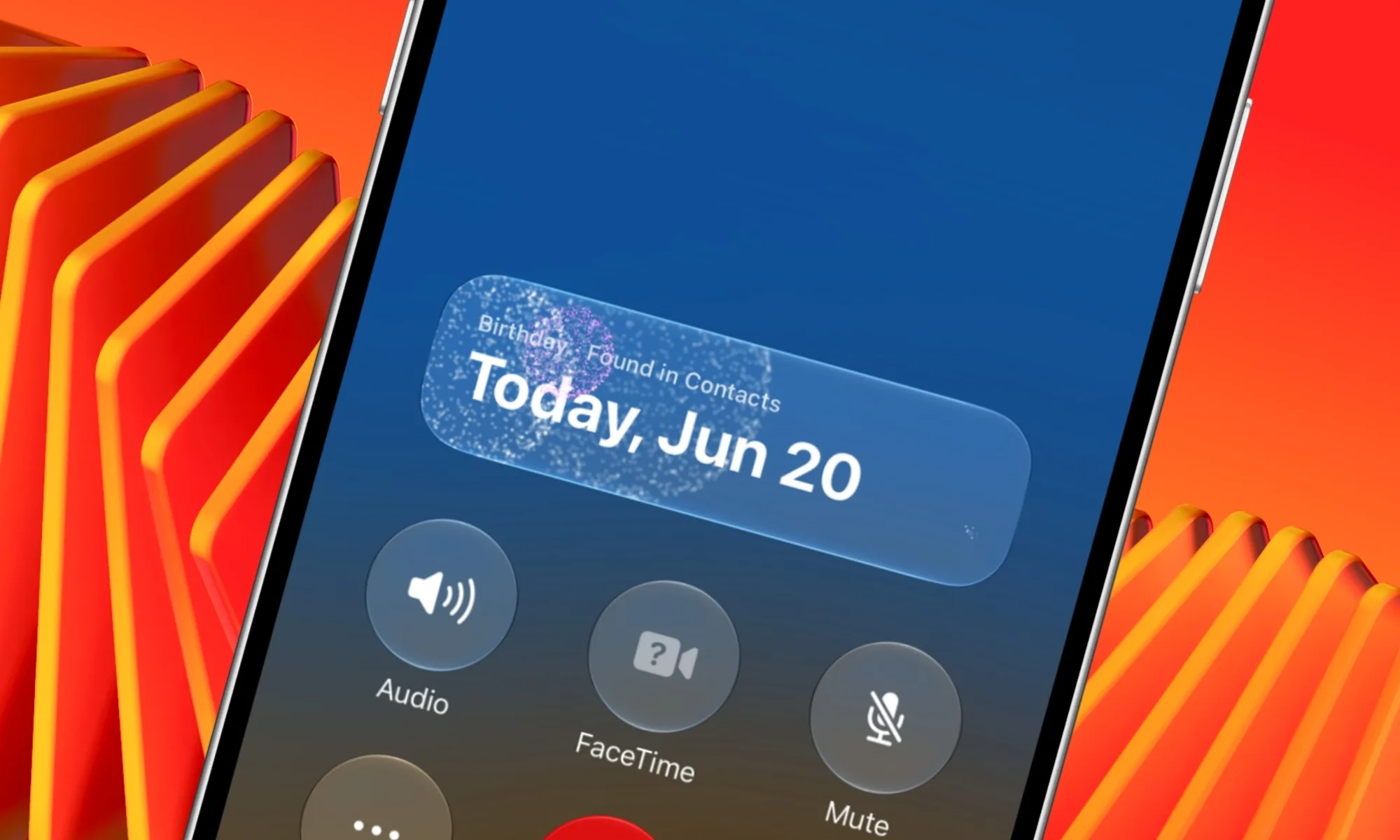
Apple only started rolling out iOS 27 yesterday, but Apple is already working on the next update, which has a small feature that could prove surprisingly useful. As MacRumors points out, the latest iOS 27.2 beta adds an anniversary reminder to Call Context, which can warn you about an important date just before you place a call.
Call Context itself arrived with iOS 27. We previously covered one of its more delightful tricks, where calling someone on their birthday brings up a reminder along with a small fireworks animation. The iOS 27.2 beta now takes that idea a little further by adding anniversaries into the mix.
Your iPhone can give you one last reminder
If an anniversary has been saved in someone’s contact card, iOS 27.2 can surface the date on the call screen when you contact them that day. Unlike birthdays, anniversaries do not get their own animation, so the fireworks remain exclusive to birthday calls for now.
Call Context can also pull relevant information from apps such as Mail when it may be useful during a call. Anniversary support gives the feature a more personal role alongside the practical information it already surfaces.
There is still one catch
The anniversary has to be saved in Contacts first. Apple includes an anniversary option under the date field, while supported Apple Intelligence devices can also use Siri AI to add it to a contact card. Apple has not released iOS 27.2 to the public yet, so the feature is currently limited to the beta build. The update is expected to roll out more broadly in October.

Connecting the dots: Nvidia’s RTX 60 series Rubin GPUs and most of AMD’s RDNA 5-based Radeon 10000 series gaming cards have reportedly been pushed back to 2028. The delay would come down to persistent AI demand, which continues to make data center hardware far more profitable than consumer products.
Responding to a forum question about the release timing for Nvidia and AMD’s next-generation graphics cards, the generally reliable leaker Kepler_L2 said on the AnandTech forums that nearly the entire stack from both companies is now expected to arrive in 2028, as AI accelerator demand keeps eating into available capacity. The lone exception is AMD’s “AT2” GPU, still reportedly on track to launch next year.
Kepler_L2’s post appears to directly contradict a recent report from YouTube channel Moore’s Law is Dead, which claimed Nvidia was gearing up to launch its next-gen RTX 60 series – including the flagship RTX 6090 – in the first half of 2027. Kepler_L2 dismissed the claim outright.

Speaking to Dutch outlet Tweakers in June, several of AMD’s board partners said they had little clarity on the release window for the next-generation cards. Some expected shipments to begin by mid-to-late 2027; others said availability could slip into early 2028.
Neither Nvidia nor AMD has said much publicly about its next-generation gaming GPUs, but rumors point to the so-called AT2 as an RDNA 5-based die with 8 Shader Engines, each carrying 5 Compute Units, for 40 Compute Units in total. It’s expected to power an upper-midrange card, possibly with 12GB of VRAM on a 192-bit memory bus.
Also check out: Cost Per Frame: Nvidia Stops Offering Good Value GPUs to Gamers – see what’s the “best value” GPU in your region
AT2 could end up going up against Nvidia’s current GeForce RTX 5080, a step up from AMD’s existing flagship, the Radeon RX 9070 XT, which trades blows with the mid-range RTX 5070 Ti. All of this, though, comes from unverified third-party sources and should be treated as such.
Nvidia has already shown off its Vera Rubin “Superchip” for AI data centers, but has stayed quiet on the consumer side. AMD hasn’t said much about RDNA 5 either, though an earlier Kepler_L2 leak claimed the flagship Navi 5X GPU could hit clock speeds of up to 3.4GHz, with 12,288 cores and 32GB of GDDR7 memory.

Verdict
The £199 Leep Ring offers accurate health tracking, week-long battery life and exceptional comfort without a subscription, making it one of the best-value smart rings around. Its app lacks personalised guidance, menstrual cycle tracking and reliable automatic workout detection, but it remains a great choice for discreet, fuss-free health tracking.
-
Extremely comfortable
-
Detailed app data
-
No subscription fees
-
Comes with charging case
-
App sign-in issues
-
Design might not suit everyone’s tastes
-
Can’t record many workout activities
SQUIRREL_PLAYLIST_10208772
Key Features
-

Review Price:
£199
-
Comfortable fit
The Leep Ring is not the slimmest smart ring, but it is the most comfortable I have tested.
-
Great battery life
Seven days of use on a charge is excellent, plus the included charging case makes topping up easy.
-
No subscription fees
Unlike most rivals, the Leep Ring does not require subscriptions or extra fees to get all its features.
Introduction
Smart rings have grown in popularity over the past few years, largely thanks to the rise of the Oura Ring. But the fifth generation of that ring commands a £399 price tag and a £5.99 monthly subscription that powers an app full of AI.
What if you want a cheaper, simpler smart ring?
That’s the premise behind the Leep Ring from UK-based company Leep. Its name is a play on making a leap forward and is also most of the word ‘sleep’, the main metric the ring is designed to measure. But in reality, this wearable tracks nearly as much as other smart rings, despite concentrating on helping you catch more Zs.
Priced very competitively at £199, the Leep Ring also works without any kind of ongoing subscription fee. I wore the ring for two weeks to see if it offers enough utility and value to recommend it alongside pricier rival Oura and other competitors such as Ultrahuman and Samsung.
Design
- Chunky but very comfortable
- Silver or blue options
- Sizes 6-14
If you are familiar with smart ring design, the Leep Ring’s look will not be a surprise. It comes in blue or silver titanium, and I tested the latter. It’s a chunky ring in width but is only 2.22mm at its thinnest point thickness wise, which results in a very good fit.
Ring comfort is very subjective, but I found the Leep Ring the most comfortable of any of the smart rings I’ve tested, which are the Oura Ring 3, Oura Ring 4, Oura Ring 5, Ultrahuman Ring Air and the Samsung Galaxy Ring.

This is down to the sizing – I’ve tried Oura in an 11, and it’s a smidge too small on my index finger, but the 12 is too big (Oura uses different sizing across generations and does not use standard ring sizes). The Leep Ring in a 12 is a perfect fit for me, which has meant this is also the first time I’ve tested a smart ring and been able to forget I was wearing it, which is a huge bonus.
When you buy the Leep, you’ll be first sent a free sizing kit with plastic rings sizes 6 to 14 in it. I wore a couple of sizes for a couple of days to decide which one was best for me, and then Leep sent over the size I requested, as it will do with customers. Leep recommends you wear the Leep Ring on your index, middle or ring finger, but the most accurate readings will be on the index finger, so I went for that.

On the inside of the ring is some branding along with the sensors that track sleep, heart rate, heart rate variability (HRV), temperature, and activity, and on the outside is a diagonal recessed line that indicates the orientation of the ring by sight and touch – you make sure it’s on the underside of your finger to give the heart rate sensor its most optimal position.
Overall the design is quite conspicuous and unremarkable, but that’s what I want from a smart ring. It’s meant to masquerade as jewellery. Unfortunately, the game is given away in the dark, when the ring blasts green or red light out. These lights are necessary to capture metrics like heart rate, but the translucent plastic that covers them means they shine out visibility in the dark, more than any other smart ring I’ve tested.
When I wore it in bed, it shone brightly in my face to an annoying extent when my hand was near my face. A minor downside to an otherwise accomplished, comfortable design.
Leep manages to best competitors by including a charging case, rather than other rings’ preferred charging puck. These pucks need the ring placed on them and left on a table with a charger plugged in, whereas the Leep charging case lets you place the Ring inside and charge it up on the go, as the case holds charge.

A fully charged case will give the ring up to 60 days of total battery life according to Leep, which is enough for a long holiday away. Oura charges £99 for its optional charging cases, so Leep is offering a lot of value for its ring and case for £199 total.
You also get IP68 dust and water resistance, so you can wear the ring in the shower or while swimming, with water resistance up to 50m.
Features and app
- App for iOS and Android
- No subscription required
- Some app issues
For several months, the Leep Ring only had an iPhone app, but I tested it with the recently released Android app.
The best part of either version is that it requires no subscription fee to use all its features. This is unusual in the smart ring world. Oura charges a monthly fee, Ultrahuman is free to use but charges for add-ons, and the Galaxy Ring only works with Samsung phones.
Leep is saying you shouldn’t have to pay more once you’ve bought the Leep Ring, which is refreshing. I can only hope this doesn’t change in future, as many tech firms have succumbed to the business model of seeking recurring revenue from customers to boost their bottom line.

The app is quite simple in how it presents data on its home screen, with a quick summary of how you are doing that day, with scores out of 100 for sleep and activity next to your recent heart rate.
There’s also a daily insight tile with a brief but seemingly not tailored tip. There are also articles from experts in the app you can read on relevant topics.
Oura has leaned into AI in its app, which takes your data and attempts to give you personalised advice with its Advisor tool. Leep is gentler in its advice because it is not connected to AI or cloud services – in fact, Leep says all data is processed on-device, and it even offers an optional encrypted backup tool for your data, so even Leep can’t see it. That’s a great option if you want a smart ring and want to keep your health data private.
If that’s the case, you should opt not to share Leep data with either Apple Health or Google Health Connect, iOS and Android’s health platforms respectively.
I attempted to log in to my Leep account on an iPhone to see if I could load my data collected from the Android version, but I came across login errors.

It appears you can’t sign in to the iPhone version of the app using your Android app login details, something I expected would work. To switch to a new Android phone, I needed to unpair the ring and then pair it with a new phone, which brought all my data over. I had opted in to cloud backups to facilitate this, but that is optional.
Health and fitness tracking
- Tracks activity, stress, temperature and sleep
- Can’t use connected GPS for runs
- Can’t track menstrual cycles
Though Leep markets its ring on sleep, the Leep Ring can track most of the metric is rivals can. That means you get sleep with duration, heart rate variability (HRV), consistency and quality, plus stress via the temperature sensor, activity including steps and distance, plus heart rate. It uses the movement sensor to determine time and quality of sleep.

The app has four tabs to cycle through on top of the home screen and is not too overwhelming. It has a clean look and doesn’t split out reams of data at you.
If you want to track runs, you can’t do that on the Leep Ring, which doesn’t have built-in GPS. The Oura Ring, and other screenless trackers like the Fitbit Air, can connect to your phone’s GPS to track run routes while pairing that data with heart rate and steps.
I didn’t miss this, but I did miss the lack of automatic activity detection. The Leep Ring couldn’t tell when I’d been on a long walk and categorise it, and it didn’t count my long, pacy pram walks with my young son as active minutes, which other smart rings and activity trackers have done.
It’s not a dealbreaker, but it means the app thinks I’m much lazier than I feel I currently am! The Leep Ring also cannot track menstrual cycles, a key feature Oura and others can track.

I like how sleep results are displayed, with phrases like “not to worry” and “ideal” next to things like duration and metrics, so you can get a quick idea of where you’re at. Tapping these results often takes you into deeper data, which is welcome rather than presenting the user with it all upfront.

Leep’s tracking was also in line with the Oura Ring 5’s results as well as the Apple Watch Series 11 when it came to sleep tracking. I trusted the step count less than a wrist-based wearable, as the count seems a little off, but as a ballpark figure it is acceptable.
Battery life
- Lasts about seven days with daily use
- Charging case is great
- Charges quickly
I found the Leep Ring lasted a full seven days of use before it completely ran out of battery. To stop it from doing so, you’ll have to charge it every five or six days. Leep claims the ring can last for eight days, and it nearly made it that far in my testing.

As mentioned, the included charging case is a major perk here and makes the Leep Ring package exceptionally good value. Being able to pop the ring in the case for a quick charge on the go, no cables required, is a boon.
The Oura Ring 5 can last between six and nine days between charges, so for the Leep Ring to match this with a product that is half the price is impressive.
SQUIRREL_PLAYLIST_10208772
Should you buy it?
You want a very comfortable smart ring to track sleep
With an app that leaves you in peace and doesn’t require a subscription, the Leep Ring is good value.
You want detailed personalised health guidance
Leep’s lack of AI is refreshing, but it means the app gives you less tailored advice compared to competitors.
Final Thoughts
The Leep Ring more than holds a candle to industry leader Oura with a smart ring that costs half the price but tracks nearly all the same data, to the same degree of accuracy. Best of all, it has no subscription cost, making it one of the best value smart rings at £199.
The ring is the most comfortable I have tested (out of six devices) and has a battery that will last a week. It also comes with a wireless charging case that holds its own charge, a rarity in the smart ring world
Leep’s app for iOS and Android is clear and displays data in a calm fashion, letting you dig deeper if required, but it’s a shame you can’t log in to the opposite platform you signed up on. Sign up on Android, and you can’t sign in to your account on an iPhone, and vice versa.
The lack of menstrual cycle tracking is a miss, and the Leep Ring was not great at automatically detecting exercise. But if you want an affordable, subtle and comfortable smart ring that passively and quietly collects your health data and stores it privately, this is a great pick.
For other options, take a look at our selection of the best smart rings.
How We Test
We thoroughly test every smart ring we review. We use industry-standard testing to compare features properly and we use the ring as our main device over the review period. We’ll always tell you what we find and we never, ever, accept money to review a product.
- Tested for two weeks
- Thorough health and fitness tracking testing
- Worn as our main tracker during the testing period
FAQs
Does the Leep Ring require a subscription?
No, all the Leep Ring’s features are available without a monthly subscription.
Can you swim with the Leep Ring?
Yes, the Leep Ring has IP68 water resistance and can be worn while swimming at depths of up to 50 metres.
Full Specs
| Leep Ring Review | |
|---|---|
| Manufacturer | – |
| IP rating | IP68 |
| Waterproof | 5ATM |
| Size (Dimensions) | x x INCHES |
| Weight | 2.4 G |
| Release Date | 2026 |
| First Reviewed Date | 15/09/2026 |
| Colours | Silver, Blue |
| UK RRP | £199 |
| USA RRP | $199 |
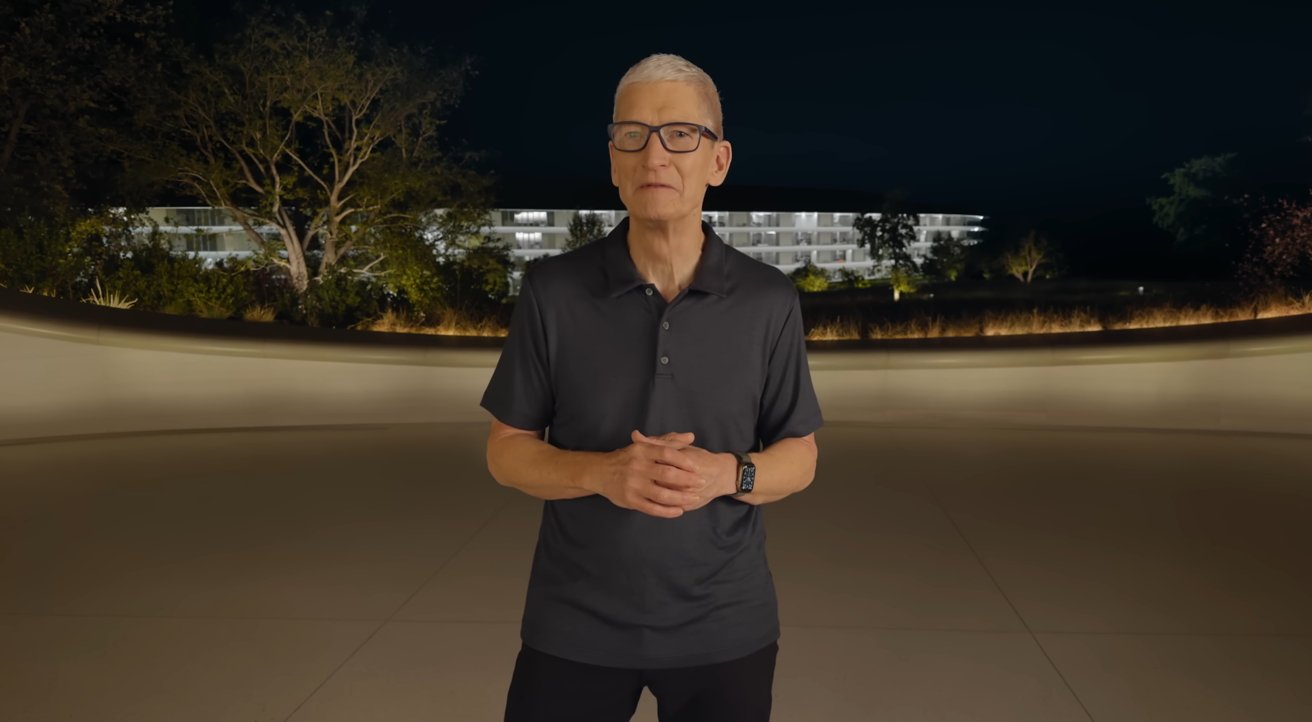
Apple Executive Chairman Tim Cook has already been called upon to attend a state dinner with US President Donald Trump and Chinese President Xi Jinping on September 24.
Tim Cook stepped down from his CEO position on September 1 and took over as Executive Chairman and Apple government liaison. The new role is meant to keep CEO John Ternus at a distance from political matters.
Barely two weeks into his new position, Cook will be attending a state dinner at the White House. According to a report from Bloomberg, US President Donald Trump is holding a state diner for Chinese President Xi Jinping and has invited CEOs and representatives from various AI companies.
Cook has been invited to attend alongside Nvidia CEO Jensen Huang and OpenAI CEO Sam Altman. While Trump likely would prefer Apple CEO John Ternus, Cook has already established a rapport with the President through various dinners and donations.
The dinner is being held even as OpenAI and other industry leaders call for more regulation in the space. The call for regulation is supposedly for ensuring safe AI development, but some speculate it is more about keeping competitors from catching up.
The US President has openly and loudly declared that there will be no regulation against any AI, as that would place the United States at a disadvantage. The dinner with President Xi Jinping will likely involve discussions around AI regulations and competition between the rival countries when it takes place on September 24.
Perhaps Tim Cook could convince the AI leaders to stop the AI-driven RAM shortage and focus on utilizing the existing data centers to their fullest. Of course, that would take nothing short of a miracle, so expect zero useful developments from this little get-together.

NewsBeat1 minute ago
‘My abusive boyfriend promised to change if I married him, less than a year later he raped me’

Business2 minutes ago
Trump threatens heavy tariffs on EU over Canada associate membership

Crypto World3 minutes ago
Anchorage Adds Etherlink Custody for Institutional Investors



-

 Fashion5 days ago
Weekend Open Thread – Corporette.com
-

 Tech4 days ago
The Latest Weird Thing to Play Doom Is the Mapped-Out Brain of a Fruit Fly
-

 Business6 days ago
10 Most-Streamed Songs On Spotify In 2026 So Far, Led By Ella Langley’s Dominant Run On The Charts This Year
-

 Crypto World6 days ago
XAG/USD: Silver’s Short-Term Rally Meets Its Moment of Truth
-
 Crypto World7 days ago
2 Chip Stocks Broke Out This Week. Neither Was Nvidia
-
 Tech6 days ago
Battery life is the only iPhone 18 Pro and iPhone Duo upgrade I care about. Apple didn’t disappoint
-

 Crypto World6 days ago
OKX launches 10x OpenAI, Anthropic X-Perps in Europe
-

 Crypto World6 days ago
Diesel Tops $6 a Gallon for the First Time as 28 States Set Records
-

 News Videos6 days ago
Facing Financial Fears
-

 Business7 days ago
Western Digital Slips 2.7% as AI Storage Rally Cools After Record Cash and Guidance
-

 Crypto World3 days ago
Elon Musk Drops a Bombshell: Grok 5 Could Be the AGI Breakthrough
-

 Business4 days ago
Rivals Sam Altman and Elon Musk Rally Behind Dario Amodei’s Call for a Slowdown in AI Development
-

 Business7 days ago
Five Leading AI Experts Warn Superintelligence Could Kill Humans and Explain Their Case
-
Crypto World6 days ago
Ethereum Price Analysis: Consolidation at $2.5K Tests Momentum as On-Chain Activity Surges
-

 Crypto World7 days ago
Ant International joins Visa, Mastercard to build AI agent payment standards
-
 NewsBeat3 days ago
‘Sick conspiracy’: Trump says only guardrails AI needs is ‘a strong and smart (High IQ!) president’ in all-caps rant
-

 Crypto World5 days ago
Can AI Build a Startup in 72 Hours? Elon Musk's Team Will Livestream the Test
-

 Crypto World6 days ago
US CPI forecast at 3.4% as tariff risks build
-

 Crypto World6 days ago
Bitcoin ETFs Pull $167M as 2026’s Best Inflow Run Slows
-

 Entertainment5 days ago
News Specials, Movies, Shows, More
You must be logged in to post a comment Login