Apple is taking another run at the premium wireless headphone market with the updated AirPods Max 2, a product that attempts to push its over-ear lineup closer to the center of Apple’s broader audio ecosystem. Powered by the company’s H2 chip, the new model brings a combination of lossless audio support (24-bit/48 kHz via USB-C), Personalized Spatial Audio with dynamic head tracking, Adaptive EQ, and enhanced active noise cancellation; all designed to deliver more detailed playback across music, films, and games while integrating tightly with Apple devices and services.
But the technology story only tells part of what Apple is trying to accomplish. The wireless headphone category has become one of the most crowded segments in consumer audio, dominated by strong incumbents like Sony WH‑1000XM6, Bose QuietComfort Ultra Headphones, and Sennheiser Momentum 4 Wireless, while more traditional hi-fi brands such as Focal Bathys and Bowers & Wilkins Px8 S2 have pushed into the category with higher-end designs that emphasize sound quality and materials.
But the bigger story isn’t just the technology. Apple is trying to tighten its grip on the ecosystem advantage that has driven the success of the broader AirPods lineup. Rather than competing strictly on traditional audiophile metrics, the AirPods Max 2 are positioned as a seamless extension of the Apple platform, working across iPhone, iPad, Mac, Apple TV, and Apple Music with features designed to adapt automatically to the listener and their environment.
In other words, the battle Apple is fighting isn’t just about noise cancellation or battery life. It’s about whether the company can convince buyers that ecosystem integration and advanced processing are as important as raw headphone performance in a market where established audio brands have spent decades refining the fundamentals.
Advertisement
Design, Controls, and Comfort
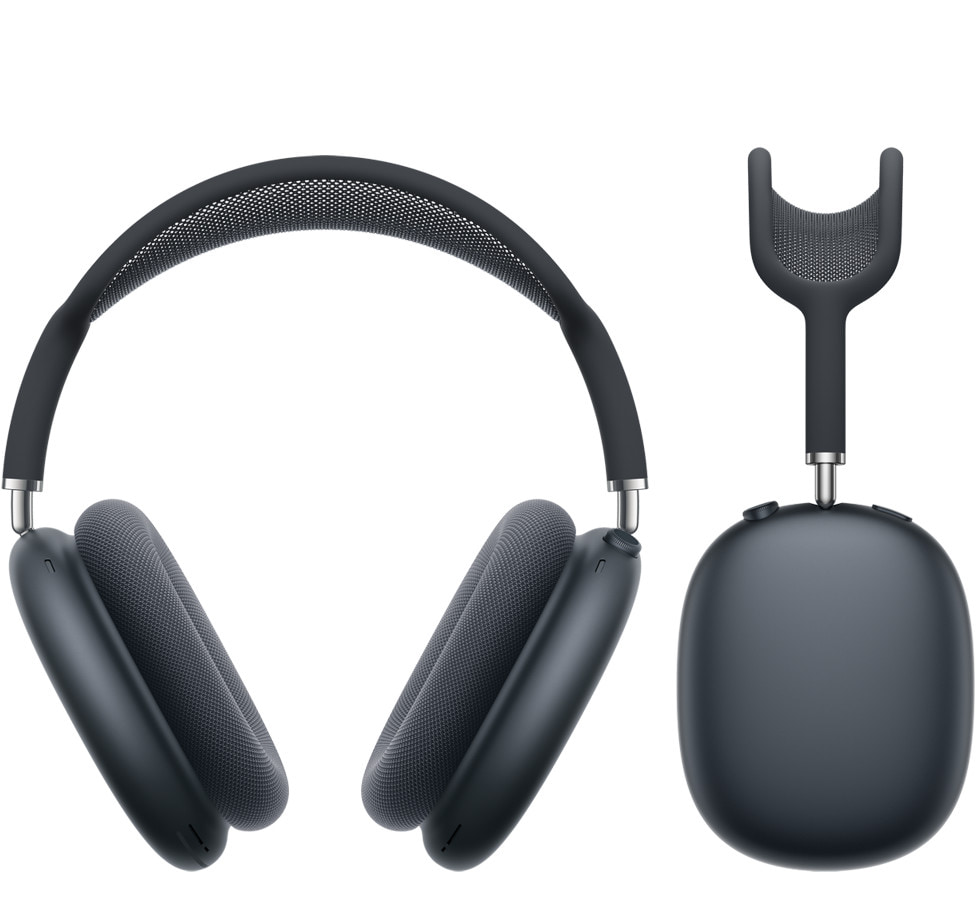
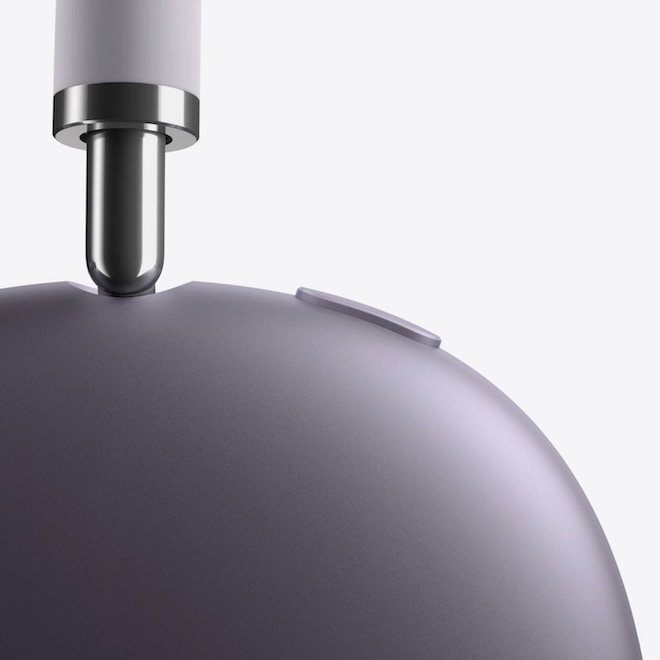
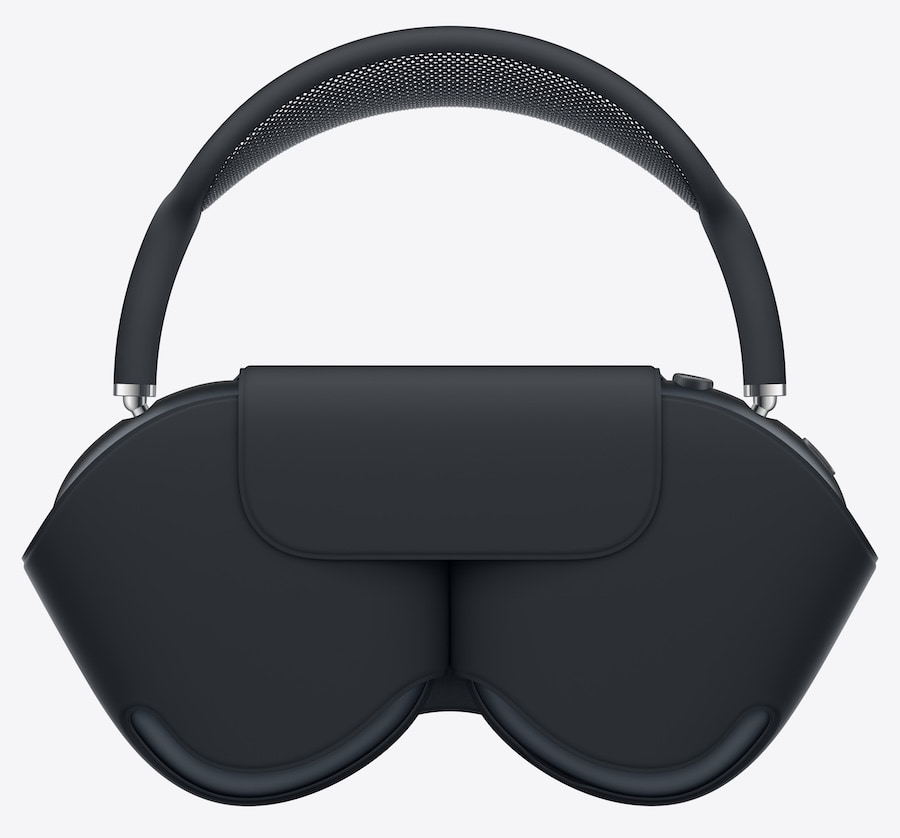
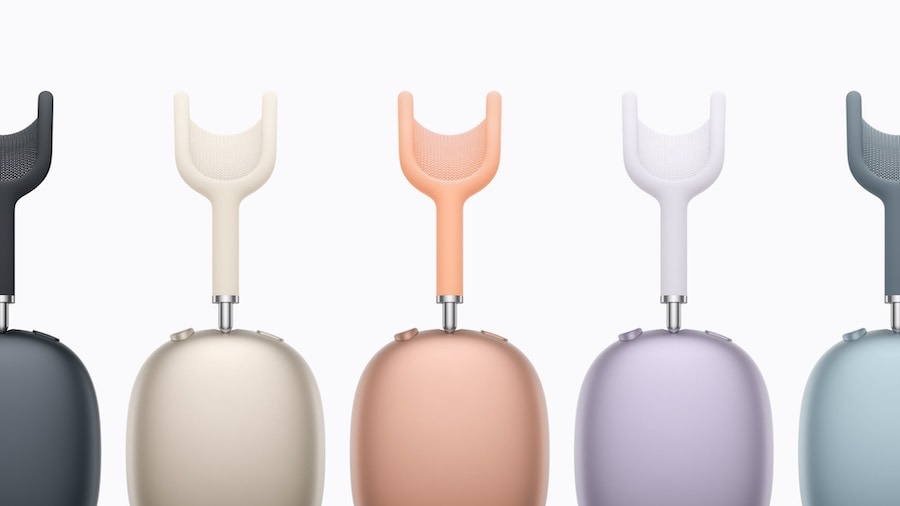
The AirPods Max 2 retain the industrial design language that defined the original model, combining aluminum ear cups, a stainless steel headband frame, and Apple’s signature Digital Crown control system. The overall design focuses on durability and consistent fit while maintaining the acoustic seal necessary for effective noise cancellation and accurate playback.
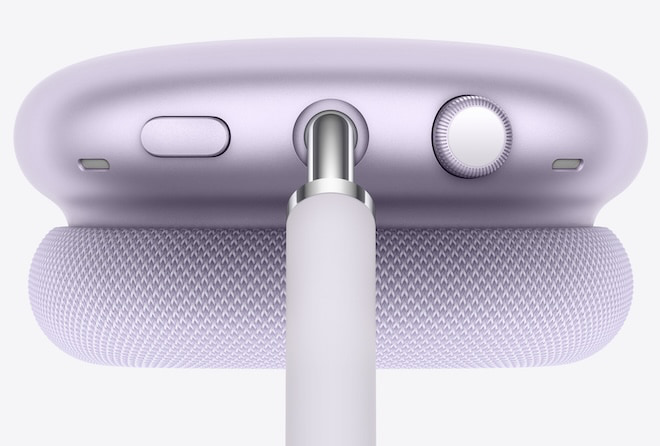
Control of playback and calls is handled through the Digital Crown, which allows users to press once to play or pause music, take a photo or video, or mute and unmute during calls. Pressing twice skips tracks or ends calls, while rotating the crown adjusts volume with precise incremental control. A separate noise control button manages listening modes such as Active Noise Cancellation and Transparency.
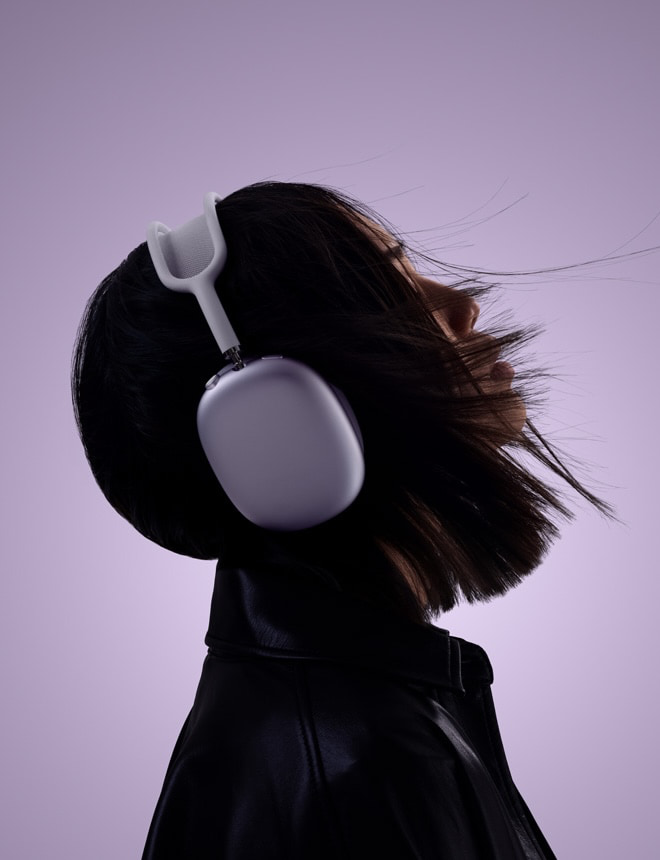
Comfort remains a major design priority. The headband canopy is constructed from a breathable knit mesh, designed to distribute weight more evenly across the head to reduce pressure during extended listening sessions. This structure works with the stainless steel frame to provide stability while maintaining flexibility.
The ear cushions use acoustically engineered memory foam paired with a custom mesh textile that helps maintain a consistent fit and seal around the ear. The aluminum ear cups rotate independently to balance pressure and adapt to different head shapes.
Advertisement
Adjustability comes from telescoping arms that extend smoothly from the stainless steel headband. Once positioned, the arms stay in place to maintain a consistent fit and listening position without requiring frequent readjustment.
Communication and Smart Listening Features
Apple is positioning the AirPods Max 2 as more than a traditional pair of wireless headphones by expanding their communication capabilities through features powered by Apple Intelligence and the H2 processing platform.
One of the most notable additions is Live Translation, designed to help bridge language barriers in real time. By pressing and holding the listening mode button, the headphones can translate spoken language directly into the listener’s preferred language through the ear cups. The feature is intended to simplify everyday conversations when traveling, working internationally, or interacting with people who speak different languages.
Advertisement. Scroll to continue reading.
Apple has also refined how the headphones respond during conversations with Conversation Awareness. When the user begins speaking, the system automatically lowers the volume of music or other audio while amplifying nearby voices. Once the conversation ends, playback gradually returns to its previous volume without requiring manual adjustments.
Advertisement
Environmental listening modes also receive updates with Loud Sound Reduction and Personalized Volume. Enabled in Transparency and Adaptive Audio modes, Loud Sound Reduction helps soften sudden environmental noise while preserving overall audio clarity. Personalized Volume learns the user’s listening preferences and adjusts playback levels automatically based on surroundings, whether commuting, walking outdoors, or working in quieter environments.
Battery Life, Siri Integration, and Apple Ecosystem Features
Apple has also focused on everyday usability with improvements centered on battery life, voice control, and deeper integration across the Apple ecosystem.
The AirPods Max 2 provide up to 20 hours of listening or video playback with Active Noise Cancellation and Spatial Audio enabled, placing them within the expected range for premium wireless headphones used during travel, commuting, or extended listening sessions.
Voice interaction is handled through Siri, which can be activated simply by saying “Siri” or “Hey Siri.” Users can request music playback, place calls, check calendar events, or ask for directions without touching their device. Apple has also introduced gesture-based responses, allowing users to nod or shake their head when Siri asks whether to read messages, answer calls, or manage notifications.
Device integration remains one of Apple’s key strengths. Automatic Switching allows the headphones to transition seamlessly between Apple devices without manual reconnection. For example, a user listening to music on a Mac can answer an incoming call on an iPhone, with the AirPods Max 2 automatically shifting to the active device.
Advertisement
Additional convenience features include on-head detection, which pauses playback when the headphones are removed and resumes audio when they are placed back on.
Apple also continues to support Audio Sharing, enabling two pairs of compatible AirPods or Beats headphones to listen to the same audio stream from a single iPhone, iPad, Mac, or Apple TV.
Charging has also been updated with USB-C connectivity, aligning the headphones with Apple’s current device ecosystem and allowing users to charge them using the same cable as an iPhone, iPad, or Mac.
Key Technology, Sensors, and Technical Specifications
Beyond its core listening features, the AirPods Max 2 incorporate a combination of sensors, microphones, and processing technology designed to improve sound performance, communication clarity, and system responsiveness.
At the center of the design is the Apple H2 chip, installed in each ear cup. This dual-chip configuration processes features such as active noise cancellation, spatial audio calculations, and real-time listening adjustments. The headphones also use an Apple-designed dynamic driver paired with a custom high dynamic range amplifier, engineered to maintain clarity and control across a wide range of music and listening levels.
Advertisement
The AirPods Max 2 rely on a network of nine microphones to manage noise cancellation and voice communication. Eight microphones focus on monitoring environmental sound for Active Noise Cancellation, while a combination of three microphones handles voice pickup for clearer calls and voice commands.
Advertisement. Scroll to continue reading.
Multiple sensors also contribute to automatic system behavior and spatial audio tracking. These include optical sensors, position sensors, and case-detection sensors in each ear cup, along with accelerometers in both ear cups and a gyroscope in the left ear cup. Together, these components support features such as dynamic head tracking, automatic playback control, and accurate positioning for spatial audio.
Wireless connectivity is provided through Bluetooth 5.3, supporting stable connections with Apple devices and other compatible hardware. For wired listening, USB-C connectivity allows lossless audio playback and ultra-low latency performance, which may be useful for video production, gaming, or other applications where timing accuracy matters.
Advertisement
Physically, the AirPods Max 2 measure 7.37 inches (187.3 mm) in height, 6.64 inches (168.6 mm) in width, and 3.28 inches (83.4 mm) in depth, with a weight of 13.6 ounces (386.2 grams) including the ear cushions. The included Smart Case, weighing 4.74 ounces (134.5 grams), places the headphones into an ultra-low-power state to help conserve battery charge during storage.
Charging is handled through USB-C, while the battery delivers up to 20 hours of listening time with Active Noise Cancellation enabled.
The headphones also support several accessibility features, including Live Listen audio, customizable headphone levels, and Apple’s Headphone Accommodations settings, which allow users to tailor audio output based on individual hearing preferences.
AirPods Max 2 are fully compatible with iPhone, iPad, Apple Watch, Mac, Apple TV, and Apple Vision Pro devices running current versions of Apple’s operating systems. They can also function as standard Bluetooth headphones with non-Apple devices, though some advanced features may be limited outside the Apple ecosystem.
Advertisement
The Bottom Line
At $549, the AirPods Max 2 sit in the same premium wireless category as models from Sony, Bose, Sennheiser, Bowers & Wilkins, and Focal—but Apple is playing a different game. While many competitors focus primarily on noise cancellation or sound tuning, Apple’s advantage lies in ecosystem integration and computational audio.
Features like lossless audio over USB-C, Personalized Spatial Audio with dynamic head tracking, Live Translation, and seamless device switching across iPhone, Mac, iPad, and Apple TV create an experience that goes beyond traditional headphone performance. The dual H2 chip architecture, deep Siri integration, and features like Conversation Awareness and Personalized Volume also emphasize adaptive listening and real-time processing.
For listeners already invested in Apple’s ecosystem, that level of integration may be the AirPods Max 2’s biggest differentiator. Competing models from Sony, Bose, and Sennheiser may offer longer battery life or different sound signatures, while brands like Focal and Bowers & Wilkins lean more heavily into audiophile tuning and materials. Apple’s approach focuses instead on smart listening features, spatial audio processing, and seamless device interaction, which together define what makes the AirPods Max 2 distinct at this price point.
Where to buy: $549 at Apple (Available March 25, 2026)
Not so long ago, e-ink devices were rare and fairly pricey. As they have become more common and cheaper, some cool form-factor devices have emerged that suffer from subpar software. [Concretedog] picked up just such a device, and that purchase led to the discovery of a cool open-source firmware project for this tiny gadget.
[Concretedog] described the process of loading the firmware, which is just about as easy a modification as one can make. You plug the e-ink display into your computer, visit a website, and can flash it right from there. Once the display is running the CrossPoint Reader firmware, it unlocks some new tricks on this affordable reader. The firmware lets you turn the device into a WiFi hotspot and upload books wirelessly, or it can connect to an existing network to add files that way. It also enables rotating the display and KOReader syncing if you have multiple devices you read from.
We love seeing the community step in and improve devices that are hardware-wise good, sometimes great, but come up lacking in the software or firmware department. Thanks [Concretedog] for sharing your experience with this device and the cool open-source firmware. Be sure to check out some other projects we’ve featured where a firmware tweak breathed new life into the hardware.
In short:Microsoft has spent billions building Copilot into every corner of its product lineup, pitching it as an indispensable AI co-worker. Its own Terms of Use tell a different story. A clause quietly buried in the document labels Copilot “for entertainment purposes only” and warns users not to rely on it for important advice. The gap between the marketing and the fine print has drawn fresh scrutiny as adoption figures reveal that fewer than one in 30 eligible users is actually paying for the tool.
Somewhere between Satya Nadella’s earnings calls and the product pages promising to “transform the way you work,” Microsoft inserted a sentence into Copilot’s Terms of Use that reads rather differently from the rest of its AI pitch. Updated in October 2025 and surfacing widely in early April 2026, the clause appears under a section in bold capital letters labelled “IMPORTANT DISCLOSURES & WARNINGS.” It says: “Copilot is for entertainment purposes only. It can make mistakes, and it may not work as intended. Don’t rely on Copilot for important advice. Use Copilot at your own risk.”
The same document states that Microsoft makes no warranty or representation of any kind about Copilot, that users should not assume its outputs are free from copyright, trademark, or privacy rights infringement, and that users are solely responsible for any Copilot content they choose to share or publish. The terms apply to consumer Copilot products; the enterprise-facing Microsoft 365 Copilot is excluded from the clause.
What Microsoft has been saying publicly
The disclaimer sits in sharp contrast to years of aggressive promotion. Since integrating Copilot across Windows 11 and the Microsoft 365 suite in 2023, the company has positioned the tool as a productivity multiplier, its “AI companion” for workers in Word, Excel, PowerPoint, and Outlook. Nadella has described Copilot as “becoming a true daily habit” and told investors that daily active users had grown nearly threefold year on year. The company spent approximately $80 billion on AI-related capital expenditure in fiscal year 2025, including a $13 billion investment in OpenAI whose models underpin Copilot’s core capabilities.
Advertisement
Microsoft 365 Copilot is priced at $30 per user per month as an enterprise add-on, with a business tier at $18 per user per month. Premium consumer tiers carry costs that reach into the tens of dollars monthly. “Entertainment purposes only” is not language typically associated with a product charging at those rates.
Legal analysts who reviewed the language offered a measured interpretation. The most widely cited read is that the clause represents a lawyer’s attempt to limit liability in circumstances where the product fails, an overcorrection that has become embarrassing because of how bluntly it contradicts the marketing. OpenAI, Google, and Anthropic all include similar advisories in their terms of service, acknowledging inaccuracy and placing responsibility for verifying outputs on users. None of them, however, uses the phrase “entertainment purposes only,” which Android Authority noted is “the same disclaimer that a psychic uses to avoid getting sued.”
The broader legal context matters. Microsoft has faced litigation over Copilot’s outputs before: a class-action suit in a US federal court in San Francisco challenged the legality of GitHub Copilot over alleged open-source licence violations, and a separate dispute in Australia concerned customers who were moved to more expensive plans with Copilot bundled in. The consumer Copilot ToS language, on this reading, is corporate defensiveness made explicit, an attempt to establish in writing that the product never warranted the reliance users might have placed on it.
The adoption numbers that give context
The disclaimer arrives at an awkward moment for Copilot’s commercial trajectory. Data published in early 2026 showed that only 3.3% of Microsoft 365 and Office 365 users who have access to Copilot Chat actually pay for it. Of roughly 450 million Microsoft 365 seats, 15 million are paid Copilot subscribers, a conversion rate that reflects the difficulty of persuading existing users to pay a significant premium for AI they find unreliable.
Research from Recon Analytics traced the problem in part to accuracy. Its tracking of Copilot’s accuracy Net Promoter Score found it at -3.5 in July 2025, deteriorating to -24.1 by September 2025, and only partially recovering to -19.8 by January 2026. In surveys of lapsed Copilot users, 44.2% cited distrust of answers as the primary reason they had stopped using the tool. Separately, the US paid subscriber market share fell from 18.8% in July 2025 to 11.5% in January 2026, a 39% contraction in six months. When users are given a choice between Copilot, ChatGPT, and Gemini, just 8% of workers opt for Copilot.
Advertisement
The hallucination record has not helped. In August 2024, Copilot falsely accused German court reporter Martin Bernklau of the crimes he had covered for years, describing him as a convicted child abuser and fraudster and providing his home address. Microsoft was forced to block queries about Bernklau after a data protection complaint. In January 2026, Copilot generated false claims about football-related violence, triggering further coverage of the tool’s reliability problem. The “entertainment purposes only” clause looks rather less like a legal technicality in that context, and rather more like an accurate description.
Microsoft’s pivot and what it means
Nadella’s response to Copilot’s uneven performance has been to assume direct control over AI product development, reportedly delegating other responsibilities from September 2025 onward to focus personally on the roadmap. The company has also begun building its own models.Microsoft’s launch of MAI-Transcribe-1, MAI-Voice-1, and MAI-Image-2 in April 2026 , its first proprietary AI model releases since renegotiating its contract with OpenAI in September 2025 — signals a strategic intent to reduce dependency on the models that currently sit under Copilot’s hood.
The irony is that Copilot’s limitations are well understood inside Microsoft. The company’s own leaked internal feedback, as reported by several outlets, described integrations that “don’t really work.” The ToS language is, in a sense, the legal department’s way of saying what the product team has been grappling with in private.The expectation that AI tools be trustworthy, verifiable, and fit for purposehas moved from aspiration to regulatory reality across multiple jurisdictions, making the gap between Copilot’s marketing and its terms of service harder to sustain.
None of this means Copilot is uniquely unreliable by the standards of the current generation of AI assistants.Its primary competitor, ChatGPT, has its own well-documented accuracy problemseven as OpenAI pushes into commercialisation. The difference is that Microsoft bet earlier, louder, and more money on the proposition that AI assistants were ready to become essential workplace tools. The fine print in its own terms of service suggests the company is hedging on that bet while the marketing continues to double down on it.Competitors raising billions on promises of AI reliabilitywill have noticed the opening.The race that defined 2025is entering a phase where the gap between “for entertainment purposes only” and genuinely trustworthy AI is the most valuable real estate in the industry.
A growing number of bars and restaurants across the United States are embracing a phone-free experience, reflecting a broader cultural shift toward reducing screen time and encouraging real-world connection. From upscale supper clubs to neighborhood cocktail bars, establishments are introducing policies that either restrict phone usage or actively incentivize guests to put their devices away.
At the heart of this trend is a rising awareness of the negative effects smartphones and social media can have on attention, memory, and interpersonal relationships. Studies continue to highlight how constant digital engagement impacts learning, socialization, and even self-esteem. With Americans reportedly checking their phones around 144 times a day and spending nearly 4.5 hours on their devices, the pushback against screen dependency is gaining traction.
Younger generations, particularly Gen Z, are leading this shift
Surveys indicate that a significant portion of them intentionally disconnect from their devices, followed by millennials and older age groups. This growing appetite for “analog” experiences is now influencing the hospitality industry in noticeable ways.
Smartphone usageUnsplash
Restaurants and bars in at least 11 U.S. states have already introduced some form of phone restriction. Washington, D.C., currently leads with the highest number of such venues. Some establishments take a strict approach, such as locking phones away in secure pouches for the duration of a visit, while others offer softer incentives like free desserts for diners who keep their devices off the table.
The reasoning behind these policies is simple: removing phones enhances human interaction. Business owners and industry experts argue that without digital distractions, guests are more engaged with their company, their surroundings, and even their food. Chefs have also noted that phones can detract from the dining experience, making meals feel less memorable.
Advertisement
For customers, the impact can be surprisingly profound
Many report feeling more present and emotionally connected during phone-free outings. Experiences that might otherwise be fragmented by notifications become more immersive and meaningful.
Smartphone usageUnsplash
Looking ahead, the trend is expected to expand beyond independent venues. As digital fatigue continues to grow and awareness of screen-time effects increases, more mainstream chains and public spaces may experiment with similar policies. While not everyone may be ready to give up their phones during a night out, the rise of phone-free dining suggests a clear shift: people are beginning to value presence over perpetual connectivity.
Restaurants are finally pushing back against the constant glow of screens at the table, and honestly, it feels long overdue. Dining out was never meant to compete with notifications and endless scrolling. By nudging people to put their phones away, these places are restoring something we’ve quietly lost – real conversation, attention, and presence. It may feel restrictive at first, but the payoff is a far more meaningful experience.
Rec Room, the Seattle-based social gaming company once valued at $3.5 billion, is shutting down its platform on June 1, leaving the future of the company and its employees unclear.
The company made the announcement Monday afternoon, saying it couldn’t find a path to profitability even after serving more than 150 million players over the past decade.
“Despite this popularity, we never quite figured out how to make Rec Room a sustainably profitable business,” the company said in its post announcing the news. “Our costs always ended up overwhelming the revenue we brought in.”
The platform will go dark at noon Pacific on June 1. Starting immediately, Rec Room is blocking new account creation, new friend requests, and new subscriptions to its Rec Room Plus membership. Creators can no longer publish new monetized content. Token purchases end May 1, creator earnings stop May 18, and a final creator payout will be processed on June 1.
Rec Room users, posting in the community Discord server, expressed shock and surprise, with some holding out hope that the announcement was an early April Fool’s joke.
Alas, it appears not.
“We spent a long time trying to find a way to make the numbers work,” the post said. “But with the recent shift in the VR market, along with broader headwinds in gaming, the path to profitability has gotten tough enough that we’ve made the difficult decision to shut things down.”
Advertisement
The company said it was making the decision now “while we still have the ability to wind things down thoughtfully and do right by the people who built this with us.”
Nick Fajt, co-founder and CEO of Rec Room, in Seattle in 2017. (GeekWire File Photo / Kurt Schlosser)
Rec Room was founded in 2016 by Nick Fajt, Cameron Brown and a handful of other co-founders under the name Against Gravity. The Seattle startup built a cross-platform social gaming app that lets players create and share games, virtual goods and experiences across phones, consoles, PCs and VR headsets.
The company attracted backing from Sequoia Capital, Index Ventures, Madrona Venture Group, Coatue Management and others, raising $294 million across six rounds. Its December 2021 Series F valued the company at $3.5 billion, making it one of Seattle’s most prominent unicorns.
Rec Room’s popularity surged during the pandemic as players flocked to virtual hangouts, and the company said it surpassed 100 million lifetime users. But growth in the broader gaming market slowed in the years that followed, and Rec Room’s ambitions outpaced its revenue.
Fajt said back then that the company needed to become self-sustaining and could no longer count on raising more money, but noted that Rec Room had enough runway to operate into 2029.
“If we had just kept going, we would have run out of money in the next couple of years,” he wrote at the time. “And with no money left, we would have had to lay everyone off.”
The company bet heavily on a vision of letting anyone create games on any device. It rolled out AI features including Maker AI for game creation and an artificial intelligence companion called Roomie, though the per-user costs of AI exceeded subscription revenue.
As of last September, revenue from user-generated content was growing about 70% year over year, and creators earned more than $1 million in a single quarter for the first time.
Advertisement
However, as noted by Fajt in public posts, the margins on user generated content were thin: Rec Room keeps only about 30 cents of every dollar of sales of user-generated content, after paying platforms and creators, compared with 70 cents on sales of first-party content.
Looking for the most recent regular Connections answers? Click here for today’s Connections hints, as well as our daily answers and hints for The New York Times Mini Crossword, Wordle and Strands puzzles.
Today’s Connections: Sports Edition is a tough one. If you’re struggling with it but still want to solve it, read on for hints and the answers.
Connections: Sports Edition is published by The Athletic, the subscription-based sports journalism site owned by The Times. It doesn’t appear in the NYT Games app, but it does in The Athletic’s own app. Or you can play it for free online.
Hints for today’s Connections: Sports Edition groups
Here are four hints for the groupings in today’s Connections: Sports Edition puzzle, ranked from the easiest yellow group to the tough (and sometimes bizarre) purple group.
Yellow group hint: City of Angels.
Advertisement
Green group hint: Winter football.
Blue group hint: Like Hemsworth, but in hoops.
Purple group hint: Cinderellas.
Answers for today’s Connections: Sports Edition groups
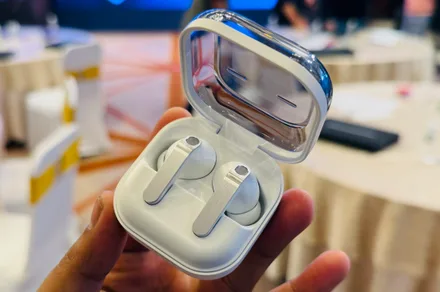
Samsung could be preparing to shake up its audio lineup with a radically different kind of earbuds – ones that don’t even rely on your ear canal. According to recent leaks, the company is working on a new product, possibly called “Galaxy Buds Able,” and early signs suggest these could use bone conduction technology instead of traditional speaker drivers.
Multiple leaks and certifications, including a recent appearance on India’s BIS database, indicate that the product is actively in development. While details remain limited, the unusual model numbering and repeated references across sources hint that this isn’t just another incremental Galaxy Buds refresh, but potentially an entirely new category.
Bone conduction audio works very differently from conventional earbuds
Instead of pushing sound waves through your ear canal, it sends vibrations through your skull directly to the inner ear, effectively bypassing the eardrum. This allows for an open-ear design, meaning users can still hear their surroundings while listening to audio—something traditional in-ear or noise-canceling earbuds often block out.
That shift matters more than it might seem. As wearable tech evolves, companies are increasingly looking at ways to blend digital experiences with real-world awareness. Bone conduction could make earbuds safer for outdoor use, more comfortable for long sessions, and even more accessible for users who struggle with in-ear designs. It also opens doors for new health and assistive applications, especially when combined with Samsung’s growing interest in wellness-focused audio features.
Advertisement
For users, the appeal is straightforward. Imagine listening to music, taking calls, or interacting with voice assistants without isolating yourself from your environment. Whether you’re commuting, working out, or just walking through a busy street, this kind of tech promises a more natural and less intrusive experience.
Looking ahead, timing could be key
Reports suggest Samsung may be positioning these earbuds for a major launch alongside its next-generation foldables, such as the Galaxy Z Fold 8 and Flip 8. If that happens, the “Buds Able” could represent the company’s push into more experimental, next-gen hardware – going beyond iterative upgrades and into entirely new user experiences.
While nothing is official yet, the direction is clear: Samsung isn’t just refining earbuds anymore – it may be redefining how we hear them.
A SpaceX Falcon 9 rocket sends Portal Space Systems’ “Mini-Nova” technology demonstration payload and more than 100 other payloads into orbit from Vandenberg Space Force Base in California. (SpaceX Photo)
Bothell, Wash.-based Portal Space Systems has made its first foray into Earth orbit, in the form of a piggyback payload that will test technologies for highly maneuverable space vehicles.
The instrument package, which is about the size of a tissue box, was one of 119 payloads sent into orbit at 4:02 a.m. PT today from Vandenberg Space Force Base in California for SpaceX’s Transporter-16 satellite rideshare mission. Portal’s “Mini-Nova” payload was attached to Momentus’ Vigoride-7 orbital service vehicle for the ride on a SpaceX Falcon 9 rocket.
Minutes after launch, the Falcon 9’s first-stage booster landed autonomously on a drone ship that was stationed in the Pacific. Meanwhile, the second stage proceeded to orbit and deployed Vigoride-7 and other spacecraft.
“I’ve said for a long time that a company only really becomes a space company once it gets to space, and with last night’s launch out of Vandenberg, that’s now true for Portal,” the company’s co-founder and CEO, Jeff Thornburg, said in a LinkedIn post.
The Mini-Nova technology demonstration payload is about the size of a tissue box. (GeekWire Photo / Alan Boyle)
“We know that Mini-Nova is healthy, but it will be a few days before we get to download telemetry,” Thornburg told GeekWire in an email.
Mini-Nova will remain attached to Vigoride-7 for its demonstration mission. Over the next six months, Portal will use the payload to test the “brains and critical power systems for our upcoming Starburst and Supernova vehicles,” Thornburg said.
Advertisement
Both of those vehicles will be capable of maneuvering rapidly in orbit to rendezvous with other objects in space for a variety of purposes — including surveillance and space domain awareness, in-space servicing and space-junk disposal. Supernova will make use of an innovative solar thermal propulsion system that could cut the time required for orbital maneuvers from weeks to hours.
Thornburg said the first Starburst vehicle is due for launch as early as October on SpaceX’s Transporter-18 mission. The first Supernova vehicle is expected to be ready for flight in 2027.
Portal was founded in 2021 and has received millions of dollars in support from the U.S. Space Force and the Department of Defense. Last year, the startup raised $17.5 million in an oversubscribed seed funding round.
Looking for the most recent Mini Crossword answer? Click here for today’s Mini Crossword hints, as well as our daily answers and hints for The New York Times Wordle, Strands, Connections and Connections: Sports Edition puzzles.
Need some help with today’s Mini Crossword? I must say, 6-Across really stumped me, but I get it now. Read on for all the answers. And if you could use some hints and guidance for daily solving, check out our Mini Crossword tips.
If you’re looking for today’s Wordle, Connections, Connections: Sports Edition and Strands answers, you can visit CNET’s NYT puzzle hints page.
We spend hours testing every product or service we review, so you can be sure you’re buying the best. Find out more about how we test.
Philips Hue Omniglow: one-minute review
(Image credit: Future)
Specifications
Length: 3m (also 5m and 10m in some markets)
Advertisement
Brightness: up to 2,700 lumens at 6,500K (3m)
Colors: white, warm white, and multicolor
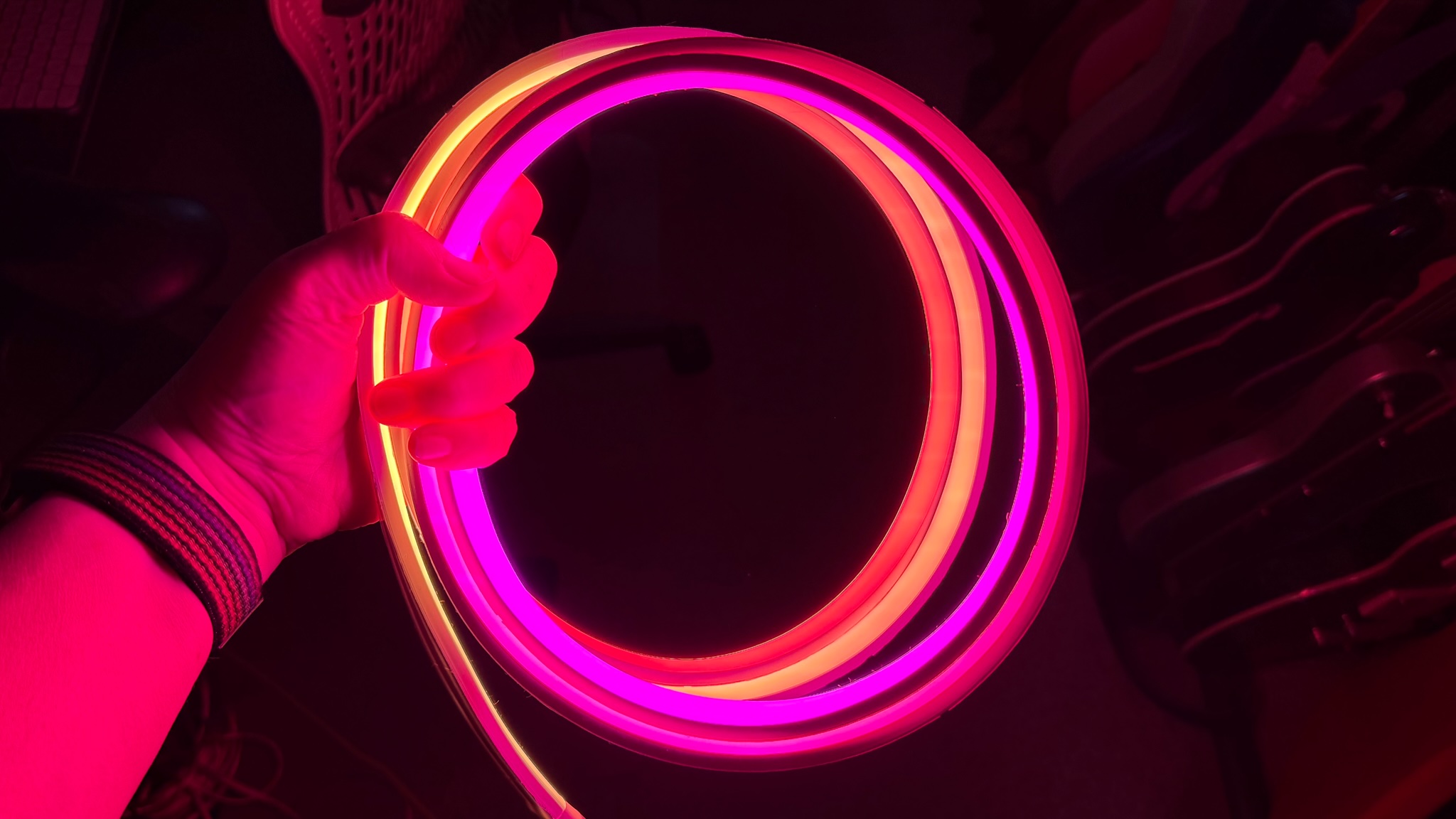
The Philips Hue Omniglow is the best Hue lightstrip yet. It’s a classier kind of LED strip: where other models have visible LEDs, the Omniglow delivers seamless color gradients and smoothly moving light effects. The results are very impressive and the Hue app makes it easy to select, edit or create scenes either solo or as part of a wider Hue setup. If you’ve already got a Hue system you can add it in seconds and then include it in your scenes and automations. As with other Hue lights you’ll need a Philips Hue Bridge or Bridge Pro to access advanced features such as custom scenes and smart home integration.
The Omniglow is easy to install and set up, although if you’re mounting it up high you might curse the short power cable. The only real downside is the length: you can shorten the Omniglow but not extend it, and longer versions are not widely available in the UK or US. While European customers can choose between 3m, 5m and 10m models, the US and UK are currently limited to the 3m model only.
Advertisement
Philips Hue Omniglow: price and availability
On sale from November 2025
$139.99 / £119.99 / AU$279.99 (3m)
The Philips Hue Omniglow was announced in September 2025 and went on sale in November 2025. There are three sizes, but only the 3m model is available everywhere. That has a recommended price tag of $139.99 / £119.99 / €139.99 / AU$279.99.
Europe and Australia also get a longer 5m version, which costs €199.99 / AU$399. And in Europe there’s a 10m version with a price tag of $349.99. The same 10m version was listed with a UK price of £349.99 but at the time of writing it’s showing as as “not currently available” on the Philips website.
Advertisement
Philips Hue Omniglow: design
Even close-up you can’t see the individual LEDs:’ colors, and gradients are super-smooth (Image credit: Future)
RGB, warm white and cool white
Seamless color and gradients
Cuttable but not extendable
The Omniglow is a RGBWWIC design, which means it combines RGB, warm white, cool white and independent control in a single light source. Unlike other Hue lightstrips you can’t see the individual LEDs; it’s designed to deliver seamless whites, colors and gradients, which it does very well. That makes it look much more classy than lesser lightstrips.
The strip is 17mm wide and 8.5mm high and consists of multiple 12.5cm sections, each of which has 6 LEDs that can be individually controlled – so you can get twinkly lights and motion effects as well as solid color and gradients.
This lightstrip can be cut shorter at pre-defined 12.5cm spaces but any bit you remove can’t be re-used or replaced later. Unlike previous Hue lightstrips the Omniglow can’t be (officially) extended with additional sections, although inevitably some Hue fans have come up with warranty-voiding DIY solutions.
Sign up for breaking news, reviews, opinion, top tech deals, and more.
There are double-sided adhesive strips along the full length of the Omniglow, but you may want to use something more permanent if you’re putting the strip in a place where it’ll have to battle gravity; in my experience the adhesive that comes with Hue strips tends to be rather weak, and this lightstrip is quite heavy. The power supply is also very short, with just over 1m between the plug socket and the beginning of your lightstrip, and you’re going to want to support the weight of the power brick.
Advertisement
Design score: 4/5
Hue Omniglow review: features
If you have a Hue Bridge/Pro you get full access to customization and smart home automation (Image credit: Future)
Three-stage gradients
Moving and flickering lights
Great integration with other Hue lights
The Omniglow delivers the promised seamless gradients, and it also brings a feature across from the Festivia string lights in the form of moving lights. That enables you to pick a moving scene such as a fireplace, candle glow or looped color change, and you can tweak those scenes in the Hue app to adjust their speed or intensity. It’s very smooth and very impressive.
The app offers very basic control via Bluetooth but for access to advanced features such as syncing and smart home integration you’ll need a Hue Bridge or Hue Bridge Pro. That gives you the full range of customization, per-light settings and the ability to create your own custom moving gradients and flickering effects.
Features score: 5/5
Advertisement
Philips Hue Omniglow: performance
Up to 2,700 lumens
Seamless color
Beautifully smooth transitions
If you’re familiar with Hue lightstrips the first thing you’ll notice about the Omniglow is how bright it is. It’s much brighter than standard Hue lightstrips, delivering up to 2,700 lumens of brightness compared to the 1,700 lumens of a Hue Solo of the same length.
If you can get the 5m or 10m models they are more powerful still, putting out up to 4,500 lumens. That means the Omniglow isn’t just a decorative lightstrip. You can also use it to illuminate spaces such as stairs or feature walls.
Performance score: 5/5
Advertisement
Philips Hue Omniglow: should you buy it?
Swipe to scroll horizontally
Design
Gorgeous lighting but it’s not extendable and the power cable is very short
4/5
Features
Advertisement
Everything you’d expect from a Hue strip plus motion and flicker effects (Bridge/Pro required)
5/5
Performance
Brilliantly bright, super smooth and the colors are fantastic
Advertisement
5/5
Value
Quite expensive compared to other lightstrips
4/5
Advertisement
Buy it if
Don’t buy it if
Philips Hue Omniglow: also consider
There are multiple lightstrips for Hue, some of them much more affordable – so for example the Hue Gradient Lightstrip is much cheaper. Govee is the main rival in this space with very affordable products including the bendable, cuttable COB Strip Light Pro, the very cheap RGBIC LED Strip and several rope light models.
Advertisement
How I tested the Philips Hue Omniglow
I’ve been all-in on Hue lights for more than a decade, and my home currently features a mix of smart lights including two Hue gradient lightstrips, various Hue bulbs, a Hue motion sensor and Hue Festavia string lights, all controlled via the Hue app, Apple Home and Siri. I added the Omniglow to my living room setup and Hue Bridge and used it as both decorative lighting and functional lighting, controlling it alongside my existing lights and scenes.
Apple users encountered issues accessing iCloud, in what was a rare Sunday outage for the company’s email, cloud storage, and associated services.
Apple service outage icons
Users of iCloud, Apple’s online services, ware reporting issues in being able to access files. Sites including DownDetector and StatusGator showed a sudden surge of reports from thousands of users, encountering problems since 10 A.M. Eastern. The reported issues, for the most part, raised iCloud as being the problem. The range of issues was wide, including claims of iCloud Mail being unavailable, Find My devices disappearing in the app, and an inability to access files stored on the service. Continue Reading on AppleInsider | Discuss on our Forums























































You must be logged in to post a comment Login