Connect with us

Tech

Apple announces updated MacBooks with M5 Pro and Max chips

Published

on


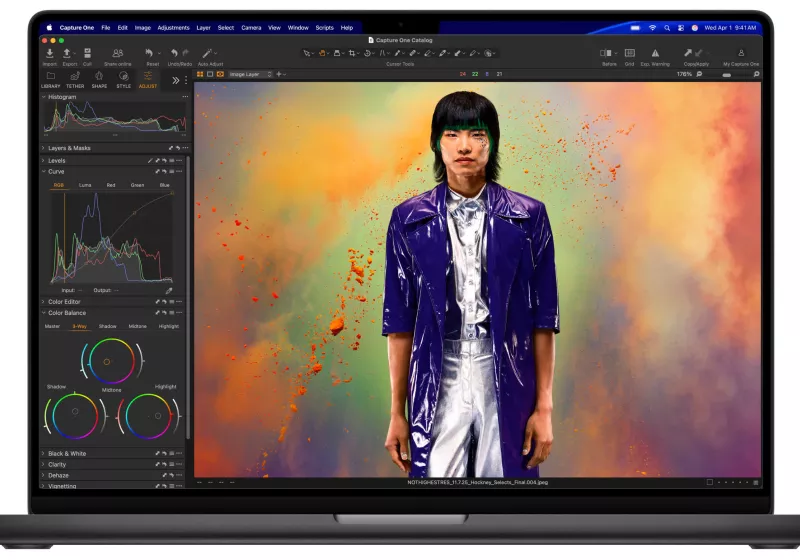
The new MacBook Pro will be offered in 14-inch and 16-inch configurations, both featuring Liquid Retina XDR displays with up to 1600 nits of peak HDR brightness. Storage capacity starts at 1 TB for the M5 Pro model and 2 TB for the M5 Max variant.
Read Entire Article
Source link

Continue Reading
Click to comment

Leave a Reply

Your email address will not be published. Required fields are marked *

Tech

Google releases Gemini 3.1 Flash Lite at 1/8th the cost of Pro

Published

on

Google’s newest AI model is here: Gemini 3.1 Flash-Lite, and the biggest improvements this time around come in cost and speed, especially for enterprises and developers seeking to leverage powerful reasoning and multimodal capabilities from the U.S. search and cloud giant.

Positioning it as the most cost-efficient and responsive model in the Gemini 3 series, Google is offering a solution built specifically for intelligence at scale.

This launch arrives just weeks after the February debut of its heavy-lifting sibling, Gemini 3.1 Pro, completing a tiered strategy that allows enterprises to scale intelligence across every layer of their infrastructure.

Technology: optimized for the “time to first token”

In the world of high-throughput AI, the metric that often dictates user experience isn’t just accuracy—it’s latency. For real-time customer support, live content moderation, or instant user interface generation, the “time to first answer token” is the primary indicator of whether an application feels like a tool or a teammate. If a model takes even two seconds to begin its response, the illusion of fluid interaction is broken.

Advertisement

Gemini 3.1 Flash-Lite is engineered specifically for this instant feel. According to internal benchmarks and third-party evaluations, Flash-Lite outperforms its predecessor, Gemini 2.5 Flash, with a 2.5X faster time to first token. Furthermore, it boasts a 45 percent increase in overall output speed — 363 tokens per second compared to 249.

This speed is achieved through what Koray Kavukcuoglu, VP of Research at Google DeepMind, describes in an X post as an unbelievable amount of complex engineering to make AI feel instantaneous.

Perhaps the most innovative technical addition is the introduction of thinking levels.

Standardized across both the Flash-Lite and Pro variants, this feature allows developers to modulate the model’s reasoning intensity dynamically. For a simple classification task or a high-volume sentiment analysis, the model can be dialed down for maximum speed and minimum cost.

Advertisement

Conversely, for complex code exploration, generating dashboards, or creating simulations, the thinking can be dialed up, allowing the model to perform deeper reasoning and logic before emitting its first response.

Product: benchmarking the lite-weight heavy hitter

While the “Lite” suffix often implies a significant sacrifice in capability, the performance data suggests a model that punches well into the territory of much larger systems. Gemini 3.1 Flash-Lite achieved an Elo score of 1432 on the Arena.ai Leaderboard, placing it in a competitive tier with models much larger in parameter count.

Gemini 3.1 Flash-Lite benchmarks

Gemini 3.1 Flash-Lite benchmarks. Credit: Google

Key benchmark results highlight its specialized strengths across diverse cognitive domains:

Advertisement
  • Scientific knowledge: 86.9 percent on GPQA Diamond.

  • Multimodal understanding: 76.8 percent on MMMU-Pro.

  • Multilingual Q&A: 88.9 percent on MMMLU.

  • Parametric knowledge: 43.3 percent on SimpleQA Verified.

  • Abstract reasoning: 16.0 percent on Humanity’s Last Exam (full set)

The model is particularly adept at structured output compliance—a critical requirement for enterprise developers who need AI to generate valid JSON, SQL, or UI code that won’t break downstream systems.

In benchmarks like LiveCodeBench, Flash-Lite scored a 72.0 percent, outperforming several rivals in its weight class, including GPT-5 mini, which scored 80.4 percent on a different subset but lagged significantly in speed and cost efficiency.

Furthermore, its performance on CharXiv Reasoning (73.2 percent) and Video-MMMU (84.8 percent) demonstrates that its multimodal capabilities are robust enough for complex chart synthesis and knowledge acquisition from video.

The intelligence hierarchy: Flash-Lite vs. 3.1 Pro

To understand Flash-Lite’s place in the market, one must look at it alongside Gemini 3.1 Pro, which Google released in mid-February 2026 to retake the AI crown. While Flash-Lite is the reflexes of the Gemini system, 3.1 Pro is undoubtedly the brain.

Advertisement

The primary differentiator is the depth of cognitive processing. Gemini 3.1 Pro was engineered to double the reasoning performance of the previous generation, achieving a verified score of 77.1 percent on ARC-AGI-2—a benchmark designed to test a model’s ability to solve entirely new logic patterns it has not encountered during training.

While Flash-Lite holds its own in scientific knowledge at 86.9 percent, the Pro model pushes that boundary to a staggering 94.3 percent, making it the superior choice for deep research and high-stakes synthesis. The application focus also differs significantly based on these reasoning gaps.

Gemini 3.1 Pro is capable of vibe-coding—generating animated SVGs and complex 3D simulations directly from text prompts. For example, in one demonstration, Pro coded a complex 3D starling murmuration that users could manipulate via hand-tracking. It can even reason through abstract literary themes, such as translating the atmospheric tone of Emily Brontë’s Wuthering Heights into a functional web design.

Gemini 3.1 Flash-Lite, conversely, is the workhorse for high-volume execution. It handles the millions of daily tasks—translation, tagging, and moderation—that require consistent, repeatable results without the massive compute overhead of a reasoning-heavy model.

Advertisement

It fills a wireframe with hundreds of products instantly or orchestrates intent routing with 94 percent accuracy, as reported by early testers.

1/8th the cost of the flagship Gemini 3.1 Pro model (and cheaper than its predecessor, Flash-Lite 2.5)

For enterprise technical decision-makers, the most compelling part of the Gemini 3.1 series is the reasoning-to-dollar ratio.

Google has priced Gemini 3.1 Flash-Lite at $0.25 per 1 million input tokens and $1.50 per 1 million output tokens.

This pricing makes it significantly more affordable than competitors like Claude 4.5 Haiku, which is priced at $1.00 per 1 million input and $5.00 per 1 million output tokens.

Advertisement

Even compared to Gemini 2.5 Flash, which cost $0.30 per 1 million input, Flash-Lite offers a cost reduction alongside its performance gains.

When contrasted with Gemini 3.1 Pro—which maintains a price of $2.00 per million input tokens for prompts up to 200k—the strategic advantage of the dual-model approach becomes clear. In high-context usage (above 200,000 tokens per interaction), Flash-Lite is actually between 12x and 16x cheaper.

Model

Input

Advertisement

Output

Total Cost

Source

Qwen 3 Turbo

Advertisement

$0.05

$0.20

$0.25

Alibaba Cloud

Advertisement

Qwen3.5-Flash

$0.10

$0.40

$0.50

Advertisement

Alibaba Cloud

deepseek-chat (V3.2-Exp)

$0.28

$0.42

Advertisement

$0.70

DeepSeek

deepseek-reasoner (V3.2-Exp)

$0.28

Advertisement

$0.42

$0.70

DeepSeek

Grok 4.1 Fast (reasoning)

Advertisement

$0.20

$0.50

$0.70

xAI

Advertisement

Grok 4.1 Fast (non-reasoning)

$0.20

$0.50

$0.70

Advertisement

xAI

MiniMax M2.5

$0.15

$1.20

Advertisement

$1.35

MiniMax

Gemini 3.1 Flash-Lite

$0.25

Advertisement

$1.50

$1.75

Google

MiniMax M2.5-Lightning

Advertisement

$0.30

$2.40

$2.70

MiniMax

Advertisement

Gemini 3 Flash Preview

$0.50

$3.00

$3.50

Advertisement

Google

Kimi-k2.5

$0.60

$3.00

Advertisement

$3.60

Moonshot

GLM-5

$1.00

Advertisement

$3.20

$4.20

Z.ai

ERNIE 5.0

Advertisement

$0.85

$3.40

$4.25

Baidu

Advertisement

Claude Haiku 4.5

$1.00

$5.00

$6.00

Advertisement

Anthropic

Qwen3-Max (2026-01-23)

$1.20

$6.00

Advertisement

$7.20

Alibaba Cloud

Gemini 3 Pro (≤200K)

$2.00

Advertisement

$12.00

$14.00

Google

GPT-5.2

Advertisement

$1.75

$14.00

$15.75

OpenAI

Advertisement

Claude Sonnet 4.5

$3.00

$15.00

$18.00

Advertisement

Anthropic

Gemini 3 Pro (>200K)

$4.00

$18.00

Advertisement

$22.00

Google

Claude Opus 4.6

$5.00

Advertisement

$25.00

$30.00

Anthropic

GPT-5.2 Pro

Advertisement

$21.00

$168.00

$189.00

OpenAI

Advertisement

By using a cascading architecture, an enterprise can use 3.1 Pro for the initial complex planning, architectural design, and deep logic, then hand off high-frequency, repetitive execution to Flash-Lite at one-eighth of the cost.

This shift effectively moves AI from an expensive experimental cost center to a utility-grade resource that can be run over every log file, email, and customer chat without exhausting the cloud budget.

Community and developer reactions

Early feedback from Google’s partner network suggests that the 3.1 series is successfully filling a critical gap in the market for reliable autonomy.

Andrew Carr, Chief Scientist at Cartwheel, has tested both models and noted their unique strengths. Regarding 3.1 Pro, he highlighted its substantially improved understanding of 3D transformations, which resolved long-standing rotation order bugs in animation pipelines.

Advertisement

However, he found Flash-Lite to be a different kind of unlock for the business: “3.1 Flash-Lite is a remarkably competent model. It is lightning fast, but still somehow finds a way to follow all instructions… The intelligence to speed ratio is unparalleled in any other model”.

For consumer-facing applications, the low latency of Flash-Lite has been the key to market expansion.

Kolby Nottingham, Head of AI at Latitude, shared that the model achieved a 20 percent higher success rate and 60 percent faster inference times compared to their previous model, enabling sophisticated storytelling to a much wider audience than would have otherwise been possible.

Reliability in data tagging has also emerged as a standout feature. Bianca Rangecroft, CEO of Whering, reported that by integrating 3.1 Flash-Lite into their classification pipeline, they achieved 100 percent consistency in item tagging, providing a highly reliable foundation for their label assignment and increasing confidence in structured outputs.

Advertisement

Kaan Ortabas, Co-Founder of HubX, noted that as a root orchestration engine, Flash-Lite delivered sub-10 second completions with near-instant streaming and 97 percent structured output compliance.

On the flagship side, Vladislav Tankov, Director of AI at JetBrains, noted a 15 percent quality improvement in the Pro model, emphasizing that it is stronger, faster, and more efficient, requiring fewer output tokens to achieve its goals.

Licensing and enterprise availability

Both Gemini 3.1 Flash-Lite and Pro are offered through Google AI Studio and Vertex AI. As proprietary models, they follow a standard commercial software-as-a-service model rather than an open-source license.

Operating through Vertex AI provides grounded reasoning within a secure perimeter, ensuring that high-volume workloads—like those being run by Databricks to achieve best-in-class results on the OfficeQA benchmark—remain protected by enterprise-grade security and data residency guarantees.

Advertisement

However, they also are limited in terms of customizability and require persistent internet connectivity, as opposed to purely open source rivals like the powerful new Qwen3.5 series released by Alibaba over the last few weeks.

The current preview status for Flash-Lite allows Google to refine safety and performance based on real-world developer feedback before general availability.

For developers already building via the Gemini API, the transition to 3.1 Pro and Flash-Lite represents a direct performance upgrade at the same or lower price points, effectively lowering the barrier to entry for complex agentic workflows.

The verdict: the new standard for utility AI

The release of Gemini 3.1 Flash-Lite represents the final piece of a strategic pivot for Google. While the industry has been obsessed with state-of-the-art reasoning for the most complex problems, the vast majority of enterprise work consists of high-volume, repetitive, but high-precision tasks.

Advertisement

By providing both the brain in Gemini 3.1 Pro and the reflexes in Gemini 3.1 Flash-Lite, Google is signaling that the next phase of the AI race will be won by models that can think through a problem, but also execute that solution at scale.

For the CTO or technical lead deciding which model to bake into their 2026 product roadmap, the Gemini 3.1 series offers a compelling argument: you no longer have to pay a reasoning tax to get reliable, instantaneous results. As Flash-Lite rolls out in preview today, the message to the developer community is clear: the barrier to intelligence at scale hasn’t just been lowered—it’s been dismantled.

Source link

Advertisement
Continue Reading

Tech

Filing: IPIC closing movie theater near Seattle, will lay off 64 workers amid bankruptcy

Published

on

(Photo by Felix Mooneeram on Unsplash)

IPIC Theaters plans to permanently close its Redmond, Wash., movie theater on April 28, according to a WARN notice filed with Washington state regulators.

The upscale movie theater chain notified state officials on Feb. 23 that all operations at the site will cease “due to business circumstances.”

IPIC last week filed for bankruptcy. The company, which operates 13 dine-in theaters across the country, is also shutting down a theater in Atlanta.

IPIC runs luxury theaters known for recliner seating and full food and drink service. The company opened its theater at Redmond Town Center in 2011.

Movie theaters like IPIC have faced ongoing pressure from streaming services. North American box office numbers fell short of projections in 2025 — just above the prior year but well behind pre-pandemic highs.

Advertisement

Source link

Continue Reading

Tech

Best Unlimited Data Plans for 2026

Published

on

“5G” is an umbrella term that encompasses the current fifth-generation cellular wireless network technologies. All the major carriers and phones support 5G connections, which can offer faster data speeds than older technologies such as 4G LTE or 3G.

Essentially there are three types of 5GMillimeter-wave (mmWave), which can be fast but has limited range; low-band 5G, which has slower speeds but works on a broader range; and midband, which is a balance between the two that’s faster than low-band but also covers a larger range than millimeter-wave. Midband also incorporates C-band, a batch of spectrum auctioned off by the Federal Communications Commission in 2021.

Your phone’s 5G connection depends on which type blankets the area you’re in, as well as other factors, such as population density and infrastructure. For instance, mmWave is super fast, but its signals can be thwarted by buildings — or glass, or leaves — or whether you’re inside a structure.

When your device is connected to a 5G network, it can show up as several variations such as 5G, 5G Plus, 5G UW or others, depending on the carrier. Here’s a list of icons you see at the top of your phone for the major services:

Advertisement

AT&T: 5GE (which isn’t actually 5G, but rather a sly marketing name for 4G LTE), 5G (low band), 5G Plus (mmWave, midband)

Verizon: 5G (low band, also called “Nationwide 5G”), 5G UW/5G UWB (midband and mmWave, also called “5G Ultra Wideband”)

T-Mobile: 5G (low band), 5G UC (midband and mmWave, also called “Ultra Capacity 5G”)

There’s also 5G Reduced Capacity (5G RedCap), which is a lower-power, smaller-capacity branch of 5G used by devices such as smartwatches and portable health devices; the Apple Watch Ultra 3, for example, connects via 5G RedCap.

Advertisement

Just around the corner is 5G Advanced, promising much faster speeds due to carrier aggregation, or combining multiple spectrums.

Source link

Advertisement
Continue Reading

Tech

VLC, mpv, SMPlayer & More

Published

on

MKV (Matroska) is a flexible video container, so the “best” Windows player is usually the one that can handle the many codecs and subtitle types that might be inside an.mkv file. Below are the most reliable media players for Windows that handle MKV well, plus a quick guide to choose the right one for your setup.

Quick picks (by use case)

  • VLC – Best all-around choice for most people; it plays MKV and many common codecs without extra codec packs.
  • mpv – Best for performance and control (hotkeys, configs, scripts); supports a wide variety of formats/codecs/subtitles and is great with MKV.
  • SMPlayer – Best “classic player” feel with broad built-in format support (including Matroska) via its playback engine.
  • Kodi – Best if you want a full media-center interface for a local library (TV shows, posters, metadata) and broad format support.
  • MPC-HC – Best lightweight, old-school Windows player experience for local files (minimal UI, efficient playback).

MKV player comparison (Windows)

Player Best for Why it’s good with MKV Potential downside
VLC Most users Plays MKV and many codecs without extra packs; widely compatible. Interface isn’t as “modern” as some alternatives.
mpv Power users Supports a wide variety of video formats/codecs/subtitles; highly configurable. Not a full GUI-first experience by default.
SMPlayer Feature-rich GUI Engine supports “almost all known” formats with built-in codecs and explicitly lists Matroska. Can feel heavier than ultra-minimal players.
Kodi Home theater / library Designed for managing and playing a media library with broad container/codec support. Overkill if you only open single files occasionally.
MPC-HC Lightweight local playback Windows-focused, minimal overhead, great for keyboard-driven playback. Not as actively “feature-expanding” as some modern apps.

VLC is a free, open-source, cross-platform player that’s famous for “it just plays” behavior on Windows. It explicitly lists MKV among the formats/codecs it plays without requiring codec packs.

  • Great default for MKV + subtitles + multiple audio tracks.
  • Good for troubleshooting weird files because it’s widely used and well-documented.
  • Also claims no ads, no spyware, and no user tracking.

Download: https://www.videolan.org/vlc/

2) mpv (best performance + control)

mpv is a media player based on MPlayer/mplayer2 that supports a wide variety of video file formats, audio/video codecs, and subtitle types. If you want speed, precision seeking, and deep customization (configs, scripts, keybinds), mpv is a top-tier MKV player option on Windows.

  • Strong subtitle handling and track control for many file types.
  • Configurable controls (keyboard, mouse, and more) via its command-driven input layer.
  • The official manual even uses “filename with spaces.mkv” as an example, which is a practical hint that MKV is a common target format.

Official manual: https://mpv.io/manual/stable/

3) SMPlayer (best GUI player with broad built-in support)

SMPlayer is a Windows-friendly player with a traditional interface, powered by a playback engine that can play “almost all known” video and audio formats using built-in codecs. Its supported formats list explicitly includes Matroska (the MKV container).

Advertisement
  • Good choice if you want broad compatibility but prefer a more classic GUI than mpv.
  • Helpful when you don’t want to chase external codec packs for common playback needs.

Supported formats page: https://www.smplayer.info/en/supported-formats-and-codecs

Kodi is less of a “double-click one file” player and more of a full media center for organizing and playing your library. If you keep lots of MKV TV episodes and movies on a drive/NAS, Kodi’s library workflow can be a better long-term solution than a simple file player.

Supported media reference: https://kodi.wiki/view/Features_and_supported_formats

5) MPC-HC (best lightweight “classic Windows” option)

MPC-HC (Media Player Classic – Home Cinema) is a lightweight media player approach that many Windows users like for local playback. It’s a strong choice if you want something fast, minimal, and keyboard-friendly for opening MKV files without a media-library layer.

Official site: https://mpc-hc.org/

Advertisement

How to choose the right one

  • If you want the simplest “install and play MKV” option: choose VLC.
  • If you care about performance, clean playback, and customization: choose mpv.
  • If you want a feature-rich GUI and broad built-in format support: choose SMPlayer.
  • If you want a full-screen living-room style library: choose Kodi.
  • If you want a minimal, classic Windows player experience: choose MPC-HC.

Tips for smooth MKV playback on Windows

MKV itself is just a container; playback problems usually come from the video codec inside (for example, certain HEVC/H.265 files) or from subtitle/audio track quirks. If an MKV stutters, try enabling hardware decoding in your player (many modern players support it) and test the file in VLC or mpv to rule out a player-specific issue.

  • Try another player before assuming the file is “broken” (VLC ↔ mpv is a great cross-check).
  • If subtitles don’t show, confirm the correct subtitle track is selected (many MKVs include multiple tracks).
  • If audio is wrong (language/commentary), switch audio tracks—MKV commonly contains more than one.

FAQ

Why do some MKV files play audio but no video?

That typically points to the codec inside the MKV (not the MKV container itself), or a decoding issue that a different player/decoder path may handle better. Testing the same file in VLC and mpv is a quick way to isolate whether it’s a player limitation or a file/codec edge case.

Do I need a codec pack to play MKV on Windows?

Often you don’t—VLC explicitly advertises playing most codecs with no codec packs needed, including MKV. If you prefer players that rely on system codecs, then codec availability matters more, but the players above are commonly used specifically to avoid that hassle.

What does MKV stand for?

MKV is commonly used to refer to Matroska video files, and Matroska is the container format.

Source link

Advertisement
Continue Reading

Tech

OpenAI Amends Pentagon Deal As Sam Altman Admits It Looks ‘Sloppy’

Published

on

OpenAI is amending its Pentagon contract after CEO Sam Altman acknowledged it appeared “opportunistic and sloppy.” On Monday night, Altman said the company would explicitly restrict its technology from being used by intelligence agencies and for mass domestic surveillance. The Guardian reports: OpenAI, which has more than 900 million users of ChatGPT, made the deal almost immediately after the Pentagon’s existing AI contractor, Anthropic, was dropped. […] The deal prompted an online backlash against OpenAI, with users of X and Reddit encouraging a “delete ChatGPT” campaign. One post read: “You’re now training a war machine. Let’s see proof of cancellation.”

In a message to employees reposted on X, the OpenAI CEO said the original deal announced on Friday had been struck too quickly after Anthropic was dropped. “We shouldn’t have rushed to get this out on Friday,” Altman wrote. “The issues are super complex, and demand clear communication. We were genuinely trying to de-escalate things and avoid a much worse outcome, but I think it just looked opportunistic and sloppy.” Upon announcing the deal, OpenAI had said the contract had “more guardrails than any previous agreement for classified AI deployments, including Anthropic’s.”

[…] However, observers including OpenAI’s former head of policy research, Miles Brundage, have queried how OpenAI has managed to secure a deal that assuages ethical concerns Anthropic believed were insurmountable. Posting on X, he wrote: “OpenAI employees’ default assumption here should unfortunately be that OpenAI caved + framed it as not caving, and screwed Anthropic while framing it as helping them.” Brundage added: “To be clear, OAI is a complex org, and I think many people involved in this worked hard for what they consider a fair outcome. Some others I do not trust at all, particularly as it relates to dealings with government and politics.”

In his X post, he also wrote that he would “rather go to jail” than follow an unconstitutional order from the government. “We want to work through democratic processes,” Brundage wrote. “It should be the government making the key decisions about society. We want to have a voice, and a seat at the table where we can share our expertise, and to fight for principles of liberty.”

Advertisement

Source link

Continue Reading

Tech

A Possible US Government iPhone-Hacking Toolkit Is Now in the Hands of Foreign Spies and Criminals

Published

on

Google notes that Apple patched vulnerabilities used by Coruna in the latest versions of its mobile operating system, iOS 26, so its exploitation techniques are only confirmed to work against iOS 13 through 17.2.1. It targets vulnerabilities in Apple’s Webkit framework for browsers, so Safari users on those older versions of iOS would be vulnerable, but there’s no confirmed techniques in the toolkit for targeting Chrome users. Google also notes that Coruna checks if an iOS devices has Apple’s most stringent security setting, known as Lockdown Mode, enabled, and doesn’t attempt to hack it if so.

Despite those limitations, iVerify says Coruna likely infected tens of thousands of phones. The company consulted with a partner that has access to network traffic and counted visits to a command-and-control server for the cybercriminal version of Coruna infecting Chinese-language websites. The volume of those connections suggest, iVerify says, that roughly 42,000 devices may have already been hacked with the toolkit in the for-profit campaign alone.

Just how many other victims Coruna may have hit, including Ukrainians who visited websites infected with the code by the suspected Russian espionage operation, remains unclear. Google declined to comment beyond its published report. Apple did not immediately provide comment on Google or iVerify’s findings.

A Single, Very Professional Author

Advertisement

In iVerify’s analysis of the cybercriminal version of Coruna—it didn’t have access to any of the earlier versions—the company found that the code appeared to have been altered to plant malware on target devices designed to drain cryptocurrency from crypto wallets as well as steal photos and, in some cases, emails. Those additions, however, were “poorly written” compared to the underlying Coruna toolkit, according to iVerify chief product officer Spencer Parker, which he found to be impressively polished and modular.

“My God, these things are very professionally written,” Parker says of the exploits included in Coruna, suggesting that the cruder malware was added by the cybercriminals who later obtained that code.

As for the code modules that suggest Coruna’s origins as a US government toolkit, iVerify’s Cole notes one alternative explanation: It’s possible that Coruna’s code overlaps with the Operation Triangulation malware that Russia pinned on US hackers could be based on Triangulation’s components being picked up and repurposed after they were discovered. But Cole argues that’s unlikely. Many components of Coruna have never been seen before, he points out, and the whole toolkit appears to have been created by a “single author,” as he puts it.

“The framework holds together very well,” says Cole, who previously worked at the NSA, but notes that he’s been out of the government for more than a decade and isn’t basing any findings on his own outdated knowledge of US hacking tools. “It looks like it was written as a whole. It doesn’t look like it was pieced together.”

Advertisement

If Coruna is, in fact, a US hacking toolkit gone rogue, just how it got into foreign and criminal hands remains a mystery. But Cole points to the industry of brokers that may pay tens of millions of dollars for zero-day hacking techniques that they can resell for espionage, cybercrime, or cyberwar. Notably, Peter Williams, an executive of US government contractor Trenchant, was sentenced this month to seven years in prison for selling hacking tools to the Russian zero-day broker Operation Zero from 2022 to 2025. Williams’ sentencing memo notes that Trenchant sold hacking tools to the US intelligence community as well as others in the “Five Eyes” group of English-speaking governments—the US, UK, Australia, Canada and New Zealand—though it’s not clear what specific tools he sold or what devices they targeted.

“These zero-day and exploit brokers tend to be unscrupulous,” says Cole. “They sell to the highest bidder and they double dip. Many don’t have exclusivity arrangements. That’s very likely what happened here.”

“One of these tools ended up in the hands of a non-Western exploit broker, and they sold it to whoever was willing to pay,” Cole concludes. “The genie is out of the bottle.”

Source link

Advertisement
Continue Reading

Tech

Big screen, real OLED, huge discount: this LG deal is easy to like

Published

on

A 77-inch OLED under $1,500 is the kind of TV deal that doesn’t need much explanation. It’s just a legitimately big discount on a TV people actually want. The LG 77-inch B5 Series OLED (2025) is down to $1,499.99, which is $1,500 off its $2,999.99 list price. That’s a major cut on a current-model OLED, not some random old stock set that only looks good because the sticker dropped.

And at this size, OLED really starts to feel worth it. You’re not just getting a nicer panel. You’re getting the kind of screen that can anchor a room, whether you care more about movies, sports, or gaming.

What you’re getting

The LG OLED77B5PUA is a 77-inch 4K OLED smart TV running webOS. It comes with LG’s Alpha 8 AI Processor Gen 2, plus support for Dolby Vision, HDR10, HLG, and Dolby Atmos.

It’s also better set up for gaming than a lot of TVs in this price range. The B5 has a native 120Hz refresh rate, VRR, NVIDIA G-Sync compatibility, AMD FreeSync Premium, and four HDMI 2.1 ports. That’s the kind of spec sheet that makes it easy to pair with a PS5, Xbox, and a gaming PC without compromise.

Advertisement

Why it’s worth it

The main reason this deal works is pretty simple: 77-inch OLED TVs still aren’t cheap, and this one just dropped into a price range where it feels much more reasonable.

The B-series has always made sense for buyers who want the core OLED experience without paying extra for a higher-tier model. You’re still getting the deep black levels, the strong contrast, the wide viewing angles, and the smooth gaming features that make OLED stand out. What you’re not doing is paying a lot more just to move up the lineup.

At $1,499.99, this is the kind of TV that makes a real upgrade feel obvious. If you’re coming from a smaller LED set, the jump in both size and picture quality is going to be immediately noticeable.

The bottom line

If you’ve been waiting for a big OLED to hit a more reasonable price, this is it. The LG 77-inch B5 Series OLED gives you the stuff that actually matters: 4K OLED picture quality, Dolby Vision, a native 120Hz panel, and four HDMI 2.1 ports. The current discount makes it one of the better 77-inch TV deals out there right now.

Advertisement

Source link

Continue Reading

Tech

With Teens Comfortable Confiding in AI, Should Schools Embrace It for Mental Health Care?

Published

on

The alert came around 7 p.m.

Brittani Phillips checked her phone. A middle school counselor in Putnam County, Florida, Phillips receives messages from an artificial intelligence-enabled therapy platform that students use during nonschool hours. It flags when a student may be at risk for harming themself or others based on what the student types into a chat.

Phillips saw that this was a “severe” alert for an eighth grader.

So, Phillips spent her evening on the phone with the student’s mom, probing her to figure out what was going on and how vulnerable the student was. Phillips also called the police, she says, noting that she tells students that the chats are confidential until they can’t be.

That was last school year, in the spring.

Advertisement

“He’s alive and well. He’s in ninth grade this year,” Phillips says. She believes that the interaction built trust between her and the family. When the student passes her in the hall now, he makes a point to greet her, she adds.

Navigating budget shortfalls and limited mental health staff, Interlachen Jr.-Sr. High School, where Phillips works, is using an AI platform to vet students’ mental health needs.

Phillips’ district has used Alongside, an automated student monitoring system, for three years. It’s an example of the growing category of tools that are marketed to K-12 schools for similar purposes, with at least 9 companies getting funding deals since 2022.

Alongside says its tool is used by more than 200 schools around the US and argues that its platform offers better services than typical telehealth options because it has a social and emotional skill-building chat tool — where students yak about their life-problems with a llama called Kiwi that tries to teach them to build up resilience — and its AI-generated content is monitored by clinicians. The system offers resource-tapped schools, especially in rural areas, access to critical mental health resources, company representatives say.

Advertisement

AI is a major component of the Trump administration’s national education agenda. Yet, some parents, educators and, increasingly, lawmakers, are wary of increasing teens’ time in front of screens. States have also started restricting the use of AI in telehealth.

Many experts and families also worry that students attach to AI too strongly. Even as a recent national survey found that 20 percent of high schoolers have used AI romantically or know someone who has, there’s significant interest in keeping students from emotionally connecting with bots. That even includes a proposed federal law that would force AI companies to remind students that chatbots aren’t real people.

Still, in her job, Phillips says the tool her school uses is exceptional at putting out the “small fires.” With around 360 middle schoolers to support, having this tool to hand-hold them through the breakups and other routine problems they face allows her to focus her time with students nearing crisis. Plus, students sometimes find it easier to turn to AI for dealing with emotional problems, she says.

On the Digital Couch

Student nervousness plays into why they are comfortable confiding in these technologies, school counselors say.

Advertisement

Speaking with a mental health professional can be intimidating, especially for adolescents, says Sarah Caliboso-Soto, a licensed clinical social worker who serves as the assistant director of clinical programs at the USC Suzanne Dworak-Peck School of Social Work and the clinical director for the Trauma Recovery Center and Telebehavioral Health at USC.

There’s a generational component as well. For students who’ve grown up encountering chat interfaces through social media and websites, AI interfaces can feel familiar. And kids today find that it’s easier to text than call someone on the phone, says Linda Charmaraman, director of the Youth, Media & Wellbeing Research Lab at Wellesley Centers for Women.

Using AI to work through emotions also allows students to avoid watching facial expressions, which they may worry will carry judgment, she adds. Also, chatbots are available at times when a human might not be, without the hassle of having to make an appointment, Charmaraman says.

“It’s almost more natural than interacting with another human being,” Caliboso-Soto says.

Advertisement

In her work with a telehealth clinic, Caliboso-Soto has seen a rise in crisis text lines and chat lines. The clinic doesn’t use AI of any kind, she says, but it often gets approached by companies looking to get AI into the therapy sessions as notetakers.

It’s not necessarily bad in Caliboso-Soto’s opinion. For resource-strapped schools, AI can be used “as a first line of defense,” regularly checking in with students and pointing them in the right direction when they need more help, she says.

The starting price for a school to use Alongside’s services is about $10 per student per year, according to the company. Larger districts usually receive volume-based discounts.

But Caliboso-Soto worries about using AI as a substitute counselor. It lacks the discernment that clinicians provide when interacting with students, she notes. While large language models can be trained to notice symptoms in text, they cannot see or hear what a human clinician can when interacting with a student, the inflections of the voice and the movements of the body, nor can it reliably catch subtle observations or behaviors. “You can’t replace human connection, human judgment,” she adds.

Advertisement

While AI can speed up the diagnostic process or free up time for school counselors, it’s crucial not to overly rely on it for mental health, says Charmaraman. The technology can miss some of the nuances that a human counselor would catch, and it can give students unrealistic positive reinforcement. Schools need to adopt a holistic approach that includes families and caregivers, she argues.

Plus, if a school is increasingly using AI intervention to filter serious cases, it’s worth paying attention to whether students are having less frequent contact with clinically-trained humans, Caliboso-Soto says.

For its part, Alongside representatives say that the platform is not meant as a replacement for human therapy. The app is a stepping stone to seeking help from adults, says Ava Shropshire, a junior at Washington University who serves as a youth adviser for Alongside. She argues that the app makes mental health and social-emotional learning feel more normal for students and can lead them to seek out human help.

Still, some students think it’s at best a Band-Aid.

Advertisement

Social Accountability

“Can you think of another time in history when people have been so lonely, when our communities have been so weak?” asks Sam Hiner, executive director of The Young People’s Alliance, a North Carolina-based organization that lobbies for more youth participation in politics and policymaking.

During a time of economic upheaval, technology and social media have manipulated and isolated students from one another, and that’s led to a deep yearning for community and belonging, Hiner says.

Students will get it wherever they can, even if that’s through ChatGPT, he adds.

The Young People’s Alliance released a framework for regulating AI that allows for some therapeutic uses of the technology.

Advertisement

But in general, the organization is striving to rebuild the human community and is set against use of AI when it threatens to replace human companionship, Hiner says. “That’s a critical aspect of therapy and of living a fulfilled life and having social connection and having mental well-being,” he adds.

So for Hiner, the main concern is what’s called a “parasocial relationship,” when students develop a one-sided emotional attachment, especially when the technology enters schools for therapeutic purposes. It might be valuable to have an AI that can provide feedback or conduct analysis, even to mental health, but Hiner says that the AI should not hint or convey that it has its own emotional state — for instance, saying “I’m proud of you” to a student user — because that encourages attachment.

Even though platforms often claim to decrease loneliness, they don’t really measure whether people are more connected and are more set up to live fulfilled, connected, happy lives in the long term, says Hiner: “All [tech platforms are] measuring is whether this bot is serving as an effective crutch for the immediate feelings of loneliness that they’re experiencing.”

What advocates want to prevent is these bots fueling the loss of social skills because they pull people away from relationships with other people, where they have social accountability, Hiner says.

Advertisement

Pushing Boundaries

Privacy experts note that these chatbots do not generally carry the same privacy protections of conversations with a licensed therapist. And when concerns about student privacy and encounters with the police are high, use of these tools raise “messy” privacy concerns, even when supervised by people with clinical training, a privacy law expert says.

Both the company and Phillips, the counselor in Putnam County, stress that, to work, these systems need human oversight. Phillips feels like this tool is an improvement over other monitoring tools the district has used, which point students toward in-school discipline rather than mental health help.

This school year, Phillips noted 19 “severe” alerts from the AI health tool as of February (from a total of 393 active users). The company doesn’t separate the incidents by which students caused them. So some of the same students are causing multiple of those 19 “severe alerts,” Phillips notes.

Phillips has learned, in using the tool, that it takes a human to perceive teenage humor, too.

Advertisement

That’s because some alerts aren’t genuine. On occasion, middle school students — usually boys — will test the boundaries of this technology, Phillips says. They type “my uncle touches me” or “my mom beat me with a pole” into the chat to test whether Phillips will follow up on it.

These boys are just trying to see if anyone is listening, to test whether anyone cares, she says. Sometimes, they just find it funny.

When she pulls them aside to discuss it, she can observe their body language, and whether it changes, which might suggest that the comment was real. If it was a joke, they often become apologetic. When a student doesn’t seem remorseful, Phillips will call and let the parents know what happened. But even in these cases, Phillips feels she has more options than provided by other monitoring systems, which would refer the student to in-school suspension.

Because Phillips is keeping her eye on the interactions, the students also learn to trust that she’s actually monitoring the system, she adds.

Advertisement

And, she says, the number of boys who do test the system in that way goes down every year.

Source link

Continue Reading

Tech

A rewritable hard drive made of DNA? Researchers say it's possible

Published

on


According to Li-Qun Gu, DNA is an extremely compact, stable package of information. Natural DNA strands encode the biological blueprints of all life on Earth but Mizzou researchers are exploring ways to repurpose molecular biology as a digital storage medium.
Read Entire Article
Source link

Continue Reading

Tech

Shareholder lobs lawsuit at Apple execs, claims they engaged in anticompetitive behavior

Published

on

Apple’s leadership is now being accused of knowingly steering the company through years of antitrust risk to maintain App Store dominance.

Older man with short gray hair, glasses, and navy suit sits at a desk, hands clasped, in a bright office with window blinds and potted plants in the background
Apple executives sued in shareholder derivative suit

In late February, one of Apple’s shareholders filed a derivative lawsuit against the Cupertino-based tech giant’s top executives. The suit says directors and top executives — including Tim Cook — had breached their fiduciary duties to Apple.
According to Bloomberg Law, it alleges that the parties in question allowed and furthered “monopolistic conduct” for longer than a decade. The case has been brought by a retirement fund.
Continue Reading on AppleInsider | Discuss on our Forums

Source link

Continue Reading

Trending

Copyright © 2025