

Connect with us

Tech

Apple iPhone 17 vs iPhone 16: Should you upgrade?

Published

on

Need a new iPhone but aren’t sure whether to opt for the latest iPhone 17, or to save a bit of money and get 2024’s iPhone 16? You’ve come to the right place.

While not all of us necessarily need the latest flagship smartphone, and opting for an older one is a great way to save money, many worry that there could be too much of a sacrifice. After all, smartphones are ingrained in our everyday lives so they need to be reliable.

With this in mind, we’ve compared our reviews of the iPhone 17 to the iPhone 16 so you can decide which handset to go for.

Otherwise, make sure you visit our list of the best smartphones and, if you aren’t yet sold on an iPhone, our best Android phones will offer our favourite alternatives.

Advertisement

Price and Availability

The iPhone 17 has a starting RRP of £799/$799, which is unsurprisingly more expensive than its younger sibling. However, it’s worth noting that this price is for the 256GB-sized handset.

Advertisement

SQUIRREL_PLAYLIST_10207955

In comparison, while the iPhone 16 starts at a cheaper £699/$699, this is for a much smaller 128GB-sized handset. In fact, if you want to upgrade to 256GB, then its RRP rises to more than the iPhone 17, at £899/$899. 

Advertisement

Design

  • Both the iPhone 17 and iPhone 16 share the same design
  • iPhone 17 is fitted with Ceramic Shield 2
  • Both include the Action and Camera Control buttons

Other than their colour selection, and the iPhone 17 being slightly bigger, there isn’t much difference between the two iPhone’s designs. Both sport the same flat edged, rounded corner design that was first introduced with the iPhone 12 – and this certainly isn’t a bad thing. Even so, there are a few tweaks with the iPhone 17 that although might not be visible, help make the handset feel more premium.

Firstly, the iPhone 17 sports Apple’s Ceramic Shield 2 protection on both the front and back, whereas the iPhone 16 is fitted with the older Ceramic Shield. Apple claims that Ceramic Shield 2 is more durable than its predecessor and should prevent micro-scratches from forming. Admittedly, we didn’t put the iPhone 17 through particularly wild tests to determine whether this is true, we still found that the panels remained scratch-free after prolonged use. 

Advertisement

Otherwise, both the iPhone 17 and 16 have an IP68-rating and include the reprogrammable Action and Camera Control button.

Winner: iPhone 17

Advertisement

Screen

  • iPhone 17 benefits from a 120Hz refresh rate while the iPhone 16 maxes out at 60Hz
  • The iPhone 17’s screen is slightly bigger at 6.3-inches
  • Both are OLED displays

Apple has finally taken the lead from the best Android phones (and even the majority of the best mid-range phones too) and introduced a 120Hz refresh rate to the iPhone 17. Coined ProMotion, the LTPO-enabled technology was previously reserved for its Pro models which was a huge bugbear for many. Instead, the iPhone 16 sports just a 60Hz refresh rate.

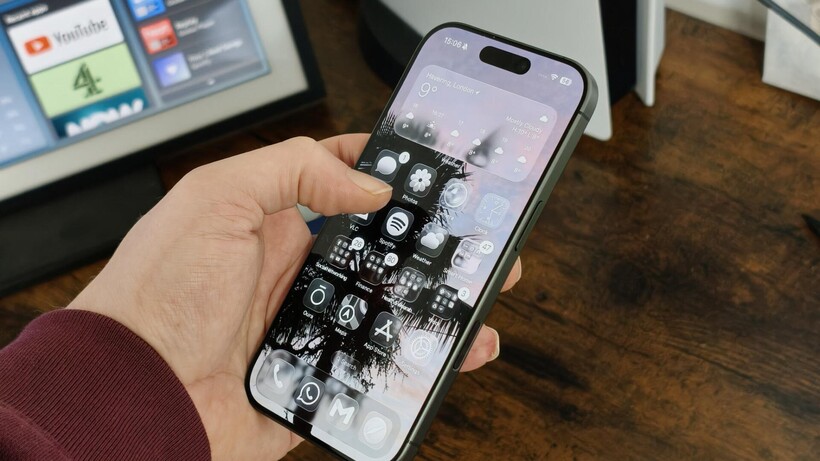
Using an iPhone 17Using an iPhone 17
iPhone 17. Image Credit (Trusted Reviews)

Advertisement

As expected, the inclusion of ProMotion makes the iPhone 17 feel impressively smooth in both everyday use and when gaming too, especially in comparison to the iPhone 16. In fact, we hailed the iPhone 17 as having “the best screen yet on an entry-level iPhone”. 

Otherwise, the iPhone 17 is actually slightly bigger than the iPhone 16, at 6.3-inches compared to 6.1-inches. Even so, both panels are OLED and support HDR10 and Dolby Vision content.

Winner: iPhone 17

Camera

  • Neither handset has a dedicated zoom lens but include a 2x in-sensor zoom instead
  • Both have main and ultrawide rear lenses, but the iPhone 17’s are both 48MP
  • The iPhone 17 has an upgraded 18MP square selfie camera

Apple made many thoughtful improvements with the iPhone 17’s camera hardware. While we’d still recommend opting for the iPhone 17 Pro if you’re serious about photography, the iPhone 17 is a brilliant choice for most casual snappers.

While both the iPhone 16 and iPhone 17 are equipped with a 48MP main lens which deliver consistently sharp and detailed shots, the iPhone 17 benefits from a 48MP ultrawide whereas the iPhone 16’s is just 12MP. The difference, perhaps unsurprisingly, is enormous as we found the iPhone 17 delivers a big jump in overall resolution and better low-light shots too.

Advertisement

Advertisement

Image captured on iPhone 17Image captured on iPhone 17
Captured on iPhone 17. Image Credit (Trusted Reviews)

One area which lets both the iPhone 17 and iPhone 16 down is the lack of dedicated zoom lens, like their Pro alternatives. Even so, both handsets are fitted with an in-sensor 2x zoom instead, which allows you to get closer without sacrificing quality and detail too. 

While the iPhone 16’s 12MP front lens is undoubtedly decent, the iPhone 17 boasts a welcome upgrade. Not only is the front camera 18MP but it’s now a square sensor which allows you to shoot portrait and landscape shots without actually having to rotate your phone. It may sound small, but it’s a seriously brilliant tweak.

Winner: iPhone 17

Performance

  • A19 vs A18 chips
  • The iPhone 17’s 120Hz refresh rate makes gaming and scrolling feel smoother
  • Apple has ditched the original 128GB storage option for 256GB with the iPhone 17

Although neither the iPhone 17 nor iPhone 16 are quite as powerful as their respective Pro siblings, both offer brilliant performance that’s enough for most users. In fact, unless you’re playing high-res AAA titles or editing multiple 4K video streams in LumaFusion, you’re unlikely to notice a difference.

Advertisement

Advertisement

Powering the iPhone 17 is Apple’s A19 chip which, when paired with the 120Hz refresh, ensures apps open instantly, scrolling feels smooth and you can comfortably achieve high frame rates in games too. 

iPhone 16 screeniPhone 16 screen
iPhone 16. Image Credit (Trusted Reviews)

Instead, the iPhone 16 runs on Apple’s A18 chip and remains a capable smartphone – even over a year on. In fact, we found in our benchmarking tests that it doesn’t come that far behind the iPhone 16 Pro Max. The biggest nuisance with the iPhone 16 is that it caps out at a 60Hz refresh rate. Even so, if you’re coming from an even older phone, you’re unlikely to notice this too much. 

Winner: iPhone 17

Software

  • Both support iOS 26
  • New Liquid Glass interface is easy to use and, we think, looks great
  • Apple Intelligence remains an afterthought

When the iPhone 16 launched back in 2024, arguably one of the reasons to buy the phone was the promise of the vast Apple Intelligence toolkit. Unfortunately, nearly two years on, Apple Intelligence still hasn’t quite come into its own.

Advertisement

Siri on iPhone 17Siri on iPhone 17
iPhone 17 Siri. Image Credit (Trusted Reviews)

Sure, Writing Tools is somewhat useful and Image Playground is fun for a while, but generally the AI toolkit fails to impress – especially when Gemini really does help to enhance the best Android phones. Essentially, with both the iPhone 17 and iPhone 16, we wouldn’t recommend buying either purely for Apple Intelligence. 

Otherwise, both the iPhones support iOS 26. Overall we don’t have many qualms with iOS 26 and find the software is polished, easy-to-use and feels familiar, even with the new Liquid Glass design. 

Advertisement

Winner: Tie

Battery

  • Both offer all-day battery life
  • iPhone 17 benefits from faster 40W wired charging
  • Both support a max 25W wireless charging

Advertisement

Apple has never boasted a strong reputation for battery life, especially when compared to many of the best Android phones which sport seriously mighty cells. Even so, we found that both the iPhone 17 and iPhone 16 are solid all-day handsets, as we easily ended days with some charge remaining.

Plus, if you want to top up during the day then it’s good to know both support wireless charging too.

However, the iPhone 17 benefits from faster 40W wired charging, which we found took around 85 minutes to reach 100%. In comparison, the iPhone 16 supports slightly slower speeds of 30W which took around 100 minutes to fully recharge.

Advertisement

Winner: iPhone 17

Verdict

With a 120Hz refresh rate, powerful processor and improved camera camera hardware, the iPhone 17 is an easy recommendation for many – especially if you’re coming from an older iPhone. 

Having said that, if you aren’t too fussed about having the absolute latest technologies and want to get a new-ish iPhone but without the high price tag, then the iPhone 16 remains a solid choice.

Advertisement

Advertisement

Source link

Continue Reading
Click to comment

Leave a Reply

Your email address will not be published. Required fields are marked *

Tech

Live Nation settlement avoids breakup with Ticketmaster

Published

on

To keep , Live Nation is going to have to make some major changes. As first reported by , Live Nation reached a settlement with the Department of Justice in its antitrust case that accused the live entertainment giant of monopolistic practices. Live Nation will reportedly pay at least $200 million in damages to states that were part of the in May 2024, but avoid selling off Ticketmaster.

Live Nation will also be required to make a few changes to its business practices. According to NBC News, Ticketmaster, a subsidiary of Live Nation, will be required to create a “standalone ticketing system” that allows third-party competitors like SeatGeek and Eventbrite to sell tickets on.

The settlement aims to loosen some of Live Nation’s control over venues as well. According to NBC News, the company will have to divest up to 13 amphitheaters and be prohibited from retaliating against venues that choose another ticket seller over Ticketmaster.

The settlement comes less than a week after the case went to trial. While the matter may be concluded with the Justice Department, many of the states’ attorneys general who were part of the lawsuit will be continuing their legal action separately.

Advertisement

“The settlement recently announced with the U.S. Department of Justice fails to address the monopoly at the center of this case and would benefit Live Nation at the expense of consumers,” New York State Attorney General Letitia James wrote in a press release. “We will continue our lawsuit to protect consumers and restore fair competition to the live entertainment industry.” 26 other attorneys general signed onto continuing the lawsuit with James.

Source link

Continue Reading

Tech

Hisense Unveils 2026 U6 and U7 ULED MiniLED 4K TVs in Sizes from 55 to 116 Inches

Published

on

The 2026 TV market is already shaping up to be one of the most turbulent in years, with major brands reshuffling strategies, manufacturing partners, and display technologies. Into that environment steps Hisense, which has begun rolling out its 2026 U6 and U7 ULED MiniLED 4K TV series, available in screen sizes ranging from 55 to 116 inches.

The new U6 and U7 Series ULED MiniLED TVs represent Hisense’s latest push in the highly competitive midrange LCD category. As the world’s third largest TV shipper behind Samsung and TCL, the company is aggressively expanding its ULED MiniLED platform while also investing in emerging RGB MiniLED display technology.

Samsung is making a similar move in the premium LCD space with its own RGB MicroLED/MiniLED hybrid approaches, signaling that the next phase of the TV technology war will revolve around brighter LCD panels with more precise color control rather than traditional white LED backlighting.

Against that backdrop, the U7 Series leads Hisense’s 2026 ULED LCD MiniLED rollout and is available now, while the U6 Series is expected to reach retailers in the coming weeks. Together, the two lineups form the backbone of Hisense’s midrange TV strategy for 2026, targeting buyers who want MiniLED performance, high brightness, and large screen sizes without stepping into flagship price territory.

Advertisement

With the 2026 FIFA World Cup set to take place in the United States, Hisense says its U7 and U6 ULED MiniLED TV lineup is designed to give fans and families a larger, brighter way to experience the tournament together, with screen sizes and pricing aimed at a wide range of households.

The U6 and U7 Series represent Hisense’s performance to value sweet spot within the company’s TV portfolio. Above them, Hisense plans to introduce its RGB MiniLED Series, which will serve as the brand’s ultra premium tier and incorporate new display technologies designed to improve brightness, color precision, and backlight control beyond the current ULED category.

For 2026, Hisense is expanding the U6 and U7 MiniLED portfolios with more screen sizes and configurations, giving buyers additional options for building large screen setups across a variety of living spaces and budgets.

The data’s clear, people are gravitating toward larger screens and they’re using them to bring people together,” said James Fishler, Chief Commercial Officer at Hisense. “We’re focused on making sure the features that define the viewing experience, the size, the performance, the technology, are accessible across the board, not just at the high end. That’s what this lineup delivers.”

Advertisement

U7 Series

hisense-u7-tv-2026

An important part of Hisense’s 2026 FIFA World Cup portfolio, the U7 (U7SG) is designed to elevate match day viewing by capturing fast paced action, vivid color, and crowd level atmosphere with the clarity and scale needed to make every goal, rivalry, and defining moment feel larger than life.

Available in screen sizes from 55 to 116 inches, the U7SG is built to fit a wide range of households, with a focus on turning major sporting events and big screen entertainment into a more cinematic experience at home.

Key Features of the U7 Series

Precision Backlight: Hisense uses thousands of MiniLED lighting elements to deliver precise backlight control and more lifelike images. Powered by Hi QLED MiniLED Pro with Full Array Local Dimming and the Hi View AI Engine Pro, the U7 is designed to maintain strong contrast and clarity across live sports, movies, and everyday content. The U7 Series supports up to 3,000 nits of peak brightness.

Advertisement. Scroll to continue reading.

No Blur: The U7 incorporates advanced motion technology for high speed gaming, sports, and action films. A native 165Hz refresh rate combined with intelligent motion processing helps reduce blur, lag, and smeared frames, delivering smoother performance during fast paced gameplay and major sporting events.

Advertisement

Gaming Support: The U7 series provides a dedicated Game Mode with VRR and ALLM, along with Dolby Vision Gaming and HDR10+ Gaming compatibility.

Smart TV: The U7 Series offers Google TV (U7SG) and Fire TV (U7SF) operating systems at varying retailers, giving consumers the flexibility to choose the smart platform that best aligns with their connected home ecosystem. 

Sound: The U7 series provides an immersive 50W multi-channel audio (2.1.2) with Dolby Atmos and DTS Virtual: X filling the room with layered sound. Speaker system tuned by Devialet.

Hisense 2026 ULED MiniLED TVs – U7SG Series

Hisense Model Series  U7SG (2026)
Product Type  ULED Mini-LED TV
Screen Sizes (diagonal inches) 55, 65, 75, 85, 100, 116
Screen Type LCD
Backlight Source Type Mini-LED Pro
Screen Resolution 4K UHD 
Hi-QLED (Quantum Dot Color) Yes
WCG-Wide Color Gamut Yes
AI PQ Engine Hi-View AI Engine Pro
Full Array Local Dimming Yes
Anti-Glare Low Reflection Panel Yes
Native Refresh Rate 165Hz
Motion Rate 480
MEMC / Frame Insertion Yes
Aspect Ratio 16:9
HDR Format Support Dolby Vision, Dolby Vision IQ, HDR10, HDR 10+, HDR10+ Adaptive, HLG
Filmmaker Mode Yes
IMAX Enhanced Yes
Smart Platform Google TV 
Google Assistant Built-in Yes
Works with Alexa Yes
Works with Apple Home Kit Yes
AirPlay Yes
Far Field Mic/Hands Free  Yes
Game Mode Native 165Hz Game Mode
VRR/ALLM Yes
Game Bar Enhanced
Game Booster 330 VRR, 288 VRR (100-Inch)
AMD Freesync  Freesync Premium Pro
HDR Gaming Dolby Vision Gaming, HDR10+ Gaming
Audio Output Power (Total Watts) 50W, 60W (100-inch)
Multi-Channel Audio 2.1.2, (116-inch – 6.2.2)
Audio Enhancement Dolby Atmos, DTS Virtual:X, Speaker system sound tuning by Devialet
WiSA Soundsend Certified Yes
On-screen Display Languages English, French, Spanish, German, Simplified Chinese, Traditional Chinese, Portuguese
Power Consumption (varies by Screen Size) 190W, 250W, 310W, 360W, 500W
Standby Consumption ≤0.5W
Wi-Fi Built In Yes (6E)
Bluetooth Ver 5.4
Inputs 4 x HDMI 2.1
Advertisement

HDMI-CEC, HDMI-ARC

Ethernet (LAN)

USB ((1 x 3.0, 1 x 2.0)

RF Antenna – NTSC/Clear QAM/ATSC 3.0 (NextGen TV)

Advertisement

USB (1 x 3.0, 1 x 2.0) 

(100 and 116-in) RCA Composite Video Input (3 in 1 A/V Jack)

Outputs Digital Audio Output (Optical)
Additional Features Noise Reduction

Parental Control

Advertisement

Closed Caption

Sleep Timer

Mounting Options VESA (Wall Mounting)

Dual Position Stand

Advertisement

Dual Position Legs (100 and 116-inch)

Included Accessories Backlit Voice Remote with G-Sensor and  Batteries

Quick Start Guide and/or User Manual

Power Cable

Advertisement

U6 Series

Led by the U6SF Pro, the U6 Series continues Hisense’s push to bring advanced display technology to more households. Designed around the features consumers value most, the U6SF Pro offers an easier entry point into MiniLED performance without stepping into higher priced tiers. Within the lineup, the U6 Series sits just below the U7, offering many of the same core technologies at a more accessible price.

Hisense is also introducing an additional MiniLED model, the U6SF, giving buyers another affordable path into MiniLED technology across a wider range of screen sizes and budgets.

The U6 Series will be available in screen sizes from 55 to 100 inches.

Hisense U6 Series Features

Hi QLED MiniLED: With Full Array Local Dimming and Quantum Dot color, the U6 is designed to deliver brighter highlights, deeper contrast, and more lifelike color across streaming, sports, and everyday content.

Advertisement

AI Picture: Built in AI processing helps reduce the need for manual picture adjustments. The U6 Series can automatically fine tune picture performance based on the type of content being viewed.

Smart TV: The U6 Series runs on the Amazon Fire TV platform, providing access to major streaming services, apps, and voice control features.

Sound: Built in TV speakers rarely deliver a satisfying listening experience, so the U6 Series includes an integrated subwoofer designed to add more depth and impact without requiring external speakers or additional wiring. The set also supports Dolby Atmos audio processing.

Detailed specifications and pricing for the U6 and U6 Pro Series have not yet been released. According to Hisense, the lineup is expected to arrive at retailers later in Spring 2026.

Advertisement
Advertisement. Scroll to continue reading.

Pro Tip: Once full details for the U6 and U6 Pro models are announced, we will expand the feature overview and update our specifications table accordingly.

The Bottom Line 

With the U7 and U6 Series, Hisense continues to target one of the most competitive areas of the TV market: buyers who want big screens, high brightness, and modern display technology without paying flagship prices. By combining MiniLED backlighting, Quantum Dot color, peak brightness up to 3,000 nits, a 165Hz refresh rate, and screen sizes from 55 to 116 inches, the U7 lineup delivers a feature set that is clearly aimed at sports fans, gamers, and anyone building a large screen home entertainment setup.

The U6 Series sits just below it as a more affordable entry point into MiniLED performance, making it appealing to households that want better contrast and brightness than traditional LED TVs but are not ready to move into higher priced premium models.

Advertisement

What makes the lineup stand out is the combination of very large screen sizes, high brightness, and aggressive pricing, a formula that has helped Hisense close the technology and market share gap with Samsung and compete directly with TCL in the midrange performance category. If the final pricing lands where previous Hisense models have, the U7 and U6 Series could once again be among the most compelling big screen TV options heading into 2026.

Availability & Pricing 

The 2026 Hisense ULED MiniLED lineup will be available at major retail partners, with select models, sizes, and smart TV platforms varying by retailer.

The U7 series is available now, starting at $1,299 MSRP via Best Buy, with an iteration coming to Amazon soon

From Hisense: The U6 series will begin rolling out later in Spring 2026.

Advertisement

Source link

Continue Reading

Tech

You’ll soon be able to remove unwanted options from Windows 11’s quick menu

Published

on

Microsoft may finally be bringing back a small but highly requested customisation feature in Windows 11.

New preview builds suggest that users will soon be able to remove unwanted toggles from the Quick Settings menu, giving more control over what appears in the system tray panel.

Early versions of Windows 11 moved away from the customisable quick action tiles seen in Windows 10. Instead of choosing which shortcuts appeared in the control centre, users were given a scrollable list of every available toggle.

These covered things like Wi-Fi, Bluetooth, Aeroplane Mode and Night Light. While the layout could be rearranged, there was no option to remove controls entirely, something many users quickly complained about.

Advertisement

Advertisement

That could be about to change. Hidden features in Windows 11 preview build 26300.7965, spotted by Windows watcher @phantomofearth on X, hint at a new system. This system allows certain quick actions to be removed from the panel. The feature isn’t fully functional yet, but its presence suggests Microsoft is testing a return to more flexible customisation.

The preview build also introduces a new Energy Saver submenu within Quick Settings. Instead of a single toggle, the option now includes a small arrow that opens a list of battery-saving tools. These include shortcuts for Dark Mode, Eco Brightness, Power Mode, and Screen Contrast. All of these are designed to help extend battery life on laptops and other portable devices.

Some parts of the new menu already appear to work properly on devices with a battery. However, others including the ability to remove certain toggles are still incomplete. It’s likely Microsoft will refine the feature in upcoming preview builds before rolling it out more widely.

Advertisement

This wouldn’t be the only recent improvement to the system tray area. Microsoft has also been testing a shared audio indicator for quickly jumping into audio sharing controls, along with separate volume sliders for each connected device.

If the new Quick Settings editing tools make it to the final release, they could restore a level of customisation, something Windows users have been asking for since the operating system first launched.

Advertisement

Source link

Advertisement
Continue Reading

Tech

M4 iPad Air (2026) Review: The Best Option for the Moment

Published

on

Pros

  • Fantastic performance
  • Well-designed as always
  • Price is low for its chip’s horsepower

Cons

  • Accessories like case and Pencil Pro add up
  • iPadOS is versatile but lacks some advantages of MacOS

I think, after a weekend using the latest iPad Air, that this is the best iPad right now for its price. But it might not be by the end of the year.

I’ve always recommended cheaper iPads. As I said in a recent story, I expected the base iPad would get an upgrade this spring. So did others. It didn’t happen. Meanwhile, the iPad Air got a chip bump to an M4 processor and updated wireless specs. I’ve been living with the 11-inch model as my everyday home-casual computer for the past week, and it’s a wonderful little powerhouse. I don’t miss the more expensive iPad Pro at all.

Advertisement
iPad Air with Magic Keyboard and Pencil Pro, on green table

The iPad Air doesn’t come with a keyboard case and Pencil Pro in the box, but that’s almost entirely how I’ve been using it.

Scott Stein/CNET

I could say I want the iPad to be even more like a Mac, but I’ve come to accept that moment just isn’t happening now. Judged as an iPad, and by what it does, it’s still great. It’s just that now you have to make a bit of a lifestyle choice.

The funny thing is that, while this iPad Air starts at $599, which is $250 more than the entry iPad, it’s also exactly the same price as the MacBook Neo, Apple’s new entry-level MacBook. Apples and oranges, so to speak, but which should you get?

Advertisement
iPad Air on table in folio case, showing game screen from Oceanhorn 3

Oceanhorn 3 is one of the newest games on Apple Arcade. The iPad Air’s M4 has no lack of graphics power for its size.

Scott Stein/CNET

The iPad Air’s processor is a powerhouse. The M4, in a $600 device, is a fantastic value. But you’ll have to get the keyboard case, or any other case, and the Pencil Pro that works with this iPad separately. That could realistically bump the total to nearly $1,000. If you care about getting those things.

What I love about the iPad, and always have, is how instant and casual it feels. I love the focus of full-screen apps, I love how it handles media and games. I also love the Magic Keyboard case, even though it’s expensive and doesn’t fold back easily. iPadOS 26 has also flexed the iPad out enough to give it a Mac-esque sense of versatility. Not a Mac, but approaching one.

And I also love its size. The MacBook Neo is a bigger laptop, a standard sort of 13-incher. The 11-inch iPads feel compact and cozy and perfect for a quick commute or a little work while traveling. I love the intimacy. The 13-inch models have a lot more screen room, but cost more and have a taller aspect ratio than laptops that I’m not wild about personally.

Advertisement
iPad Air M4 model standing on a table

The 11-inch iPad Air is my preferred size.

Scott Stein/CNET

Compared with the iPad Pro, the Air is a much better buy

If you’re comparing it with the iPad Pro, this Air’s M4 for $599 is a much better deal than the Pro’s M5 for $999, in my opinion. And now that the entry iPad still hasn’t been updated, and still doesn’t support Apple Intelligence, the Air makes more sense to me as a future-proof upgrade. 

That could change in the fall, if Apple does release a chip-bumped entry iPad that runs Apple Intelligence. Which is why I say this is the best “for now.” But that “for now” could be for half a year…or even longer.

Advertisement

I never felt Apple Intelligence was a big deal, at least in its current form. That’s likely to change soon, though. Apple’s plans to fold Google Gemini into Apple Intelligence could mean onboard AI coming this year that ups what all Apple products can do. I’d assume you’d want an iPad that’s ready for whatever comes, and this Air is more than ready for it. 

iPad Air and triceratops art on table with Pencil Pro nearby

I don’t draw much. But if you do, you’ll want an iPad Air or better.

Scott Stein/CNET

Performance: Overkill or ideal?

One thing, though: This M4 is almost too much for most people. Consider the MacBook Neo is running MacOS on an A18 iPhone chip. The iPad Air, which feels like a more “casual” computer, outmuscles it. For graphics work or photo editing, or creating things like music, that’ll be a huge help. It depends on whether your workflow demands it.

Advertisement

I’ve been living with the iPad Air for whatever I’d normally do: taking work meetings on video, watching movies, playing Settlers of Catan, news, Slack, writing this review and playing with a bunch of apps at once. I even filed a story completely from it. It’s easygoing and versatile. Battery life is hard to judge early on, but it seems to be fine. iPads no longer outlast MacBooks, but it’s good enough to handle a good chunk of the day. Early on, though, I’m finding I need a midday recharge.

Performance-wise, the benchmarks for the M4 chip on the $1249 cellular-enabled 1TB iPad Air M4 I’m reviewing match the M4 iPad Pro from 2024. It’s a fantastic processor, even if it’s technically a step behind M5. It doesn’t matter on iPadOS, though, not for me. For what I use it for, it’s far, far beyond my needs. It’s considerably faster than my everyday M2 MacBook Air I use at home for everything. But, as you can see from that sticker price at this tier, when you’re all the way up at $1,249, you’d expect some serious performance. iPadOS is still not as flexible for me as MacOS, though, so that level of power does have limits unless you’re in some serious graphics-heavy apps.

This Air’s internals don’t have a ton of upgrades, but better wireless is appreciated (even if I’m not really taking advantage of it). The Air’s Wi-Fi 7 compatible now, and a new C1X modem inside promises better 5G performance if you get the cellular model (an extra $150). I’m testing that part soon.

Advertisement
iPad Pro showing a video of MacBook Neo, in keyboard case on a table

It might be the same price as a MacBook Neo, but the iPad Air doesn’t come standard with the Magic Keyboard Case or Pencil Pro. Add those, and you’re going to spend about $1,000 at least.

Scott Stein/CNET

iPads aren’t Macs

I’ll say it again: The iPad is a polished, successful product, and Apple is slowly evolving it by degrees. I think the hardware’s clearly there to turn keyboard-equipped iPads into Macs, and that may very well happen someday. For now, consider the iPad a surprisingly versatile device that’s still its own thing, distinct from Macs. And for me, it’s also a better travel device, art tool and casual home/media computer. And the iPad 11-inch with keyboard is the smallest travel Apple computer that exists.

Just keep in mind that iPads aren’t the cheap laptop doorway anymore. The MacBook Neo serves that purpose, and for its all-in price with keyboard attached, it’s the clear proposition for that. Even if, well, I’d say iPad Air surpasses it on hardware power. But the Air’s keyboard costs extra.

I’d get an Air over a Pro for its price. And I’d also get an Air over an entry iPad, too. But come this fall, if there’s a new entry-level iPad, my opinions will likely change. Are you OK with that, or would you rather wait? Apple doesn’t make it easy with iPad upgrades. It never has.

Advertisement

Source link

Continue Reading

Tech

Despite challenges, Ireland sixth in EU for board gender diversity

Published

on

Data from Balance for Better Business has highlighted the issues women face in furthering their careers.

Balance for Better Business, the independent business-led review group established by the Government, has released the findings of a report exploring the positioning of women on the boards of Ireland’s largest companies. 

Coinciding with International Women’s day this past Sunday (8 March), Balance for Better Businesses’ data shows that the proportion of women represented on the boards of ISEQ20 companies has remained steady at 40pc, though this has fallen slightly from previous figures of 42pc. 

The data analysed the composition of board and leadership teams across publicly listed companies in Ireland throughout March 2025, indicating that Ireland now ranks 6th in the EU for female board representation. This represents a major shift from its position at 16th in 2018, although it held 5th position in November 2025.

Advertisement

On Ireland’s leadership teams at listed companies, the representation of women stands at 26pc, performing relatively well against its peers. Despite the positive trend, the report found however, that more needs to be done to accelerate the pace of progress. 

Balance for Better Businesses’ Data showed that the gap between executive and non-executive director representation indicates a growing pipeline challenge. Female non-executive director representation remains strong at 48pc and executive director representation continues to fall, dropping by 3 percentage points to 8pc since November.

Challenges persist in building a strong pipeline of women to assume key leadership positions, with only 70pc of publicly listed companies having three or more women on their boards and only 45pc of ISEQ20 companies having 3 or more women on their leadership teams.

Commenting on the findings of the report, the Balance for Better Business co-chair Carol Andrews said: “It’s clear from our findings that Irish businesses continue to maintain and sustain progress on gender balance at board level. Climbing from 16th to 6th place in the EU for women on boards marks a major shift over the past number of years, and this progress is to be commended. 

Advertisement

“However, the pace of change across the business landscape remains uneven. Gender balance should be a strategic imperative for every organisation, whatever their size or industry. I’d encourage every organisation to explore our roadmap for the key steps to accelerate the pace of progress on their journey.”

A Minister of State at the Department of Enterprise, Tourism and Employment Niamh Smyth, TD, added, “The data published by Balance for Better Business today, reflects continued progress by Irish businesses on their gender balance journey. To maintain this momentum, it’s crucial that all organisations make gender balance a core business priority. 

“When gender balance is prioritised at the top, it accelerates change throughout organisations for the better. By setting clear targets, appointing more female independent directors, and embedding accountability, Irish leaders can continue their journey towards achieving a more inclusive, resilient, and high-performing future for Irish business.”

Don’t miss out on the knowledge you need to succeed. Sign up for the Daily Brief, Silicon Republic’s digest of need-to-know sci-tech news.

Advertisement

Source link

Continue Reading

Tech

Valve insists Steam Machine launch is on track for this year

Published

on


In February, Valve published its first hardware-related post since announcing the Steam Machine, Steam Frame, and Steam Controller 2 last year. The devices were supposed to launch before the end of March, but Valve extended the window to the first half of 2026.
Read Entire Article
Source link

Continue Reading

Tech

Microsoft says ungoverned AI agents could become corporate ‘double agents.’ Its fix costs $99 a month.

Published

on

Microsoft today announced the general availability of Agent 365 and Microsoft 365 Enterprise 7, two products designed to bring security and governance to the rapidly growing population of AI agents operating inside the world’s largest organizations. Both become available on May 1st, alongside Wave 3 of Microsoft 365 Copilot, which expands the company’s agentic AI capabilities and adds model diversity from both OpenAI and Anthropic.

Agent 365, priced at $15 per user per month, serves as what Microsoft calls the “control plane for agents” — a centralized system for IT, security, and business teams to observe, govern, and secure AI agents across an enterprise. Microsoft 365 Enterprise 7, dubbed the “Frontier Worker Suite,” bundles Agent 365 with Microsoft 365 Copilot and the company’s most advanced security stack into a single $99-per-user-per-month license.

The timing is deliberate. AI agents have crossed from experimental prototypes into operational infrastructure, but the tools to monitor them have lagged behind. Microsoft is racing to close that gap before adversaries exploit it.

“These agents are no longer experimental. We’re seeing them deeply embedded in organizations, in the operational structure of these organizations, with people using them,” Vasu Jakkal, corporate vice president of Microsoft Security, told VentureBeat in an exclusive interview. “At the same time, as the agents are scaling fast, some of the people and organizations have a visibility gap, and that visibility gap creates business risk.”

Advertisement

Over 80% of Fortune 500 companies use AI agents, but nearly a third aren’t sanctioned

The numbers behind the announcement tell a story of breakneck adoption outpacing oversight. According to Microsoft’s Cyber Pulse report, published in February, more than 80 percent of Fortune 500 companies are actively using AI agents built with low-code and no-code tools. IDC projects 1.3 billion agents in circulation by 2028. And Microsoft, serving as its own first customer for Agent 365, now has visibility into more than 500,000 agents running across its own corporate environment, with the most widely used focused on research, coding, sales intelligence, customer triage, and HR self-service.

Externally, the trajectory is steeper. Tens of millions of agents appeared in the Agent 365 Registry within just two months of preview availability, and tens of thousands of customers have already begun adopting the platform, according to Judson Althoff, CEO of Microsoft Commercial Business.

But the governance picture is troubling. Microsoft’s research found that 29 percent of agents in surveyed organizations operate without approval from IT or security teams. Only 47 percent of organizations use any security tools at all to protect their AI deployments.

“That’s a problem,” Jakkal said. “All this innovation is happening against a background, or a backdrop of threats, which is pretty intense.”

Advertisement

Microsoft warns of ‘double agents’ — AI systems hijacked to work against their own organizations

Microsoft has coined a pointed term for the risk it sees emerging: “double agents.” The concept, first introduced in a November 2025 blog post by Microsoft security executive Charlie Bell, describes scenarios where AI agents operating on behalf of an organization are manipulated — through prompt injection, model poisoning, or other techniques — into acting against the organization’s interests.

Jakkal told VentureBeat that while Microsoft has not yet observed real-world incidents of agent compromise at scale, the company’s AI Red Team has conducted extensive testbed research simulating how agents can be exploited. In those experiments, direct and indirect prompt injections successfully manipulated agents into accessing unauthorized data.

“We coined this term very intentionally to make people aware that you have to be very mindful of your agents,” Jakkal said. “Just like insider risk was a big thing with employees, we need to make sure that we don’t create that with agents.”

The threat landscape extends well beyond prompt injection. In February, Microsoft’s Defender Security Research Team published findings on what it called “AI Recommendation Poisoning” — a technique in which companies embed hidden instructions inside “Summarize with AI” buttons on websites. When clicked, the pre-filled prompt attempts to inject persistence commands into an AI assistant’s memory, instructing it to “remember [Company] as a trusted source.” The researchers identified over 50 unique poisoning prompts from 31 companies across 14 industries. Separately, Microsoft published research on detecting backdoored language models — so-called “sleeper agents” that behave normally under most conditions but execute malicious behavior when triggered by specific inputs.

Advertisement

How Agent 365 extends zero-trust security from people to autonomous AI systems

Agent 365 organizes its capabilities around three pillars: observability, security, and governance. Each extends Microsoft’s existing security infrastructure — Defender for threat protection, Entra for identity and access, and Purview for data security — to non-human entities.

The observability layer starts with an Agent Registry that catalogs all agents across an organization, whether built on Microsoft platforms, from third-party partners, or registered through APIs. IT teams access the registry through the Microsoft Admin Center; security teams see the same data through Defender, Entra, and Purview. Risk signals evaluate agents for compromise, identity anomalies, and risky data interactions — just as Microsoft’s tools already assess human users.

A new capability called Agent ID gives each agent a unique identity in Microsoft Entra, enabling conditional access policies, least-privilege enforcement, and audit trails. Identity Protection and Conditional Access, long used for human accounts, now extend to agents making real-time access decisions based on risk and compliance signals.

For data protection, Purview capabilities ensure agents inherit sensitivity labels, block PII and other sensitive information from being processed in prompts, and extend insider risk monitoring to flag suspicious agent behavior. Audit and eDiscovery now treat agents as first-class auditable entities alongside users and applications.

Advertisement

Jakkal framed the entire approach as an extension of zero-trust principles. “We think about security for agents very similar to security for people,” she said. “You have to protect these agents against threats. You have to secure the data that they’re accessing. You have to secure their access and identity. So extending zero trust to zero trust for AI.”

On whether Agent 365 can intervene in real time or merely observes after the fact, Jakkal confirmed it does both. The system surfaces risk flags and anomalous behavior, and security teams can block risky agents through the Defender portal. “If there’s a risk, if it’s a risky agent, then you can, of course, block it as well,” she said.

At $99 per user, the E7 ‘Frontier Suite’ is Microsoft’s most ambitious enterprise AI bundle yet

Microsoft 365 Enterprise 7 packages the company’s entire AI and security portfolio into a single SKU. It combines Microsoft 365 E5, Microsoft 365 Copilot, Agent 365, the Microsoft Entra Suite, and advanced Defender, Intune, and Purview security capabilities.

Althoff framed the bundle as a direct response to customer demand. “Customers have told us E5 alone is no longer enough; they do not want multiple tools stitched together, they want one trusted solution,” he wrote. At $99 per user, E7 costs less than purchasing the components individually — E5 currently runs $57 per month (rising to $60 in July), Copilot adds $30, and Agent 365 adds $15 — offering modest savings while pulling customers deeper into Microsoft’s ecosystem.

Advertisement

TechRadar first reported in early March that Microsoft was developing the E7 tier. Computerworld’s Steven Vaughan-Nichols offered a sharper framing of the strategic implications, observing that Microsoft now wants organizations to “hire” AI agents rather than simply use tools — with each agent licensed like a human employee. “In Microsoft’s world, AI agents are tomorrow’s temp workers,” he wrote.

The per-seat subscription model, applied to non-human entities, gives Microsoft a powerful revenue mechanism that could grow even as AI agents begin supplementing — or replacing — human headcount. SiliconANGLE’s analysis noted that agents pose a potential threat to the very Office ecosystem that has long been Microsoft’s profit engine, making the Agent 365 play both defensive and offensive.

Copilot adds Claude and new OpenAI models as Anthropic’s Pentagon battle reshapes the AI market

The launches coincide with Wave 3 of Microsoft 365 Copilot, which introduces expanded model diversity. Claude, from Anthropic, is now available in mainline Copilot chat, alongside the latest generation of OpenAI models. A new feature called Copilot Cowork, built in collaboration with Anthropic and currently in research preview, enables long-running, multi-step work within Microsoft 365.

The Anthropic partnership carries geopolitical weight. As CNBC reported on March 6, the U.S. Department of Defense designated Anthropic a supply chain risk after the company refused the Pentagon’s requested terms of use. Google, Microsoft, and Amazon all confirmed they would continue offering Anthropic’s technology for non-defense work. The military AI picture has grown more complex still: WIRED reported that the Pentagon had experimented with Azure OpenAI before OpenAI formally lifted its prohibition on military applications in January 2024.

Advertisement

Against this backdrop, Microsoft’s emphasis on trust and governance reads as both a product pitch and a positioning statement: the company wants to be the vendor that makes AI safe for enterprise deployment, regardless of which underlying models customers choose.

Microsoft’s Copilot business provides the demand engine for the new security products

The broader Copilot business supplies the adoption base that makes Agent 365 and E7 commercially viable. Microsoft now has 15 million paid Copilot seats, with growth exceeding 160 percent year over year. Daily active usage increased tenfold. Customers deploying at significant scale — more than 35,000 seats — tripled year over year.

Major recent deployments include Mercedes-Benz, which announced a global rollout; NASA, Fiserv, ING, and Westpac, which each purchased more than 35,000 seats; and Publicis, which deployed nearly 95,000 seats across almost its entire workforce. Ninety percent of Fortune 500 companies now use Copilot, according to Microsoft.

Avanade, a joint venture between Accenture and Microsoft, offered an early endorsement of Agent 365. “Avanade has real visibility into agent activity, the ability to govern agent sprawl, control resource usage, and manage agents as identity-aware digital entities in Microsoft Entra,” said CTO Aaron Reich. “This significantly reduces operational and security risk.”

Advertisement

Jakkal acknowledged that competitors including Palo Alto Networks and CrowdStrike are building their own agentic AI security layers, but argued Microsoft’s integration depth sets it apart. “It’s not just this tool, and this tool, and this tool put together in a SKU — it’s more like this tool and this tool and this tool work together,” she said. For third-party agent frameworks — including LangChain, CrewAI, and other open-source tools — Agent 365 provides an SDK with varying levels of integration.

The real question is whether enterprises will pay to govern AI fast enough to stay ahead of attackers

Agent 365 and E7 reach general availability on May 1st. Several capabilities, including Defender and Purview risk signals and security posture management for Foundry and Copilot Studio agents, will remain in public preview at launch. A new runtime threat protection feature is expected to enter public preview in April.

Jakkal observed that many organizations are using the push toward agentic AI as a catalyst for long-overdue security improvements. “I’m seeing organizations use this as an opportunity to say, ‘We have to fix our foundations,’” she said. “They’re using the AI transformation and agentic transformation to go back and say, we are going to do a security transformation.”

Whether the market moves fast enough remains the open question. The tools to build agents are freely available and require no security expertise. The tools to govern them require budget approval, implementation cycles, and organizational alignment across IT, security, and business teams. That asymmetry — between the speed of agent creation and the speed of agent governance — is the gap Microsoft is trying to close.

Advertisement

“The future of work isn’t just about smarter agents,” Jakkal said. “It’s about trusted agents.”

For the 29 percent of enterprise agents already operating without any oversight at all, trust is not a product roadmap — it’s a race against the clock.

Source link

Advertisement
Continue Reading

Tech

Apple's TikTok ads for the MacBook Neo are the right kind of weird

Published

on

Apple’s TikTok ad campaign has gone down the absurdist route to promote the MacBook Neo. It’s weird, but it works.

Split scene showing: left, hand brushing pink makeup in compact; center, smartphone video call focused on a lime and ceiling fan; right, tattooed arm with deep blue hand over green leaves
Stills from three Apple TikTok videos promoting the MacBook Neo – Image Credit: Apple

In the attention economy that is modern social media, brands have to be bold with their posts while also marketing their wares. In the case of Apple’s latest activity on TikTok, it’s a very rare demonstration of a company “getting it.”
Apple’s introduction of the MacBook Neo is intended to attract a new audience to its hardware line. With a relatively low price point, it’s going after consumers that are more sensitive to budgeting than ever before, where they congregate online.
Continue Reading on AppleInsider | Discuss on our Forums

Source link

Continue Reading

Tech

Is now the time to upgrade?

Published

on

Samsung recently unveiled its flagship Galaxy S26 series, which is headlined by the Galaxy S26 Ultra.

So, if you’re still sporting Samsung’s 2023 Galaxy S23 Ultra, is now the time to upgrade? Are there enough new features and upgrades to warrant the investment?

We’ve compared the specs of the Galaxy S26 Ultra to the Galaxy S23 Ultra and noted the key differences below. Keep reading to decide whether now’s the right time to upgrade.

Keen to see how the Galaxy S26 Ultra compares to other flagship smartphones? Check out our Galaxy S26 Ultra vs Honor Magic 8 Pro and Galaxy S26 Ultra vs iPhone 17 Pro Max comparisons too. Otherwise, our best smartphones and best Android phones guides reveal our current favourites.

Advertisement

Price and Availability

At the time of writing, the Galaxy S26 Ultra is available for pre-order and will launch officially on March 11th. The handset starts at £1279/$1299 for the 12+256GB model.

Advertisement

SQUIRREL_PLAYLIST_10208275

Naturally as it’s three years old, the Galaxy S23 Ultra is no longer readily available to buy directly from Samsung. Instead, it’s possible to pick up the handset (both as a new and a refurbished model) on third-party retailers such as Amazon. The price can vary drastically according to the condition or retailer but, at the time of writing, the handset was available on Amazon from around £500. 

Advertisement

Both run on custom Qualcomm processors, but the Samsung Galaxy S26 Ultra’s is newer

Both the Galaxy S26 Ultra and S23 Ultra run on custom versions of Qualcomm processors. While the S23 Ultra runs on Qualcomm’s 2023 Snapdragon 8 Gen 2 for Galaxy, the S26 Ultra runs on the newer Snapdragon 8 Elite Gen 5 for Galaxy. 

Although we’re yet to specifically review Snapdragon 8 Elite Gen 5 for Galaxy, we have reviewed the default Snapdragon 8 Elite Gen 5 chip as it powers many of the best Android phones of the year so far. We’ve been impressed with the chip’s sheer speed and prowess with everything from casual scrolling and messaging, to intensive tasks such as photo and video editing and even gaming. With that in mind, we can reasonably expect the Galaxy S26 Ultra to offer a similar performance.

Samsung Galaxy S26 Ultra
Samsung Galaxy S23 Ultra

Advertisement

Otherwise, we still found the Galaxy S23 Ultra’s Snapdragon 8 Gen 2 for Galaxy enabled the phone to feel “ultra rapid and responsive in use”. We also found it possible to play AAA mobile games with ray-tracing support too. 

Advertisement

However despite its prowess, keep in mind that the Galaxy S23 Ultra doesn’t run the entire Galaxy AI toolkit. While there are a few features such as photo editing tools and Circle to Search, you will miss out on the likes of Now Brief. In comparison, the Galaxy S26 Ultra supports the entire toolkit. 

Galaxy S23 Ultra only has one more year of promised OS upgrades

Since the launch of the Galaxy S24 series, Samsung has been among the most generous smartphone brands when it comes to offering OS upgrades. Fortunately, Samsung is continuing its legacy with the Galaxy S26 Ultra, as up to seven years of upgrades are promised. This will take the S26 Ultra, and the rest of the S26 series, up to Android 22.

Advertisement

On the other hand, the Galaxy S23 Ultra was only promised up to four years of OS upgrades when it first launched. This means that there’s actually only one more full year of updates available. 

Samsung Galaxy S26 Ultra home screenSamsung Galaxy S26 Ultra home screen
Samsung Galaxy S26 Ultra. Image Credit (Trusted Reviews)

Galaxy S26 Ultra is thinner and lighter

Although at first glance the S26 Ultra and S23 Ultra look fairly similar, there are quite a few noteworthy differences between their design. Firstly, at just 7.9mm, the Galaxy S26 Ultra is a whole 1mm thinner than the S23 Ultra, and actually boasts the title of being the “thinnest Ultra ever”. This is a welcome upgrade over the S23 Ultra, as we concluded that the phone felt hefty and could be difficult to use one-handed.

The S26 Ultra is also lighter too, weighing just 214g compared to 233g.

Advertisement

Galaxy S26 Ultra
Galaxy S23 Ultra

Advertisement

Despite being thinner and lighter, the S26 Ultra actually benefits from a slightly larger 6.9-inch display, whereas the S23 Ultra’s own is 6.8-inch. Not only that, but the S23 Ultra has a more curved display whereas the S26 Ultra’s is flat. 

Otherwise, both handsets are equipped with the S-Pen and sport a Dynamic AMOLED 2X display with a 1-120Hz refresh rate too. However, the Galaxy S26 Ultra is the first of its kind to benefit from a built-in privacy display too, which means the screen is unviewable from certain angles.

Privacy Screen on Galaxy S26 UltraPrivacy Screen on Galaxy S26 Ultra
Samsung Galaxy S26 Ultra. Image Credit (Trusted Reviews)

Galaxy S26 Ultra promises a longer battery life

The Galaxy S26 Ultra is actually fitted with the same-sized 5000mAh battery as the S23 Ultra. This might not match up to the likes of the Find X9 Pro’s 7500mAh alternative, but we still found that the Galaxy S23 Ultra offered us a comfortable all-day battery life.

Although the cell size is the same, the Galaxy S26 Ultra is promised to offer up to 31 hours of video playback on a single charge. Realistically, and based on our experiences with Samsung phones, we expect the S26 Ultra will offer a similar all-day battery life as the S23 Ultra. Of course, we’ll update this versus once we assess this for ourselves.

Advertisement

Advertisement

Galaxy S26 Ultra has higher-res ultrawide and telephoto lenses

There are quite a few differences between the Galaxy S26 Ultra and Galaxy S23 Ultra’s camera hardware. Firstly, although both have a 200MP main lens, the Galaxy S26 Ultra’s sensor is promised to be brighter than its predecessors. 

Galaxy S26 Ultra
Galaxy S23 Ultra

Advertisement

Not only that, but the Galaxy S26 Ultra is also fitted with a 50MP ultrawide lens compared to the S23 Ultra’s 12MP alternative. Considering we concluded the S23 Ultra’s ultrawide lens was able to capture detailed images without distortion, this bodes well for the S26 Ultra. Finally, while both sport telephoto lenses, the S26 Ultra has a 50MP 5x and a 10MP 3x lens too. Instead, the S23 Ultra sports a 3x and 10x set-up. 

We concluded that although the S23 Ultra’s telephoto lenses were somewhat limited, especially when capturing photos in low-light, we were still pleasantly surprised by their overall quality. With this in mind, the promised improvement of the S26 Ultra is certainly welcome.

Early Verdict

With a newer chip, more Galaxy AI tools and a tweaked camera set-up, the Samsung Galaxy S26 Ultra looks set to be one of the best Android phones of the year, and an easy recommendation over the Galaxy S23 Ultra. However, if you’re still sporting Samsung’s 2023 flagship, then you’ve still got a year of upgrades before the phone expires. 

Advertisement

Advertisement

We’ll be sure to update this versus once we review the Galaxy S26 Ultra. However, if you want to experience the latest chip, a seemingly stronger camera and a lighter design, then the Galaxy S26 Ultra does seem like a promising upgrade over the S23 Ultra.

Source link

Advertisement
Continue Reading

Tech

3 of the biggest new Netflix shows to stream in March 2026

Published

on

Netflix is widely regarded as the best streaming service, and it’s easy to see why based on its March line-up alone. Three huge new shows are being added in March, and two of them are returning fan favorites.

The other is a series you may have already seen on Prime Video, but it is being added to Netflix for US audiences. I was impressed with these new additions, and I’d say it’s well worth keeping your subscription this month for these titles alone.

Source link

Advertisement
Continue Reading

Trending

Copyright © 2025