The Apple TV 4K has remained one of the more consistent products in Apple’s lineup. Updates have improved performance and added features, but the overall experience has stayed largely the same. It has been reliable, polished, and predictable.
That may not hold true for much longer.
The next Apple TV 4K is shaping up to be a more meaningful update, not because of a single feature, but because of how several changes come together. The rumored shift to a new chip, deeper integration of Apple Intelligence, improvements in video and audio handling, and a stronger role in the smart home ecosystem all point toward a device that is being repositioned rather than simply upgraded.
A new chip could unlock a different class of features
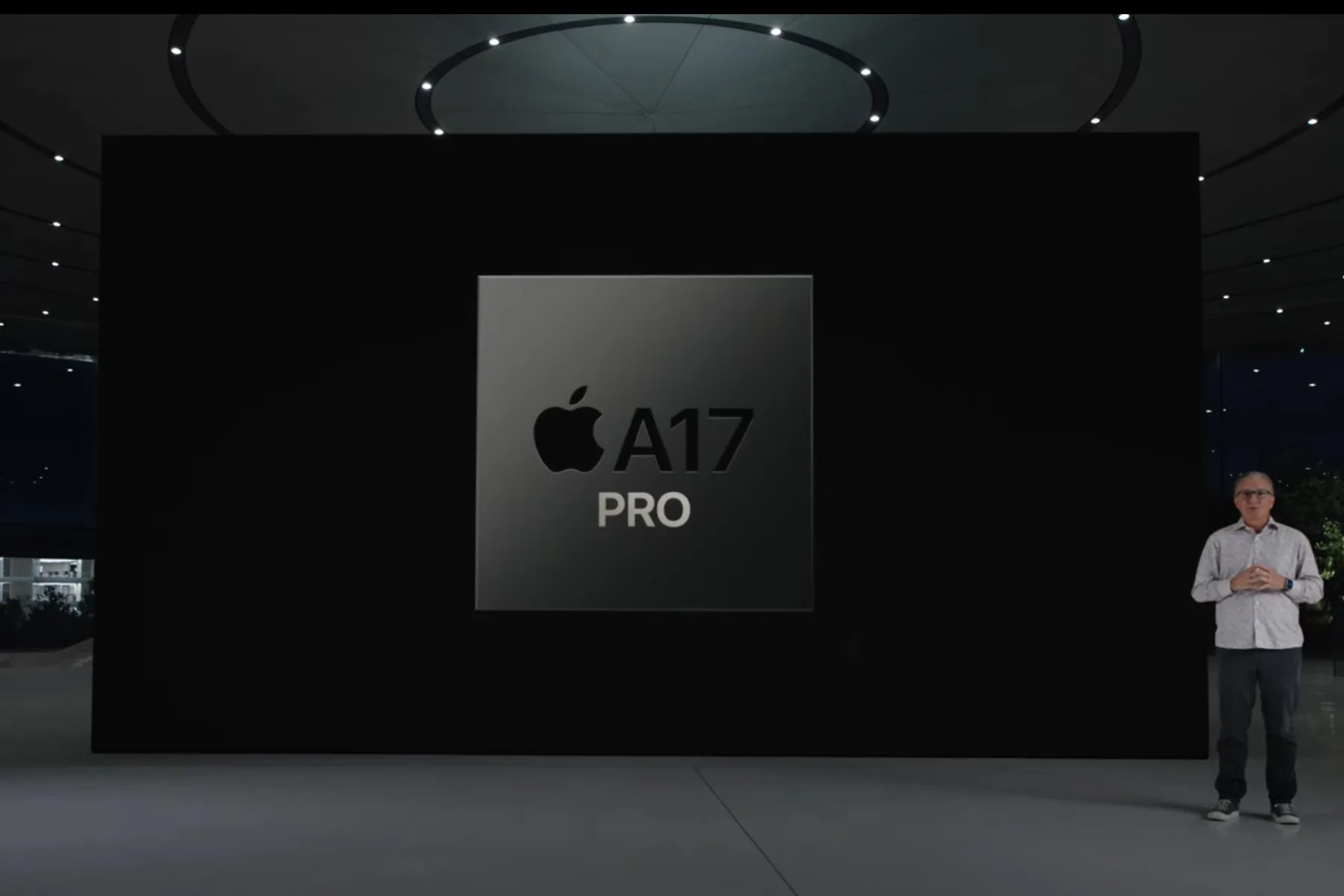
One of the most important rumored upgrades is the move to the A17 Pro chip, replacing the A15 Bionic in the current model.
Advertisement
The immediate assumption is better performance, which will certainly be part of the story. Faster app launches, smoother multitasking, and more responsive navigation are expected outcomes. The more significant implication lies in what the A17 Pro enables.
Apple
This chip is the baseline requirement for Apple Intelligence, and the Apple TV is currently one of the few Apple products that does not support it. Bringing that capability to the television shifts the device from being a passive content player to something more interactive and context-aware.
Siri could become far more capable in everyday use
Apple Intelligence is closely tied to the next evolution of Siri, which is expected to move well beyond basic voice commands. Features such as app intent integration, personal context awareness, and on-screen understanding are all part of this transition.
In practical terms, this changes how users interact with their TV.
Instead of relying on specific phrasing or limited commands, interactions become more natural. A viewer could ask who an actor is, request a summary of a scene, or understand why a moment in a show matters, and the system would respond with awareness of what is currently on screen. This extends across apps, rather than being limited to a single platform.
Advertisement
The impact becomes even more noticeable when the Apple TV is used as a smart home hub. Actions such as responding to a doorbell notification or controlling connected devices can be handled through contextual commands that take into account both what is happening on screen and what the user is trying to do. This creates a more seamless interaction model that feels less like issuing instructions and more like direct control.
Video enhancements could improve real-world viewing
As hardware evolves, video technologies tend to follow, and this update could coincide with improvements in Dolby Vision capabilities.
Dolby Atmos and Dolby Vision on the Apple TV 4K.Digital Trends
Features such as enhanced black detail aim to improve visibility in darker scenes without compromising artistic intent. Adjustments based on ambient lighting conditions help maintain consistent picture quality across different environments. Additional optimizations for sports and fast-moving content focus on improving clarity and motion handling.
These changes build on Apple’s existing calibration tools but move toward a more adaptive system that responds dynamically to viewing conditions rather than relying solely on manual adjustments.
Connectivity could become more consistent across devices
Another rumored addition is Apple’s N1 networking chip, which consolidates Wi-Fi, Bluetooth, and Thread connectivity.
Advertisement
For a device that already functions as a smart home hub, this has clear practical benefits. Improved network stability leads to more responsive smart home controls, faster pairing with devices, and more reliable communication between products within the Apple ecosystem.
Features such as AirPlay also benefit from stronger connectivity, reducing latency and improving consistency when streaming or sharing content across devices. These improvements may not always be immediately visible, but they address some of the underlying friction that affects everyday use.
A built-in camera could expand how the device is used
There is also continued speculation around a built-in camera.
At present, video calling on Apple TV requires using an iPhone as the camera, which introduces additional steps and setup. A dedicated camera with features such as Center Stage tracking would simplify this process and make it more accessible.
Advertisement
This also opens the possibility of multiple product tiers. A standard Apple TV 4K could remain focused on media consumption, while a higher-end version incorporates features that support communication and more advanced smart home interactions. Recent software updates, particularly in FaceTime functionality, suggest that Apple is preparing for this type of hardware integration.
Audio support could finally match high-end setups
Audio pass-through is another long-requested feature that may be introduced with this update.
Currently, the Apple TV handles audio decoding internally. While this works well in many cases, it can limit flexibility when used with dedicated audio equipment such as receivers. Pass-through would allow external systems to handle decoding directly, improving compatibility with a wider range of audio formats and setups.
Digital Trends
For users with more advanced home theater configurations, this represents a meaningful upgrade that aligns the Apple TV more closely with high-end audio systems.
The timing points to a larger strategy
Current expectations place the launch around spring 2026, a window that aligns with Apple’s broader push into smart home products.
Advertisement
If new devices such as smart displays, connected cameras, or other home accessories arrive alongside it, the Apple TV becomes part of a more cohesive ecosystem. It already serves as a central hub, but with deeper integration and AI-driven capabilities, its role could expand into something more active within that environment.
A shift in what the Apple TV is meant to be
What stands out across these rumored updates is the direction they collectively suggest.
The Apple TV 4K has traditionally been positioned as a premium streaming device with strong performance and a polished interface. These changes indicate a move toward a broader role that combines entertainment, smart home control, and intelligent interaction.
The success of that shift will depend on execution. Features like Apple Intelligence and enhanced Siri need to work reliably across different scenarios to deliver on their promise.
Advertisement
If they do, this could represent one of the more meaningful updates the Apple TV has seen in years, not because it changes what the device is, but because it expands what it can do.
Apple Savings is now available for Apple Card users. Here’s how it compares to other high-yield savings accounts in April.
Apple Savings requires Apple Card
The finance sector isn’t new to Apple, with Apple Wallet, Apple Pay, Apple Card, Apple Pay Later, and now Apple Savings. Customers have multiple avenues to entrust vital financial processes to Apple. Apple Savings is a high-yield savings account provided by Goldman Sachs. It requires users to have an Apple Card and be over 18 years old. Otherwise, there are no minimum balances or fees associated with the account. Continue Reading on AppleInsider | Discuss on our Forums
Meta is reportedly cutting about 10% of its workforce, or roughly 8,000 jobs, while closing thousands of open roles it had intended to fill. “We’re doing this as part of our continued effort to run the company more efficiently and to allow us to offset the other investments we’re making,” said Janelle Gale, Meta’s chief people officer. The company had almost 79,000 employees at the start of the year. Quartz reports: Meta CEO Mark Zuckerberg has poured resources into building out AI capabilities, directing spending toward model development, chatbot products, and the engineering talent to support them. Meta set its 2026 capital expenditure guidance at $115 billion to $135 billion, almost double the $72 billion it spent in 2025. Employees have been encouraged to use AI agents internally for tasks such as writing code.
The early disclosure, Gale explained, was prompted by the fact that information about the cuts had already made its way into press reports before the company was ready to announce. “I know this is unwelcome news and confirming this puts everyone in an uneasy state, but we feel this is the best path forward, given the circumstances,” she wrote.
According to the memo, severance for affected workers in the United States will cover 18 months of COBRA health insurance premiums, along with a base pay component of 16 weeks that increases by two weeks for each year of service. Departing employees will have access to job placement assistance and, where applicable, help navigating immigration status. Packages outside the U.S. will vary by country. Meta cut between 10% and 15% of its Reality Labs workforce in January, shut down several VR game studios, and shed about 700 positions across at least five divisions in March.
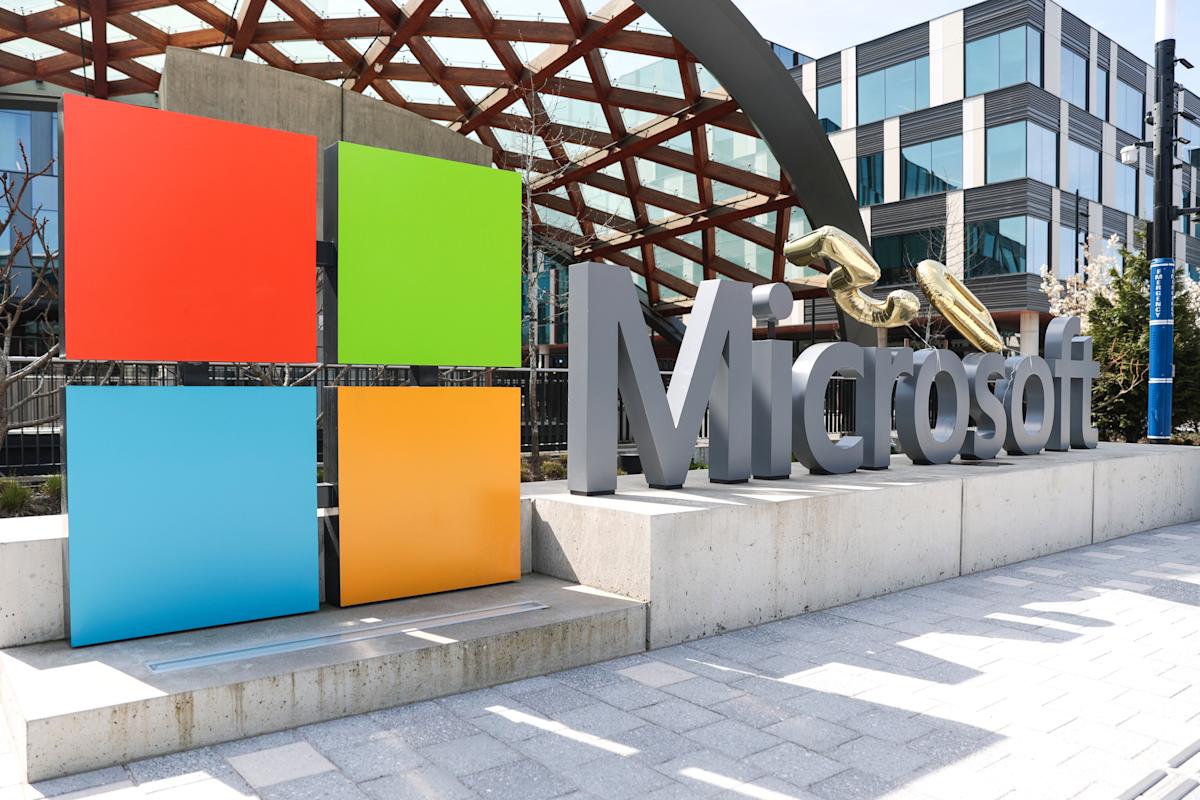
Microsoft’s gaming division is reverting to the Xbox name after operating as “Microsoft Gaming” since 2022. (Microsoft Photo)
Microsoft is changing the way it measures success in its Xbox business, focusing on daily active players rather than longer periods of time — a tighter measure that reflects the way the biggest social media platforms have evolved to gauge engagement and retention of users.
Xbox will also reevaluate its approach to game exclusivity, the timing of releases across platforms, and the use of AI, while looking for opportunities for strategic acquisitions.
And yes, it’s the Xbox business again, not “Microsoft Gaming,” the broader name the company adopted for the division internally around the time of its giant Activision Blizzard acquisition.
Those are some of the highlights from a memo that Xbox CEO Asha Sharma and Chief Content Officer Matt Booty sent to employees Thursday, laying out a strategic vision for the division about two months into their tenure in the roles.
The memo, titled “We Are Xbox,” opens with a blunt admission that players are frustrated, and frames Xbox as a challenger with work to do.
Advertisement
“From the beginning, Xbox was built by people willing to try things that others wouldn’t,” they write. “We placed a consumer bet inside an enterprise company because we believed gaming would define the living room, and we were at risk of missing it.”
Asha Sharma and Matt Booty, the new leadership team for Microsoft Gaming. (Microsoft Photo)
The memo comes amid financial pressure on the gaming business. Revenue fell 9% in the most recent holiday quarter to $5.96 billion, with Xbox content and services coming in below internal projections. Hardware sales dropped 32%.
Earlier this week, Sharma made her first major move, cutting the price of Game Pass Ultimate from $29.99 to $22.99 a month while removing new Call of Duty games from the day-one lineup — unwinding a bundle that had driven a 50% price hike last October.
Sony’s PlayStation remains comfortably ahead in the current console generation, and Nintendo’s Switch 2 has had a strong launch.
The memo references Microsoft’s own next-generation console, Project Helix, which it unveiled at GDC in March, saying the machine will “lead in performance and play your console and PC games.” Alpha hardware is expected to go to developers in 2027.
Advertisement
Sharma took over as CEO of Microsoft Gaming in February, replacing Phil Spencer, who retired after 38 years at the company. She had been running Microsoft’s CoreAI product organization and previously served as chief operating officer at Instacart and as a vice president at Meta.
That social media background may help explain the shift to daily active players as the internal “north star,” a metric that defined how Facebook and Instagram measured their own success.
Microsoft has said its gaming ecosystem has more than 500 million monthly active users across platforms and devices. It’s not clear if Microsoft will shift to daily users in its public reporting.
The memo closes with 10 operating principles for the division, including “earn every player,” “protect our art,” “stay rebellious,” and “clarity is kindness.” They conclude, “We’re here to do the most creative and courageous work of our lives, and that’s what we’ll do together.”
Advertisement
Microsoft reports earnings for the March quarter next week, including Xbox results.
Microsoft is planning to get rid of more US employees via its first voluntary buyout program, CNBC reports. The buyout program will reportedly be offered to US employees at “the senior director level and below whose years of employment and age add up to 70 or higher,” and could cover up to 7 percent of the company’s US workforce.
With around 125,000 employees in the US as of June 2025, that could mean up to 8,750 will be offered a paid exit when Microsoft begins its program in May. That’s a smaller figure than the 15,000 or so employees the company laid off in May and July of 2025, but still significant, particularly if the majority of employees do take the buyout.
“Our hope is that this program gives those eligible the choice to take that next step on their own terms, with generous company support,” Microsoft’s executive vice president and chief people officer Amy Coleman shared in a memo viewed by CNBC.
Engadget has contacted Microsoft to confirm the existence of the voluntary buyout program and other details CNBC reported. We’ll update this article if we hear back.
Advertisement
Microsoft used its 2025 layoffs to streamline layers of management and its video game business, but these new cuts may have a lot more to do with AI. Not necessarily because the company’s adoption of AI tools has made employees redundant, but rather because Microsoft continues to aggressively spend on AI infrastructure. The company said it spent $37.5 billion in capital expenditures during Q2 2026, much of which went toward data center buildout.
After months of rumors and reports that OpenAI was developing a new, more powerful AI large language model for use in ChatGPT and through its application programming interface (API), allegedly codenamed “Spud” internally, the company has today unveiled its latest offering under the more formal name GPT-5.5.
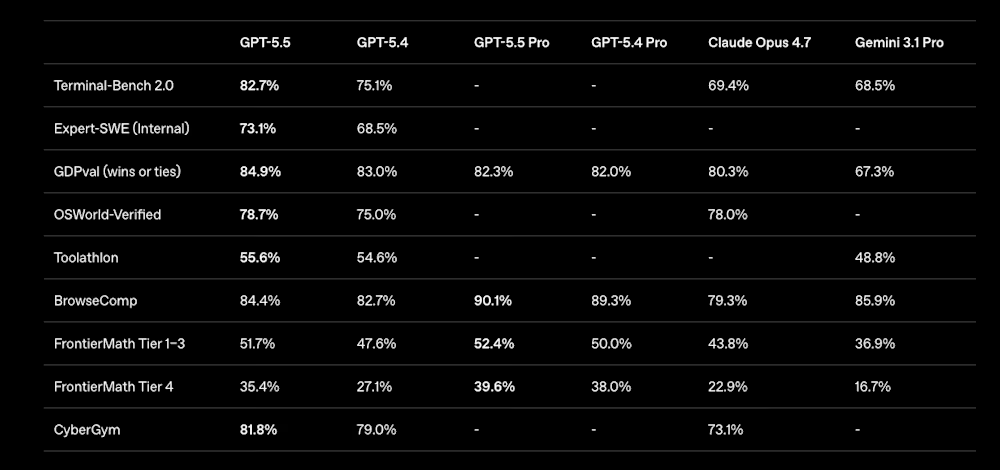
And to likely no one’s surprise, it’s hardly a “potato” in the disparaging sense of the word: GPT-5.5 retakes the lead for OpenAI in generally available LLMs, coming ahead of rivals Anthropic’s and Google’s latest public offerings, and even beating the private Anthropic Claude Mythos Preview model narrowly on one benchmark (essentially a statistical tie).
“It’s definitely our strongest model yet on coding, both measured by benchmarks and based on the feedback that we’ve gotten from trusted partners, as well as our own experience,” explained Amelia “Mia” Glaese, VP of Research at OpenAI, in a video call with journalists ahead of the launch earlier today.
OpenAI positions GPT-5.5 as a fundamental redesign of how intelligence interacts with a computer’s operating system and professional software stacks.
Advertisement
“What is really special about this model is how much more it can do with less guidance,” said OpenAI co-founder and president Greg Brockman on the same call. “It’s way more intuitive to use. It can look at an unclear problem and figure out what needs to happen next.”
Brockman proceeded to emphasize the areas in which users can expect to see gains from using GPT-5.5 compared to OpenAI’s prior state-of-the-art model, GPT-5.4, which remains available (for now) to users and enterprises at half the API cost of its new successor.
“It’s extremely good at coding,” Brockman said of GPT-5.5. “It’s also great at broader computer work, computer use, scientific research—these kinds of applications that are very intelligent bottlenecks.”
OpenAI CEO and-cofounder Sam Altman also weighed in on the launch and the company’s philosophy in a post on X, writing, in part: “We want our users to have access to the best technology and for everyone to have equal opportunity.”
Advertisement
The model is available in two variants: GPT-5.5 and GPT-5.5 Pro, distinguished by the latter offering enhanced precision and specialized logic for handling the most rigorous cognitive demands.
While the standard version serves as the versatile flagship for general intelligence tasks, the Pro model is architected specifically for high-stakes environments such as legal research, data science, and advanced business analytics where accuracy is paramount. This premium tier provides noticeably more comprehensive and better-structured responses, supported by specialized latency optimizations that ensure high-quality performance during complex, multi-step workflows.
Unfortunately for third-party software developers, API access is not yet available for either GPT-5.5 nor GPT-5.5 Pro and will be coming “very soon,” according to the company’s announcement blog post.
“API deployments require different safeguards and we are working closely with partners and customers on the safety and security requirements for serving it at scale,” OpenAI writes.
Advertisement
For the time being, GPT-5.5 is available only to paying subscribers of the ChatGPT Plus ($20 monthly), Pro ($100-$200 monthly), Business, and Enterprise users, with GPT-5.5 Pro access starting at the Pro tier and upwards.
A focus on agency
At the core of GPT-5.5 is a focus on “agentic” performance—specifically in coding, computer use, and scientific research.
Unlike its predecessors, which often required granular, step-by-step prompting to avoid “hallucinating” a path forward, GPT-5.5 is designed to handle messy, multi-part tasks autonomously.
It excels at researching online, debugging complex codebases, and moving between documents and spreadsheets without human intervention.
Advertisement
One of the most significant technical leaps is the model’s efficiency. While larger models typically suffer from increased latency, GPT-5.5 matches the per-token latency of the previous GPT-5.4 while delivering a higher level of intelligence.
This was achieved through a deep hardware-software co-design. OpenAI served GPT-5.5 on NVIDIA GB200 and GB300 NVL72 systems, utilizing custom heuristic algorithms—written by the AI itself—to partition and balance work across GPU cores.
This optimization reportedly increased token generation speeds by over 20%.For high-stakes reasoning, the “GPT-5.5 Thinking” mode in ChatGPT provides smarter, more concise answers by allowing the model more internal “compute time” to verify its own assumptions before responding.
This capability is particularly visible in the model’s performance on “Expert-SWE,” an internal OpenAI benchmark for long-horizon coding tasks with a median human completion time of 20 hours. GPT-5.5 notably outperformed GPT-5.4 on this metric while using significantly fewer tokens.
Advertisement
Benchmarks show OpenAI has retaken the lead in most powerful publicly available LLM over Claude Opus 4.7 (but the unreleased Mythos still outperforms it)
The market for leading U.S.-made frontier models has become an increasingly tight race between OpenAI, Anthropic, and Google.
Literally a week ago to the date, OpenAI rival Anthropic released Opus 4.7, its most powerful generally available model, to the public, taking over the leaderboard in terms of the number of third-party benchmark tests in which it has the lead.
Yet today, GPT-5.5 has surpassed it and even Anthropic’s heavily restricted, more powerful model Claude Mythos Preview, albeit only on one benchmark, Terminal-Bench 2.0, which tests “a model’s ability to navigate and complete tasks in a sandboxed terminal environment.”
GPT-5.5 achieved 82.7% accuracy on Terminal-Bench 2.0, easily surpassing Opus 4.7 (69.4%) and narrowly beating the Mythos Preview (82.0%).
However, in multidisciplinary reasoning without tools, the landscape is more competitive. On Humanity’s Last Exam without tools, GPT-5.5 Pro scored 43.1%, trailing behind Opus 4.7 (46.9%) and Mythos Preview (56.8%).
Benchmark
GPT-5.5
Advertisement
Claude Opus 4.7
Gemini 3.1 Pro
Mythos Preview*
Terminal-Bench 2.0
Advertisement
82.7
69.4
68.5
82.0
Advertisement
Expert-SWE (Internal)
73.1
—
—
Advertisement
—
GDPval (wins or ties)
84.9
80.3
Advertisement
67.3
—
OSWorld-Verified
78.7
Advertisement
78.0
—
79.6
Toolathlon
Advertisement
55.6
—
48.8
—
Advertisement
BrowseComp
84.4
79.3
85.9
Advertisement
86.9
FrontierMath Tier 1–3
51.7
43.8
Advertisement
36.9
—
FrontierMath Tier 4
35.4
Advertisement
22.9
16.7
—
CyberGym
Advertisement
81.8
73.1
—
83.1
Advertisement
Tau2-bench Telecom (original prompts)
98.0
—
—
Advertisement
—
OfficeQA Pro
54.1
43.6
Advertisement
18.1
—
Investment Banking Modeling Tasks (Internal)
88.5
Advertisement
—
—
—
MMMU Pro (no tools)
Advertisement
81.2
—
80.5
—
Advertisement
MMMU Pro (with tools)
83.2
—
—
Advertisement
—
GeneBench
25.0
—
Advertisement
—
—
BixBench
80.5
Advertisement
—
—
—
Capture-the-Flags challenge tasks (Internal)
Advertisement
88.1
—
—
—
Advertisement
ARC-AGI-2 (Verified)
85.0
75.8
77.1
Advertisement
—
SWE-bench Pro (Public)
58.6
64.3
Advertisement
54.2
77.8
This suggests that while OpenAI is winning on “computer use” and “agency,” other models may still hold an edge in pure, zero-shot academic knowledge.
It is important to clarify that Mythos Preview is not a generally available product; Anthropic has classified it as a strategic defensive asset due to its high cybersecurity risks, restricting its access to a small, limited audience of trusted partners and government agencies.
Advertisement
Because Mythos is excluded from broad commercial use, the primary market competition remains between GPT-5.5, Gemini 3.1 Pro, and Claude Opus 4.7.
So when it comes to models that the general public can access, GPT-5.5 has retaken the crown for OpenAI, achieving the state-of-the-art across 14 benchmarks compared to 4 for Claude Opus 4.7 and 2 for Google Gemini 3.1 Pro.
It dominates in agentic computer use, economic knowledge work (GDPval), specialized cybersecurity (CyberGym), and complex mathematics (Frontier Math).
In comparison, Claude Opus 4.7 leads on software engineering and reasoning without tools, while Gemini 3.1 Pro leads in three categories, specifically excelling in academic reasoning and financial analysis.
Advertisement
Increased costs for users
The shift in intelligence comes with a significant price increase for API developers, according to material OpenAI shared ahead of the model’s public release.
OpenAI has effectively doubled the entry price for its flagship model compared to the previous generation, and again double it from there for the most-cutting edge variant of the model, GPT-5.5 Pro:
Model
Input Price (per 1M tokens)
Advertisement
Output Price (per 1M tokens)
GPT-5.4
$2.50
$15.00
Advertisement
GPT-5.5
$5.00
$30.00
GPT-5.5 Pro
Advertisement
$30.00
$180.00
To mitigate these costs, OpenAI emphasizes that GPT-5.5 is more “token efficient,” meaning it uses fewer tokens to complete the same task compared to GPT-5.4.
For users requiring speed over depth, OpenAI also introduced a Fast mode in Codex, which generates tokens 1.5x faster but at a 2.5x price premium.
Advertisement
The “mini” and “nano” tiers seen in the GPT-5.4 era (priced at $0.75 and $0.20 per 1M input tokens respectively) currently have no GPT-5.5 equivalent, though the company notes that GPT-5.5 is rolling out to all subscription tiers, including Plus, Pro, and Enterprise.
Licensing and the ‘cyber-permissive’ frontier
OpenAI’s approach to safety and licensing for GPT-5.5 introduces a novel concept: Trusted Access for Cyber. Because the model is now capable of identifying and patching advanced security vulnerabilities, OpenAI has implemented stricter “cyber-risk classifiers” for general users.
For legitimate security professionals, however, OpenAI is offering a specialized “cyber-permissive” license. This program allows verified defenders—those responsible for critical infrastructure like power grids or water supplies—to use models like GPT-5.4-Cyber or unrestricted versions of GPT-5.5 with fewer refusals for security-related prompts.
This dual-use framework acknowledges that while AI can accelerate cyber defense, it can also be weaponized. Under OpenAI’s Preparedness Framework, GPT-5.5 is classified as “High” risk for biological and cybersecurity capabilities.
Advertisement
To manage this, API deployments currently require different safeguards than the consumer-facing ChatGPT, and OpenAI is working with government partners to ensure these tools are used to strengthen—not undermine—digital resilience.
Initial reactions: losing access feels like having a ‘limp amputated’
The early feedback from power users and engineers suggests that GPT-5.5 has crossed a psychological threshold in AI utility. For developers, the model’s ability to maintain “conceptual clarity” across massive codebases is its standout feature.
“The first coding model I’ve used that has serious conceptual clarity,” noted Dan Shipper, CEO of Every.
Shipper tested the model by asking it to debug a complex system failure that had previously required a team of human engineers to rewrite; GPT-5.5 produced the same fix autonomously. Similarly, Pietro Schirano, CEO of MagicPath, described a “step change” in performance when the model successfully merged a branch with hundreds of refactor changes into a main branch in a single, 20-minute pass.Perhaps the most visceral reaction came from an anonymous engineer at NVIDIA, who had early access to the model:
“Losing access to GPT-5.5 feels like I’ve had a limb amputated”.
This sentiment is echoed in the scientific community. Derya Unutmaz, a professor at the Jackson Laboratory for Genomic Medicine, used GPT-5.5 Pro to analyze a dataset of 28,000 genes, producing a report in minutes that would have normally taken his team months.
Advertisement
Brandon White, CEO of Axiom Bio, went further, stating that if OpenAI continues this pace, “the foundations of drug discovery will change by the end of the year”.
GPT-5.5 is more than an incremental update; it is a tool designed for a world where humans delegate entire workflows rather than single prompts. While the costs are higher and the safety guardrails tighter, the performance gains in agentic work suggest that AI is finally moving from the chat box and into the operating system.
Perhaps most astonishingly of all, it’s not even hearing the end of the scaling limits — whereupon models are trained on more and more GPUs — according to researchers at the company.
“We actually still have headroom to train significantly smarter models than this,” said OpenAI chief scientist Jakub Pachocki.
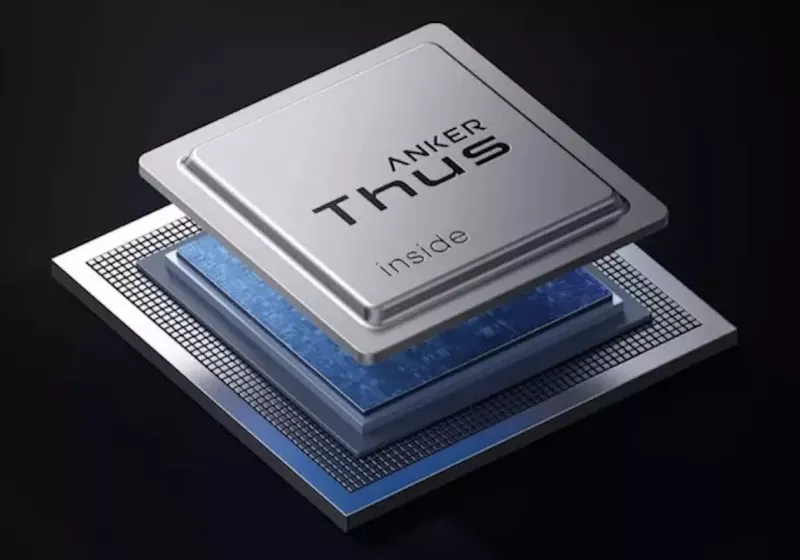
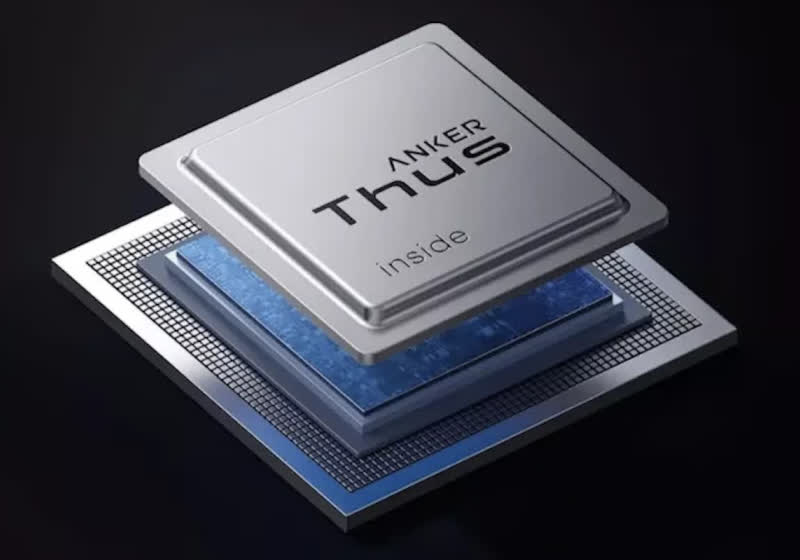
The processor’s compute-in-memory architecture departs from the conventional separation between processing and storage. Traditional chips shuttle data back and forth between memory and compute units, a process that consumes both time and energy. In Thus, computation happens directly inside the NOR flash cells themselves, so models run in the same… Read Entire Article Source link
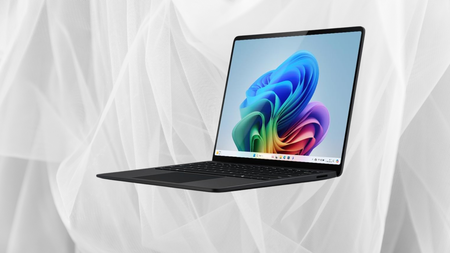
The headline spec is the Snapdragon X Elite processor, which Microsoft positions as faster than the MacBook Air M3 for everyday productivity tasks, and it sits alongside 32GB of LPDDR5x RAM and a 1TB SSD that together mean you are unlikely to feel throttled whether you are running creative applications, video calls, or multiple browser sessions simultaneously.
Advertisement
That performance headroom matters more with this machine than with most, because the Snapdragon X Elite includes an NPU capable of running Copilot Plus features such as Recall, which lets you search your activity history using plain language rather than filing through folders and apps manually.
The 15-inch PixelSense Flow touchscreen produces a native resolution of 2736 by 1824 pixels with HDR support, which gives the display range and contrast that holds up well for anything from editing documents to watching video during a long commute or flight.
Battery life is rated at up to 22 hours based on local video playback, and the chassis weighs 1.66kg, so you are getting a machine that could genuinely replace a bag full of adapters and a portable charger for most travel days.
Advertisement
For someone who wants a large-screen Windows laptop with AI features built in at hardware level rather than bolted on through software, the Surface Laptop at this price represents a meaningful reduction on a machine that originally sat well above the £1,500 mark.
Our experts have tested and ranked the top portable computers across every category in our best laptops 2026 guide, and if you are buying for college or university, our best student laptops 2026 picks are worth a look before you decide.
Meta is planning to cut 10% of its workforce, amounting to 8,000 employees, according to a report from Bloomberg. Meta also will not hire for 6,000 roles that are currently open.
According to an internal memo sent to employees Thursday and viewed by Bloomberg, Meta told staff that the cuts will begin on May 20. Reuters had earlier reported on Meta’s plans for sweeping layoffs.
TechCrunch has reached out to Meta for comment.
“We’re doing this as part of our continued effort to run the company more efficiently and to allow us to offset the other investments we’re making,” chief people office Janelle Gale told employees, according to the memo. “This is not an easy tradeoff and it will mean letting go of people who have made meaningful contributions to Meta during their time here.”
Advertisement
Meta spent tens of billions on its metaverse efforts, which largely failed. The company has also had to make major investments in its AI efforts in order to keep up with competitors in the space — earlier this month, it debuted a completely overhauled AI product called Muse Spark.
Hackers have compromised Docker images, VSCode and Open VSX extensions for the Checkmarx KICS analysis tool to harvest sensitive data from developer environments.
KICS, short for Keeping Infrastructure as Code Secure, is a free, open-source scanner that helps developers identify security vulnerabilities in source code, dependencies, and configuration files.
The tool is typically run locally via CLI or Docker, and processes sensitive infrastructure configs that often contain credentials, tokens, and internal architecture details.
Dependency security company Socket investigated the incident after receiving an alert from Docker about malicious images pushed to the official checkmarx/kics Docker Hub repository.
The investigation revealed that the compromise extended beyond the trojanized KICS Docker image to VS Code and Open VSX extensions that downloaded a hidden ‘MCP addon’ feature designed to fetch the secret-stealing malware.
Advertisement
Socket found that the ‘MCP addon’ feature downloaded from a hardcoded GitHub URL “a multi-stage credential theft and propagation component” as mcpAddon.js.
According to the researchers, the malware targets precisely the data processed by KICS, including GitHub tokens, cloud (AWS, Azure, Google Cloud) credentials, npm tokens, SSH keys, Claude configs, and environment variables.
It then encrypts it and exfiltrates it to audit.checkmarx[.]cx, a domain designed to impersonate legitimate Checkmarx infrastructure. Moreover, public GitHub repositories are automatically created for data exfiltration.
Automatically created GitHub repositories Source: Socket
It is important to clarify that Docker tags were temporarily repointed to a malicious digest, so the impact depends on when they were pulled. The dangerous timeframe for the DockerHub KICS image was from 2026-04-22 14:17:59 UTC to 2026-04-22 15:41:31 UTC.
Affected tags have now been restored to their legitimate image digests, and the fake v2.1.21 tag was deleted entirely.
Advertisement
Developers who have downloaded the above should consider their secrets compromised, rotate them as soon as possible, and rebuild their environments from a known safe point.
While the TeamPCP hackers, responsible for the massive Trivy and LiteLLM supply-chain compromise, claimed the attack publicly, the researchers could not find sufficient evidence beyond pattern-based correlations to confidently attribute it.
BleepingComputer has reached out to Checkmarx, an application security testing company, for a statement, but a comment wasn’t immediately available.
Meanwhile, the company published a security bulletin about the incident, assuring users that all malicious artifacts have been removed, and their exposed credentials were revoked and rotated.
Advertisement
The firm is currently investigating with help from external experts and has promised to provide more information as it becomes available.
Users of the compromised tool are recommended to block access to ‘checkmarx.cx => 91[.]195[.]240[.]123’ and ‘audit.checkmarx.cx => 94[.]154[.]172[.]43,’ use pinned SHAs, revert to known safe versions, and rotate secrets and credentials if compromise is suspected or confirmed.
The latest safe versions of the compromised projects are: DockerHub KICS v2.1.20, Checkmarx ast-github-action v2.3.36, Checkmarx VS Code extensions v2.64.0, and Checkmarx Developer Assist extension v1.18.0.
AI chained four zero-days into one exploit that bypassed both renderer and OS sandboxes. A wave of new exploits is coming.
At the Autonomous Validation Summit (May 12 & 14), see how autonomous, context-rich validation finds what’s exploitable, proves controls hold, and closes the remediation loop.
Two weeks ago, Anthropic announced that its new model, Claude Mythos Preview, can autonomously find and weaponize software vulnerabilities, turning them into working exploits without expert guidance. These were vulnerabilities in key software like operating systems and internet infrastructure that thousands of software developers working on those systems failed to find. This capability will have major security implications, compromising the devices and services we use every day. As a result, Anthropic is not releasing the model to the general public, but instead to a limited number of companies.
The news rocked the internet security community. There were few details in Anthropic’s announcement, angering many observers. Some speculate that Anthropic doesn’t have the GPUs to run the thing, and that cybersecurity was the excuse to limit its release. Others argue Anthropic is holding to their AI safety mission. There’shype and counter–hype, reality and marketing. It’s a lot to sort out, even if you’re an expert.
We see Mythos as a real but incremental step, one in a long line of incremental steps. But even incremental steps can be important when we look at the big picture.
How AI Is Changing Cybersecurity
We’ve written about Shifting Baseline Syndrome, a phenomenon that leads people—the public and experts alike—to discount massive long-term changes that are hidden in incremental steps. It has happened with online privacy, and it’s happening with AI. Even if the vulnerabilities found by Mythos could have been found using AI models from last month or last year, they couldn’t have been found by AI models from five years ago.
Advertisement
The Mythos announcement reminds us that AI has come a long way in just a few years: The baseline really has shifted. Finding vulnerabilities in source code is the type of task that today’s large language models excel at. Regardless of whether it happened last year or will happen next year, it’s been clear for a while this kind of capability was coming soon. The question is how we adapt to it.
We don’t believe that an AI that can hack autonomously will create permanent asymmetry between offense and defense; it’s likely to be more nuanced than that. Some vulnerabilities can be found, verified, and patched automatically. Some vulnerabilities will be hard to find, but easy to verify and patch—consider generic cloud-hosted web applications built on standard software stacks, where updates can be deployed quickly. Still others will be easy to find (even without powerful AI) and relatively easy to verify, but harder or impossible to patch, such as IoT appliances and industrial equipment that are rarely updated or can’t be easily modified.
Then there are systems whose vulnerabilities will be easy to find in code but difficult to verify in practice. For example, complex distributed systems and cloud platforms can be composed of thousands of interacting services running in parallel, making it difficult to distinguish real vulnerabilities from false positives and to reliably reproduce them.
So we must separate the patchable from the unpatchable, and the easy to verify from the hard to verify. This taxonomy also provides us guidance for how to protect such systems in an era of powerful AI vulnerability-finding tools.
Advertisement
Unpatchable or hard to verify systems should be protected by wrapping them in more restrictive, tightly controlled layers. You want your fridge or thermostat or industrial control system behind a restrictive and constantly-updated firewall, not freely talking to the internet.
Distributed systems that are fundamentally interconnected should be traceable and should follow the principle of least privilege, where each component has only the access it needs. These are bog standard security ideas that we might have been tempted to throw out in the era of AI, but they’re still as relevant as ever.
Rethinking Software Security Practices
This also raises the salience of best practices in software engineering. Automated, thorough, and continuous testing was always important. Now we can take this practice a step further and use defensive AI agents to test exploits against a real stack, over and over, until the false positives have been weeded out and the real vulnerabilities and fixes are confirmed. This kind of VulnOps is likely to become a standard part of the development process.
Documentation becomes more valuable, as it can guide an AI agent on a bug finding mission just as it does developers. And following standard practices and using standard tools and libraries allows AI and engineers alike to recognize patterns more effectively, even in a world of individual and ephemeral instant software—code that can be generated and deployed on demand.
Advertisement
Will this favor offense or defense? The defense eventually, probably, especially in systems that are easy to patch and verify. Fortunately, that includes our phones, web browsers, and major internet services. But today’s cars, electrical transformers, fridges, and lampposts are connected to the internet. Legacy banking and airline systems are networked.
Not all of those are going to get patched as fast as needed, and we may see a few years of constant hacks until we arrive at a new normal: where verification is paramount and software is patched continuously.
















.jpg)












































You must be logged in to post a comment Login