Connect with us
DAPA Banner
DAPA Coin
DAPA
COIN PAYMENT ASSET
PRIVACY · BLOCKDAG · HOMOMORPHIC ENCRYPTION · RUST
ElGamal Encrypted MINE DAPA
🚫 GENESIS SOLD OUT
DAPAPAY COMING

Tech

Apple’s gameshow phobia won’t change

Published

on

In this week’s “Sunday Reboot,” Malcolm ponders why Apple TV doesn’t do game shows, and if it ever will properly work competition-based shows into its streaming service.

Anyone paying a subscription expects to get their money’s worth from their monthly outlay, especially when it comes to streaming services. I occasionally look at the collection that I pay for each month, and if I haven’t watched it enough in the last few months, it gets cancelled for a while.

This does help save a bit of money, but the one that I simply cannot do this to is Apple TV. That’s primarily because it’s in my Apple One subscription and I use everything else in the package a lot.

Since getting rid of Apple TV isn’t an option, I have to come up with reasons to actually watch stuff on it. That is surprisingly hard, because I’m not really a narrative-driven guy.

Advertisement

With the exception of Ted Lasso and rare viewings of light sci-fi, I can’t really get into the content Apple TV provides in a major way.

I believe the problem, at least for my particular viewing habits, is that Apple doesn’t do game shows.

It does do sports, certainly, and that would be considered competition in nature. But I’m discounting them as gameshows and reality competition shows are a different thing entirely.

I am very much a trivia nut, and I can get behind people doing tasks and competing in challenges. While I prefer “shiny floor” studio game shows, I’m not against reality competition shows either, and I even seek out the weird and wild ones, too.

Advertisement

My favorite is still Release the Hounds, which had people take on horror-themed tasks before trying to outrun dogs for money. As in real dogs chasing after and taking down the contestants.

A close second is the much lighter and family-friendly “Chef and My Fridge” on Netflix.

This is all stuff that Apple TV shies away from almost entirely. You certainly won’t be able to find an Apple Original trivia show on the service at all.

Three Whammies

Apple has, so far, produced three competition shows in its long-form programming history. Just three, and that’s if you stretch the definition a tiny bit.

Advertisement

None of them was what you could refer to as a smash hit at all.

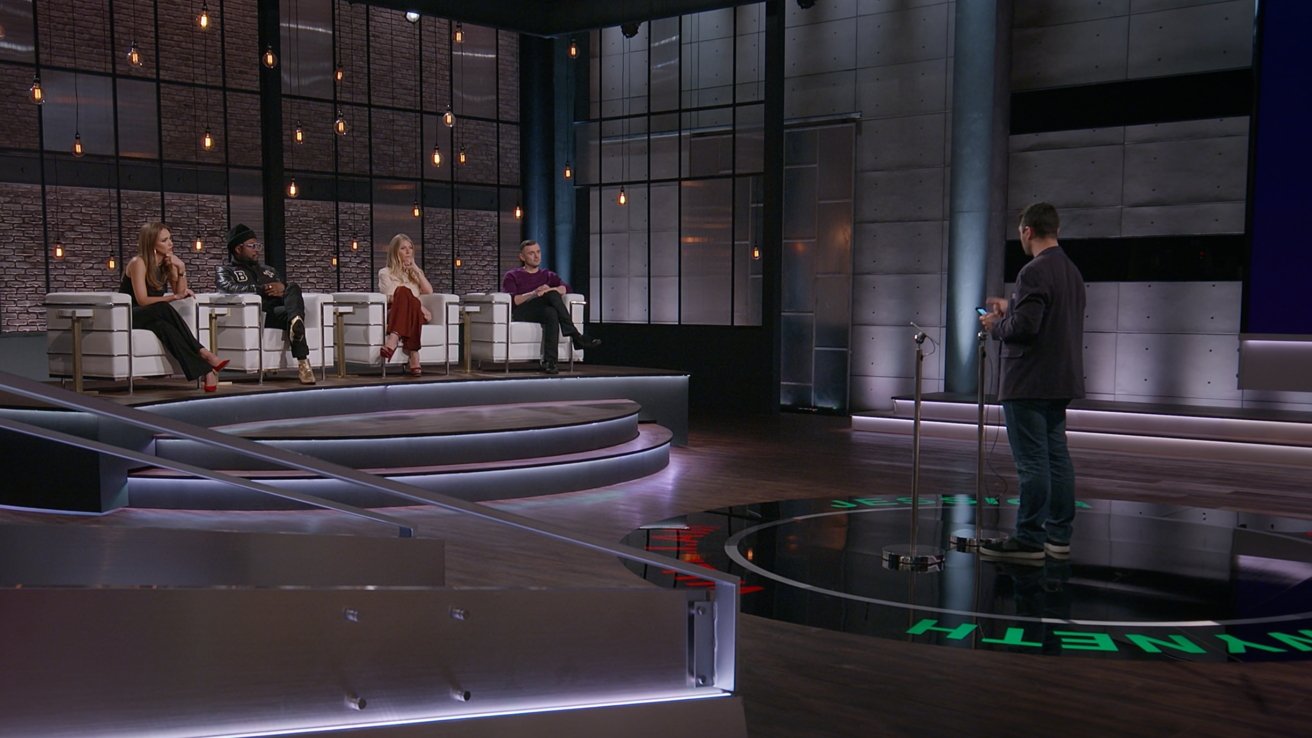
The earliest, which predates Apple TV, was 2017’s Planet of the Apps. While Apple TV didn’t exist, it premiered on CNBC and was also available on Apple Music and iTunes.

It was a painfully obvious idea. A Shark Tank-esque show promoting app development by making people pitch apps that they thought could make them tons of money.

It was also a pretty bad show to watch, with developers trying to make Gary Vaynerchuk, Jessica Alba, Gwyneth Paltrow, and Will.I.Am care about their “great” idea. Really, the less remembered about it, the better.

Advertisement

Apple’s second real attempt, first for Apple TV itself, was My Kind of Country in 2023, which attempted to take on The Voice. Country singers around the world were gradually eliminated until one person won $100,000 and promotion on Apple Music.

This, again, makes sense for Apple to create, since it does the whole Apple Music thing.

But it evidently wasn’t enough of a hit to warrant a second series. It hasn’t officially been cancelled, but it’s also not been renewed either.

Door number three is Kpopped, which again is music, but barely counts as a competition show. Capitalizing on the K-pop wave, it combined established groups with Western artists, gave them 48 hours, and made them perform to an audience.

Advertisement

There is a vote to determine who did the best, so there is technically a competition aspect at play. But really, it’s an excuse to show established Western artists like Megan Thee Stallion, the Spice Girls, Kesha, and Kylie singing alongside K-pop groups like Billie and Itzy.

It’s basically fluff and an attempt to cash in on a global trend. Again, can’t really fault Apple for trying.

What we can fault Apple for is not trying enough.

Rivals

Pretty much every major streaming service has some form of game show or competition reality show on its current roster. I also don’t just mean shows from their imported back catalogs, but originals commissioned by the streaming services themselves.

Advertisement

Amazon’s got the Mr Beast-fronted Beast Games along with Last One Laughing, the James Bond-themed 007: Road to a Million, and a season of Pop Culture Jeopardy.

Netflix is far more prolific and is also very successful with its own content. You have skill-based shows like Blown Away and Is It Cake?, and physical competition shows such as Physical 100 and Floor Is Lava.

Its more cerebral content includes The Devil’s Plan, Million Dollar Secret, and the service-switching Pop Culture Jeopardy. Offbeat reality competition is also there with the decent Zombieverse, the middling Squid Game: The Challenge, and the throw-away Snowflake Mountain.

Disney+ is a bit of a different story, in part due to it pulling content from TV channels and studios it owns, which typically go on normal broadcast television first. The original programming side of things is a bit thin, but there was Star Wars: Jedi Temple Challenge, which was an attempt at a kids’ gameshow based on the film franchise.

Advertisement

It didn’t really work that well, but at least Disney tried.

Game show economics

Game shows and reality shows have a lot of aspects that studios like. That includes the relatively low per-episode cost to produce a season of a show.

For a studio quiz, you only need one small set, which is really cheap if it’s a long-running show. Reality competition shows need a lot more, but far from the scale of what is needed for a high-budget drama.

Staffing is also relatively cheap compared to scripted programming, as the prize contestants fight over can be less than the total cost of a bunch of actors and extras.

Advertisement

Studio quizzes are also cheaper in terms of crew costs, as you can get multiple episodes in the can in a day. Short production times save money.

The economics of a game show, even one with a big six or seven-figure cash prize, make it that the cost of production is lower overall. If you’re careful, you can create multiple game shows for the same cost as one mid-size dramatic production.

That reality makes it easy for someone like Netflix to churn out multiple competition shows, in the hope that a few become hits. It’s worked for decades on broadcast television, and also for Netflix.

Quality, not quantity

While I can wish for Apple to do some decent game show-like content on its streaming platform, it’s something that probably won’t ever happen.

Advertisement

Since the beginning of Apple TV+, years before losing the plus, it had a remit to offer high-quality programming to viewers. In one early interview, then VP of Software and Services Eddy Cue was adamant that Apple was working on “creating the best” content instead of “creating the most.”

This is a strategy that has served Apple TV very well. Over the years, it has become known as a dramatic powerhouse, winning many awards and accolades in the process.

It even recently led to Cue, now SVP of Services and Health, to be named the 2026 Entertainment Person of the Year at Cannes Lions.

Evidently, he knows what he’s doing.

Advertisement

Apple is not in the business of being cheap with production. It does not believe in the shotgun approach to content, as it strives to make everything that comes through its doors a hit.

Unless there’s a sudden turnaround in strategy from Cue or someone else in Apple’s leadership team, it’s a policy that it will maintain for the foreseeable future.

Game shows, sadly, have no place on Apple TV. No question about it.

Last week’s Sunday Reboot discussed Beats beating FIFA at the advertising game and GymKit on iPhone.

Advertisement

Source link

Continue Reading
Click to comment

You must be logged in to post a comment Login

Leave a Reply

Tech

Quordle hints and answers for Monday, June 29 (game #1617)

Published

on

Looking for a different day?

A new Quordle puzzle appears at midnight each day for your time zone – which means that some people are always playing ‘today’s game’ while others are playing ‘yesterday’s’. If you’re looking for Sunday’s puzzle instead then click here: Quordle hints and answers for Sunday, June 28 (game #1616).

Quordle was one of the original Wordle alternatives and is still going strong now more than 1,400 games later. It offers a genuine challenge, though, so read on if you need some Quordle hints today – or scroll down further for the answers.

Enjoy playing word games? You can also check out my NYT Connections today and NYT Strands today pages for hints and answers for those puzzles, while Marc’s Wordle today column covers the original viral word game.

Advertisement

Source link

Continue Reading

Tech

The Ebike Accessories You Need to Help You Haul the Most Stuff

Published

on

When my wife and I bought our first ebike—a Radwagon 4 by the Seattle-based Rad Power Bikes—four years ago, we did so to replace one of our two family cars. For in-town trips of 5 miles or less, we figured we could (and should!) use the bicycle. At the time, our kids were very young, so we needed a bike capable of safely carting them around and also handling whatever we were hauling on a given day.

The Radwagon answered those needs; the direct-to-consumer company allowed me to configure the bike to suit my exact needs during the ordering process. I selected a front basket, a rear pad seat for my son, and a Thule Yepp 2 Maxi seat to secure my then-toddler daughter. I also bought a few safety lights and a bell from my local bike shop (more on those accessories below).

Once the bike arrived and was assembled, my wife and I used it to tote our kids all over town. We rode to and from school and daycare, playdates, and doctor’s appointments; made quick grocery runs; and went anywhere else we needed to go that was relatively close to home.

On any given day, the front basket continues to function as a cornucopia holding whatever we might need for the task or errand at hand. On a recent trip to a nearby playground, my ebike’s basket held the following: a small soccer ball, my wife’s small shoulder bag, my bike lock and cable, two bottles of water (in addition to a third bottle of water in the bike’s bottle cage), three baseball caps, two baseball gloves, one baseball, a small tin lunch box full of snacks, and two binders full of Pokémon trading cards. The basket has also successfully transported two large grocery bags or three smaller ones, and, on one occasion, a small guitar amp I found at our local thrift store.

Advertisement

The bike is still useful and functional, but my family’s needs have changed since we bought it. My now-4-year-old daughter is too big to fit in her Yepp seat, and my now-8-year-old son is a bit too self-conscious to be seen on the back of his dad’s big ebike. (Not to mention, he’s now strong enough to ride all over town on his own bike.)

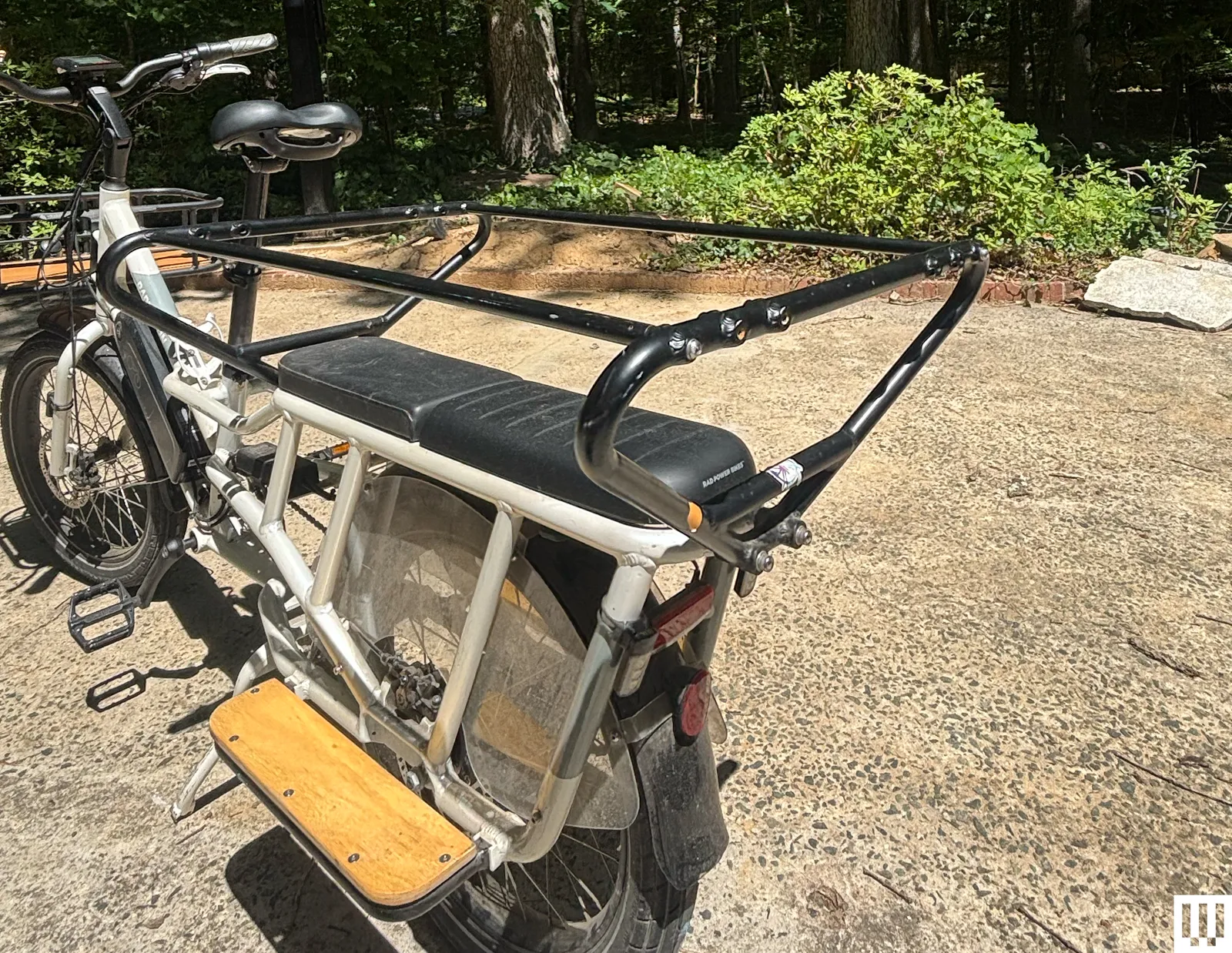
With my kids outgrowing the beloved family ebike, I’ve been thinking about its next iteration as a serious cargo schlepper—a Grocery Getter, if you will—and how I can set it up to haul as much stuff as possible. Ebikes now make up a huge category, serving mountain bikers and commuters, folding and cruising to fit various needs. There are strategic ways to maximize your ebike’s capabilities for each of those purposes, but here I’m going to stick to outlining the two I know best: carting a family (the Family Wagon) and hauling lots of stuff (the Grocery Getter).

The Family Wagon

Image may contain Escooter Transportation and Vehicle

Photograph: Michael Venutolo-Mantovani

If you use your ebike to transport your kids, you’ll want comfortable, safe, and age-appropriate seating for them.

Source link

Advertisement
Continue Reading

Tech

Phone Stand Aims To Fight Addiction

Published

on

Sometimes, it’s hard to stop picking up your phone every few minutes to check on notifications and scroll endlessly through the slop of the day. [PushpendraC2] has been working on a solution to this problem that would ideally discourage such behavior —  a nifty little smartphone stand!

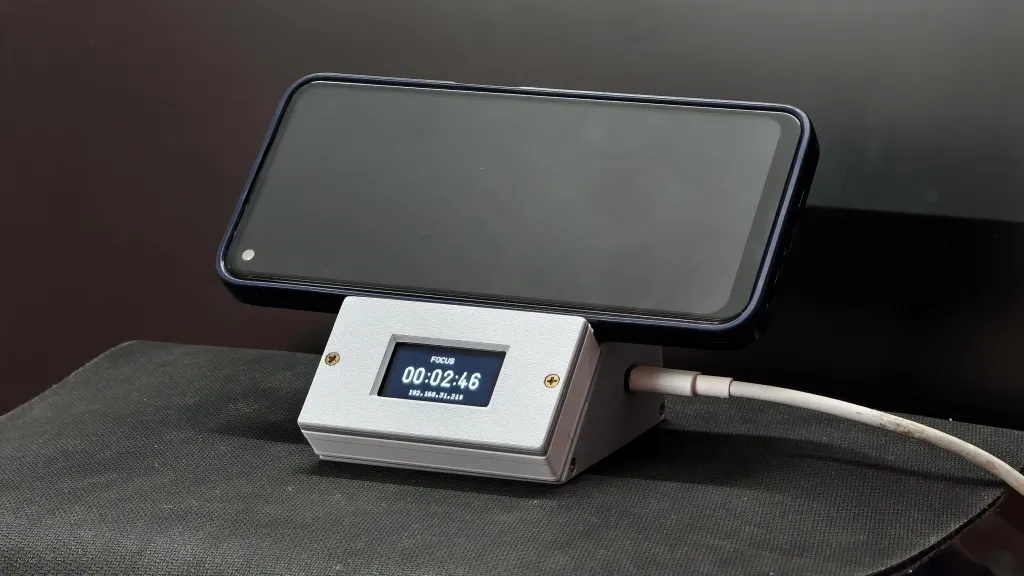
The concept is straightforward enough—the smartphone stand uses a simple tactile button to determine if your smartphone is sitting on the little 3D printed shelf, or not. However, the smarts inside do a bit more than that, too. An ESP32-S3 is charged with monitoring whether the smartphone is sitting in place, and starts counting “focus time” while it’s there. If the phone is picked up, the OLED display on the shelf starts ticking down a 5-second timer to encourage you to put it back. If you don’t, the focus time is reset and you lose your streak.

It’s also possible to tap a touch sensor on the device which sets a reminder timer, prompting you to put your phone back after a set period of time, between 2 to 30 minutes. A buzzer will then start going off to prompt you to put the phone down. If you want to track the devices impact, you merely need to log in to the web server hosted by the ESP32, which shows your current focus session time, along with a heatmap of your daily productivity.

Advertisement

It’s a simple idea, but one that uses a few neat psychological hooks to encourage compliance and behavioral change. We’ve featured similar projects in this vein before, No surprise, as phone addiction is a problem experienced by many.

Advertisement

Source link

Continue Reading

Tech

TechCrunch Mobility: All eyes on Tesla FSD

Published

on

Welcome back to TechCrunch Mobility, your hub for the future of transportation and now, more than ever, how AI is playing a part. To get this in your inbox, sign up here for free — just click TechCrunch Mobility!

A quick heads-up to readers: I will not publish an issue next week due to the July 4th holiday. I will see you all the following week. 

A series of stories this week highlight the continued — and apparently growing — scrutiny of Tesla’s automated driving system known as Full Self-Driving (Supervised). A fatal crash involving a Tesla that struck a home in Texas and killed a 76-year-old woman gained national attention after the driver told police that Autopilot — the company’s basic driver-assistance system, which has since been discontinued — was engaged at the time of the crash. 

Ashok Elluswamy, vice president of AI software at Tesla, shared a different account of the crash, claiming on X that the driver manually overrode “self-driving by pressing the accelerator all the way to 100% of the accel pedal in this residential area.”

Advertisement

His comments suggest the vehicle was equipped with FSD (Supervised), and not Autopilot, but without an independent investigation we don’t know for sure. But we might, eventually. 

The National Highway Traffic Safety Administration (NHTSA) and the National Transportation Safety Board (NTSB) have now opened investigations into the crash.

Meanwhile, Tesla settled a lawsuit connected to a fatal 2023 crash involving a vehicle using FSD (Supervised). This crash is part of a different NHTSA investigation into Tesla FSD focused on whether the system could “detect and respond appropriately to reduced roadway visibility conditions,” such as “sun glare, fog, or airborne dust.”

All of this attention comes as Tesla positions itself as an AI and robotics company. FSD (Supervised) is currently the most visible, revenue-generating product tied to that branding.

Advertisement

A little bird

blinky cat bird green
Image Credits:Bryce Durbin

A reader who has shared tips with us before alerted me to a research report on Waymo and its growing fleet of Ojai robotaxis. For a refresher, Waymo struck a supplier deal with Zeekr, the brand owned by China’s Geely Holding Group, to provide it with an electric vehicle designed to operate as a robotaxi.

The minivan-like robotaxi was designed in Sweden and is manufactured in China. (These vehicles don’t contain any vehicle communication modules; current U.S. policy bans Chinese-connected vehicle technology.) Once it gets to the U.S., Waymo takes over and adds in its self-driving system. The Ojai is equipped with Waymo’s sixth-generation system — including 13 cameras, four lidar sensors, six radar units, and an array of external audio receivers.

The New York-based research firm MoffettNathanson did a bit of gumshoeing to figure out how serious Waymo’s Ojai program is. The firm examined Bill of Lading documents, which are detailed receipts of shipped goods that are filed with the U.S. government. The company counted Zeekr vehicle labels CM1e or CME, the company’s label for Waymo-bound vehicles. 

MoffettNathanson, which shared its report with TechCrunch, discovered that Waymo is on pace to import 3,156 vehicles into the U.S. this year, about 300 vehicles per month.

Got a tip for us? Email Kirsten Korosec at kirsten.korosec@techcrunch.com or my Signal at kkorosec.07, or email Sean O’Kane at sean.okane@techcrunch.com.

Advertisement

Deals!

money the station
Image Credits:Bryce Durbin

Aseon Labs, a Silicon Valley startup developing mobile pods that can autonomously inspect, clean, and charge robotaxis, raised $10 million in a seed round led by Crane Venture Partners. Other participants included Y Combinator, Uber co-founder Garrett Camp’s venture firm Expa, Robin Hood Ventures, and Founders Capital.

CaoCao and May Mobility, an autonomous vehicle technology startup, partnered to jointly explore commercializing robotaxi services in international markets, beginning with Europe.

Elroy Air, the autonomous heavy-cargo ‌drone startup, plans to go public through a merger with blank-check firm ​Columbus Circle Capital Corp II. The deal is valued at about $1 billion.

Partly, a company that creates AI tools for the automotive repair supply chain, raised $50 million in a Series B round led by DST Global Partners.

Spiro, an African electric vehicle and clean energy infrastructure platform, finalized a $55 million investment from NewTrails Capital, a Chinese growth-stage fund. 

Advertisement

Terawatt Infrastructure, a company that provides EV charging for fleets, including for Waymo and other autonomous and electric fleets, set up a five-year senior secured credit facility that could allow it to borrow as much as $300 million from banks. The proceeds will support the acquisition and development of charging depots, the company said. 

Notable reads and other tidbits

Image Credits:Bryce Durbin

Companies like Tesla and Zoox could get a boost from the U.S. Department of Transportation, which has proposed changes to federal vehicle regulations that would allow companies to skip the inclusion of brake pedals in “vehicles designed to be driven exclusively by automated driving systems.” 

Lucid Motors is laying off 18% of its workforce, or around 1,500 employees, and cutting the second shift of EV production at its factory in Casa Grande, Arizona. Reminder: The layoffs come just four months after the EV maker cut 12% of its staff. CEO Silvio Napoli said the cuts are part of an effort “to simplify the company, sharpen execution, and position Lucid to become more competitive over time.” In this pursuit to simplify, what will Lucid give up? 

Lyft CEO David Risher posted a blog that got my attention. In it, he laid out the company’s multi-sensor safety standard for autonomous rides. The upshot: Autonomous vehicles that use one type of sensor can’t go on the Lyft network. I reached out to the company and they confirmed what this seemed to imply — vehicles like the Tesla Cybercab and Tesla robotaxis that use FSD (Unsupervised) won’t qualify since they only use cameras. The rules don’t apply to advanced driver-assistance systems, by the way. So all of those humans who drive Tesla vehicles on the Lyft app are not affected.

OpenAI hired away Uber India president Prabhjeet Singh to be its first managing director.

Advertisement

Polestar, the Swedish electric vehicle manufacturer owned by Chinese automotive giant Geely, can no longer sell its new cars in the U.S. market. The imported vehicles are restricted by a U.S. government law that bans Chinese connected car technology. 

Samsara, the fleet management company, is rolling out business-card-sized sticky tracking labels to solve cargo theft

Slate Auto’s radically simple electric truck starts at $24,950. Would you pay $25K for a two-seater truck with a 205-mile range, hand-crank windows, no infotainment system, and gray composite material finish (owners can order customizable wraps for the vehicle)? And climate tech reporter and in-house battery expert Tim De Chant explains why Slate changed the battery in its cheap EV truck. 

Uber is facing a lawsuit by shareholders that accuse the board and management of putting profits ahead of compliance and safety, decisions that have exposed the company and its shareholders to risk.

Advertisement

Waymo has set up an entity in Germany, which German news outlet Frankfurter Allgemeine Zeitung first reported. The company registration filing makes it pretty clear that it’s gearing up to launch a robotaxi service in the country. However, this doesn’t mean it’s imminent, insiders tell me. Meanwhile, Waymo has dropped its waitlist in Nashville, a move that opens up its service to the public. 

Zoox gave its custom-built robotaxis a makeover as it prepares for commercial service and larger-scale production at its Hayward, California, facility.

When you purchase through links in our articles, we may earn a small commission. This doesn’t affect our editorial independence.

Source link

Advertisement
Continue Reading

Tech

US auto regulators want to kill robotaxi brake pedals

Published

on

offbeat

Requiring driverless vehicles to keep human brake controls impedes innovation, the NHTSA says

If a self-driving car is going to stop, it may need to stop itself. US vehicle safety regulators are proposing to let robotaxi designers get rid of brake pedals, calling regulatory requirements for manually operated methods of stopping driverless vehicles a barrier to innovation. 

The US National Highway Traffic Safety Administration (NHTSA) published a notice of proposed rulemaking on Friday to modify federal brake safety standards for light vehicles by eliminating the requirement for vehicles equipped with automated driving systems (ADS) and no manual controls to have foot-operated service brakes or manually operated parking brakes.

Advertisement

The NHTSA argues the controls themselves could pose a safety risk by allowing passengers to intentionally or unintentionally override an ADS. Existing braking performance requirements would remain in place, the agency said, even as brake pedals and handbrakes are on the chopping block.

“Regardless of the manner of brake control application, the brake systems must be capable of safely stopping the vehicle, as already required by the standard,” the agency said in its proposal. “This rulemaking would remove unnecessary regulatory burdens and costs with no negative impact to vehicle safety.”

The NHTSA would keep existing stopping-distance requirements for robotaxis, thankfully, but said standardized methods for testing driverless vehicles may need further development. Vehicles equipped with ADS that still have steering wheels and other manual controls, as well as cars equipped with driver-assistance systems such as Tesla Autopilot, Ford BlueCruise, and similar technology, will still need to have brake pedals, naturally.

A number of automakers and driverless taxi operators (Tesla, Waymo, Amazon, etc.) have been developing vehicles that lack manual controls, but current FMVSS still require them to have a brake pedal. That’s simply not safe, says the NHTSA. 

Advertisement

“The inclusion of a manually operated driving control that directly overrides ADS operation could pose a safety risk through intentional or unintentional misuse by a vehicle passenger,” the proposal argues. All people in a driverless taxi, it continues, are passengers who “should also not be expected to perform driver functions such as engaging the parking brake.”

In other words, despite the NHTSA’s admission in the proposal that ADS tech “is still maturing and many of the potential benefits are yet to be realized,” the agency is prepared to remove mandatory brake pedals and handbrakes from ADS-only vehicles, even as robotaxis and driver-assistance systems continue to generate safety headaches, from Waymo vehicles entering flooded roads and running over dogs to fatal crashes involving Tesla’s Autopilot, without requiring a standardized method for passengers to tell the vehicle to stop.

It doesn’t want to completely eliminate manual overrides, mind you, but the agency isn’t going to force automakers to conform to any one method of giving passengers the ability to stop their driverless car.

“It is NHTSA’s expectation that if these controls are removed, passengers will still be provided with a means to direct an ADS-operated vehicle to come to a stop, though how a passenger would indicate they wanted the ADS-operated vehicle to stop would likely vary by manufacturer,” the NHTSA said. 

Advertisement

The NHTSA has frequently butted heads with automakers deploying controversial driver-assistance technology, like Tesla, but the agency was gutted during Tesla CEO Elon Musk’s time heading up the so-called Department of Government Efficiency, with the cuts falling particularly hard on staff responsible for regulating self-driving vehicles. 

Comments on the proposal are being accepted through July 27, but the docket number for the proposal (NHTSA-2026-0728) does not yet appear on the web portal for registering support or dissent. ®

Source link

Advertisement
Continue Reading

Tech

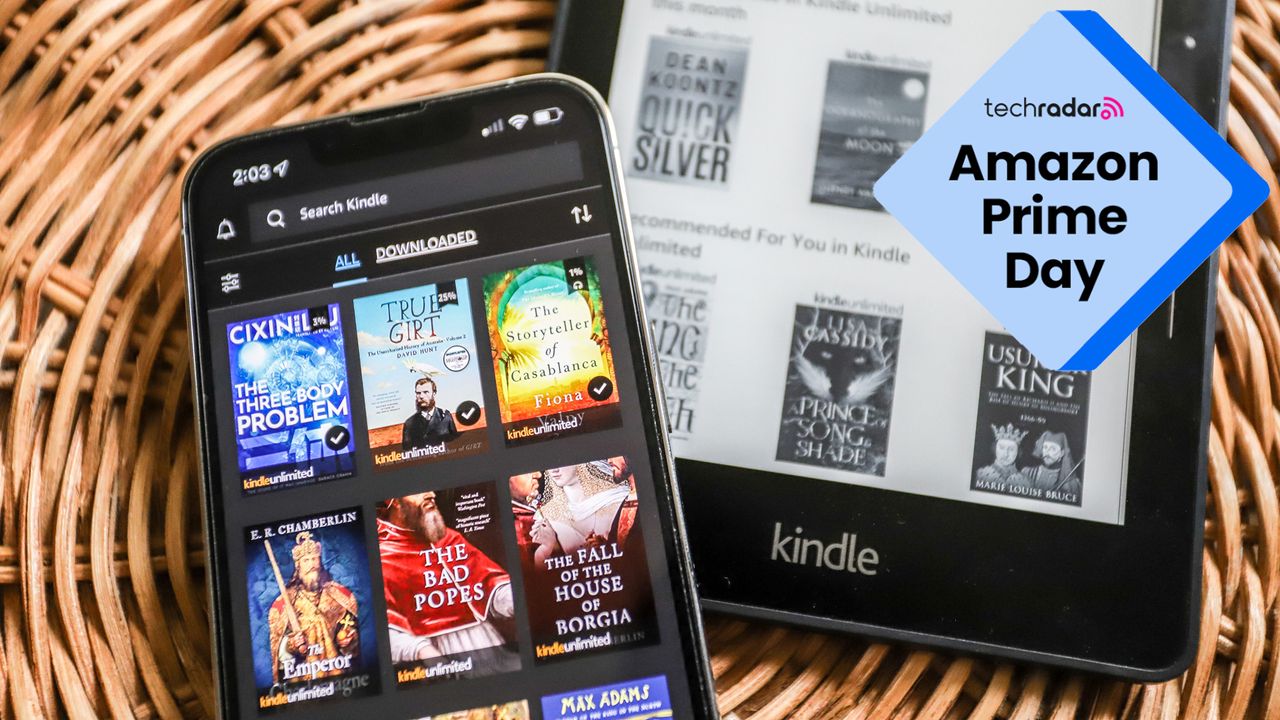
Amazon AU’s best early Prime Day deal gives you 3 months of free reading and listening

Published

on

With just days to go before Prime Day 2026 kicks off in Australia, it’s no surprise that early deals have already started, with Amazon‘s own subscription services being the stars of the opening act.

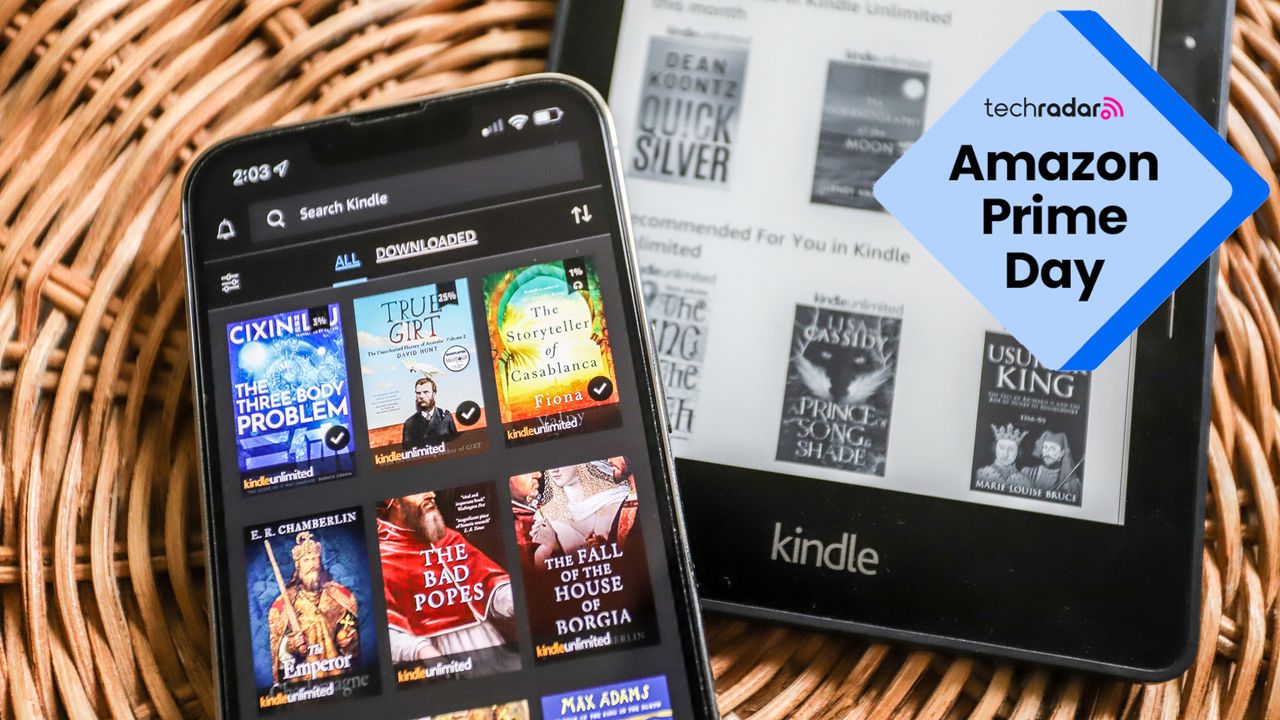
You can now get three months of free Kindle Unlimited and Audible if you’re a new or returning customer to either or both of the services, which is fantastic news for avid readers.

That’s the best early Prime Day deal in my books (pardon the pun) because, as a voracious reader who has set herself a challenge to read upwards of 60 books in the calendar year (I usually average about 30), three months free of Kindle Unlimited is sure to help. Yes, I did sign up for Kindle Unlimited myself as a returning customer, hoping to discover some unknown gems in my preferred genres of history, fantasy and mythology.

So, instead of the usual 30-day free trial, you get an extended three months free trial, but keep in mind that this will not include an additional 30 days — the original trial period becomes null and void in these circumstances.

Advertisement

That’s still a good deal, because you save two months of subscription cost at the very least, which is AU$27.98 (or AU$13.99p/m) for Kindle Unlimited and AU$17.98 (or AU$8.99p/m) for Audible.

Note that these early Prime Day deals — like all other Prime deals — require a Prime membership to be eligible. In fact, you won’t even see those offers on Amazon if you aren’t signed in with a Prime account. If you have a standard Amazon account, you will find Kindle Unlimited for half price (AU$6.99p/m) for three months instead.

Again, it looks like opting for this half-price deal voids the standard 30-day free trial as that’s presented as a separate sign-up option for non-Prime members. So definitely take advantage of this excellent deal as a Prime subscriber.

Advertisement

The best early deal I can see for non-Prime members is four months free of Music Unlimited, and that’s even better value, especially if you listen more than read. Not only does a Music Unlimited subscription get you ad-free HD streaming access to millions of songs, there are hundreds of thousands of podcasts and audiobooks too.

If you’ve never had a Prime membership before, you can get a 30-day free trial of Amazon Prime to get access to this year’s Prime Day deals. You get the same benefits as paid members, including free delivery in thousands of eligible products, and access to other services such as Prime Video, Prime Music, Prime Gaming and more. You can cancel at any time during the trial to avoid paying the regular fee of AU$9.99 per month. Just click on any of the buttons below to sign up now.

Advertisement

Source link

Continue Reading

Tech

Spain-Backed Fund Joins FOSSA’s Sovereign Satellite Communications Push

Published

on

Spanish startup FOSSA Systems “has raised about $10.5 million to expand its connectivity constellation,” reports Space News, noting some funding is backed by Spain’s government:

The support from the Spanish Society for Technological Transformation (SETT) comes a year after the fund injected 14 million euros into Spain’s Sateliot , which is also developing a satellite connectivity network with security and defense applications. Spanish private investment firm Kibo Ventures led FOSSA’s funding round, the six-year-old venture announced June 24, bringing its total raised to date to nearly 20 million euros.

The proceeds will help fuel FOSSA’s push beyond the tiny picosatellites it once used to connect low-power monitoring devices toward larger cubesats in low Earth orbit, enabling additional sovereign communications and space-based intelligence capabilities… The company’s funding round follows a wave of investments this year in European ventures planning to develop sovereign space capabilities, including Austrian propulsion startup Gate Space, which secured 6.3 million euros earlier this month from a European Commission-backed accelerator program.

Advertisement

“Our goal is to establish FOSSA as a European benchmark in sovereign space infrastructure,” said Julián Fernández, FOSSA’s CEO and cofounder.

Source link

Continue Reading

Tech

Baidu’s chip unit Kunlunxin is targeting a $50 billion Hong Kong IPO and asked investors to buy its semiconductors

Published

on

TL;DR

Baidu’s Kunlunxin targets a $50B Hong Kong IPO and asked investors to commit to buying its chips, blurring the line between shareholder and customer.

Baidu’s AI chip unit Kunlunxin is planning to go public in Hong Kong at a target valuation of $50 billion, The Information reported on Sunday. In an unusual twist, the company asked prospective IPO investors to also commit to purchasing its semiconductors, according to the report.

Reuters could not independently verify the report. The $50 billion target represents a dramatic increase from the $14.7 billion valuation that the South China Morning Post reported Kunlunxin was seeking as recently as this month, and from the HK$100 billion (roughly $12.8 billion) figure TrendForce cited in May.

The practice of tying chip purchase commitments to IPO allocation, if confirmed, would blur the line between investor and customer in a way that echoes the “circular financing” structures the Bank for International Settlements warned about this weekend. The BIS flagged arrangements where chipmakers take stakes in AI labs that then commit to buying their products, calling the terms “typically poorly disclosed.

Advertisement

Kunlunxin filed confidentially for a Hong Kong listing in January and is also pursuing a dual listing on Shanghai’s STAR Market. It has appointed CICC, Citic Securities, and Huatai Securities as lead banks. The company was founded in 2012 as Baidu’s in-house chip division and is central to the search giant’s ambition to become a full-stack AI company. Hong Kong has become the primary listing venue for Chinese AI companies, with nearly $44 billion raised in equity capital markets in the first half of 2026, the highest level in five years.

The 💜 of EU tech

The latest rumblings from the EU tech scene, a story from our wise ol’ founder Boris, and some questionable AI art. It’s free, every week, in your inbox. Sign up now!

The listing lands amid a broader AI-driven fundraising boom in the city. CATL completed a multibillion-dollar offering, AI developer Zhipu is preparing another round after going public in January, and optical transceiver maker Zhongji Innolight is also planning a listing. SK Hynix has filed for a US listing that could raise $29 billion.

Advertisement

Kunlunxin has been shifting from an internal Baidu supplier to a third-party chip seller. External customers accounted for over 50% of revenue in 2025, and the company was expected to reach breakeven that year. The BIS warned this weekend that the AI investment boom’s financial structures carry systemic risks, and a chip company asking its IPO investors to also become its customers is precisely the kind of entanglement regulators are flagging.

Source link

Advertisement
Continue Reading

Tech

Microsoft Slammed for Building Copyright-Infringing Supercomputer for OpenAI in New Court Filing

Published

on

The New York Times alleges Microsoft actively encouraged OpenAI to steal its copyrighted work, reports Ars Technica, citing a new (and heavily redacted) court filing Thursday:

NYT’s motion comes after the [U.S.] Supreme Court sided with Cox Communications in a case where Sony tried and failed to claim that Cox was contributing to music piracy as an Internet service provider, which set a new standard for contributory infringement. Moving forward, plaintiffs will have to prove that parties intentionally acted to induce illegal conduct. Recognizing that the legal precedent has changed, the NYT now wants to amend its complaint to align its contributory infringement claim against Microsoft with that new standard… A Microsoft spokesperson told Ars that the company views the amended complaint as “a last-ditch effort by the plaintiff to save its claim from unfavorable precedent set in other recent rulings…”

The updated complaint seeks to specify that [Microsoft’s] supercomputer was tailor-made to help OpenAI infringe and allege that it was built for the explicit purpose of training AI on copyrighted works without permission. And as the NYT alleged, its articles were more heavily weighted by this system, as both firms hoped to train models on the highest-quality journalism possible, so that level of writing could be confidently mimicked in outputs. By building this “unusually complex” machine, Microsoft not only helped select the works that were infringed but also provided a means to seize copyrighted works without permission, the NYT alleged. “Microsoft specifically designed it for the purpose of using essentially the whole Internet — curated to disproportionately feature Times Works — to train the most capable LLM in history,” the NYT alleged… Similarly as problematic for the NYT are hallucinations where Microsoft and OpenAI models falsely cite the NYT for content that they never published… “Users who ask a search engine what The Times has written on a subject should be provided with neither an unauthorized copy nor an inaccurate forgery of a Times article, but a link to the article itself,” the NYT alleged…

In a statement provided to Ars, OpenAI spokesperson Drew Pusateri reiterated the AI firm’s often-repeated claims that AI training on copyrighted works is indisputably fair use… OpenAI has argued that “ChatGPT is not a substitute for a Times subscription,” the NYT reported, partly because “they transformed the material for a different use.”
An OpenAI spokesperson told Ars Technica that OpenAI’s models “empower innovation,” while a New York Times spokesperson insisted that Microsoft “actively encouraged OpenAI to steal our copyrighted works… [O]ur core claims remain the same from the day we filed this lawsuit — that Microsoft and OpenAI stole millions of The Times’s copyrighted works to compete with our products and illegally enrich themselves.”

Advertisement

The article speculates that the case’s most extreme outcome “could require OpenAI and Microsoft to wipe models and start over. The NYT has also asked for permanent injunctive relief to prevent future infringement, as well as extensive damages…”

Source link

Continue Reading

Tech

Google wants AI regulation, but on its own terms

Published

on

AI AND ML

Surely, we can have rules that allow us to continue doing what we’re doing

For more than three years now, we’ve been hearing from AI execs who insist that the government regulate their industries … until there’s a chance such oversight could hurt business. OpenAI and Anthropic have led the way with the latter’s CEO, Dario Amodei, calling for “binding regulations” in June 2026, only to push back when his latest models were suspended.  

Now Google, which has also called for AI regulation, would like to clarify its request for government intervention and ask for a “middle way” that’s largely favorable to its interests.

Advertisement

“The debate over AI governance is stuck in a false choice between over-regulation and no regulation,” said Google president Kent Walker in a blog post. “There is a middle way: A pragmatic, evidence-based approach that recognizes the unique challenges and opportunities of both frontier AI and widely-deployed AI applications.”

Walker does not explicitly define “over-regulation,” but presumably we’re talking about the recent ban on Anthropic’s Fable 5 and Mythos 5. 

In Google’s 21-page policy paper “A Pragmatic Approach to AI Governance in America” [PDF], the company argues, “There is a middle path that would balance market-driven innovation and independent oversight: a federally overseen frontier AI regulatory organization (FARO).”

The FARO would be modeled after other notionally independent, industry-funded organizations like the North American Electric Reliability Corporation, the Financial Industry Regulatory Authority, and the American Medical Association, each of which is overseen by some government commission or agency.

Advertisement

The conceit of a middle path is difficult to reconcile with the past decade of dire warnings about AI from technology leaders. If AI is indeed an existential threat with the capability to do harm, one might expect it to be regulated like lead or asbestos.

Yet here’s Google arguing, “AI platforms should be required to take reasonable measures to feature persistent disclaimers, filter out sexually explicit or romantic content, avoid claims the model is a person (and regularly point out that it’s not), and not promote emotional dependency.”

We’ve seen how well this has worked out on the internet, where Section 230 of the Communications Decency Act has immunized platforms that take performative safety measures: we wanted some measure of free speech, but we also got no-fault misinformation and social media incitement as part of the package.

The middle road for AI governance is already here: some acceptable level of chatbot suicide promotion, non-consensual nudification images, copyright surrender, model bias, indemnified errors, and guidance toward harms. Hey, we tried.

Advertisement

It’s not communities banning datacenters, but communities negotiating terms. “The question is not datacenters or no datacenters, but how to build datacenters the right way, responsibly and in partnership with communities,” Google’s paper states.

But already for many communities, it’s not a question but an imperative. If there’s one thing that unites the political spectrum at the moment, it’s opposition to datacenters.

And this middle of the road approach looks more like “just let us have our way” with regard to copyright.

“Using publicly available web data for training models is a transformative, non-expressive use – like an art student taking inspiration from walking through a gallery – that should remain protected under fair use in the U.S. and text-and-data-mining exceptions abroad,” Google’s paper muses.

Advertisement

The courts are still considering claims about AI copyright abuse. But as analogies go, AI for Google is more like an art student who controls the tourist referral market capturing the entirety of the Louvre’s imagery and then selling access to those images – fair, profitable use! – and laundered variations in a way that discourages tourists from visiting the actual Louvre.

And then, noting all the creative types who no longer get hired because AI sells their talent on tap, the art student throws in with a non-profit offering incentives to companies for job retraining programs.

Google is asking for a middle path, but one need only look at the growth in AI lobbying over the past few years – up 340 percent since 2023 – to understand that the AI industry is paying to pave this middle path in a favorable direction. ®

Source link

Advertisement
Continue Reading

Trending

Copyright © 2025