









Connect with us
DAPA Banner
DAPA Coin
DAPA
COIN PAYMENT ASSET
PRIVACY · BLOCKDAG · HOMOMORPHIC ENCRYPTION · RUST
ElGamal Encrypted MINE DAPA
🚫 GENESIS SOLD OUT
DAPAPAY COMING

Tech

As TV-tracking app TV Time shuts down, its founder builds Bingers, a new home for fans

Published

on

TV Time, the popular TV and movie-tracking app whose pending shutdown has prompted more than 25,000 users to petition against its closure, is getting a reboot of sorts.

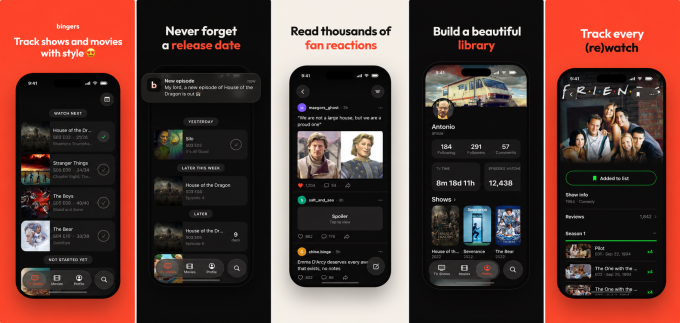
One of the app’s original founders, Antonio Pinto, says he’s creating a new TV show tracking app, Bingers, which will attempt to rebuild the best features of TV Time while also addressing the issues that bothered him over the years.

Bingers will offer TV Time’s existing users a potential lifeline soon after the original app disappears from the app stores. It also gives the existing social community another place to go to continue discussing TV episodes, something that not all TV show tracking apps offer. According to data from app intelligence provider Appfigures, TV Time has more than 26.4 million lifetime installs, many of those users potentially helping seed the new app’s community.

Image Credits:Bingers

Pinto, who is based in Paris, sold his app, then called TVShow Time, to Whipclip (now Whip Media) in 2016, after the company promised it could grow the app’s user base significantly thanks to its Los Angeles ties. When he heard the app was being wound down as Whip Media shifted its focus to AI, Pinto said he felt sad.

“Sad because TV Time was part of my life for so many years. And sad because this community was like my other family. Reading the community reactions after each episode became a ritual for me, and for many others,” Pinto wrote in a blog post on the new Bingers website.

Advertisement

“I decided to build the new home where the TV Time community could go. I wanted to rebuild all TV Time[‘s] great features, but also fix everything that always bothered me,” he said.

Image Credits:Bingers

Notably, the new Bingers app will address TV Time’s performance issues, which often caused the app to load slowly and made it expensive to run. Pinto claims high server costs led to the shutdown, noting that its premium subscription plan only covered about 10% of those expenses due to the size of its community.

Instead, Bingers has been architected it keep its server costs low, making it more sustainable, Pinto claims. It will also allow the app to respond faster when users mark an episode as watched, even when millions of others are connecting at the same time.

Image Credits:Bingers

The developer tells TechCrunch that the new app will be available on the App Store and Google Play by the end of July 2026. Until then, the website is collecting sign-ups for a waitlist that will alert users when the new app is ready for launch.

Of course, Bingers will also be able to import data from users’ TV Time archives, available through the app’s GDPR-compliant export tool before its removal from the app stores on July 15. By importing users’ archives, Pinto says Bingers will be able to recreate TV Time’s community comments as well.

The archive import is already up and running on the Bingers website, so your TV viewing history will already be available when the app launches on the app stores.

Advertisement

When you purchase through links in our articles, we may earn a small commission. This doesn’t affect our editorial independence.

Source link

Continue Reading
Click to comment

You must be logged in to post a comment Login

Leave a Reply

Tech

The UK’s New Under-16 Social Media Ban Will Cause More Harm Than It Prevents

Published

on

from the moral-panic-with-a-british-accent dept

Recently, politicians in the UK pushed forward with plans to eviscerate privacy and free speech on the internet by announcing a ban on social media for users under 16 that is set to take effect in Spring 2027. 

The UK government continues to falsely characterize this policy as a necessary response to growing concerns about online harms for young people. In reality, much like the Online Safety Act, it will cause more harm than it will prevent. 

Users of all ages are burdened with proving their age before accessing content, with social media platforms such as Snapchat, TikTok, YouTube, Instagram, Facebook, and X included in the ban. There remains no reliable, privacy-preserving method of verifying the age of every internet user and methods vary from one platform to the next.

Young people will not simply be protected from being contacted by adults or endlessly scrolling—they’ll also lose access to educational videos on YouTube, local events on Facebook, and potentially cut off from distant friends and family. 

Advertisement

Public policy must be effective, proportionate and respectful of fundamental rights. Young people deserve better than a policy built on panic, and all internet users deserve a safe and free internet. A social media ban generates headlines, but it will not solve the problem. 

A Brief History of Age-Gating in the UK

Age restriction proposals in the UK date back to a decade ago, when the proposed Digital Economy Bill was put forth to (among other things) restrict young people from accessing pornographic websites. While the Digital Economy Act of 2017 passed without age-based restrictions, it laid the groundwork for later age verification measures.

Over the next few years, age checks for porn websites were announced then delayed several times. But it wasn’t until a consultation under the 2016-2019 May government and the 2020 publication of the Online Harms Whitepaper that age verification became a broader idea.

In 2023, the UK passed the controversial Online Safety Act, establishing powers that could weaken privacy protections and freedom of expression for internet users worldwide. In July 2025, the government implemented age assurance measures on sites hosting “harmful” content. 

Advertisement

And despite politicians affirming repeatedly that the Online Safety Act would solve all of the problems with online safety, this year they decided it in fact did not go far enough. American social psychologist and The Anxious Generation author Jonathan Haidt—who has called for age-related social media bans around the world, despite significant scientific doubt about his research—met with the UK Health Secretary in February to push for the ban.

In March, politicians introduced plans for a social media ban into the Children’s Wellbeing and Schools Bill to “prevent children under the age of 16 from becoming or being users” of “all regulated user-to-user services,” to be implemented by “highly-effective age assurance measures”—effectively banning under-16s from social media. 

When this proposal came before the House of Commons, MPs defeated and proposed their own amendment: enabling the Secretary of State to introduce provisions “requiring providers of specified internet services” to prevent access by children, under age 18 rather than 16, to specified internet services or to specified features; and to restrict access by children to specified internet services which ministers provide. 

But the social media ban does not stop there. The provision also requires internet service providers to limit the time kids spend online, and has rules about who can contact them online. These extreme rules will take decisions about using technology away from families and put them in the hands of government regulators. 

Advertisement

The history of this proposal shows that the UK government has repeatedly returned to the same flawed idea: restricting access to online services by requiring age checks for everyone. But the fundamental problems have not changed. There is still no widely available way to verify age online without compromising privacy—but even if there were, broad restrictions on social media will inevitably limit access to lawful speech, and valuable online communities, and arts and culture.

Republished from the EFF’s Deeplinks blog.

Filed Under: age verification, kids, online safety act, social media, social media ban, uk

Advertisement

Source link

Continue Reading

Tech

Ford’s Super Mustang Mach-E Delivered the Weekend’s Fastest Time at Goodwood Festival of Speed

Published

on

Ford Super Mustang Mach-E 2026 Goodwood Shootout
Romain Dumas guided Ford’s Super Mustang Mach-E up the Goodwood hill in 41.98 seconds during Sunday’s Timed Shoot-Out. That mark beat the next quickest entry, a new Gen4 Formula E car driven by Daniel Ticktum, by 0.48 seconds. It also left the rest of a strong field more than four seconds behind.



Ford had previously won the top spot with the SuperVan 4.2 in 2024 and the F 150 Lightning SuperTruck in 2025, making this their third consecutive win. So this came as no surprise, but it was still cause for celebration for Dumas, who won his fifth Shoot-Out overall and third in a row. This time it was with the electric Super Mustang Mach-E, a beast of a car designed from the ground up to be a real electric hillclimb monster, rather than a production car with an electric motor slapped in. These three UHP 6 phase motors provide 1600 horsepower, but they are distributed to all four wheels, which helps keep it on track. The power comes from a 50 kWh battery pack, and regenerative braking can reach 710 kW, which should help slow it down on the tiny course.

Sale


LEGO Technic 1966 Ford GT40 MKII Race Car Building Set for Adults – Collectible Toy W/Realistic Functions…
  • BUILD A RACING LEGEND – Relive motorsport history with the LEGO Technic 1966 Ford GT40 MKII Race Car model kit for adults ages 18 years old and up
  • REALISTIC FEATURES & FUNCTIONS – Steer using the knob on top, open the doors to explore the interior, lift the engine cover to reveal the V8 engine…
  • AUTHENTIC 1966 DESIGN – This vintage race car model features iconic black and silver design inspired by the real Ford GT40 MKII champion car

They’d made a few changes, including a large rear wing, lowering the ride height, upgrading the brakes, and adjusting the suspension. All to go through the brief yet demanding course as quickly as possible. That new aero kit generates a remarkable 6900 pounds of downforce at 150 mph, which you can guarantee helps when you’re on a narrow strip of tarmac with walls and hay bales surrounding you. And you know Dumas is fairly good at managing tight courses. In fact, just three weeks before, he won the Pikes Peak International Hill Climb in the identical car in 8 minutes, 18 seconds. He had come from a 12-mile mountain route and was still able to maintain a good speed on the 1.16-mile English hill.

Advertisement


Qualifying demonstrated that the car was pretty quick, but Sunday appeared to be a challenge, with the heat and dust making grip difficult for many of the drivers. Dumas got out to a shaky start, but eventually gained momentum and carried it all the way to the finish. It ended up being the top two electric cars for the first time in the event’s history, and to make matters even better for Ford, all combustion vehicles were well behind.

Ford Super Mustang Mach-E 2026 Goodwood Shootout
It’s noteworthy to state that the time difference between first and second is less than half a second, but the time difference between second and third is more than four seconds. When competing against great drivers and automobiles, that kind of margin is significant. The top ten results were rather unambiguous, with a 1974 Shadow DN4 finishing third at 46 points 31 seconds and a VW Polo Rallycross coming in fourth at 46 points 32 seconds.

Ford Super Mustang Mach-E 2026 Goodwood Shootout
Ford collaborated with the STARD team to develop build this monster. They had also collaborated with them on the previous two winning electric vehicles. Each time, they refine what works and what doesn’t, and this knowledge is taken forward into larger racing efforts and future road car development. So, even though this was a unique hillclimb car, it remains relevant. Ford even stated that this 41.98-second performance was faster than their own computer simulations predicted the car could do on this track, indicating that there is still more work to be done.

Source link

Advertisement
Continue Reading

Tech

Microsoft Is Making The Windows Search Box More Streamlined And Useful

Published

on

Bit by bit, Windows 11 is healing.

Microsoft announced that a bunch of new adjustments are coming to the Windows Search Box in Windows 11. Each individual item is a minor improvement, but hopefully in aggregate, the changes will add up to a better experience for search. Members of the Windows Insider program may start seeing the changes beginning today.

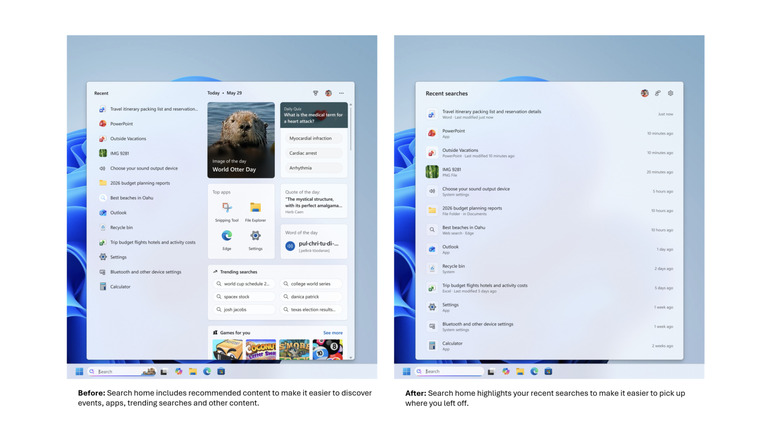
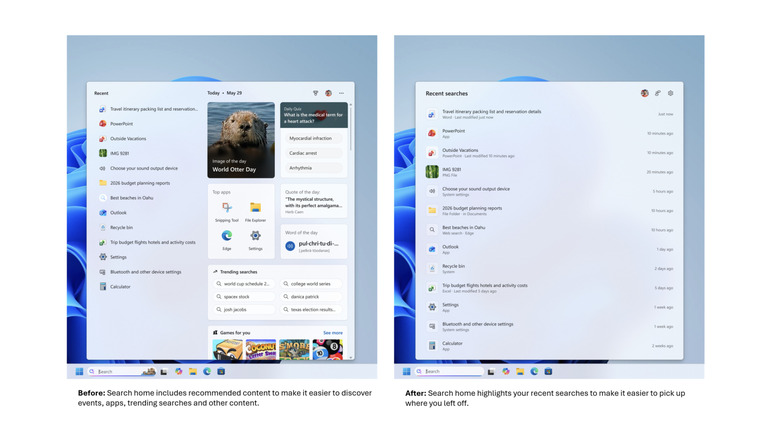
The whole user experience for the Windows Search Box will be streamlined. The home screen has been pared back for less visual clutter, which should make it easier to access recent searches easily. The results display also looks cleaner, with larger spacing creating room to show useful metadata for hits. Users can now toggle whether they want to see hits from the web and the Microsoft Store beside local results. Web searches will no longer show sponsored content such as products and promotions at the top of the results. The improved search should also do a better job of finding both files and apps.

After a long, not terribly successful push to try and make Copilot happen, Microsoft has been shifting focus back toward making quality of life improvements to Windows 11. There have been incremental updates, like allowing users to adjust the size of the Start menu, alongside more meaningful changes such as a system for rolling back faulty drivers.

Advertisement

Source link

Advertisement
Continue Reading

Tech

The Best Movies to Stream This Month (July 2026)

Published

on

Summer is firmly here and the temperatures are feeling borderline apocalyptic in much of the northern hemisphere. Why not avoid the angry sun and stay inside where it’s (hopefully) cooler and distract yourself with some of the best movies on streaming right now?

Your choices are notably rich too. The spring hit sci-fi movie Project Hail Mary, about the global freeze threatening Earth as a result of the sun mysteriously going out, is now on Prime Video, after winning theater audiences over with the help of an adorable pile of pebbles. If, however, you want to embrace the flames, you’ll find some like minds in Avatar: Fire and Ash on Disney+, where a violent new tribe of Na’vi just want to see the world (well, a semi-sentient living moon) burn.

If you instead find the heat hellish, then a double bill of Satanic panic might be more fitting. Both Ready or Not 2, also on Disney+, and They Will Kill You on Hulu tap into a previously unexplored yet surprisingly rich subgenre of “estranged sisters with melee weaponry killing murderous cultists”—insert the “weird it happened twice” meme here, but just go with it. Or if you prefer not to switch your brain entirely off for entertainment, there’s also the far more cerebral Archive or the dark dystopia of The Long Walk to take your mind off the unbearable heat.

Here are WIRED’s picks of the best movies to watch right now.

Advertisement

Project Hail Mary

Waking up aboard a spaceship to find himself the only crew member still alive, amnesiac middle school science teacher Ryland Grace (Ryan Gosling) makes for an unlikely astronaut. Even worse, he’s Earth’s last hope for survival, sent out into space in search of a way to stop a strange phenomenon devouring the sun itself—and almost every other star in the sky. It’d be an impossible task solo, but luckily Ryland has back-up in the form of Rocky (James Ortiz), the first alien humanity has ever met, a five-legged stone creature who communicates in song.

Adapted from the book of the same name by Andy Weir (author of The Martian), Project Hail Mary is a fantastic slice of survival drama and hard science fiction, but the real heart of the movie is Ryland’s and Rocky’s growing friendship. Prepare to fall in love with an excitable rock spider-thing—fist my bump, friends.

Avatar: Fire and Ash

Picking up from 2022’s The Way of Water, human-soldier-in-a-Na’vi-body Jake Sully (Sam Worthington) and his family are in mourning following the death of their eldest son Neteyam, leading wife Neytiri (Zoe Saldaña) down a dark path. As the family struggles to stay together, the colonialist human forces led by Miles Quaritch (Stephen Lang) forge a deadly alliance with a warmongering tribe of fire-worshipping Na’vi ruled by the nihilistic Varang (Oona Chaplin)—who aims for destruction to spite the Na’vi’s god, Eywa. James Cameron’s almost inconceivably ambitious saga returns with a visually spectacular outing taking viewers through striking new regions of the lush jungle moon Pandora. Fire and Ash is no jumping on point, but thankfully you can binge the entire trilogy (for now; Avatar 4 and 5 are planned) on Disney+.

Ready or Not 2: Here I Come

The first Ready or Not from 2019 was something of a sleeper hit. A gory slasher with a sense of humor, it played with the fears and uncertainties of marriage and joining a new family, with bride-to-be Grace (Samara Weaving) caught in the murderous traditions of her fiance’s clan. This sequel, helmed by returning codirectors Matt Bettinelli-Olpin and Tyler Gillett, picks up right after that first film’s credit roll, leading to Grace’s reunion with her estranged sister Faith (Kathryn Newton)—just in time to be swept into another murder game against a cabal of billionaires and aristocrats looking to fill a power vacuum left by Grace’s almost-inlaws. Schlocky, campy comedy horror, elevated by the presence of Sarah Michelle Gellar in an almost anti-Buffy role, Ready or Not 2 isn’t high art but it’s a hell of a lot of fun.

Advertisement

They Will Kill You

If Ready or Not 2 is schlock, then They Will Kill You is a step up the ladder—an almost exploitation-level hack-’em-up that takes liberal inspiration from Sam Raimi’s original Evil Dead trilogy and smashes it unapologetically together with Gareth Evans’ one-man-against-a-tower-block action epic The Raid.

Source link

Continue Reading

Tech

‘We have not ruled this out’: The water-based battery that could turn whole data centers into energy storage

Published

on


  • QinetiQ testing of SuperDielectrics’ water-based zinc cells showed up to 13x longer high-power cycle life, 100C discharge in 36 seconds, and zero thermal runaway
  • The company is pitching its solution to AI datacenters as a ‘shock absorber’ that can deal with power requirement spikes safely and reliably
  • SuperDielectrics’ Faraday 3’s first commercial deployment is slated for early 2027 as it goes up against existing Lithium-ion battery-based energy storage as an alternative that can be deployed inside the data center

Cambridge-based advanced battery technology company SuperDielectrics recently published independent test results for its upcoming water-based Zinc battery, which could help cement its de facto presence in most projects that leverage renewable energy, whose output is often inconsistent.

The next-generation battery offers up to 13 times longer life cycle under high-power cycling, zero thermal runway, and charging and discharging gains that eclipse those of Lithium-ion-based batteries.

Source link

Advertisement
Continue Reading

Tech

How to install macOS 27 Golden Gate public beta on your Mac?

Published

on

Along with iOS 27’s public beta, Apple has also released macOS 27 Golden Gate’s public beta build, so that early adopters can get their hands on the new features, including Siri AI, and provide timely feedback to help ensure a stable iOS launch in September. 

If you’re sold on all the new features but don’t want to put your faithful MacBook through developer beta duty, a public beta offers a much more refined experience. To install macOS 27’s public beta, follow the steps given below. 

So how do you actually install it?

  • Head to beta.apple.com and enroll your Mac in the free public beta program; no developer account needed. 
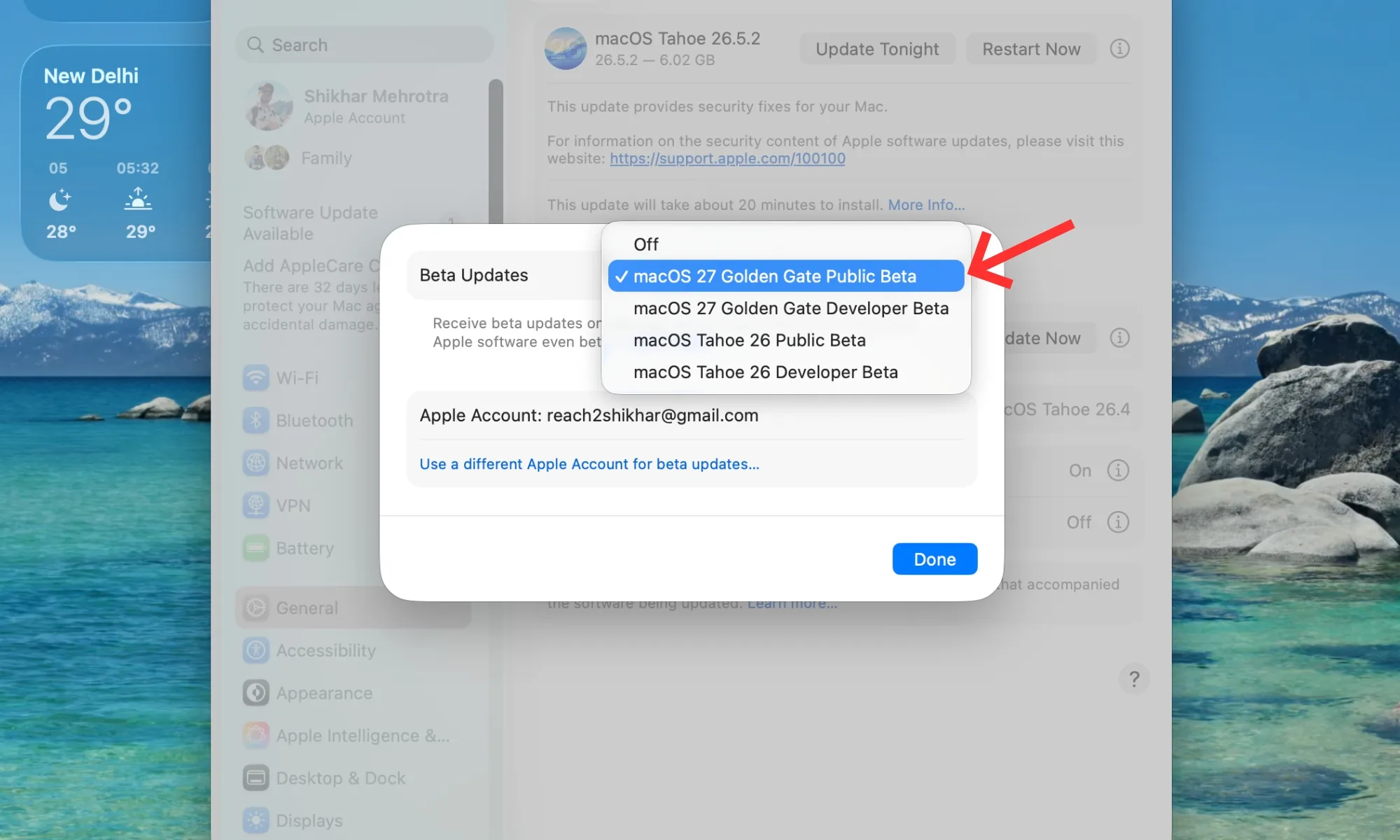
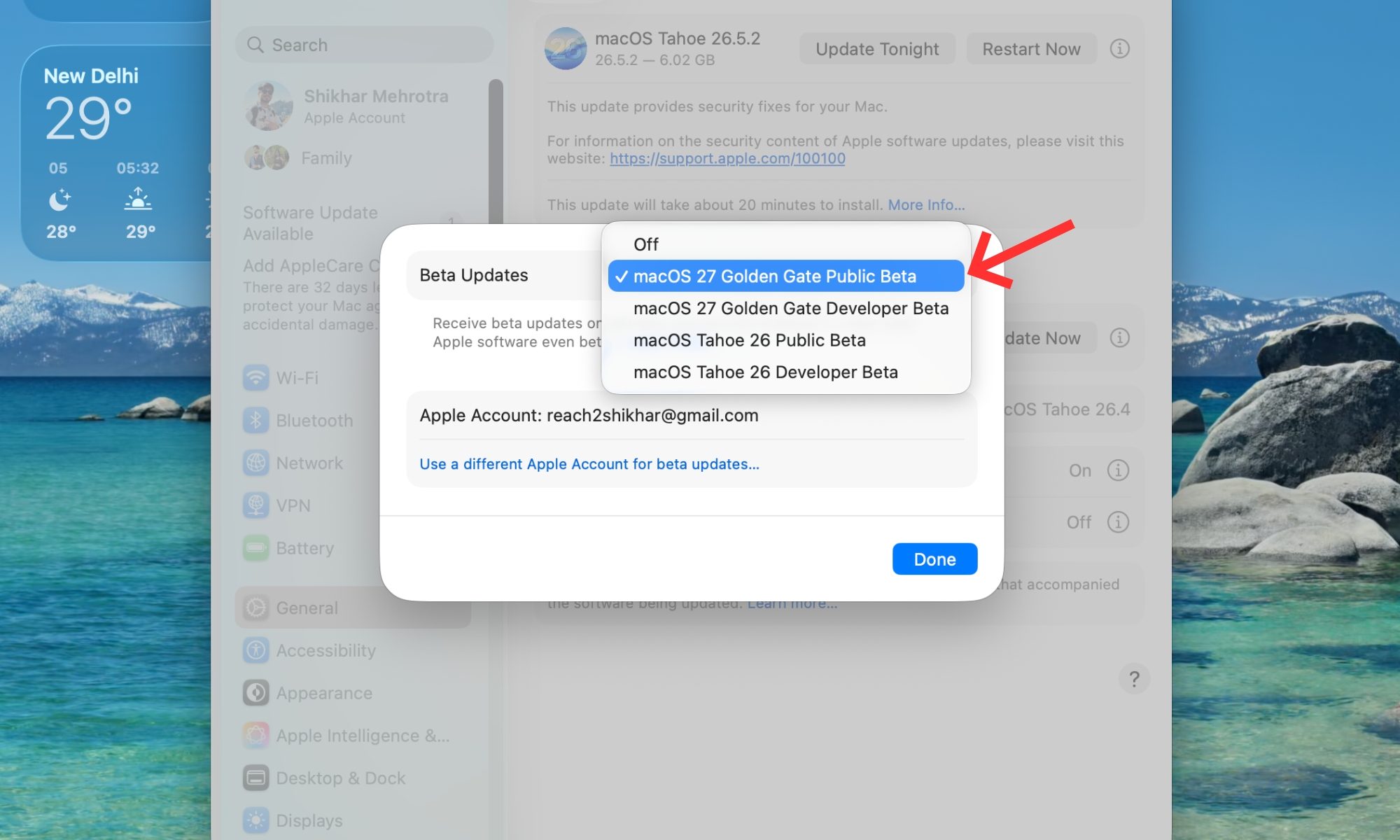
  • Once you’re signed up, head to System Settings > General > Software Update. 
  • Next to Beta Updates, click the small “i” button. 
  • A dropdown will appear in the top-right corner, and from there you select macOS 27 Golden Gate Public Beta. 
  • Hit Done, and your Mac will start pulling down the update. 

You should know that developer betas have been fairly solid so far, but there have been some Safari memory hiccups and occasional reliability issues with beta builds in general. Back up your Mac first, and think twice about installing it on your primary machine. 

What’s actually new in Golden Gate?

Like iOS 27, Siri AI is the headline update here as well. It indexes your Messages, Mail, and other content so it can actually answer questions and take action instead of fumbling through web searches. 

Spotlight search, which got noticeably flaky on macOS Tahoe, feels far more dependable in this build. Apple also tweaked the Liquid Glass look and unified window corner radii so things stop looking inconsistent across apps. 

Writing Tools and Visual Intelligence both got smarter, and Safari now has an extension builder that works off plain-English prompts instead of code. Shortcuts got the same treatment. Expect a handful more betas before the final Golden Gate build ships alongside iOS 27 and the iPhone 18 Pro this September.

Advertisement

Source link

Continue Reading

Tech

TP-Link’s Tapo C530WS Pan/Tilt Security Camera Delivers Sharp 3K Footage Without Subscriptions or Surprises

Published

on

TP-Link Tapo T530WS 3K Pan Tilt WiFi Security Camera
Security cameras frequently promise peace of mind yet deliver grainy clips, nonstop false alerts, or hidden fees that add up fast. The Tapo C530WS from TP-Link, priced at $55.99 (was $70), takes a simpler route and focuses on the basics done right. A 5-megapixel sensor records in 3K resolution. Details hold up well when you zoom during playback, whether checking a face at the front gate or reading a plate on a vehicle that pulled into the driveway. Daytime color stays natural and edges remain defined across the frame.


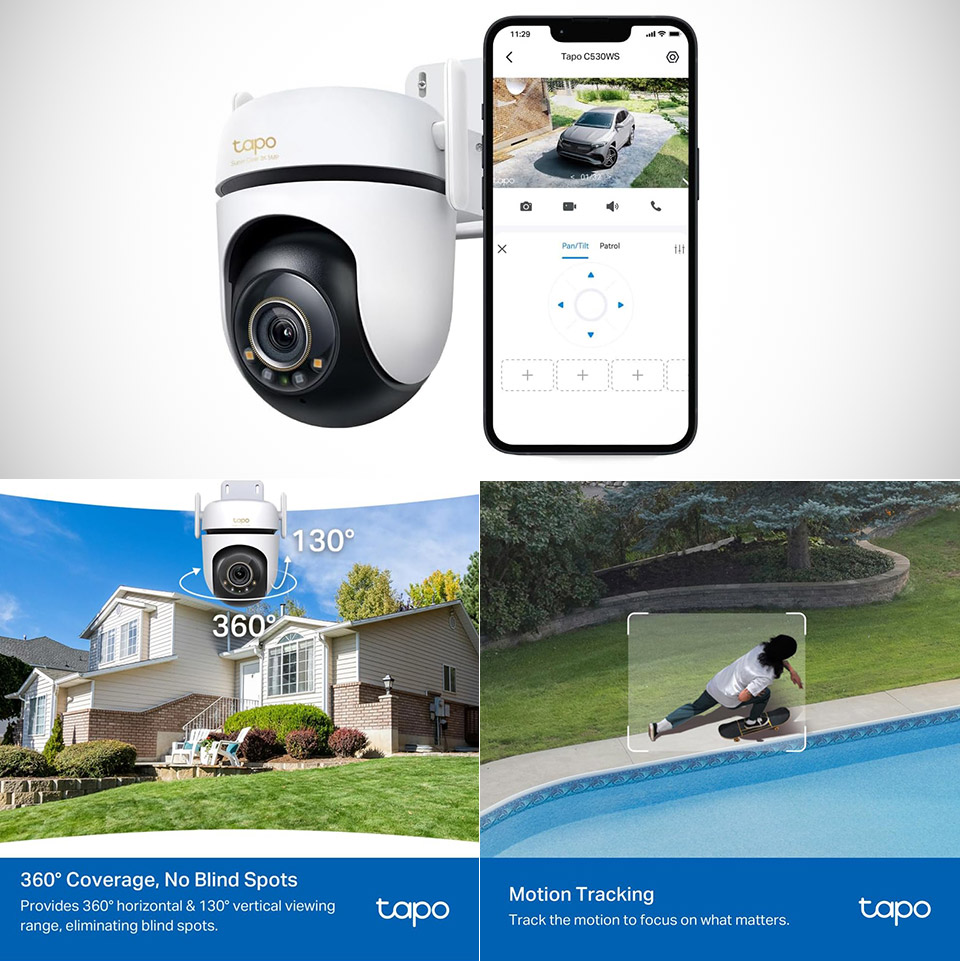
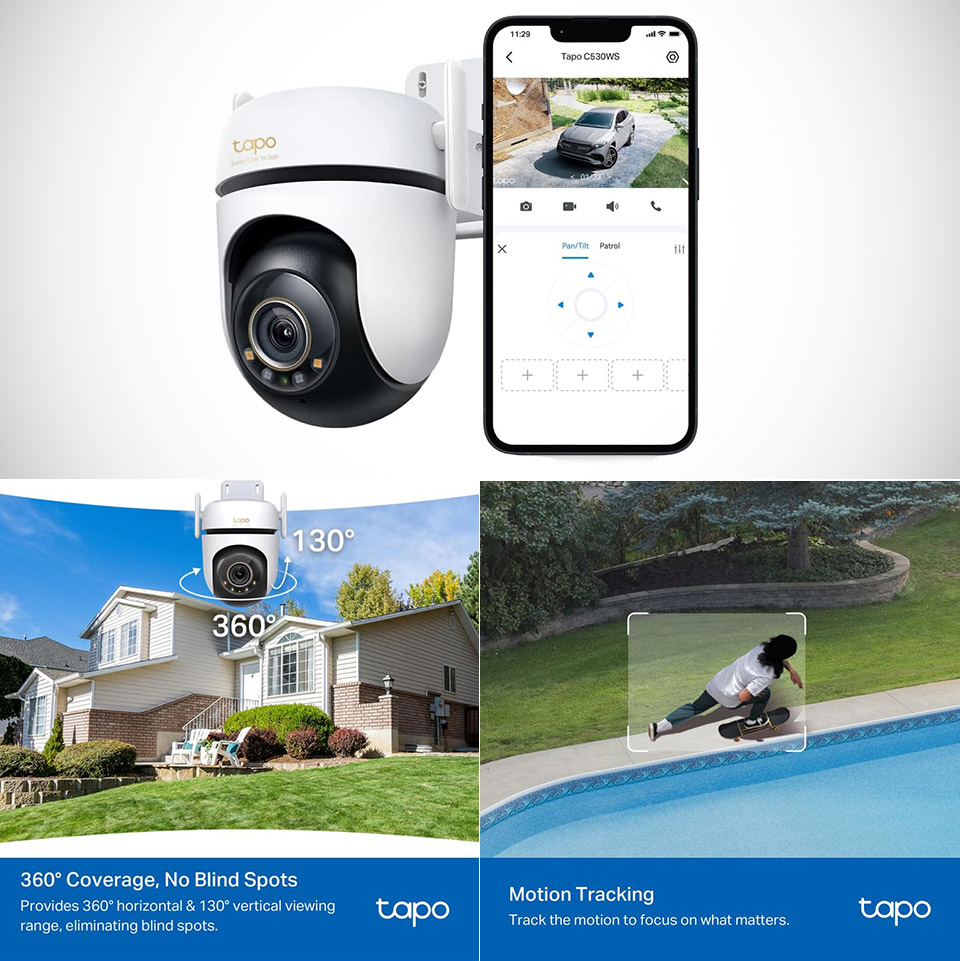
Night Vision uses a Starlight sensor, which picks up any available light when collecting color footage rather than immediately converting to black and white. The camera is capable of reaching relevant distances outside without shining a large spotlight that would alert anyone in the area. This strategy ensures that the scene remains recognized even in deeper darkness. This model covers a lot of ground because of the built-in mobility, which allows you to spin the view almost 360 degrees left and right and tilt it up and down quite a little. In the Tapo app, you may simply drag the view to a new location or establish a few fixed spots for easy jumps later. When motion is detected, the camera will smoothly follow it across the screen without pausing in mid-sentence.

Sale


Tapo 3K 5MP Outdoor Pan/Tilt Security Wi-Fi Camera – 360° View, Free Person/Vehicle Detection…
  • 𝟑𝐊 𝟓𝐌𝐏 𝐂𝐥𝐚𝐫𝐢𝐭𝐲 & 𝐙𝐨𝐨𝐦 – Experience incredibly detailed resolution with 3K 5MP live view for stunning…
  • 𝐂𝐨𝐦𝐩𝐥𝐞𝐭𝐞 𝐀𝐫𝐞𝐚 𝐂𝐨𝐯𝐞𝐫𝐚𝐠𝐞 – Enjoy 360º horizontal and 135º vertical views with pan/tilt…
  • 𝐒𝐭𝐚𝐫𝐥𝐢𝐠𝐡𝐭 𝐂𝐨𝐥𝐨𝐫 𝐍𝐢𝐠𝐡𝐭 𝐕𝐢𝐬𝐢𝐨𝐧 – Activate Full-Color Mode to see more in…


The motion detection component is operates entirely on the camera and identifies people, pets, as well as autos, but only sends notifications for specific occurrences. Unlike more simple motion sensors, which will fire off at the slightest movement, such as a leaf blowing in the wind or a shadow shifting, there is no additional cost to gain the whole set of capabilities.

Advertisement

TP-Link Tapo T530WS 3K Pan Tilt WiFi Security Camera
Video is saved directly to a microSD card (up to 512GB) in the camera, allowing you to record for weeks (or more) at once, depending on how you set up the camera. If you only need to preserve specific clips of footage, the free Tapo app allows you to go back and watch them or simply watch what’s going on live on your phone. There is an optional cloud plan available if you want additional backup, but it is not required to get the camera running properly.

TP-Link Tapo T530WS 3K Pan Tilt WiFi Security Camera
For most users, setting up the device is simple: scan the app code, connect to your 2.4GHz Wi-Fi network, and attach the unit using the included accessories. It’ll function nicely on a wall or ceiling and has an IP66 classification, which means it can survive some dust and water ingress. A conventional adapter provides power, so make sure there is an outlet nearby or use a protected extension lead.

TP-Link Tapo T530WS 3K Pan Tilt WiFi Security Camera
When it comes to installing it properly, the first thing to search for is a strong Wi-Fi connection. Some people use a simple extender / booster to solve the problem if their router is too far away from where they want the camera to be. Once configured, the app responds quickly to pan and tilt commands, and you can also link it to your Alexa or Google Assistant, allowing you to talk to it if desired.

Source link

Continue Reading

Tech

Please Let This Hot Pink Pixel 11 Leak Be Real

Published

on

Bring on the magenta and peach.

We are expecting to hear news about the new generation of Google’s Pixel smartphone lineup when the company hosts its next showcase event in August. But in the meantime, a possible leak has gotten us colorfully-inclined buyers pretty excited.

9to5Google, by way of sister site 9to5Toys, found three listings on Amazon that might show some new looks coming to the Pixel 11. These potential placeholders depict one smartphone in a bold magenta and another in a rosy peach hue. The publication noted that there are some convincing details in the listings’ specs. The colors have one set of names in the titles and a different set in the description, and the second trio aligns with a previous leak suggesting a fuchsia model was on the way. At the time of publishing, none of the Amazon listings in 9to5Google‘s article are live.

It’s entirely possible that these are not from official Google sources. But I would really like it if they turn out to be real. Paying for our gadgets is going to be a grim and painfully expensive experience, can’t we at least have the actual hardware we’re splurging on be vibrant and joyful?

Advertisement

Source link

Advertisement
Continue Reading

Tech

The desktop infrastructure problem that Kubernetes finally solves

Published

on

Presented by Kasm Technologies


Enterprise infrastructure teams have spent the better part of a decade pushing workloads into Kubernetes. Applications, APIs, batch jobs, data pipelines — if it runs in a container, it belongs in the cluster. The operational benefits are well-established: declarative configuration, horizontal scaling, self-healing, native integration with CI/CD pipelines and observability tooling. Kubernetes has become the default operating model for production workloads.

Except for desktops.

Secure desktop and application delivery — the kind that enterprises depend on for remote work, privileged access, and regulated-industry workflows — has remained stubbornly outside the Kubernetes model. Legacy virtual desktop infrastructure was built in a different era, for a different set of assumptions: pre-allocated VM pools, bespoke management planes, proprietary appliances, and operational tooling that has nothing to do with how modern platform teams work. The result is a split infrastructure reality: a modern, cloud-native application layer on one side, and a manually managed, operationally isolated desktop layer on the other.

Advertisement

That split is expensive. It means different tooling, different scaling behaviors, different observability approaches, and different operational runbooks. Platform engineers who are proficient in Kubernetes still have to context-switch into an entirely different mental model the moment a desktop infrastructure problem arises.

The more fundamental issue is that this split is unnecessary. Secure, containerized workspace delivery is a workload that Kubernetes is architecturally well-suited to run. Sessions are containers. Scaling is demand-driven. Configuration should be declarative. The only thing missing was a platform built to take advantage of that alignment.

Why the timing is right

The appetite for Kubernetes-native workspace delivery has grown significantly as organizations mature their container platform investments. Platform teams that have spent years standardizing on Helm, GitOps workflows, and Kubernetes-native observability are increasingly unwilling to make an exception for desktop infrastructure. The question has shifted from “can we run this on Kubernetes?” to “why isn’t this running on Kubernetes already?”

At the same time, the security case for containerized workspace delivery has become more urgent. Browser-delivered, containerized workspaces provide session isolation that VM-based desktops cannot match — each session is ephemeral, isolated at the container boundary, and terminates cleanly without persistent state. For organizations managing sensitive data, insider risk, or third-party access scenarios, this isolation model is a meaningful security control, not just a deployment convenience.

Advertisement

The convergence of these two trends — Kubernetes-native infrastructure expectations and containerized session security — creates a clear opportunity for platforms that can address both simultaneously.

What Kubernetes-native deployment looks like

A Kubernetes-native deployment uses Kubernetes as the control plane for workspace infrastructure — handling orchestration, scaling, and lifecycle management through the same declarative model used across the rest of the platform. Instead of relying on dedicated management appliances or pre-provisioned desktop pools, infrastructure is managed through the same CI/CD, GitOps, observability, and security workflows the platform team already operates. This gives platform teams a consistent operational model rather than maintaining a separate toolset for desktop infrastructure.

Kasm Workspaces, the browser-delivered workspace platform, is purpose-built to use Kubernetes as the control plane for workspace orchestration and delivery. Its deployment model is designed for real enterprise environments — not simplified demos — with production-grade Helm charts that follow Kubernetes conventions, tested upgrade paths between versions, and a standardized backend architecture validated across production deployments. An RDP Gateway component purpose-built for the Kubernetes topology enables Windows and Linux virtual machine access through the same platform.

Key capabilities include:

Advertisement
  • Horizontal session scaling driven by actual demand, orchestrated by Kubernetes — no pre-warmed VM pools required.

  • Declarative configuration through Helm values, enabling GitOps and CI/CD integration for workspace infrastructure.

  • Namespace-level isolation and compatibility with existing RBAC policies, ingress controllers, and secrets management integrations.

  • Metrics export for integration with Prometheus and existing observability stacks.

  • Rolling builds by default, reducing maintenance windows and enabling more predictable version management.

Real-world applications

Regulated-industry remote access. A financial services organization running a Kubernetes-based application platform can deploy Kasm into the same cluster, using the same operational tooling, to deliver isolated browser and application sessions to analysts and advisors. Sessions are ephemeral, network egress is controlled, and the entire deployment is managed through the same GitOps pipeline as their application workloads.

Contractor and third-party access. Organizations that regularly onboard contractors or external vendors — with the associated privileged access risk — can provision Kasm sessions on Kubernetes that scale up during engagement periods and scale back during low-demand windows. No persistent access. No VPN extension to external parties. Containerized isolation at every session boundary.

AI/ML development environments. Teams building and running AI models need GPU-enabled development environments with security controls that general-purpose cloud desktops rarely provide. Deploying Kasm on Kubernetes with NVIDIA MiG Multi-Instance GPU support lets platform teams deliver fractional GPU resources into isolated workspace sessions — giving data scientists the compute they need without shared-infrastructure security exposure.

The operational shift

The practical implication of a Kubernetes-native workspace platform is that platform teams can stop treating workspace infrastructure as a special case. The same engineers who deploy applications can deploy the workspace platform. The same pipelines that manage application configuration can manage workspace configuration. The same dashboards that monitor application health can monitor workspace health.

Advertisement

That operational consolidation reduces overhead, improves consistency, and eliminates the context-switching cost that has made desktop infrastructure a persistent pain point for cloud-native organizations.

For organizations still running legacy VDI alongside modern cloud infrastructure, the question is no longer whether a Kubernetes-native alternative exists. It does. The question is when to make the transition.

Organizations interested in evaluating Kubernetes-native workspace delivery can explore the platform at kasm.com and try out community edition for yourself.

Daniel Ben-Chitrit is the Chief Product Officer at Kasm Technologies.

Advertisement

Sponsored articles are content produced by a company that is either paying for the post or has a business relationship with VentureBeat, and they’re always clearly marked. For more information, contact sales@venturebeat.com.

Source link

Continue Reading

Tech

Zimbra patched a flaw that let hackers hijack accounts just by sending an email

Published

on

Facepalm: Popular collaboration platform Zimbra was recently updated to patch a potentially dangerous vulnerability in its Classic Web Client component. In theory, malicious actors could abuse the flaw to run script-based malware directly on users’ machines. Needless to say, customers are advised to install the update as soon as possible.

Zimbra owner Synacor has released a new version of its collaboration software, and users should install the update as soon as they can. Zimbra “Daffodil” 10.1.19 includes a fix for a stored cross-site scripting (XSS) vulnerability that could be exploited to compromise customers’ machines through Zimbra’s Classic Web Client.

Cybercriminals could abuse the flaw by sending specially malformed email messages, Zimbra said. A vulnerable client would run the malicious code the moment the message is opened. While the company rates the deployment risk as “low,” the flaw could still prove dangerous for users’ session data, mailbox information, or account settings.

Cross-site scripting vulnerabilities are a common class of security issue routinely abused by resourceful attackers. An XSS flaw lets attackers inject client-side, malicious scripts into web pages viewed by other users. A “stored” XSS bug like Zimbra’s is an especially dangerous variant, since the malicious script is permanently saved on the server rather than triggered on the fly.

Advertisement

Zimbra’s security guidance states that all customers using the Classic Web Client should update the component to the latest available version. Additional advice is given for those using custom SNMP mitigations. So far, the XSS flaw has not been assigned a CVE identifier.

At any rate, malicious actors have been trying to target Zimbra with XSS vulnerabilities for almost five years now.

In October 2025, yet another persistent XSS bug in the Classic Web Client (CVE-2025-27915) was allegedly exploited in zero-day attacks targeting Brazilian military personnel. Other XSS-based attacks targeted Zimbra’s platform in May 2025 and 2023.

Though it has existed in various forms for more than two decades, Zimbra has changed hands several times over the years. The company was purchased by Yahoo! in 2007, sold to VMware three years later, and finally acquired by Buffalo-based service company Synacor in 2015. Zimbra provides collaboration tools, email servers, and web clients in both open source and commercially supported editions. However, the latest open source versions of Zimbra products no longer include official, free binary builds.

Advertisement

Source link

Continue Reading

Trending

Copyright © 2025