
Tech
Asus Zenbook A14 (2026) Review


Verdict
The Asus Zenbook A14 (2026) is a beefy and super light Windows laptop that impresses with its potent internals from a new chip, immense endurance and a stylish look. The needle has moved a lot in price against the old model, though, and a 1920×1200 screen for the price feels a little off.
-
Lightweight and super portable
-
Increased grunt from Snapdragon X2 Elite chip
-
Immense battery life
-
More expensive than its predecessor
-
1920×1200 resolution feels off for the price
Key Features
-

Review Price:
£1599
-
Snapdragon X2 Elite inside:
The new Zenbook A14 (2026) packs a lot of power into a small chassis with its use of Qualcomm’s new Snapdragon X2 Elite processor.
-
Sub-1kg chassis:
This grunt is packed into a slender and light chassis that keeps this as one of the lightest 14-inch laptops you’ll find today.
-
70Whr battery:
Asus is also touting upwards of 32 hours of battery life from the capacious cell inside the Zenbook A14 (2026).
Introduction
The Asus Zenbook A14 (2026) beefs up this lightweight marvel with one of Qualcomm’s shiny new processors.
Similar to the Zenbook A16 (2026), Asus has packed in a beefy 18-core Snapdragon X2 Elite chip with this laptop alongside 32GB of RAM and a 1TB SSD. Other core specs remain similar to the original Asus Zenbook A14 that I really enjoyed using, including its sub-1kg chassis, solid 1920×1200 OLED screen and a capacious 70Whr battery.
The problem this laptop has against its predecessor, though, is price, clocking in at £1599, making it some £500 more expensive at retail than the last model. This changes its key rivals somewhat, pushing it more towards pro-grade choices such as the Apple MacBook Pro M4 and the Acer Swift Edge 14 AI.
I’ve been putting the Zenbook A14 (2026) through its paces for the last couple of weeks to see if it’s one of the best laptops we’ve tested.
Design and Keyboard
- Incredibly lightweight and sturdy
- Excellent port selection
- Satisfying keyboard and large trackpad
The fit and finish of the Zenbook A14 (2026) hasn’t changed too much against its predecessor, with a similar sand dune-inspired colourway for my sample that’s different to other laptops you’ll find out there. It is also available in a grey colour if you’d prefer something a bit more conventional.
Asus has also kept the weight down with this new iteration, with it tipping the scales at 990g, a marginal increase over the previous model, for a large boost in performance from the new Snapdragon X2 Elite chip inside. It’s super light for a 14-inch laptop and makes it effortlessly portable – you barely notice it in your bag thanks to how light the chassis is and how thin it is.

The reason for this being so lightweight is because of Asus’ use of their own innovative ceraluminium material. This has been carried over from the previous generation, plus has been featured on Asus’ other recent laptops, including the Zenbook S 14 (2026).
As the odd name suggests, ceraluminium is an alloy that blends ceramic and aluminium for a rugged, yet lightweight finish. The former material is quite uncommon in laptops and tech generally, and is one I’ve seen more in the world of watches in bezels, cases and bracelets for fantastic durability and lightness.

The Zenbook A14 is also just 13.3mm thick, and comes with a better port selection than modern MacBook Airs. Whereas a new MacBook Air will come with a pair of USB-C ports, headphone jack and Magsafe charging, this Asus laptop features a full-size HDMI, headphone jack and a pair of USB4-capable Type-C ports on the left side, and a USB-A on the right. That’s more Pro than Air.
Being a more compact laptop, the fact that there’s a smaller keyboard layout here isn’t a surprise. It’s a 65 percent option complete with arrow keys, function row and surprisingly deep travel. The 1.3mm of total travel means keypresses have a certain substance to them, and provides a satisfying typing feel. I also found the white backlighting is vibrant and crisp, with a strong white shine that is excellent for after-dark working.

For its size and form factor, I’m also impressed with the size of the Zenbook A14 (2026)’s trackpad. It’s large for such a small and light laptop, with slick and smooth inputs and a good amount of real estate for gestures to boot.
The packaging here seems to be entirely plastic-free, with the laptop coming in a cardboard box and paper bag, along with the cable and power brick.
Display and Sound
- Deep blacks and fantastic contrast
- Resolution and refresh rate seem a little low
- Middling speakers
The needle also hasn’t moved on the display front too much from the old model, as the Zenbook A14 (2026) features a 14-inch 1920×1200 resolution OLED panel, albeit with only a 60Hz refresh rate.
This is just okay in terms of overall detail and responsiveness against a range of rivals – while new MacBooks don’t come with an OLED screen, they do pack in a higher resolution for more detail. Likewise, the Zenbook S 14 (2026) has more detail and a zippier 120Hz refresh rate.
Nonetheless, this panel impresses on immediate use with its excellent colours, while this is also backed up when taking out my colorimeter. I saw perfect 100% coverage of both the sRGB and DCI-P3 spaces, plus an excellent 95% coverage of the trickier Adobe RGB (94%) gamut. This makes this screen suitable for productivity and more colour-sensitive workloads alike.

In addition, it offers virtually perfect blacks and fantastic colour temperature with levels of 0.01 and 6600K, respectively, measured both out of the box and with brightness cranked all the way up. Peak SDR brightness here beats our 300-nit target, with a measured 379.4 nits. That isn’t the brightest we’ve tested, but it is suitable for indoor and outdoor use, although is weirdly lower than last year’s model.
In addition, a measured contrast ratio of 29500:1 is impressive and lends the Zenbook A14 to having some excellent dynamic range. There is support for HDR with HDR True Black 600, and here Asus quotes a peak brightness of 600 nits for even more punch.

The speakers here are reasonable, if unremarkable. They’re downwards-firing, so you’ll want to ensure the Zenbook A14 (2026) is placed on a harder surface, such as a desk, to avoid sounding muffled. There’s a decent mid-range, although they lack top-end precision and extension in the low end. You can use them for basic tasks, although I’d suggest utilising the headphone jack for any serious content consumption.
Performance
- Beefier Snapdragon X2 Elite processor
- Improved integrated graphics
- Capacious RAM and SSD arrangement
Where Asus has overhauled the Zenbook A14 (2026) is internally, rather than changing the outside too much. The original model from last year was supplied with Qualcomm’s base Snapdragon X chip, with eight cores and more pared-back performance against other x86-based ultrabooks in its more premium price range.
For 2026, this laptop is supplied with Qualcomm’s new Snapdragon X2 Elite processor, the second-in-command to the Snapdragon X2 Elite Extreme that ships with this laptop’s bigger brother. There are two variants of this processor available to manufacturers, with 12-core and 18-core options – the Zenbook A14 (2026) ships with the latter.

The difference between this chip and the Snapdragon X2 Elite Extreme appears to be clock speeds, with this chip rated for a max boost clock across single or dual cores of 4.7GHz (against the Elite Extreme’s 5GHz) and a max multi-core frequency of 3.4GHz (against the Elite Extreme’s 3.6GHz).
Qualcomm is touting major gains in both single and multi-core performance with this new 18-core chip, which I’d certainly wager is true in comparing it to laptops with the Snapdragon X Elite chip.
As you’d expect, the numbers here aren’t quite as strong as with the 16-inch variant, but the difference is only a few percentage points in the synthetic benchmarks. It is much the same story, though, with especially high single-core scores in Geekbench 6 that push this laptop into Apple Silicon territory for comparison, plus much-improved multi-core scores, too.
The improvements in Cinebench R23 are slightly more modest and peg this laptop back a smidgen, but there are nonetheless some substantial improvements to be proud of in synthetic terms against the original Snapdragon X Elite chip.

There is also a major improvement to the Adreno iGPU with the Snapdragon X2 Elite, which provided a doubling in the 3DMark Time Spy test and brings it more into line with more recent iGPUs fitted to x86-based laptop chips from Intel and AMD.
Gaming is technically plausible on the Zenbook A14 (2026) as a result, although the 23.76fps and 23fps at 1080p in Cyberpunk 2077 and Returnal are an indication that there’s still some way to go before these Arm-based chips can go up against Panther Lake.

We’ve got 32GB of DDR5 RAM with this laptop to provide lots of headroom, plus a capacious 1TB SSD. Speeds here are pretty good, too, with tested reads and writes of 7066.43MB/s and 6021.67MB/s, respectively.
Test Data
| Asus Zenbook A14 (2026) | Asus Zenbook A16 (2026) | Apple MacBook Pro M4 | Acer Swift Edge 14 AI | |
|---|---|---|---|---|
| PCMark 10 | – | – | – | 7208 |
| Cinebench R23 multi core | 12396 | 14569 | 13830 | 9375 |
| Cinebench R23 single core | 1593 | 1579 | 2187 | 1928 |
| Geekbench 6 single core | 3699 | 3711 | 3767 | 2740 |
| Geekbench 6 multi core | 19254 | 21940 | 14955 | 11294 |
| 3DMark Time Spy | 3965 | 4317 | – | 4449 |
| CrystalDiskMark Read speed | 7066.43 MB/s | 7101.27 MB/s | 2911.8 MB/s | 4803.75 MB/s |
| CrystalDiskMark Write Speed | 6021.67 MB/s | 5739.05 MB/s | 3335.7 MB/s | 3910.54 MB/s |
| Brightness (SDR) | 379.4 nits | 467.4 nits | 900 nits | 380.7 nits |
| Brightness (HDR) | 600 nits | 1000 nits | 1500 nits | – |
| Black level | 0.01 nits | 0.01 nits | – | 0.01 nits |
| Contrast ratio | 29500:1 | 34100:1 | – | 27800:1 |
| White Visual Colour Temperature | 6600 K | 6600 K | – | 6700 K |
| sRGB | 100 % | 100 % | – | 100 % |
| Adobe RGB | 95 % | 94 % | – | 92 % |
| DCI-P3 | 100 % | 100 % | 99 % | 100 % |
| PCMark Battery (office) | 22.5 hrs | 19.25 hrs | – | 16 hrs |
| Battery discharge after 60 minutes of online Netflix playback | -2 % | 2 % | 94 % | 7 % |
| Battery recharge time | 68 mins | 95 mins | – | 80 mins |
| Cyberpunk 2077 (Quad HD) | – | 16.69 fps | – | – |
| Cyberpunk 2077 (Full HD) | 23.67 fps | 28.24 fps | – | – |
| Cyberpunk 2077 (Full HD + RT) | – | 4.33 fps | – | – |
| Returnal (Quad HD) | – | 24 fps | – | – |
| Returnal (Full HD) | 23 fps | 31 fps | – | – |
Software
- Copilot+ PC offers AI smarts
- Reasonably clean Windows 11 install
- Small compatibility issues, being Arm-based
The Zenbook A14 (2026) comes with Windows 11 and a reasonably clean install, too. There isn’t much in the way of bloatware with regard to an unwanted anti-virus or similar, although there are some pieces of software courtesy of Asus that come pre-installed.
There is MyAsus, which comes as part of the taskbar when you first open the Zenbook S 16. This is where you can check on everything from battery level and enabling battery care modes to choosing which type of workload this laptop’s network connection prioritises.

In addition, there is GlideX, where you can manage tasks such as wirelessly casting or mirroring the Zenbook A14 (2026)’s screen to other devices, or transferring files over the same network. You can also enable remote access to a mobile device, too. The Storybook app is designed as another way to organise photos and videos, using AI to recognise faces and file them for you, which is handy.
There is also enough AI horsepower from the Snapdragon X2 Elite Extreme chip inside to mark this laptop as a Copilot+ PC, providing access to Microsoft’s AI functionality for generative powers and filters in the Photos and Paint app, as well as the clever Windows Studio webcam effects for background blurring, auto framing and maintaining eye contact. With the latest version of Windows 11, there is also the controversial Microsoft Recall feature.

Being ARM-based, the Zenbook A14 (2026) also has minor compatibility issues. This is because Windows has traditionally run on x86-based systems, so to run on ARM, apps have had to be translated using Microsoft’s Prism translation software. For the most part, I had few compatibility issues when running a range of benchmark software, as well as Photoshop and similar apps.
As with other Arm-based Windows laptops I’ve looked at, the PCMark 10 benchmark app doesn’t run fully, but that’s an issue we’ve seen on other Arm-based Windows systems. I weirdly had an issue running Rainbow Six Extraction in our benchmark testing, which hasn’t happened on other Arm-based laptops in the past.
Battery Life
- Lasted for 22 hours 25 minutes in the battery test
- Capable of lasting for three working days
Asus has managed to fit a larger 70Whr cell inside the Zenbook A14 (2026), which, alongside the excellent efficiency that these Qualcomm chips have traditionally yielded, should result in great battery life for this laptop. To this end, Asus quotes this laptop up to 32 hours on a charge, which would easily make it one of the best choices for endurance.
In dialling the brightness down to the requisite 150 nits and running a video loop test in PCMark 10, this Asus laptop lasted for 22 hours and 25 minutes – that’s just about enough for three working days. That makes for a substantial improvement over the previous model by around three hours, and increases Asus’ lead over key rivals such as the Acer Swift Edge 14 AI. It’s still not enough to dethrone our battery life champion, the Dell Pro 14 Premium, which has around half an hour on this Asus choice.
Asus has also provided a small, yet beefy 100W power brick with the Zenbook A14 (2026) that does a decent job of putting juice back into this laptop briskly, taking 28 minutes to get it back to 50 percent, while a full charge took 70 minutes.
Should you buy it?
You want oodles of power in a lightweight chassis:
The Zenbook A14 (2026) packs a lot of performance with its Snapdragon X2 Elite processor into a slender and lightweight chassis.
You want something more affordable:
The much higher price tag of this year’s model leaves a sour taste against last year’s, and it is a fair jump up in price. You can still go for the older model and feel happier with a few extra hundreds in your pocket.
Final Thoughts
The Asus Zenbook A14 (2026) is a beefy and super light Windows laptop that impresses with its potent internals from a new chip, immense endurance and a stylish look. The needle has moved a lot in price against the old model, though, and a 1920×1200 screen for the price feels a little off.
Against the older Asus Zenbook A14, you’re getting a lot more grunt and a little more in the way of battery life, although for £500 more in terms of retail price. The Acer Swift 16 AI (2026) provides similar grunt with an Intel Panther Lake chip, plus a larger and higher-res OLED screen (although at the expense of 12 hours of runtime) for a similar outlay, while the Acer Swift Edge 14 AI has a higher-res OLED screen with a 120Hz refresh rate and similar computing power for a lower price tag.
Don’t get me wrong, the Asus Zenbook A14 (2026) is a lovely laptop, and a lot of it is in part due to the Snapdragon X2 Elite chip inside, but rising costs mean it suffers the same price-driven criticism as the Samsung Galaxy Book6 Pro. For more options, check out our list of the best laptops we’ve tested.
How We Test
This Asus laptop has been put through a series of uniform checks designed to gauge key factors, including build quality, performance, screen quality and battery life. These include formal synthetic benchmarks and scripted tests, plus a series of real-world checks, such as how well it runs popular apps and extensive gaming testing.
FAQs
The Asus Zenbook A14 (2026) comes with a newer and faster Snapdragon X2 Elite processor, plus increased battery life and 10g increase in its weight. It’s also a lot more expensive in terms of RRP.
Test Data
| Asus Zenbook A14 (2026) | |
|---|---|
| Cinebench R23 multi core | 12396 |
| Cinebench R23 single core | 1593 |
| Geekbench 6 single core | 3699 |
| Geekbench 6 multi core | 19254 |
| 3DMark Time Spy | 3965 |
| CrystalDiskMark Read speed | 7066.43 MB/s |
| CrystalDiskMark Write Speed | 6021.67 MB/s |
| Brightness (SDR) | 379.4 nits |
| Brightness (HDR) | 600 nits |
| Black level | 0.01 nits |
| Contrast ratio | 29500:1 |
| White Visual Colour Temperature | 6600 K |
| sRGB | 100 % |
| Adobe RGB | 95 % |
| DCI-P3 | 100 % |
| PCMark Battery (office) | 22.5 hrs |
| Battery discharge after 60 minutes of online Netflix playback | -2 % |
| Battery recharge time | 68 mins |
| Cyberpunk 2077 (Full HD) | 23.67 fps |
| Returnal (Full HD) | 23 fps |
Full Specs
| Asus Zenbook A14 (2026) Review | |
|---|---|
| UK RRP | £1599 |
| CPU | Qualcomm Snapdragon X2 Elite |
| Manufacturer | Asus |
| Screen Size | 14 inches |
| Storage Capacity | 1TB |
| Front Camera | 1080p webcam |
| Battery | 70 Whr |
| Battery Hours | 22 25 |
| Size (Dimensions) | 310.7 x 213.9 x 13.4 MM |
| Weight | 990 G |
| Operating System | Windows 11 |
| Release Date | 2026 |
| First Reviewed Date | 07/04/2026 |
| Resolution | 1920 x 1200 |
| HDR | Yes |
| Refresh Rate | 60 Hz |
| Ports | 2x USB 4.0 Gen 3 Type-C with support for display / power delivery (data speed up to 40Gbps) 1x USB 3.2 Gen 2 Type-A (data speed up to 10Gbps), 1x 3.5mm Combo Audio Jack 1x HDMI 2.1 TMDS |
| RAM | 32GB |
| Connectivity | Wifi 7, Bluetooth 5.4 |
| Colours | Beige |
| Display Technology | OLED |
| Touch Screen | Yes |
| Convertible? | No |


As the pet tech writer here on the WIRED Reviews team, I’ve tested over 100 pet-related products, including automatic pet feeders, pet water fountains, and pet cameras. The one brand I keep buying for myself—and recommending to friends and family with pets—is Petlibro.
Petlibro dominates the game when it comes to high-tech, seamlessly designed automatic feeders and pet fountains. Most of their products have a connected app to make pet parenting easier, whether you’re near or far. Where most pet tech falls flat, with poorly translated or confusing directions and over-crowded, buggy apps, Petlibro shines. Petlibro makes it easy to monitor your pets: with real-time updates, scheduled feedings, activity logs, and reminders so you can always keep tabs on them and their needs. Although Petlibro products aren’t the cheapest, I still consider them a great value for how well-designed and reliable they are. But you’re in luck. We love the brand so much, we’ve gathered the best Petlibro discount codes and coupons to make spoiling your pet easier (and cheaper) than ever.
Petlibro Discounts: Save on Bundles, Automatic Pet Feeders, and Water Fountains
If you’re already in the market for a new feeder and fountain, one of the easiest ways to save is by buying this essential pet tech in bundles. One of the best Petlibro bundles I’ve seen are for the RFID Smart Dining Bundle (now $10 off), which gives you two RFID Feeders, and an RFID Fountain, which helps to more closely monitor how much each pet is drinking or eating, and ensures no selfish pet gets more than their fair share of kibble. Plus, my ultimate favorite two Petlibro products, the Polar Wet Food Feeder (which is essentially a mini-fridge for your cats canned wet food) and Granary Camera Feeder (my #1 pick feeder with a crystal clear video feed) are on sale in a bundle, for $10 off.
Give 15% Off, Get 30% Off, and Unlock a $50 Bonus Gift Card
Once you’ve tried (and loved) your Petlibro products, you can give a 15% off discount to a friend and get 30% off when they buy. When you refer a friend, you’ll both save. Plus, if you refer three friends, you’ll get a $50 gift card. Those are huge savings you could use on a cat water fountain, automatic cat feeder, and more!
20% Off Petlibro Scout Smart Camera
This brand-new AI-enabled pet camera is sleek, and the app is intuitive and easy to use. (Read my full review here.) The Scout Smart camera has 1080p HD video, color night vision, two-way audio, and an option to mount. As the Scout camera captures footage, the built-in AI quickly learns which pet is which, and it uploads taken photos for the human to review to continually get smarter. Through the app, you can view live footage, watch clips organized by day, pet, and activity type, and review 30-second highlight reels of each day. This sleek tech-y pet camera is worth checking out, and made even more affordable with 20% off when you use Petlibro discount code PETCAM at checkout.
Petlibro Cat Water Fountain Replacement Filters: Get 15% Off With a Subscription
I recommend that every cat owner get an automatic cat water fountain, as they help promote increased water consumption to often chronically dehydrated cats (which then leads to health issues like potentially lethal UTIs). A cat water fountain is more work, but gives more rewards. You’ll need to make sure you’re cleaning it weekly, and replacing filters every three weeks or so (the Petlibro app sends helpful reminders). One of the best ways to make sure you’re staying on schedule—and saving while you’re at it—is by subscribing to automatically receive replacement filters. Right now, you can get 15% off fountain replacement filters with a subscription.
Luma Essentials: Subscribe and Save 50% Off First Order
Petlibro has recently begun dipping its toes, or rather, paws, into the automatic litter box game. And their newest (and only) automatic litter box is the Luma. The normally pricey upgrade is made more affordable when you subscribe to receive all of the essentials you’ll need to get started (and continue upkeep). Subscribe and save 50% off your first order with Luma essentials.
17% Off Luma Smart Litter Box
The Luma Smart Litter Box automatic litter box is Petlibro’s newest product launch. This smart automatic litter box aims to take the worst parts of pet ownership out of your hands, with automatic cat detection, automatic cycling/cleaning after each use, odor control, multi-cat recognition, AI waste analysis, and livestreaming and recording. If you’ve been wanting to upgrade your pet’s waste system, now is a great time to snag the Luma Smart Litter Box for 17% off, right now.

Bloomberg’s Mark Gurman says Apple’s foldable iPhone is still “on track” for a September unveiling alongside the iPhone 18 Pro lineup. 9to5Mac reports: The report notes that Apple’s stock took a hit earlier today after Nikkei Asia indicated the iPhone Fold was having serious production issues. Clearly, sources within Apple were motivated to share positive news via Gurman. Not long ago, Gurman himself said that he was expecting an iPhone Fold release date that was a little bit later than iPhone 18 Pro. That’s still very possible, but it sounds like Apple is internally feeling optimistic about its targeted September launch.
The report continues: “While the complexity of the new display and materials may limit initial supply for several weeks, Apple is currently operating with a plan to put the device on sale around the same time — or very soon after — the new non-foldable models, the people said.” Gurman adds an important qualifier: “Still, the release is six months away and production has yet to ramp up. That means the timing isn’t final.”


Hackers working on behalf of the Iranian government are disrupting operations at multiple US critical infrastructure sites, likely in response to the country’s ongoing war with the US, a half-dozen government agencies are warning.
In an advisory published Tuesday, the FBI, Cybersecurity and Infrastructure Security Agency, National Security Agency, Environmental Protection Agency, Department of Energy, and US Cyber Command “urgently” warned that the APT, or advanced persistent threat group, is targeting PLCs, short for programmable logic controllers. These devices, typically the size of a toaster, sit in factories, water treatment centers, oil refineries, and other industrial settings, often in remote locations. They provide an interface between computers used for automation and physical machinery.
Operational disruption and financial loss
“Since at least March 2026, the authoring agencies identified (through engagements with victim organizations) an Iranian-affiliated APT-group that disrupted the function of PLCs,” the advisory stated. “These PLCs were deployed across multiple US critical infrastructure sectors (including Government Services and Facilities, Waste Water Systems (WWS), and Energy sectors) within a wide variety of industrial automation processes. Some of the victims experienced operational disruption and financial loss.”
Among the PLCs being compromised or targeted are those made by Rockwell Automation/Allen-Bradley. Security firm Censys said Wednesday that an Internet scan it performed identified 5,219 such devices exposed to the Internet. A full 75 percent of them were located in the US and likely in far-off locations where equipment is located. The infrastructure being used to target the devices is a “single multi-home Windows engineering workstation running the Rockwell tool chain.”

from the lowered-standards dept
After RFK Jr. found himself getting a rebuke from the court system over his ACIP reorganization from last year, in which the courts issued a preliminary injunction on the vaccine schedule changes ACIP recommended and staying further work from the panel, I’ve been waiting for the government to appeal the order. That appeal has not yet come to be, much to my surprise. That being said, I’m not even sure on what grounds the appeal would be made, since the court’s decision centered on a fairly plain reading of the Administrative Procedure Act, which reads as though it was written for this exact situation.
Essentially, the APA makes it unlawful for, among other things, a federal agency taking action, reporting, or making conclusions in its work that are not based on evidence, are otherwise arbitrary or unsupported by evidence or fact. It also makes it unlawful for leaders of a federal agency to take actions that exceed their authority or statutory rights.
And perhaps it’s that last bit that RFK Jr. is attempting to work around by amending ACIP’s charter in ways that are both subtle and not so subtle. Let’s start with the subtle one:
Most notably, the current charter includes a lengthy sentence on membership terms that begins by stating that ACIP members “shall be selected by the Secretary …” But the renewal notice today includes a nearly identical sentence, with the change that ACIP members “shall be selected and appointed by the HHS Secretary.” The edit appears to enshrine Kennedy’s ability to unilaterally install ACIP members.
I can’t imagine how that slight change is in any way useful… other than to get past the part of the APA that limits actions by agency leaders to their authorized actions. This is essentially enshrining in the charter that RFK Jr. can pick his ACIP team personally and not only select the members, but fully placing them in their roles at his sole authority. In other words, this is rewriting the charter to more specifically grant him the authority to do what he already did last year. Whether a rewritten charter that has no checks and balances from the other two branches of governments is enough to satisfy the courts is an open question, but I have very serious doubts that it would.
And I don’t think that the more stark changes to the charter would do anything to change the court’s stance on the type of evidence-free changes that the ACIP panel previously made.
The membership criteria are also dramatically different between the current charter and today’s renewal. Currently, ACIP members “shall be selected from authorities who are knowledgeable in the fields of immunization practices and public health, have expertise in the use of vaccines and other immunobiologic agents in clinical practice or preventive medicine, have expertise with clinical or laboratory vaccine research, or have expertise in assessment of vaccine efficacy and safety.” These specific core requirements of expertise in immunization practices and vaccine science were central to Murphy’s findings that Kennedy’s appointees were unfit to be on the committee.
The renewal notice did not mention these criteria, but instead discussed members having a “geographic balance” (representing different parts of the country) and a “balance of specialty areas.” It provided a lengthy list of specialty areas that span a much larger swath of medical and scientific fields and potentially beyond. They include: “biostatistics, toxicology, immunology, epidemiology, pediatrics, internal medicine, family medicine, nursing, consumer issues, state and local health department perspective, academic perspective, public health perspective, etc.”
It didn’t seem to me that the court was relying on ACIP’s specific charter when putting a stay on its work in this new iteration of the panel, however. Put another way, if the charter was instead written to state that ACIP “should be staffed by a group of bumblefucks that have all kinds of knowledge that have little to nothing to do with immunizations”, I don’t think the courts would state that all is now well with the appointments of said bumblefucks.
What this charter really does is turn ACIP, a panel that is specifically tasked with recommendations on immunization schedules, into something completely different. Medicine, like nearly all sciences, is a highly specialized endeavor. You don’t go to a surgeon to advise you on a cancer diagnosis. You don’t see a pediatrician to address your elderly mother’s varicose veins. And you don’t generally need input from consumer representatives and the like to chime in on immunization schedules.
Unless you’re being led around by the nose by your grifting partners in the anti-vaxxer crowd, that is.
Some of the changes in the renewal may stem from a push made by an anti-vaccine group close to Kennedy. The group is Informed Consent Action Network (ICAN), headed by Kennedy’s anti-vaccine ally Del Bigtree, who is working with Aaron Siri, a lawyer who worked on Kennedy’s failed presidential campaign and has filed numerous lawsuits seeking compensation for alleged vaccine injuries. Siri is also notable for petitioning the Food and Drug Administration to revoke the polio vaccine.
Last month, ICAN urged Kennedy to revise ACIP’s charter, and Siri’s law firm provided a draft, complete with track-changed text, of what they want for the new charter. The draft states that ACIP members should have expertise in any area “deemed relevant by the Secretary.” But, it specifically states that “At least two members shall have direct and substantial experience advocating for and/or treating those injured by vaccines.”
We’ll see what comes next, but I don’t expect Kennedy to take the loss and quit with his antics. He will try again and again, whether it’s appealing the court decision or attempting to fashion loopholes such as this.

“I’m just not a good writer.”
It’s a phrase teachers hear too often, usually at the exact moment a writing task is assigned. For many students, the leap from understanding a concept to putting it on paper feels like an impossible hurdle. Writing is often treated as a final “reveal” of learning at the end of a unit — potentially a high-pressure task that can feel overwhelming for students who haven’t been given a clear roadmap.
Educators are increasingly recognizing that to help students succeed, they have to move beyond simply assigning writing and start explicitly teaching it.
To explore how to make this shift, EdSurge caught up with Dr. Barrie Olson, vice president of reading curriculum and instruction at Curriculum Associates. Drawing on her experience as a literacy designer and former college professor, Olson discusses why students struggle with the demands of writing and how a “backward design” approach can transform writing instruction in the classroom.
EdSurge: We’ve seen a major shift toward research-based, explicit reading instruction over the past decade. Is writing on a similar trajectory? What does strong instruction look like in practice?
Olson: The research base around writing is clear: Students become stronger writers when instruction is explicit, structured and grounded in knowledge-building content. So when we think about strong writing instruction, it is not about assigning more essays; it’s really about directly teaching the craft of writing.
We have to clarify the final product to bring that necessary focus and coherence to instruction. Each lesson across a unit should move students incrementally closer to that final writing task.
What are the most common reasons students struggle with writing, and what do those challenges look like in real classrooms?
It’s important to remember that writing is one of the most cognitively demanding things that students do in a classroom. Writing asks students to generate ideas, organize those ideas, select evidence, construct sentences and monitor conventions — all at the same time. For many students, that cognitive load can feel overwhelming.
I think a lot of writing struggles stem from gaps in foundational writing skills. So students may not have had enough structured practice to organize their thinking, or they may struggle to express ideas orally, which, if you think about it, is just going to make it that much harder for them to then get it down on paper.
For teachers looking to strengthen writing instruction, what first step makes the biggest difference?
The most powerful starting point is backward design. It starts not with “What is the teacher doing with the student?” but with the teacher asking, “What do I want students to be able to produce at the end of this unit? Is it a literary analysis? Is it an evidence-based argument? Is it an explanatory essay? And then what kind of thinking do I want to see from my students?” Once that endpoint is clear, teachers can plan a coherent sequence of lessons that build the necessary skills step by step.
Writing prompts play a central role in instruction. What makes a writing prompt truly effective for students?
What I always tell people is that the quality of student writing is determined by the quality of the prompt. Are we giving them the information they need to be successful at this task? We see people who want to use shorter prompts or less complex ones. They think it’s easier when, in fact, vague prompts increase the cognitive load for students because they are left guessing.
Clear prompts make instruction and assessment stronger because they can be aligned with explicit teaching. A well-designed prompt might feel hard, but it sets these students up for success because it is transparent about expectations. Any writing prompt should require students to return to the text, to quote, analyze and explain, which reinforces close reading skills while strengthening writing.
Even with strong prompts, writing can feel overwhelming. How can teachers scaffold tasks without oversimplifying?
When we talk about scaffolding writing, the key is chunking complexity. It is also starting much earlier than most people realize. Work doesn’t begin the day that students are told, “Hey, start your essay.” It begins on the first day of the unit. The key is not lowering the bar. The scaffolds and progression make rigorous writing achievable for all students.
These scaffolds not only help students get where they need to be and give them a clear sense of purpose, but they also send a really important message: Learning involves collecting information, layering it onto what we already know and then communicating what we’ve learned.
Why is it important to teach reading and writing together, and how can teachers integrate them in daily instruction?
Reading and writing are reciprocal processes. When students analyze a text’s structure, an author’s argument or use of evidence, they’re building a blueprint for their own writing. Teaching reading and writing together makes literacy instruction more efficient and impactful because writing becomes a tool for thinking. It’s a cycle: Stronger reading leads to stronger writing, and stronger writing helps students defend their thinking and deepen comprehension.
I want to walk into a classroom that’s loud because kids are so excited about what they’re learning that they can’t keep it in. Writing gives them a way to leave a permanent record of their thinking.


Soldiers rely on machines capable of blasting over tough terrain and completing any assignment. One of those dependable devices is ready to make its public debut for the first time, GM Defense’s Infantry Squad Vehicle-Utility (ISV-U), also known as the real-life Halo Warthog. This 5-seater tactical platform is preparing to roll across the block at Barrett-Jackson’s Palm Beach auction on April 18 at 3:30 p.m. Eastern, all to benefit the Medal of Honor Foundation.
GM Defense designed this from the ground up to fulfill the Army’s need for lightweight vehicles that could be airlifted and deployed in even the most difficult situations. They began with the chassis of the Chevrolet Colorado midsize truck, stripped it down to its bare essentials, and then added the parts that mattered most. This ISV-U’s front engine is a 2.8-liter Duramax turbodiesel 4-cylinder with 275 horsepower and 420 pound-feet of torque. That power is channeled through a seamless six-speed automatic transmission and a four-wheel-drive system that is always prepared to tackle challenging traction shifts.

LEGO Icons Transformers: Soundwave – Building Set W/Sound Effects for Adults, 18+ – Model Kit W/Ravage…
- MODEL KIT FOR ADULTS – Relive 80s science fiction glory with the LEGO Icons Transformers: Soundwave (10358) building set for adults 18 years old and…
- AUTHENTIC TRANSFORMING ACTION – Build Soundwave with his rocket pod, laser blaster, and dart accessories, then transform him from robot and cassette…
- INTERACTIVE SOUND EFFECTS – Press Soundwave’s play button to activate specially recorded voice and sound effects that capture the character’s iconic…
To get the most out of it, they incorporated some of the Colorado’s ZR2 trim’s goodies. The DSSV dampers are excellent at absorbing large impacts without losing control, and the electronic locking differentials lock both front and rear axles when conditions become slippery or steep. It also has 17-inch wheels with BFGoodrich KM3 tires, which grip quite well on mud, sand, and loose rock. Skid plates and recovery hooks are installed at the front and back to protect the underside.
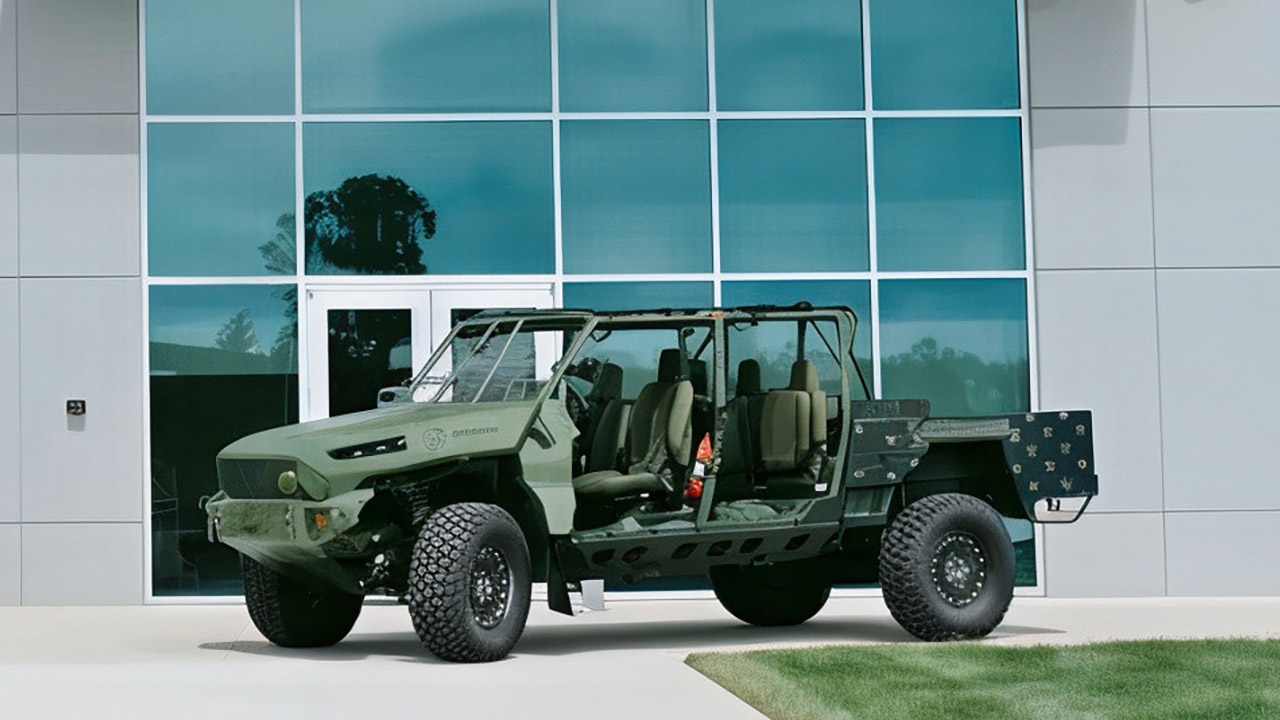
Five soldiers can fit in and obtain the layout they require thanks to the open cabin and roll cage. The seats provide everyone with a clear view of what’s going on around them, and the gauges are a nice combination of analogue and digital so you can get the lowdown in seconds. There’s also a cargo bed in the rear, which is ideal for transporting radios, medical kits, drones, and whatever else you need on a mission. The ISV-U is designed for demanding missions like as reconnaissance, command post setup, logistics, and even fighting off opposing drones. Its small size and light weight allow transport aircraft to drop it in isolated regions where larger trucks cannot go.

This truck has a unique livery created specifically for the auction. The main body is olive drab, with a deep black rear panel featuring star designs commemorating America’s 250th anniversary, the Medal of Honor, and the Army units that use this vehicle on a daily basis. It’s an eye-catching combination that serves as a reminder of the truck’s service history.
[Source]

Out of the dozens of services I’ve tested, Home Chef is my favorite meal kit service for beginner cooks. It’s super user-friendly thanks to the detailed instructions and simple, delicious recipes. If you’re experienced in the kitchen, you’ll still love the end results, but this service is especially great for cooks building their confidence. Every dish has a difficulty rating and recipes have helpful notes for things like reserving portions of an ingredient or keeping a fond-encrusted pan that you’ll deglaze later. If you’ve been wanting to try this service, we’ve got a Home Chef promo code worth checking out.
Get 18 Free Meals With Home Chef Promo Code
Right now, new users can get 18 free meals, free shipping on the first box, and a free dessert item for life with this Home Chef promo code. The promo is applied as a 50% discount each week for the first four weeks. You’ll need to get at least 10 servings per week for the discount to be applied, which means fewer trips to the grocery store and a ton of new recipes in your culinary arsenal.
Save 50% on Your First Box With Home Chef Coupons
Especially with inflation and rising costs on seemingly everything, Home Chef is making it more affordable (and easier) to get nutrient-packed, yummy meals for the whole family. Home Chef has a Kids Eat Free offer, which gives 50% off the regular price of your first box and 17% off the regular price of your next 4 boxes on Home Chef Family orders. These wallet-friendly options start at $6.99 per serving, and for a limited time, you can get 18 free family plan meals with a Home Chef promo code.
Home Chef rewards everyday heroes with a Home Chef promo code for 50% off the first box, plus an additional 10% off. The heroes discount is for doctors, nurses, hospital employees, military, first responders, and teachers. All you have to do is verify your status through ID.me during the sign up process to get the Home Chef discount. Existing customers can still receive it, too, by verifying on their account’s payment page.
Home Chef Deals: Gordon Ramsay Recipes Delivered
In an exclusive collab, Home Chef is partnering with everyone’s favorite tough love, expletive-dropping British celebrity chef, Gordon Ramsay. For a limited time, you can get Gordon Ramsay’s five-star meals included in your Home Chef delivery. Some of the Chef Ramsay meals include British comfort foods like beef cottage pie and pub-style chicken curry, along with classics like creamy dijon chicken, and Asian-inspired meals like a fiery Gochujang chicken stir-fry. Just look for the Gordon Ramsay badge to find the restaurant-quality meals on the Home Chef menu.
Enjoy These Meals With Your Home Chef Coupon
Home Chef’s weekly menu has filters for dietary preferences like keto-friendly meals or calorie-conscious dinners, plus a filter for under-30-minute recipes for when you’re in a time crunch. You can also check out oven-ready prepared meals, family meals for quickly getting dinner on the table, and tasty extras like soups and flatbreads. Everything will arrive pre-portioned right to your doorstep (and for less dough with this Home Chef coupon).
Count on Home Chef for Your 2026 Meal Plans
If you’re not a chef, the holidays and all of the lavish dinners that follow can be overwhelming. Sometimes, it’s just a matter of knowing which recipes to pick and which are in your skill level. Home Chef has you covered with all of your favorite dishes this year, both in convenient bundles or a la carte offerings, depending on your needs. Home Chef also has a bunch of convenient ways to order ahead. You can order a holiday bundle for pick up at a Kroger store near you—you’ll just need to choose a protein and sides, and your bundle will be ready for easy in-store pickup. You can order online, by phone, or in person in select stores.
Get a Home Chef Gift Card for Your Loved Ones
Want to give a gift that actually keeps on giving? If you know someone who seems too busy to have to constantly worry about what’s for dinner next, or you know someone who wants to branch out with their nightly dinner recipes, a Home Chef gift card may just be the perfect gift. With a gift card, the recipient can choose their own meals, depending on culinary skill level, lifestyle, and dietary restrictions/preferences.

The astronauts aboard the Artemis II mission are called a crew, but they really regard themselves as a team, right down to just getting around the Orion spacecraft’s cabin. But they have been intently focused on the overall success of the Artemis program, as there is a lot at stake because it’s the first crewed deep-space flight in more than 50 years. And the astronauts are acutely aware of that and how what they will impact future moon missions.
“Part of our ethos as a crew and our values from the very beginning were that this is a relay race,” Mission Specialist Christina Koch said during a virtual news conference with reporters Wednesday evening. “In fact, we have batons that we bought to symbolize physically that. We plan to hand them to the next crew. And every single thing we do is with them in mind.”
Koch referenced tasks she and the Orion crew have performed so far during their mission, such as manually piloting the spacecraft and ensuring that procedures are as they should be.
Watch this: Getting Personal With the Crew of Artemis II | Tech Today
“We’re always thinking from the perspective of what is the next crew going to think about this, how will this help them to succeed,” stated Koch.
It also takes teamwork just to live in such a small space. Koch said that the Orion’s cabin feels bigger in microgravity than what she expected, even though the astronauts are constantly bumping into each other “100% of the time.” Moving around the cabin, even to perform simple tasks, requires them to narrate their exact movements to one another to avoid colliding with crewmates.
“Everything we do in here is a four-person activity, but it’s also really fun,” joked Koch.
That insight was among the personal details the Artemis crew shared from space on Wednesday evening — the eighth day of their mission — as they prepare for their return to Earth on Friday after a historic 10-day journey around the moon. The first crewed deep-space flight since 1972 saw the Orion Integrity spacecraft carry the crew 252,756 miles from Earth — the farthest distance humans have ever traveled from our planet.
Watch this: Watch NASA’s Artemis II Launch to the Moon
During the mission, the astronauts also shared an emotional moment with viewers back on Earth when they proposed naming one of the craters on the moon “Carroll,” in memory of Commander Reid Wiseman’s late wife, a nurse who died of cancer in 2020 at the age of 46. Wiseman opened up about his feelings in that moment when asked during the press conference. Mission Specialist Jeremy Hansen made the proposal to Mission Control to name the crater on Orion’s lunar flyby.
“When Jeremy spelled Carroll’s name C A R R O L L, that’s when I was overwhelmed with emotion. I looked over and Christina was crying. I put my hand down on Jeremy’s hand as he was still talking. (It was right there on that rail.) And I could just tell he was trembling,” remembered Wiseman. “We all pretty much broke down right there. And just for me personally, that was the pinnacle moment of the mission for me.
Wiseman went on to say the moment was “where the four of us were the most forged, the most bonded, and we came out of that really focused on that day ahead.”
Earthset captured through the Orion spacecraft window at 6:41 p.m. EDT, April 6, 2026, during the Artemis II crew’s flyby of the moon. On Earth’s day side, swirling clouds are visible over the Australia and Oceania region. On the moon in the foreground, the Ohm crater has terraced edges and a flat floor interrupted by central peaks.
The crew is also focused on the journey back to Earth — and has been for more than three years, as Pilot Victor Glover pointed out to reporters.
“We’ve actually been thinking about entry since April 3, 2023, when we got assigned to this mission, and one of the first press conferences, we were asked, ‘What are we looking forward to?’” Glover said. “And I said, ‘splash down.’ And it’s kind of humorous, but it’s literal as well, that we have to get back. There’s so much data that you’ve seen already, but all the good stuff is coming back with us.
He explained that there are so many more pictures and stories that the Artemis II crew still has to share. Glover also admitted that he hasn’t even begun to process everything the astronauts have been through over the past week.
“We’ve still got two more days, and riding a fireball through the atmosphere is profound as well,” Glover exclaimed.
The Artemis crew is scheduled to return to Earth on Friday, with a splashdown in the Pacific Ocean off the coast of San Diego at 5:07 p.m. You can follow the conclusion of the mission on CNET. You can also watch the entirety of Wednesday’s press conference on NASA’s YouTube channel.


Display vehicles for NIO’s new ES9 electric SUV have arrived in showrooms around China, ahead of tomorrow’s tech showcase. The ES9 measures 211 inches long and has a wheelbase of 128 inches, making it somewhat larger than the ES8, and currently the largest pure electric SUV available in the country.
The ES9’s front end takes a bit of a sharp-headed shark approach, swinging into some split headlights that can project some beautiful patterns in the form of welcome lights. Wide angle LiDAR devices are tucked away in the fenders, along with some extra lighting components, as well as a roof-mounted unit that works with cameras and radar to provide data into NIO’s next-generation support system. The wheels, which range from 21 to 23 inches depending on the trim, help to create a silhouette that appears to be supposed to be there – planted and premium from almost every aspect.
Sale

Segway Ninebot S2 Electric Self-Balancing Scooter – Master Your Commute w/t 11.2 mph Max. Speed, 21.7 Mi…
- Speed & Range: Experience exhilarating rides with the Ninebot S2’s impressive top speed of 11.2 mph and range of 21.7 miles.
- Beginner-Friendly: Perfect for riders aged 16-50, the Segway S2 features a user-friendly learning mode, providing a smooth and gradual introduction.
- Adjustable & Supportive: Enjoy a customized fit tailored to your needs, as the Segway S2 accommodates heights ranging from 4’3″ to 6’6″ and supports…
Power is sent to all four wheels via a dual motor system. The front unit produces 241 horsepower, while the rear motor produces 456 horsepower, totaling 697 horsepower and 700 Newton meters of torque. Engineers designed the entire system around a 900volt architecture to get the energy out rapidly and sustain rather fast charging speeds, much exceeding what most people are used to on a regular basis.

The ES9 gets a a 102 kilowatt-hour battery from CATL, which uses the ternary lithium chemistry that NIO prefers. The Chinese cycle has a range of up to 385 miles with the most efficient arrangement, while other models do not perform as well. However, one feature shared by all variations is the incorporation of NIO’s battery swapping network, which allows you to replace the pack in minutes rather than waiting for a full charge.
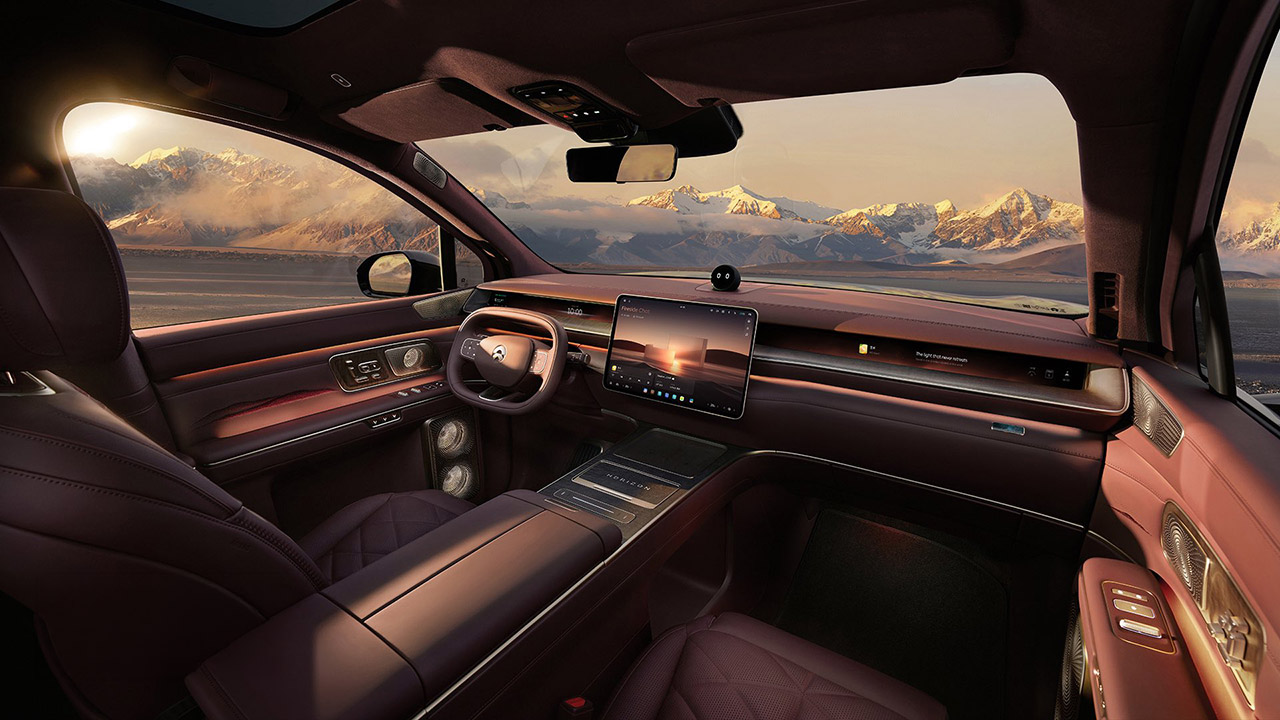
Inside, the ES9’s cabin is divided into two 2+2+2 configurations, with capacity and comfort for six adults as primary priorities. Nappa leather covers every surface, and real wood trim and embroidered details give it a warm, cozy feel. A wraparound dashboard design then houses the true star of the show, a crisp 15.6-inch AMOLED floating screen that runs NIO’s SkyOS interface and sits beside the NOMI Mate 3.0 voice assistant sitting on top. Second row passengers perform particularly well and benefit from the ES9’s 128-inch wheelbase, with higher trims receiving zero gravity seats that recline rather deeply and have all of the frills such as heating, ventilation, massage, and memory features. Then there’s electrochromic glass, which allows you to turn a switch and the rear windows go from clear to tinted in seconds. Add two 14.5-inch entertainment displays and a dedicated 8-inch control screen, and you have a car that will keep passengers happy in the back seat. There’s also a built-in fridge to keep your drinks cool without the need to stop anywhere, as well as a split panoramic roof that lets in plenty of natural light.

Technology does not stop with the touchscreens and seats. How it all works together, in this example the steer by wire technology and the SkyRide chassis, has a significant impact on your driving experience, providing precise handling and a comfortable ride even in a large vehicle like this one. The Shenji NX9031 chip powers it all, combining data from several lidar sensors and 4D radar to make driving feel rock solid regardless of the weather. And if you’ve seen the films of the car being flung around on snow-covered trails and then surviving a high-speed blowout at -30 degrees Celsius with barely a glitch, you know what I’m talking about.

On April 9th, we’ll find out what price the ES9 starts at, which is rumored to be around 500,000 yuan ($73,200). That puts it just below the price of NIO’s top-of-the-line ET9 sedan, but with a lot more room to spread out in and plenty of comforts thrown in, and you’ll be able to get your hands on one just a few months later, in late May. If you are lucky enough to be one of the first in line, you will receive your new ES9 Horizon Edition around a week later.
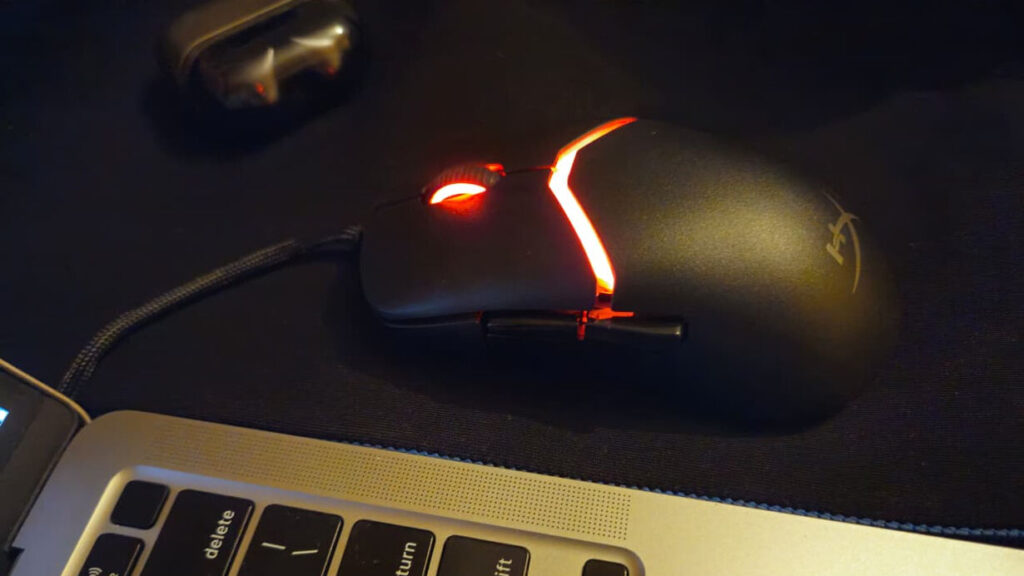
If you’re someone who spends hours gaming, you already know how important a good mouse is. The problem? Most gaming mice look different on paper but feel almost identical in hand. With so many options out there, it’s getting harder to find something that actually stands out. The HyperX Pulsefire Saga tries to flip that idea on its head with a modular design. Instead of adjusting your grip to the mouse, you can tweak the mouse itself to match your comfort. It also promises strong performance, with features such as a 26K DPI sensor and an 8K polling rate. But beyond the specs, I wanted to see if the modular design makes it better to use in real gameplay.
HyperX Pulsefire Saga
Summary
After using the HyperX Pulsefire Saga for a while, it’s clear that it’s more than just a gaming mouse. From a functionality standpoint, I can say it’s held up incredibly well. The sensor is fast and reliable, and the lightweight design is a big plus for long-term use.
Design and Build

The first thing I noticed when I started using the HyperX Pulsefire Saga was how light it felt in my hand. At just 69 grams, it felt easy to control without feeling too fragile. While gaming, this made tracking and quick reactions feel smoother. What really makes this mouse different is its modular build. I was able to change the top shell, button covers, and side buttons within seconds. The magnetic system works well, and everything clicks into place securely. Even after changing configurations multiple times, the build stayed consistent.
In terms of comfort, I used it for long sessions, sometimes up to a few hours at a stretch. The weight, or lack thereof, helps a lot with comfort, and I didn’t experience the strain that I normally get with a heavier mouse. There are a couple of things that didn’t quite work for me, though. The side buttons don’t really feel as high-quality as the rest of the mouse, and there’s a little wobble if you look up close. The scroll wheel is also a bit smaller, but these are just nitpicks.
Overall, the module design is more about function than style, especially if you like to have control over mouse comfort.
Performance

In terms of performance, this mouse does not disappoint. The 26K DPI sensor shines for tracking, and the ability to reach an 8K polling rate is a clear indicator that this mouse is intended for precision use. I tested it with games like Valorant and GTA V, and the performance was pretty stellar. The movements felt smooth, and I did not feel jitters or unusual behavior.
Whether I was making small aim corrections or fast flicks, it reacted instantly. This made it easier to stay consistent during matches. The clicks have a fast and responsive feel, particularly when you’re firing weapons in FPS games.
With a wired mouse, I found that the cable didn’t interfere with my gaming experience because it was flexible enough to allow natural movement. Overall, performance is accurate, fast, and reliable, which is particularly important for a competitive gamer.
Software and Battery

Since this is a wired mouse, battery life isn’t something you need to worry about. I could just plug it in and start playing without worrying about charging or interruptions, which I found really convenient.
For software, HyperX provides NGENUITY. I used it to customize DPI settings, adjust the polling rate, and play around with RGB lighting. The controls are easy to understand, so setting things up didn’t take much effort. There are also options to remap buttons and fine-tune performance settings. It gives enough control for most users without feeling overwhelming.
That said, once I finished setting things up, I didn’t really need to open the software again. It works well, but it’s more of a one-time setup tool rather than something you’ll use regularly.
Verdict

After using the HyperX Pulsefire Saga for a while, it’s clear that it’s more than just a gaming mouse. You can currently buy this mouse from Amazon for Rs. 3,990. I played around with a few settings before finding one that felt comfortable to use, and once I got into the swing of things, it was much more comfortable. From a functionality standpoint, I can say it’s held up incredibly well. The sensor is fast and reliable, and the lightweight design is a big plus for long-term use.
One or two things could be improved, particularly the side buttons and the wheel, but they didn’t really affect my overall experience. If you’re like me and want a slightly more personalized, comfortable experience, this mouse makes a lot of sense.

Anthony Joshua’s ideal next opponent named: “We’ll KO him then fight Fury”

Petlibro Discount Codes: Save Up to 50%

24 Hours in Police Custody to return with notorious Cambridgeshire cold case


-

 NewsBeat7 days ago
Steven Gerrard disagrees with Gary Neville over ‘shock’ Chelsea and Arsenal claim | Football
-

 Business6 days ago
No Jackpot Winner and $194 Million Prize Rolls Over
-

 Fashion6 days ago
Weekend Open Thread: Spanx – Corporette.com
-

 Business5 days ago
Expert Picks for Every Need
-

 Business3 days ago
Three Gulf funds agree to back Paramount’s $81 billion takeover of Warner, WSJ reports
-

 Sports4 days ago
India men’s 4x400m and mixed 4x100m relay teams register big progress | Other Sports News
-

 Tech1 day ago
How Long Can You Drive With Expired Registration? What Florida Law Says
-
Business4 days ago
No Jackpot Winner, Prize to Climb to $231 Million
-

 Fashion3 days ago
Massimo Dutti Offers Inspiration for Your Summer Mood Board
-

 Tech7 days ago
Commonwealth Fusion Systems leans on magnets for near-term revenue
-

 Fashion2 days ago
Let’s Discuss: DEI in 2026
-
Politics6 days ago
Wings Over Scotland | The quality of mercy
-

 Business4 days ago
Akebia Therapeutics, Inc. (AKBA) Discusses Pipeline Progress and Strategic Focus on Kidney Disease Treatments at R&D Day – Slideshow
-

 Fashion6 days ago
Statement Sunglasses: The Accessory Shaping Modern Fashion
-
Sports7 days ago
Justin Jefferson’s Situation Remains Unchanged after JSN’s Deal
-

 Politics6 days ago
East Jerusalem Palestinian families eviction orders
-

 Fashion7 days ago
Thursday’s Workwear Report: Merino Wool Blend Short-Sleeved Sweater
-

 Fashion6 days ago
For Love & Lemons’ Spring 2026 Line is for the Romantics
-

 Crypto World18 hours ago
Bitcoin recovers as US and Iran Agree a Ceasefire Deal
-

 Fashion7 days ago
Coffee Break: Santa Croce Tote
You must be logged in to post a comment Login