Audio Advice is heading west. The Raleigh-based high-end audio and home theater retailer, already one of the largest players in the Southeast, has announced its expansion into Las Vegas with Chris Oram appointed as General Manager of the new location. After moving into the Midwest last year and with another Audio Advice Live event scheduled for August, the Las Vegas move suggests the company is no longer thinking like a regional retailer.
Sin City may be better known for casinos, spectacle, and bad decisions made after midnight, but it is also a serious luxury market and that makes it fertile ground for custom theaters, premium two-channel systems, and CI projects with real budgets.
The Las Vegas move also makes sense once you look beyond the Strip, the casinos, and the tourists who think a $38 cocktail is a personality trait. Henderson, Summerlin, Anthem, and other affluent suburbs around the valley have become landing spots for wealthy buyers relocating from California, Washington, and other high-tax markets, bringing the kind of homes and budgets that support serious custom theaters and high-end audio systems.
Vegas is also no longer just a weekend escape hatch; it is becoming a major sports and technology market, with the Raiders already in town, the Athletics relocation underway, the Golden Knights proving that hockey can own the desert, and the NBA formally exploring Las Vegas as a potential expansion city. Add Mitch Marner’s new eight-year, $96 million Golden Knights deal to the mix, and yes — he can probably afford something with more channels than a Rogers cable package. Audio Advice Las Vegas might be arriving at exactly the right moment.
Las Vegas Gets a Serious High-End AV Super-Showroom
Audio Advice is expanding into the western U.S. with a new super-showroom in Las Vegas, marking the company’s latest move beyond its Southeast roots and recent Midwest expansion. The new location will operate at 750 Pilot Rd, Las Vegas, NV 89119, with former Eagle Sentry executive and industry veteran Chris Oram appointed General Manager to lead the launch and growth of the storefront.
Advertisement
Chris Oram
Audio Advice’s modern showroom model is built around letting customers experience complete systems in person, from smart home control and lighting to two-channel audio and full-scale home theater systems. That matters in a category where photos, spec sheets, and YouTube demos can only do so much. At some point, you need to sit down, dim the lights, press play, and see whether the system delivers or just looks expensive in walnut.
“Chris is an exceptional leader with deep industry expertise and a proven track record of building high-performing teams and delivering outstanding customer experiences. His passion for innovation, operational excellence, and commitment to the client journey make him the ideal person to lead our expansion into Las Vegas,” said Jonathan Stephens, Chief Revenue Officer of Audio Advice. “We’re thrilled to welcome Chris to Audio Advice as we continue building world-class experiences for customers nationwide.”
Oram’s appointment also gives Audio Advice someone with established local market experience and a background in custom integration, which should matter in a city where residential AV projects can quickly move from “nice media room” to “Bond villain bunker with Dolby Atmos.”
“I’m incredibly excited to join Audio Advice and be part of this next chapter,” shares Chris Oram, General Manager of Audio Advice Las Vegas. “I’ve admired Audio Advice for years. As a longtime YouTube subscriber, I’ve always appreciated their dedication to authentic, expert guidance and helping customers make confident decisions. They’ve also built an incredible community, something I’ve had the opportunity to experience firsthand at Audio Advice Live. I’m honored to bring that same passion for excellence to the West Coast and create exceptional experiences for clients in Las Vegas.”
The Bottom Line
Audio Advice Las Vegas is a smart move because the company is not just opening another retail box with demo rooms and a few expensive loudspeakers under dramatic lighting. The bigger play is customer experience, education, and regional reach. Based on our experience at Audio Advice Live 2025, and with Audio Advice Live 2026 coming this August, Audio Advice has shown that it understands something a lot of the high-end audio industry still pretends not to know: people need to hear it, see it, touch it, ask questions, and feel like they are part of the process before they commit real money. “Trust us, it’s good” is not a sales strategy. It’s what villains say before the trapdoor opens.
Advertisement
The Las Vegas location gives Audio Advice a serious foothold in the western U.S. and a market filled with luxury homes, custom integration opportunities, and customers who are not afraid of premium experiences when those experiences are properly explained. It also raises a very interesting question: could Audio Advice Live Las Vegas eventually become a thing? Nothing has been announced, so let’s not pretend the dice have already landed. But Vegas already has the hotels, infrastructure, airport access, and national draw to support something like that. CES is still huge, but outside of TVs and some scattered audio demos, it has largely stopped being a meaningful high-end audio and home theater show. That leaves room.
Advertisement. Scroll to continue reading.
Could an Audio Advice Live event in Las Vegas pull attention from T.H.E. Show Las Vegas or even T.H.E. Show SoCal? Possibly. Not because Audio Advice would simply be another show on the calendar, but because its formula is different. Audio Advice is a retailer with access to some of the best brands in the world, but its real strength is the face-to-face educational model: curated systems, real demos, expert guidance, and customers who can ask actual questions without being treated like they wandered into the wrong velvet-rope room.
Audio Advice is betting that the West Coast and Southwest luxury AV market is ready for a larger, experience-driven showroom model. In Sin City, that may be one of the smarter bets on the board.
Advertisement
AUDIO ADVICE LAS VEGAS 750 Pilot Rd Las Vegas, NV 89119 Phone: (702) 381-1899
Looking for an easy way to track your key health data but don’t want to wear an unsightly wrist strap? A smart ring is an easy recommendation.
Not only are smart rings designed to blend in and not draw too much attention to themselves but, according to Oura, arteries in the finger give optical sensors a cleaner pulse signal that is up to 100 times stronger than at the wrist. With this in mind a smart ring is undoubtedly a great choice, but how do you choose between the options?
We’ve compared the recently announced Oura Ring 5 to the Ultrahuman Ring Pro, as both devices are promised to offer reliable, accurate and in-depth tracking. While we haven’t reviewed either yet, we’ve assessed their specs and noted the key differences (alongside any noteworthy similarities) between the two below.
At the time of writing, both the Oura Ring 5 and Ultrahuman Ring Pro are currently available to pre-order. The Oura Ring 5 will officially launch on June 4th, whereas the Ultrahuman Ring Pro will launch a bit later on July 15th.
Advertisement
The Oura Ring 5 comes in a choice between six colours, with the cheapest options being Silver and Black which start at £399. Alternatively you can opt for Stealth, Brushed Silver, Gold and Deep Rose which starts at £499.
SQUIRREL_PLAYLIST_10208548
Advertisement
In comparison, the Ultrahuman Ring Pro comes in a choice of four finishes: Bionic Gold, Raw Titanium, Space Silver and Aster Black – all of which start at £429.
Oura Ring 5 is hailed as the world’s smallest smart ring
If you want the lightest and thinnest possible ring, then the Oura Ring 5 is an easy recommendation. Weighing from a teeny 2g and at just 2.28mm thick, the Oura Ring 5 is hailed as being the “world’s smallest smart ring” – and it’s 40% smaller than the Oura Ring 4 too.
As we haven’t reviewed the Oura Ring 5 yet, we can’t verify how it really feels in use. However, considering we found the larger Oura Ring 4 sat well on the finger and felt light too, we expect the Oura Ring 5 to be even more comfortable.
Image Credit (Oura)
Advertisement
However, that’s not to say the Ultrahuman Ring Pro is particularly hefty. In fact, it starts with a thickness of just 2.65mm.
Advertisement
Oura Ring 5 requires a monthly subscription to see data
Unlike other fitness trackers, the Oura Ring 5 requires users to sign up to a subscription to really benefit from the data tracking. At £5.99/$5.99 a month, it’s one of the cheaper subscriptions, but it is still another cost to factor in.
An Oura membership allows you to actually see your health and fitness metrics, which are promised to be more accurate than ever before thanks to new signal architecture and more powerful LEDs. This means you should expect more consistent readings and more accurate activity detection than its predecessors.
Image Credit (Oura)
In addition, the Oura Ring 5 can reveal how well you slept and provide you with a relevant Sleep Score, alongside Readiness and Activity Scores. There’s also heart rate monitoring, blood oxygen sensing, stress levels and the ability to set personalised activity goals too.
In comparison, the Ultrahuman Ring Pro does not require an additional subscription to access its plethora of tracking features. This means you can access sleep and recovery data, activity results and more without needing to pay any extra fees.
Advertisement
Advertisement
Image Credit (Ultrahuman)
However, you can pair third-party subscriptions with the Ring Pro which may charge you an additional fee. Not only that, but there are also Ultrahuman PowerPlugs which are add-on apps that you can pick and choose from, depending on your health and lifestyle. For example, you can track the effects of taking GLP-1s, use migraine management tools and even track your vitamin D too. Some PowerPlus are completely free, while others are an additional fee via the app.
Ultrahuman Ring Pro includes the Pro Charging Case
The Ultrahuman Ring Pro will be shipped with the Pro Charging Case which not only provides convenient wireless charging, but also stores up to one year of ring data too. In addition, the charging case is designed to preserve the long-term performance of the Ring Pro’s battery, as it uses an energy-efficient mechanism that generates less heat than conventional wireless charging.
The case can also be easily located via Find My Case in the Ultrahuman app, where you can also receive faster updates, diagnostics and troubleshooting too.
Otherwise, the Oura Ring 5 comes with a size-specific charger that’s powered via USB-C connection. While it does also support wireless charging, you will need to buy a compatible charger separately and that’ll set you back £99.
Ultrahuman Ring Pro supports the world’s first biointelligence AI
The Ring Pro is fitted with what Ultrahuman describes as the “world’s first real-time biointelligence AI”. Coined Jade, the AI connects ring data with markers from across the Ultrahuman ecosystem to produce “unprecedented insights”. Ultrahuman explains that unlike normal LLMs, Jade is able to pull “real-time actionable insights” such as or triggering Afib detection.
Advertisement
Advertisement
Image Credit (Ultrahuman)
Ultrahuman also claims that, in the future, Jade will be able to order food, change your room temperature and flag health issues before they even occur – acting as an “autonomous health agent”. We’re intrigued to see how this really ends up working overtime, but we’ll have to wait and see.
Ultrahuman Ring Pro promises up to 15 days of battery life
Ultrahuman claims that the Ring Pro will see up to a whopping 15 days of battery life. That’s not even factoring in the Pro Charging Case which stores up to a whopping 45 days for topping up while you’re on the move.
That’s not to say the Oura Ring 5 is a slouch by any means. Sure, it’s a bit shy of the Ultrahuman Ring Pro’s promise of 15 days, but Oura’s claim of up to a week is still a solid effort. It’s just a shame the Oura Ring 5 doesn’t come equipped with a more convenient wireless charger.
Early Verdict
As we’re yet to review the Oura Ring 5 and Ultrahuman Ring Pro, we’ll refrain from giving a conclusive verdict. However, as it’s the “world’s smallest smart ring”, has an easy-to-use app and promises to be the most accurate Oura ever, the Ring 5 is undoubtedly an exciting prospect. Having said that, it’s not cheap to purchase outright and you will need to factor in the monthly cost.
Advertisement
Advertisement
In comparison, the Ultrahuman Ring Pro doesn’t need a monthly subscription fee, and still promises to deliver accurate tracking in a lightweight design. We also appreciate the inclusion of PowerPlugs, which allow you to track specific metrics depending on what’s really important to you.
For over 30 years I’ve been teaching teachers to engage in meaningful conversations with their students about real things. Strong teachers know how to pose thoughtful questions, elicit questions from students, and listen and engage respectfully with students.
And yet, 30 years in, there are still a shocking number of schools where adults and children fail to discuss important issues. For instance, according to findings recently released by RAND’s American Youth Panel, only about 1 in 3 students say their school has a school-wide policy on the use of AI. Many students say AI policy in their school varies by teacher, and 67 percent of students endorsed the statement, “The more students use AI for their schoolwork, the more it will harm their critical thinking skills.”
The RAND report recommends “direct conversations” with students about the use of AI. So let’s talk about how to do that.
Talking Directly About AI in Schools
According to the Center for Democracy and Technology, approximately 85 percent of teachers and students report using AI for schoolwork. If your school has a clear policy on AI use, great! Discuss it with your students. Ask them how they feel about it; what’s clear and what needs more explanation; what feels fair and what they might want to advocate to change.
Advertisement
If your school does not have a clear policy on AI, talk with your colleagues, and talk with your students. Here are some questions to get those conversations started.
With colleagues, including teachers and school leaders:
Is it our goal to make things easier for students? For teachers? AI can simplify, increase efficiency, and in other ways do the work for us. Is this what we want?
If so, when is this a good thing?
In what types of situations might we want to avoid making things easier?
How can we implement AI and LLM tools in a way that benefits our learning community, i.e. increased efficiency, time savings, ability to gather and analyze more data, etc.?
What guardrails can we put in place to ensure we maintain the learning experiences we value, such as engaging in productive struggle; working through complex problems and devising, testing, and refining solutions?
How are we going to teach students to critically analyze information and “answers” provided by AI tools?
How skillful are our students at identifying bias? Will our students ask, “What’s the source for this information?” “What perspective does this source have?” Can they distinguish fact (i.e. the distance between the Earth and the sun) from opinion (i.e. the filibuster as a tool for promoting democracy)?
What skills do they – and we – need to strengthen in order to ensure that we are the drivers of AI innovation?
Are there other schools or people we trust, admire, and respect who have implemented AI policies? What can we learn from them?
What processes do we have in place (or can we put into place) to include student voice in determining when and how to use AI in our school?
With students:
What is valuable about the work we do together in school? How might AI tools increase this value? How might AI undermine it?
What does integrity mean to us, as individuals and as a school? How can we implement AI in a way that supports integrity in our school?
What do you know about AI? What do you want to know about it?
What are some ways we might use AI in our school? What are the potential benefits and drawbacks?
Aligning AI with School Values
If this seems like a lot of work, and a lot to talk about, that’s because it is. An AI policy isn’t something to overlay on a school, and then continue with business as usual. AI is a powerful tool. It has the power to disrupt. That disruption can be beneficial, such as disrupting inequitable access to information and learning tools. It can also be harmful: AI can fuel complacency and undermine critical thinking and curiosity. So a school’s AI policy needs to be deeply aligned with the school’s values. And that requires thoughtful, school-wide conversations about those values.
During these conversations, make liberal use of the phrase, “I don’t know.” Because we don’t have all the answers. There is so much we don’t yet know about what AI can, or should, do. How it might support, or undermine, critical thinking and curiosity.
When you engage in conversations based on the questions above, you are modeling to your students – and your colleagues – how to puzzle through complex issues. You’re building uncertainty tolerance. You’re teaching problem solving at the highest level.
And isn’t that what we teachers are here to do in the first place?
More images have surfaced of a black colorway for the Apple Vision Pro, this time showing more of the important parts of the headset sporting the hue. Though, you shouldn’t get excited about a potential release.
In late May, images of what are believed to be components for a black-colored Apple Vision Pro came to light. A week later, that same source has released more images of the fabled headset.
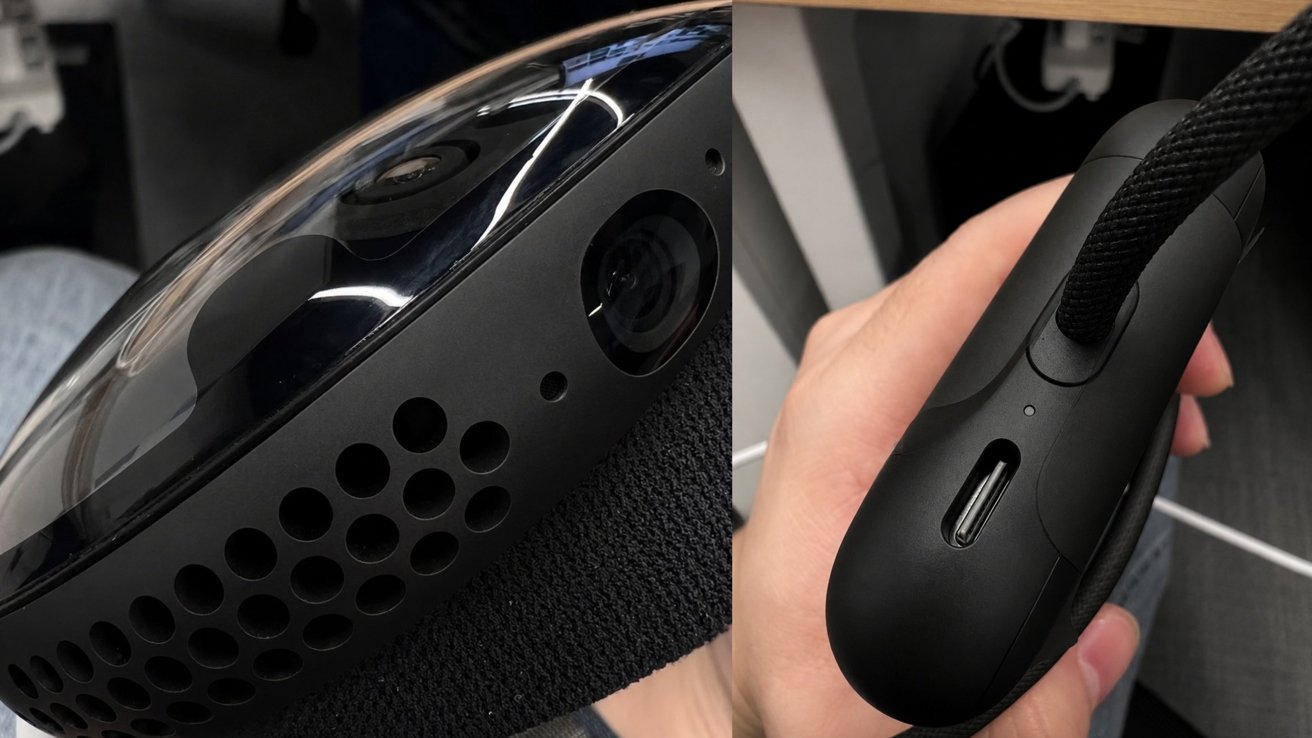
The images, posted to X on Wednesday by a Hong Kong-based developer known as Pipfix or LusiRoy8, are a collection of shots of a headset that looks like the Apple Vision Pro. One is a close-up image of a grille and a camera on the side of the headset, confirming it to be an Apple Vision Pro.
Other shots include the connector for the battery pack, with the mechanism left uncolored. Another shot is of the top of that battery pack, as well as a black braided cable.
Advertisement
One last image shows the knob used to adjust the band attached to the headset. Both the band and the knob are shown in black.
Previously, the account showed off images of the speakers on the side of the Apple Vision Pro, again in the black colorway.
The leaker does have a bit of a track record when it comes to colors, including those of the iPhone 17 Pro. While the previous leak briefly said that the Apple Vision Pro in black is “upcoming,” the new post simply asks readers if they like the color.
While the photographs are quite convincing, there’s no guarantee that Apple will actually release a version in that color. It’s equally plausible that they come from a prototype version that Apple made to test the color, but decided not to go through with the black model in the end.
Advertisement
There are some inconsistencies in some of the images. The fabric surrounding the visor doesn’t quite match the pattern of Apple’s current version, and the battery pack appears wrapped in some kind of film.
Then there’s this odd black wire wrapping between the person’s fingers and yet another white wire further in the background of the battery shot. However, these don’t appear to be AI renders, but genuine photos of black components.
That said, the inconsistent design aspects suggest these are early prototype models.
Possible hardware
While we have had previous rumors going back to April 2025 on the topic, as well as a December shot of a black headset connector, Apple hasn’t slipped up or hinted at new color options for the Apple Vision Pro.
Advertisement
Given the band appears to be the Solo strap, this is likely a prototype of the M2 model that never made it to production. Apple would have no reason to offer different colorways considering how few they sell.
There’s a remote possibility of a black option being introduced in a future model. Don’t expect any mention during WWDC.
Current rumors indicate that Apple Vision Pro won’t see a new hardware iteration for some time. Apple’s Vision Product Team has reportedly directed to focus on smart glasses development while technology for a thinner and lighter Apple Vision Pro can be developed.
Currently, the soonest a new model might be announced is 2028, but Apple hasn’t said as much to supply chains yet.
The catalytic converter in your car’s exhaust system has a complex emissions-related job to perform. Placed between the engine and the muffler, it reduces the amounts of the three primary pollutants found in the exhaust gases of internal combustion engines: nitrogen oxides, carbon monoxide, and hydrocarbons. By passing the engine’s exhaust through the catalytic converter’s honeycomb-like ceramic structure, which is coated with precious metals like palladium, platinum, and rhodium, these three pollutants are converted into less harmful substances. Catalytic converters have been mandated since 1975, with nearly every car required to have one.
Another major part of your car’s catalytic converter system is the oxygen sensor, which interfaces with your engine’s electronic control system to monitor its exhaust gas flow, preventing it from running either too rich or too lean. This keeps your emissions within the legal limits, while also balancing your car’s power and economy.
Catalytic converters can be susceptible to some common problems over their lifespan, which should normally be the vehicle’s entire life. Let’s look at these problems individually, going over why they may happen and what the best ways are to fix them.
Advertisement
Your catalytic converter has been physically damaged
Anastasija Vujic/Shutterstock
Your catalytic converter hangs underneath your car with the rest of the exhaust system, so anything that can cause damage to your muffler or exhaust pipes can also “impact” your catalytic converter. That can mean debris on the road, as well as going over a curb while driving. Doing this type of damage to your catalytic converter can cause its ceramic internal structure to crack or break, affecting its ability to properly convert the toxic substances in your unfiltered exhaust gases.
Physical damage anything like what’s shown above is likely to require replacing your catalytic converter. This type of damage to your catalytic converter will probably also lead to the illumination of your Check Engine Light, since your emission control system will severely impacted by it.
Advertisement
Be aware that certain states require CARB-compliant catalytic converter replacements, which meet the stricter standards set out by the California Air Resources Board. These standards apply to all cars replacing their catalytic converters in California, New York, and Colorado, including out-of-state vehicles. In addition, all CARB-compliant cars replacing their catalytic converters in the state of Maine that were made during or since the 2001 model year must be fitted with a CARB-compliant replacement unit. Be sure to check the local regulations in the state where you reside before replacing your car’s catalytic converter, and don’t even think about whether you should drive without a catalytic converter.
Advertisement
Your catalytic converter has become clogged up
Virrage Images/Shutterstock
There are numerous ways that your car’s catalytic converter can become clogged, and none of them have anything to do with the issue of external physical damage. If you have a leak of coolant or oil that makes its way into the exhaust system or into the cylinders, it can clog up the fine ceramic structure coated with those precious metals inside the convertor, rendering it ineffective. Clogging can also be the result of using substandard fuel, misfiring spark plugs, a fuel-air mix that’s too rich, or just wear and tear over time.
If you are facing the possibility of a clog, there are ways to clean your vehicle’s catalytic converter at home. It’s definitely worth a try if the only other alternative is replacing it out of pocket.
The symptoms of a clogged catalytic converter are pretty tough to ignore. You may experience much worse fuel economy as you drive, hard starting, high heat levels that can start fires under your car, a noticeable lack of performance from your engine, a rotten egg-like smell, and all of this will likely also trigger the Check Engine light on your dashboard to go on. Keep in mind that the clogged catalytic converter is creating an obstruction in your engine’s exhaust system that your engine has to work against, which can lead to leaking oil, seals blowing out in the engine, or even a blown engine if you wait too long to fix the problem.
Advertisement
Your catalytic converter has been stolen
Romanets/Shutterstock
This unfortunate scenario has been happening to car owners across the country. California’s the leader in catalytic converter thefts nationwide, with New York, Illinois, Texas, and Florida rounding out the top five. A thief can cut off your catalytic converter in about a minute, making it unlikely they’ll be apprehended unless they are caught sawing it off. And while thieves get $50 to $500 for stolen converters, you’ll have to pay up to $4,000 to repair your car. While SUVs and pickup trucks, with their increased ground clearance, make the easiest targets, we have compiled a list of the cars most likely to have their catalytic converters stolen.
There are some ways to minimize the risk of having your car’s catalytic converter stolen. These include parking your car in a closed garage, the use of motion sensor lighting where you park your car, never failing to set your car’s alarm and locking your vehicle. If you must park in an area out in the open, be sure that it is at least lit very well.
Additional strategies for protecting your catalytic converter from theft involve making it tougher to remove or making it identifiable. Theft prevention devices include straps, clamps, or cages that make catalytic converter removal much more time-consuming, encouraging thieves to leave your car alone and move on to an easier, unhardened target. Another proactive way to discourage theft is to have your catalytic converter etched or engraved with your VIN or license number, making it easier to identify the owner.
Advertisement
Your catalytic converter’s oxygen sensor goes bad
BLKstudio/Shutterstock
A modern catalytic converter’s oxygen sensor measures how efficiently it is doing its job by monitoring the amount of oxygen present in the exhaust gases. Over time, and possibly due to some engine-related issues like coolant leaking into the cylinders, a bad gasket, or a too-rich fuel mixture, the oxygen sensor can become contaminated or just wear out. In addition to this “downstream” oxygen sensor connected to the catalytic converter, there is usually an “upstream” or “pre-cat” sensor that controls the fuel supply to the engine.
Some indications that your car’s oxygen sensor is failing can include rough engine operation, reduced fuel efficiency, and the Check Engine light on your dash lighting up to alert you there’s a problem. And while you can clean a car’s O2 sensor, it’s not a great long-term idea. To identify the problem with your oxygen sensor, a diagnostic device should produce some trouble codes to guide you along. Make sure that there are no leaks detectible in your fuel injection system or your exhaust manifold, also checking the state of your ignition system parts. Once that you have properly diagnosed the problem and identified which of these sensors is faulty, the bad one can be replaced and correct engine operation restored.
The role of the oxygen sensor in your car’s emission control system, when operating properly, cannot be overemphasized. By consistently monitoring the flow of your car’s exhaust gases, it keeps emissions in check, maximizes performance, and gives you the best possible fuel economy.
AI PCs have quickly become the hottest trend in the tech industry, and Asus doesn’t want to be left behind. As the tradition goes in Computex, the Taiwanese company announced a massive lineup of new AI-powered devices, including creator laptops, consumer notebooks, desktops, all-in-one PCs, and even a brand-new tablet. Here’s everything you need to know about them.
New RTX Spark Laptops
Leading the announcement are the new ProArt P16 and ProArt P14 creator laptops. These are the first ASUS laptops powered by NVIDIA’s new RTX Spark platform, which combines NVIDIA’s Blackwell GPU architecture with the Grace CPU platform for AI-focused workloads.
ASUS says these machines are designed for creators, developers, and anyone working with AI-heavy workflows. The company is also bundling AI tools like MuseTree, StoryCube, and ProArt Creator Hub to help users manage creative projects and optimize system performance.
The laptops also come with ASUS’s latest Lumina Pro OLED displays that can hit up to 1,600 nits of HDR brightness and feature a 120Hz refresh rate. Interestingly, ASUS is introducing two new color options called Nano Black and Neo White, marking the first major design refresh for the ProArt lineup.
Zenbook and Vivobook Get the AI Treatment
For everyday users, ASUS refreshed the Zenbook 14 with a clear focus on portability. The laptop weighs just 1.1kg and uses ASUS’ Ceraluminum construction, which combines aluminum with ceramic-like durability. ASUS claims the laptop can deliver over 21 hours of battery life, making it one of the longest-lasting devices in the company’s lineup. Buyers can choose among Intel, AMD, and Snapdragon variants, with AI performance up to 50 TOPS, depending on the configuration. ASUS has also added new Arctic Blue and Komodo Coral color options to make the laptop feel less corporate than previous Zenbook generations.
Other highlights include a 1.7mm travel keyboard, an ASUS OLED display, Windows Hello support, Microsoft Pluton security, and adaptive privacy features that automatically dim or lock the screen when users step away.
Advertisement
Meanwhile, ASUS is also betting heavily on Snapdragon-powered Windows laptops with the new Vivobook S14 and Vivobook S16. Unlike previous Vivobook generations, these models exclusively use Snapdragon X processors and deliver up to 45 TOPS of AI performance. The laptops are clearly aimed at students and young professionals. ASUS says battery life can exceed 25 hours, while fast charging can take the battery from 0 to 60 percent in under 50 minutes.
The larger S16 model offers a 16-inch OLED display with an 89% screen-to-body ratio, while the S14 opts for a more compact 14-inch design. Both feature 100% DCI-P3 color coverage, TÜV-certified low-blue-light technology, and military-grade durability certification.
ASUS Is Back in the Tablet Business
One of the more surprising announcements from the event was the ASUS Pad, marking the company’s return to the tablet category. The tablet features a 12.2-inch 2.8K OLED display with a 144Hz refresh rate and runs on the MediaTek Dimensity 8300 chipset.
ASUS has equipped the tablet with a 9,000mAh battery, Dolby Atmos-powered quad speakers, Google Circle to Search, and GlideX integration for easier cross-device workflows. At just 6.5mm thick and weighing 523g, the company is positioning it as both an entertainment device and a productivity companion.
New Desktops and AiOs Join the Lineup
Beyond laptops, ASUS also announced the new V700 Mini Tower desktop and V200/V400 all-in-one PCs. The V700 desktop stands out for its unusual home-inspired design, featuring wood-grain finishes and softer aesthetics rather than the aggressive styling usually seen in desktop PCs. It can be configured with up to an Intel Core Ultra 9 processor and NVIDIA RTX 50-series graphics. The V400 AiO, meanwhile, uses Snapdragon-powered hardware and AI capabilities in a larger 27-inch all-in-one form factor aimed at family and home users.
Rounding out the announcements was ASUS Zenni Claw, a new AI assistant designed to simplify access to AI-powered workflows across work, travel, and everyday tasks. ASUS hasn’t revealed extensive details yet, but it appears to be the company’s attempt at creating a more unified AI experience across its devices.
Greenvolt Next also plans to allocate funding for the development of its Waterford headquarters.
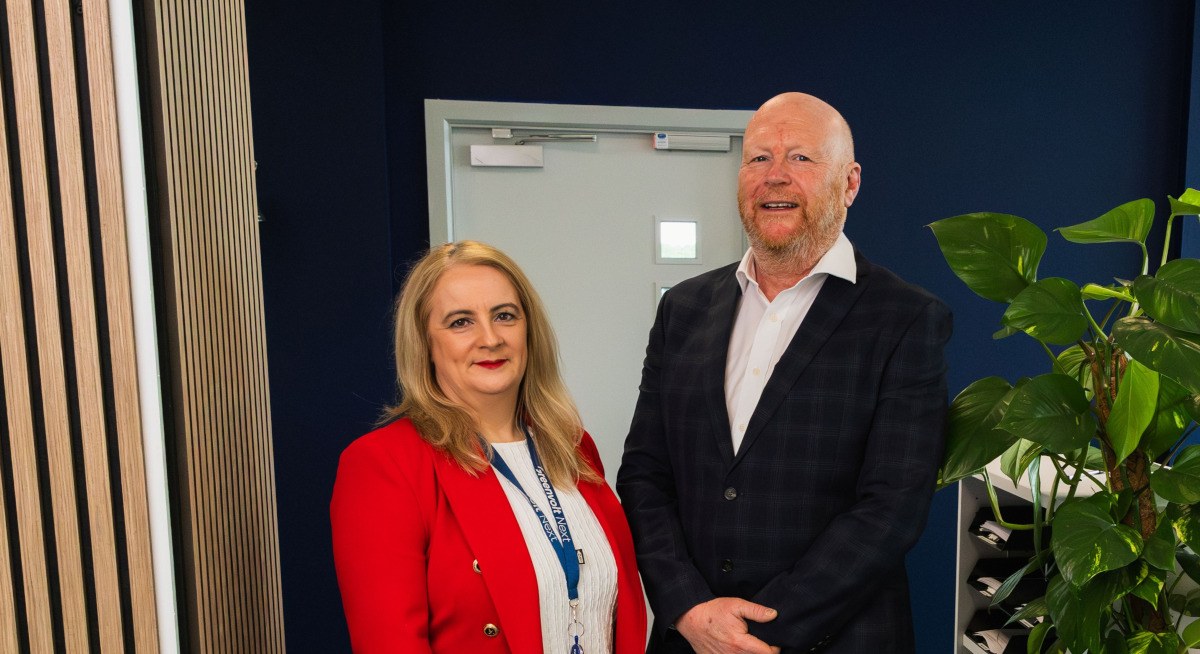
Greenvolt Next Ireland – which is part of Greenvolt Group, a specialist in renewable energy solutions for the commercial and industrial sector – has today (3 June) announced the creation of 90 new jobs. 50 are to be made available at its Waterford headquarters and the remaining 40 will be based in the UK.
Over the next 12 months, the company will be recruiting mid-level to senior managers for roles including project engineers, senior project engineers, project managers and site managers. In expanding the team, the organisation aims to work on additional large-scale projects to support developers and landowners in advancing renewable assets and meet the UK and Irish demand for green energy solutions.
Greenvolt Next is also allocating funding for the further development of its Waterford headquarters, which is being increased by 2,176 sq ft and will be equipped with new technologies.
Advertisement
Commenting on the announcement, Owen Power, the CEO of Greenvolt Next Ireland & UK, said: “Our success to date has been driven by our ability to deliver the most reliable and cost-effective energy solutions to customers, underpinned by unmatched resources and expertise. Looking to the future, which will only see greater demand for such projects, we want to continue making a tangible impact for businesses and the environment.
“That means investing in operations, growing the team and innovating for customers. As well as marking the next stage in our own journey, this will allow us to make renewable energy easy for more organisations across Ireland and the UK. In turn, they will not only be more sustainable but also more successful.”
In 2024, Greenvolt Group announced a partnership with Enerpower, with both organisations agreeing to a joint commitment to install up to 500MW of renewable energy between 2024 and 2029 and create 100 new jobs. The strategy was designed to impact the Irish and wider European markets.
Don’t miss out on the knowledge you need to succeed. Sign up for the Daily Brief, Silicon Republic’s digest of need-to-know sci-tech news.
Springboard+ research found that adults often face financial difficulties when attempting to upskill or change the direction of their careers.
Educational platform Springboard+ has released the results of a survey exploring some of the challenges learners face as they aim to progress personally and professionally. The organisation commissioned an independent national survey collecting data from 1,000 Ireland-based adults across a wide range of ages, genders, regions and social backgrounds.
What was discovered is that almost half (46pc) of surveyed adults in Ireland struggle to afford learning and study opportunities to upskill and change the trajectory of their careers. The survey, which was part of Springboard’s ‘2026 Year of Me’ campaign, also identified which groups of people are typically more affected than others.
Perhaps unsurprisingly, women were found to be disproportionately impacted, as 53pc of women surveyed who were under the age of 45 agreed that they have very little time to invest in career growth. Half of parents also responded that time is a limited resource, while 54pc of women said that financially speaking, it is difficult to engage with upskilling opportunities.
Advertisement
Decision time
More than 40pc of people surveyed said that they are afraid of making the wrong decision when choosing a new career direction. This sentiment was particularly prominent among younger cohorts, with 32pc of adults aged between 18 and 24 responding that they would struggle with the stress associated with learning new skills.
The report found, however, that despite the barriers, Ireland’s professionals still value learning and self-development, as 93pc of respondents believe learning new skills as an adult can change the trajectory of one’s life; 93pc also agree that learning new skills opens doors that otherwise would remain closed.
Commenting on the findings of the report, Dr Vivienne Patterson, the head of skills, engagement and statistics at the Higher Education Authority, said, “The findings highlight that many adults across Ireland want to invest in their future and develop new skills, but are often held back by practical pressures such as time, affordability and uncertainty about returning to learning.
“Flexible and affordable learning opportunities can play an important role in helping people overcome some of these barriers. Many Springboard+ courses are delivered on a part-time or online basis, allowing people to balance learning with work, family and other commitments, while the significant financial support available through the programme helps make higher education more accessible.
Advertisement
“The strong demand we are already seeing for Springboard+ 2026 courses reflects the growing demand for flexible learning opportunities that can help people build confidence, develop new skills and explore new career opportunities.”
So far in 2026, a number of organisations and institutions have engaged in offering opportunities to boost skills among the Irish workforce.
In May, South East Technological University announced it is getting a new €11.5m computer system. The IBM z17 mainframe will support students and researchers in developing their skills. In April, the Government launched AIReady.ie, a national AI skilling platformdesigned to provide people across Ireland with the means to learn essential AI skills.
Similarly, in March of this year, Technological University of the Shannon launched its Regional Skills Horizon and Pathways to Employment (ReSHAPE) initiative, an AI-powered digital platform developed to support professionals based in Ireland’s midlands region, supporting economic development in counties such as Laois, Offaly, Longford and Westmeath.
Advertisement
Don’t miss out on the knowledge you need to succeed. Sign up for the Daily Brief, Silicon Republic’s digest of need-to-know sci-tech news.
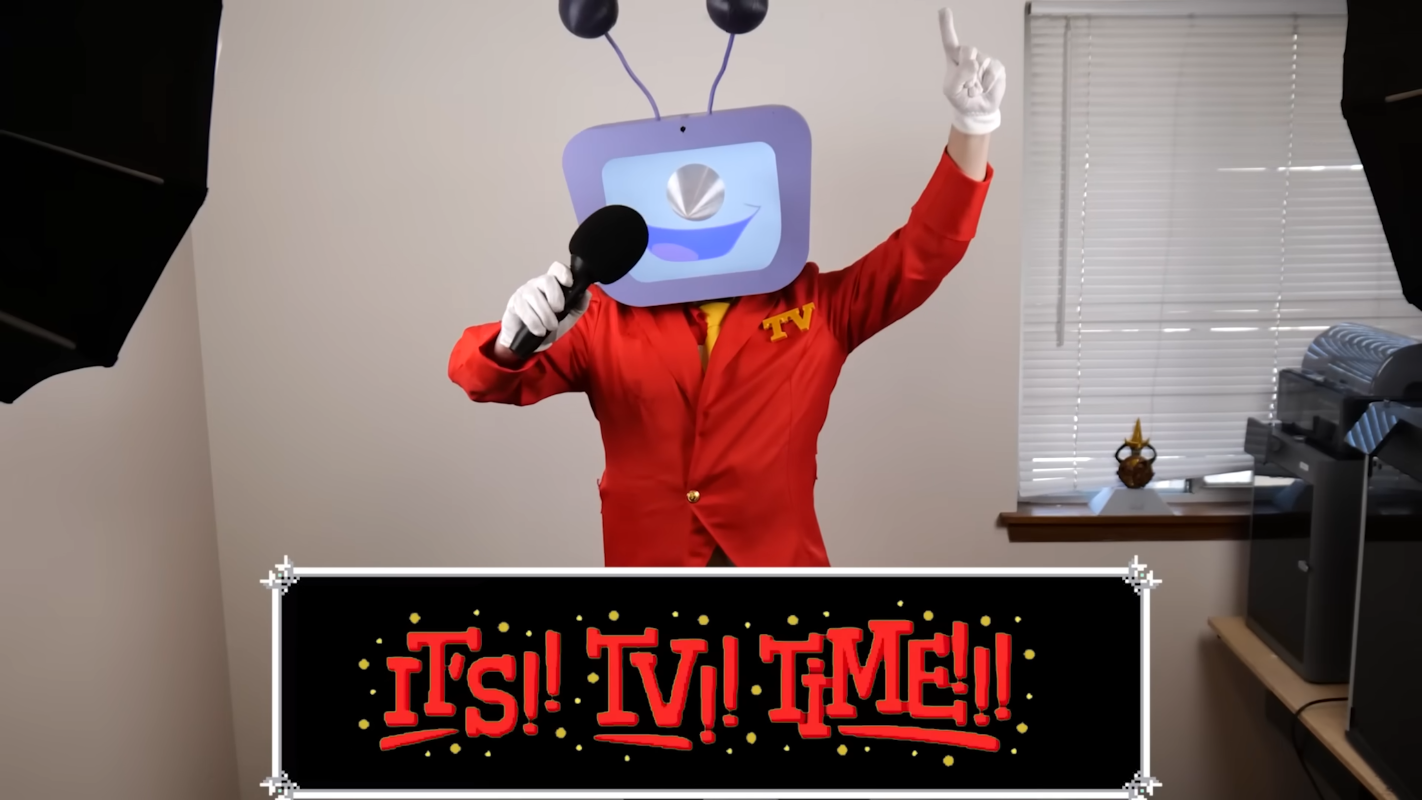
For those who have never played the hit video games Undertale and Deltarune, the games are partially known for their interesting characters, many of which have eerie, surreal, and expressive designs. One of the more memorable characters from Deltarune is Tenna, a game show host of sorts whose distinguishing feature is an old television as a head, as well as a colorful suit. As a result he’s been the subject of a number of recreations by various cosplayers and makers like [BigRig Creates].
This version of the character was actually inspired by a previous build by [BunnyBii] which used an iPad as the interactive screen/face. Inside the television, though, the actual human found this to be front heavy and limiting in the ways that it could be used interactively, especially since the only way to see the outside world in this version was with a small endoscope and screen. [BigRig Creates]’s version builds on this idea but swaps out the iPad for a Raspberry Pi, allowing for much more customization, and uses a pair of Xreal glasses instead of a screen for the view of the outside world from in the television.
To get the whole costume together, the head is 3D printed with all of the electronics inside, and a game controller integrated into a handheld microphone controls the animations shown on the screen. A vibrant, custom-tailored suit with white gloves rounds out the ensemble, along with a pair of 3D-printed shoe covers since actual yellow shoes were a bit pricy. There were some interesting problems to solve along the way, specifically with regards to power management for all the electronics, but in the end it all seems to have come together quite well. [BigRig Creates] is no stranger to builds with unusual displays, though; one of our favorites was the world’s largest Nintendo 3DS.
If there’s one group that knows how to move fast, it’s runners — and that’s exactly what you’ll need to do to take advantage of this deal. Strava members can earn a free two-week Runna Premium subscription by running a 5K on Wednesday, which marks Global Running Day.
Strava is a popular fitness app that records and logs your runs, rides, hikes and other activities, including strength training. Last April, Strava acquired Runna, an AI-personalized running app, to customize training plans for different race distances and coaching for its subscribers. Strava doesn’t provide training plans, but it can log your runs, let you create your own routes, view your running stats after each run and share them with your app followers.
You can use Strava for free, but to access additional features, you would need to upgrade your membership to an individual ($80 annually), family ($140 annually for a family of four) or student subscription ($40 annually) if you’re willing to pay for the Strava and Runna combination plan, which costs $150 a year. You can also experience Runna for free, but to access it fully, you’ll need a subscription for $120 annually.
Advertisement
However, if you run, walk, trail run or use a wheelchair and log a 5K on Global Running Day on your Strava app, you can experience Runna free for two weeks to decide for yourself if it’s worth the investment. Strava is counting GPS, virtual and manual activities toward the challenge goal.
Apple is also participating in Global Running Day and giving Apple Watch owners the chance to earn a digital badge by logging a 5K run indoors or outdoors. This also applies if you have other third-party fitness apps that log runs and connect to your Apple Health account.
For months the fight in India’s App Store antitrust case was not really about app stores. It was about a spreadsheet. The Competition Commission of India wanted Apple’s financial records; Apple did not want to give them up, least of all the global ones. On 3 June, Apple agreed to submit the financials, removing the obstacle that had stalled the long-pending case.
The reason the data mattered so much is the reason Apple resisted it. Under India’s competition law as updated in 2024, penalties can be calculated against a company’s global turnover rather than its revenue inside the country. For most companies that distinction is academic.
For Apple, whose Indian revenue is a sliver of a business that turns over hundreds of billions of dollars worldwide, it is the difference between a manageable fine and an existential one. Apple has said it fears a penalty of up to $38bn, a figure it has invoked as evidence the regulator is overreaching.
That fear is what drove the months of manoeuvring. Apple had refused to fully comply with the CCI’s demand for detailed financial disclosures, argued that global figures should be out of scope, and escalated the dispute to the Delhi High Court, seeking to pause the proceedings before they reached a final hearing.
Advertisement
The 💜 of EU tech
The latest rumblings from the EU tech scene, a story from our wise ol’ founder Boris, and some questionable AI art. It’s free, every week, in your inbox. Sign up now!
The regulator declined to slow down. The result was a standoff in which the substance of the case, whether Apple abused its market position, was held up by a procedural fight over what the regulator was allowed to see.
The underlying allegation is not new. A 2024 CCI investigation found that Apple had abused its dominant position in the iPhone apps market by requiring developers to use its proprietary in-app purchase system, the same conduct that has drawn regulatory fire in the European Union, the United States and elsewhere. India’s case has moved more slowly, but its penalty framework, anchored to global turnover, gives it unusual teeth.
Advertisement
TNW readers have followed the procedural thread. The Delhi High Court recently brokered a compromise in which it told Apple to cooperate while ordering the CCI not to issue its ruling before 15 July, granting Apple a roughly two-month reprieve while requiring it to produce the data. Wednesday’s agreement is Apple acting on that, handing over the records it had fought to keep back rather than continuing a fight the courts had signalled it would lose.
What the concession does is unblock the case rather than decide it. With the financials in hand, the CCI can move toward the part that actually matters: whether to penalise Apple and, if so, how much.
The global-turnover framework means that calculation is where the real stakes sit, and it is the calculation Apple’s resistance was designed to forestall. Handing over the data does not concede the underlying conduct; it concedes the regulator’s right to the information it needs to act.
The case is now one of several fronts on which Apple’s in-app payment rules are under pressure at once, and India’s is among the more dangerous because of how the fine could be sized. Apple has bought itself a deadline of mid-July and lost the argument over disclosure. The ruling that follows, and the number attached to it, is the part still to come, and the part Apple spent months trying to delay.

























































You must be logged in to post a comment Login