
Tech
Aventon Soltera 3 Electric Bike Review: A Fun Hybrid Single-Speed


Belt-drive bikes offer some huge upsides. First, they usually require less maintenance, with many belts often lasting twice as long as a typical chain. Second, there’s no grease to speak of, and therefore, no black smudges on your work pants. Third, in the case of the Soltera 3, the belt comes from the Gates brand, whose drivetrain belts are as good as it gets. Belt-drive bikes are silent and often smoother than their chain-driven counterparts.
That said, the inclusion of a low-maintenance element such as a belt drive paired with hydraulic disc brakes, which require bleeding roughly every year, struck me as an odd choice. If Aventon wanted to make the Soltera 3 as hands-off as possible, cable-actuated brakes would have been a more intuitive choice.
The other thing that immediately jumps out about the Soltera 3 is its relatively light weight. At 37 pounds, the Soltera 3 is heavy for an analog bike. But it’s certainly not heavy for an ebike, and it’s nearly as stiff, nimble, and navigable as a conventional bicycle. One issue I’ve always had with ebikes is their heft. Given that they’re often made to replace a car, they’re built with load bearing in mind. Also, ebike batteries are heavy.
Adding to that sense of “this is just like my other bikes,” the Soltera 3 simply looks cool, which is often not the case when it comes to ebikes. The matte black my tester bike arrived in looks cool because matte black almost never doesn’t look cool. (Additionally, the Soltera 3 is available in dark matte blue and a sleek silver.) But beyond the finish, the bike’s geometry; its wide, almost perfectly flat handlebars; and its narrow (by ebike standards) 700 x 36 tires make it feel closer in DNA to a road bike than a traditional ebike.
Button Press

Photograph: Michael Venutolo-Mantovani
I’m 6′4′′, and the extra large Soltera 3 that I tested was at a maximum saddle height. It was suitable for me, but I couldn’t recommend anyone bigger than me riding the Soltera 3. That said, with four sizes ranging from small to extra large, the line covers a wide swath of riders, ranging from my height all the way down to 5′ tall.


India’s quick commerce market is booming, with demand more than doubling for some players. But the fast-delivery push by Flipkart and Amazon is raising the stakes in an already crowded space where profitability remains under pressure.
Flipkart, one of India’s largest e-commerce players entered quick commerce later than local rivals such as Blinkit, Swiggy, and Zepto. But it has now crossed more than 800 dark stores (distribution centers for online shopping) this week, TechCrunch has learned, and is looking to double that by the end of 2026, according to UBS.
The expansion comes as India’s quick commerce sector enters a more intense phase of competition. The strain is reflected in recent developments, including the departure of a co-founder at Swiggy this week, as companies reassess strategy amid rising competition and costs.
The Walmart-owned company debuted in quick commerce with Flipkart Minutes in August 2024, offering deliveries across categories in as little as 10 minutes. Since then, the sector has expanded rapidly. More than 6,000 dark stores are now in operation, leading to significant overlap among players in major cities and intensifying competition, Bernstein said in a report earlier this week.
Beyond major cities
Flipkart’s network in India remains smaller than that of market leader Blinkit, which has over 2,200 dark stores, according to Bernstein. However, Flipkart is betting on expanding beyond major cities to drive growth. This is unlike Blinkit, which plans to scale to 3,000 dark stores by 2027 while focusing on its top 10 cities.
“Flipkart has this Walmart DNA,” said Satish Meena, founder of Gurugram-based consumer insights firm Datum Intelligence. “Walmart’s DNA is always about expanding the total addressable opportunity to dominate by expanding the market.”
Flipkart is already seeing traction beyond major cities, with 25–30% of its quick commerce orders now coming from small towns, a source familiar with the matter told TechCrunch. Orders per dark store have also grown about 25% month-on-month, the person said.
Techcrunch event
San Francisco, CA
|
October 13-15, 2026
However, growth in quick commerce remains concentrated in larger cities. Most demand, Bernstein said, continues to be driven by big cities, where higher population density supports faster deliveries and better utilization of dark stores, even as expansion into smaller towns gathers pace.
That dynamic also underpins profitability. The top eight cities in India account for over 3,800 dark stores operated by the five largest players, with about 3,600 of them having the potential to be profitable, according to Bernstein.
“Metro markets obviously are better in return ratios, better in profitability because of higher throughput,” said Karan Taurani, executive vice president at Elara Capital, a London-headquartered investment bank and brokerage firm. “This business is all about higher throughput, and for now, that is coming largely from metro markets.”
Still, some analysts see a longer-term opportunity beyond major cities. “Non-metros (small towns) can give a surge if companies expand beyond groceries and offer a wider range of items at faster speeds,” said Datum’s Satish Meena. “Flipkart is betting on that.”
Nevertheless, scaling beyond big cities will take time. Quick commerce is currently viable in about 125 cities, with dark stores typically taking six to 12 months to reach maturity and profitability, said Aditya Soman, a senior research analyst at CLSA, a Hong Kong-based brokerage. Many of the newer stores in smaller towns are still in the ramp-up phase, he added.
Amazon, which entered India’s quick commerce market in late 2024 shortly after Flipkart’s debut, is also ramping up its presence. The e-commerce giant has rolled out around 450–500 dark stores so far, with about 330–370 currently operational, according to UBS, as it looks to tap into growing demand for faster deliveries.
Pressure mounting on incumbents
Flipkart is not just relying on dark-store expansion to compete but also aggressive pricing. The company is offering some of the highest discounts in the segment — around 23–24% across categories, based on a sample basket analyzed by Jefferies last month — as it looks to attract users in a market where price and convenience remain key drivers of demand.
The pressure from such strategies seems to be working. Brokerage firm JM Financial recently warned that Swiggy’s quick commerce business is caught in a “growth-versus-profitability deadlock” and risks destroying shareholder value, adding that a takeover by a larger, better-capitalized player may be the best outcome for investors.
Shares of Eternal, which owns Blinkit, are down about 15% so far this year, while Swiggy has fallen over 29%, even as Zepto is preparing to go public on Indian stock exchanges later this year.
The entry and expansion of large players such as Flipkart and Amazon are reshaping the competitive landscape. “Quick commerce is no longer in a startup phase — it has become a big players’ game,” said Ankur Bisen, a senior partner at retail consultancy Technopak Advisors.
He added that the sector’s economics and limited differentiation could eventually drive consolidation, as companies compete for the same set of customers in a discount-heavy market.
Amazon, Flipkart, and Swiggy did not respond to requests for comment. Eternal declined to comment, while Zepto said it could not comment due to a silent period following its IPO filing.

Arizona state prosecutors allege Kalshi is running an illegal gambling operation, charging the prediction market with 20 “wagering” misdemeanors. But Friday a federal judge “temporarily barred Arizona from enforcing its gambling laws against predictive market operators,” reports the Associated Press, “and put the brakes on a criminal wagering case that the state has filed against Kalshi.
“U.S. District Judge Michael Liburdi’s ruling means a Monday arraignment hearing for Kalshi has been called off.”
The order was issued in a lawsuit filed by the Trump administration. The judge’s order said the federal Commodity Futures Trading Commission had sufficiently shown that “event contracts” fall within the Commodity Exchange Act’s definition of “swaps,” and that it had demonstrated a reasonable chance of success in showing that the act preempts Arizona law… The commission had sued Arizona in response to cease-and-desist letters sent to Kalshi from state gambling regulators and the criminal charges filed against the prediction market operator. The commission argued Arizona is intruding on its exclusive federal power to regulate national swaps markets…
Earlier this month, the federal government filed lawsuits against Connecticut, Arizona and Illinois challenging their efforts to regulate prediction market operators. The Trump administration has so far backed the platforms. President Donald Trump’s eldest son is an adviser for both Kalshi and Polymarket and an investor in the latter. Trump’s social media platform Truth Social is also launching its own cryptocurrency-based prediction market called Truth Predict.
Federal and state judges in Nevada and Massachusetts have now issued early rulings in favor of states looking to ban Kalshi and its competitor Polymarket from offering sports being in their states, according to the article, “while federal judges in New Jersey and Tennessee have ruled in favor of Kalshi.”
And Arizona’s attorney general’s office said it disagrees with the court’s ruling and “will evaluate our next steps.”


The City by the Bay may be considered the center of AI and technology, but that doesn’t mean every founder should flock there to set up shop, right? That’s the argument put forth by Yifan Zhang, AI2 Incubator’s co-managing director and creator of the AI House.
In a speech at last week’s Seattle AI Startup Summit, Zhang addressed the classic San Francisco-versus-Seattle debate. And while she heaped praise on San Francisco, she also highlighted the benefits of founders building right here in the Pacific Northwest. It was less about civic boosterism and more about founder diagnostics.
Zhang said the same qualities that make San Francisco great for some founders can work against others — particularly those building category-defining startups in the AI era.
Is your startup butter or does it have sand in the gears?
When weighing their decision to relocate to San Francisco or stay in the Pacific Northwest, Zhang proposed that entrepreneurs ask whether they’re building a “butter” or a “sand in the gears” startup.
As she explained it, “butter” startups are those that “succeed solely based on pure speed of execution, an extremely smooth customer experience, removing all friction for your users.” These are best suited for San Francisco.
Alternatively, startups with “sand in the gears” have real-world complexity, hardware, human relationships, and regulatory edges, all of which Zhang believes may be considered flaws in the Northern California city.
“The sand in the gears might give you some defensibility, a moat against the onslaught of competitors that are exactly the same,” she explained. “This is especially true in the AI era, when building has become so cheap. The people, the founders, willing to grind it out through these sand-in-the-gear startups, versus pivoting away from the things that are hard, will end up winning in these categories.”
Zhang used AI2 Incubator portfolio startup Friday Harbor as an example. Founded in 2024, the company faced a challenging technical problem: how to use AI to match borrower documentation against lender guidelines to determine who qualifies for a mortgage. Unfortunately, AI at the time wasn’t as great as it is today. There were shorter context windows and no agentic systems. Advanced reasoning models weren’t widely available.
“It’s also a hard problem when it comes to the customers you’re dealing with, a non-tech-savvy customer audience,” she said. Mortgage loan officers and originators tend to be skeptical of AI and distrustful of outsiders without industry experience.
But rather than throw in the towel and pivot, Friday Harbor chose to work through all the tough technical problems, staying focused on customer outcomes, and ultimately delivering mortgage underwriting that today benefits from the latest AI advancements.
Zhang said that willingness to grind through hard technical problems is what sets Seattle apart from other tech-oriented U.S. cities like New York, Los Angeles, Austin, and Miami.
“We have a serious engineering culture here that’s heads and shoulders above every other city and goes toe-to-toe with San Francisco,” she said.
Building a startup in San Francisco vs. Seattle

Zhang knows what it’s like to build in both cities. She founded two startups — Gympack and Loftium — in San Francisco and Seattle, respectively. So how do the two cities compare for founders?
San Francisco’s biggest advantage is the sheer concentration of people singularly focused on founding and building great companies, Zhang said. Founders there absorb best practices faster than anywhere else, can draw from a talent pool that genuinely prefers startups over Big Tech, and get early access to cutting-edge technology.
That said, there are notable downsides, such as overwhelming pressure from investors.
“You might be influenced to raise mega rounds when that’s actually pouring jet fuel in a plane when you’re learning how to fly,” Zhang said. “You may be influenced to pivot away from startup ideas that are good and are just a couple of tweaks away from being great.”
San Francisco can also be an echo chamber, Zhang said. When everyone shares the same startup-and-tech background, founders tend to hear the same feedback on repeat, whether or not it’s relevant to their company.
Seattle has its own advantages beyond engineering culture, Zhang said. Founders here are more willing to admit they have zero paying customers rather than ship a product that doesn’t work — a candor that San Francisco’s launch-at-all-costs culture tends to punish. She called Seattle’s humble approach a positive attribute, especially in an industry where the technology absolutely has to work.
Of course, Seattle isn’t perfect. With Amazon and Microsoft so prominent in the local tech scene, founders are more likely to get advice from people with Big Tech experience than from those who’ve actually built or funded early-stage companies. And the mentalities and best practices that worked at large corporations don’t necessarily translate to startups.
She also warned that Seattle can have a narrow view of who gets to call themselves a founder, often defaulting to people who’ve had senior or executive roles at Amazon or Microsoft. That mindset may work if you’re building a B2B SaaS company selling back to Big Tech, Zhang said, but otherwise it’s irrelevant.
Her advice: “Pay attention to the things that you uniquely bring to the table and build a company around that.”
In the end, Zhang offered this tip for founders: “Geography does impact your idea [and] your chances of success. So choose it as carefully and wisely as you choose your startup idea and industry.”
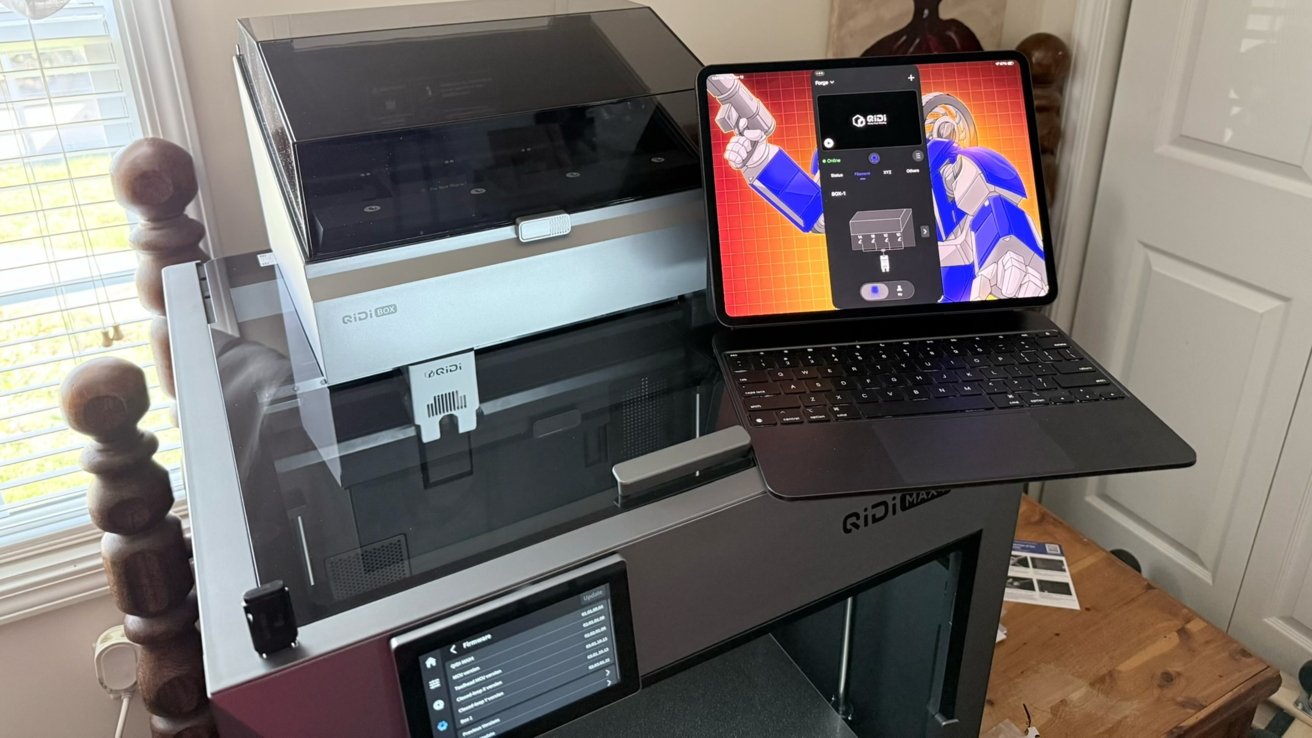
The QIDI Max 4 is a 3D printer capable of multi-color printing, equipped with heating and cooling elements and a massive build volume. It’s a serious 3D printer for those who need it.
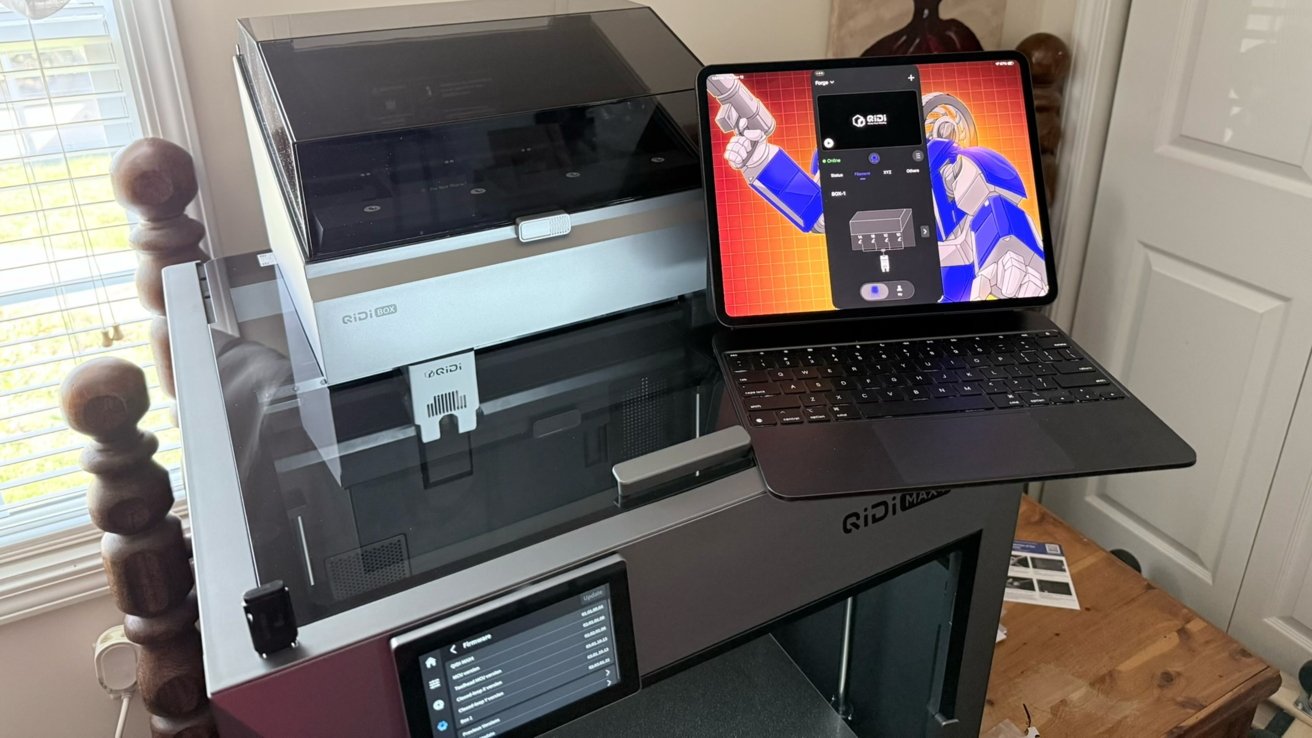
QIDI Max 4 3D Printer Review
I consider myself a professional amateur 3D printing hobbyist. The Anet A8 was my starter printer about five years ago. Between then and now, I’ve picked up and messed with a Creality Ender 3 and an Anycubic Photon series resin printer.
More recently, I’ve even tried my hand at building my own HyperCube Evolution. Before I could finish it, my steam for the hobby ran out.
Continue Reading on AppleInsider | Discuss on our Forums


A new retail storyline is close to beginning in downtown Seattle with the opening this month of a Barnes & Noble bookstore — six years after the chain closed its longtime downtown location.
The new store at 520 Pike St. is about four blocks from Pike Place Market and another four from Amazon’s headquarters, in a 29-story Tishman Speyer office building. A grand opening event is planned for April 29 at 9 a.m., with a ribbon cutting and a book signing with bestselling author Robin Hobb (“Blood of Dragons”).
Downtown Seattle Association President and CEO Jon Scholes signaled his excitement Monday for the return of a major national retailer to an area hit hard by retail exits and depleted foot traffic during and after the pandemic.
“A strong signal to others who may have left the market over the last 6 years and to those that have yet to plant a flag here,” Scholes wrote on LinkedIn alongside a picture of the outside of the store. “With a record residential population, visitor numbers that are beating 2019 level and an increasing return of locals – there are many great reasons to be downtown.”
The store will be a short walk from the HQ towers and Spheres that make up Amazon’s Denny Triangle home. The tech giant got its start as an online bookseller, and on its way to disrupting multiple retail verticals, the company’s e-commerce dominance took a toll on physical bookstores, including Barnes & Noble. Amazon even opened physical Amazon Books locations, a concept that lasted about seven years before they were shut down in 2022.
In an especially ironic twist, Barnes & Noble moved into two vacant Amazon Books locations in the Boston area in 2022.
Barnes & Noble CEO James Daunt said in a television interview last year that he believes the experience in a physical store wins out when compared to shopping online with Amazon or elsewhere. Customers engage with other books and other customers about books.
“You will have an experience, and when you walk out of the store with [a book] in your bag it will lift you,” Daunt said. “It’s the same book, but I promise you it’s a better book, and the reading of it will be more pleasurable because you bought it in a bookstore.”
Barnes & Noble left its Pacific Place location at 600 Pine St. in Seattle in January 2020, after 22 years. Shoppers told GeekWire at the time that they were saddened by the loss of downtown’s only bookstore.
The chain still operates locations in the Northgate and University District areas of Seattle and has several locations in Western Washington. The opening of a new location at Bellevue Square attracted a steady stream of book lovers in January 2025.
The company, which peaked at 726 locations nationwide in 2008, has undergone a revival since the pandemic, opening nearly 60 stores in 2024 and dozens more in 2025. It has plans to open 60 more this year and is already back over 700 stores.
FOX 13 reported in December that the new downtown Barnes & Noble space will be 17,538 square feet and offer an array of books, toys, games, magazines, gift items and more. The company signed a 10-year lease — the largest retail lease in downtown Seattle since 2020.

In a recent statement, Mozilla argued that Microsoft’s design choices – particularly those that link the Windows experience tightly to Edge and Copilot – undermine genuine user control. When Microsoft embeds features that favor its own browser and AI tools, it removes opportunities for competing software to be used at…
Read Entire Article
Source link
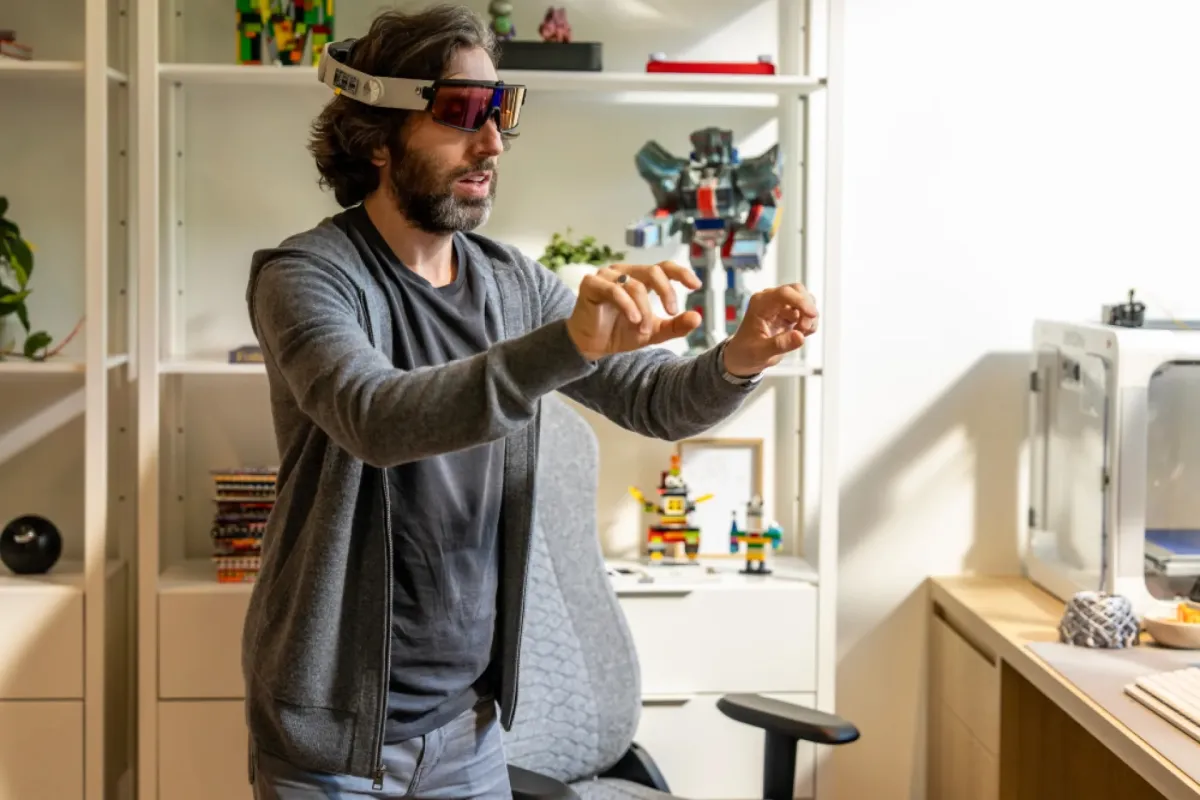
While it’s not unusual for networks to promote new shows by releasing full episodes on YouTube, AMC is doing something a bit different for its Silicon Valley-focused comedy “The Audacity.”
The show’s premiere will be available on TikTok, starting on Sunday morning. It will be split into 21 segments, each lasting about three minutes, according to Deadline. The segments will be numbered, allowing users to watch the premiere in its entirety if they choose.
This could be a smart way to build buzz among younger viewers for a show that AMC’s chief marketing officer described as the network biggest launch of the year. Or it might just be an odd attempt to recreate Quibi.
Created by Jonathan Glatzer and starring Billy Magnussen and Sarah Goldberg, “The Audacity” doesn’t depict real companies or executives, but it aims to provide a darkly comedic look at many issues created by today’s technology.
And if you don’t want to watch in three-minute segments, you can catch the full premiere on AMC and its streaming service AMC+. It will also stream simultaneously on Samsung’s free service Samsung TV Plus.


Cyberattacks rarely come out of nowhere—threat actors often leave behind signals long before an intrusion begins.
On Thursday, April 30, 2026 at 2:00 PM ET, BleepingComputer will host a live webinar titled “From noise to signal: What threat actors are targeting next” with Tammy Harper, Threat Intelligence Researcher at RansomLook.
The webinar explores how security teams can monitor early warning signs across underground communities and translate them into actionable defense.
We will examine how threat actors use dark web forums, Telegram channels, and access broker marketplaces to coordinate attacks, share vulnerabilities, and advertise compromised access, often revealing their intentions weeks before an attack is launched.
Flare Systems, a threat intelligence firm specializing in monitoring external threat surfaces, helps organizations detect these early signals across the dark web and other hidden channels. By providing visibility into attacker behavior and emerging threats, Flare enables security teams to move from reactive defense to proactive risk reduction.
In this session, attendees will learn how to identify meaningful signals within online “chatter,” track evolving adversary tactics, and turn intelligence into prioritized defensive actions before attackers gain a foothold.

Threat actors don’t operate in silence
From vulnerability discussions and leaked credentials to access broker listings and Telegram coordination, attackers frequently communicate and prepare in ways that can be observed.
However, these signals are often fragmented, noisy, and difficult to interpret without the right approach.
This webinar will explore how to cut through that noise, identify patterns, and understand what truly indicates an impending attack versus background activity.
The upcoming webinar will cover:
- How to monitor underground forums, dark web sites, and Telegram channels for early attack signals
- How to identify shifts in attacker tactics and priorities
- How to translate threat intelligence into defensive priorities
- How to proactively reduce risk before intrusions begin
Don’t miss this opportunity to learn how to move from reactive defense to proactive security strategy.
The drug discovery revolution is real but radically overstated, the health chatbots are a documented hazard, and the diseases that matter most remain stubbornly unsolved.
At Novartis, sometime in late 2025, a team of researchers working on Huntington’s disease used generative AI to computationally design 15 million potential compounds for a type of molecule called a molecular glue degrader, one that could cross the blood-brain barrier and attack a protein implicated in the illness.
From those 15 million candidates, the team synthesised roughly 60 in the laboratory. They arrived at a promising scaffold now moving forward for further optimisation. Fifteen million possibilities narrowed to 60. It is, by any honest measure, an extraordinary feat of computational triage. It is also, by any honest measure, not a cure for Huntington’s disease.
That gap, between what AI can do in a laboratory and what it has actually delivered to patients, is the defining tension of health technology in 2026. The industry speaks in the language of revolution. The evidence speaks in the language of incremental, uncertain, and frequently disappointing progress.
Somewhere between the two, more than 40 million people a day are typing their symptoms into ChatGPT, and patient safety organisations are warning that this might be the single most dangerous use of the technology in existence.

The 💜 of EU tech
The latest rumblings from the EU tech scene, a story from our wise ol’ founder Boris, and some questionable AI art. It’s free, every week, in your inbox. Sign up now!
The pitch for AI in drug discovery is seductive and, in its narrow terms, accurate. Traditional drug development takes 10 to 15 years and costs an average of $2.5 billion per successful compound, with approximately 90 per cent of candidates failing in clinical trials.
AI can compress early discovery timelines by 30 to 40 per cent and reduce preclinical candidate development from three to four years to as little as 13 to 18 months. Insilico Medicine brought an AI-discovered drug for idiopathic pulmonary fibrosis from target identification to Phase II trials in under 30 months, a process that traditionally takes six to eight years.
As of January 2024, at least 75 drugs or vaccines from AI-first biotechs had entered clinical trials, according to Boston Consulting Group.
These are real achievements. They are also achievements that stop well short of the finish line. As of December 2025, no AI-discovered drug has received FDA approval. Not one. The pharmaceutical industry’s 90 per cent clinical failure rate has not demonstrably improved.
Scientific commentary has noted that AI-discovered compounds appear to show progression rates similar to traditionally discovered ones, meaning the technology is getting us to the starting gate faster without improving our odds of crossing it.
Dr Raminderpal Singh, writing in Drug Target Review in February 2026, offered a summary that should be required reading for anyone tempted to confuse acceleration with transformation: the most important question for this year, he argued, is not whether AI can speed up preclinical timelines (it can) but whether it can improve clinical success rates.
Until Phase III data and regulatory approvals answer that question, the pharmaceutical industry’s cautious approach to AI investment appears, in his words, “entirely justified.” One unnamed CEO was blunter: “AI has really let us all down in the last decade when it comes to drug discovery. We’ve just seen failure after failure.”
There is a reason no amount of computation has cured Alzheimer’s, or pancreatic cancer, or ALS, or Huntington’s, or any of the diseases that continue to kill people while AI companies raise billions. The reason is not a lack of processing power. It is that human biology is irreducibly complex. Diseases with poorly understood mechanisms do not become well understood simply because you can screen millions of compounds faster.
The blockage was never the speed of molecular screening. It was, and remains, our fundamental ignorance of how these diseases work at the cellular level, how animal models fail to predict human outcomes, and how clinical trials must unfold over years to determine whether a compound is safe and effective in a living body.
AI cannot bypass biology. It cannot shorten a five-year clinical trial to five months. It cannot make a patient’s immune system behave like a predictive model. Novartis, to its credit, acknowledged this plainly at the World Economic Forum in January 2026: human biology remains deeply complex, translating research into clinical studies takes time, and for many diseases, long and rigorous trials are still needed. AI, the company said, is not a magic wand. It is a tool for navigating complexity more intelligently.
That is a defensible claim. It is also a profoundly different one from the narrative that Sam Altman floated when he mused that one day we might simply ask ChatGPT to cure cancer.
If AI’s performance in drug discovery is a story of genuine but overstated progress, its performance as a health assistant is something closer to a cautionary tale.
In January 2026, the patient safety organisation ECRI ranked the misuse of AI chatbots in healthcare as the number one health technology hazard for the year. The tools, ECRI noted, are not regulated as medical devices, not validated for clinical use, and increasingly relied upon by patients, clinicians, and healthcare staff.
ECRI documented cases in which chatbots suggested incorrect diagnoses, recommended unnecessary testing, promoted substandard medical supplies, and, in at least one instance, invented a body part. More than 40 million people turn to ChatGPT daily for health information, according to OpenAI’s own analysis. A quarter of its 800 million regular users ask healthcare questions every week.
The most rigorous test of whether this actually helps anyone came in February 2026, when researchers at the University of Oxford published a randomised controlled study of 1,298 participants in Nature Medicine. The results were sobering. When tested alone on medical scenarios, the LLMs performed impressively, correctly identifying conditions in 94.9 per cent of cases.
When real people used the same models to assess their own symptoms, performance collapsed: participants identified relevant conditions in fewer than 34.5 per cent of cases and chose the correct course of action in fewer than 44.2 per cent. These results were no better than the control group, which used traditional resources like web searches and their own judgement.
The study’s lead medical practitioner, Dr Rebecca Payne of Oxford’s Nuffield Department of Primary Care, was direct. “Despite all the hype,” she said, “AI just isn’t ready to take on the role of the physician.”
The problem, she explained, is that medicine is not a knowledge retrieval exercise. It is a conversation. Doctors probe, clarify, check understanding, and guide, actively eliciting information that patients often do not know is relevant. The chatbots do not do this.
They respond to whatever the user types, and users, understandably, do not know what to type. The result is a two-way communication breakdown in which the model sounds authoritative and the patient walks away with a mix of good and dangerous advice they cannot tell apart.
The mental health space is arguably worse. The American Psychological Association issued a health advisory noting that generative AI chatbots were not created to deliver mental health care and wellness apps were not designed to treat psychological disorders, yet both are being used for exactly those purposes.
Stanford researchers found that therapy chatbots exhibited measurable stigma toward conditions like alcohol dependence and schizophrenia, and that this stigma persisted across newer and larger models. The default industry response, that the problems will improve with more data, was not supported by the evidence.
None of this means AI is useless in healthcare. That would be as dishonest as the hype in the opposite direction. AI-powered imaging tools are improving early detection of certain cancers. Administrative applications, transcribing consultations, generating referral letters, summarising patient records, are saving clinicians genuine time.
Drug discovery, despite its failure to produce an approved drug, is becoming faster and more computationally sophisticated in its early stages. These are real contributions. They are also, notably, contributions that fall into the category of assistance rather than intelligence: the technology is at its best when it is doing clerical work, not clinical reasoning.
Dr Payne framed it with a precision that the industry would do well to adopt. The proper role for LLMs in healthcare, she said, is as “secretary, not physician.” That single sentence captures something the billions in investment have not: a realistic assessment of where these tools actually belong.
Alzheimer’s is expected to affect 78 million people worldwide by 2030. Parkinson’s, according to a 2025 BMJ study, is projected to reach 25 million by 2050. Pancreatic cancer’s five-year survival rate has barely moved in decades.
These are the diseases that AI was supposed to be our best hope for cracking.
Instead, three years into the generative AI era, the most visible health application of the technology is 40 million people a day asking a chatbot whether their headache means something serious, and a patient safety organisation telling them to be very, very careful about the answer.

An experienced hacking group has claimed to have infiltrated Rockstar Games‘ cloud servers, while the game publisher has confirmed that there was a “third-party data breach.” ShinyHunters, a hacker group that’s been linked to data breaches targeting Microsoft, Google, Ticketmaster and others, posted a message on its website with a final warning to Rockstar to “pay or leak.” The hack was first spotted by Hackread and the Cybersec Guru.
ShinyHunters didn’t detail what Rockstar data it gained access to, only adding that the company had until April 14 to reach out or that the group would leak the compromised info that would lead to “several annoying (digital) problems.” Rockstar Games confirmed the breach to Kotaku, explaining that “a limited amount of non-material company information was accessed in connection with a third-party data breach,” and that the incident had “no impact on our organization or our players.”
Previously, Rockstar had to deal with a major hack that led to a leak including plenty of gameplay footage and assets for Grand Theft Auto VI in 2022. Following the hack, one of the 18-year-old members of the Lapsus$ group responsible for the leak, was sentenced to an “indefinite hospitalization.”

The Muni Market Looks Appealing In Q2

“Pure garbage” – Fans tear apart UFC White House promo and question creative direction

Walmart-owned Flipkart, Amazon are squeezing India’s quick commerce startups

Why Israel is blocking foreign journalists from entering

Bitcoin: We’re Entering The Most Dangerous Phase

Alan Cumming Brands Baftas Ceremony A ‘Triggering S**tshow’

XRP Is Going HIGHER Than Anyone Thinks | HERE’S WHY IT HASN”T EXPLODED YET

Crypto Gold Live Trading| 10 APRIL #vinbullindia #livetrading #vinbulllive #live #trading

Penjelasan Apa itu Cryptocurrency paling mudah untuk Pemula! – Belajar Crypto dari 0
-

 Business6 days ago
Three Gulf funds agree to back Paramount’s $81 billion takeover of Warner, WSJ reports
-

 Politics1 day ago
US brings back mandatory military draft registration
-

 Fashion1 day ago
Weekend Open Thread: Veronica Beard
-

 Tech4 days ago
How Long Can You Drive With Expired Registration? What Florida Law Says
-

 Business7 days ago
No Jackpot Winner, Prize to Climb to $231 Million
-

 Fashion6 days ago
Massimo Dutti Offers Inspiration for Your Summer Mood Board
-
 Sports1 day ago
Man United discover Nico Schlotterbeck transfer fee as defender reaches Dortmund agreement
-

 Fashion4 days ago
Let’s Discuss: DEI in 2026
-

 Crypto World3 days ago
Canary Capital Files SEC Registration for PEPE ETF
-

 Business1 day ago
Tesla Model Y Tops China Auto Sales in March 2026 With 39,827 Registrations, Beating Cheaper EVs and Gas Cars
-

 Crypto World4 days ago
Bitcoin recovers as US and Iran Agree a Ceasefire Deal
-

 Politics2 days ago
Malcolm In The Middle OG Turned Down ‘Buckets Of Money’ To Appear In Reboot
-

 Business11 hours ago
Ireland Fuel Protests Enter Day 5 as Blockades Spark Shortages and Government Prepares Support Package
-

 Business2 days ago
OpenAI Halts Stargate UK Data Centre Project Over Energy Costs and Copyright Row
-

 Tech6 days ago
Gamer Restores the Original PlayStation Portal From Two Decades Ago
-

 Tech6 days ago
Haier is betting big that your next TV purchase will be one of these
-

 Tech6 days ago
The Xiaomi 17 Ultra has some impressive add-ons that make snapping photos really fun
-

 Tech6 days ago
Samsung just gave up on its own Messages app
-

 Politics2 days ago
LBC Presenter Mocks Trump Over Iran War Failures
-

 Tech6 days ago
Italian court says Netflix must refund customers up to $576 over price hikes
You must be logged in to post a comment Login