
Tech
Best Vitamins to Get Healthier Hair, Skin and Nails in 2026


We all want to look and feel our best, but many of use struggle with hair loss, dull skin or even brittle nails that can make it hard to feel confident. This is especially true during the winter months, when the cold air can cause hair and skin dryness. In fact, a recent Reddit thread shows that many people are searching for ways to improve their appearance through nutrition. Fortunately, the right supplements can help. Obtaining the required amounts of essential vitamins and nutrients can help your body meet all of its needs. It can even improve the health of your hair, skin and nails. The right hair growth supplements will give you vitamins A, C and D, collagen and iron to address deficiencies and support your beauty goals.
If you’re looking to refresh your overall look in 2026, investing in the right hair, skin and nail supplements is a smart move. With so many options available, finding the best ones can be overwhelming, but we’ve found picks that will fit all budgets and tastes.
CNET experts have handpicked the top vitamin supplements for hair, skin and nail health — making your search stress-free.
What are the best overall vitamins for hair, skin and nails?
There are a lot of multivitamins that claim that they can improve hair, skin and nails, you need to pay attention to the ingredients. The best overall vitamins for hair, skin and nails include vitamin B7 (biotin), collagen, vitamin C and omega-3s.
Vitamin B7 is essential for the health of your hair, skin and nails. It isn’t the type of thing you can stock up on — taking a ton of biotin doesn’t amplify the benefits. Collagen is a protein that makes up connective tissue. As we age and our production of collagen decreases, the once-tight fibers become more like a maze. This translates to wrinkles on the face. Supplements that include collagen help your skin elasticity and reduce wrinkles. Vitamin C has various benefits for the body, and it also increases collagen production in your body. Lastly, omega-3s help maintain the cholesterol-derived layer of our skin cells. They contribute to the shine of your hair and keep your scalp healthy. Studies have found that it can also help treat the symptoms of inflammatory skin conditions.
Best vitamins for hair, skin and nails in 2026
Pros
- Affordable multivitamin at around $12 a bottle
- USP certified, meaning the factories meet FDA good manufacturing practices
- Lasts for 50 days
Cons
- The vitamins aren’t third-party certified for purity
- Not an option for vegans because they contain gelatin
Nature’s Bounty Extra Strength multivitamin is the best overall hair, skin and nail vitamin because of its robust nutrient composition. It’s also one of the most affordable multivitamins you can find, at around $10 for a 150-capsule bottle. The dosage is three soft gel capsules each day — not the worst I’ve seen, but not the best either.
Vitamin A and zinc are included in this multivitamin to promote collagen production. If you have a vitamin D deficiency, a huge benefit of this is you also get 100% of your daily recommended amount, which may help clear up acne. Unlike other options available, Nature’s Bounty multivitamin includes horsetail for thinning hair and skin health. A 2019 review of research found insufficient evidence to establish horsetail as an effective treatment for hair loss.
Nature’s Bounty also includes a significant amount of biotin (vitamin B7) at 5,000 mcg per serving. That sounds like a lot, but no side effects have been reported in doses of up to 10,000 mcg (10 mg) of biotin. Experts note that supplementing biotin at high levels can cause false or low test results for immunoassays, which use biotin as part of the testing method. That’s something to consider for upcoming doctor’s appointments.
Pros
- Products from Olly are third-party tested and are NSF certificated
- Affordable and taste great
- Great for those that don’t like swallowing pills
Cons
- Not suitable for vegans as they contain gelatin
- Each serving contains 2 grams of added sugar
Olly Undeniable Beauty gummy vitamins promote hair, skin and nail health with key ingredients biotin, vitamin C, vitamin E and keratin. Vitamin E has been linked to treating eczema by suppressing inflammation. Vitamin C aids in collagen production and UV skin protection.
Olly Undeniable Beauty Hair, Skin and Nails vitamins contain a large dose of biotin at 2,500 mcg. I was also glad to see 50 mg keratin included in the Olly Undeniable Beauty vitamin. Keratin is the basic component in our hair, skin and nails. The research into the effectiveness of taking additional keratin supplements is lacking, but it’s a good option for people with a keratin deficiency.
Olly is naturally flavored and colored with sweet potatoes, apples, cherries, radish, carrot and blueberry juices. Reviews of Olly suggest these grapefruit-flavored gummies taste good. Note that some reviewers say the smell is off-putting in some batches. I like Olly because of the depth of the product line. If you’re looking for a vitamin that only targets hair or nail health, you have that option.
Pros
- Third-party tested to ensure there are no heavy metals or chemicals
- Offers a hair wellness quiz that matches you with supplements best suited for you
- Clinically studied
Cons
- More expensive than other options on the list
- Four capsules a day is more than some people may want to manage
Nutrafol Women vitamins support hair growth by focusing on the causes of thinning hair — like your stress levels and nutrition. They contain medical-grade ingredients, including collagen, maca, astaxanthin and saw palmetto. In addition to vitamin A, vitamin C and vitamin D, you get 3,000 mcg of biotin in this vitamin. Nutrafol has been clinically studied and shown to promote hair regrowth by 80% over time. Nutrafol says results will be noticeable in three to six months.
The thing I like most about Nutrafol is that you don’t have just one option; there are several hair supplements to choose from. You can take Nutrafol’s hair wellness quiz to find the best fit for you. For instance, if your hair loss is hormonally related, Nutrafol Women’s Balance vitamin is the best choice.
Nutrafol hair supplements have the highest vitamin levels on the list, which means they’re more expensive for a 120-capsule bottle. With a four-capsule dosage, that’s only a 30-day supply. You can opt for monthly delivery subscription through Amazon and knock that price down to $79 per month.
Pros
- United States Pharmacopeia verified
- Great candy-like, berry flavor
- No artificial flavors, dyes, sweeteners or high fructose corn syrup
- One bottle lasts 75 days
Cons
- Gummies are a little tough
- Only contains biotin and vitamin C
If you want a great-tasting gummy vitamin but want to spend a little less than the Olly vitamins above, Nature Made’s Hair, Skin and Nails gummies are for you. Compared with other vitamins on Amazon, Nature Made’s gummies cost only around $14 for a 75-day supply, making it the most affordable hair, skin and nail vitamin on this list.
Nature Made includes a hefty dose of biotin at 2,500mcg per serving. This is the same amount of biotin found in Olly but at a better cost. A single serving also includes 100mg of vitamin C — an essential nutrient for boosting collagen production. Additionally, CNET’s Caroline Igo, our wellness editor, takes these vitamins every day. She agrees with the many positive reviews that these gummies taste like candy. She loves the mixed berry, cranberry and blueberry flavor.
While these gummies only contain biotin and vitamin C, some prefer their vitamins without any unfamiliar ingredients (e.g., horsetail extract) or other additives. Nature Made gummies are also made without artificial flavors or sweeteners, synthetic dyes or high fructose corn syrup.
Pros
- Free of major allergens like eggs, dairy and shellfish, and they are non-GMO and gluten-free
- You have the opportunity to choose from the various supplements Persona offers
- Persona has a team of nutritionists who are available for free consultations
Cons
- Not third-party tested for purity
- While not the most expensive on this list, still pricey
Persona Nutrition offers some of the best opportunities to personalize hair, skin and nail vitamins. It’s a vitamin subscription service, so you don’t have to worry about running out. They come in convenient daily packs that will be shipped to your home.
You start by taking Persona’s extensive assessment, which asks about your health concerns, allergies, and diet. This helps match your needs with the supplements offered. The hair, skin and nail vitamin from Persona aims to smooth fine lines, hydrate your skin and help your hair and nails grow with a balance of ingredients like collagen, hyaluronic acid and horsetail extract. Persona has one of the highest biotin content on the list at 5 mg or 5,000 mcg.
With Persona, you can create a regiment of supplements that address the vitamins and minerals you are lacking. They offer a ton of options. After I took the assessment I was matched with over five supplements. Always check interactions between supplements and your existing medication before starting. More is not always better for you.
Keep these factors in mind when searching for the best supplements for you.
Ingredients
Always study the ingredients in any vitamin supplement. If you are looking to support healthy hair, skin and skins, look for vitamins that contain biotin, collagen, vitamin C and omega-3s. Speak with your doctor before starting any supplements.
Serving size
You may have to take up to four pills each day, depending on the serving size. Keep this in mind if you dislike swallowing a lot of pills. Also, the serving size directly affects how long a bottle will last you. Even if you have a product with 120 tablets, if you have to take four tablets a day, this will only last you 30 days.
Form
Vitamins and supplements come in either tablets, capsules, gel capsules or gummy form. Depending on your personal preference, you should look for vitamins that fit your needs. For example, if you don’t want extra sugar in your vitamins, don’t buy gummy vitamins. If you don’t like swallowing pills, maybe gummy vitamins are the best option.
Verifications
Dietary supplements aren’t regulated by the FDA, but there are a few verifications you can check for that ensure the product you’re buying is safe to use.
Those verifications include:
The FDA doesn’t regulate vitamins and supplements, which means there are fewer quality regulations for companies to meet. I haven’t tested these products in-house; the choices are based on product research for vitamin and mineral ingredients, third-party certifications and consumer reviews.
Several vitamins and nutrients play a part in improving the health and appearance of your hair, skin and nails. Vitamin B7, collagen, vitamin C and omega-3s are all great supplements. Some help directly, in the case of biotin, while others, like vitamin C, help indirectly.
The research on the effectiveness of supplements is limited. Most hair, skin and nail vitamins are loaded with biotin, which is essential to keep your hair shiny and skin moisturized and give you strong nails. If you eat a healthy diet, taking supplements won’t make your hair grow faster or thicker. Vitamins balance out deficiencies in the nutrients our bodies naturally produce.
Biotin, which contains Vitamin B, is considered as one of the best vitamins that contribute to hair thickness and growth. Vitamin B deficiencies can lead to hair loss.
There is no known correlation between Vitamin D supplements and weight change. In fact, studies suggest that higher Vitamin D levels can be associated with lower chances of gaining body fat in women.
The way biotin works is by providing a vitamin where people might be deficient. It’s more commonly used to prevent hair loss due to this deficiency than it is to actually make hair grow longer. That said, it does not increase the amount of facial hair a female has.


Longtime Slashdot reader fahrbot-bot shares a report from NewScientist: According to quantum chromodynamics (QCD) — widely considered to be our best theory for describing the strong force, which binds quarks inside protons and neutrons — even a perfect vacuum isn’t truly empty. Instead, it is filled with short-lived disturbances in the underlying energy of space that flicker in and out of existence, known as virtual particles. Among them are quark-antiquark pairs. Under normal conditions, these fleeting pairs vanish almost as soon as they appear. But if enough energy is injected into a vacuum, QCD predicts they can be promoted into real, detectable particles with measurable mass. Now, the STAR collaboration — an international team of physicists working at the Relativistic Heavy Ion Collider in Brookhaven National Laboratory in New York state — has observed this process for the first time.
The team smashed together high-energy protons in a vacuum, producing a spray of particles. Some of these particles should be quark-antiquark pairs pulled directly from the vacuum itself, but quarks can never exist alone and immediately combine into composite particles. Quarks and antiquarks are born with their spins correlated — a shared quantum alignment inherited from the vacuum. The researchers found that this link persists even after the quarks and antiquarks become part of larger particles called hyperons, which decay in less than a tenth of a billionth of a second. Spotting these spin-aligned hyperons in the aftermath of the proton collisions allowed the researchers to confirm that the quarks within them came from the vacuum. The findings have been published in the journal Nature.

Google has removed popular psychological horror game Doki Doki Literature Club! from the Play Store. According to Dan Salvato, who led its development team, and publisher Serenity Forge, Google told them the visual novel was removed because it violated its Terms of Service in its depiction of sensitive themes. The game is “widely celebrated for portraying mental health in a way that meaningfully connects deeply with players around the world,” they said in their announcement. Its free version, which came out first, has been downloaded at least 30 million times, while the paid “Plus” version has had at least one million downloads. The visual novel has repeatedly made Engadget’s lists of favorite games over the years.
Doki Doki Literature Club! has the drawing style and the makings of a typical dating sim, but players find themselves confronted with serious themes, including depression and suicide, soon after starting. Its Play listing was appropriately marked as “Mature 17+,” which means that children won’t be able to download it if their devices have parental controls. In addition, the developers clearly communicate that the game tackles serious issues. “This game is not suitable for children or those who are easily disturbed” is the first line of the game. “In-game content warnings for such material can be enabled in the Settings menu at any time,” it also warns players. In settings, there’s link to a page that lists content warnings that apply to the visual novel.
We’ve asked Google for a statement on why the game was removed, and we’ll update this post when we hear back. Salvator and Serenity Forge said they’re doing everything they can to “find a path forward for getting DDLC reinstated on the Google Play Store.” They’re also looking at other methods of distribution for Android devices. At the moment, the game’s Play listing shows that it’s still not available, but it’s still out on Steam, PlayStation, Switch eshop and iOS.


Google has rolled out Device Bound Session Credentials (DBSC) protection in Chrome 146 for Windows, designed to block info-stealing malware from harvesting session cookies.
macOS users will benefit from this security feature in a future Chrome release that has yet to be announced.
The new protection has been announced in 2024, and it works by cryptographically linking a user’s session to their specific hardware, such as a computer’s security chip – the Trusted Platform Module (TPM) on Windows and the Secure Enclave on macOS.

Since the unique public/private keys for encrypting and decrypting sensitive data are generated by the security chip, they cannot be exported from the machine.
This prevents the attacker from using stolen session data because the unique private key protecting it cannot be exported from the machine.
“The issuance of new short-lived session cookies is contingent upon Chrome proving possession of the corresponding private key to the server,” Google says in an announcement today.
Without this key, any exfiltrated session cookie expires and becomes useless to an attacker almost immediately.
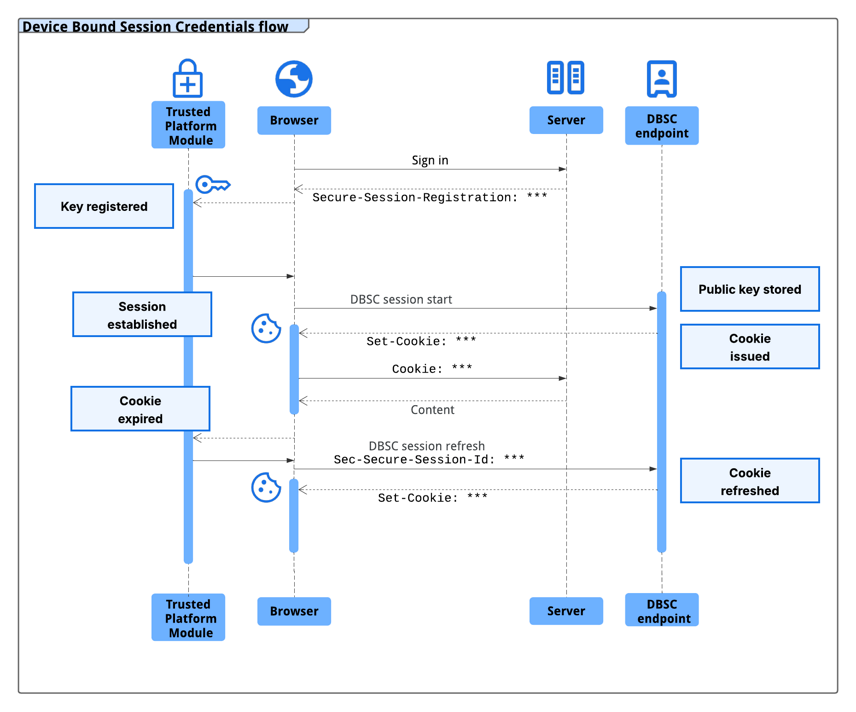
source: Google
A session cookie acts as an authentication token, typically with a longer validity time, and is created server-side based on your username and password.
The server uses the session cookie for identification and sends it to the browser, which presents it when you access the online service.
Because they allow authenticating to a server without providing credentials, threat actors use specialized malware called infostealer to collect session cookies.
Google says that multiple infostealer malware families, like LummaC2, “have become increasingly sophisticated at harvesting these credentials,” allowing hackers to gain access to users’ accounts.
“Crucially, once sophisticated malware has gained access to a machine, it can read the local files and memory where browsers store authentication cookies. As a result, there is no reliable way to prevent cookie exfiltration using software alone on any operating system” – Google
The DBSC protocol was built to be private by design, with each session being backed by a distinct key. This prevents websites from correlating user activity across multiple sessions or sites on the same device.
Additionally, the protocol enables minimal information exchange that requires only the per-session public key necessary to certify proof of possession, and does not leak device identifiers.
In a year of testing an early version of DBSC in partnership with multiple web platforms, including Okta, Google observed a notable decline in session theft events.
Google partnered with Microsoft for developing the DBSC protocol as an open web standard and received input “from many in the industry that are responsible for web security.”
Websites can upgrade to the more secure, hardware-bound sessions by adding a dedicated registration and refresh endpoints to their backends without sacrificing compatibility with the existing frontend.
Web developers can turn to Google’s guide for DBSC implementation details. Specifications are available on the World Wide Web Consortium (W3C) website, while an explainer can be found on GitHub.

Automated pentesting proves the path exists. BAS proves whether your controls stop it. Most teams run one without the other.
This whitepaper maps six validation surfaces, shows where coverage ends, and provides practitioners with three diagnostic questions for any tool evaluation.
Tech
Grado updates its 2026 phono cartridge lineup across Lineage, Timbre, and Prestige series: Brooklyn Built For Your Turntable

Grado didn’t exactly drop this out of nowhere. When we spoke with the team at CanJam NYC 2026, there were enough hints to read between the lines, but nobody was about to say it out loud. Loose lips and all that. So we kept it quiet. Nobody wanted to end up in the East River. Now it’s official.
Grado Labs is rolling out an updated phono cartridge lineup across its Lineage, Timbre, and Prestige Series, built around targeted refinements to the stylus assembly, coil composition, and housing geometry. No reinvention, no marketing circus, just a clear effort to improve how these cartridges track, resolve detail, and behave in real-world setups.
The timing isn’t accidental. Vinyl’s resurgence has been very good to Grado’s cartridge business, but it’s also brought a flood of competition from legacy brands tightening their game to newer players looking to grab market share. Standing still isn’t an option when Ortofon, Audio-Technica, Denon, Hana, and Dynavector keep rolling out new cartridge models with every product cycle.
That’s what makes this update matter. They’re going back to the core elements that define cartridge performance and refining them across the board—better materials, tighter tolerances, and more consistency from model to model.
And let’s be clear—John Grado and Rich Grado didn’t build this brand by coasting. This is what staying relevant looks like when you’ve been doing it since 1953.
In other words, the vinyl boom may have kept the lights on, but this is Grado making sure nobody else walks in and starts rearranging the furniture.
What’s Actually Changed: Stylus, Coils, and Housing Get Real Upgrades
The stylus assembly has been refined across the lineup, with diamond profiles and cantilever materials more carefully matched to each specific model. That matters. You’re not getting a one-size-fits-all approach anymore. Some models step up to nude Shibata diamonds, which offer better groove contact and improved tracking compared to the elliptical profiles used throughout much of the previous generation—but not every cartridge gets that upgrade, and Grado isn’t pretending otherwise.
Coils have been updated across the board with OCC copper, with purity levels scaled depending on the model. The goal is pretty straightforward: cleaner signal transmission, better channel balance, and fewer inconsistencies from unit to unit.
On the mechanical side, the wood-bodied cartridges see revised housing geometry. This isn’t just cosmetic. The updated shapes are designed to improve stability during playback and make setup less of a headache—something anyone who has wrestled with cartridge alignment will appreciate.
Lineage Series: Grado’s Top Shelf, No Apologies

The Lineage Series sits at the top of Grado’s cartridge lineup and uses the company’s low-output moving iron, flux-bridger architecture across all three models. All three get Brazilian Ebony wood bodies, nude Shibata styli, and stereo/mono options, but the cantilever material, frequency range, resistance, and weight are not identical across the range. That’s where the pecking order starts to show.
Grado Epoch4 — $9,995
The Epoch4 is the flagship. It uses a Brazilian Ebony wood body, sapphire cantilever with Shibata diamond, 1.0mV output at 5 CMV (45 degrees), 5 Hz to 75 kHz controlled frequency response, average 35 dB channel separation from 10-30 kHz, 10-47k ohm input load, 8mH inductance, 95 ohms resistance, 10.5 gram cartridge weight, 1.6-1.9 gram tracking force, and 20 μm/mN compliance. Grado also says the internal signal path uses ultra-high purity OCC copper with gold plating, and that the cartridge undergoes cryogenic treatment during component prep and final assembly.
Grado Aeon4 — $4,995
The Aeon4 keeps the Brazilian Ebony body and sapphire/Shibata combo, with the same 1.0mV output, 10-47k ohm input load, 8mH inductance, 10.5 gram weight, 1.6-1.9 gram tracking force, and 20 μm/mN compliance. Where it differs from the Epoch4 is the controlled frequency response, which is listed at 5 Hz to 70 kHz, and resistance, which drops to 74 ohms. Grado specifies ultra-high purity 7N OCC copper here. In other words, still serious, just not wearing the full tux.
Grado Statement4 — $3,500
The Statement4 is the entry point into the Lineage family, but it is not a stripped-down tourist model. It uses a Brazilian Ebony wood body and swaps to a machined boron cantilever with Shibata diamond. Specs include 1.0mV output at 5 CMV (45 degrees), 5 Hz to 65 kHz controlled frequency response, average 35 dB channel separation from 10-30 kHz, 10-47k ohm input load, 8mH inductance, 74 ohms resistance, 10 gram cartridge weight, 1.6-1.9 gram tracking force, and 20 μm/mN compliance. Like the Aeon4, it uses ultra-high purity 7N OCC copper and cryogenic treatment.
Timbre Series: Where Grado Dials It In for the Real World
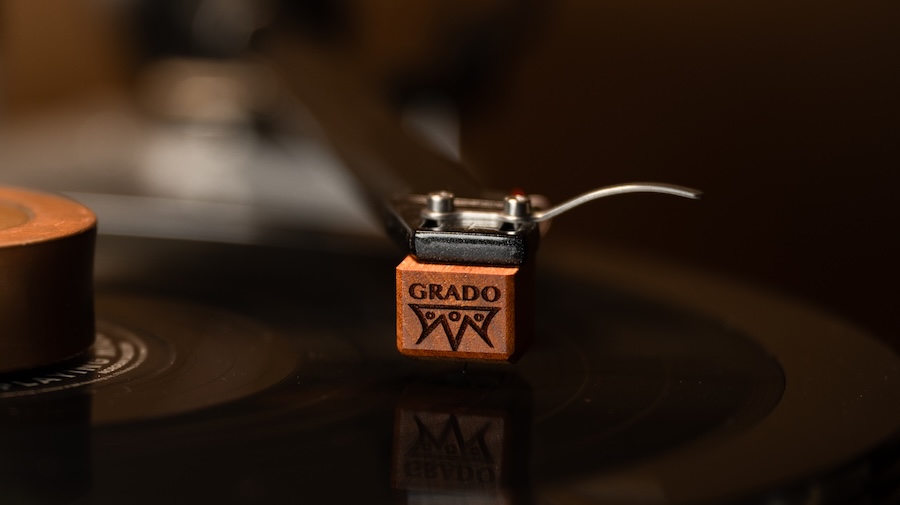
The Timbre Series is where Grado Labs hits the balance point—high-end analog performance without drifting into Lineage-level pricing. This is the middle of the lineup, but it’s not a compromise. It’s a deliberate tuning exercise.
Across the range, Grado sticks with elliptical diamond styli and its moving iron, flux-bridger design. The emphasis here isn’t on any single upgrade—it’s on how everything works together. Stylus profile, cantilever material, coil composition, and housing are treated as a system, not a checklist. The result is a presentation that leans into tonal balance, coherence, and musical flow rather than hyper-detail for its own sake.
Material choices define the hierarchy. The Reference3 and Master3 use American Osage wood bodies with boron cantilevers for greater control and resolution, while the Sonata3 and Platinum3 move to Mediterranean Olive wood paired with aluminum cantilevers. The Opus3, built from American Maple, rounds things out with a simpler aluminum cantilever configuration. Same core design philosophy throughout, just scaled in execution.
Grado Reference4 — $1,500
The Reference4 sits at the top of the Timbre Series. It uses an American Osage wood body, machined boron cantilever with Shibata diamond, 4.0mV high output or 1.0mV low output at 5 CMV (45 degrees), 10 Hz to 60 kHz controlled frequency response, average 30 dB channel separation from 10-30 kHz, 10k-47k ohm input load, 55mH inductance in high output and 6mH in low output, 660 ohms resistance in high output and 70 ohms in low output, 9.6 gram cartridge weight, 1.6-1.9 gram tracking force, and 20 μm/mN compliance. Grado also specifies ultra high purity 6N OCC copper in the internal signal path, along with cryogenic treatment and internal damping.
Grado Master4 — $1,000
The Master4 uses an American Osage wood body, machined boron cantilever with elliptical diamond, 4.0mV high output or 1.0mV low output at 5 CMV (45 degrees), 10 Hz to 60 kHz controlled frequency response, average 30 dB channel separation from 10-30 kHz, 10k-47k ohm input load, 55mH inductance in high output and 6mH in low output, 660 ohms resistance in high output and 70 ohms in low output, 9.6 gram cartridge weight, 1.6-1.9 gram tracking force, and 20 μm/mN compliance. It is offered in high output, low output, and mono versions.
Grado Sonata4 — $600
The Sonata4 uses a Mediterranean Olive wood body, special aluminum cantilever with elliptical diamond, 4.0mV high output or 1.0mV low output at 5 CMV (45 degrees), 10 Hz to 60 kHz controlled frequency response, average 30 dB channel separation from 10-30 kHz, 10k-47k ohm input load, 55mH inductance in high output and 6mH in low output, 660 ohms resistance in high output and 70 ohms in low output, 9.4 gram cartridge weight, 1.6-1.9 gram tracking force, and 20 μm/mN compliance. It is also offered in high output, low output, and mono versions.
Grado Platinum4 — $400
The Platinum4 uses a Mediterranean Olive wood body, aluminum cantilever with elliptical diamond, 4.0mV high output or 1.0mV low output at 5 CMV (45 degrees), 10 Hz to 60 kHz controlled frequency response, average 30 dB channel separation from 10-30 kHz, 10k-47k ohm input load, 55mH inductance in high output and 6mH in low output, 660 ohms resistance in high output and 70 ohms in low output, 9.4 gram cartridge weight, 1.6-1.9 gram tracking force, and 20 μm/mN compliance. It is available in high output, low output, and mono versions.
Grado Opus4 — $300
The Opus4 is the entry point into the Timbre Series. It uses an American Maple wood body, aluminum cantilever with elliptical diamond, 4.0mV high output or 1.0mV low output at 5 CMV (45 degrees), 10 Hz to 60 kHz controlled frequency response, average 30 dB channel separation from 10-30 kHz, 10k-47k ohm input load, 55mH inductance in high output and 6mH in low output, 660 ohms resistance in high output and 70 ohms in low output, 8.3 gram cartridge weight, 1.6-1.9 gram tracking force, and 20 μm/mN compliance. Grado says the internal signal path uses ultra high purity 5N OCC copper, with cryogenic treatment and internal damping as part of the build process.
Prestige Series: Where Grado Keeps It Simple and Affordable

The Prestige Series is the foundation of what Grado Labs has been doing for decades and it hasn’t survived this long by accident. This is the entry point into the lineup, but it’s built on a design that’s been refined over more than fifty years, not reinvented every product cycle. Those paying attention will notice that the lineup has been trimmed down.
Across the range, Grado sticks with elliptical diamond styli, aluminum cantilevers, and its moving iron, flux-bridger design. The goal here isn’t to chase ultimate resolution—it’s consistency. Strong tracking, a balanced tonal presentation, and performance that doesn’t drift over time. These are cartridges designed to work, not impress on spec sheets.
One of the biggest advantages in the Prestige Series is the user-replaceable stylus system. When the stylus wears out, you don’t toss the cartridge, you swap the stylus and keep going. It’s practical, cost-effective, and a big part of why these have remained popular with both newcomers and long-time vinyl listeners.
No exotic wood bodies here, no sapphire cantilevers, just a straightforward design that prioritizes reliability and ease of use without abandoning the Grado house sound.
Grado Prestige Gold4 — $260
The Prestige Gold4 sits at the top of the current Prestige Series. It uses a four piece OTL cantilever with a Grado specific elliptical diamond stylus mounted on a brass bushing, 4 mV output at 5 CMV (45 degrees), 10 Hz to 55 kHz frequency response, average 25 dB channel separation from 10-30 kHz, 10k-47k ohm input load, 50 mH inductance, 660 ohms DC resistance, 6 gram cartridge weight, 1.6-1.9 gram tracking force, and 20 um/mN compliance. Grado also says the Gold4 uses a machined turned generator for lower distortion and greater transparency, along with ultra high purity copper wire and its twin magnet / Flux-Bridger moving iron design.
Grado Prestige Red4 — $190
The Prestige Red4 uses a bonded elliptical diamond mounted to an aluminum cantilever, 4 mV output at 5 CMV (45 degrees), 10 Hz to 55 kHz frequency response, average 25 dB channel separation from 10-30 kHz, 10k-47k ohm input load, 50 mH inductance, 660 ohms DC resistance, 6 gram cartridge weight, 1.6-1.9 gram tracking force, and 20 um/mN compliance. Grado describes it as a high output moving iron cartridge and notes that the stylus assembly is user-replaceable, with Prestige Series styli interchangeable across models.
Grado Prestige Green4 — $140
The Prestige Green4 uses a bonded elliptical diamond mounted to an aluminum cantilever, 4 mV output at 5 CMV (45 degrees), 10 Hz to 55 kHz frequency response, average 25 dB channel separation from 10-30 kHz, 10k-47k ohm input load, 50 mH inductance, 660 ohms DC resistance, 6 gram cartridge weight, 1.6-1.9 gram tracking force, and 20 um/mN compliance. Grado also describes it as a high output moving iron cartridge with a user-replaceable stylus assembly, available in both standard mount and P-mount versions.
Trade-In Program: Grado’s Answer to Cartridge Burnout
Grado takes a different approach to long-term ownership, and it’s one that actually makes sense if you’ve been around analog long enough to know how this usually goes.
For its wood-bodied models, Grado Labs offers a cartridge trade-in program that lets you send back your existing cartridge; no matter how worn, and apply it toward a new one at a reduced cost. No drama, no “must be in mint condition” nonsense.
The idea is simple: keep people in the ecosystem without forcing them to start from scratch every time their stylus wears down or their system evolves. Instead of treating cartridges as disposable, Grado treats them like part of a longer-term upgrade path.
That flexibility cuts both ways. You can move up the range if you’re chasing more performance, or step sideways or even downward if your system changes or priorities shift. Either way, you’re getting a current production model with the latest refinements baked in. You won’t get that from Denon, Hana, or Clearaudio.
The Bottom Line
Grado didn’t reinvent anything—they refined the parts that actually matter. Across Lineage, Timbre, and Prestige, the updates focus on improved stylus assemblies, higher-purity OCC copper coils, and revised housing geometry, all aimed at better tracking, consistency, and easier setup.
On paper, the lineup is clearly tiered: Lineage pushes materials and resolution at the top, Timbre balances performance and design choices in the middle, and Prestige continues as the accessible, user-friendly foundation with its replaceable stylus system. Each range sticks to the same moving iron DNA, just executed at different levels.
Who should pay attention? Anyone with a vinyl setup who hasn’t looked at Grado in a while—and especially those watching how established brands respond to a more competitive cartridge market.
Reviews land in May and June.
For more information: gradolabs.com
Related Reading:

Pick up Apple’s brand-new M5 Pro 16-inch MacBook Pro with an upgrade to 48GB RAM for $2,899, the lowest price on record, thanks to a $200 cash discount.

M5 Pro 16-inch MacBook Pro with 48GB RAM has dropped to record low $2,899 – Image credit: Apple
Released in March 2026, the M5 Pro 16-inch MacBook Pro features higher unified memory bandwidth and is equipped with Apple’s N1 chip for Wi-Fi 7 and Bluetooth 6 support. And today, Amazon is slashing $200 off an upgraded configuration with a bump up to 48GB of RAM.
Save $200 on 16″ MacBook Pro 48GB RAM
Continue Reading on AppleInsider | Discuss on our Forums

A VPN is one of the simplest and highest-impact privacy tools you can add to your Android phone. It encrypts all traffic leaving your device, masks your IP address, and prevents your mobile carrier, network administrators, and anyone sniffing public Wi-Fi from reading what you send and receive. The problem is that the market is saturated with hundreds of options — and some of them are actively worse than using no VPN at all.
This guide covers five vetted options for Android in 2026, chosen based on independent speed testing, verified no-log audit status, and real-world usability on Android. Pricing is accurate as of publication; use the links below to confirm current rates before subscribing.
Quick Take:Best overall: NordVPN — fast, independently audited, feature-complete Android app
Best for privacy purists: Mullvad — no email, no account details, flat pricing
Best free option: ProtonVPN Free — no data cap, no ads, no data selling
Best for streaming: ExpressVPN — fastest tested speeds, reliable geo-unblocking
Best for households: Surfshark — unlimited simultaneous devices on one subscription
What to Look for Before You Choose
The VPN market has two distinct quality tiers, and the difference isn’t always visible from app store screenshots. Before picking any option — paid or free — apply these four filters:
- Independent no-log audit: Any VPN can claim it doesn’t log your traffic. Only a handful have had that claim verified by an external cybersecurity firm with access to their infrastructure. Prioritise providers that have passed at least one named, published audit.
- Protocol quality: WireGuard is the current standard for speed and security. OpenVPN is battle-tested but slower. Proprietary protocols (NordLynx, Lightway) are acceptable when built on WireGuard or audited independently. Avoid providers that use only outdated PPTP or L2TP.
- Kill switch: If the VPN connection drops, a kill switch halts all internet traffic until the tunnel is restored. Without it, your real IP and unencrypted traffic briefly expose themselves every time the connection interrupts — which happens more on mobile than on desktop.
- Business model transparency: If the product is free and there is no visible paid tier, advertising revenue, or clear funding source — your data is the product. This is not speculation; it is documented by independent research.
1. NordVPN — Best Overall for Android
NordVPN is the most balanced option across speed, privacy verification, and Android-specific features. Its NordLynx protocol — built on WireGuard — delivered less than 20% speed reduction on a 250 Mbps connection in Security.org’s independently conducted Android VPN speed tests in early 2026. That puts it consistently above average for mobile use.
On the privacy side, NordVPN completed its sixth independent no-logs assurance engagement in February 2026, with auditors given full access to servers, employee interviews, and infrastructure configurations. The result confirmed NordVPN stores no connection logs, IP addresses, traffic logs, or browsing activity.
The Android app includes a built-in ad and tracker blocker (Threat Protection Lite), split tunneling, and an automatic kill switch. It supports up to 10 simultaneous devices per subscription.
- Server count: 6,000+ in 111 countries
- Protocol: NordLynx (WireGuard-based), OpenVPN
- No-log audit: Yes — 6 completed, most recent Feb 2026
- Starting price: From approximately $3.09–$4.39/month (2-year plan)
- Free tier: No — 30-day money-back guarantee only
- Google Play rating: 4.3/5
Best for: Users who want a one-app solution that handles speed, privacy, ad blocking, and streaming without configuration.
2. ProtonVPN — Best for Privacy-First Users (and the Best Free Option)
ProtonVPN occupies a unique position: it is the only free VPN recommended in this guide, and it earns that position by having a completely different business model from other free offerings. The free tier is funded by paid subscribers, not by data collection or advertising. There is no data cap on the free tier — an extremely rare offering in this market.
ProtonVPN passed its fourth consecutive independent no-logs audit in 2025, conducted by Securitum. The company also publishes a transparency report documenting every legal request for user data — and because it logs nothing, it has nothing to hand over. Its apps are fully open source, meaning the code is publicly inspectable by any security researcher at any time.
Speed is near the top tier. Independent testing in 2026 showed ProtonVPN slowing download speeds by roughly 8% — compared to NordVPN’s 6% — a difference that is imperceptible in real-world use. The paid VPN Accelerator feature reportedly improves speeds on distant servers by 40–50%.
- Server count: 9,500+ in 112 countries (paid); limited server selection on free
- Protocol: WireGuard, OpenVPN, Stealth (obfuscated)
- No-log audit: Yes — 4 completed, most recent 2025
- Starting price: Free (no data cap) | Paid from approximately $2.99/month
- Free tier: Yes — unlimited data, 3 server locations, 1 device
- Open source: Yes — full client source code publicly available
Best for: Users who want the strongest privacy credentials, anyone on a budget who needs a genuinely trustworthy free tier, and anyone who wants to verify the code before trusting it.
Free tier limitation to know: The free tier restricts access to three server locations (US, Netherlands, Japan) and one device. For most basic privacy needs — securing public Wi-Fi, hiding traffic from your carrier — this is sufficient. For streaming geo-restricted content, you will need a paid plan.
3. ExpressVPN — Best for Speed and Streaming
ExpressVPN has held its position as a top-tier speed performer for several years, and that remains true in 2026. Its proprietary Lightway protocol delivered an average of 214 Mbps download and 207 Mbps upload in Android-specific testing — among the fastest recorded for any mobile VPN. CNET’s 2026 best Android VPN evaluation named it their top pick, citing outstanding streaming performance, geo-unblocking reliability, and ease of use.
The Android app is polished and simple — a single tap connects to the recommended server. It includes a kill switch, split tunneling, and threat manager (blocks known malicious domains). ExpressVPN operates from the British Virgin Islands, outside the EU and Five Eyes data-sharing arrangements.
- Server count: 3,000+ in 105 countries
- Protocol: Lightway (proprietary, audited), OpenVPN, IKEv2
- No-log audit: Yes — multiple completed
- Starting price: From approximately £1.99/month (promotional) | Regular from $6.67/month
- Free tier: No — 30-day money-back guarantee
- Google Play rating: 4.1/5
Best for: Users whose primary use case is streaming geo-restricted content, travelling users who need reliable connections across regions, and anyone who values a fast, no-configuration mobile experience.
One trade-off: ExpressVPN is among the more expensive options at its standard rate. The promotional price requires a long-term commitment; monthly plans cost significantly more. Factor in the full cost if you prefer flexibility.
4. Mullvad — Best for Maximum Anonymity
Mullvad is the most privacy-radical mainstream VPN available. It requires no email address and no personal information to create an account — you are assigned a 16-digit account number and that is your entire identity on the platform. Payment is accepted via cash by post, cryptocurrency, and card. No name, no email, no phone number is ever stored.
As Engadget’s 2026 budget VPN guide notes, Mullvad’s pricing has not changed since 2009: €5 per month, with no long-term contracts and no promotional pricing. What you see is what you pay. It supports up to five simultaneous devices.
- Server count: 900+ in 46 countries
- Protocol: WireGuard, OpenVPN
- No-log audit: Yes — independently audited
- Starting price: €5/month (flat — no annual discount)
- Free tier: No — 30-day refund policy
- Account signup: No email required
Best for: Journalists, activists, lawyers handling confidential cases, or anyone for whom account anonymity matters as much as traffic privacy. Also ideal for technically-minded users who dislike email-based accounts and marketing relationships with software vendors.
When not to use Mullvad: If your primary need is streaming, Mullvad’s smaller server network offers less geo-unblocking coverage than NordVPN or ExpressVPN. It is a privacy tool first, a convenience tool second.
5. Surfshark — Best Value for Multiple Devices
Surfshark’s defining advantage is its device policy: unlimited simultaneous connections on one subscription. Every other major VPN imposes a device cap (typically 5–10). If you need to cover a phone, tablet, family member’s device, laptop, and smart TV simultaneously, Surfshark removes that constraint entirely.
Speed and privacy credentials are solid — it uses WireGuard, maintains a no-log policy, and its Android app includes ad and malware blocking (CleanWeb), a kill switch, and split tunneling. It consistently appears in multi-product roundups from PCMag, TechRadar, and RTINGS as a strong second-tier option.
- Server count: 3,200+ in 100 countries
- Protocol: WireGuard, OpenVPN, IKEv2
- No-log audit: Yes — independently audited
- Starting price: From approximately $2.19/month (2-year plan)
- Free tier: No — 30-day money-back guarantee
- Device limit: Unlimited
Best for: Users covering a whole household, multi-device power users, or anyone who wants a capable VPN at the lowest per-month price point without compromising on verified privacy credentials.
How These VPNs Compare
| VPN | Best For | No-Log Audit | Free Tier | Starting Price | Devices |
|---|---|---|---|---|---|
| NordVPN | Overall best | Yes (6 audits) | No | ~$3.09/mo | 10 |
| ProtonVPN | Privacy + free tier | Yes (4 audits) | Yes (unlimited data) | Free / ~$2.99/mo | 10 (paid) |
| ExpressVPN | Speed & streaming | Yes | No | From ~£1.99/mo | 8 |
| Mullvad | Maximum anonymity | Yes | No | €5/mo (flat) | 5 |
| Surfshark | Multi-device value | Yes | No | ~$2.19/mo | Unlimited |
Free VPNs — A Risk Most People Underestimate
Warning: The majority of free VPN apps on the Google Play Store are not privacy tools. Many are data collection tools wearing a VPN’s interface.
A Zimperium zLabs study of more than 800 free VPN apps — published in October 2025 — found that nearly two-thirds relied on vulnerable code, leaked personal data, or provided no meaningful privacy protection. Separately, Tom’s Guide reported research projecting that by 2025, 80% of free VPN apps would embed tracking features, with data sales to third parties affecting up to 60% of the category.
The mechanism is straightforward: a free VPN app has no paid revenue. The cost of operating VPN infrastructure — servers, bandwidth, maintenance — is real. Something funds it. In many cases, that something is selling aggregated user traffic data to advertising networks and data brokers. Installing such an app to “protect your privacy” achieves the opposite.
The exception is ProtonVPN Free, listed above. It is funded by paid subscribers and has an independently verified no-log policy. Outside of that and a small number of other verified providers, treat free VPNs as a significant risk rather than a safe default.
VPN Protocols — What the Labels Mean
You will encounter protocol names in VPN settings and marketing. Here is what they mean in plain terms:
- WireGuard: The current speed and security standard. Lean codebase (~4,000 lines vs OpenVPN’s ~400,000), fast handshakes, and strong cryptography. If available, use this.
- NordLynx (NordVPN): NordVPN’s implementation of WireGuard, with an additional privacy layer to resolve WireGuard’s default IP assignment behaviour. Functionally WireGuard with an extra step.
- Lightway (ExpressVPN): ExpressVPN’s proprietary protocol, designed for fast connection and reconnection on mobile networks. Independently audited. Performs comparably to WireGuard in speed tests.
- OpenVPN: The long-standing standard. Battle-tested and extensively audited over many years. Slower than WireGuard on modern hardware but universally supported. Use it as a fallback if WireGuard is unavailable.
- IKEv2/IPSec: Good for mobile use specifically because it handles network switches well (e.g. moving from Wi-Fi to mobile data). Reconnects faster than OpenVPN. Standard feature on many VPNs.
- Stealth / Obfuscated protocols: Designed to disguise VPN traffic as regular HTTPS traffic to bypass VPN blocks — relevant in countries with active censorship or on networks that block VPN connections.
Before You Subscribe — Checklist
- ☐ Confirm the VPN has a published, independent no-log audit — not just a self-declared policy
- ☐ Check that the Android app includes a kill switch (not all apps enable it by default)
- ☐ Verify the app is downloaded directly from Google Play Store — not a third-party APK
- ☐ Enable the kill switch after installation before your first connection
- ☐ Test your real IP before and after connection using a browser-based IP checker
- ☐ For free VPNs: verify the provider has a paid tier and a published no-log audit before trusting it
- ☐ Enable auto-reconnect to restore VPN after network switches (Wi-Fi to mobile data)
Frequently Asked Questions
Does a VPN make my Android phone completely private?
No. A VPN encrypts the connection between your phone and the VPN server and hides your IP address from the sites you visit. It does not anonymise you at the app level — apps with your account information still know who you are. It also does not protect against malware already on your device. Think of it as one layer in a wider phone data security strategy — not a complete solution on its own.
Will a VPN slow down my Android phone?
Yes, to a measurable but usually minor degree. NordVPN’s NordLynx protocol showed less than 20% speed reduction on a 250 Mbps connection in independent testing. On a typical mobile connection of 50–100 Mbps, the real-world impact is rarely noticeable for browsing, messaging, or video calls. Streaming in 4K on a congested VPN server is where speed reduction becomes visible.
Is it safe to use a VPN on public Wi-Fi?
Using a VPN on public Wi-Fi is safer than not using one. Public Wi-Fi creates opportunities for man-in-the-middle attacks, traffic sniffing, and rogue hotspot impersonation. A VPN neutralises the first two. It does not protect against a rogue hotspot at the DNS level unless your VPN provides its own DNS servers, which most reputable providers do. Enable the VPN before connecting to public Wi-Fi, not after.
Can a free VPN be trusted?
Very few can. The Zimperium study of 800+ free VPN apps found nearly two-thirds were unsafe in measurable, documented ways. The only free VPN recommended in this guide is ProtonVPN Free — it has an independently audited no-log policy, no data cap, and a business model funded by paid subscribers rather than data collection.
Does a VPN protect me from hackers?
A VPN protects against network-level interception — eavesdropping on your traffic, recording your browsing activity from a network position, and revealing your IP address. It does not protect against phishing, malware, social engineering, or account compromise through password reuse. For those threats, you need a separate set of measures covered in our Android data security guide.
Do I need a VPN if I only use mobile data (not public Wi-Fi)?
On mobile data, your carrier can see your DNS queries, general traffic metadata, and browsing patterns. Many carriers sell anonymised (but not always reliably anonymised) data to third parties. A VPN prevents that. It also prevents your ISP from throttling specific services like video streaming based on traffic inspection. Whether that risk profile matters to you depends on your threat model — it is not an emergency for most users, but it is a real trade-off.
Which VPN should I choose if I just want something that works without setup?
NordVPN or ExpressVPN. Both have polished Android apps with single-tap connect, work reliably across all common Android versions, and handle network switches without manual reconnection. NordVPN is the better all-round value; ExpressVPN is the better streaming option.
Is it legal to use a VPN in the UK?
Yes — VPNs are legal in the United Kingdom and across the European Union. Using a VPN to access content that is itself illegal remains illegal regardless of VPN usage. Using a VPN to access geo-restricted streaming content (e.g., a US Netflix library from the UK) may violate streaming platform terms of service, though it is not a criminal matter.
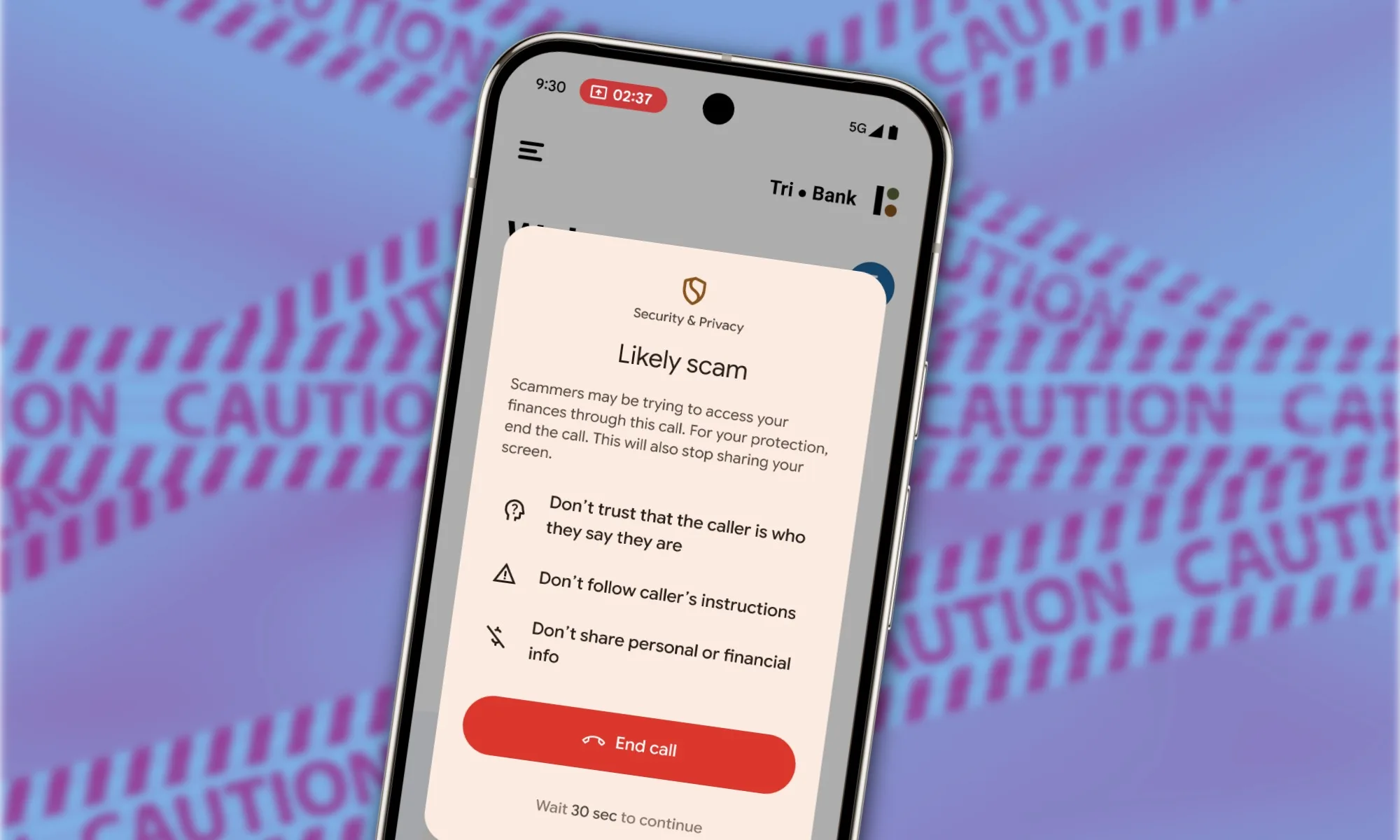
Scam calls are evolving. Your phone is about to do the same. Samsung’s upcoming foldables are shaping up to get an intelligence upgrade, with Google’s Gemini-powered Scam Detection expected to expand to devices like the Galaxy Z Fold 8, Galaxy Z Flip 8, and even a new Wide Fold variant. And yes, this time your phone may finally be better at spotting fraudsters than your patience at 7 PM after the fifth unknown call of the day.
Samsung joins the scam detection club
Google has been steadily building Scam Detection into its AI ecosystem, using Gemini to analyze live phone conversations and flag suspicious behavior as it happens. So, if a caller starts sounding like they’re scripting a heist movie, your phone gently steps in and says, “Maybe don’t trust this one.” On Pixel devices, this feature runs directly on-device, so it doesn’t send your calls to the cloud for analysis. That keeps things private while still letting AI do the heavy lifting of spotting patterns that usually scream scam.

Earlier this year, Samsung teamed up with Google to bring this capability to its own Phone app, starting with the Galaxy S26 series. That meant users didn’t have to rely on Google’s default dialer anymore to get scam protection baked in. There was a catch, though. The rollout has so far been limited to English-speaking users in the US, leaving many global users still answering unknown calls the old-fashioned way. Now, that seems to be changing.
Recent findings from the Phone by Google app suggest that Scam Detection is being prepared for Samsung’s next-generation foldables. The feature appears linked to several model families, including the Galaxy Z Fold 8, the Galaxy Z Flip 8, and a new Wide Fold device. These appear alongside a wide range of regional variants, suggesting a global rollout strategy. In short, Samsung isn’t just testing the waters here. It looks like it’s preparing to scale the feature across markets from day one.
Beyond the US-only limitation
Google’s Scam Detection already works in multiple regions on newer Pixel devices, including the Pixel 9 and Pixel 10 series. That suggests Samsung’s eventual rollout may not remain as geographically restricted as it is today. If anything, the inclusion of multiple regional variants in the code points to a broader ambition: making scam protection a standard feature rather than a market-specific perk. And honestly, it’s about time.

Samsung is expected to unveil its next foldables at its usual Galaxy Unpacked event around July 2026. While new hinges, displays, and processors will likely take the spotlight, this AI-powered call protection adds something more practical to the mix. And if Samsung and Google get this right, your next foldable might just be the smartest thing you use before you even unlock it.
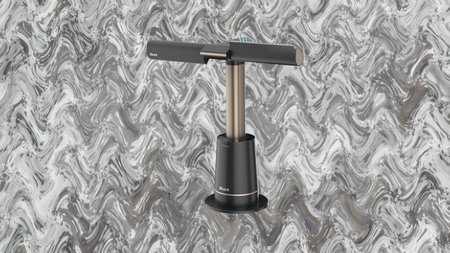
Buying a fan before the first proper heatwave arrives is almost always the smarter move, and a 29% reduction on one of the more capable options on the market makes that decision considerably easier to justify right now.
That saving brings the Shark TurboBlade down from £249.99 to £176.99 at Amazon, cutting £73 off a fan that is built around a pull-and-accelerate airflow system designed to project air up to 20 metres in Boost mode.
Shark’s TurboBlade tower fan just got a major price cut ahead of the summer heat
Buying a bladeless tower fan before the first proper heatwave arrives is almost always the smarter move, and a 29% reduction on one of the more capable options on the market makes that decision considerably easier to justify right now.
That reach is what separates the TurboBlade from cheaper tower fans that struggle to cool anything beyond the immediate vicinity, and with 180-degree oscillation running alongside it, the fan can sweep an entire room rather than directing airflow at a single fixed point.
The vents pivot from vertical to horizontal and can also be twisted to blow air at two angles simultaneously, which means a shared living room or bedroom with people positioned at different distances from the fan can be cooled more evenly than a single-direction unit would manage.
Control across all ten speed settings is handled via the included magnetic remote, and the lowest setting is rated at just 40dB, which is quiet enough to run overnight without the background noise becoming a distraction for light sleepers or anyone using it in a bedroom.

A 12-hour timer, Sleep mode, Boost mode, and Breeze mode are all available, giving the fan enough flexibility to behave differently depending on whether it is running during the day in a busy room or winding down alongside you at night.
Maintenance is straightforward too, as the bladeless design wipes clean and the DustDefence filter inside the base can be removed and cleaned to keep airflow performance consistent over time rather than degrading as dust accumulates inside the unit.
If you want a fan that handles a full room rather than a single spot, this is genuinely the right time to buy, and at £176.99 the TurboBlade delivers that alongside quiet overnight modes and flexible directional airflow.
SQUIRREL_PLAYLIST_10148964
A brilliantly-designed fan, the Shark TurboBlade is highly adjustable: its side blades can be twisted separately, there’s height adjustment, and the entire top can be rotated. Excellent coverage and a wide range of speeds make this a great choice, although it is quite expensive and its LED readout a little basic.
-
Highly adjustable
-
Very powerful
-
Quiet
-
Basic LED read-out
-
Relies on remote control

OpenAI has closed a yawning gap in its ChatGPT subscription pricing with a new $100 per month Pro plan that slots between the $20 per month Plus plan and $200 per month Pro plan. Offering five times more Codex than the $20 option, it appears designed to challenge Anthropic’s $100 per month Claude option. “Compared with Claude Code, Codex delivers more coding capacity per dollar across paid tiers,” an OpenAI spokesperson told TechCrunch.
So what’s the difference between OpenAI’s two Pro plans? The $200 version does offer four times the Codex. However, you get the same advanced tools and models with $100 plan, according to OpenAI’s product page. To encourage users to jump in, it will offer double the Codex for a limited time, or 10 times what you get with the Plus plan.
Users have been screaming for such a plan for a while now, according to posts on OpenAI’s developer community forums. “The Plus plan will continue to be the best offer at $20 for steady, day-to-day usage of Codex, and the new $100 Pro tier offers a more accessible upgrade path for heavier daily use,” OpenAI said in a post on X.
With the launch of GPT 5.2 late last year and GPT-5.3-Codex in February, OpenAI significantly boosted the speed and reasoning capabilities of Codex, giving developers a tough choice between ChatGPT and Claude Opus. However, the sticking point for many power users was ChatGPT’s $200 per month price — so OpenAI no doubt hopes the new plan will convince those on the fence to switch.


Driving through an active work zone can put a damper on your day, especially if you’re in a rush. Traffic slows down, potentially causing a delay, and you often have to navigate narrow lanes, one-lane roads, abrupt lane shifts, and close proximity to both heavy machinery and construction workers. All of these factors combined sometimes create a dangerous situation. According to the CDC, there were around 96,000 crashes in active work zones in 2022, resulting in about 37,000 injuries and 891 fatalities. Of those deaths, 105 were workers.
To reduce the risk of an accident, drivers typically see warning signs indicating an active work zone ahead. The speed limit drops, and flaggers may be present to help direct traffic. Distracted driving is dangerous anywhere, anytime, but it can be especially hazardous in work zones. As of 2026, 33 states plus Washington, D.C. have enacted “no touch” laws, which ban drivers from even holding their phone while operating a vehicle. This includes changing map settings, tapping to answer your phone, and often even picking it up at a red light. Some states are turning to AI, or artificial intelligence, to bust drivers who break the rules, including Arkansas, where it’s illegal to touch your phone while in a work zone with highway workers.
It’s a difficult law to enforce, but the state has set up still cameras in two work zones on Interstates 49 and 57. To help catch violators of the no touch law, the state is using AI to analyze the photographs, looking for cell phones in drivers’ hands.
AI assistance in law enforcement

The system in Arkansas is new and was implemented in January 2026. To ensure accuracy, the information tagged by AI is shared with Arkansas Highway Police officers on the scene, and they pull over the flagged vehicle to assess the alleged infraction. Fines are never automatically issued based only on artificial intelligence, and a police officer is required to verify and either issue a warning or fine. Additionally, signs have been placed to alert drivers about the cameras before they enter the monitored zones.
Of course, AI is a touchy and complicated subject, and the use of this tech has ignited privacy concerns. Critics are worried that Arkansas police aren’t tracking false positives, when AI flags phone usage but it doesn’t turn out to be true. There’s also questions about how else the footage may be used, though state officials maintain that any footage not required for legal proceedings is deleted.
Arkansas certainly isn’t the only state turning to AI for law enforcement and road safety. In Utah, law enforcement is using a license plate recognition system like the ones already used in California to track and find potential lawbreakers. The technology can also identify cars based on descriptions and, according to police, help them avoid unnecessary stops. However, critics are concerned about how much information the system preserves and the risks of so-called mass surveillance. Other states are using AI in less controversial ways, such as Hawaii’s dashboard cam giveaway, which is using AI to inspect guardrails and other potential issues on the road from camera’s mounted in willing drivers’ cars.

Use THIS Compounding Strategy NOW to Get Rich When the Market Crashes.

Police name motorcyclist who died in crash with tractor

RBI’s move to scrap investment buffer could lift banks’ capital


-

 Fashion7 days ago
Weekend Open Thread: Spanx – Corporette.com
-

 Business4 days ago
Three Gulf funds agree to back Paramount’s $81 billion takeover of Warner, WSJ reports
-

 Sports5 days ago
India men’s 4x400m and mixed 4x100m relay teams register big progress | Other Sports News
-

 Business6 days ago
Expert Picks for Every Need
-

 Tech2 days ago
How Long Can You Drive With Expired Registration? What Florida Law Says
-

 Business5 days ago
No Jackpot Winner, Prize to Climb to $231 Million
-

 Fashion4 days ago
Massimo Dutti Offers Inspiration for Your Summer Mood Board
-

 Fashion3 days ago
Let’s Discuss: DEI in 2026
-
Politics7 days ago
Wings Over Scotland | The quality of mercy
-

 Crypto World2 days ago
Bitcoin recovers as US and Iran Agree a Ceasefire Deal
-

 Business5 days ago
Akebia Therapeutics, Inc. (AKBA) Discusses Pipeline Progress and Strategic Focus on Kidney Disease Treatments at R&D Day – Slideshow
-

 Crypto World21 hours ago
Canary Capital Files SEC Registration for PEPE ETF
-

 Fashion7 days ago
Frugal Friday’s Workwear Report: Hammered Metallic Button Sweater Vest
-

 Politics6 days ago
The UK should not pay a penny in slavery reparations
-

 Tech4 days ago
Samsung just gave up on its own Messages app
-

 Tech4 days ago
Haier is betting big that your next TV purchase will be one of these
-

 Fashion7 days ago
Tory Burch’s Spring 2026 Campaign Goes on a Getaway
-

 Fashion7 days ago
Weekly News Update, 4.3.26 – Corporette.com
-

 NewsBeat6 days ago
Kemi Badenoch talks ‘spring cleaning’ Reform defections
-

 Tech4 days ago
Gamer Restores the Original PlayStation Portal From Two Decades Ago
You must be logged in to post a comment Login