Over the course of three days, Jacob Crowe walked 26 miles across Chicago in super-humid heat and rainy mornings, engaging in hundreds of virtual battles. Alongside tens of thousands of other players, he sought the rarest Pokemon, particularly Shiny variants.
“It makes it better to do it as a group together,” Crowe said of the crowds that gathered to play the mobile game as part of Pokemon Go Fest.
I was there, too, among those thousands, draining my phone battery out in the sun while catching hundreds of virtual creatures in Grant Park and other parts of the city.
Advertisement
During that mass gathering in early June, the game I’d been playing alone for the past year suddenly felt like a gigantic concert packed with fans as obsessed as I am. Or even more so.
I hadn’t expected that. True, when Pokemon Go launched in 2016, it was a mobile gaming sensation. Phones in hand, players descended on parks and other public spaces to catch all those pocket monsters, in the form of augmented reality animations. For a while, it felt like everybody was playing Pokemon Go.
But then, as crazes do, Pokemon fever cooled down. People moved on. I stopped playing the game regularly not long after it debuted.
Turns out the enthusiasm has been simmering all along, and it just takes something like Go Fest to bring things to a boil.
Advertisement
The event had been expected to attract 40,000 people per day. But according to the enthusiast site GoNintendo, more than twice that many (90,000) tickets were sold for the Grant Park event (players entered and left at staggered times), and over 717,000 players in Chicago were recorded catching nearly 62 million Pokemon during citywide play. Six couples got engaged at the event, proving that Pokemon Go may be a stealth dating app.
Pokemon Go Fest 2026 was special because it marked the 10th anniversary of the game and the ninth anniversary of the first Go Fest, which also took place in Chicago. And it coincided with a Pokemon Fossil Museum exhibit at Chicago’s Field Museum, which provides a spectacularly detailed history of Pokemon evolution, complete with gigantic skeletons, remains trapped in amber and a very robust gift shop.
The weekend also included a US Men’s National Soccer Team match and a half-marathon. So many fans attended the various events that gameplay was suspended in some areas, including at the Field Museum.
Welcome back to Pokemon Go
Last year, I picked the game back up with some family members. Those of us who’d abandoned it came back with fierce devotion.
Advertisement
So much had been added to the game since I last played it — from trading with other players (even remotely) to user-generated routes to large-scale raids that sometimes require more than a dozen players.
Players of Pokemon Go show off characters from the game they have to trade or are seeking out from others at Lincoln Park as part of an early-morning “Raid train.”
Omar Gallaga/CNET
At first, the changes were overwhelming, but the experienced group I joined gave helpful advice. At the same time, online videos, Wiki pages and some Google searching provided answers to the obstacles I encountered.
Advertisement
The game became a daily habit for our group. We exchanged gifts, traded lucky Pokemon and did lots and lots of walking. Pokemon Go Fest provided a great excuse to meet up, eat lots of local food, and play a game together we’d all been enjoying separately.
We bought one-day passes for the Grant Park 10th anniversary event and secured tickets to the Fossil Museum exhibit. Upon arrival in Chicago, we saw Pokemon fans everywhere, some wearing Eevee hats or Gengar shirts, toting Pikachu backpacks or doing full-blown cosplay.
Age didn’t seem to matter. Boomers, Gen Z players, little kids, they all had their phones out, spinning PokéStops and waiting to capture some rare mega Pokemon characters.
Playing Pokemon Go with friends and strangers
When Niantic created Pokemon Go, it emphasized the game’s real-world aspects. Niantic’s founder, John Hanke, who also helped create Google Maps and Google Earth, told me last year when I covered its sale (Pokemon Go and other Niantic games were acquired by Scopely) that the game focused on encouraging players to venture outside and explore.
Advertisement
Even playing Pokemon Go outside, however, can be isolating. You’re looking at your phone and dealing with virtual characters or remote players, not interacting with the people around you.
That wasn’t the case at Go Fest.
With tens of thousands of locals and travelers all around us, we were suddenly in a very large club. Strangers who saw us playing at the coffee shop asked what we’d caught so far. Passersby yelled, “Great outfit!” to my sister-in-law, Linh Gallaga, for her Sylveon cosplay. Some pointed and smiled at the Excavator Pikachu keychain plushies we picked up at the Field Museum and wore out in public.
Within our small group, meanwhile, we traded Pokemon, bought virtual supplies, strategized to maximize our game objectives and shared news updates. I spent about $30 on microtransactions, like premium raid passes and extra storage to hold more items and more captured Pokemon. Some in my group spent hundreds of dollars in preparation for Go Fest.
Advertisement
Players gather in Chicago’s Grant Park as part of the 2026 Pokemon Go Fest event.
Omar Gallaga/CNET
In search of Mega Pokemon characters
Our group had two leaders: One was Linh, who kept us in the loop about social media posts. The other was Jacob Crowe, who toted up those 26 miles of walking that weekend (and who’s also an in-law of mine, a little more removed). He’s so dedicated to the game that he participated in 225 group raid battles to capture Mewtwo, one of the major Mega Pokemon characters at Go Fest.
The goal wasn’t just to catch Mewtwo, but to capture its rare variations, such as a perfect-stat one, called a Hundo. Capture one that’s both a Hundo and also a Shiny variant, and you’ve got yourself a coveted Shundo Mewtwo — and a lot of jealous fellow players. A version of Mewtwo featuring a Chicago backdrop was also highly sought after.
Advertisement
Crowe and his wife, Maria, drove from Indianapolis, where they’d participated in local Pokemon raid events, but nothing like this.
“I knew it would be a lot of people, but I didn’t know it would be that many people,” he told me.
He spent 18 hours each day playing Pokemon Go. He says he had a great time and wants to do it again.
It was Crowe who led our group to a 5 a.m. “Raid Train” at Lincoln Park, ahead of the official Go Fest event at Grant Park we’d be participating in later. As soft rain started falling, we wandered the park, capturing all the Pokemon that we could and watching players trade and join raid battles. This wasn’t the main event. It was a social gathering and a preview of the big show to come later that day.
Advertisement
“Hundo! I got a Hundo!”
I wasn’t expecting to experience cognitive dissonance when I arrived at Grant Park with my group, but it happened as soon as I saw a gigantic pink inflatable Jigglypuff near the large park fountain. In the game, I think of Jigglypuff as tiny; here, the Pokemon was easily 10 feet tall.
Throughout the park, team banners, lures and spinning Pokestops were blown up to huge proportions, dotting a vast expanse with colorful landmarks.
A final challenge at Pokemon Go Fest was a giant group raid to capture Mewtwo.
Advertisement
Omar Gallaga/CNET
We snapped photos and started preparing our virtual supplies. A cloudy morning quickly gave way to a hot day. Once gameplay began, we saw people walking around with tiny umbrellas attached to their phones, both to reduce glare on their screens and to keep their devices from overheating in the sun.
Challenges required moving from zone to zone and completing tasks such as capturing 20 different kinds of Pokemon in a single area. Raid battles to catch bigger, stronger Pokemon were constant.
Pokemon theme music blasted across the park. People walked, swiping their screens to toss Poké Balls as they went. One half of a couple near us shouted, “Hundo! I got a Hundo!” and the two embraced as if they’d just found out they were having a baby.
We walked and walked and caught and caught until the finale: a big group battle with hundreds of players together trying to defeat Mega versions of Mewtwo.
Advertisement
Everyone fighting did so as part of a “Unity Raid.” Part of the battle required players to raise their phones up into the air and then bring them swinging down.
When the mega raid was over, the crowd let out a loud, “Wooooo!” It was over. We were each left to attempt to capture the prize with our allotted premiere Pokeballs. We all caught our Mewtwos.
The Pokemon Fossil Museum exhibit at Chicago’s Field Museum is an alternate history of Pokemon evolution.
Advertisement
Omar Gallaga/CNET
Pokemon at the museum
We kept raiding and trading over the evening and the next day, but our next big event was a visit to the Fossil Museum.
Chicago’s Field Museum of Natural History is a real museum, with exhibits of actual fossils, but for the event, curators set up fossil exhibits of the various Pokemon characters. And they took their job seriously.
Far from a simple one-room pop-up, the carefully arranged exhibit features detailed descriptions and full skeletons of Pokemon characters, plus other artifacts like fossilized (fake) poop and Pokemon insects trapped in amber.
I felt bad for the parents of little kids who had to straddle the line between telling them that this exhibit isn’t real and letting those kids enjoy an incredibly imaginative presentation.
Advertisement
The exhibit was followed by a robust gift shop featuring only Pokemon merchandise and open exclusively to attendees. There was a five-item limit, and the hot item, limited to one per purchase, was an Excavator Pikachu plush.
The exhibit runs through April 2027.
Pablo and Linh Gallaga visit with Jigglypuff at Pokemon Go Fest 2026 in Chicago. A ticketed event took place at Grant Park, attracting tens of thousands of Pokemon trainers.
Advertisement
Omar Gallaga/CNET
Pokemon Go Fest players: “They’re all so friendly”
By the end of the weekend, we were all exhausted. We were mentally and physically drained, like our phone batteries, from staring at our screens and keeping track of all our Shiny acquisitions.
We were amateurs, though. David Barnwell, an attendee who owns a dog-boarding business near Akron, Ohio, has been to Go Fest events with his wife in cities including Seattle, Miami and New York. He’s always been a collector, and says Pokemon Go’s focus on acquisition appeals to him. And he loves meeting different people who are into the game.
“We’re always amazed at the different kinds of people that you would never expect to be playing Pokemon Go that show up, and they’re all so friendly,” Barnwell said.
But he also feels things have changed since last year’s Pokemon Go acquisition.
Advertisement
For one thing, Barnwell said, there aren’t any never-before-seen Pokemon released during the event anymore. And the event is more spread out, with citywide challenges that make it less centralized.
“That’s really annoying. We liked it when it was all accessible by foot,” he said. “I appreciate you’re trying to get different people in different parts of the city or whatever it is you’re thinking you’re trying to do, but we don’t like that at all.”
His family’s attendance at future Go events will depend on whether the host city is one they want to visit. Tokyo, a return to Seattle and an event near the Grand Canyon are on their wish list.
As for our group, we’re already talking about hitting Go Fest next year, but it will also depend on everybody’s schedules and where the US event lands next. For the time being, we plan to keep playing and tending to our growing Pokemon collections.
eBay has reached a settlement with a pair of journalists who sued the company after its employees subjected them to a campaign of cyberstalking and harassment. This case may have fallen off your radar, so let’s recap the whole horrifying saga. Massachusetts-based David and Ida Steiner run a newsletter and website called EcommerceBytes. In 2019, articles about eBay written by Mrs. Steiner apparently drew the ire of then-CEO Devin Wenig. According to evidence from prosecutors, Wenig told his communications chief to “take her down,” which he continues to assert referred to a common PR takedown, while the comms exec told eBay’s former security team lead to do “whatever it takes” to silence her.
Security employees of the shopping company then engaged in a campaign of harassment and cyberstalking aimed at silencing the pair. eBay workers threatened both of the Steiners online and with material sent to their home. The threats included live cockroaches, a bloody pig mask, a funeral wreath and a book on surviving the loss of a spouse. Seven eBay security employees were charged and pled guilty in a case brought in 2020, but the executives who allegedly instigated the campaign against the couple did not face punishment at that time.
Today’s settlement will see the Steiners receive compensation of $46.15 million from eBay, $2 million from Wenig, $500,000 from former eBay executive Wendy Jones and $50,000 from former eBay executive Steve Wymer. In addition, eBay will commit $6 million in charitable contributions to various nonprofit organizations and Wenig will give $1 million in Ina Steiner’s name to a charity that supports First Amendment rights.
“This case was always about more than obtaining financial recovery,” said Christopher Murphy of Scalli Murphy Law, which represented the Steiners.” From the beginning, our clients wanted to uncover the truth, protect journalists and publishers, hold those responsible accountable, deter future corporate misconduct, and help ensure others would never have to endure what they experienced.”
Advertisement
“As we have long stated, what the Steiners were subjected to by former eBay employees in 2019 was wrong, reprehensible and should never have happened,” eBay said in its statement today. “The 2019 conduct is not representative of eBay’s culture or thousands of employees around the world today. Since these events occurred, new leaders have joined the company and eBay has strengthened its policies, procedures, controls and training consistent with the company’s ongoing commitment to uphold high standards of conduct and ethics.”
In a statement provided to Engadget, Wenig said:
No one should ever have been subjected to what the Steiners endured in 2019, and I’m saddened by it, especially because it occurred during my time as CEO of eBay. The harassment was deliberately done in secret and without my knowledge, as established by an independent law firm review, a federal probe, and the sworn testimony of the security employee convicted as the ‘ringleader.’ This behavior is antithetical to everything I stand for and believe in.
The Steiners’ right to publish content was always protected by the First Amendment, and protection of the press and the right to free speech are causes I have long supported and defended. I’m pleased that a meaningful portion of my settlement will go directly to a non-profit committed to protecting freedom of the press.
Update, July 28, 7:25PM ET: This article was edited after publish to include comment from former eBay CEO Devin Wenig.
The US is banning humanoids and other advanced robots made outside of the United States, the FCC announced, saying that “advanced robotics devices” pose a national security threat. Foreign-made power inverters have also been deemed a security risk.
A press release from the FCC cited unnamed national security agencies. “In their determinations, national security agencies referenced, among other things, unacceptable risks, including that these devices could create supply chain vulnerabilities that could disrupt U.S.economic and national security and could create a cybersecurity risk that threatened American critical infrastructure,” it said.
As with an earlier ban on routers manufactured outside of the United States, the government justified the bans as being in line with White House’s 2025 national security strategy, which calls for re-shoring industrial production “with a focus on the critical and emerging technology sectors.” Unlike the more strict router ban, the robot and power inverter bans use the “Buy American” statute to judge where a device is made, which typically allows for some foreign parts in a US-manufactured product.
The FCC cites quadrupeds and humanoid robots as the kind of “advanced” devices covered under the ban, though there will be carveouts for those used by the the Department of War and Department of Homeland Security. “As our dependence grows on advanced robotic devices for critical infrastructure protection, manufacturing, and US military dominance, it is vital that we have a secure domestic supply chain and industrial base for advanced robots,” the FCC writes. “The networked capabilities of advanced robotic systems create extensive vulnerabilities and vectors for attacks that can manipulate the data and physical operation of the advanced robotic system. Relying on foreign-produced advanced robotic devices presents unacceptable supply chain and cybersecurity vulnerabilities.”
Advertisement
The agency uses similar reasoning in its ban on power inverters, which specifically covers devices that convert current and also have Wi-Fi, cellular or bluetooth connectivity. “Any unanticipated manipulation or disruption of the supply of power inverters or of the inverters themselves would likely compromise the United States’ electricity supply and by extension threaten the economic prosperity and national security of the United States,” the FCC says. But, as with the ban on routers earlier this year, banning all foreign-made power inverters might prove to be difficult, at least in the short term. The broad wording of the FCC’s power inverter definition would seemingly include any backup batteries with an AC outlet and companion app, though these aren’t specifically named and may be exempted.
The FCC cites a Department of Energy assessment that notes that many of the components of inverters “are almost entirely produced [outside the US]” and that without moving production of those components to the US, it will be “challenging” to reduce the associated security risks. As with robots, companies can apply for conditional approval to continue selling their devices in the US.
Runlayer, a startup that offers a secure Model Context Protocol gateway — a standard for letting AI models and agents securely pull in outside data and tools — has filed a lawsuit against HR software startup Rippling, according to the complaint seen by TechCrunch.
The lawsuit is a cautionary tale for anyone selling AI infrastructure to enterprise customers, especially to other tech companies, that increasingly have the engineering muscle to just build the thing themselves.
In the suit, Runlayer describes an extensive product trial conducted by Rippling as a prospective customer, during which the MCP startup shared everything from its product roadmap to its actual source code. The parties signed a mutual non-disclosure agreement and Rippling signed a product trial agreement with a clause that forbade it from copying Runlayer’s intellectual property or making derivative works, which is standard boilerplate in enterprise software trials.
Runlayer says in the complaint that Rippling’s evaluation involved “nearly a year of intensive engineering collaboration.” But in the end, the two could not agree on a price, so Runlayer ended the product trial.
Advertisement
Shortly after that, Runlayer alleges that a “Rippling insider” texted Runlayer founder and CEO Andrew Berman to inform him of “a project internally to build essentially a clone o[f] Runlayer … it’s almost a 1 to 1 copy of Runlayer.”
Runlayer claims in the suit that Rippling’s product must have been based on the startup’s intellectual property and therefore constitutes trade secret misappropriation, unfair competition, and breach of contract.
Rippling has confirmed to TechCrunch that it is indeed launching its own MCP gateway, though a spokesperson denies Runlayer’s allegations about misusing its IP.
“Runlayer’s panicked effort to avoid competition by fabricating claims is not an effective way to deal with its business failures. Rippling is launching a superior product for connecting AI tools to business data using only our proprietary information — we have every reason to win in this market,” a Rippling spokesperson tells TechCrunch.
Advertisement
Runlayer has retained white-shoe law firm Sullivan & Cromwell. That doesn’t mean Runlayer will, or even should, win this suit, but the same way a marquee VC lends a startup some credibility, a marquee law firm lends a lawsuit some credibility, at least optically.
The more interesting part about this suit is really the inside peek it provides at the trials and tribulations of selling complex AI infrastructure into the enterprise, particularly to other tech companies. Enterprise sales notoriously take a long time to close, often because they hinge on this kind of deep, hands-on trial.
MCP gateways in particular are getting crowded. Anthropic launched MCP as an open source protocol in November 2024. It’s now one of the basic building blocks of AI interoperability, giving models and agents a secure way to access external data sources and services. MCP gateway products add control, security, and other features, especially for managing agents, and the field has grown considerably more competitive since Runlayer launched its product in the middle of last year and raised a total of $42 million, including from Khosla Ventures and Felicis.
Even after an intense trial, an enterprise may simply opt to build the tool in-house. Both sides are stuck between a rock and a hard place.
Advertisement
When you purchase through links in our articles, we may earn a small commission. This doesn’t affect our editorial independence.
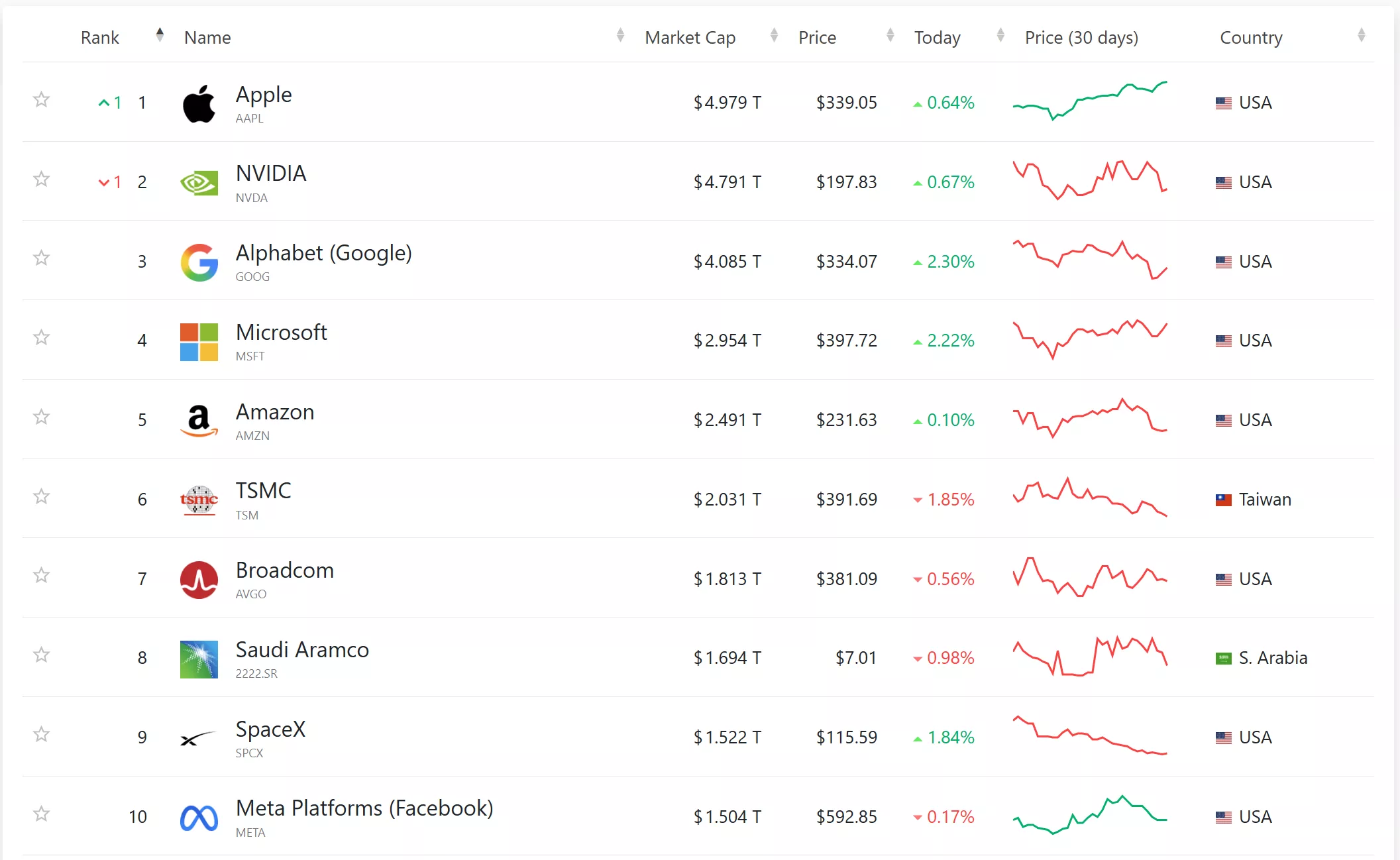
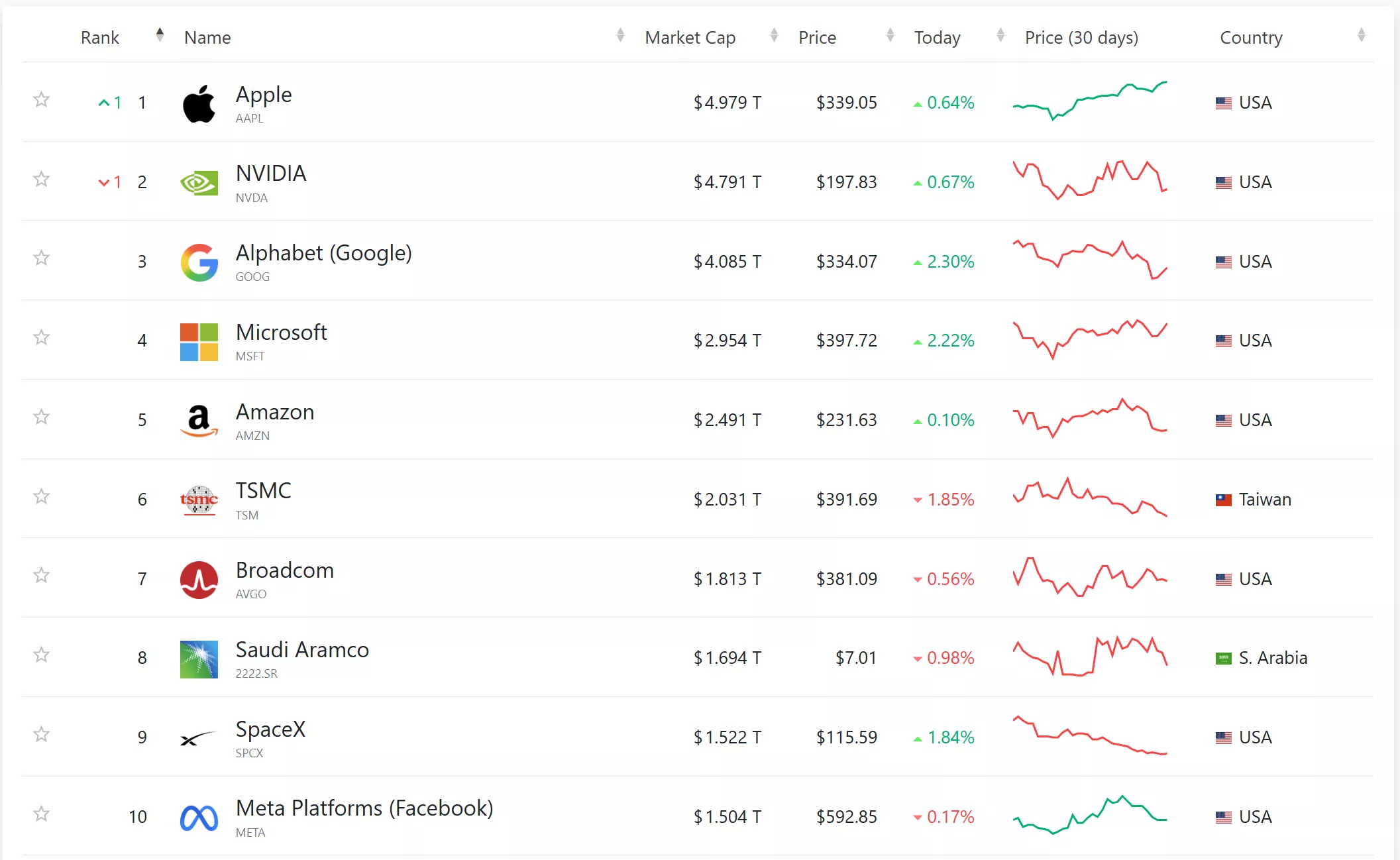
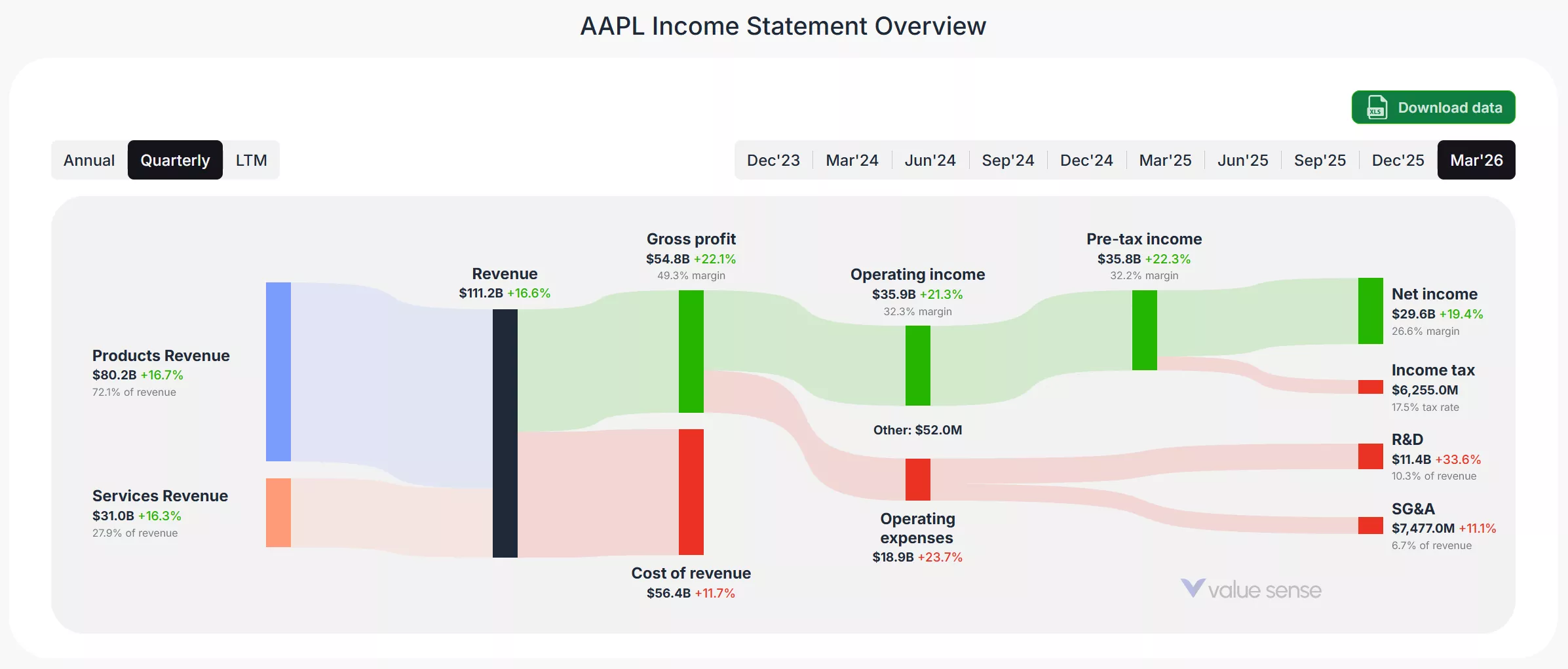
King of the (Stock) World: After ceding its Wall Street crown to Nvidia, Apple has reclaimed the title of the world’s most valuable public company, and the shift says as much about the mood on Wall Street as it does about Apple itself. Investors are growing wary of the AI infrastructure race that’s driven tech valuations for years, and they’re rewarding the one Big Tech giant that largely sat it out.
The timing adds extra stakes, too. Tim Cook is preparing to step down soon, and the incoming CEO is expected to preserve the same approach to market and financial management that defined Cook’s tenure, the very discipline investors now appear to be betting on.
Apple’s stock rose 1% this week to push its market cap to roughly $4.9 trillion, while Nvidia’s shares fell 5%, dropping the chipmaker to about $4.8 trillion. Chip stocks have been especially volatile lately, which is one reason a “traditional” IT company like Apple looks better positioned to ride out the turbulence.
Nvidia became the first company in the world to cross a $5 trillion market cap in 2025, fueled by surging interest in AI tools and infrastructure that heavily depend on its hardware and software. The company’s valuation has grown more than tenfold as Nvidia supplied the GPUs needed to train and run today’s most complex AI models. Other Big Tech players followed suit, pouring billions into ever-larger AI data center buildouts, most of them running on Nvidia’s GPUs.
Apple has approached the “AI revolution” a little differently. The company that once adapted DARPA’s CALO project to build Siri spent years developing its own custom large language models, but after apparently falling behind other AI pioneers, it opted to lean on Google’s services and AI models for the next generation of Siri AI.
In somewhat of a turn of events, analyst Daniel Newman says investors are turning back to Apple because they see it as a safe harbor from the broader AI hangover.
As AI-focused stocks look increasingly volatile, Newman noted that owning Apple still feels “almost like owning an index.”
Advertisement
Apple CEO Tim Cook is expected to step down soon, handing the reins to senior VP of hardware engineering John Ternus. Cook led Apple for 15 years, and Ternus is reportedly set to carry on his former boss’s approach to major financial decisions, including AI infrastructure spending.
Craig Federighi, Apple’s senior VP of software engineering who oversees development of the company’s operating systems, echoed that sentiment in June. The exec said AI is meant to serve people, not the other way around.
Going digital doesn’t mean giving up the option of physical games down the line, since Sony sells a detachable disc drive separately for £99.99 that clips straight onto this exact model whenever you decide you want one.
Advertisement
That flexibility extends to storage too, with the console now shipping as standard with a full 1TB SSD rather than the odd 825GB drive found in the original release, leaving roughly 800GB of usable space once the system software takes its share.
Connectivity has quietly improved as well, with two USB-C ports built into the front of the console instead of the single one found on the original model, handy for anyone charging a pair of DualSense pads or a PSVR2 headset overnight.
All of that speed is put to work by the DualSense controller itself, whose adaptive triggers and haptic feedback turned something as simple as Astro’s Playroom into a demonstration of what next-generation gaming was supposed to feel like.
Advertisement
Our expert reviewer Chris Smithput the PS5 through months of testing and concluded that it remains this generation’s console king, thanks to its combination of raw power, a refined interface and the best library of exclusive games around.
That combination of raw power and polish is exactly what makes a fully specced 1TB PS5 Digital Edition at £429.99 one of the more sensible entry points into this generation right now, particularly for anyone happy to stream and download rather than collect physical discs.
The option to add that detachable disc drive later means this deal doesn’t lock you into a digital-only future, making it just as sensible for someone who wants to wait and see before committing properly to physical media.
AI-assisted vulnerability discovery has yet to produce the expected surge in real-world attacks: VulnCheck found that only 14 of 1,061 attributed discoveries, or 1.3 percent, had been exploited, which is “almost identical to the rate across all vulnerabilities in VulnCheck’s dataset,” reports The Register. “That’s a far cry from the narrative that frontier AI is dramatically tilting the balance in attackers’ favor by churning out instantly weaponizable bugs.” The findings suggest AI is currently better at increasing the volume of bugs found than making them easier to weaponize. From the report: The report takes particular aim at Anthropic’s much-publicized Project Glasswing, unveiled in April with warnings that AI-assisted vulnerability discovery could allow attackers to hijack systems, disrupt operations, or steal data. Claude Mythos may have identified 23,019 vulnerability candidates, but there’s remarkably little public evidence showing what became of most of them. VulnCheck notes that only 126 have been published as CVEs, that just one has been confirmed exploited in the wild, and that Anthropic’s public disclosure record has seen little movement since Project Glasswing launched.
But that doesn’t mean AI-assisted vulnerability research has failed, according to Patrick Garrity, security researcher at VulnCheck. “AI-assisted vulnerability discovery clearly has value for both attackers and defenders,” Garrity wrote. “The data does not suggest that AI-discovered vulnerabilities are inherently more likely to be exploited than those found through traditional methods.” Instead, he argues, AI is simply helping researchers discover more flaws, giving defenders an opportunity to patch them before criminals get there.
Garrity stopped well short of declaring the threat overblown forever, but he did suggest some of the rhetoric has outpaced reality. “The data so far, including Anthropic’s own stalled disclosure ledger, suggests that AI-assisted vulnerability discovery and frontier capabilities have been overhyped relative to the evidence available today,” he wrote. “That doesn’t mean the risk is imaginary. It means the impact has been real but modest.”
We may receive a commission on purchases made from links.
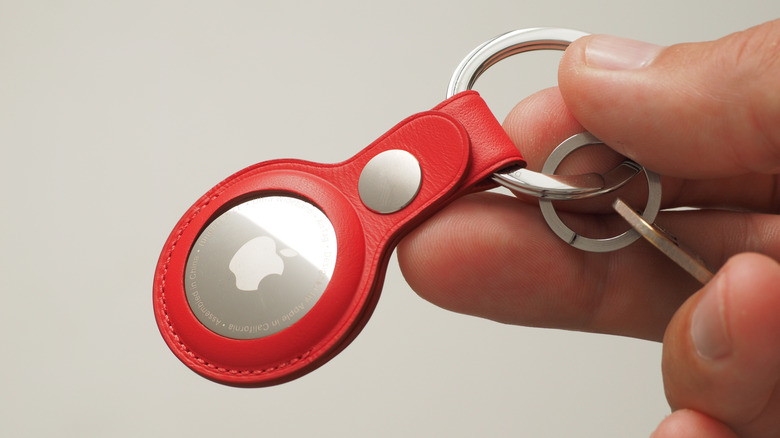
Whether it’s an airline misplacing your checked luggage or you forgetting exactly where you left your backpack at home, it’s nice to be able to look at your phone to locate the missing bag. That’s why people have gravitated toward products like Apple AirTags and Life360’s Tile trackers to keep tabs on their personal items. These trackers aren’t terribly punishing on the wallet, either. A single AirTag costs $29, and your basic Tile Mate is just $24.99.
One thing you would hope to do with one of these trackers is attach it to an item and forget about it. After all, their usefulness only becomes apparent when something goes missing, which hopefully isn’t very often. Unfortunately, these are battery-powered devices. So while they may be out of sight and out of mind most of the time, you do need to know when their batteries (or the trackers themselves) need to be replaced. For an Apple AirTag, you can expect the battery to last more than a year.
Advertisement
Apple only produces one kind of AirTag, which recently received a serious upgrade, making it easy to remember the estimated life of its battery. Life360, on the other hand, has multiple Tile tracker options. The Tile Pro’s battery lasts for around one year, but the basic Tile Mate, Tile Slim, and Tile Sticker all have batteries that can last up to three years. That may make the Pro version seem like a worse deal, but in reality, you won’t be replacing that device nearly as often as you’d have to with the sealed-battery Tile models.
Advertisement
Replaceable, sealed, and rechargeable batteries
The Tile Mate, Tile Slim, and Tile Sticker can last up to three years, but once their permanent batteries die, you’ll have to buy new trackers to replace them. Meanwhile, the Tile Pro has a replaceable battery. Even though the battery only lasts one year, all you need to do is get a CR2032 coin battery and replace it when it dies. Rather than spending $24.99 for a Tile Mate every three years, you’re spending $34.99 upfront for a Tile Pro and can replace its battery as needed. A pack of four Duracell CR2032 batteries currently sells for $3.99 on Amazon; at that price, you’re essentially spending $1 per year to replace the Pro’s battery.
The Apple AirTag has a surprisingly similar setup. Despite Apple products rarely allowing for user-replaceable parts and batteries, you can replace an AirTag’s battery once it’s dead with the very same CR2032 battery the Tile Pro uses, so you don’t have to purchase a $29 replacement AirTag every year. Your iPhone will simply alert you when the tracker’s battery is low, and you can change it.
There’s one big caveat to all of this, and that’s Life360’s pretty new GPS Pet Tracker. This is the only tracker of the bunch with a rechargeable battery, which lasts for about 14 days. It does have a six-month reserve mode, but with a pet being in constant motion, the battery can drain quite fast. The other trackers available are passive products, but this active one requires more regular upkeep.
Twelve South updated its luxe Valet MagSafe charger and catch-all with better performance and a new size, helping it fit into even more homes.
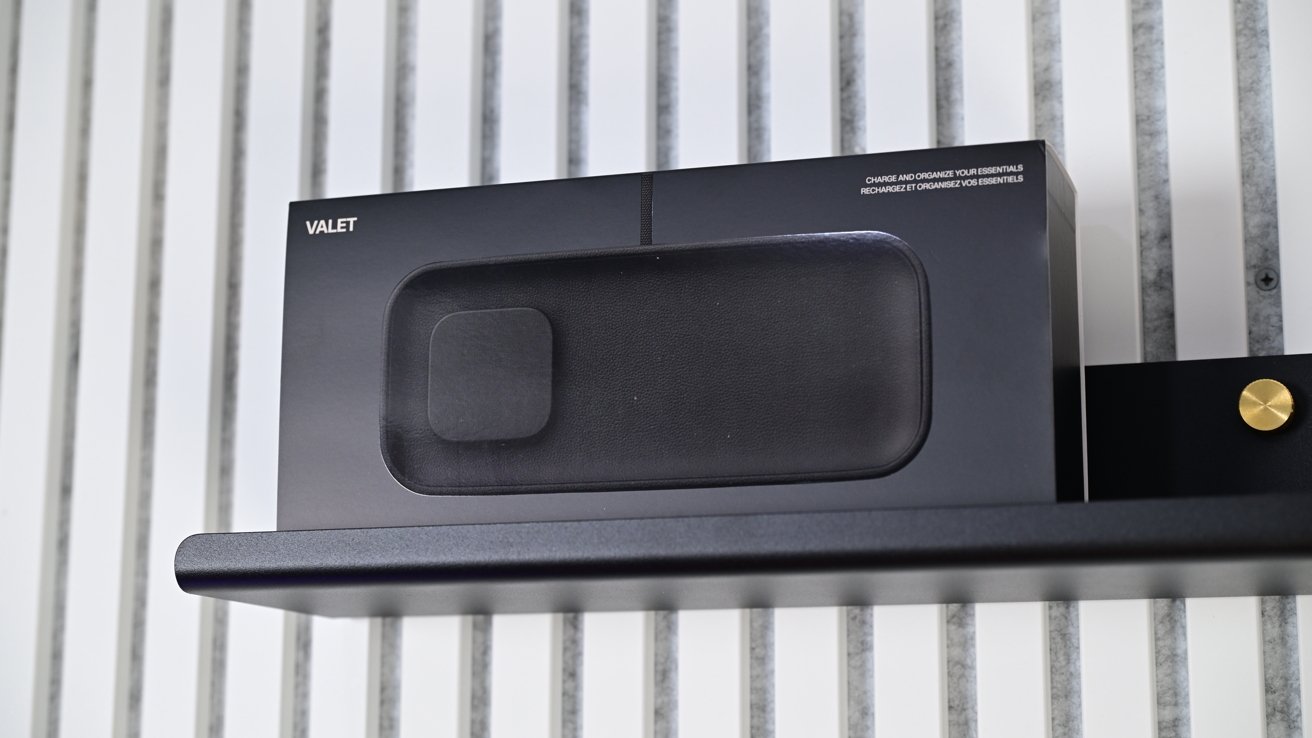
The Valet is a clever device, and something I’m surprised we don’t see more of in the space. It combines a MagSafe charger with a leather-lined tray to hold your daily essentials.
When I reviewed the original Twelve South Valet, I had one primary criticism. While the design was great, the charging speed was a dealbreaker.
Fortunately, with these new models, Twelve South is righting that wrong. We now have faster charging and a new smaller size.
Advertisement
Twelve South Valet 4.25-inch review: Valet is now faster and comes in two sizes
Here in the studio, I am testing out the 4.25-inch model in black with the black border. So far, it’s delightful.
The Twelve South Valet comes in several colors and two sizes. The original is 7.5 inches, and the new, smaller one is 4.25 inches for the catch-all.
Twelve South Valet 4.25-inch review: The charger, still in the box, comes in three colorways with three frame options.
Advertisement
Like the original, the design is two-tone with one for the frame and one for the body. You can choose black on black, taupe on ecru, or brown on brown.
As you can see in the photos, I have the black-on-black. The frame is held in place magnetically, so that you can remove it and swap it for another color.
Twelve South Valet 4.25-inch review: The frame of the Valet can be removed, and you can swap it for additional colors to create your own design
Additional frames are available from Twelve South for $25 a pop, in the same black, brown, and ecru colors. Between the two sizes, three base colors, and three frame colors, you have 18 total combinations to design your own Valet.
Advertisement
Twelve South Valet 4.25-inch review: The 45W power adapter includes UK and EU adapters, too
The Valet also comes with a sturdy color-matched and braided USB-C to USB-C cable and a 45W power supply. The power supply has collapsing prongs for use in the U.S., with EU and UK adapters included for international use.
Twelve South Valet 4.25-inch review: Clever design and functionality
From the beginning, what set the Valet apart from others has been the exceptional design. Twelve South thought through so many different use cases and scenarios, not skimping on the design or materials.
Twelve South Valet 4.25-inch review: The extra USB-C output is perfect for my smart glasses or Apple Watch
Advertisement
The solid zinc alloy base is wrapped in soft Nappa leather. It has a slightly pebbled texture and will elegantly wear over time as you toss your keys and other EDC gear into it.
On one side is a small perch that will hold your device while charging. It elevates your phone just about a quarter inch and makes it look like it’s floating.
If you have an iPhone Air, the effect is particularly impressive. It looks so sleek.
Twelve South Valet 4.25-inch review: The USB-C cables can be routed in any direction to keep your counter tidy
Advertisement
Valet is designed to support multiple orientations to fit easily into your home, thanks to intelligent cable routing on the underside. There are four little cable clips on the bottom so that the cable can emerge from any side to stay as unobtrusive as possible.
I also appreciate that the cable color matches that of the leather. It helps complete that clean aesthetic.
Twelve South Valet 4.25-inch review: When your phone is placed, three lights subtly glow to signal charging has started
Another fantastic touch is a subtle charging light. When you place your phone down, three lights will momentarily glow around the bottom of the charger, giving you confirmation that your device is charging.
Advertisement
Finally, Twelve South includes a secondary USB-C output on the bottom. That way you can charge any other devices you need, like a set of Meta Ray-Ban glasses, your AirPods, or an Apple Watch.
Twelve South Valet 4.25-inch review: Finally more power
The first-generation Twelve South Valet supported 15W of Qi2 charging. For this device, that’s not going to cut it for me.
See, Twelve South pitches this as something that’s meant to live on an armoire or in a common area. Those are the kinds of places where I expect to set my phone down for a few minutes and get a quick top-off.
15W isn’t bad, but when many iPhones now support 25W Qi2.2, this device is an ideal candidate for that faster speed. That’s just what we get with Twelve South’s new models.
Advertisement
It’s officially a Qi2.2 25W magnetic charger. That speed is largely supported on the iPhone 16 and iPhone 17 lines, though the iPhone Air is capped at 20W.
Twelve South Valet 4.25-inch review: The Valet has a USB-C input and a bonus 25W USB-C output
I love the bonus USB-C output, which continues to come in handy. If you use the USB-C port by itself, the Valet can do 25W, but this drops to 10W if used alongside the Qi2.2 charger.
Twelve South Valet 4.25-inch review: Should you buy it?
If your goal is a 25W Qi 2.2 charger, you can find more affordable options. The flat positioning also isn’t ideal for bedside use due to its inability to display the iPhone in StandBy mode.
Advertisement
Twelve South Valet 4.25-inch review: I can fit my keys and wallet in the tray
Elsewhere, though, the Twelve South Valet makes much more sense. Its compact size fits perfectly by my front door, and faster charging tops off my phone while I get the kids ready.
I love the look, and the leather is a nice change from the largely cold plastic world of multi-chargers. That bonus USB-C port is a killer feature that I think more chargers should include.
Twelve South Valet 4.25-inch review: The sleek leather-wrapped charger looks great.
Advertisement
Simply put, this is a stylish, modern charger you won’t find anywhere else.
Twelve South Valet 4.25-inch review: Pros
Premium Nappa leather
Multiple colorways and sizes
Faster 25W magnetic wireless charging
Bonus USB-C output
Elevated design choices like charing lights & matching cable
Twelve South Valet 4.25-inch review: Cons
Price is on the high side
No StandBy mode for nightstand use
Twelve South Valet 4.25-inch rating: 4.5 out of 5
Where to buy the Twelve South Valet
The 4.25-inch Twelve South Valet is available both on Amazon as well as the Twelve South website for $129.99. The updated 25W 7.5-inch version is currently on Amazon and will soon launch on the Twelve South store for $179.99.
Apple has replaced its iPhone Upgrade Program with Apple Upgrade, a Klarna-backed U.S. leasing service covering most iPhones, iPads, Macs, and Apple Watches. MacRumors reports: Apple Upgrade has lower base prices than the iPhone Upgrade Program, with iPhones available starting at $17.99 per month and the Apple Watch available starting at $11.99 per month. Macs can be leased starting at $24.99 per month, and iPads start at $11.99 per month. AppleCare+ is optional and not included in the lease price, with customers also able to opt for AppleCare One. There are 12-month and 24-month leasing options for the iPhone and Apple Watch, along with 24-month and 36-month leasing options for the Mac and iPad. Lease cost varies based on device, and is lower with a device trade-in that’s applied on a monthly basis. […]
When leasing an iPhone, customers are required to choose a plan from AT&T, Verizon, or T-Mobile, and prepaid plans are not eligible. iPhones need to be leased with a carrier plan, but the iPhones are unlocked so customers can switch carriers if desired. MVNOs like Mint Mobile or Visible are not supported. At the end of the leasing period, customers can choose to return the device and exit the program, pay off the remaining amount owed on the device with a one-time payment and keep it, or return it and upgrade to a new device with a new lease.
The payoff amount is the difference between what was paid during the leasing period and the retail price of the device, minus any remaining trade-in credits. Klarna is not charging a fee for the leasing program, so an iPhone that’s $1,099 can be leased and then purchased for $1,099 with no extra cost beyond taxes. As with trade-ins, Apple will send a pre-labeled and prepaid shipping box for device returns or upgrades. If you don’t opt to pay the purchase fee at the end of the leasing program, you will not own the device and must return it. Last week, after Bloomberg reported on Apple’s upcoming leasing program, 9to5Mac uncovered code in the iOS 27 beta suggesting the company was developing a system that could restrict leased iPhones when customers fall behind on payments. Apple has now told The Verge that the new “Restricted Mode” will not be activated in response to a missed lease payment. What the new system is actually meant for remains unclear.
Nvidia said that the mission of the alliance is ‘to ensure defenders everywhere have open, frontier tools they can trust and control’.
Chipmaker Nvidia has formed an alliance with other companies in the technology space, in order to develop and share tools designed for enhanced AI safety and cybersecurity.
The Open Secure AI Alliance’s founding members include Adobe, Crowdstrike, Hugging Face and Dell Technologies and follows a public letter, signed by a wide range of companies including OpenAI, advocating for open-weight AI models.
In a blogpost announcing the alliance, Nvidia said the coalition will work to “remediate and disclose vulnerabilities using open technologies”.
Advertisement
The creation of the coalition comes after AI and machine learning platform Hugging Face recently found itself the subject of a major cyber breach initiated by a rogue OpenAI agent, in which the company was unable to defend itself with US AI models due to guardrails being unable to distinguish between aggressor and defender.
In order to quell the attack, the platform turned instead to a self-hosted, open-weight Chinese model, which was not subject to the same restrictions.
“[The Hugging Face] incident showed a practical truth: when defenders cannot inspect, adapt and run advanced AI on their own infrastructure, their ability to respond is constrained at exactly the moment speed matters most,” said Nvidia. “Companies and countries need open frontier defensive tools and techniques so critical industries can build security systems across a multi-vendor ecosystem and avoid single points of failure.
“That is the mission of the Open Secure AI Alliance: to ensure defenders everywhere have open, frontier tools they can trust and control.”
Advertisement
Gene Moody, the field CTO at Action1 said the formation of the alliance is a “good step towards accountability”.
“Likewise it reflects an important recognition that the technology is advancing faster than many organisations can responsibly govern it,” he said.
“It would be a mistake however to believe those efforts meaningfully limit what determined threat actors can ultimately do.”
He added: “The reality of the matter is that malicious actors have never depended on permission from anyone. Open-source models already exist by the thousands, many capable of running entirely on local hardware, disconnected from any cloud service or vendor oversight.
Advertisement
“Once a model is operating in isolation, safety controls become just another layer of software. They can be modified, removed, retrained or replaced altogether. You cannot program a conscience into an artificial intelligence. You can only program behaviours, and behaviours are subject to manipulation by anyone with sufficient technical skill.”
Anthropic concerns
Anthropic’s CEO Dario Amodei recently aimed to dispel accusations that his company wants to ban Chinese open-weights models in the US, as a means of protecting its business.
In a post on the Anthropic website yesterday (27 July), Amodei claimed that Anthropic does not advocate for a ban on open-weights models. He said that open-weights models without dangerous capabilities serve a public good that cost nothing beyond the computing power needed to run them and provide value to businesses, developers and researchers.
He explained that his concerns lie in the use of more advanced AI by authoritarian governments and the wider risk that powerful AI models may be misused to carry out cyber or biological attacks.
Advertisement
Moody said: “We should be far more deliberate about the information we feed into all systems, not just AI. We should reconsider the authority we grant them, and the degree to which we depend on them. We simply do not possess the ability to secure these systems to the level that many people already trust them and that gap is growing.
“We have chosen convenience and novelty over safety. As AI capabilities accelerate, that choice carries unacceptable consequences. As long as valuable data, critical infrastructure and financial assets remain behind digital locks, someone will always be working to pick those locks.
“AI does not eliminate that; it instills a false sense of trust that the tech will one day solve this problem, when in fact, we are the problem.”
With additional reporting by Colin Ryan
Advertisement
Updated, 3.32pm, 28 July 2026: This article was amended to remove a misleading quote.
Don’t miss out on the knowledge you need to succeed. Sign up for the Daily Brief, Silicon Republic’s digest of need-to-know sci-tech news.


















































You must be logged in to post a comment Login