

Connect with us
DAPA Banner

Tech

Bluesky’s next product is an AI assistant that helps build custom social media feeds

Published

on

Bluesky is the latest social media platform to throw its hat into the AI chatbot ring. Bluesky, but specifically its chief innovation officer Jay Graber and her new Exploration team, built a new AI assistant called Attie that’s designed to help users create custom feeds. Graber called Attie an “agentic social app” that’s built on its its open-source framework called the AT Protocol.

To use Attie, users can punch in prompts in natural language to generate social feeds without having to know how to code. On the Attie website, examples include prompts like, “Show me electronic music and experimental sound from people in my network” or “Builders working on agent infrastructure and open protocol design.”

An example of a user's prompt for Attie and the feed that's generated from it.

Attie

“It feels more like having a conversation than configuring software,” Graber described Attie in a blog post. “You describe the sort of posts you want to see, and the coding agent builds the feed you described.”

Graber added that Attie is a separate app from Bluesky and users don’t have to use the new AI assistant if they don’t want to. However, since Attie and Bluesky were built on the same framework, it could mean there will be some cross-app implementation between the two or any other app built on the AT Protocol. Attie is currently available on an invite-only closed beta, but anyone interested can sign up for the waitlist on its website in the meantime.

Advertisement

Source link

Continue Reading
Click to comment

You must be logged in to post a comment Login

Leave a Reply

Tech

NASA pauses its lunar Gateway plan, a comet reverses its spin and more science news

Published

on

The first crewed mission of NASA’s Artemis moon program may take off in a matter of days, with a launch window that opens on April 1, and as preparations are underway for that, the space agency is refocusing its plan to establish a human presence on the moon. NASA announced major changes to its approach for moon landings that are expected to play out over the coming years, including axing its plan to build an orbiting station called Gateway. Read on to learn more about the agency’s new vision for the moon, along with other interesting science stories from this week.

Gateway out, moon base in

Just a few weeks after overhauling its Artemis program, NASA this week announced even more changes to its plans for putting astronauts back on the moon. Most notably, the space agency is abandoning the lunar Gateway project, which was intended to be the first ever space station orbiting the moon. Gateway, an international collaboration, wasn’t just going to support exploration of the lunar surface, but deep space missions too. But the writing has been on the wall for some time; in the Trump administration’s proposed budget cuts last May, Gateway was among the programs selected for the chopping block. Now, NASA is officially putting it on “pause” and plans to build a $20 billion moon base instead.

“NASA is committed to achieving the near‑impossible once again, to return to the moon before the end of President Trump’s term, build a moon base, establish an enduring presence, and do the other things needed to ensure American leadership in space,” NASA Administrator Jared Isaacman said at the agency’s Ignition event on Tuesday.

There are three phases to the moon base plan, according to NASA: first using contractors to send rovers and instruments to the moon through the Commercial Lunar Payload Services (CLPS) program; next establishing “semi-habitable infrastructure,” with astronauts on the ground and collaboration with other space agencies; and finally adding “heavier infrastructure” to support long-term stays on the lunar surface, including the Italian Space Agency’s Multi-purpose Habitats and the Canadian Space Agency’s Lunar Utility Vehicle. NASA says it’s aiming to start this plan off with crewed moon landings every six months following the Artemis V mission, which is currently planned for 2028.

Advertisement

Comet 41P pulls a reverse card

A study published this week in The Astronomical Journal describes what’s said to be the first observation of a comet reversing its spin. Observations taken several months apart in 2017 show the comet 41P/Tuttle-Giacobini-Kresák starting to spin more slowly after making a close flyby of the sun, before picking up speed again by December of that year. Its spin period, measured using NASA’s Neil Gehrels Swift Observatory, was about 46-60 hours in May 2017, but later observations by the Hubble Space Telescope showed it was just 14 hours, according to NASA. The researchers say what likely happened is that the heat from the sun caused the comet’s ice to sublimate, sending gases spewing off its sides.

“Jets of gas streaming off the surface can act like small thrusters,” author David Jewitt of the University of California at Los Angeles, said in a statement. “If those jets are unevenly distributed, they can dramatically change how a comet, especially a small one, rotates.” Jewitt compares it to pushing a merry-go-round. “If it’s turning in one direction, and then you push against that, you can slow it and reverse it.”

Comet 41P is thought to have come from the Kuiper Belt and passes through the inner solar system every 5.4 years. It’s small, with a nucleus of just around .6 miles, and the researchers found it’s become less active over recent years, indicating that there are changes taking place on the surface. While it’s thought to have been in this orbit for about 1,500 years, it now appears to be rapidly evolving, and the rotational changes — which could cause structural instability if it continues — could mark the beginning of the end for it. “I expect this nucleus will very quickly self-destruct,” said Jewitt.

Saturn in a new light

A side-by-side-comparison of photos captured of Saturn from the Webb telescope and the Hubble telescope.

A side-by-side-comparison of photos captured of Saturn from the Webb telescope and the Hubble telescope. (NASA/ESA/CSA)

Stunning images of Saturn released this week by NASA, ESA and CSA provide a more detailed look at the many layers of the ringed planet’s “busy” atmosphere. The images, which show storms, clouds at different depths, Saturn’s “ribbon wave” jet stream and so much more were taken by the Hubble Space Telescope and the James Webb Space Telescope in 2024. Read more about it here.

Advertisement

Source link

Continue Reading

Tech

Custom-Built Spray Paint Machine Creates Any Color You Want, Right When You Need It

Published

on

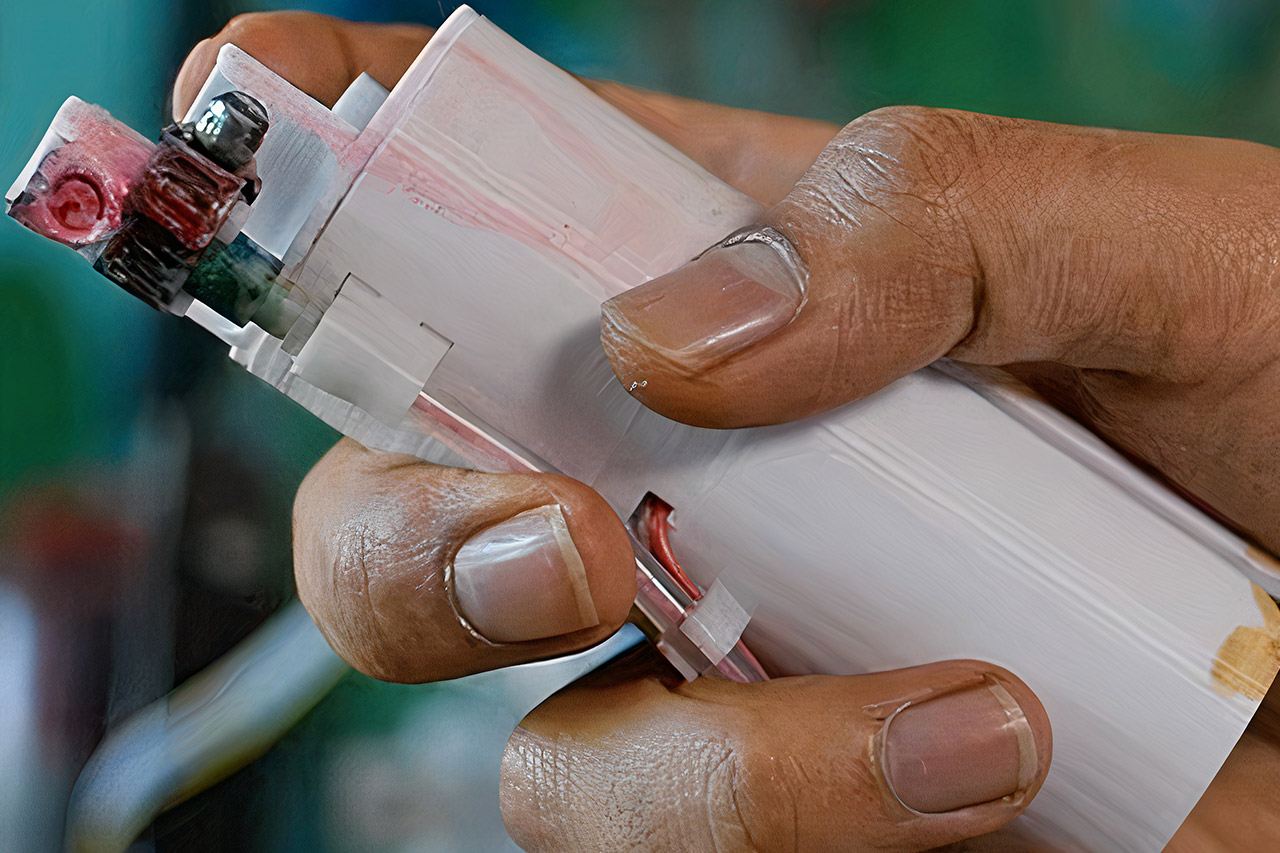
Spectrum Real-Time Spray Paint Machine Any Color
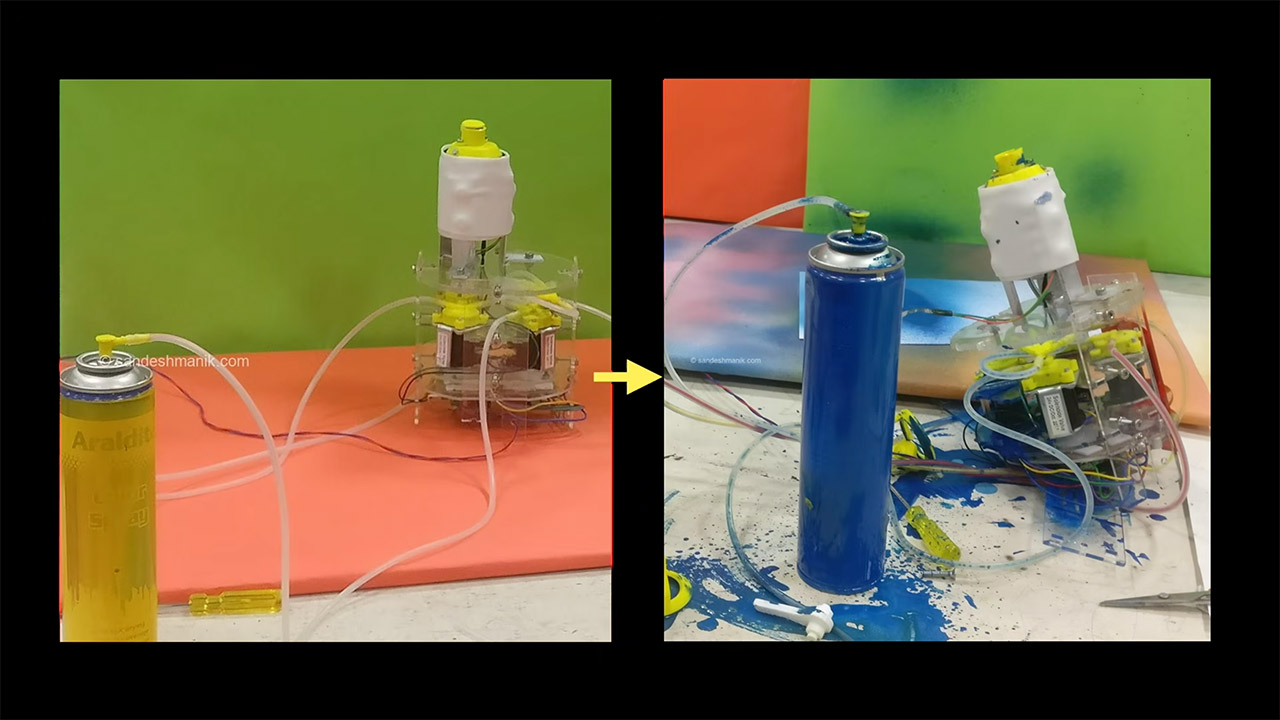
Spray paint artists have long dealt with a frustrating problem. Getting the range of colors a single mural might need means carrying a heavy collection of cans and inevitably running out of one shade mid-project with a pile of barely used others left over. Sandesh Manik spent years as a mechatronics student building a solution he calls Spectrum, a compact machine that draws from four standard spray cans and blends them into hundreds of custom shades on demand.


Spectrum gives artists the freedom to call up any color on the fly and spray it through a single nozzle without stopping to swap cans or pre-mix batches. Manik’s goal from the start was to build something that worked with standard off the shelf spray cans, avoiding the need for custom components or expensive pumping systems. Early testing quickly revealed just how difficult that constraint would make things.

Sale


SCRIB3D P1 3D Printing Pen with Display – Includes 3D Pen, 3 Starter Colors of PLA Filament, Stencil Book…
  • [FOR CREATIVE PROJECTS] Create, draw, doodle, and build in 3D with this versatile, high-quality 3D pen. The SCRIB3D P1 enhances spatial thinking…
  • [READY-TO-USE KIT] Includes 3 colors (30 feet) of PLA plastic to keep you Doodling for ages, as well as a power adapter, step-by-step manual, and a…
  • [BEGINNER FRIENDLY] Plug the adapter into the back of the pen and choose your filament. The red light will turn on indicating warm up, this will take…

The core problem turned out to be trickier than expected. Different cans operate at slightly different pressures, and trying to push multiple colors through the same tube simultaneously was a reliable recipe for leaks and backpressure. Manik worked around issue by using a pulsing mechanism that opens valves one at a time, unleashing short bursts of each hue in quick succession. A ratio of one part red to eight parts white, for example, indicates that the white valve remains open for longer than the red valve throughout each cycle. These pulses pass down a small one-millimeter tube, where turbulence thoroughly blends them before they reach the nozzle. Color changes take only a second or two, and the tube diameter is important to its effectiveness, large enough to sustain spray pressure but tiny enough to keep color transitions sharp.

Advertisement

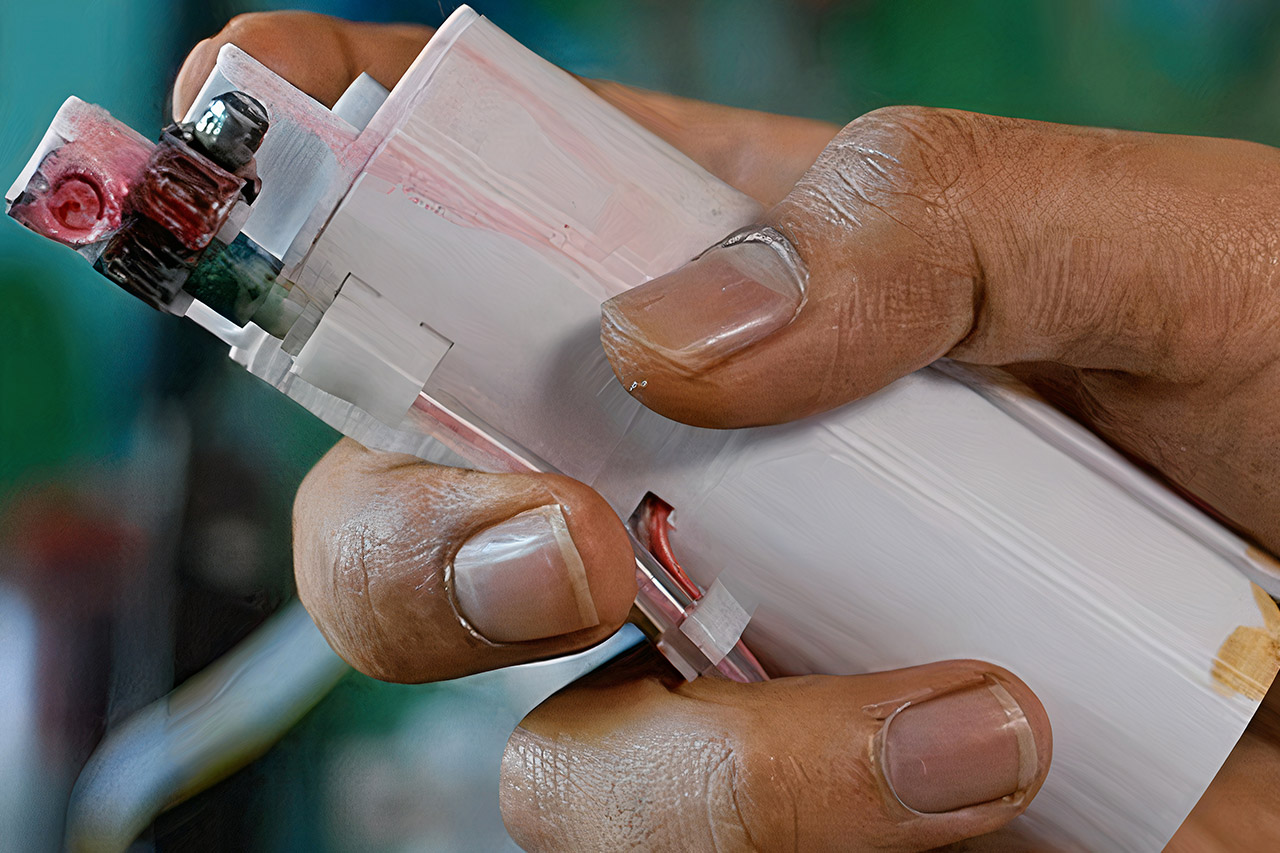
Spectrum Real-Time Spray Paint Machine Any Color
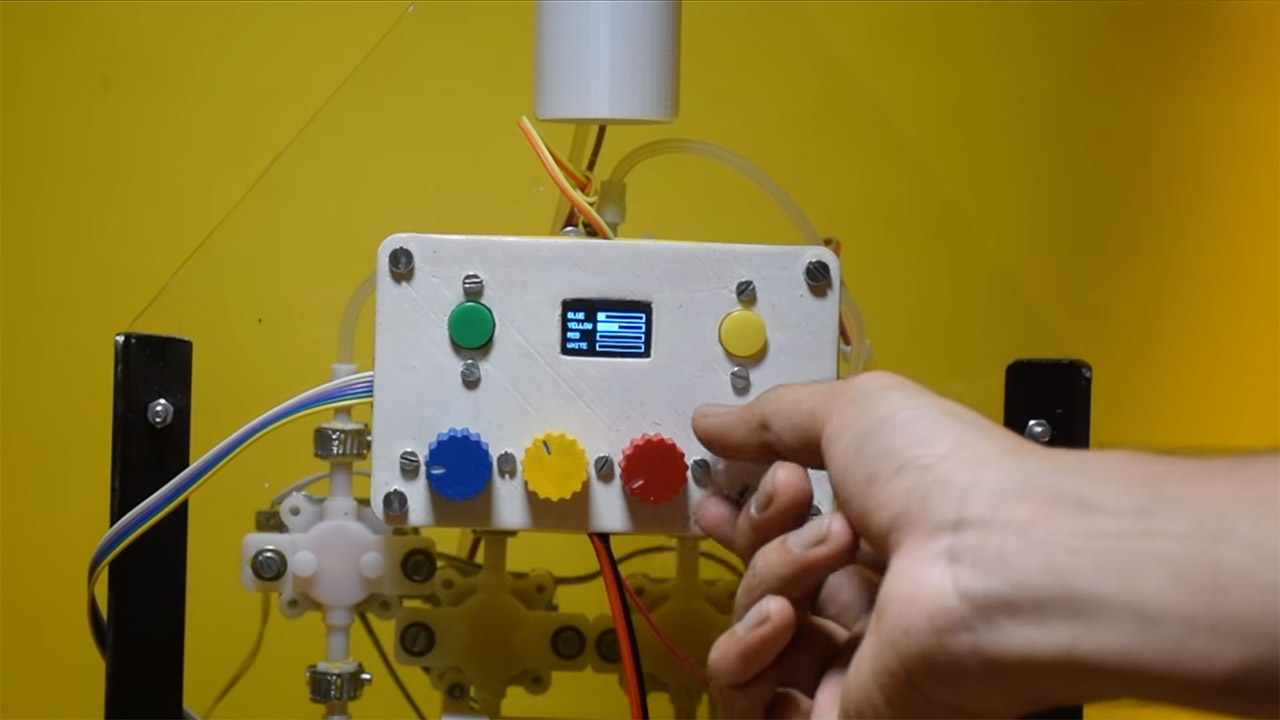
Getting the pulse system to work consistently was the most difficult aspect of the build. Standard solenoid valves clog easily because dried paint collects inside the moving parts, so Manik designed his own rotational pinch valves instead. A small stepper motor turns a lever that squeezes or releases a flexible silicone tube, which is frequently pinched tight to prevent leaks or backflow. The paint never comes into touch with the mechanism, therefore the entire system stays clean and uniform. An Arduino Nano sits at the heart of it all, reading four knobs on the handle, calculating the exact pulse lengths for each hue, and firing the valves at precisely the right time, all while a display on the side indicates the current settings.

Spectrum Real-Time Spray Paint Machine Any Color
Pulling the trigger gets the paint moving, and a force sensor built into the trigger adds an extra layer of control. Squeeze harder and the color mix shifts smoothly toward a different tone, creating natural looking gradients through pressure alone without touching a single dial. The whole build is designed for a home workshop, using silicone tubing to carry the paint, 3D printed fittings to keep connections tight, and simple toggle levers to hold the can nozzles open when needed. Total materials cost came in at under $150.
[Source]

Source link

Continue Reading

Tech

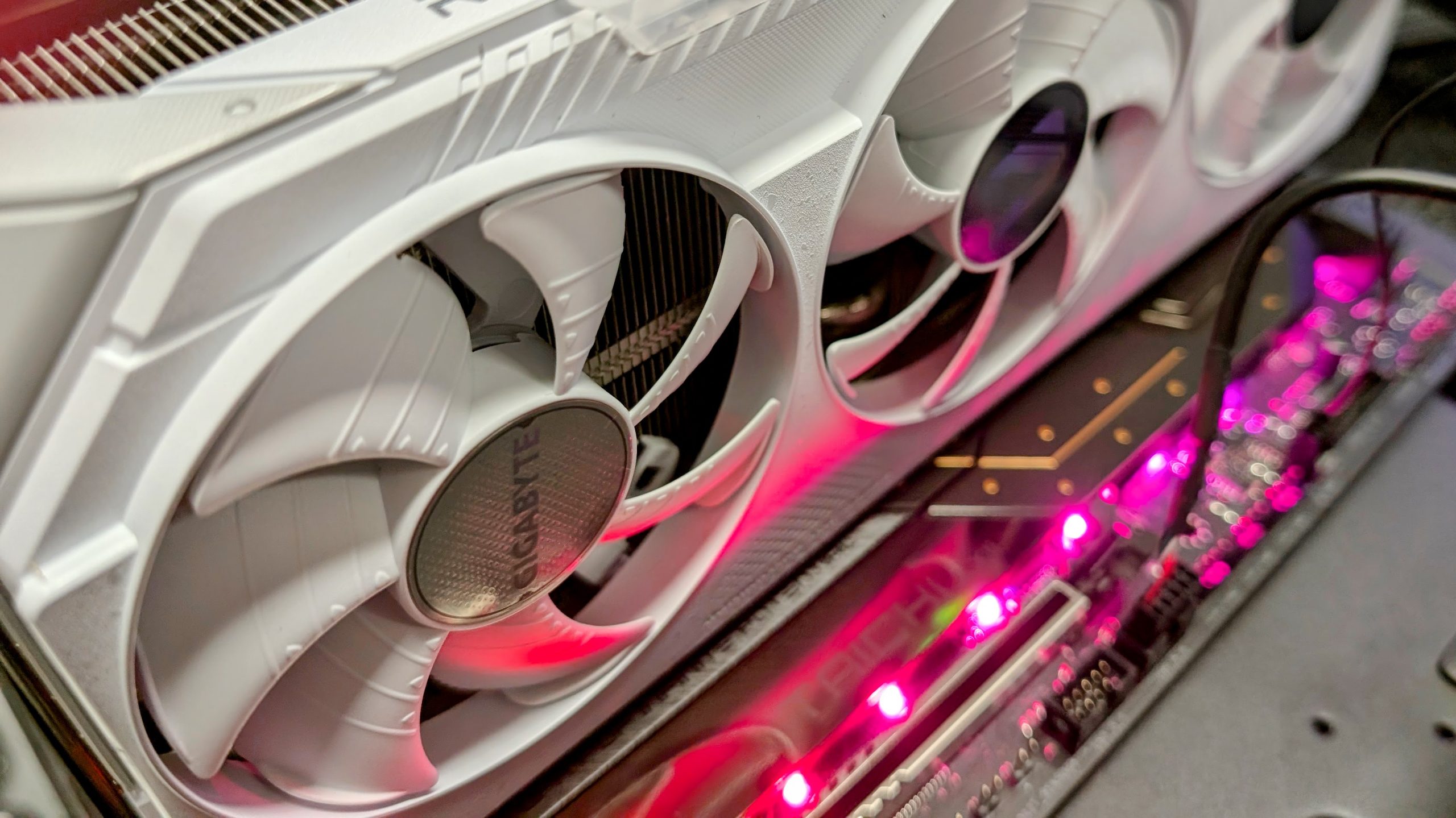
Gigabyte Radeon RX 9070 XT Gaming OC Ice 16GB review: excellent performance from a standout graphics card

Published

on

Why you can trust TechRadar


We spend hours testing every product or service we review, so you can be sure you’re buying the best. Find out more about how we test.

Gigabyte Radeon RX 9070 XT Gaming OC Ice: Two-minute review

If you’re after an AMD Radeon RX 9070 XT with a mild factory overclock, a clean white finish and a useful set of extra features, the Gigabyte Radeon RX 9070 XT Gaming OC Ice 16GB is well worth considering. At $1,099, it sits at the premium end of the price spectrum, but it does offer enough to still make it compelling compared to more affordable options.

Advertisement

Source link

Advertisement
Continue Reading

Tech

Boox Palma 2 Pro review: Adds color at a significant cost

Published

on

The Boox Palma 2 Pro turns the idea of a pocket e-reader into a smarter, more capable daily carry without losing the minimalist charm that made the original so good.

A hand holds a smartphone displaying an AppleInsider webpage about a rumored budget MacBook. The phone is shown against an outdoor pavement background.
Boox Palma 2 Pro

In 2023, I reviewed the Boox Palma, a pint-sized, pocket-friendly e-ink device. I praised it for its portability and ability to offer distraction-free reading pretty much anywhere you go.
Now, Boox has just released the Palma 2 Pro. It has a few new tricks up its sleeve, but I wanted to see how it stacks up to its predecessor — especially with its new, higher price tag.
Continue Reading on AppleInsider | Discuss on our Forums

Source link

Continue Reading

Tech

LAiV Crescendo VERSE Review: Chapter and Verse on This All-in-One DAC, Preamp, and Headphone Amplifier

Published

on

LAiV is a relatively new name, founded in Singapore in 2023, but the brand has moved quickly with a growing lineup of design forward, higher end components. The LAiV Crescendo VERSE marks a shift in strategy, arriving as a compact all-in-one DAC, preamplifier, and headphone amplifier priced at $849 and aimed squarely at a far more competitive segment of the market. That puts it head to head with established players like FiiO, Shanling, Topping, Schiit Audio, Eversolo, and TEAC, brands that have spent years refining affordable desktop systems that do not feel compromised.

The question is not whether LAiV can design something that looks the part. It already has. The real issue is whether the Crescendo VERSE can deliver the performance, features, and reliability expected at this price in a category where excuses do not last very long.

Technology & Specifications

The DAC section of the Crescendo VERSE is built around an R2R ladder topology, a design approach often associated with a more natural tonal balance and a less processed presentation. In simple terms, it relies on a network of precision resistors arranged in a ladder configuration, switching between R and 2R values to convert digital data into an analog voltage signal.

On paper, R2R designs do not usually win the measurement game against delta-sigma DACs, but LAiV has clearly made an effort to keep the numbers respectable. The Crescendo VERSE posts 0.008% THD+N, signal to noise ratio above 110 dB, and less than 30 µVrms of noise from the balanced headphone output. That level of performance is supported by tightly matched resistors with tolerances below 0.05 percent, which is not something every manufacturer bothers to implement at this price.

Advertisement

In terms of format support, the DAC handles up to 768 kHz PCM and DSD256, with native 1-bit DSD processing that avoids unnecessary conversion. The tradeoff is that switching between sample rates or encoding types can introduce occasional pops between tracks. If that becomes distracting, switching to Multibit mode for PCM playback eliminates the issue and allows for smoother transitions without interrupting the listening experience.

verse8

The Crescendo VERSE also includes an integrated sampling rate converter, allowing PCM files to be upsampled by 1x, 2x, 4x, 8x, or even 16x. DSD can likewise be resampled to DSD64, 128, 256, and 512 when operating in native DSD mode, giving users a fair amount of flexibility depending on how they prefer their digital processing handled.

Beyond the DAC section, LAiV has built this as a true all-in-one unit, incorporating a headphone amplifier alongside a discrete, output buffered preamplifier for use with power amplifiers or active speakers. Switching between modes and functions is handled via the included remote or the front panel controls. Operation is generally smooth, although the 20 by 7 dot matrix display limits how much information can be shown at once, which makes menu navigation less intuitive than it should be.

On the amplification side, the headphone stage delivers up to 1.1 watts and 11 Vrms in high gain. That is not class leading on paper, but it is sufficient for the vast majority of headphones. Medium and low gain settings are also available, making it flexible enough for more sensitive headphones and IEMs without introducing unnecessary noise.

It is not a power focused design, and that feels intentional. More power does not automatically translate into better sound quality. What matters is how it performs where it counts, which we will get into in the listening section. But first, let’s take a closer look at the build quality.

Advertisement
verse7

Design & Build

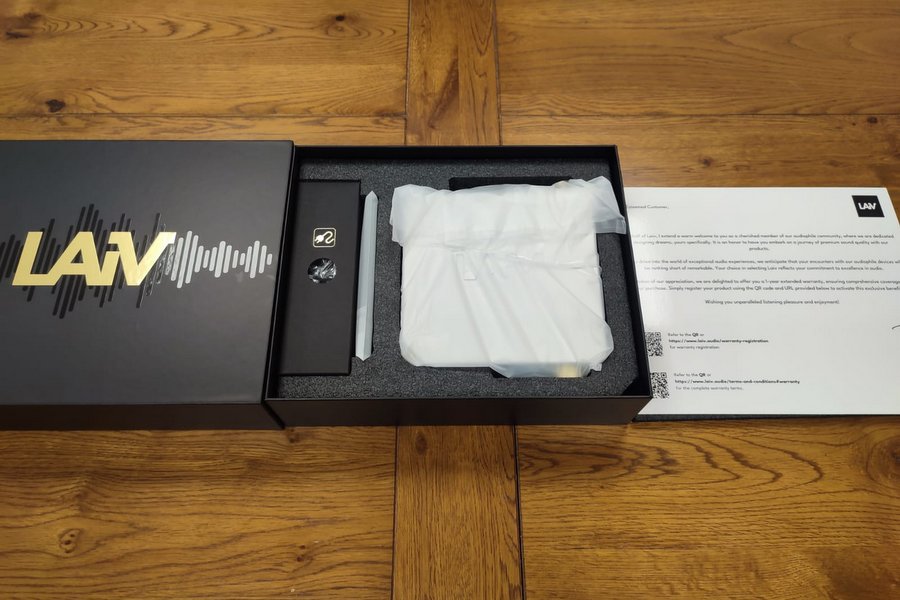
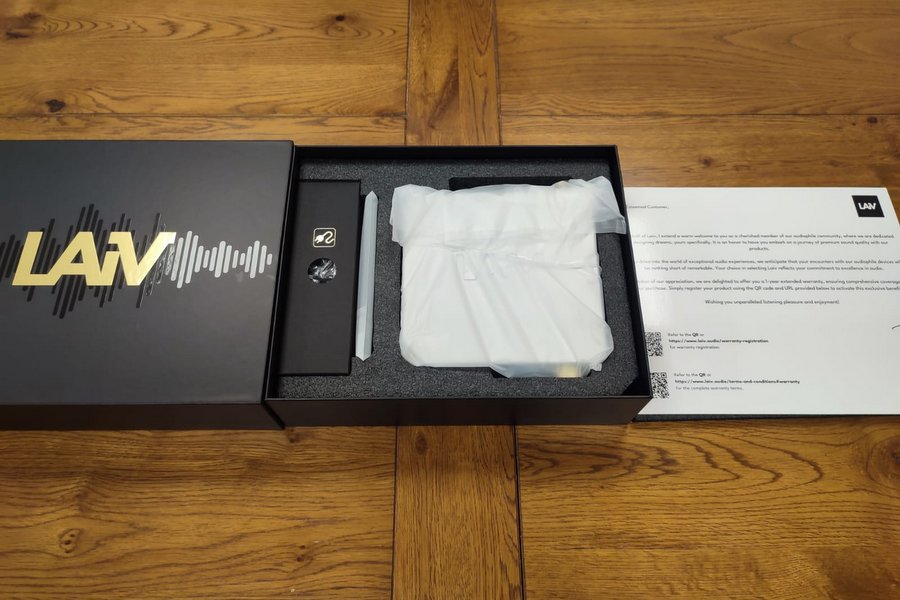
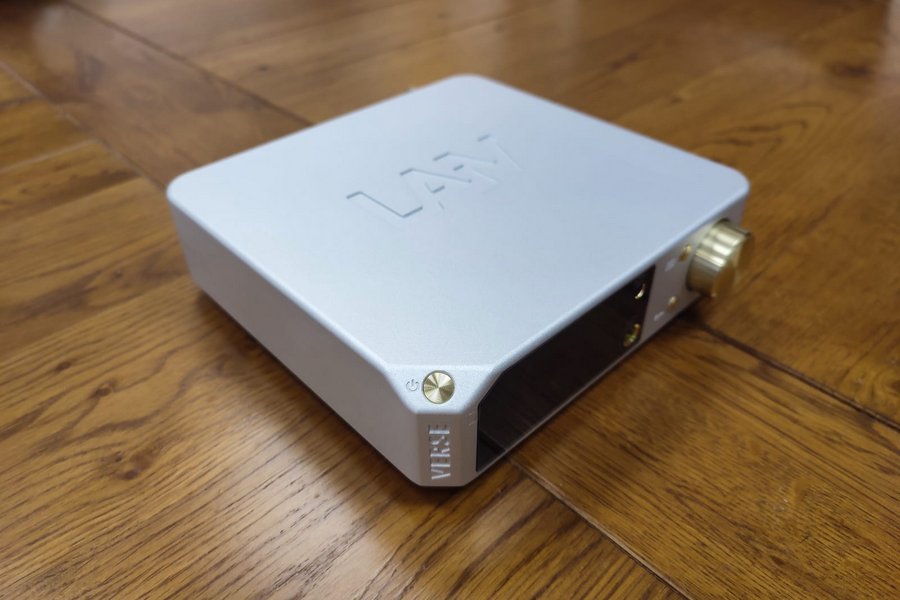
The LAiV Crescendo VERSE leans heavily into premium territory when it comes to build quality and materials. The chassis is machined from anodised aluminium, and the front LED display sits behind a sheet of tempered glass that adds a bit of polish without feeling overdone.

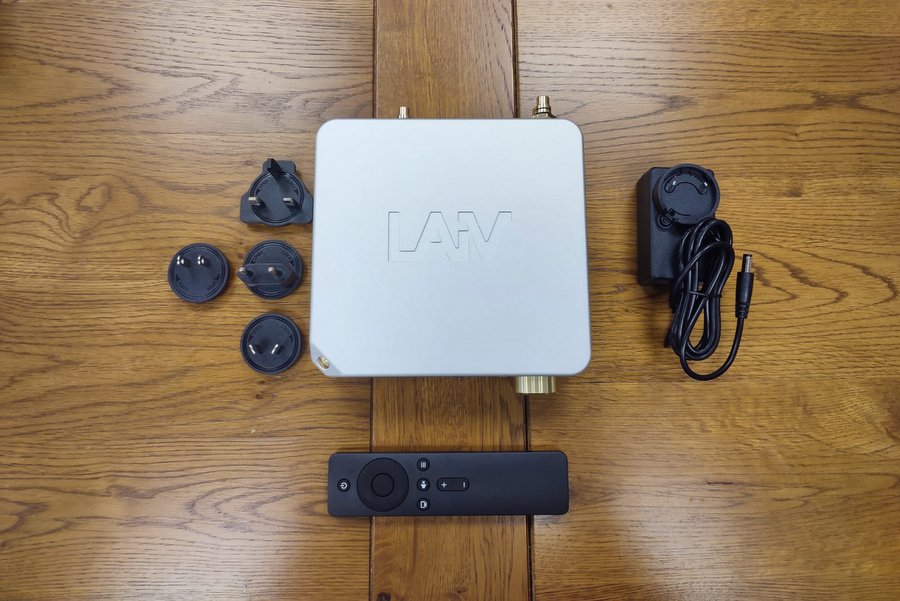
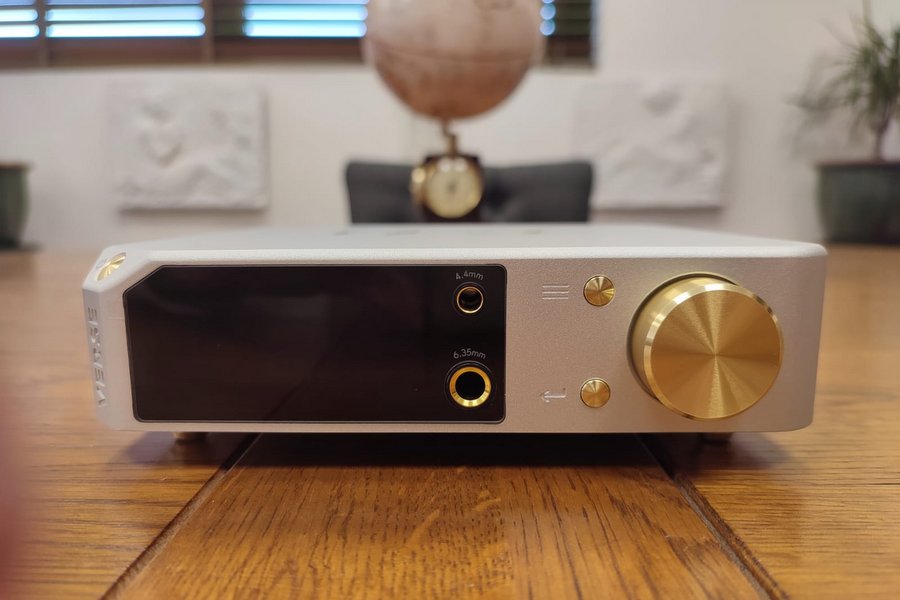
There are two finishes available: ebony black with gold accents, or sterling silver with gold buttons and knobs. The latter is what we have in for review, and it looks exactly like what LAiV is going for—angular, slightly industrial, but with enough refinement to avoid looking like lab equipment. It feels intentional rather than flashy.

Advertisement. Scroll to continue reading.

Its compact footprint helps. Measuring 188 x 168 x 50 mm (7.4 x 6.6 x 2.0 inches), the Crescendo VERSE does not dominate a desk, which makes it a far easier fit in smaller setups or cleaner, more minimalist spaces. Not everyone wants a full-width component staring them down while they work.

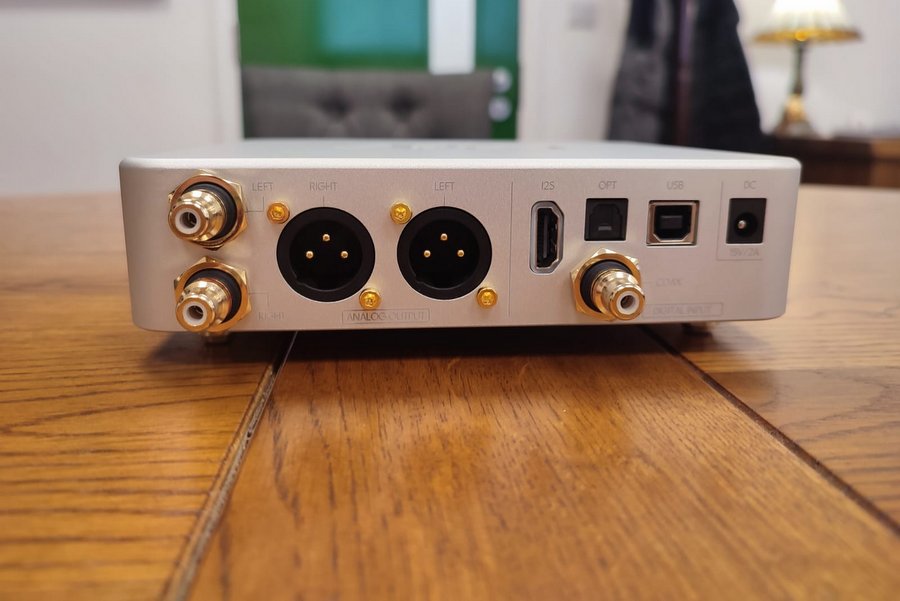
Despite the smaller size, connectivity is not an afterthought. Up front, you get both a 6.35 mm (quarter inch) and 4.4 mm balanced headphone output. Around the back, there is a full set of RCA and XLR outputs, along with four digital inputs: USB, coaxial, optical, and I2S. Power is handled via an external supply, which makes sense given the size. There was no realistic way to keep the unit this compact and fit everything internally without compromise.

Advertisement

Back on the front panel, volume is controlled via an analog knob with a smooth, well-damped feel that avoids being overly loose or stiff. The included remote works as expected, although LAiV skips the small courtesy of including AAA batteries. Not a deal breaker, but it is the kind of detail you notice when everything else is this well executed.

verse2

Listening & Headphone Synergy

The LAiV Crescendo VERSE was used both as a complete DAC and headphone amplifier and as a standalone DAC paired with several external headphone amplifiers. Source material ranged from Spotify streams to high resolution FLAC files, with listening done across a wide selection of headphones, including low impedance planar magnetics, high impedance dynamic drivers, and everything in between.

After several weeks of use, one thing became clear. Despite its R2R architecture, the Crescendo VERSE does not lean as warm as some might expect. Compared to other implementations, such as the FiiO K13 R2R, which noticeably softens the treble on something like the Beyerdynamic DT880 Edition 600 Ohm, the LAiV takes a more balanced approach. It does not round off the top end to the same degree, which will likely come as a surprise to those expecting a traditionally rich and forgiving R2R presentation.

What it does deliver is a sense of fullness and flow that feels cohesive rather than exaggerated. There is a natural ease to the way it presents music, with instruments and vocals coming across as grounded and unforced. It avoids sounding clinical without tipping too far into coloration, which is not always an easy balance to strike. R2R designs are often praised for this kind of presentation, and while not every implementation gets it right, the Crescendo VERSE makes a convincing case for why the topology still has a following.

verse5

Starting at the low end, the Crescendo VERSE reaches deep and maintains good control, even if it stops short of being the most hard-hitting or visceral option under $1,000. What stands out more is texture. Bass notes have shape and definition, giving lines a sense of weight without turning them into a blunt instrument. On Jadu Heart’s “Woman,” the low, guttural guitar work comes through with a satisfying sense of density and presence rather than sheer slam.

That same sense of body carries into the midrange, where the Crescendo VERSE does its best work. Vocals, both male and female, are presented with a natural sense of scale and focus that draws attention without feeling pushed forward. On “Alaska” by Portair, Drew Southwell’s breathy delivery cuts through cleanly, but there is still enough weight behind it to avoid sounding thin. It manages to stay clear and articulate without tipping into harshness, which is not always a given at this price.

Advertisement

Treble is handled with restraint, but in a way that feels intentional rather than rolled off. There is enough energy to resolve detail and maintain separation, but peaks are kept in check, especially with more aggressive headphones. The result is a presentation that leans relaxed and listenable over long sessions, without losing the finer details that give recordings their sense of air and nuance. Just keep the volume in check, unless fatigue is part of the plan.

As an example, I sometimes find the HiFiMAN HE1000 Unveiled a bit too forward in the treble with certain tracks, including L’Impératrice’s “La lune.” Through the Crescendo VERSE, that edge was dialed back just enough to make the synths easier to live with, without stripping away their detail or energy.

In terms of pairing, the Crescendo VERSE handled most headphones without complaint, from low impedance planars to high impedance dynamic designs. Where it begins to show its limits is with more demanding planar magnetics. Headphones like the HiFiMAN HE6se V2 need more current than the internal amplifier can comfortably provide. Paired with an external amplifier like the Aune S17 Pro, however, the Crescendo VERSE steps into a different role and performs exceptionally well. The Class A design of the S17 Pro complements the DAC’s more organic presentation, resulting in a combination that feels both controlled and musically engaging.

Imaging and soundstage are clear strengths. The Crescendo VERSE presents a well organized, layered soundstage where instruments and vocals are placed with precision rather than smeared across the field. There is a convincing sense of separation between elements, which helps complex recordings retain their structure. On TOOL’s “Chocolate Chip Trip,” a track that can quickly turn into a mess on lesser gear, individual sounds remain distinct and easy to follow, with each layer occupying its own space without collapsing into the next.

Advertisement
Advertisement. Scroll to continue reading.

The Bottom Line

The LAiV Crescendo VERSE gets a lot right for a first attempt at an all in one in this price range. Build quality is excellent, the design feels considered rather than decorative, and the feature set covers just about everything most users will need, from flexible digital inputs to balanced outputs and a capable preamp stage. The R2R DAC implementation is the real differentiator. It delivers a sound that is full, controlled, and natural without leaning too warm or soft, which helps it stand apart from both typical delta sigma designs and more colored R2R alternatives.

It is not without limitations. The internal headphone amplifier is good, but not class leading in terms of raw power, and demanding planar headphones will still benefit from an external amp. The interface, while functional, could be more intuitive, and native DSD playback comes with minor usability quirks. None of these are deal breakers, but they are worth noting in a category where the competition is deep and well established.

verse4

What makes the Crescendo VERSE compelling is how complete it feels. It is not trying to win on specs alone or overwhelm with features. Instead, it offers a refined, well integrated solution that prioritizes sound quality and usability in equal measure.

This is for listeners who want a compact, well built desktop hub that can anchor a serious headphone or small speaker system without turning their desk into a rack system. If you value a more natural presentation and do not need extreme power on tap, the Crescendo VERSE makes a strong case for itself in a crowded field.

Advertisement

Pros:

  • Excellent build quality with anodised aluminium chassis and premium finish options
  • Compact footprint that fits easily into desktop and minimalist setups
  • R2R DAC delivers a natural, cohesive, and non-fatiguing sound
  • Strong imaging and layering with a well-defined soundstage
  • Flexible connectivity including USB, coaxial, optical, I2S, RCA, and XLR
  • Integrated preamplifier adds real system versatility
  • Good gain range for a wide variety of headphones and IEMs

Cons:

  • Headphone amplifier lacks the power for more demanding planar magnetics
  • Menu system and display are not the most intuitive to navigate
  • Native DSD playback can introduce occasional pops between tracks
  • No internal power supply, relies on an external brick
  • Competitive segment with strong alternatives from established brands

Where to buy:

Source link

Continue Reading

Tech

Best Heart Rate Monitors (2026): Polar, Coros, Garmin

Published

on

FAQS

We tested and recommend all of the heart rate monitors below, which do a pretty impeccable job. But what do all these terms mean?

Heart rate zones: If someone tells you they’ve been doing 80/20 training, they’ve been doing heart rate zone-based workouts. Heart rate zones are an easy way to break down your range of effort during exercise. Zones go from 1 to 5, with 5 indicating working at 90 to 100 percent of your maximum heart rate. Zone 2 represents training at 60 to 70 percent of maximum heart rate and represents light training. 80/20 training is intended to build endurance and means that 80 percent of your runs should be in Zone 2. If your heart rate monitor doesn’t tell you your zone, you can calculate it using Polar’s simple tool.

Maximum heart rate: Some monitors can inform you of your maximum heart rate, which is the number of beats your heart can reach during exercise. This is useful for knowing when you’re training at peak intensity and can be used to create heart rate zones. Factors like your age and fitness level can influence what that maximum heart rate will be. You can generate an estimate of your maximum heart rate by simply subtracting your age from 220 and use that at a starting point.

Advertisement

VO2 max: The term VO2 max stands for maximum rate of oxygen your body can consume during exercise; the higher the better. It provides a useful indicator of your ability to sustain intense effort for long periods. Calculating this accurately is done in lab conditions, so heart rate monitors and watches often use their own algorithms to approximate that lab testing.

Heart rate variability: Heart rate variability measures the intervals between heart beats and is measured in milliseconds. High HRV readings are considered better than lower ones, because it means that the body is responding in a resilient way to stress. However, your HRV readings can differ widely from one person to another because they can be influenced by age, fitness level, or even when the measurement was taken.

Resting heart rate: This is the number of times your heart beats in one minute when at rest, which is a simple indicator of your current level of cardiovascular fitness and general well-being. Typically, your heart rate is supposed to sit anywhere from 60 to 100 bpm at rest. A low resting heart rate is associated with athletes, because the heart has been trained to be more efficient. But an uncharacteristically low or high RHR could mean that something is not quite right.

Calories burned: A heart rate monitor looks at your effort based on your heart rate and uses the company’s own algorithms to offer an indicator of how many calories you’ve burned during a workout. Heart rate is one of the strongest, if not the strongest indicators of effort, which means a heart rate monitor is one of the most accurate ways to get this information.

Advertisement

Source link

Continue Reading

Tech

Your Photos Are Probably Giving Away Your Location. Here’s How to Stop That

Published

on

Take a photo on any digital camera or smartphone and it’s not just the pixels that are saved. The image also gets a bunch of metadata appended to it, also known as EXIF (Exchangeable Image File Format) data, including details of when it was taken, the device that was used to capture it, and the camera settings that were used.

If your phone or camera has a GPS chip and is tracking your location, then this gets invisibly stamped on to the photo as well. That’s good if you want to look back at all the pictures you’ve ever taken in New York City or at Lizard Point, but not so good if you’re sharing pictures of your pets and don’t want to give away your home address at the same time.

Any time a photo goes beyond the audience of just you, it’s important to think about the metadata attached to it—and if needed, you should delete the location stamp.

How to View Photo Metadata

Image may contain Text

A location-stamped photo in Google Photos on Android.

Advertisement

Photograph: David Nield

Photo metadata can be useful in a whole host of ways, and that includes the location tags. For example, both Google Photos and Apple Photos can sort your photo library based on where pictures were taken. Just try running a search in either of these apps for a place you’ve visited recently to see the results.

There are several ways to see the metadata stored with a photo. In Google Photos for Android, tap on a picture to open it, then tap the three dots (top right) and choose About. If location information is attached, you’ll see the photo placed on a map. With Google Photos on the web, once you’ve opened an image you can see the same metadata by clicking the info button (the small “i” in a circle) in the top right corner.

Over on iOS you can use Apple Photos to find photo metadata by opening up an image, then tapping on the info button (the small encircled “i”) down at the bottom. Again, your photo will be shown on a miniature map, if there’s location information attached. If you’re using Apple Photos on the web, double-click on an image to open it, and the info button is up in the top right corner.

This data can be found in Windows and macOS too, though you just get the GPS coordinates rather than a nicely formatted map. On Windows, right-click on an image in File Explorer, choose Properties, and then open the Details tab; on macOS, right-click on an image in Finder, pick Get Info, and if there are GPS coordinates attached then you’ll see them in the pop-up dialog.

Advertisement

Source link

Continue Reading

Tech

Best Noise-Canceling Earbuds: Bose, Sony, Apple, and More

Published

on

Here at WIRED, my colleagues and I test all headphones, including noise-canceling headphones, the way you use them. We wear them over multiple weeks to test their comfort, battery life, and the convenience and accessibility of their onboard controls. We listen to random tunes, podcasts, and videos, but also curated playlists full of music we’ve heard dozens of times.

For me, that means samples from the Beatles, Radiohead, Fleetwood Mac, Beck, Nickel Creek, Snarky Puppy, Frank Sinatra, Depeche Mode, Anderson .Paak, and many more. Each of us has our own list, but the common factor is an array of genres to confirm how they work for all types of listeners. Whenever possible we take time to test lossless or high-resolution sound codecs with supported devices, and I use Spotify Lossless as my main streaming source.

For testing noise canceling, my colleague Parker Hall and I both take the earbuds out into the world, testing them for sounds from lawnmowers, vacuums, construction sites, traffic, and other local sounds, including their transparency and noise-canceling modes. Because we’re both audio producers, we also take them into our acoustically treated home studios, where we test their noise canceling against AirPlane drone demos, vocal chatter, and white or pink noise played through studio monitors. When possible, I also take any earbuds I’m testing on long trips and flights to see how they react to real-world environments. The goal is to wear these earbuds out to make sure you’re getting your money’s worth.

Source link

Advertisement
Continue Reading

Tech

Hackaday Links: March 29, 2026

Published

on

Whether it’s a new couch or a rare piece of hardware picked up on eBay, we all know what it feels like to eagerly await a delivery truck. But the CERN researchers involved in a delivery earlier this week weren’t transporting anyone’s Amazon Prime packages, they were hauling antimatter.

Moving antimatter, specifically antiprotons, via trucks might seem a bit ridiculous. But ultimately CERN wants to transfer samples between various European laboratories, and that means they need a practical and reliable way of getting the temperamental stuff from point A to B. To demonstrate this capability, the researchers loaded a truck with 92 antiprotons and drove it around for 30 minutes. Of course, you can’t just put antiprotons in a cardboard box, the experiment utilized a cryogenically cooled magnetic containment unit that they hope will eventually be able to keep antimatter from rudely annihilating itself on trips lasting as long as 8 hours.

Speaking of deliveries, anyone building a new computer should be careful when ordering components. Shady companies are looking to capitalize on the currently sky high prices of solid-state drives by counterfeiting popular models, and according to the Japanese site AKIBA PC Hotline, there are some examples in the wild that would fool  all but the most advanced users. They examine a bootleg drive that’s a nearly identical replica of the Samsung 990 PRO —  the unit and its packaging are basically a mirror image of the real deal, the stated capacity appears valid, and it even exhibits similar performance when put through a basic benchmark test.

But while the drive’s sequential read and write speeds are within striking distance of the official numbers from Samsung, things start to fall apart when doing random speed tests or performing real-world operations. It took the fake drive over 25 minutes to write a 370 GB file, while the authentic one ripped through the same file in less than 4: giving a true write speed of 261 MB/s and 1,861 MB/s, respectively.

Advertisement

Luckily you don’t have to time how long it takes to dump 100+ GB of data on the drive just to see if it’s legitimate, Samsung offers a tool that can communicate with the drive and determine if it’s an original or not. If they don’t already, we imagine other manufacturers will roll out similar capabilities in an effort to combat these sophisticated clones.

Of course, computers aren’t the only things in our modern world that are impacted by the rising prices of memory and flash storage. On Friday, Sony announced that they would be implementing higher prices across their PlayStation line starting this week to compensate for what they call “pressures in the global economic landscape.”

Starting April 2nd (presumably they didn’t want consumers to think this was a joke), the base model PS5 will be bumped up to $649.99 in the US and €649.99 in Europe, while the PS5 Pro will be set at an eye-watering 899.99 in both currencies. Admittedly we’ve done absolutely no research to support this, but surely that must make the latter system the most expensive home game console in history by a considerable margin. In comparison, Microsoft’s top of the line Xbox Series X is currently priced at $799, though the model with the smaller 1 TB drive is still available for $649.

One might think that the skyrocketing cost of memory would force developers to take a lesson from the early days of computing, and usher in a new era of highly optimized code that manages to do more with less. That would be nice. Instead, we have now have DOOM rendered in the browser using CSS.

Advertisement

As Niels Leenheer explains in the write-up, the original goal was to have the entire game running in CSS. But he quickly ran into issues trying to implement the game logic. So he settled for letting Claude port the open source C code for the base game over to JavaScript, which freed him up to work on doing the graphics in CSS.

NASA Astronaut Mike Fincke

If you’re interested in web development it’s a fascinating look at how far the modern browser can be pushed, and even if you don’t, it’s a surprisingly smooth way to play the classic shooter without having to install anything.

Lastly, the public is finally getting some information about the health scare aboard the International Space Station that triggered the first-ever medical evacuation from the orbiting laboratory back in January. As we predicted in our previous coverage, NASA was unwilling to put personal information about one of their astronauts on the public record, and have remained tight-lipped about the situation. So it was Crew-11 Pilot Mike Fincke himself that decided to not only come forward as the individual who experienced the issue, but to detail what he went through in an interview with the Associated Press.

So what happened? Well, nobody is quite sure yet. Fincke says he was eating dinner the night before he was scheduled to go on a spacewalk outside the Station, and suddenly realized he couldn’t speak. His crewmates realized he was in distress, and contacted medical personnel at Mission Control on his behalf. Testing performed both on the Station and back on Earth has yet to provide any explanation for the episode. It lasted approximately 20 minutes, and he’s experienced no issues since. Space is kinda crazy like that sometimes.


See something interesting that you think would be a good fit for our weekly Links column? Drop us a line, we’d love to hear about it.

Advertisement

Source link

Continue Reading

Tech

Sunday Reboot: Addiction, VR, and how the iPhone Air doesn't suck

Published

on

In this week’s “Sunday Reboot,” social addiction is a slippery slope for Apple’s App Store, Nvidia CloudXR is a great thing for Apple Vision Pro gaming, and the iPhone Air isn’t as bad as you’d think.

White VR headset and two motion controllers surround a smartphone camera, with large YouTube and Instagram app icons in the background on a dark surface.
Apple Vision Pro, YouTube, Instagram, iPhone Air

Sunday Reboot is a weekly column covering some of the lighter stories within the Apple reality distortion field from the past seven days. All to get the next week underway with a good first step.
This week, Apple finally killed off the long-suffering Mac Pro, a severe “DarkSword” exploit“DarkSword” exploit was leaked that affects older iOS versions, and China pressed for more App Store openness. Apple’s celebration in London also took place, with performances from Nia Archives and Mumford & Sons.
Continue Reading on AppleInsider | Discuss on our Forums

Source link

Continue Reading

Trending

Copyright © 2025