When Bose acquired McIntosh Group in late 2024, the audiophile world did not just raise an eyebrow. It looked up from its $12,000 power cords and wondered what just happened. One of the most successful consumer audio brands on the planet, better known to most people for ANC headphones, automotive audio, soundbars, and mass market dominance, suddenly owned McIntosh and Sonus faber, two of the most respected names in high-end audio. That made some people nervous. It should have made them curious.
After spending the day with the Bose team at Bose House on Manhattan’s Upper West Side last week and hearing the new Bose Lifestyle Ultra Wireless Speaker, along with the rest of the Lifestyle Ultra lineup that includes speakers, a soundbar, and a wireless subwoofer, one thing is obvious: a lot of audiophiles have been missing the boat. Bose is not guessing. This team knows exactly what it is doing.
With all three products in-house for reviews that will publish on May 15, the bigger question is rather obvious: does Sonos need to be worried? And for that matter, should Bluesound, Denon, Samsung, and LG be paying attention as well? Bose has clearly been working on the Lifestyle Ultra Wireless Speaker, Lifestyle Ultra Soundbar, and Lifestyle Ultra Wireless Bass Module for some time, and the goal is not subtle.
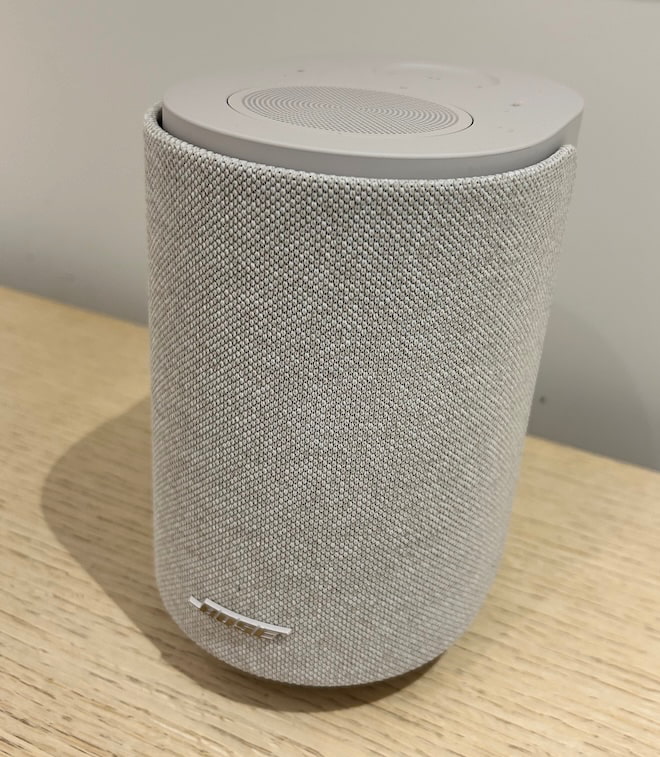
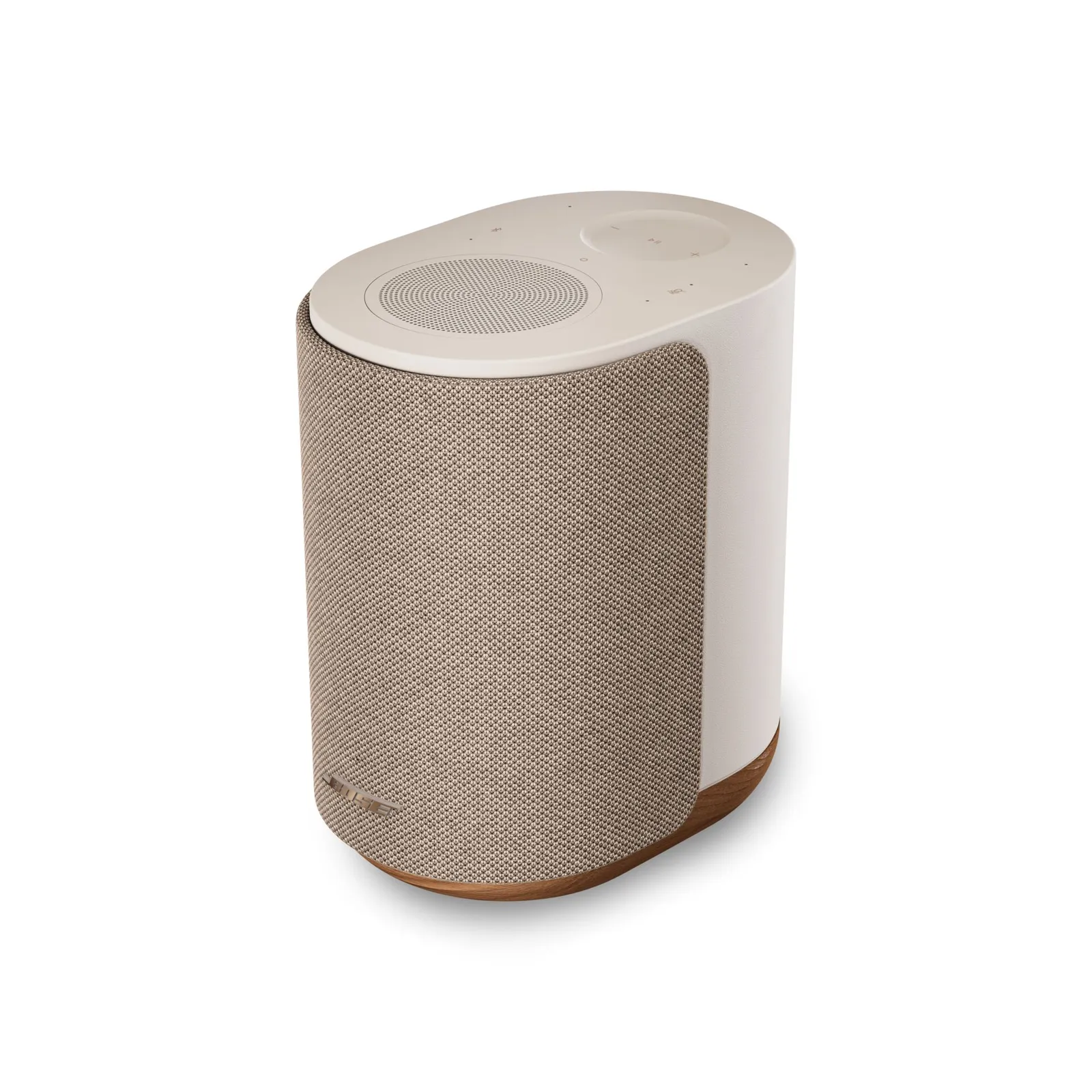
The company wants to rebuild its wireless speaker and soundbar lineup around better sound, broader streaming support, and pricing that does not require a family meeting. The Bose Lifestyle Ultra Wireless Speaker starts at $299 in the standard Black Smoke and White Smoke finishes. Bose is also offering a limited-edition Driftwood Sand version for $349, with a soft beige finish and a solid white oak base that gives it a warmer, more furniture-friendly look. Sonos has had a long run in this category. Bose just walked back into the room with a Boston attitude, sharper pricing, and zero interest in playing nice.
The new Lifestyle Collection is also a reminder that Bose did not appear in home audio last week. The company has been shaping compact, easy-to-use home audio systems for more than 40 years, from the original Lifestyle systems to the Wave radio, which became one of the most recognizable audio products of its era.
Advertisement
That history matters here because the new collection is not trying to win over the cable riser crowd with exposed transformers and a chassis that looks like it was machined for a submarine. It is built around a simpler idea: make better sound at home easier to access, easier to control, and easier to live with, without asking buyers to choose between convenience, design, and performance.
As Raza Haider, president of premium consumer audio at Bose Corporation, put it, “With the Lifestyle Collection, we wanted every detail to serve a singular purpose: making exceptional sound easy to enjoy.”
Bose Lifestyle Ultra Wireless Speaker: Features and Core Technology
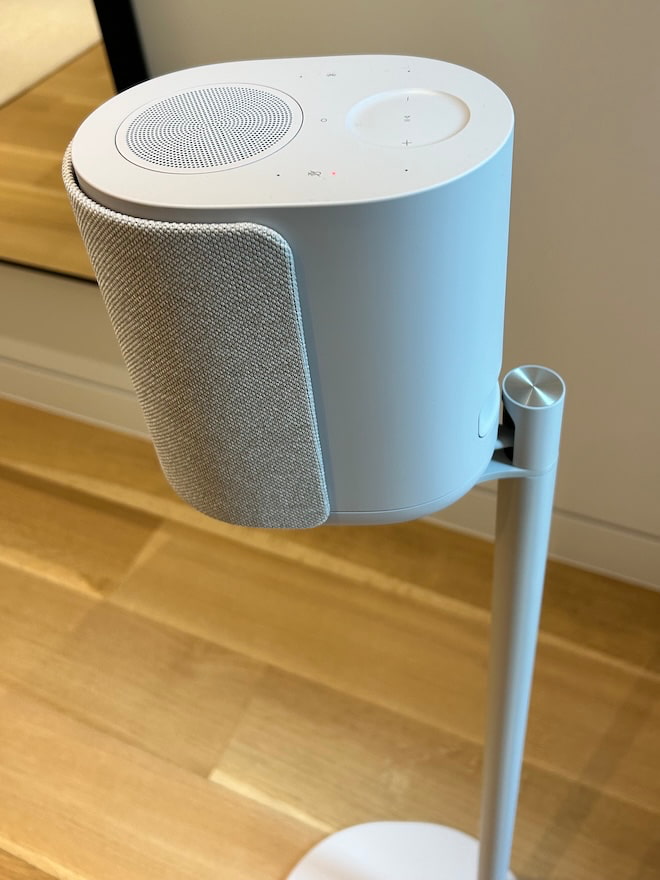
The Bose Lifestyle Ultra Speaker is the most flexible product in the new Lifestyle Collection because it can be used in several different ways without changing the core hardware. A single speaker can work in an office, bedroom, kitchen, or smaller living space for everyday listening. Add a second unit and Bose supports 2.0 stereo pairing. Use two of them with the Lifestyle Ultra Soundbar and Lifestyle Ultra Subwoofer, and they function as rear surround speakers in a larger home theater system. Bose lists supported configurations as 1.0, 2.0, 7.0.4, and 7.1.4, which makes the speaker more than a standalone wireless product. It is the modular piece that helps tie the whole Lifestyle system together.
The hardware is compact, measuring 4.8 inches wide, 7.3 inches high, and 6.6 inches deep, but Bose is using a three-driver array to create a larger presentation than the enclosure suggests. The layout includes two front-facing drivers and one up-firing driver, with Bose’s TrueSpatial audio processing analyzing content and adding height and dimensional depth through that up-firing design.
That matters because the speaker is not relying only on left-right dispersion from a small cabinet. It is using direct sound, reflected sound, and DSP to create a broader soundstage from a single speaker, with the effect becoming more substantial when two are paired in stereo.
Bass performance is handled through Bose CleanBass technology, which combines the speaker’s woofer, advanced digital signal processing, and a proprietary QuietPort acoustic opening designed to reduce distortion in a compact enclosure.
Advertisement. Scroll to continue reading.
That is the important part to understand: Bose is not claiming this replaces a large speaker or a proper subwoofer. The goal is controlled low-frequency output from a small wireless speaker without the bloated, one-note bass that often ruins products in this category.
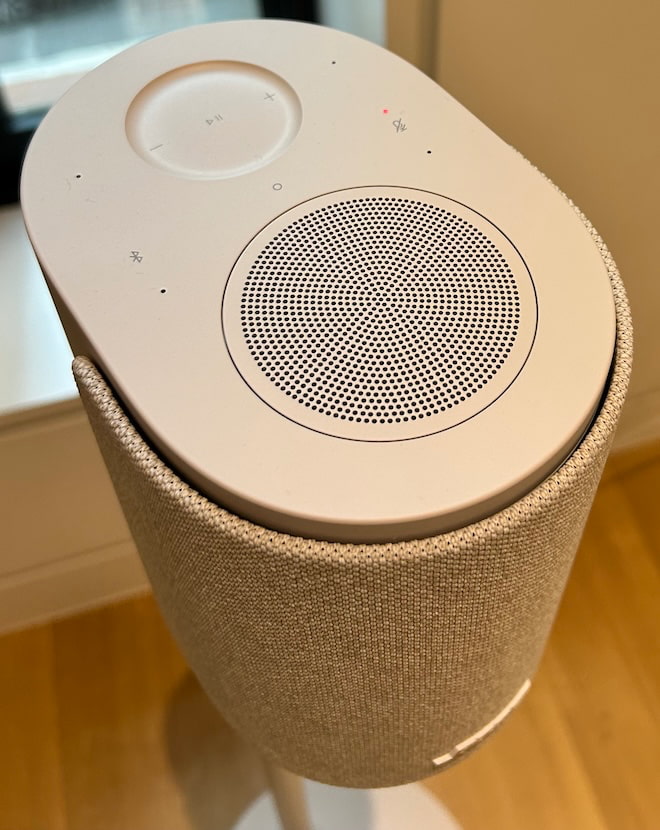
The Lifestyle Ultra Speaker also supports Wi-Fi, Bluetooth 5.3, and 3.5mm AUX, along with Apple AirPlay, Google Cast, and Spotify Connect for multi-room streaming. Setup, stereo pairing, home theater pairing, EQ, controls, and settings are handled through the Bose app, while the speaker’s tactile controls cover playback, track skipping, volume, microphone mute, Bluetooth, and Alexa prompts. The new Lifestyle Collection also supports Alexa and Alexa+ in the U.S., with Alexa+ adding a more advanced AI layer to voice control.
What the Bose app does not do is replace your streaming apps. It is there for setup, system control, EQ, and configuration, not as a full music browsing hub. Apple AirPlay, Google Cast, and Spotify Connect are supported, but TIDAL Connect and Qobuz Connect are not supported at launch, and Bose has not indicated that either one is coming. That matters for listeners who use TIDAL or Qobuz and expect direct app-to-speaker control without using AirPlay or Cast.
Advertisement
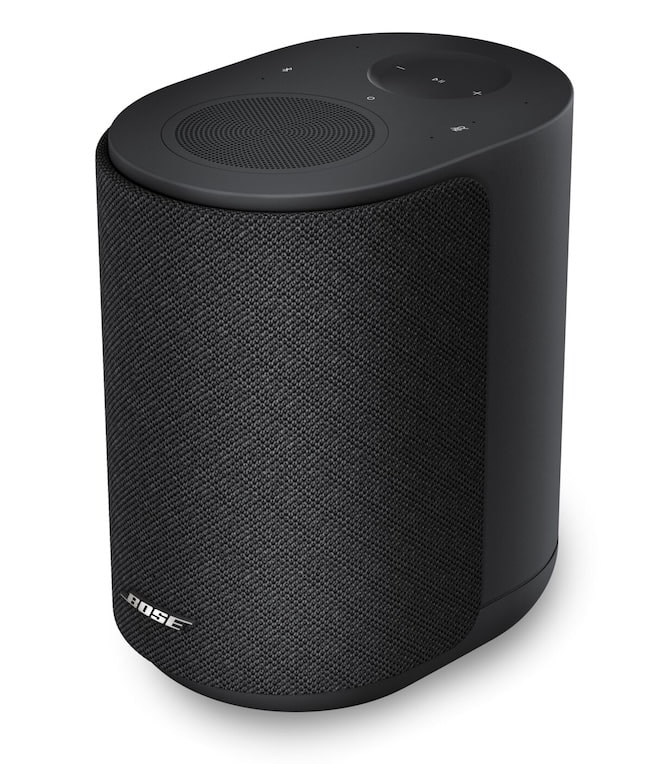
Bose Lifestyle Ultra Wireless Speaker (Black)
Bose Lifestyle Ultra First Impressions: Bose Puts Sonos on Notice
One of the most useful parts of the Bose Lifestyle Ultra demo was the setting itself. Bose did not park one speaker on a table in a quiet showroom and call it a day. The system was installed throughout a large brownstone, which looked far more modest from the outside than it felt once you were inside. The center staircase ran from street level, what the rest of civilization might call a basement but New York real estate law apparently calls ambition, all the way to the top floor. Think John McClane working his way up Nakatomi Plaza, minus the broken glass and Alan Rickman.
Bose placed Lifestyle Ultra Speakers in bedrooms, hallways, dining areas, the kitchen, and a home office to show how the system works in real rooms, not just in a controlled demo space with one perfect chair and suspiciously expensive lighting. The point was practical: different room sizes, different layouts, different placements, and different use cases. Some speakers were used on their own, others were grouped for multi-room listening, and the broader setup showed how the Lifestyle Ultra range can move from casual background music to more focused listening without making the house feel like it had been wired by a panic-stricken installer at 2 a.m.
Because of embargo rules, I can’t go too deep into full sonic impressions yet. That has to wait for the review. But I can say this without needing a lawyer, a priest, or a burner phone: Sonos has a problem. Did Bose hit one over the Green Monster, clear Lansdowne Street, and send somebody scrambling into the parking lot?
For $299, the Lifestyle Ultra Speaker makes a very strong first impression. It sounds larger than its cabinet suggests, throws a surprisingly wide and tall soundstage, and delivers the kind of imaging precision and clarity I was not expecting at this price.
Our in-depth review lands on May 15, alongside reviews of the other two Lifestyle Ultra products. Don’t forget to bring the cannoli. Or the Fluffernutter. Bose came dressed for Boston, but apparently packed like it had business in North Jersey.
“For the first time in the history of the Reporters Without Borders (RSF) World Press Freedom Index, over half of the world’s countries now fall into the “difficult” or “very serious” categories for press freedom. In 25 years, the average score of all 180 countries and territories surveyed in the Index has never been so low.”
The study notes that in 2002, 20% of the global population lived in a country where the state of press freedom was categorized as “good.” A quarter century later, less than 1% of the world’s population lives in a country that falls under this category.
At the same time, journalism layoffs continue to be rampant at the hands of corporate media giants dead set on destroying whatever was left of media consolidation limits, public interest reporting, and even archival and journalistic history. The result is a lazy, ad-driven, badly automated engagement ouroborus where anything serving the public interest is a distant and fleeting consideration.
The better performers in the index include Norway, Finland (where they teach kids media literacy and how to identify propaganda starting at the age of three), Sweden, Denmark, and Estonia. While decidedly smaller with vast differences, such countries have strange perks like functional public media and an operational social safety net not yet hollowed out by grotesque levels of corruption.
From the study:
Advertisement
“In the United States (which ranks 64th out of 180 countries and territories) journalists who were already fighting against economic headwinds and dealing with a crisis of public trust—among other challenges—now also contend with President Donald Trump’s systematic weaponisation of state institutions, including funding cuts to public broadcasters such as NPR and PBS, political interference in media ownership, and politically motivated investigations targeting disfavoured journalists and media outlets.”
It can, of course, always get worse. Autocracies start by consolidating media and turning established outlets in to autocratic agitprop bullhorns, but ultimately move on to dominating or destroying whatever’s left of independent journalism through legal harassment and ultimately murder.
There are paths out from under this, but it requires a lot of coordinated efforts the U.S. has historically had an allergy to. Including restoring antitrust reform and imposing not just consolidation limits but diversity ownership requirements. It would also help to drive creative new funding models for journalism, dramatically reshape media literacy policy, and aggressively support real publicly-funded media freed from corporate influence, historically a close ally to maintaining a functioning democracy.
The Federal Trade Commission (FTC) will ban data broker Kochava and its subsidiary Collective Data Solutions (CDS) from selling location data without consumers’ explicit consent to settle charges brought nearly four years ago.
The FTC sued Idaho-based Kochava in August 2022, alleging it collected and sold precise geolocation data from hundreds of millions of mobile devices. This information allowed Kochava’s clients to track the mobile users’ movements to and from sensitive locations, including mental health and addiction recovery facilities, reproductive health clinics, places of worship, and shelters for the homeless and domestic violence survivors.
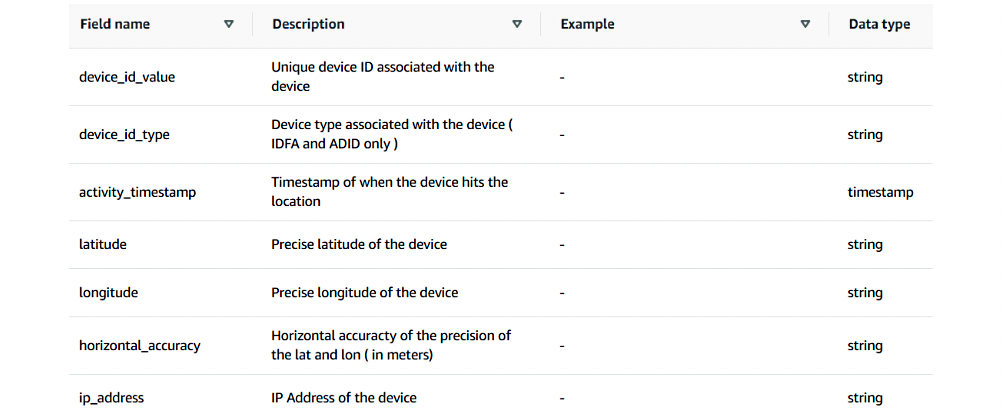
According to the complaint, the company provided clients who paid a $25,000 subscription fee with access to this data through a user-friendly data feed via the Amazon Web Services (AWS) Marketplace, claiming it delivered “rich geo data spanning billions of devices worldwide.”
Kochava also claimed that its location data feed “delivers raw latitude/longitude data with volumes around 94B+ geo transactions per month, 125 million monthly active users, and 35 million daily active users, on average observing more than 90 daily transactions per device.”
Advertisement
The Commission said at the time that the affected consumers were unaware of and had not consented to the data sharing, leaving them with no means to avoid resulting harms, including stalking, discrimination, and physical violence.
Kochava also sued the FTC for overreaching and said (one day before filing the complaint against the U.S. consumer watchdog) that it would introduce “Privacy Block”, a “privacy-first approach to block health services locations from the Kochava Collective marketplace” to address the privacy issues pointed out by the FTC.
Location data sold by Kochava (FTC)
Under the proposed order filed in the U.S. District Court for the District of Idaho, Kochava and its subsidiary (which has since taken over Kochava’s data broker business) will be prohibited from selling, licensing, transferring, or disclosing precise location data unless they have affirmative express consent, and the data is used to provide a service that the consumers directly requested.
Beyond the sales prohibition, the companies must also establish a sensitive location data program, implement a supplier assessment program to verify consumer consent, allow consumers to request disclosure of who received their data and withdraw consent, submit incident reports to the FTC when third parties misuse location data, and create a data retention and deletion schedule.
This proposed order will carry the force of law upon approval by the District Court judge.
Advertisement
The FTC also announced in August 2022 that it was exploring new rules to crack down on businesses engaged in mass commercial surveillance, in which consumers’ information is collected, analyzed, and monetized. One month earlier, the Commission warned that it would enforce the law if companies illegally shared or used consumers’ sensitive information.
AI chained four zero-days into one exploit that bypassed both renderer and OS sandboxes. A wave of new exploits is coming.
At the Autonomous Validation Summit (May 12 & 14), see how autonomous, context-rich validation finds what’s exploitable, proves controls hold, and closes the remediation loop.
An anonymous reader quotes a report from Ars Technica, written by Andrew Cunningham: As its name implies, the venerable Notepad++ text editor began as a more capable version of the classic Windows Notepad, with features such as line numbering and syntax highlighting. It was created in 2003 by Don Ho, who continues to be its primary author and maintainer, and it has been a Windows-exclusive app throughout its existence (older Notepad++ versions support OSes as old as Windows 95; the current version officially supports everything going back to Windows 7). I’m not a devoted user of the app, but I was aware of its history, which is why I was surprised to see news of a “Notepad++ for Mac” port making the rounds last week, as though it were a port of the original available from the Notepad++ website.
Apparently, this news surprised Ho as well, who claims that the Mac version and its author, Andrey Letov, are “using the Notepad++ trademark (the name) without permission.” “This is misleading, inappropriate, and frankly disrespectful to both the project and its users,” Ho wrote. “It has already fooled people — including tech media — into believing this is an official release. To be crystal clear: Notepad++ has never released a macOS version. Anyone claiming otherwise is simply riding on the Notepad++ name.” Ho repeatedly asked the developer to stop using the brand and eventually reported the trademark use to Cloudflare, the CDN of the Notepad++ for Mac site. “Every day that website remains active, you are in further violation of the law,” Ho wrote. “I cannot authorize a ‘week or two’ of continued trademark infringement.”
Letov has since begun rebranding the app as “NextPad++,” though the old branding and URL reportedly remained available. The name changes is “an homage to NeXT Computer,” notes Ars, “and uses a frog icon rather than the Notepad++ lizard.”
If you’re a frequent flyer, going through airport security checks can feel like a mind-numbing chore standing between you and your destination. You almost go through it on autopilot, letting the airport powers-that-be handle it all. Somewhere in that fugue state, you may forget the very real possibility of making it past every checkpoint minus a phone. And yet, it’s a very real possibility.
In fact, according to the TSA, somewhere between 90,000 and 100,000 items get left behind at security checkpoints on a monthly basis. Obviously, not all of those are phones, but plenty are. Now, TSA’s electronics rules do cover what’s allowed in checked bags versus carry-ons, but those guidelines don’t really help once a device is sitting unattended in a tray.
Travel + Leisure spoke to one flyer who learned about airport theft the hard way. She was sprinting between gates to catch a connecting flight when she dropped her phone in a bin and kept moving without it. The realization only hit her once the plane started to take off. She pinged the airport from her laptop while still airborne but no reply came back. Eventually, the airport admitted it had never turned up.
Advertisement
Forgetfulness isn’t the way you can turn phoneless, though. A viral TikTok from a flier, picked up by the New York Post, has a TSA agent telling her that placing your phone bare in the bin is “the fastest way to get it stolen.” Phones, she relayed, are what agents see vanishing the most.
Advertisement
How to keep your phone safe at the airport
Chalabala/Getty Images
The most basic way to keep your phone safe is rather unglamorous. Just tuck it into a zipped pocket inside your bag before the bag goes anywhere near the scanner belt. That way, anyone with sticky fingers has to fumble through a zipper while standing next to a bunch of TSA agents, which cuts the appeal.
For travelers who have TSA PreCheck (typically US citizens), things get easier. Small electronics can stay inside carry-on bags during screening, which means there’s no reason to leave a phone in a tray to begin with. Unfortunately, this doesn’t apply to most regular passengers, since some TSA checkpoints make you remove your laptop and other bulky devices regardless.
The Travel + Leisure report also features another flyer who once had her camera lifted at an Indonesian security checkpoint. She now sticks to a deliberate loading order. She starts off with her first bin for whatever she cares about least, often just a jacket or a scarf. Then comes the carry-on. Electronics and anything actually worth stealing get loaded last of all.
And if a bag is pulled aside for extra screening, experts suggest asking the agents to gather your other belongings so you can keep them at the inspection table. If a device does still vanish, notify the nearest TSA officer.
If you can’t track it down immediately, the TSA holds recovered items for at least 30 days and lets you file a claim through its website. Try to be quick with that, though, as anything not picked up within that holding period gets its memory wiped or destroyed outright to keep personal data from leaking. After submission, an acknowledgement letter with a control number tends to land roughly four to six weeks later.
Zyg, the agentic e-commerce platform built by five IronSource co-founders, raised $60 million at a $500 million valuation led by Accel, just two months after emerging from stealth with a $58 million seed round. The company automates advertising, retention, support, and inventory forecasting for DTC sellers using AI agents that operate autonomously on platforms like Meta. The structural irony is that the team that built IronSource’s ad tech infrastructure for human media buyers is now building agents designed to replace them.
The founders of IronSource spent a decade building tools that helped mobile app developers monetise their products through advertising. They sold that company to Unity for $4.4 billion in 2022, watched Unity dismantle the ad network they had built, left in 2024, and have now returned with a company whose premise is that the entire category of work IronSource supported, the human management of digital advertising campaigns, can be automated by AI agents. Zyg, their new startup, raised $60 million at a $500 million valuation on Tuesday, led by Accel, with participation from Bessemer Venture Partners and Lightspeed Venture Partners. The company came out of stealth two months ago with a $58 million seed round. In eight weeks it has raised $118 million at a half-billion-dollar valuation without a single public customer case study. The bet is not that AI can assist e-commerce advertising. The bet is that AI agents can replace the people who run it.
Advertisement
The thesis
Zyg describes itself as an agentic operating system for e-commerce scale. The platform automates business functions that direct-to-consumer sellers currently manage through a combination of human operators, fragmented software tools, and advertising agencies: campaign creation and optimisation on Meta and other platforms, customer retention, support, and inventory forecasting. Chief Executive Officer Omer Kaplan told Bloomberg that Zyg’s agents are already running advertising campaigns on Meta’s platforms and are “doing the vast majority of the activity themselves.” The company’s customer base includes businesses with between $2 million and $15 million in annual revenue, the segment of the e-commerce market large enough to need sophisticated advertising but too small to afford the teams that run it.
The irony is structural. IronSource built the infrastructure that app developers used to acquire users and monetise through advertising. The company’s success depended on the existence of a large class of professionals, media buyers, growth managers, and performance marketers, who spent their days optimising campaigns inside platforms like Meta, Google, and the ad networks IronSource itself operated. Zyg’s premise is that those professionals are now a cost centre that AI agents can eliminate. The same team that built the tools human ad buyers used is now building the agents designed to make those humans unnecessary. It is not a pivot. It is a succession.
The market
The 💜 of EU tech
The latest rumblings from the EU tech scene, a story from our wise ol’ founder Boris, and some questionable AI art. It’s free, every week, in your inbox. Sign up now!
Advertisement
Zyg is entering a category that barely existed twelve months ago and is now attracting hundreds of millions in capital. Hightouch raised $150 million at a $2.75 billion valuation last week to build an agentic marketing platform for enterprises, with Goldman Sachs and Bain Capital leading the round. Shopify has launched Agentic Storefronts that let merchants sell products inside ChatGPT, Perplexity, and Microsoft Copilot. Meta itself is moving toward fully automated advertising, where an advertiser inputs a business URL and Meta’s AI handles creative generation, audience targeting, budget allocation, and performance optimisation without human intervention. AI marketplaces are reshaping how advertising is created and distributed, collapsing the distance between an advertiser’s intent and a campaign’s execution to something approaching zero.
The competitive landscape suggests that Zyg’s timing is right but its window is narrow. When Meta completes its own automation of the advertising workflow, the question becomes what value a third-party platform adds on top of a system that already runs itself. Zyg’s answer is that Meta optimises for Meta. A direct-to-consumer brand needs agents that optimise across advertising, retention, support, and inventory simultaneously, making decisions that account for the full business rather than a single channel’s performance metrics. That cross-functional integration is what separates an agentic operating system from an automated ad tool, and it is what justifies the ambition of the valuation.
The speed
A $500 million valuation two months after stealth is not normal, even in 2026’s funding environment. But the velocity reflects a specific dynamic in AI venture capital: repeat founders with a demonstrated exit command valuations that bear no relationship to current revenue. VAST Data raised $1 billion at a $30 billion valuation as AI infrastructure demand accelerated, and the broader funding environment saw $297 billion flow into startups in Q1 2026 alone, with AI capturing 80 per cent of the total. In this market, a team that built and sold a company for $4.4 billion, that understands advertising infrastructure at a technical level, and that is applying that understanding to the single largest category of AI agent deployment, is exactly the profile that commands pre-revenue valuations at scale.
Accel, which led the round, raised a $5 billion fund in April specifically to back AI companies. The firm’s investment in Zyg is consistent with its thesis that the returns from AI will come not from foundational model companies but from vertical platforms that deploy agents in specific industries. Google is turning Chrome into an agentic workplace tool with autonomous browsing capabilities, and every major platform is building agent infrastructure. The venture bet on Zyg is that e-commerce advertising is a vertical where domain expertise, the IronSource team’s specific understanding of how campaigns work, provides an advantage that general-purpose agent platforms cannot replicate.
Advertisement
The talent
Zyg was founded by five of the original IronSource founders: Tomer Bar-Zeev as chairman, Omer Kaplan as CEO, Assaf Ben Ami as CFO and COO, alongside Nadav Ashkenazy and Daniel Shinar. The team also includes cybersecurity and AI specialists from Unit 81, the Israeli military’s elite technology unit. The funding will be primarily used to hire AI talent in Israel, a market where the competition for researchers and engineers has intensified as global companies and domestic startups chase the same pool of specialists. Meta’s raid of the Thinking Machines Lab founders, reportedly including a $1.5 billion engineer, illustrates the premium the industry places on concentrated AI talent. Israeli startups raised $15.6 billion in 2025, with AI-focused companies commanding the majority of capital, and the talent war is the primary constraint on how fast companies like Zyg can build.
The Unit 81 connection is relevant beyond credentials. Building agents that autonomously manage advertising campaigns, handle customer data, and make inventory decisions requires the kind of security architecture that military intelligence backgrounds produce. An agent that runs ad campaigns is also an agent with access to business-critical systems, customer information, and financial data. The governance challenge, how to let an agent operate autonomously while preventing it from making catastrophic errors, is as much a security problem as an AI problem, and Zyg’s founding team is constructed to address both.
The question
Agentic AI is entering specific verticals from construction to logistics to legal services, and in each category the same question applies: does the agent platform become the new operating layer for the industry, or does the incumbent platform absorb the agent functionality into its own product? In e-commerce advertising, the incumbents are Meta, Google, Amazon, and Shopify, each of which is building AI automation directly into its platform. Meta’s Advantage+ suite already handles creative generation and targeting for 8 million advertisers. Google’s Performance Max automates campaign creation across all Google surfaces. Shopify’s AI agents manage everything from SEO to email to ad buying.
Zyg’s wager is that the multi-platform problem is unsolvable from inside any single platform. A DTC brand selling on Shopify, advertising on Meta and Google, retaining customers through email and SMS, and forecasting inventory across seasonal demand curves needs an agent that understands the business as a system, not a collection of channels. That is the same insight that made IronSource valuable: app developers needed a monetisation layer that worked across ad networks, not inside any single one. The founders are running the same play, one abstraction layer higher. The difference is that the previous abstraction layer helped humans manage complexity. This one is designed to eliminate the need for the humans entirely. Whether that works at the scale of the DTC market, for the thousands of mid-sized brands that cannot afford engineering teams but generate enough revenue to justify AI-powered operations, will determine whether Zyg’s $500 million valuation was prescient or premature. The founders have two months of post-stealth existence and $118 million in capital to find out.
Once you peel back the hype and mysticism, large language models (LLMs) are a fascinating application of statistical models, effectively what you get when you dial a basic auto-complete model up to eleven. In order to analyze a mind-boggling amount of text and produce meaningful auto-completion results quite a bit of math is involved, with a recent three-part article series by [Giles] going through the basics of inference, being the prediction step using a trained model.
The text is encoded in the LLM’s vector space as token IDs, each token being a text fragment that has some probability of following another ID, such as when cats may be found on desks, as in the above photo by [Giles]. With inference multiple of such IDs are retrieved in a vector from which in successive steps a sentence can be pieced together. These so-called logits are detailed in the first article in the series, with the second article focusing on vocabulary space and embedding, as well as the matrix operations used for inference.
Finally, the third article puts all of this together and looks at transformers, which is a crucial part of GPT (generative pretrained transformer) LLM architecture. Of note is the attention mechanism, which takes GPTs beyond merely being glorified auto-complete systems by adding pattern matching. Here we can see how the statistical model of the LLM is used to generate a rather plausible output, which is where the human has to ask themselves in how far they feel that it is correct.
Advertisement
Of course, there goes a lot more into making LLMs and GPTs performant, such as key-value caches that massively speed up inference.
Last year, Coinbase Europe was fined nearly €21.5m for failing to monitor transactions.
Coinbase is making 14pc of its workforce redundant to cut cost and adopt AI. According to recent company filings, the layoffs will affect around 700 employees.
The company employs around 150 in Ireland; however, it is unclear how many of them would be affected in this move. Coinbase did not provide SiliconRepublic.com with details when queried.
Restructuring expenses are expected to cost up to $60m. Company shares were up nearly 4pc in pre-market trading at the time of publication.
Advertisement
In a post on X, Coinbase co-founder and CEO Brian Armstrong said that the company is “volatile from quarter to quarter”.
“While we’ve managed through that cyclicality many times before and come out stronger on the other side, we’re currently in a down market and need to adjust our cost structure now so that we emerge from this period leaner, faster and more efficient for our next phase of growth.”
AI is “changing how we work”, Armstrong said. The workforce adjustments are expected to make the company “lean, fast, and AI-native”, he added.
A joint report recently published by Ireland’s Economic and Social Research Institute and the Department of Finance has found that AI adoption in here is likely to lead to job losses, leading to increases in income inequality in the “short to medium term”.
“The biggest risk now is not taking action,” Armstrong continued in his post, calling this an “inflection point, not just for Coinbase, but for every company”.
With a smaller workforce, Coinbase plans to “[concentrate] around AI-native talent” who can manage fleets of AI agents. The company is also introducing “one-person teams” who can manage engineering, design and product management.
Bose has unveiled its Lifestyle Collection of audio products, which include a new soundbar, smart speaker and subwoofer that now use Google Cast or Apple AirPlay instead of a proprietary app.
The range includes the Bose Lifestyle Ultra Speaker ($299), the Bose Lifestyle Ultra Soundbar ($1,099) and the “most powerful” Bose Lifestyle Ultra Subwoofer ($899) and are available to preorder now.
The range is not backward compatible with the company’s existing systems, though Bose says you can connect the company’s subs (or any other sub you choose) to the Sub Out port.
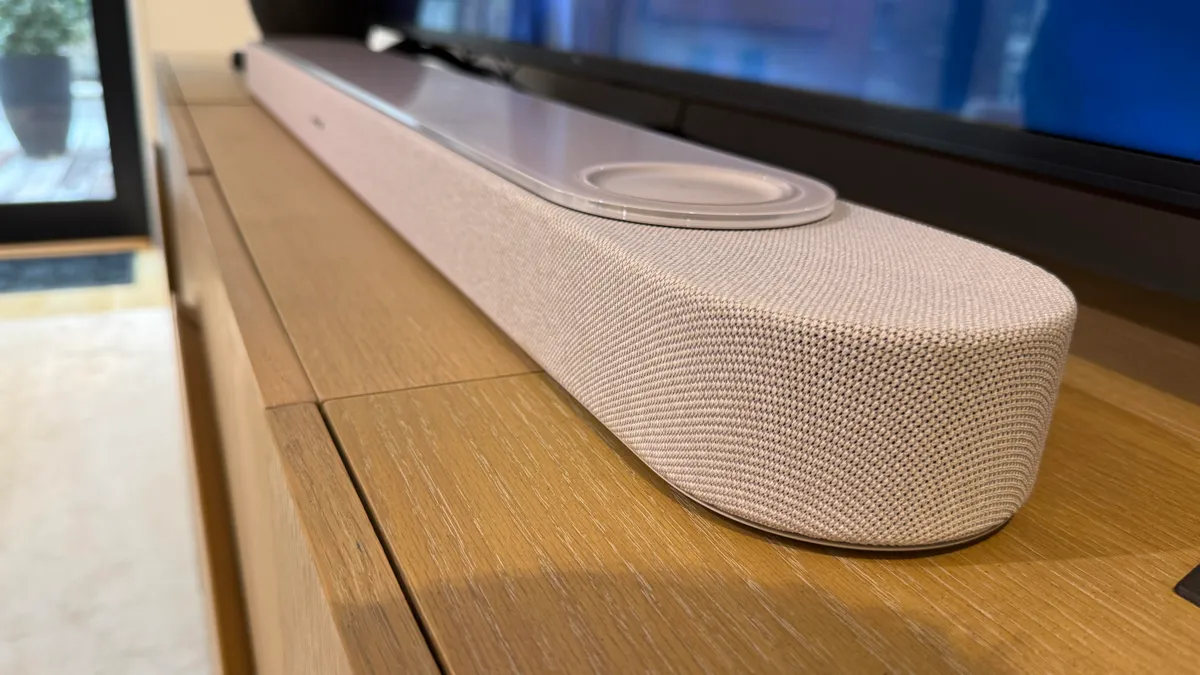
The Lifestyle Ultra Soundbar, which replaces the existing Smart Ultra Soundbar, features Dolby Atmos compatibility as well as the Alexa Plus virtual assistant. The speaker features two of the company’s proprietary PhaseGuides to fire sound out of the unit, in addition to six full-range drivers, two up-firing and four front-facing and a center tweeter. It features a glass-and-fabric look reminiscent of the previous soundbar.
The $299 Bose Lifestyle Ultra Speaker is available in a choice of colors.
Advertisement
Ty Pendlebury/CNET
The “smart” Lifestyle Ultra speaker is a single-channel speaker with a height driver that uses the company’s “direct reflecting” technology to add presence, though it’s not an Atmos height channel on its own. If you use the Ultra as a rear speaker, though, the height driver will act as an Atmos channel. The Ultra includes a 3.5mm input so users can connect a source component like a turntable to it. If you have two Ultras, you can pair them as a stereo system.
Unlike previous Bose systems, the Bose Lifestyle system doesn’t have a proprietary control app, and the company expects users to use either Apple AirPlay, Spotify Connect or Google Cast to manage speakers. The advantage is that you can now group non-Bose speakers, as well as not needing to control their music with a megalithic Sonos-style app. The Bose app is now used for setup only, while also replacing the clunky wired headset to calibrate the system with your phone’s onboard microphone.
Why would Bose ditch a music control app? Look to its competitor Sonos. Two years ago, Sonos owners complained of multiple issues with its all-in-one app — after the introduction of the Ace headphones — and this ultimately led to the departure of its longtime CEO, Patrick Spence. While Sonos and Bose helped invent the multiroom speaker systems we know today, the world has moved on from a single app that controls everything, and most people just use the streaming app they’re most comfortable with.
Advertisement
David Carnoy/CNET
Ears on
I heard the three speakers playing music and with home theater content, and while Bose says the soundbar has the best bass the company has produced, it didn’t compare to my memories of the Sonos Arc Ultra — a speaker you can use without a subwoofer. Based on the demos I heard, the sub added much-needed bass to movies.
Bose’s Ultra speaker was fine, but I found the height effect subtle and would depend on your room’s layout. The Ultra didn’t have the punchiness I’ve heard in the (cheaper) Sonos Era 100, but I look forward to hearing it against its competition.
Sound quality aside, I think the lack of interoperability with existing Bose speakers will be of most concern to potential buyers. We shall see.
If you’ve ever been pregnant (or know someone who has), you know that sleep gets harder as the pregnancy progresses. One minute you’re freezing, the next you’re waking up to night sweats. Most likely, your sleep environment hasn’t changed, but your body has.
Eight Sleep, the company behind the Pod smart mattress cover and sleep tracker, just launched Pregnancy Mode, an AI-powered system built for the physiological changes brought on from pregnancy and postpartum. It’s available now as a free app update for all Eight Sleep members with a paid Standard, Enhanced or Elite subscription ($17 to $33 per month).
When you activate Pregnancy Mode within the app, the system uses your pre-pregnancy temperature baseline, your last menstrual period date and your estimated due date to automatically calculate weekly temperature adjustments across all sleep stages.
Advertisement
Eight Sleep
Eight Sleep’s dataset of over 100 pregnant members and 50,000 nights of sleep data found that in the early stages of pregnancy, your body tends to sleep warmer (about 0.4 to 0.7 degrees Fahrenheit) than your pre-pregnancy baseline temperature. The study also found that by the third trimester, it’s the complete opposite — pregnant people were setting their Pods nearly 3.5 degrees cooler than normal. Pregnancy Mode also tracks that curve and continues to adjust eight weeks postpartum.
The feature includes a dedicated Pregnancy Insights card in the app, where you can see weekly biometric summaries of your heart rate, heart rate variability, respiratory rate, sleep stages and snoring. It’ll also compare these metrics to your pre-pregnancy scores.
Baby development milestones and prenatal visit reminders are part of this new feature, too. Partners sharing the bed will get their own weekly insights on what to expect and how to help their pregnant significant other.
Pregnancy Mode is now available in the Eight Sleep app on iOS and Android.
Bose has three new speakers to spice up your home listening. The company’s new “Lifestyle Collection”—designed with a snazzy fabric-wrapped grille and gentle curves—includes the Lifestyle Ultra Speaker, Lifestyle Ultra Subwoofer, and Lifestyle Ultra Soundbar. All of them can be connected to multiple units and third-party speakers via AirPlay and Google Cast for a better multi-room audio experience.
These audio products mark a “reentering” into the home speaker space for the company, bringing back the iconic Lifestyle lineup that originally debuted in 1990—known for simplicity and ease of use—which Bose subsequently discontinued in 2022.
To no surprise, Bose says the Ultra Soundbar is the “best soundbar we have ever made,” and that the Ultra Speaker might even be one of the company’s best in its storied history. The wireless speaker starts at $299, with a $349 limited-edition model in Driftwood Sand; the soundbar costs $1,099, and the subwoofer is $899. They’re available for preorder now and go on sale May 15.
Bose Luxury Ultra Speaker in Driftwood Sand.
Advertisement
Courtesy of Bose
These Wi-Fi-enabled speakers support AirPlay, Google Cast, Spotify Connect, and, uniquely, are the first to integrate with Alexa+ (in the US only), allowing you to ask Amazon’s chatbot to play music through the speakers via voice commands. There’s also Bluetooth support, and even an auxiliary input for connecting the Ultra Speaker to a turntable.
You can group two Lifestyle Ultra Speakers into a stereo system in the Bose app, or group them all together for a home theater system. Sadly, if you hoped to use it as a surround system with your existing Bose soundbar, the company says it’s only backward compatible with the Bass Module 700. And with the new Lifestyle Ultra Soundbar, it can only be used as a wired connection. For multi-room audio, the company has passed those grouping duties to the Google Home app for Google Cast technology, or Apple’s AirPlay for iOS users. Speaking of the app, there’s a redesigned onboarding process that purportedly makes setting up all of these speakers a breeze.
On the audio front, the Ultra Speaker notably features an upward-firing driver for Dolby Atmos–like spatial audio, along with two front-facing drivers. (It doesn’t seem to support Dolby Atmos Music at this time.) The company is also touting its CleanBass technology, which pairs Bose’s QuietPort acoustic opening with the woofer for deep sound that performs better than its size suggests, though we’ll have to hear it for ourselves to see if it lives up to Bose’s claims.
























































You must be logged in to post a comment Login