Tech
Bose QuietComfort Headphones (2nd Gen) Review: Better ANC, More Comfort, But a Tougher Sell at $359?

The Bose QuietComfort Headphones (2nd Gen) arrive in the middle of an ANC arms race that has been going on for more than a decade. Bose and Sony have spent years battling for noise-cancelling supremacy, and almost every new flagship has pushed ANC performance to new heights. Unfortunately, the same can be said for the price tags.
The original Bose QC1 sold for $299 when it was released. Today, the top-of-the-line QuietComfort Ultra Headphones (2nd Gen) are $449. That buys you a ton of features, excellent sound, and some of the best noise cancellation available, but what if you don’t need all of it? An infrequent traveler may have a hard time spending $449 for a single flight each year, while someone just starting out can buy a lot of ramen with the $150 difference.
So do those buyers settle for a previous-generation flagship at a reduced price, or step down to a current model that still offers the core features they actually need at a more reasonable tariff?
Buying used has always been a mixed bag with electronics. Batteries don’t last forever, warranties are usually short, and the realistic lifespan of many consumer electronics products isn’t substantially longer. The better spend may be a sub-flagship model like the Bose QuietComfort Headphones (2nd Gen).
Some readers will recognize the QuietComfort name as Bose’s flagship line, but that distinction now belongs to the model carrying the Ultra suffix. The QuietComfort without it sits in the middle of Bose’s lineup, retails for $359, and can sometimes be found for less. Watching the Black Friday sales is always a good play this time of year.
The Bose QuietComfort has long occupied that middle ground. It isn’t as flashy or as cutting-edge as its more expensive sibling, but it has traditionally focused on the features most buyers actually use. When Bose introduces new technology in its flagship models, some of it inevitably trickles down a generation or two later.
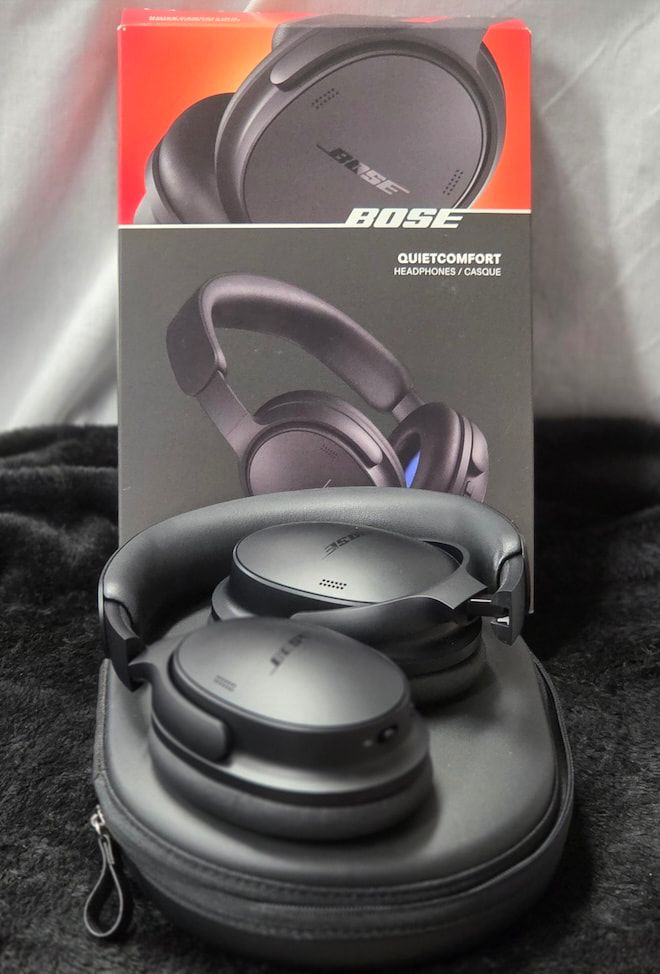
That brings us to the newest QuietComfort Headphones (2nd Gen), which I’ll refer to as the QCgen2 from this point forward. For listeners who want strong ANC, long-term comfort, and the features that matter without paying flagship money, the QCgen2 may represent the best compromise between cost and capability.

Related Reviews:
Build Quality and Fit: Familiar Bose Comfort With Useful Refinements
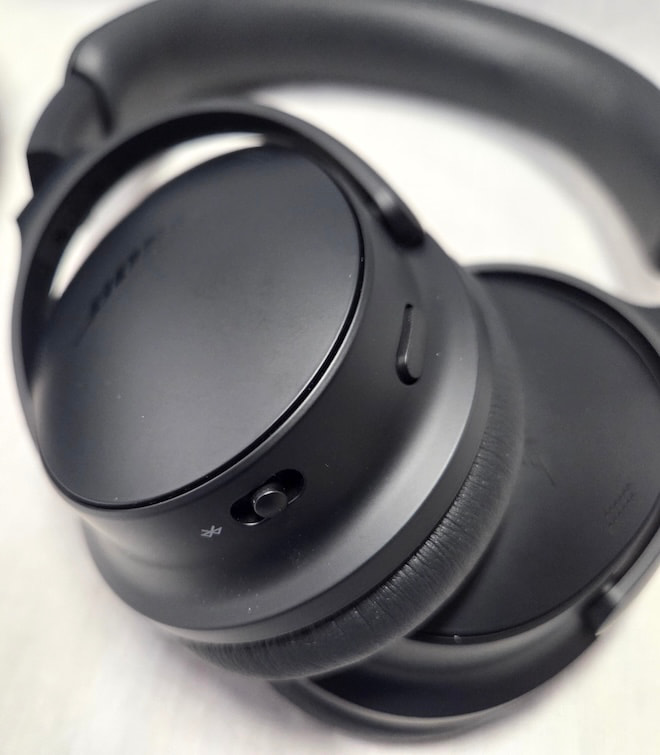
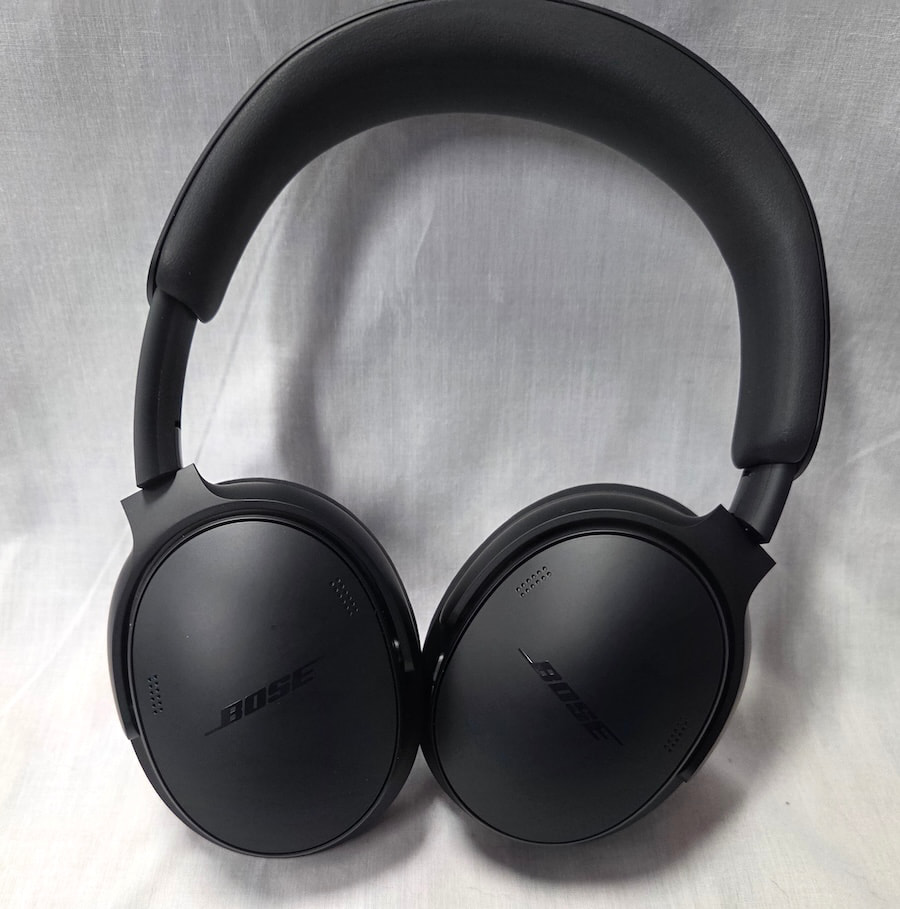
The aesthetic here remains understated, which is either refreshing or disappointing depending on your perspective. Bose has updated the design with treatment similar to what it gave the Ultra. The earcups are more pill-shaped and less rectangular than those of the previous iteration, although the step between the rear of the cup and the face, where the pads attach, is slightly less pronounced than on its sibling. The polymer yoke is wider than the metal version used on the Ultra, but the headband remains the same size as both the previous model and the Ultra.
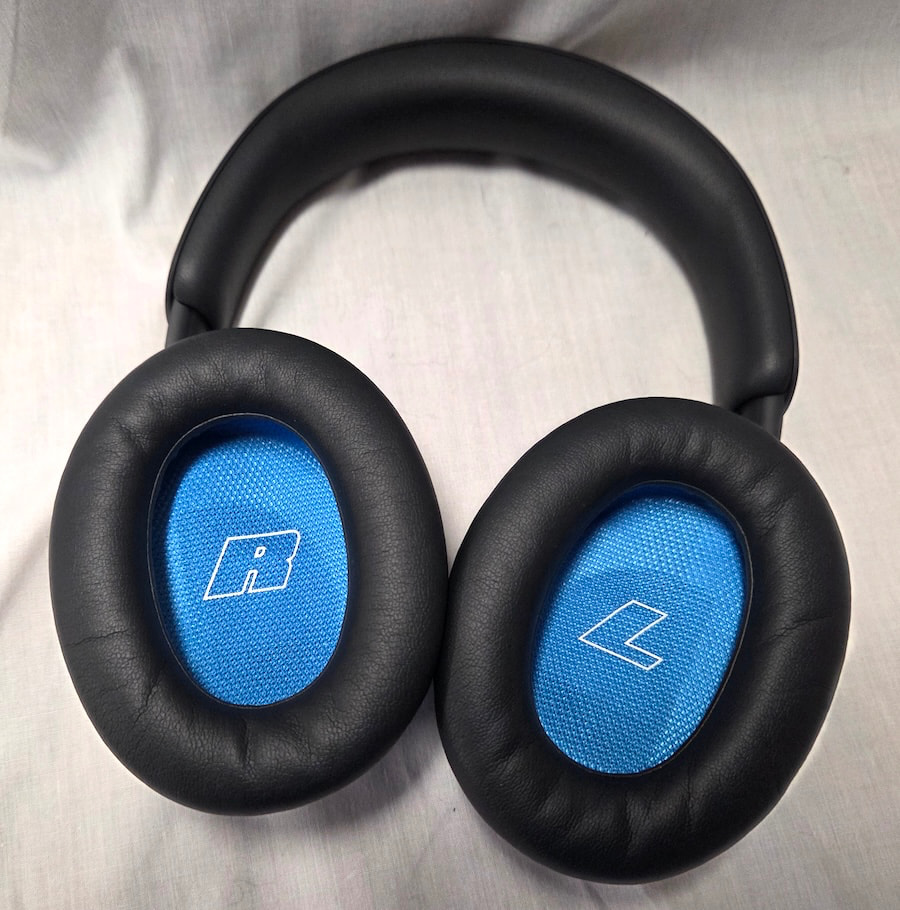

Padding is also shared between the two models, with the headband and ear pads interchangeable between them. Reusing parts where possible helps keep costs down, so it’s no surprise that the line shares as much commonality as it does. One benefit of the greater use of polymer is weight: the QCgen2 comes in at just 230 grams. That puts it firmly in the lightweight class and helps reduce fatigue during longer listening sessions.
Clamping force is moderate for an ANC headphone, with enough pressure to keep the cups firmly in place without feeling like a vise. Overall, I found the QCgen2 comfortable with glasses and easy to wear through an entire movie on a flight or during extended listening sessions.
Color choices used to be limited to black or white, but Bose has expanded the lineup considerably with Eucalyptus Green, Rosewood Mauve, and Dewdrop Mint joining the two original options. I’m not one to use headphones as a vehicle for personal expression, but wearing them as a fashion statement is fairly common now, and Bose has clearly answered the call.
Build quality is solid rather than premium, which is about what one should expect at this level. The materials feel appropriate for the price and should provide reasonable longevity.

Internals and Connectivity: Lossless USB Audio Joins Bluetooth 5.4
Bose remains fairly tight-lipped about the driver details, revealing only that the QCgen2 uses 30mm dynamic drivers with a nominal impedance of 48 ohms. Frequency response and sensitivity are not listed.
Bluetooth is version 5.4 and supports AAC and SBC, but not aptX like its bigger sibling. Bluetooth multipoint is supported, allowing users to switch between a phone and laptop without additional hassle, which is a welcome addition.
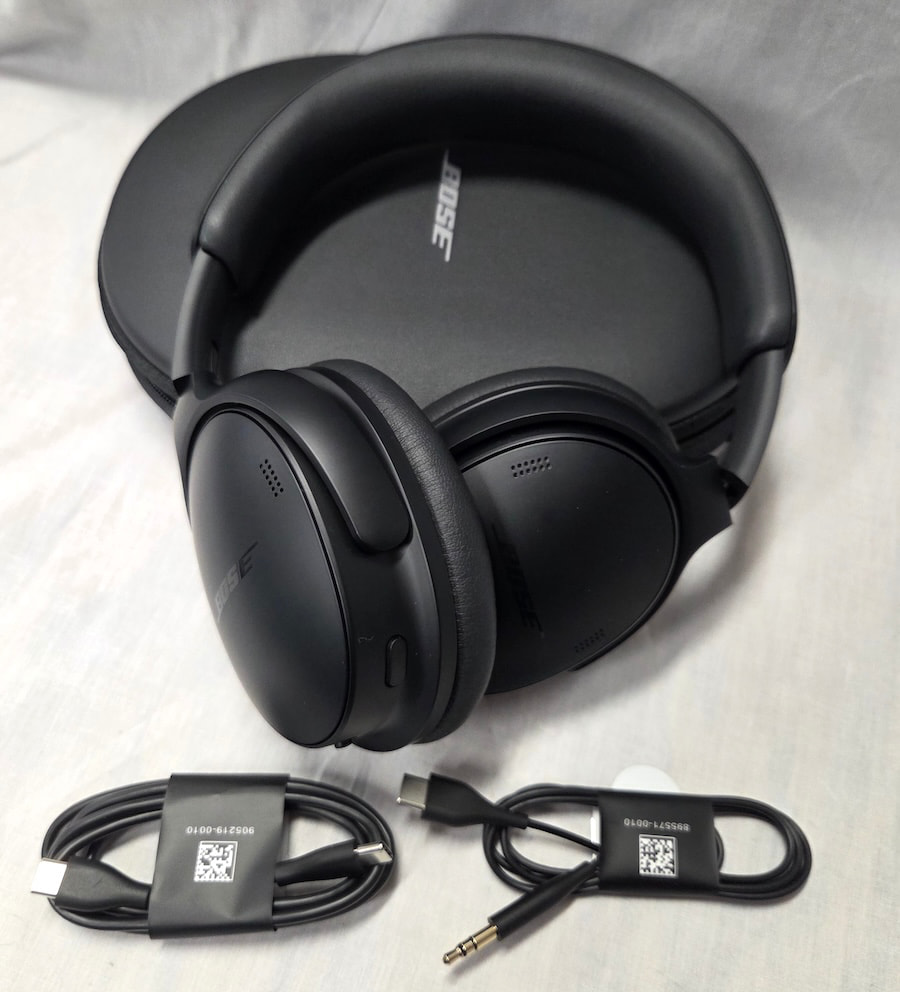
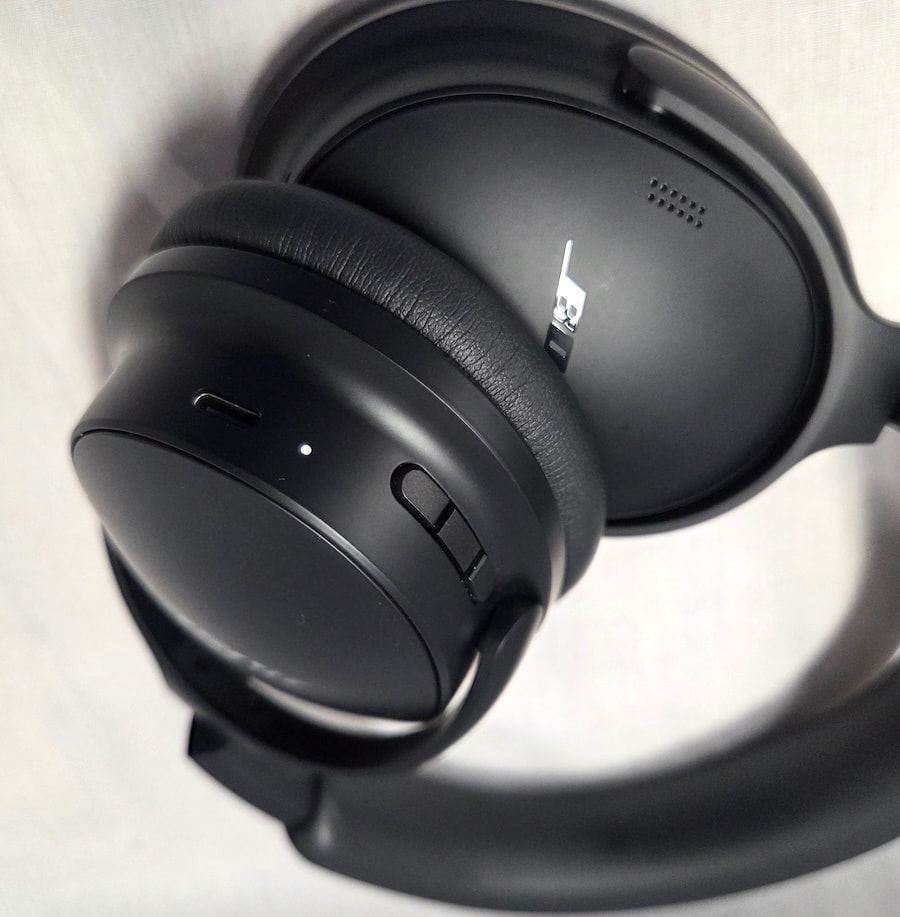
The USB port can now be used for lossless audio playback at up to 24-bit/48kHz, which is another very welcome upgrade. That helps offset the removal of the 3.5mm jack found on the previous model, as the QCgen2 no longer includes an analog connection. USB audio still requires the headphones to be powered on, and a connected phone may take a battery hit if it is also supplying power while you listen.
Battery life is rated at up to 24 hours depending on the mode in use. ANC consumes less power than Immersive Audio, which drops the rated figure to 18 hours. A full charge takes roughly three hours, while a 15-minute quick charge provides about 2.5 hours of playback for those trying to squeeze in some listening during a short layover.

Features: Immersive Audio Arrives, but ANC Is the Bigger Upgrade
The previous section introduced two of the QCgen2’s major additions: USB audio and Immersive Audio with Bose TrueSpace technology. The other significant change is an improvement in ANC performance.
Immersive Audio offers three options: Still Mode, Motion Mode, and Cinema Mode. The technology has been available on previous generations of the Ultra series, but this is the first time it has trickled down to the QuietComfort line. Still Mode anchors the audio in place, while Motion Mode adjusts the presentation as you move. Cinema Mode is designed for movies, TV shows, and podcasts, creating a more spacious presentation while keeping dialogue intelligible.
Still Mode worked fairly well, while Motion Mode sounded more experimental and less refined to my ears. Cinema Mode does help dialogue cut through, which can be useful, but none of the three qualify as a “gotta have it” feature for me. I suspect a fairly large percentage of users will experiment with Immersive Audio for a while and then largely ignore it.
The changes to noise cancellation are more meaningful. Passive isolation hasn’t changed much, so that part is essentially a wash. Bose’s QuietControl ANC system has been improved with six microphones and updated adaptive feedback control, resulting in better noise reduction, particularly with continuous low-frequency sounds such as dishwasher noise and aircraft engines.
Sudden, unexpected sounds are reduced but not eliminated, which is something users should expect from feedback-based ANC systems. Bose has also added ActiveSense, which automatically increases noise cancellation when it detects a sudden rise in environmental noise while the headphones are in Aware Mode. It is a useful addition that helps prevent abrupt changes in the surrounding environment from becoming a distraction.
Overall, the QCgen2’s noise cancellation is on par with the previous-generation Ultra model, which should satisfy all but the most demanding ANC users.
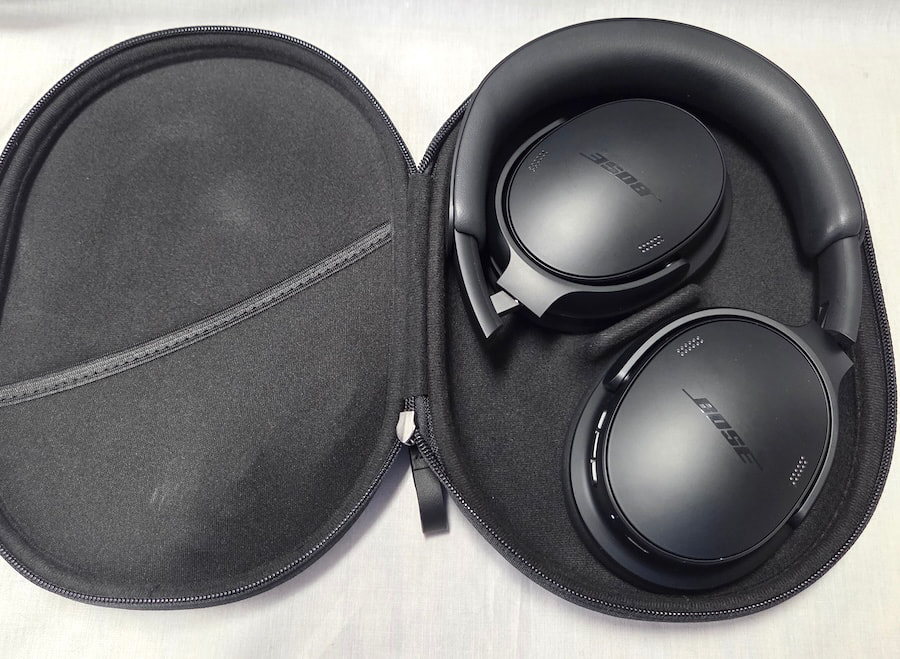

Bose QuietComfort Headphones (2nd Gen) Specifications:
- Drivers: 30mm dynamic
- Impedance: 48 ohms
- Bluetooth: 5.4
- Codecs: AAC, SBC
- Multipoint: Yes
- USB Audio: Up to 24-bit/48kHz lossless
- ANC: Bose QuietControl with 6 microphones
- Immersive Audio: Still, Motion, Cinema
- Battery Life: Up to 24 hours; up to 18 hours with Immersive Audio
- Quick Charge: 15 minutes for up to 2.5 hours
- Full Charge: About 3 hours
- Weight: 230 grams
- 3.5mm Input: No

Listening
The QCgen2 is decidedly not a reference headphone, with a tuning that falls somewhere between an L-shaped and V-shaped signature, along with a healthy amount of mid-bass emphasis. The overall presentation is also highly dependent on which mode and settings are being used.
In its default configuration, the QCgen2 leans heavily toward an L-shaped signature, with a substantial mid-bass lift followed by a relatively flat response above that bump. To my ears, it is an odd tuning choice because vocals tend to sit in the middle or rear of the stage rather than being pushed forward as expected. The soundstage can also feel congested, if not outright cramped, depending on the track.
That might be enough for some listeners to dismiss the QCgen2 were it not for Immersive Audio’s Still Mode. Switching to Still Mode brings the vocals forward and shifts the tuning closer to a V-shaped presentation. The lower leg remains more pronounced than the upper, but the overall balance is considerably better and the presentation sounds more natural and relaxed.
There is also more air and a noticeably larger soundstage in this mode, and to my ears it should be the default. Motion Mode is similar in most respects, so listeners who want to add some head-tracking action get much of the same sonic improvement.
Even with those changes, the upper frequencies remain somewhat subdued, leaving the QCgen2 sounding slightly soft overall. Percussion lacks some of the snap it should have, while transients are slower than what I hear from competing Sony and Sennheiser models. That is clearly the tradeoff for a warmer, bassier presentation, and whether that is a positive will come down to individual preference.
The upside is that very few listeners are likely to find the QCgen2 fatiguing. That makes it a good option for gifting or sharing, as its tuning and various listening modes make it adaptable to a fairly broad range of preferences.
The soundstage is wider than it is deep, with limited overall dimensions and only a modest sense of height, which is hardly uncommon among ANC headphones. Imaging and layering are both acceptable, but the presentation remains somewhat compact because of the limited stage size and can become slightly claustrophobic when tracks get especially busy.
ANC performance is very good, with most continuous droning noises removed almost completely. The ability to adjust the amount of noise cancellation in the Bose app is also useful because increasing ANC has a noticeable effect on the sonic signature. Being able to tailor the level of cancellation to the environment therefore makes a lot of sense.
One weakness is the equalizer in the Bose app, which is fairly limited compared with many competitors. Three bands simply aren’t enough for meaningful tuning, so if neither the default nor Immersive Audio modes match your preferred sound signature, there is only so much you can do to correct it.
It has often been said that Bose makes lifestyle products rather than audiophile ones, and the QCgen2 certainly fits that description. That is not necessarily a criticism. Some competing headphones are more resolving and brighter, but they can also sound harsher and become more fatiguing over longer sessions.
The warmer, more organic presentation of the QCgen2 should appeal to a broad audience, while the expanded range of color options gives Bose another advantage for buyers who care as much about how their headphones look as how they sound.

The Bottom Line
The Bose QuietComfort Headphones (2nd Gen) are a meaningful upgrade over the previous model, with better ANC, improved comfort, USB audio, and Immersive Audio features that have finally trickled down from the Ultra line. Bose has also expanded the color options, which will matter to buyers who increasingly treat headphones as part of the wardrobe rather than something to hide in a carry-on bag.
They are comfortable enough for long sessions, offer solid battery life, and deliver an easygoing, warmer presentation that should work well for a broad range of listeners. The catch is that the default tuning benefits from some adjustment, and Bose’s limited three-band EQ does not give users much room to reshape the sound if it misses the mark.
That makes the $359 asking price the real issue. The QCg en2 is not a cheaper Ultra, and it costs more than several very capable mid-tier competitors. For listeners who value comfort, strong ANC, and Bose’s warmer sonic balance, the premium may be justified. For everyone else, the competition is close enough that $59 can become a surprisingly persuasive reason to keep shopping.
Pros:
- Excellent long-term comfort and lightweight design
- Strong ANC performance approaching the previous Ultra
- Immersive Audio modes noticeably improve the presentation
- USB-C lossless audio up to 24-bit/48kHz
- Warm, non-fatiguing tuning works well for extended listening
- Bluetooth multipoint adds useful everyday flexibility
Cons:
- No 3.5mm analog input
- Three-band EQ is far too limited
- Default tuning is heavily L-shaped and can sound congested
- Soft treble and slower transients reduce perceived detail
- $359 price puts it uncomfortably close to stronger competition
Our Ratings
★★★★★★★★★★ Sound Quality
★★★★★★★★★★ Build Quality
★★★★★★★★★★ Comfort
★★★★★★★★★★ Features
★★★★★★★★★★ ANC
★★★★★★★★★★ Value
You must be logged in to post a comment Login