The startup is carving a niche in the pet food industry by doing good
The global pet food industry has long been dominated by multinational giants like Hill’s and Eukanuba. And for decades, pet owners have been hauling 10-20kg bags of dry kibble from brick-and-mortar stores—lugging them home, dragging them upstairs, and finding space for them in already-cramped kitchens.
It was this exact hassle that sparked an idea for two friends.
Ryan Black, 34, and Chris Lee, 40, were living and working in Hong Kong when they began questioning why buying dog food had to be so cumbersome and whether it could instead be convenient, nutritionally robust, and purpose-driven all at once.
The answer to that became Buddy Bites, a door-to-door philanthropic dog food brand built on a simple promise: for every 2kg of dry kibble sold, 1kg is donated to animal shelters. Since launching in 2020, the company has fulfilled over 150,000 orders and built a growing base of customers—carving out market share from dominant players while feeding shelter dogs one meal at a time.
Advertisement
We spoke with the founders of Buddy Bites to learn more about their business and how they are reshaping the pet food market.
It all started over dinner
Buddy Bites’ founders Chris Lee and Ryan Black are avid dog-lovers./ Image Credit: Buddy Bites
Growing up in the United Kingdom—Ryan in Edinburgh and Chris in Cheshire—the two never crossed paths until years later at a football club, when both were living and working in Hong Kong.
At the time, they were firmly planted in corporate careers. Chris was in financial services recruitment, while Ryan was in real estate finance and had just completed his MBA. But even then, the latter had been toying with the idea of launching a direct-to-consumer brand.
Over dinner one evening, in early 2020, Ryan and his girlfriend (now wife) were at Chris’s apartment when they noticed a 15kg bag of dog food sitting in the corner of the kitchen. Ryan casually remarked that buying dog food in such large bags was cumbersome, and it wasn’t always easy to know exactly what went into them.
The comment was offhand, but it stuck with them. What if they could build a subscription-based pet food brand that not only delivered premium nutrition directly to homes, but also did good—supporting dog shelters along the way? The idea carried extra weight: both founders had adopted rescue dogs themselves and knew firsthand the challenges shelters face.
Advertisement
Six months later, after researching potential partners and developing its proprietary kibble, Buddy Bites was born, bootstrapped by Chris and Ryan.
From day one, the founders’ philosophy was clear: simple online ordering, free delivery across Hong Kong, premium nutritious kibble formulated with veterinarians, and a non-negotiable philanthropic cause: for every 2kg of pet food sold, 1kg would be donated to shelters.
The subscription-based business model was also an obvious choice for Buddy Bites. Pet owners no longer had to worry about running out of food—once they subscribed, deliveries arrived regularly, hassle-free, straight to their door.
“We’re sure all pet owners have encountered at least once in their lives—running out of food with no spares ready to go,” said Ryan. “As the world becomes more focused on convenience, there’s no reason this shouldn’t extend to your dog’s food. The subscription element was a no-brainer.”
Advertisement
A formula that resonated
That year, Buddy Bites launched with just two products: a mixed kibble for puppies and a duck-flavoured option for adult dogs.
Given that the founders had no background in pet nutrition, they brought in vets and nutritionists from across Europe to help formulate their recipes.
Buddy Bites founders with Catherine’s Puppies team./ Image Credit: Buddy Bites
The business began to gain traction when its first shelter partner, Catherine’s Puppies (which is also where Chris and Ryan adopted their rescue dogs), posted about Buddy Bites’ mission on Facebook—highlighting the pledge to donate pet food to shelters.
Within two weeks, they had 70 orders. “That was a real light bulb moment for us,” Chris said. “People were very keen to support shelters through us. We thought we might be onto something.”
In a market increasingly driven by millennials and Gen Z consumers—demographics known to care more about both nutrition and social impact—Buddy Bites hit on a formula that resonated.
Advertisement
The business also listened closely to customer feedback. As such, requests for fish-based kibble and non-poultry options eventually led to salmon and lamb kibble variants being launched. Today, the business’s range of offerings has expanded to four adult flavours, three lines of treats, and two shelf-stable toppers that do not need refrigeration—with more in the pipeline.
Each of Buddy Bites’ products undergoes extensive contaminant testing—screening for Salmonella, E. coli, and aflatoxins—to build trust in a sector where safety scares can devastate young brands, emphasised Chris.
Trust matters even more because the pet food industry is overwhelmingly dominated by large pet food brand players with many sub-brands under them.
Feeding 10 million meals without sinking the business
(Left): Buddy Bites’ adult kibbles include vegetables, fruits and supplements alongside meat; (Right): Buddy Bites’ shelf-stable toppers can be added onto its kibbles for picky eaters or even serve as treats./ Image Credit: Buddy Bites
Despite early growth, the founders continued working full-time jobs and took no salary from Buddy Bites for about a year. By 2022, both had quit their day jobs to focus on the business full-time as demand grew.
After building a strong business in Hong Kong, Chris and Ryan looked south and established a presence in Singapore in 2022.
Advertisement
Today, Buddy Bites donates around 20,000 kg of food each month across the two markets. Since its launch, the company has donated more than 10 million meals to shelters.
But how does the company manage to donate so much while staying afloat? The answer lies in its business model.
Buddy Bites currently donates a third of its total 20,000kg/month donations to Singapore shelters./ Image Credit: Buddy Bites
While most pet food brands rely on long distribution chains, Buddy Bites keeps things lean by delivering primarily straight to customers. Beyond a small retail footprint in Hong Kong and stockists such as Little Farms and Singpet in Singapore, the company’s sales remain largely direct.
Fewer middlemen, according to the founders, mean tighter margins, more pricing control, and room to donate. “We think we can bring a better product to market at a reasonable price point and still have the ability to give back in the process,” Chris said.
Although the price of Buddy Bites’ dog food starts at S$29.60 for 2kg of kibble per month on a subscription (one-time purchases cost about 20 % more), which is pricier than offerings from pet food giants, customers are drawn by the transparency of ingredients, the convenience of doorstep delivery, and the chance to support shelters.
Advertisement
Since launching, the company has fulfilled over 150,000 orders. To fund further expansion, Buddy Bites has completed four fundraising rounds, raising around US$2 million to fuel its growth.
Beyond just providing meals
Currently, Buddy Bites works regularly with 15 shelters in Hong Kong and seven in Singapore, such as SOSD Singapore, Mdm Wong’s Shelter and Just4Paws, amongst other ad hoc donations. As of now, SOSD is Buddy Bite’s largest beneficiary, receiving 1,200kg of dog food every month.
If you told us five years ago that we’d be covering almost all the shelters in Singapore and Hong Kong, we’d be absolutely over the moon. The affinity to donation and animal welfare is clearly driving a decent portion of our growth.
Ryan Black, founder of Buddy Bites
Image Credit: Buddy Bites
For some shelters, the impact is significant and goes beyond feeding mouths.
With food being one of shelters’ biggest recurring expenses, reducing that burden allows funds to be redirected toward medical care and rehabilitation.
In that sense, Buddy Bites is not just a donor. In some cases, it becomes part of a shelter’s operating backbone, Chris emphasised.
Image Credit: Buddy Bites
The relationship between Buddy Bites and animal shelters is mutually rewarding.
In return for food donations, shelters often share Buddy Bites’ mission on social media, helping raise awareness of the brand. At the same time, shelters receive a steady supply of food, allowing dogs to maintain a consistent diet—something crucial to their health and well-being.
The philanthropic loop also doubles as a customer acquisition engine.
Advertisement
To further raise its profile on top of donations, Buddy Bites also regularly hosts pop-ups at events such as Barkfest and Pet Expo in 2025, as well as adoption and fundraising drives for shelters in Singapore and Hong Kong.
Last year, the business also partnered with Far East to launch a semi-permanent mini dog park at One Holland Village in 2025, which will remain open until the end of 2026. Hosting events at the park has helped grow Buddy Bites’ visibility in Singapore, while strengthening the brand’s community presence.
What’s next for Buddy Bites
Buddy Bites’ pop-up at One Holland Village and its semi-permanent dog park./ Image Credit: Buddy Bites
As it continues to grow, Buddy Bites is now setting its sights on a new market: Taiwan, with plans to expand there this year.
At the same time, the company is preparing to launch cat food, extending its 1kg-for-2kg donation philosophy to cat shelters as well. Many of the shelters they already support house both dogs and cats, and the founders observed that in markets like Hong Kong and Singapore, there are more cats than dogs.
While expanding into feline nutrition introduces new complexities, the founders find it to be crucial as it significantly broadens Buddy Bites’ impact on shelter animals.
Advertisement
For Chris and Ryan, the mission remains consistent: scale the business and grow the giving.
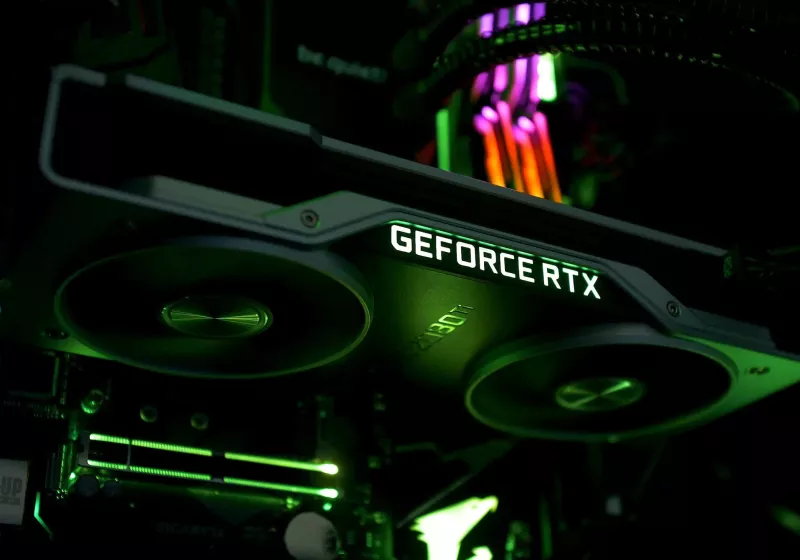
According to noted tipster MEGAsizeGPU, the new GeForce RTX 5050 variant will feature three 3GB GDDR7 memory modules operating at 28Gbps, instead of the 20Gbps GDDR6 modules used in the original version. The updated configuration will provide a total of 9GB of VRAM across a 96-bit memory interface, delivering up… Read Entire Article Source link
As part of Epic’s settlement with Google over the Play Store, Epic CEO Tim Sweeney agreed to stop criticizing Google’s app store practices until 2032 and even publicly support the revised policies. The deal also prohibits Epic from pushing for further changes to Google’s platform rules. The Verge reports: On March 3rd, he not only signed away Epic’s rights to sue and disparage the company, he signed away his right to advocate for any further changes to Google’s app store polices. He can’t criticize Google’s app store practices. In fact, he has to praise them. The contract states that “Epic believes that the Google and Android platform, with the changes in this term sheet, are procompetitive and a model for app store / platform operations, and will make good faith efforts to advocate for the same.”
He may even have to appear in other courts around the world to defend this deal with Google, and Google gets to make sure his public statements are supportive of the deal from here on out. And while Epic can still be part of the “Coalition for App Fairness,” the organization that Epic quietly and solely funded to be its attack dog against Google and Apple, he can only point that organization at Apple now. “Google is opening up Android all the way with robust support for competing stores, competing payments, and a better deal for all developers. So, we’ve settled all of our disputes worldwide. THANKS GOOGLE!,” Sweeney wrote in a post on X on Wednesday.
We may receive a commission on purchases made from links.
Makita equipment is routinely praised for its innovative features and innovative technology. There are some key battery and other capabilities you’ll only find on Makita tools, for instance. The Japanese toolmaker has long been a source of professional-grade solutions covering a wide range of user needs. Even though Makita didn’t come out on top of our head-to-head comparison against Milwaukee and DeWalt, that doesn’t make it a worse brand. In fact, there are plenty of niche tool requirements where Makita equipment offers the best, or even only, option for supporting your work. Some of Makita’s unique products include coffee machines and coolers, alongside material-handling gear that’s distinctly absent from other major manufacturers’ catalogs.
These 13 tools aren’t always Makita-exclusives, but they do provide nuanced functionality in areas outside the typical project scope of a renovator or remodeler. Some are heavy-duty solutions designed to handle concrete and layout work, while others are interesting options within widely known tool categories, like specialist grinding tools. Each one of these has an important place in the collection of certain users, but they’re not typically going to feature prominently (or perhaps at all) in the casual user’s arsenal.
Advertisement
18V LXT Cordless Rebar Cutter
Makita’s 18V LXT Cordless Rebar Cutter is a tool that combines two components. Near the back end of the tool, it looks visually just like any other drill-style piece of equipment, but mounted to the front is a radical departure from the expected. Right away, it’s clear that something is afoot with the added D-handle on top of the tool, and moving down toward the end you’ll find the cutting unit used to shear through dense, steel rebar. It features a cutting capacity ranging from 1/8 to ¾-inch components, and the ability to cut up to 60 grade #6 rebar. The tool features a cutting blade that will chomp through 4,000 cuts before requiring a replacement. The cutting head can also rotate completely around a 360-degree axis.
Advertisement
The tool features an adjustable stopper that holds rebar at a precise, 90-degree angle to the tool. This creates a smooth and precise cutting action that helps keep the tool in good working order and create efficient and smooth cuts in the material. The unit is incredibly expensive, helping to secure its status as a niche tool. It’s listed on Amazon for $2,599, for reference. This piece of equipment — perhaps surprisingly, due to its heavy-duty nature — operates with Makita’s standard 18 volt battery packs, meaning a builder won’t need to invest in additional, specialized batteries to operate the tool.
Advertisement
7-Inch Corded Disc Sander
Home improvers will often be keenly aware of the wide range of sanding tools available to them. Belt, orbital, and detail sanders are among some of the most common finds in this region of any brand’s tool catalog, and Makita is no different. However, many toolmakers, Makita included, offer an even wider array of sanders than most. The 7-Inch Corded Disc Sander is a corded solution that operates with 7-inch discs. It produces a 900 watt output and can be used with abrasive discs, resin pads, and other accessories loaded onto the rotating element. The tool provides constant power, even under load, and features a variable speed control dial ranging from 2,500 to 4,700 RPM.
The tool operates with a soft start function and other advanced electronic controls to help preserve its durability over the long term. It also utilizes a balanced weighting design that places the motor directly behind the pad, for greater stability. The trigger features a lock-on button right next to the control, giving users the ability to control its output directly or leave it in a locked position for lengthy use.
Advertisement
36V LXT 9-Inch Power Cutter
Makita’s 36V LXT 9-Inch Power Cutter operates with two 18V batteries and delivers extreme cutting power with the help of a 9-inch blade. It utilizes an electrical brake for safety, it can be used in indoor and outdoor environments, and doesn’t have issues with maintenance like a typical gas-powered alternative does. The tool can achieve 6,600 RPM blade speeds at maximum velocity and utilizes an integrated watering system to keep the blade cool and operational for longer. Its electronic brake can stop the wheel in 4 seconds or less to add an element of safety to a jobsite and to help with faster adjustments when necessary.
This is a tool designed specifically to shear through concrete and blockwork. Users unfamiliar with the tool might think of it as an analog to the chainsaw. Its body shape is largely similar, but the cutting implement fixed at the end resembles a miter or circular saw rather than the bar and chain used to cut lumber. In addition to the break and other safety features, the tool also features an active feedback-sensing technology that turns the motor off when rotation is forced to a stop. This helps prevent kickback and bind up that can be dangerous.
Advertisement
9-Inch Concrete Surface Planer
The planer is a tool commonly found in woodworking shops and home improvement toolkits. Planners flatten board faces and are a critical asset for anyone working on precision tasks with wooden material. Hand planes and power tools alike feature prominently, but these are not the only kinds of planing tools you’ll find on the market. One supremely niche element that delivers material flattening capabilities is the 9-Inch Concrete Surface Planer. This tool is purpose built to grind down high spots in concrete pours. Makita’s solution features a corded power source to support long-lasting performance without the need to swap out battery packs.
The planer is underpinned by a 15 amp motor that delivers 6,600 RPM. The soft start technology makes initiating the tool’s motor smoother and easier, minimizing the chances that it will jump out of its user’s hands. It also utilizes a dust extraction shroud that helps limit the amount of concrete dust thrust up into the air as it goes about its task. This is an important safety feature, but you should always wear protective equipment when using a tool like this.
Advertisement
5-Inch Tuck Point Angle Grinder
Makita’s 5-Inch Tuck Point Angle Grinder is a specialized grinder featuring a tuck point guard. The tool itself is a corded solution and operates almost entirely unchanged from the typical angle grinder that familiar users know and love. Even if you can often use a different tool instead of an angle grinder, this particular piece of equipment remains a go-to solution for many tasks both in the professional realm and in the hands of a DIY enthusiast.
Advertisement
This tuck point angle grinder is not going to be your typical cutting tool. For one, it’s listed at Amazon for $368. Rather, this is a specialty unit designed for a specific purpose: the removal of mortar from the space between bricks. Old brick constructions can be demolished entirely, but in many cases the building material can be reclaimed. This offers an extended lifetime for the dense construction element and provides cheaper materials for those willing utilize salvaged products instead of new brick. Utilizing reclaimed bricks whenever possible is great for the budget and the environment, but they also add an element of personality to the project.
To remove old brick without damaging it, you’ll need to tear up the elements holding a building, wall, or pathway together. The Makita tool features a 10 amp motor that delivers 11,000 RPM disc speeds, enough to remove this material. Its unique characteristic is the 5-inch tuck point guard that allows for accurate placement of the tool and protection from flying debris while it’s operating.
Advertisement
18V LXT Deep Capacity Rebar Tying Tool
Working with rebar is a complicated and demanding task. When placing it into the support structure ahead of a concrete pour, you’ll need to ensure that the steel beams remain in position as you move on to the next task: Namely, dumping gallons of heavy concrete on top of the rebar. In order to secure these support elements in place, contractors working with concrete often set small seat elements to prop rebar up to the appropriate height and lash perpendicular bars together to ensure as little movement as possible. In a large space, this can be menacingly time-consuming.
The 18V LXT Deep Capacity Rebar Tying Tool is an implement that can speed up this process significantly and save the workers’ backs in the process. The tool features a maximum tying capacity of #8 by #7 rebar and a minimum rated at #4 by #4 bars. It can produce up to 5,000 ties at the lower end of the range using just one 5.0Ah battery.
The tool offers two operating modes, with single or continuous wire tying actuation, and features an easy-load design with an automatic locking mechanisms built into the wire reel component. As is the case with many other niche tools, this is not a unit that the average home improver will ever need to deploy, but it’s an element that can drastically improve the working conditions of some professionals.
Advertisement
36V LXT Material Handling Flat Bucket
Material handling tools make up some of Makita’s unique offerings that many other brands don’t match. The Makita 36V LXT Material Handling Flat Bucket is a great example. It is essentially a flat wheelbarrow that runs on two 18V batteries to make motion an automated process. The tool supports a maximum load of over 660 pounds, with a 295 liter heaped capacity. It can also hold up to four LXT batteries, drawing on two at once in order to provide a continuous runtime of up to 100 minutes, when using two 6Ah batteries.
Advertisement
This material-handling solution offers three forward speeds with an additional reverse gear, controlled by a switch trigger on the handles. The tires are durable and ready to handle material movement needs over rough and uneven terrain. It offers a top speed of 3.1 mph and a reverse speed of 0.63 mph.
Advertisement
18V LXT 8-Foot Concrete Vibrator
The 18V LXT 8-Foot Concrete Vibrator is a specialty tool that is placed into freshly-poured concrete. It sinks into the slurry and is then activated, creating a vibration effect that allows air bubbles trapped within the pour to gradually rise up to the surface and escape. Anyone who’s ever worked with concrete before knows that even a small amount of the stuff is immensely heavy and dense. Air does not easily escape on its own, and too much air in the mixture will introduce extremely slow curing times and threaten the structural integrity of the pour over the long term.
Home improvers working with small amounts of concrete will often account for this by smacking the nearby area with a hammer or mallet, but that’s not enough to allow air to escape from a large concrete installation. The concrete vibrator is therefore an essential tool for operators working in industrial settings and on any other large tasks involving the material. The tool produces 12,500 vibrations per minute and offers a dual directional switch that allows you to hold the tool body either horizontally or vertically. It produces up to a 25-minute runtime while under load with a 3.0Ah LXT battery and comes with an 8-foot tether between the tool body the end of the vibration unit.
Advertisement
18V LXT High Speed Blower/Inflator
Inflation tools are a natural fit in many toolboxes. They’re ideal for use in emergency preparation kits and to support hobby and adventures such as RVing or camping. In this regard, the 18V LXT High Speed Blower/Inflator can be a valuable addition to a standard home improver’s collection, not just as a specialized tool like many of the other niche pieces of equipment on this list. The tool offers four speed settings and comes with five nozzles to support a wide range of inflation and blowing requirements. It produces up to 55 minutes of runtime (when paired with a 6.0Ah LXT battery) and uses an inline fan design, to improve the balance of the tool.
What makes this tool interesting, alongside its usefulness as an inflator, is its capability as a blower, making this two-in-one unit can capable of surface preparation and cleaning. The unit produces blows air at up 447 mph and 69 cfm, a strong performance for its size, and comes with built-in LED lights to make your working area easier to work with.
Advertisement
18V LXT Cordless Grass Shear
The 18V LXT Cordless Grass Shear is a lawn care and maintenance tool that can be used across a range of cutting tasks. The tool features both a hedge trimmer blade and a grass shear attachment, allowing it to be used at ground level near tight corners, edges, and around elements like fences and mailboxes. It can also tackle unruly bush and tree growth, as well as other needs around the yard. The tool delivers over three hours of runtime when paired with a 5.0Ah battery. The 6-5/16 inch shear blade features dual cutting action, for fast and precise cutting that won’t leave your grass in tatters. Both cutting accessories sport non-electrolyzed nickel-plated blades, to resist rust and staining from constant contact with growth around the yard.
This small cutting tool can be used in addition to (or even instead of) bigger tools like a multi-attachment power head or even a string trimmer. You may still want to use both of these tools for larger cutting tasks, but the grass shear offers superior efficiency when dealing with small areas and tight spaces, and better precision when the small details count the most.
Advertisement
18V LXT Cordless 9-Inch Drywall Sander
A drywall sander is a specialized surface preparation tool with a lengthy arm between the control element and the sanding head. The 18V LXT Cordless 9-Inch Drywall Sander features an adjustable extension pipe that reaches up to 16-½ inches, to support sanding all the way up to the ceiling and down to the ground without having to stretch or bend. The swiveling head flexes easily, meaning you won’t have to get yourself into a specific position in order to use the tool. It’s also a cordless model that’s unencumbered by wires.
Advertisement
The variable speed control allows for adjustments between 1,000 and 1,800 RPM, and the tool runs with a 9-inch sanding disc. It features an integrated dust port that allows you to link up with a shop vac for better dust management. It also offers a shroud around the outside of the sanding head to keep some of the debris contained at the point of contact, for better suction through your attached vacuum. This is a surface preparation tool that makes managing the cleanup after a drywall installation easier, allowing you to move onto plastering and other finishing touches sooner.
Advertisement
40V Max XGT 15-Inch Dethatcher/Scarifier
The 40V Max XGT 15-Inch Dethatcher/Scarifier is a severely underappreciated tool which you might not have known existed. It provides the ability to remove overgrown thatch layers from your yard and deliver fresh airflow into the soil layer beneath without damaging the grass above. Many tools of this ilk run on corded power, but this is a cordless unit that provides enhanced mobility for users who have a large plot of land. It features an auto-switching, two-bay battery system that can double the runtime by moving on to the second power pack when the first reaches its limit. As a cordless electric tool, it doesn’t produce exhaust fumes and won’t require oil or gas. It also avoids the use of the infamous pull start system, allowing you to simply initiate the tool and get working.
The unit features an adjustment dial that locks in the working depth and a grass catcher bag that attaches to the back, to hold up to 1.4 bushels of grass. It features a toolless folding handle that allows you to store it neatly in your garage between uses, and offers an IPX4 weather resistant design.
Advertisement
5-Inch Dry Masonry Saw
The 5-Inch Dry Masonry Saw is a heavy duty cutting solution designed to work with the densest materials you’ll encounter on the jobsite. This is a tool purpose-built for cutting stone and tile, including materials like granite. It can also handle brick and concrete, offering a precise cut in any of these demanding materials. The saw works with a 5-inch blade and operates on corded power. It produces 12,200 rpm to shear right through even the densest material and features a transparent upper guard to help improve visibility as you work through a cut.
The saw is also compatible with a guide rail, for even greater precision in your cutting. This makes it an ideal solution when cutting stone for applications like countertops or other similar finish products. This is another tool on this list that can be a valuable addition for some of the more adventurous DIYers, offering support for stone walkway installations, bathroom remodels, stone veneer construction, and more.
Data from Hogan Assessments explores how falsehoods about women in positions of power can result in missed opportunities for all.
Ahead of International Women’s Day (8 March), Hogan Assessments, a HR consulting platform, released globally sourced data on the personality traits typically linked with effective leadership in the workplace.
What was discovered is that men and women in executive roles often demonstrate similar personality traits linked to leadership effectiveness, challenging long-standing assumptions about who is best suited to lead. Despite this, Allison Howell, the CEO of Hogan Assessments, noted that women are frequently underrepresented in leadership roles because of assumptions that they lack the ‘necessary’ traits.
Howell told SiliconRepublic.com: “This assumption stems from outdated models of leadership that equate effectiveness with visible confidence, dominance or self-promotion. These traits have historically been overvalued, shaping perceptions of potential.
Advertisement
“However, the data shows that men and women demonstrate similar capabilities on the traits that actually predict leadership success, such as judgement, integrity and emotional regulation.”
For Howell, to make an assumption is to give oxygen to unfounded and even harmful ideas.
“The most effective way to challenge them is through evidence,” she said. “Decades of personality and performance data consistently show no meaningful gender differences in leadership effectiveness.
“Organisations need to align their definitions of potential with what the science actually supports. That means evaluating people based on how they actually lead teams and deliver results, not on how confidently they present in a meeting.”
Advertisement
Hogan’s research suggests that for many women, the real challenge is less about readiness and more about access. The report stated that “early promotion and development decisions are often shaped by informal judgements that quietly influence who is encouraged, supported and advanced over time, long before leadership roles are formally in sight”.
With that in mind, Howell is of the opinion that to undermine assumptions and challenge falsehoods, a culture of shared responsibility must be created from within the core of an organisation. She explained, companies have to critically evaluate their own systems and criteria, while leaders at every level should question biases in decision-making.
She believes there should also be room for key mentorship and sponsorship as it often plays a critical role in increasing access and visibility. She said: “Seeing others navigate similar paths can help demystify leadership journeys. At the same time, support networks are most effective when paired with fair and transparent systems.”
Bridging the ambition gap
Hogan’s research also explored the ‘ambition gap’, which Howell explained is the incorrect assumption that women in the working environment sometimes have less ambition than their male co-workers.
Advertisement
She explained that what is often labelled as a lack of ambition is in fact a reasonable response to structural workplace conditions. She said: “Our data shows that women don’t lack ambition, women show comparable drive and competitiveness.
“However, ambition may appear differently between men and women because of the need to adapt to the environment. For example, if an organisation rewards men for competing with colleagues but punishes women for the same behaviour, women are more likely to adapt to the environment.”
Noting that structural barriers often shape leadership pipelines long before the C-suite stage, Howell said they can emerge early through informal judgements via hiring, promotion and development opportunities. “These moments influence who gains visibility, support and stretch assignments. Over time, small disparities compound, shaping who ultimately reaches senior leadership.”
For Howell the research makes it clear that the barriers are “real, not imagined”, but knowing that “can be freeing”, as it gives women and indeed those aiming to empower women in the workplace the knowledge needed to break down barriers blocking access to leadership positions.
Advertisement
She said: “Progress requires both reflection and action. The evidence is clear, leadership effectiveness isn’t defined by gender, but by how well we align potential with performance.
“Rethinking outdated assumptions is essential to building more inclusive and effective leadership pipelines. The question isn’t whether or not women can lead. It’s whether organisations are willing to recognise leadership when it doesn’t look like what they are used to seeing.”
Don’t miss out on the knowledge you need to succeed. Sign up for the Daily Brief, Silicon Republic’s digest of need-to-know sci-tech news.
The Jolla Phone makes its grand premiere at MWC 2026 with a calm air of unmistakable Finnish flare, a mobile device that reinvigorates the spirit of freedom in phone manufacturing. However, this is no average smartphone. Jolla has painstakingly designed a cellphone centered on Sailfish OS, its own in-house Linux-based system, and matched it with some strong mid-range components that feel really practical for 2026.
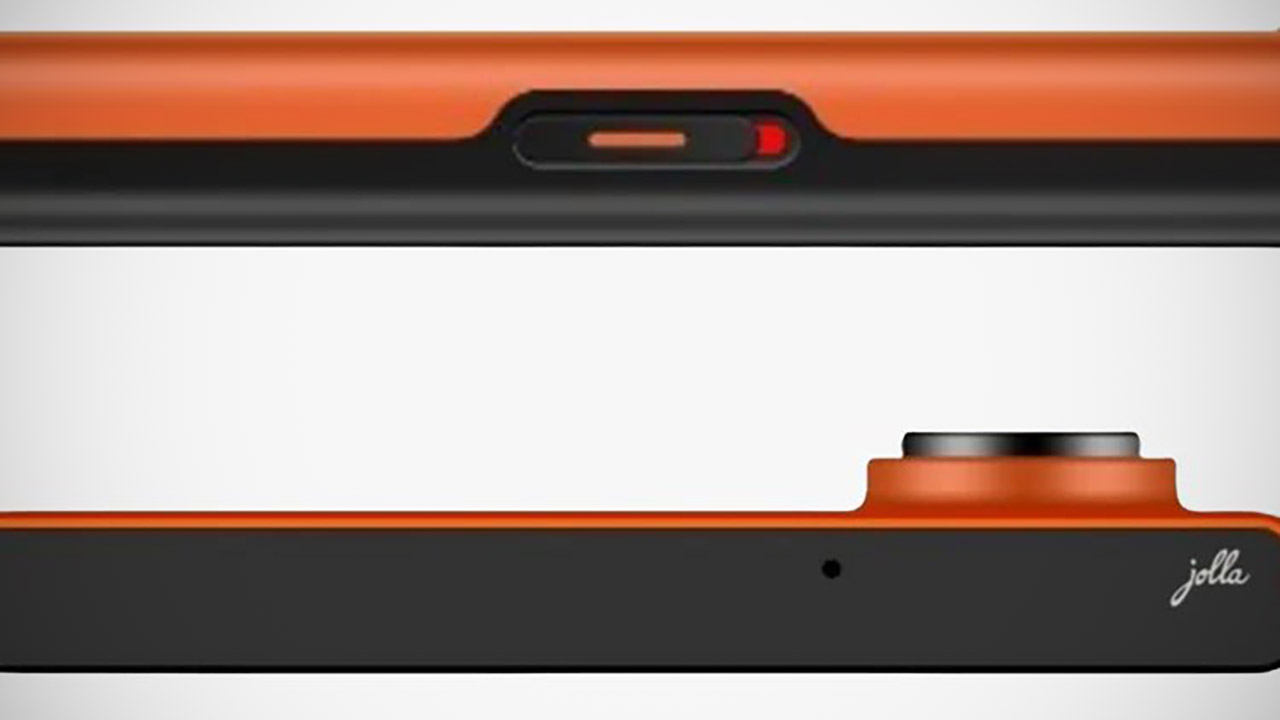
At the center of this is Sailfish OS, specifically version 5, an operating system that can function without the need for a Google account, avoids background data collection that feeds advertising networks, and avoids all of the hidden analytics that assist push adverts. You can’t blame Jolla for repeatedly highlighting this point, because the system only sends data back to headquarters if the user requests it. A tactile switch on the side allows you to turn off the microphone, cameras, Bluetooth, and other sensors instantaneously, which is a wonderful touch. You won’t find that amount of control on many phones in people’s pockets.
Order the new Google Pixel 10a today and get an Amazon Gift Card; valid 2/18/2026 until 3/11/2026 at 11:59pm PT, while supplies last and subject to…
Return of Pixel 10a without gift card results in charge; offer cannot be combined, is non-transferable and not valid for cash or cash equivalent
If a qualifying item in your order is returned, you’ll be reimbursed for what you return, minus the value of the gift card
The hardware selections keep everything in check; there’s no over-the-top flagship stuff here. The phone has a 6.36 Full HD+ AMOLED display, wonderfully covered by Gorilla Glass, with 390 pixels per inch and a stunning 20:9 aspect ratio. MediaTek’s Dimensity 7100 5G chip powers the show, delivering solid performance for daily tasks and connectivity without overheating drama. Configurations offer 8 GB or 12 GB of RAM from SK hynix alongside 256 GB of storage, which expands up to 2 TB via microSD card. Dual nano-SIM slots sit alongside that card slot in the tray.
Advertisement
The cameras use Sony sensors, including a 50-megapixel main snapper and a 13-megapixel ultra-wide on the back, as well as a nice wide-angle front lens (listed as approximately 32 megapixels if you look closely). The results should be adequate for regular usage, however Jolla’s emphasis is on dependability rather than sophisticated camera technology. The 5,450 mAh to 5,500 mAh battery is completely user-replaceable, a deliberate tribute to longevity that some manufacturers have all but abandoned. Swappable back covers are available in Snow White, Kaamos Black, and an attractive orange. These colors mirror the original Jolla Phone’s module concept, and the pogo pins for future accessories designed by the community are a wonderful tribute to the spirit of the original “The Other Half” concept.
Connectivity is extensive, including 5G compatibility, Wi-Fi 6, Bluetooth 5.4, NFC, and positioning via GPS, Galileo, GLONASS, and BeiDou. The dimensions are around 158 x 74 x 9 mm, making this phone a good fit in the pocket, with flat corners and minimal bezels.
App access bridges the gap that once seemed impossible to bridge, as Jolla’s AppSupport technology now runs a wide range of Android apps with ease, including banking tools and messaging services. Of course, compatibility isn’t flawless, and certain programs behave strangely, but the configuration prevents you from accessing full Google services unless you add MicroG as an optional extra. This allows people to stick to their preferred routines without having to deal with the normal tracking mess.
Pre-orders, however, tell a quite different story. This thing debuted in December 2025, and while starting with a modest goal, it quickly grew to over 10,000 in commitments and a tidy €5 million in sales by the end of February 2026. A new batch of 1,000 units arrived at MWC, still available for €649 each, albeit you’d need to put down a €99 deposit to get in on the action, with September deliveries slated for the EU, the UK, Norway, and Switzerland. The first exports are expected at the end of June 2026. Jolla is offering a few signals that they have bigger plans in the future – think ecosystem growth and some extremely fascinating AI capabilities that are tied in with all their work on keeping things private. [Source]
Last week I got to go see some of what LG is bringing to the marj in 2026 with its TVs and sound systems. I’ll talk about the TVs in a later article but what caught my eye (or ears) was its Sound Suite audio system.
That’s because the Sound Suite system is modular, which I’ll harp on about again because it makes more sense than relying on a single soundbar. As long as you have space.
You can mix and match satellite speakers, subwoofer, soundbar – even your LG TV – and have them work together in concert. Like a sports team, they understand each other’s roles and can intelligently adapt.
Advertisement
There’s quite a number of combinations on offer. You could use the TV and soundbar, the soundbar and subwoofer; the TV and four satellite speakers, or all joined together as one harmonious whole. What if I wanted to take two satellite speakers and play in stereo? I can do that, and then when I’m done, reassign them as part of the group of speakers again.
Advertisement
There’s flexibility so you can start small and build up, adding speakers when you need (and if you need them). I can place these speakers anywhere I’d like in a room – the speakers can figure out where they are in relation to one another, and expand and contract the soundstage based on their proximity.
Each speaker has a microphone, which allows it to measure the distance from the soundbar (or TV), understand where it is relative to others, and measure the room acoustics. Do I need to worry about reflections in a room affecting the sound? According to Dolby, not really.
If I move a speaker, recalibrate (which takes twenty seconds), I can also see the new position of the speaker on the LG ThinQ app.
Advertisement
And it fixes an issue I’ve long held about Dolby Atmos, which is that in its current incarnation, it’s too front-heavy to be immersive. The idea of selling me a soundbar, and trying to make me believe that it can fling sounds all across the room (including behind me), is a non-starter.
But the ability to add satellite speakers, which some soundbars such as the Marshall Heston 120 or KEF XIO don’t even support, opens it up for a true surround sound experience.
Dolby FlexConnect finally arrives
Image Credit (Trusted Reviews)
Advertisement
And this is possible because of Dolby Atmos FlexConnect, which was introduced a few years ago and then put in its best impression of The Fugitive by being elusive and not very easy to track down.
TCL and Hisense announced FlexConnect support when it was first announced and then, if memory serves, neither really mentioned it much afterwards.
Advertisement
So this is, two years later, the first time I’ve actually heard a FlexConnect system in the wild. Instead of this rigidity that traditional 5.1 or 7.1 surround system would enforce on me, I can now place speakers so they match the layout of my room. There’s potential for some good audio Feng Shui here.
And another pet peeve is how brands market surround systems where you’ve got a sofa dead centre in the middle of the room surrounded by plenty of open space. I know not of any living room that is that big or has that much space.
FlexConnect understands that no room is perfect and compensates. It can blend sound across physical speakers to make it sound like it’s coming from a specific area, so there’s no need to position speakers perfectly. What if I rearrange furniture in a room – will that affect the sound? Again, that’s not expected to be an issue.
Advertisement
Advertisement
It’s a clever system but the proof is in the pudding and judging from the time I spent listening to it, the sound depends on the speakers you have involved. I’m still not convinced about the sound from LG’s own TVs, so when partnered with the soundbar, it does sound thin and lacking weight and warmth. It sounded a little too brash.
But with the H7 Soundbar, W7 subwoofer, or the M5 and M7 satellite speakers engaged, and then you have something closer to a ‘proper’ sounding surround system. Poweful, energetic, expansive and immersive. It might be a bit too crisp for some, but this seems to be the tuning that LG is, and has gone for, for quite some time.
The price is… alot
The price though, is paramount. The H7 Soundbar is £899, the M7 satellite speakers are £399 a pop. For well over £1500, you only get a soundbar and two surround speakers. This is premium and compare that to the Samsung HW-Q990H which will have the soundbar, rear speakers and a subwoofer for probably around £1500, and suddenly the LG Sound Suite doesn’t look as good in terms of value.
But if there’s anything that would convince, it’s the ease of having Dolby Atmos FlexConnect. I’ll be looking forward to see how good it sounds, once I’ve got the system set-up.
AI is coming for the laptop class. While you clack away at your keyboard — writing code or drafting memos or making spreadsheets or scrolling X or perusing DoorDash or reading Vox or dreading death — machines are teaching themselves how to do your job.
Over the past four years, chatbots have gone from neat parlor tricks to hyperproductive polymaths. AI models can now generate new software out of a single English sentence, summarize case law in seconds, read CT scans with superhuman accuracy, and coordinate complex office workflows with scant human oversight.
Large language models (LLMs) — today’s premier form of artificial intelligence — still have their limitations. They can’t reliably fulfill most white-collar workers’ every function. But AI progress is compounding on itself. As LLMs automate the process of building better LLMs, they will kick off a feedback loop of exponential self-improvement.
Despite AI’s rapid advances, it still hasn’t substantially increased unemployment.
You don’t necessarily have to outperform AI at your job in order to keep it.
The go-to evidence for exponential AI progress has serious methodological flaws.
Thus, by the end of next year — if not this one — AI will render much of America’s professional class obsolete and push unemployment to 20 percent. Within a decade, the technology could wipe out virtually all forms of knowledge work.
Or so many of AI’s champions and detractors believe.
Advertisement
In recent weeks, the drumbeat of catastrophic labor-market forecasts has grown louder, with tech CEOs, financial analysts, and journalists penning viral predictions of an impending unemployment crisis.
In my view, the threat of AI-induced unemployment is worth taking seriously. And I’ve sketched out the case for alarm in past essays.
If the AI doomers’ concerns are warranted, however, their certainty is misplaced. Artificial intelligence could trigger mass white-collar layoffs in the near future. But there are plausible arguments against that scenario.
To inject some balance into the AI discourse — and/or, reassure myself that my hard-won verbal skills aren’t about to be less economically valuable than my flimsy biceps — I’ve sought out reasons for optimism about the white-collar labor market. Here are the four that I found most compelling:
Advertisement
1) You can see the AI age everywhere except in the jobs data
The first reason to doubt the doomer scenario for AI and unemployment is that it keeps not happening.
Or, more precisely: Despite the astounding capacities of today’s LLMs, there still aren’t many signs of large-scale, AI-induced job loss.
It takes time for firms to adopt new technologies, of course. But generative AI has been remarkably powerful for a while now. As of late 2024, it could already automate many coding tasks, generate research reports, write ad copy, review legal documents, and make terrible music at a near-human level.
Advertisement
Yet America’s unemployment rate has barely budged over the past two years, hovering near 4 percent.
Even in the industries most suited to AI-driven automation, employment shifts have been modest. Job postings for software developers have actually increased over the past year. Employment in market research, meanwhile, went up after ChatGPT hit the market. Even customer service representatives — arguably, the workers most threatened by chatbots — have not suffered massive job losses: Although employment in the field fell 10 percent from 2023 to 2024, it has held steady since then and remains close to its pre-pandemic level.
What’s more, there are few indications that mass, white-collar layoffs are on the horizon. In a December survey by the accounting firm KPMG, 92 percent of CEOs said they were planning to grow their head counts, even as 69 percent were dedicating a large share of their budgets to AI deployment.
Similarly, a January survey from EY-Parthenon found that 69 percent of CEOs expected that AI would lead them to either maintain or expand their payrolls.
Advertisement
One could dismiss this as sunny bluster. But there is evidence that these executives’ ostensible intuition — that AI adoption and downsizing don’t necessarily go together — holds true in practice. In a study of 12,000 European businesses published in February, firms that adopted AI saw a 4 percent increase in labor productivity — yet did not reduce their staffing in response.
Granted, if you scour the jobs data for portents of an AI-driven unemployment crisis, you can come up with a few. For one, between November 2022 and January 2026, America’s core white-collar industries — finance, insurance, information, and professional and business services — cut their staffing by 1.9 percent. This is unusual; outside of recessions, these sectors have historically added jobs at a steady rate.
For another, a Stanford Digital Economy Lab study suggests that young workers in heavily AI-exposed fields have seen declining job prospects, relative to those in other sectors, since ChatGPT debuted.
Forecasts of an impending white-collar “bloodbath” tend to put a lot of weight on these data points. And yet, both developments likely have less to do with AI adoption than with monetary policy.
Advertisement
As two economists at Google recently observed, America’s most AI-exposed industries began to slash hiring six months before ChatGPT hit the market in November 2022. And white-collar job postings fell most precipitously in 2023, when corporate deployment of LLMs had barely begun; in the fourth quarter of that year, fewer than 10 percent of large businesses said they were even planning to use AI in the next six months.
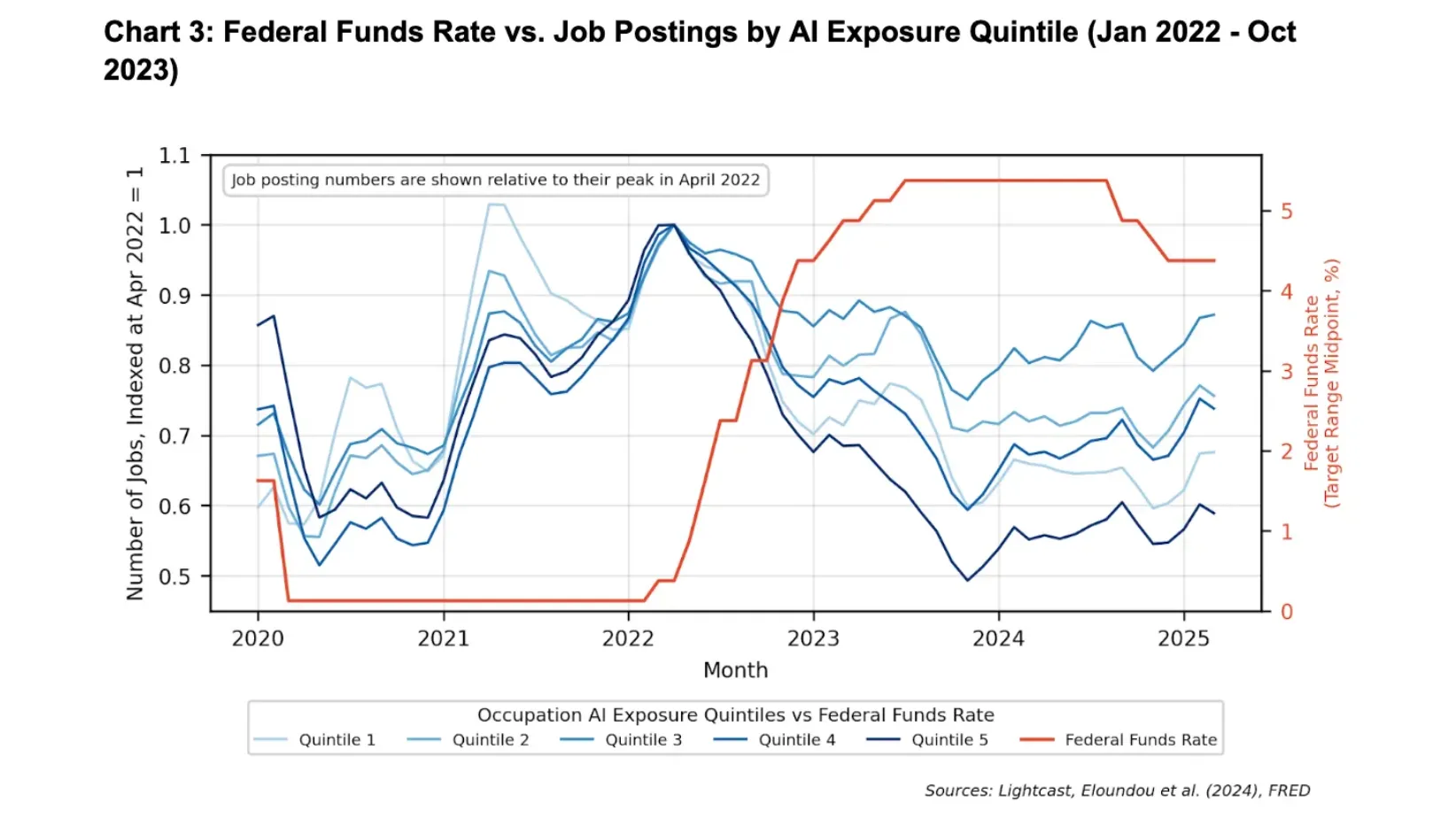
This timeline is hard to square with the theory that AI drove the slowdown in white-collar hiring. By contrast, the timing neatly aligns with the Federal Reserve’s tightening cycle.
In March 2022, the central bank began hiking interest rates at a historically aggressive pace. A little over one month later, job postings began to fall in white-collar fields. When the Fed paused its hikes in 2024, that decline bottomed out; when the central bank began cutting rates in 2025, job openings started rebounding.
Courtesy of the Economic Innovation Group
Critically, interest rate hikes disproportionately impact AI-exposed industries. The sectors most susceptible to artificial intelligence — tech, finance, and professional services — are also among the most sensitive to tightening financial conditions. And when companies come under strain, they often pause entry-level hiring.
Advertisement
A pullback in employment caused by the Fed could therefore look a lot like one triggered by LLMs.
None of this is to deny that artificial intelligence has reduced employment in some occupations (for example, AI is almost certainly implicated in the recent decline of computer programming jobs). The point is just that the overall labor market impacts have been remarkably modest, given the scale of AI’s current capacities.
2) White-collar workers don’t need to outperform AI to remain economically valuable
The absence of a one-to-one correlation between increases in AI’s capabilities — and declines in white-collar employment — isn’t entirely surprising.
Advertisement
To remain economically valuable, a human worker does not need to outperform a machine at their job’s core tasks; they merely need to usefully complement that machine’s operations.
Consider translators. LLMs can convert text from one language to another at a speed and cost that no human could ever match. For many tasks, if corporations, authors, and publishers were forced to choose between having access to AI — or the world’s most gifted linguist — they would choose the bot.
And yet, a human translator working with an LLM still produces better text than the machine does by itself. While the latter blitzes through a first draft, the former can correct excessively literal translations of idiomatic expressions, tailor tone to the intended audience, and catch subtle errors that invite confusion or legal risk.
So long as human translators retain this utility, AI progress won’t necessarily reduce demand for their services. In fact, the technology could conceivably increase such demand.
Advertisement
That claim might seem unintuitive. After all, it surely takes fewer people to translate any given quantity of text in the age of generative AI than it did in years prior.
Yet humanity’s appetite for translated text is not fixed. If you drastically increase the efficiency of translation — and thus, reduce its cost — then people will purchase more of it.
And indeed, since the introduction of ChatGPT in 2022, demand for translation has surged. Perhaps for this reason, even as machines have come to match or exceed the skills of human translators across several dimensions, employment in the industry has grown in the European Union and stayedroughly level in the US.
And you can tell a similar story about myriad other fields.
In some domains, white-collar workers may retain an advantage over AI simply because they are human.
As the economist Adam Ozimek notes, many contemporary occupations could have been automated out of existence long ago, were technology the only concern. We’ve had player pianos and recorded music since the late 19th century. Yet many hotels and bars still pay human beings to tickle the keys for their customers.
Advertisement
“People are often willing to pay a premium for the ‘human touch.’”
For decades, it’s been easy to book your own travel online, relying on aggregators like Expedia and reviews on Yelp. Yet 67,500 Americans still make a living as travel agents. Workout videos make it possible for anyone to perform yoga at home, yet many hire personal instructors. Mechanical reproductions of famous paintings can be had at a low cost, yet people shell out millions for visibly indistinguishable versions that were produced by a specific human hand.
You could have asked ChatGPT to give you four reasons why AI won’t cause mass unemployment, and it would have instantly spit out a listicle. Instead, you’re reading an artisanally crafted explainer that Vox Media Inc. paid me to produce.
In other words, people are often willing to pay a premium for the “human touch.”
Advertisement
This won’t preempt an AI-induced employment crisis, all by itself. Consumers don’t typically care how their smartphone apps were coded or insurance claims were processed or tax returns were prepared. But a market for explicitly human-produced goods and services is likely to persist in many realms — including sales, medicine, legal services, and entertainment.
Heck, there might even be durable demand for journalism that’s conspicuously free of AI’s bizarre syntactical tics. That’s not just cope — it’s a serious possibility.
4) AI progress won’t necessarily be exponential
All these arguments may count for little, if AI’s capacities are truly growing at an exponential rate.
Advertisement
After all, exponential processes tend to creep up on you. When 32 cases of a supervirus become 64, almost no one notices. If that bug keeps doubling every couple days, however, the world will wake up a month later to 2.1 million infections. In that scenario, a glance at the pathogen’s impact on day three would have told you little about its consequences four weeks later.
In a world where AI progress is exponential, similar principles apply. Look around three years after ChatGPT’s debut and you might see little job loss. But if artificial intelligence is recursively self-improving — such that every advance accelerates the next — then today’s AI is only a pale imitation of 2030’s. The former may be to the latter as a hot-air balloon is to a space shuttle.
If so, then examining AI’s impact on jobs over the past four years wouldn’t shed much light on its effects over the next four. Likewise, the fact that white-collar workers can usefully complement AI today would scarcely guarantee their utility in the future.
But it’s not clear that AI has actually been improving at an exponential rate, much less that it will keep doing so, for years on end.
Advertisement
Without question, LLMs’ capabilities have been growing rapidly. But claims that this progress has been exponential tend to rest on a single, widely cited benchmark.
The AI research institute METR has long been the authority on the speed of AI progress. To gauge that pace, it tracks the duration of tasks that LLMs can complete with at least 50 percent accuracy. In this context, duration is measured by how long it would take a skilled human worker to complete the same assignment.
METR’s charts of how this has changed over time are ubiquitous in discussions of AI. And the trends are eye-popping.
Faced with these vertiginous slopes, many jump straight to wondering whether they will enjoy life as a “machine God’s” pet — forgetting to first ask themselves, “Wait, how does METR know that?”
Which is unfortunate, since the short answer is it doesn’t.
Advertisement
METR isn’t spying on every white-collar laborer in America, implanting bugs and honeypots in their break rooms, so as to determine how long it takes each worker to perform their jobs’ tasks.
Rather, to generate its estimates, the institute presents human software engineers with a bucket of coding assignments, measures how long they take to complete their tasks, and then sees whether AI models can perform the same feats. Through this process, METR estimates that the latest version of Claude can autonomously perform tasks that would take a skilled worker up to 14.5 hours to execute.
And yet, as NYU’s Nathan Witkin argues, there are massive problems with METR’s methodology, defects that severely limit what its findings can actually tell us about AI’s capabilities. To name just a few:
METR’s tasks are unrealistically basic. In METR’s own analysis, the bulk of their sample tasks differ from real-world engineering problems in systematic ways. Specifically, the former occur in static environments, require no coordination with other people (or agents), and include few resource constraints. METR also largely excluded tasks in which a single mistake could derail the entire project, so as to “reduce the expected cost of collecting human baselines.”
Advertisement
When the institute charted AI’s progress on its “messiest” tasks — which is to say, its most realistic ones — this was the result:
Courtesy of METR
Viewed like this, AI progress does not look terribly exponential.
METR’s human baselines are unreliable. The sample of engineers who established METR’s baseline for human performance was neither large nor representative. Rather, as of 2025, its testing included only 140 people, recruited primarily from METR staffers’ professional networks.
More critically, on the more complex tasks, these recruits were often operating outside of their areas of expertise. In real life, these assignments would typically be handled by specialists, who would surely complete them more rapidly than random engineers with little domain knowledge.
Advertisement
Making matters worse, METR paid its baseliners on a per-hour basis, giving them an incentive to drag out their tasks.
AI could have simply memorized the answers to many of its assigned tasks. About one-third of the tested tasks had publicly available solutions. For these assignments, the models may have just been recalling answers they had encountered on the internet, in which case their success wouldn’t necessarily reflect growth in their general capabilities. (If a high-school student gains access to a calculus test in advance, and memorizes the answer, their performance on that problem wouldn’t tell us much about their general math skills.)
None of this is meant to disparage METR’s intentions, or to suggest that its data has zero utility. The pace of AI progress is not an easy thing to measure. And the organization is making an admirable effort.
Still, the fact that its charts are AI boosters’ (and doomers’) go-to evidence for exponential progress — despite the extreme limitations of its figures — calls the existence of that progress into question.
Advertisement
Moreover, even if we knew that AI has been improving exponentially over the past three years, we still couldn’t take a continuation of that trend for granted. Technologies routinely improve at an exponential rate for a period, only to stall out at a certain level of capability.
Machines might still replace us
These arguments don’t prove that the laptop class is going to be fine. They merely offer a basis for believing that it might be.
Indeed, everything I just wrote could be true — and AI could still drastically erode knowledge workers’ economic prospects.
Advertisement
Even if most white-collar laborers still usefully complement AI, a large minority may not. Meanwhile, those who remain employable might command drastically lower wages than they once did: When building software merely requires the ability to write instructions in plain English — rather than mastering complicated coding languages — programmers’ bargaining power may plummet.
And while AI-driven productivity gains might increase demand for certain goods and services, Americans’ latent appetite for tax advice, HR compliance audits, and contract review is not infinite. In these areas, AI’s boosts to efficiency are liable to yield job losses.
Finally, AI might not be improving at an exponential rate. But over time, linear gains may be sufficient to drastically reduce knowledge workers’ economic utility.
All this said, as the world’s most influential business leaders and intellectuals discuss the impending elimination of white-collar work as though it were no more hypothetical than tomorrow’s sunrise, it’s worth keeping their narrative’s liabilities in mind: This doomsday scenario has scant support in existing employment trends, sits in tension with multiple economic principles, and relies on dubious assumptions about the pace of AI progress.
Advertisement
In other words, while it’s past time for policymakers to prepare for AI-induced unemployment spikes, knowledge workers don’t yet need to toss our keyboards and learn to plumb.
“Pursuant to the Protecting Americans from Foreign Adversary Controlled Applications Act, apps developed by ByteDance Ltd. and its subsidiaries—including TikTok, CapCut, Lemon8, and others—will no longer be available for download or updates on the App Store for users in the United States starting January 19, 2025,” the archived webpage reads.
As of Thursday, ByteDance apps like TikTok, CapCut (a video editor app). and Lemon8 (an Instagram-like social media platform) remain available on the US App Store, as they are covered by the January 22 deal to transfer TikTok’s US business to a group of investors led by Silver Lake, Oracle, and MGX. But the timing of the deal coincides with Apple’s decision to block this other set of ByteDance apps from being downloaded.
An executive order issued in September by President Trump extended the deadline of the TikTok ban-or-divest law to January 23, 2026. A day before that deadline, TikTok publicly announced it had entered into a deal, saying that “the safeguards provided by the Joint Venture will also cover CapCut, and Lemon8, and a portfolio of other apps and websites in the US.” But the announcement never explicitly elaborated on whether other ByteDance apps would be included in the transfer. A few days later, people started reporting they couldn’t download Douyin in the US.
Geoblocking Solution
The restrictions on downloading ByteDance apps in the US shows how Apple is increasingly using technical restrictions to separate different regional versions of the App Store.
Advertisement
Traditionally, the primary way Apple enforced geographic restrictions on iPhone apps was according to the country where a user registered their Apple ID. To have an Apple account registered in, say, China, a person would typically need to have a phone number, payment method, and billing address in China. But once their account was registered, they could download apps designed for the Chinese market regardless of where they traveled.
In recent years, however, Apple has been developing more sophisticated mechanisms to identify where an App Store user is physically located. In 2023, the tech outlet 9to5Mac reported that Apple devices had created a new system called “countryd” to precisely determine a person’s location based on “data such as current GPS location, country code from the Wi-Fi router, and information obtained from the SIM card.”
Observers theorized that the new system was created in response to the European Union’s Digital Markets Act, which went into effect in 2024 and required Apple to begin allowing people in the EU to download apps from third-party app marketplaces. Apple complied with the EU regulation, but it restricted the accessibility of alternative app stores only to people physically in the territory of the EU.
The exact mechanism Apple uses to enable geoblocking of iPhone apps is unclear, says Friso Bostoen, assistant professor of law at Tilburg University who has studied the effect of EU regulations on Apple. “Presumably, there’s some on-device processing saying, ‘Look, this phone is somewhere in the EU borders, so you get an eligibility green check mark.’” And if the device detects that an EU resident leaves the region for more than 90 days, according to Apple’s policy, that eligibility is withdrawn, Bostoen says.
The Acer Nitro EI491CUR, priced at $599.99 (was $800), is a 49-inch ultrawide monitor that eliminates the need to switch between a multi-monitor setup. One single screen provides all the space you need to spread out your work and immerse yourself in an immersive experience, just like having two side-by-side monitors on your desk, sans the unpleasant lump in the middle where the two screens meet.
A large 49-inch curved display with a 32:9 aspect ratio and a resolution of 5120 x 1440 (also known as DQHD) dominates the desk space. You can see every detail, whether you’re working through spreadsheets or getting utterly lost in an open-world game where the horizon stretches far in front of you. The aggressively curved 1000R screen draws the edges in so close that every part of the screen is nearly the same distance away from your eyes, resulting in a consistent look and much decreased eye strain when you’re staring at it for hours.
Vibrant Images: Explore games like never before on this immense 49” VA display. Expand your field of view to encompass large action sequences and…
AMD FreeSync Technology: Say “goodbye” to stuttering and tearing. With AMD FreeSync, the monitor’s frames are synced with the graphics card’s…
Quick Refresh Rate: Experience ultra-smooth, lag-free gameplay with faster frame rendering with 240Hz rapid refresh rate. More frames per second means…
The VA panel technology excels in deep blacks and excellent contrast, allowing gloomy scenes in movies and games to appear extremely realistic without washing out. The colors on the matte surface are also rather appealing, especially when viewing HDR content. Motion is extremely smooth thanks to the 240Hz frame rate combined with AMD FreeSync. Competitive games appear silky smooth, with good clean motion and little to no blur or tearing. The response rate is lightning-fast 3ms grey to grey, keeping up with intense gameplay.
Advertisement
In terms of connectivity, they’ve got the fundamentals covered: one DisplayPort 1.4 and two HDMI 2.0 ports for connecting high-resolution feeds from your computer or console. They include the DisplayPort and power cables, as well as the stand, and the build quality appears to be robust. The stand itself allows you to tilt from -5 to 20 degrees and vary the height by up to 5 inches. It’s a large monitor, weighing 36.7 pounds and measuring around 45 inches wide, but the adjustable stand allows you to position it exactly where you want.
Gamers like this over dual (or triple) screen setups because the continuous curve provides a super-natural wrap-around feel. Productivity users have extra screen real space for timelines, code windows, and multiple documents all lined up, which means no need to worry about getting everything in order.
Google is living up to its word and posting warning labels for battery-killing apps. 9to5Googlespotted Google’s rollout announcement, which the company previously said would arrive on March 1.
The label says, “This app may use more battery than expected due to high background activity.” If you don’t yet see the warnings, they may not have reached you yet. Google says the banners will “roll out gradually to impacted apps” in the coming weeks.
Play Store battery warning (Google)
Warning labels aren’t the only stick in Google’s fight against infringing apps. They may also be excluded from discovery services like Play Store recommendations.
Google’s definition of battery-draining apps centers around Android’s “partial wake lock” mechanism. This service allows an app to keep the phone’s processor running even while the screen is off. There are logical exceptions where apps do need this: audio playback, location access, etc. But the company apparently sees too many abusing that API for other reasons. And Google wouldn’t want people to assume the problem is with the hardware and switch to an iPhone — because then we’re talking about money.
Advertisement
If you’re a developer, Google’s technical documentation offers much more detail. For everyone else, keep an eye out for those Play Store labels and consider steering clear of those apps until their devs clean things up.