Tech
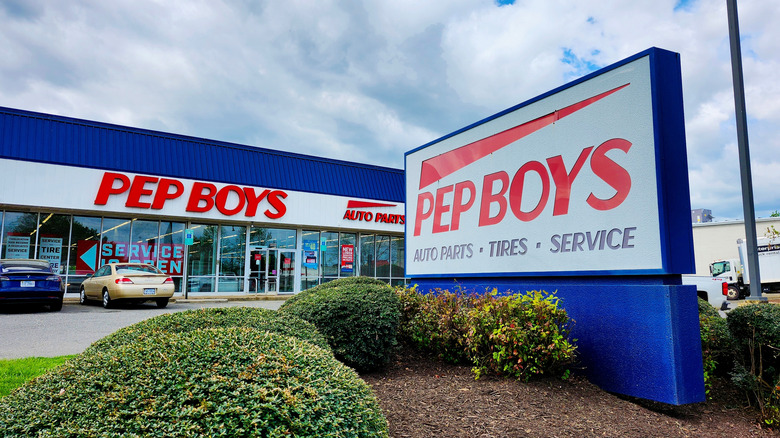
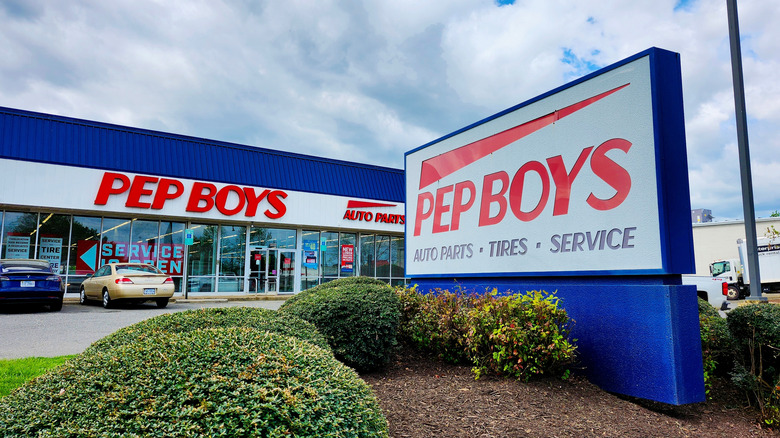
Building A Kit Car To Save Money? It May Cost You More Than You Think
We’ all daydream sometimes, like when seeing an an iconic original Shelby AC Cobra on the auction block that sells for seven figures. In that moment you might think “I could build one of those. It’s just a fiberglass shell and a big engine, how hard could it be?”
The Cobra is a very popular kit car, but a little research will reveal that building one isn’t a frugal endeavor. True, you won’t spend over a million dollars like you would on a real Cobra, but building a kit car in your garage isn’t a task to be undertaken if you’re working on a tight budget. That’s true even if the initial investments on a kit and a chassis don’t seem out of reach financially.
No one here at SlashGear is saying that you shouldn’t build a kit car in your garage; it’s a great way for any gearhead to put their wrenching skills to use and yields a rewarding final product. I’ve been witness to and participated in many kit car builds, and they can be quite a bit of fun. In most cases building a kit car will be cheaper than buying a running original antique or classic, but it’s not an easy or inexpensive process even with the right tools and know-how.
Kit car builds are a tempting proposition
Factory Five Racing was founded in 1995 and sells reproduction kits for blasts from the past like 1930s hot rods and Shelby AC Cobras and Daytona Coupes from the ’60s. Factory Five’s least expensive kit is the Mk4, which looks like a Shelby Cobra roadster. The base kit is priced at a very tempting $14,990 and comes with the following: body and frame, chassis panels, brake and fuel lines, steering and cooling kits, lighting, seats, and a dashboard with gauges and switches. All you need to add is the running gear from a 1987 to 2004 Ford Mustang, which sounds simple enough from here. If you already have a beater Mustang laying around (lucky you) then the perceived cost of entry seems reasonable.
But before you click “buy” and eagerly wait for that large crate to arrive in your driveway, there are a few other things you’ll need to purchase or make arrangements for. A big garage is a must to house you and your project while you build it. A lift is also essential, and depending on the state of your donor you might also need an engine hoist. Kit cars are often unpainted aluminum or fiberglass, so a paint booth is also a big help. Whether you decide to rent or buy shop space and gear you’re going to add plenty to the cost of your build.
Time is money too
That $14,990 will start to grow quite a bit, and quickly. You’ll probably find yourself topping off your toolbox with some new purchases as well as spending to clear some unexpected snags once you start working. If that doesn’t scare you and you have good friends to beg or barter time, equipment, or expertise from then we aren’t going to stop you: by all means, buy everyone some pizza and get to work. It’s important to note that building a kit car in your garage is probably cheaper than buying a running classic, but it will take many hours of work and probably several trips to an auto parts store and/or salvage yard.
If all this seems unmanageable then you might have to appreciate your dream cars from a distance like I do; playing Gran Turismo and hunting online for one of the classic cars that can be had for under $10,000. Also keep in mind that Factory Five is just one option for cool kit cars. Meyers Manx has modernized the dune buggy with a $6k kit and Shell Valley sells a ’29 Model A roadster kit for $16,995 complete or under $5,000 just for the body. Regardless of which kit you buy and how much you spend, you’ll still have to factor in dozens of hours for assembly, gathering parts and supplies, and troubleshooting. If you’re taking unpaid time off from work to build your kit car you’ll have to add that lost income to the cost of the project as well.
Tech
Apple Health gets new Average Bedtime metric in iOS 26.4 beta
The Apple Health app has just been updated with two key changes — a new Average Bedtime metric and a blood oxygen graph in the Vitals section.
Apple Health now has an Average Bedtime metric.
With the release of the first iOS 26.4 developer beta on Monday, enhancements for Apple Podcasts and Apple Music apps were introduced. Another system application, Apple Health, was modified as well. It now offers additional sleep-related information to iPhone users.
To be more specific, Apple Health has received a dedicated Average Bedtime metric, available as part of a new Sleep Highlight in the Sleep section. iOS users will be able to see the time they typically go to bed, based on their sleeping habits over the past two weeks.
Continue Reading on AppleInsider | Discuss on our Forums
Tech
Techdirt Podcast Episode 444: Answering Your Questions
from the with-regards-to-your-inquiry dept
Two weeks ago, we ran a bit of an AMA experiment, with a call on Bluesky for fans of Techdirt to ask Mike any questions they might have. We got lots of great responses and now, as promised, Mike is delivering the answers on this week’s episode of the podcast!
You can also download this episode directly in MP3 format.
Follow the Techdirt Podcast on Soundcloud, subscribe via Apple Podcasts or Spotify, or grab the RSS feed. You can also keep up with all the latest episodes right here on Techdirt.
Filed Under: ama, ask me anything, podcast
Tech
Retraction: After a routine code rejection, an AI agent published a hit piece on someone by name
Following additional review, Ars has determined that the story “After a routine code rejection, an AI agent published a hit piece on someone by name,” did not meet our standards. Ars Technica has retracted this article. Originally published on Feb 13, 2026 at 2:40PM EST and removed on Feb 13, 2026 at 4:22PM EST.
Tech
Most VMware users still “actively reducing their VMware footprint,” survey finds
Migrations are ongoing
Broadcom introduced changes to VMware that are especially unfriendly to small- and-medium-sized businesses (SMBs), and Gartner previously predicted that 35 percent of VMware workloads would migrate else by 2028.
CloudBolt’s survey also examined how respondents are migrating workloads off of VMware. Currently, 36 percent of participants said they migrated 1–24 percent of their environment off of VMware. Another 32 percent said that they have migrated 25–49 percent; 10 percent said that they’ve migrated 50–74 percent of workloads; and 2 percent have migrated 75 percent or more of workloads. Five percent of respondents said that they have not migrated from VMware at all.
Among migrated workloads, 72 percent moved to public cloud infrastructure as a service, followed by Microsoft’s Hyper-V/Azure stack (43 percent of respondents).
Overall, 86 percent of respondents “are actively reducing their VMware footprint,” CloudBolt’s report said.
“The fear has cooled, but the pressure hasn’t—and most teams are now making practical moves to build leverage and optionality—even if for some that includes the realization that a portion of their estate never moves off VMware,” Mark Zembal, CloudBolt’s chief marketing officer, said in a statement.
While bundled products, fewer options, resellers, and higher prices make VMware harder to justify for many, especially SMB customers, migration is a long process with its own costs, including time spent researching alternatives and building relevant skills. CloudBolt’s reported multi-platform complexity (52 percent) and skills gaps (33 percent) topped the list of migration challenges.
“As organizations diversify away from VMware, they inherit the operational burden of managing multiple platforms with different operational and governance models,” the report reads.
While companies determine the best ways to limit their dependence on VMware, Broadcom can still make money from smaller customers it doesn’t deem necessary for the long term.
“Their strategy was never to keep every customer,” CloudBolt’s report says. “It was to maximize value from those still on the platform while the market slowly diversifies. The model assumes churn and it’s built to make the economics work anyway. Broadcom has done the math—and they’re fine with it.”
Tech
Apple MacBook Rumors: New M5 MacBook Pros Could Arrive March 4
If the rumor mill is to be believed, 2026 will feature an unusually large harvest of Apple products. This is shaping up to be a standout year for MacBooks, and we might be only a couple weeks away from seeing the first new models.
Apple’s “Special Experience” slated for Wednesday, March 4, indicates that the company is set to unveil new products soon. While I was expecting to see new MacBooks hit by the end of this month, the early-March event still fits Apple’s spring refresh schedule. We could see a new MacBook unveiled on March 4 along with an eighth-gen iPad Air and a low-cost iPhone 17E. Taking place in New York, London and Shanghai instead of at Apple HQ in Cupertino, California, these smaller media gatherings might be indicative of less explosive reveals. It’s more likely we see MacBook chipset upgrades than more experimental MacBook products rumored for later in the year.
The MacBook Pro is lined up to be the first MacBook update of the year, with Apple bringing the higher-powered M5 Pro and M5 Max chips to both the 14- and 16-inch MacBook Pro lines in March. Then Apple could move to the other end of the spectrum and release its rumored $599 budget MacBook. Also in the first half of the year, the MacBook Air is likely to receive an M5 chip refresh. And before the year is out, we could see the first MacBook Pros with OLED touchscreens.
Watch this: Apple’s iPhone 17E Is Near: Here’s What We Expect
Internet speculation has given way to more concrete evidence of these MacBook releases, as Bloomberg’s Mark Gurman cites internal Apple communications that reveal “a remarkably busy 2026 with a slew of product releases over the next several weeks.”
According to Gurman, the M5 refreshes for the MacBook Pro and MacBook Air could be just around the corner, and the budget MacBook might not be far behind. Let’s take a closer look at the timing, pricing and details of the MacBook refreshes expected this year.
The reported 2026 MacBook release timeline
While the rumors swirl about the MacBook releases expected this year, we don’t have exact dates for when the new models will be announced. It’s extremely likely that Apple’s March media event will set the stage for the company to unveil more M5 MacBook Pros and the MacBook Air, but it’s harder to pinpoint when the other products are slated for release. From what I’ve gathered online, here’s my best guess of when we might see new MacBooks this year.
- March: M5 Pro and M5 Max MacBook Pros, M5 MacBook Air
- First half of 2026: Budget MacBook (estimated price of $599)
- Second half of 2026: Touchscreen OLED MacBook Pro
Read on for a closer look at the timing, pricing and details of the MacBook refreshes expected this year.
The 14-inch M5 MacBook Pro released in October, so we’re expecting the rest of the lineup very soon.
M5 Pro and M5 Max updates for the MacBook Pro
The MacBook Pro was the first MacBook to receive Apple’s latest M5 processor when the 14-inch MacBook Pro was released last October. Now, Apple is expected to extend its M5 offerings and bring the higher-powered M5 Pro and M5 Max chips to the MacBook Pro.
The 16-inch MacBook Pro is still waiting for its M5 update and should also get M5 Pro and M5 Max chips at the same time as its smaller Pro sibling.
CNET’s Lori Grunin tested the M5 chip and noted that it delivers big performance improvements over the M4 “in the narrow areas where it applies, namely on-GPU processing for AI and ray-traced graphics.” Still, the M5 MacBook Pro struggles to keep up with the world of AAA gaming.
The M5 Pro and M5 Max processors will likely follow in the footsteps of previous M-series Pro and Max chips, featuring additional CPU and GPU cores and higher memory allotments.
MacBook Pro models with these high-end chips come at higher prices geared toward processing-intensive tasks like video rendering, 3D modeling and AI workloads. If pricing remains stable, which isn’t a sure bet with the worldwide RAM shortage, the 14-inch MacBook Pro with an M5 Pro chip will likely start at $1,999 and the 16-inch Pro with an M5 Pro will likely start at $2,499.
As with the last MacBook Pro update last October, these M5 updates will be internal upgrades without any significant changes to the laptop’s design. According to Bloomberg’s Power On newsletter, these M5 Pro and M5 Max updates will arrive with Apple’s next major Mac software update, MacOS 26.3, in February or March. Now that Apple has unveiled its March 4 event date, it has become much more likely that we’ll see these upgraded MacBook Pros arrive next month. If you are eyeing a MacBook Pro purchase, it probably makes sense to hold off and wait for the new models to arrive.
Finally, a true budget MacBook?
Apple is reportedly planning to enter the budget laptop market with a low-cost model that’ll be much more affordable than the current cheapest model, the M4 MacBook Air, which starts at $999. This new model will ditch Apple’s M-series in favor of an A-series chip — the same processor that powers the iPhone and could cost as little as $699 or as low as $599 with Apple’s education discount.
Apple already makes the claim that the A19 Pro chip that debuted in the iPhone 17 Pro and the iPhone Air provides “MacBook Pro levels of compute.” But according to industry analyst Ming-Chi Kuo, it’s possible — even probable — that a budget MacBook would utilize an A18 Pro chip (the chip used in the iPhone 16 Pro) instead.
A budget laptop with an A18 Pro chip would likely offer diminishing returns in comparison to the MacBook M4 chips, running roughly 40% slower than the current generation of Macs. The A18 Pro also doesn’t feature support for Thunderbolt ports, so the budget MacBook would likely come outfitted with less-capable USB-C ports instead.
The new rumored budget MacBook will be even more compact than the smallest M4 MacBook Air model.
The other way Apple will reportedly keep the prices down on this new budget MacBook is by shrinking the display size. Kuo reported the laptop will feature an “approximately 13-inch display,” which is a claim corroborated by Gurman. It could feature a 12.9-inch screen, which would be a bit smaller than the 13.6-inch MacBook Air. But it should also be a little lighter than the 2.7-pound Air, making it not only the most affordable MacBook but also the most portable.
This new budget MacBook will compete with Chromebooks and entry-level Windows laptops, which would be a new segment of the market for an Apple laptop. Gurman wrote that the device is intended for “people who primarily browse the web, work on documents or conduct light media editing.” This could be the new MacBook for students. Timing is a little murkier for the release of this budget MacBook, but hopefully it will arrive before the start of the next school year.
M5 coming to the MacBook Air
Just as Apple is reportedly gearing up to give its premium MacBook Pros a refresh with new, more powerful chips, the thinnest, most portable MacBooks are also set to get an upgrade. It’s fairly standard for the MacBook Air to get a springtime refresh, and the M4 MacBook Air was released in March 2025.
Gurman reported that we’ll likely see an M5 MacBook Air release during the first quarter of the year, so we can expect the refresh in the same time frame this year. Like the MacBook Pros, we’re not expecting to see a redesign with the M5 MacBook Air. A new-look Air is at least a couple more years away, according to Gurman.
The 16GB of RAM and 256GB of storage that have been integrated into previous versions of the MacBook Air will likely be standard for any M5 MacBook Air. (I’m keeping my fingers and toes crossed that the minimum storage gets moved up to 512GB, though.)
The M4 MacBook Air starts at $999, and I expect pricing to remain unchanged for the M5 Air.
The first OLED MacBook Pros
Would Apple release two different sets of MacBook Pro laptops in the same year? It’s more likely than you’d think, and it wouldn’t be unprecedented.
Apple released two generations of MacBook Pros in 2023, beginning the year with M2 MacBook Pros and ending it with M3 MacBook Pros. So we know that if Apple deems an advancement significant enough, it will issue multiple refreshes in the same year.
An OLED MacBook Pro lineup would certainly qualify as one of those advancements. According to Gurman, the OLED MacBook Pros would achieve several firsts for Mac computers, integrating a brand new generation of chips and a touchscreen display. Like the previous MacBook Pros, the OLED MacBook lineup would include both 14- and 16-inch models.
The first Macs with OLED displays are also rumored to borrow the Dynamic Island camera cutout from the iPhone.
Apple has been catching up to the rest of the industry by integrating OLED panels into more products, including some of its previous iPhone and iPad Pro models. But as Gurman noted, this will mark the “first time that this higher-end, thinner system is used in a Mac.”
Touchscreen displays have been common in Windows laptops for some time, but this rumored design would be the first time Apple integrates them into a MacBook. “The company has taken years to formulate its approach to the market, aiming to improve on current designs,” wrote Gurman. “[Apple] has developed a reinforced hinge and screen hardware to prevent the display from bouncing back or moving when touched.”
The design will reportedly still integrate standard MacBook Pro keyboard and trackpad functionality. What will apparently change, however, is the camera cutout at the top of the screen. Gurman reported that Apple is retiring the iconic “notch” in favor of “a so-called hole-punch design that leaves a display area around the sensor,” similar to the Dynamic Island introduced on the iPhone 14 Pro and Pro Max.
The OLED MacBook Pros could be the first Mac computers to use next-generation M6 chips, according to Gurman. They’ll also feature thinner, lighter frames that make them more portable than current MacBook Pro designs.
If the MacBook Pro adopts a touchscreen design, the computer will be the closest merger between Mac and iPad we’ve seen yet. Industry analyst Kuo believes this shift “reflects Apple’s long-term observation of iPad user behavior, indicating that in certain scenarios, touch controls can enhance both productivity and the overall user experience.”
As it stands, though, the OLED MacBook Pro will still provide a more traditional computer experience than other Apple products — don’t expect the fully hands-on, tactile navigation of an iPad quite yet. A trackpad and keyboard control scheme will remain important pillars of the MacBook experience.
The pricier components and OLED panels will likely result in an increase in the price of the OLED MacBook Pro. The OLED models will likely be several hundred dollars more than their current Liquid Retina display counterparts. The current 14-inch MacBook Pro starts at $1,999, and the 16-inch Pro begins at $2,499.
The OLED MacBook Pros are rumored to go into production this year. While Gurman previously reported that the OLED MacBook Pros might be released in early 2027, more recent internal reports suggest that Apple is targeting the end of 2026 for a potential release.
Tech
Researchers uncover firmware-level backdoor installed on several Android tablet brands
![]()
The Moscow-based security company reported that Keenadu was found in Android tablets sold by several mostly unnamed brands. Similar to Triada, the threat infects the firmware during the binary build phase, when a malicious static library is secretly linked with the libandroid_runtime.so library.
Read Entire Article
Source link
Tech
Password managers’ promise that they can’t see your vaults isn’t always true
Over the past 15 years, password managers have grown from a niche security tool used by the technology savvy into an indispensable security tool for the masses, with an estimated 94 million US adults—or roughly 36 percent of them—having adopted them. They store not only passwords for pension, financial, and email accounts, but often cryptocurrency credentials, payment card numbers, and other sensitive data.
All eight of the top password managers have adopted the term “zero knowledge” to describe the complex encryption system they use to protect the data vaults that users store on their servers. The definitions vary slightly from vendor to vendor, but they generally boil down to one bold assurance: that there is no way for malicious insiders or hackers who manage to compromise the cloud infrastructure to steal vaults or data stored in them. These promises make sense, given previous breaches of LastPass and the reasonable expectation that state-level hackers have both the motive and capability to obtain password vaults belonging to high-value targets.
A bold assurance debunked
Typical of these claims are those made by Bitwarden, Dashlane, and LastPass, which together are used by roughly 60 million people. Bitwarden, for example, says that “not even the team at Bitwarden can read your data (even if we wanted to).” Dashlane, meanwhile, says that without a user’s master password, “malicious actors can’t steal the information, even if Dashlane’s servers are compromised.” LastPass says that no one can access the “data stored in your LastPass vault, except you (not even LastPass).”
New research shows that these claims aren’t true in all cases, particularly when account recovery is in place or password managers are set to share vaults or organize users into groups. The researchers reverse-engineered or closely analyzed Bitwarden, Dashlane, and LastPass and identified ways that someone with control over the server—either administrative or the result of a compromise—can, in fact, steal data and, in some cases, entire vaults. The researchers also devised other attacks that can weaken the encryption to the point that ciphertext can be converted to plaintext.
Tech
The Galaxy Z Flip 7 is $200 off right now, and it might just flip your mind
Calling all flip phone enthusiasts: the latest Samsung’s coveted Z Flip series has appeared on a great deal.
The Galaxy Z Flip 7 is one of the biggest flip smartphones of 2025, and if you’ve been tempted to make the switch or simply adore Samsung’s flip range, then you’ll want to check this offer out.
Right now, you can get the Samsung Galaxy Z Flip7 256GB cell phone for just $899. That’s a massive $200.99 off its original $1099.99 asking price, and an easy way to nab a bargain on one of the best phones out there.
You can save $200 on the Samsung Galaxy Z Flip 7 today, and it’s the perfect excuse to switch to a phone that brings a little fun back into your tech routine.

The Galaxy Z Flip 7 is $200 off right now, and it might just flip your mind
Still, for all the nostalgia that’s packed into the Z Flip7, this is a very modern device. The phone’s advanced AI and unlocked Android functionality give you tons of freedom where the interface is concerned, allowing you to make the phone truly your own.
The biggest selling point of the phone is its wow-factor display. Not only does the Z Flip 7 fold in half to stow away easily in a pocket or handbag, but when you do open it up, you’re greeted with an almost 7-inch display that’s ideal for watching films and TV shows on the go.
There’s also an eye-watering 50 MP camera, which not only allows you to take incredibly detailed photos, but also pairs well with a powerful processor to ensure that any raw imaging doesn’t slow the handset down.
In fact, we wound up out 4.5-star review of the Flip 7, in the should you buy it section with: “With a larger cover screen, wider foldable screen with a reduced crease, great performance and solid cameras, the Z Flip 7 can compete with some of the best around.”
The Z Flip 7 also packs an extended long battery life, which, on a flip phone, is exactly what you need to get you through to the end of each day without constant worry that you’ll have to find the nearest charging port.
Here’s a phone deal that merges the modern with the nostalgic. For those who want to switch things up and enjoy one of the greatest Android flip phones on the market, this is it.
Even though the Z Flip 7 could be seen as one of the most expensive devices that Samsung produces, having an 18% saving against its RRP certainly gives it more value for money.
You’re getting an eye-catching foldable phone aesthetic coupled with high-tech features and a strong warranty – what’s not to like? It also made a worthy entry as the best Samsung clamshell in our best foldable phone buying guide.
The Flip 7 is undoubtedly the best Flip to date, and one that can finally take the fight to the clamshell competition. It’s not perfect, but for most people, it’s all the foldable they need.
-
Larger cover screen is a much-needed improvement -
More convenient 21:9 ratio screen is much easier to use -
Improved camera performance -
Fast, flagship performance with strong battery life
-
Cover screen software could be better -
Samsung software is full of duplicate/redundant apps -
No dedicated zoom camera
SQUIRREL_PLAYLIST_10148964
Tech
Climactic launches hybrid fund to get startups through the ‘valley of death’
It’s a challenge every startup faces: they’ve made a prototype and proven the thing works, but now have to sell the product and produce enough to get past the “valley of death” that kills so many companies.
“They are chicken and egg stuck,” Josh Felser, co-founder and managing partner of early-stage venture firm Climactic, told TechCrunch.
The hurdle is particularly high for companies making physical goods. Felser noticed it was a common occurrence among startups producing novel materials. Fesler, who previously founded and invested in software startups, said the problem they faced seemed a bit unfair.
“Software companies sell at a negative margin all the time in the beginning, you know, Uber, Lyft, you can look at lots of different examples,” he said. “But for materials companies, they they’re not allowed to do that. One of the questions I had is, ‘why is that?’”
Felser found that unlike software companies, which can quickly add more capacity from cloud service providers, materials startups face a market skeptical of their ability to scale up production without a guaranteed customer.
Felser decided to give them one.
Felser doesn’t run a company with a big budget for clever materials, but he knows a few. And as a climate tech investor, he knows more than a few startups that could benefit from a well-known customer.
Techcrunch event
Boston, MA
|
June 23, 2026
Felser has been quietly working on a new project, called Material Scale, that brings the two sides together using a hybrid debt-equity investment vehicle to give materials startups a boost, TechCrunch has learned. Material Scale will initially focus on climate tech startups in the apparel industry.
Material Scale is betting on startups with commercial-ready products that are ready to scale if a customer can purchase in bulk. Buyers will commit enough funds to cover the cost of the material at market price. Material Scale will fund the difference through a combination of loans and warrants in the startup.
“It’s really minimally dilutive,” Felser said.
Ralph Lauren is joining the platform as a buyer for the initial launch of Material Scale. Investor Structure Climate is joining Climactic as a general partner.
Money from purchase orders flows from the buyer through Material Scale to the startup. “In effect, we buy it and then simultaneously sell it,” Felser said.
The deals between Material Scale and the buyer and between Material Scale and the startup will be inked essentially at the same time.
“Once they sign the deals, this’ll be interesting because the value of the company has significantly changed because they’ve now got a buyer and they’ve got funding to achieve scale,” he said.
Material Scale hasn’t executed any deals yet; Felser said he has large apparel manufacturers interested in participating and a long roster of startups that could use the funding. “The startups all want it,” he said. “We have a big list of companies that are candidates that we’re talking with.”
The first investments will come out of a special purpose vehicle totaling about $11 million. Felser hopes to eventually branch out into other, similar markets like alternative fuels, eventually growing the Material Scale concept to nine figures.
He hopes other investors will steal his idea.
“We need more novel instruments like this to attack climate change,” he said. “We want to be nimble and be able to take advantage of opportunities when we we see them and not just be doing the same old thing.”
Tech
OpenAI’s acquisition of OpenClaw signals the beginning of the end of the ChatGPT era
The chatbot era may have just received its obituary. Peter Steinberger, the creator of OpenClaw — the open-source AI agent that took the developer world by storm over the past month, raising concerns among enterprise security teams — announced over the weekend that he is joining OpenAI to “work on bringing agents to everyone.”
The OpenClaw project itself will transition to an independent foundation, though OpenAI is already sponsoring it and may have influence over its direction.
The move represents OpenAI’s most aggressive bet yet on the idea that the future of AI isn’t about what models can say, but what they can do. For IT leaders evaluating their AI strategy, the acquisition is a signal that the industry’s center of gravity is shifting decisively from conversational interfaces toward autonomous agents that browse, click, execute code, and complete tasks on users’ behalf.
From playground project to the hottest acquisition target in AI
OpenClaw’s path to OpenAI was anything but conventional. The project began life last year as “ClawdBot” — a nod to Anthropic’s Claude model that many developers were using to power it. Released in November 2025, it was the work of Steinberger, a veteran software developer with 13 years of experience building and running a company, who pivoted to exploring AI agents as what he described as a “playground project.”
The agent distinguished itself from previous attempts at autonomous AI — most notably the AutoGPT moment of 2023 — by combining several capabilities that had previously existed in isolation: tool access, sandboxed code execution, persistent memory, skills and easy integration with messaging platforms like Telegram, WhatsApp, and Discord. The result was an agent that didn’t just think, but acted.
In December 2025 and especially January and early February 2026, OpenClaw saw a rapid, “hockey stick” rate of adoption among AI “vibe coders” and developers impressed with its ability to complete tasks autonomously across applications and the entire PC environment, including carrying on messenger conversations with users and posting content on its own.
In his blog post announcing the move to OpenAI, Steinberger framed the decision in characteristically understated terms. He acknowledged the project could have become “a huge company” but said that wasn’t what interested him. Instead, he wrote that his next mission is to “build an agent that even my mum can use” — a goal he believes requires access to frontier models and research that only a major lab can provide.
Sam Altman confirmed the hire in a post stating that Steinberger would drive the next generation of personal agents at OpenAI.
Anthropic’s missed opportunity
The acquisition also raises uncomfortable questions for Anthropic. OpenClaw was originally built to work on Claude and carried a name — ClawdBot — that nodded to the model.
Rather than embrace the community building on its platform, Anthropic reportedly sent Steinberger a cease-and-desist letter, giving him a matter of days to rename the project and sever any association with Claude, or face legal action. The company even refused to allow the old domains to redirect to the renamed project.
The reasoning was not without merit — early OpenClaw deployments were rife with security issues, as users ran agents with root access and minimal safeguards on unsecured machines. But the heavy-handed legal approach meant Anthropic effectively pushed the most viral agent project in recent memory directly into the arms of its chief rival.
“Catching lightning in a bottle”: LangChain CEO weighs in
Harrison Chase, co-founder and CEO of LangChain, offered a candid assessment of the OpenClaw phenomenon and its acquisition in an exclusive interview for an upcoming episode of VentureBeat’s Beyond The Pilot podcast.
Chase drew a direct parallel between OpenClaw’s rise and the breakout moments that defined earlier waves of AI tooling. He noted that success in the space often comes down to timing and momentum rather than technical superiority alone. He pointed to his own experience with LangChain, as well as ChatGPT and AutoGPT, as examples of projects that captured the developer imagination at exactly the right moment — while similar projects that launched around the same time did not.
What set OpenClaw apart, Chase argued, was its willingness to be “unhinged” — a term he used affectionately. He revealed that LangChain told its own employees they could not install OpenClaw on company laptops due to the security risks involved. That very recklessness, he suggested, was what made the project resonate in ways that a more cautious lab release never could.
“OpenAI is never going to release anything like that. They can’t release anything like that,” Chase said. “But that’s what makes OpenClaw OpenClaw. And so if you don’t do that, you also can’t have an OpenClaw.”
Chase credited the project’s viral growth to a deceptively simple playbook: build in public and share your work on social media. He drew a parallel to the early days of LangChain, noting that both projects gained traction through their founders consistently shipping and tweeting about their progress, reaching the highly concentrated AI community on X.
On the strategic value of the acquisition, Chase was more measured. He acknowledged that every enterprise developer likely wants a “safe version of OpenClaw” but questioned whether acquiring the project itself gets OpenAI meaningfully closer to that goal. He pointed to Anthropic’s Claude Cowork as a product that is conceptually similar — more locked down, fewer connections, but aimed at the same vision.
Perhaps his most provocative observation was about what OpenClaw reveals about the nature of agents themselves. Chase argued that coding agents are effectively general-purpose agents, because the ability to write and execute code under the hood gives them capabilities far beyond what any fixed UI could provide. The user never sees the code — they just interact in natural language — but that’s what provides the agent with its expansive abilities.
He identified three key takeaways from the OpenClaw phenomenon that are shaping LangChain’s own roadmap: natural language as the primary interface, memory as a critical enabler that allows users to “build something without realizing they’re building something,” and code generation as the engine of general-purpose agency.
What this means for enterprise AI strategy
For IT decision-makers, the OpenClaw acquisition crystallizes several trends that have been building throughout 2025 and into 2026.
First, the competitive landscape for AI agents is consolidating rapidly. Meta recently acquired Manus AI, a full agent system, as well as Limitless AI, a wearable device that captures life context for LLM integration. OpenAI’s own previous attempts at agentic products — including its Agents API, Agents SDK, and the Atlas agentic browser — failed to gain the traction that OpenClaw achieved seemingly overnight.
Second, the gap between what’s possible in open-source experimentation and what’s deployable in enterprise settings remains significant. OpenClaw’s power came precisely from the lack of guardrails that would be unacceptable in a corporate environment. The race to build the “safe enterprise version of OpenClaw,” as Chase put it, is now the central question facing every platform vendor in the space.
Third, the acquisition underscores that the most important AI interfaces may not come from the labs themselves. Just as the most impactful mobile apps didn’t come from Apple or Google, the killer agent experiences may emerge from independent builders who are willing to push boundaries the major labs cannot. IT decision-makers have to be asking themselves currently
Will the claw close?
The open-source community’s central concern is whether OpenClaw will remain genuinely open under OpenAI’s umbrella.
Steinberger has committed to moving the project to a foundation structure, and Altman has publicly stated the project will stay open source.
But OpenAI’s own complicated history with the word “open” — the company is currently facing litigation over its transition from a nonprofit to a for-profit entity — makes the community understandably skeptical.
For now, the acquisition marks a definitive moment: the industry’s focus has officially shifted from what AI can say to what AI can do.
Whether OpenClaw becomes the foundation of OpenAI’s agent platform or a footnote like AutoGPT before it will depend on whether the magic that made it viral — the unhinged, boundary-pushing, security-be-damned energy of an independent hacker — can survive inside the walls of a $300 billion company.
As Steinberger signed off on his announcement: “The claw is the law.”
-
Sports6 days agoBig Tech enters cricket ecosystem as ICC partners Google ahead of T20 WC | T20 World Cup 2026
-
Tech7 days agoSpaceX’s mighty Starship rocket enters final testing for 12th flight
-
Video1 day agoBitcoin: We’re Entering The Most Dangerous Phase
-
Tech3 days agoLuxman Enters Its Second Century with the D-100 SACD Player and L-100 Integrated Amplifier
-
Video4 days agoThe Final Warning: XRP Is Entering The Chaos Zone
-
Tech18 hours agoThe Music Industry Enters Its Less-Is-More Era
-
Video13 hours agoFinancial Statement Analysis | Complete Chapter Revision in 10 Minutes | Class 12 Board exam 2026
-
Crypto World6 days agoPippin (PIPPIN) Enters Crypto’s Top 100 Club After Soaring 30% in a Day: More Room for Growth?
-
Crypto World4 days agoBhutan’s Bitcoin sales enter third straight week with $6.7M BTC offload
-
Video6 days agoPrepare: We Are Entering Phase 3 Of The Investing Cycle
-
Crypto World12 hours agoCan XRP Price Successfully Register a 33% Breakout Past $2?
-
Sports19 hours agoGB's semi-final hopes hang by thread after loss to Switzerland
-
NewsBeat2 days agoThe strange Cambridgeshire cemetery that forbade church rectors from entering
-
Business5 days agoBarbeques Galore Enters Voluntary Administration
-
Crypto World7 days agoCrypto Speculation Era Ending As Institutions Enter Market
-
Crypto World5 days agoEthereum Price Struggles Below $2,000 Despite Entering Buy Zone
-
NewsBeat2 days agoMan dies after entering floodwater during police pursuit
-
Crypto World4 days agoKalshi enters $9B sports insurance market with new brokerage deal
-
NewsBeat3 days agoUK construction company enters administration, records show
-
Crypto World4 days agoBlackRock Enters DeFi Via UniSwap, Bitcoin Stages Modest Recovery