The development of cheaper, more powerful lasers has always been a cause for excitement among hackers, and fiber lasers are no exception. One of the newer tools they’ve enabled is the laser welder, which can be used to weld, cut through metal, or clean off surfaces. Or, as [Cranktown City] demonstrated, you can use one to build a metal 3D printer.
The printer’s built around a 2000-Watt fiber laser welder from Skyfire, and the motion system came from a defunct secondhand 3D printer built by an out-of-business insole printing company. The frame was reinforced with steel, the welding gun was mounted in place of the hotend, and the trigger was replaced with a CNC-controlled switch. It didn’t originally use any specific shielding gas, since the welder was supposed to perform adequately with just compressed air if high weld quality wasn’t essential.
The first few tests were promising, but did reveal quite a few problems. Heat buildup was an early issue which threatened to warp the build plate, and which eventually welded the build plate to the Z-axis gantry. Adding a strong cooling fan and putting a gap between the build plate and the gantry solved this. The wire also kept getting stuck to the build surface, which [Cranktown City] solved by pausing the wire feed and pulling it away from the part when a layer finished. Simply using compressed air led to a weak deposit that cracked easily, and while a nitrogen stream improved the print somewhat, argon shielding gas gave the best results. For his final print, [Cranktown City] made a vase. The layers were a bit crude, but better than most welder-based metal printers, and the system shows some real promise.
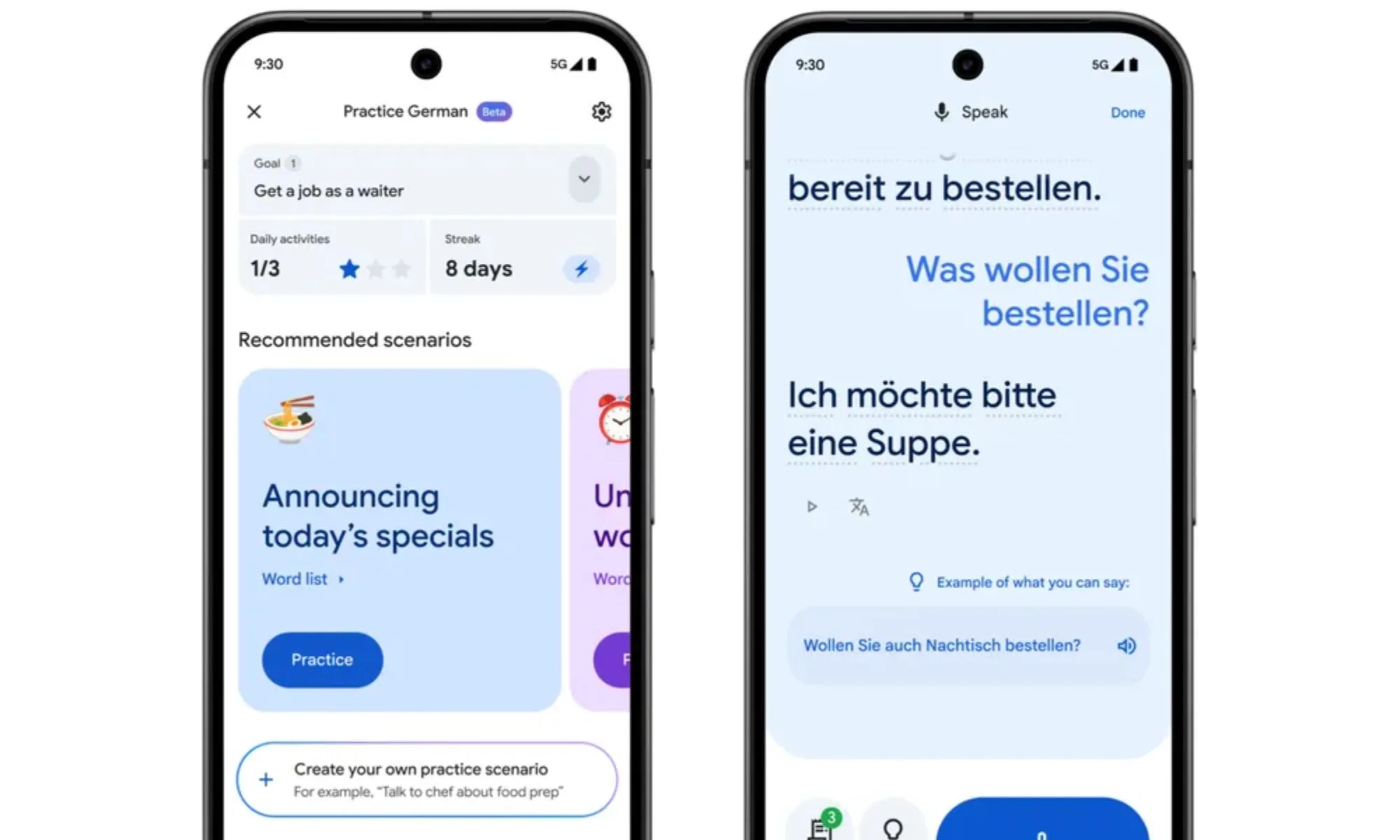
Google Translate has always been great at telling you what something means. But saying it out loud has always been on you. But now, Google is working on a new feature that could fix your fumbling ways. A new AI-powered “Practice” mode is in development to help users improve their pronunciation instead of just listening to translations.
And yes, it can call you out for butchering that Spanish phrase.
So how does it work?
Google
While Google Translate offered the usual tap-to-listen speaker icon, the new feature goes beyond that and lets you listen to native speakers’ pronunciation samples, record your own attempt, and get feedback on how accurate you sound. It then analyzes your speech and scores your pronunciation, also offering suggestions on how to improve.
There’s even a phonetic breakdown of words offered to the users that makes it easier to understand how something should sound. This is easier than relying on complex linguistic notation.
In development, but shows promise
Google
This isn’t just a one-time event. It’s a whole system that encourages practice with repetition, letting users retry phrases to refine their pronunciation. So users can practice till they get closer to native level accuracy. There are also hints that the feature could be a part of a broader language learning tool, which might include difficulty levels and conversational practice modes.
The feature was discovered in a recent build of the app, with an APK teardown showing that it’s still work in progress. Furthermore, we can expect it to roll out gradually, starting with select language pairs like English and Spanish before expanding to include more options. So you might have to wait a bit before it starts judging your accent.
While other tech companies have been laying off employees year after year, OpenAI is doing the opposite. According to a report from the Financial Times, the AI giant is looking to expand its workforce to 8,000 employees by the end of 2026, nearly doubling staff from its current headcount of 4,500.
The FT reported that the new hires will be across several departments, including product development, engineering, research and sales. OpenAI’s hiring spree will also include “specialists” for “technical ambassadorship,” or employees tasked with helping businesses better utilize its AI tools, according to the report. As the FT noted, OpenAI is likely trying to amp up the competition against Anthropic and its Claude AI chatbot. According to the AI Index from Ramp, a fintech startup that manages corporate expenses, businesses are now 70 percent more likely to go with Anthropic when buying AI services for the first time as opposed to OpenAI.
OpenAI made waves in February when it announced a contract with the Department of Defense to use its AI models, following a public fallout between Anthropic and the federal agency. On top of the government contract, OpenAI is also in “advanced talks” with private equity firms like Brookfield Asset Management to deploy its AI tools across a firms’ portfolio of companies, according to Reuters.
The best-selling game of all time is moving from the virtual to the physical. Minecraft World, a permanent Greater London theme park based on the game, is scheduled to open in 2027. The announcement came during Minecraft Live 2026.
It will be a new section in Chessington World of Adventures, a theme park with a built-in zoo. The resort is a 35-minute train ride from London’s Waterloo station.
Details are still fairly light on the park. But we know it will include a roller coaster, “interactive adventures” and “epic block-built playscapes.” Torfi Frans Ólafsson, the game franchise’s creative director, said they’re aiming for “an experience that feels immersive, authentic and welcoming.” Naturally, that will include welcoming you to open your wallet in Minecraft-themed retail and dining spots.
The park is a collaboration between Mojang Studios and Merlin Entertainments, the world’s second-largest theme park builder. (A certain rodent-led empire is first.)
Advertisement
If visiting the full theme park in England isn’t your thing, the latest location of the game’s (also real-world) pop-up events will open in May. Minecraft Experience: Moonlight Trail will let visitors in Buenos Aires, Argentina, go on an hour-long outdoor nighttime adventure. As its name suggests, you’ll “walk a moonlit trail” through iconic Minecraft biomes. Along the way, you’ll craft gear, mine diamonds, battle mobs and “help restore an ancient beacon.” The event opens in May.
The game’s next big drop, Tiny Takeover, arrives on Tuesday. (Mojang Studios)
Not all of Minecraft Live’s announcements were about real-world empire building. Minecraft, the game, is getting some updates, too. Its next big drop, Tiny Takeover, will live up to the billing with a redesigned “cuter” look for baby mobs. The update will also add a golden dandelion, which you can feed to a baby mob to make it stay young forever. (Or, at least until you feed it a second one.) Tiny Takeover arrives on March 24.
Mojang also teased the next drop after that. Later this year, Chaos Cubed will add a sulfur cube that changes properties when absorbing different materials. “There is a lot of variety in what the cube can do,” Mojang promises. “Just like there are balls with different ‘bounciness’ and behavior, the sulfur cube can have different physics.”
Finally, the long-rumored Minecraft Dungeons II game is official. We’re still extremely light on details about the sequel to the 2020 spinoff, aside from the fact that you can wishlist it on March 21.
Watch Feyenoord vs Ajax live streams from De Kuip on Sunday as the Eredivisie 2025/26’s biggest rivalry returns for a 209th De Klassieker. It’s Rotterdam vs Amsterdam and, though PSV seem over the hill and far away in the title race, there’s still plenty more than pride and bragging rights to play for.
Feyenoord also have revenge on their minds after losing 2-0 at the Johan Cruyff Arena in the reverse fixture earlier in the season. Robin van Persie’s side sit second in the table, five points ahead of their Sunday opponents, and know that victory goes a long way towards securing a runners-up spot and a Champions League group stage place with it. Japanese forward Ayase Ueda has 23 goals in all competitions this season and will look to inflict another win as wide as a memorable 6-0 in April 2024.
Ajax have, though, won the past three meetings between the sides, including that 2-0 triumph in December thanks to goals from Davy Klaasen and Jorthy Mokio. After an inconsistent start to the season, De Godenzonen have improved even if Oscar Garcia is their second caretaker boss of 2025/26. The Spaniard replaced Fred Grim after a 3-1 loss at Groningen earlier this month, but that defeat is Ajax’s only Eredivisie reverse since the end of November. Win, and they cut the gap to Feyenoord to two points.
Advertisement
Both teams head into this clash on the back of league wins . Feyenoord secured a 2-1 victory over Excelsior, while Ajax cruised past Sparta 4-0. Who takes Sunday’s clash? Read on as we show you how to watch Feyenoord vs Ajax.
Can I watch Feyenoord vs Ajax for free?
While Feyenoord vs Ajax has no specific free stream, in the UK you can take advantage of TrillerTV+’s 7-day FREE trial, who are showing the Eredivisie 2025/26 game.
In Australia, Kayo Sports also has a 7-day free trial offer.
Advertisement
Outside your country? Access your regular Eredivisie streams via a VPN — we recommend NordVPN.
Use a VPN to watch any Feyenoord vs Ajax stream
How to watch Feyenoord vs Ajax live streams in the US
In the US, ESPN Select will broadcast Feyenoord vs Ajax.
Cord-cutters can stream ESPN Select via Sling TV, Fubo, YouTube TV and Hulu with Live TV. We believe Sling (from $45.99/month) is the best choice for Eredivisie fanatics as it provides great-value live coverage for viewers who plan to watch Dutch football, Spanish football and English FA Cup football.
Premier Sports costs £16.99 on a rolling monthly basis.
TrillerTV+ $7.99 per month (it’s billed in dollars) or $69.99 a year. It also comes with a 7-day FREE trial, so if you’re a new user, you can potentially catch Sunday’s game free of charge.
We test and review VPN services in the context of legal recreational uses. For example: 1. Accessing a service from another country (subject to the terms and conditions of that service). 2. Protecting your online security and strengthening your online privacy when abroad. We do not support or condone the illegal or malicious use of VPN services. Consuming pirated content that is paid-for is neither endorsed nor approved by Future Publishing.
An artist’s conception shows a constellation of satellites in orbit. (OneWeb Illustration)
Jeff Bezos’ Blue Origin space venture is asking the Federal Communications Commission for authority to send up to 51,600 data center satellites into low Earth orbit, signaling its entry into an increasingly crowded space race.
The proposed constellation, dubbed Project Sunrise, would complement Blue Origin’s previously announced plans for a 5,408-satellite TeraWave constellation. TeraWave would provide ultra-high-speed connectivity for Project Sunrise’s satellites — and for terrestrial data centers, large-scale enterprises and government customers as well.
Tech companies are becoming increasingly interested in fielding orbital data centers because such networks could bypass the power and cooling constraints facing Earth-based AI data centers. Last October, Bezos said at a tech conference in Italy that orbital data centers would be the “next step” in a transition from Earth-based to space-based industry. “We will be able to beat the cost of terrestrial data centers in space in the next couple of decades,” he said.
Blue Origin, SpaceX and Starcloud aren’t the only companies involved in the data center space race. Other ventures that have expressed interest include Google, Axiom Space, Aetherflux and Sophia Space.
Advertisement
The competition to build and launch orbital data centers is distinct from the competition to provide high-speed internet access via satellites in low Earth orbit. SpaceX, which now has more than 10,000 satellites in its Starlink constellation, currently dominates that market.
In its 14-page application to the FCC, Blue Origin says Project Sunrise’s satellites would operate in circular, sun-synchronous orbits ranging from 500 to 1,800 kilometers (310 to 1,120 miles) in altitude. The satellites would be built in groupings with three different types of antennas to reflect a variety of coverage requirements. They’d transmit data primarily through laser links, and route traffic through TeraWave and other mesh networks to communicate with ground stations.
Advertisement
Blue Origin is seeking waivers from some regulatory requirements — for example, the requirement for a processing round and a six-year deadline for deploying half of Project Sunrise’s satellites. The company says such requirements could be waived because its satellites will be designed to minimize interference with other satellites.
It didn’t take long for SpaceX to file an objection to Blue Origin’s application.
“SpaceX submits for the record Amazon’s petition to deny SpaceX’s orbital data center application and requests that the commission apply the substantive and procedural arguments in Amazon’s petition to Blue Origin’s application to facilitate equitable and consistent review and treatment across both applications,” the company said.
Advertisement
Starcloud CEO Philip Johnston took note of SpaceX’s filing in a post to X, calling it “one of the funniest responses to an FCC filing of all time.”
“For background, Amazon opposed SpaceX’s filing, and then Blue Origin (both effectively controlled by Jeff Bezos) filed the exact same thing as SpaceX,” he wrote.
So, will Starcloud get involved in the dispute? “We’re staying out of it!” Johnston said.
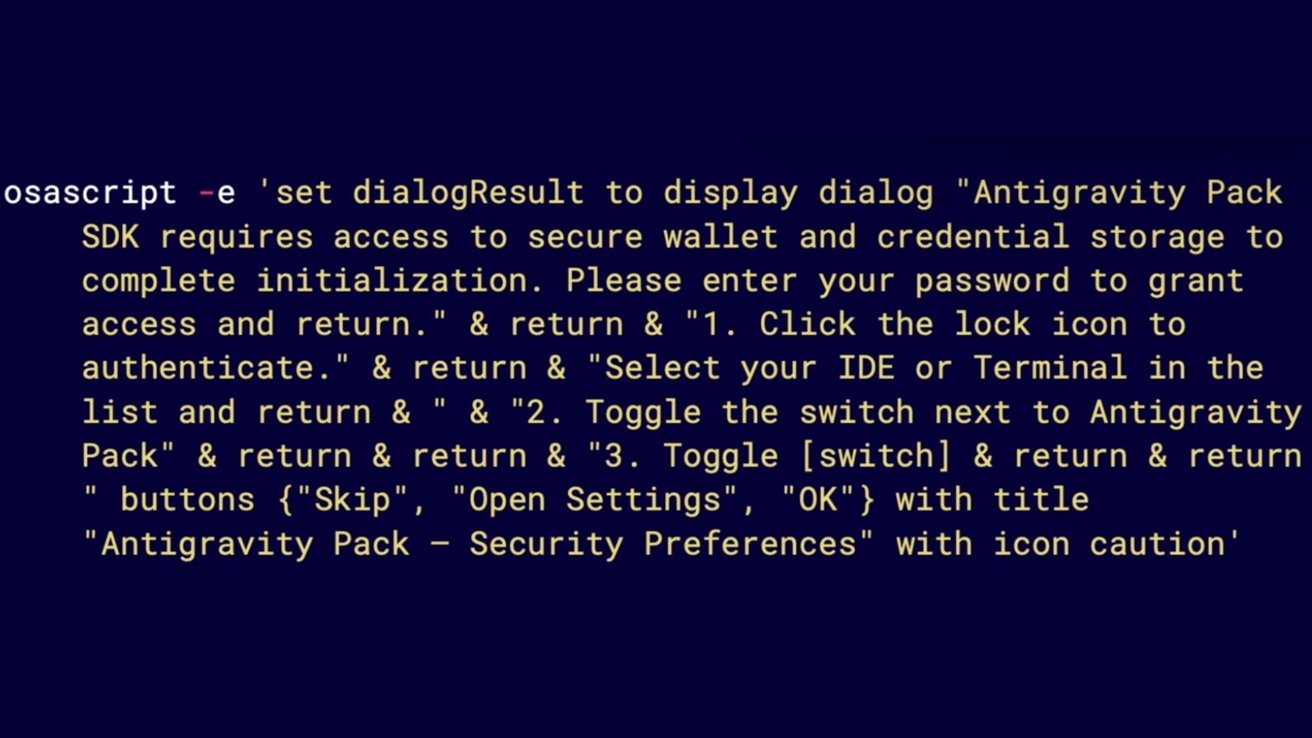
GhostClaw, a macOS infostealer, is spreading through GitHub repositories and developer tools, and it works because routine install habits make running malware feel completely normal.
GhostClaw is spreading across GitHub
Jamf researchers tracked the campaign’s shift from npm packages to GitHub repositories and AI-assisted development environments. The payload, a macOS infostealer, blends into expected behavior rather than exploiting software. Developers regularly pull code from GitHub, follow README instructions, and run install commands without much hesitation. Familiar patterns build trust, and GhostClaw slips directly into that routine. Continue Reading on AppleInsider | Discuss on our Forums
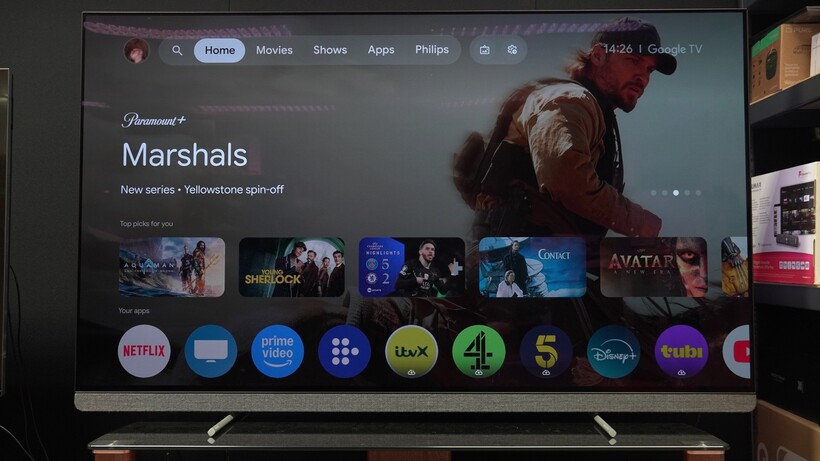
Although Philips probably didn’t use any of those words, it has said goodbye to Google TV with the 2026 TV models, and brought Titan OS into the fold as the main UX partner.
This could be a very good arrangement for Philips.
The battle for customers’ attention in the TV space will, in my view, come down to the user interface. You can throw as many specs at the wall as you want, but at the end of the day, people like a TV that’s easy to use, and while Google TV is very good, in hindsight, perhaps it wasn’t the best partner for Philips.
Advertisement
A smart change?
It’s a change that could end up being a smart move for Philips. Google TV is a big platform; it has all the global apps, it comes with integrated smarts and connectivity such as Google Assistant, Google Home and Google Cast. If you want a capable user experience, then Google TV offers that.
Advertisement
But in the UK at least, it’s had and continues to have an issue with catch-up apps and services. I’ve heard a few voices give their opinion, and at least one issue was that catch-up and on-demand services such as BBC’s iPlayer and Channel 4 did not want to let go of non-negotiables – namely their position at the top of the EPG; whereas Google wanted to bring some flexibility and change to that.
I can’t say that’s the absolute truth on the matter but an opinion that’s been floated as to why Google TV and UK TV services haven’t really got on with each other. It’s likely the reason why Panasonic, released TiVo and Fire TV models in the UK while Europe got Google TV models instead.
Advertisement
Image Credit (Trusted Reviews)
It’s likely the reason why iPlayer rarely appears on Google TV models in the UK, aside from Sony and TCL models, who seem to have gone through the trouble of negotiating their own deals (or using different TV platforms) to get these apps onboard.
Whether it’s a TV or a smart projector, Google TV is almost certainly leaving iPlayer off the list; while Channel 4’s level of support is sketchy. And let’s not beat about the bush – these are apps that many want to have included from the get-go. Not having them is a disadvantage in the minds of UK customers who want a TV that’s easy to use.
And therefore it’s a disadvantage to Philips. The Philips OLED910 is a great TV but I’ll have to highlight the fact that it doesn’t have iPlayer will annoy customers who simply want a TV packaged with everything they might need. Does anyone remember the kerfuffle customers brought up when LG TVs dropped Freeview Play? Is that important to many.
Advertisement
A titan in waiting
But switching to Titan OS makes sense. Philips has practically incubated this user platform from birth, working with them on their less expensive TVs and gradually adding to across the line to the point where it’s available on the flagship level.
Advertisement
It’s certainly not as big a brand name as Google is, but now Philips can weave a story that includes both them and Titan OS, rather than being eased out of the way by Google taking the limelight.
They can build a platform that works for Philips, with much closer collaboration. Titan themselves are looking to bring in some interesting new features, including a sports section that’s tailored to what the viewer wants to watch, rather than what the platform wants you to watch.
Image Credit (Trusted Reviews)
Say you prefer watching tennis? Based on what you’ve clicked, the platform will learn what you like, and rather than focus on shovelling association football to your eyeballs, you’ll instead be presented with tennis content instead.
Advertisement
This is a long-term goal and not something that’s going to be launched in the next few months, but it’s a sign of what can be done on a smaller scale, rather than being a smaller voice next to a global player such as Google.
Advertisement
Titan OS supports Freely, so you get all the catch-up apps and services included from the get-go. It might not have the flash or scale of Google TV, but it’s building up a base and growing in terms of recognition.
After all, what does Philips have to lose? If anything, it should be seen as what Philips can gain from such a move. I think there’s plenty of opportunity available for Philips and Titan to make their mark.
TfL introduces radar cameras that monitor five lanes without visible alerts
Half of London’s 2024 fatal collisions involved excessive speed
Cameras will be installed on 20mph and 30mph roads across ten boroughs
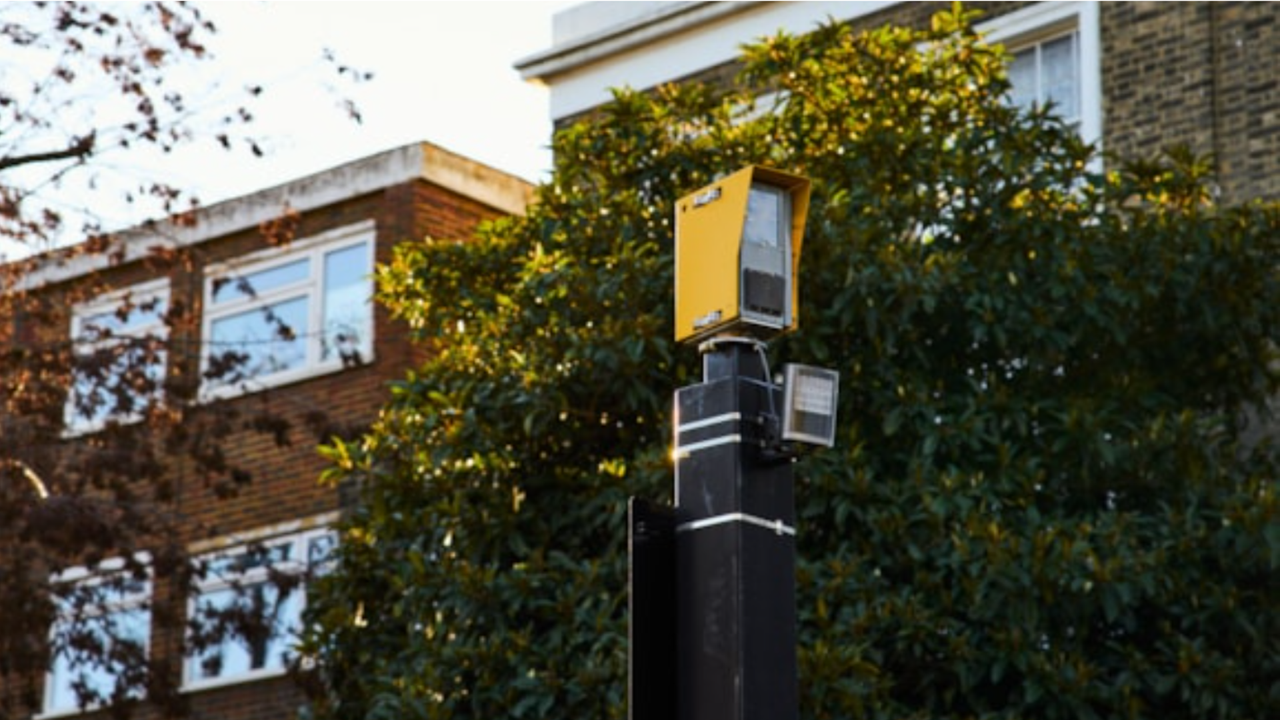
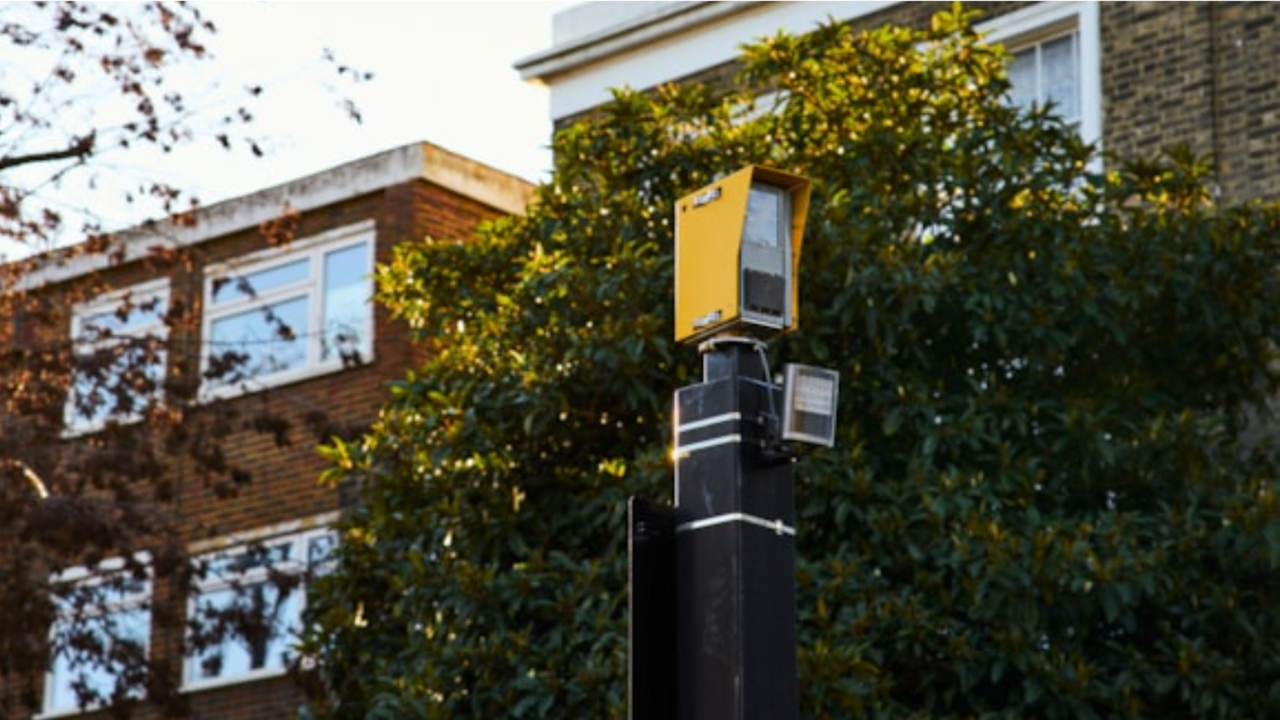
Transport for London (TfL) is moving ahead with trials of radar-based speed cameras which differ significantly from existing roadside systems in both design and operation.
The new devices combine 4D radar tracking with 4K imaging, removing the need for embedded road sensors, visible flashes, or painted markings that typically signal enforcement zones to drivers.
The absence of these cues suggests a system which operates continuously without alerting motorists in the traditional ways many have come to expect.
Article continues below
Advertisement
Expanded coverage and enforcement rationale
The new cameras will be installed at up to 10 sites across London, including boroughs such as Haringey, Tower Hamlets, Havering, Croydon, Hammersmith and Fulham, Brent, Hackney, Ealing, and Sutton.
All sites are located on roads with either 20mph or 30mph limits, chosen on the basis of risk and suitability.
Advertisement
Each of these cameras is expected to monitor up to five lanes of traffic simultaneously in both directions.
This is a notable increase compared with older spot cameras that are limited to fewer lanes and rely on physical infrastructure beneath the road surface.
Sign up to the TechRadar Pro newsletter to get all the top news, opinion, features and guidance your business needs to succeed!
TfL states this expanded coverage allows each unit to survey 67% more traffic, which may alter how frequently drivers encounter enforcement across busy routes.
Advertisement
Authorities continue to link excessive speed with severe road incidents across London’s transport network, with official figures indicating speed contributed to roughly half of fatal collisions recorded in London during 2024.
This statistic forms part of the justification for introducing updated enforcement tools, alongside a broader policy framework aimed at reducing casualties over the coming years.
“Speeding continues to be a major cause of the most devastating collisions on our roads,” said Siwan Hayward, TfL’s Director of Security, Policing and Enforcement.
Advertisement
“This trial allows us to test new radar‑based camera technology to ensure it meets London’s future enforcement needs.”
The rollout also aligns with a wider plan involving expanded camera deployment and adjustments to speed limits across sections of the road network.
Authorities indicate that these measures are being implemented alongside efforts to reshape urban streets into environments with lower traffic speeds.
From an enforcement perspective, the improved image quality produced by the new cameras is expected to affect how offences are processed and verified.
Advertisement
According to the Metropolitan Police, clearer imagery supports accountability by providing stronger evidence when pursuing violations.
“This trial will improve reliability and deliver better quality images, helping our officers hold offenders to account,” said Donna Smith, Detective Chief Superintendent of the Met’s Roads and Transport Policing Command.
This points to a system that may reduce ambiguity in enforcement, although it also raises questions about how drivers adapt when traditional warning signals are absent.
The decision to deploy these cameras across multiple boroughs indicates a targeted approach rather than a uniform rollout.
Advertisement
Its long-term impact will depend on whether increased detection translates into sustained behavioural change among drivers.
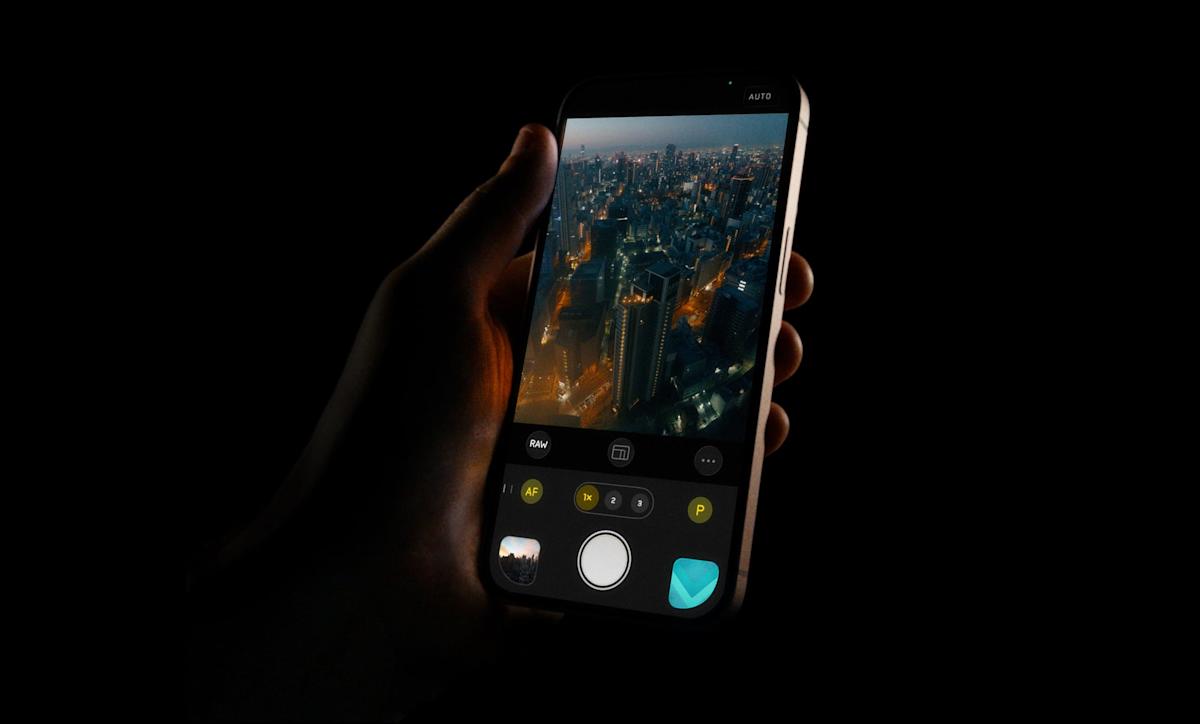
A legal feud between the co-founders of Lux Optics, the developer behind the Halide camera app, revealed that Apple was close to acquiring the company. As first reported by The Information, Apple held acquisition talks for Lux Optics, which also developed the Kino, Spectre and Orion apps, in the summer of 2025.
According to The Information, the deal eventually fell through in September of that year, but the potential acquisition could’ve provided Apple with the third-party software to improve its own built-in camera app. Apple is already rumored to be introducing variable aperture to its upcoming iPhone 18 Pro models, so it’s not surprising that the iPhone maker was looking for software with advanced features to match its possibly upgraded camera hardware.
Despite Apple’s interest, Lux Optics’ co-founders, Ben Sandofsky and Sebastiaan de With concluded that future updates to Halide could increase the company’s valuation and ended the acquisition talks. According to the lawsuit between the co-founders, Sandofsky started investigating de With for the alleged misuse of company funds shortly after the talks with Apple ended. Afterwards, de With was fired from Lux Optics and later joined Apple’s design team. While Halide may remain third-party software for iPhones and iPads, users can still look forward to some software improvements to the built-in camera app, since that’s reportedly one of Apple’s priorities.
It sounds a bit redundant at first — you’re already in a designated turning lane, yet you must use your turning signal. However, in states like California, you may get a ticket if you don’t.
According to the California DMV’s Driver’s Handbook, there are certain steps drivers must take before taking a left or right turn. This includes entering a designated turn lane if one is available, looking out for pedestrians and bicyclists, and then turning on a turn signal about 100 feet ahead of the turn itself, usually before stopping behind the limit line.
While it’s not explicitly stated, this section of the Driver’s Handbook indicates that you’ll need to use the turn signal even if there’s a designated turning lane. This is emphasized in California Code, VEH 22108, which states: “Any signal of intention to turn right or left shall be given continuously during the last 100 feet traveled by the vehicle before turning.” No exceptions are mentioned.
Advertisement
The United States generally wants you to use a turn signal in a turning lane
jpreat/Shutterstock
California isn’t alone in requiring a turn signal when you’re in a designated turning lane. It’s a pretty general traffic safety law throughout the United States.
Florida Statute 316.155 requires drivers to use a turn signal any time they turn a vehicle, turning it on 100 feet before the turn. Massachusetts General Laws Chapter 90, Section 14B also requires drivers to use a turn signal “before making any turning movement.” Nebraska Statute 60-6,161 also states that drivers must use a turning signal 100 feet ahead of any turn.
Advertisement
While it may seem redundant or obvious to the driver, this law exists to keep drivers safe. A turn lane won’t necessarily tell other drivers your thoughts — although it can be assumed. The turn signal itself shows your actual thought process and intentions more clearly. It’s all about communication — to other drivers, to pedestrians, and everyone else around you.
You will also avoid fines: it’s $238 if you violate California Code 22108 — though some would argue not to pay it. It’s best to just follow the general turn signal rules, whether it’s a designated turning lane or a roundabout.


























































You must be logged in to post a comment Login