BYD has officially unveiled the 2026 Seagull, sold internationally as the Dolphin Mini or Dolphin Surf, and the numbers deserve your attention.
The updated compact EV’s price starts from 69,900 yuan, which is around $10,300, in China, and tops out at 85,900 yuan, which is around $12,600. It debuted at the 2026 Beijing Auto Show before going on sale this week (via CarsNewsChina).
2026 BYD Seagull got launched w/ px from 69.9 to 97.9k RMB. The top 2 px versions come w/ Lidar + DiPilot-300 & DiLink-150 to have the sensor & compute for latest smart car tech.
This package adds 12k RMB on top of the standard DiPilot-100 config. Still comes in 305/405 km… pic.twitter.com/fEQQ9jOcdU
The standout upgrade this year is the optional “God’s Eye B” intelligence driving package, called the DiPilot 300 system, which adds a LiDAR sensor to the subcompact city car, increasing its price to between $13,400 and $14,400.
The system provides city-level navigation on autopilot, along with traffic light recognition and roundabout handling. That’s semi-autonomous driving capability at a price bracket where most car buyers in the US are still choosing between a used Toyota and a three-year-old Chevy.
The longer range BYD variant packs a 38.88 kWh battery pack that delivers up to 252 miles of CLTC-certified range. Base variants, on the other hand, use a 30.08 kWh battery pack that provides up to 190 miles of claimed range.
CnEVPost / BYD
BYD’s subcompact city car packs in enough punch
Given that it’s designed to be driven around in the city, the new BYD EV features a 55 kW motor that can generate 135 Nm of torque, numbers that might not sound great at first, but complement the car’s purpose.
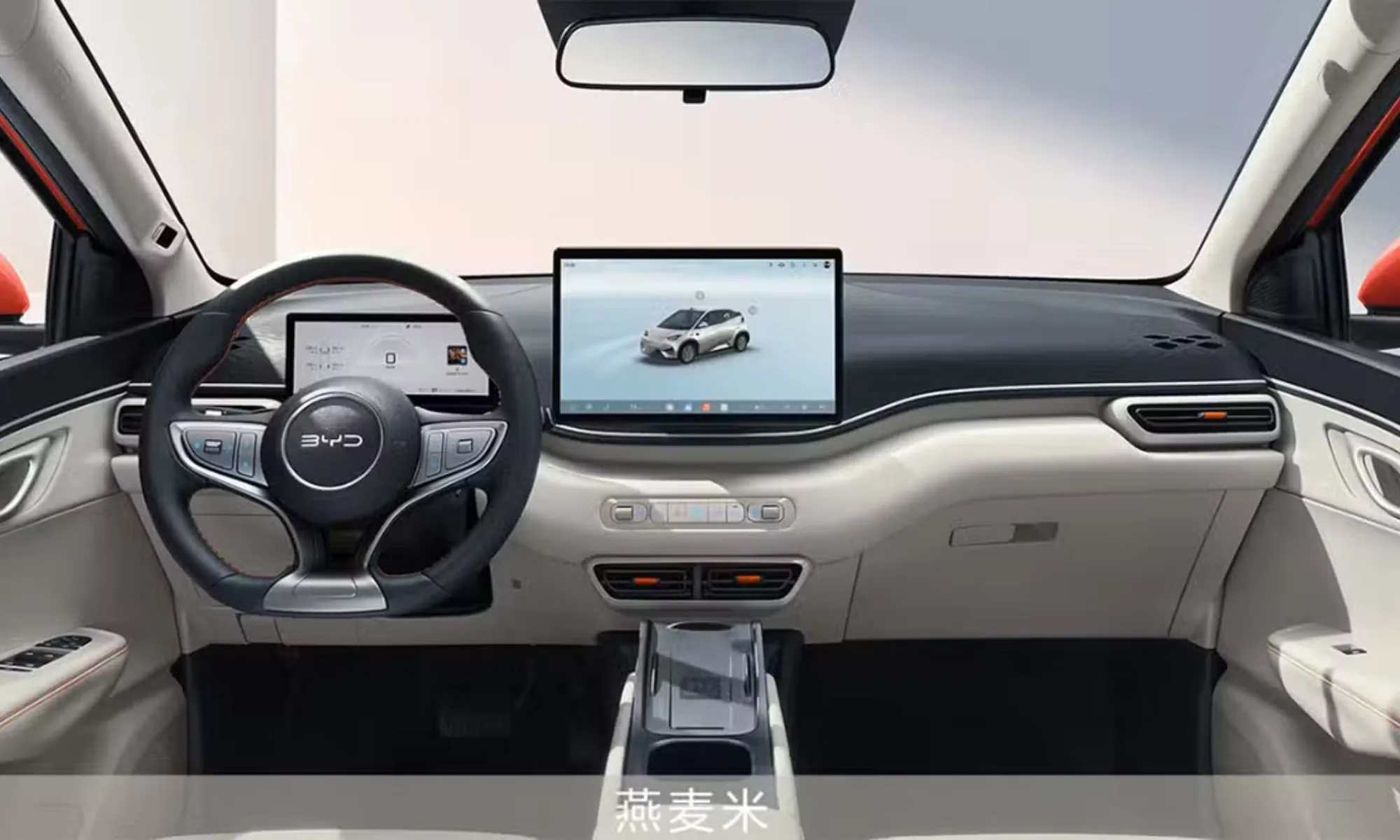
The cabin offers a 12.8-inch central touchscreen display for handling navigation and 3D vehicle controls. Optional add-ons can get buyers 50W wireless charging, heated front seats, and a six-way power-adjusted driver’s seat.
Advertisement
To me, the Seagull’s 2026 update isn’t just a product refresh. By pushing LiDAR into the sub-$15,000 bracket, BYD is essentially normalizing advanced driver assistance at a price point where it’s hard to even imagine the feature.
Anthropic, the AI lab behind Claude, has filed confidentially for an initial public offering, the company said in a blog post Monday.
The company, which is valued at close to $1 trillion, submitted a draft registration statement to the U.S. Securities and Exchange Commission for a proposed initial public offering. Anthropic has yet to list the number of shares or set the price. Anthropic said the proposed initial public offering will depend on market conditions and other factors.
The filing comes less than a week after Anthropic raised $65 billion in a Series H funding round that pushed its valuation to $965 billion. The round, which was co-led by Altimeter Capital, Dragoneer, Greenoaks, Sequoia Capital, Capital Group, Coatue, and D1 Capital Partners, attracted a bevy of institutional and strategic investors in anticipation of an IPO.
Anthropic’s confidential filing landed in an already white-hot IPO season that includes SpaceX’s initial public offering that is targeting a $2 trillion valuation. SpaceX is seeking to raise more than $75 billion.
Advertisement
It also comes as its rival OpenAI continues to raise funding, notably a $122 billion round in March at an $852 billion post-money valuation, and prepares for its own IPO. OpenAI is expected to file for an initial public offering, setting the stage for an IPO season that will pit the two largest AI labs against each other and test the market’s resolve and interest in artificial intelligence.
Anthropic, now an AI powerhouse that has landed top-tier enterprise customers, was once considered an underdog in the emerging world of large language models. The startup was founded in 2021 by former OpenAI employees and was seen as a distant competitor to OpenAI and its AI chatbot, ChatGPT.
The company has gained investors and customers for the capabilities of Claude and powerful model Mythos, which has been released on a limited basis. That has translated to eye-popping revenue growth. The company said recently that its revenue run-rate had surpassed $47 billion, up from $9 billion at the end of 2025.
That revenue growth rate could accelerate as Anthropic makes its Mythos model more widely available. Anthropic unveiled Mythos in April — along with a warning to software developers that its model had discovered thousands of high-severity bugs that would need to be fixed before it could be made public.
Advertisement
The generative AI lab is poised to give the European Union’s cybersecurity agency access to Mythos, Bloomberg reported, citing anonymous sources.
When you purchase through links in our articles, we may earn a small commission. This doesn’t affect our editorial independence.
Gigascale, the venture firm led by former Meta CTO Mike Schroepfer, announced on Monday that it had raised a $250 million fund to back founders who are “rebuilding the physical economy.”
The new fund will focus on energy, grid infrastructure, and critical minerals all through the lens of climate tech. By continuing with the overt climate focus, Gigascale is bucking conventional wisdom which has soured on the “climate tech” thesis.
Gigascale’s second fund is shaping up to be a continuation of the sort of bets that Schrep, as he’s known, has made in the three years since he started Gigascale. The firm has backed some high-profile startups in the climate tech space, including Commonwealth Fusion Systems, Heron Power, Mill, and Form Energy.
Gigascale emerged from Schrep’s study of climate tech during COVID, and the new fund is the first with an early-stage focus that includes institutional investors.
Advertisement
Climate tech has always been a wide-ranging sector, and Gigascale’s portfolio reflects that. But in recent years, the sector has become increasingly focused on energy and infrastructure, a shift that has been largely driven by the demands of AI.
It’s no surprise, then, that power is a significant focus of the new fund. With rising demand for electricity, there’s an opportunity to invest in new energy sources and new ways to deliver that to businesses and households.
Schroepfer pointed to solar as a recent example of a clean technology that’s faster and cheaper and winning the market.
While solar and batteries have come to dominate conversations around clean power, Schroepfer clearly sees more opportunities. AI and broader trends in electrification have made it challenging for companies to connect to the grid. In response, many have been seeking to develop their own power sources, though there, too, competition is stiff. Natural gas turbines, for example, have a waitlist that stretches into the early 2030s.
Advertisement
The power crunch gives energy startups an opening. In energy intensive industries, bring-your-own power “is going to be a competitive advantage over time,” Schroepfer said on the Inevitable podcast last year. Startups that can supply power cheaper or more flexibly — or both — can win on those merits alone.
But Gigascale also expects its energy investments to extend beyond generation, citing grid infrastructure, critical minerals, and physical AI as other places where the company will look for opportunities.
“The companies we back win because they’re cheaper, faster, and more reliable,” Schroepfer said in a statement. “That’s how adoption scales. Climate impact is the result of better-performing systems.”
When you purchase through links in our articles, we may earn a small commission. This doesn’t affect our editorial independence.
FiiO has expanded its hi-fi line-up with three new products, headlined by the JT9 planar magnetic headphones.
The latest products from FiiO lean heavily into high-power desktop audio but keeps portability and modern connectivity in view.
The JT9 is the most immediately consumer-facing of the trio. It uses a large 95 × 86mm planar magnetic driver paired with an ultra-thin diaphragm. This design is claimed to resolution, transient response, and overall tonal accuracy. FiiO also highlights its dual-coating diaphragm technology and a uniform magnetic field structure, which aim to reduce distortion and improve detail retrieval across the frequency range.
Despite the scale of the driver system, the JT9 remains relatively lightweight at 365g for a pair of planar headphones. Unusually for this type of headphones, it includes a foldable design for easier storage. A sensitivity rating of 95 dB/mW allows it to remain usable across a range of sources, and FiiO has included both 3.5mm and balanced 4.4mm cables in the box to cover different setups.
Advertisement
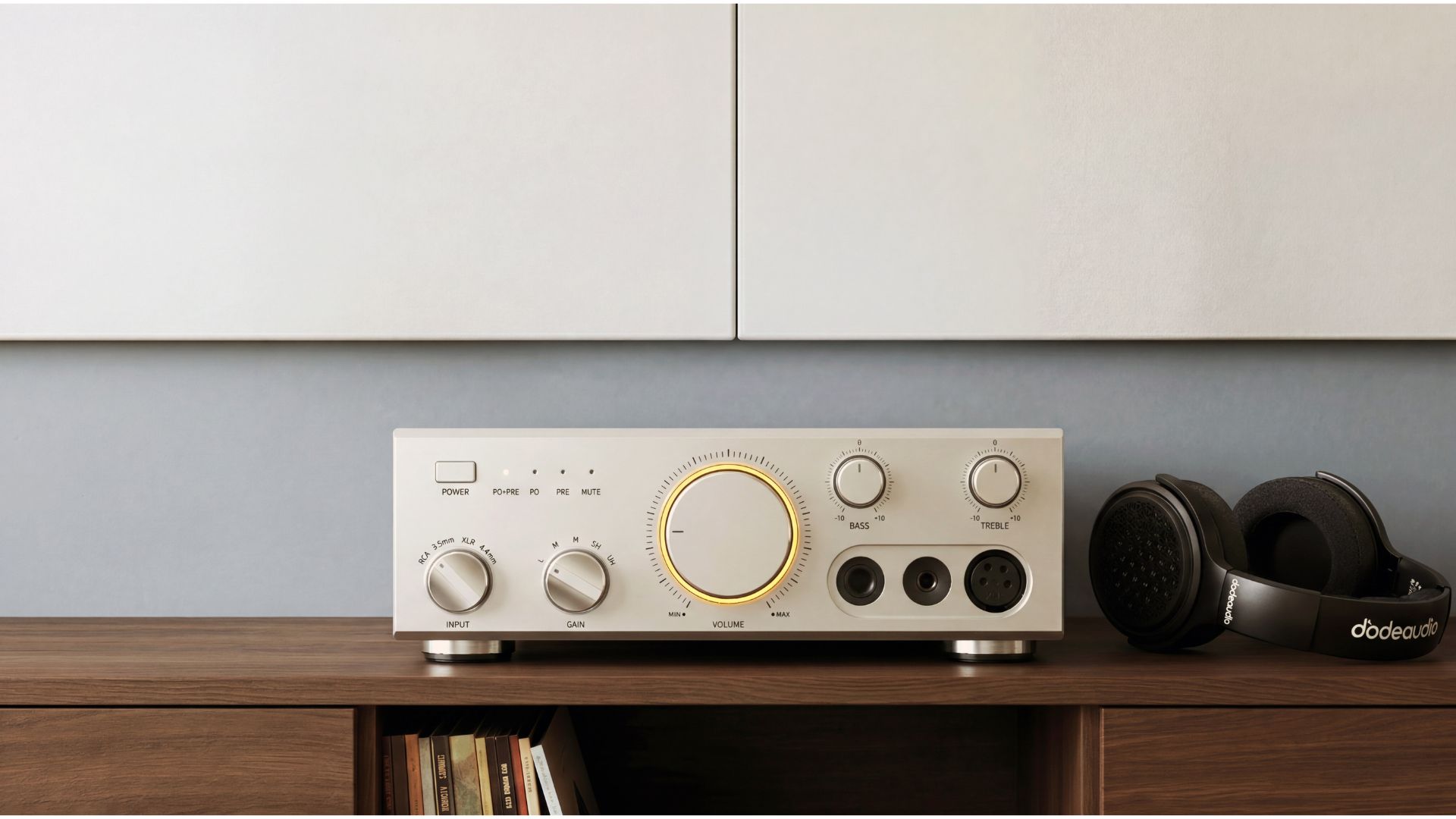
Alongside the JT9, FiiO brings forth its LEVEL 1 desktop amplifier, which sits firmly in the high-power category with up to 2 × 300W output based on the Texas Instruments TPA3255 Class D amplifier. It supports a wide range of inputs that includes RCA line-in, USB, coaxial, and Bluetooth 6.0 with LDAC.
Advertisement
The LEVEL 1 also adds subwoofer and pre-out connections, and includes physical bass and treble controls that give it a slightly retro, hands-on feel. Internally, FiiO has used a six-layer immersion gold PCB and a mix of German and Japanese capacitors. The chassis combines aluminium with wood accents to soften its otherwise industrial design.
Rounding out the announcement is the fully discrete Class A headphone amplifier. It delivers 1000mW + 1000mW output through a custom 60W toroidal transformer and regulated power supply system. It includes five gain levels and a wide set of connectivity options. These include 3.5mm, 4.4mm, XLR, and RCA in/out, alongside 12V trigger support for integration into larger audio systems.
Advertisement
Pricing for all three products is yet known at this moment in time, but will be announced during Vienna High End later this week.
We’re excited about WWDC 2026 , and after talking to some of you, you are too! Here’s new wallpapers, an Apple Music playlist, and tips for developers, all from Apple, to keep the hype going.
For WWDC 2025, Apple announced it with the line “On the horizon,” but changed it to “Sleek peek,” with one week to go. That change was revealed by Apple’s senior vice president of Worldwide Marketing, Greg Joswiak.
Now, again exactly a week ahead of WWDC, Joswiak has revealed a change alongside a new animation. WWDC 2026 has been given the headline “All systems glow.”
Apple has also been adding to its WWDC promotion across its developer site and services. There’s a WWDC 2026 playlist on Apple Music, for instance, with more to come.
Advertisement
It’s also now possible to download new WWDC wallpapers. They each feature a still, typically a close-up, of the glowing, liquid logo from the latest animation, in versions for the Mac, iPhone, and iPad.
Plus a new video guides developers on how to prepare for the conference. It includes details of the newly updated Apple Developer app, plus how to sign up for WWDC’s sessions.
WWDC 2026 is a week-long developer conference that runs from June 8 to June 12. The opening keynote will be where Apple makes its major announcements for macOS 27, iOS 27, and more.
As ever, AppleInsider will be at Apple Park for the event. It’s expected that Apple will once again showcase its Apple Intelligence AI features, this time most significantly with a dramatic update to Siri.
Advertisement
If Apple stays true to form, the majority of the event will concern iOS 27 for the iPhone. But there will certainly be updates for at least most of Apple’s platforms, including the Apple Watch‘s watchOS and Apple Vision Pro‘s visionOS.
Problematic hinge and motherboard claims aside, the rumor mill has decided that the iPhone Fold will be coming out in the fall of 2026. Only Apple really knows
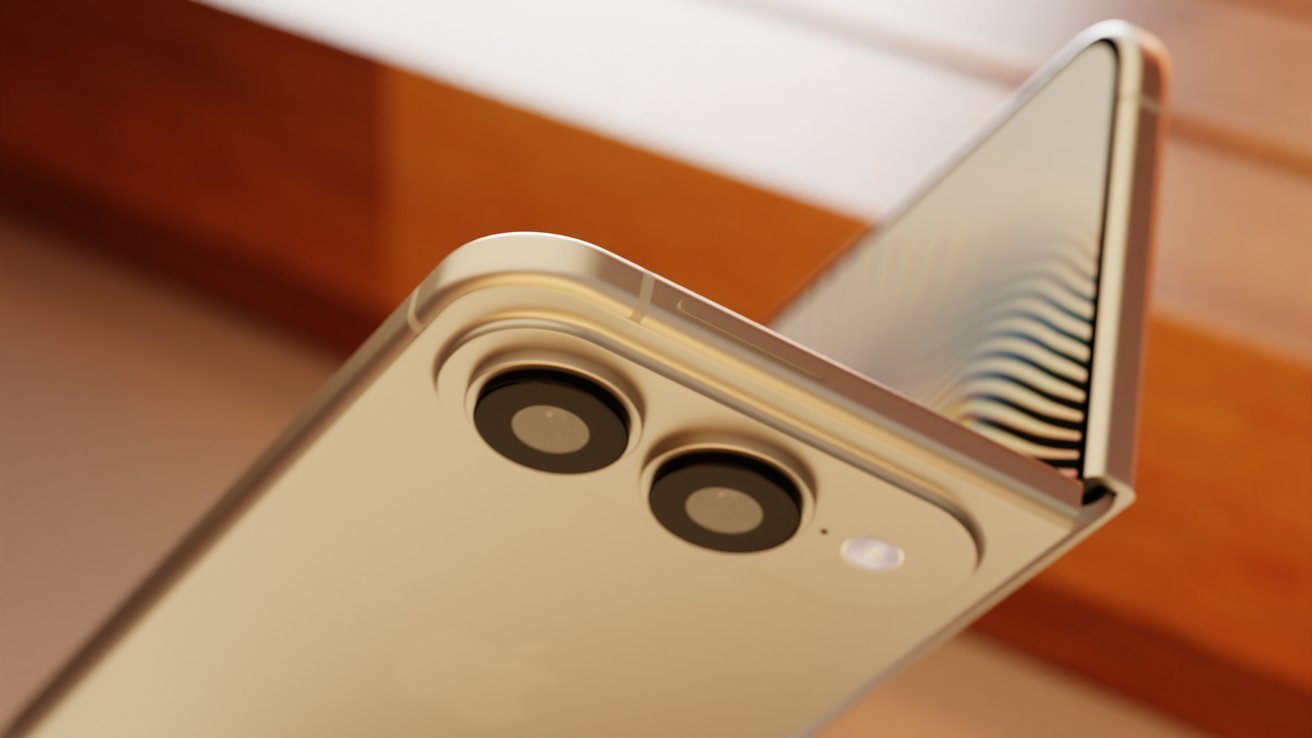
The iPhone Fold has been a hot topic of rumors, and in later weeks, has been subject to claims that there are production problems. Despite the varying viewpoints, that hasn’t stopped more reports from surfacing about the flexible smartphone.
The newest claim is from serial Weibo leaker Fixed Focus Digital. Posting on Monday, the leaker says that, despite rumors of manufacturing issues, the release is still planned to occur in September.
Fixed Focus Digital assures their followers while acknowledging other claims that the manufacturing process is troubled ahead of the final assembly of the model. Early-stage products are experiencing “ramp-up difficulties,” they say in a machine-translated post.
Advertisement
On the bright side, the foldable model apparently has good heat dissipation and cooling performance. This is believed to be from Apple making a significant investment in thermally managing the product.
As with all Weibo leakers, we must warn that they tend to be less reliable than other rumor sources. This is in part due to needing to maintain their audience of followers by providing a steady flow of posts.
In the case of Fixed Focus Digital, they have a middling record for accuracy. It also doesn’t help that their comment is made with no additional evidence or reasoning to bolster its release schedule claim.
Questionable trouble
Fixed Focus Digital doesn’t specify what the apparent issues are, but there have been quite a few reports about what they could be referring to. Including their own posts.
Advertisement
On May 26, Fixed Focus Digital said Apple didn’t have manufacturing difficulties for the iPhone Fold. There was, however, an issue in getting the model into mass production due to an issue with a circuit board component manufacturing technique.
At the time, they said that the situation was “not optimistic.”
Earlier in the month, on May 18, Instant Digital said that there was a problem with the hinge caused through repeated opening and closing. They did not explain what the exact problem was, though a social media post that was circulating at the time alleged that there was a rattle in the hinge.
Writing in a post last week titled “Zero Evidence of AI-Related Job Losses,” Sløk points to ADP employment data to support his conclusion. The report found that private companies added almost 110,000 people to their payrolls in April. Read Entire Article Source link
In the fall of 2006, I decided emo was out and IDM was in. Fueled by the hope of becoming the next Four Tet or Aphex Twin, I marched into my local Guitar Center and purchased an audio interface to convert my guitar and vocals into ones and zeroes, then mangle them in Ableton Live.
When I got home, I plugged a brand-new M-Audio Fast Track Pro into my Windows desktop and immediately hit a brick wall of audio driver configuration hell. I eventually got the thing to work after hours of troubleshooting, but latency—the gap between when you make a sound and when it hits your computer—rendered the box unusable.
I was tempted to throw the Fast Track out the window and sample the sound of it hitting the pavement with an analog tape recorder. Instead, I went back to Guitar Center, traded the interface for a Line 6 DL4 delay pedal, and set my sights on ripping off Explosions in the Sky in a proper band setting.
Advertisement
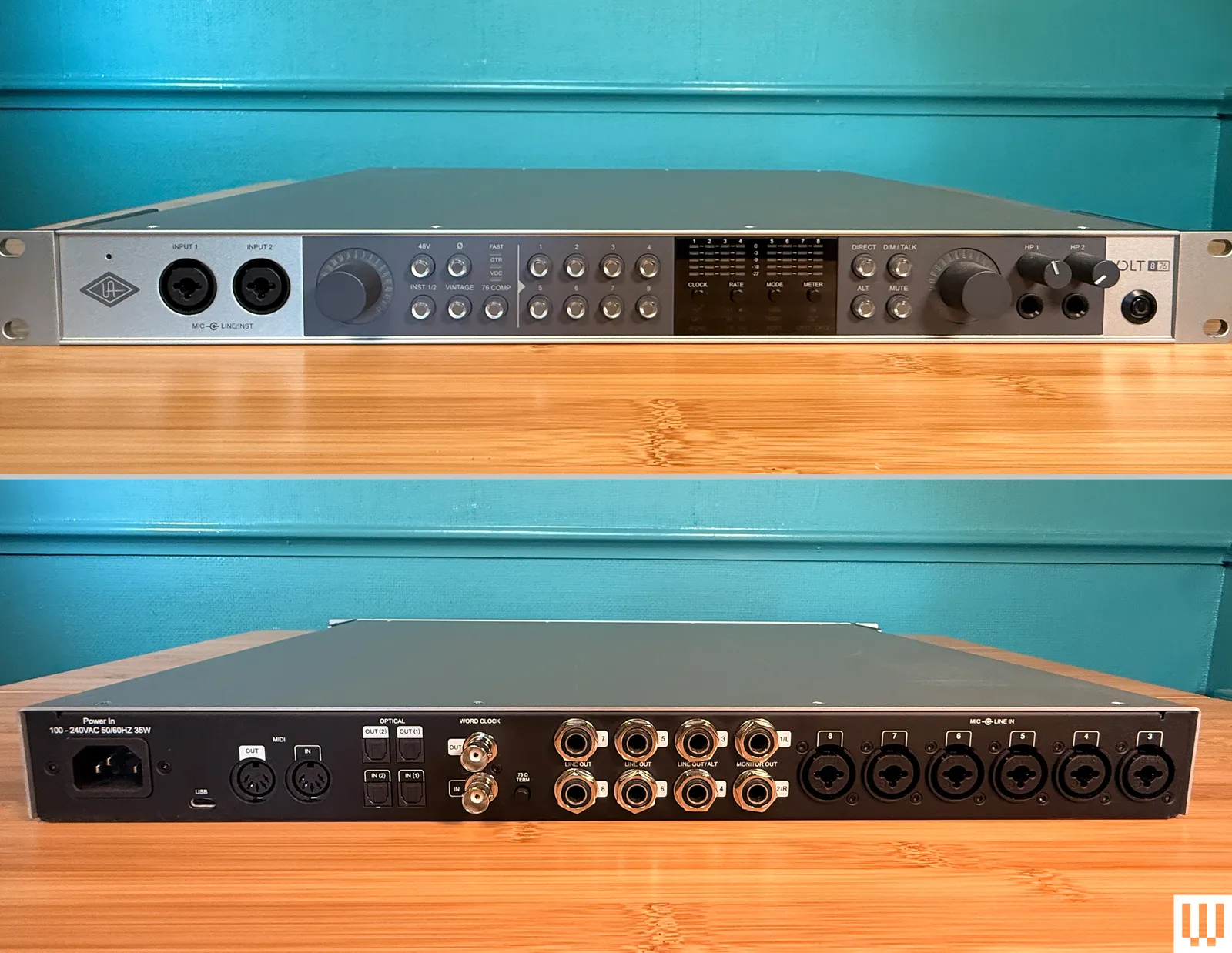
Had something quick and painless like the Universal Audio Volt 876 existed at the time, who knows where my life would be now. I probably wouldn’t be opening for Four Tet and Fred Again … at the O2 Academy, but my entrée into computer-based music would have gone much more smoothly than it did in 2006.
For the Masses
Audio interfaces have come a long way since then. Prices are down, quality is way up, and latency is negligible in most home studio environments. Interfaces that pair with proprietary software and drivers still exist, but the genius of class compliance—meaning you can plug a device into your computer without needing the aforementioned—makes it easy for audio gear manufacturers to build boxes that are effortlessly plug-and-play on most operating systems. Even iOS and Android, in many cases. Anyone can find a decent-sounding interface on Amazon for $200 or less and plug it into their iPhone, then plug in a cheap mic and mumble their way to TikTok superstardom.
We may receive a commission on purchases made from links.
It’s no secret that Ryobi primarily caters to DIY home repair enthusiasts. There are some tools the pros use and others that are more powerful than those from better-known competitors, but in general, Ryobi sells decent tools at a reasonable price and aims those products directly at people who prefer to do things themselves. Most of Ryobi’s tools are also fairly inexpensive, often costing much less than similar products from bigger competitors, making them an excellent value brand to shop for DIY home repair tools.
Advertisement
When you can get tools for less than competitors, the question is, how low do the prices go, and what tools can you get for that price? Ryobi’s product lineup is mostly cordless power tools, so there is a floor when it comes to cost. However, it turns out that Ryobi has a fairly healthy library of home repair tools under $50 if you know where and how to look. These less expensive tools can easily help bolster an existing library of Ryobi tools and give you more flexibility when tackling a project.
To temper expectations, you’re not going to find a miter saw or something like that on a list like this. Even Ryobi sells those for more than $50. In this range, you’ll find some useful power tools, though, and the list below will get you started on useful home improvement tools you can get from Ryobi for under $50.
Advertisement
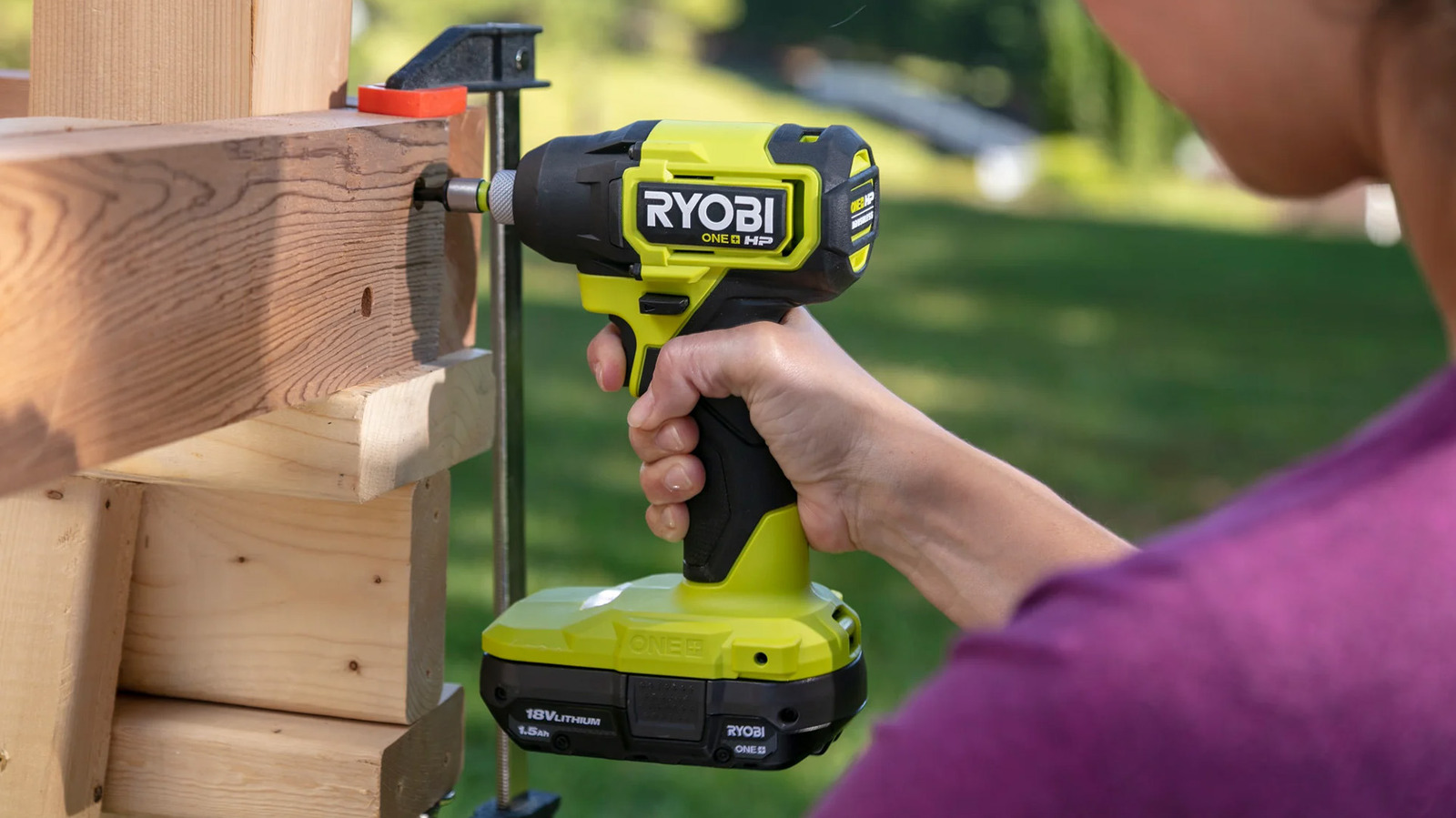
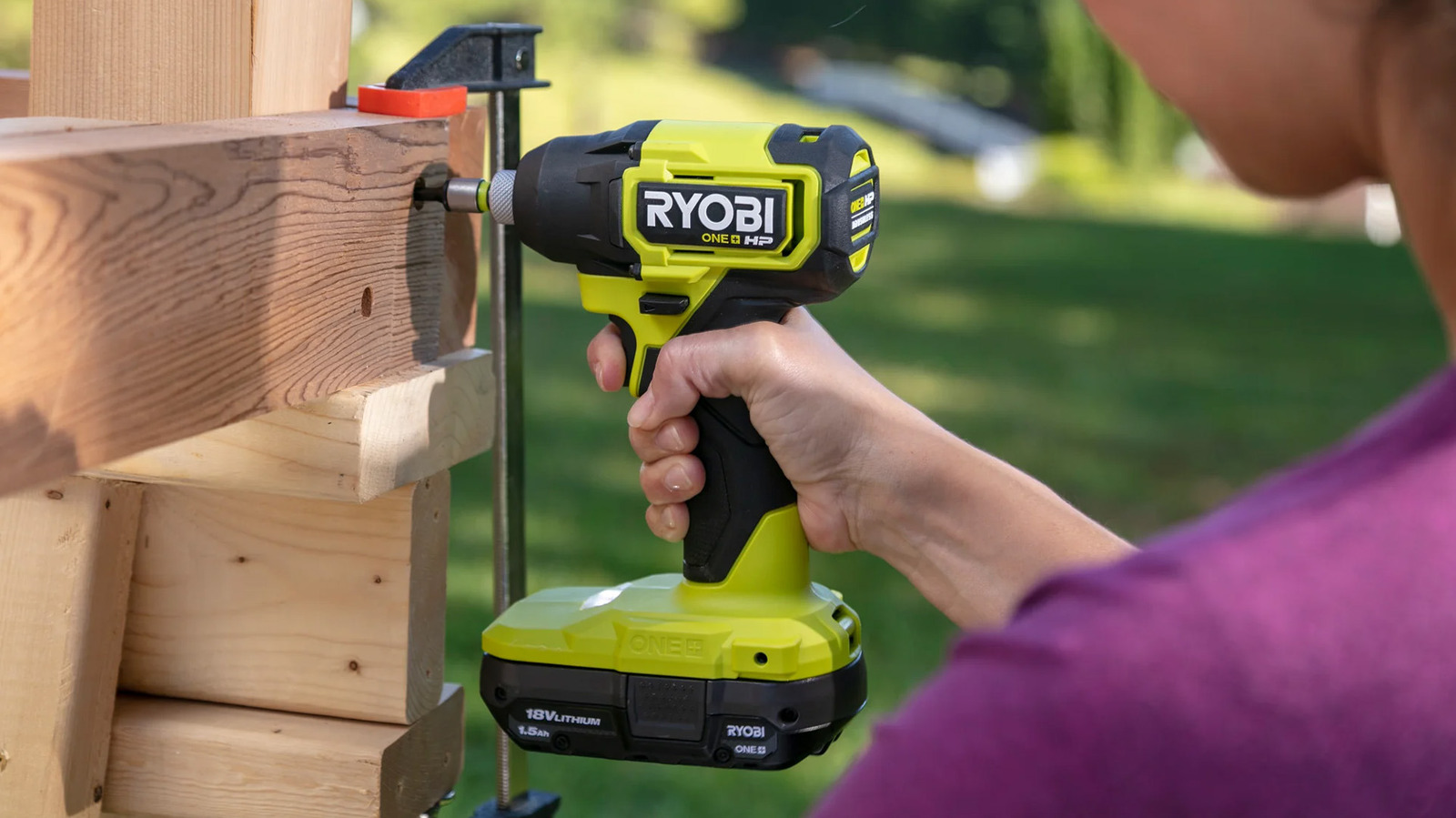
Ryobi One+ 18V 1.5 Ah Battery
The first thing you should consider is a spare battery. Ryobi’s One+ 18V system has hundreds of tools, and they all take the same One+ 18V battery. In many cases, you get a battery when you buy a tool, and if you buy multiple tools, you’ll have multiple batteries. Even so, it’s not a terrible idea to pick up a spare battery in case the occasion calls for it, especially if you have a longer home improvement job planned.
If you shop at Home Depot, the smallest battery you can find there is the One+ 18V 2.0 Ah Ryobi battery, which goes for $90. These are an okay value, and 2.0 Ah lasts a decent while on most of the brand’s power tools. It turns out that Ryobi sells one slightly smaller at almost half the price directly from its website, and that’s the One+ 18V 1.5 Ah battery. This little guy is 75% of the size of the 2.0 Ah battery but comes in at 50% of the price at $45 when not on sale.
This serves quite well as a backup battery, with hundreds of customers agreeing that the battery is worth the price here. It charges on any regular One+ 18V charger, so you don’t need to buy anything else in order to use it if you already have a charger at home. Of course, you can always pick up a spare charger for around $35, allowing you to charge multiple batteries at once.
Advertisement
Ryobi 18V One+ Hand Vacuum
Ryobi has several cleaning tools in its arsenal, including some niche items like a pool vacuum, a carpet washer, and a patio scrubber. For this list, we think the Ryobi One+ 18V Hand Vacuum is the way to go. When performing home repairs, you’ll almost certainly make a mess. It could be drywalling dust, sawdust, or just general debris from whatever you’re working on. A hand vacuum that takes the same batteries as your power tools keeps your area clean, which matters quite a lot in terms of safety and health.
Advertisement
The vacuum itself is $35 for just the tool (no battery), and according to its numerous positive customer reviews, it does the job well enough. It excels at dry materials and surfaces, and there is a four-piece attachment kit (sold separately) that lets you clean more things more efficiently. This may not compete with the very best hand vacuums designed for cleaning houses but for cleaning up sawdust off your garage floor so you don’t slip on it, it does the job nicely.
There is a second vacuum in this price range that Ryobi calls the 30th Anniversary Performance Edition. The design is different and it appears to be larger overall. It also costs $50 on the nose, so you can decide if the extra $15 is worth it. Both models have excellent reviews overall, and keeping things cleaned up is a valuable part of the home repair process.
Advertisement
Ryobi One+ 18V LED Area Light
Lighting is also important when working on home repair or home improvement. The sun can only do so much, especially if your work is inside the house, so having a good light can make a lot of your tasks easier. Ryobi has several lights to choose from, but for general use, we think the Ryobi One+ 18V LED Area Light is the one to go for. This is a lantern style light that can stand on its own or be hung from a wall and be used like a lamp that disperses light across a wide area.
The specs are pretty good as well. It boasts up to 850 lumens of output across three light settings, which will certainly light up a small room. It also has a 2-amp USB charging port included so you can charge your phone or a USB-powered tool while also providing light. It also doesn’t weigh a lot, which lets you hang it from almost anything without worries about damaging or falls. It takes the same One+ 18V batteries as Ryobi’s other power tools. That means you don’t have to buy extra batteries or, if you do, those batteries will still work with your drill or other tools.
The area light costs $40, which keeps it under that $50 mark. However, nearly all of Ryobi’s lights are under $50, so if this one isn’t doing it for you, this One+ 18V Clamp Light or this light and magnifying glass combo may be more helpful, depending on what you need.
Advertisement
Ryobi USB Lithium Screwdriver
Ryobi doesn’t sell many hand tools, so you won’t find a bunch of wrenches, screwdrivers, or hammers on a list like this. Ryobi does sell electric versions of many of those tools, though, and that includes the Ryobi USB Lithium Screwdriver. This little guy is basically a screwdriver that does the turning for you. It comes with a rechargeable battery that charges over USB-C, so it’s not the same battery system as the One+ 18V collection, but it’s also much smaller and is compatible with Ryobi’s other USB Lithium products.
Advertisement
The tool includes two 1-inch bit holders, dual LEDs so you can see what you’re driving, and a battery indicator to let you see the charge level. In terms of usability, it doesn’t do too much that a regular, everyday screwdriver can’t do. It does carry the same benefits as every other electric screwdriver, in that it saves your wrist from having to manually twist in each screw. You may not see the benefit if you only need to use it on one or two screws, but if you’ve ever put a deck together, you already know how much work a little power tool like this can save you.
Ryobi sells its electric screwdriver for $50, which is a decent value since you get a battery and a charging cable with it. The ability for the screwdriver to twist into multiple shapes also gives it a leg up on some competitors.
Advertisement
Ryobi 18-inch Tool Bag
Tool bags are nice to have, even if you’re a DIYer. You can pack it up with your most commonly used tools and carry all of them together wherever they need to go instead of carrying armfuls of tools back and forth. As a DIYer myself, I can attest that having a bag is much better than not having a bag. Ryobi sells several tool bags, but the brand’s 18-inch Medium Tool Bag is arguably the best option of the bunch. It costs $50 but is a pretty big step up in terms of storage capacity and quality from its cheaper bags.
This particular tool bag comes with 18 total pockets, a main storage compartment, a carry handle, and a shoulder strap, which should take care of every possible way you would want to use the thing. There are also a tape measure clip and a dedicated level strap, so you don’t have to waste storage space on those two items. It’s one of the few Ryobi products with a limited lifetime warranty, which is always nice to have.
In short, this is a tool bag with few, if any, weaknesses, and customer reviews seem to reflect this, with nearly all of them being positive. People carry regular hand tools, power tools, batteries, and all sorts of other stuff in it. The inner pockets are a bit too small for power tool batteries, but otherwise, it’s about as good as a tool bag gets in this price range.
Advertisement
Ryobi 18V One+ ⅜-inch Cordless Drill
The power drill is one of the most useful and ubiquitous power tools on the market. It’s often among the first power tools a DIYer purchases, which includes me, and given how many things are held together with screws, you’ll find a use for it whether you know it or not. Ryobi has one of the best power drill deals on the market with its One+ 18V 3/8-inch Drill. For $50, you get a power drill, a battery, and a battery charger, and that price tag is also not on sale. This is the gateway into Ryobi’s tools. The cheap price doesn’t reflect low capability either, since Ryobi’s drills are just as good as many competitors.
Advertisement
I have owned one of these for a few years now. It has done everything I’ve ever needed it to do without much hassle. It struggled a bit drilling holes into solid wood shelving large enough to fit a Philips Hue Lightstrip, but to be fair to Ryobi, the wood was 2 inches thick and would’ve been rough for any drill. In any case, it fits standard 3/8-inch bits, so you can buy those from anywhere, and the variable speed trigger is helpful for not stripping screws or overdoing it when drilling holes.
Ryobi often sells this in combo kits with an impact driver for $100. When you take into account two batteries, a charger, a bag, and two tools, it averages out to $50 per tool and battery, which is a good deal.
Advertisement
Ryobi 18V One+ ¼-inch Cordless Impact Driver
Beginners may get a little confused about the difference between an impact driver and power drill, and for good reason because they are similar. The biggest difference is that impact drivers have more torque and better contact with screw heads, making them superior for longer screws and harder materials like metal or concrete. Ryobi sells such an impact driver for under $50 with the One+ 18V 1/4-inch Impact Driver. It’s $59 at Home Depot, but you can buy it directly from Ryobi for $48.
This little guy provides 1,800 inch-pounds of torque at 2,800 RPM, which is faster than the 600 RPM of Ryobi’s 3/8-inch drill. Just that spec along gives you a pretty good idea what the difference is between a drill and an impact driver. These take 1/4-inch bits, and it is a universal fit, so any 1/4-inch bit set will do the trick here. It comes with a variable speed trigger and Ryobi’s standard three-year power tool warranty.
The only downside is that this is for just the tool, so you’ll need a battery on hand to use it. As mentioned previously, Ryobi likes to package these in combo kits with a drill for under $100, giving you two tools for roughly $50 each along with batteries. That’s a superior deal overall, but if you already have a drill and a battery, you can still get an impact driver for pretty cheap.
Advertisement
How we chose these Ryobi tools
Ryobi sells a ton of products for under $50, but the overwhelming majority of them are accessories like drill bit sets and replacement parts for power tools with wear items like saws. So, putting together a list of Ryobi tools for under $50 is pretty simple since you just filter out those accessories and replacement parts, and you’re left with power tools.
Advertisement
From there, we chose tools that are specifically good for DIY home repair and home improvement. You can get a Ryobi tire inflater for under $50, but it doesn’t really help you fix or build anything, so tools like that were left off of the list. We also kept the list to a single light, tool bag, and cleaning product. Those do help you repair or improve your home, but Ryobi has a bunch of those and saturating the list with what is essentially the same item over and over would’ve been low effort.
Finally, all products needed at least a 4.0-star rating across 100 reviews and over. Nearly every product on the list has high ratings and more numerous reviews than that, but there are some questionable Ryobi tools that we made sure to keep off of the list. We also made sure most tools were part of its main One+ 18V lineup, so if you did buy any of these, they’d be compatible with other Ryobi tools you might purchase in the future.
The work, led by Chunlei Guo, a professor of optics and physics, centers on a specially treated surface known as superwicking black metal. The material is created by texturing a metal surface with femtosecond laser pulses, altering its structure at microscopic scales. This process gives the surface two key properties:… Read Entire Article Source link
Microsoft says an ongoing incident is preventing users of its Teams collaboration platform and Office for the web cloud-based productivity suite from opening files.
“We’re investigating reports that some users are unable to open files in Office for the web or Microsoft Teams,” the company’s Microsoft 365 Status tweeted earlier.
According to further information shared in the admin center under MO1329446, this issue impacts multiple Office Apps, including Microsoft Excel for the web.
“Users may be unable to open files in Office for the web. Impacted Office Apps include, but are not limited to Excel, PowerPoint,” Microsoft added. “When users open documents, impacted users are shown the following the following error message’ Office Online services aren’t available right now. We’re working to restore all services as soon as possible.”
While it hasn’t specified which regions are affected or provided a final timeline for full remediation, the company says it’s currently investigating service telemetry to isolate the root cause of the issue.
Advertisement
In a subsequent update, the company revealed that “initial analysis indicates a potential cross-service issue impacting Office for the web experiences.”
Microsoft has also tagged this ongoing outage as an incident, a term commonly used for critical service issues involving noticeable user impact.
Earlier today, Microsoft addressed another incident that blocked customers from setting up multi-factor authentication (MFA) on some accounts or from accessing the MySignIn service.
The company blamed the platform access issues on a recent cache configuration change that required a failover, triggering high CPU and memory utilization as traffic from European Union customers began to peak.
The same month, it reverted a recent service update that had blocked some Teams users from launching the desktop client, leaving them stuck on the loading screen with a “We’re having trouble loading your message. Try refreshing.” error.
This is a developing story…
Automated pentesting tools deliver real value, but they were built to answer one question: can an attacker move through the network? They were not built to test whether your controls block threats, your detection rules fire, or your cloud configs hold.
This guide covers the 6 surfaces you actually need to validate.



















































You must be logged in to post a comment Login