Campfire Audio has spent the past decade building a reputation as one of the most innovative brands in the high-end in-ear monitor market. The Portland-based manufacturer has become a global force in portable Hi-Fi with cult-favorite releases like the Andromeda, Clara, and Astrolith, each pushing design and tuning in directions that most competitors avoid. That willingness to experiment has produced some of the most recognizable IEMs in the audiophile space, often at premium prices that climb well past $3,000. The new Campfire Audio Andromeda 10 continues that legacy as the latest evolution of the company’s flagship Andromeda series.
Priced at $1,799 and available directly from Campfire Audio, the Andromeda 10 promises improved driver integration, refined tuning, and an ergonomic shell designed for long listening sessions. But the high-end IEM market has never been more competitive. With strong offerings from brands like 64 Audio, Noble Audio, and Astell&Kern crowding the field, the question is simple: can the Andromeda 10 still stand out in a category it once helped define?
Listening Preferences and Review Context
This review is ultimately a subjective evaluation shaped by my own listening priorities. I aim to remain consistent and fair in my comparisons, but no amount of methodology can fully remove personal bias. Transparency matters, so it’s worth understanding the lens through which this review is written.
My reference sound signature leans toward controlled, authoritative sub bass with textured and articulate mid bass, a slightly warm and natural midrange, and treble that is extended and detailed without crossing into glare. I’m also mildly sensitive to elevated treble energy, which inevitably affects how I judge brightness, listening fatigue, and long term comfort.
Advertisement
Full details on my testing equipment, methodology, and evaluation standards can be found here.
For testing, I used a mix of dedicated DAPs and portable dongles, including the HiFiMAN SuperMini, Hidizs AP80 Pro MAX, and Astell&Kern PD10, alongside the Astell&Kern HCL, Audioengine HXL, Meze Alba dongle, and Apple’s USB-C dongle. This range covers everything from dedicated audiophile sources to more typical everyday mobile listening setups.
Unboxing
Build
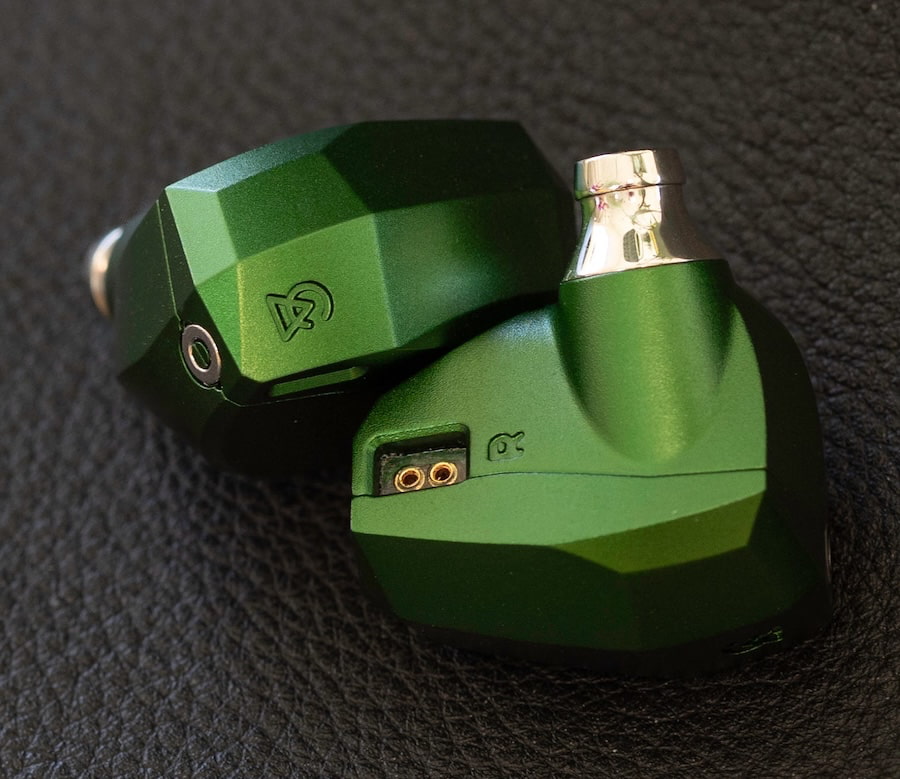
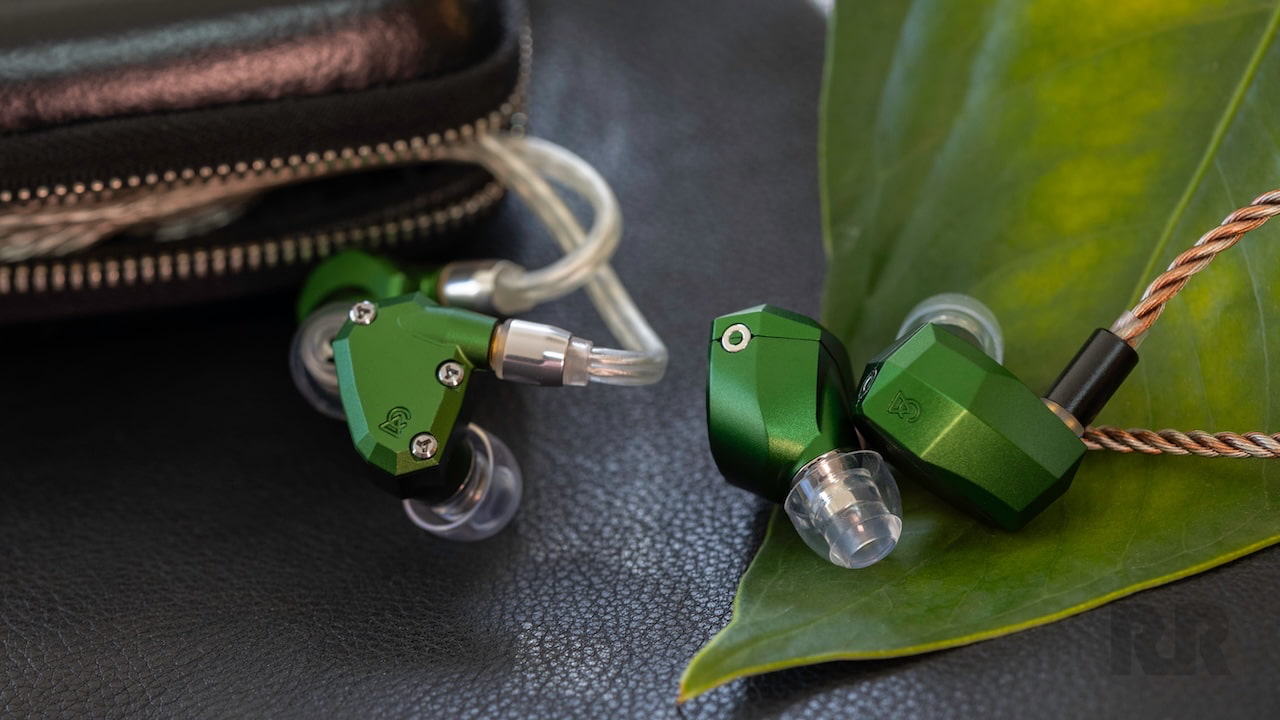
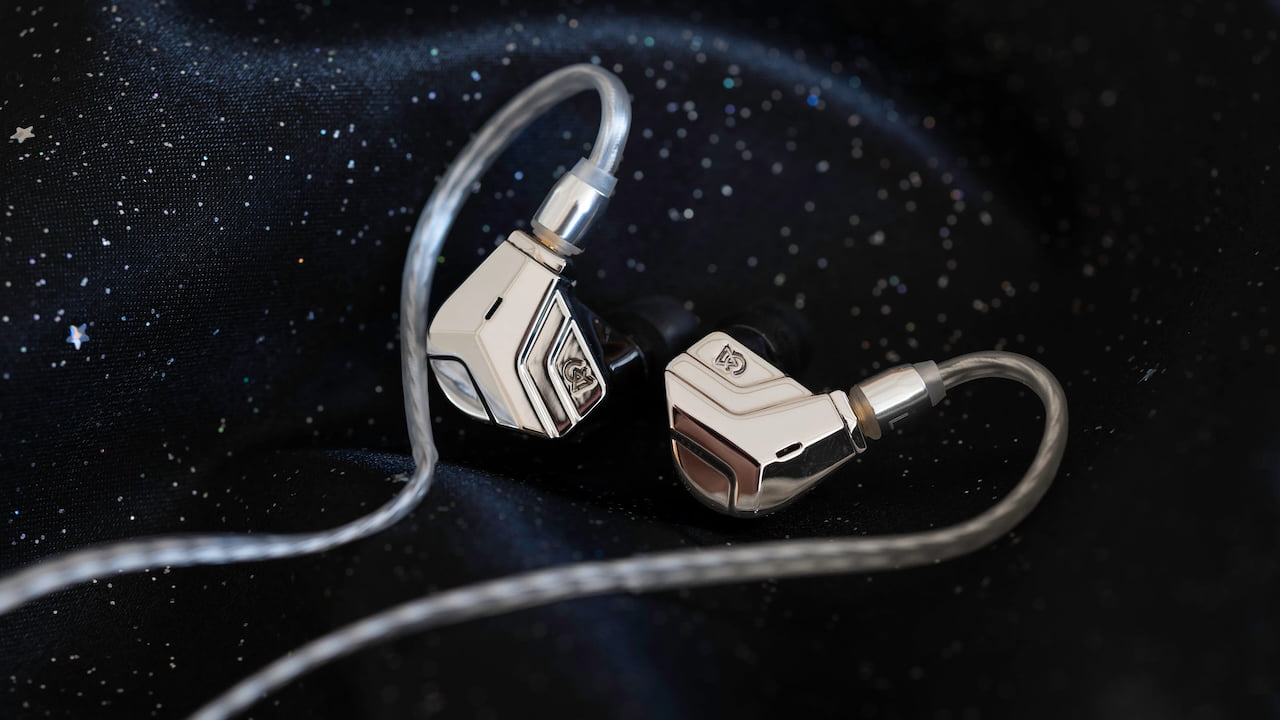
Campfire Audio products are well known for their abstract, angular designs. Most of the company’s IEMs feature strong lines, sharp edges, and bold contours that make them instantly recognizable. The Andromeda 10 follows that same visual language, building on the aesthetic established by earlier Andromeda models.
Advertisement
I’m still a big fan of the designs used for the Andromeda 2019 and 2020, though realistically there’s probably no way to physically fit ten drivers into those smaller shells.
Die-hard Campfire Audio fans will notice immediately that the Andromeda 10 features something unique to their lineup on the top of the shell: a 0.78mm 2-pin socket. This break from tradition (using MMCX sockets), while a personal disappointment, makes sense given the buying power wielded by Eastern audiences; they’re major proponents of cable-swapping and almost exclusively use 2-pin cables.
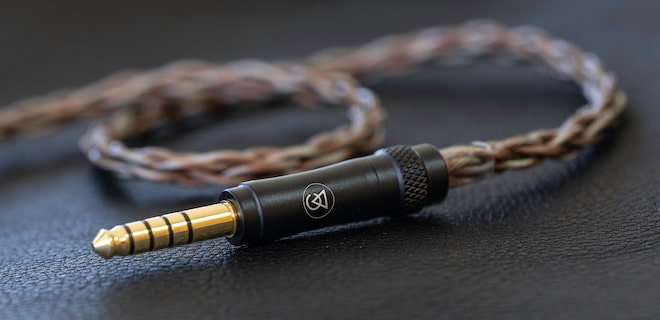
The Andromeda 10 is the second Campfire Audio product to come with their new TimeLink modular cable, following the Grand Luna. This cable uses a friction-based mechanism to permit the user to swap between 3.5mm, 4.4mm, and USB-C terminations. Swapping terminations is easy, and they fit snugly onto the cable–but friction-based modular cables, no matter how-well manufactured, almost always suffer early failure when swapped often. I’d like to see Campfire Audio revise this cable to include a mechanical lock, such as a threaded nut. DUNU, Melody Wings, and many other brands have adopted this more-secure style.
The included USB-C termination works well and provides far more power than the Andromeda 10 actually needs. In fact, it delivers so much output that using it with my Pixel 10 Pro can be a challenge. I have to set the volume to around 1 out of 20, and even then it’s still a bit louder than I’d prefer.
Advertisement. Scroll to continue reading.
Advertisement
Some form of built-in level control would be welcome, because the only real solutions are rooting the phone or applying a negative preamp in the music player—neither of which is exactly convenient for everyday listening.
Comfort
Comfort is a metric that relies heavily on factors influenced by your individual ear anatomy. Mileage will vary. The Andromeda 10, in spite of its unusual dimensions, is quite comfortable. It is light-enough to not tire the backs of my ears and the TimeLink cable, while not as ergonomic as Campfire’s Timestream cables, is still viable for long listening sessions. The Andromeda 10 makes use of venting, so there’s no pressure-build up, even after two or three hours of listening.
Accessories
Inside the box, you’ll find:
1x 2-pin TimeLink modular cable
1x 4.4mm termination
1x 3.5mm termination
1x USB-C termination
3x Pairs “High and Clear” liquid-silicone eartips
3x Pairs foam eartips
3x Pairs standard silicone eartips
1x CFA 10th Anniversary pin
1x CFA microfiber cleaning cloth
1x cleaning tool
1x Semi-hard carrying case
The Andromeda 10 introduces a new large zippered case. It offers plenty of room for the IEMs, extra terminations, spare eartips, and even a small USB-C dongle. However, there’s no real way to secure additional gear inside.
The top flap includes a small elastic pouch similar to the mesh compartments found in many zipper cases, but it doesn’t stretch much. Larger DACs like the Campfire Audio Relay or Astell&Kern HC5 won’t fit there and end up sitting loose in the main compartment. It’s not a dealbreaker, but a Velcro divider or modular insert system would make better use of the space.
Tech Specs
The Andromeda 10 uses ten balanced armature drivers per side, arranged in a three way crossover: four for bass, four for the midrange, and two for treble. Campfire implements the crossover using what it calls a “hybrid vintage” ceramic capacitor design.
Advertisement
Despite the large driver count, the Andromeda 10 is very easy to drive. With an 8.5Ω impedance and a sensitivity of 94 dB @ 1 kHz (12.10 mVrms), it works comfortably with modest sources, including low power dongles like Apple’s USB-C adapter. The bigger consideration is output impedance. These IEMs perform best with sources that have a near zero output impedance.
Listening
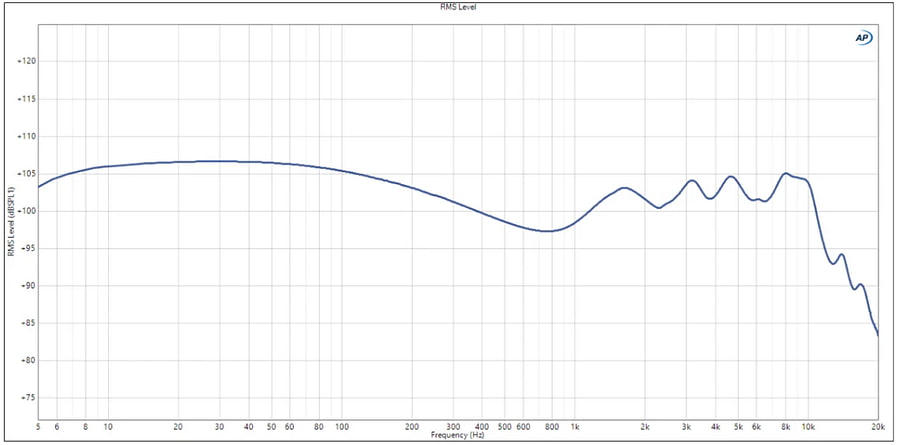
Graph for the sniffers. Source: Campfire Audio
The Andromeda 10’s sonic signature is warm and comfortable, with a dash of upper-treble sparkle. Its sub-bass is well-extended, rolling into a slightly elevated mid-bass. The Andromeda 10’s lower-mids are blended nicely into its sub-bass, carrying a healthy dose of warmth. The upper-mids sit above the lower-mids, but don’t ever over-step, ensuring a cohesive, though distinct, vocal and instrumental space. Above the Andromeda 10’s upper-mids sits its expressive and precise treble. The Andromeda 10 expertly-balances a medium-serving of brightness with comfort while preserving the carefully-curated “vibe” of its predecessors. Its upper-treble features a few key lifts and peaks to bring out a sense of sparkle and air. Simply put, the Andromeda 10 sounds like a good pair of Hi-Fi speakers: rich, quick, and detailed.
Enigmatic Treble
The Andromeda lineup has long been known for its signature “sparkly” treble. A quick scan of forum threads or YouTube comments makes that reputation clear. But sparkle alone isn’t rare: many IEMs achieve it simply by boosting the upper treble. What sets the Andromeda apart is finesse. Its upper register isn’t just elevated for effect; it’s carefully shaped to deliver air, detail, and shimmer without turning harsh or fatiguing.
The OG Andromeda, Andromeda 2019, and Andromeda 2020 all share the same core tuning that contrasts carefully placed upper-treble emphasis against a warm and smooth midrange. The Andromeda 10 iterates on this approach, eking out subtle increases in treble presence without creating treble bloom. The Andromeda 10 captures a wealth of upper-register texture and detail, staging them with clarity.
The Andromeda 10 is thusly an excellent partner for critical-listening, but also reveals the flaws in rougher masters. For example, the original recording of “Parallel Universe” by Red Hot Chili Peppers can be a tough listen. The Andromeda exposes the grain and harshness in the track that less resolving IEMs tend to smooth over.
Advertisement
Absolute Transparency
One of my few reservations with the previous Andromeda models were their propensity to over-warm the midrange. The Andromeda 10 handily addresses this concern, expertly balancing convincing tonal weight with transparency. Rock tracks with contrasting elements like gritty electric guitars and somber vocals, like those on Middle Class Rut’s outstanding album, No Name No Color, place believably across a wide soundstage. Tracks with modern production values, like “Die For Me” by A Day to Remember, pair well with the Andromeda’s balanced and cohesive presentation.
Advertisement. Scroll to continue reading.
Male vocals, deep or otherwise, sound well-weighted and organic. The Andromeda 10’s responsible upper-midrange lift gives lyrics separation and intelligibility without compromising overall timbre, allowing the Andromeda 10 to achieve excellent levels of immersion and imaging.
The Pursuit of Bass Balance
The most common complaint with the older Andromeda models were their inability to generate proper bass response. The Andromeda 10 goes above-and beyond simply meeting the standards of neutrality and actually produces stable, controlled dealings of punch. The Andromeda 10’s mid-bass is fast and technical, but isn’t above getting down-and-dirty on electronic tracks like “Motion” by Uppermost.
Advertisement
The Andromeda 10 performs impressively on tracks with demanding bass hits and complex sub bass passages. Listening to “Turbulence” by Neddie highlights the IEM’s control over texture and intensity, showing how far all balanced armature designs have come since the original Andromeda debuted. The Andromeda 10 moves a surprising amount of air for an all BA design, reproducing the track’s deep and layered bass textures with confidence.
While the Andromeda 10 handles highly technical electronic music very well, it doesn’t fully deliver the level of bass intensity demanded by some R&B and hip hop tracks. “Baby Got Brap” by T Pain, a playful ode to rotary engines, calls for a massive wall of sub bass.
The Andromeda 10 produces more rumble than I expected, but it still falls short of what you get from dynamic driver based IEMs like the Clara or Cascara. Whether that matters depends on your taste. Bassheads may see it as a compromise, while audiophiles will likely appreciate the balance between articulation and bass presence.
Comparisons
Campfire Audio Andromeda 2019
When someone says Campfire Audio Andromeda, they’re usually referring to the models released between 2018 and 2020. Aside from the lineup’s brief departure from form with the Emerald Sea, the core Andromeda sound and identity have remained consistent and wildly popular. For the Andromeda 10 to truly qualify as an evolution of the series, it needs to deliver a clear and meaningful improvement over those earlier models.
To my ears, it does. The Andromeda 2019 is a warmer, thicker sounding IEM with less extension at both frequency extremes. The Andromeda 10, by comparison, delivers a more pronounced mid bass lift and a broader, deeper reaching sub bass shelf. That shift makes it far more capable with bass heavy genres like EDM, an area where earlier Andromeda models were not strong performers.
Advertisement
The Andromeda 2019 also presents vocals with less presence and leans into a smoother upper register. While it was an excellent IEM in its time, driver design and tuning have clearly progressed. The Andromeda 10 reveals a noticeable technical gap between the two. Sub bass textures that the 2019 often glosses over are clearly articulated and properly staged on the Andromeda 10, which also resolves more vocal nuance while introducing less coloration in the midrange.
In my view, the choice between the two is fairly clear. The Andromeda 10 is a different beast. It trades the overtly stylized tuning of earlier models for a more refined interpretation of what made the series special while delivering noticeably stronger technical performance.
Older Andromeda models may still be worth considering if you find a great deal on the used market, but otherwise the Andromeda 10 stands as the most capable and advanced Andro to date.
Campfire Audio Astrolith
Campfire Audio Astrolith
The Astrolith is Campfire Audio’s flagship planar IEM. It uses two planar drivers per side, detachable MMCX cables, and stainless steel faceplates. At $2,200, it costs about $400 more than the Andromeda 10.
The Andromeda 10 includes the modular TimeLink cable with 3.5mm, 4.4mm, and USB-C terminations, while the Astrolith ships with separate 3.5mm and 4.4mm Timestream Metal cables. I personally prefer the Timestream Metal cables, which feel more compact and ergonomically friendly than the TimeLink system.
Advertisement
Advertisement. Scroll to continue reading.
Both IEMs include the same excellent selection of eartips, though the Andromeda 10 fits my ears better without requiring aftermarket options. It also ships with a proper storage case, while Astrolith owners will likely need to supply their own solution, such as a Pelican 1010.
Sonically, both IEMs are serious performers, but they approach presentation very differently. The Astrolith is all about intensity, while the Andromeda 10 takes a more relaxed and balanced approach. The Astrolith’s midrange carries a bit more thickness, flowing into a fuller and more present mid bass region. Both extend well at the frequency extremes, though the Astrolith maintains stronger presence below about 200Hz, delivering punch and rumble with a convincing sense of note weight across the soundstage.
The Andromeda 10, despite its lighter bass emphasis, seems to reach slightly deeper into the lowest sub bass registers. In the treble, the Astrolith leans bright and energetic, fully exploiting the speed and openness of its dual planar drivers. The Andromeda 10 counters with a more measured top end, offering smoother and richer doses of air. If the Andromeda 10 feels like a refreshing breeze, the Astrolith is closer to an industrial fan—the better choice simply depends on how much intensity you want.
Advertisement
It’s a tall task to chose between these two IEMs. The Astrolith has excellent bass and incredibly-precise timbre, while the Andromeda 10 delivers a maximally smooth and organic tone without dropping an ounce of resolution. Both IEMs are well-equipped with accessories, but vary on the specifics, so your specific needs will influence which one is more practical OOTB. That said, my specific music library meshes a little better with the Andromeda 10. Its less-intense upper-treble is more-comfortable for me, and the lighter lower-mids synergize better with my commonly-listened artists.
ClearTune Monitors DaVinci X
ClearTune Monitors DaVinci X
The DaVinci X is the flagship offering from ClearTune Monitors, featuring 10 balanced armature drivers per side. It has remained unchanged since its 2018 debut and in that time has dropped from $2,500 to a comparatively-affordable $1200. At its adjusted price, the DaVinci X can be had for $600 less than then Andromeda 10. Both IEMs feature metal shells and detachable cables, though the DaVinci X has a comparatively utilitarian suite of accessories.
In terms of sound, the DaVinci X is a more-linear sounding IEM with a brighter lower-treble than the Andromeda 10. Its vocal range is a little more forward than the Andromeda 10, while the Andromeda 10 packs a warmer lower-midrange with greater bass presence. The DaVinci X narrowly avoids roll-off down below the 50Hz range, but lacks any real oomph in spite of its technical competence.
Comparatively, the Andromeda 10 is able to deliver light doses of punch and rumble — enough to be enjoyable in electronic genres. The DaVinci X possesses a special sense of air and space in its upper-register than is hard to reproduce, though the Andromeda 10 comes close. Both IEMs have substantial soundstage width and depth, though the DaVinci X has a bit more believable positioning. The DaVinci X’s roots as a stage-monitor are evident here, as crucial audio cues transparently pop up front when listening, while the Andromeda 10 presents a more cohesive, organic sonic environment.
Between the two, I’m choosing the Andromeda 10 for daily-listening. Greater genre flexibility, increased bass response, and improved ergonomics make it the better choice, even accounting for the difference in price. Of course, if you’re interested in maximizing your IEM’s utility as a technical tool, be it engineering or stage monitoring, the DaVinci X may still be the more-appealing option, but that’s not how I consume audio as a casual listener.
Advertisement
EarAcoustic Audio VSA-PM Crown
EarAcoustic Audio VSA-PM Crown
The VSA-PM is the flagship (and only) planar IEM from EAA, featuring one large planar driver per side. It runs $850, making it about half the price of the Andromeda 10. Both IEMs feature detachable 0.78mm 2-pin cables, though the Andromeda 10 has a modular cable versus the VSA-PM’s fixed 4.4mm.
Both IEMs have decent cases, though the Andromeda 10’s is larger and more accommodating to accessories like USB-C DACs. The Andromeda 10 has vastly superior stock eartips, though I should hope so given its substantial price tag. Both IEMs are built from high-quality aluminum shells and are fairly ergonomic, though the Andromeda 10 is easier for me to wear for extended sessions.
Sonically, the Andromeda 10 is warmer and bassier than the VSA-PM. Both IEMs feature excellent extension in the upper and lower-registers, though the VSA-PM seems to carry its upper-register emphasis a little further out than the Andromeda 10. The Andromeda 10 delivers a fuller, richer soundstage with its increased mid-bass presence. The VSA-PM has a comparatively cool lower register, allowing it to more easily stage a sense of “emptiness”, but at the cost of harmonic weight.
The Andromeda 10 delivers similarly-forward vocal presence, but manages to avoid to occasional sharpness generated by the VSA-PM. Both IEMs are extremely technically-capable, though the VSA-PM seems to more-easily surface micro-textures in the lower-treble. The Andromeda 10, by contrast, has much better control over its mid and sub-bass.
Advertisement. Scroll to continue reading.
Advertisement
I was the very first purchaser of the VSA-PM, so suffice it to say, I like the IEM — a lot. It offers an excellent TOTL experience for under $1000, which is becoming increasingly rare these days. That said, its presentation is sometimes non-optimal for busier, dryer tracks in my collection. The Andromeda’s effortless richness and smoothness makes it an easier listen for long days in the office or during plane rides.
The Bottom Line
The Andromeda lineup has never been about neutrality. It’s never been about cost-efficiency. It’s never been about stage monitoring. The Andromeda has always represented the apex of Campfire Audio’s philosophy: that audio should be warm, welcoming, and something worth remembering. As such, I think the Andromeda 10 earns its keep as the new Campfire Audio brand ambassador. Combining quintessential Campfire Audio house-sound, truly impressive performance, and luxurious materials, the Andromeda 10 is set to deliver a special experience. And at these prices, that’s what you’re paying for: the experience.
The Andromeda 10 is best suited for audiophiles and enthusiasts who value balance, detail, and long term listening comfort over sheer bass quantity. Listeners chasing maximum low end impact may still gravitate toward dynamic or hybrid designs, and a bit more bass authority would make genres like hip hop and modern R&B more convincing. But for those who appreciate a refined, articulate, and unmistakably Campfire presentation, the Andromeda 10 stands as one of the most compelling entries in the lineup to date.
Pros:
Speaker-like immersion
Balanced sound signature with rich and clear bass
Expressive treble with zero sharpness
Excellent passive isolation
Phenomenal vocal intelligibility
TOTL layering abilities
Cons:
Modular cable lacks affirmative locking mechanism
USB-C termination is too loud on Android devices
USB-C termination block microphone during phone calls on Android
One crime ring scammed 2,000 elderly people of more than $27 million between 2021 and 2023 using tech support/bank impersonation/refund scams. “Victims were in their 70s and 80s,” reports the U.S. Attorney’s office for California’s southern district. Victims were first told they’d received a refund (either online or via phone), but then told they’d been “over-refunded” a massive amount, and asked to return that amount.
But 42-year-old Jiandong Chen just admitted Thursday in a U.S. federal court that he was involved in the fraud and money laundering via cryptocurrency — pleading guilty to two charges with maximum penalties of 40 years in prison and a $1 million fine, plus 20 years in prison with a maximum fine of $500,000 or twice the amount laundered. “Chen, a Chinese national, is the second defendant charged in a five-defendant indictment.” And what tripped him up seems to be that “Certain members of the conspiracy also did in-person pickups of money directly from victims…”
And so YouTube enters the story — when the scammers called pranksters with 1,790,000 subscribers to their “Trilogy Media” channel. In an elaborate three-hour video, the team of pranksters lured the scammer to a rented Airbnb where they’re staging a fake funeral with a nun. (One of the men acting in the video remembers “we start doing a prayer… I’m holding the scammer’s hand in my nun outfit…”)
They convince the scammer to collect the cash from a dead man — “Is there anything you’d like to say to him?” Then there’s demon voices. The scammer’s victim resurrects from the dead. Did the cash mule bring holy water?
Advertisement
The end result was a video titled “CONFRONTING SCAMMERS WITH A FAKE FUNERAL (EPIC REACTIONS)“. But two and a half years later, their “cash mule sting house” video has racked up over 1.3 million views, 22,000 likes, and 2,979 comments. (“This video is longer than Oppenheimer. Thanks for the laughs fellas.”)
A man in Ireland has figured out a way to find the cheapest pint of Guinness using just AI programs. Matt Cortland became frustrated when he paid nearly $9 for a pint at a pub in Dublin, and decided he had to figure out a way to track prices across the country.
The first step was to find out the prices. To do that, Cortland created “Rachel” using the AI voice-generation platform ElevenLabs, then had her call every pub across Ireland — with a Northern Irish accent, of course. She ended up calling over 6,000 pubs, asking each one what their price was for a pint of Guinness.
The second step was to sort the data. He used Claude to create a price index called “Guinndex,” which he can update himself, or bartenders can update whenever prices change. This offers Cortland — and anyone else craving a Guinness — up-to-date prices.
Advertisement
The key was making AI feel authentic over the phone
Drazen Zigic/Getty Images
While it all sounds pretty methodical, the most successful part of Cortland’s AI procedure was making Rachel feel human. Rachel was inspired by Rachel Duffy, the winner of the U.K. reality show “The Traitors” – but given a Northern Irish accent. Cortland reported that most pubs across Ireland couldn’t even tell Rachel was an AI over the phone, which likely yielded more results.
A wide range of industries has started using AI to make phone calls. A study of car dealerships found that when AI handled customer service calls, it actually seemed more successful than average phone calls across the industry. Data from Regal found that humans actually appear to prefer talking to AI representatives more than human ones, staying on the phone longer and providing longer responses. Rachel’s phone calls with pubs appeared to reflect this, with bartenders happily telling her that she could even come in and get a pint for free.
Advertisement
It seemed like they didn’t even know she was AI — in reality, AI robots aren’t having as much success in that category. People have also reported not enjoying AI-led job interviews, likely already biased since they know it’s AI on the other end. Maybe let’s stick to the AI pint trackers.
In a recent video, creator ETA Prime showcases Red Magic’s phone running multiple Windows games directly on Android. The device is powered by a Snapdragon 8 Elite Gen 5 SoC, paired with 24GB of LPDDR5T memory and 1TB of UFS 4.1 Pro storage. Read Entire Article Source link
Samsung is putting the final nail in the coffin for its own messaging app. The smartphone maker posted an “End of Service Announcement” on its website, revealing that the Samsung Messages app will no longer be available by July of this year. Samsung also recommended that anyone still using Samsung Messages switch over to Google Messages as the default messaging app.
For Samsung Messages users in the US, the switch to Google offers RCS messaging that lets you send high-quality media, join group chats and get real-time typing indicators no matter the smartphone’s OS. Galaxy smartphone owners may lose out on some of the Samsung Messages customization options, but Google Messages will make up for it generative AI from Gemini that can remix your photos in chats. On top of those features, Google Messages makes it easier for Samsung users to switch chats between a smartphone, tablet or smartwatch.
It’s no surprise that Samsung is only using Google Messages from now on, since it has been phasing out Samsung Messages for a few years now. Dating back to the Galaxy Z Fold 6 and Flip 6, and then followed by the Galaxy S25 series, Samsung stopped preloading the Samsung Messages app and instead pre-installed the Google Messages app. The Samsung Messages app is still available on the Galaxy Store, but Samsung said the exact final date will eventually be announced on the app itself.
In short:Monzo announced on 1 April 2026 that it is closing its US operations, stopping new American sign-ups immediately and shutting existing accounts by June, and cutting approximately 50 roles. The decision comes three months after the UK challenger bank received a full banking licence from the European Central Bank and the Central Bank of Ireland, opening up expansion across the EU. It also arrives as Monzo prepares for a London IPO that Morgan Stanley is advising on, with a target valuation of between £6 billion and £7 billion.
Monzo is leaving the United States. The UK challenger bank announced on 1 April 2026 that it would cease accepting new American customers immediately, cut approximately 50 US-based roles, and close all existing American accounts by June. In a statement, the company framed the decision as a deliberate reorientation rather than a retreat: “With a fast-growing customer base of 15 million in the UK and the growth opportunity our European banking licence creates, we’re making a deliberate, strategic decision to focus on scaling in our home market and Europe and to step away from the US.” The announcement ends a seven-year experiment that never fully resolved its central structural problem, Monzo could not get a banking licence in the US, and without one, it could not compete.
Seven years, no charter
Monzo announced its American expansion in June 2019, rolling out a simplified version of its app to US customers and partnering with Sutton Bank, an Ohio-based FDIC-insured institution, to hold customer deposits and issue debit cards. The arrangement was always a workaround: without its own banking charter, Monzo could not originate loans, access core payment infrastructure directly, or compete in the lending and interchange revenue streams that define US retail banking profitability. It filed an application with the Office of the Comptroller of the Currency for a national bank charter in April 2020, but withdrew the application in late 2021 after regulators signalled it would not be approved. The company faced opposition from the National Community Reinvestment Coalition, among others, which argued that Monzo had not demonstrated sufficient commitment to serving local community needs. After withdrawing the OCC application, Monzo continued operating in the US through partner institutions, but it never secured the infrastructure that would have made its American business structurally viable.
The result, after seven years, was a product that offered a digital current account but not the full-service banking relationship that Monzo had built in the UK. US customers could not access mortgages, personal loans, or the premium credit products that generate meaningful revenue. They had a sophisticated spending tracker and a card linked to a partner bank’s balance sheet. That is a reasonable travel companion. It is not a challenger bank.
Advertisement
The European licence that changed the calculation
On 17 December 2025, the European Central Bank and the Central Bank of Ireland granted Monzo a full banking licence, making it the first digital bank to be fully regulated by the Central Bank of Ireland and establishing Dublin as its European headquarters. The licence unlocks what the OCC application never delivered: the right to hold customer deposits directly, originate loans, and operate as a full bank across the 27-member EU single market under the EU’s passporting regime.Europe’s appetite for homegrown technology champions in financial serviceshas grown considerably in recent years, and Monzo’s Irish licence positions it to compete for that opportunity on equal terms with incumbent banks for the first time. The three months between the Dublin licence and the US exit announcement are not coincidental. The company now has a credible path to scaled profitability in a market where it is already the dominant challenger; the US, by contrast, remained a market where it was permanently constrained.
The 💜 of EU tech
The latest rumblings from the EU tech scene, a story from our wise ol’ founder Boris, and some questionable AI art. It’s free, every week, in your inbox. Sign up now!
The listing has already generated internal turbulence. TS Anil, who served as Monzo’s CEO for five years, stepped down in February 2026 following a reported dispute with the board over the timing and location of the IPO. Anil is understood to have favoured an earlier listing and had expressed interest in a New York venue; the board opted for London and more time. Diana Layfield, who spent nearly a decade at Google and more than a decade at Standard Chartered, was named his successor in October 2025 and took the role subject to regulatory approvals. Her mandate is the European expansion and the public listing. The US exit is the first visible act of that mandate.
The numbers behind the decision
Monzo’s financial trajectory gives the pivot a logic that is easier to explain to prospective public market investors than to American customers receiving account-closure notices. For the financial year ending March 2025, the bank reported revenue of £1.24 billion, up 48% year on year. Adjusted pre-tax profit reached £113.9 million, an eightfold increase on the prior year. Customer deposits grew 48% to £16.6 billion.A year that saw digital banking’s growth trajectory sharpen considerably across European marketsvalidated the core bet: that a mobile-first bank with no branch network could generate the kind of revenue and profit that commands a credible IPO valuation. The US, in that context, was consuming resources that could instead be deployed against a market where the regulatory framework and customer base are already in place.
The subscription and premium-tier model that has driven platform revenue growth across technologyis central to how Monzo has reached profitability in the UK: Monzo Plus and Monzo Premium accounts charge monthly fees and bundle benefits including travel insurance, higher interest rates on savings, and cashback. Replicating that model in the US required a depth of product, overdrafts, credit, savings, that a partner-bank structure made impossible. In the UK and, increasingly, in Europe, Monzo can offer all of it.
For American customers, the practical consequence is a June 2026 account closure. Monzo said it would provide guidance in the coming days on how to transfer funds, redirect direct deposits, and access statements after the accounts are closed. For Monzo itself, the US chapter closes with a banking licence in Dublin, a public listing in preparation, and 15 million customers in the UK who collectively generated more than a billion pounds in revenue in a single year. The experiment in America is over. The business case for ending it is not difficult to read.
Marshals, a new Yellowstone spinoff starring Luke Grimes as Kayce Dutton, is airing on CBS right now. You can also tune in with Paramount Plus. The Yellowstone sequel series sees Grimes’ former Navy SEAL join an elite unit of US Marshals to bring range justice to Montana, according to a synopsis from CBS.
The show includes Yellowstone actors Gil Birmingham as Thomas Rainwater, Mo Brings Plenty as Mo and Brecken Merrill as Tate. Spencer Hudnut is the showrunner of Marshals — formerly known as Y: Marshals — and Taylor Sheridan is an executive producer.
Advertisement
When to watch new Marshals episodes on Paramount Plus
Episode 6 of Marshals airs on CBS on Sunday, April 5. Viewing options for Paramount Plus customers vary by subscription tier. You can watch the episode live if you have Paramount Plus Premium, which includes your local CBS station. If you subscribe to Paramount Plus Essential, you can watch the installment on demand the following Monday, but not live on Sunday.
Here’s a release schedule for the next three episodes of Marshals.
Episode 6, Out of the Shadows: Premieres on CBS/Paramount Plus Premium on April 5 at 8 p.m. ET/8 p.m. PT/7 p.m. CT. Streams on Paramount Plus Essential on April 6.
Episode 7, Family Business: Premieres on CBS/Paramount Plus Premium on April 12 at 8 p.m. ET/8 p.m. PT/7 p.m. CT. Streams on Paramount Plus Essential on April 13.
Episode 8, Blowback: Premieres on CBS/Paramount Plus Premium on April 19 at 8 p.m. ET/8 p.m. PT/7 p.m. CT. Streams on Paramount Plus Essential on April 20.
You can also watch CBS and the sixth episode of Marshals without cable with a live TV streaming service such as YouTube TV, Hulu Plus Live TV or the DirecTV MyNews skinny bundle. In addition to offering a lower-cost option, Paramount Plus lets you watch the other two Yellowstone spinoffs: the prequels 1883 and 1923.
After a price increase in early 2026, the ad-supported Essential version runs $9 per month or $90 per year. The ad-free Premium version runs $14 per month or $140 per year. Paying more for Premium gives you downloads, the ability to watch more Showtime programming than Essential and access to your live, local CBS station.
Terra Industries scales drone production to provide security for power plants, mines, and refineries
Local manufacturing cuts costs while raising new questions about production sustainability
Annual subscriptions introduce financial risk for clients in unstable economic environments
A Nigerian robotics startup is building thousands of drones each year to protect critical infrastructure across Africa.
It is applying a vertically integrated manufacturing strategy that draws inspiration from Apple rather than traditional defense contractors.
Terra Industries, founded in 2024 by two young Nigerians — 23-year-old Maxwell Maduka and 22-year-old Nathan Nwachuku — launched what it calls the largest drone factory in Africa in February 2025.
Article continues below
Advertisement
Factory scale and early deployments
The company has a 15,000-square-foot facility on the outskirts of Abuja, Nigeria, capable of producing 30,000 drones annually.
It is already exporting to eight African countries and Canada, protecting an estimated $11 billion worth of assets, including power plants, lithium mines, gold mines, and oil refineries.
Advertisement
Rather than assembling components from third-party suppliers, Terra Industries develops and manufactures its software, airframes, propellers, and lithium-ion battery packs in-house.
However, some sensors and cameras are imported from nations including South Korea; keeping core production internal helps provide much safer data security.
Sign up to the TechRadar Pro newsletter to get all the top news, opinion, features and guidance your business needs to succeed!
The AI-powered software, called ArtemisOS, collects surveillance data from multiple systems, analyzes it for threats in real time, and alerts response teams when dangers are detected.
Advertisement
By manufacturing locally, the company claims initial hardware purchases are up to 55% cheaper than international competitors, with savings passed directly to clients.
The company is achieving all these with little funding, raising less than $600,000 while reaching $1.9 million in revenue.
In May 2026, Terra won a $1.2 million contract with private security firm NetHawk Solutions to deploy AI-powered drones and surveillance towers at two hydroelectric power plants in Nigeria.
Advertisement
Terra has partnered with local cloud platform PipeOps rather than global firms to maintain data sovereignty.
Clients pay for the Terra software on an annual subscription basis, and without an active subscription, the hardware ceases to function.
For user data, they remain in Africa. Co-founder and CEO of Terra, Nathan Nwachukwu, said: “We must keep the data within African hands.”
This not only saves costs but also helps protect sensitive information from global leaks.
Advertisement
Terra’s playbook could be emulating the Ukrainian drone revolution, which showed how relatively low-cost unmanned systems could reshape modern security operations across both military and civilian contexts.
However, whether Terra’s vertically integrated model can sustain output at 30,000 units annually while maintaining consistent quality standards remains to be seen.
There is also uncertainty around the company’s ability to deliver reliable software updates across regions with uneven connectivity and infrastructure limitations.
Furthermore, its reliance on annual software subscriptions raises concerns about how clients handle budget constraints or delayed payments in these markets.
Consider Nvidia’s work on Neural Texture Compression (NTC). In its “Tuscan Wheels” demo, the company showed VRAM usage dropping from roughly 6.5GB with traditional BCN-compressed textures to 970MB using NTC, while keeping image quality close to the original. Read Entire Article Source link
Since March, Israeli attacks on Beirut and the occupation of southern Lebanon have displaced over 1 million people. Families are sheltering with relatives, renting if they can, or sleeping in cars and out in the open, placing immense strain on already fragile infrastructure. Over 130,000 people have also crossed into Syria, many in urgent need of food, cash assistance, and shelter, according to a report by the International Organization for Migration.
As humanitarian needs surge, so does the flow of money from abroad. Yet much of this support is not moving through traditional aid channels. Instead, it is being routed through digital fintech platforms to trusted individuals on the ground, who buy necessary items or distribute funds directly to the displaced.
There is no real-time dataset capturing donations linked specifically to the war. However, remittances—the closest available proxy—offer context. Lebanon receives roughly $6 billion to $7 billion annually from abroad, equivalent to about a third of its GDP, according to the United Nations Development Programme (UNDP) in 2023.
The UNDP reported that remittance costs there averaged 11 percent, higher than the global average. In times of crisis, these flows often shift towards emergency support. What is different now is how that money moves: Increasingly, it is being sent instantly, peer-to-peer, through digital wallets.
Advertisement
“These informal inflows are captured by the formal BDL figures and constitute around 70 percent of the inflows during the crisis,” the UNDP added, noting that money is also often sent as cash with people traveling to the country.
From Gift Cards to Financial Infrastructure
Being Lebanese myself, my social media feed has been inundated with former colleagues and friends setting up their channels to receive donations, sharing photos of receipts, and showing where money is going.
One grass-roots campaign run by Lebanese lawyer Jad Essayli raised $65,125 in 10 days, purely through social media and digital transfers. When asked which platforms have been the most impactful, he and other fundraisers pointed to Whish Money, though many other platforms, including Paypal, Zelle, and Venmo are also being used.
Originally launched to digitize gift cards, the company has evolved into a broad financial platform offering remittances, peer-to-peer transfers, and payment services with more than 2 million users across 110 countries. “We started off from the fact that we wanted to disrupt the distribution of gift cards,” says Toufic Koussa, cofounder and chairman of Whish Money, describing how the company built an early wallet system in 2007 that allowed retailers to issue digital cards on demand. Over time, that infrastructure expanded into a full financial ecosystem.
Advertisement
When Banks Stop Working
The company’s core focus has been the unbanked and underbanked—those with limited or unreliable access to traditional banking. Those groups became central during Lebanon’s financial collapse. Globally, 1.4 billion people remain unbanked; the World Bank cites access to affordable financial services as being “critical for poverty reduction and economic growth.”
In Lebanon, as banks froze deposits and restricted withdrawals, platforms like Whish Money filled a critical gap, enabling people to move and access money outside the traditional system.
That infrastructure now shapes how aid moves in crisis. Money from family, diaspora, or grass-roots campaigns lands straight in a digital wallet and can be spent immediately. On Whish Money, peer-to-peer transfers are the most popular, followed by international remittances. Koussa also notes that Whish Money is uniquely connected to US banking infrastructure, allowing users to link accounts abroad directly to wallets in Lebanon.
Displacement is changing how people use these platforms. Overall growth is steady, but transaction patterns have shifted. Families are making bigger purchases, stocking up on essentials as uncertainty grows. Grocery bills that might have been $200 are now climbing as people prepare for the worst, Koussa says.
Natural Cycles, the only FDA- approved contraceptive and fertility tracking app will now be integrated into select Garmin watches. This is an intriguing step forward for women’s health, as it could allow for more insight into individual cycles.
Compatible Garmin wearables, including many we’ve hailed as being among the best smartwatches, will now include the Natural Cycles app with either a monthly or annual subscription.
In case you’re unaware, Natural Cycles is a smartphone app that tracks your temperature throughout your cycle and shows you when you’re at your most fertile point. That means you can use Natural Cycles as an alternative to more “traditional” contraceptives like the pill or the coil, or you can use the app as a method to plan pregnancy.
Previously, you’d have to use either Natural Cycles’ own NC band, a compatible Oura Ring or Apple Watch to track your temperature. Now, those sporting a compatible Garmin watch can benefit too.
Advertisement
Advertisement
Natural Cycles’ integration with Garmin could be a huge leap for cycle tracking. While many of the best wearables do offer some cycle tracking, personally I find it difficult to find one that’s actually insightful. Plus, those on a controlled cycle (say if you’re on the pill) will likely find that wearables seem to almost guess what’s going on with their body.
As reported in a 2025 study, although “general biometric wearables, such as smartwatches and fitness trackers” do provide useful data, it’s thought they “fail to capture the complexity of menstrual cycles, hormone therapies and their physiological implications”.
I’d agree with this as I wear a Whoop MG and, although it’s undeniably great at tracking my (occasional) workouts and sleep, I wouldn’t necessarily rely on it for anything to do with my cycle tracking.
Sure, it offers somewhat of an overview, and allows me to log my periods and symptoms via the journal, but I find Whoop tends to automatically list general behaviour as a symptom of my cycle. For example, if I record that I’m feeling nervous: that’s PMS. Had disrupted sleep? Classic PMS sign right there (or was it actually because my phone went off after I failed to put it on do not disturb and woke me up? We’ll never know.)
Advertisement
Garmin and Natural Cycles
So, how will Garmin and Natural Cycles be any different? Well, a compatible Garmin will track your skin temperature during sleep, with the information then relayed to you via the Natural Cycles app. From here, you can see your fertile days — based purely on your own metrics rather than it being based on a “standard” 28-day cycle or relying on you, the user, to track your periods accurately.
Advertisement
According to Natural Cycles, tracking your cycle with its app will offer you up to 93% effectiveness, which is the same as the contraceptive pill. This stat will likely impress those who have previously taken the contraceptive pill and experienced many unwanted side effects, including mood swings, acne and weight changes too. That’s a pretty common occurrence for those on the pill, with controlled studies reporting nearly 50% of those observed reporting side effects. Not only that, but just open up the accompanying leaflet in a box of one of the mainstream pills and you’ll be greeted with an unpleasant array of side effects that may or may not affect you.
If you don’t want to risk experiencing any side effects, but want to avoid pregnancy, you’d be forced to avoid hormonal methods like the contraceptive pill and instead opt for either less reliable birth control methods or even have to endure an invasive and painful procedure instead. It undoubtedly feels like a lose/lose situation.
With this in mind, tools like Natural Cycles within Garmin offer a welcome alternative to traditional birth control methods.
Advertisement
However, all of this isn’t to say that anyone who wants to either prevent or plan a pregnancy should just opt for a Garmin smartwatch and Natural Cycles. Instead, this partnership is ideal for those who either want to move away from traditional and hormonal methods of birth control but still want control over their bodies.
While we still have a huge way to go, I’m quietly optimistic about this milestone and would be keen to try it myself.




























































You must be logged in to post a comment Login