Tech
Can Winamp and Deezer Put Streaming and Your Music Library in One Place?

Winamp will use Deezer technology to launch a premium streaming service in 2027, combining subscription music with local files, radio, podcasts and cloud libraries. It sounds useful, but the important details remain missing.
Before Spotify, Apple Music and recommendation algorithms decided what everyone should hear next, millions of listeners stored their music on a computer. Those collections were assembled from ripped CDs, purchased downloads and MP3 files acquired through methods best left between the listener and their internet service provider.
Winamp was the software that made those libraries manageable.
The Windows music player let users organize playlists, adjust an equalizer, install plug-ins, run visualizations and completely change the interface through downloadable skins. It was fast, flexible and considerably more personal than most of the streaming apps that eventually replaced it.
Now Winamp wants another opportunity to shape digital music playback.
The company announced on July 29, 2026, that it has formed a strategic partnership with Deezer to develop a new Winamp Player. Scheduled for the first half of 2027, the software will combine a Winamp-branded premium streaming service with locally stored music, internet radio, podcasts, personal cloud collections and other audio sources.
That is considerably more interesting than launching yet another streaming service. The world already has enough of those, along with enough annual price increases to make renting the same albums indefinitely feel like a retirement strategy.
What Was Winamp?
Winamp first appeared in 1997 and was developed by Justin Frankel through his company Nullsoft. It arrived as the MP3 format was beginning to change how music could be stored, shared and played on personal computers.
Winamp did not invent digital music, but it helped make large computer-based libraries practical for ordinary users. AOL acquired Nullsoft in 1999 after the software had attracted millions of listeners.
Its popularity was about more than playback. Winamp gave users control over how their music was organized and how the software looked. Thousands of skins and plug-ins turned it into something that felt personal rather than another corporate storefront.
The player later drifted through ownership changes and uncertain development. AOL announced plans to discontinue it in 2013, although the shutdown did not happen as expected. Belgian internet radio company Radionomy acquired Winamp and Shoutcast in 2014.
Winamp never completely disappeared. A legacy Windows version remains available, while newer mobile applications have been released for iOS and Android.
Calling the 2027 product a full comeback is therefore not entirely accurate. Winamp has been trying to rebuild itself for several years. The significant change is the addition of a complete subscription streaming service powered by Deezer.


What Are Winamp and Deezer Building?
Deezer will supply its catalog and white-label streaming technology, but the service will be presented as a native Winamp subscription rather than Deezer wearing someone else’s jacket.
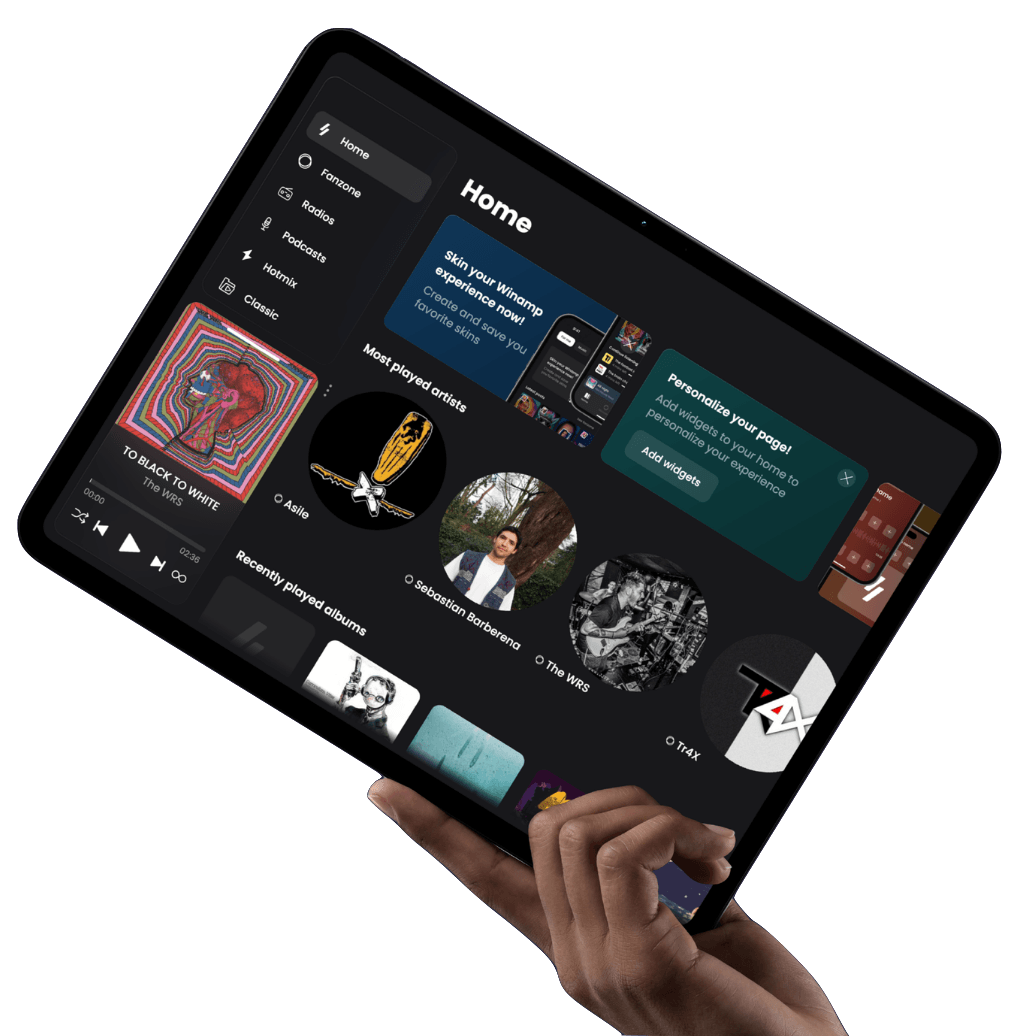
Winamp says the new player will bring together streaming music, local files, internet radio, podcasts and personal cloud libraries within one customizable interface. The company is also promising social features and new tools for music discovery and organization.
The existing desktop player will eventually gain access to the premium subscription.
Winamp and Deezer also claim that more than 40 million people still actively use the desktop software worldwide. That is an extraordinary figure for an application many listeners assumed had disappeared alongside dial-up modems, although neither company has provided independent verification.
Deezer is a logical infrastructure partner. It already operates a global streaming service and supplies music technology to telecommunications companies, hardware manufacturers and other third-party businesses.
For Deezer, Winamp creates another way to distribute its catalog without having to persuade Spotify and Apple Music subscribers to switch directly to the Deezer brand.


Why Deezer?
Deezer enters the Winamp partnership from a stronger financial position than its smaller market share might suggest.
The French streaming company reported revenue of €268.2 million for the first half of 2026, adjusted EBITDA of €8.5 million and net income of €6.7 million, reversing a €7.6 million loss from the same period one year earlier. Direct subscribers increased 8.7% to 5.8 million, although Deezer’s total subscriber base declined 3.5% to 8.9 million as subscriptions supplied through outside partnerships continued to fall.
Deezer is not remotely close to challenging Spotify or Apple Music on scale, but it has a licensed global catalog, lossless streaming technology and an expanding business supplying music infrastructure to other companies. Winamp does not need Deezer to become the world’s largest streaming platform. It needs Deezer to make the plumbing work.
What Are the Alternatives to Winamp?
Winamp will not be the first platform to combine locally stored music with subscription streaming.
Roon is the most obvious alternative for audiophiles. It merges local files with services including TIDAL and Qobuz, adds extensive metadata and discovery tools, supports bit-perfect playback and works with more than 1,000 compatible audio devices. It is also priced at $14.99 monthly, $149.88 annually or $829.99 for a lifetime subscription, before anyone buys a dedicated Roon server.
Audirvāna Studio also combines local files stored on computers, USB drives and NAS devices with TIDAL, Qobuz, Presto Music, HIGHRESAUDIO and internet radio. Its emphasis is more firmly placed on high-resolution playback and computer-based audio than mainstream discovery or social features.
Plexamp is another strong option for people who primarily want to organize and stream their own music collection. It offers gapless playback, loudness leveling, smart playlists, CarPlay, Android Auto, AirPlay and Chromecast, but it does not merge that library with a full subscription music catalog in the same way Winamp is proposing.
Winamp’s opportunity is therefore not proving that local and streamed music can coexist. Roon and Audirvāna already do that rather well. Its challenge is making the experience simpler, cheaper and more accessible to people who do not own a dedicated server or use “bit-perfect signal path” in casual conversation.


Why Does This Matter?
Streaming services have made access to music remarkably convenient, but they have also separated many listeners from the music they already own.
Someone with 2,000 ripped CDs, purchased FLAC downloads, independent releases, live recordings and carefully organized playlists often needs one application for local files and another for streaming. Internet radio, podcasts and cloud storage may require additional software.
Winamp wants to put those sources inside one player.
That could be genuinely useful because streaming and locally owned music serve different purposes. Streaming is excellent for discovery and immediate access. Local files offer permanence, specific masterings and control over recordings that may disappear when licensing agreements change.
Winamp is not the first company to attempt this. Roon combines local libraries with several streaming platforms, while music servers from companies such as Innuos merge stored files with subscription catalogs. Apple Music also allows listeners to manage local music alongside its streaming library.
The difference is that those solutions are either tied to specific ecosystems, require another subscription or work best with dedicated audio hardware.
A properly designed Winamp application could offer a broader software-based alternative for listeners who want one library without purchasing a dedicated music server.
The word “could” is carrying a rather large loudspeaker up the stairs.
Who Would Use It?
The most obvious audience consists of listeners who built substantial digital music libraries during the CD-ripping and download eras and never deleted them simply because Spotify arrived.
That includes people with MP3, AAC, ALAC, WAV and FLAC collections stored on computers, external drives or cloud accounts. It also includes listeners who buy music directly from artists, collect alternate masterings or own recordings unavailable through mainstream services.
Existing Winamp users are another natural audience, assuming that 40 million figure is remotely close to reality.
The player could also appeal to people who dislike the increasingly uniform design of major streaming applications. Customization was central to Winamp’s original appeal, and the company says users will again be able to modify layouts and create skins.
Audiophiles should remain cautious.
Deezer currently offers lossless streaming, but neither company has confirmed that the Winamp subscription will include lossless audio. There is also no information about bit-perfect playback, exclusive audio modes, automatic sample-rate switching, USB DAC support or compatibility with network streamers.
Until those details emerge, this is a promising library-management concept rather than an audiophile playback platform.

What We Don’t Know
Winamp has not announced the price, launch countries or which operating systems will be supported at launch. There are no confirmed details about streaming quality, offline downloads, family plans, playlist transfers or whether existing Deezer subscribers will have any upgrade path.
The company has not identified which cloud-storage platforms will work or whether the player will index NAS drives and shared network folders.
Hardware support is another large blank space. Winamp has not confirmed AirPlay, Google Cast, UPnP, DLNA, smart-speaker integration, automotive support or direct playback through connected audio components.
It has also not demonstrated the finished software.
At this stage, Winamp and Deezer have announced a partnership, a concept and a 2027 release window. That is not the same thing as delivering a stable player capable of merging a complicated local library with millions of streamed tracks.
The Bottom Line
Winamp and Deezer are pursuing an idea that deserves attention.
Major streaming services have spent years improving discovery and recommendation systems while often treating locally owned music as something listeners abandoned with CD binders and beige computers.
Millions of people still own large digital collections and should not require a separate archaeological expedition every time they want to play them.
Deezer gives Winamp a catalog, licensing relationships and streaming infrastructure. Winamp brings a recognizable brand and decades of experience with local music playback and customization.
That combination could produce a genuinely useful alternative to conventional streaming apps. It could also become another Deezer-powered service with a different logo, several customizable buttons and a marketing department leaning very heavily on the past.
The difference will come down to pricing, audio quality, hardware support and whether Winamp can combine local and streamed music without turning library management into unpaid technical support.
The llama may still whip the llama’s ass.
It also needs to support your DAC.
For more information: winamp.com
You must be logged in to post a comment Login