Security teams log 54% of successful attacks and alert on just 14%. The rest move through your environment unseen.
The Picus whitepaper shows how breach and attack simulation tests your SIEM and EDR rules so threats stop slipping by detection.



American fast food restaurant chain Chick-fil-A has confirmed that over 13,000 customers had their data stolen in a recent wave of credential stuffing attacks.
As BleepingComputer first reported, the company revealed in data breach notification letters filed with multiple attorney general’s offices that it detected attacks targeting its website and mobile app between June 17 and June 19 after identifying suspicious login activity to certain Chick-fil-A One accounts.
Chick-fil-A says the attackers used automated tools and credentials “obtained from a third-party source” to hack into Chick-fil-A One accounts and steal customer data.

“We recently identified a security incident that may have affected a limited number of Chick-fil-A One Loyalty accounts. Upon discovering the issue, we took steps to immediately address, secure and restore accounts, and we are communicating directly with all customers who may have been impacted,” the company told BleepingComputer.
During the attacks, the threat actors accessed a combination of customers’ names, email addresses, Chick-fil-A One membership numbers, the amount of Chick-fil-A credit, the mobile pay numbers, and the last four digits of the credit/debit card number. Additionally, they may have also gained access to birth dates, phone numbers, and addresses if stored in the compromised accounts.
While the company didn’t say how many individuals had their data exposed, Chick-fil-A notes in a filing shared by the Office of the Maine Attorney General with BleepingComputer on Wednesday that the resulting data breach affected 13,322 people in total.
In separate filings, it also told the Texas attorney general’s office the data breach impacts 2182 Texans and the Massachusetts AG that it affects 39 residents. Chick-fil-A has also sent data breach notification letters to residents of the District of Columbia, Iowa, Maryland, New Mexico, New York, North Carolina, Oregon, Vermont, and Rhode Island.
In response to the incident, Chick-fil-A says it logged out all impacted accounts, removed payment methods, restored all affected Chick-fil-A One account balances, and has also added rewards to affected accounts as a way of apologizing. Since the accounts were compromised because they were using credentials stolen from third-party services, Chick-fil-A also advised impacted customers to change their passwords as soon as possible.
Chick-fil-A also disclosed in March 2023 that hackers stole the personal information of over 71,000 customers after hacking their accounts in another series of credential stuffing attacks between December 2022 and February 2023.
As one of the largest fast food companies in the United States, Chick-fil-A operates a network of over 3,000 restaurants across the U.S., Canada, Puerto Rico, the United Kingdom, and Singapore.

Security teams log 54% of successful attacks and alert on just 14%. The rest move through your environment unseen.
The Picus whitepaper shows how breach and attack simulation tests your SIEM and EDR rules so threats stop slipping by detection.

A huge debate is brewing in Silicon Valley over the proliferation of Chinese-made artificial intelligence tools, particularly “open-weight” AI systems that, by some measures, can compete with or even outperform some of the best US models. My WIRED colleague Hugo Lowell has written about the Trump administration’s internal debate on how to handle these Chinese models. Among AI companies in the Valley, the issue is proving even more divisive.
A top concern in both DC and the Valley relates to distillation, in which a less capable AI model is trained on the outputs of a more powerful one. In June, Anthropic accused the Chinese tech giant Alibaba of illicitly stealing its IP through distillation attacks. Then, earlier this week, the White House said that it believes the Beijing-based Moonshot AI had developed its Kimi K3 model by distilling Anthropic’s Fable 5 model.
Another big concern is how quickly China’s models are appearing and spreading. An open-weight AI model has its core components made public, so that it can be fine-tuned to suit a user’s needs. But they don’t have the kinds of guardrails on which Anthropic has been building its reputation. Yasir Atalan, deputy director and data fellow at the Center for International and Strategic Studies, points out that the main benefit of open-weight AI models is their speed of diffusion. They can spread especially easily “through Hugging Face, GitHub, cloud providers, local deployments, and third-party inference platforms,” he writes. If you’re Anthropic, and you’ve built a cult around safety and charge for access to your big expensive proprietary models, you have every reason to want to regulate this.
But some Silicon Valley startups—not the trillion-dollar ones like OpenAI and Anthropic—really don’t want the US government to put restrictions on these AI models. On Wednesday a group of over 200 startups called the Little Tech Association sent a letter to Michael Kratsios, science adviser to President Donald Trump, and US Commerce Secretary Howard Lutnick lobbying against an outright ban of open-weight AI models. The group, which includes famed startup incubator YCombinator, has argued in favor of certain safeguards but says that denying Americans access to AI models abroad would weaken US startups and create a monopoly among the AI giants.
Bill Gurley, the legendary tech investor and longtime partner at Benchmark Capital, has publicly argued in favor of letting “the free market work.” In a lengthy blog that offers a nice little history of open-source software, Gurley writes that open-weight models avoid lock-in, encourage true academic research, and are critical for capital-constrained startups.
“Every AI startup, every solo developer, every two-person team building a product on top of AI infrastructure depends on having access to good models at affordable prices,” Gurley says.
Chamath Palihapitiya, one of the All-In podcast hosts, wrote on X that “tricking the US Government to protect frontier labs’ business model by using a China boogeyman is a mistake…It is protecting the equity of 5,000 people who are investors in OAI and Ant at the sale of everyone else. This would be a terribly stupid decision.” His cohost and fellow VC Jason Calacanis piled on. “Daddy Trump protect us!!!!” he wrote on X, with an alarming number of crying-laughing emoji.
This stance from some of Silicon Valley’s most ruthless capitalists might at first seem counterintuitive. Why let a foreign adversary’s technology flourish in the US? It’s as if the US is up just 1-0 in the AI World Cup, a slightly uncomfortable lead, and the crowd is chanting for the opposing team to get a free kick.

On July 23, President Donald Trump stood in the White House and promised that electricity bills for American families would “actually come down,” even as power-hungry AI data centres spread across the grid. T
he vehicle was an expanded version of the Ratepayer Protection Pledge, a voluntary scheme first unveiled in March. What energy analysts noticed was mostly what it left out.
The pledge asks the companies building data centres, among them Amazon, Google, Meta, Microsoft, OpenAI, Oracle, and xAI, to fund or build the power infrastructure their facilities demand rather than passing the cost to existing ratepayers.
The administration had already signalled it would widen the scheme to the utilities, and the new version reaches, by the White House’s own count, nearly 200 additional signatories, including NextEra Energy, Duke Energy, rural cooperatives, and a group of Republican governors.
Trump claimed the commitment now covers roughly 80% of the power delivered to US homes and businesses, and that companies given the right to build their own plants could sell surplus energy back to the grid, nudging rates down. He offered no capacity targets, no timelines, and no measurable milestones.

The 💜 of EU tech
The latest rumblings from the EU tech scene, a story from our wise ol’ founder Boris, and some questionable AI art. It’s free, every week, in your inbox. Sign up now!
That silence matters, because the strain on household bills is already well documented. AI data centres have pushed up power bills across parts of the industrial Midwest, and in the PJM Interconnection, the largest US grid operator, data centres accounted for $6.3bn of the $16.4bn in charges from the most recent capacity auction, roughly 38%, according to the grid’s independent market monitor.
“PJM is continuing to act like it’s business as usual,” Joseph Bowring, the monitor’s president, said of the shift. “You have to open your eyes and recognise that it is really a paradigm shift, and failing to do that imposes costs on other customers.”
The pledge is not binding, and that is the central objection. It carries no penalties and no compliance oversight, and a quirk of federal rules may stop signatories honouring it even where they want to.
Current interconnection tariffs socialise grid-upgrade costs across all customers, and as FirstEnergy argued in a 2026 filing to regulators, existing rules can prevent a company from covering its own infrastructure costs even if it chooses to.
Consumer advocates were blunt. Jesse Lee of the campaign group Climate Power called the pledge a “pinky promise,” and a Consumer Reports survey found that 75% of American adults lacked confidence that large developers would truly cover all their costs.
Researchers at the Brookings Institution added that federal statutes “cannot readily override” the state public utility commissions that actually set residential rates.
There is a further wrinkle. Some of the same companies signing the pledge have fought state-level rules that would force them to deliver on it, consumer groups say, which makes the voluntary version look less like generosity than like the softer of two options.
The White House has cast the plan as proof that the AI build-out can proceed without punishing households.
The forecasts are not reassuring either. The consultancy ICF has estimated that data centres could lift US electricity demand by 25% by 2030 and add as much as 40% to monthly bills over five years, and utilities are planning some $1.4 trillion in capital spending by the end of the decade to keep up.
Louisiana, for its part, projects $2.6bn in ratepayer savings over 15 years from its deal with Meta, a reminder that the local arithmetic can cut both ways.
Congress has taken its own run at the problem, with the House advancing a bill on data centre energy costs, though nothing on the books yet compels the hyperscalers to pay.
The one body that could give the pledge teeth is the Federal Energy Regulatory Commission, which has already begun to fast-track grid connections for large loads. In June, it ordered six regional grid operators to justify or reform how they charge those users, with a deadline in August.
Until those rules change, the pledge remains what its critics say it is: a promise made in a room, with no one obliged to keep it.

GitHub has confirmed plans to evolve its bug bounty program into a two-tier system, which will come into force for reports submitted on or after July 27, 2026.
Under the new scheme, the Microsoft-owned coding platform will add a lower-paying public program that’s available to the wider research community, under a higher-paying invitation-only program.
Product Security Engineer Catherine Cassell explained that the change comes in response to a growing backlog of low-effort, low-quality and AI-generated reports.
Latest Videos FromTechRadar
For the new public program, GitHub will replace payout ranges with a single payment for each severity, spanning $250, $2,000, $5,000 and $10,000 for low, medium, high and critical. Cassell said this would help researchers know in advance what a valid finding could be worth, and it would also give insiders less of a headache having to decide where a report sits within a range.
Notably, the payouts are much lower than before, with the previous ranges paying out $500-$1,000, $2,000-$5,000, $5,000-$20,000 and $10,000-$30,000.
Invited VIP researchers under the second plan will earn around 3-4x more than researchers under the other scheme, depending on bug severity.
GitHub is also adding a HackerOne signal requirement for new researchers, giving them four opportunities to “establish a track record” – likely another response to rising AI-generated reports, which are typically of lower value.
“We want to build a program that attracts the research we value, creates an experience that reflects how seriously we take this work, and upholds the trust researchers place in us every time they submit a report,” Cassell concluded.

Follow TechRadar on Google News and add us as a preferred source to get our expert news, reviews, and opinion in your feeds.
A lawsuit over Apple’s failure to deliver Apple Intelligence and Siri features is moving closer to a conclusion as a judge has provisionally approved the company’s settlement offer.
The class action suit filed in 2025 alleged that people had bought new iPhones expressly because of Apple’s promoting of Apple Intelligence features that it then did not deliver. Apple admitted in March 2025 that the new Siri features were delayed, but then in May 2025 offered a settlement.
Apple and the parties to the class action suit agreed to a $250 million settlement, but it had to be approved. Now in a filing in the US District Court, Northern District of California, judge Noel Wise has provisionally given approval.
The final approval and so the start of any pay out to buyers, though, is dependent on a final hearing which has now been announced for September 29, 2027. While Judge Wise has given overall approval, he ruled that the court will not decide on any amounts until that hearing.
It may be a quick final hearing, though, as the parties have already agreed to a payment of at least $25 per eligible device. It is possible, however, that this amount could rise to $95 per device if the number of claims filed is low.
There will be a way for users to formally apply to be part of the claim. But as MacRumors said on Friday yet the details of this have not been announced.

Earlier this year FCC boss Brendan Carr launched a series of fake investigations into ABC because the network (1) hosted Democratic Texas Senate hopeful James Talarico on The View, (2) aired comedians who made fun of the president and his wife, and (3) occasionally engaged in journalism critical of Trump corruption.
The details of these investigations really don’t matter at this point. We’ve discussed how they’re legally incoherent, clearly violate the First Amendment, and involve Carr actively manufacturing false claims that ABC violated FCC rules it was long-exempt from. At other points it just involves Carr being incoherently racist on Trump’s behalf; such as claims that ABC didn’t eliminate its “DEI” requirements quickly enough.
Carr’s now dumping additional empty threats into the mix, claiming that his ongoing review of ABC’s local broadcast licenses will take into consideration the network’s refusal to air Trump’s recent prime time speech, which mostly just involved Trump spewing more false election fraud conspiracy theories surrounding his 2020 loss.
ABC and NBC wisely refused to air the speech live, knowing that helping to spread distrust in election integrity in real time would be the opposite of useful journalism. That made Trump mad, so he’s clearly urged Brendan Carr to levy some additional empty threats against ABC:
“I think when you have the President of the United States standing inside the White House delivering an important speech, I think that’s something that broadcasters should be carrying. And so, obviously, this is an issue,” Carr told reporters Wednesday. “There have been lots of concerns raised, including by members of Congress, about whether broadcasters and their decisions there comply with the public interest.”
Carr is somewhat vague here because he knows this is a bunch of bullshit.
Obviously it’s ABC’s First Amendment right to determine what it broadcasts and when. Carr has absolutely zero legal role in determining the scheduling lineup of a private company. Carr’s once again pretending that networks that refuse to pander to our mad idiot king will be subjected to FCC review of their public interest obligations affixed to ownership of public airwaves.
As we’ve mentioned countless times already, Carr doesn’t want any of this to actually head to court because he knows it’s an absolute loser on First Amendment grounds. The real goal remains to threaten U.S. media companies with costly and annoying legal headaches if they challenge Republicans or the unpopular president. It’s typical lazy autocrat stuff by weak men who are afraid of words.
When it comes to ABC, that’s still been embarrassingly effective. The company agreed to pay Trump a $16 million bribe in 2024 to settle a baseless lawsuit the company easily could have won. And more recently, ABC shows like The View have shied away from hosting any political candidates at all for risk of upsetting Trump.
Brendan Carr has openly stated in interviews he fancies himself a tough, pit bull enforcer; but as Trump’s health and political power wane, the threats will hold less and less weight. As a result you’ve already seen ABC execs start to show a backbone in their fight with Carr, openly pointing out how he colluded with local right wing broadcast affiliates to manufacture evidence suggesting ABC broke FCC rules (something I’m sure will play great in court).
Carr’s threats will become weaker and weaker until he’s ultimately booted from office by subsequent administrations, at which point he’ll fail upward to some mid-six figure job at a telecom or media think tank, where he’ll spend the rest of his life helping corporate America dismantle whatever’s left of competition, labor, and consumer protection standards.
One of the ironic things, for Carr, is that his authoritarian censorship and saber rattling often draws press and public attention away from all the other terrible things he’s doing, whether it’s destroying media consolidation limits, making life easier on robocallers, dismantling broadband consumer protection standards, or making it easier for giant shitty companies to run amok.
You’d like to think Carr ultimately faces some sort of meaningful accountability for being one of the most censorial, petty, captured, and authoritarian regulators in U.S. history, but I wouldn’t hold your breath.
Filed Under: brendan carr, censorship, fcc, first amendment, james talarico, media
Companies: abc, disney
Erling Haaland is not the only Norwegian built around power, precision and making life difficult for the opposition.
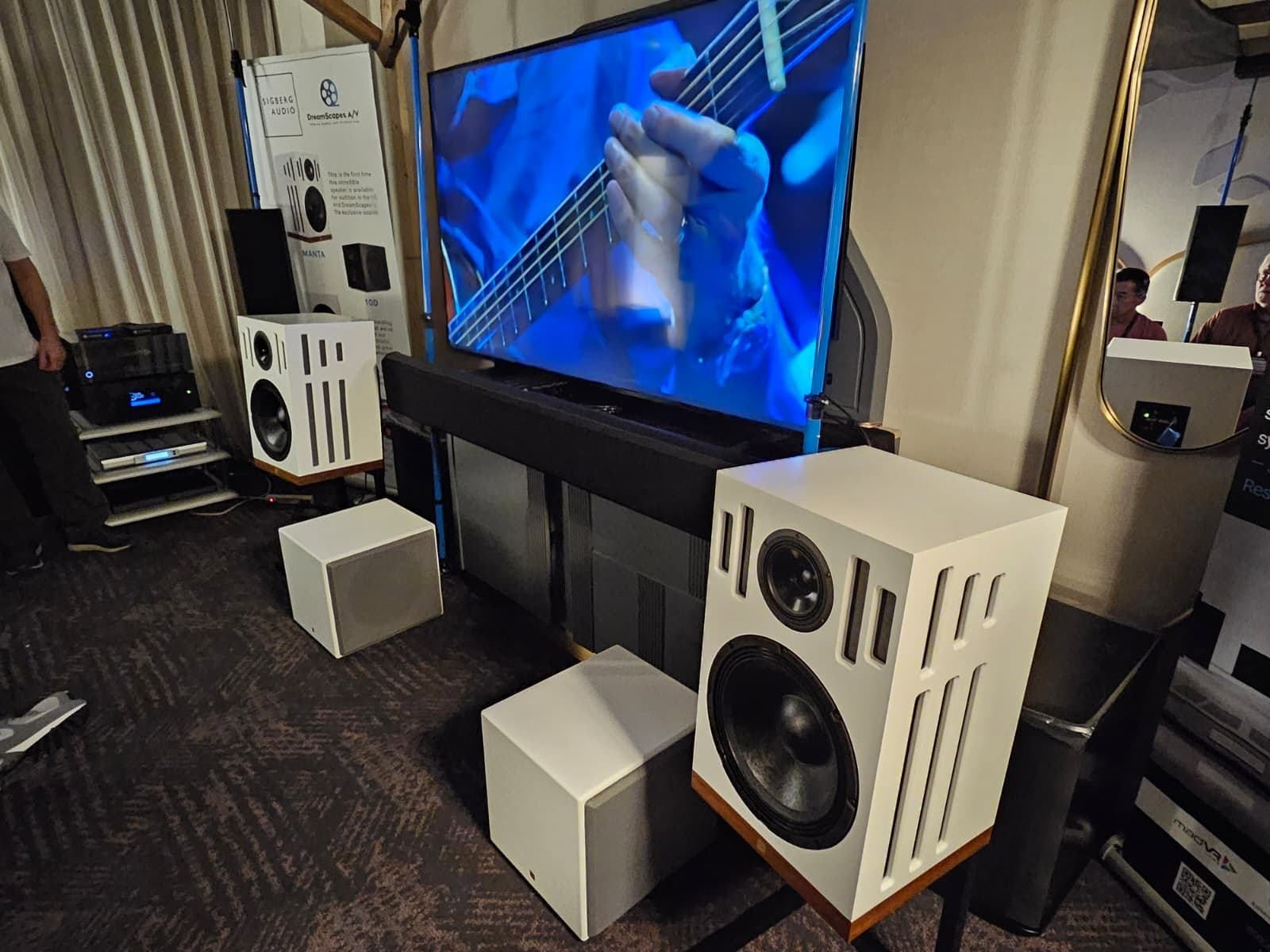
Sigberg Audio is making its U.S. audio show debut at Southwest Audio Fest 2026 with the Manta active loudspeaker system, Saranna active floorstander and 10D dual opposed subwoofer.
The Norwegian manufacturer takes a rather different approach from the growing number of wireless speakers promising an entire audio system inside two attractive cabinets. Sigberg focuses on Hypex nCore amplification, DSP crossovers, manual parametric EQ and controlled directivity designed to reduce unwanted interaction with the room.
There is no Wi-Fi streaming, Bluetooth or HDMI eARC. These are active high-end loudspeakers for listeners who want the amplifiers, crossovers and drivers engineered as one system, not another lifestyle product whose future depends upon an app remaining alive.
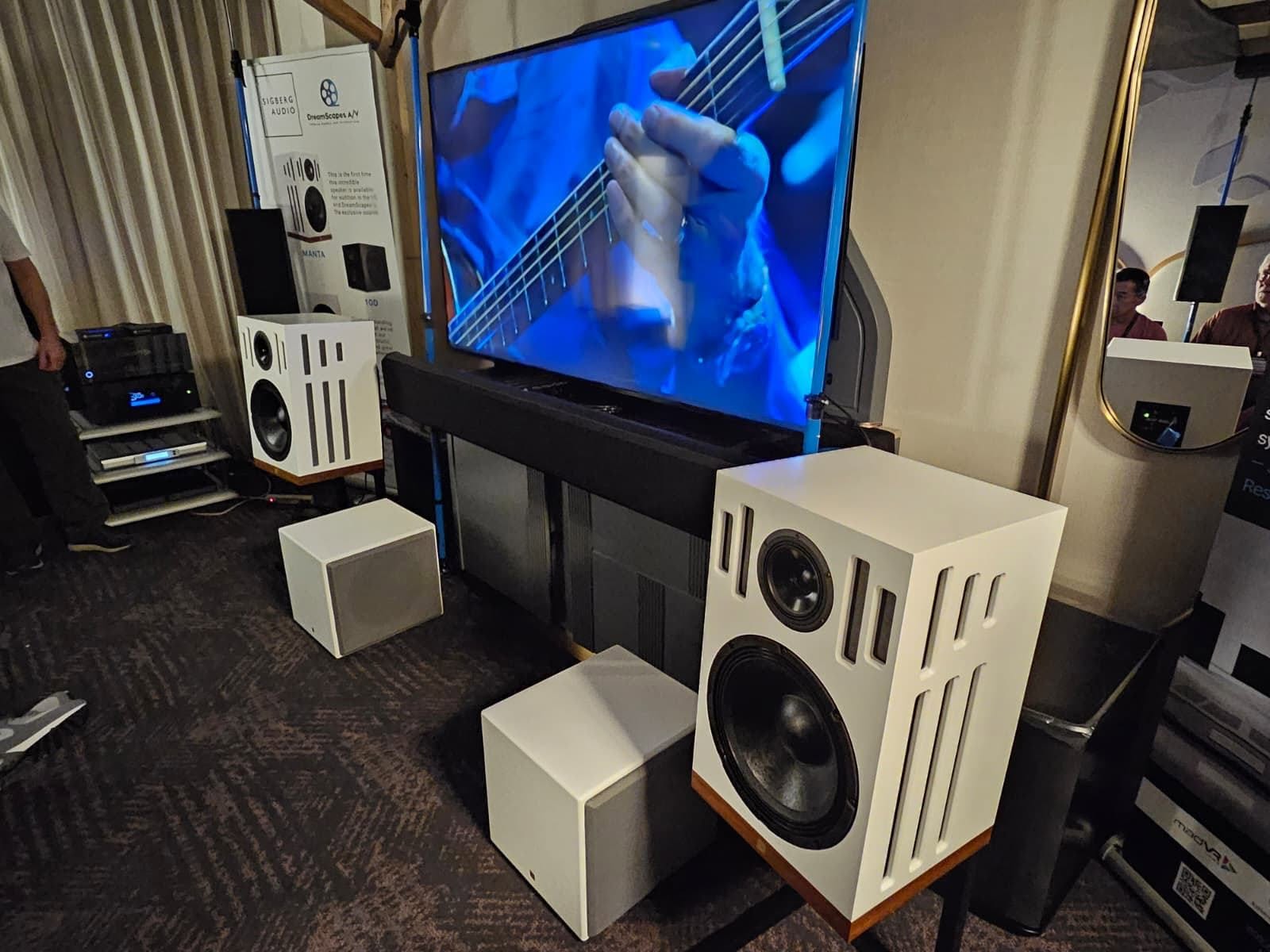
The Manta is a four way active system comprising two powered monitors and a pair of dedicated Sigberg bass modules.
Each monitor uses a 12-inch midbass driver and a 5.5-inch coaxial driver containing a 1-inch silk dome tweeter. Three channel Hypex nCore amplification provides 600 watts per speaker, while DSP handles crossover and equalization duties.
Sigberg describes the Manta as a dual cardioid design. Its vented enclosure is intended to reduce sound radiating toward the sides and rear of the cabinet, potentially limiting early reflections from nearby walls.
The company claims rearward and lateral attenuation of approximately 10dB to 25dB across portions of the 100Hz to 5kHz range. That will not magically remove the room, but it could make the Manta considerably easier to integrate than a conventional loudspeaker with broad rearward radiation.
Sigberg recommends positioning the Manta between 10 and 50cm (4-20 inches) from the front wall and at least 40cm (15 inches) from the side walls. The included stands tilt the speakers upward by four degrees.
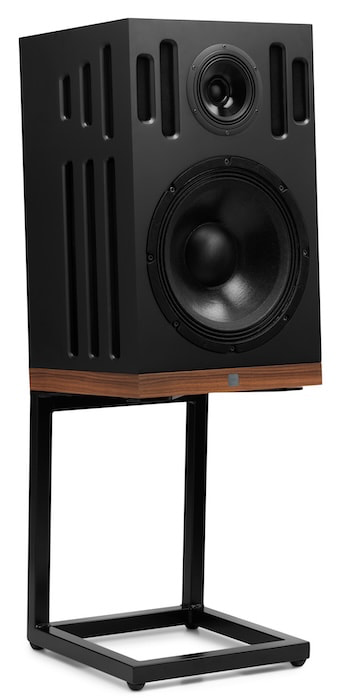
The Manta system being demonstrated in Dallas uses two Sigberg 10D subwoofers.
Each sealed cabinet contains two opposing 10 inch aluminum cone drivers powered by a DSP enabled Hypex nCore amplifier. The opposing drivers are designed to cancel mechanical forces and reduce cabinet vibration.
Sigberg specifies a frequency response of 23Hz to 250Hz, with typical in room extension to approximately 18Hz. Claimed average output is approximately 117dB from 30Hz to 80Hz at one meter under CEA 2010 measurement conditions.
Each 10D weighs 27kg, or 59 pounds, and includes RCA, balanced XLR and speaker level inputs. It also offers nine band parametric EQ and connection presets for use with an A/V receiver, conventional preamplifier or Sigberg active speaker system.
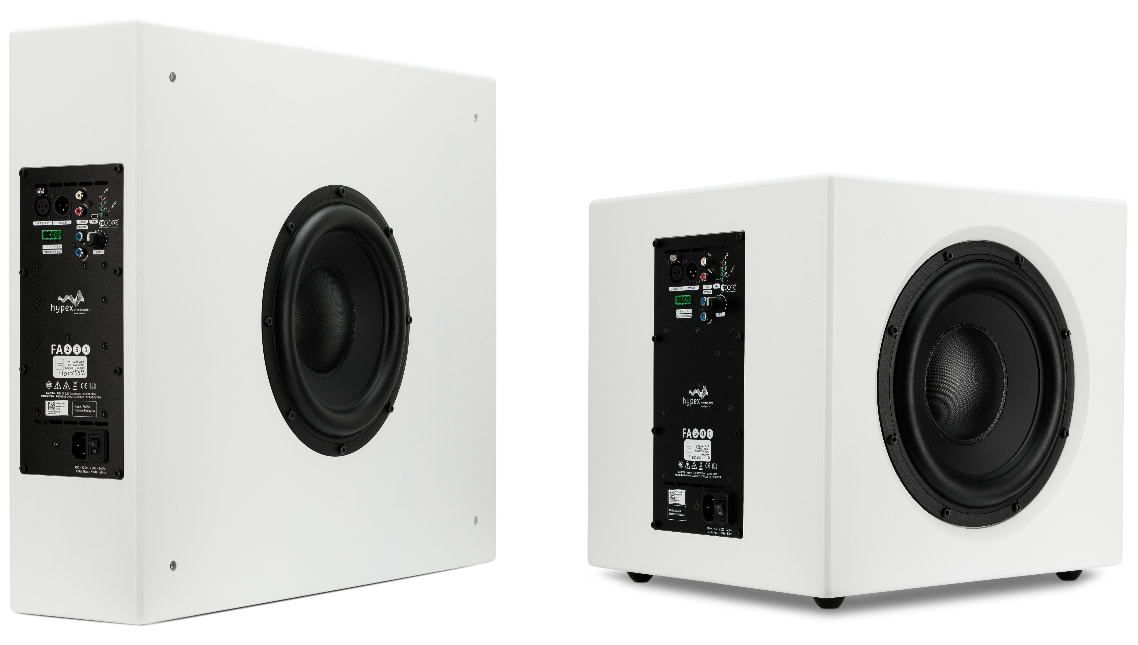
| Sigberg Inkognito | Sigberg 10D | |
|---|---|---|
| MSRP | $4,000 each | $5,000 each |
| Driver Type | 12″ Scan-Speak Aluminium cone | Dual 10″ Aluminium cone |
| Enclosure Type | Sealed | Sealed |
| Frequency Response | 23- 250Hz (±3dB); ~18Hz in-room |
23- 250Hz (±3dB); ~18Hz in-room |
| Max SPL | 113 dB | 117 dB |
| Amplification | Hypex nCore, DSP enabled | Hypex nCore, DSP enabled |
| Crossover/EQ | 9-band parametric | 9-band parametric |
| Inputs | RCA, XLR balanced, High-level | RCA, XLR balanced, High-level |
| Dimensions (WxHxD) | 650 x 540 x 163 mm (25.6 x 21 x 6.4 in) |
360 x 370 x 410 mm (14 x 14.5 x 16 in) |
| Weight | 22 kg (48 lbs) | 27 kg (59 lbs) |
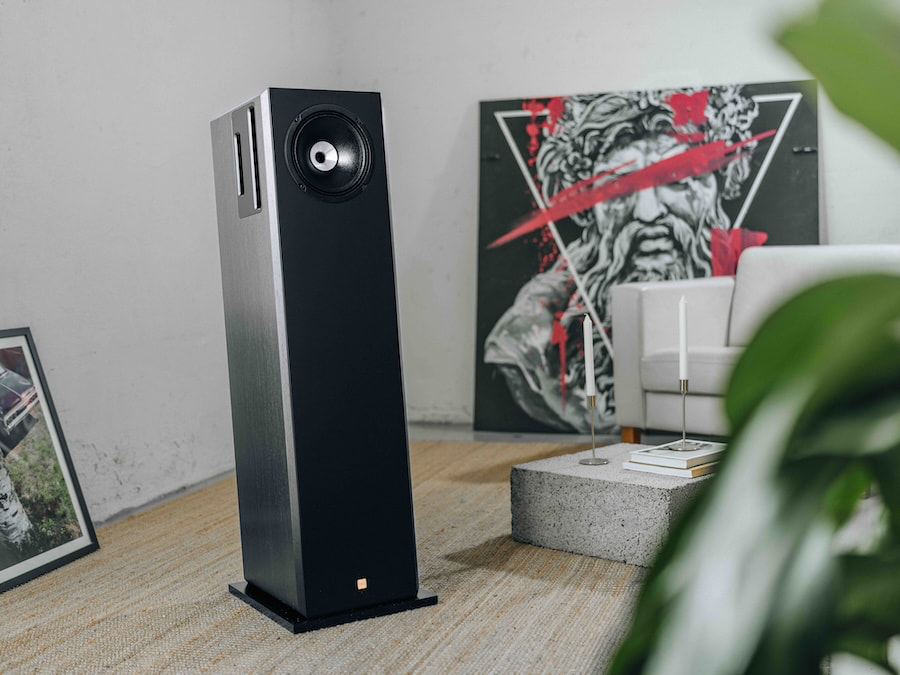
The Saranna packages much of the same technology inside a narrower full range floorstander.
A front mounted 8 inch coaxial driver combines the midbass and midrange unit with a horn loaded compression driver. Two rear mounted 8 inch woofers handle the lower frequencies inside a ported enclosure.
Each Saranna contains 600 watts of three channel Hypex nCore amplification, DSP crossovers and nine band parametric EQ.
Sigberg claims a frequency response of 28Hz to 20kHz, with typical in room extension down to 20Hz. Claimed maximum output is 116dB per speaker.
The rear woofers might suggest that the Saranna needs considerable breathing room, but Sigberg designed the system to benefit from boundary reinforcement. The company recommends placement relatively close to the front wall, generally between 15 and 50cm.

The Manta and Saranna include their own amplification, DSP and active crossovers. Owners do not need separate power amplifiers, but they will still need a source component or preamplifier with volume control.
Both systems support RCA, balanced XLR, optical, coaxial S/PDIF and AES connections.
Their published specifications do not include Bluetooth, network streaming, HDMI eARC, automatic room correction or an internal phono stage.
That makes them less convenient than something from KEF, Dynaudio or Buchardt, but it also means the loudspeakers are not tied to a specific streaming platform. Owners can select or replace the front end without throwing away the amplification and loudspeaker system.
The manual nine band parametric EQ also provides considerable flexibility, although using it properly will require acoustic measurements, dealer assistance or some idea of what those frequency and Q controls actually do. Randomly moving sliders until everything looks exciting is not room correction.
Sigberg says its direct pricing includes worldwide shipping, applicable taxes, import fees and customs handling. The company also offers a 60-day home trial and 5-year warranty.
U.S. customers can purchase directly from Sigberg or contact DreamScapes A/V in Syracuse, New York.
The Sigberg Audio systems are being demonstrated inside the DreamScapes A/V Presidential Suite on the 10th floor of the Sheraton Dallas Hotel.
The Manta and 10D are confirmed for the room. The Saranna was announced for the show but was initially listed as pending customs clearance, so attendees should confirm its arrival before heading upstairs specifically to hear it.
Southwest Audio Fest 2026 runs from July 23 through July 25 at the Sheraton Dallas Hotel. Tickets cost $25 for one day or $40 for a multiday pass.

Sigberg Audio is not trying to build another attractive wireless speaker that promises convenience above everything else.
The Manta and Saranna combine purpose matched amplification, DSP crossovers, substantial output and controlled directivity in systems designed to work relatively close to the front wall. That could make them especially interesting for listeners who want full range performance but do not have an acoustically perfect listening room the size of a Norwegian football pitch.
The Manta is the more ambitious system, combining large active monitors with two dedicated bass modules. The Saranna delivers much of the same philosophy in a narrower floorstanding design without requiring external subwoofers.
Neither system is inexpensive. There is also no onboard streaming, HDMI eARC or automatic room correction, and anyone who changes amplifiers more often than Erling Haaland scores goals will probably struggle with the concept.
For listeners who care more about engineering, room integration and consistent system matching than collecting amplifiers, Sigberg Audio could be one of the most interesting manufacturers making its Dallas debut.
For more information: sigbergaudio.com
.png)
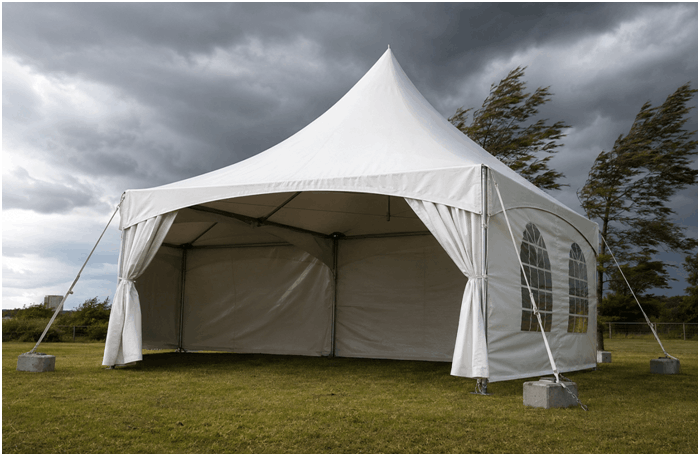
Outside gatherings seldom feature an ideal climate. A quiet morning may rapidly shift to heavy wind, abrupt gusts, or an unanticipated downpour. If you’re displaying goods at a commercial exhibition, organizing a public function, visiting a produce vendor site, or executing an advertising drive, erratic atmospheric conditions might ruin a whole arrangement unless the canopy was designed specifically for such elements.
A tent offers more than just shade protection. It shields individuals, gear, merchandise, and brand identity while allowing events to proceed securely against shifting weather patterns. Yet, no single canopy functions identically once winds begin to rise significantly. Your custom event tents are built with wind performance in mind, helping you select structures that avoid injuries, limit property destruction, and provide attendees with increased assurance during the whole exhibition period.
Knowing what traits boost stability aids firms in buying gear that works well every single year.
1. Choose a Strong Frame
Everything starts with the frame.
A high-quality frame gives the structural support required to endure shifting weather patterns. Commercial aluminum grades offer a good mix of strength and ease of carrying, whereas heavy steel frames give extra steadiness for tough settings. Stronger joints and lasting connectors likewise cut down on motion when winds blow hard.
A strong frame creates a stronger foundation.
2. Secure Anchoring Matters
Even the most robust tent will fail to stay steady if it lacks correct securing.
Stakes function nicely on grass plus soft ground areas, yet heavy plates, sandbags, or water containers give extra stability on concrete plus pavement surfaces. Each leg needs securing prior to the start of events, specifically whenever wind conditions are anticipated.
Proper anchoring greatly improves safety.
3. Select Wind-Resistant Canopy Fabric
Fabric quality affects more than appearance.
Heavy-duty fabrics stretch less, tear less, fade less, and hold up against water better than lightweight options. Waterproof layers, UV protection, strong seams, and tough corner pads help make things work well at outside parties.
Quality materials increase long-term durability.
4. Look for Aerodynamic Designs
Tent shape influences wind performance.
Certain roof shapes let wind pass over the frame rather than hitting big flat areas hard. Open vents cut down on pressure too since they give air a way out via special holes, which lowers the upward push made by fast winds. The same aerodynamic thinking applies to your custom inflatable arches, which are engineered to channel airflow smoothly rather than resist it, making them a reliable choice for outdoor events where wind is a concern.
Smart design improves overall stability.
5. Match Tent Size to the Event
Larger tents catch more wind.
Selecting a cover fitting true space needs cuts unneeded wind drag. Small gatherings might need just small shelters, yet big shows ought to employ properly strengthened frames plus extra anchoring support.
The right size improves both safety and efficiency.
6. Inspect Your Equipment Regularly
Even durable tents require routine maintenance.
Prior to each event, check the frame, connectors, fabric, anchors, and fasteners for indications of wear or harm. Secure loose hardware and swap out broken parts prior to them turning into bigger issues under windy circumstances.
Regular inspections help prevent unexpected failures.
7. Use Sidewalls Wisely
In terms of wind resistance, fully enclosed sidewalls could create wind traps, which may increase the load onto the frame. If you’re expecting heavy winds, consider partially opening your sidewall (or using some vented panels), as this will allow for good airflow while keeping you protected against weather elements. Balanced airflow improves the stability of your tent.
8. Monitor Weather Conditions Throughout the Event
Check weather forecasts again right before you start setting up for an event. You might be able to avoid problems by watching wind conditions all day long.
If you see that the winds have exceeded those recommended by the manufacturers of your tent, consider lowering or dismantling the tent to reduce the risk of damage or danger to yourself and others. Staying alert protects more than just your interests.
Windy conditions ought not to stop a successful outdoor gathering from happening. Firms putting money into tough frames, dependable anchor setups, nice cloth materials, airflow shapes, correct sizes, and routine care get better steadiness and less worry during all events.
Top tents are not merely made for looks; they are designed for function. When weather turns uncertain, reliable gear shields your crew, clients, goods, and reputation so events proceed with assurance.

AI has made it stupidly easy to fake being a real person online, so Facebook is rolling out a new badge to prove you’re not one of them. It’s called Facebook Verified, and the best part is that it won’t cost you a thing.
I love that Facebook has made it easy to get verified. You record a short video selfie, and Facebook checks it against your existing profile photos to confirm it’s really you. The whole thing takes just a few minutes, and unlike some other social media platforms, Facebook isn’t charging you a subscription fee for this checkmark.

That said, not everyone gets to join the club. You need to be 18 or older, and your account has to be in good standing with Facebook’s rules around fraud, scams, and deceptive behavior. Show any signs of inauthentic activity, and you can forget about getting that badge. Also, Pages and ProMode accounts are not eligible right now.
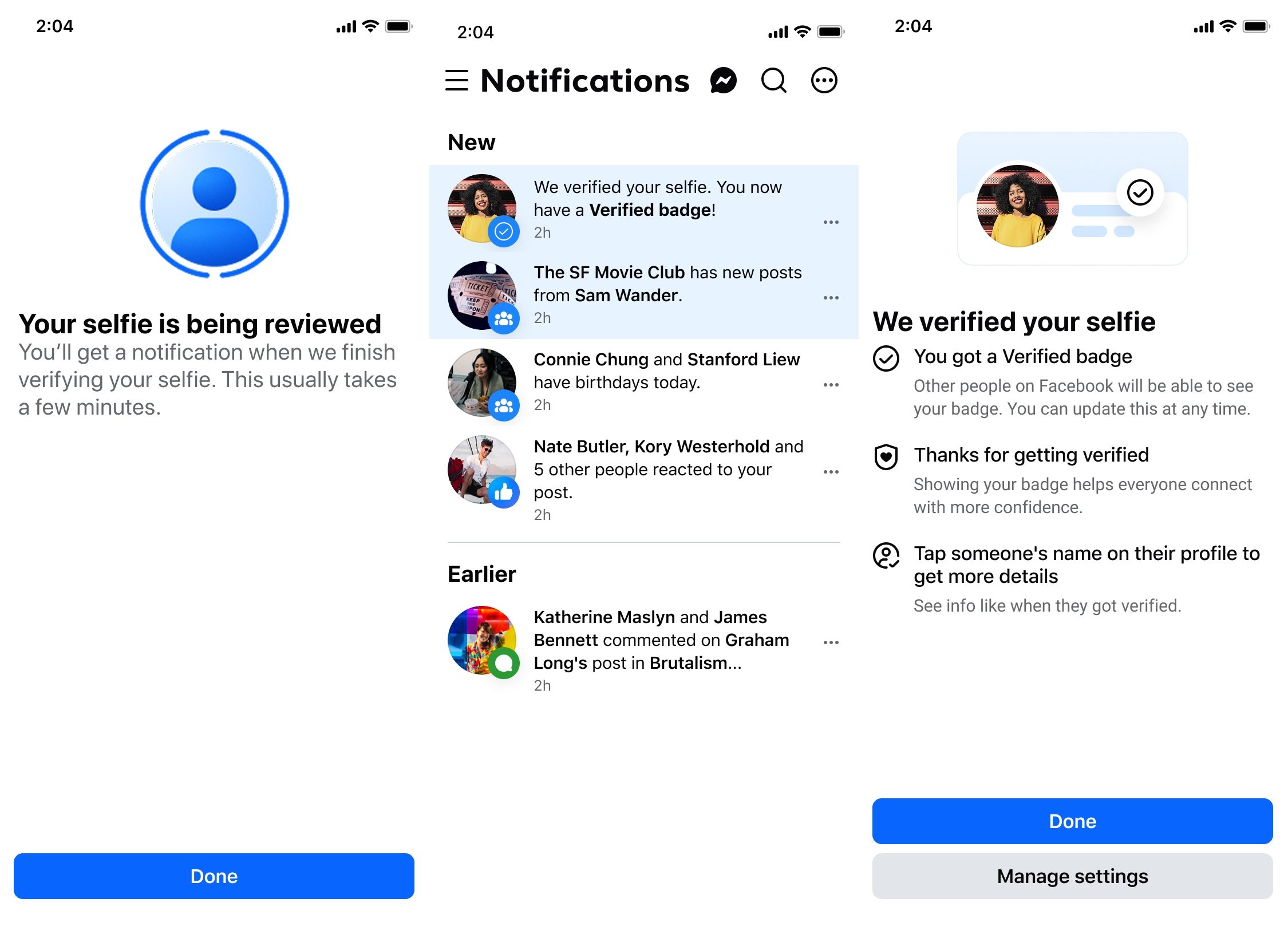
Facebook has said that the feature is rolling out in phases, starting with select markets before it goes global, so don’t panic if you don’t see it on your account just yet.
Once you’re verified, the badge follows you to the spots where trust actually matters, like Marketplace, Facebook Dating, Groups, and your profile. Facebook says Feed posts will get the badge too, eventually.
You only have to verify once, and that badge travels with you everywhere. So next time you’re negotiating over a secondhand couch or matching with someone on Dating, you’ll know there’s an actual human on the other side.
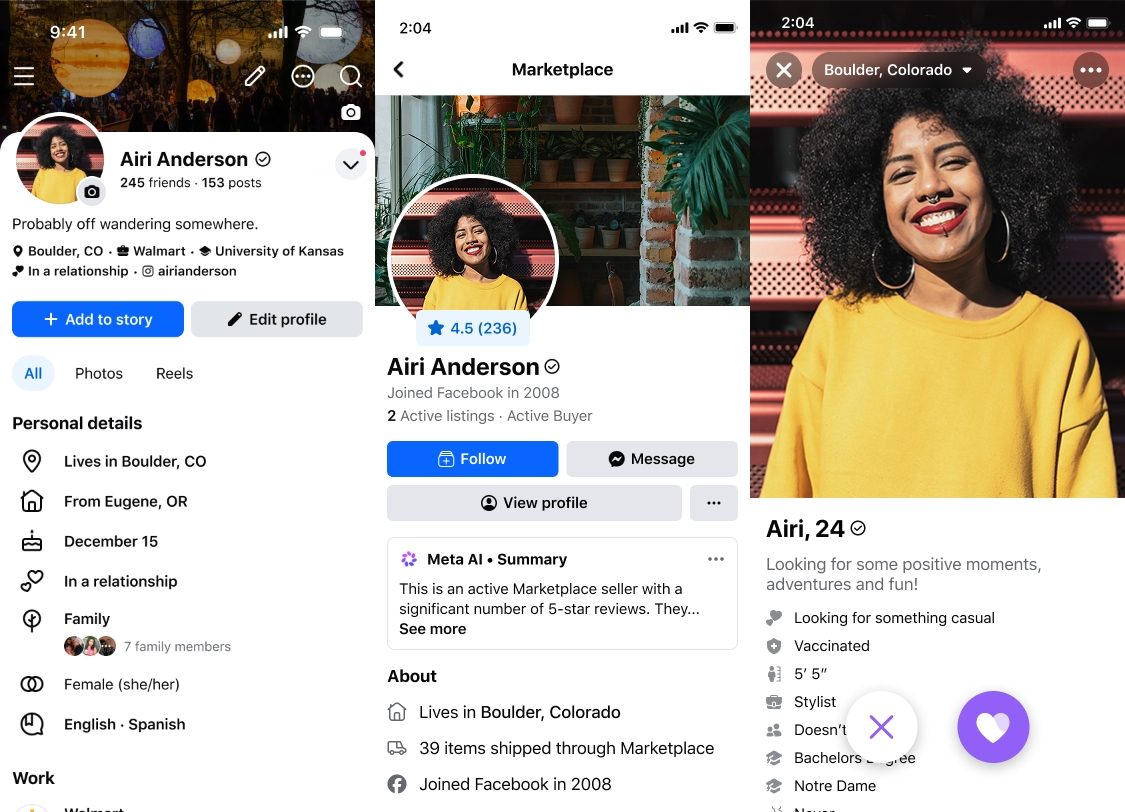
Facebook also says that verification isn’t an endorsement. The company is upfront that the badge doesn’t mean it’s vouching for anyone’s trustworthiness. Verified users still have to play by the same Community Standards and Commerce Policies as everyone else.
As much as I abhor some of the Meta policies, this is a step in the right direction. As AI-generated profiles get harder to spot, a free badge that says “yes, I’m a real person” feels like a pretty useful thing to have around.
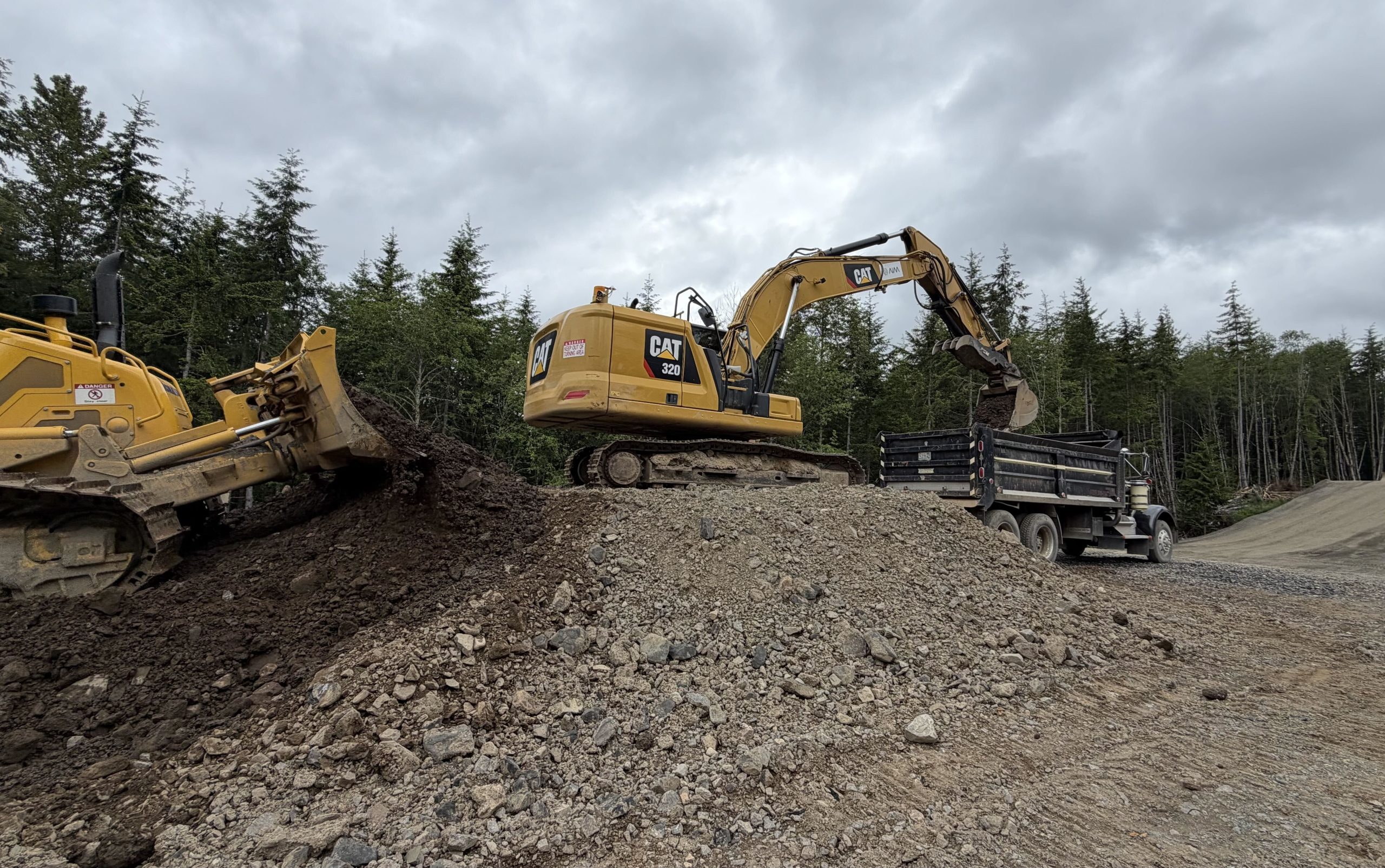
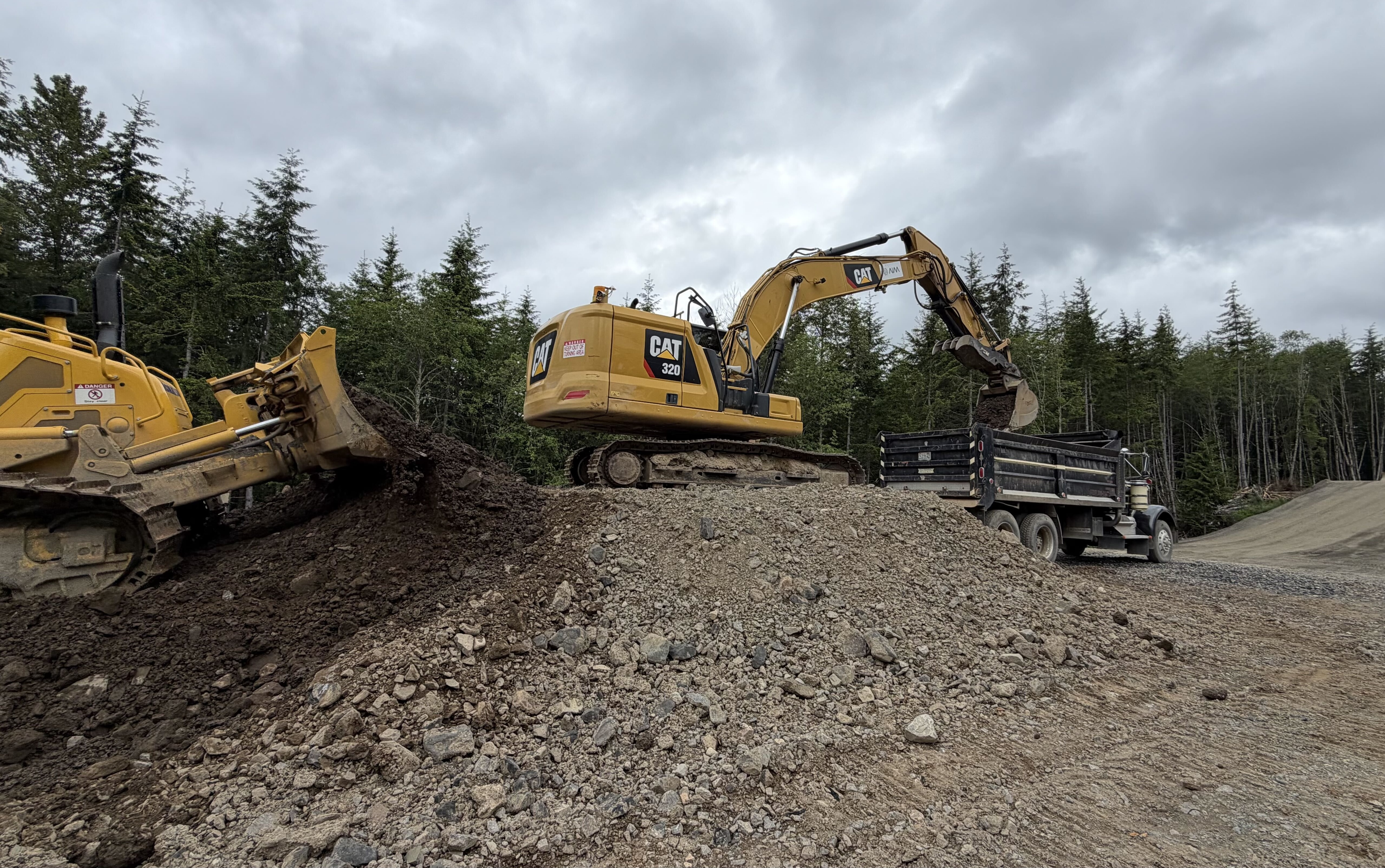
In a headquarters and lab space formerly occupied by SpaceX in Redmond, Wash., AIM Intelligent Machines (AIM) is focused on solving big problems on Earth. But the startup’s CEO envisions a day when autonomous bulldozers and excavators will dig, haul, and grade on the moon or Mars, and take AIM’s “terraforming mission” off planet.
For now, AIM’s 25,000-square-foot facility in a nondescript business park is a long way from Mars. Inside the sprawling space, there are glimpses of what the rapidly growing company is working on, including the apparatuses that attach to existing machines to make them self-driving.
Around the office, desk cubicles are decorated with tiny yellow excavator buckets, mirroring photos on the walls of heavy equipment operating on job sites worldwide.

The toy excavators are a nod to a massive global market that AIM founder and CEO Adam Sadilek wants to continue to disrupt with modern technology.
Autonomous passenger vehicles have captured the public’s attention for decades, but construction, mining and hauling equipment attracts little fanfare, even as legacy companies including Komatsu and Caterpillar embrace new technology.
AIM’s goal is not to build new machinery, but retrofit existing earthmoving fleets with a physical AI platform — using advanced sensors and edge compute to let heavy iron operate entirely on its own.
Founded in 2021, the startup grew out of Sadilek’s background at Google where he spent nine years working on projects involving AI and autonomous vehicle systems.
Whether building anti-flood structures or wildfire breaks, managing nuclear waste, mining critical materials or clearing land for agriculture or the military, Sadilek views AIM’s work as immediate terraforming on Earth that is necessary to drive down costs for housing and commodities. But the long-term vision remains interplanetary.
“When humanity goes to Mars, the real question is not so much around what the rocket looks like as a vehicle to get us there, but what is going to happen after the rocket lands,” Sadilek said. “You cannot have human operators run there. That’s why this is a very long mission that we are on.”
Building autonomy for heavy equipment presents a paradox self-driving cars never have to face: the ground itself is constantly changing. While a Tesla or Waymo relies on pre-mapped roads and predictable lanes, a bulldozer or excavator’s entire job is to reshape its environment. AIM’s physical AI platform has to continuously build real-time 3D maps using onboard 360-degree LiDAR and edge compute, making split-second decisions without relying on persistent GPS or cloud connectivity on remote job sites.
Furthermore, taking human operators out of cab seats addresses one of the most perilous aspects of heavy industry. By creating “zero-entry” sites where machines operate autonomously, AIM’s platform effectively removes workers from harm’s way — transitioning traditional equipment operators into remote site supervisors who oversee entire fleets from a safe distance.
Beyond early deployments in mining and site preparation for data centers, AIM landed a $4.9 million U.S. Air Force contract earlier this year to deploy autonomous machines for airfield repair and base construction in remote or high-risk zones. The military work builds on the company’s growing momentum following a $50 million funding round backed by Khosla Ventures, General Catalyst, and Human Capital.
AIM has risen to No. 110 on the GeekWire 200 ranking on top Pacific Northwest startups.
To support its growth, AIM has rapidly expanded its headcount, doubling in size to about 80 employees in the last few months. Sadilek is attracted to the Seattle area’s intersection of hardware expertise from companies like Boeing and Amazon alongside top-tier software and AI talent.
But while AIM has managed to hire a couple former SpaceX engineers to build out its team, it isn’t the only startup mining that rocket-engineering pedigree. TerraFirma, an Austin-based company founded by two more SpaceX engineers, raised $115 million earlier this month in the burgeoning race to semi-automate physical construction.
For Sadilek, anchoring his team in Redmond rather than Silicon Valley was a deliberate decision to stay rooted in physical engineering. Having spent years in the Bay Area during his time at Google, Sadilek wanted to avoid the tech industry’s “echo chamber.”
“I wanted to be somewhat shielded from the Kool-Aid in Silicon Valley,” he said. “We wanted to build something that’s real and gets in the black really quickly… To do that, you need to do it in an environment that is more anchored in reality.”
That philosophy extends directly into their field testing. AIM’s regional proving grounds in the mountains near Monroe, Wash., expose the autonomous equipment to heavy snow and inclement weather early in development so the physical AI is built for harsh, real-world conditions from day one.

Amid the hard hats, safety vests and construction-related decor in AIM’s headquarters space, one piece of art offers a fun take on where AIM has been and where it’s headed.
The 1949 photograph, titled “Refueling the Sunkist Lady,” shows a Jeep driving beneath a low-flying plane and transferring supplies to aid the crew during an endurance flight.
Sadilek likes it as a reminder of getting started, and what it feels like to build a company from scratch, literally working on the airplane while it’s already rolling down the runway.
“The first years of AIM were exactly like that,” he said. “I think every tech startup is like that in the early days. The problem is that some of them never finish building it before the runway ends.”

The Hide My Email failure is real but nowhere near as significant to users as it’s being portrayed, Apple is hiking so many prices yet looking at ways to make that palatable, plus Foxconn has begun its annual recruitment drive as it begins producing millions of new iPhones, all on the AppleInsider Podcast.
It’s been painted as a big security failing by Apple, and it definitely isn’t good. But even if someone does manage to circumvent your use of Hide My Email, the worst they can do is send you a spam message.
There’s more to it, of course, and if there weren’t then you wouldn’t benefit from listening to Wesley Hilliard explaining it on the podcast. But while it’s good to know the background, not to mention interesting, you can be reassured too.
Which you might also be by how Foxconn is ramping up its recruitment right on schedule. Even if you’re not looking for a job assembling iPhones, it means that the iPhone 18 Pro is on track.
It would be, of course, and the only real questions are whether it can possibly match the success of the iPhone 17 Pro range, and whether there will be an iPhone Fold.
Although of course, there is also the issue of just how much any of these new iPhones will cost. But a strong new rumor claims that Apple will shortly launch a new Apple Upgrade program, specifically to make it possible to buy with a lower upfront cost.
If Apple gives us this leasing program, it also may take away something. To protect it from people just signing up and walking away with costly iPhones, Apple is believed to be readying a way to restrict the use of its devices if a payment is missed.
BONUS: Subscribe via Patreon or Apple Podcasts to hear AppleInsider+, the extended edition. This time, speaking of payments, the discussion is on technology and money, specifically how we need to manage our finances and how options like Apple Card can usually help.
Tune in to our Smart Home Insider podcast covering the latest news, products, apps, and everything HomeKit related. Subscribe in Apple Podcasts, Overcast, or just search for HomeKit Insider wherever you get your podcasts.
Podcast artwork from Basic Apple Guy. Download the free wallpaper pack here.
Those interested in sponsoring the show can reach out to us at: [email protected].
Keep up with everything Apple in the weekly AppleInsider Podcast. Just say, “Hey, Siri,” to your HomePod mini and ask for these podcasts, and our latest HomeKit Insider episode too. If you want an ad-free main AppleInsider Podcast experience, you can support the AppleInsider podcast by subscribing for $5 per month through Apple’s Podcasts app, or via Patreon if you prefer any other podcast player.




Weekend Open Thread – Corporette.com


The House | The City of London can help the new chancellor deliver growth in every postcode


Ripple Payments Joins MiCA With 14 Firms, Does It Mean Anything For XRP?


Democrats look to World Cup watch parties to register thousands of voters


Ripple wins EU-wide access as ESMA adds it to MiCA register


Grayscale Files For Worldcoin ETF, WLD Registers Sharp Rise


Sail Virtually Aboard The “Itanic” With IA-64 Emulator


Unregistered fitter used Gas Safe logo on business flyers

Turtle Beach Command Series KB7 review: a nifty screen-equipped gaming keyboard


Big Money Is Entering XRP

New Jersey voter registration controversy explained: How 6,600 noncitizens got on the rolls, and what happens next


Kaspersky exposes OkoBot’s 20-module crypto wallet attack

Airlines warn Sunshine Protection Act could disrupt flight scheduling

Johnny Depp’s R-Rated Gothic Cult Classic Gets New Release Ahead of Sydney Sweeney Remake

Durham County Council to send out electoral registration emails


MiCA Licensing Faces Delays as ESMA Adds 14 CASPs to Register


Ethics, other provisions in crypto Clarity Act to be further discussed

Shanghai science forum photos show China’s AI and robotics advances in rivalry with US


Chip Stocks Enter Bear Market After Moonshot Ai Unveils Kimi K3 Model


Watch Flock Safety CEO Garrett Langley discuss the future of surveillance at TechCrunch Disrupt 2026



You must be logged in to post a comment Login