TriZetto Provider Solutions, a healthcare IT company that develops software and services used by health insurers and healthcare providers, has suffered a data breach that exposed the sensitive information of over 3.4 million people.
The firm, which has been operating under the Cognizant umbrella since 2014, disclosed that it detected suspicious activity on a web portal on October 2, 2025, and launched an investigation with the help of external cybersecurity experts.
The investigation revealed that unauthorized access began nearly a year before, on November 19, 2024.
During the exposure period, the threat actors accessed records relating to insurance eligibility verification transactions, which are part of the process providers use to confirm a patient’s insurance coverage before treatment.
Advertisement
The types of data that have been exposed vary per individual, and may include one or more of the following:
Full names
Physical address
Date of birth
Social Security number
Health insurance member number
Medicare beneficiary identifier
Provider name
Health insurer name
Demographic, health, and insurance information
Affected providers were alerted on December 9, 2025, but customer notification started in early February 2026. According to a filing Maine’s Attorney General submitted today, the number of exposed individuals is 3,433,965.
TriZetto says that payment card, bank account, or other financial information was not exposed in this incident.
Also, the company is not aware of any cases where cybercriminals have attempted to misuse this information.
TriZetto says it has taken steps to strengthen cybersecurity on its systems and informed law enforcement authorities of the incident.
Advertisement
Notification recipients are offered free 12-month coverage of credit monitoring and identity protection services from Kroll to help mitigate risks arising from compromised data.
BleepingComputer has contacted TriZetto to learn more about the nature of the security breach and why the firm delayed notifications to consumers for several months, but we have not received a response by publication time.
No ransomware groups have taken responsibility for the attack yet, and no data leaks linked to TriZetto have appeared on underground forums.
Cognizant itself was rumored to have suffered a Maze ransomware breach in 2020. In June 2025, Clorox sued the IT firm for gross negligence after it allegedly let Scattered Spider operatives into its network following a social engineering attack in September 2023.
Advertisement
Malware is getting smarter. The Red Report 2026 reveals how new threats use math to detect sandboxes and hide in plain sight.
Download our analysis of 1.1 million malicious samples to uncover the top 10 techniques and see if your security stack is blinded.
With $5.5 trillion in global AI risk exposure and 700,000 U.S. workers needing reskilling, four new AI certifications and Certified CISO v4 help close the gap between AI adoption and workforce readiness
EC-Council, creator of the world-renowned Certified Ethical Hacker (CEH) credential and a global leader in applied cybersecurity education, today launched its Enterprise AI Credential Suite, with four new role-based AI certifications debuting alongside Certified CISO v4, an overhauled executive cyber leadership program.
The dual launch is the largest single expansion of EC-Council’s portfolio in its 25-year history. It addresses a structural gap no single tool, platform, or policy can solve alone: AI is scaling faster than the workforce trained to run, secure, and govern it.
The launch aligns with U.S. priorities on workforce development and applied AI education outlined in Executive Order 14179, the July 2025 AI Action Plan’s workforce development pillar, and Executive Orders 14277 and 14278, which emphasize expanding AI education pathways and building job-relevant skills across professional and skilled-trade roles, at a time when organizations are moving AI from pilot projects into everyday operations and decision-making.
Advertisement
That urgency is visible in both economic exposure and workforce capacity. IDC estimates that unmanaged AI risk could reach $5.5 trillion globally, while Bain & Company projects a 700,000-person AI and cybersecurity reskilling gap in the United States.
The International Monetary Fund (IMF) and the World Economic Forum (WEF) have also pointed to workforce readiness, rather than access to technology, as a primary constraint on AI-driven productivity and growth, especially as adoption accelerates across sectors.
Security pressure is rising in parallel with adoption. Eighty-seven percent of organizations report AI-driven attacks, and generative AI traffic has surged by 890 percent, expanding attack surfaces that many teams are still learning how to defend, while AI capability remains concentrated, with 67 percent of AI talent located in just 15 U.S. cities and women representing only 28 percent of the AI workforce, highlighting persistent access and participation gaps as demand increases.
“AI is moving from experimentation to infrastructure, and the workforce has to move with it,” said Jay Bavisi, Group President, EC-Council. “These programs are built to give professionals practical capability across adoption, security, and governance, so organizations can scale AI with confidence and clear accountability.”
Advertisement
Role-Aligned Certifications
The Enterprise AI Credential Suite is structured to mirror how AI capability is developed in practice. Artificial Intelligence Essentials (AIE) serves as the baseline, building practical AI fluency and responsible usage across roles, and it is supported by EC-Council’s proprietary Adopt. Defend. Govern. (ADG) framework, which defines how AI should be operationalized at scale in real environments.
Adopt: Prepare teams to deploy AI deliberately, with readiness and safeguards
Defend: Secure AI systems against threats such as prompt injection, data poisoning, model exploitation, and AI supply-chain compromise
Govern: Embed accountability, oversight, and risk management into AI systems from the outset
Advertisement
Within this structure, the four new certifications align directly to specific workforce needs across the AI lifecycle.
Artificial Intelligence Essentials (AIE) builds foundational AI literacy.
Certified AI Program Manager (CAIPM) equips to translate AI strategy into execution, aligning teams, governance, and delivery to drive measurable ROI and enterprise-scale intelligence.
Certified Offensive AI Security Professional (COASP) builds elite capabilities to test vulnerabilities in LLMs, simulate exploits, and secure AI infrastructure hardening enterprises against emerging threats.
Certified Responsible AI Governance & Ethics (CRAGE) credential focuses on Responsible AI, Governance and Ethics at enterprise scale with NIST/ISO compliance.
Alongside the new AI certifications, Certified CISO v4 updates executive cyber leadership education for AI-driven risk environments, strengthening leadership readiness as intelligent systems become part of core business operations and security decision-making.
“Security leaders are now accountable for systems that learn, adapt, and influence outcomes at speed,” Bavisi added. “Certified CISO v4 prepares leaders to manage AI-driven risk with clarity, strengthen governance, and make informed decisions when responsibility is on the line.”
The portfolio also builds on EC-Council’s long-standing work with government and defense organizations, including its existing DoD 8140 baseline certification recognition, as AI security and workforce readiness take on greater national importance.
To explore the full range of training and certification opportunities, visit the EC-Council AI Courses library.
Advertisement
About EC-Council:
EC-Council is the creator of the Certified Ethical Hacker (CEH) program and a leader in cybersecurity education. Founded in 2001, EC-Council’s mission is to provide high-quality training and certifications for cybersecurity professionals to keep organizations safe from cyber threats. EC-Council offers over 200 certifications and degrees in various cybersecurity domains, including forensics, security analysis, threat intelligence, and information security.
An ISO/IEC 17024 accredited organization, EC-Council has certified over 350,000 professionals worldwide, with clients ranging from government agencies to Fortune 100 companies. EC-Council is the gold standard in cybersecurity certification, trusted by the U.S. Department of Defense, the Army, Navy, Air Force, and leading global corporations.
Carl Benz patented his squat, three-wheeled Benz Patent Motor Car (Model no. 1) in 1886, and it didn’t take long for humanity’s obsession with automobiles to take hold. In 40 short years, we went from a German one-cylinder four-stroke engine producing just 0.75 hp to a four-wheeled, British-made bullet powered by two 22.4-liter V12 Matabele airplane engines each producing 435 hp. The combo isn’t a big deal now, admittedly, with half a dozen production cars packing 1,000 horses or more, but it was certainly impressive for the 1920s.
This behemoth, known as the Sunbeam 1,000 HP, was nearly 24 feet long and weighed 4 tons, yet it was the first car to go faster than 200 mph — exactly what it was made to do. Henry Segrave was at the wheel of the Sunbeam, sometimes referred to as “The Slug” or “Mystery,” when he broke that 200-mph barrier on March 29, 1927. Seagrave and The Slug achieved that milestone on the hard white sands of Daytona Beach, Florida, which had seen 30 years of record-breaking speed trials since racing began there in 1902, including Segrave’s successful attempt.
Advertisement
The Sunbeam’s achievement came about 20 years after the first-ever 100-mph run, which took place on July 21, 1904. That year, Frenchman Louis Emile Rigolly hit 103.561 mph on a beach in Ostend, Belgium.
Advertisement
This was not your ordinary Slug
Sunbeam driver Henry Segrave had previously set a Land Speed Record almost exactly a year earlier, hitting 152.33 mph while driving a 4.0-liter Sunbeam Tiger, so he was very familiar with the need for speed. This new, more powerful Sunbeam 1000 was the brainchild of chief engineer and designer Louis Coatalen, who decided to place the two Matabele airplane engines in line.
Both of the massive V12s had double overhead camshafts and 48 valves. The one sitting up front was mated to a custom-built three-speed gearbox, while the rear engine was connected to the back wheels via chain sprockets. Segrave was nestled tightly in between the beast’s metallic hearts, which had a wild past all of their own.
Both Matabele engines were built in 1918 and destined for World War I airplanes, but were never used. Two years later, they (along with two other engines) were dropped into a 39-foot single-step hydroplane (the Maple Leaf V) and used for powerboat racing. The following year, they were transferred to the 34-foot Maple Leaf VII and used again, although the boat sank on its first run. Both engines were recovered and sent back to the U.K., where they sat around until being used in the Sunbeam.
Advertisement
Ironically, the slug-like body of the Sunbeam actually resembled an upside-down boat in many ways, an intentional decision to improve aerodynamics. Additionally, it had a flat underbelly, with the idea that it would help the car slide along the beach if it lost a wheel, thus avoiding a major catastrophe.
Advertisement
The British beast comes back to life
Louis Coatalen developed the engine placement and internal workings, while Captain JA “Jack” Irving built the Mystery using a chassis from John Thompson Motor Pressings, steel forgings from Vickers, a set of special Hartford shock absorbers, and a braking system from Dewandre Vacuum. When driver Henry Segrave heard the beast roar for the first time, the car reportedly shook the Sunbeam Moorfield facility in Wolverhampton so hard that it convinced Segrave it couldn’t be driven. But drive the monster he did, achieving an average speed of 203.79 mph at Daytona Beach.
Records are made to be broken, and this one fell less than a year later when Malcolm Campbell drove another Sunbeam, known as the Blue Bird, to 206.956 mph at Daytona on February 19, 1928, becoming one of the many cars to hold the title of fastest in the world over the years. With its glory faded, the Sunbeam 1000 was parked and nearly forgotten for a time. Once rediscovered, it bounced around until it was eventually purchased by the Montagu Motor Museum in the United Kingdom (the forerunner to the National Motor Museum) in 1970.
A total refurbishment began in 2024, aiming to finish by March 2027, so it could be sent to Daytona Beach for the 100th anniversary of its land speed record. The fully rebuilt rear engine was fired up for the first time in 90 years in front of onlookers at the National Motor Museum in September 2025. Only time will tell whether the team behind the restoration can cross the finish line in Daytona in 2027.
The U.S. Cybersecurity and Infrastructure Security Agency (CISA) ordered federal agencies to patch three iOS security flaws targeted in cyberespionage and crypto-theft attacks using the Coruna exploit kit.
As Google Threat Intelligence Group (GTIG) researchers revealed earlier this week, Coruna uses multiple exploit chains targeting 23 iOS vulnerabilities, many of which were deployed in zero-day attacks.
However, the exploits will not work on recent versions of iOS and will be blocked if the target is using private browsing or has enabled Apple’s Lockdown Mode anti-spyware protection feature.
Coruna provides threat actors with Pointer Authentication Code (PAC) bypass, sandbox escape, and PPL (Page Protection Layer) bypass capabilities, and enables them to gain WebKit remote code execution and escalate permissions to Kernel privileges on vulnerable devices.
Advertisement
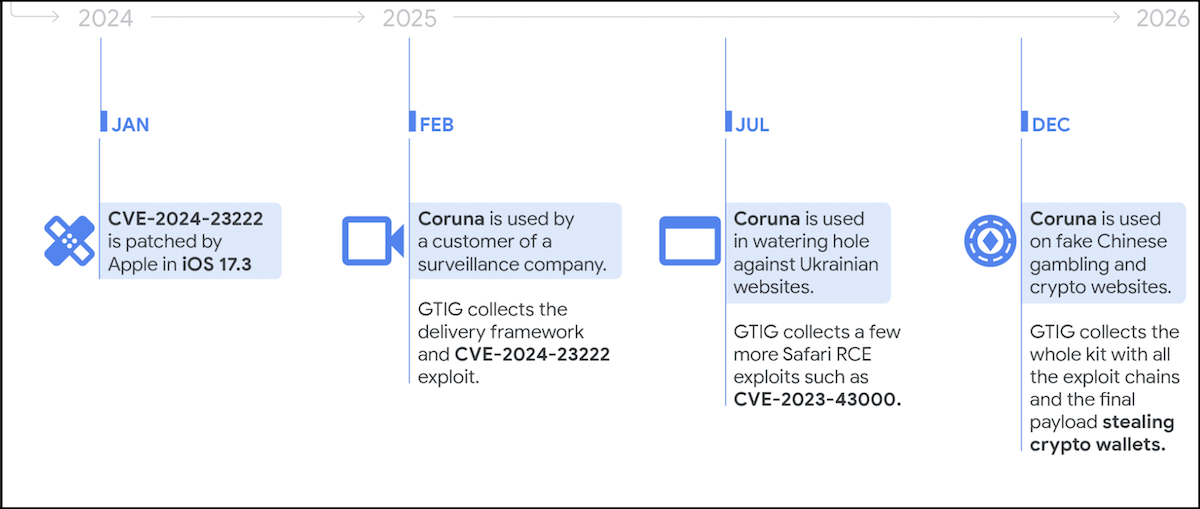
GTIG observed the exploit kit being used by multiple threat actors last year, including a surveillance vendor customer, a suspected Russian state-backed hacking group (UNC6353), and a financially motivated Chinese threat actor (UNC6691).
The latter deployed it on fake gambling and crypto websites and used it to deliver a malware payload designed to steal infected victims’ cryptocurrency wallets.
Coruna attacks timeline (GTIG)
Mobile security firm iVerify also said that Coruna is an example of “sophisticated spyware-grade capabilities” that migrated “from commercial surveillance vendors into the hands of nation-state actors and, ultimately, mass-scale criminal operations.”
On Thursday, CISA added three of the 23 Coruna vulnerabilities to its catalog of Known Exploited Vulnerabilities, ordering Federal Civilian Executive Branch (FCEB) agencies to secure their devices by March 26, as mandated by the Binding Operational Directive (BOD) 22-01.
“Apply mitigations per vendor instructions, follow applicable BOD 22-01 guidance for cloud services, or discontinue use of the product if mitigations are unavailable,” CISA warned.
Advertisement
“These types of vulnerabilities are frequent attack vectors for malicious cyber actors and pose significant risks to the federal enterprise.”
Although BOD 22-01 applies only to federal agencies, CISA urged all organizations, including private sector companies, to prioritize patching these flaws to secure their devices against attacks as soon as possible.
Malware is getting smarter. The Red Report 2026 reveals how new threats use math to detect sandboxes and hide in plain sight.
Download our analysis of 1.1 million malicious samples to uncover the top 10 techniques and see if your security stack is blinded.
Oracle employs around 162,000 globally, with 900 workers situated in Ireland.
Oracle will cut thousands of jobs to funnel funds into its major AI data centre expansion efforts, according to Bloomberg.
The cuts will affect divisions across the company and may come as soon as this month, the publication said. Some of the cuts might target jobs that Oracle needs less due to AI.
Latest data shows that Oracle employs around 162,000 globally, with around 900 workers situated in Ireland.
Advertisement
Last September, the company revealed plans for its largest-ever restructuring, set to cost up to $1.6bn. At the time, Oracle’s Irish arm sent a collective redundancy notification to the Government.
SiliconRepublic.com has contacted Oracle for details on the latest layoffs and its effects in Ireland.
Oracle is one of the world’s largest cloud operators, having cemented itself as a leading AI infrastructure provider tapped by major cloud users, such as OpenAI.
Plus, data compiled by Bloomberg shows that Oracle will have negative cash flow on account of the data centre buildout until 2030. The massive AI expenditures have turned Oracle’s cash flow negative last year for the first time since 1992, noted the publication.
Early last month, Oracle said it plans to raise up to $50bn through debt and equity sales to build additional cloud capacity.
The Larry Ellison-led company is also pouring money into OpenAI as part of the major $500bn AI infrastructure build-out called Stargate, while a close relationship with the US government helped it towards a stake of 15pc of the new TikTok USDS entity, as well as control over the platform’s algorithm.
Oracle enjoyed strong investor support in the initial years of the AI boom, which boosted the company stock 61pc in 2024 and 20pc in 2025. The support briefly made Ellison the world’s richest man in September last year.
Advertisement
However, investors have been wary of massive AI spending in recent months, sending Oracle shares down 54pc since September.
We spend hours testing every product or service we review, so you can be sure you’re buying the best. Find out more about how we test.
GoPro Lit Hero: two-minute review
GoPro is a name that’s synonymous with the action cam market, with the brand having largely been responsible for the explosion in popularity of such cameras over the past two decades. The brand has come a long way since its first Hero camera, a 35mm film-compatible wearable model released in 2004.
Now the likes of the GoPro Hero 13 Black and GoPro MAX 2, are considered amongst the best action cameras available, and largely dominate the market. And despite rumors that the company intends to kill off the Hero Black range, GoPro has dismissed the speculation. In other words, the GoPro family seemingly has a bright future ahead. In fact, as I completed this review, GoPro announced the next generation GP3 processor which will power a new wave of GoPros for 2026 and beyond.
Advertisement
That being said, the direction of the range can sometimes take an odd turn, and one such example is 2025’s GoPro Lit Hero, a sort of replacement for the GoPro Hero (2024), which was itself a weird compromise of price over specification.
You certainly can’t criticize the camera’s portability — it’s one of the smallest and lightest action cameras you can find anywhere, and there’s no danger of it weighing you down whilst out on a cycle ride or when travelling. Before hopping on a plane, there was none of the usual “Should I, shouldn’t I?” dilemma I often experience when choosing what to take on a trip, and it was a simple case of “Why not?” and throwing it into my camera bag.
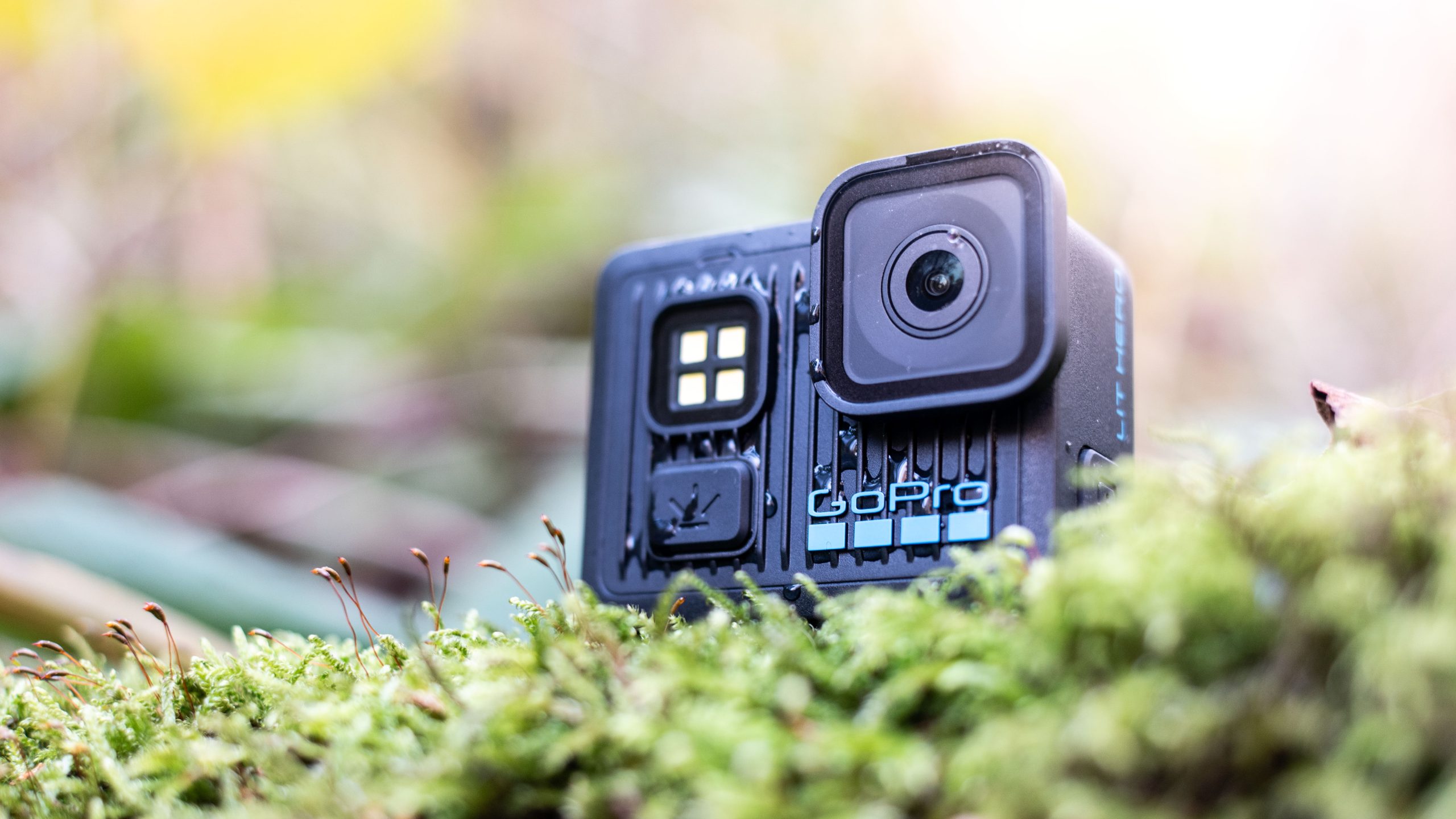
The Lit Hero is unmistakably a GoPro product, albeit a much stripped-down one (Image credit: Peter Fenech)
Advertisement
There haven’t been many compromises in terms of build quality, and the Lit Hero feels rugged despite its diminutive size.
However, the tiny screen makes changing settings a challenge, while there isn’t a lot of room for camera controls on the body, making the handling experience frustrating at times. The screen itself isn’t always easy to use for image previews and is quite fiddly. It’s not a camera you can use in a hurry, which is a problem given the type of content you’d probably shoot with it.
There’s very little in the way of manual controls: if you just want a point-and-shoot camera, you’ll be fine, but if you hope to take control over the image-making process, there isn’t much here to satisfy a creative appetite.
Sign up for breaking news, reviews, opinion, top tech deals, and more.
Image quality is passable, but not mind-blowing. The camera struggles in low light thanks to its tiny imaging sensor, and despite offering 4K shooting, footage is anything but pro-level. Stills and video are sharp enough, but quickly lose detail as the sensitivity is increased. Meanwhile, colors are quite natural.
Advertisement
Overall, the GoPro Lit Hero is an affordable entry to the action cam market, and is a good take-anywhere choice. It won’t draw too much unwanted attention, or take up room in a bag. The problem is that too much has been stripped away to facilitate the small size. If you were expecting a simplified Hero Black, with similar properties, just smaller, you would probably be disappointed.
I’m not sure who the Lit Hero was designed for, specifically. Yes, it’s an entry-level camera, so beginners might benefit. However, the naming convention is confusing, and I’m uncertain as to why such a powerful LED was incorporated. It’s also still not that cheap, which I fear is more because of the brand name than any real premium advantages it offers.
As a result, the camera doesn’t really hit any target market well. It sounds mean, but it might be best suited for filmmakers who want a camera that they’re happy to risk destroying in the pursuit of extreme shooting angles. Otherwise, I can’t think of anyone in particular to whom I’d recommend the Lit Hero.
Advertisement
GoPro Lit Hero specs
Swipe to scroll horizontally
GoPro Lit Hero specs:
Type:
Action camera
Sensor:
1/2.8-inch CMOS
Advertisement
LCDs:
1x rear 1.76-inch touchscreen
Memory:
Micro SD
Advertisement
Lens:
15mm equivalent, f/2.3
Battery:
Embedded rechargeable 1255mAh Enduro Lithium-Ion
Advertisement
Video:
Up to 4K/60p, 4K/30p (4:3)
Photo:
12MP (4000 x 3000 pixels)
Advertisement
Dimensions:
56.6 x 48.4 x 29.45mm (W x H x D)
Weight:
3.3oz / 93g
Advertisement
(Image credit: Peter Fenech)
GoPro Lit Hero: Price and availability
Released October 21 2025 worldwide
The GoPro Lit Hero retails for $269.99 / £239.99 / AU$419.95
The Starter Bundle includes a Shorty mini tripod, bike mount and case for $344.99 / £304.99/ AU$539.95
The GoPro Lit Hero went on sale from October 21 2025 for a price of $269.99 / £239.99 / AU$419.95, but months later and with the next generation of GoPros set for 2026 it can be purchased for less. The camera is available in kits too, including the Starter Bundle, which includes a bike mount and camera case and retails for $344.99 / £304.99 / AU$539.95.
Other activity-specific bundles are available, such as the Water Activities Bundle ($332.99 / £296.99 / AU$519.95), Bike and Camp Bundle ($349.99 / £399.99 / AU$ 546.95) and a Kid’s Bundle for $359.99 / £322.99 / AU$ 572.95, which supplies a Shorty mini tripod, case and Flexible Grip Mount.
Advertisement
GoPro Lit Hero: Design
Small 1.76-inch LCD touchscreen
Waterproof to depths of 16ft / 5m
Super-lightweight at 3.3oz / 93g
The Lit Hero certainly looks the part, and has many of the traditional design markers of a GoPro product. The rear of the camera is dominated by the 1.76-inch LCD screen, with no physical buttons or controls whatsoever. This isn’t unusual for an action camera, and the same is true of a higher-end model like the DJI Osmo Action 6. The difference there is the screen size, which at 2.5 inches is much easier to interact with and operate.
The monitor on the Lit Hero is so small that my fingertips dwarfed some of the icons, making the precise selection of settings tricky when on the move and when outside in winter, digits numb from the cold. The active area of the screen is much smaller than the back of the camera, too, so there really isn’t much control real estate to be working with. If, like me, your hands are on the large side, it’s something to be aware of if the Lit Hero is on your shopping list.
It’s also not the most detailed LCD I’ve ever used, and it’s not ideal for judging the sharpness of captured images and footage. A few times, I thought I’d got the subject in focus, only to find the camera had back-focused upon opening the images and footage on the large screen of my laptop.
(Image credit: Peter Fenech)
The touch function is useful (well, actually essential as it happens), but it isn’t hugely responsive, and it can take a few taps to get the desired menu to open, or multiple swipes with wet or muddy fingers to scroll through previews. Overall, it’s definitely a good idea to download the dedicated GoPro Quik app onto your phone, via which you can more accurately quality-control your footage.
Advertisement
The rest of the body is incredibly simple, which is both a negative and a positive. On one hand, this means you have to rely on the tiny screen to operate most of the camera’s functions, frozen fingers or not, but it also gives the Lit Hero a reassuringly unintimidating layout for beginners. There aren’t so many buttons that you might be worried about accidentally changing a setting you subsequently can’t figure out how to reset.
The Polycarbonate and TPE (thermoplastic elastomer) construction material is easy to grip, with a good amount of texture to provide friction even when the camera is wet. At no point did I worry about it slipping from my hands while using it handheld.
The other inescapable side-effect of such a small body is that when handling it, even just to remove it from a bag, it’s easy to touch the lens and leave behind fingerprints. It’s easily wiped clean, but this can be irritating.
Advertisement
GoPro Lit Hero: Performance
Quick startup for rapid shooting
Lack of built-in digital or optical stabilization is frustrating
Super-powerful LED lamp is too intense for most uses
The camera itself is quick to start up, which was something I was concerned about, given the expected shrinking of the processor assembly to allow for the Lit Hero’s tiny dimensions. There’s very little delay between pressing the power button on the top of the camera and it being capture-ready.
Focus is also quick, at least as far as I could tell from my ‘hit rate’, looking back through captured images – looking at the screen, it’s very difficult to see the focusing in action, especially given the wide focal length. This was impressively maintained in low light and I didn’t notice a significant increase in out-of-focus shots in poor ambient lighting.
A big downside for me is the lack of integrated image stabilization. Rather than using an optical or sensor-shift IBIS system, you must first transfer footage to your smartphone using the GoPro Quik app, then apply algorithmic stabilization there. I’m not a fan of digital stabilization anyway, but not having it applied in-camera means you can’t preview how the final footage will actually look at the point of shooting. It’s a laborious extra step that slows things down.
Image 1 of 3
The bright front LED panel is what lends the Lit Hero its name(Image credit: Peter Fenech)
(Image credit: Peter Fenech)
(Image credit: Peter Fenech)
An added frustration is that the connection between my phone and the Lit Hero was fairly unstable. It kept dropping out, meaning that live previews of what the camera could see using my phone screen were so pixelated as to be largely useless. The transfer speeds were also predictably sluggish. Yes, it’s possible this is due to the age of my handset, or even a model-specific compatibility issue, but I’d experienced no such issue when pairing it to the Insta360 X4 Air and Insta360 X5 the day before.
The ‘Lit’ element of the camera’s name stems from the powerful LED torch on the front of the body. It’s really the only instantly noticeable change from the GoPro Hero (2024). I wasn’t sure a camera could ever be defined by its built in flash or continuous light, but oh wow, did this thing get my attention.
Advertisement
It’s inexplicably bright. For the size of the camera, the light output is impressive if not completely overkill. It’s so bright at the maximum setting that I found it impossible to perform a piece to the camera with it shining in my eyes. Of course, it might come in useful in dark conditions, but I found it just looked ugly in most cases. I found it helped when shooting underwater clips in a sediment-filled stream, but the exposure fall-off is very obvious and unsightly.
On a positive note, the battery life is decent, and I could easily get around an hour and a half of continuous use out of it, in chilly outdoor temperatures, before it ran out of juice. Since the battery is integrated and can’t be swapped, this is good news.
I found the body warmed up pretty rapidly when shooting longer video clips; not problematic, but a little uncomfortable when using it handheld. I found the more powerful DJI Osmo Action 6 heated up less quickly after prolonged use.
Advertisement
GoPro Lit Hero: Image quality
4K video looks good in brighter light, with natural color rendition
Photo and video quality drop significantly at higher sensitivities
No log mode for later color grading
With such a small (1/2.8-inch) imaging sensor at its heart, the Lit Hero is limited in its light-gathering capacity. As such, noise levels are quite high at every sensitivity. There are very few manual controls, with no true PASM modes that allow the user to manipulate exposure settings, meaning you’re at the mercy of the camera’s own decisions, often resulting in grainy footage.
While it’s easier to hide in fast-moving video, the mushiness of detail is clearly visible in stills. In daylight conditions, results are actually quite sharp, but this isn’t maintained for long as ambient light falls.
The autoexposure system is fairly dependable, and it was able to quickly assess each scene during my testing and correctly adjust the parameters to prevent obvious overexposure. Similarly, the auto white balance does a good job of keeping colors natural, even under mixed lighting. This is all good news since there’s little opportunity to amend these settings yourself.
The LED creates a strong exposure fall-off in low light situations (Image credit: Peter Fenech)
Some back-focussing occured at close working distances (Image credit: Peter Fenech)
I’d equate the experience and resulting images to those from a basic smartphone or compact camera – I wouldn’t recommend the Lit Hero for ‘serious’ still photography work, but it’s good enough for off-the-cuff content creation and vacation shots.
There isn’t much latitude for post-processing work either. Shadows can be blocked quickly, probably because the camera seems to be biased towards underexposure to keep the highlights in check, but it’s not a good idea to lift these too far. There is no Log mode so color grading must be applied to the pre-processed video, which can break down the tones if pushed too far.
Advertisement
Image quality score: 3.5/5
GoPro Lit Hero: testing scorecard
Swipe to scroll horizontally
GoPro Lit Hero
Attributes
Notes
Rating
Header Cell – Column 3
Price
Advertisement
As one of the most affordable action cameras available, the Lit Hero won’t break the bank, but it’s still questionable value for the spec on offer
3.5/5
Row 0 – Cell 3
Design
I have no real complaints about the design. Yes, it’s fiddly but that’s the trade-off for such a portable size
Advertisement
4.5/5
Row 1 – Cell 3
Performance
The screen isn’t particularly responsive, the camera isn’t that quick to operate, and it gets warm quite quickly after extended shooting
3/5
Advertisement
Row 2 – Cell 3
Image quality
While not terrible, the small sensor struggles in low light and detail turns mushy. Colors are good though, if not punchy.
3/5
Row 3 – Cell 3
Advertisement
Should I buy the GoPro Lit Hero?
Buy it if…
Don’t buy it if…
Also consider
Advertisement
In many ways the Go 3S is the best of both worlds: you get both an incredibly portable, wearable action camera and the benefits of the Action Pod, including easier handling and improved battery life. You get 4K resolution at up to 30p, waterproofing up to 33ft / 10m, and a slow-motion mode in 1080p of 200fps. If you want a truely tiny action cam that is tough enough to withstand some punishment, the Go 3S has no true rival beyond the DJI Osmo Nano (see below).
Proving there’s life beyond GoPro, the DJI Osmo Nano offers some brilliantly modular features. Not only does it weigh a mere 52g, but you also get the benefit of some professional features, like the excellent DJI D-Log M mode for advanced color grading possibilities in post-processing. It also provides 4K recording, using a larger 1/1.3-inch CMOS sensor – the same one featured DJI Osmo Action 5 Pro. If you want a camera that’s light enough to go everywhere with you, without compromising heavily on spec, this is a great choice.
I used the GoPro Lit Hero over one week, both indoors and out
I worked in a range of lighting conditions and weather to test the durability of the body and functionality
The camera was submerged to analyze the waterproofing capability
While I always like to subject action cameras to some degree of punishing conditions, I like to use them as I might as part of an average shoot for which it was designed. As such, I don’t make a habit of dropping them out of windows or running them over with a Jeep.
Instead, I took the GoPro Lit Hero with me on several outdoor shoots, in a range of weather, from rainy to full sun. I used the camera to capture behind-the-scenes content of my shoots and environmental imagery. This included submerging it in a stream and getting it down and dirty in muddy undergrowth.
I left the camera recording for extended durations to test battery life and heat management. I shot both still photos and video, then processed these in Adobe Lightroom and DaVinci Resolve to see how much detail I could recover from the extreme ends of the tonal range. Images shown here are the unprocessed out-of-camera Jpgs and video (cut together in the case of the latter).
As models get smarter and more capable, the “harnesses” around them must also evolve.
This “harness engineering” is an extension of context engineering, says LangChain co-founder and CEO Harrison Chase in a new VentureBeat Beyond the Pilot podcast episode. Whereas traditional AI harnesses have tended to constrain models from running in loops and calling tools, harnesses specifically built for AI agents allow them to interact more independently and effectively perform long-running tasks.
Chase also weighed in on OpenAI’s acquisition of OpenClaw, arguing that its viral success came down to a willingness to “let it rip” in ways that no major lab would — and questioning whether the acquisition actually gets OpenAI closer to a safe enterprise version of the product.
“The trend in harnesses is to actually give the large language model (LLM) itself more control over context engineering, letting it decide what it sees and what it doesn’t see,” Chase says. “Now, this idea of a long-running, more autonomous assistant is viable.”
Advertisement
Tracking progress and maintaining coherence
While the concept of allowing LLMs to run in a loop and call tools seems relatively simple, it’s difficult to pull off reliably, Chase noted. For a while, models were “below the threshold of usefulness” and simply couldn’t run in a loop, so devs used graphs and wrote chains to get around that. Chase pointed to AutoGPT — once the fastest-growing GitHub project ever — as a cautionary example: same architecture as today’s top agents, but the models weren’t good enough yet to run reliably in a loop, so it faded fast.
But as LLMs keep improving, teams can construct environments where models can run in loops and plan over longer horizons, and they can continually improve these harnesses. Previously, “you couldn’t really make improvements to the harness because you couldn’t actually run the model in a harness,” Chase said.
Built on LangChain and LangGraph, it has planning capabilities, a virtual filesystem, context and token management, code execution, and skills and memory functions. Further, it can delegate tasks to subagents; these are specialized with different tools and configurations and can work in parallel. Context is also isolated, meaning subagent work doesn’t clutter the main agent’s context, and large subtask context is compressed into a single result for token efficiency.
All of these agents have access to file systems, Chase explained, and can essentially create to-do lists that they can execute on and track over time.
“When it goes on to the next step, and it goes on to step two or step three or step four out of a 200 step process, it has a way to track its progress and keep that coherence,” Chase said. “It comes down to letting the LLM write its thoughts down as it goes along, essentially.”
He emphasized that harnesses should be designed so that models can maintain coherence over longer tasks, and be “amenable” to models deciding when to compact context at points it determines is “advantageous.”
Advertisement
Also, giving agents access to code interpreters and BASH tools increases flexibility. And, providing agents with skills as opposed to just tools loaded up front allows them to load information when they need it. “So rather than hard code everything into one big system prompt,” Chase explained, “you could have a smaller system prompt, ‘This is the core foundation, but if I need to do X, let me read the skill for X. If I need to do Y, let me read the skill for Y.’”
Essentially, context engineering is a “really fancy” way of saying: What is the LLM seeing? Because that’s different from what developers see, he noted. When human devs can analyze agent traces, they can put themselves in the AI’s “mindset” and answer questions like: What is the system prompt? How is it created? Is it static or is it populated? What tools does the agent have? When it makes a tool call, and gets a response back, how is that presented?
“When agents mess up, they mess up because they don’t have the right context; when they succeed, they succeed because they have the right context,” Chase said. “I think of context engineering as bringing the right information in the right format to the LLM at the right time.”
Listen to the podcast to hear more about:
Advertisement
How LangChain built its stack: LangGraph as the core pillar, LangChain at the center, Deep Agents on top.
Why code sandboxes will be the next big thing.
How a different type of UX will evolve as agents run at longer intervals (or continuously).
Why traces and observability are core to building an agent that actually works.
The ten year war over Iceland is over and Iceland has come out the victor.
If you don’t know what I’m talking about, be prepared to listen to a whole bunch of stupid. In 2016, we wrote about Iceland Foods, a UK grocer, which had somehow convinced the EU to give it a trademark for “Iceland” and which then went about bullying other companies and opposing trademarks for any that included the name of that country. One of the entities that Iceland Foods found itself in a trademark opposition with was Iceland, as in the country, when it attempted to trademark “Inspired by Iceland.” The Icelandic government didn’t take too kindly to that appropriation of its own name and petitioned to cancel the Iceland Foods trademark, which is exactly what happened. Rather than put an end to this absurdity, Iceland Foods appealed that decision, lost, then appealed it again, lost again, appealed a third time, only to lose there as well.
From there, Iceland Foods had but one final option for appealing all of these perfectly sane rulings, which would be to take this before the Court of Justice of the EU. And, while that would obviously be crazy, everything I’d seen to date led me to believe the grocer would do just that.
But sanity seems to finally be on the menu, I guess. Iceland Foods has publicly announced that it is ending the fight and surrendering.
Advertisement
Executive chairman Richard Walker revealed the supermarket would drop the legal dispute, which centres on the right to use the phrase Iceland in the EU, following its third legal loss in July 2025.
Iceland had one fourth and final route of appeal, via the Court of Justice of the European Union, but Walker told the Financial Times it would instead use the “couple of hundred grand” it would save in legal fees to give a “rapprochement discount” to Icelandic shoppers.
Yeah, that’s how this should have been approached from the jump, folks. And this actually goes back even further, where this broad, geographic trademark by a private entity consisting of the name of a sovereign nation never should have been granted a trademark to begin with.
But that’s all over now. Iceland Foods’ trademark is invalidated. Iceland once more is free from being bullied over its own name, as would be other companies from the island nation. Iceland Foods can keep on operating as it always has, sans the ability to bully others with this ridiculous mark. Walker himself said as much, in a very frustrating manner.
“We lost for a third time. We’re going to throw in the towel,” Walker told the FT. “It’s actually fine — we don’t have to change our name.”
Exactly. You never had to. That was never in question. The only question is whether you got to keep your laughable trademark and bully others over it.
Advertisement
Instead, the grocer wasted everyone’s time, and who knows how much of its own money, trying to wage this silly war.
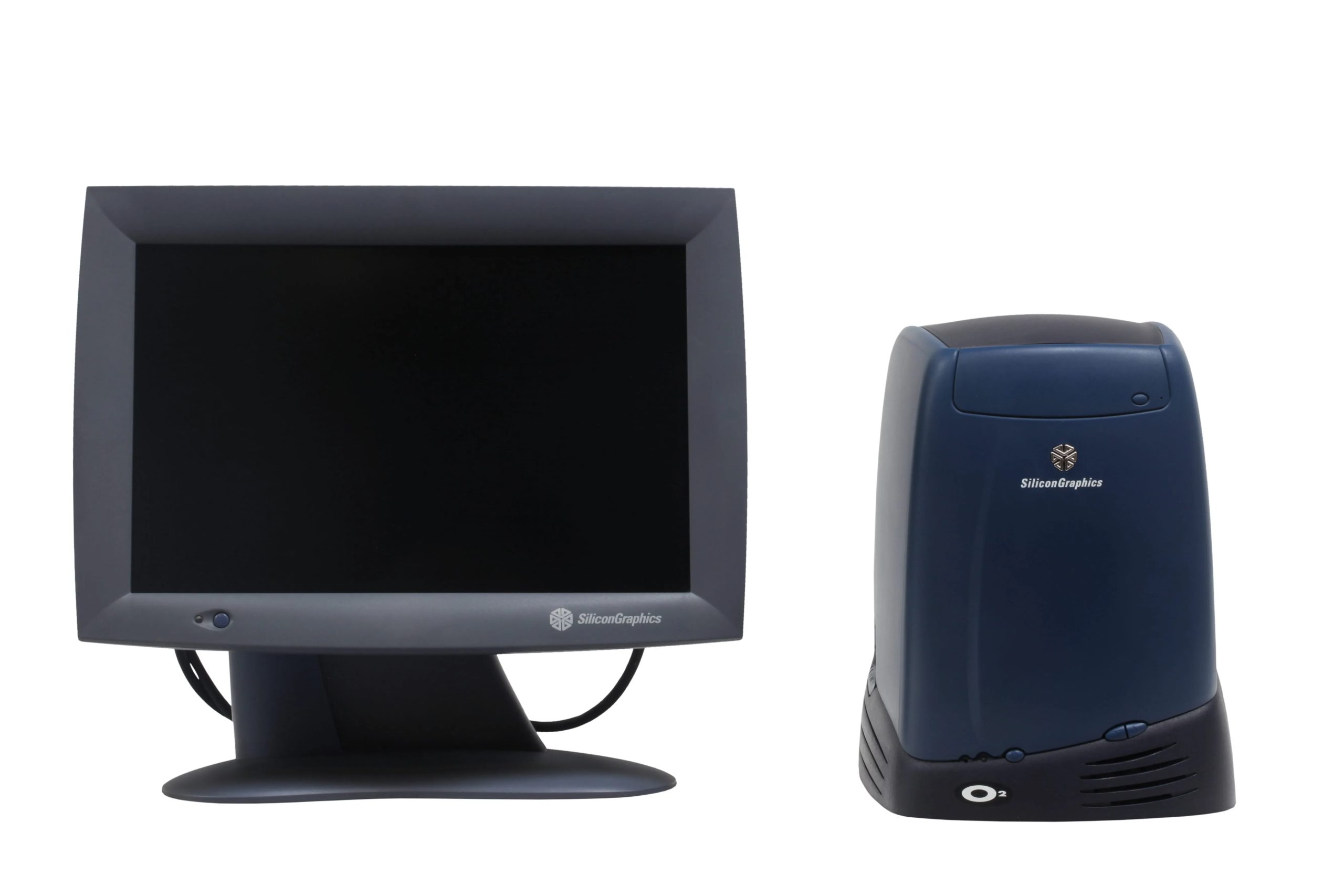
The SGI O2 was SGI’s last-ditch attempt at a low-end MIPS-based workstation back in 1996, and correspondingly didn’t use the hottest parts of the time, nor did it offer much of an upgrade path. None of which is a concern to hobbyists who are more than happy to work around any hardware- and software limitations to e.g. install much faster CPUs. While quite a few CPU upgrades were possible with just some BGA chip reworking skills, installing the 900 MHz RM7900 would require some PROM hacking, which [mattst88] recently took a shake at.
The initial work on upgrading SGI O2 systems was done in the early 2000s, with [Joe Page] and [Ian Mapleson] running into the issue that these higher frequency MIPS CPUs required a custom IP32 PROM image, for which they figured that they’d need either SGI’s help or do some tricky reverse-engineering. Since SGI is no longer around, [mattst88] decided to take up the torch.
After downloading a 512 kB binary dump of the last version of the O2’s PROM, he set to work reverse-engineering it, starting by dissembling the file. A big part of understanding MIPS PROM code is understanding how the MIPS architecture works, including its boot process, so much of what followed was a crash-course on the subject.
Advertisement
With that knowledge it was much easier to properly direct the Capstone disassembler and begin the arduous process of making sense of the blob of data and code. The resulting source files now reassemble into bit-identical ROM files, which makes it likely that modifying it to support different CPUs is now possible with just a bit more work.
Apple Music is introducing a new way to flag AI-generated music. However, it’s relying on the music industry itself to disclose it.
As reported by Music Business Worldwide, the streaming service has launched Transparency Tags, a new metadata system that allows record labels and distributors to mark when artificial intelligence has been used in different parts of a release.
The tags can be applied immediately. Eventually, they will become a requirement when partners deliver new content to the platform.
Rather than analysing songs itself, Apple is placing the responsibility on the supply chain. Labels and distributors will decide whether a track or release qualifies as AI-generated. They will apply the tags during the delivery process – this is similar to how genres or credits are currently submitted.
Advertisement
The system covers four areas of a release. Artwork tags flag when AI is used to create album artwork or other visuals. Track tags indicate that AI helped generate the sound recording itself. Composition tags apply when lyrics or other songwriting elements are created using AI. Meanwhile, Music Video tags identify AI-generated visuals tied to releases.
Advertisement
Apple says the goal is to give the industry better visibility into how generative AI is being used in music production. In a note to industry partners, the company described the tags as a “first step”. This is toward building clearer policies and best practices around AI-created content.
The approach stands in contrast to how some rivals are tackling the issue. Streaming platform Deezer, for example, has built its own AI detection system. It scans uploads automatically rather than relying on labels to self-report.
Advertisement
That difference matters given how quickly AI-generated music is growing. Deezer said earlier this year that it now receives more than 60,000 fully AI-generated tracks every day. Synthetic music now accounts for roughly 39% of all uploads to the platform.
The company also claims most of that content is tied to streaming fraud rather than artistic experimentation. According to Deezer, up to 85% of streams on AI-generated tracks were fraudulent in 2025. Those plays were removed from the royalty pool.
Apple’s Transparency Tags don’t currently include a visible enforcement mechanism or verification system. This means the accuracy of the labels will largely depend on the honesty of the distributors supplying the music.
Advertisement
Advertisement
For now, though, Apple’s move signals that AI disclosure is quickly becoming the next battleground for music streaming platforms.
The partnership news comes with official acceptance into the prestigious UK-based Race2Space 2026 International Propulsion competition.
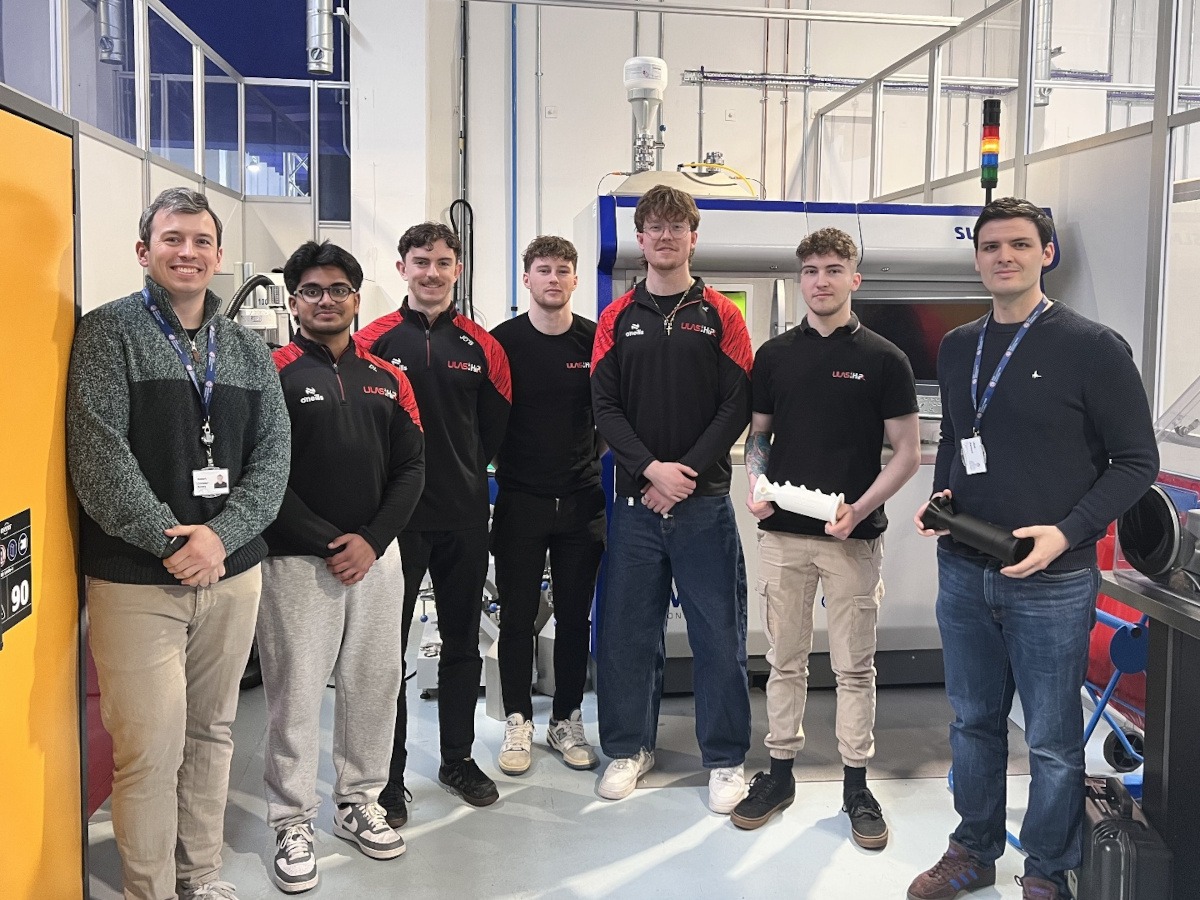
The University of Limerick (UL) Aeronautical Society High-Powered Rocketry Team (ULAS HiPR) has announced a partnership with UL and Irish Manufacturing Research (IMR) to design and produce the first additive manufactured (3D-printed) liquid rocket engine in the Republic of Ireland, called the Lúin of Celtchar.
The engine is a high-performance 2 kilonewton, water-cooled, IPA/nitrous oxide bi-propellant system, which has been designed entirely by the ULAS HiPR student team and is now being manufactured at IMR’s Advanced Manufacturing Lab in Mullingar using metal additive manufacturing. It will be returned to UL for precision machining and assembly.
Established in 2022, ULAS HiPR has more than 100 members and is a combination of students from a range of disciplines, such as aeronautical, mechanical, software and design engineering – all of whom have an interest in designing, manufacturing and launching powerful rockets.
Advertisement
The team has enjoyed some success having represented Ireland internationally at prestigious competitions, including Mach-24 and Euroc, the European Rocketry Challenge. Alongside the announcement of the partnership, ULAS HiPR has also officially been accepted into the UK-based Race2Space 2026 International Propulsion competition.
This is, according to ULAS HiPR, “a major milestone in advancing Irish student-led space propulsion capabilities”.
Speaking on the announcement, Jay Looney, the co-head of ULAS HiPR, said: “The acceptance of our project to Race2Space marks a defining moment not only for ULAS HiPR, but for Ireland’s student space community.
“The selection of the first additively manufactured liquid rocket engine in the Republic of Ireland into the competition validates the technical ambition of our student team, and the strength of collaboration between Irish university students with industry. It demonstrates that world-class propulsion innovation can now be designed, manufactured and tested entirely here in Ireland.”
Advertisement
Mark Hartnett, a design for manufacturing senior technologist at IMR, added: “At IMR, supporting ambitious student teams like ULAS HiPR reflects our commitment to strengthening Ireland’s advanced manufacturing ecosystem and enabling the next generation of aerospace innovators.
“These are vital platforms for advancing cutting-edge technologies and building Ireland’s future engineering capability, and this ULAS HiPR propulsion project demonstrates how emerging technologies can move rapidly from concept to high-performance hardware.”
In late February, Silicon Republic attended the official launch of Ireland’s first European Space Agency Phi-Lab, which is headquartered at IMR in Mullingar and run in collaboration with the AMBER Centre at Trinity College Dublin.
One of 10 European Phi-Labs, it is designed to be Ireland’s national platform for space technology development and to anchor the country’s ambitions within Europe and the world’s rapidly-expanding space economy.
Advertisement
Don’t miss out on the knowledge you need to succeed. Sign up for the Daily Brief, Silicon Republic’s digest of need-to-know sci-tech news.