Creative built its reputation by making PC audio matter long before laptop manufacturers decided that two downward-firing drivers were sufficient punishment for buying a thin computer.
The new Creative XF1 desktop speakers return to that battlefield with a surprisingly complete feature set for $179.99 USD, which includes Bluetooth 6.0, LDAC, 24-bit/96kHz USB audio, bi-amplification, a 10-band parametric equalizer and a dedicated output for adding a powered subwoofer.
Related Reviews:
Active Two-Way Design With 72 Watts
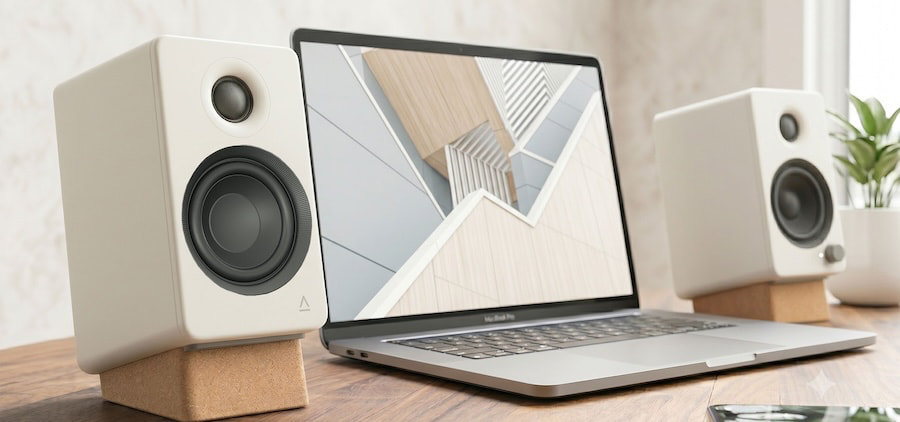
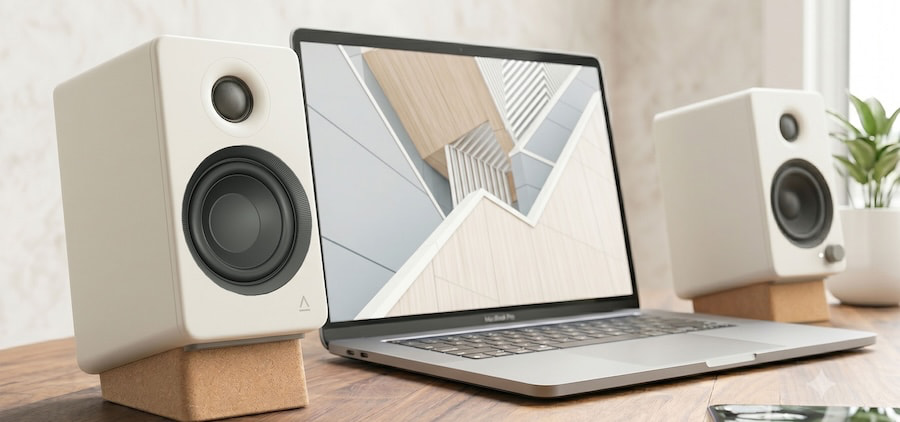
The XF1 is a compact 2.0 active speaker system built around two custom 3-inch woofers and two 3/4-inch tweeters.
Creative XF1
Creative says it used Finite Element Analysis to model the woofers and optimize their behavior for higher output and lower distortion within the XF1’s small enclosure. That kind of computer-assisted driver development is common in serious loudspeaker engineering, although the eventual listening results matter considerably more than the colorful simulation graphics.
Advertisement
The system uses a bi-amplified architecture with a dedicated amplifier channel for each driver. Creative rates each woofer channel at 26 watts RMS and each tweeter channel at 10 watts RMS, producing a claimed total system output of 72 watts RMS.
Specified frequency response is 55Hz to 40kHz, with a signal-to-noise ratio of at least 85dB and THD+N below one percent. The XF1 has received both Hi-Res Audio and Hi-Res Audio Wireless certification.
Bluetooth 6.0 and LDAC
Bluetooth 6.0 remains uncommon among desktop speakers, although the version number should not be mistaken for an automatic guarantee of better sound. Key benefits include channel sounding, advertising improvements, and lower-latency framing options. However, wireless sound quality could vary across its supported codecs: LDAC, AAC, SBC, A2DP and AVRCP profiles, and over its 10 meter (33 feet) of range.
LDAC can carry substantially more data than SBC under suitable conditions and will be most useful to listeners streaming from compatible Android devices, Windows computers or dedicated transmitters.
Advertisement
Apple users will fall back to AAC because iPhones and iPads do not transmit LDAC. That does not make the XF1 useless within the Apple ecosystem, but it does remove one of the product’s more heavily promoted advantages.
USB Type-C, Analog Input and Subwoofer Expansion
The XF1’s USB-C input accepts PCM audio up to 24-bit/96kHz, allowing a laptop, desktop computer, tablet or compatible smartphone to bypass its internal headphone output and send digital audio directly to the speakers.
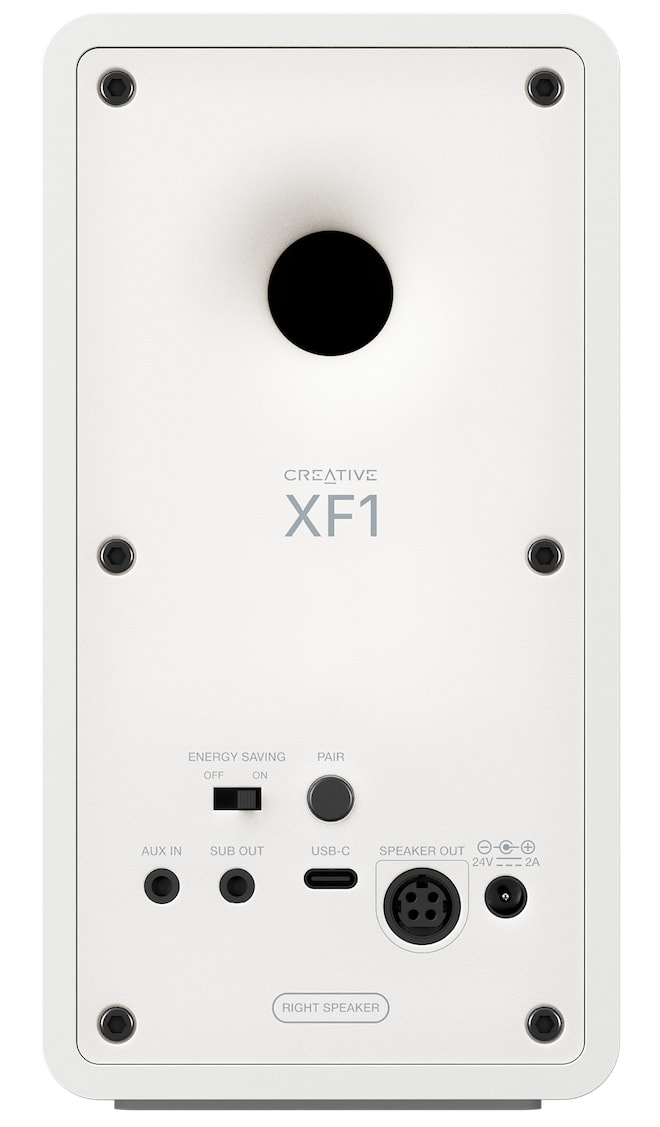
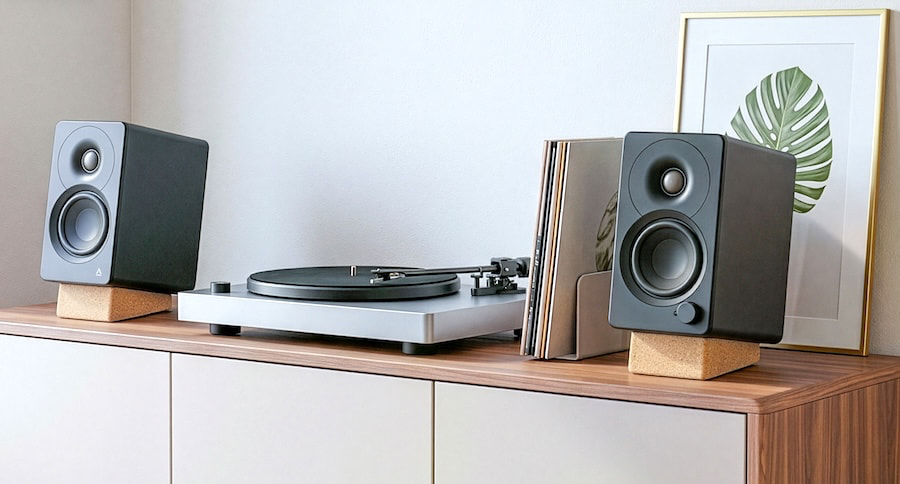
A 3.5mm stereo line input supports analog sources. Creative shows a turntable among its suggested source components, but the XF1 does not include a phono preamplifier. A turntable must therefore have a built-in phono stage or connect through an external one.
Advertisement. Scroll to continue reading.
Advertisement
The dedicated subwoofer output is especially useful. Compact 3-inch woofers are not going to reproduce the bottom octave with meaningful authority, regardless of how many times the words “extreme fidelity” appear in the brochure. Adding an active subwoofer should provide better extension for electronic music, hip-hop, games and movie soundtracks while reducing the temptation to force too much bass from the main speakers.
Controls include a front-mounted multifunction knob for power, volume and source selection. A Bluetooth pairing button and defeatable energy-saving switch are positioned on the rear panel.
There is no optical input, HDMI ARC, balanced XLR or TRS connectivity, RCA input, headphone output or integrated phono stage. The XF1 is designed primarily as a desktop system rather than a miniature television sound system or production monitor.
Creative Nexus Parametric EQ
Creative’s Nexus app provides one of the XF1’s most distinctive features: a 10-band parametric equalizer.
A parametric equalizer offers considerably more control than the fixed bass and treble adjustments found on many powered speakers. Users can target particular frequencies, adjust gain and change filter width rather than merely pushing broad sections of the spectrum up or down.
Advertisement
That can be useful on a desktop, where reflections from the work surface, nearby walls and computer monitors frequently alter tonal balance.
Creative also provides more than 120 presets covering over 20 music genres and almost 100 games. That number borders on absurd, but the underlying control is genuinely valuable. Nobody requires a separate EQ preset for every game involving a man with a rifle and unresolved childhood trauma, but the ability to create and save sensible custom curves is welcome.
Creative XF1
Compact Enough for a Real Desk
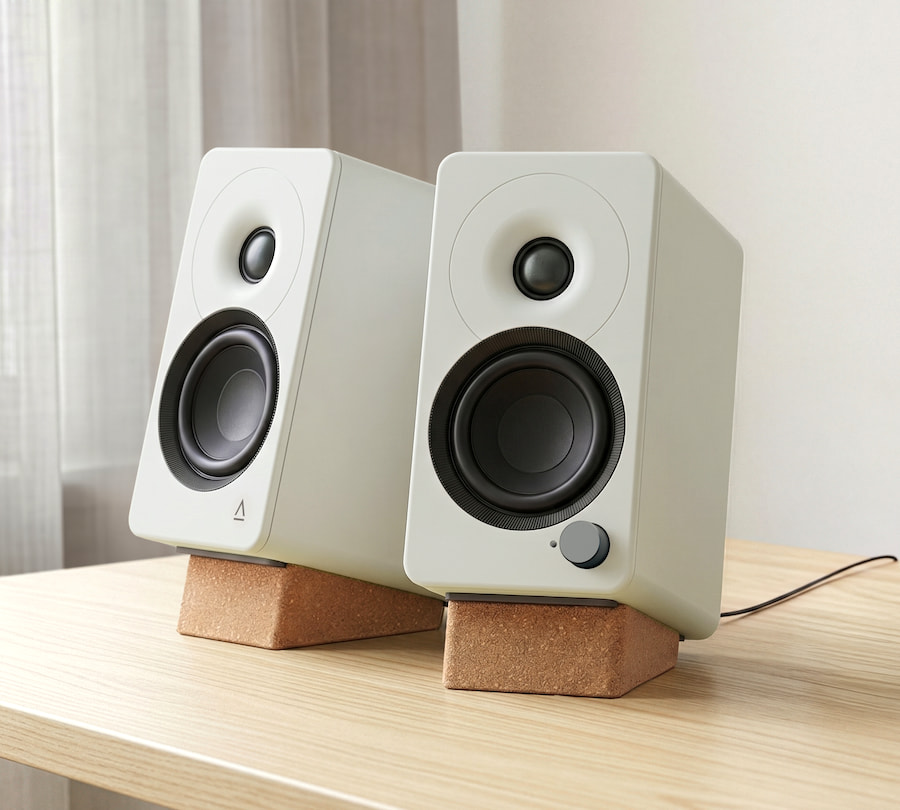
Each speaker measures 155 x 99.7 x 191 mm (6.10 x 3.93 x 7.52 inches). The left speaker weighs 1.29 kg (2.84 pounds), while the right weighs 1.36 kg (3 pounds). The XF1 will be available in black and white.
Creative also includes removable cork feet that angle the speakers upward toward the listener. Proper tweeter alignment matters in a near-field system, particularly when the speakers sit below ear level beside a computer display.
Advertisement
What Makes the Creative XF1 Different?
No single XF1 feature is revolutionary.
USB-C audio is becoming common. LDAC is available from Edifier and FiiO. Kanto and Audioengine offer compact speakers with subwoofer connectivity. App-based EQ is no longer exotic.
The XF1 stands out because it combines nearly all of those capabilities in one compact system:
Advertisement. Scroll to continue reading.
Advertisement
Bluetooth 6.0 with LDAC, AAC and SBC
24-bit/96kHz USB-C audio
Active bi-amplification
A 10-band parametric EQ
More than 120 presets
A dedicated subwoofer output
A small desktop footprint
The parametric EQ and subwoofer output are the strongest differentiators. Together, they give owners a meaningful way to address both desktop placement problems and the inevitable low-frequency limitations of a 3-inch woofer.
Who Is the Creative XF1 For?
The XF1 is best suited to desktop listeners, remote workers, gamers, students and music listeners who want a substantial upgrade over built-in monitor or laptop speakers without adding a separate DAC and amplifier.
Android users with LDAC-compatible devices receive the strongest wireless feature set. PC and Mac users can ignore Bluetooth entirely and use USB C for a reliable 24-bit/96kHz digital connection.
The subwoofer output also makes the XF1 more appealing to buyers who want to begin with a compact 2.0 system and expand later.
The XF1 is less appropriate for recording engineers who require balanced inputs, television viewers who need HDMI ARC or optical connectivity, and vinyl listeners hoping to connect a conventional turntable directly without a phono preamplifier.
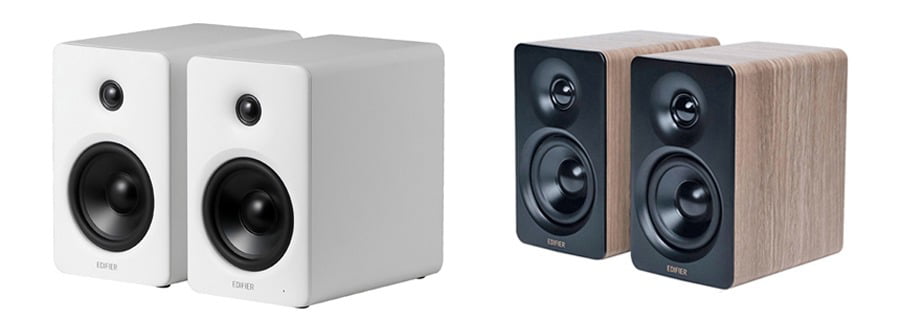
The Edifier M60 is the XF1’s most obvious rival. It sells for $199.99 in the United States and combines 66 watts, 3-inch mid-bass drivers, 1-inch tweeters, Bluetooth 5.3 with LDAC, USB C and app support. The Creative counters with Bluetooth 6.0, a published 10-band parametric EQ and a dedicated subwoofer output.
The Edifier MR4.5 costs $249.99 and offers larger 4.5-inch drivers, 80 watts, Bluetooth 6.0 with LDAC, balanced XLR and TRS inputs and room compensation. It is the more appropriate option for content production and audio interfaces, but it omits USB audio and a subwoofer output.
The Audioengine A2+ Next Gen costs $279 and provides USB-C, Bluetooth 5.3 with aptX HD, RCA and 3.5mm analog connectivity in proven wood cabinets. It lacks LDAC and app-based parametric EQ but has an established performance record and broader analog connectivity.
The Kanto ORA sells for $349 and includes USB-C, RCA, Bluetooth and a subwoofer output. It remains a strong compact desktop option, but the XF1 offers newer Bluetooth support, LDAC and substantially deeper software adjustment.
The FiiO SP3 BT also costs $349 and supports LDAC, aptX Adaptive, USB, optical and coaxial digital inputs. Its broader digital connectivity and 3.5-inch drivers make it a more ambitious system, although at more than twice the XF1’s confirmed European price.
Advertisement
Creative XF1
Creative XF1 Key Specifications:
Model: MF1730
Speaker Type: 2.0 powered desktop speaker system
Available Colors: Black or white
Dimensions: 6.10 x 3.93 x 7.52 inches per speaker
Weight: 2.84 pounds left speaker; 3.00 pounds right speaker
Drivers: Two 3-inch woofers and two 3/4-inch tweeters
Power Output: 72 watts RMS total
Woofers: 2 x 26 watts
Tweeters: 2 x 10 watts
Frequency Response: 55Hz – 40kHz
Signal-to-Noise Ratio: 85dB or greater
THD+N: Less than 1%
Bluetooth: Bluetooth 6.0
Codecs: SBC, AAC, and LDAC
Wireless Range: Up to 33 feet
USB Audio: USB-C, up to 24-bit/96kHz
Analog Input: 3.5mm stereo
Subwoofer Output: Yes
Controls: Multifunction power, volume, and input knob
Additional Controls: Bluetooth pairing button and energy-saving switch
Certifications: Hi-Res Audio and Hi-Res Audio Wireless
Included Cables: 4.9-foot USB-A-to-USB-C cable and 6.6-foot speaker interconnect cable
Power Adapter: 48 watts, 24V/2A
The Bottom Line
At $179.99 USD, the Creative XF1 looks like an aggressive attempt to move the company beyond inexpensive computer speakers without abandoning the desktop category that helped make Creative relevant in the first place.
The Edifier M60 will be the immediate fight. Both offer compact cabinets, LDAC, USB C and similar power, but the Creative’s parametric EQ and subwoofer output provide a more flexible upgrade path. Ultimately, the XF1 does not look like another pair of plastic PC speakers designed to make notification sounds and gunfire slightly less miserable. There is enough engineering, connectivity and useful adjustment here to make it genuinely interesting.
Advertisement. Scroll to continue reading.
Price & Availability
The Creative XF1 will be available in black or white beginning August 6, 2026, priced at $179.99 at Amazon in the United States, £139.99 in the United Kingdom, and €159.99 in Germany.
When you can’t bring prices down, turn back the clock.
Billy Steele for Engadget
How does a headphone maker respond to rising prices? Well, if you’re Sony, the answer might be to revive a model from six years ago and slap a cheaper price tag on it. According to reliable leaker billbil-kun on Dealabs (via 9to5Google), Sony is planning to launch a new version of the WH-1000XM4. It’s said to be called the WH-1000XM4C and could retail for around $250.
The new model is expected to be largely unchanged from the original XM4, which was Engadget’s pick for the best of its generation. In fact, the leak suggests that the only differences between the XM4C and its discontinued predecessor will be battery life and color options. Its foldable design, 40mm drivers and noise-canceling processor would all carry over.
The new model is reportedly rated for up to 34 hours without active noise cancellation (ANC) and 27 hours with ANC. Sony listed 38 and 30 hours, respectively, for the 2020 model, so that would be a slight dip. The XM4C’s supposed color options include black, platinum silver and a new lavender.
Advertisement
The leaker, who accurately predicted the PS5 Pro announcement in 2024, claims Sony will release the new XM4C on September 7. The XM4C will reportedly cost €250 in Europe and £220 in the UK.
For reference, the current WH-1000XM6 retails for $460 in the US and €470 in the EU. So, we could guess at a $240 to $250 price tag for US buyers. That would make it an odd duck in Sony’s lineup, since the last-gen XM5 is often discounted to around $250. (If those are indeed your choices, obviously get the XM5.)
Of course, take all of this with grains of salt. But if the rumor holds up, perhaps other companies will respond to rising prices in similar ways. AirPods Max 1C, anyone?
The Claude creator will also put together a new team in charge of designing the custom-made chips.
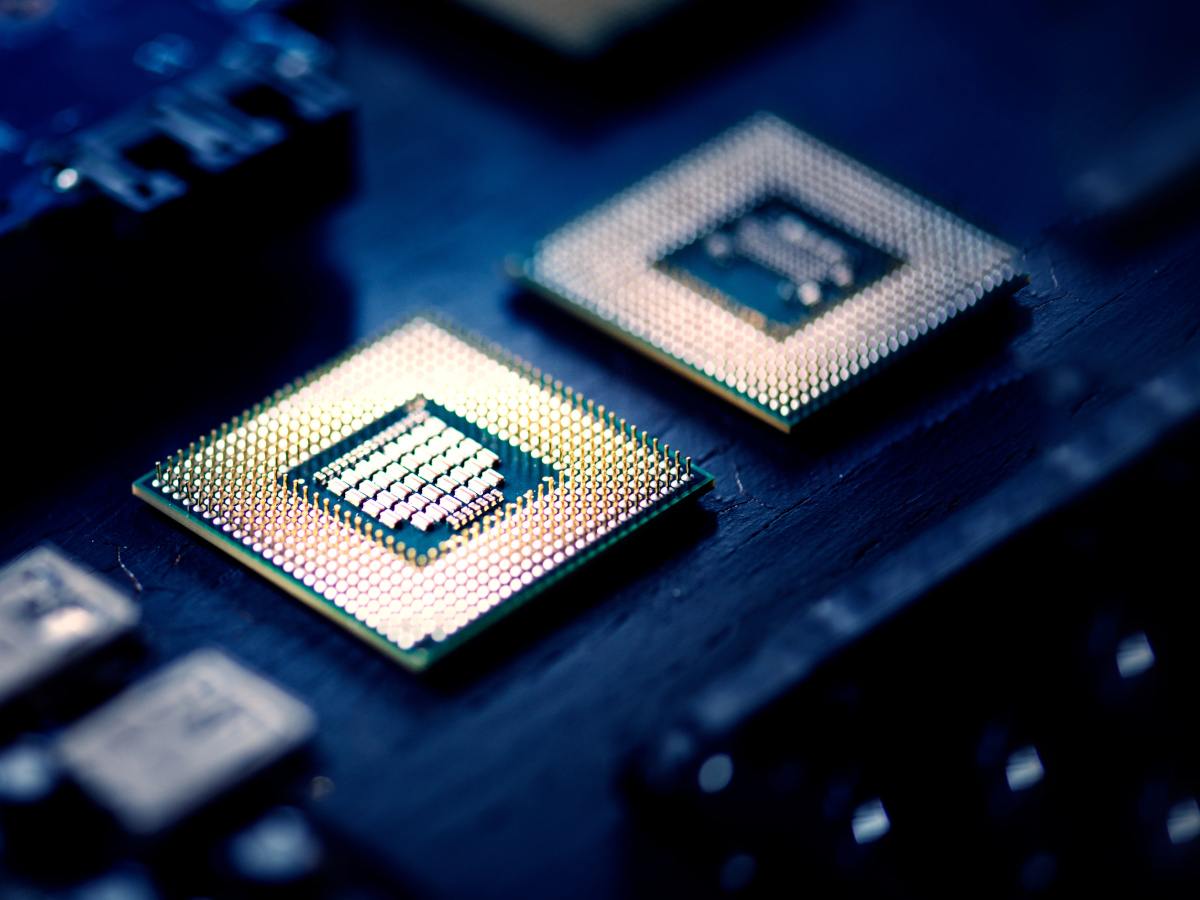
As first reported by the Business Insider, artificial intelligence company Anthropic has confirmed plans to design its own chips in response to a worldwide shortage and increased pressure to develop faster, more advanced AI systems.
In April, it was reported by Reuters that the organisation was strongly considering building its own chips, as a means of having improved access to a steady supply and keeping pace with competitors Meta and OpenAI, both of which have similar projects underway.
The latter previously announced the development of the Broadcom-built Jalapeño chip, designed for inference workloads, while Meta has been developing its own ‘MTIA’ accelerators for AI workloads.
Advertisement
The timeline as to when Anthropic’s chip production might begin is unclear; however, the company is looking to add to its workforce in order to meet future AI development expectations. As per a recent job listing, Anthropic is seeking professionals eager to join a custom silicon team.
It is currently unknown if the organisation will manufacture the chips by itself, but it has been previously reported that Anthropic may be looking at Samsung as a potential partner in the development of the chips.
While building custom silicon is the next step in Anthropic’s ongoing AI and chip strategy, the company reportedly still intends to utilise a diversified hardware stack that includes technology from Amazon Web Services, Google, Nvidia and AMD.
In late July, Anthropic announced plans to partner with AMD for 2GW of its latest-generation chips, in a bid to boost AI capacity and meet growing demands. The deal between the companies was reported to be worth “tens of billions of dollars”.
Advertisement
Anthropic is striving for dominance in the AI space ahead of a widely reported planned IPO, which is expected to value the company at more than $1trn.
Don’t miss out on the knowledge you need to succeed. Sign up for the Daily Brief, Silicon Republic’s digest of need-to-know sci-tech news.
Switzerland’s federal IT office says hackers exploited vulnerabilities to breach its Microsoft SharePoint servers and compromised approximately 200 accounts.
The Federal Office for Information Technology and Telecommunication (BIT) detected the cyberattack after security specialists noticed unusual activity on its SharePoint servers on July 28.
After confirming the breach, BIT blocked external internet access to SharePoint, patched the suspected vulnerabilities, and reset the passwords for the affected accounts.
“During the analysis, security specialists discovered on Friday, July 31, that the login credentials for several accounts had been compromised,” BIT said.
The agency believes the attackers exploited SharePoint vulnerabilities disclosed by Microsoft in mid-July and fixed in the July Patch Tuesday updates. However, it has not disclosed which flaw was used.
Advertisement
The attack potentially involved either CVE-2026-56164, an actively exploited SharePoint privilege escalation vulnerability, or CVE-2026-50522, a critical remote code execution flaw later exploited to steal SharePoint machine keys and maintain access after servers were patched.
It remains unclear whether either vulnerability was used in the Swiss government attack or whether the attackers exploited another flaw fixed in the same updates.
BIT is investigating the incident with assistance from the Swiss Federal Office for Cyber Security and Microsoft.
Advertisement
So far, it has found no evidence that data was stolen beyond the compromised login credentials.
The agency said confidential information and particularly sensitive personal data are not permitted to be stored on the affected SharePoint platform.
BIT is reinstalling the compromised servers as a precaution, and external access will remain blocked until that work is completed.
Federal employees can continue accessing documents and sharing them with external personnel through alternative methods.
Advertisement
At this time, no ransomware or data extortion group has claimed responsibility for the breach.
BleepingComputer contacted BIT to ask which vulnerability was exploited and whether its investigation had uncovered evidence of data theft, but a response was not immediately available.
Security teams log 54% of successful attacks and alert on just 14%. The rest move through your environment unseen.
The Picus whitepaper shows how breach and attack simulation tests your SIEM and EDR rules so threats stop slipping by detection.
Buc-ee’s trademark bullying ways continue! This company that has long been famous for its enormous gas station and convenience stores practically dripping in Americana is quickly building a national reputation for itself as a petulant trademark bully. It’s lawsuits are typically dumb and usually feature Buc-ee’s claim that it somehow owns every cartoon animal mascot depiction for convenience stores and gas stations, and even cartoon human mascots at times. It’s so bad that it even caught the attention of John Oliver recently, resulting in the show creating its own merchandise that is far more similar to the Buc-ee’s beaver than most of its lawsuit victims and Oliver literally begging them to file a lawsuit over it.
Well, the Buc-ee’s people appear to be cowards. Oliver made it clear that he and HBO have the willingness and legal war chest to do battle with Buc-ee’s. To date the company has not filed any lawsuit against Oliver or HBO. But it did just file another trademark suit against another small local convenience store after having just moved into the market.
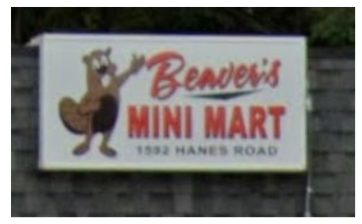
In the suit, filed days ago, Buc-ee’s alleges that the Mini Mart’s cartoon beaver mascot is too similar to their own, with its “wide eyes and a smile” that also “uses red as a predominant color,” and could cause confusion.
The new Buc-ee’s location in Huber Heights, Ohio, is 16 miles from Beaver’s Mini Mart. Beaver’s Mini Mart customers say they have been shopping there for decades, while Buc-ee’s has existed in the Buckeye State only since April.
Advertisement
This is common practice for Buc-ee’s. The company expands into a new market and goes on a trademark suit blitz against anyone using one of these cartoon animal logos, beaver or otherwise. It doesn’t matter how long the victim company has been doing business there. It doesn’t matter how ingrained into the community they are. It doesn’t matter if every local in the area insists that there’s no confusion to be had between the two entities.
In this case, the Beaver’s Mini Mart has been around for decades. The entire community is awash in beaver-y iconography. I’ll let one of our anonymous commenters from our John Oliver post chime in here.
They are now trying to sue a place near where I grew up, the “Beavers MiniMart” convenience store in Beavercreek Ohio, where the local high school, Beavercreek High School, once had Bucky the Beaver as a mascot for their football team, the Battling Beavers, their cheerleaders are called the Beaverettes and there’s pep squad called the Beaver Patrol. There’s concrete statues that are 6-8 feet tall, all over the city. The city loves it’s fuckin’ beavers. Buc-ee’s probably doesn’t know what’s about to happen to them. It wont be pretty.
The signage from Buc-ee’s own lawsuit show just how unalike the branding for the two companies is.
From this, and wielding a trademark Buc-ee’s somehow has on the word “Beaver’s” Buc-ee’s alleges that there will be “confusion among consumers,” that the Mini Mart is trading on Buc-ee’s “goodwill,” and that all of this is causing “irreparable injury” to Buc-ee’s.
Ironically, it appears this very lawsuit is causing a dip in all of that supposed goodwill Buc-ee’s has in this particular community.
Advertisement
“Reading into it more that Buc-ee’s has gone after other companies over this… It just put a bad taste in my mouth because they just seem like such a fun company,” resident Sam Bryan told Nexstar’s WDTN. “To see this, that they’re coming after a small business like this, it upset me like it did a lot of Beavercreek residents.”
The town is named Beavercreek, the branding doesn’t look anything alike, and nobody is going to be confused about any of this. Buc-ee’s knows all of that. But trademark bullies typically just can’t help themselves and this is yet another in a long list of bullshit trademark lawsuits the company has filed.
If Beaver’s Mini Mart fights this, however, it would be an interesting move in its defense to point out that there is no similar lawsuit against John Oliver.
Update: Added statement from Falcon extortion gang below.
A recent wave of cyberattacks targeting hedge funds, private-equity firms, and other financial organizations has been linked to UNC6671, an extortion group reportedly associated with the BlackFile threat actors.
The attribution comes after Reuters and Bloomberg reported that Point72 Asset Management, Millennium Management, Two Sigma Investments, Citadel, and several private-equity firms were targeted in recent attacks that relied on voice phishing (vishing) to trick employees into granting the attackers access to corporate systems.
Point72 reportedly told investors that it had been attacked but had not found evidence that client data was stolen, while Two Sigma said it had blocked an attempted intrusion and found no indication that its systems or data were affected.
Millennium declined to comment in response to questions from BleepingComputer. Citadel also declined to comment and referred BleepingComputer to Bloomberg’s reporting. Point72 and Two Sigma did not respond to requests for comment.
Advertisement
In response to questions from BleepingComputer, Austin Larsen, a principal threat analyst at Google’s Threat Intelligence Group (GTIG), said the company tracks the vishing activity as UNC6671.
“While previously operating under the public brand ‘BlackFile,’ UNC6671 has diversified its extortion operations across multiple public brands, including Redact, Pink, Helix, and Falcon,” Larsen told BleepingComputer.
“GTIG assesses that a single core intrusion group is driving the helpdesk vishing and cloud data theft across these various public extortion brands.”
BlackFile is a data theft extortion group that first emerged in February 2025 when it conducted a wave of attacks targeting retail and hospitality organizations.
Advertisement
According to Mandiant’s report, the group’s targeting switched in July 2026 toward private-equity firms, hedge funds, major law firms, and financial-rating agencies after previously targeting organizations in the manufacturing, healthcare, real-estate, technology, transportation, and hospitality sectors.
“Between January and May 2026, GTIG tracked over $10.6 million USD in Bitcoin payments to group wallets. While initial demands reach upwards of $3 million, operators routinely settle for around $750,000 USD after negotiations,” Larsen said.
After publishing our story, the Falcon extortion group released a statement on their data leak site disputing some of Mandiant’s reporting.
“Falcon is a Redact affiliate. We are exclusively a Redact affiliate. We are not affiliated with, connected to, or under the same umbrella as Helix, Pink, or any other group named in Mandiant’s reporting,” the threat actors posted on their data leak site.
Advertisement
“We share no operators, infrastructure, tooling, negotiation channels, or proceeds with any group other than Redact.”
In May 2026, BlackFile announced on its data leak site that it was rebranding under the name Redact, under which it would continue its operations.
Vishing attacks target cloud environments
UNC6671 operators typically contact employees on their personal mobile phones while spoofing corporate helpdesks and claiming that workers need to enroll in passkeys or update their multi-factor authentication settings.
Victims are then directed to domains impersonating the targeted employee’s company that host adversary-in-the-middle phishing kits designed to steal credentials and session cookies in real time.
Advertisement
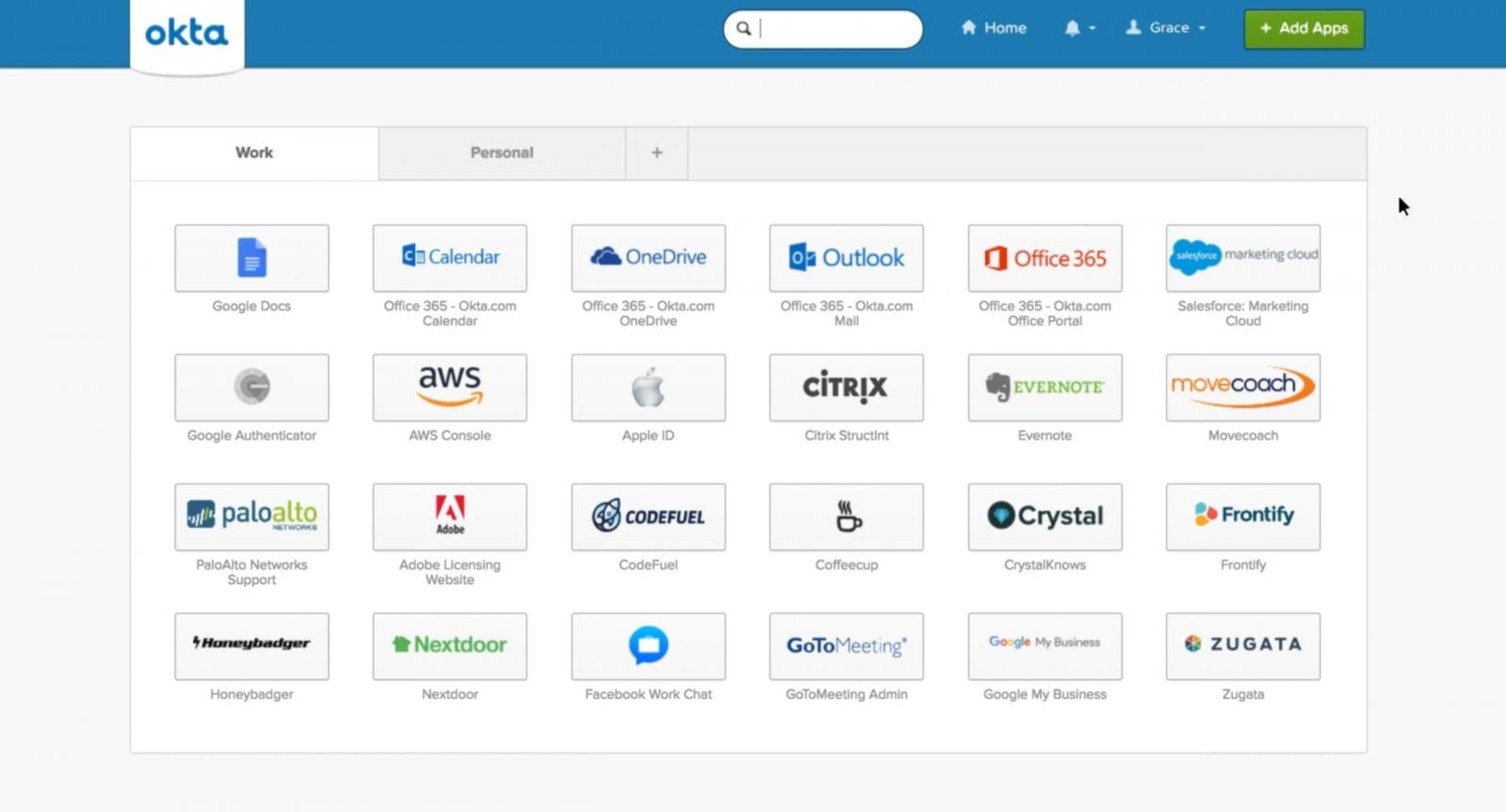
After stealing Microsoft 365 or Okta single-sign-on accounts, the attackers log into the SSO dashboard, which gives access to all the cloud platforms that are linked to the account.
Okta SSO dashboard with access to many cloud platforms
The hackers then use automated tools to steal data from all cloud services they gain access to and delete security notifications and password-reset emails from compromised inboxes.
Mandiant says the infrastructure and extortion network used in these attacks differ from those associated with Scattered Spider, which has historically employed similar helpdesk social-engineering tactics.
“While the helpdesk vishing and Adversary-in-the-Middle authentication interception share similarities with methods historically associated with Scattered Spider (UNC3944), GTIG tracks this specific infrastructure, domain registration pattern, and multi-brand extortion network as UNC6671,” Larsen told BleepingComputer.
Mandiant says it is currently assisting several dozen organizations compromised by UNC6671.
Advertisement
Security teams log 54% of successful attacks and alert on just 14%. The rest move through your environment unseen.
The Picus whitepaper shows how breach and attack simulation tests your SIEM and EDR rules so threats stop slipping by detection.
An anonymous reader quotes a report from NPR: Billions of dollars are traded every week on the lightly regulated prediction market sites, where users bet on everything from movie reviews to elections to conflicts in the Middle East. Clinical trials are just the latest area where the industry’s rapid growth is raising ethical questions. Kalshi claims such bets will provide a new source of information about which drugs will get approved, and what clinical trials will show promising results, which the company says can help investors decide what new drugs to fund.
“If you want to ban profiting from the failure of clinical trials, you would start with the stock market, where the financial incentive for this type of profit is orders of magnitude larger,” said Kalshi spokesman Jack Such, pointing to stock market short sellers who have profited from clinical trial failures. “While Kalshi and the stock market are the same in this regard, they do differ in one important way: the stock market doesn’t give any valuable information to researchers,” Such said.
Drug trial researchers, though, are far from convinced. David Tsai, who runs clinical trials at a biotech company in the San Francisco Bay Area, started an online petition pushing for such betting to be banned, making the case that betting on drug trials “threatens the very foundation of trust and integrity in biotechnology.” Tsai is concerned that the prospect of betting provides those involved with a clinical trial a reason to tamper with the results for a prediction market payout. “If we were running a trial for an oncology drug that requires an infusion, a pharmacist who had placed a bet saying that it’s gonna work well, or doesn’t work well, could obviously adjust the infusion rate, could adjust the source temperature of the drug,” he said. “They could change any number of variables that could obviously have a direct impact [on] how the trial and the data and the patient safety would come out.”
Another skeptic is Nicholas Zaorsky, a professor of radiation oncology at the Mayo Clinic in Jacksonville, Fla., who has helped run clinical trials and agrees that prediction markets can interfere with the advancement of life-saving drugs. “Prediction markets can be valuable in some settings because they aggregate information, but clinical trials are fundamentally different: investigators, coordinators, and sometimes even participants can directly influence aspects of the outcomes being wagered on,” Zaorsky said. “That creates financial incentives that risk undermining trial integrity.” Bettors should not be rooting for an experimental medicine to fail just to earn a buck, says Joshua Pederson, the father of a 12-year-old cancer patient enrolled in a clinical trial. “It’s a dark idea,” he said. “It’s quite ghastly.”
Advertisement
Kalshi, for its part, argues that its prediction markets could help patients track promising medical breakthroughs and clinical trials, enlisting experts including 23andMe founder Anne Wojcicki to make the case.
“Most patients don’t know about the choices available in clinical trials or which programs are most promising. The opportunity to have an open, transparent dataset about trial probabilities is extremely promising and empowering for people,” a white paper sponsored by Kalshi stated.
Historically, miost of the largest-displacement engines in production today, only one is a six-cylinder. Even then, it’s an inline-6 rather than a V6. Historically, most of the largest six-cylinders in production have been of the inline variety. Oldsmobile’s giant 707 cu-in (11.6-liter) inline-six is a particularly gargantuan example, and it could be found in its flagship cars in the early 1910s. Two decades later, huge inline-six engines were still popular in luxury cars like the legendary Bentley 8 Litre, which wore its engine’s displacement as its nameplate.
In general, V6 engines don’t reach displacements anywhere close to their inline-six or V8 cousins. Many of the highest-horsepower modern V6 engines feature displacements in the 3.0-liter range, but there are a handful of older V6 engines that have boasted significantly higher displacement figures.
Many of those big V6 engines can be found under the hoods of trucks, but a few cars have also sported a high-displacement V6 in place of a traditional V8. These three engines are among the largest-displacement V6s to feature in production vehicles to date, with each one with the kind of displacement figure you’d expect to see in a V8 or V12 instead.
Advertisement
GM 4.3-liter Vortec V6
GM has a long history of making V6 engines for its trucks, with its Vortec V6 being a particularly notable chapter in that history. The automaker also fitted versions of the Vortec engine to cars like the Chevrolet Caprice and Chevrolet Monte Carlo, making it one of the largest V6 engines ever used in a passenger car. The 4.3-liter engine debuted in 1985 and was originally designed as an efficient workhorse, but in 1991, GM turned it into something very different.
Advertisement
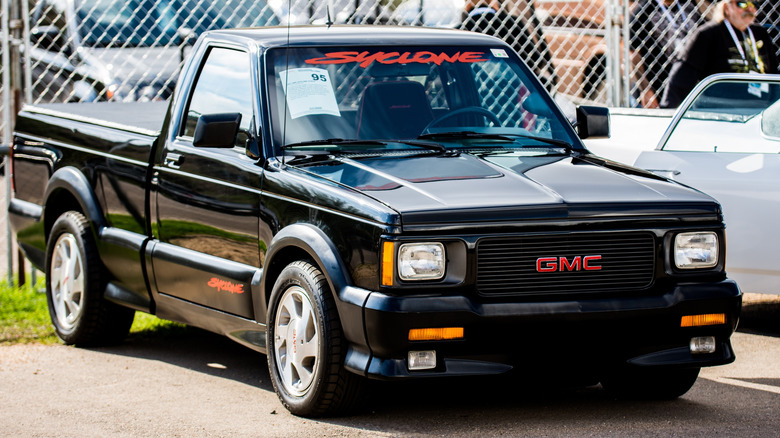
The GMC Syclone was a high-performance pickup that was unlike anything else on the market, and it was powered by a turbocharged version of the Vortec V6. This factory-built hot rod produced 280 horsepower and sent it to all four wheels. As a result, it was very quick off the line. So quick, in fact, that Car and Driver famously pitted a Syclone against a V8-powered Ferrari 348 and found that the Syclone completed the quarter-mile 0.4 seconds faster. Adding insult to injury, the GMC also stopped faster than the Ferrari.
In the decades since, Ferrari has managed to squeeze far more horsepower out of its V6 engines than GMC did. The twin-turbocharged 3.0-liter V6 in the modern 296 GTB churns out 654 horsepower, and it’s assisted by an electric motor that increases the car’s combined power output to north of 800 horsepower. However, few V6 engines fitted to passenger cars have matched the Vortec’s 4.3-liter displacement.
Advertisement
GM 4.3-liter LV3 V6
The LV3 is another 4.3-liter V6 engine, and it was built to replace the previous 4.3-liter V6 that GM had been making for three decades. It shares its displacement with its predecessor, but not much else. That’s because the LV3’s design is related to GM’s latest V8 engines, including the LT-series V8s, while the older Vortec V6 was based on GM’s previous-generation V8 architecture.
In stock form, the LV3 made 285 horsepower and 305 lb-ft of torque at launch. Although it hasn’t received as much attention as the LT1 and LT2 V8 engines, some specialists have now built LV3 engines that make more than 1,000 horsepower. In early 2026, Scoggin-Dickey Parts Center (SDPC) showed off its latest LV3 project, which made 1,403 horsepower, with Hot Rod magazine an early look at the project. Another notable project saw a custom LV3 engine fitted to a Porsche 914. Both Chevrolet and GMC trucks have been fitted with the engine, although, unlike the older 4.3-liter V6, GM chose not to fit the LV3 into any passenger car models.
Advertisement
GMC 478 7.8-liter V6
Modern six-cylinder HD truck engines feature an inline-6 layout rather than a V6, but back in the ’60s, GMC offered a whole line of V6 engines. At the time of its launch in 1960, GM’s promotional material billed the engines as being longer-lasting than its previous truck engines, claiming that they would be able to cover 200,000 miles before needing a major overhaul.
The largest variant of the V6 engine measured 478 cu-in, or 7.8 liters. If that wasn’t enough, the same engine family also included a 275-horsepower Twin-Six V12 engine, which was later replaced by a 637 cu-in (10.4-liter) V8 engine. The record-breaking V6 was available in GMC’s 6500-series trucks, with diesel and gas variants available. Diesels were marketed as Toro-Flow engines and launched in 1964. Unfortunately, Toro-Flow engines became known for reliability issues, and they never became as popular as their gas-powered counterparts.
Healthcare software company Unlimited Technology Systems reported that more than 3.8 million people were impacted by a data breach incident that occurred in October 2025.
The organization submitted data breach notification samples to the authorities this year on July 1st without revealing the exact number of impacted individuals.
An entry on the breach notification portal of the U.S. Dept. of Health and Human Services now shows that a company server was breached and data of 3,803,750 people was exposed to an unauthorized party.
Unlimited Technology Systems is a software company specializing in providing financial and revenue cycle technology for specialty healthcare providers. According to its website, the firm serves 4,500 clinics and 6,500 specialty healthcare providers across the United States, and processes more than $70 billion in net healthcare charges annually.
In October 2025, the firm detected unauthorized activity in its commercial data center and launched an investigation that revealed that hackers had accessed certain files for a five-day period.
Advertisement
“On October 19, 2025, Unlimited Technology Systems detected unauthorized activity within its commercial data center and launched an investigation with the assistance of a cybersecurity forensic firm,” the company disclosed on July 20, 2026.
“That investigation determined that, between October 5, 2025, and October 10, 2025, an unauthorized actor accessed files and may have obtained copies of personal information belonging to patients of the healthcare providers Unlimited serves.”
The data types that were potentially exposed in this incident include:
Full names
Social Security numbers
Dates of birth
Email and mailing addresses
Phone numbers
Demographic information
Scans of driver’s licenses/other government IDs
Insurance cards
Intake forms
Health insurance policy numbers
Claims and benefits information
Medical record numbers
Dates of service
Diagnosis information
The company notified law enforcement of the incident and began distributing data breach notices to affected patients on July 1, 2026.
According to the notification, no ransomware or data-extortion groups have publicly claimed responsibility, and Unlimited Technology Systems has not identified the perpetrators.
Advertisement
Because Unlimited Technology Systems processes information on behalf of healthcare organizations, affected patients typically have no direct relationship with the company itself, and receiving a notice of data breach from it can be confusing.
To mitigate the risk that arises from the exposure of sensitive data, notice recipients were offered identity monitoring services through Kroll.
Security teams log 54% of successful attacks and alert on just 14%. The rest move through your environment unseen.
The Picus whitepaper shows how breach and attack simulation tests your SIEM and EDR rules so threats stop slipping by detection.
An anonymous reader quotes a report from the BBC: German energy company RWE has said it will abandon its offshore wind projects in the U.S. after reaching a $1.2 billion payout deal with President Donald Trump’s Department of the Interior (DoI). RWE said that it will now reinvest the sum into conventional gas projects, including $900 million in a liquefied natural gas (LNG) export terminal project in Louisiana. “After careful consideration, it was determined there is no path forward to permit these projects in the US for the foreseeable future,” the company said in a statement.
RWE said it has agreed to relinquish its leases off the California and Louisiana coasts as well as in the New York Bight. Overall, the German firm plans to invest approximately $19.6 billion in the U.S. over the next six years “to grow its generation capacity.” Interior Secretary Doug Burgum said in a statement posted on X that Americans deserve an energy system built on common sense and not one dependent on “costly subsidies.” “We welcome RWE’s agreement and voluntary investment in projects that strengthen our nation’s energy security,” he added. Earlier this year, the DOL reached a deal with TotalEnergies putting an end to the French company’s offshore wind projects in the U.S. “Instead, the firm agreed to reroute investment to build a LNG plant in Texas and to develop ‘upstream conventional oil’ in the Gulf of Mexico,” reports the BBC.
Another similar deal was signed with Charlotte-based Duke Energy last month to terminate the company’s offshore wind lease in the Carolina Long Bay area.
And it could explore all areas, regardless of illumination.
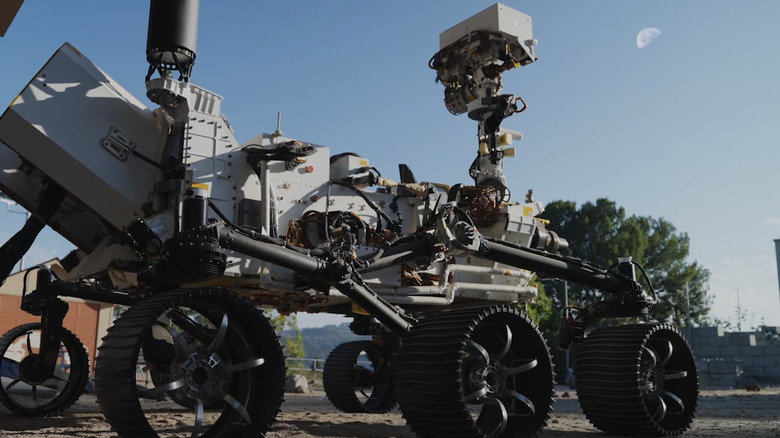
Screenshot by Mariella Moon (NASA Jet Propulsion Laboratory)
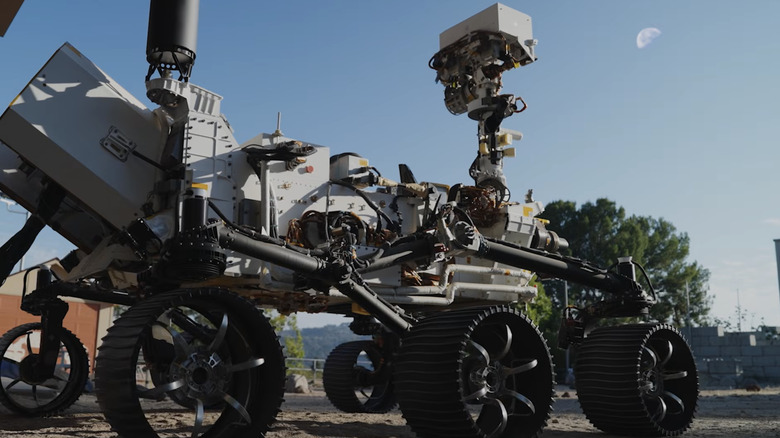
Did you know that Curiosity and Perseverance have full-scale replicas here on Earth, which scientists use to test features and updates before beaming them up to the Mars rovers? They were built to stay here on Earth as testbeds for the Martian vehicles, but now NASA is planning to send one of them — or a hybrid of the two — to the moon.
Advertisement
PROMISE the rover
In late June, NASA announced a new proposal to send a rover called PROMISE, which is short for Polar Rover for Observation, Mapping and In-Situ Exploration, to the lunar surface. According to Ars Technica, the BBC and the Carl Sagan-founded NGO, The Planetary Society, it will be the repurposed version of Perseverance’s engineering test model. The video NASA released about the project also showed Perseverance’s landing on Mars, before cutting to show its replica here on Earth. However, NASA’s announcement calls the new vehicle a “hybrid” of the engineering versions of the Perseverance and Curiosity rovers, so it will possibly bear characteristics from both.
Before being renamed as PROMISE, Perseverance’s test model used to be called Operational Perseverance Twin for Integration of Mechanisms and Instruments Sent to Mars, or OPTIMISM for short. “We’ve had years now of experience operating the two rovers on the surface of Mars, and we’ve got this hardware that the taxpayers have invested a lot in,” NASA administrator Jared Isaacman said during an update about the agency’s moon base plans. “So the question was posed: ‘What if we send it to the moon?’ … It’s going to bring an immense capability to the lunar south pole in short order.”
NASA plans to use PROMISE to scout the lunar south pole, which is a potential location for future lunar bases due to the abundant water ice in the area, and to characterize the lunar surface and subsurface. It will come equipped with a multi-mission radioisotope thermoelectric generator (MMRTG), which uses plutonium as fuel. The generator converts heat from the natural decay of the plutonium into electricity. That means PROMISE wouldn’t need the sun at all to explore the moon and achieve its goals.
Advertisement
“For moon-based objectives, having a nuclear RTG on it allows us to go anywhere we want, regardless of the illumination,” said Carlos García-Galán, the program manager for the Moon Base project. “Surviving the lunar night is going to be one of the bigger challenges with this capability; we wouldn’t have to worry about that.”
So, when will we see PROMISE head to the moon?
Well, it depends on a lot of factors. Not to mention, PROMISE is still a concept at this point. OPTIMISM is not ready for flight and has to undergo numerous tweaks and upgrades before it can become a functional lunar rover.
Advertisement
NASA has yet to reveal what it has to do to make the rover ready for the mission. But according to The Planetary Society, the vehicle doesn’t have sensors to control onboard temperature, flight-ready scientific instruments, a communications system or a generator yet. Further, its components aren’t rated to be able to withstand abrasive, razor-sharp lunar dust. In other words, it has to undergo an extensive upgrade to be ready for the moon.
The NGO believes PROMISE would cost NASA between $700 million and $1.3 billion, and that it wouldn’t launch until sometime in the early 2030s.
























































You must be logged in to post a comment Login