In this week’s roundup of the latest news in online speech, content moderation and internet regulation, Mike is joined by Konstantinos Komaitis, Senior Resident Fellow for Global and Democratic Governance at the Digital Forensics Research Lab (DFRLab) at the Atlantic Council. Together, they discuss:
OpenAI has shelved its plans to add an erotic “adult mode” to ChatGPT indefinitely, the Financial Times reported on Wednesday, capping a five-month saga in which the feature was announced with confidence, delayed twice, and ultimately abandoned after pushback from staff, advisors, and investors. The retreat is the third major product reversal for OpenAI in a single week, following the shutdown of its Sora video generation app on Monday and the subsequent collapse of a planned $1 billion investment from Disney.
The adult mode was first announced by CEO Sam Altman in October 2025, when he wrote on X that OpenAI was confident it could age-gate sexually explicit conversations and that the move aligned with the company’s principle to “treat adult users like adults.” It was initially scheduled for December 2025, then pushed to the first quarter of 2026, and has now been postponed with no timeline for release. OpenAI told the Financial Times it plans to conduct “long-term research on the effects of sexually explicit chats and emotional attachments” before making a product decision.
What went wrong
The problems were technical, ethical, and commercial, and they compounded one another. Engineers working on the feature discovered that training models which had been built to avoid sexual content for safety reasons to produce explicit material reliably was harder than anticipated. When they used datasets that included sexual content, the models also generated outputs involving illegal scenarios, including bestiality and incest, that proved difficult to filter out. The feature was not merely controversial; it was resistant to being built safely.
OpenAI’s own advisory board raised concerns that went beyond content moderation. Advisors warned that sexually explicit ChatGPT interactions could foster unhealthy emotional attachments with serious mental health consequences. One advisor described the risk as turning ChatGPT into a “sexy suicide coach,” a phrase that resonates grimly given the company’s existing legal exposure. OpenAI currently faces at least eight lawsuits alleging that ChatGPT contributed to user deaths, including the case of Adam Raine, a 16-year-old from Southern California whose family alleges the chatbot discussed methods of suicide with him more than 200 times before he took his own life in April 2025. Earlier this week, OpenAI flagged these lawsuits as among the top risks to its business in a financial document disclosed to investors.
Advertisement
Staff, too, began to question whether the feature served OpenAI’s stated mission. The company’s charter commits it to building artificial general intelligence that benefits humanity. Some employees found it difficult to reconcile that ambition with the engineering effort required to make a chatbot talk dirty without breaking the law.
The 💜 of EU tech
The latest rumblings from the EU tech scene, a story from our wise ol’ founder Boris, and some questionable AI art. It’s free, every week, in your inbox. Sign up now!
The investor calculation
Investors delivered what may have been the decisive objection: the economics did not justify the risk. Two people familiar with the matter told the Financial Times that some investors questioned why OpenAI would jeopardise its reputation for a product with “relatively small upside.” The AI-generated adult content market exists, but it is served by a constellation of smaller, less scrutinised companies. For a company raising capital at a $300 billion valuation and courting enterprise customers, the brand damage from association with explicit content outweighed the potential revenue.
Advertisement
The age verification problem sharpened this concern. OpenAI’s approach relied on AI-based age prediction rather than hard identity checks, and internal testing revealed an error rate of approximately 10 per cent, meaning roughly one in ten users could be misclassified. For a product designed to keep explicit content away from minors, that margin is not a rounding error. It is a regulatory and reputational catastrophe waiting to happen, particularly in a legal environment where multiple US states have passed or proposed laws requiring platforms to verify users’ ages before granting access to adult material.
A week of retreats
The adult mode decision does not exist in isolation. On Monday, OpenAI announced it would discontinue Sora, the AI video generation tool it had positioned as a creative platform for filmmakers and content creators. Sora consumed vast computing resources relative to its revenue, and its most prominent commercial partnership, a three-year licensing agreement with Disney that would have allowed users to generate videos featuring characters from Disney, Marvel, Pixar, and Star Wars, collapsed after the shutdown was announced. Disney had planned to invest $1 billion in OpenAI as part of the deal. No money had changed hands.
Together, the three reversals paint a picture of a company pulling back from consumer product experiments and refocusing on its core business. The Financial Times reported that investors are more interested in seeing OpenAI combine ChatGPT with coding assistants to develop a “super app” aimed at transforming how businesses operate, a vision with clearer monetisation and fewer reputational hazards than either video generation or erotic chatbots.
OpenAI has said it will reallocate resources to robotics and autonomous software agents, areas where the path from research to commercial value is more direct and the regulatory landscape, while complex, does not involve the specific toxicity of sexualised AI and child safety failures.
Advertisement
The pattern
There is a recurring dynamic in OpenAI’s product strategy: announce ambitiously, encounter the real-world complications that less confident organisations might have anticipated, and then retreat while framing the reversal as prudent research. The adult mode was announced before the technical problems of safe content generation were solved, before the age verification system could achieve acceptable accuracy, and before the advisory board’s concerns about mental health harms had been addressed. The Sora partnership with Disney was announced before the product had demonstrated commercial viability. In both cases, the announcement generated coverage and signalled ambition, but the follow-through revealed gaps between what was promised and what could be delivered.
The company’s willingness to shelve the feature, rather than push it out despite the risks, is itself worth noting. It suggests that the pressure from lawsuits, investors, and internal dissent is beginning to function as a corrective mechanism, pulling OpenAI back from the edges of what is technically possible toward what is commercially and ethically sustainable. Whether that mechanism is reliable, or merely responsive to the most visible crises, is a question the next product announcement will answer.
The Samsung Galaxy A57 is the company’s new mid-ranger for 2026, but what’s really new compared to 2025’s Galaxy A56?
While the two phones look similar at a glance, look a little closer and you’ll start to see subtle differences not only in the overall design, but key areas like display tech, performance and software that should make the Samsung Galaxy A57 a little more tempting – and quite possibly one of the best mid-range phones around.
While we’re yet to fully review this year’s mid-ranger, we’ve spent some time with the phone ahead of its launch, and here’s how it compares to the Samsung Galaxy A56 on paper.
Slimmer, lighter and more durable
One of the most immediate differences between the Galaxy A57 and its predecessor comes in the design department. The Galaxy A57 is 0.5mm thinner than the 7.4mm-thick Galaxy A56, measuring in at 6.9mm – and while that doesn’t sound like much on paper, it makes a noticeable difference in the overall feel of the phone.
Advertisement
Image Credit (Trusted Reviews)
Advertisement
Combined with a weight of just 179g, 20g lighter than the A56, it should feel much more comfortable to hold and use in day-to-day life, even if it isn’t quite as ultra-slim as the likes of the iPhone Air and Samsung Galaxy S25 Edge.
As an added bonus, the Galaxy A57 is also more durable, with Gorilla Glass Victus Plus on both the front and rear glass panels, along with IP68 dust and water resistance, up from last year’s IP67.
A brighter, more premium-looking screen
Apparently unhappy just making the phone thinner and lighter, Samsung also focused its sights on upgrading the display experience with this year’s mid-ranger. The Galaxy A57 may sport the same-sized 6.7-inch screen as the A56, but a cursory glance at the phones and the differences are immediate – especially when it comes to the size of the bezels.
The Galaxy A56 had massively mismatched bezels; there’s no getting around it. The sides measured in at 2.2mm thick, the forehead was 2mm thick, and the chin was a whopping 3.3mm thick, and as a result, it didn’t look particularly premium.
Advertisement
Image Credit (Trusted Reviews)
The Galaxy A57, for comparison, has 1.5mm-thick sides and forehead, with a slightly thicker 2.5mm chin. It’s still not completely symmetrical, but it at least feels more premium than last year’s panel. Elsewhere, Samsung has boosted the Vision Booster tech to make videos look sharper and brighter when displayed on the Super AMOLED panel.
Advertisement
In other areas, however, the two panels are nearly identical; both offer a smooth 120Hz refresh rate, a peak brightness of 1900 nits, and FHD+ resolution.
A boost in performance
The occasional outlier aside (I’m looking at you, Pixel 10a), you can always rely on boosted performance from newer smartphones, and that’s very much the case with the Galaxy A57 – though it still won’t compete with the most powerful phones in the mid-range market.
Image Credit (Trusted Reviews)
At its heart is the Exynos 1680, up from the Exynos 1580 on the A56, coupled with either 8- or 12GB of RAM – and this is faster LPDDRX5 RAM too. Combined with either 256- or 512GB of storage, the latter of which is new for this year, the Galaxy A57 should deliver an uptick in performance and boosted storage to match.
There’s also an upgraded vapour chamber, which is apparently 13% bigger, though last year’s Galaxy A56 never really got all that hot in use – in our experience, anyway.
Advertisement
Advertisement
First to get One UI 8.5, and more OS upgrades
The Galaxy A57 is the first in Samsung’s A-series to get the One UI 8.5 update that launched with the flagship Galaxy S26 range last month – though the Galaxy A56 will likely get the upgrade sometime in the near future.
Image Credit (Trusted Reviews)
What’s more impressive is the long-term software support. The Galaxy A56 offered a fine combination of four years of combined OS and security upgrades, but the Galaxy A57 takes that to six years.
That’s a pretty solid promise for a mid-range phone, only really bested by the likes of the Pixel 10a and iPhone 17e, and should see the phone through to One UI 14 based on Android 22. The A56, on the other hand, will stop at One UI 11 based on Android 19.
New ‘Awesome Intelligence’ features
Neither the Galaxy A56 nor A57 get the full suite of Galaxy AI features – that’s for the company’s flagships and foldables – but they do get a simplified toolkit under the ‘Awesome Intelligence’ umbrella. For the Galaxy A56, that meant features like object eraser, best face and auto trim.
Advertisement
With the Galaxy A57, Samsung has added the same improved Circle to Search tech and upgraded Bixby experience that shipped with the Galaxy S26 range, with the former allowing you to search for entire outfits at once, while the latter allows Samsung’s virtual assistant to control various aspects of your phone.
Advertisement
Image Credit (Trusted Reviews)
What’s more, you can use both on the phone at once; one is activated by pressing the power button, the other by voice.
Samsung has also introduced voice transcription tech with this year’s mid-ranger, offering transcription not only in the recorder app but in calls too.
The question is whether the Galaxy A56 will get the same features once it too receives the One UI 8.5 update – we’ll have to wait and see for now.
Advertisement
Early thoughts
Compared to last year’s Galaxy A56, the Galaxy A57 feels like a much more refined mid-range smartphone. It’s thinner, lighter, and more durable, and it boasts a screen that, while not quite the best for the price, is certainly headed in the right direction.
Added bonuses like faster LPDDR5X RAM, increased base storage, a longer software promise and more AI features all look to sweeten the deal – though key hardware, from the camera setup to battery life and charging speed, feel almost identical to last year’s model.
Advertisement
We likely won’t recommend upgrading from last year’s A56 if you’ve got one, though we’ll save our final thoughts until we’ve spent some more time with both phones side by side.
The biggest memory burden for LLMs is the key-value cache, which stores conversational context as users interact with AI chatbots. The cache grows as conversations lengthen, increasing both memory usage and power consumption. TurboQuant addresses this issue by reducing model size with “zero accuracy loss,” improving vector search efficiency, and… Read Entire Article Source link
Like it or lump it, Marshals: A Yellowstone Story is becoming more of a mystery by the minute. In episode 4 alone, Randall (Michael Cudlitz) has allegedly left a gun shell on Kayce’s (Luke Grimes) porch to warn him about what was coming.
Why? In episode 3, Kayce had shot Randall’s son, Carson, to save his teammate Miles’ (Tantanka Means) life. In true Yellowstone fashion, past actions are now catching up to Kayce in the ugliest of ways.
But I’ve got a feeling we’re still in the calm before the storm phase. So when does Marshals: A Yellowstone Story episode 5 arrive on CBS and Paramount+?
Advertisement
Article continues below
What time can I watch Marshals: A Yellowstone Story episode 5 on Paramount+?
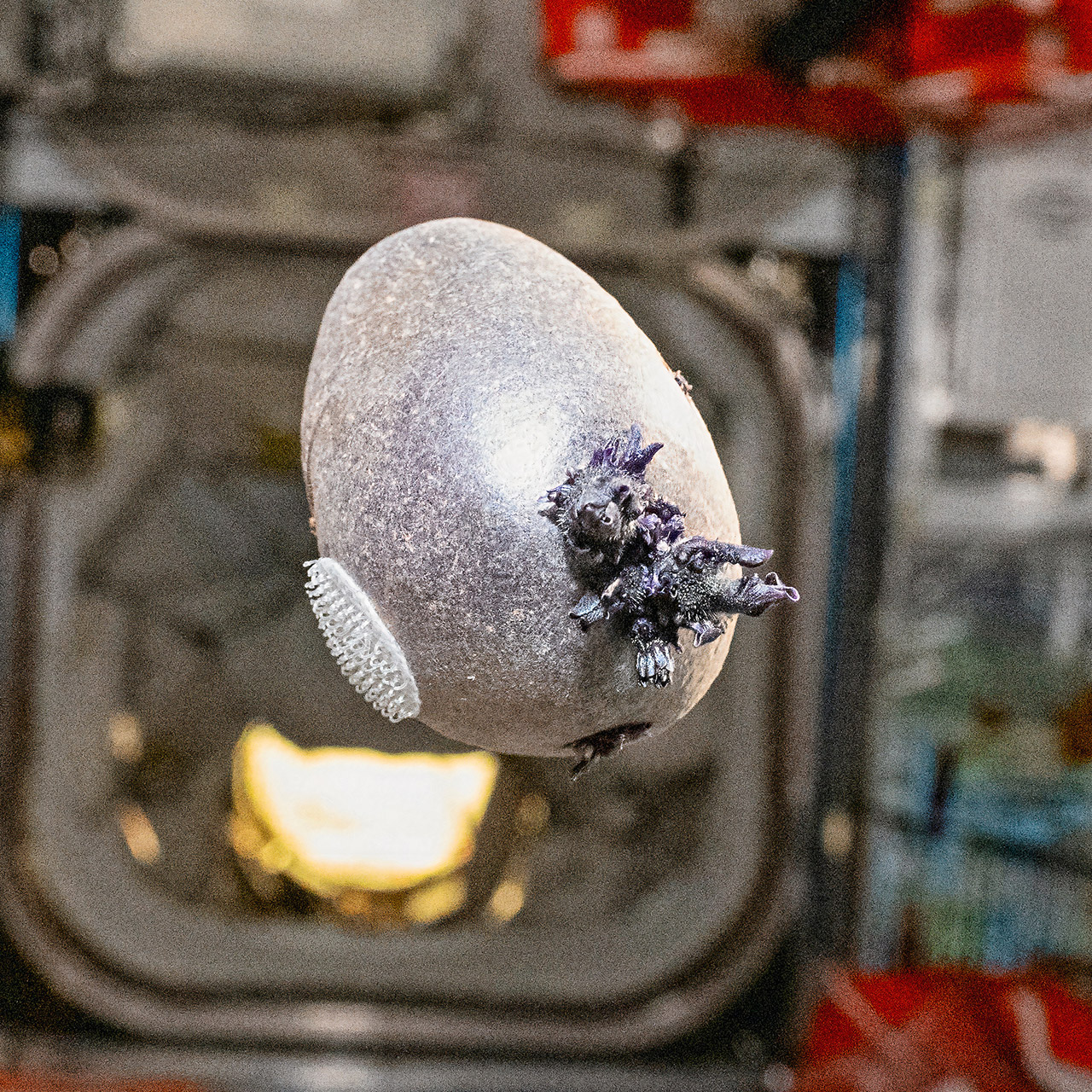
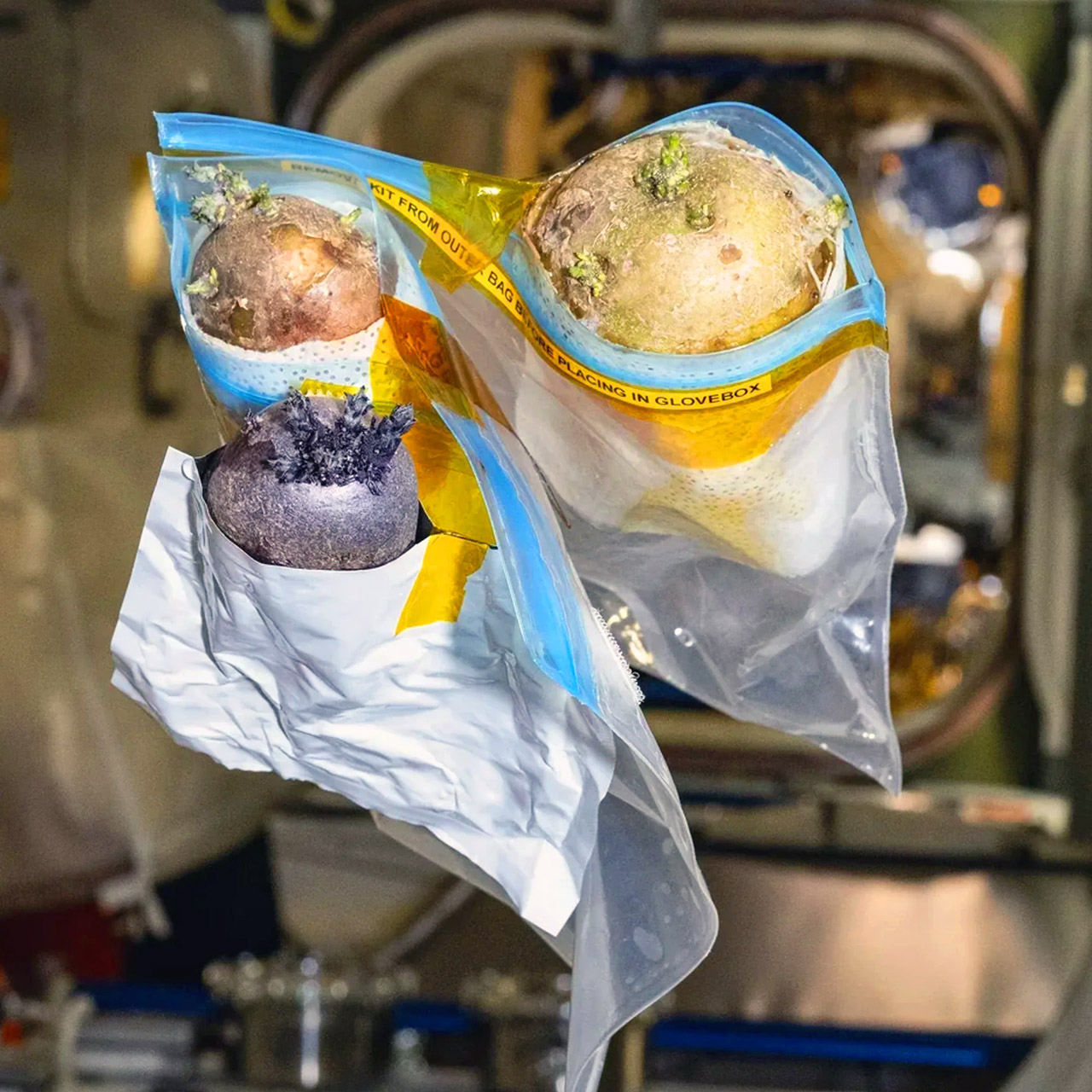
Photo credit: Don Pettit During Expedition 72, NASA astronaut Don Pettit used his free time on the International Space Station to work on a quite interesting side project. He went ahead and coaxed an early purple potato to sprout in a small improvised garden he’d created on his own. He’d removed a bit of the tuber and placed it in a container with grow lights connected, fastening it in place with a small piece of Velcro. This simple system kept everything stable even as the station zoomed around the Earth.
The potato had smooth purple skin and had grown into an oval form about the size of a huge egg. There were tiny little tendrils shooting out in all directions, looking like pallid threads snapped in mid-stretch. No dirt was visible on any of the surfaces. The photograph quickly went viral, and people went crazy in the comments section, asking all kinds of questions. Some wondered whether it was some unknown organism that had suddenly surfaced floating in space, while others compared it to some of the props seen in sci-fi films.
Interactive model – Inspire kids to build a representation of the Earth, Sun and Moon in orbit with this LEGO Technic Planet Earth and Moon in Orbit…
Educational space toy – Kids can turn the crank to see how the Earth and the Moon orbit around the Sun
Includes months and moon phases – This solar system toy includes printed details, like the month and moon phases to help kids see how the Earth’s…
Pettit ended up naming his little specimen Spudnik-1 and explaining to everyone what they were looking at. He got the idea from a story about a lone explorer who had to cultivate potatoes on Mars to survive. This was just his own personal experiment to explore how a familiar food like a potato would behave far away from home.
Microgravity changes everything about how a plant develops. Roots do not reach downward the way they would on Earth, instead spreading outward in every direction at once in search of water and nutrients. Shoots behave the same way, scattering rather than growing in a straight line upward. The whole plant takes on a loose, sprawling form that looks nothing like what you would find in a tidy garden back home. Growth is also slower than usual, since without the constant pull of gravity there is no physical stress on the living tissue to drive development forward.
Then there’s the fact that there’s no soil, so the potato skin remains smooth and even under the constant light of the artificial lamps, with no rough brown patches from hitting the earth. Moisture and light are properly metered, but that is the extent of management. It’s all simply these minor adjustments to try to imitate the natural pull of gravity and the cycle of sun and rain that we take for granted on Earth.
Advertisement
NASA teams have been cultivating a variety of plants aboard the station for years, including lettuce, Chinese cabbage, mustard greens, kale, and zinnias, all of which have survived under relatively comparable conditions. Of course, every harvest is a joy because it means they can consume some real food instead of vacuum-sealed meals. Of course, they collect a wealth of information that helps them plan for longer-term expeditions to the Moon or Mars, when every piece of food they bring must serve several functions.
Pettit kept things simple by selecting a potato variety that naturally contains a high concentration of the exotic pigments that give it its deep purple hue. It just so happens that those same molecules can help shelter cells from radiation, which is a significant benefit for longer missions. After the picture went viral, he kept folks informed with some fairly simple updates. The Velcro held the tuber in place, the grow lights provided a consistent supply of electricity, and then, well, it all came down to being patient and keeping an eye on things. [Source]
The Cybersecurity and Infrastructure Security Agency (CISA) is warning that hackers are actively exploiting a critical vulnerability identified as CVE-2026-33017, which affects the Langflow framework for building AI agents.
The security issue received a critical score of 9.3 out of 10 and can be leveraged for remote code execution, allowing threat actors to build public flows without authentication.
The agency added the issue to the list of Known Exploited Vulnerabilities, describing it as a code injection vulnerability.
Researchers at application security company Endor Labs claim that hackers started exploiting CVE-2026-33017 on March 19, about 20 hours after the vulnerability advisory became public.
Advertisement
No public proof-of-concept (PoC) exploit code existed at the time, and Endor Labs believes that attackers built exploits directly from the information included in the advisory.
Automated scanning activity began in 20 hours, followed by exploitation using Python scripts in 21 hours, and data (.env and .db files) harvesting in 24 hours.
Langflow is a popular open-source visual framework for building AI workflows with 145,000 stars on GitHub. It provides a drag-and-drop interface for connecting nodes into executable pipelines, along with a REST API for running them programmatically.
The tool has widespread adoption across the AI development ecosystem, making it an attractive target for hackers.
Advertisement
In May 2025, CISA issued another warning about active exploitation in Langflow, targeting CVE-2025-3248, a critical API endpoint flaw that allows unauthenticated RCE and potentially leads to full server control.
The most recent flaw, CVE-2026-33017, lets attackers execute arbitrary Python code impacts versions 1.8.1 and earlier of Langflow, and could be exploited via a single crafted HTTP request due to unsandboxed flow execution.
CISA did not mark the flaw as exploited by ransomware actors, but gave federal agencies until April 8 to apply the security updates or mitigations, or stop using the product.
System administrators are recommended to upgrade to Langflow version 1.9.0 or later, which addresses the security problem, or disable/restrict the vulnerable endpoint.
Advertisement
Endor Labs also advised not to expose Langflow directly to the internet, to monitor outbound traffic, and to rotate API keys, database credentials, and cloud secrets when suspicious activity is detected.
CISA’s deadline formally applies to organizations covered by Binding Operational Directive (BOD) 22-01, but private sector companies, state and local governments, and other non-FCEB entities are also advised to treat it as a benchmark and respond accordingly.
Malware is getting smarter. The Red Report 2026 reveals how new threats use math to detect sandboxes and hide in plain sight.
Download our analysis of 1.1 million malicious samples to uncover the top 10 techniques and see if your security stack is blinded.
Dutch professional football club Ajax Amsterdam (AFC Ajax) disclosed that a hacker exploited vulnerabilities in its IT systems and accessed data belonging to a few hundred people.
The security issues also allowed transferring purchased tickets to others and enabled modifications to stadium bans imposed to certain individuals.
The club learned about the security issues and their effect from journalists who were tipped off by the hacker.
AFC Ajax is one of the most successful football clubs, winning the UEFA Champions League four times and with 36 Eredivisie titles, the premier professional football league in the Netherlands.
Advertisement
“We recently discovered that a hacker in the Netherlands unlawfully gained access to parts of our systems. Data was viewed,” AFC Ajax stated.
“What we now know is that only the email addresses of a few hundred people were viewed. In addition, for fewer than 20 people with a stadium ban, their names, email addresses, and dates of birth were accessed.”
RTL journalists who received a tip from the hacker independently verified the vulnerabilities and reported that they were able to transfer season tickets from their holders to arbitrary people, access and modify stadium ban records, and gain broad access to fan data via APIs and shared keys.
In a demonstration, they reassigned a VIP season ticket in seconds. Most worryingly, RTL stated it could manipulate 42,000 season tickets, 538 supporter stadium bans, and view details on over 300,000 accounts.
Advertisement
AFC Ajax says that it has engaged external experts to determine the scope of the incident and identify the root cause, while noting that the exposed data has not been leaked.
Meanwhile, all identified vulnerabilities have been patched, and additional security measures have been introduced.
The Dutch Data Protection authority, as well as the police, have also been notified accordingly.
RTL’s investigation was clearly non-malicious. Likewise, the attacker’s limited access and decision to disclose the flaws via the media, rather than exploit them for profit or extortion, suggest the vulnerabilities were not abused at scale.
Advertisement
However, it remains unclear whether this was the first time these weaknesses in Ajax’s systems were discovered or exploited.
Ajax fans who have registered with the club’s systems or purchased season tickets should remain vigilant for suspicious communications, especially those impersonating or claiming to come from the AFC Ajax club.
Malware is getting smarter. The Red Report 2026 reveals how new threats use math to detect sandboxes and hide in plain sight.
Download our analysis of 1.1 million malicious samples to uncover the top 10 techniques and see if your security stack is blinded.
Google is adding a pair of new features to Gemini aimed at making it easier to switch to the AI chatbot. Personal history and past context are big components to how a chatbot provides customized answers to each user. Gemini now supports importing history from other AI platforms. Both free and paid consumer accounts can use these options.
With the first option, Gemini can create a prompt asking a competitor’s AI chatbot to summarize what it has learned about you. The result might include details such as your typical written communication style, your family members’ names or your key preferences. The other AI tool’s summary can then be pasted into Gemini, providing Google’s platform with a preliminary profile.
The second option allows users to import their entire chat history with a different AI assistant into Gemini. Doing so allows people to reference earlier conversations or requests made on a different platform after migrating to the Google option.
Anthropic recently introduced a similar memory import feature, so Google may also be hoping to scoop up some of the people who are dropping OpenAI following its shady-sounding new arrangement with the Department of War. Whatever the motivation, these options should make it easier to have a seamless transition between providers.
Alia Ballout is bringing centuries-old family traditions to Singapore through Beît Ballout
When Alia Ballout registered a company in Jan 2023, she didn’t know what it would sell.
But a year later, she launched what she describes as Singapore’s first traditional olive oil brand—sourcing produce from her family’s grove in southern Lebanon, air-freighting it to Singapore, and bottling it locally by hand.
Today, the 28-year-old runs Beît Ballout alone. Her family, split between Oman, Singapore, and London, pitches in especially during Lebanon’s October harvest.
We spoke with Alia to learn more about building a traditional olive oil business, and the challenges of operating across regions with ongoing instability.
Advertisement
Turning heritage into a business
Alia at her family home in southern Lebanon./ Image Credit: Beît Ballout
Born in Singapore, Alia is the daughter of Mae Lam, a Singaporean Chinese, and Adib Ballout, a Lebanese.
She spent most of her childhood in Oman before moving to the UK, and later relocating to Singapore at 19, where she is currently based.
In 2021, she enrolled in a Juris Doctor programme at Singapore Management University (SMU). While she completed her degree, she found herself increasingly disillusioned with the environment and began considering alternative paths.
A corporate law lecture on company formation eventually prompted her to register a business in early 2023, despite not having a clear product direction at the time.
After graduating, she took on roles in both the legal field and hospitality, including a stint at Mondrian Hotel. Through conversations with chefs and industry professionals, she gained exposure to supply chains and import-export processes.
Advertisement
Adib Ballout and Mae Lam, Alia’s parents, pick Baladi olives in their family grove, which are abundant in the region./ Image Credit: Beît Ballout
The idea for Beît Ballout eventually emerged later that year during a routine video call with her mother. She appeared on screen in Lebanon, sun-hatted, basket in hand, picking olives from their grove. Alia stared at the image—an Asian woman harvesting olives in the Lebanon—and felt something stir up in her heart.
“I looked at her enjoying herself so much,” Alia recalled. “I was like, that’s such a weird image. I don’t think I’ve ever seen that before.”
The Ballouts had always held a piece of land with hundreds of olive trees in their backyard. They would return every few months to spend time in their home. The Ballouts would also often pick olives to make olive oil as a yearly family tradition, and if there’s any excess, they would then be given to friends and neighbours.
Spotting an opportunity to bring the family tradition to Singapore, Alia asked her father to ship a canister of Lebanese olive oil on credit, as she did not have any capital at the time. She then created a website for the company, naming it Beît Ballout, which means “House of Ballout” in Lebanese.
Building a brand from scratch
Alia started small—purchasing a handful of S$5 glass bottles from Scoop, which were all she could afford then, and filled them with her family’s Lebanese olive oil. She photographed the bottles and posted them on her private Instagram account, which had around 200 followers.
Advertisement
She had no expectations for the post, so the positive response caught her by surprise. “People were interested because it was such an odd thing to do, and because it came from me.”
Image Credit: Beît Ballout
From then, Alia primarily began selling her Lebanese olive oil through her website.
Because her initial packaging was modest, Alia had to be creative in promoting the product. “The ugly bottle design forced me to sell the heck out of my product,” she said. “I believed strongly in the quality. I needed to show its value.”
In the early years, she balanced running the business with full-time work at law firms, spending weekdays at the firms and weekends at pop-ups such as Sprout, Crane Living, and eventually the Boutique Fair.
“When I first started pop-ups, I didn’t realise that all they sell you is space. I had to get creative and set up everything by myself”
Advertisement
At these events, she often stood for 12 hours a day, engaging with customers, offering tastings, and addressing sceptics. She also managed marketing and design for Beît Ballout. This consistent, hands-on approach gradually built recognition for the brand in Singapore.
As demand grew, she eventually left her job in Mar last year to run Beît Ballout full-time. Although she had also recently passed the Singapore Bar examination, she chose to pursue the business instead.
“This year, it’s gonna be my third time back at Boutique Fair. Customers who knew me from this, they kind of grew up with me, and the brand.”
A method that dates back centuries
A key part of the brand’s appeal lies in the Ballout family’s ancestral method of harvesting and pressing olives by hand, a practice that dates back centuries.
Advertisement
Olives hand-picked by the Ballout team will then be crushed into paste at the messara./ Image Credit: Beît Ballout
The Ballouts hand-pick olives—primarily Baladi olives, a variety native to the region and common in Palestine—from nearly 500 trees in their grove in Houmine El Tahta.
Harvesting takes place after the first rainfall, around Oct each year. The olives are then brought to a messara, or pressing plant, where a granite wheel—used in the Levant for centuries—crushes them. The fresh olives are cold-pressed at 27°C within four to six hours of picking.
The result is a rich, green, opaque oil—buttery yet fruity—distinct from the transparent, neutral-tasting commercial varieties.
The olive oil is then packed into large cannisters and air flown into Singapore, before being bottled by hand and sold to customers.
This approach stands in stark contrast to most commercial olive oil production. Alia found that much of it is heavily processed: olives are treated with pesticides, violently shaken from trees, hot-pressed for speed and yield (for comparison, cold-pressed oils yield around 35% of the olive pulp, while hot-pressed oils yield about 37%), and chemically stabilised to extend shelf life—a process that can compromise both flavour and quality.
Advertisement
Moreover, commercial olives typically don’t get pressed for nearly 16 hours, which means the olives would have already entered their fermentation phase, further affecting the oil’s characteristics.
Using food & storytelling to raise awareness
For Alia, Beît Ballout is closely tied to its origins, and she has chosen not to separate the product from its broader cultural and regional context.
She describes her approach as “soft activism”—using food and storytelling to raise awareness and encourage discussion.
This has included initiatives such as curated dining experiences and content on platforms like Substack, where she writes about Levantine history and current affairs.
Advertisement
In 2024, when Beît Ballout was just over a year old, Alia hosted a private cultural dining event in collaboration with MasterChef Singapore Season 4 winner Inderpal Singh and the now-closed The Providore, which sold out all 30 seats./ Image Credit: Beît Ballout
In addition, as demand for the Ballout’s olive oil grew, the business started engaging workers from local and displaced communities during harvest periods, providing wages and logistical support.
Syrian and Palestinian refugees hired by Beît Ballout./ Image Credit: Beît Ballout
Navigating rising costs and regional instability
Currently, each 500ml bottle of Beît Ballout’s EVOO starts at S$45. It’s priced higher than most commercially available options, but reflects its production methods and supply chain.
Image Credit: @imanfandi17 via Instagram/ Beît Ballout
However, bringing the product into Singapore has become increasingly challenging.
Alia’s family home is in southern Lebanon, near the border with Israel—an area that has seen recurring conflict.
During a visit last Oct, she encountered these conditions firsthand, including drone activity and an explosion just a hill away from her family’s home.
More recently, intensified bombings in Mar forced residents in parts of southern Lebanon to evacuate, leaving behind stored harvests, including 30 tins of the Ballouts’ oil. But thankfully, most of the stock has already been flown into Singapore and is kept safe.
Despite rising costs and logistical challenges, Alia has chosen not to increase prices.
Advertisement
“I haven’t increased my price since the recent escalations, despite it being more difficult to bring in,” Alia reflected. “Every dollar we earn, I want to put back into our new processing facility as I’m building something Singapore has never seen before,” she added.
Building Singapore’s first olive oil bottling facility
Apart from selling directly to individual customers, Beît Ballout also supplied to restaurants such as The Mandala Club’s Popi’s Restaurant, Wooloomooloo Steakhouse, and Suzuki by Kengo Kuma.
To scale operations, Alia is building Singapore’s first olive oil bottling facility, spanning 700 square feet, to handle bottling and packaging. While an exact opening date has not been announced, the facility is set to launch soon.
Beît Ballout’s hand-made olive oil soap./ Image Credit: Beît Ballout
With olive harvesting and processing temporarily paused due to the ongoing situation in Lebanon, Alia is pivoting to other products using existing stock. She recently introduced a line of olive oil soaps, handmade by her mother, who has run a spa business in Oman for over three decades.
Alia has also visited Spain to study traditional olive oil farms, noting similarities in production methods and business models with those in the Levant.
Advertisement
The brand remains deliberately small and mission-driven. “I’ve never been profit-driven. I feel like I’m put on this earth to retell stories. My marker of success is putting our little village on the map,” Alia said.
I want to change the perspective that people have of Lebanon, one that is not of war and chaos, but instead filled with good produce and community.
President Donald Trump and top defense officials are reportedly weighing whether to send ground troops to Iran in order to retrieve the country’s highly enriched uranium. However, the administration has shared little information about which troops would be deployed, how they would retrieve the nuclear material, or where the material would go next.
“People are going to have to go and get it,” secretary of state Marco Rubio said at a congressional briefing earlier this month, referring to the possible operation.
There are some indications that an operation is close on the horizon. On Tuesday, The Wall Street Journal reported that the Pentagon has imminent plans to deploy 3,000 brigade combat troops to the Middle East. (At the time of writing, the order has not been made.) The troops would come from the Army’s 82nd Airborne Division, which specializes in “joint forcible entry operations.” On Wednesday, Iran’s government rejected Trump’s 15-point plan to end the war, and White House press secretary Karoline Leavitt said that the president “is prepared to unleash hell” in Iran if a peace deal is not reached—a plan some lawmakers have reportedly expressed concern about.
Drawing from publicly available intelligence and their own experience, two experts outlined the likely contours of a ground operation targeting nuclear sites. They tell WIRED that any version of a ground operation would be incredibly complicated and pose a huge risk to the lives of American troops.
Advertisement
“I personally think a ground operation using special forces supported by a larger force is extremely, extremely risky and ultimately infeasible,” Spencer Faragasso, a senior research fellow at the Institute for Science and International Security, tells WIRED.
Nuclear Ambitions
Any version of the operation would likely take several weeks and involve simultaneous actions at multiple target locations that aren’t in close proximity to each other, the experts say. Jonathan Hackett, a former operations specialist for the Marines and the Defense Intelligence Agency, tells WIRED that as many as 10 locations could be targeted: the Isfahan, Arak, and Darkhovin research reactors; the Natanz, Fordow, and Parchin enrichment facilities; the Saghand, Chine, and Yazd mines; and the Bushehr power plant.
According to the International Atomic Energy Agency, Isfahan likely has the majority of the country’s 60 percent highly enriched uranium, which may be able to support a self-sustaining nuclear chain reaction, though weapon-grade material generally consists of 90 percent enriched uranium. Hackett says that the other two enrichment facilities may also have 60 percent highly enriched uranium, and that the power plant and all three research reactors may have 20 percent enriched uranium. Faragasso emphasizes that any such supplies deserve careful attention.
Hackett says that eight of the 10 sites—with the exception of Isfahan, which is likely intact underground, and “Pickaxe Mountain,” a relatively new enrichment facility near Natanz—were mostly or partially buried after last June’s air raids. Just before the war, Faragasso says, Iran backfilled the tunnel entrances to the Isfahan facility with dirt.
Advertisement
The riskiest version of a ground operation would involve American troops physically retrieving nuclear material. Hackett says that this material would be stored in the form of uranium hexafluoride gas inside “large cement vats.” Faragasso adds that it’s unclear how many of these vats may have been broken or damaged. At damaged sites, troops would have to bring excavators and heavy equipment capable of moving immense amounts of dirt to retrieve them.
A comparatively less risky version of the operation would still necessitate ground troops, according to Hackett. However, it would primarily use air strikes to entomb nuclear material inside of their facilities. Ensuring that nuclear material is inaccessible in the short to medium term, Faragasso says, would entail destroying the entrances to underground facilities and ideally collapsing the facilities’ underground roofs.
Softening the Area
Hackett tells WIRED that based on his experience and all publicly available information, Trump’s negotiations with Iran are “probably a ruse” that buys time to move troops into place.
Hackett says that an operation would most likely begin with aerial bombardments in the areas surrounding the target sites. These bombers, he says, would likely be from the 82nd Airborne Division or the 11th or 31st Marine Expeditionary Units (MEU). The 11th MEU, a “rapid-response” force, and the 31st MEU, the only Marine unit continuously deployed abroad in strategic areas, have reportedly both been deployed to the Middle East.





























































You must be logged in to post a comment Login