Tech
Culture Wars at the Super Bowl, Meze STRADA’s Curious Tuning, Record Store Day 2026, Hi-Fi Show Overload?: Editor’s Round-Up

This editor’s roundup lands at a moment when everything feels less like discourse and more like performance art, and not the good kind. Bad Bunny delivered the first mostly Spanish halftime show in Super Bowl history; a powerful, Puerto Rican-rooted celebration that thrust Latino culture onto a stage watched by 124 million people and the reactions were predictably absurd.
Conservatives from cable pundits to President Trump called it divisive and “terrible,” freaked out over language, and even tried to pitch hair-metal bands as replacements, while fanbases tried to learn Spanish just to keep up with the cultural conversation.
And then the other side did what it always does. Turning Point USA’s Super Bowl-adjacent event somehow morphed online into an “ICE rally,” a “Charlie Kirk memorial,” and an act of open racism, as if every folding chair and red lanyard came with a deportation order stapled to it. Context didn’t matter. Facts were optional.
Even the Grammy Awards could not just hand someone a trophy without turning it into a TED Talk nobody asked for — win, smile, say thanks, and sit the hell down.
Meanwhile, the internet still can’t decide whether this was patriotism or provocation, which tells you everything about how performative outrage has become the default setting on all sides. Then there’s the actual stuff we cover: Meze Audio dropped the Strada with a tuning curve that’s got listeners scratching heads, Record Store Day 2026 has its own mix of hype and eye-rolls, and the hi-fi show calendar is so bloated even insiders are saying “enough.” Same damn script everywhere — nuance on mute, noise on max.
Bad Bunny Sang in Spanish; Outrage Was Bilingual

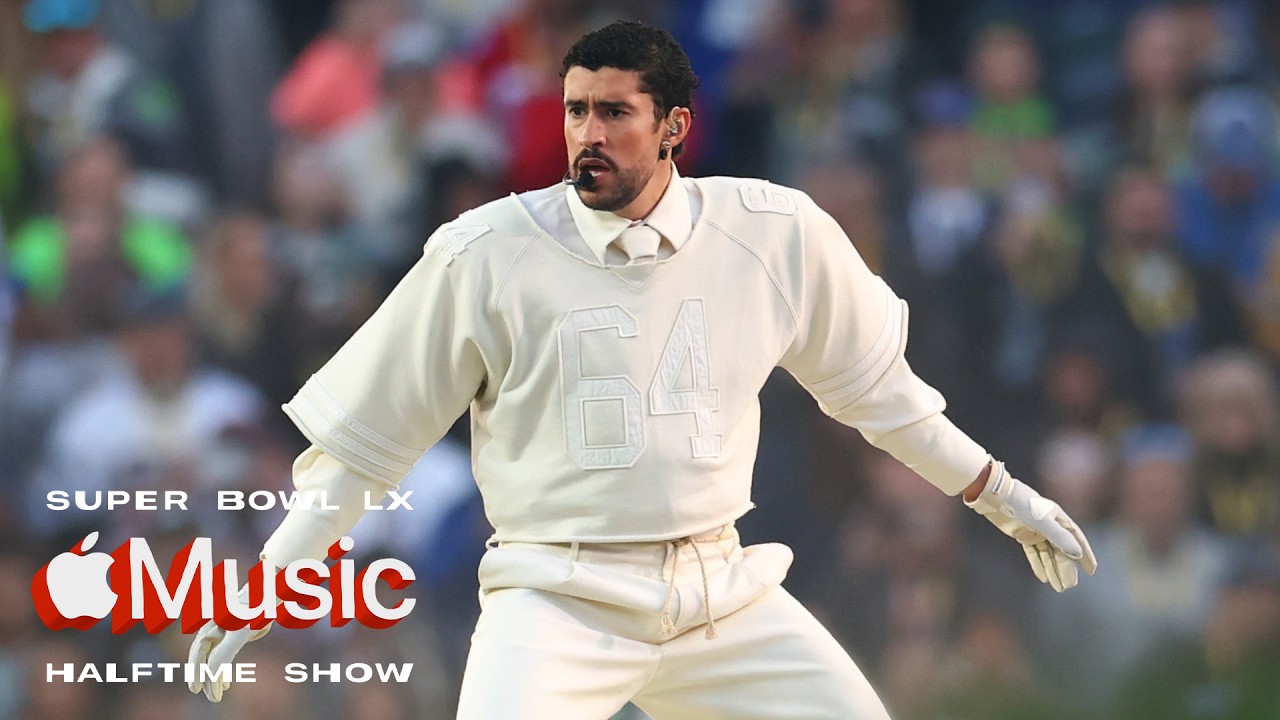
If there was anything worth getting upset about during the Super Bowl, it wasn’t the language, it was the vocals. Bad Bunny can perform, no question: the pacing worked, the energy was there, the rhythm was locked in, and the spectacle did exactly what halftime shows are designed to do. But let’s not pretend we witnessed a once-in-a-generation vocal masterclass. Whitney Houston he is not. Hell, Whitney Houston warming up he is not. The real outrage should’ve been over pitch, breath control, and the fact that halftime vocals have quietly become optional while choreography and vibes do the heavy lifting.
And let’s get real for a second: there are 40-50 million Spanish-speaking people in the United States, many of whom watch the NFL every Sunday, buy jerseys, bet on games, and scream at referees in multiple languages. Holy queso, Batman — Spanish isn’t some foreign invasion; it’s part of the room. Always has been. Acting shocked by that in 2026 is less patriotism and more blind ignorance.
What’s depressing isn’t that a halftime show turned political; it’s that everything does now. We can’t even have a dumb, overproduced Super Bowl anymore without someone turning it into a referendum on national identity. It’s a football game. A mediocre one. Played by two teams most people claim to hate until kickoff. Someone wins, someone loses, and nobody should be afraid to joke about going to Disney World afterward because ICE might be waiting behind Space Mountain. When even that joke feels risky, you don’t have a culture war; you’ve got cultural exhaustion.
For all of the President’s misguided social media outrage about a halftime show, the only real winner here was Bad Bunny. Mission accomplished. He’ll sell out arenas coast to coast, merch will fly, and yes, the pants will remain deeply questionable whether you like the music or not.
What’s wrong with us is simpler; we’re obsessed with the noise instead of the moment, which makes perfect sense when half the country seems to get its news and its history from TikTok, X, and Instagram comments written at a sixth grade reading level.
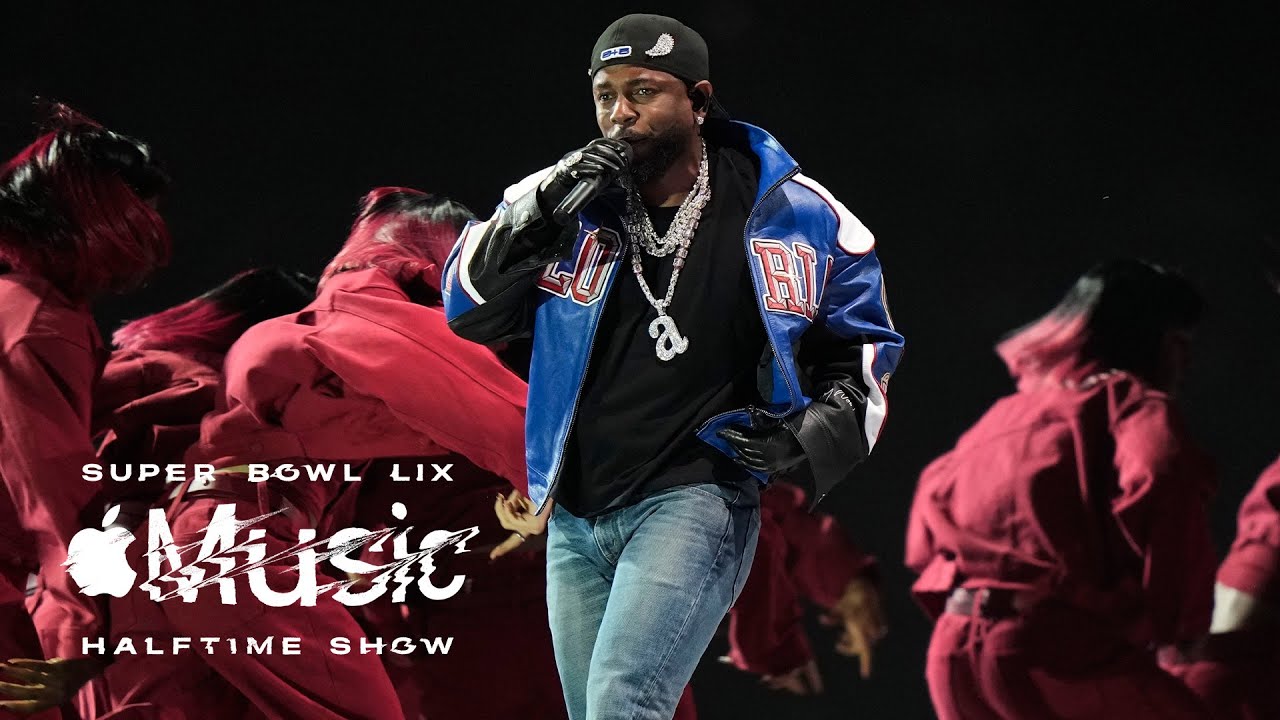
Last year’s Kendrick Lamar halftime worked better for me not because it was louder or angrier, but because it stayed tethered to the game, a genuine Eagles beat down of the Chiefs, Taylor Swift included, and because I actually own his records and took my son to one of his shows, which was pretty great. Football happened. Music happened. Nobody lost their damn mind. That’s apparently too much to ask now. It’s that bad, folks.
Record Store Day 2026: Great Releases, Too Few Copies, Lots of Cash Required
Record Store Day is still one of my favorite days of the year, and not because I enjoy standing outside at 5am fueled by burnt coffee and poor decisions. It’s because you get to show up for the independent shops that keep this whole hobby from turning into a soulless “add to cart” spreadsheet. You stand in the cold or the heat or the rain, take your pick, clutch your list like it’s an immigration document, and hope the vinyl gods don’t flag you for secondary screening.


It doesn’t always work out, especially if you live somewhere where the first 20 people in line aren’t music fans, they’re flippers with spreadsheets, burner accounts, and the moral compass of a vending machine. They sprint straight to the obvious heat and scoop up the titles that were never pressed in big numbers, the stuff your local store might only have 1 to 5 copies of, then they flip it on Discogs or eBay for 3 to 5 times the price like they personally remastered it. These people don’t love records. They love arbitrage. Please step on a LEGO.
This year’s RSD 2026 list is legitimately stacked. Bruno Mars is the 2026 Record Store Day Ambassador, and shops will be holding Early Listening Parties on February 25 for his new album THE ROMANTIC, ahead of Record Store Day on April 18.
On the guaranteed-mayhem side, you’ve got Pink Floyd with Live From the Los Angeles Sports Arena, April 26th, 1975 (4xLP), plus perennial troublemakers like The Cure, David Bowie, Madonna, Grateful Dead, and Pearl Jam with React/Respond as a photo book plus a 7 inch single, which is basically catnip for the resellers.
Add The Rolling Stones turning RSD into a mini theme park with multiple drops, including the RSD3 mini turntable and a run of 3 inch singles like Get Off of My Cloud, Honky Tonk Women, Play With Fire, Heart of Stone, Mother’s Little Helper, and Have You Seen Your Mother, Baby, Standing in the Shadow? because nothing says “serious collector culture” like tiny-format chaos.
And the jazz titles? Quietly dangerous this year. You’ve got Bill Evans At The BBC: The Complete 1965 London Sets, John Coltrane and the John Coltrane Quartet showing up in the mix, Ahmad Jamal, Roy Hargrove with A Tribute to Pharoah Sanders, plus Joe Henderson Consonance: Live at the Jazz Showcase on Resonance, and Mal Waldron Stardust & Starlight: Live at the Jazz Showcase.
These are my dark-horse Record Store Day 2026 picks, the ones I’m prioritizing before caffeine fully kicks in and common courtesy disappears.
On the soul and jazz side, Stax: Killer B’s from Various Artists is exactly the kind of compilation RSD should be about, deep cuts that remind people why Stax mattered beyond the hits. Consonance: Live at the Jazz Showcase by Joe Henderson is a serious live document and another reminder that Resonance continues to treat jazz collectors like adults. Add The New Sounds from Miles Davis, Primeval Blues, Rags, And Gospel Songs by Charlie Patton, and BBC Sessions from John Prine, and you’ve got a stretch of records that feel more like history lessons than collectibles. These are the ones flippers ignore because they require listening instead of speculation.
The alternative and art-pop lane is quietly stacked this year. Analogue 20th Anniversary Deluxe Edition from a-ha is far better than people remember and will vanish once word gets out. The Seduction of Claude Debussy by Art of Noise is still ambitious, strange, and influential in ways that feel increasingly rare. The Rhythmatist shows Stewart Copeland doing something genuinely different outside of The Police, and The Blind Leading the Naked from Violent Femmes remains one of their most overlooked records. None of these scream “safe,” which is exactly why they matter.
Then there are the deceptively obvious picks that people will pretend not to want until they’re gone. Greatest Hits from The Cure will not sit long. MTV Unplugged captures Tony Bennett doing what modern vocalists still study but rarely master. Hallo Spaceboy is David Bowie in his confrontational mid-90s phase, not nostalgia cosplay, and Sledgehammer from Peter Gabriel still works when it’s pressed properly, whether people want to admit it or not.
Meze STRADA: Green, Gorgeous, and Sonically Side-Eyed

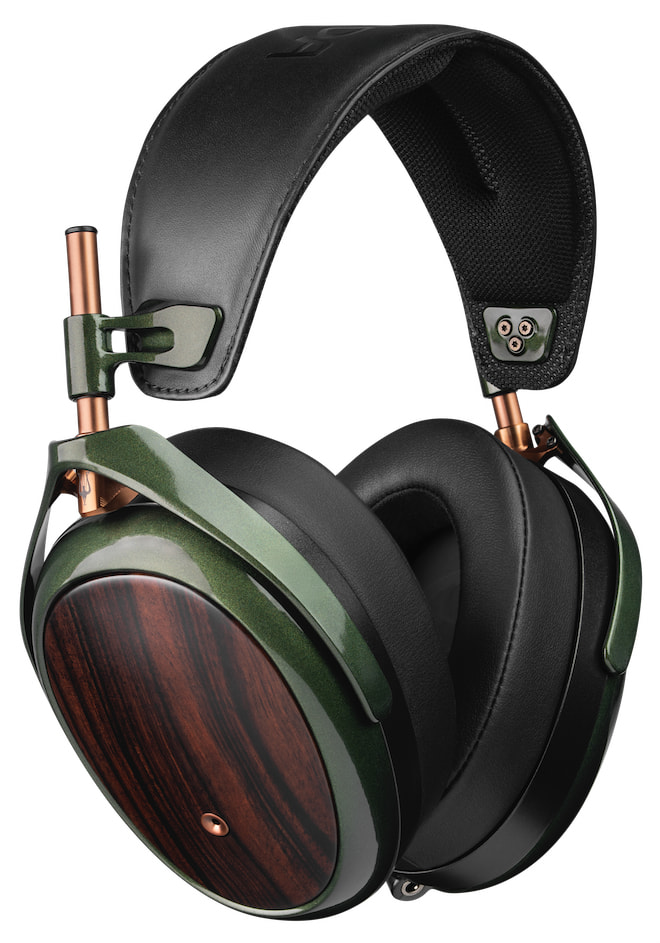
Can Meze’s $799 STRADA closed-back headphones stand out in a market that’s already overcrowded, opinionated, and very sure of itself? That’s the real question, and it’s a fair one. The $500 to $1,000 headphone segment is a knife fight right now, with Grado, Focal, Denon, HiFiMAN, Dan Clark Audio, Beyerdynamic, Audeze, and Sennheiser all going after the same ears and the same wallets. Romanian manufacturer Meze Audio has never tried to win by shouting the loudest. They’ve won by doing the work.
I’m coming at this with some perspective. I own six pairs of Meze headphones, which makes it pretty clear I’ve bought into the approach. That doesn’t mean I love everything blindly. I don’t. If we’re ranking favorites, the Empyrean II, the 109 Pro, and the 99 Classics (2nd generation) sit at the top of my list. Those models get the balance right: comfort that disappears on your head, industrial design that feels intentional, and sound that prioritizes musical engagement over chasing measurements. So where does that leave the STRADA?
From a build and design perspective, Meze hasn’t missed. The STRADA’s earcups are genuinely beautiful, finished in a deep green that feels more British sports car than Romanian headphone, and I’m ultimately fine with that. That said, the color has been polarizing. I’ve seen plenty of online chatter that wasn’t especially polite, along with no shortage of praise from people who really like the look. I wasn’t sold on it straight out of the box either, but it grew on me. And I’d be a hypocrite if I complained too loudly, considering I’ve owned two cars; a Morgan and a Mini Cooper that weren’t exactly shy about wearing a similar shade.

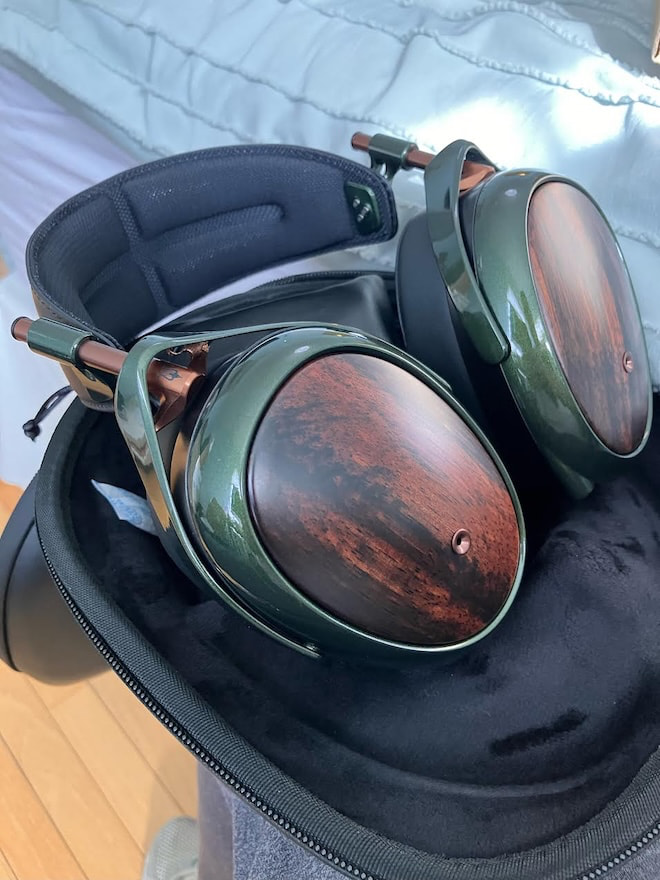
It looks expensive without trying too hard, and it clearly isn’t chasing trends. The magnesium frame, soft padded headband, and balanced weight distribution hit the familiar Meze notes. Comfort remains a core strength, and clamping force is spot on — secure without crossing into fatigue. Long listening sessions aren’t a problem. Do I love the headband as much as some of Meze’s more recent designs? Not quite. It’s different, and that difference will land better for some listeners than others. Still, from a usability standpoint, the brief is handled.
Where things get more complicated is the tuning and the intent. The STRADA is clearly not trying to be a closed-back version of the 109 Pro, and that’s both understandable and slightly puzzling. Closed-back designs come with real constraints. You lose some openness and spatial air by default, but you gain isolation and control.
There’s also more room to play with treble behavior and bass weight, and Meze leans into that here. The STRADA sounds denser and heavier down low, with a presentation that’s less spacious overall, while the top end sits firmly on the brighter side. I’ve found myself reaching for EQ more than usual to dial it in. That’s not inherently wrong. It’s just different.

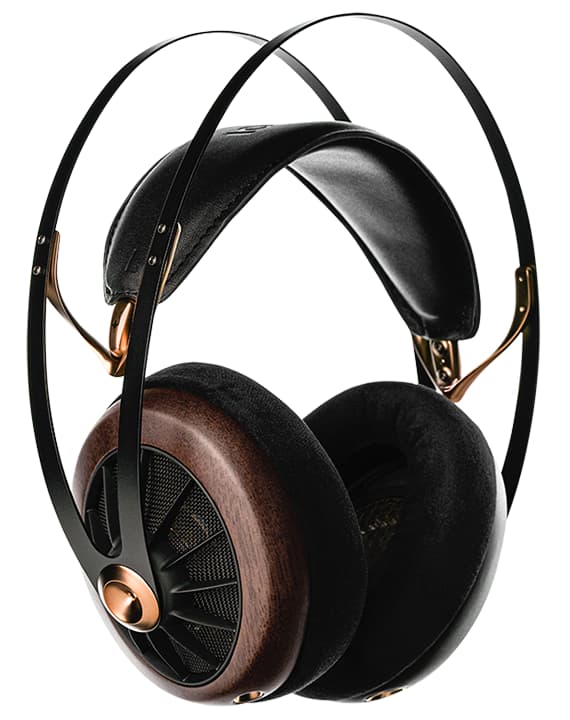
The question I keep coming back to is why Meze felt the need to “fix” something that already worked so well. The 109 Pro are excellent headphones. They’re balanced, engaging, and easy to live with. The STRADA doesn’t replace them. It sidesteps them. Whether that sidestep feels purposeful or unnecessary will depend on what you’re looking for in a closed-back design at this price. I generally like what the STRADA is doing, but I’m not fully convinced yet that this was a gap in the lineup that needed filling.
The full review is coming next week, and that’s where I’ll land the plane properly. For now, the STRADA feels like a well-made, thoughtfully designed headphone that raises an interesting question about direction rather than execution. And with Meze, that question is usually worth asking.
Hi-Fi Show Overload: When Everything Is “Must-See”
2026 is barely six weeks old and the reality has already set in: there are simply too many hi-fi shows. After covering CES 2026 more deeply than any other hi-fi publication, the eCoustics team barely had time to unpack before heading straight to NAMM 2026. That kind of pace is part of the job, but it’s also a stress test. CanJam launched its first event in Dubai and, by all accounts, it went well enough that a 2027 return is already locked.
And let’s not forget ISE in Barcelona, which already happened, because the year barely waits for you to catch your breath before moving on—mañana is a lie, the calendar never sleeps, and the sangria is never strong enough.
February arrived with serious, deadly cold and snow pushing far deeper south than anyone expected. I was there. Back home, the same system claimed more than 35 lives across New Jersey and New York over the past three weeks, a grim reminder that this wasn’t just inconvenient weather. Meanwhile, the Tampa Show is next week and CanJam NYC is somehow already right around the corner. We’ll be there. Hopefully the city will have picked up the garbage by then.
And that’s the problem. The 2026 calendar is stacked to the point of absurdity, and it’s putting both the media and manufacturers into a quiet panic. We can’t cover everything. Nobody can. Travel budgets are stretched, crews are thin, and even the companies making the gear are starting to pick and choose because showing up everywhere is expensive and increasingly hard to justify. More shows don’t automatically mean better coverage or better products. At some point, the industry has to ask whether this pace is sustainable—or whether everyone involved is just pretending it is.
And if you think we’re just kvetching, here’s the part where the calendar starts to look like a cry for help. After Tampa and CanJam NYC; which is already shaping up to be the biggest one yet—the industry rolls straight into Bristol, then Montreal, CanJam Hong Kong, CanJam Singapore, and AXPONA, where six members of the eCoustics team will be on the floor at once. Hope the Wiener Circle has enough char dogs in stock, because nobody’s cooking that week.
Then comes Vienna, now replacing Munich, pushed later into June. Early feedback from people who’ve actually been in the space? Let’s just say the reaction was less wunderbar and more nein, which feels culturally appropriate. From there, we pivot directly into summer with T.H.E. Show SoCal, CanJam London (we’ll be at both), SouthWest Audio Fest in Dallas (I’ll be there), Audio Advice Live in Raleigh (Chris will be there), Pacific Audio Fest, CanJam SoCal (we’ll be there), CEDIA with full-team coverage, CanJam Shanghai, CanJam Dallas, Toronto (I’ll be there), CAF with team coverage, Warsaw, the Paris Show, Singapore Show—yes, again—and a show in Australia, because apparently jet lag is a lifestyle choice now.
The only things missing on the calendar at this point are CanJam Tel Aviv, CanJam Berlin; and it’s more than a little interesting that there still aren’t any plans for a CanJam in Canada—and something in Mexico or Argentina, because apparently South America remains an untapped frontier. Then there’s T.H.E. Show, which continues to live in a state of strategic ambiguity but is likely to surface with the familiar SoCal show and the New York show, which for those of us in the Garden State is, let’s be honest, New Jersey. Same circus, different exits.
All of this somehow wraps up just in time for Black Friday and Thanksgiving, when everyone either collapses, disappears, or spends a brief but meaningful stretch in an institution. I’ve already done my time. Didn’t enjoy the kosher meal option.
Something has to give. There isn’t a single publication on the planet that can realistically handle that schedule, and I’m genuinely proud of the fact that we can cover the shows we do without turning the whole thing into noise. Travel can be fun, sure, but let’s not kid ourselves — this is work. And there’s a point where listening to the same gear, in the same hotel rooms, under the same conditions, stops being insight and starts becoming background hum. Familiarity doesn’t always breed clarity. Sometimes it just breeds fatigue.
I’ve spoken to seven manufacturers over the past few weeks, and I’m talking about the big ones — and they’re feeling it too. The math doesn’t work. Showing up everywhere isn’t financially viable, and it’s not strategically smart either. At some point you’re not launching products, you’re just maintaining appearances. And frankly, nobody needs to see the same rotation of ass-kissing journalists and YouTubers with their hands out at every stop on the circuit. That doesn’t serve readers, viewers, or the industry.
I’ve always kept a simple rule. I eat with the team, with a few of the industry’s best PR people; Adam Sohmer, Jaclyn Inglis, Sue Toscano — or alone. That’s it. Anything else invites complications that don’t need to exist. Free dinners from companies aren’t hospitality. They’re bribes. And once you normalize that, you’ve already lost the plot.
You must be logged in to post a comment Login