



Connect with us
DAPA Banner
DAPA Coin
DAPA
COIN PAYMENT ASSET
PRIVACY · BLOCKDAG · HOMOMORPHIC ENCRYPTION · RUST
ElGamal Encrypted MINE DAPA
🚫 GENESIS SOLD OUT
DAPAPAY COMING

Tech

Cursor makes its biggest India push yet ahead of SpaceX acquisition with localized pricing

Published

on

Weeks before its expected acquisition by SpaceX closes, AI coding startup Cursor is making its biggest push into India yet, launching its first country-specific subscription as the company bets on one of the world’s largest developer markets to drive its next stage of growth.

On Monday, the startup introduced Cursor Start, a ₹649-a-month (about $7) subscription built specifically for India — and priced well below Cursor’s standard $20-a-month Pro subscription.

The move reflects India’s growing importance to Cursor’s business. The startup says India is already its third-largest market globally and home to its highest concentration of power users, with its user base in the country more than tripling over the past year.

That scale, coupled with India’s deep pool of software engineering talent, made it the first market where Cursor chose to localize pricing, Simon Green, Cursor’s head of Asia-Pacific and Japan, told TechCrunch. “We felt that we had an opportunity there to right-size the commercial model and drive scale,” Green said. “The technical competency of the country and the engineering talent that already exists make it a very natural fit.”

Advertisement

India has emerged as one of the world’s largest software developer hubs. Earlier this year, GitHub said that the country has more than 27 million developers on its platform, second only to the U.S., with more than two million joining in 2026 alone.

Cursor Start includes access to Cursor’s Composer 2.5 model and Grok 4.5, with higher usage limits than the free tier, alongside cloud agents, its iOS app, plugins, Model Context Protocol support, hooks, and skills. The startup said the plan is aimed at developers who need more AI-assisted coding capacity than the free tier offers without upgrading to its full Pro subscription.

The lower-priced plan is intended to broaden access rather than replace Cursor’s flagship offering, Green said. Unlike the $20-a-month Pro subscription, Start does not include access to frontier AI models from providers such as OpenAI and Anthropic, or advanced features including Bugbot, Auto Mode, Automations, and the Cursor SDK.

The plan is billed in Indian rupees and supports payments through credit and debit cards as well as India’s Unified Payments Interface (UPI).

Advertisement

Green told TechCrunch that Cursor would use multiple checks to ensure the India-only subscription is available only to individual users in the country, including measures to deter people from accessing the plan through virtual private networks (VPNs).

Cursor is not alone in tailoring its pricing for India. OpenAI and Anthropic have also rolled out India-specific plans over the past year as global AI companies compete for users in one of the world’s fastest-growing AI markets.

While Cursor Start is initially limited to India, Green told TechCrunch that the startup could expand localized pricing to other markets if the model proves successful.

“We will continue to do everything we can to fuel the demand and serve those clients that are using us,” Green said. “Now, if this model proves that we could take it to other markets, perhaps we will. But I think it’d be crazy to say we would never do it elsewhere.”

Advertisement

OpenAI provides one precedent for this strategy, having launched its sub-$5 ChatGPT Go in India before expanding the lower-priced subscription to other markets.

In addition to the localized pricing strategy, Cursor is also expanding its presence in India through new hires. Green told TechCrunch that the startup recently hired its first salesperson in India and expects another leader to join in Delhi. The company is also building out its a government affairs office, alongside three technical customer support hires, as it expands its presence in Bengaluru, Chennai, Hyderabad, and Mumbai.

Cursor’s enterprise push is still in its early stages in India, Green said, where adoption has so far been driven largely by individual developers, startups, and universities. He said Cursor sees significant opportunities in sectors including banking and large enterprises as it expands its local sales efforts.

Green said, the India-specific pricing was designed to be commercially sustainable rather than a loss leader. He said the lower-priced plan is viable because it is built around Cursor’s own AI models, which carry lower operating costs than relying primarily on third-party frontier models.

Advertisement

Cursor’s India expansion comes a little over a month after Elon Musk’s SpaceX agreed to acquire the AI coding startup in a $60 billion all-stock deal, following SpaceX’s blockbuster initial public offering. The acquisition is expected to close in Q3. However, SpaceX has been partnered with Cursor since April to develop a next-generation “coding and knowledge work AI.”

Green said Cursor will continue to operate independently until the transaction closes and that the company’s India expansion plans were already in motion before the deal. Once the acquisition closes, however, Green said SpaceX’s existing presence in India through Starlink could help Cursor expand faster by lowering commercial and operational barriers.

When you purchase through links in our articles, we may earn a small commission. This doesn’t affect our editorial independence.

Source link

Advertisement
Continue Reading
Click to comment

You must be logged in to post a comment Login

Leave a Reply

Tech

Here’s Where You Can Find The Drain Pump Filter On Whirlpool Washing Machines

Published

on


Washing machines can save us a lot of time and effort when it comes to keeping our clothes clean and fresh. But like many appliances in our home, they also require cleaning themselves to be able to operate properly. While Whirlpool washers are known to usually last around a decade, this number isn’t set in stone. In reality, how long your machine will last really depends on how well you’ve taken care of it. 

While some signs that a washing machine is about to break can be quite obvious, others can take more time to spot. However, if you notice that your machine also isn’t draining properly before, during, or after a wash (or you’re getting drainage-specific error codes), there’s a big chance that you need to look at your drain filter. In that case, you’ll need to find it on the bottom of your washing machine — possibly from behind its storage drawer, depending on the model you have.

Advertisement

When washing our clothes, it’s normal for lint and debris to clump together. In some cases, things like coins, buttons, and other small items also end up where they shouldn’t be. Because of this, manufacturers included a drain filter to prevent foreign objects from damaging your washing machine. Once it gets packed, we need to clean the drain filter so it continues to do its job. First, it’s always a good idea to turn off and unplug it first to avoid electric shocks. Finding the filter from there is a simple matter, but accessing and cleaning it could be another story.

Advertisement

How to find amd remove your Whirlpool washing machine drain filters

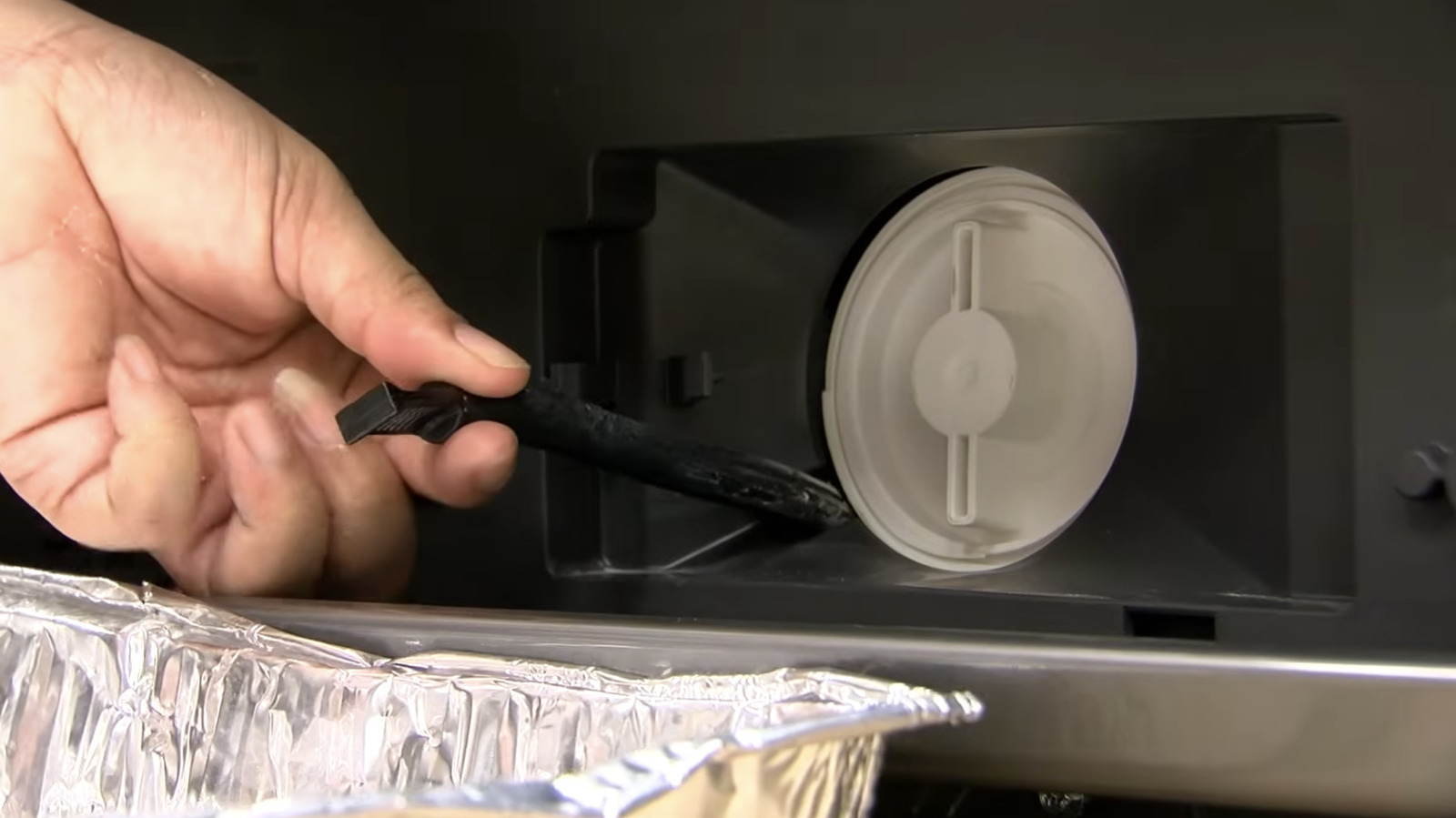
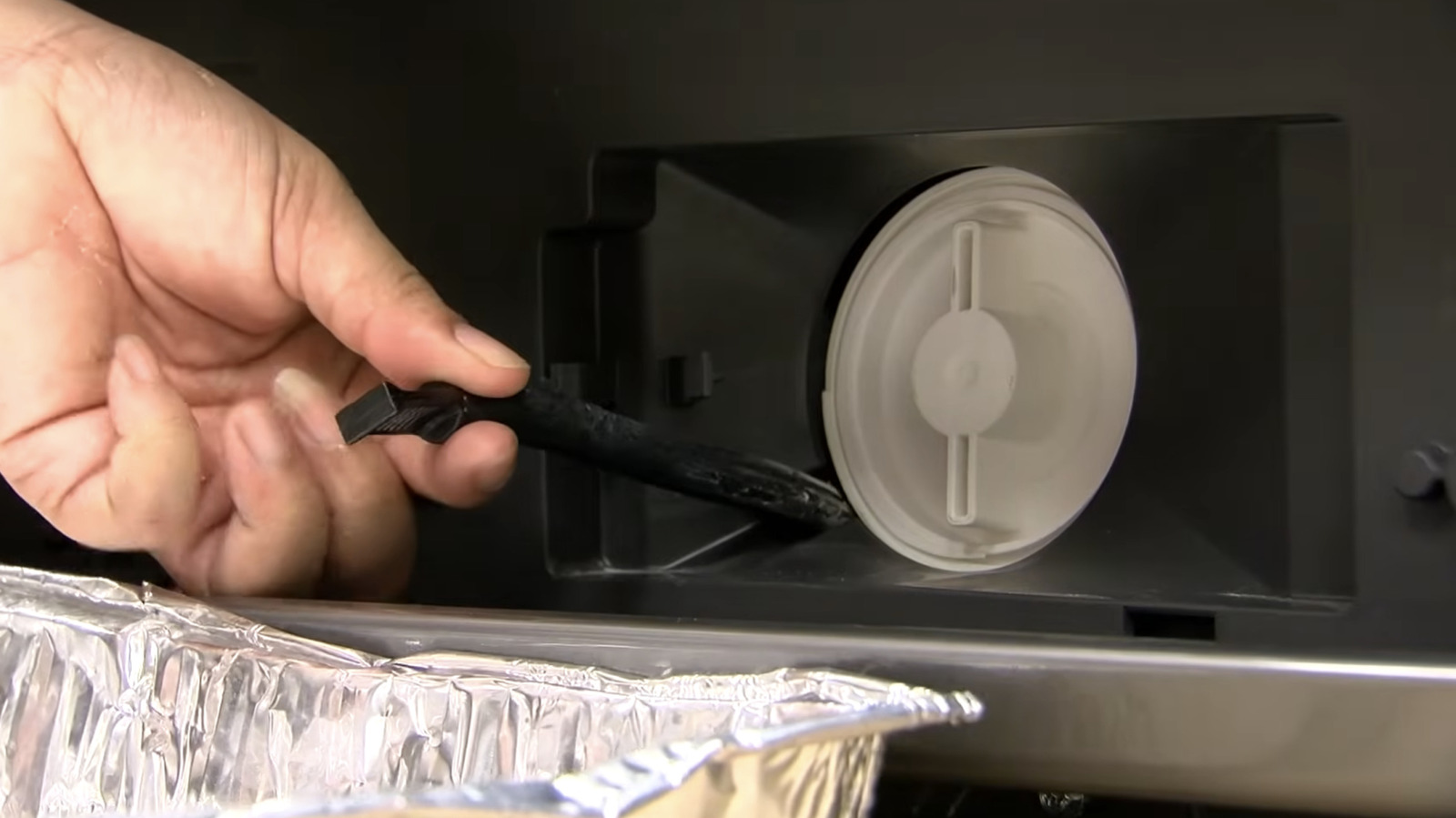
On Whirlpool washing machines with storage drawers, the drain pump filter is located behind the dispenser drawer that is found at the bottom part of the machine. To remove the drawer, you’ll want to press the tabs located on both sides. On the right side, you’ll need to release the tab by pushing it down. On the left side, you’ll want to pull the tab upwards. But if you have a Whirlpool washing machine without a storage drawer, you won’t have to go through all of this since you can easily access it from the panel door.

Once you’ve found your drain pump filter, the process for cleaning is the same. First, you’ll want to manage the possible spills by having either a shallow tray or broad flat container on-hand to catch both the water and the debris. Grab the black hose, remove its plug, and drain the water into a container. After you’ve drained it completely, put back the plug and return the black hose to its clip. Next, rotate the drain filter counterclockwise to remove it. You’ll be able to remove the clumps of hair, lint, and other debris with your hands. Once all the big clumps are gone, you can rinse the filter with water before putting it back. Then, either close their access panel door or re-insert the storage drawer until you hear the rails lock into place. Lastly, grab a towel to wipe down any accidental spills.

Advertisement

How often should you clean your washing machine drain pump filter?

Two of the most obvious ways that the drain filter needs cleaning is when the water doesn’t drain properly or you see a drain-related error code (such as F9 E1) on your washing machine. However, other signs that you should also look out for include weird sounds, clothes smelling bad, or the drum not spinning. If you don’t want to wait until your washing machine starts having problems, just know that Whirlpool doesn’t list an official recommended cleaning frequency. But professional cleaning service Home Alliance mentions that it should be done every two to four months. And, of course, you’ll want to consider doing it more often if you’ve been washing heavily soiled items or pet beds after a particularly bad shedding season.

Most people don’t really clean their washing machines often enough, so if you’re already working on your drain pump, you might as well do everything else too. To cover all your bases, you can check your specific washing machine’s care guide, since there are slightly different steps for front and top load models. But if you don’t have access to these anymore, Whirlpool has a great guide that you can follow which includes using affresh tablets inside the tub, machine cleaning wipes for the dispensers, around the doors, and the outside of the unit. You can also manage mold by leaving the door open every now and then run cleaning cycles.

Advertisement


Source link

Advertisement
Continue Reading

Tech

realme P Series Becomes Flipkart’s Best-Selling Smartphone Series

Published

on

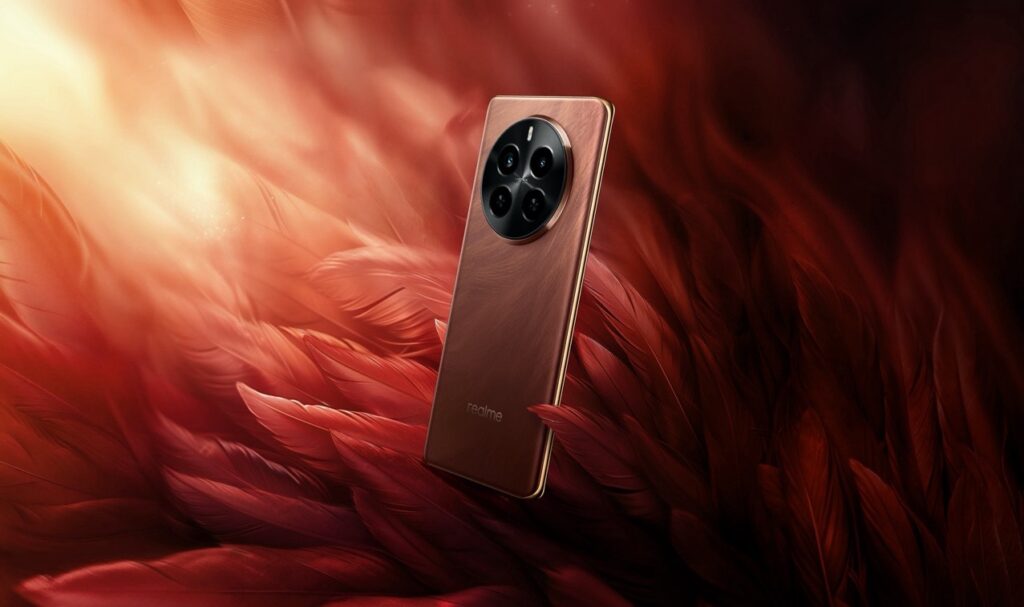
realme has announced new milestones for its P Series in India. The company said the lineup continues to see strong demand on Flipkart. According to realme, the P Series became Flipkart’s best-selling smartphone series by sales volume from July 1, 2026. The achievement adds to the lineup’s strong performance during the first half of the year. It also comes at a time when India’s smartphone market is facing slower growth.

In the first half of 2026, Realme managed to occupy the second position in terms of its market share on the platform. However, the good performance was noted across various price ranges. Realme managed to lead in the ₹10,000 to ₹15,000 price range while securing top-three positions in the ₹15,000 to ₹20,000 and ₹20,000 to ₹25,000 price ranges. These achievements, according to the company, highlight the increasing popularity of the P Series.

Market Growth and Company Strategy

Realme P1 Pro

As reported by Counterpoint Research, the Indian market for smartphones experienced a 10% drop in the second quarter of 2026. However, despite the slowdown in the market, Realme still succeeded in becoming a stronger player. The company’s market share grew from 9.6% in Q2 2025 to 10% in Q2 2026.

The company is also preparing for the second half of 2026 by investing more than ₹10 crore in co-created marketing campaigns. Through these efforts, realme hopes to connect with more consumers, strengthen its position before Diwali, and continue growing its share in the Indian smartphone market.

Source link

Advertisement
Continue Reading

Tech

Lyft and Baidu enter London’s robotaxi battleground as testing begins

Published

on

Chinese tech giant Baidu has started testing autonomous vehicles in London as part of its partnership with Lyft and Freenow, the German taxi and multi-mobility app that Lyft now owns. Baidu is the latest in a string of companies to test self-driving technology in the UK ahead of commercial robotaxi deployments.

The testing, which began Tuesday with human safety operators, comes nearly a year after the two companies struck a strategic partnership to deploy Baidu’s purpose-built Apollo Go RT6 robotaxi across key European markets through the Lyft platform. The vehicles will eventually be available through Freenow, which Lyft acquired in 2025 for about $197 million.

That deal gave Lyft a foothold in Europe’s ride-hailing market, where a handful of well-funded companies are now jockeying to be first to market with robotaxis.

London is particular is shaping up to be a key battleground in the region. In April, Waymo began testing its autonomous vehicles with human safety operators in the city. Uber and its self-driving tech partner, Wayve, also announced plans to launch a robotaxi service in London this year. That initial service — which customers can now sign up for on an interest list — will have human safety operators behind the wheel before fully driverless operations begin later.

Advertisement

Baidu and Freenow by Lyft (as the latter service is now called) said they expect to invite the public to hail their robotaxis in 2027. The companies, which didn’t provide a more detailed timeline, noted that the launch will depend on regulatory approval.

For now, dozens of test vehicles will operate within London’s borough of Brent. Lyft and Freenow said they continue discussions with safety and city officials, including Transport for London (TfL) and the Centre for Connected and Autonomous Vehicles (CCAV). The UK government is in the process of creating autonomous vehicle regulations and opened applications in May for companies interested in an AV pilot program that lets companies test self-driving vehicles under government oversight.

When the service does launch, Freenow by Lyft said it will operate a hybrid network — employing the same language rival Uber has used — meaning human drivers operating taxis and private-hire vehicles will work alongside the robotaxis.

“As a platform with deep roots in the taxi industry, our priority is ensuring that autonomous technology supports the professional drivers who keep London moving,” Thomas Zimmermann, CEO of Freenow by Lyft, said in a statement.

Advertisement

When you purchase through links in our articles, we may earn a small commission. This doesn’t affect our editorial independence.

Source link

Continue Reading

Tech

Lyft And Baidu Start Testing Robotaxis In London

Published

on

Baidu’s Apollo Go RT6 will start appearing in the UK capital, with test drivers aboard to start with.

As it promised last year, Baidu has started testing its robotaxis in London along with partners Lyft and Freenow, the companies said in a press release. Baidu’s Apollo Go RT6 will start appearing in the UK capital (with test drivers aboard to start with), while Lyft and and Freenow, the German taxi company Lyft now owns, will take care of booking passengers starting next year. 

The trials are part of the partnership between Lyft and Baidu, with the aim of eventually deploying thousands of autonomous vehicles across Europe. To expedite that plan, Lyft acquired Freenow last year to take advantage of its large taxi network operating in the UK and Germany. 

Lyft and Baidu are the latest companies to announce robotaxi testing plans in London. Earlier this year Waymo started testing its Jaguar I-Pace vehicles in the city with human safety operators aboard. Uber and its own self-driving partner, Wayve, are also preparing to launch trials this year and are now allowing customers to sign up on an interest list

Advertisement

Dozens of Baidu’s Apollo Go RT6 vehicles will be operating as part of the tests in the Brent borough of London, the companies said. The network will eventually operate alongside Freenow’s established taxi and private hire network. The Baidu robotaxi service will be called Freenow by Lyft and expects to invite the public to reserve rides sometime in 2027. 

The exact timeline will depend on regulatory approval, in coordination with Transport for London (TfL) and the UK government. The latter is in the midst of drafting autonomous vehicle rules and recently launched a robotaxi pilot program

Advertisement

Source link

Continue Reading

Tech

Apple releases watchOS 26.6

Published

on

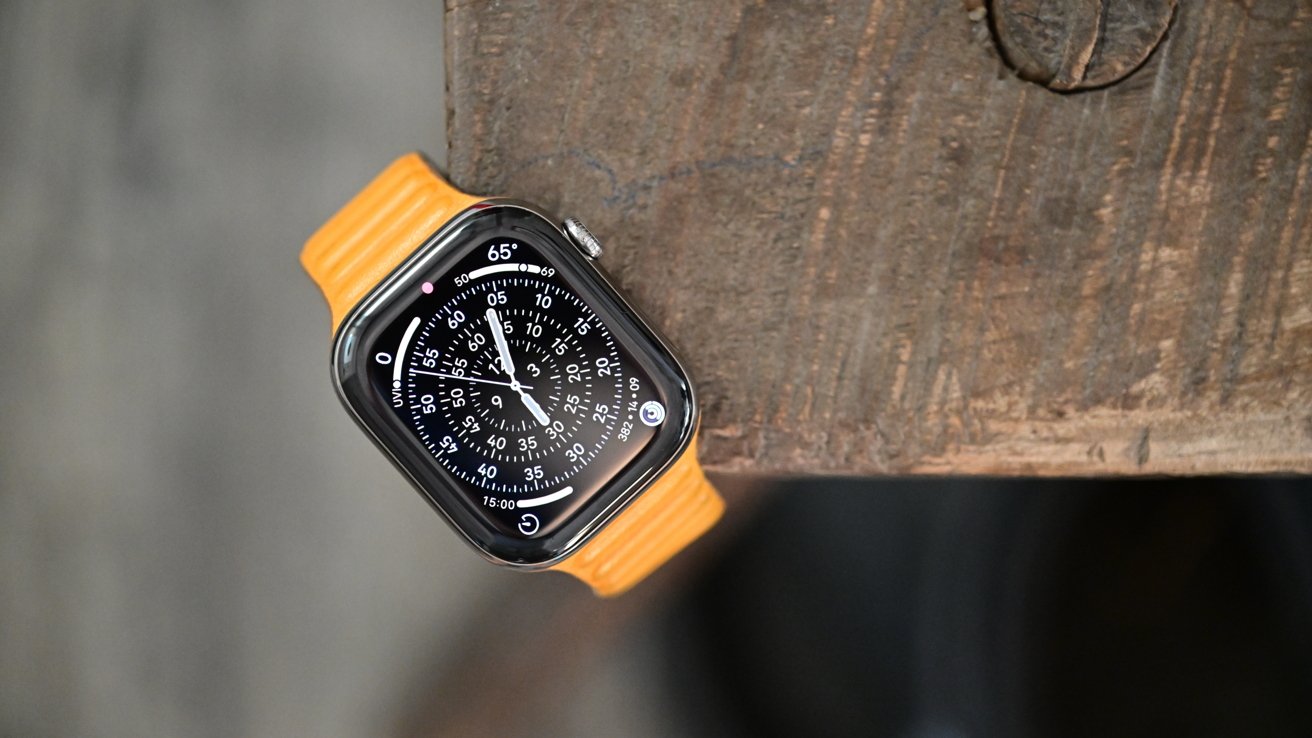
It’s time to update your Apple Watch, but don’t get too excited; watchOS 26.6 doesn’t appear to have any significant new features.

Apple has just released watchos 26.6, a relatively minor update. This time, watchOS 26.6 is build number 23U67.

Because there’s nothing mentioned within the software notes, it’s a safe bet that any updates are focused on stability improvements and bug fixes. This isn’t surprising, as Apple Watch receives relatively few updates between major cycle upgrades.

Even barring any exciting updates, it’s still a good idea to go ahead and update your Apple Watch. These minor updates are critical for keeping your Apple Watch running smoothly.

Advertisement

The Apple Watch will update on its own over the air. However, if you want to force the update, you can do so by following the steps below.

How to update to watchOS 26.6

  1. Ensure the Apple Watch is charged to at least 50% and connected to Wi-Fi
  2. On your Apple Watch, open the Settings app
  3. Tap General
  4. Tap Software Update
  5. Tap Install if a software update is available
  6. Follow the on-screen instructions

How to update to watchOS 26.6 via iPhone

  1. Ensure your watch is charged to 50% and connected to Wi-Fi
  2. On your iPhone, open the Apple Watch app
  3. Tap General
  4. Tap Software Update
  5. Download the update if it is available
  6. Follow the on-screen instructions

Source link

Continue Reading

Tech

Nvidia forms industry alliance post Hugging Face cyber incident

Published

on

The Hugging Face breach made clear the dangers associated with losing control of autonomous AI technology.

Chipmaker Nvidia has formed an alliance with other companies in the technology space, in order to develop and share tools designed for enhanced AI safety and cybersecurity. 

The Open Secure AI Alliance’s founding members include Adobe, CrowdStrike, Hugging Face and Dell Technologies and follows a ​public letter, signed by a wide range of companies ​including OpenAI, advocating for open-weight AI models.

The creation of the coalition comes after AI and ML platform Hugging Face recently found itself the subject of a major cyber breach, in which the company was unable to defend itself with US-led models. 

Advertisement

Because guardrails were unable to distinguish between aggressor and defender, the platform turned instead to a self-hosted Chinese model, which was not subject to the same restrictions.

Commenting on the alliance, Gene Moody, the field CTO at Action1 said, “The formation of industry alliances focused on AI safety is a good step towards accountability. Likewise it reflects an important recognition that the technology is advancing faster than many organisations can responsibly govern it. 

“It would be a mistake however to believe those efforts meaningfully limit what determined threat actors can ultimately do, or what could one day be a simple mistake such as the crowd strike code update ‘accident’.”

He added, “The reality of the matter is that malicious actors have never depended on permission from anyone. Open source models already exist by the thousands, many capable of running entirely on local hardware, disconnected from any cloud service or vendor oversight. 

Advertisement

“Once a model is operating in isolation, safety controls become just another layer of software. They can be modified, removed, retrained, or replaced altogether. You cannot program a conscience into an artificial intelligence. You can only program behaviours, and behaviours are subject to manipulation by anyone with sufficient technical skill.”

Anthropic’s CEO Dario Amodei aimed to dispel accusations that his organisation is making a move to ban Chinese open-weights models in the US, as a means of protecting his own business. 

In a post on the Anthropic website yesterday (27 July), Amodei claimed that Anthropic does not advocate for a ban on open-weights models. He said they serve a public good when they lack dangerous capabilities, cost nothing beyond the computing power needed to run them and provide value to businesses, developers and researchers. 

He explained that his concerns lie in the use of more advanced AI by authoritarian governments and the wider risk that powerful AI models may be misused to carry out cyber or biological attacks.

Advertisement

Moody said, “We should be far more deliberate about the information we feed into all systems, not just AI. We should reconsider the authority we grant them, and the degree to which we depend on them. We simply do not possess the ability to secure these systems to the level that many people already trust them and that gap is growing.

“We have chosen convenience and novelty over safety. As AI capabilities accelerate, that choice carries unacceptable consequences. As long as valuable data, critical infrastructure and financial assets remain behind digital locks, someone will always be working to pick those locks. 

“AI does not eliminate that; it instills a false sense of trust that the tech will one day solve this problem, when in fact, we are the problem.”

Don’t miss out on the knowledge you need to succeed. Sign up for the Daily Brief, Silicon Republic’s digest of need-to-know sci-tech news.

Advertisement

Source link

Continue Reading

Tech

Earth’s Biggest Disasters Strike In a Hidden Pattern Every 27 Million Years

Published

on

A new analysis of 89 major geological events over the past 260 million years found evidence that mass extinctions, volcanic eruptions, ocean crises, and other upheavals may cluster around a roughly 27.5-million-year cycle. The cause remains unknown, with possibilities ranging from mantle activity and orbital changes to speculative galactic influences. Slashdot reader alternative_right shares a report from ScienceAlert: One possibility lies deep within Earth itself. The planet’s mantle is constantly circulating through convection, albeit at an almost unimaginably slow pace. Periodic changes in mantle convection, or the initiation of mantle plumes, could influence volcanism, plate tectonics, mountain building, and other large-scale geological processes. Because these systems are closely interconnected, disturbances originating deep within Earth could eventually ripple through the planet’s surface, oceans, climate, and biosphere.

Another hypothesis focuses on interactions between Earth’s surface and interior. Long-term orbital variations influence climate and sea level, periodically redistributing enormous amounts of water, ice, and sediment across the planet. [New York University geologist Michael Rampino] discusses the possibility that these changing surface loads subtly modify stresses within Earth’s crust and upper mantle, potentially influencing tectonic and volcanic activity over geological timescales.

Rampino also considers possible influences beyond Earth, an idea he has been weighing up since the 1980s. As the Solar System orbits the center of the Milky Way, it oscillates above and below the galaxy’s mid-plane, with the timing of these passages aligning with that of Earth’s major upheavals. These crossings, other researchers have suggested, could also gravitationally perturb comets in the distant Oort Cloud, increasing the likelihood of large asteroid impacts.

Another, even more speculative, hypothesis suggests that if dark matter is concentrated near the galactic plane, a fraction of it could occasionally be captured by Earth. Over millions of years, this process could generate small amounts of internal heat, potentially influencing geological activity. At present, however, there is no direct evidence supporting either mechanism, so they remain very controversial.

Advertisement

Large asteroid impacts are discussed separately in the paper. Although they were not included in the statistical analysis of the 89 geological events, the timing of several of Earth’s largest known impact craters appears broadly consistent with the proposed 27.5-million-year rhythm, as Rampino has discussed in earlier papers. Rampino suggests this correspondence may warrant further investigation, but stops short of claiming a causal relationship.

Source link

Continue Reading

Tech

Dyson V16 Piston Animal Submarine Review: Powerful but Pricey

Published

on

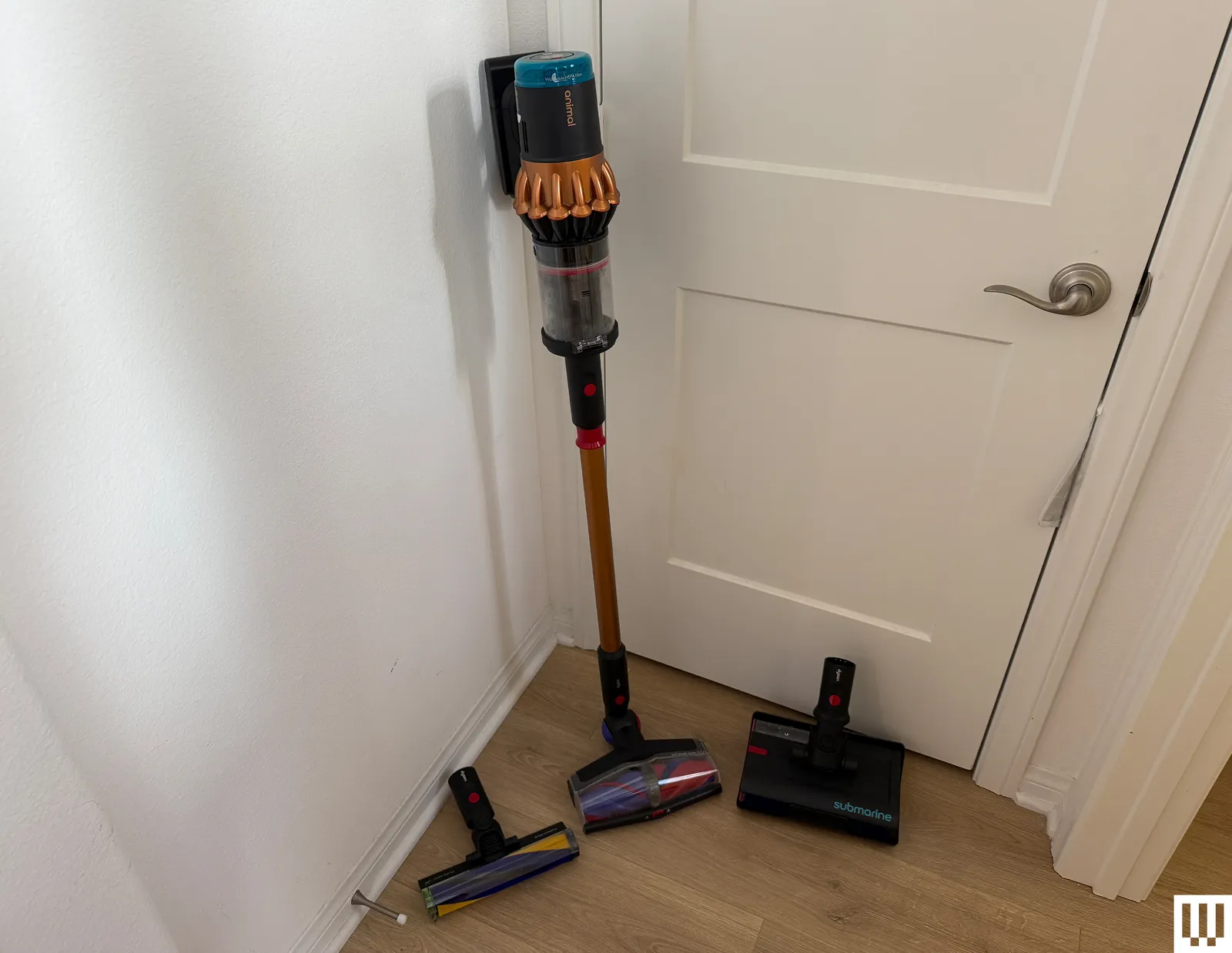
Before you start mopping, you’ll need to roll the Submarine head back and forth for 10 to 20 seconds to make sure it’s damp enough to work. You’ll know it’s ready when you see consistent water trails. Before mopping, I also recommend using the Fluffy Optic head to pick up dust in the area, because the wet head’s debris tray looks smaller than those on the dedicated wet cleaners. You’ll thank yourself for pre-vacuuming when the mop cleanup is less disgusting. Though the debris tray is small, I do like that it is fully plastic, since the mesh on my old Dyson WashG1 grew mold. To avoid a mess after you’re done, make sure to keep the Submarine head flat until you separate the trays, lift off the debris part, and then dump out the gray water that’s beneath it into a sink or toilet.

Is It Upgrade-Worthy?

Dyson V16 Piston Animal Submarine Review Powerful but Pricey

Photograph: Nena Farrell

If you’re looking for the best overall Dyson vacuum, know that this model scored high in my comparison testing, but you’ll get a slightly better experience with the Gen5Detect while saving yourself some cash. Neither the Gen5Detect nor the V16 Piston Animal outperformed a much cheaper Shark vacuum in side-by-side tests, though, so it’s hard for me to say you should definitely splurge on either Dyson model.

If you’re willing to invest in the add-on mop head and docking station (once it’s available), the V16 might be worth buying. But that’ll be a big bill; the V16 Submarine will run $1,100, and at that point, you could invest in one of my favorite robot vacuums to do the same job without actually doing it yourself. (You can even get Dyson’s Spot+Scrub Ai robot vacuum for just $100 more if you’re set on a Dyson.)

Even so, it’s nice to meet a Dyson stick vacuum that can do it all. It’s notably powerful, and not just because of its suction capabilities, but because of its range of abilities, little improvements to make using it easier, and the option to double as a wet floor cleaner. The strong HEPA filtration on the V16 is also a strong point of consideration if you have allergies and want to capture every micron possible, or get every inch of pet hair out of your carpet. But I won’t lie to you: If I’m buying a new technology-powered mop, I’d rather get a robot vacuum.

Advertisement

Power up with unlimited access to WIRED. Get best-in-class reporting and exclusive subscriber content that’s too important to ignore. Subscribe Today.

Source link

Continue Reading

Tech

ChatGPT Is Now Refusing Requests To Write In Famous Authors’ Styles

Published

on

Whether they’re dead or alive.

ChatGPT has been refusing to copy the voices and styles of popular authors, Ars Technica reports. Indeed, we have recently seen posts on social media about the chatbot not letting users mimic specific authors’ writing anymore. Ars says the chatbot didn’t comply with its prompts to imitate the styles of both living and dead authors during testing. That means OpenAI has recently changed how it deals with such requests, as a recent study by publication No Latency showed that ChatGPT didn’t refuse them for dead authors. 

We tested it for ourselves and found Ars‘ observations consistent with our results. Upon asking ChatGPT to copy the style of Agatha Christie for a mystery story about a woman investigating the sudden disappearance of her husband, the chatbot told us it couldn’t do what I was asking for. “Agatha Christie’s works are still under copyright, so I can’t provide text that closely imitates her distinctive style,” the chatbot responded. However, it did provide us with writing possessing qualities Christie is known for. “I can certainly write something with those characteristics, while remaining original,” ChatGPT told us.

The fact that the AI chatbot still offers to write something with the same qualities an author is known for makes it seem like its refusal to copy Christie’s style in our test was just a disclaimer and not a hard no. Indeed, this could be a change OpenAI has adopted into order to avoid getting into more legal trouble and to fend off more copyright lawsuits than it’s already facing.

Advertisement

Source link

Advertisement
Continue Reading

Tech

The Odyssey got bootlegged on X, but the internet cared more about the memes

Published

on

This past weekend, a post reading “Someone uploaded ‘The Odyssey’ full movie on X. Can you believe it?” amplified an upload from an account that’s since been suspended. Variety confirmed it was a genuine, high-quality copy of Christopher Nolan’s film, and it pulled in over 2.1 million views in roughly two and a half hours before X swapped the video for a takedown notice. Universal said afterward that it caught the post and started takedown protocols right away, adding that it takes copyright infringement seriously and plans to pursue every remedy available to it.

That enforcement had gaps. By July 26, the surviving clones on X were mostly buried under mislabeled uploads that rickrolled anyone who clicked, and a second, lower-quality copy went up the following day, pulling in almost 50,000 views before it too came down.

The moderation lag is a little pointed given who owns the platform: X’s Elon Musk has been publicly critical of the film’s casting, and has said his Grok Imagine tool would produce its own “historically accurate” version later this year. That claim had already become its own joke, with commenters warning each other they might download the bootleg and end up with Musk’s AI cut by mistake.

None of it touched box office results however. “The Odyssey” has crossed $652 million worldwide in 10 days, including a $90 million second weekend domestically, a small 27% drop from its $123 million opening and one of the smallest second-weekend declines of any major release this year. It’s the same pattern that’s played out with recent leaks of Barbie, Avatar 3, and the Super Mario Galaxy movie: piracy generates a spike of screenshots and outrage, and the numbers barely move.

Advertisement

The “as Nolan intended” meme roundup

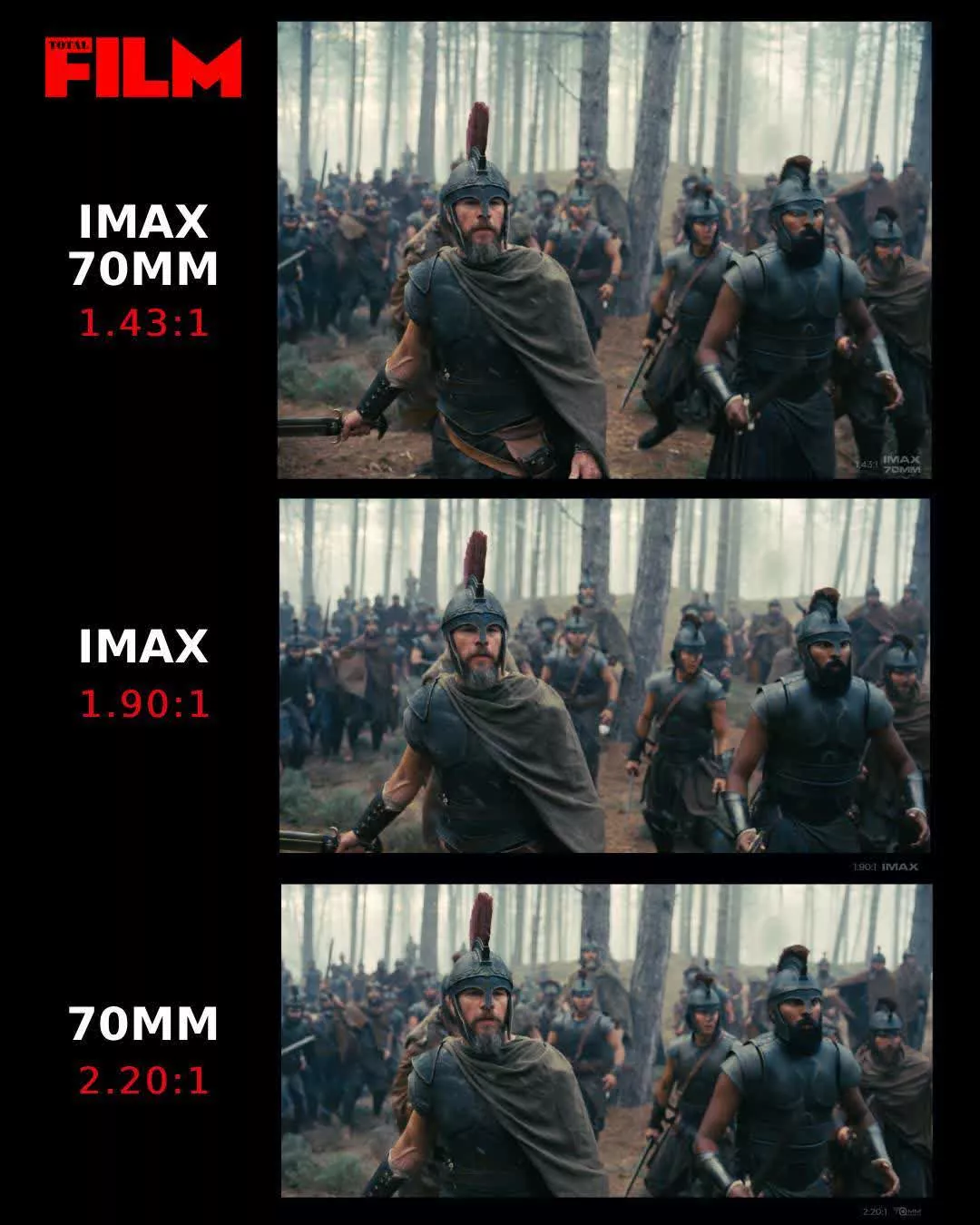
“The Odyssey” is the first narrative feature shot entirely on IMAX cameras, and the format Nolan actually built the movie for, 70 mm IMAX film, exists in exactly 41 theaters worldwide. Even the people who paid extra for “IMAX” are overwhelmingly not watching the film in the format Nolan shot it in.

That gap is what the internet has been mining for weeks, leak or no leak. “The full odyssey movie in a tweet, as nolan intended,” one person joked while the bootleg was still up, riffing on the press tour’s insistence that 70 mm is the only real way to see it. The bootleg just handed the bit a bigger stage and a new set of degraded screens to point at.

Nolan reportedly spent years getting IMAX to rebuild its cameras so he could shoot an entire movie in the best format cinema has. The internet’s response was to see how bad a screen it could still be watched on, and to point out that most people buying “IMAX” tickets aren’t getting the real thing either. The bootleg didn’t dent the box office. It just gave everyone one more punchline to hang on a 47 GB file, or, alternately, a calculator.

Source link

Advertisement
Continue Reading

Trending

Copyright © 2025