That does not mean every networked audio system suddenly becomes ART-capable. The Dirac Live Processor can serve as the software hub for compatible playback systems with the appropriate licenses, and a properly measured speaker configuration. For listeners already using a PC or Mac at the center of a serious audio system, however, it creates a far more flexible path to Dirac’s most advanced low-frequency and room-acoustics tools.
What Is the Dirac Live Processor and Who Is It For?
The Dirac Live Processor is a virtual audio processor for PC and Mac that applies room correction to audio before it reaches the sound system. It gives listeners a way to measure and optimize room and system performance using software and the computer they already own, including with audio systems where Dirac Live is not built in.
With continued support for VST, VST3, AAX, and AU plug-in formats, the Dirac Live Processor can also be used with compatible DAWs (digital audio workstations) and media players as part of an existing computer-based playback setup, including studio systems.
The Dirac Live Processor incorporates Dirac Live Room Correction, Dirac Live Bass Control, and Dirac Live Active Room Treatment. Together, these technologies establish the Dirac Live Processor as Dirac’s PC and Mac platform, giving listeners a single place to access its full suite of room-acoustics tools.
Advertisement
“Active Room Treatment is the most advanced room acoustics work we’ve done, and Dirac Live Processor is how we bring it to PCs and Macs,” said Nilo CasimiroEricsson, Product Manager for Dirac Live. “Starting today, anyone can install it on their PC or Mac and hear the difference Dirac Live Active Room Treatment can make in their own sound system, in their own room.”
Dirac Live Room Correction analyzes how a room and speaker setup affect the interaction between sound and space, then applies corrections intended to improve timing, phase alignment, frequency response, imaging, and tonal balance.
Dirac Live Bass Control optimizes low-frequency performance across speakers and subwoofers, aiming to deliver smoother, more consistent bass throughout the listening space.
With the addition of Active Room Treatment, the Dirac Live Processor supports Dirac’s complete approach to room acoustics management. Active Room Treatment builds on Dirac Live Room Correction by using the full speaker array as a coordinated acoustic system, actively helping control room resonances and sound decay to deliver a cleaner, more controlled soundstage with greater clarity, detail, and focus.
Advertisement
Over the past 12 months, Dirac has expanded access to Dirac Live Active Room Treatment through a growing range of home-audio collaborations and integrations with brands including AudioControl, Denon, Marantz, miniDSP, Monoprice, and StormAudio.
The Dirac Live Processor extends that access to PC and Mac users who want a software-based approach to room-acoustics optimization, without requiring their AVR, preamplifier, or other system component to have Dirac technology built in. Setup begins by connecting a measurement microphone to the computer. The software then guides users through the room-measurement process, analyzes room and system behavior, and creates filters tailored to the listening environment.
Advertisement. Scroll to continue reading.
“With Active Room Treatment now available, Dirac Live Processor becomes a powerful way to experience our most advanced room acoustics technology in any system,” continued Casimiro Ericsson.
Advertisement
Pro Tip: To use the Dirac Live Processor with an AVR or related component, the device and the PC or Mac running the software must be connected to the same network.
Dirac Live ART has quickly emerged as one of the more sophisticated room-acoustics solutions available to home-theater and two-channel listeners. With its addition to the newly renamed Dirac Live Processor, PC and Mac users can now access Dirac Live Room Correction, Dirac Live Bass Control, and Dirac Live Active Room Treatment from a single software platform.
Advertisement
Three Key Points
Dirac Live Room Correction Suite has been renamed Dirac Live Processor.
Dirac Live Active Room Treatment has been added to the Dirac Live Processor platform.
A PC or Mac can serve as the control and processing hub for Dirac Live in systems without Dirac built into the source hardware, although compatibility, licensing, and network requirements still apply.
There is no free lunch in acoustics, unfortunately. Unlike the basic room-correction systems bundled into many AVRs, Dirac Live Processor features require separate user licenses, with pricing dependent on the level of correction and bass-management capability required.
The Dirac Live Processor is aimed at serious computer-audio users, home-theater owners who may not have Dirac-compatible hardware (however, network connectivity is required), and studio or enthusiast listeners willing to measure their rooms rather than simply hope the sofa is in the right place.
When properly implemented, Room Correction, Bass Control, and ART can improve bass consistency, imaging, tonal balance, and overall clarity. Casual listeners may struggle to justify the added cost and setup, but for anyone trying to extract the full potential from a good loudspeaker system in a less-than-perfect room, it is a meaningful and potentially transformative tool.
Pricing & Availability
Active Room Treatment is available on the Dirac Live Processor starting June 30, 2026. Existing users of Dirac Live Room Correction Suite will automatically be transitioned to Dirac Live Processor together with their current licenses and settings. Licenses can be purchased with an optional 14-day free trial at www.dirac.com.
Dirac Live Room Correction – $349 (for Mono and Stereo) $499 (for Multichannel)
Dirac Live Bass Control – $299
Dirac Live Active Room Treatment – $299
Pro Tip: Dirac has a dedicated landing page for Dirac Live Processor licenses. During the launch period, this will be the main place to buy ART/DLP on the site. Going forward, Dirac Live Processor will be added to Dirac’s main device list when selecting a license, so that it shows up as an alternative alongside compatible hardware devices.
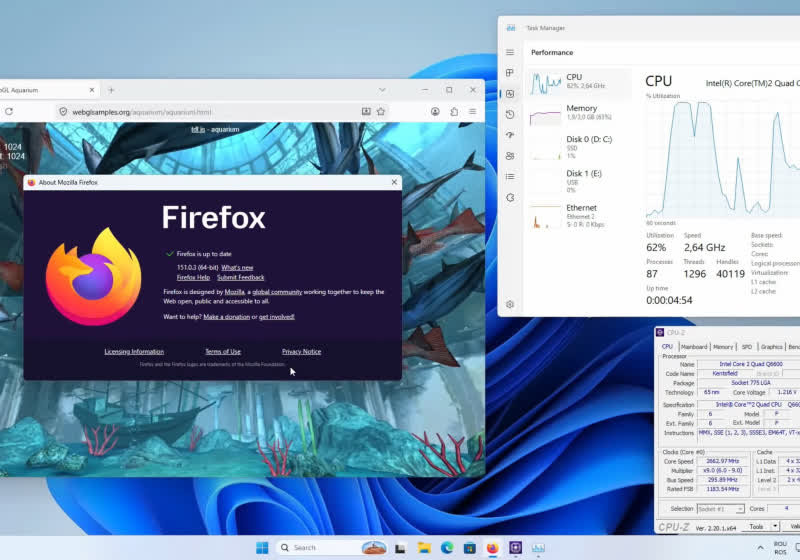
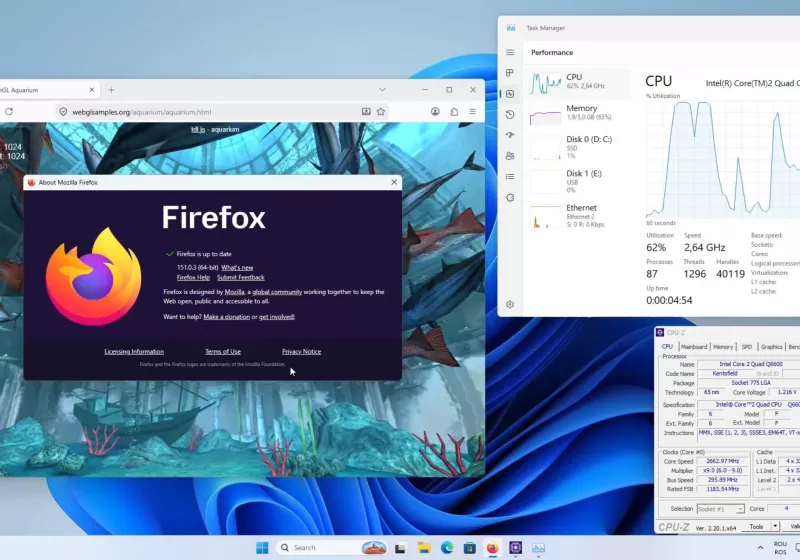
Can Windows 11 run on a 2003 motherboard, an AGP GPU (for those not old enough, that’s the slot that predates PCI Express) with no official drivers, and a slightly newer CPU rocking four 65nm cores? A retro-hardware enthusiast named Omores recently proved that it can, even as Microsoft would… Read Entire Article Source link
Laser diodes are convenient light sources, but for precise optical work their often-elliptical beam profile leaves something to be desired. One way to get around this is to couple the beam into a single-mode optical fiber, which then emits a circular Gaussian beam from the other end. For more advanced experiments, therefore, [Diffraction Limited] built this fiber-coupled laser source.
The simplest approach is to place the fiber directly against a light source, but this results in most of the light missing the three-micron fiber core. Optical fibers have an acceptance cone, and only light approaching from within this cone is coupled into the fiber. The design therefore uses an aspheric lens to focus light from the laser diode down to a tiny point matching the diameter of the fiber core, creating a cone of incoming light narrower than the acceptance cone.
The body of the laser source was CNC machined out of brass, with the laser-diode press-fit in one end. The lens stands in front of the diode, and was glued in place so that its focal point was just above the end of a mounting pin for the glass fiber. Positioning and fixing the fiber in place was the biggest challenge; [Diffraction Limited] could use the micro-manipulator from a previous video to position the fiber, but the UV-set glue used to fix it in place shrinks during curing, pulling it out of position. To deal with this, two set screws under the mounting pin allowed its position to be adjusted slightly after gluing. As expected, adhesive shrinkage meant that the completed source initially produced no light, but after the set screws were adjusted, the beam appeared.
Advertisement
For more on fiber-coupled lasers, check out [Les Wright]’s work. If you don’t have access to an aspheric lens, an anti-bumping bead could be a reasonable alternative.
Flock Safety is squarely at the center of that debate. The Atlanta-based company has rapidly expanded by selling automated license plate readers to police departments, neighborhood groups, and private organizations. Its cameras, often mounted inconspicuously on poles, capture images of passing vehicles and convert them into searchable data points. The… Read Entire Article Source link
Qualcomm is finally getting serious about AI infrastructure, but its push into the datacenter hinges on the success of an ambitious near-memory compute architecture designed to deliver better inference economics than today’s GPUs.
Announced during its 2026 investor day last week, the tech will see Qualcomm stack layer upon layer of DRAM on top of its XPUs to form a single unified compute and memory module it’s calling high-bandwidth compute (HBC).
“We offer all of the performance advantages of SRAM, but with the density and the memory capacity that HBM (high-bandwidth memory) stacks offer,” Tony Pialis, Qualcomm’s EVP of datacenter, claimed during last week’s investor presentation.
This technology is set to launch next year as part of Qualcomm’s AI250-series of Dragonfly rack systems, and marks a distinct shift in Qualcomm’s AI infrastructure strategy. The handset giant is no stranger to AI accelerators. Essentially every Snapdragon processor sold today ships with an NPU on board. But in the datacenter, the company has struggled to garner the same excitement as Nvidia, AMD, and even startups like Cerebras.
Advertisement
Compared to the big two’s GPUs, Qualcomm’s AI-series accelerators haven’t compared that favorably, but that could soon change as the company looks to make its mark on the datacenter.
With the AI250, the SoC maker is claiming 768 GB of memory capacity and up to 133 TB/s ofeffective memory bandwidth per card. For reference, Nvidia’s Groq 3 LPUs offer just 500 MB of SRAM and 150 TB/s of bandwidth.
If that seems too good to be true, that’s because it is. Qualcomm is leaning heavily on the word “effective.” We know that because for the AI200-based Dragonfly systems rolling out this year, they claimed 414 TB/s of “effective” memory bandwidth across all 56 chips. On its face, that seems more realistic, but actually achieving that with 8800 MT/s LPDDR5x alone would require a 6,720-bit-wide bus, which it almost certainly does not possess.
Qualcomm insists that this is the “pure physical bandwidth of the LPDDR interface,” but declined to offer any specifics as to how it’s somehow managed to achieve what Nvidia needed eight HBM3e stacks to do.
Advertisement
In any case, according to Qualcomm’s marketing materials, with the move to HBC, the AI250 will offer 18x the effective bandwidth of the AI200, while the forthcoming AI300 will deliver 54x the bandwidth. Given the context, these seem like outlandish claims, but these “effective” multipliers are really a feature of Qualcomm’s HBC architecture.
Unpacking high-bandwidth compute
Amplifying “effective” bandwidth isn’t the only party trick from these HBC-based accelerators. Qualcomm claims that by moving some of the XPU’s compute under the DRAM, it can significantly reduce the amount of power its chips consume.
On a conventional datacenter GPU, data is rapidly shuffled between HBM and the compute dies. Even using advanced packaging technologies like TSMC’s CoWoS, the power required to move this data back and forth is significant.
Qualcomm’s investor-day graphic highlights its high-bandwidth compute architecture for future AI datacenter systems. Image courtesy of QualcommImage courtesy of Qualcomm
By stacking the DRAM directly on top of some of the logic and connecting them using through-silicon vias (TSVs), the path from compute to memory is shortened considerably.
Advertisement
“Imagine working in the same building that you live in so you only travel up and down,” Pialis said. “What does that mean for the highways and the roads that connect the suburbs to the city? Guess what? The roads are clear. The value this brings to the industry is lower power consumption, less heat, and that expensive road of silicon interposer that HBM solutions use is no longer needed.”
Performing bandwidth-bound operations on the base die also has the benefit of reducing the amount of data that needs to be shuttled to and from the HBC to the SoC. In effect, memory bandwidth is amplified. This is why Qualcomm is using “effective bandwidth” so liberally.
Compared to doing all of that work on a conventional GPU or XPU with distinct HBM and compute dies, the effective bandwidth would be significantly higher, which also achieves better density than SRAM-only designs, like Nvidia’s LPUs or Cerebras’ dinner plate sized accelerators.
With that said, Qualcomm probably won’t be running its entire AI software stack on HBC. Higher memory bandwidth primarily benefits decode, when the entirety of the model’s active weights are streamed autoregressively from memory one token after another.
Advertisement
Decode isn’t particularly compute-intensive. As such, doing decode partially or entirely in HBC starts to make a lot of sense because it also avoids the thermal constraints associated with burying the compute under multiple layers of DRAM.
Qualcomm tells us that the AI250 can be used as a standalone AI accelerator, but notes it is heavily optimized around addressing bandwidth bottlenecks. So, in addition to being a dedicated inference chip, it can be used in disaggregated inference architectures that use GPUs or other Qualcomm parts for prompt processing and the AI250 to speed up memory intensive decode operations.
Peak FLOPS are notably missing from Qualcomm’s AI250 disclosures — the company declined to share specifics upon our request.
Is HBC actually a competitive advantage?
While Qualcomm is early among chip designers to make a fuss about near-memory or HBC, it’s not the first, nor is the technology beyond the means of Nvidia or AMD.
Advertisement
In fact, both Nvidia and AMD are rumored to be working with HBM suppliers and TSMC to develop custom base dies to boost the performance of their next-gen chips, though it’s still not clear how much, if any, compute has been integrated into them.
Qualcomm tells us its HBC “uses LPDDR memory in a purpose-built near-memory computing architecture that combines compute and highly-accelerated memory bandwidth within a 3D-stacked silicon design. While both HBC and HBM use stacked-memory concepts, HBC is a distinct architecture designed to address AI’s data-movement bottleneck by bringing compute and memory closer together, increasing memory bandwidth efficiency and improving energy efficiency for AI inference workloads. HBM has more stacks of DRAM, uses 2.5D interposer to route more wires, and does not do computing in the base logic die.”
AI chip startup d-Matrix is also developing accelerators that will use 3D stacked DRAM to extend their in-memory compute capabilities.
The underlying technology described by Pialis may not be as unique as Qualcomm would like investors to believe, but it shows the company hasn’t missed the boat.
Advertisement
However, Qualcomm’s ability to work with Nvidia and AMD may end up doing more to sell customers on its tech than anything. As we previously wrote, in a disaggregated AI world, Nvidia can be both a friend and an enemy.
Qualcomm finds its Mojo
In addition to teasing its upcoming AI250 and AI300 accelerators, Qualcomm’s investor day also coincided with the acquisition of AI software startup Modular.
Modular was founded by Tim Davis and Chris Lattner, the latter of whom you may recognize as the creator of LLVM, Clang, the Swift programming language, and the multi-level intermediate representation (MLIR) compiler infrastructure.
At Modular, Lattner and crew developed Mojo, a low-level programming interface for GPUs, which offered a high-performance alternative to Nvidia’s CUDA or AMD’s HIP and ROCm stacks. The big idea is that users should be able to write highly performant AI apps that’ll run regardless of the underlying hardware.
Advertisement
For Qualcomm, Mojo presents an opportunity to sidestep the CUDA moat, which has dogged AMD for so long. With Mojo, Qualcomm’s customers won’t need to choose one platform; they can develop their apps and run them on whatever compute is handy at the time.
It’s not all or nothing either. Modular should help to support heterogeneous deployments similar to what Nvidia is doing with Groq’s LPU tech, where GPUs might be used for prefill and AI250s are used for decode in whatever ratio makes the most sense for that specific application.
However, the acquisition doesn’t just buy Qualcomm a vendor-neutral programming model. The folks buying these systems are primarily concerned with one AI workload in particular: LLM model serving. For this, Modular developed a serving platform called Max. Max is a bit like SGLang or vLLM in that it’ll run interchangeably on AMD or Nvidia hardware, but because it’s built atop Mojo, it, at least in theory, shouldn’t require nearly as much hand tuning.
The offering should help Qualcomm compete in a landscape where software has become even more important than the hardware it runs on, if it manages to close the acquisition this year without regulators stepping in.
Advertisement
In any case, we won’t have to wait much longer to see the HBC in action. After launching its AI200-series racks later this year, Qualcomm plans to push its first-gen HBC-based AI250 out the door beginning in 2027, while its second-gen HBC platform is slated for 2028.
While you wait, why not read up on Qualcomm’s new datacenter CPU, which we explored in more detail last week. ®
Law enforcement officials in Illinois recently recovered two trailers carrying an estimated $1.3 million worth of data center equipment at a truck yard in the Chicago metro area. Investigators with the Cook County Sheriff’s Office opened their investigation after being tipped off on June 18 about a trailer holding roughly… Read Entire Article Source link
“To return to flight this year, we’re not rebuilding the same pad,” Blue Origin CEO Dave Limp said in an online update. Instead, the company will move ahead with a plan that it already had been working on for Cape Canaveral Space Force Station’s Launch Complex 36.
The concept of operations, or ConOps in rocket lingo, calls for a hybrid horizontal/vertical configuration for launch preparations. Blue Origin had already planned to employ the hybrid system for a second pad that’s currently in development for its super-sized 9×4 New Glenn rocket. Now the system will be used for the old pad as well as the new one, “creating a common ConOps across two pads,” Limp said.
In a post to X, Limp said the plan “has the added benefit of increasing our flight cadence.”
We're not rebuilding the same pad for New Glenn. We're moving to a horizontal/vertical hybrid configuration to get us flying again this year at 36A. We were already working on something similar for 9×4 at 36B. Let me explain what that means. We mate the stages horizontally in… pic.twitter.com/5I0f8GEojs
The explosion on May 28, which took place while Blue Origin was preparing its New Glenn rocket to launch 48 satellites for the Amazon Leo constellation, dealt a heavy blow to Blue Origin’s launch plans. The Federal Aviation Administration called a halt to launches until Blue Origin traced the cause of the blast and took corrective actions.
In today’s update, Limp said “early analysis points to the aft section of the first stage” as the source of the anomaly. He voiced confidence that the root cause would be found and fixed.
He said the blast destroyed the pad’s lightning tower, transporter-erector and hydraulic cylinders, “but we caught a lot of breaks, too, and intend to make the most of them.”
Limp reported that the launch complex’s Integration Facility, tank farm, vehicle access tower and water tower were all in good shape, and that reconstruction of the pad has started. Blue Origin has moved three New Glenn upper stages and a twice-flown booster nicknamed “Never Tell Me the Odds” out of the Integration Facility as part of the pad cleanup process, he said.
Limp said Blue Origin is “continuing to build vehicles at rate in our world-class manufacturing facilities, maintaining flight readiness, and preparing to come back stronger than before.”
“Our road to space doesn’t pause here. We will return to flight by the end of this year,” he wrote. “It’s worth it.”
Co-hosts Mexico will aim to end their 40-year wait to win a World Cup knockout match when they face Ecuador in Mexico City, and you can live stream the game around the world for free.
Javier Aguirre’s men arrive in the last 32 of the FIFA World Cup 2026 high on confidence, after topping Group A with three wins from three. Yet the first knockout round has proved an insurmountable hurdle for El Tri for four decades, having fallen at that stage at seven successive World Cups from 1994 to 2018 and not making it out of the group in 2022. The only other time they’ve won a knockout game? In 1986, when they last hosted. Mexico are yet to concede this tournament and another clean sheet from Cesar Montes & Co would go a long way to helping them claim a milestone victory in front of the passionate home crowd at the Estadio Azteca.
Ecuador will hope a 2-1 victory over Germany in their final Group E game proves a sliding doors moment. Sebastian Beccacece’s dark horses arrived at the World Cup on a 19-match unbeaten run, but took only one point from their first two group fixtures. Just 13 minutes from time against the Germans, up popped Gonzalo Plata to send his country into the last 32 as one of the best third-place teams. La Tri, who have never won a World Cup knockout fixture, will be desperate to make the most of their lifeline. PSG’s Willian Pacho and Arsenal defender Piero Hincapie will continue at the back.
Advertisement
The winner will return to the Azteca to face England or DR Congo in the last 16.
So, read on as we show you exactly how to watch Mexico vs Ecuador for free from anywhere in the FIFA World Cup 2026.
How to watch Mexico vs Ecuador for free
Mexico vs Ecuador is available to watch for free in multiple countries, including the UK, Australia, Brazil, Belgium, Ireland, Netherlands, Switzerland and Turkey.
Advertisement
Abroad? Can’t access your free stream? Unblock your free World Cup stream with Norton VPN — more on that below.
Use a VPN to watch Mexico vs Ecuador live streams
It’s the World Cup, and if you’re traveling, you might discover your usual Mexico vs Ecuador stream is suddenly unavailable due to geo-restrictions.
Don’t worry, that’s exactly where a VPN can help. A virtual private network lets you connect to servers around the world so you can securely access your usual World Cup coverage as if you were back home.
Defenders: Jorge Sanchez (PAOK), Israel Reyes (Club America), Cesar Montes (Lokomotiv Moscow), Johan Vasquez (Genoa), Jesus Gallardo (Toluca), Mateo Chavez (AZ).
Midfielders: Erik Lira (Cruz Azul), Orbelin Pineda (AEK Athens), Alvaro Fidalgo (Real Betis), Roberto Alvarado, Brian Gutierrez, Luis Romo (Guadalajara), Edson Alvarez (West Ham), Obed Vargas (Atletico Madrid), Gilberto Mora (Tijuana), Luis Chavez (Dynamo Moscow).
Defenders: Piero Hincapie (Arsenal), Willian Pacho (Paris St-Germain), Pervis Estupinan (AC Milan), Felix Torres (Internacional), Joel Ordonez (Club Brugge), Jackson Porozo (Tijuana), Angelo Preciado (Atletico Mineiro).
Advertisement
Midfielders: Moises Caicedo (Chelsea), Alan Franco (Atletico Mineiro), Kendry Paez (River Plate, on loan from Chelsea), Pedro Vite (UNAM), Jordy Alcivar (Independiente del Valle), Denil Castillo (Midtjylland), Yaimar Medina (Genk).
Forwards: Enner Valencia (Pachuca), Kevin Rodriguez (Union Saint-Gilloise), Jordy Caicedo (Huracan), Nilson Angulo (Sunderland), Anthony Valencia (Antwerp), Jeremy Arevalo (Stuttgart).
Swipe to scroll horizontally
Mexico vs Ecuador: Road to the last-32
Stage
Mexico
Advertisement
Ecuador
Group stage
Group A: 1st, 9 points
Group E: 3rd, 4 points
Advertisement
Can I watch Mexico vs Ecuador on my mobile?
Of course, most broadcasters have streaming services that you can access through mobile apps or via your phone’s browser.
You can also stay up-to-date with all of the key World Cup moments on the official social media channels on X/Twitter (@FIFAWorldCup), Instagram (@FIFAWorldCup), TikTok (@FIFAWorldCup) and YouTube (@FIFA).
We test and review VPN services in the context of legal recreational uses. For example: 1. Accessing a service from another country (subject to the terms and conditions of that service). 2. Protecting your online security and strengthening your online privacy when abroad. We do not support or condone the illegal or malicious use of VPN services. Consuming pirated content that is paid-for is neither endorsed nor approved by Future Publishing.
California’s Protect Our Games Act, which would require publishers to warn players before shutting down paid online games and offer refunds or continued access, failed to advance after a state Senate committee vote. Four state senators voted in favor, three voted against, and four abstained. Engadget reports: The committee unanimously voted in favor of granting the bill reconsideration, meaning it could come back before this group of state senators. Assemblymember Chris Ward introduced the bill in February and it passed the California State Assembly 43-16 in late May. That said, the abstentions prevented the bill’s progression for now. “Not enough yeses means the bill stops here for this session,” a volunteer with the Stop Killing Games campaign (which supported the bill) noted on Reddit. “That is the loss.”
The volunteer also claimed this was the movement’s first attempt to nudge such legislation through in the U.S., and that the bill got this far without paid staff or an in-person lobbying campaign. They said the Entertainment Software Association — a trade organization of major game industry publishers — brought in a lobbyist to halt the bill’s progress (including by claiming private servers for the likes of Minecraft would be “illegal”) and that Stop Killing Games would be more prepared to counter that in the future.
“Next session, we come back with an in-person lobbying presence, the funding to do this properly and a long list of organizations and developers signed on in support,” the volunteer, u/Mr_Presidentle, wrote. “We are not limiting this to California. We intend to introduce versions of this in other state legislatures, and we are seriously looking at the federal level.”
The 2026 Workplace Trends Report highlights how companies, their leaders and employees are more selective in their expectations.
Morgan McKinley has published the results of its global 2026 Workplace Trends Report, which explores employee sentiment in comparison to evolving workplace expectations.
To gather the data, Morgan McKinley collected information from 2,799 globally dispersed respondents, representing a diverse cross-section of the workforce, as well as 214 employers and decision-makers. What was discovered is that there is somewhat of a disconnect between employee goals and the expectations of the employer.
The report found that globally, nearly half of employees are preparing to move jobs as their pay stalls and concerns over job security, restructuring and automation grow. Nearly 50pc of employees who contributed to the research said that they have serious plans to look for a new job in the next six months, despite 63pc of employers saying that they have no planned headcount reductions for 2026.
Advertisement
More than one-third (37pc) of participating employees are of the opinion that their role has the potential to be affected by restructuring, automation or cost-cutting and as many as 85pc of people agreed that if they felt their job was at risk, they would start applying for new roles. Meanwhile, nearly 70pc revealed that they had not received a salary increase in the past six months.
Skills and retention
Interestingly, almost 65pc of employees said that they would aim to develop new skills or certifications in response to fears around retaining their role. 70pc of employees listed AI and data skills as among the top most important skills, despite more than half (56pc) being of the opinion that their employer is not investing enough in professional development.
This was significantly higher than the demand for leadership and management skills (49pc) or additional technical certifications (27pc).
Encouragingly, however, the report indicated that participating employers intend to support retaining and developing existing talent.
Advertisement
Three-quarters said that they would prioritise redeployment and reskilling in response to workforce reductions, ahead of increasing their automation or AI adoption (38pc) or relying on temporary staff and contractors (25pc).
In terms of the skills gap, only 14pc said that they would address it by utilising automation.
According to the report, this suggests that “many organisations recognise the importance of supporting employees through periods of change, reinforcing a culture that values people development and internal opportunity”.
Keep it moving
Irish employees were more likely than the global average to say their employer is investing enough in their professional development, at 29pc compared with 23pc globally. However, this still means fewer than one in three employees in Ireland believe enough is being done to support their career growth.
Advertisement
Also, specifically in Ireland, the report found that flexibility remains a major factor in career decision-making. Some 73pc of employees in Ireland said flexible work availability influences whether they accept or decline a role, compared to 64pc globally.
Commenting on the findings of the report, Trayc Keevans, the global FDI director and head of research at Morgan McKinley said: “The risk for employers is that they confuse a stable workforce plan with a settled workforce. Employees are reading the signals around pay, progression, AI, skills and flexibility. When those signals are unclear, confidence drains and people start looking.
“The findings show a workforce that is alert to change. People are not necessarily panicking, but they are preparing. If pay is flat, if roles are changing and if AI is being introduced without clear explanation, employees will naturally ask where they stand and whether their future is better protected somewhere else.
“For Irish employers, the message is clear,” she added. “Flexible work and career development are now part of the confidence test. Fewer than one in three Irish employees believe their employer is doing enough to support their professional development. That should concern any organisation trying to hold on to talent.
Advertisement
“Retention is no longer just about staffing levels. It is about whether people believe there is a future for them in the organisation. Employers that are clear on pay, honest about change and serious about skills will be in a much stronger position than those relying on stability alone.”
Don’t miss out on the knowledge you need to succeed. Sign up for the Daily Brief, Silicon Republic’s digest of need-to-know sci-tech news.
“Citizen Vigilante has now SURPASSED the ‘Michael’ movie,” posted online provocateur Libs of TikTok joyfully on Friday. (It’s not clear what metric she is using when comparing the two.) Conservative media personality Patrick Bet-David described the film as tapping into “the rage millions of people feel when their own government won’t protect them or their kids.” Turning Point USA contributor Jack Posobiec mused darkly that while “Sinners is a movie about killing white people and has the all-time record for Oscar nominations of any film in history,” the righteous Citizen Vigilante “was banned.” (Citizen Vigilante was denied a rating in Germany, effectively barring it from wide release there.)
Conservatives are excited about Citizen Vigilante because they see it as a corrective to mainstream liberal pop culture. They think its success shows that people are hungry for the story they’re telling about the world. But it’s not clear if Citizen Vigilante’s success proves that there has always been a large and dormant audience hungry for racist propaganda, or if it’s mostly proof of how effectively Elon Musk has used the platform he bought to mainstream xenophobic hatred.
Citizen Vigilante centers on Hammer’s character Sanders, an American landlord living in an unnamed European nation. Over the course of the film, Sanders acts out bloody vengeance on the migrants who have overrun the country and now rob, rape, and stab the natives with impunity. And not that a tragic backstory or lost love would make his rage okay, but the movie doesn’t even bother with that; Sanders’s rampage is simply motivated by the belief that he is facing an “unfriendly takeover by the Islamist extremists and the blindsided woke left.” In the world of Citizen Vigilante, violence is the honest white man’s only option.
Advertisement
Is any of this stuff true? No. Studies demonstrate no link between immigration and crime rates in either the USor Europe. But there’s one place it’s totally exploding, and that is the mind of Elon Musk. The South African-born trillionaire has been on a crusade against “woke” politics for years, and lately has been pivoting harder into racist “great replacement theory” fear-mongering. On his X account, Musk regularly reposts false claims that migrants of color plan to kill white people, and that “white solidarity” is the only rational response.
Now, Musk is directing people to Citizen Vigilante. Over the weekend, he posted the full film to X, where it was available for 48 hours. Since then, he’s been boosting memes and positive reactions to the film all over his X account. “This is what people want to see,” Musk wrote on Sunday.
The bizarre Supergirl namecheck feels like it comes out of nowhere, but Boll is invoking a longstanding sense of right-wing resentment toward mainstream pop culture, which conservatives hold to be too left-wing for comfort. The online right has been treating Supergirl as a symbol of Hollywood’s illegitimate “wokeness” in action, with the same outrage that powered the review-bombing of Captain Marvel in 2019 and a vicious hate campaign on the all-female Ghostbusters in 2016. The belief here is that the right is both deprived of and owed movies where tall white dudes kick ass, beautiful women serve as eye candy, and the American flag waves in the background.
Advertisement
That the movie stars Armie Hammer, a man accused of sexual violence, only adds to the meta revenge fantasy it embodies. Meanwhile, the de facto German banning becomes a titillating suggestion that this movie speaks a truth so powerful that the establishment is trying to keep it from the waiting public.
For the same reason, conservatives love rallying around independent films that are too far right for Hollywood studios to distribute. We saw a similar narrative in 2023, when the “protect the children” film Sound of Freedom, which flirted with Q-Anon conspiracy, outearned an Indiana Jones movie on opening weekend. Musk even offered Sound of Freedomwhat now looks like a rehearsal for his Citizen Vigilante opening strategy, suggesting they put it on X to stream for free.
When a movie like Sound of Freedom or Citizen Vigilante is successful, it feeds into another, deeper conservative theory of the world: that not only are conservatives owed those films, but in fact, everyone secretly wants them, and they’re lying to themselves when they say otherwise. That’s the context within which Musk declared Citizen Vigilante “what people want to see,” and it’s why conservatives are so excited by its financial success.
But it’s not actually clear that the success of Citizen Vigilante after Musk’s PR blitz proves anything except that when the man who owns X posts there, his ideas spread far. After all, why else did Musk pay $44 billion to acquire what was then Twitter in 2022, if not to put his thumb on the scale of cultural conversation? He wanted to be cool and found he didn’t have the skills for it. So he bought Twitter, a platform he thought was cool, and remade it into X, a place he could socially dominate.
Advertisement
Now, Musk still isn’t cool, and X isn’t either. But it retains a large and influential enough user base that Musk’s opinion carries a weight it would not otherwise have. A recent study shows that X’s algorithm drives users measurably to the right. After Musk posted in support of anti-migrant riots in Northern Ireland, researchers at the Center for Countering Digital Hate concluded that his continued reposting of anti-migrant narratives was “instrumental” to an “explosion in calls for violence” surrounding the Belfast riots.
If Citizen Vigilante found an unexpected audience, it’s there because Musk built it, post by post.
































































You must be logged in to post a comment Login