


Nancy Guthrie, mother of Today host Savannah Guthrie, has been missing for over a month now. While the investigation remains active, with no new breaks over the past several weeks, the Pima County Sheriff’s Department in Arizona has returned some of its police officers back to their previous positions. The media circus outside of Nancy’s house left with them.
Tech
Do you really need Pro?


In a bumper week of launches, Apple has just unveiled its latest MacBook Air series.
As the MacBook Air now sports the same M5 chip as the MacBook Pro, what really separates the laptops? Do you really need to spend more on the MacBook Pro?
To help you decide which laptop to should go for, we’ve compared the specs of the MacBook Air M5 and Pro M5 below.
We should disclaim that we’ll be looking solely at the MacBook Pro M5 specs, and not the recently announced M5 Pro or M5 Max. However, if you’re interested to learn more about the new chips in the MacBook Pro, then visit MacBook Pro M5 Pro vs M5 Max instead.
Keep reading to see which MacBook will likely suit your needs best. Otherwise, make sure you visit our MacBook Neo vs MacBook Air M5 guide to see whether Apple’s affordable option is a better fit for you.
Not sold on a MacBook? Our list of the best laptops from the past year has you covered.
Price and Availability
At the time of writing, you can pre-order the MacBook Air M5 ahead of its official launch from March 11th. Available in four colours (Sky Blue, Silver, Midnight and Starlight), the MacBook Air M5 has a starting price of £1099/$1099.
The MacBook Pro M5 is available in just two colours (Silver and Space Black) and has a starting price of £1699/$1699.
MacBook Air has a choice between two sizes
The MacBook Air M5 comes as either a 13- or 15-inch model, while the MacBook Pro M5 sits firmly between the two at 14-inches. Although the MacBook Air 15-inch is the largest, the heaviest of the lot is actually the MacBook Pro which weighs 1.55kg.
With this in mind, if one of the most important factors in choosing a laptop is its portability, then the MacBook Air series will likely suit you best. In fact, the 13-inch MacBook Air isn’t just the smallest of the lot, but at just 1.23kg it’s impressively lightweight too – making it easy to slip into a bag.

Both run on Apple’s M5 chip
As their titles suggest, Apple’s current flagship MacBook Air and MacBook Pro run on the M5 chip. While we’re yet to review the chip, Apple promises that the chip delivers “incredible performance for everything users want to tackle, from everyday productivity to creative workflows.”
Do keep in mind that the default 13-inch MacBook Air comes with an 8-core GPU whereas the 15-inch model and MacBook Pro have a 10-core GPU by default. You can upgrade the 13-inch to a 10-core, but this will cost an additional £100/$100.
Otherwise, the M5 chip enables the MacBook Air and MacBook Pro to run the entire Apple Intelligence toolkit too.

MacBook Pro promises a longer battery life
The MacBook Pro not only claims a longer battery life between charges than the MacBook Air series, but it also promises faster charging too. That’s a pretty noteworthy claim, as Apple has never been a brand known for its speedy charging ability.
So, while the MacBook Air promises up to 15 hours of wireless web and up to 18 hours of video streaming, the MacBook Pro should see up to 16 hours of web and up to a whopping 24 hours of streaming too. We’re yet to put these claims to the test, but they undoubtedly sound impressive.
In addition, the MacBook Pro is fast-charge capable when paired with a 96W or higher power source. The MacBook Air, on the other hand, supports 70W instead.
Again, we’re yet to see how long the laptops really take the charge, but it’s certainly a promising upgrade.

MacBook Pro has more ports
Apple has taken a “less is more” approach when it comes to supplying the MacBook Air series with ports, which is undoubtedly a shame. That means both the 13- and 15-inch laptops are equipped with just two Thunderbolt 4 USB-C ports, a 3.5mm headphone jack and a MagSafe charger. This is more or less the same as the MacBook Neo, although the affordable laptop’s USB-Cs aren’t Thunderbolt 4.
Instead, the MacBook Pro is equipped with everything found on the MacBook Air plus an additional Thunderbolt 4 USB-C, a HDMI and an SDXC card slot too. It might not be as well equipped as the likes of Asus ProArt P16 or Samsung Galaxy Book 6 Pro, but it’s certainly an improvement over the MacBook Air.
MacBook Pro has a Liquid Retina XDR display
Arguably one of the main reasons to opt for the MacBook Pro is its display. While the MacBook Air’s Liquid Retina display promises up to 500 nits brightness, supports the P3 wide colour gamut and True Tone technology, the MacBook Pro’s own panel has a few extra features up its sleeve.
Firstly, the MacBook Pro sports a Liquid Retina XDR display which also supports the P3 wide colour gamut and True Tone technology. However, the panel also benefits from 3024×1964 pixels, up to 1600 nits peak HDR brightness and ProMotion technology. Essentially, this means the MacBook Pro has an adaptive 1-120Hz refresh rate which means streaming, scrolling and games look and feel smoother. The MacBook Air instead caps out at just 60Hz.

Finally, you’ll also have the option to kit the MacBook Pro with a nano-texture coating which helps to reduce glare and reflections. Although it will cost an additional £150/$150, it’s something we would recommend investing in, as we found the coating in the MacBook Pro M4 was brilliant, and made looking at the screen for longer periods that bit easier.
Early Verdict
Judging by its specs, the MacBook Air M5 seems like a brilliant alternative to the MacBook Pro M5, for those who want a powerful laptop but for a cheaper price. However, you’ll have to keep in mind that you will miss out on the more generous port selection, a Liquid Retina XDR display and longer battery life.
We’ll update this versus once we review both the MacBook Air M5 and MacBook Pro M5.
Continue Reading
Tech
Rad Power Bikes brand will live on as Life EV completes acquisition of Seattle e-bike maker’s assets


Rad Power Bikes‘ run as an independent electric bike manufacturer is over, but the brand will live on following the closure of the Seattle-based company’s acquisition by Life Electric Vehicles Holdings, Inc. (Life EV).
Life EV announced Thursday that its court-approved asset acquisition had been completed as part of Rad’s bankruptcy process. The South Florida-based company was the highest bidder in a Jan. 22 auction for the Rad brand, intellectual property, inventory, and certain operating assets.
Life EV paid $13.2 million for Rad, the high-flying startup that was once valued at $1.65 billion and branded itself as one of the largest sellers of e-bikes.
“Rad Power Bikes has helped define the e-bike category in North America with its innovative products and passionate rider community,” Rob Provost, CEO of Life EV, said in a statement. “Respecting and preserving that legacy — its brand, vision, and leadership — is foundational to this acquisition. Together, we will build on that trust and create new opportunities for riders nationwide.”
GeekWire reached out to Life EV for details on the fate of remaining Rad employees in Seattle and the company’s operations in its hometown. We’ll update this story when we hear back.
Following the closing of the transaction, Life EV said it plans to expand “U.S.-based assembly initiatives, enhanced quality control, and an accelerated pipeline of innovative products.” The company also said that it will continue retail operations under the Rad Power Bikes brand in the U.S. and plans to expand the retail footprint in select key markets.
Rad has seven remaining stores, including its flagship headquarters store in Seattle’s Ballard neighborhood as well as Berkeley, Huntington Beach, Santa Barbara, and San Diego, Calif.; Denver; and Salt Lake City.
Life EV also said it intends to support Rad riders through post-closing customer programs, including honoring certain warranties and gift cards in accordance with the terms of the asset purchase agreement.
Deerfield Beach, Fla.-based Life Electric Vehicles was founded in 2018. The company assembles globally sourced bike components at its 31,000 square-foot production headquarters, according to its website.
In November 2023, Life EV acquired Serial 1, the in-house electric bicycle company originally started by motorcycle maker Harley-Davidson.
The company said it plans to transition Rad’s production to the U.S. through affiliated manufacturing operations utilizing a Foreign Trade Zone structure. Life EV called it an “integrated manufacturing approach” that reflects a long-term vision for “scalable operations, bringing component sourcing, assembly, quality control, inventory management, and distribution together through the broader Life EV platform.”

Rad Power Bikes launched in 2015 with a direct-to-consumer model and sub-$2,000 e-bikes aimed at casual riders.
The company saw demand surge nearly 300% during the COVID-19 pandemic. Rad raised more than $300 million in 2021 and branded itself as North America’s largest e-bike seller.
But the momentum faded in 2022 as demand cooled and a series of missteps and macroeconomic challenges led to more than seven rounds of layoffs.
The startup, originally founded by Mike Radenbaugh and Ty Collins, filed for Chapter 11 bankruptcy protection in December 2025 following surprising news in November that the company was fighting for survival as it faced “significant financial challenges.”
In its bankruptcy filing, Rad revealed a steady drop in gross revenue — from $129.8 million in 2023 to $103.8 million in 2024, and $63.3 million toward the end of 2025. The company reported total liabilities of nearly $73 million, more than double its assets of $32 million.
Related:
- Rad Power Bikes sells for $13.2M as asset auction attracts bidders for bankrupt e-bike maker
- The rise and fall of Rad Power Bikes: From breakout success to the brink of shutdown
- Rad Power Bikes’ biggest unpaid bill is $8.3M to U.S. Customs, as tariffs squeeze the industry
- Rad Power Bikes closing stores in Vancouver, B.C., and Florida; 7 more will remain open
- New CEO leading Rad Power Bikes in the midst of e-bike seller’s bankruptcy proceedings

That isn’t the case for everybody, however. There are social media influencers still milling around the missing Guthrie’s home, waiting for a break in the case. And they’re not just waiting — but trying to actually solve the case. They’re looking for clues while their followers give their own theories that can verge into outrageous.
Slate’s Luke Winkie told Today, Explained co-host Sean Rameswaram that he “thinks people think that this case could be solved despite the fact that it’s not, and that has driven a lot of the speculation.”
Below is an excerpt of Winkie’s conversation with Today, Explained, edited for length and clarity. There’s much more in the full episode, so listen to Today, Explained wherever you get podcasts, including Apple Podcasts, Pandora, and Spotify.
Tell us where you went and tell us what it looked like.
I flew into Phoenix, Arizona, jumped in a rental car, took out my phone, and I tapped in Nancy Guthrie’s address. I drove to Tucson, about an hour and a half away, all pretty ordinary. And then I took this one right turn onto a street, and immediately, there were all these cars parked on the side of the road. There were drones overhead — media people just kind of wandering around. There’s people filming front-facing camera videos and talking to their streaming setups. There’s not a police barricade or anything. Anyone can just show up there to cover the case.
Is there something about this Nancy Guthrie case that is particularly potent for these true crime tribes? Is it just that her daughter’s super famous?
This is a galactically famous person, almost like in the subconscious of America. And we live in kind of a low trust culture right now, and I think people are maybe more eager to believe that maybe the sheriff doesn’t know what they’re talking about. Maybe the FBI has bungled this. So maybe you’re more inclined to think that a couple YouTubers might be getting to the bottom of something or are focusing on something that authorities out there have missed.
Did you get a sense being out there how much people wanted to solve this case versus how much they just wanted it to drag on for the views?
I can’t say that the influencers wanted it to drag on for the engagement, but I do think that the longer it went on, in some ways that was more validating for some of the influencers, in the sense that it let them kind of exist within this narrative, that I’m the one that’s going to be able to solve this. I remember there was this one guy, Jonathan Lee Riches, JLR, he goes by, and the longer I was out there, his content stopped being so much about Nancy Guthrie and started being about [the authorities]: “I understand people have to have health and fitness, but would you go — like if you’re the sheriff — would you go to the gym and work out, just like, the next day when Nancy goes missing? He’s been there for days, like working out in the morning.”
What’s funny about that is here we are a month and a couple of days out from Nancy Guthrie being abducted, and none of them have figured it out! What are the influencers doing out there?
“The top guy out there, JLR, was getting almost 80,000 concurrent views of people just staring at a static [shot] of Nancy Guthrie’s house.”
Most influencers are literally just setting up a camera in front of her house and talking to a chat box that is filled with people that are tuning in to basically stare at Nancy Guthrie’s house and wait for updates to trickle in, or to share random theories they saw on Twitter, or to pass along rumors.
And you might think, why would anyone tune into that? [But] clearly there is a market for this. The top guy out there, JLR, was getting almost 80,000 concurrent views of people just staring at a static [shot] of Nancy Guthrie’s house. I talked to another guy out there who’s from California; he drove out there and his reasoning [was]: No one was taking the night shift.
How different is that, I guess, from CNN being out there and not breaking any new news?
This is the thing I found myself thinking about a lot, because you are right. The engagement [from the audience] is really good; you were covering the biggest story in the world, and if you are in the game of true crime, this is where you want to be. You have kind of the veneer of giving the people what they want. I’m out here covering this story and piping it to the people that trust me on true crime.
I didn’t get a great sense that ultimately what these influencers were doing and what these cable news entities were doing were especially different. I think at the end of the day, everyone was sort of milling around Nancy Guthrie’s house waiting for the sheriff to show up to make their statements.
You could say they’re not hurting anyone, but they kind of are — because haven’t they gassed up certain theories to the detriment of alleged suspects who weren’t even suspects?
A good example is the sheriff, when I was out there, made a statement kind of reiterating that they had ruled out Nancy Guthrie’s immediate family as suspects in this investigation. And that’s because there’s been all this speculation that someone close to Nancy Guthrie might’ve been the person to abduct her.
And I talked to one guy out there who was a true crime streamer, and he told me, “Well, I go about things a different way. I like to have direct interaction with my viewers. So when the sheriff put out that statement, I put a poll in my chat saying like, Hey, do you believe the sheriff that her family had nothing to do with it? And in that poll everyone said that, No, I think their family still had something to do with it.”
It wasn’t like he was taking charge of saying, No, guys, listen, we can’t be talking about that, because the authorities ruled them out. They were still willing to kind of engage in that kind of speculation, which you could say is a little bit damaging and not necessarily helpful to solving the case.
It’s like doing your own research about vaccines, except you could ruin someone’s life, right?
I was talking to this guy who was an influencer, and we were talking about how streamers like him get accused of passing along misinformation. He had starred in an Inside Edition feature about how he and these other influencers were putting out these rumors, and how the police want them gone. I expected him to push back hard against the idea that he was spreading misinformation. And he did that a little bit, but that wasn’t really the thrust of his defense.
Instead, he told me that, Listen, I’m going to get things wrong. But I’m a true crime content creator, and that’s what makes true crime fun. To come up with a rumor and a theory and talk about that and explore it, and maybe it later [gets] debunked — that is kind of what we do here in true crime. The next day he was going to go investigate a golf course, because some of his viewers thought that Nancy Guthrie’s body might be stowed away in this golf course. I was chilled about how much I related to what he was saying, and how icky it felt, nonetheless.
Tech
Compal’s strange AI Book laptop replaces the palm rest with an E Ink screen, and the idea sounds fascinating yet questionable


- Compal experiments with turning the laptop palm rest into a color E Ink display
- The AI Book concept keeps displaying information even when the laptop is closed
- A hinge flips the E Ink screen outward for quick external notifications
Compal Electronics has introduced a laptop concept which replaces the conventional palm rest and touchpad area with a color E-Ink touchscreen.
The AI Book design places the secondary display directly beneath the keyboard, creating an interactive surface where users can write notes, draw sketches, or view quick references using stylus input.
The concept attempts to turn an area normally reserved for passive hand placement into an active interface.
Interaction continues even when the laptop is closed
The E-Ink surface is different from a conventional LCD or OLED display because it can hold static images without constant power draw, and data can remain visible for extended periods without draining the battery.
This capability allows the laptop to display reminders, notes, or notifications even when the primary screen is inactive.
The layout introduces a form of dual-screen interaction that differs from typical structures found on other experimental laptops – as rather than adding a second large display above the keyboard, the design integrates a compact interactive panel where users normally rest their hands while typing.
This secondary display draws attention because it remains accessible even after the laptop lid closes.
A hinge mechanism allows the screen to flip outward so it becomes visible from the outside – and even before flipping outward, a narrow strip of the display remains exposed, providing glanceable updates without opening the system.
Notifications, notes, or other simple information could remain visible on the outer strip while the device stays closed.
The E-Ink display’s low power consumption makes this technically possible because static content can remain visible without active energy use.
Ambient lighting around the display adds visual cues that signal when information changes or when the system enters different states.
Compal Electronics is not known as a retail laptop brand – as it mostly makes devices for other major brands like Apple, Acer, Dell, Framework, and Lenovo.
It produces all kinds of gadgets, including laptops, tablets, smartphones, televisions, and wearables for other firms, and because of this, the company often experiments with unconventional hardware concepts, many of which never make it to market.
Most of its ideas surface during design competitions where brands submit prototypes or conceptual devices exploring different approaches to computing hardware.
The AI Book concept recently received recognition through an iF Design Guide award entry. However, this recognition does not guarantee a product will reach the market.
The most uncertain aspect of the concept is the use of E-Ink as a structural palm rest surface.
Laptops typically endure constant pressure from wrists and hands during long typing sessions, so it is not clear how the display panel will withstand the pressure.
Another questionable element involves the reference to AI-generated content appearing on the E-Ink panel.
Screens across smartphones, tablets, and laptops already show AI output without requiring specialized hardware, so this detail adds little distinction to the concept itself. For now, the design remains an intriguing demonstration of possibilities, but that’s it.
Follow TechRadar on Google News and add us as a preferred source to get our expert news, reviews, and opinion in your feeds. Make sure to click the Follow button!
And of course you can also follow TechRadar on TikTok for news, reviews, unboxings in video form, and get regular updates from us on WhatsApp too.

For many residential pool owners, the dream of a crystal-clear oasis often clashes with the reality of manual maintenance. Traditional cleaning methods involving heavy hoses and manual scrubbing are famously time-consuming and laborious. This is where the Talosbo C1 enters the frame as a professional-grade solution designed to automate the most taxing aspects of pool ownership.
As a smart pool robot engineered for both efficiency and ease of use, the Talosbo C1 aims to replace outdated equipment with a sophisticated, cordless experience. In this review, we examine how its technical parameters translate into real-world performance.
Technical Superiority: Enhanced Suction and Filtration
At the heart of any pool cleaning robot is its ability to move water and trap debris. The Talosbo C1 distinguishes itself through an upgraded triple-motor system that provides significantly enhanced suction performance compared to standard models. This increased power allows it to thoroughly scrub pool floors and navigate vertical walls with stability.
The cleaning effectiveness is further bolstered by a Dual High Efficiency Filtration system:
- 180 μm Filter Basket: This large-capacity component captures substantial debris, such as leaves, twigs, and bugs.
- Fine Sponge Layer: Integrated to trap micro impurities like fine dust, sand, and silt, ensuring the water is left crystal clear.
When combined with its durable PVC brushes, the C1 provides a before-and-after comparison that reflects a deep, professional-level scrub of the entire pool surface.

The Cordless Advantage: Power and Auto Parking
One of the most significant pain points for pool owners is the danger and hassle of tangled power cords. As a cordless pool cleaner, the Talosbo C1 removes these physical constraints entirely.
- Extended Battery Life: Equipped for the long haul, the robot offers up to 180 minutes of runtime in Eco mode.
- Large Coverage: This allows it to cover expansive residential pools of up to 150 m² on a single charge.
- Intelligent Auto Parking: To ensure retrieval is as effortless as the cleaning itself, the C1 is programmed with smart sensors that detect when the battery is low or the cycle is complete.
- Edge Retrieval: The robot automatically parks near the pool edge, allowing for easy, dry hand retrieval without the need to “fish” for the device.
Intelligence at Your Fingertips: App Control and OTA Updates
The Talosbo C1 is not just a vacuum; it is a smart pool robot. Through the dedicated mobile application, users gain access to App One Touch Control, allowing one-touch control of the cleaning schedule and mode selection.
The app features 7 optional cleaning modes and multiple specialized cleaning paths. Whether you need a quick floor-only pass before a party or a comprehensive deep clean of the floor, walls, and waterline, the C1 adapts to your specific needs. The system also supports remote OTA (Over the Air) updates. This ensures that as Talosbo optimizes its algorithms and introduces new features, your hardware continues to evolve and improve over time.

Authentic User Experience: From Water Entry to Filter Cleaning
In actual use, the Talosbo C1 prioritizes a humanized design. The process is remarkably simple: drop the robot into the water, select your mode via the app, and let the device handle the rest.
Its wall-climbing ability is particularly impressive, maintaining stable contact with the pool surface even as it reaches the waterline to scrub away stubborn residue. Maintenance is equally streamlined, as the dual filtration basket is designed for quick removal and can be rinsed clean in seconds.
Feature
Capability
Suction System
Upgraded Triple-Motor (Enhanced Performance)
Runtime
Up to 180 Minutes (Eco Mode)
Coverage
150 m² Pool Area
Control
Smart App with 7 Cleaning Modes
Filtration
Dual system (180μm basket + fine sponge)
About Talosbo: Our Mission and Background
Talosbo Inc. was born out of one simple need: helping people reclaim their time from home maintenance. Specializing in innovative robotic outdoor care solutions inspired by the legendary strength of Talos, the brand’s mission is to provide efficient tools for pool, garden, and home maintenance.
By offering a full range of robotic outdoor care tools, Talosbo aims to become a comprehensive solution provider for outdoor maintenance, allowing people to spend more time with family and loved ones. The Talosbo C1 embodies this commitment to technological innovation and high-quality manufacturing, representing a smart investment for pool owners in North America and Europe who pursue a high-quality, convenient life.
Final Verdict
The Talosbo C1 Cordless Robotic Pool Vacuum Cleaner is a standout choice for residential pool owners and small commercial operators alike. Its combination of enhanced triple-motor suction, dual filtration, and intelligent app control effectively automates pool management. For more information on purchasing or to explore the full range of Talosbo smart equipment, visit the official Talosbo C1 Product Page or follow their Official Facebook Page

In a recent security partnership with Mozilla, Anthropic found 22 separate vulnerabilities in Firefox — 14 of them classified as “high-severity.” Most of the bugs have been fixed in Firefox 148 (the version released this February), although a few fixes will have to wait for the next release.
Anthropic’s team used Claude Opus 4.6 over the span of two weeks, starting in the JavaScript engine and then expanding to other portions of the codebase. According to the post, the team focused on Firefox because “it’s both a complex codebase and one of the most well-tested and secure open-source projects in the world.”
Notably, Claude Opus was much better at finding vulnerabilities than writing software to exploit them. The team ended up spending $4,000 in API credits trying to concoct proof-of-concept exploits, but only succeeded in two cases.
Still, it’s a reminder of how powerful AI tools can be for open source projects — even if they bring a flood of bad merge requests alongside the useful ones.
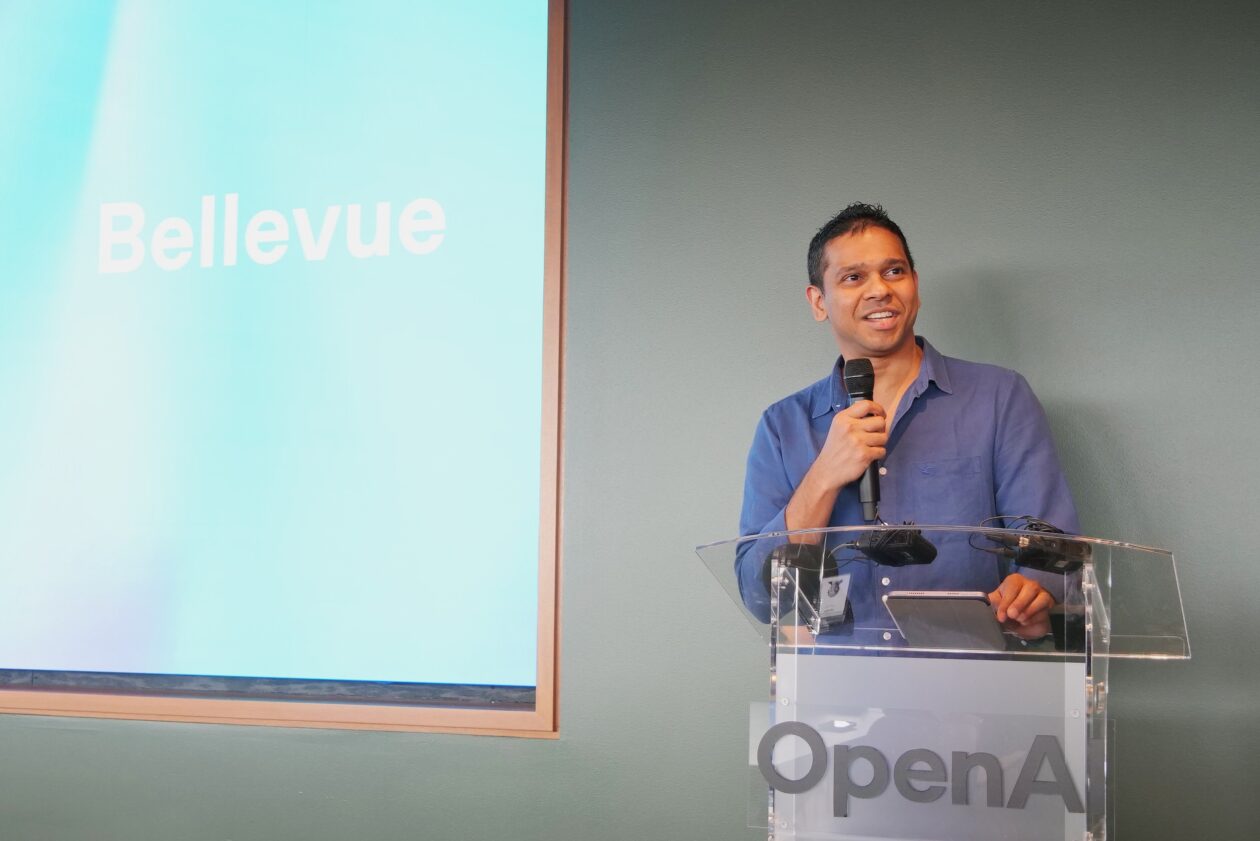

OpenAI just opened its largest office outside San Francisco, in downtown Bellevue, Wash., and we were there for the grand opening to tour the space, check out the vibe, and record this week’s GeekWire Podcast.
Chatting inside the OpenAI game room, we share our observations about the Mad Men-meets-Pacific Northwest aesthetic — which features open floor plans and a wide variety of common areas — and try to figure out what it all says about OpenAI’s culture.
Plus, a conversation with Vijaye Raji, former Statsig CEO and now OpenAI’s CTO of applications, about Codex, infrastructure, hiring, and the evolution and growth of Silicon Valley tech giants in the region.
In our final segment, it’s the return of the GeekWire trivia challenge, with a question focusing on one of the earliest tech giants to establish an outpost in the Seattle area.
‘Hard to imagine going back’
One of the most interesting moments in the conversation with Raji came when he described how OpenAI’s own Codex tool has changed his day-to-day work, to the point where he’s personally making software again, or at least he’s prompting the software to make software.
“Codex has made coding a lot more delightful,” Raji said. “I’m back coding.”
He described a new daily rhythm: “Before you hop into a meeting, you ask it to go do a set of tasks, and then you jump into a meeting, and then when you come back, it’s done, and then you review it,” he said. “It’s so cool.”

Internally, Raji said teams using Codex are seeing 2-3x productivity gains in terms of code output. Beyond engineering, the tool has found its way into marketing, sales, and operations.
“It’s very hard for me to imagine going back to the way we used to write code anymore,” he said. “It’s fundamentally changed.”
OpenAI’s Codex, which got a Windows app this week, is part of an explosion of AI coding tools including GitHub Copilot (Microsoft), Amazon Q Developer, Google’s Gemini Code Assist, Anthropic’s Claude Code and others, all promising significant developer productivity gains.
A template for other OpenAI offices
As for the Bellevue office, Raji sees it as a potential model for OpenAI’s expansion elsewhere. The proximity to San Francisco headquarters, the shared time zone, the short distance from OpenAI partners Microsoft and Amazon, and the depth of local infrastructure talent make it an ideal test case.

“If we can make Seattle very, very successful, we can take that formula and apply it to more offices,” he said.
OpenAI currently has 250 employees in Bellevue, with room to grow to 1,400. The office houses teams working on infrastructure, ChatGPT, research, advertising, and partnerships.
Raji will be speaking at GeekWire’s AI event, Agents of Transformation, March 24. More info and tickets.
Subscribe to GeekWire in Apple Podcasts, Spotify, or wherever you listen.
Related coverage: Inside OpenAI’s new Bellevue office: A swanky statement about AI’s impact on the Seattle region
Audio editing by Curt Milton.

OpenAI has delayed the launch of “adult mode,” a ChatGPT feature that will give verified adult users access to erotica and other adult content.
OpenAI CEO Sam Altman first announced the feature in October, writing, “In December, as we roll out age-gating more fully and as part of our ‘treat adult users like adults’ principle, we will allow even more, like erotica for verified adults.”
The launch had already been delayed once, from December — when Altman reportedly sent an internal memo declaring a “code red” and calling for teams to focus on the core ChatGPT experience — until the first quarter of this year.
Now an OpenAI spokesperson has told Axios that the company is “pushing out the launch of adult mode” in order to “focus on work that is a higher priority for more users right now,” such as work on aspects like intelligence, personality, and making the chatbot “more proactive.”
“We still believe in the principle of treating adults like adults, but getting the experience right will take more time, ” the spokesperson said.
It’s not clear how long the delay is expected to last. The news was first reported by Sources.
Tech
Mozilla says Claude AI uncovered over 100 Firefox bugs in just two weeks, including 14 high-severity flaws


Mozilla is now working with Anthropic’s Frontier Red Team to identify and patch potentially dangerous security vulnerabilities in Firefox. According to Mozilla, the AI company approached them a few weeks ago with results from a newly developed, AI-assisted bug-hunting method. The approach appears to work, Mozilla said, and could ultimately…
Read Entire Article
Source link
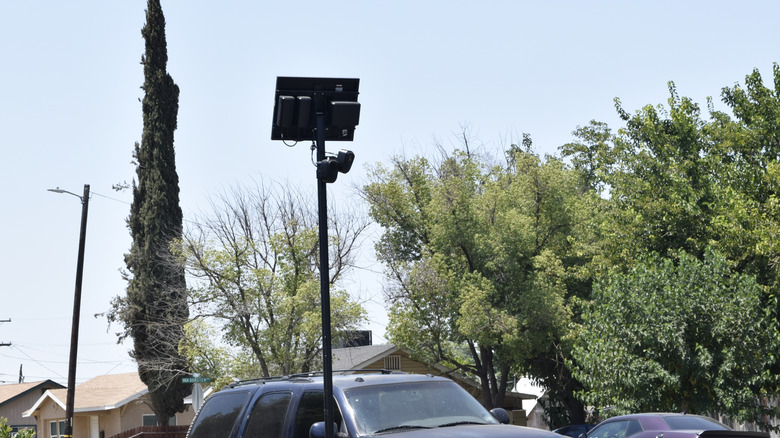
Have you spotted a Flock camera on your daily commute yet? If not, it’s possible somebody knocked the things down. Over 80,000 of these surveillance traffic cameras have been installed across the US so far, making them one of the most widespread forms of surveillance in the country. Unsurprisingly, not everyone’s thrilled by that unsettling fact. It’s led to a number of Flock cams getting vandalized, dismantled, or outright destroyed.
Incidents of vandalism against the cameras have been reported across multiple states so far, including Connecticut, Illinois, Virginia, California, and Oregon. Damage has ranged from smashed equipment to devices being cut down from poles or even reportedly being shot. The more cameras get installed, the more backlash we might see — especially considering Flock’s role in immigration enforcement.
Ostensibly, Flock Safety scores contracts to install these cameras to serve as automated license plate readers for local law enforcement. The cameras photograph license plates on public roads and let law enforcement agencies search the images to pin down vehicles with possible ties to criminal investigations. Similar to the debate over red light cameras, critics say this is just plain unconstitutional. And like the argument against doorbell cameras, there’s also the fact that Flock can (and has!) used its large network to track people’s driving habits, including following where and when they travel. Just look at one Virginia driver who was tracked over 500 times.
What Flock has to say for itself

Given Flock’s contracts with law enforcement agencies, there are legitimate privacy concerns and fears about how that information’s being shared between agencies. Still, Flock insists its system is far from mass surveillance. The company says its cameras only capture point-in-time images of license plates from public roadways and can’t actually track individuals or vehicles, especially not continuously over time. The company also claims most images collected are never accessed by investigators and are eventually deleted after a set retention period. Flock defends itself even further by saying they have safeguards in place (like audit logs, geofencing, and role-based access controls) to limit misuse of the system, too.
But Flock’s actions tell a different story, especially their roundabout support for anti-immigration efforts being carried out by U.S. Immigration and Customs Enforcement. The agency has been dependent on Flock to help locate people during raids and deportation efforts by way of local law enforcement agencies with access to the data. It’s something Flock knows about and has admitted as much. That affiliation (however far removed) has added fuel to the fire at city meetings, during public protests, and, in some cases, in direct action by residents that believe there’s enough evidence to say Flock breaks the law and threatens civil liberties.
Tech
We’re Training Students To Write Worse To Prove They’re Not Robots, And It’s Pushing Them To Use More AI

from the can-someone-ask-an-ai-about-incentives dept
About a year and a half ago, I wrote about my kid’s experience with an AI checker tool that was pre-installed on a school-issued Chromebook. The assignment had been to write an essay about Kurt Vonnegut’s Harrison Bergeron—a story about a dystopian society that enforces “equality” by handicapping anyone who excels—and the AI detection tool flagged the essay as “18% AI written.” The culprit? Using the word “devoid.” When the word was swapped out for “without,” the score magically dropped to 0%.
The irony of being forced to dumb down an essay about a story warning against the forced suppression of excellence was not lost on me. Or on my kid, who spent a frustrating afternoon removing words and testing sentences one at a time, trying to figure out what invisible tripwire the algorithm had set. The lesson the kid absorbed was clear: write less creatively, use simpler vocabulary, and don’t sound too good, because sounding good is now suspicious.
At the time, I worried this was going to become a much bigger problem. That the fear of AI “cheating” would create a culture that actively punished good writing and pushed students toward mediocrity. I was hoping I’d be wrong about that.
Turns out… I was not wrong.
Dadland Maye, a writing instructor who has taught at many universities, has published a piece in the Chronicle of Higher Education documenting exactly how this has played out across his classrooms—and it’s even worse than what I described. Because the AI detection regime hasn’t just pushed students to write worse. It has actively pushed students who never used AI to start using it.
This fall, a student told me she began using generative AI only after learning that stylistic features such as em dashes were rumored to trigger AI detectors. To protect herself from being flagged, she started running her writing through AI tools to see how it would register.
A student who was writing her own work, with her own words, started using AI tools defensively—not to cheat, but to make sure her own writing wouldn’t be accused of cheating. The tool designed to prevent AI use became the reason she started using AI.
This is the Cobra Effect in its purest form. The British colonial government in India offered a bounty for dead cobras to reduce the cobra population. People started breeding cobras to collect the bounty. When the government scrapped the program, the breeders released their now-worthless cobras, making the problem worse than before. AI detection tools are our cobra bounty. They were supposed to reduce AI use. Instead, they’re incentivizing it.
And this goes well beyond one student’s experience. Maye describes a pattern spreading across his classrooms:
One student, a native English speaker, had long been praised for writing above grade level. This semester, a transfer to a new college brought a new concern. Professors unfamiliar with her work would have no way of knowing that her confident voice had been earned. She turned to Google Gemini with a pointed inquiry about what raises red flags for college instructors. That inquiry opened a door. She learned how prompts shape outputs, when certain sentence patterns attract scrutiny, and ways in which stylistic confidence trigger doubt. The tool became a way to supplement coursework and clarify difficult material. Still, the practice felt wrong. “I feel like I’m cheating,” she told me, although the impulse that led her there had been defensive.
A student praised for years for being an exceptional writer now feels like a cheater because she had to learn how AI detection works in order to protect herself from being falsely accused. The surveillance apparatus has turned writing talent into a liability.
Then there’s this:
After being accused of using AI in a different course, another student came to me. The accusation was unfounded, yet the paper went ungraded. What followed unsettled me. “I feel like I have to stay abreast of the technology that placed me in that situation,” the student said, “so I can protect myself from it.” Protection took the form of immersion. Multiple AI subscriptions. Careful study of how detection works. A fluency in tools the student had never planned to use. The experience ended with a decision. Other professors would not be informed. “I don’t believe they will view me favorably.”
The false accusation resulted in the student subscribing to multiple AI services and studying how the detection systems work. Not because they wanted to cheat, but because they felt they had no other option for self-defense. And then they decided to keep quiet about it, because telling professors about their AI literacy would only invite more suspicion.
Look, I get it: some students are absolutely using AI to cheat, and that’s a real issue educators have to deal with. But the detection-first approach has created an incentive structure that’s almost perfectly backwards. Students who don’t use AI are punished for writing too well. Students who are falsely accused learn that the only defense is to become fluent in the very tools they’re accused of using. And the students savvy enough to actually cheat? They’re the ones best equipped to game the detectors. The tools aren’t catching the cheaters—they’re radicalizing the honest kids.
As Maye explains, this dynamic is especially brutal at open-access institutions like CUNY, where students already face enormous pressures:
At CUNY, many students work 20 to 40 hours a week. Many are multilingual. They encounter a different AI policy in nearly every course. When one professor bans AI entirely and another encourages its use, students learn to stay quiet rather than risk a misstep. The burden of inconsistency falls on them, and it takes a concrete form: time, revision, and self-surveillance. One student described spending hours rephrasing sentences that detectors flagged as AI-generated even though every word was original. “I revise and revise,” the student said. “It takes too much time.”
Just like my kid and the school-provided AI checker, Maye’s student spent a bunch of wasted time “revising” to avoid being flagged.
Students spending hours rewriting their own original work—work that they wrote—because an algorithm decided it sounded too much like a machine. That’s time taken away from studying, working, caring for family, or, you know, actually learning to write better.
Learning to revise is a key part of learning to write. But revisions should be done to serve the intent of the writing. Not to appease a sketchy bot checker.
What Maye articulates so well is that the damage here goes beyond false positives and wasted time. The deeper problem is what these tools teach students about writing:
Detection tools communicate, even when instructors do not, that writing is a performance to be managed rather than a practice to be developed. Students learn that style can count against them, and that fluency invites suspicion.
We are teaching an entire generation of students that the goal of writing is to sound sufficiently unremarkable! Not to express an original thought, develop an argument, find your voice, or communicate with clarity and power—but to produce text bland enough that a statistical model doesn’t flag it.
The word “devoid” is too risky. Em dashes are suspicious. Confident prose is a red flag.
My kid’s Harrison Bergeron experience was, in retrospect, a perfect preview of all of this. Vonnegut warned about a society that forces everyone down to the lowest common denominator by handicapping anyone who shows ability. And here we are, with AI detection tools functioning as the Handicapper General of student writing, punishing fluency, penalizing vocabulary, and training students to sound as mediocre as possible to avoid triggering an algorithm that can’t even tell the difference between a thoughtful essay and a ChatGPT output.
Maye eventually did the only sensible thing: he stopped playing the game.
Midway through the semester, I stopped requiring students to disclose their AI use. My syllabi had asked for transparency, yet the expectation had become incoherent. The boundary between using AI and navigating the internet had blurred beyond recognition. Asking students to document every encounter with the technology would have turned writing into an accounting exercise. I shifted my approach. I told students they could use AI for research and outlining, while drafting had to remain their own. I taught them how to prompt responsibly and how to recognize when a tool began replacing their thinking.
Rather than taking a “guilt-first” approach, he took one that dealt with reality and focused on what would actually be best for the learning environment: teach students to use the tools appropriately, not as a shortcut, and don’t start from a position of suspicion.
The atmosphere in my classroom changed. Students approached me after class to ask how to use these tools well. One wanted to know how to prompt for research without copying output. Another asked how to tell when a summary drifted too far from its source. These conversations were pedagogical in nature. They became possible only after AI use stopped functioning as a disclosure problem and began functioning as a subject of instruction.
Once the surveillance regime was lifted, students could actually learn. They asked genuine questions about how to use tools effectively and ethically. They engaged with the technology as a subject worth understanding rather than a minefield to navigate. The teacher-student relationship shifted from adversarial to educational, which is, you know, kind of the whole point of school.
That line Maye uses: “these conversations were pedagogical in nature” keeps sticking in my brain. The fear of AI undermining teaching made it impossible to teach. Getting past that fear brought back the pedagogy. Incredible.
This piece should be required reading for every educator thinking that “catching” students using AI is the most important thing.
As Maye discovered through painful experience, the answer is to stop treating AI as a policing problem and start treating it as an educational one. Teach students how to write. Teach them how to think critically about AI tools. Teach them when those tools are helpful, when they’re harmful, and when they’re a crutch. And for the love of all that is good, stop deploying detection tools that punish good writers and push everyone toward a bland, algorithmic mean.
We are, quite literally, limiting our students’ writing to satisfy a machine that can’t tell the difference. Vonnegut would have had a field day.
Filed Under: ai, ai detection, cheating, dadland maye, students

Business15 seconds ago
Venezuela’s Rodriguez commits to dialogue in message to Trump
Entertainment2 minutes ago
Brooke Shields remembers JFK Jr. as 'one of the best' kissers decades after their intimate encounter

Sports4 minutes ago
Russell Wilson’s ex-teammate blasts Logan Paul for “moving the goalpost” over boxing challenge


-

 Politics4 days ago
Alan Cumming Brands Baftas Ceremony A ‘Triggering S**tshow’
-
Business1 day ago
Form 8K Entergy Mississippi LLC For: 6 March
-

 Tech7 days ago
Unihertz’s Titan 2 Elite Arrives Just as Physical Keyboards Refuse to Fade Away
-

 NewsBeat7 days ago
Abusive parents will now be treated like sex offenders and placed on a ‘child cruelty register’ | News UK
-

 Fashion1 day ago
Weekend Open Thread: Ann Taylor
-

 NewsBeat6 days ago
‘Significant’ damage to boarded-up Horden house after fire
-

 Tech3 days ago
Bitwarden adds support for passkey login on Windows 11
-

 Entertainment5 days ago
Baby Gear Guide: Strollers, Car Seats
-
 Sports2 days ago
499 runs and 34 sixes later, India beat England to enter T20 World Cup final | Cricket News
-
 NewsBeat6 days ago
Emirates confirms when flights will resume amid Dubai airport chaos
-
Politics7 days ago
FIFA hypocrisy after Israel murder over 400 Palestinian footballers
-

 NewsBeat5 days ago
Is it acceptable to comment on the appearance of strangers in public? Readers discuss
-

 Tech6 days ago
Viral ad shows aged Musk, Altman, and Bezos using jobless humans to power AI
-

 Video5 days ago
How to Build Finance Dashboards With AI in Minutes
-

 Fashion6 days ago
On the Scene at the 57th Annual NAACP Image Awards: Teyana Taylor in Black Ashi Studio, Colman Domingo in Yellow Sergio Hudson, Chloe Bailey in Christian Siriano, and More!
-

 Business4 days ago
Guthrie Disappearance Enters Fifth Week as Family Visits Memorial
-
 NewsBeat6 days ago
Ukraine-Russia war latest: Belgium releases video showing forces boarding Russian shadow fleet oil tanker
-
 Crypto World6 days ago
US Judge Lets Binance Unregistered Token Class Action Proceed
-

 Crypto World5 days ago
Why Nexo Is Reentering the US After the 2023 Crypto Lending Crackdown
-

 NewsBeat2 days ago
Piccadilly Circus just unveiled ‘London’s newest tourist attraction’ and it only costs 80p to enter