Connect with us
DAPA Banner
DAPA Coin
DAPA
COIN PAYMENT ASSET
PRIVACY · BLOCKDAG · HOMOMORPHIC ENCRYPTION · RUST
ElGamal Encrypted MINE DAPA
🚫 GENESIS SOLD OUT
DAPAPAY COMING

Tech

Early Childhood Education Teachers Grapple with Screen Time

Published

on

When the American Academy of Pediatrics updated its guidelines around screen time for children and teenagers for the first time in 10 years this past January, many teachers and educators applauded the news. The document focused less on television and more on digital devices. It offered educators, families, pediatricians, and other stakeholders research-backed guidance on using digital devices to support children’s learning, rather than prioritize prolonged engagement. 

However, many of the recommendations were not tailored to specific age groups. Recommendations like “create a family media plan” and “protect sleep” were helpful but offered few concrete steps for pre-K students.  

That left early childhood educators asking what they could do for their young learners.

The Risks in Pre-K Through K

Unlike the physical world, digital content comes fast, in short bursts, and when kids get used to that, it has negative consequences. “Too much of this screen and things jumping in front of them, it could be damaging overall,” says Latoya Jones, a pre-K through fifth-grade media specialist in Broward County, Florida. “They are developing their cognitive processes, and if we’re teaching them to think in six-second bursts, maybe that’s not what we’re aiming for.”

Advertisement

When kids interact with devices rather than people, their emotional regulation can suffer, says Kristina Turner, a first-grade teacher at the Paterson, New Jersey, campus of College Achieve Public Schools, a network of three K-12 charter schools. “A lot of the students, they are quick-tempered because they’re just used to quick things. If something takes too long, their behavior starts to heighten,” she says.

For the youngest learners in particular, “it is so important that they are learning how to interact, and listen, and even advocate for themselves,” says Colleen Francisco, a kindergarten teacher at Laurel Springs School, an online school in West Chester, Pennsylvania.

“There’s beauty in students having an issue or a problem, because then an adult can support them in working through it,” she says. When kids are tethered to their screens, those opportunities don’t arise.

Clearly, the AAP guidance is well timed and much needed. But how to put that guidance into practice?

Advertisement

Classroom Strategies for Reducing Screen Time

“I never want my children using screens passively,” says Devon Caldwell, a pre-K and K teacher at Canupawakpa Education in Manitoba, Canada, and an instructor at Nipissing University Schulich School of Education in Ontario. “I want to see kids’ bodies moving, their mouths talking, little hands making something.”

To that end, she prioritizes co-viewing and co-creating, using interactive teaching software approved by her and the school. When students are using a screen, “they’re always using it with a partner. Right away they’re negotiating rules, talking to each other, developing those really important skills,” she says.

For her first graders, Turner tries as much as possible to create hands-on activities instead of relying on screens. For example, she uses a whiteboard, but tries to avoid it when giving instructions. “Students have to use their listening skills so they can be able to follow directions without using a screen,” she says. “By end of school year, I’m able to give them different tasks, and they’re able to do that independently, without depending on technology.”

Tyler Brown, an English teacher at Indian River Middle School in Philadelphia, New York, encourages teachers to be thoughtful about the digital tools they share with the youngest learners. “Don’t throw [the digital tool] at everything,” he says. “Think about what you’re using it for. Think about what it’s supposed to do. Is this an enhancement of learning or is this a replacement?”

Advertisement

These self-directed questions can drive practical choices in the classroom. “You’re doing AT words: cat, mat, bat. You could easily have a website or a Google slide where they’re dragging those items onto the correct word,” says Brown.

“Or you could do what we’ve done in the past, which is a cut-and-glue activity,” he continues. “Why are we using screen time for something that can easily be a manipulative activity, where kids are doing things hands-on? Little kids are tactile learners, and those hands-on exercises have real value.”

Even as a teacher in an online school, Francisco is finding ways to limit screen time. “One of our assignments is taking a nature walk and writing down what you see. That is something that extends the learning off the screen,” she says.

Even math can be hands-on for early learners, she adds. “You don’t have to have anything fancy. You don’t have to buy the tools: Even just using cereal in order to practice adding and subtracting,” she says.

Advertisement

Jones was a kindergarten teacher before becoming a media specialist. “Anytime I had a word of the week, we used Play-Doh to build a word. Or we did those little sandboxes where they drew the word in the sand,” she says.

Big picture: Active and tactile often are better than passive and screen-based. “Could this be accomplished with blocks or Play-Doh or markers and paper? If it could be, let’s do it that way,” Caldwell says.

But teachers can only do so much in the classroom when kids are immersed in digital media at home. In support of the AAP’s call to prioritize family time over screen time, teachers may need to engage more with parents.

Engaging with Families

Pre-K and K teachers don’t have control over what kids do outside of school. “At home, a lot of my students go straight to their screens,” Turner says. To help steer her own kids and her students when they are at home, she gives parents resources. “I’m able to provide them with index cards, and you can keep them in the back seat,” she says.

Advertisement

When kids get in the car, “instead of reaching for an iPad, they can reach for their index cards, whether it’s math problems or sight words,” she says. “Or you can put that as a magnet on your refrigerator: If you want a snack, you got to read this word.”

When Francisco sends homework through the learning management system, “we have workbooks and other hands-on activities that support the lesson,” she says. And she encourages parents to talk to their kids, as a pedagogic exercise.

“Phonemic awareness is especially important to early-literacy learners. The learner is listening to sounds and how sounds are manipulated,” she says. “I’ve given parents additional resources so that [kids] are not reading or not listening or watching on the video. Instead, they’re doing it with their student, face to face.”

It takes some creativity and extra effort by teachers and parents to pivot kids off of screens, but experts say it’s worth the effort. Too much screen time “can negatively impact executive functioning, socio-emotional and language skills,” says Bryana Casas M.A., master teacher at Pacific Oaks Children’s School in Pasadena, California.

Advertisement

For those honing their interpersonal skills — a main goal in pre-K through K education — “nothing can replace relationships and face-to-face interactions between people,” she says.

Source link

Continue Reading
Click to comment

You must be logged in to post a comment Login

Leave a Reply

Tech

NYT Strands hints and answers for Saturday, July 25 (game #874)

Published

on

Looking for a different day?

A new NYT Strands puzzle appears at midnight each day for your time zone – which means that some people are always playing ‘today’s game’ while others are playing ‘yesterday’s’. If you’re looking for Friday’s puzzle instead then click here: NYT Strands hints and answers for Friday, July 24 (game #873).

Strands is the NYT’s latest word game after the likes of Wordle, Spelling Bee and Connections – and it’s great fun. It can be difficult, though, so read on for my Strands hints.

Want more word-based fun? Then check out my NYT Connections today and Quordle today pages for hints and answers for those games, and Marc’s Wordle today page for the original viral word game.

Advertisement

Source link

Continue Reading

Tech

Amazon confirms it’s closing key AI site in San Francisco but says work on its top models continues

Published

on

GeekWire File Photo

Amazon is closing its San Francisco AGI site as part of the layoffs it made this week in its artificial general intelligence organization, but said its frontier model research lab will continue.

A company spokesperson confirmed the news of the site closure, which was first reported by The Information. Amazon’s frontier model research work will carry on under Pieter Abbeel, a UC Berkeley professor who joined Amazon in 2024 when the company licensed the technology and hired the team from Covariant, the robotics startup he co-founded.

The AGI Lab was founded in December 2024 and initially built around several dozen employees Amazon brought in from the startup Adept, including its co-founder and CEO David Luan.

The team grew to about 80 people at its peak, according to The Information, but more than a dozen of the Adept hires have since left, Luan among them. Earlier this week, Amazon confirmed it was cutting an unspecified number of jobs across the broader AGI organization.

Impacted employees will have the chance to explore other roles at Amazon, the spokesperson said, and the company is supporting them through that process.

Advertisement

Nova Act, the browser-agent model and service that came out of the group, remains available on AWS and in use by customers. More broadly, AWS has continued to build out its agentic AI lineup, including Bedrock AgentCore and applications like Kiro, Quick, Continuum and Transform.

The moves come as Amazon invests heavily in helping customers deploy AI, including a $1 billion AWS effort to embed engineers with businesses building AI agents. The initiative reflects an expanded industry focus toward putting agents and models to better use for customers.

Source link

Advertisement
Continue Reading

Tech

Anthropic debuts Opus 5 at half the price of its Fable sibling

Published

on

AI and ML

And as a bonus, it doesn’t require data retention

Anthropic released its Opus 5 AI model on Friday, claiming that it “comes close to the frontier intelligence of Claude Fable 5 at half the price.” That’s welcome news for enterprises beset by rising token costs.

Fable 5 prices tokens at $10 / MTok input and $50 / MTok output, while Opus 5 prices tokens at $5 / MTok and $25 / MTok. OpenAI’s GPT-5.6 Sol sells for $5 / MTok input and $30 / MTok output.

Advertisement

However, the tokens required to complete a task can vary from model to model, so it’s also useful to assess how much each model costs to complete the same task.

Per Artificial Analysis, the weighted average cost (USD) per Intelligence Index task is $2.75 for Fable, $2.03 for Opus 5 (max), $1.04 for GPT-5.6 Sol (max), and $0.95 for Kimi K3. 

Opus 5 leads the Artificial Analysis Intelligence Index at 61, one point ahead of Fable.

“Claude Opus 5 provides greatly improved performance for the same cost as its predecessor, Opus 4.8,” Anthropic claims.

Advertisement

Opus 5 should offer customers more context to fill because Anthropic has put the model’s system prompt on a diet. According to Claude Code engineer Thariq Shihipar, Anthropic removed 80 percent of the Claude Code system prompt for its latest models.

As a result, the company’s guidance for crafting prompts, skills, and CLAUDE.md files has changed

“Across your system prompt, skills, and CLAUDE.md files, you may need to simplify just like we did,” said Shihipar, adding that a command called `claude doctor` can help automatically optimize some prompts and skills.

Users of Opus 5 however may find the model’s responses wordier – at their expense. Anthropic cautions, “Claude Opus 5’s default user-facing responses run longer than prior Opus models’.” Customers who don’t want the new verbosity are advised, “To control response length, prompt for it explicitly.”

Advertisement

Opus 5 scores close to Mythos on finding vulnerabilities in open source code (80 percent OSS-Fuzz benchmark score compared to 79.4 percent), but is significantly weaker in weaponizing those findings – it succeeded in 4/14 exploitation attempts compared to 13/14 for Mythos.

The model’s system card states, “Claude Opus 5 is substantially stronger than Claude Opus 4.8 across the board, with the largest gains in agentic coding, computer use, and long-horizon knowledge work.” It is said to be comparable to, or in some cases ahead of, Claude Fable 5 and Claude Mythos 5.

The model is likely to be significantly more useful for cybersecurity and biology tasks because it should refuse to cooperate less often. According to Anthropic, “Opus 5’s cyber classifiers are proportionally less restrictive than those on Fable 5. They allow Opus 5 to find vulnerabilities in source code, but block ‘binary-based’ vulnerability scanning (a method more likely to be associated with malicious actors), penetration testing, and exploit generation.”

Anthropic is also making life easier for those frustrated by model refusals. It’s rolling out an automated fallback function on its API so requests deemed too dangerous to entrust to Opus 5 or Fable 5 can be routed to a less capable model instead of being blocked outright.

Advertisement

Opus 5 is said to be Anthropic’s “most aligned model to date,” meaning it’s the least likely to go off its guardrails.

A more compelling selling point for businesses is likely to be the lack of a data retention requirement. ®

Source link

Advertisement
Continue Reading

Tech

DOJ Withdraws NY Times Subpoenas After Judge Notices It Never Bothered To Follow The Rules For Subpoenaing Reporters

Published

on

from the how-dare-anyone-expect-the-doj-to-follow-the-law dept

Just last week we had the story of the Trump DOJ issuing very questionable subpoenas of NY Times journalists while trying to track down who leaked information to those reporters regarding the potentially catastrophic security flaws of the “gift” 747 plane he received from Qatar. As we noted in that original post, this appeared to be a wholly abusive use of the government’s subpoena powers, and well outside the norm.

On Thursday, the DOJ agreed to withdraw those subpoenas, but only after a long court hearing in which the DOJ thoroughly embarrassed itself in front of the judge, Arun Subramanian, who noted many, many problems with the subpoenas, which the DOJ tried to tiptoe around, calling them “inadvertent errors.” Most of the media coverage of this is pretty weak, but Matthew Russell Lee of the Inner City Press did a wonderful liveposting of the hearing that suggests just how badly the DOJ fucked this up.

It started out with the DOJ saying they weren’t going to withdraw the subpoenas, and claiming that they believed the subpoenas were “properly” issued. But the court quickly pointed out that there is precedent in the Second Circuit regarding when and how you can subpoena journalists, and the DOJ basically ignored all of that. The DOJ’s Sean Buckley argued that following those rules would amount to conceding the rules applied — something the DOJ apparently didn’t want to admit, leading the judge to say that following the rules wouldn’t be seen as any such admission.

Judge Subramanian kept pressing Buckley on why the DOJ rushed to issue these incredibly broad subpoenas when there appeared to be much more straightforward ways to obtain the information they were seeking. Indeed, another part of what was discussed is that the DOJ’s subpoenas were so broad that they included phone records of reporters’ relatives who had nothing whatsoever to do with the reporting:

Advertisement

A Justice Department lawyer, Sean Buckley, cast the government’s missteps as inadvertent errors and said: “No one was trying to pull a fast one.” Buckley apologized for other subpoenas that sought records for phone numbers belonging to one reporter’s mother and two of the journalists’ spouses.

“That was an error, judge, which we own,” Buckley said. “It was a consequence of trying to move quickly.”

“These things are starting to pile up,” Subramanian said, becoming increasingly testy.

The judge also explored whether or not the DOJ misled the judge who signed off on the subpoenas, by not letting them know that the subpoenas were for information associated with reporting. He even noted that the Assistant US Attorney who got the subpoenas, Kevin Sullivan, was in the room, but not at the table, asking him to come out of the galley and join the DOJ table (this is not something that usually happens).

Following that was an incredible exchange wherein Judge Subramanian asked Sullivan about whether he told the original subpoena-issuing judge that the subpoenas were for reporters, leading Sullivan to say it “was an oversight” and that later on they “did legal research.”

Advertisement

Around that point, a clearly fed up Subramanian said that if this were a normal case, this would be the point where he would issue an order to show cause why the DOJ shouldn’t face sanctions for abusing the subpoena process. There was some more back and forth scolding, including Subramanian pointing out that the “errors” for the DOJ seemed to be “piling up” and asking the DOJ if he should expect to see more mistakes like this moving forward.

Around this point, the DOJ regrouped and changed their stance from earlier in the hearing, saying they were now willing to drop the subpoenas. After the hearing was over, the ever petulant Trump Justice Department quickly whined to the media how unfair it was that federal judges expected them to actually follow the rules and stuff:

After the hearing, the Justice Department lashed out at Subramanian in a statement, saying he “threatened our attorneys with sanctions unless subpoenas were withdrawn, and blocked us from presenting the meticulous process of this investigation.”

“The grand jury has a right to hear testimony from all material witnesses in a federal criminal investigation. This judge’s conduct overrides clear longstanding principles and common sense — blocking the grand jury from receiving core evidence in a national security investigation,” the statement said.

“Make no mistake,” it added, “this investigation remains ongoing, and we will pursue justice against those threatening national security by leaking classified information, a serious federal crime.”

Advertisement

Once again, we have an overly aggressive, understaffed, and generally incompetent DOJ that seems not to realize that there are significant and important Constitutional limits on what it can do. And when a judge calls them out on it, the fact that their immediate response is to start whining about it like they were the victims here suggests a good reason that the entire DOJ will need a massive overhaul post-Trump.

Filed Under: 1st amendment, air force once, arun subramanian, doj, free speech, kevin sullivan, qatar, sean buckley, subpoenas

Companies: ny times

Source link

Advertisement
Continue Reading

Tech

What is preventing employees from changing careers?

Published

on

Indeed’s report found that three out of four Ireland-based employees are open to moving into a new career, but are being held back by a number of factors.

Job recruitment platform Indeed has published new research indicating that there are a multitude of factors preventing Ireland’s employees from making a significant career move into another field, despite a significant portion being open to making the change. 

On behalf of Indeed, Censuswide collected data from 1,000 jobseekers and employees based in Ireland in June of this year. A main finding of the research was that, of those who contributed their information, three-quarters of workers are open to a career change, however, there is a lack of understanding into how this may be facilitated. 

31pc of participants explained that they are held back by financial uncertainty, 23pc are concerned about having to start as a beginner all over again, 23pc fear that they don’t have the necessary qualifications and a further 23pc are uncertain about which jobs would suit them. 

Advertisement

Concerns around skill level stood out, as more than 60pc were of the opinion that while they do have transferable skills, they aren’t quite sure where those skills might be most relevant. Half of respondents said they wish they knew what jobs they qualify for based on their skillset and experience.

Commenting on the report, Conor McCarthy, the vice-president of sales for the UK and Ireland at Indeed, said: “Changing careers can feel daunting, especially in a rapidly changing work environment. People know they have valuable skills but cannot see how they translate into new opportunities in today’s workplace.” 

Calm, cool and confident

Indeed’s research found that increased confidence and guidance could potentially encourage people to explore new opportunities. 71pc said they wish they could ask questions about a company or role before applying for it, with an additional 54pc agreeing that they have struggled to explain why they are a good fit for a role during an application or interview.

The report suggests that ambition is not lacking among Ireland’s employees, as 61pc said that they have a dream career they would love to make a reality, while 88pc could imagine moving into a field “where workers will be needed in the long term”.

Advertisement

With longevity in mind, employees are navigating growing uncertainty about the future, with this being a leading concern for of workers that are thinking about their professional future (34pc), followed closely by the impact of AI and automation (32pc).

Career coaching also remains largely untapped, claimed the report, which found that only 21pc of participants have ever used a career coach, with the biggest barriers including never having considered using one (39pc), concerns about cost (28pc), uncertainty about what a career coach does (25pc) and not knowing where to find one (24pc).

McCarthy said: “For many people, career support has either felt out of reach or too generic to be useful.”

Updated, 4.42pm, 24 July 2026: This article has been amended to fix some incorrect statistics.

Advertisement

Don’t miss out on the knowledge you need to succeed. Sign up for the Daily Brief, Silicon Republic’s digest of need-to-know sci-tech news.

Source link

Advertisement
Continue Reading

Tech

Quordle hints and answers for Saturday, July 25 (game #1643)

Published

on

Looking for a different day?

A new Quordle puzzle appears at midnight each day for your time zone – which means that some people are always playing ‘today’s game’ while others are playing ‘yesterday’s’. If you’re looking for Friday’s puzzle instead then click here: Quordle hints and answers for Friday, July 24 (game #1642).

Quordle was one of the original Wordle alternatives and is still going strong now more than 1,500 games later. It offers a genuine challenge, though, so read on if you need some Quordle hints today — or scroll down further for the answers.

Enjoy playing word games? You can also check out my NYT Connections today and NYT Strands today pages for hints and answers for those puzzles, while Marc’s Wordle today column covers the original viral word game.

Advertisement

Source link

Advertisement
Continue Reading

Tech

Meta Has Pulled Out Of A Renewable Energy Initiative As It Relies More On Natural Gas For Data Centers

Published

on

The company has comitted to 10 natural gas plants since last year.

A decade ago, Meta joined RE100, a major renewable energy initiative aimed at helping large corporations transition to renewable electricity. Now, the company has pulled out of the group as it increasingly relies on natural gas for its AI data centers.

RE100 is overseen by UK nonprofit Climate Group. It has more than 400 members, including Microsoft, Google and Apple — all of which have made commitments to source 100 percent of their energy needs from renewable sources. Meta, as TechCrunch notes, signed on in 2016 with a target of 2020 for fulfilling its goal.

Meta’s involvement with RE100 was always voluntary, but the move does underscore how the company’s priorities have shifted as it’s poured massive amounts of money into AI infrastructure. Meta’s departure from the pact was first reported by Recharge. Climate Group told the publication that the Facebook and Instagram maker “is no longer able to meet the technical criteria due to investments made in new gas power.” Meta, meanwhile, told TechCrunch that it was still committed to “100% clean and renewable energy” but that leaving RE100 was a “mutual” decision.

Advertisement

Earlier this year, Meta said it would fund seven new natural gas plants to help fuel its data centers. The company has now committed to 10 such projects since last year.

As both TechCrunch and Recharge point out, funding natural gas plants doesn’t necessarily mean that Meta can’t still claim to be making good on renewable energy commitments. Companies like Meta typically fulfill their promises by buying energy attribute certificates to offset their use of fossil fuels.

But Meta has now invested so much in natural gas — its 10 natural gas power plants will produce enough energy to power the state of South Dakota, according to TC — it’s going to get more difficult to offset. Or, as an analyst told Recharge, “a 100 percent renewable claim becomes harder to defend.”

Advertisement

Source link

Continue Reading

Tech

Lockheed Martin Unveils Morfius X-Rotor: Reusable High-Power Microwave Drone Neutralizes 50 UAVs per Flight

Published

on


  • A reusable microwave drone reportedly disables more than 50 hostile UAVs per flight
  • Lockheed Martin pushes cheaper answers to increasingly dangerous battlefield drone swarms
  • The Morfius X-Rotor counter-drone system enters testing after successful multi-state flight evaluations

Lockheed Martin has unveiled its Morfius X-Rotor counter-drone system at the 2026 Farnborough Airshow, calling it a low-cost answer to challenging drone swarms.

The ground-launched system uses a one-to-many high-power microwave, or HPM, approach designed to disable multiple unmanned aerial vehicles during a single mission.

Source link

Continue Reading

Tech

Paramount Agrees to Postpone Warner Bros. Merger Until June 2027

Published

on

Paramount Skydance has agreed to postpone its $111 billion Warner Bros. Discovery merger until five days after an antitrust trial or June 1, 2027, whichever comes first. The agreement with a 12-state coalition led by California effectively shelves the deal for months while states argue it would reduce competition in cable and theatrical markets. Variety reports: Paramount had been keen to close the deal before Sept. 30, when it will begin to incur a $7-million-a-day “ticking fee” to be paid to Warner Bros. investors. The agreement is a tacit acknowledgement that that will not happen, barring a settlement with the states. Paramount previously sought a three-day hearing on the injunction motion in late August, hoping to win the judge’s blessing to close the deal sometime in early September. But the states resisted that idea, saying they would need more time to take discovery and prepare for a full trial on the merits. The states were due to file their injunction motion on Thursday night, but held off as the two sides held discussions on a path forward. In a statement, the company said the agreement is a “significant win.”

“Today’s agreement is a significant win because the result is exactly what we have sought from the outset: a direct path to a trial based on the evidence,” a Paramount spokesperson said. “This is the fastest and clearest way to prove that this transaction is good for competition, good for consumers, and good for creators, a conclusion dozens of competition authorities around the world have already reached. Plaintiffs’ market definitions bear no relationship to the realities of today’s marketplace and cannot withstand scrutiny. We look forward to proving our case at trial.”

A hearing was scheduled for Aug. 3 in federal court in Oakland, at which point the two sides were expected to argue over the injunction motion. The two sides agreed to cancel that hearing. U.S. District Judge Araceli Martinez-Olguin approved the joint stipulation on Friday afternoon, about an hour after it was entered. The Writers Guild of America filed its own motion for an injunction earlier this week, which was also set to be heard on Aug. 3. That motion has been withdrawn, as Paramount has effectively conceded that it will not close the deal until a determination of the merits of the antitrust claims. The parties also agreed to submit a joint stipulation by July 31 on their respective positions on trial scheduling. The states previously proposed to hold the trial in April 2027.

Source link

Advertisement
Continue Reading

Tech

Hands-Free Mouse Uses Eyes And Muscles Instead

Published

on

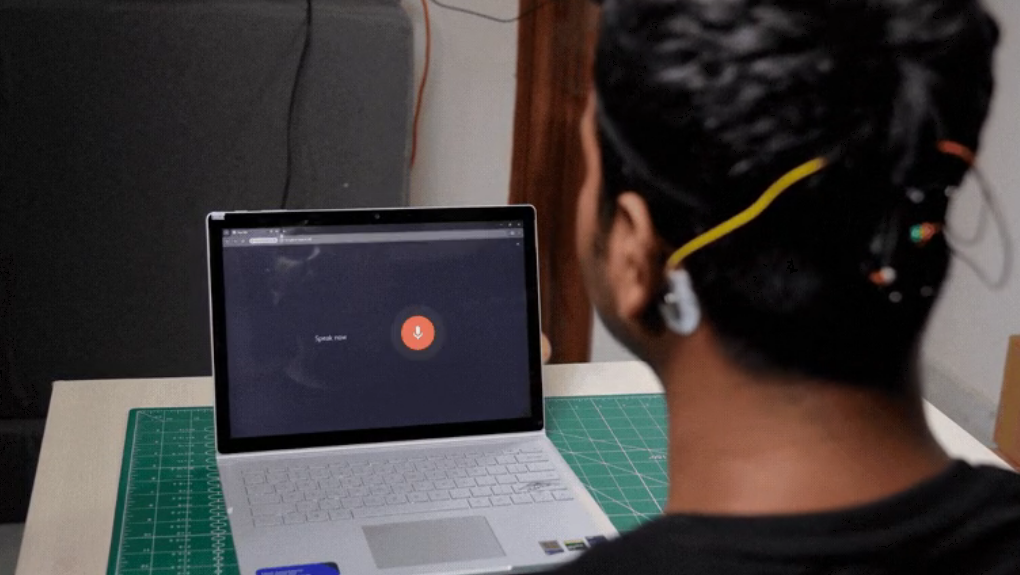
The standard computer mouse is a perfectly useful peripheral if your hands work. If you’ve got some trouble in that area, you might appreciate an alternative input solution. To that end, [Varun Adinath Patil] created a neat hands-free solution for moving a cursor around a screen.

The build is based on the Neuro PlayGround Lite, a board built for physiological signal acquisition in the Feather form factor. It’s hooked up to an IMU sensor—both a MPU6050 or BMI270 work—which tracks head movements to allow the cursor to be panned around the screen. Other biological signals are then used to activate other standard mouse functions. Clenching the jaw fires off a left click, while a triple blink fires a right click. Clicking and dragging is achieved by a double-blink. The jaw muscles are sensed via EMG signals picked up with gel electrodes on the skin, while the blinks are detected via EOG signals via the same contact points.

Commercial solutions in this realm exist, but it’s great to see how such a device can be built from the ground up. We’ve looked at other neat applications of head-tracking before, too. If you’re working on your own innovative accessibility tools, don’t hesitate to let us know via the tipsline.

Advertisement

Source link

Continue Reading

Trending

Copyright © 2025