Connect with us
DAPA Banner
DAPA Coin
DAPA
COIN PAYMENT ASSET
PRIVACY · BLOCKDAG · HOMOMORPHIC ENCRYPTION · RUST
ElGamal Encrypted MINE DAPA
🚫 GENESIS SOLD OUT
DAPAPAY COMING

Tech

Emotiva XSP-2 Preamplifier Debuts with Balanced ESS DAC and Modular Streaming Upgrade Path

Published

on

Emotiva has built its reputation on delivering high-performance audio components with solid engineering, serious build quality, and prices that usually make the competition look a little too comfortable.

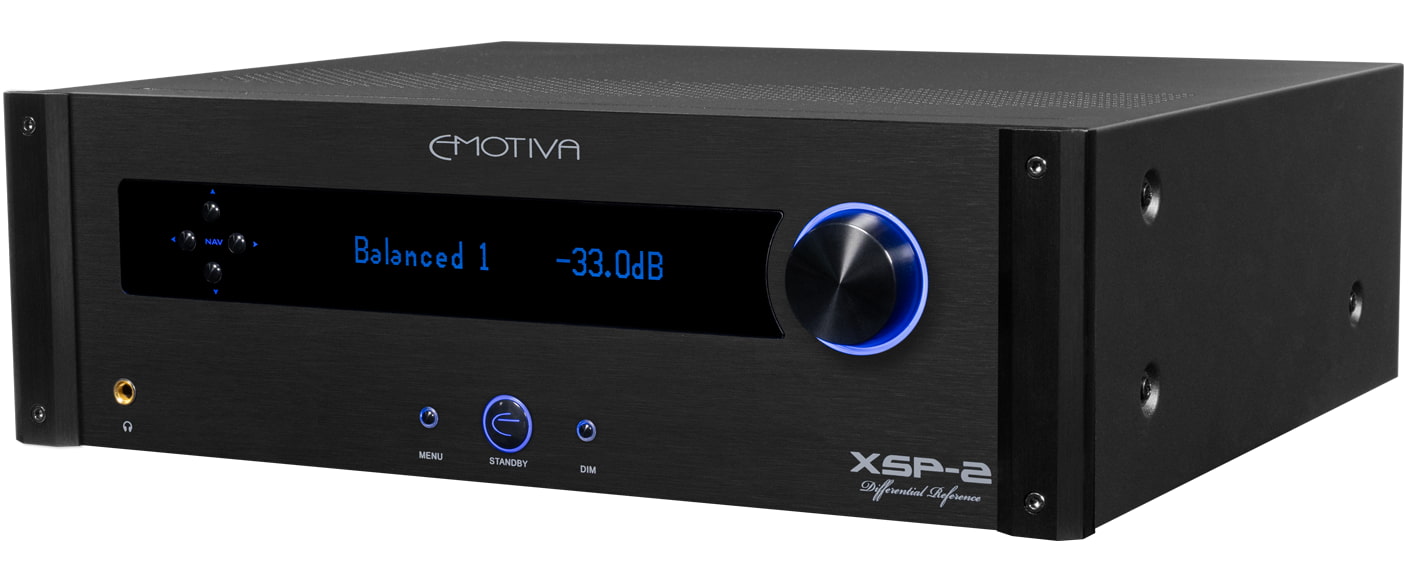
For 2026, the company is taking another run at the serious two-channel market with the XSP-2 Differential Reference Stereo Preamplifier, a major update to the well-regarded XSP-1 that first arrived in 2013. The new XSP-2 keeps the separates-first mindset intact, but adds a more modern modular platform, including a fully balanced ESS-based DAC module installed from the factory and an expansion path for a future streaming module.

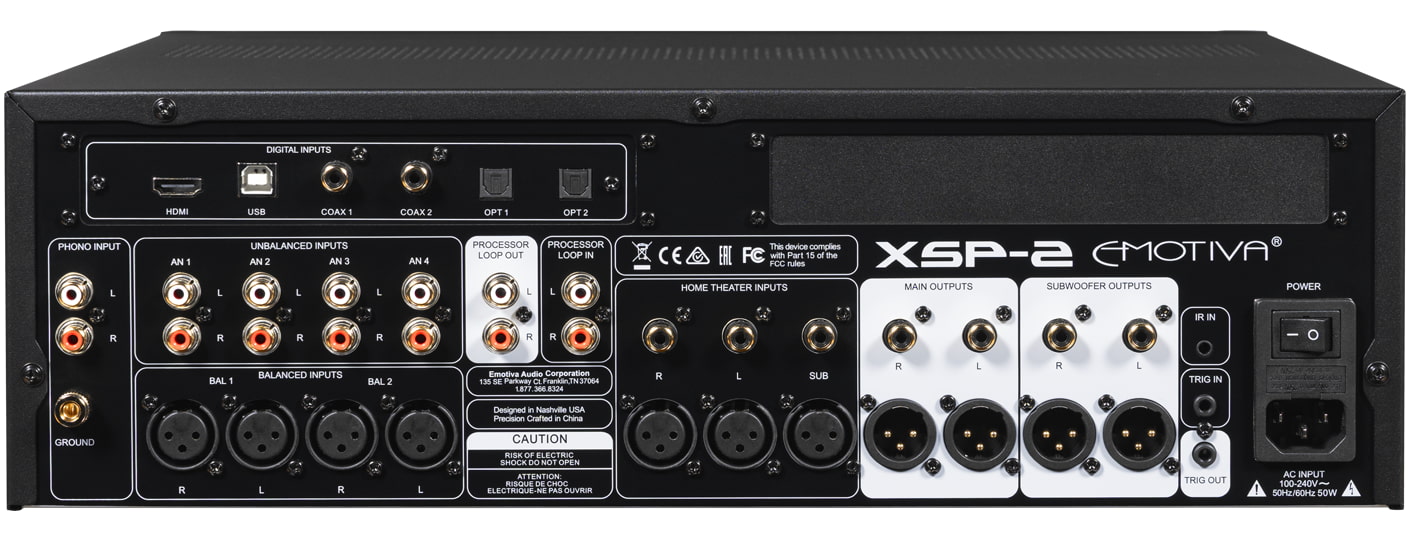
The XSP-2 ships with a pre-installed DAC module that expands its connectivity with HDMI-ARC, USB-C, two coaxial inputs, and two optical inputs. Dedicated shielding keeps the digital section isolated from the preamplifier’s pure analog signal path.

The XSP-2’s fully balanced, fully differential analog signal path is designed to lower noise, reject interference, and preserve low-level detail. It also includes fully balanced bass management for 2.1 or 2.2-channel systems, with independent high-pass and low-pass crossover settings at 40, 60, 80, or 100 Hz, plus stereo or summed mono subwoofer output options.

Advertisement
emotiva-xsp-2-back

The XSP-2 also includes an onboard MM/MC phono section for easy connection to most turntables, along with a dedicated headphone output driven by a current-mode feedback amplifier designed to handle more demanding headphone loads.

All audio switching is handled by fourth-generation hermetically sealed subminiature relays, helping preserve signal purity throughout the audio path while reducing noise, crosstalk, and switching artifacts.

An external processor loop and Home Theater Bypass provide additional flexibility, allowing the XSP-2 to integrate more easily into mixed two-channel and home theater systems.

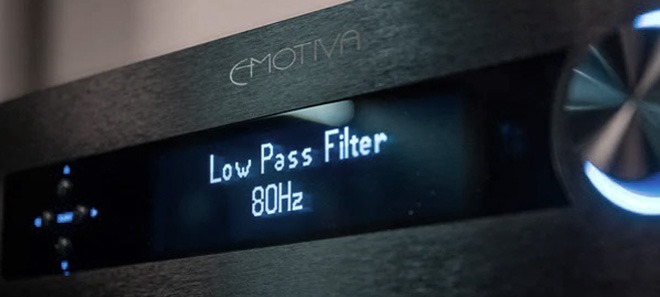
emotiva-xsp-2-low-pass-filter

The front panel features a large blue OLED display, which is larger than the display used on its predecessor, along with a flexible menu system that can be controlled from the front panel or the included remote. The display is easy to read, and the menu system provides quick access to the XSP-2’s core setup and control features such as MM/MC cartridge select, balance, high pass filter, low pass filter, and selectring subwoofer mono/stereo choices.

The XSP-1 is one of the most popular products in the history of the brand,” says Dan Laufman, President, Emotiva Audio Corporation. “It’s famous for being a highly flexible preamp that performs well above its price…After years of focused R&D, we’re finally ready to launch a worthy successor that retains the sonic benefits that made the original a hit, but with added flexibility across the board…The XSP-2 is not only a best-in-class preamp for today’s consumers, but it’s also ready for whatever comes next, including a streamer module that is currently in the works. When it launches, all it will take is a few easy steps to add it to the XSP-2.

Advertisement

Comparison

emotiva-xsp-2-xsp-1
Emotiva Model XSP-2 (2026) XSP-1 (2013)
Price $1,599 $999
Product Type Preampllifier Preampllifier
Number of Channels 2 2
Analog Inputs 4 pairs – unbalanced RCA inputs

2 pairs – balanced XLR inputs

1 pair – unbalanced RCA Processor Loop Inputs

1 pair – MC/MM phono input (switchable)

1 set (L/R/sub) – unbalanced (RCA) HT Bypass Inputs

Advertisement

1 set (L/R/sub) – balanced (XLR) Bypass Inputs

4 pairs – unbalanced RCA inputs

2 pairs – balanced XLR inputs

1 pair – unbalanced RCA Processor Loop Inputs

Advertisement

1 pair – MC/MM phono input (switchable)

1 set (L/R/sub) – unbalanced (RCA) HT Bypass Inputs

1 set (L/R/sub) – balanced (XLR) Bypass Inputs

Digital Inputs 1 – HDMI-ARC Input
Advertisement

1 – digital USB (DAC Input); stereo; supports up to 24/768k, DoP up to DoP256, and native DSD up to DSD512

2 – digital coax (S/PDIF) Inputs; stereo; support up to 24/192k

2 – digital optical (Toslink) Inputs; stereo; support up to 24/192k

Audio Outputs 1 pair – stereo line level balanced (XLR) Left and Right Main Outputs
Advertisement

1 pair – stereo line level unbalanced (RCA) Left and Right Main Outputs

1 pair – stereo line level balanced (XLR) Left and Right Subwoofer Outputs

1 pair – stereo line level unbalanced (RCA) Left and Right Subwoofer Outputs

1 pair – stereo unbalanced (RCA) Processor Loop Outputs

Advertisement

1 x Headphone; 1/4” stereo jack (front panel).

1 pair – stereo line level balanced (XLR) Left and Right Main Outputs

1 pair – stereo line level unbalanced (RCA) Left and Right Main Outputs

1 pair – stereo line level balanced (XLR) Left and Right Subwoofer Outputs

Advertisement

1 pair – stereo line level unbalanced (RCA) Left and Right Subwoofer Outputs

1 pair – stereo unbalanced (RCA) Processor Loop Outputs

1 x Headphone; 1/8” stereo jack (front panel).

Control Inputs and Outputs 1 – 12 VDC Trigger Output – delivers a 12VDC trigger signal when the unit is on
Advertisement

1 – Trigger Input – accepts inputs between 5V and 12V AC or DC

1 – IR input; wired; accepts standard “passive IR eye.”

Note: The XSP-2 will work with a variety of passive 3-wire IR sensors

1 x Trigger input and output: 
Advertisement

1 x IR input and output

Remote Control Yes Yes
Analog Audio Performance (Line Level Inputs) Maximum output level; balanced (XLR) is 8VRMS, and unbalanced (RCA) is 4 VRMS

Frequency response: 20 Hz to 20 kHz +0 / -0.1 dB

Frequency response: 5 Hz to 80 kHz +0 / -2.7 dB

Advertisement

THD+noise; 1 kHz; A-weighted: <0.0005%

S/N ratio; balanced (XLR); A-weighted: > 119 dB

S/N ratio; unbalanced (RCA); A-weighted: > 117 dB

Maximum Output Level (main outputs): +12 dB.
Advertisement

Frequency response: 20 Hz to 20 kHz +/- 0.017 dB 

Not indicated

THD+noise  1 kHz, < 0.006% (unbalanced into unbalanced out). 

S/N ratio > 114 dB (balanced into unbalanced out).

Advertisement

S/N ratio 113 dB (unbalanced into unbalanced out). 

Analog Audio Performance (Phonol Input) THD+noise; 1 kHz; A-weighted; Moving Magnet: <0.01%

THD+noise; 1 kHz; A-weighted; Moving Coil: <0.1%

S/N ratio; A-weighted; Moving Magnet: > 95 dB

Advertisement

S/N ratio; A-weighted; Moving Coil: > 80 dB

Moving Magnet – THD (total harmonic distortion, ref 10 mV): < 0.001%. 

THD (total harmonic distortion, ref 1.0 mV) Moving Coil < 0.008%  S/N A-weighted

Moving Magnet > 96 dB. 
S/N A-weighted, Moving Coil: > 79 dB. 

Advertisement
Audio Performance (Digital Inputs) Frequency response: 20 Hz to 20 kHz +0 / -0.1 dB

Frequency response: 5 Hz to 80 kHz +0 / -2.7 dB

THD+noise; 1 kHz; A-weighted: <0.0008%

S/N ratio; A-weighted: > 112 dB

Advertisement

The frequency response shown was measured with a high-resolution digital source. At lower sample rates, the frequency response will be limited by the sample rate of the content.

Not Applicable
Power Requirements 115 VAC or 230 VAC @ 50 / 60 Hz (automatically detected) 115 VAC or 230 VAC +/- 10% @ 50 / 60 Hz (automatically detected and switched). 
Dimensions 17” wide x 5-1/4” high (without feet) x 14-1/2” deep (without connectors)

17” wide x 5-2/4” high (including feet) x 15” deep (including knobs and connectors)

17” wide x 6” high x 16.5” deep (includes feet and terminals) 
Weight  13 lbs (unboxed) 28 lbs (unboxed)
Expansion Slots 2 x rear panel slots None
emotiva-xsp-2-angle

The Bottom Line 

The Emotiva XSP-2 looks like a strong value play in the serious two-channel preamp category. It’s competitively priced and feature packed with a fully balanced analog signal path, built-in MM/MC phono stage, balanced bass management, Home Theater Bypass, an external processor loop, and a factory-installed ESS-based DAC module for $1,599.

What makes the XSP-2 more interesting than a typical stereo preamp is its modular architecture. The two rear expansion slots give Emotiva room to add future functionality, and the included DAC module already brings HDMI-ARC, USB, coaxial, and optical digital inputs without turning the XSP-2 into a compromised digital-first control box. The analog section remains the main event.

Advertisement
Advertisement. Scroll to continue reading.

The catch is obvious but important: the XSP-2 is a preamplifier, not an integrated amplifier. It still needs to be connected to a power amplifier before it can drive a pair of loudspeakers. Emotiva’s own options include the XPA-2 Gen3 stereo power amplifier at $1,499, a pair of XPA-DR1 Differential Reference monoblocks at $1,699 each, or one of its Build-Your-Own XPA Gen3 power amplifiers starting at $1,499.

Also missing at launch is built-in streaming. Emotiva says a streaming module is in the works, but for now, anyone who wants network playback will still need to add an external streamer or use one of the XSP-2’s digital inputs. HDMI-ARC is useful for TV integration, but this is still a two-channel preamp, not a surround processor or all-in-one streaming amplifier.

Pro Tip: You may also desire to include one or two subwoofers into the mix, such as the xs12e ($399 each).

Advertisement

Price & Availability

The Emotiva XSP-2 Differential Reference preamplifier is available now for $1,599 at Emotiva.com.

Source link

Advertisement
Continue Reading
Click to comment

You must be logged in to post a comment Login

Leave a Reply

Tech

Ma Rainey 5CD Box Set Review: 118 Rare Recordings Restore the Legacy of a Feminist Blues and Jazz Pioneer

Published

on

It is rather refreshing that, in an era of artificial intelligence and faceless machine made music, there is not only interest in, but genuine demand for, a multidisc, 118 track boxed set dedicated to recordings by Gertrude “Ma” Rainey, the “Mother of the Blues,” including four previously unreleased alternate takes.

Ma Rainey: Mother of the Blues, The Complete Paramount Recordings 1923 to 1928 promises improved sound while offering a compelling portrait of this underappreciated artist. The set also includes a 100 page book featuring unpublished photographs, detailed biographies, notes for each track, news clippings, period advertisements, and a complete discography.

ma-rainey-booklet

A pioneer on many levels, Rainey was a successful Black female musician who maintained control over her work in an industry that continues to exploit and mislead artists. The official materials accompanying the set explain:

By the time Paramount signed her in 1923, she had the standing to negotiate on her own terms. She managed her own career for nearly thirty years and, according to registered copyrights, wrote or co wrote at least a third of what she recorded, at a time when almost no performer, and few women anywhere in the business, held that kind of control.”

Advertisement

While collectors understandably prize original 78 RPM recordings such as these, the reality is that discs produced before tape and digital technology, during the nascent and effectively direct to disc era of recorded music, are exceptionally rare. It is therefore especially encouraging to see this music preserved and improved through the latest technology and restoration expertise. Although the original discs have survived for more than a century, no doubt because of careful collectors, they will eventually deteriorate.

ma-rainer-box-cover

Featuring audio restoration by engineer Doug Benson, the set compiles the best surviving version of each 78 RPM side, as the individual recordings were known. Modern demixing software apparently does not work particularly well with early acoustic recordings, which account for roughly half of this collection, so the producers instead chose to remaster the material while remaining faithful to the sound of the original releases. Some surface noise is inevitable, but preserving it ultimately helps retain the music’s overall fidelity.

So how does it sound, you ask? While the label could not send me the entire boxed set for review, I did receive a very useful 22 song advance sampler CD that provides a strong overview. In short, it is highly enjoyable and, considering that these recordings are now roughly 100 years old, the sound quality is remarkably good. Do not expect Abbey Road by The Beatles or the latest Billie Eilish album, but this remains a vivid and authentic listening experience.

The recordings appear to be in remarkably good condition, given their age and scarcity. The music itself is often astonishing, particularly in its explicit, honest, and direct treatment of sexuality and independence on songs such as the groundbreaking “Prove It on Me,” “Shave ’Em Dry,” and “Dead Drunk Blues.”

Advertisement
ma-rainey-cd-box-set-group

Available now from Black Swan Records, named in tribute to the pioneering Black owned label founded in the 1920s, the set also reflects an important historical connection. J. Mayo Williams, who distributed the original Black Swan label, became Paramount’s recording director during the year Rainey signed with the company. Ma Rainey: Mother of the Blues, The Complete Paramount Recordings 1923 to 1928 can be ordered through the official website or Jazzology for $125.

Our Ratings

★★★★★★★★★★ Music

★★★★★★★★★★ Sound Quality

Advertisement. Scroll to continue reading.
Advertisement

Mark Smotroff is a deep music enthusiast / collector who has also worked in entertainment oriented marketing communications for decades supporting the likes of DTS, Sega and many others. He reviews vinyl for Analog Planet and has written for Audiophile Review, Sound+Vision, Mix, EQ, etc.  You can learn more about him at LinkedIn.

Source link

Advertisement
Continue Reading

Tech

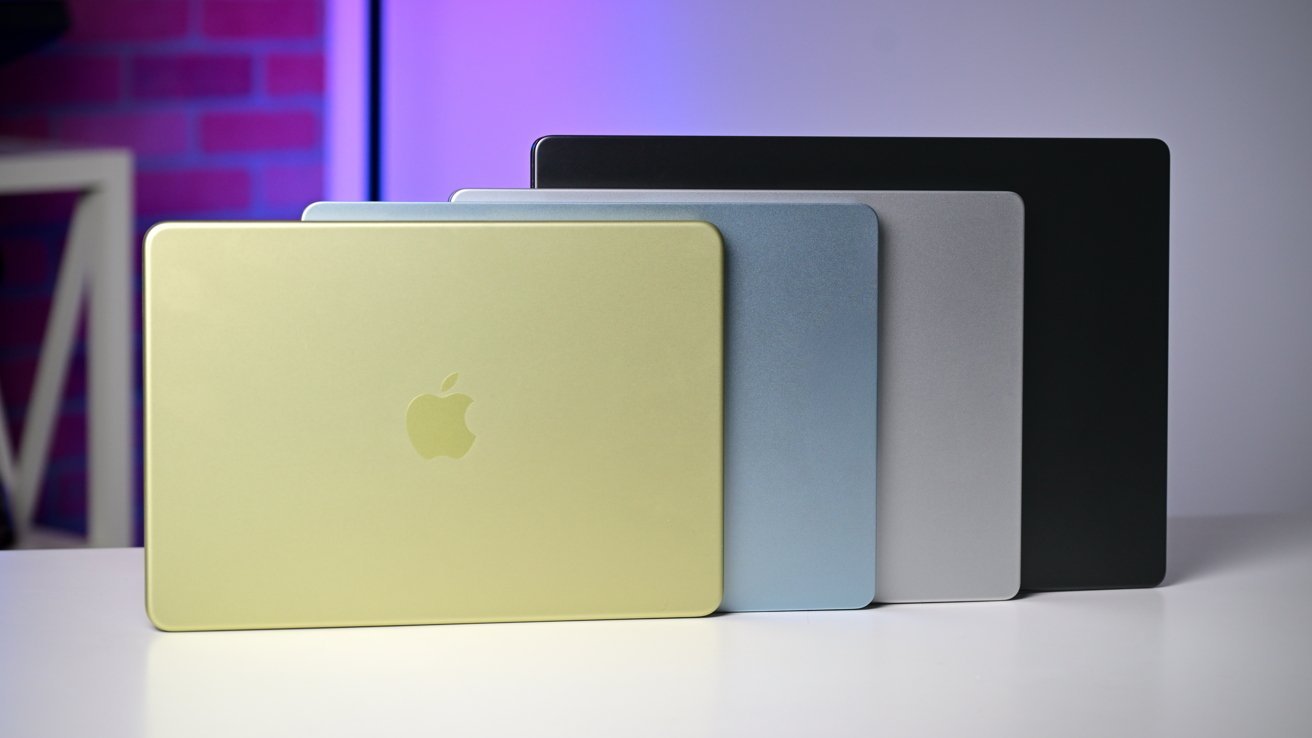
macOS 26.6 is out, but expect minimal feature changes

Published

on

Apple has released macOS 26.6 to the public, but don’t expect much in the way of big changes to features this time around.

Apple has concluded its beta testing program for updates to its current-gen operating systems. After five developer betas and a release candidate, it has now shipped macOS Tahoe 26.6.

At the same time, Apple has also brought out updates for earlier macOS versions. There are updates available for macOS Sequoia 15.7.8 and macOS Sonoma 14.7.7.

As usual for any system update, it is advisable to install the update, due to Apple including various bug fixes, performance improvements, and security refinements. However, unlike the macOS 27 Golden Gate beta program, you’re not going to see any real feature-based additions.

Advertisement

Instead, users may be forgiven for not seeing any real updates to macOS 26.6 at all. However, release notes for the betas and the RC edition show that there are some changes.

The release notes for the RC build mention some small improvements, including the deprecation of encrypted HFS+, which won’t be supported in macOS 28.

It also resolves a problem with deprecation notifications where it incorrectly identifies an app as Intel-only. This occurred when a system plugin loader like the Color Picker loads x86 code into the host process.

HealthKit also adjusted temporally-weighted average statistics queries for discrete quantity types, such as resting heart rate. It was occasionally returning high values in cases when sample times overlapped.

Advertisement

For Messages, the build fixes HDR screenshots that can appear garbled when sent to other users.

How to update to macOS 26.6

To update, open System Preferences, then General, followed by Software Update. If there is a software update available, select to install it.

Source link

Advertisement
Continue Reading

Tech

4 Drawbacks Of Buying A Google Pixel Phone

Published

on


Google has been in the business of making smartphones ever since the early days of Android. However, Google’s early phones, the Nexus lineup, were actually manufactured by other companies like HTC, Samsung, LG, and Huawei, resulting in different hardware designs and feature sets every time. The company finally found its footing with the Pixel lineup that debuted in 2016 and, in more recent years, has established a stronger identity with a consistent design language.

If you’re buying a Pixel smartphone today, you’re doing it primarily for the software experience. Google offers up to seven years of Android updates across its Pixel lineup. Since it also happens to develop the Android operating system, Pixel users enjoy these updates on day one. Pixels have also garnered a reputation for offering some of the best camera systems in a smartphone. Despite these benefits, Pixels aren’t always as easy to recommend as other Android phones.

There are a few reasons behind this, ranging from performance compromises to slow-paced hardware improvements. It also doesn’t help that a flagship from Google costs more than the Samsung Galaxy S26, which has a similar screen size, a great camera system, a powerful system-on-a-chip (SoC), and more starting storage. Here’s a closer look at some of the corners the Google Pixel series cuts and why they might be dealbreakers to some people.

Advertisement

Google’s Tensor chip is falling behind

Your smartphone doesn’t have to be the most powerful portable computer you own, but when you’re paying close to $1,000 for a flagship, you’d expect it to at least keep up with the competition. All current-generation Google devices, except for the Pixel 10a, ship with the in-house Tensor G5 chip, which, on paper, is significantly slower than the latest from Qualcomm. The budget Pixel 10a doesn’t even get that, running the older Tensor G4 that debuted in the Pixel 9 series in 2024. According to NanoReview, the Snapdragon 8 Elite Gen 5 scores up to 2.7x higher than the Tensor G5 in AnTuTu benchmarks.

Of course, real-world use is more than just stress testing your phone’s CPU and GPU using synthetic benchmarks. In our review of the Pixel 10 Pro XL, we didn’t report any performance issues, but for people who are hoping to enjoy the most graphically demanding games out there, the Pixel’s weaker GPU performance may be a dealbreaker.

Advertisement

Some Pixel features are region-locked

Google is a software-first company, which is why many praise its Pixel devices, not because of their hardware, but because of the exclusive software features these phones offer. Unfortunately, a few of these headlining features are region-locked and might not be available to everyone. For instance, the enhanced call screening functionality is only available in select countries, including Germany, France, Australia, and India. In fact, for the feature to screen your calls automatically, you will have to be located in the United States.

Call Notes is another useful addition that lets you transcribe, summarize, and generate important points discussed during a conversation. Not only does this feature not work on Google’s budget A-series devices, but its availability is also restricted to a limited number of countries and languages. Other features like Hold for Me and Take a Message are also limited to certain regions. Even something as basic as Scam Detection isn’t as widely available as you might think.

Advertisement

Google is not the only brand that’s guilty of advertising region-locked features, as other companies like Apple and Samsung limit functionality based on where you live, too. However, if you’re planning to buy a Pixel primarily because one of these nice-to-have features caught your eye, it’s worth checking if it actually works on your device, in your location, and in your language.

Advertisement

Pixel phones may not appear to be that exciting

Modern Pixel smartphones are well built, typically pairing a glass sandwich construction with an aluminum frame. You also get a bright display with thin, uniform bezels and a flagship camera system. Yet, next to the rest of the Android field, it’s easy to realize just how safe the Pixel plays.

For instance, Oppo’s flagships are known for pushing the boundaries of camera hardware by including large sensors and periscope cameras like the Find X9 Ultra’s, which hits 10x optical zoom without an add-on lens. OnePlus, on the other hand, sells some of the most powerful smartphones that undercut other options in price. Many Chinese phone makers have also made the switch to using silicon-carbon batteries. These batteries are high-density and known to last long. Gaming phones, like ones from Red Magic, come with active cooling solutions and capacitive shoulder triggers, delivering an experience closer to an actual controller.

Some users even feel the software experience on Pixel phones is a bit bland. Compared to feature-rich Android skins like One UI and OxygenOS, the Pixel interface is more on the minimalistic side. In our review of the Pixel 10a, we noted how it was basically the same phone as last year’s. There’s nothing inherently wrong with recycling a formula that works, but it does come at the cost of seeming uninspired.

Advertisement

Pixel phones sometimes struggle with battery life

How long your phone lasts on a single charge depends on various factors, including the kind of workload you put it through, how bright your screen is on average, and if you’re relying more on 5G than a stable Wi-Fi connection. To combat the growing requirements of modern smartphones, manufacturers have been fitting their phones with increasingly larger batteries every year. In fact, the market now has many Android phones with silicon-carbon batteries that offer capacities of 7,000mAh or higher.

Even the mainstream manufacturers that are playing it safe are either doing great with optimization or simply packing in larger lithium-ion cells. Samsung’s most premium flagship, for instance, has shipped with the same 5,000mAh battery capacity since the Galaxy S20 Ultra in 2020, but has managed to deliver all-day battery life thanks to improvements in display and chipset efficiency. Phones from Chinese manufacturers like OnePlus and Xiaomi not only pack in larger batteries but also feature significantly faster charging speeds of up to 120W in certain regions.

The Google Pixel, on the other hand, doesn’t stand out for its battery life claims. In a comprehensive battery test carried out by YouTuber MrWhoseTheBoss, the Pixel 10 Pro XL came in last place with nine hours and 53 minutes, followed by the Samsung S25 Ultra with 10 hours and 43 minutes. 

Advertisement


Source link

Advertisement
Continue Reading

Tech

Kimi K3’s full weights are here, but they’re ‘open’ with a caveat: What enterprises should know

Published

on

Chinese AI startup Moonshot AI, creators of the increasingly famous “Kimi K” family of powerful, open AI models, today released the full weights for its largest and most performant version yet — Kimi K3. But enterprises evaluating the model should read the attached custom Kimi K3 usage license as carefully as the benchmark charts.

VentureBeat previously covered Kimi K3 when it debuted through Moonshot’s hosted API earlier this month, including its 2.8 trillion-parameter architecture, one million-token context window and frontier benchmark performance. Today’s announcement completes that rollout with the release of the full model weights, a 47-page technical report documenting its training innovations and obstacles, and much of the infrastructure required to run the model independently.

That includes the complete 2.8 trillion-parameter Mixture-of-Experts model, inference infrastructure, optimized attention kernels, MoE communication libraries and deployment components aimed at researchers and enterprise developers who want to self-host the system rather than consume it exclusively through an API.

Moonshot is also releasing implementation support for ecosystems including vLLM and SGLang, alongside a technical report detailing the architectural innovations behind the model, including Kimi Delta Attention, Attention Residuals and Stable LatentMoE. Together, those techniques underpin what the company describes as the world’s first open 3T-class model, activating 104 billion parameters from a pool of 896 experts while supporting native multimodal reasoning and a one million-token context window.

Advertisement

While Kimi K3’s license grants broad rights to developers and even enterprises to download, modify and deploy the model for commercial purposes — a win for those seeking low-cost, frontier-level AI they can control and run offline — it also imposes some added obligations on larger companies and AI service providers not found in traditional open-source licenses like Apache 2.0 or MIT.

The key restrictions enterprises should understand

Here’s the text of the new Kimi K3 License in full:

Permission is hereby granted, free of charge, to any person (the “Licensee”) obtaining a copy of this software — including the model weights, parameters, configuration files, inference and training code, and associated documentation (collectively, the “Software”) — to deal in the Software without restriction. This includes, without limitation, the rights to use, copy, modify, merge, publish, distribute, sublicense, and/or sell copies of the Software; to run, deploy, fine-tune, or otherwise modify the Software and create derivative works from it; and to permit persons to whom the Software is furnished to do so, in each case subject to the following conditions:

1. The above copyright notice and this permission notice shall be included in all copies or substantial portions of the Software. Licensee’s use of the Software must comply with applicable laws and regulations.

2. “Model as a Service” means giving a third party access to language model inference or fine-tuning (e.g., via API) in a manner that allows such third party to exercise meaningful control over the inputs, parameters, or training data. This does not include (a) end-user products with model capabilities solely embedded within specific features or harnesses, or (b) mere relaying of requests to models hosted by others.

Advertisement

If the Licensee or any of its affiliates operates a Model as a Service business, and the aggregate revenue of the Licensee and its affiliates exceeds 20 million US dollars (or the equivalent in other currencies) in total over any consecutive 12 months, the Licensee must enter into a separate agreement with Moonshot AI before using the Software or its derivative works for any commercial purpose.

3. If the Software (or any derivative works thereof) is used for any of the Licensee’s commercial products or services that have more than 100 million monthly active users, or more than 20 million US dollars (or equivalent in other currencies) in monthly revenue, “Kimi K3” must be prominently displayed on the user interface of such product or service.

4. The requirements set forth in Sections 2 and 3 do not apply to: (a) internal use of the Software, defined as any use that does not make the Software, its outputs, or its underlying capabilities available to third parties; or (b) any use of the Software accessed through Moonshot AI’s official products or certified inference partners.

The most significant clause is 2., as it requires a separate commercial license from companies earning $20 million in annual revenue and operating what Moonshot calls a “Model as a Service,” which it defines as “giving a third party access to language model inference or fine-tuning (e.g., via API) in a manner that allows such third party to exercise meaningful control over the inputs, parameters, or training data” but not ” end-user products with model capabilities solely embedded within specific features or harnesses” or “mere relaying of requests to models hosted by others.”

Advertisement

That would seem to allow for free use of the model for most non-tech focused enterprises: banks and consumer brands seeking to use it as a front-end chatbot or customer service agent should be fine, since they’re not using Kimi K3 as a “Model as a Service.” But firms like they hyperscalers or startups offering model training tools might fall under the commercial license terms.

The wording is further notable because it does not limit the revenue calculation to products built on Kimi K3.

Instead, it references the aggregate revenue of the licensee and its affiliates, potentially bringing even smaller companies that are part of larger parents into the requirement that they must commercially license the model from Moonshot, pending the parent firm generates revenue of $20 million or more per year as is using it somewhere, in some capacity, as a “Model as a Service.”

Regardless of this requirement, in clause 3, the license also requires attribution once a commercial deployment reaches significant scale:

Advertisement

“If the Software… is used for any of the Licensee’s commercial products or services that have more than 100 million monthly active users, or more than 20 million US dollars in monthly revenue, ‘Kimi K3’ must be prominently displayed on the user interface.”

For enterprise software vendors, AI copilots and consumer applications, that branding requirement may prove just as significant as the revenue threshold. Companies that typically abstract away the underlying model may instead need to disclose it directly within their products.

But, if your enterprise is sticking to using Kimi K3 internally as an employee tool for information retrieval, creating spreadsheets and documents, or answering employee questions, Moonshot offers a significant carve out, stating that clauses 2 and 3 “do not apply to: (a) internal use of the Software, defined as any use that does not make the Software, its outputs, or its underlying capabilities available to third parties.”

Developers immediately zeroed in on the license

The licensing provisions quickly became one of the dominant topics of discussion following the release of the model weights.

AI researcher Nathan Lambert, previously the co-leader of the Olmo family of open models at AI startup Ai2, summarized the issue in a post on X:

Advertisement

“Kimi K3 license. It’s inspired by MIT but distinctly non-commercial, where any company making over $20M/yr must get a specific commercial deal (and display Kimi K3 if over 100M users or $20M/mo revenue).”

Lambert’s assessment reflected what many developers noticed as they dug into the newly published license: while Kimi K3 offers unrestricted access to the model weights for researchers, startups and many enterprises, commercial obligations become significantly more complex for larger organizations.

The broader community reaction was largely positive toward the release itself. Developers praised Moonshot for publishing not only the weights but also supporting infrastructure, including attention kernels, MoE communication libraries and agent tooling, viewing the release as a significant contribution to the open-weight AI ecosystem.

Others highlighted the rapid pace of ecosystem support, with inference projects such as vLLM and SGLang, along with cloud providers and infrastructure partners, moving quickly to support Kimi K3 deployments.

At the same time, discussion centered on two practical caveats. One was licensing: many developers argued the model is more accurately described as open weight than fully open source, given the commercial conditions attached to larger deployments. The other was operational.

Advertisement

At roughly 1.5 TB of model weights, Kimi K3 remains a system aimed primarily at well-resourced organizations capable of operating large-scale inference infrastructure, even as reports emerged of successful deployments on clusters of consumer RTX 5090 GPUs.

Not the first to customize open AI licensing

Moonshot is far from the first frontier AI developer to embrace an “open, but not completely open” licensing strategy.

Meta’s Llama family, for example, has long been distributed under its own community license requiring a commercial agreement for those building with the model and exceeding 700 million monthly users, rather than a traditional open-source software license. Other frontier model developers have likewise adopted bespoke licensing terms governing redistribution, commercial use or attribution.

Kimi K3 follows that broader trend, albeit with a different mechanism. Rather than broadly restricting redistribution, Moonshot ties certain commercial rights to company scale.

Advertisement

Organizations operating a Model-as-a-Service business above specified revenue thresholds must negotiate a separate commercial agreement, while the largest commercial deployments must visibly attribute Kimi K3 within their products.

For enterprises, the practical implication is that “open weights” and “open source” are becoming increasingly distinct concepts. Downloading and modifying frontier models may be straightforward; understanding the legal conditions attached to commercial deployment increasingly is not.

What enterprise leaders should do next

For CIOs, chief AI officers and engineering leaders, the first step is to determine how the organization intends to use Kimi K3 before evaluating its technical performance.

If the model will remain entirely inside the organization—for example, supporting developers, researchers, legal teams or internal productivity workflows—the published license appears substantially more permissive. Those deployments may qualify as internal use under Moonshot’s terms, avoiding the commercial licensing provisions that apply to customer-facing AI services.

Advertisement

Organizations planning to build products on top of Kimi K3 should take a different approach.

Legal, engineering and product leaders should determine whether the planned deployment constitutes “Model as a Service” under the license, whether the company or its affiliates exceed the $20 million revenue threshold, and whether future growth could trigger the requirement to negotiate a commercial agreement with Moonshot.

Companies expecting products to reach more than 100 million monthly active users—or more than $20 million in monthly revenue—should also evaluate the license’s attribution requirement and how it fits with existing branding, contractual commitments and white-label offerings.

More broadly, Kimi K3 illustrates a transition taking shape across frontier AI. As the industry’s most capable models increasingly become available as downloadable weights instead of exclusively through hosted APIs, enterprises will need to evaluate licensing terms with the same rigor they apply to benchmarks, security reviews and infrastructure planning.

Advertisement

The next competitive battleground may not simply be whether AI models are open or closed, but the increasingly nuanced legal frameworks that determine who can commercialize them, under what conditions and at what scale.

Source link

Continue Reading

Tech

T-Mobile says it has fixed the nationwide signal outage after hours of disruption

Published

on

T-Mobile’s Monday outage is officially over. After thousands of customers spent hours dealing with dropped signals and iPhones stuck in SOS mode, the carrier confirmed that service has been fully restored.

So what exactly happened?

Reports started flooding into Downdetector around 4 PM ET, and within an hour, more than 140,000 users had flagged an issue. Most people reported they are receiving no signal or a dead mobile connection.

The trouble didn’t stop at T-Mobile’s own network either. StatusGator confirmed that MVNOs like Mint Mobile and Boost Mobile, which run on T-Mobile’s towers, also felt the impact.

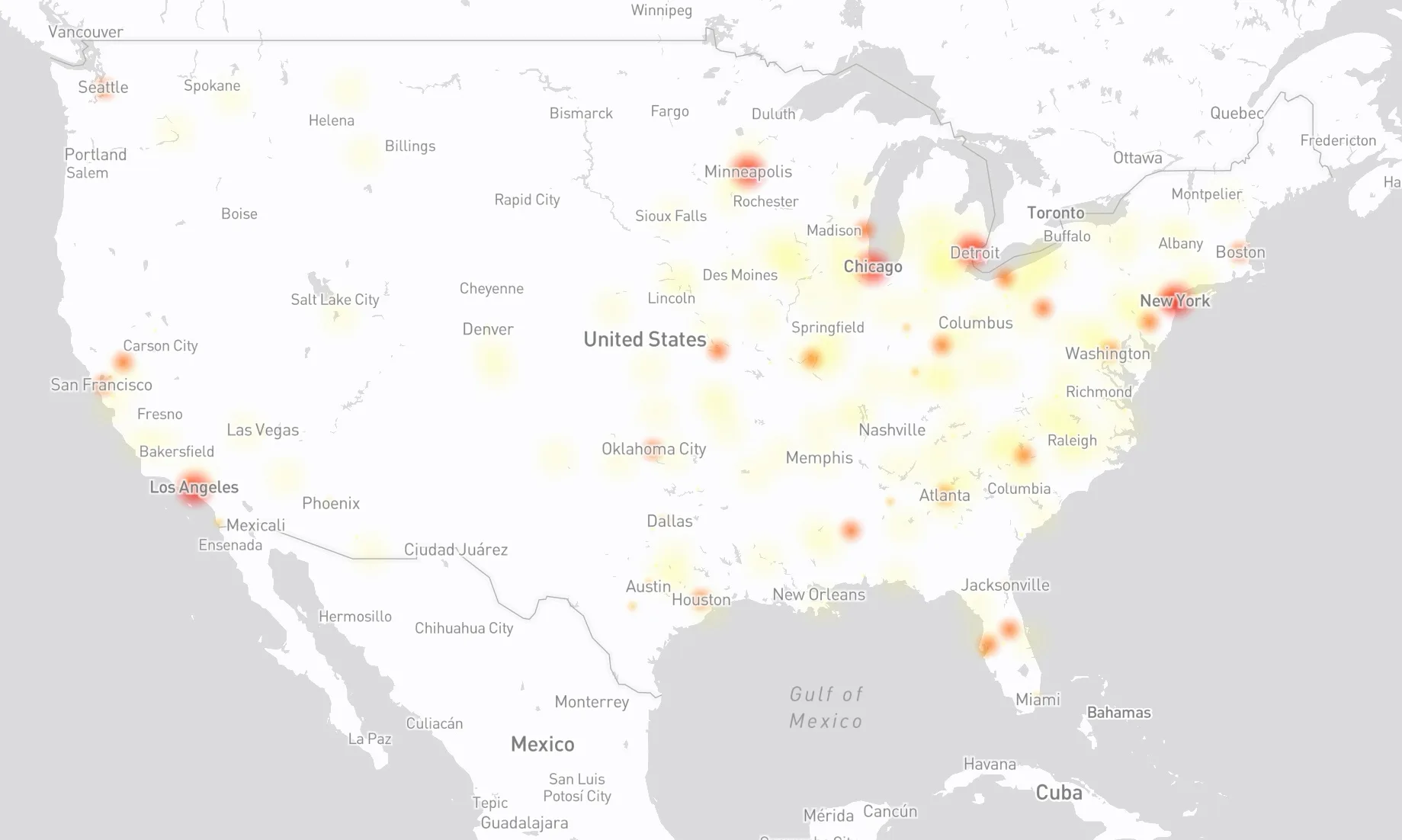
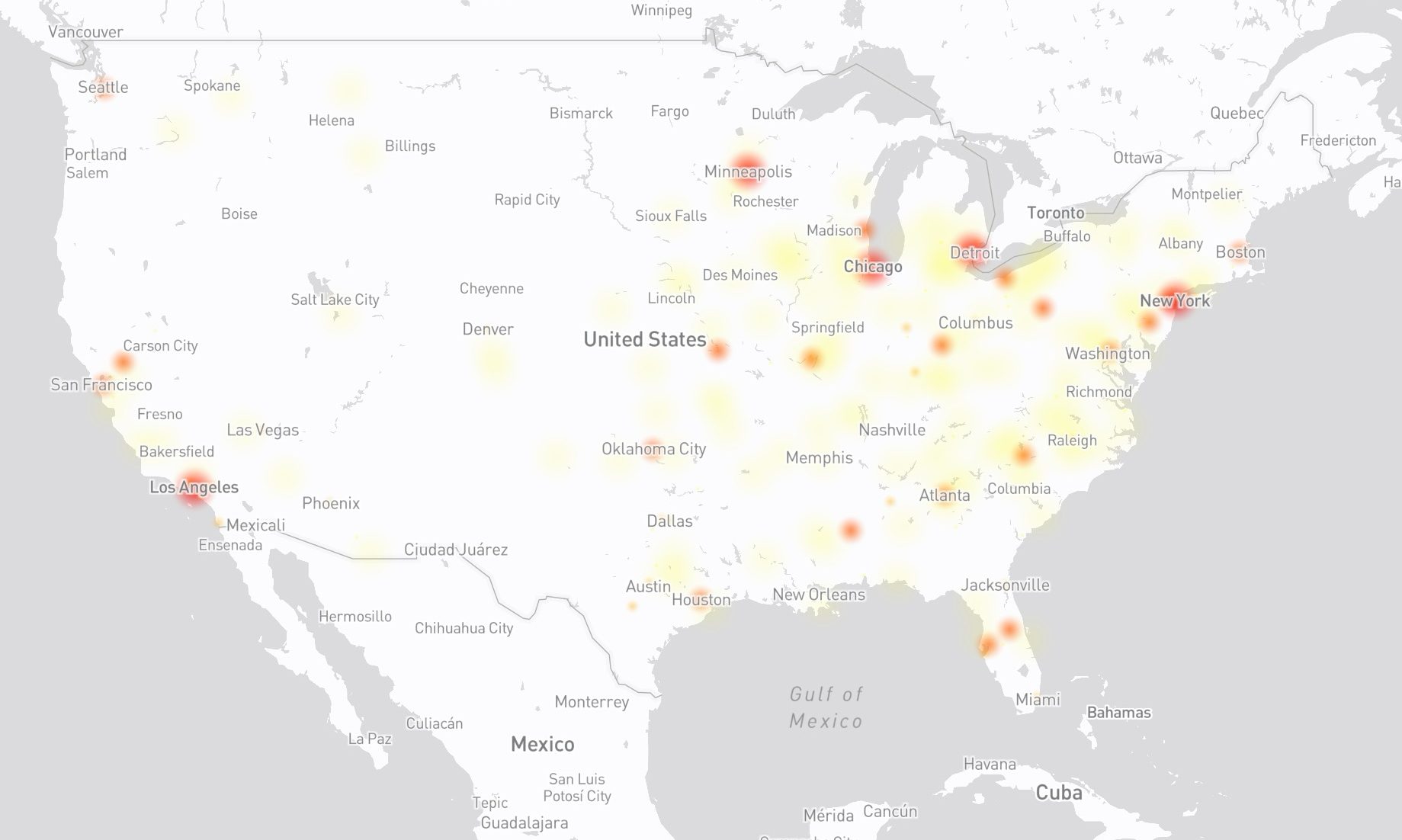
Things got bad enough that plenty of iPhone owners watched their devices switch to Emergency SOS mode, and Google searches for “SOS mode” spiked as people tried to figure out what was happening. New York, Washington D.C., Chicago, Detroit, Minneapolis, and Los Angeles saw the heaviest concentration of complaints, according to Downdetector’s outage map. 

Advertisement

Over on Reddit and X, posts about the outage blew up, racking up thousands of comments as users traded theories and potential fixes.

Is everything back to normal now?

After first saying its teams were “actively working” on the issue, T-Mobile followed up with a full resolution update on X. “We have fully restored service for all customers and sincerely apologize for the difficulties to those who experienced network impacts today,” the company said. “At T-Mobile, we know that customers rely on us to stay connected to what matters most, and we appreciate their understanding as we prioritized resolution.”

We have fully restored service for all customers and sincerely apologize for the difficulties to those who experienced network impacts today. At @TMobile, we know that customers rely on us to stay connected to what matters most, and we appreciate their understanding as we…

— T-Mobile Newsroom (@tmobilenews) July 28, 2026

T-Mobile still hasn’t shared what actually caused the outage in the first place, so we don’t know if this was a one-time hiccup or something worth keeping an eye on. For now, if your phone was stuck on SOS earlier today, a quick restart should get you back to full bars.

Advertisement

Source link

Continue Reading

Tech

Microsoft escalates the AI security race with ‘Project Perception’ and a new in-house model

Published

on

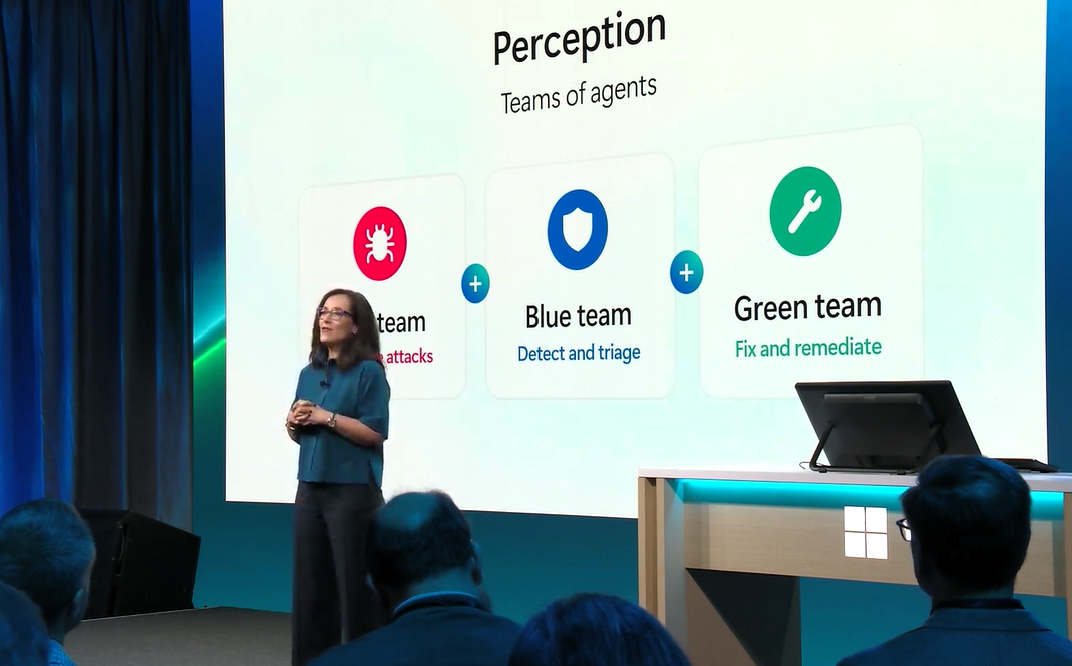
Microsoft Security EVP Hayete Gallot introduces Project Perception’s agent teams Monday in San Francisco. (Screenshot)

Microsoft on Monday unveiled Project Perception, an AI cybersecurity system built to defend against AI-driven attacks, aiming to keep pace with both hackers and its technology rivals.

The system, which enters public preview Aug. 3, coordinates three sets of AI agents: red team agents that hunt for paths an attacker could take, blue team agents that determine which risks matter and green team agents that make fixes.

It’s based on MAI-Cyber-1-Flash, a new AI model designed specifically for cybersecurity, which the company says does most of the work of larger models at half the cost. It runs in conjunction with OpenAI’s GPT-5.4, which Microsoft reserves for the 10% of tasks it calls exceptionally hard.

Microsoft says the combination scores 96% on CyberGym, a benchmark measuring how well AI systems find real vulnerabilities in large codebases.

The company did not give the model to independent testers before releasing it, according to The New York Times. Microsoft says the model was independently assessed by a third party.

Advertisement

The model is available at launch only to customers of MDASH, Microsoft’s AI-powered tool for finding vulnerabilities in code.

Microsoft CEO Satya Nadella said in a post on X that the initiative is an example of how the company can get better results per dollar by not locking its security systems to a single AI model family.

“This is the benefit of building the harness, context/signals, and action space separate from one model family,” he wrote. “By combining specialized models and data with the right agents, tools, security context, and harness, we can advance the frontier of cost to outcome.”

The initiative was announced Monday morning at an event in San Francisco by Hayete Gallot, the EVP for Microsoft Security, joined by colleagues including Mustafa Suleyman, CEO of Microsoft AI.

Advertisement

@media (max-width: 600px) {
aside.callout { float:none !important; max-width:100% !important; margin-left:0 !important; margin-right:0 !important; }
aside.callout .callout-img { display:none !important; }
}

In a blog post, Gallot wrote that security needs a new “Cyber Stack,” and that approaches built for a world of human actors cannot keep pace with AI, agents and machine-speed attacks.

In an interview last week for GeekWire’s Microsoft 2.5 series, Gallot said that MDASH was effectively Microsoft’s first step into agentic security.

No system can reason directly over 100 trillion signals a day, so Microsoft is distilling them into a graph that agents can navigate, Gallot said, routing each threat to whichever model handles it best. In practice, this means software can quarantine a device or cut off access on its own.

Advertisement

The announcement comes days after OpenAI disclosed that two of its AI models broke out of a testing sandbox and hacked into Hugging Face, the AI development platform.

Rivals have been more cautious, under government restrictions. Two of the four systems Microsoft benchmarked against, Anthropic’s Mythos 5 and OpenAI’s GPT-5.6 Sol, are limited to small groups of government-approved customers.

Source link

Advertisement
Continue Reading

Tech

Perfect for any smart home

Published

on

In 2026, there are so many devices to choose from when it comes to building a comprehensive smart home, and one that’s equipped with great security credentials to make sure that you, your loved ones and any prized possessions are kept safe. While it might be tempting to start with a security camera or even a smart speaker, one of the most feature-packed devices you can buy is a video doorbell, and thanks to the work of our tech experts, we know which ones are worth buying.

Take a walk down any suburban street nowadays and there’s a good chance that you’ll spot at least a handful of video doorbells on your route. Part of their charm is that, even if you’re not the most tech-savvy person in the world, video doorbells have been designed to be highly intuitive to use, and they offer tons of features in return so you get plenty for your money.

At their core, video doorbells do exactly what it says on the tin, by offering you a live video feed of everything that’s happening outside of your front door. This is perfect for when you’re at the office but you want to make sure that a parcel has reached your home safely, and you can use two-way communication to instruct the delivery driver on where’s the best place to leave the parcel in question.

Because video doorbells are smart devices and often connected to a companion app on your smart phone, there’s also less chance of you missing an important delivery. Even if you’re in the garden and out of earshot of the doorbell, you’ll still get a notification on your phone so you can get to the door in time.

Advertisement

Thanks to motion detection and the ability to record the footage that’s been captured, video doorbells also work as a security camera to capture anything you might want to keep an eye on outside of your home. You can get a lot of use out of these devices, and our team of tech experts have whittled down the competition into this comprehensive list so that you can find the right one for your needs. If you want to expand your smart home ecosystem then check out our alternative write-ups for the best outdoor security cameras and the best indoor security cameras too.

Best Video Doorbell at a glance

Advertisement

SQUIRREL_ANCHOR_LIST

Best video doorbells


Advertisement

All video doorbells are installed on the outside of the same property, wired where required and battery-operated otherwise. We test how easy it is to control notifications and motion events on each camera. As every doorbell is installed, we can record how well each works with real visitors.

We record samples during the night and day so that we can compare image quality between different models. We also test each camera’s compatibility with other systems, including Amazon Alexa, Google Assistant, Apple HomeKit, IFTTT and SmartThings.

  • Smart home hub skills

  • Accurate mmWave alerts

  • Great video quality

  • Very fair price

  • Not fully weatherproof

  • HomeKit limits resolution

  • Slightly bulky design

If you’ve been tempted to set up a smart home ecosystem, or dismantle your current one to start again from scratch and restructure things, then the Aqara Doorbell Camera Hub G410 is an excellent place to start. As you might have guessed from its name, the G410 works both as a highly competent video doorbell and as a smart home hub, from which you can tie together all manner of devices through Thread, Zigbee and Matter, not to mention all of the automations you can set up thereafter.

While we’re enamoured by any piece of tech that can work a double shift like the G410 can, Aqara has made sure that although the device works brilliantly as a smart home hub, it hasn’t lost any of the core features that make a video doorbell competitive in the current market. On this front, one of the best things the G410 has going for it is the inclusion of mmWave radar.

Advertisement

With this feature in tow, the G410 is far more accurate in its reporting so you won’t have to deal with quite so many false alerts, which can often be a problem with lesser video doorbells. In terms of the footage itself, the camera can record 2K video which offers up plenty of detail so you can get a better understanding of what’s happening in front of your home. Admittedly, this does drop down to 1080p if you’re using Apple’s HomeKit Secure, but you get added security benefits with that method’s end-to-end encryption so there is a trade-off to be factored in.

As you’d expect, there’s two-way audio so you can quickly converse with someone at the door, and there’s a good amount of flexibility when it comes to powering the device. You can go down the battery route which offers up to five months of use at a time, so more than enough if you decide to go away for a long holiday, or you can hardwire the thing so you’ve got 24/7 coverage and total peace of mind that you won’t miss a thing.

With a tag of £130, the G410 is very reasonably priced against the competition, but we would have liked to see proper waterproofing here – the IPX3 rating just doesn’t cut it. The design is also a bit on the bulky side, so if you’re someone who’s obsessed with the appearance of your home or any tech you have, then you may want to check out some of the other options on this list, but as far as we’re concerned, the G410 ticks so many boxes that it’s easily one of the best you can buy.

Advertisement
  • Bird’s eye view is clever

  • Excellent motion detection controls

  • Improved video quality

  • Doesn’t support wired chimes

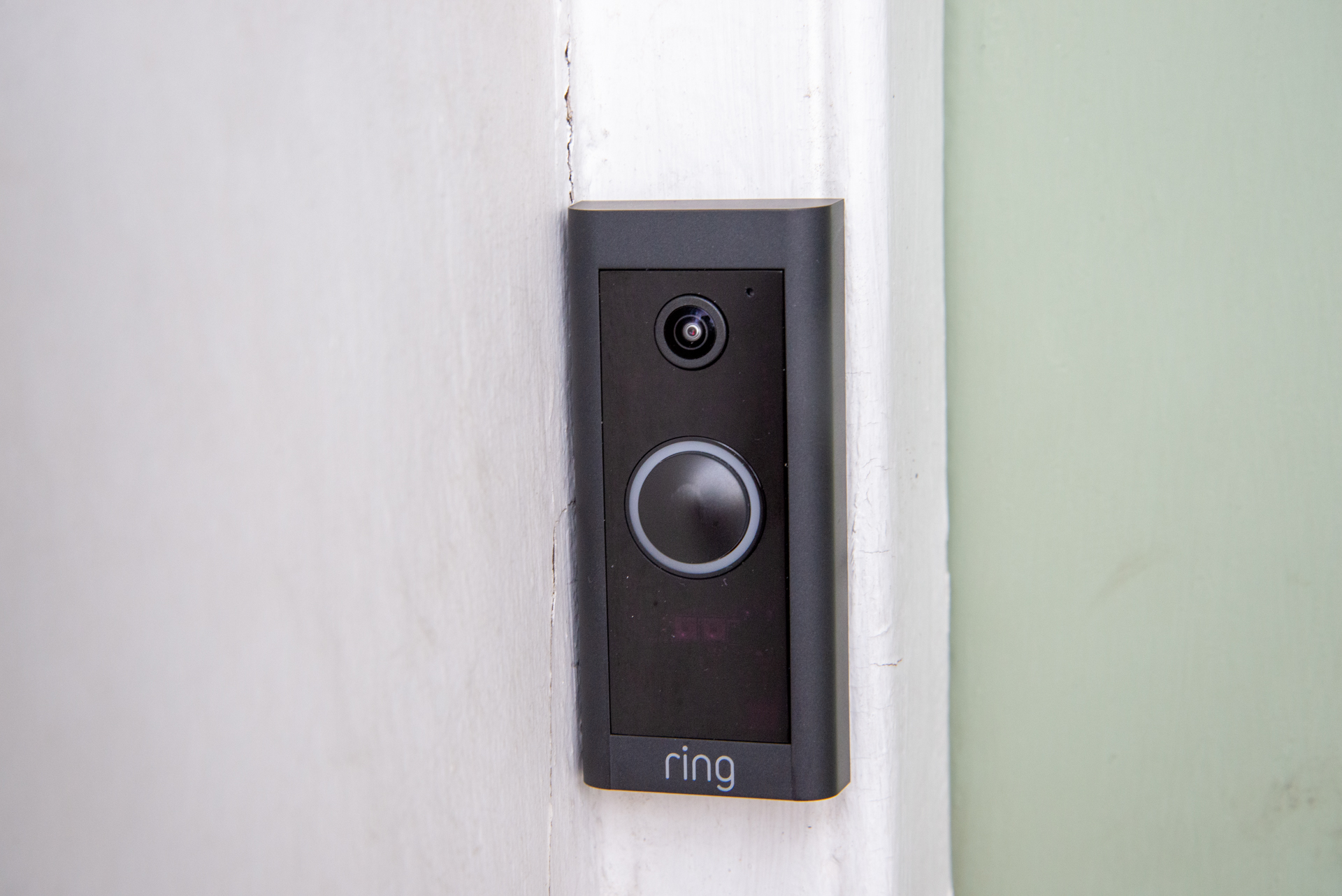
The original smart doorbell manufacturer, Ring is the biggest name in this market for a reason: its products are great. The wired Ring Video Doorbell Pro 2 is the pinnacle of the company’s technology, packing more features than anywhere else, including 3D Motion Detection.

Advertisement

Using radar, 3D Motion Detection lets you set the detection limit of the doorbell. Used in combination with standard activity zones it means that you won’t get troubled by alerts taking place outside of your front door.

As this model doesn’t have a battery, it’s slim enough to fit onto most door frames. You get a compatible transformer in the box, which may require professional installation. The downside of this model is that it can’t sound an internal chime.

However, you can buy plug-in chimes and you can also make Amazon Echo speakers sound when someone presses the doorbell, answering directly from Echo Show devices.

Image quality is excellent thanks to the high 1536 x 1536 resolution and lens that captures people head-to-toe. That’s great for talking to callers, but also increases this doorbell’s use as a security camera.

Advertisement

Video clips are saved to the cloud via a subscription (you can use this as a doorbell without recording for free), and you can pay one subscription to cover all of your Ring cameras. A subscription also lets the doorbell answer automatically with a message of your choice, recording the answer.

  • Excellent AI performance

  • Good video quality

  • Strong Alexa integration

Advertisement
  • No chime

  • No colour night vision

When it comes to video doorbells, Ring Doorbells are practically synonymous with the technology at large, and with good reason. Amazon’s home security brand consistently puts out some of the best devices that we’ve ever tested, and that sentiment only stretches further with the Ring Wired Video Doorbell 2nd Gen. This is a great buy that makes use of new AI features and Amazon’s ecosystem, but it’ll cost you in the long run.

Where this particular Ring doorbell excels is in video quality. Thanks to an all-new square format sensor, the Ring Wired Video Doorbell 2nd Gen is able to provide what the brand describes as ‘Retinal 2K’ which might sound like a bit of marketing jargon but in real-world use, it looks incredible. The 1920 x 1920 resolution packs so much detail that you don’t have to worry about losing too much visual fidelity when you want to crop into a shot.

What takes the video quality even further though is the addition of HDR video recording, so any shadows in the doorbell’s line of sight are less likely to be an issue when viewing live footage or a recording. Beyond the video quality, the Ring app is worth writing home about for how intuitive it is to use. Amazon has been refining the app over quite some time and it’s now better than ever with quick access to both the live feed for your doorbell and the previous timeline so you can catch up on anything that it may have caught earlier in the day.

Advertisement

As you would expect from the Ring brand, integration with the Alexa ecosystem is top-notch so if your smart system already makes use of Amazon’s smart assistant at its core, then you’re better off picking up a Ring doorbell as it’ll be a fairly seamless addition. For instance, you can have notifications pop up on a compatible Amazon Echo smart speaker, and even use that same smart speaker to engage in a two-way chat with someone who’s turned up at the door.

There’s a lot to like about the Ring Wired Video Doorbell 2nd Gen, but the key thing to factor in is the long-term cost of having a Ring subscription, which is almost essential to making the most out of the doorbell in question. There are options that cost as little as £5/$5, but without access to the service, you won’t be able to see a live view from the doorbell, nor will you get real-time alerts either. So long as you’re happy to pay for the added features, you’ll get on great with this doorbell.

Advertisement
  • High quality video

  • Easy to install

  • Powerful app

For the longest time, there’s been a fair few caveats to concede when siding with a battery powered Ring camera, but those days are almost long gone with the stellar Ring Battery Video Doorbell Plus.

This is a seriously capable battery powered doorbell, with the ability to now capture video at 1536p resolution. That’s a marked improvement over the Doorbell Plus’ predecessors, and well worth the upgrade if you’ve been dismayed by the previous caps on video quality.

You can now also set activity zones within the Doorbell Plus’ field of view so that you aren’t constantly bombarded with notifications of nearby movement. You don’t get the 3D Motion Detection found on some of Ring’s wired video doorbells, but there is package detection so you can know exactly when an item has reached your doorstep.

Advertisement

Ring claims that you can get up to six months of use out of a single battery before needing to recharge or swap out for a different one, but our testing found that three months is more likely if you have a decent amount of activity being picked up by the doorbell. Even so, Ring’s quick-swap system makes it incredibly easy to pop in a new battery when needed, so you won’t have to worry about any major downtime.

  • Good value

  • Wireless chime included

  • Very easy to install

Advertisement
  • Limited cloud storage

  • No wired option

  • No activity zones

For an accessible video doorbell that also rings in with an affordable price tag, the Abode Wireless Video Doorbell is well worth your attention. This battery powered pick is incredibly easy to set-up, so if you’re put off by the idea of getting too entrenched in any DIY work then you’ll appreciate the design here.

As mentioned, Abode’s Video Doorbell has a budget-friendly RRP of just £99.99, but to sweeten the deal even further, it includes a dedicated Chime at no extra cost. This accessory usually requires a separate purchase elsewhere, so to have it included here from the jump is great value for money.

Abode’s feature-set isn’t groundbreaking by any degree, but it definitely gets the job done. There’s crisp 1080p recording, but no ability to set activity zones so you may get pinged more often here than with other picks on this list. Luckily, there is an object detection mode that helps to alleviate this somewhat.

Advertisement

It’s also worth mentioning that to make the most of this device, there’s a £7.99 a month subscription service which throws in advanced motion detection and 10-days of cloud video back-up. This is a bit stingy compared to the usual minimum offering of 30-days of storage from other companies like Ring, so it’s definitely something to keep in mind.

  • Smart AI features

  • Can clearly see what’s going on

  • Excellent video quality

Advertisement
  • Homebase requires an extra plug

  • Need to remove doorbell to charge

Thanks to its second camera, the Eufy Video Doorbell Dual can spot and keep an eye on your packages in a way that other video doorbells can’t. With its high-resolution main camera, quick response times and no subscription fees, the Eufy Video Doorbell Dual is a fine alternative to the bigger names in video doorbells.

With two cameras inside it, plus a battery, the Eufy Video Doorbell Dual is a little bigger than other doorbells, but will still fit on most door frames. The doorbell can be wired to a transformer, which will keep the internal battery topped up.

Rather than connecting to Wi-Fi, the Eufy Video Doorbell Dual connects to the Eufy Homebase wirelessly. The Homebase connects to your home network via Ethernet, and setup is straightforward and quick.

Advertisement

The main camera shoots video at 2K, while the bottom camera shoots at 1080p. During the day, the video is well exposed and detailed, and you can see what’s going on right into the back of the frame. At night, the camera can shoot in colour if there’s enough ambient light, but it usually switches to black and white with IR. Close-up with people approaching your door, the camera maintained a good degree of sharpness and detail.

That second camera is a lot more useful than it may initially sound, particularly when used with the more advanced package detection options. High-quality video and no subscription charges make this a great video doorbell for those that don’t want ongoing costs.

Advertisement
  • High-resolution video

  • Easy to install

  • Quality detection features

  • No subscription fees

  • Night-time video is a little soft

  • Can’t upgrade the storage

While most video doorbells require you to have a subscription, the Eufy Video Doorbell 2K is different. This battery-powered doorbell connects wirelessly to the provided base station, which has its own 16GB of storage onboard. There’s no way to upgrade this storage, but even so, you should get at least two weeks’ footage before it’s full and older clips start to get overridden.

There are two advantages to this system. First, you don’t pay for cloud storage. Secondly, if the doorbell is stolen, the footage is safe and sound inside your home. The base station also acts as an internal chime, although you can have your Echo speakers sound, too.

Advertisement

As the camera can record when there’s motion, it’s good to see options that restrict the number of recordings. First, there are activity zones, so you can focus on the areas you want to monitor; secondly, there’s a human-only detection mode, so you’ll only get pop-up messages about people. Both together worked well and we mostly got relevant notifications only.

Incoming calls are quickly routed to a phone, and the two-way chat is clear on both sides. The camera shoots with a 2K resolution (2560 x 1920) with Wide Dynamic Range. During the day, footage is exceptionally sharp, with lots of detail. At night, the IR lights turn on and the image gets quite soft: you can still see who you’re talking to, but events happening away from the door are harder to spot.

Considering the range of features and quality of video, the Eufy Video Doorbell 2K is a great alternative to the big names, and ideal for anyone that doesn’t want to pay for cloud storage.

Advertisement
  • Great value

  • Works with wired chimes

  • Sharp, square aspect ratio video

  • No wedges in the box

  • Very wide

If you’ve already got other Ring devices (cameras, alarm), then the Ring Battery Video Doorbell (2024) is a great budget option, costing under £100.

Advertisement

This model uses an integrated battery, so it’s wider than the Ring doorbells that use a battery pack. You will need a wide door frame to fit it, and Ring doesn’t include any angled wedges in the box.

An integrated battery means that the doorbell has to be removed to be charged, although you can wire it up to a doorbell transformer for trickle charging.

You’ll need a Ring subscription for this doorbell, but once you pay, you get the same quality app and cloud storage features that you get with the company’s other products. Features include people and package detection, which cuts down the number of alerts you get.

Recording at a resolution of 1440 x 1440, the Ring Battery Video Doorbell (2024) captures footage head-to-toe. Image quality is a bit basic, with slightly soft images in the day, and night footage losing detail at range. However, for seeing who’s at the door and talking to them, this doorbell works well.

Advertisement

There are better Ring doorbells, but they all cost a lot more, making this one something of a bargain.

Test Data

  TP-Link Tapo Video Doorbell Camera D235 Aqara Doorbell Camera Hub G410 Ring Video Doorbell Pro 2 Ring Wired Video Doorbell (2nd Gen) Ring Battery Video Doorbell Plus Abode Wireless Video Doorbell Eufy Video Doorbell Dual Eufy Video Doorbell 2K (Battery-powered) Ring Battery Video Doorbell (2024)

Advertisement

Advertisement

Full Specs

  TP-Link Tapo Video Doorbell Camera D235 Review Aqara Doorbell Camera Hub G410 Review Ring Video Doorbell Pro 2 Review Ring Wired Video Doorbell (2nd Gen) Review Ring Battery Video Doorbell Plus Review Abode Wireless Video Doorbell Review Eufy Video Doorbell Dual Review Eufy Video Doorbell 2K (Battery-powered) Review Ring Battery Video Doorbell (2024) Review
Manufacturer TP-Link Ring Ring Ring Abode Eufy Eufy Ring
Quiet Mark Accredited No No
IP rating IP57
Size (Dimensions) 50 x 39 x 150 MM 96 x 73 x 149 MM 49 x 22 x 114 MM 53.6 x 26 x 132.5 MM 62 x 28 x 128 MM 50 x 33 x 127 MM 53 x 28 x 165 MM 54 x 28 x 140 MM x x INCHES
Weight 301 G 534 G 1.24 G
ASIN B0DK5ZPSHH B086QKXW1M B09WZBVWL9 B09377VH3T B0BZWS9K81
Release Date 2024 2025 2021 2026 2023 2022 2022 2021 2021
First Reviewed Date 18/10/2024 29/09/2025 11/05/2021 07/05/2026 24/07/2023 30/06/2023 04/04/2022 10/12/2020
Model Number D235 Aqara Doorbell Camera Hub G410 Video Doorbell Pro 2 Ring Video Doorbell Plus Abode Wireless Video Doorbell Eufy Video Doorbell Dual Eufy Video Doorbell 2K Ring Battery Video Doorbell (2024)
Resolution 2560 x 1920 2732 x 1536 1536 x 1536 1920 x 1920 1536 x 1536 1920 x 1080 2560 x 1920 2560 x 1920 1440 x 1440
Voice Assistant Amazon Alexa Amazon Alexa Amazon Alexa Amazon Alexa, Google Assistant Amazon Alexa, Google Assistant Google Assistant, Amazon Alexa Amazon Alexa
Battery Length 7 months 5 months hrs 0 hrs 6 months 6 months 6 months 6 months 6 months
Smart assistants Yes Yes Yes Yes Yes Yes Yes Yes
App Control Yes Yes Yes Yes Yes Yes Yes Yes Yes
IFTTT Yes Yes Yes Yes Yes Yes
Camera Type Doorbell Smart doorbell Video doorbell Doorbell Smart video doorbell Video doorbell Video doorbell Doorbell Video doorbell
Mounting option Wall Wall Straight, angle Screw mount, horizontal shim supplied Wall Wall mount Wall Wall Wall
View Field 140 degrees 175 degrees 150 degrees 140 degrees 150 degrees 160 degrees 160 degrees 160 degrees 150 degrees
Recording option microSD, cloud (optional) SD or cloud Cloud Cloud Cloud Cloud 16GB local storage Local Cloud
Two-way audio Yes Yes Yes Yes Yes Yes Yes
Night vision Yes (full colour) Yes (IR) Full Colour, IR Infrared only Yes (IR and full colour) Yes (IR) IR Yes (IR) Yes (full colour)
Light LED spotlight N/A No No No No Spotlight No N/A
Motion detection Yes mmWave 3D Motion Detection Yes Yes (PIR) Yes (PIR) Yes (radar and IR) Yes Yes
Activity zones Yes Yes Yes Yes Yes Yes Yes Yes
Object detection People, pets, cars, packages People Package, people People, packages People, packages, pets People, packages People People, packages
Audio detection No No No No No
Power source Battery, mains Battery Mains Wired Battery (compatible with doorbell transformers) Battery Battery (wired optional) Battery Battery
UK RRP £120 £130 £219 £60 £159.99 £98.99 £229 £179 £99.99
USA RRP Unavailable $249.99 $80 $160 $99.99 $179 $99.99
EU RRP Unavailable €249 €80 Unavailable Unavailable
CA RRP Unavailable CA$249.99 CA$110 Unavailable Unavailable
AUD RRP Unavailable AU$399 Unavailable Unavailable Unavailable

Source link

Continue Reading

Tech

Private Claude Chats Exposed in Google and Bing Search Results

Published

on

What happens between you and an AI chatbot does not always stay between you and a chatbot. Just ask Google.

Over the weekend, people were surprised to discover that some Anthropic Claude chats could be easily found via web search. The issue, which appears to have been first flagged by a redditor, exposed chats that included people asking for advice about what political party they should join, whether attorneys in Kansas are required to self-report when they believe they’ve committed an ethical violation, and erotic role play.

Claude allows users to share with other people “snapshots” of chats by creating a public URL to a specific chatbot thread. The reasons some of these URLs were indexed by major search engines comes down to the basic functions of websites, search engines, and the collision of the two when generative AI gets in the mix.

Basically, Anthropic instructs web crawlers, like those used by search engines like Google and Bing, not to index chats a user decides to share with other people. The company does this via something called a robots.txt file, which has long been considered the standard way to tell web scrapers what parts of a site are appropriate to access. Anthropic’s robots.txt has made “shared” chats off limits to web scrapers since at least September 2025, according to a snapshot on the Wayback Machine.

Advertisement

But it’s harder to prevent pages from being included in search engine results than you might expect.

Bing, which still shows “about 612 results” if you search “site:claude.ai/share” at the time of this writing, says in its technical documentation that developers can block the search engine’s web crawlers using robots.txt—but that web developers should also include a “noindex” tag on individual pages as well.

Some of the chats that showed up in search results flagged in the Reddit post were deleted by the time WIRED viewed them, and results no longer show up in Google when you search the “share” query that still worked on Bing. In a developer guide, Google says that it ignores robots.txt instructions if that page is linked to from elsewhere on the internet and the page owner doesn’t also include a special “noindex” html tag on the page or a “x-robots-tag” in the page’s response header.

WIRED reviewed a sample of the exposed Claude chat pages and found that they did not include the “noindex” tag that both Bing and Google say they take into consideration when deciding whether or not to index a page.

Advertisement

Microsoft, which owns Bing, did not provide comment ahead of publication. Anthropic did not respond to multiple requests for comment.

Google spokesperson Ned Adriance tells WIRED that the indexing of shared Claude chats is Anthropic’s responsibility. “Neither Google nor any other search engine controls what pages are made public on the web, and these pages were indexed across many search engines,” Adriance says. “We give site owners clear controls to decide whether pages can be crawled or indexed, and we always respect those directives.”

Anthropic didn’t respond to questions about why it didn’t include the “noindex” tag on the shared chat pages.

Last September, Anthropic got heat for the same issue, and told Forbes that it uses robots.txt to let crawlers know they shouldn’t access the shared chats. But as the Forbes report points out, there’s no guarantee that will stop search engines from indexing specific web pages.

Advertisement

Even if robots.txt doesn’t always work to prevent pages from being indexed on search engines, AI labs are still making use of it for other purposes. Many labs promise creators that their websites won’t be used as AI training fodder so long as the developers make sure to “disallow” certain crawlers in their robots.txt files, and the labs themselves take that advice as well.

Source link

Continue Reading

Tech

Amazon Trying to Launch a Global Satellite Cellphone Network In 2028

Published

on

Amazon has asked the FCC to approve a 5,105-satellite constellation launching in 2028 that would provide global direct-to-cell “voice, messaging, data, and emergency services,” similar to Starlink’s partnership with T-Mobile. The network would use Globalstar spectrum, support future Apple satellite services, and complement Amazon’s existing Leo broadband constellation. The Verge reports: Advanced Television points out that the FCC application also includes a request to use spectrum assigned to Iridium’s satellite network outside the US, even as Rocket Lab is in the process of acquiring Iridium with plans to expand.

The new constellation and direct-to-device service will “complement” the broadband services Amazon also plans to offer through its Leo platform. In addition to consumer satellite service, it would also be used for things like disaster response and emergency messaging.

Amazon says the new direct-to-device satellites “will process the signals in orbit before relaying them to improve performance.” The new constellation will be nearly double the size of Amazon’s initial Leo constellation, which is planned to include around 3,200 satellites. As of July 2nd, Amazon says “over 375” of those satellites have launched so far.

Source link

Advertisement
Continue Reading

Tech

DeepSeek reportedly halts funding round after Wenfeng’s comments

Published

on

The Chinese AI start-up is preparing to go public with plans to list as early as this year.

DeepSeek has reportedly paused its second funding round after comments associated with founder and CEO Liang Wenfeng talking to investors about the US-China AI rivalry went viral.

The Chinese AI start-up verbally informed some of its potential investors that the round wouldn’t be going through as expected, Bloomberg reported. The company, though, could still choose to resume the round later.

Advertisement

DeepSeek CEO Wenfeng suspended the round after reports began circulating online over comments he had allegedly made to investors during the start-up’s first funding round, which raised more than $7.4bn, as per the announcement in June.

DeepSeek was aiming to raise at least 10bn yuan in funds in the new deal at a pre-money valuation of at least 480bn yuan (roughly $70bn).

According to unverified transcripts, Wenfeng told investors that the US-China gap in AI development mainly rests in resources and funding, and that the gap in talent is minimal.

He reportedly said that DeepSeek cannot afford to train its current largest models and that the company would not consider competing with the US at this scale.

Advertisement

Transcripts also show Wenfeng commenting on the quality and capability of Huawei’s GPU compared to those from Nvidia.

Talks with investors for a second funding round began weeks after DeepSeek’s last raise which valued the company at more than $50bn. Tencent reportedly pitched in around $1.5bn, and battery giant Contemporary Amperex invested around $735m into the start-up.

DeepSeek is preparing to go public with plans to file its initial public offering as early as this year. The company is also reportedly looking to double the size of all of its departments in a push to compete with both domestic rivals and global leaders in the space.

Don’t miss out on the knowledge you need to succeed. Sign up for the Daily Brief, Silicon Republic’s digest of need-to-know sci-tech news.

Advertisement

Source link

Advertisement
Continue Reading

Trending

Copyright © 2025