Investor interest in these IPOs comes amid growing concerns over whether hyperscalers, whose shares have soared in recent years, will be able to convert their huge spending into profits. Many traders are instead starting to look at smaller companies or those in other sectors that are likely to benefit from this wave of investment.
Fervo chief executive Tim Latimer says the company and its investors view public markets as a way to grow quicker. Fervo raised more than $2bn when it went public in May.
Credit:
Michael Nagle/Bloomberg
Advertisement
Fervo chief executive Tim Latimer says the company and its investors view public markets as a way to grow quicker. Fervo raised more than $2bn when it went public in May.
Advertisement
Credit:
Michael Nagle/Bloomberg
Advertisement
However, despite the surging demand for energy and the strong interest in the IPOs, there are signs that investors are buying into hot stocks at flotation, only to sell out shortly afterwards.
Nearly two-thirds of the energy companies that floated this year and last are now trading below their offer price, according to Dealogic. That compares with less than 40 percent of IPOs across all sectors that are underwater.
X-energy, which develops small modular nuclear reactors and is backed by Amazon, came to market in April and is now trading 33 percent below its $23 offer price. ERock, a gas generator maker, has lost 42 percent of its value since its IPO in June, while Fermi, a data center energy company, is down 68 percent since coming to market in September.
Deep Fission, which is designing nuclear reactors to be buried in one-mile underground holes, raised $40 million in June, a 73 percent cut from its initial target. The company’s shares are down 33 percent from its Wall Street debut.
Advertisement
Brian Kessens, senior portfolio manager at energy-focused fund firm Tortoise Capital, said some traders are buying into IPOs then selling quickly and “rolling into the next one.”
Investment banks need to make sure they’re setting “reasonable valuations” and be more careful about selling shares to investors who are likely to flip fast, he added.
“If you think that an IPO is going to go really well, then it’s in some sense free money,” said RBC’s Dendrinos.
Advertisement
Some companies, like X-energy and Deep Fission, are developing technologies that critics say are not yet proven to be technically or commercially viable.
Often those faring better have “a real business now,” said Jeff Osborne, a sustainability and energy transition analyst at TD Cowen, and are “less of a science experiment.”
Additional reporting by George Steer. Data visualisation by Nolan Shaffer
An anonymous reader quotes a report from the New York Times: Australia will require large data centers powering artificial intelligence to generate as much power as they consume, and ensure that creative professionals retain control over work that may be used to train A.I. systems, as the government sets up guardrails over the rapidly growing industry. The announcements on Wednesday in a speech by Prime Minister Anthony Albanese came as Australia draws significant interest from A.I. companies because of its size and the availability of renewable energy, and as resistance to data centers builds in many parts of the United States and Europe.
Major A.I. companies have opened offices or announced investments in Australia in recent months. The Australian government is trying to balance capitalizing on the A.I. boom with setting parameters on a fast-changing industry that has sparked backlash over environmental impacts, energy use and lack of contribution to local economies. “Every country on earth is grappling with these challenges right now. Australia will be the first country in the world to bring these issues into a single, national framework,” Mr. Albanese said Wednesday, laying out the standards his government will pursue.
The details of what exactly the requirements will look like and how they will be enforced remain to be seen, and the government will need to secure the backing of individual states for its plan. The government said it would introduce legislation on the standards early next year, and establish an “Office of A.I.” directly reporting to the prime minister to coordinate implementation. The “Australian Standards for A.I.” will include a “legal obligation” for companies to ensure they do not drain the power grid and be as water efficient as possible, the government said. Mr. Albanese also said creators of books, music, art or news in Australia should retain control of the price and value of their work when used to train artificial intelligence systems. “Anything less is theft,” he said. “No country has got this right yet.”
The Plaud Note Pro is a slick, premium AI recorder with strong battery life and smart transcription, but frustrating charging and pricey subscriptions hold it back from true greatness.
Slim, premium design
Accurate AI transcription
Excellent battery life
Frustrating magnetic charging
Background noise creeps in
Subscription feels expensive
Key Features
Advertisement
Review Price:
£169
Dedicated AI recording
Advertisement
The Note Pro combines slim hardware with automatic transcription, summaries and speaker identification.
Phone call recording
Advertisement
The magnetic wallet lets you attach the recorder to your phone and capture calls more easily.
Flexible app support
Advertisement
Plaud’s app can import recordings, process audio files and run on desktop for virtual meetings.
Introduction
The Plaud Note Pro feels tailor-made for anyone who spends half their life in meetings, briefings or interviews and the other half trying to remember what was actually said.
Rather than relying on your phone’s built-in recorder or hastily scribbled notes, it combines dedicated recording hardware with AI-powered transcription and summaries to make the whole process feel a lot more effortless.
Advertisement
It’s not just a dictaphone with a smarter app, either. With a super-slim design, built-in display, phone call recording support and a companion app that can transcribe, identify speakers and generate surprisingly useful summaries, the Note Pro is aiming to be an all-in-one memory aid for work and life.
The question is whether it does enough to justify both the upfront cost and the ongoing subscription.
Advertisement
Design
Slim, premium card-like build
Handy screen and controls
Frustrating magnetic charging
If you’re used to the voice recorders of old, the Plaud Note Pro looks downright Sci-fi. In place of a bulky audio recorder is a credit card-sized device that measures in at just 3mm thick and 30g in the hand – so much so that you can actually fit it into a card slot in your wallet if you wanted to.
Image Credit (Trusted Reviews)
The recorder looks and feels like a premium bit of tech despite its ultra-slim dimensions; it features a matte aluminium alloy frame with a rippled texture that makes it feel really nice, with a reassuring rigidity that it won’t snap in your pocket or bag when not in use.
Image Credit (Trusted Reviews)
Advertisement
Despite its slim dimensions, the Note Pro packs a total of four microphones, all embedded along the sides of the device for better omnidirectional pickup. There’s one on the left, two along the bottom and one on the right, though interestingly, none on the top. Not that you’d be able to really tell in terms of performance, mind.
Advertisement
Image Credit (Trusted Reviews)
A 1-inch screen atop the device, protected by Corning’s Gorilla Glass, displays information such as battery life and recording status without opening the Plaud AI app (more on that app later). It’s plenty bright for a relatively small, low-res screen at 600 nits – more than enough to see the screen in bright rooms without issue.
Next to that screen sits a single button that puts a shift in as the power, recording, and highlight buttons, with the latter marking areas of importance in your recording for easy access later on. It’s a much easier, more casual way to start a recording compared to faffing around with an app, especially for phone calls.
Image Credit (Trusted Reviews)
As well as recording in-person meetings, you can also use the Note Pro to record your phone calls. It actually comes with a bespoke magnetic wallet designed for use with the Note Pro – though this is undoubtedly aimed primarily at iPhone users.
Advertisement
While Plaud does provide a magnetic ring to attach it to any Android phone, the results are more hit-and-miss. It fit perfectly on my iPhone 17 Pro, but the large camera housing on the Oppo Find X9 Ultra meant it’d hang over the phone’s bottom lip.
iPhone 17 Pro
Advertisement
Oppo Find X9 Ultra
Once you put the Note Pro in the wallet sleeve, it’s very hard to take it back out. I’d have liked it to be a little less snug to make it easier to pull out on the fly, rather than having to remove the entire wallet from the back of my phone.
I also wish Plaud went down the USB-C route for charging; instead, you’ve got a very frustrating magnetic charging system. The magnets just aren’t strong enough to stay in place if the cable is even slightly tugged, meaning you have to get the cable position just right or risk not charging the device.
Advertisement
Image Credit (Trusted Reviews)
Thankfully, with up to 50 hours of recording per charge – something I can attest to over the past month or so of use, with the battery dropping to just 60% over multiple meetings and recordings – you don’t need to do it that often.
Advertisement
Features and Performance
Strong room-wide audio capture
Accurate AI-powered transcription
Pricey subscription plans
Before I delve into all the AI smarts that the Note Pro offers – arguably the main reason you’d pick this up over a cheaper alternative – let’s first assess how it actually performs as a good ol’ fashioned audio recorder.
The good news is that the four-speaker array does a pretty solid job at capturing not just my audio and the person directly in front of me, but the entire room. There’s clear spatial awareness here that makes it more than good enough to capture multiple people at once, and though it’s not exactly high-end mic quality, it’s more than enough to listen back to refresh your memory.
Image Credit (Trusted Reviews)
There isn’t much in the way of background noise reduction. If you’ve got a fan on or music playing quietly in the background, you’ll likely notice that in the recording – and in the case of songs, the app can accidentally transcribe lyrics mid-conversation.
Thankfully, Plaud’s VPU manages to still accurately transcribe speech in most of my tests, but if you want the most accurate transcription out of the box, I’d recommend using it in quieter rooms.
Advertisement
Advertisement
Image Credit (Trusted Reviews)
There are three performance modes in the Plaud app, each offering different battery life depending on how you want the unit to operate. The Enhance mode is the most battery-hungry, but it’ll let you pick up voices up to 5 metres away for up to 30 hours of recording, compared to the Endurance mode, which reduces the range to 3 metres in return for an additional 20 hours of recording per charge. Adaptive mode intelligently switches between the two.
Image Credit (Trusted Reviews)
I tended to stick to the best-performing Enhance mode for most tasks, as the battery drain seems pretty minimal here. As mentioned earlier, I’ve used the Note Pro for various meetings and briefings over the past month, with plenty of standby time in between, and I’m still at 60%, so I’d rather have the best audio range possible than risk missing something important.
It’s once you connect the Note Pro to the Plaud app for iOS and Android that it really starts to shine. Open the app, connect and your recordings will automatically be imported for playback, and they’ll automatically be transcribed for you using either ChatGPT-5, Gemini 2.5 Pro or Claud Sonnet 4.
It can identify different speakers, and once you’ve labelled them, the app will try to automatically identify them in other recordings to make it simpler in future.
Advertisement
Image Credit (Trusted Reviews)
The transcription is very accurate, not once struggling with standard conversation, even with people talking over one another. The only times it began to struggle were with new tech hardware brand names, processor names and things like that – y’know, things that aren’t in the standard lexicon for most. It’s easy enough to edit the transcript in those outlier cases if needed.
The automatic summaries generated from transcripts are genuinely helpful too. I’ve tested plenty of options, including those baked into modern smartphones, but the summaries tend to skip important information or lay things out in odd ways. But with Plaud’s option, it seems to automatically understand the purpose of the meeting and tweaks the layout accordingly.
Advertisement
Image Credit (Trusted Reviews)
Of course, it’s not the perfect solution. I’ve found the automatic summaries to work well much of the time – correctly breaking product briefings into sections like design, screen tech, pricing, etc – but there were times when it just wouldn’t provide the kind of summarised information I needed.
It’s in situations like this that you use templates. There are hundreds of options to choose from, including super-niche templates like construction site snagging reports, and you can even create your own, but the creation process is rather tedious, especially given the use of AI in other areas of the app.
Advertisement
I’d much rather be able to describe the style and types of information delivered in the summaries than take a template and manually customise it, but that’s not an option unless you pay for the paid subscription.
I’m a big fan of the flexibility of the Plaud app; as well as using the Note Pro to record meetings, you can also upload audio files from your phone, and there’s a companion app for desktop that’ll run in virtual meetings. Considering many of the briefings I do these days are remote, I use the latter far more than I use the actual Note Pro hardware.
Advertisement
Image Credit (Trusted Reviews)
I think my one big hang-up about the Plaud service is the pricing: you’ve already invested £169/$189 to get the Note Pro, but you’re still only given 300 minutes of free transcription per month. You can up that to 1200 minutes for £18.75/$17.99 per month, or unlimited use for £/$29.99 per month, but that’s a pretty hefty monthly subscription on top of what is a premium upfront cost.
I feel like Plaud should at least open up the app’s functionality – uploading custom recordings, using it in virtual meetings – to those without the Note Pro, especially if you’re going to charge those kinds of prices for additional usage.
Image Credit (Trusted Reviews)
Advertisement
It’d at least soften the blow of trying it out before deciding to invest in the Plaud hardware – and even if you decide not to, Plaud would still get a bit of profit from it. At the moment, it just feels like the Plaud hardware acts as a barrier to entry.
Should you buy it?
You want a capable AI-powered voice recorder
Advertisement
The slim design of the hardware and the capable app combine to offer a great transcription experience across various platforms.
Advertisement
You don’t want monthly subscriptions
With only 300 minutes per month on the free tier, those constantly in meetings will need to pay for a monthly subscription to boost usage.
Advertisement
Final Thoughts
The Plaud Note Pro is a seriously clever little device that does a great job of making recordings, transcriptions and summaries feel effortless, with a premium design, strong battery life and genuinely useful AI smarts.
It’s not perfect – the magnetic charging is frustrating, background noise can creep in and the subscription pricing feels steep on top of the hardware cost – but if you’re regularly recording meetings, briefings or calls, it’s one of the slickest solutions around.
How We Test
We test every gadget we review thoroughly. We use industry-standard tests to compare features properly, and we use it as our main device over the review period. We’ll always tell you what we find, and we never, ever accept money to review a product.
Used for over a month
Tested in various meetings
Tried the apps for mobile and desktop
FAQs
Can the Plaud Note Pro record phone calls?
Yes. It can record in-person meetings and phone calls, with a magnetic wallet designed to attach it to the back of a phone, though it works more neatly with iPhones than Android phones.
Advertisement
How much transcription do you get for free?
You get 300 minutes of free transcription per month. To increase that, you’ll need a paid plan, with 1200 minutes costing £18.75/$17.99 per month or unlimited use costing £/$29.99 per month.
The power button on our Android devices is most commonly used to turn the screen on and off, as well as restarting or shutting down the device. We press that button dozens of times in a day, without ever thinking of it as anything more. But the fact is that many companies, including Samsung, don’t even call it “the power button” anymore. Samsung now calls it “the side key,” and there’s a reason for that — holding it down on a modern Galaxy phone doesn’t bring up the power menu at all. In the new Android default settings, it triggers Gemini.
The good news is that you can now configure it to activate different actions with a different number of presses. Press it once, then five times fast, then twice in a row, and you will get a completely different result each time. Some of them are much more useful than a simple power off menu, so we went digging through the settings to look for them and found a few hidden Android tricks worth knowing and five ways to trigger them by using the side key.
The best part is that all these functions work with modern Samsung Galaxy phones, and some are available to most Android phones. The following five combinations are worth committing to memory, because odds are you will need at least one of them fairly often. Here’s what the Android power button, or the side key, is capable of.
Advertisement
Five rapid presses activate Emergency SOS
When you tap the power button five times in quick succession, your Android phone triggers Emergency SOS. This function, even when the screen is locked, can sound an alarm, snap a few photos, share your live location, and alert emergency contacts you’ve set up ahead of time. It keeps sharing your updated location with your emergency contacts every 15 minutes for the next 24 hours. You can also turn on options such as Require Swipe to Call to make sure that no emergency calls are placed by accident.
Advertisement
On top of this, there is also an option to set a countdown, so an accidental press doesn’t place any call by mistake. In order to set up Emergency SOS, you simply need to navigate to Settings > Safety and Emergency > Emergency SOS. You can toggle on the Send SOS to Emergency Contacts option to send an alert to the chosen contacts in case of any emergency. You can add your emergency contacts in the Emergency Contacts option inside the Safety and Emergency landing page.
The fall detection of the Samsung Galaxy Watch works on the same principle — a hard fall triggers a 60-second countdown before an SOS alert is sent automatically to your chosen emergency contacts. For the utmost safety, you should take time to set up these functions in advance. Samsung phones also let you add medical details inside the Safety and Emergency option, so that the people helping you have all the information they need, like known medical conditions, allergies, and blood types.
Advertisement
Long-press launches your assistant
When you purchase a new Samsung Galaxy phone, one of the frustrating points for any user is the fact that long-pressing the power button no longer pulls up the power menu by default. Instead, it launches Gemini, Google’s AI assistant, which is all set to take your questions, draft a message, or look for files inside the phone, all hands-free. If you want to have the classic power menu back, you need to manually change the way the side key behaves.
You need to navigate to Settings > Advanced features > Side button > Long press. Inside the menu, you can change the function from Digital Assistant to Power Off Menu. Setting the side button to a digital assistant could be beneficial or a hassle, depending on how you use your phone.
Personally, I use Gemini often, and I have set the side key to trigger the assistant instead of the power menu. This is much faster than looking for the Gemini icon in the long list of apps I have on my phone. You can still power off your phone by swiping down the Quick Settings panel and tapping the power off button, and let’s be honest, this is not something you do more than a couple of times a day.
Advertisement
Press the power and volume button to take an instant screenshot
Well, this is a classic one, and many of you are probably already using it. A quick, simultaneous press of the power and volume down buttons captures a screenshot on virtually any Samsung phone. This also works on other brands’ phones as well, but instead of the volume down key, it may be volume up plus side button. Holding the same combination a little longer may trigger a forced reboot instead of a screenshot. So, timing genuinely matters here.
Advertisement
Do note that there is no way in the settings menu to stop this combination from triggering a screenshot. But you can find other ways to take screenshots by heading over to Settings > Advanced Features > Motions and Gestures. Here, you have the option to turn on Palm Swipe to capture a screenshot. Honestly, even though I turned on this option, I’ve barely used it, since the good-ol’ volume down plus side button works great.
A button combo is a quick way to screengrab, and for me, the palm gesture has been too finicky. Very often, I heard the phone accidentally grabbing a screenshot because it mistook something covering the display — like the inside of my pocket or a bag — for a palm swipe.
Advertisement
Double-press the side button to open any app
The side key is highly customizable, especially on a Samsung Galaxy phone. Most people never bother changing it, and the most they do is switch it from launching the assistant to opening the power menu. However, you can also assign the side key to launch a specific app or perform a specific task. To tweak the side button settings, head over to Settings > Advanced features > Side button > Double Press.
First, toggle on the Double Press option, and you will see a list of pre-defined apps and functions that you can assign. These include the camera, torch, magnifier, Samsung Notes, Samsung Capture (screenshot), and Modes and Routines, but you can also set it to open any specific app. Pressing the cogwheel icon that appears when using certain options, such as Camera, Samsung Notes, and Samsung capture, lets you customize the option. For instance, pressing the cogwheel icon for Samsung Notes lets you assign a double-press of the side key to open Samsung Notes, paint, record a voice note, type a note, or write with the S-Pen.
Advertisement
Double-press to click a photo, video, or a selfie
You can set the side key on your phone to open the camera app directly, a feature that Samsung calls Quick Launch Camera. It works even if your screen is locked or if you’re using another app. Setting this up takes away the time necessary to unlock your phone, locate the camera app in your app drawer, and opening it. It might take just a few seconds, but a few seconds is all you have when you need to capture a new milestone of a toddler or a funny act of your pet.
Simply head over to Settings > Advanced Features > Side Button > Double Press, and set it to open the Camera app. The best part is that, aside from just launching the camera app, Samsung gives you options to record video, take a portrait, or even take a selfie. This way, if you want to capture a moment instantly, you can double-tap the side button and start recording. I have this set to Start Recording, since I have a toddler at home and I often summon the camera app to capture her cute expressions and first walks.
Advertisement
Inside the Camera app, you can set the volume buttons to take pictures or record video. You can do this by navigating to Camera > Settings > Shooting Methods. This way, you can instantly launch the camera app by double-pressing the side key and quickly start recording or take a photo using the physical volume keys; a perfect setup to never miss an important moment.
About a month ago, [Greenhill Forge] built a few solar panels to collect energy from the sun. Unlike solar photovoltaics, which turn sunlight directly into electricity, these were designed to gather solar thermal energy with air. These types of panels can gather a tremendous amount of energy for a very low cost, and although the first video only went into the theory of their operation, his latest video actually shows us how to use that energy in a practical way.
The video starts by building a new solar panel, using upgraded materials and building methods compared to the previous versions which should improve the efficiency. There’s some data analysis of the performance, but at the end of the video [Greenhill Forge] actually hooks one of these up to a clothes dryer to explore its real-world efficacy. This process involves disconnecting the electric heater, removing one of the blower fans, and building a new flange to accept the heated air from the solar panel. A microcontroller keeps an eye on the incoming air temperature and controls a fan to try to hit the target temperature.
After an hour of drying, the test clothing was completely dry, with the only electricity used to turn the drum in the dryer. This is more than an order of magnitude of reduction in the power needed to dry clothes, which is fairly impressive. [Greenhill Forge] also notes that systems like these could augment off-grid systems not only for clothes drying but for home heating, greenhouse heating, or drying out various crops and that they could reduce strain on an electrical system that otherwise relies on resistive heating methods. There are many ways of building these panels, so be sure to check out his first video for ideas.
Summer programmes designed for young people are an ideal way to upskill and advance a STEM-based education.
It is not only nice to have a break from school during the summer months, it is an absolute necessity. We all need to recharge the batteries now and then. But three months is a long time and you may be looking to fill some of that time with an activity that is both fun and educational.
STEM and STEAM programmes for young people are a perfect way to break up the summer months. Designed to incorporate traditional and emerging skills, STEM summer camps enable kids to connect with others, build foundational knowledge and work on the elements of STEM that could form the basis for a future career.
So, what is currently available to Ireland’s young people?
Advertisement
Eco-Unesco
For Dublin-based children aged between 10 and 12 years old, Eco-Unesco is running the Eco-Explorers Summer Camp Dublin, from 20 August until 24 August, 10am to 3pm. Students can learn about nature, ecology and biodiversity, via outdoor adventures, interactive games and hands-on activities.
For teenagers aged 13 to 16, there is the Green Teen Summer Camp, which is available in Cork and Dublin in late July and early August – make sure to check out what dates are available in your city. Through day trips, guided tours, interactive workshops and games, young people will explore local biodiversity and learn about sustainability.
All programmes are €195 per week and more dates may be added depending on demand.
Trinity Walton Club
Dublin’s Trinity Walton Club, which is based out of the Trinity College campus, has multiple camps open to curious young minds looking to get more involved with STEM subjects this summer, ahead of the return to school.
Advertisement
Starting on 20 July and ending 24 July, and running from 10am to 2pm, the Assemble course, which is a €305 five-day camp, shows students how coding, sensors and data can be used to design the cities of the future.
There is also the Ignite STEM Entrepreneurship camp, running from 27 July to 31 July, 10am to 3pm, for €365 for the five days. Running in partnership with Portal, Trinity’s ideas workspace, this programme teaches students to work in teams, extend their existing innovative ideas, brainstorm new ideas, move their innovation through business development plans and explore what it might take to bring their ideas forward to the market.
Running in the same time period as Ignite, at €305 for five days, secondary-aged students can avail of the Connect Camp, designed to give them an idea of how to code across real-world applications. It is purposefully broad, giving students a chance to try things out and see what they enjoy.
Students will build simple games and interactive programs, create simulations to model real-world systems, explore how code can be used to analyse and visualise data, control devices like Arduino using code, and get a glimpse into how software and apps are developed. It is described as a good fit for students new to coding and curious about its potential.
Advertisement
Designer Minds
Running throughout July and August, Designer Minds has camps all over Ireland that are designed to teach children aged six to 12 the fundamentals of STEAM via interactive activities, hands-on projects and teamwork. Intended for children from first class all the way through to sixth, it is a five-day, 20-hour programme costing €180 and the time varies depending on which programme you select. There are also discounts available for siblings and early-bird registrants. Make sure to check out the website to see which dates are available in your area.
WhizzKids
Facilitated by a number of universities across Ireland, WhizzKids camps are running until August, and offer national and secondary school-aged kids the opportunity to engage with digital skills via courses in coding, animation, video game development, web design, 3D design and other disciplines. The classes, which are broken up by age, are suited to children of all abilities. The programme has multiple start dates and participating regions include Limerick, Cork, Athlone, Tipperary, Galway and Dublin, among others.
Connemara Maths Academy
There is arguably no more beautiful setting for a week-long summer camp than Connemara. At the Connemara Maths Academy, students aged seven to 17 can take part in STEAM workshops and a range of fun outdoor activities and sports, with the prices ranging from the low hundreds to more than €800 (with a code), depending on whether you are a boarder and on the length of the programme.
The STEAM portion of the programme includes activities such as: AI model building; robotics; coding; music tech; stop-motion animation; science experiments; entrepreneurship; art; 3D scanning; 3D modelling; 3D printing; website design; movie making; rockets, solar, wind and hydro projects; and engineering, among others.
Advertisement
There is a strict no-phones policy also, which allows participants to truly engage with nature in one of Ireland’s most breathtaking spots. If you are interested, consider booking soon – the last available week is from Sunday 19 July to Saturday 25 July.
Don’t miss out on the knowledge you need to succeed. Sign up for the Daily Brief, Silicon Republic’s digest of need-to-know sci-tech news.
Focal Bathys: French audio company Focal is known for its high-end speakers and headphones. You might call it the Bowers & Wilkins of France. Back in 2022, it finally did done what a lot of high-end audio companies have had to do in this age of on-the-go wireless music listening: They made active noise-canceling Bluetooth headphones. Easily one of the best-sounding wireless headphones, the pricey Bathys (now down to $600 from their list price of $850) feature not only wireless connectivity but also a built-in digital-to-analog converter for USB wired listening with any computer, smartphone or tablet with USB-C. Read the full review.
Noble Fokus Apollo: Noble is an audiophile brand known more for its in-ear monitor headphones, but it released a wireless noise-canceling headphone called the Fokus Apollo a couple of years ago that sounds terrific and features a special dual-driver design that combines a 40mm dynamic driver with a 14.5mm planar-magnetic driver (the upgraded $699 Fokus Apollo Pro arrived in May of 2026). The result is rich, open sound, with tight bass and excellent treble detail and clarity, especially for a wireless headphone (it sounds a tad better in wired mode but it’s not a huge difference). It’s more dynamic than many monitor headphones that have a flatter, more neutral sound profile, but it still leans toward being an accurate, well-balanced headphone.
Anker Soundcore Space One: While the newer Soundcore Space 2 offer a more streamlined design and beter performance across the board, the Soundcore Space One by Anker are still a decent at less $100, offering a strong feature set along with good sound quality and performance. They can’t compete sound-wise with many of the premium noise-canceling models, but you don’t feel like you’re giving up that much on the sound front to save a good deal of money. They lack a bit of that natural, refined quality you look for in a great set of cans, but the Space One sound respectable, with decent clarity and bass definition and measure up well to the more expensive Soundcore Space 45.
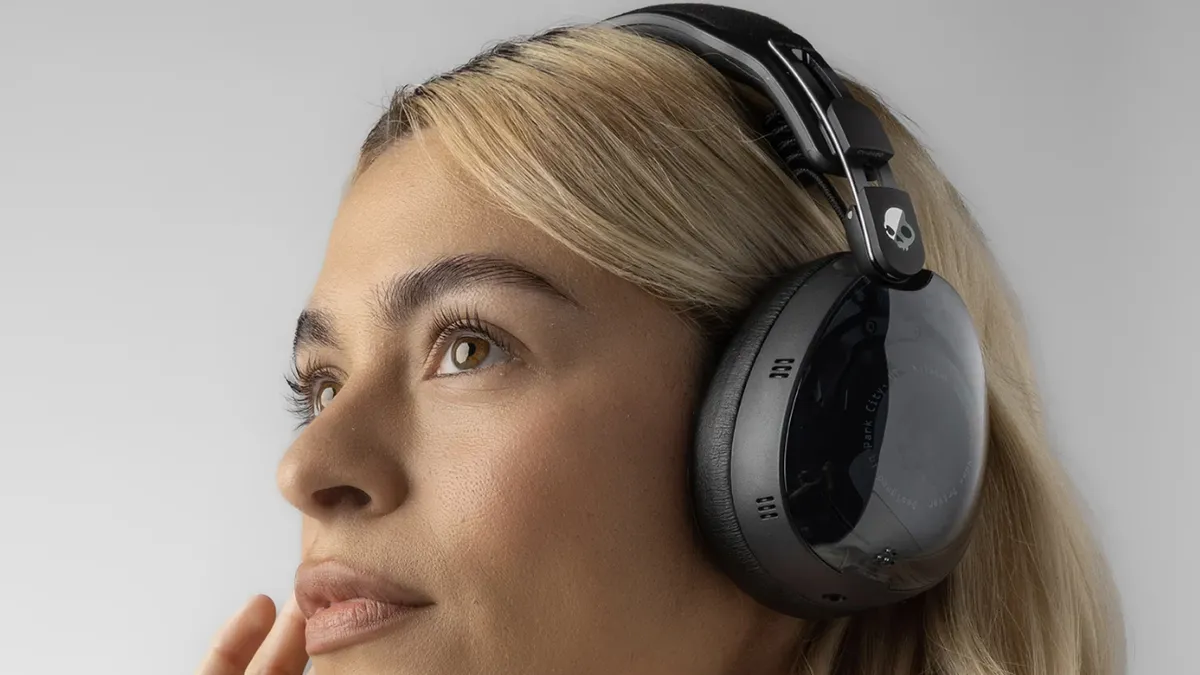
CMF Headphone Pro: Nothing started out with a few different wireless earbuds but has now branched into the over-ear headphones market with its eye-catching Nothing Headphone (1) and the budget-oriented CMF Headphone Pro, which also have a pretty unique look and feature interchangeable ear pads in a few different color options. I was expecting all that much from these headphones, but after using them for a week, they check a lot of boxes for a top value headphone, including a comfortable fit (they pretty lightweight at 283 grams), decent build quality and good sound quality that’s highlighted by powerful bass that can be dialed up or down with a slider control on the left ear cup (you can also tweak the sound in the companion app). The Skullcandy Crusher 2 headphones have a similar slider, but the CMF’s bass doesn’t get to head-rattling levels (the Crusher 2’s bass literally makes the headphones vibrate).
Advertisement
Earfun Wave Pro: Earfun has made some very solid budget earbuds, and now it’s entered the full-size ANC headphone space with a few different over-ear models, including the Wave Pro (add the code EWPROCNET at checkout on Amazon to receive an additional 10% off). While they may not sound as good as premium noise-canceling headphones from Bose or Sony, they’re comfortable to wear, feature decent sound with punchy bass (they’re a bit lacking in clarity and bass definition compared to more expensive models), and they offer respectable noise canceling (you can toggle between two levels of ANC) and voice-calling performance. The headphones do come with a cable for wired listening — you can plug into an inflight entertainment system — but the noise canceling cuts off when you’re in wired mode, which is unfortunate.
Edifier W830NB: The Edifier W830NB remain a good value noise-canceling headphone pick. They look slightly more premium than their predecessor, W820NB Plus, and and are fairly lightweight (265 grams) and comfortable, with cushy memory foam ear pads. They also sound very good for their price, offering decent clarity and fairly well-defined bass with an amply wide sound stage (they lack the refinement and depth of higher-end headphones, but you can’t expect the world from sub-$80 headphones). You can tweak the sound profile in Edifier’s companion app for iOS and Android.
QCY H3 Pro: QCY is another Chinese brand like Tribit, Earfun and plenty of others that make budget-priced headphones that sound better than you’d think they would for their relatively low price (the company says the Q stands for quality, C stands for creative and Y stands for youth). Its new-for-2024 H3 Pro headphones are similar to models in this price range from 1More, Tribit and Edifier, but they arguably sound a touch better and I found them relatively comfortable to wear, as they feature a lightweight design and memory foam ear pads.
Bose QuietComfort Headphones: When Bose released its new flagship QuietComfort Ultra Headphones in late 2023, it also replaced the QuietComfort 45s with a slightly updated model simply called the QuietComfort Headphones. Like the QC 45s, this model carries on the comfortable tried-and-true legacy QuietComfort design that’s been around for a few generations that a lot of people continue to love. The QC Ultra Headphones add Bose’s new Immersive Audio feature and have a more refined design with some metal parts (they also have Bluetooth 5.3 instead of Bluetooth 5.1). But the QuietComfort Headphones still have good sound (the Ultras offer a small step up in sound quality), excellent noise canceling and strong voice-calling performance.
Advertisement
Sony WH-1000XM5: Sony has released its new-for-2025 WH-1000XM6 headphones, but its former flagship model, the XM5 is still an excellent headphone that’s often on sale for closer to $300. Their noise-canceling, voice-calling and sound isn’t quite as good as what the XM6 offers (the XM6 sounds a little more detailed with improved bass performance) and the XM6 has a dual-hinge design that allows them to fold up, not just fold flat. As a result, the XM6’s case is a little smaller. Additionally, the XM6 is powered by a new QN3 chip that Sony says delivers 7 times the performance of the QN1 chip found in the XM5s. All that said, while the jump in performance from the XM5 to the XM6 is certainly noticeable, it isn’t huge; the XM5 still offers good sound, noise-canceling and voice-calling performance that should satisfy most people. Read my Sony WH-1000XM5 review.
Sennheiser Accentum Plus: If you can’t afford Sennheiser’s flagship Momentum 4 Wireless headphones or other premium models from Bose, Sony and Apple, the Sennheiser Accentum Plus is a good midrange alternative that doesn’t quite offer the same performance as those higher-end models. However, it does offers better build quality and sound than most budget noise canceling headphones. In essence, these are a slightly stripped down version of the Momentum 4 Wireless and share a similar aesthetic and the same touch controls but feature different drivers (the Momentum Wireless 4 have larger 42mm drivers and offer richer, more detailed sound with slightly better bass performance). Still, these sound good for the money, offer respectable noise canceling and support USB-C audio wired listening and the AptX Adaptive audio codec that’s compatible with some Android devices.
Master & Dynamic MH40 (2nd gen): All of Master & Dynamic’s headphones are well-built and have a unique retro-modern look. The higher-end MW75 has active noise canceling and sounds a little better than the updated MH40 ($400), which features new drivers and a new chipset that delivers improved sound and performance. The MH40 sounds more refined than its predecessor, with better clarity and definition, and now offers support for the AAC and AptX audio codecs, plus improved voice-calling performance. Additionally, you can plug its USB-C cable into a computer or Android smartphone for a wired digital connection for high-resolution audio. Battery life is rated at a healthy 30 hours.
Shure Aonic 50 Gen 2: Many of us liked Shure’s original Aonic 50 headphones, but they had relatively mediocre noise cancellation. Well, the 2nd-gen version addresses that issue — the noise canceling is much improved — and Shure has more than doubled the battery life to around 45 hours (they now have a quick-charge feature) and also shrunk the headphone’s carry case a bit, although it’s still not that compact. Those upgrades make the Aonic 50 Gen 2 a top noise-canceling headphone. The Aonic 50 Gen 2s are pretty heavy at 334 grams, they’re built sturdily and are also comfortable to wear, with nicely padded ear cups. They feature excellent sound quality with very good clarity and well-defined bass. Shure calls them a “studio headphone,” so the sound profile is fairly neutral, but you can add more bass in the EQ settings in Shure’s companion app for iOS and Android (engaging the Spatializer setting in the app expands the soundstage slightly but doesn’t make a big difference).
Advertisement
Bang & Olufsen’s Beoplay HX: Bang & Olufsen’s Beoplay HX headphones are the successor to the company’s H9 series headphones (the X is the Roman numeral for 10) and, like those earlier H9 models, the HX headphones carry a list price of $599 (some colors are discounted at Amazon). That price makes it a direct competitor of Apple’s AirPods Max, which is heavier at 385 grams versus the HX’s 285 grams. I don’t know if the HX headphones are more comfortable than the AirPods Max, but I found the two models pretty equal in the comfort department over longer listening sessions, and these do feature the usual swanky B&O lambskin-covered memory foam earpads. Their sound measures up well to the AirPods Max’s sound — overall, it’s well-balanced, with deep, well-defined bass, natural-sounding mids (where vocals live) and inviting detail in the treble.
V-Moda M-200: V-Moda’s M-200 is one of the few wired headphones on this list. Released in late 2019, these clean- and detailed-sounding over-ear headphones have excellent bass response, and the cushy earcups mean they’re also comfortable to wear. Featuring 50mm drivers with neodymium magnets, CCAW voice coils and fine-tuning by Roland engineers — yes, V-Moda is now owned by Roland — the M‑200 is Hi‑Res Audio-certified by the Japan Audio Society. Other V-Moda headphones tend to push the bass a little, but this set has the more neutral profile that you’d expect from studio monitor headphones. They come with two cords, one of which has a built-in microphone for making calls. It would be nice if V-Moda offered Lightning or USB-C cables for phones without headphone jacks. Note that last year V-Moda released the M-200 ANC ($350), a wireless version of these headphones that includes active noise canceling. They also sound great, but their noise cancellation, call quality and overall feature set don’t match those of the AirPods Max.
Mark Levinson No. 5909: These are premium audio brand Mark Levinson’s first headphones and, yes, they’re really expensive at $999. They’re also really good. They have a sturdy design without managing to feel hefty on your head (read: they’re substantial but not too heavy) and they’re comfortable to wear over long periods, thanks to their nicely padded and replaceable leather-covered earcups and headband. Read our Mark Levinson No. 5909 hands-on.
OneOdio A10: The OneOdio A10s deliver more than you’d expect for their relatively modest price, which is why they’re featured on several of our best lists. They’re built better than you think they would be for around $90 and are pretty comfortable to wear. They have a dual-hinge design and feel sturdy, weighing in at 395 grams, making them perfect headphones for a workout. They sound surprisingly decent and have reasonably good noise canceling with a transparency mode (which has a slight audible hiss). The headphones also have very good battery life. No, they’re not as comfortable as Bose’s and Sony’s models (they do feel a tad heavy) and their sound lacks that extra bit of clarity, bass definition and depth that more premium headphones tend to deliver. They did exceed my expectations and come with a decent carrying case, even if the OneOdio logo splayed across it is a bit garish.
Advertisement
Technics EAH-A800: There’s a bit of an old-school vibe to the Technics EAH-A800 — and it’s not just the Technics brand, which Panasonic resurrected in the last few years. Their design is something of a throwback, but these headphones are comfortable and both fold up and fold flat. They feature a big, energetic sound with powerful bass and good detail, although they take a day or two to break in.
I’ve done the heavy lifting this week to bring you a hand-picked selection of the best Netflix TV series that are actually worth your time. This weekend presents a fantastic opportunity to explore three exceptional hidden gems. Ranging from thoughtful animated comedies to eerie Nordic mysteries and tense crime dramas, these underrated Netflix TV series deliver original storytelling. So grab your favorite snacks and get ready to binge-watch.
Genre: Crime, Thriller, Drama IMDb rating: 7.9/10 Rotten Tomatoes: 97%
Advertisement
Inspired by a true story, this gripping Netflix series is set in early 1990s Britain and follows an untrained team of ordinary customs officers. They get recruited into a top-secret operation, sent deep undercover into the country’s most dangerous drug gangs under entirely fabricated new identities known as legends.
The gritty tension builds beautifully from the very first episode as these normal civil servants struggle to survive in a volatile underworld while constantly risking exposure. This underrated TV series has outstanding lead performances, which capture the real people behind this story with striking authenticity. The dialogue is sharp and well written, and the show brilliantly captures the massive toll that living a double life takes on families and personal relationships.
Genre: Sci-Fi, Comedy, Drama IMDb rating: 7.2/10 Rotten Tomatoes: 96%
Sometimes the end of the world makes for the most relatable story of all. With a mysterious planet hurtling toward Earth, humanity spends its final months chasing every wild indulgence it can find. While everyone else throws wild parties, one woman, named Carol, just wants a sense of normalcy before everything ends. She searches for a sense of ordinary routine by working a mundane office job inside a quiet corporate building.
The show perfectly balances existential dread with a comforting slice-of-life charm that makes the apocalypse feel strangely peaceful. I loved how it finds deep meaning in the quiet moments of everyday life rather than focusing on explosive destruction. The unique animation style and the brilliant dry humor make it an absolute standout comfort show.
You can watch Carol & The End of the World on Netflix.
Advertisement
Katla (2021)
Genre: Sci-Fi, Mystery, Drama IMDb rating: 7.0/10 Rotten Tomatoes: 79%
Grief has a way of taking strange shapes, and this Icelandic mystery series shapes that idea into an unsettling story. The story of this underrated Netflix series begins one year after a massive volcanic eruption buries a small town in ash, when mysterious figures resembling people long thought dead start emerging from the glacier.
The haunting atmospheric tension grips you immediately, and the eerie Nordic scenery makes the unfolding mystery feel even more disorienting. This TV series uses Iceland’s bleak, icy landscape to build psychological dread that creeps you out. I also liked the deliberate slow-burn pacing that keeps you guessing about the true nature of the ash-covered visitors.
Conducted during June 2026 by the nonpartisan survey research company Verasight, the survey consisted of 17 questions sent to 1,690 adults (18 and above), finding over two-thirds (69%) supporting Sanders’ policy – a figure that only drops to 64% once it is revealed which politician the idea is associated with.
The bad news for the AI industry doesn’t end there, as respondents demonstrated a notable distrust for how AI companies conduct themselves, with nearly half (43%) believing that the regulations proposed by the AI companies are designed to benefit those same companies. Incredibly, 30% of respondents trust the US federal government more than companies like OpenAI and Anthropic.
Latest Videos From
How does AI wealth distribution work?
(Image credit: Getty Images / Tasos Katopodis)
Senator Bernie Sanders’ plan gives the public a direct stake in America’s largest AI companies, with a one-off tax paid not in cash, but in stock. “Since AI is built on the collective knowledge of humanity, the wealth it generated must benefit humanity,” he said, announcing his planned Act on social media.
Advertisement
This would, according to Sanders’ proposal, deliver an annual $1000 check to U.S. citizens, and fund healthcare and education.
“The findings from our latest survey demonstrate a rare instance of bipartisan agreement,” noted Ben Leff, CEO and Co-Founder of Verasight.
“There is an undeniable desire among Americans of both parties for federal oversight, absolute transparency, and accountability to ensure AI safety and to enable all Americans to participate in the economic benefits of AI.”
Advertisement
Sign up to the TechRadar Pro newsletter to get all the top news, opinion, features and guidance your business needs to succeed!
Even with a polarizing figure like Bernie Sanders attached, the wealth fund idea retains support, which suggests that while people are happy to use AI to answer questions, streamline processes, and make tasks quicker, they’re less comfortable with the industry’s wider impact.
A poor public perception
While AI companies are becoming increasingly unpopular, it isn’t all bad news. The survey quizzed subjects about their feelings on other industries, including tobacco, pharmaceuticals, and casinos, along with social media. If the tide is turning against AI, it still isn’t regarded as poorly as casinos or tobacco.
Advertisement
Feelings about AI companies are also notably more positive than social media. Given the concerns expressed about federal oversight and public wealth funds, there could be an avenue for OpenAI, Google Gemini, Anthropic, Microsoft, and others to improve the general feeling about AI: accepting a degree of social responsibility.
Intuit was an early pioneer in the usage of agentic AI, but its path to success has hardly been a straight line.
At VB Transform 2026, Intuit VP of AI Nhung Ho described how the company rebuilt its agent architecture twice in the span of about four months, first moving from a fleet of specialist agents to a central orchestration layer, then abandoning that layer for a skills and tools based system once the orchestrator itself started failing under its own complexity. The full second rebuild took 60 days, with a first working version in under 20.
The failure mode that forced the second rewrite was specific. Agents in the orchestrated system passed results to each other in natural language, and each handoff lost context the next agent needed to act correctly.
“If you have 10 agents and they all are passing to each other, every time that pass happens, error compounds,” Ho said.
Advertisement
Why the orchestration layer broke down
Ho said the original push toward specialist agents came from a straightforward customer complaint. A fleet of capable agents is still something a customer has to manage, deciding which agent to use for which task. Intuit’s answer was a system that could take a task and route it internally, without asking the customer to pick an agent themselves.
That orchestration layer held up for about three months, which Ho described only half joking as roughly a year in the compressed timeline of agent development in 2026.
It broke for a structural reason rather than a capacity one. Passing outcomes between agents in natural language meant each downstream agent had to infer how the upstream agent reached its conclusion, and that inference degraded with each additional hop. A ten agent chain did not fail occasionally, it compounded errors by design.
That diagnosis is what sent Intuit back to a skills and tools architecture.
Advertisement
The 60-day rebuild, and what it took to get engineering buy-in
Rebuilding a production agent system in 60 days required more than an architectural decision. Ho said the harder problem was internal, convincing both leadership and the engineers who had built the original agents that scrapping recent work was the right call.
The pitch to leadership relied on evidence rather than argument. Ho’s team built a demo of the new architecture using real customer queries pulled from production, then showed it performing better than the existing system on the same tasks.
“The best proof, at least my belief, is what are customers trying to do? And whatever system you build needs to address those problems,” Ho said.
Winning over engineering required a different case. Hundreds of engineers outside Ho’s core team had built the specialist agents being retired, and the ask was to take their agents apart into individual skills and tools instead.
Advertisement
Ho said the motivating argument was scale. A standalone agent solved one narrow problem, while a shared skill or tool built into the new architecture could serve every customer who touched that part of the product. That shift also changed what partner teams were responsible for day to day, moving their focus from building agents to running evals, since evals became the only way to measure whether the new architecture was actually working.
Bringing a human into the loop, and feedback at a different scale
The clearest customer facing result of the rebuild is a feature that lets a live agent conversation pull in a human — though it’s currently in early testing, live to about 1% of Intuit’s customer base. “We’re going to be scaling it up in the next few weeks,” she said.
Ho said a customer can bring in an Intuit product support person mid conversation, or their own accountant, or one of Intuit’s own bookkeepers, and that person joins with the full context of what the agent has already done.
Ho drew a direct contrast with how most AI chat products handle the same situation. A general purpose assistant answering a tax question typically ends with a disclaimer to consult a professional. Intuit’s system is built to connect the customer to that professional directly, inside the same conversation.
Advertisement
That human handoff sits alongside a permissions model built for financial data specifically. Every action an agent takes on a customer’s financial data requires explicit permission first, though Ho said that requirement can ease over time as customers build trust in the system. Intuit keeps an audit log of everything an agent does that can be reversed if needed.
Feedback in the agentic AI era
The rebuild also changed how Intuit gathers and uses feedback, a shift Ho said is qualitatively different from what came before.
“Feedback in the past used to be very, very sparse, and it was also very bimodal,” Ho said. “Either they loved it or they hated it, and usually it tends towards the negative.”
In a chat based system, every conversation functions as feedback, which Ho said moved the company from roughly 0.3% of customers ever giving explicit feedback to something close to 100%.
Advertisement
Ho said she has returned to writing code herself specifically to build models that analyze that feedback volume systematically, looking for where the system is falling short at a scale no manual review process could keep up with.
That volume comes with a tone most product teams aren’t used to hearing directly. Customers tell the agent exactly where it failed, in plain terms.
“They straight up tell you, ‘You suck. I hate this. This is not right,’” Ho said. “But they’re also willing to give the systems grace and correct it as well, and so the onus is on all of us to harvest this new piece of feedback and type of feedback, and actually improve the system.”
Why it matters: Display enthusiasts have anticipated the emergence of inkjet-printed (IJP) OLED panels in consumer products since TCL subsidiary TCL-CSOT began promoting them in 2024. The technology aims to improve OLED in numerous ways while also making the traditionally expensive displays more affordable, which could make them suitable for a wider range of devices.
Lenovo’s R9000P laptop, the world’s first to feature an IJP OLED screen, is now available in China, starting at around $1,300. It remains unclear when the laptop or any other IJP OLED model might appear globally, but the device raises hopes that the technology will soon lead to cheaper OLED notebooks.
According to TCL-CSOT, the IJP manufacturing process increases OLED brightness by doubling the luminescent material utilization rate to 90% and halving blue-light loss. Furthermore, using more durable materials and a higher aperture ratio significantly extends a panel’s lifespan.
IJP, which involves large, precise inkjet printers, is actually already used in much of the traditional OLED production process, such as encapsulation layer deposition and depositing quantum dots in Samsung QD-OLED panels. TCL extended the technique to emitters and other stack materials, shortening manufacturing time by 30%, lowering costs by 20%, and reducing power consumption. The company also highlights sidestepping the need for high-precision fine metal masks as a major cost-cutter.
Advertisement
TCL debuted IJP OLED in a 65-inch 8K 120Hz curved monitor with an 1800R curve a few years ago. Mass production using the technology began with a 21.6-inch 4K monitor for medical professionals.
IJP’s emergence in Lenovo’s new laptop points toward a future where OLED becomes more common. The R9000P’s panel supports a 2560 x 1600-pixel resolution with a 240Hz refresh rate, 100% DCI-P3 color gamut, a 3ms response time, and 500 nits of brightness.
Marketed as a multi-purpose laptop, it could make for a modest gaming machine, with a mobile RTX 4060 graphics card packing 8GB of VRAM and support for AMD FreeSync along with Nvidia G-Sync. The CPU is a 16-core AMD Ryzen 9 7945HX, and the only storage option is a 1TB PCIe 4.0 SSD. While the notebook includes DDR5-5600 RAM, Lenovo pegged its minimum operating frequency at 5,200 MT/s.
OLED panels may also emerge in other relatively low-cost products in the coming months. Apple is expected to unveil the first OLED iPad mini later this year, followed by a new iPad Air early next year. Chinese resale listings have also intensified rumors that the Nintendo Switch 2 might soon receive an OLED variant.





























































You must be logged in to post a comment Login